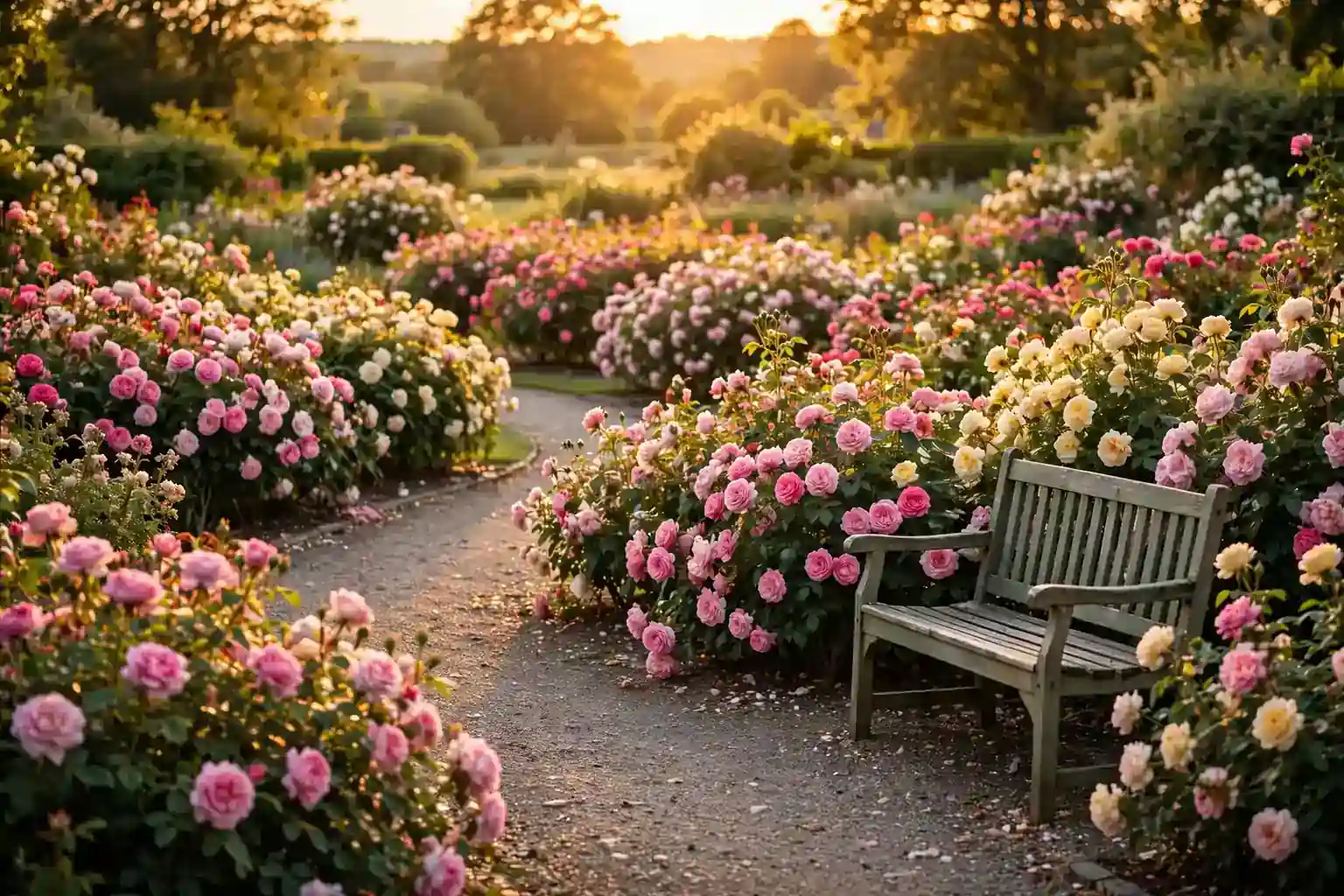
A rose garden does not need a large yard or years of skill to look good. It needs sun, air, soil that drains well, and roses placed where you can enjoy them every day. These 22 ways to create a beautiful rose garden cover borders, hedges, arches, pots, and cutting rows, so there is a workable option for a sunny fence, a small patio, or a full front garden. Start with the sunniest spot you have, since most roses flower best with at least six hours of sun, then pick one structure, such as a border or an arch, and add scented seats and pots around it.
Key Takeaways
- Give roses sun, air, and soil that drains well, and keep the spot open enough to walk around each plant for pruning and picking.
- Pick one structure first, such as a border, a hedge, or an arch, then add pots, seats, and companion plants around it.
- Space roses by the label, not by how they look in the pot, since crowded roses invite disease and weak flowering.
- Water at the base, mulch in spring, and deadhead repeat flowering types to keep new buds coming.
- Use pots, obelisks, and standard roses when bed space is limited or the garden is rented.
- Plan for scent and cutting as well as color, so the garden earns its place from the path and from the house.
1. Plant a Sunny Rose Border Along a Fence
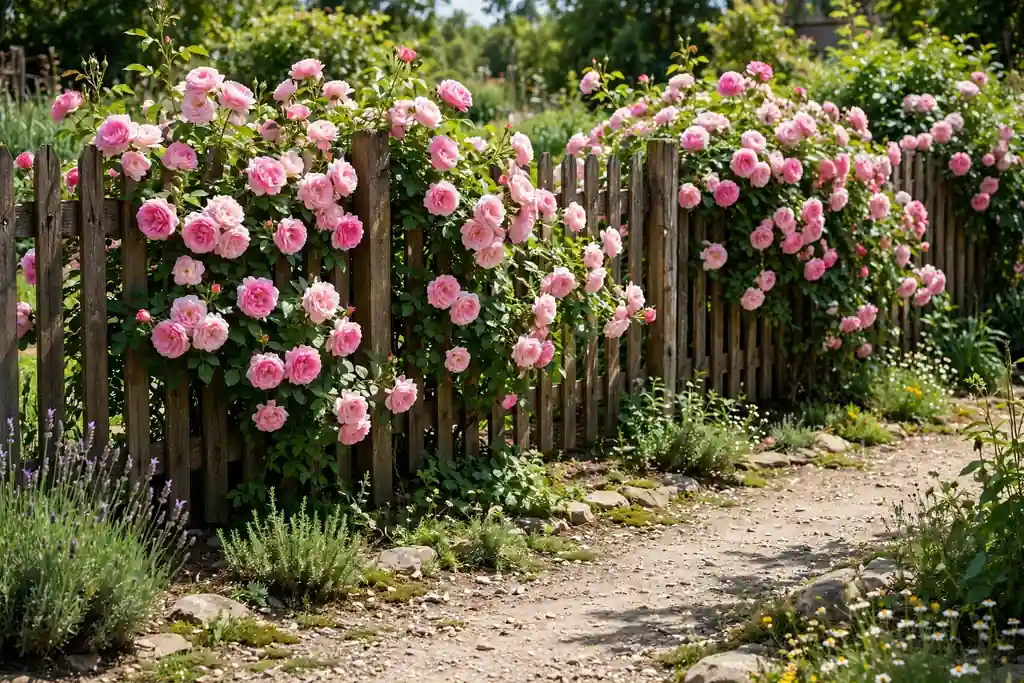
Plant shrub roses along a sunny fence for a border that flowers for months and needs no special structure. A fence gives a plain backdrop that shows the blooms clearly, and it gives you a straight line to work along for feeding, pruning, and deadheading. Space each bush by the label, mulch the soil to hold moisture, and keep a path or lawn strip in front so you can reach the plants without stepping on the bed.
Choose repeat flowering shrub roses for the longest show, and mix two or three colors that sit well together rather than one of every color. For color grouping ideas that keep a border calm, these pink flower garden ideas show how drifts of one color read clearly from a distance. Prune by rose type in late winter or early spring, and water at the base rather than over the leaves.
2. Grow Climbing Roses Over a Garden Arch
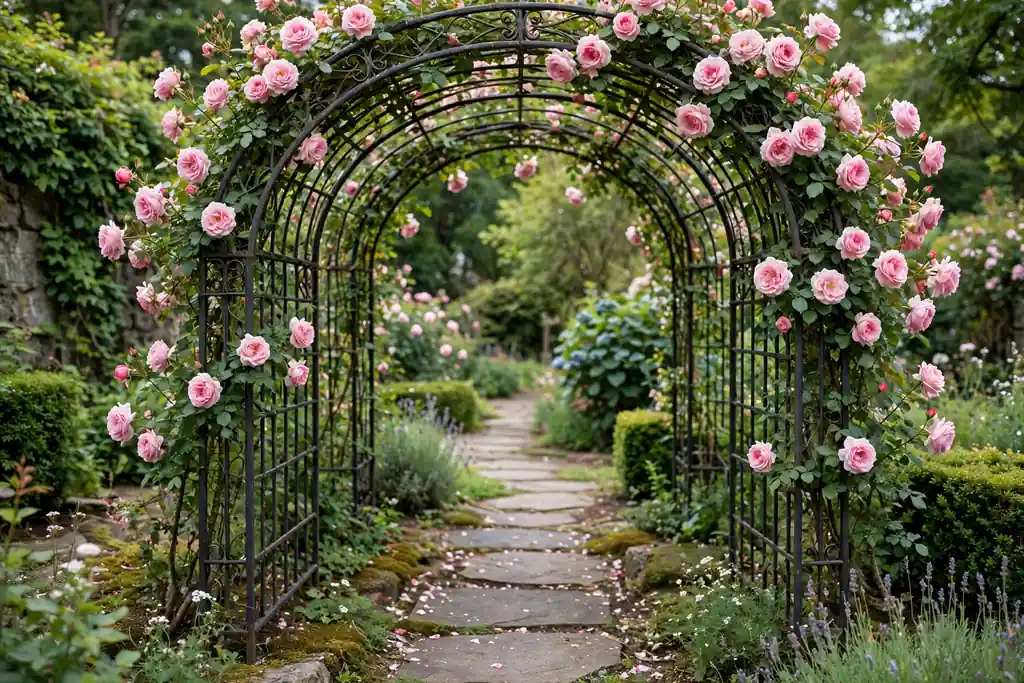
Train climbing roses over an arch on a garden path to make a flowering doorway between two parts of the garden. Plant one climber on each side of the arch, tie the main stems sideways along the frame as they grow, and let side shoots flower upward. Sideways training matters, since stems trained flat produce more flowering shoots than stems left to grow straight up.
Choose a sturdy arch that can carry wet, heavy growth in summer, and keep the path beneath it wide enough to walk through without brushing thorns. Prune after flowering as the plant type requires, and tie new stems in loosely each season. A rose arch works best where it gets morning sun, so dew dries early and leaves stay healthier.
3. Shape a Rose Hedge as a Living Boundary
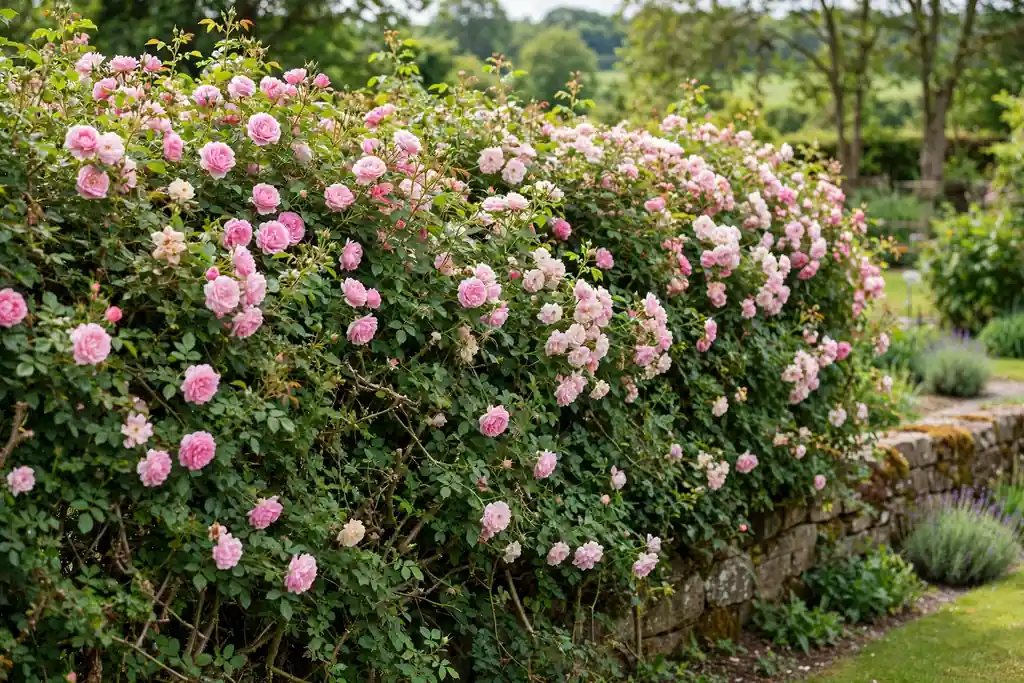
Plant a row of dense shrub roses as a hedge along a boundary, a drive, or the edge of a lawn. A rose hedge divides space without a fence, flowers for months, and still lets light and air through. Space the bushes close enough to knit together, usually by the label spacing for hedging, and keep the row straight so trimming stays simple.
Choose hardy, disease resistant shrub roses for a hedge, since you will not want to replace plants in the middle of a row often. Trim lightly after the main flush of flowers, feed and mulch in spring, and keep the base clear of weeds so air can move. A rose hedge suits a front boundary best when the path beside it leaves room to prune without stepping into traffic.
4. Mix Roses Into a Cottage Border
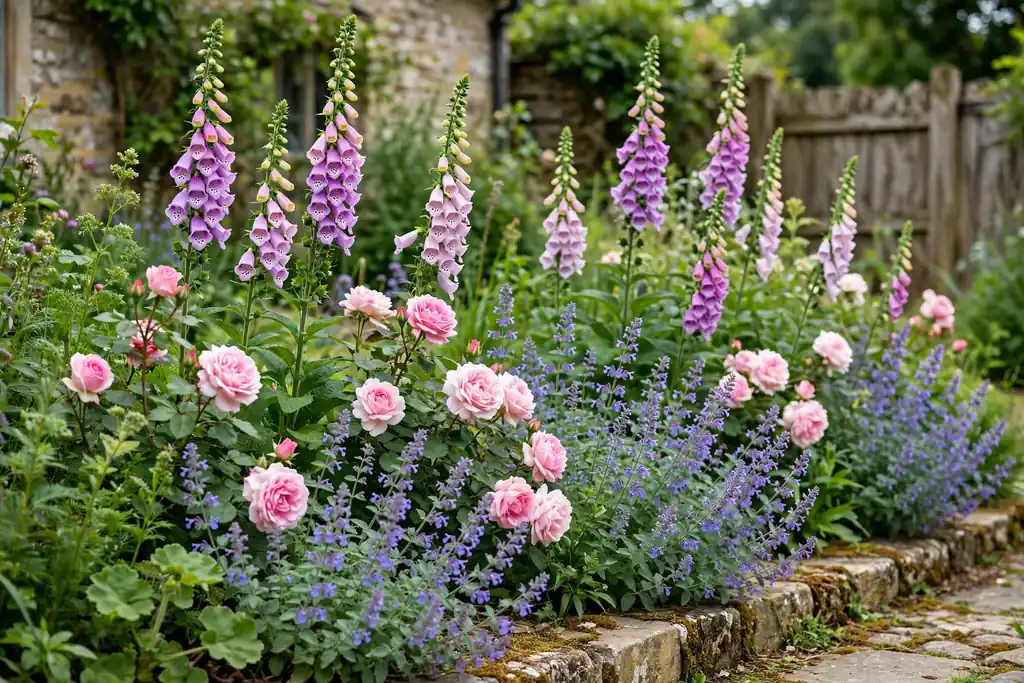
Mix shrub roses with perennials such as catmint, salvias, geraniums, and foxgloves for a loose cottage border. Roses give the structure and the repeat flowers, while perennials fill the gaps, cover bare lower stems, and keep the bed full before and after each rose flush. Plant tall perennials behind the roses, mid height plants beside them, and low edging plants at the front.
Let shapes overlap instead of lining everything up in strict rows, and repeat one or two perennial colors through the border to tie it together. Water the whole border at the base in dry spells, and cut back perennials that flop over the roses. This mix suits a garden where you want roses to feel part of a planting scheme, not isolated in a bare bed.
5. Pair Roses With Lavender Along a Path
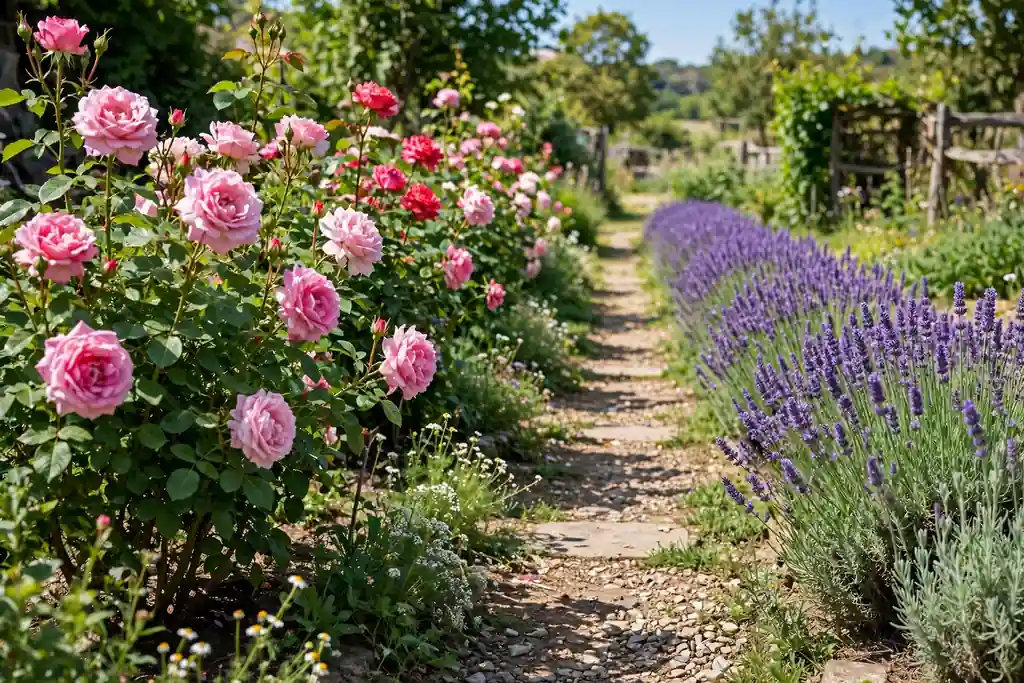
Plant lavender in front of a rose border along a path for scent at knee height, silver foliage, and a tidy edge that suits both plants. Roses and lavender both like sun and soil that drains well, so they share a bed happily in most gardens. Plant lavender as a low row at the front, keep it trimmed into a soft mound after flowering, and leave a gap between the lavender and the rose stems so air can move.
This pairing works along a front path, a patio edge, or a walk to a seat, where you brush past the scent daily. In wet or heavy soil, raise the bed slightly or add grit to the planting holes, since lavender dislikes wet feet even more than roses do. Replace lavender plants that grow woody after a few years with fresh plants in the same spots.
6. Group Large Rose Pots on a Patio
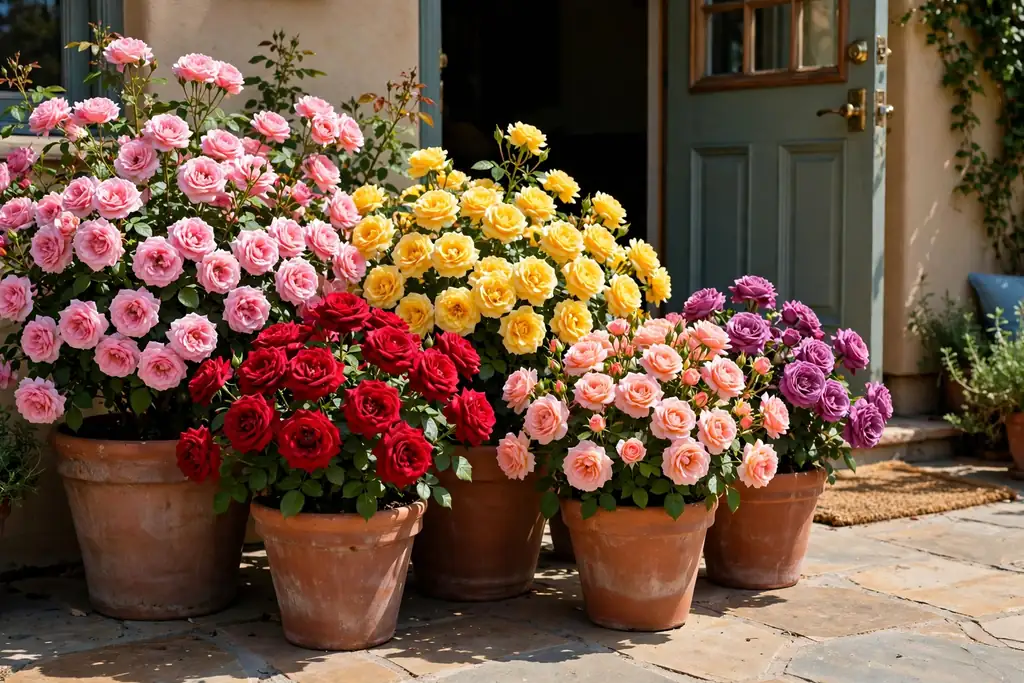
Group large pots of roses on a patio for a rose garden that needs no bed at all. Use deep pots with drainage holes, fresh potting mix, and one rose per pot, and group three or five pots in different heights near a door, a seat, or a sunny wall. Pots let you move roses to follow the sun, change the display with the seasons, and take them with you if you move.
Water pots often in hot weather, since containers dry out faster than beds, and feed through the season as the label directs. Choose shrub or patio roses suited to containers, and raise pots on feet so water drains freely and does not stain the patio. In cold areas, move tender potted roses to a sheltered corner for winter, or wrap the pots as local advice directs.
7. Use Standard Roses to Frame a Path or Door
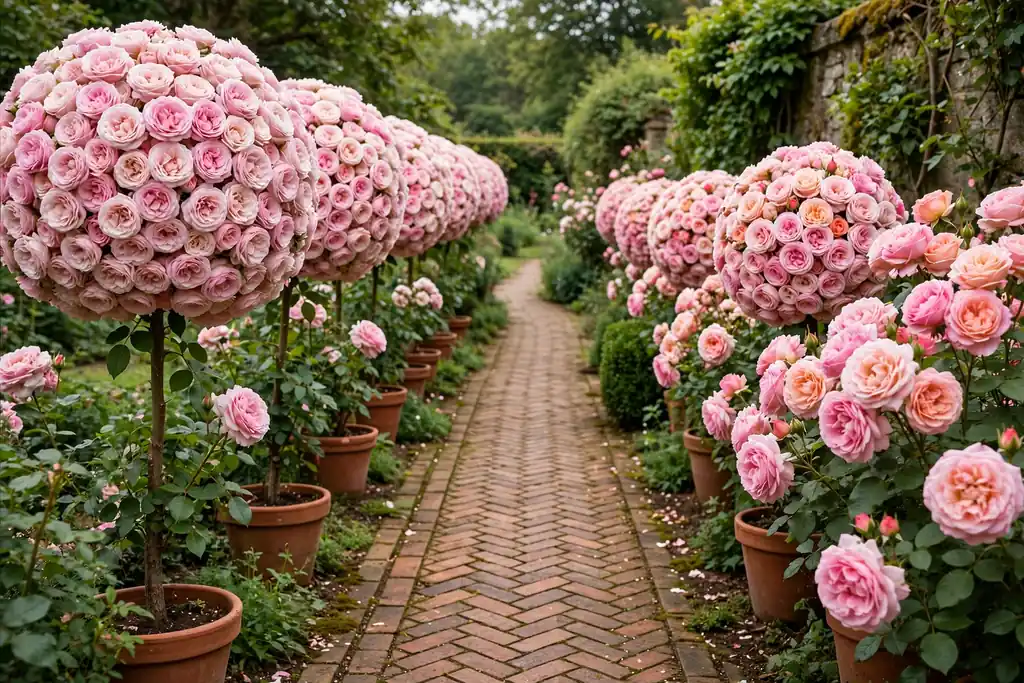
Plant standard roses, roses grown on a single tall stem with a ball of flowers on top, to frame a path, a door, or a small formal bed. Standards give height without width, so they suit narrow beds and small gardens where a wide shrub would crowd the path. Plant them in pairs at a gate or in a row along a path, and stake each stem firmly until it is established.
Keep the ground beneath standards planted low, with lavender, catmint, or low geraniums, so the stems stay visible and the bed looks finished. Prune the head each year by rose type, and check the tie and stake each spring, since a standard head catches wind. A standard rose by a door also puts scent at nose height as you pass in and out.
8. Cover a Sunny Bank With Groundcover Roses
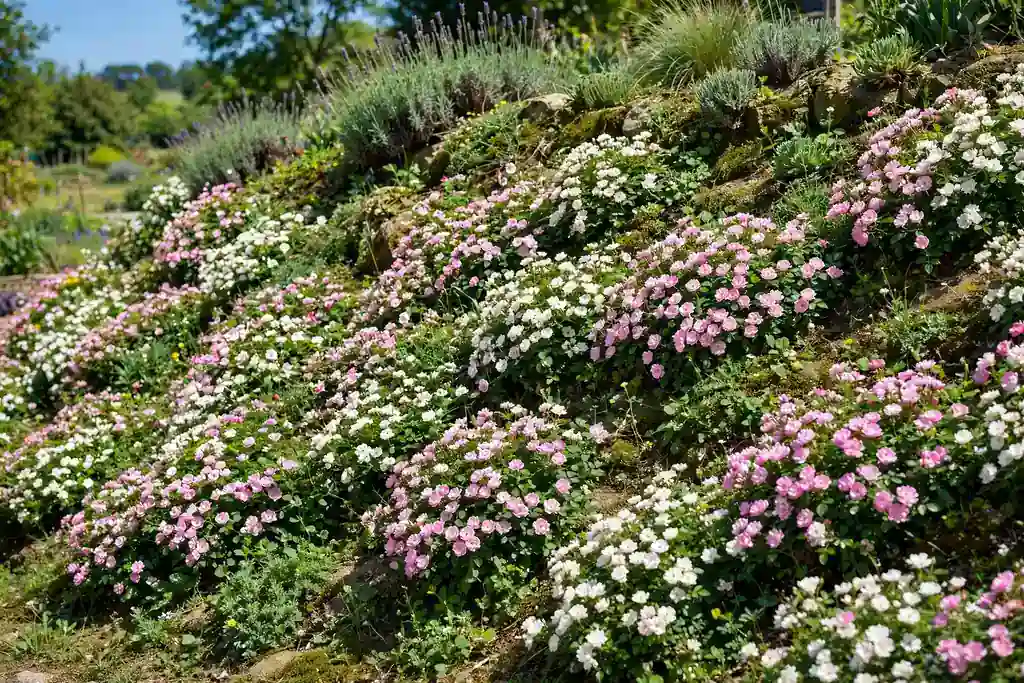
Plant groundcover roses on a sunny bank or slope where mowing is hard and a lawn would struggle. Groundcover roses spread low, flower for months, and knit together to cover soil and hold back weeds. Plant them in drifts across the bank, mulch between young plants, and water well in the first season until the roots settle.
This idea suits a front bank, a slope beside steps, or a strip beside a drive, where a taller shrub would block a view. Choose groundcover types rated for your zone, and trim lightly after flowering to keep the mat tidy. Avoid planting groundcover roses where foot traffic crosses the bank, since the stems are thorny and the plants need room to spread.
9. Train Roses Over a Pergola for a Scented Seat
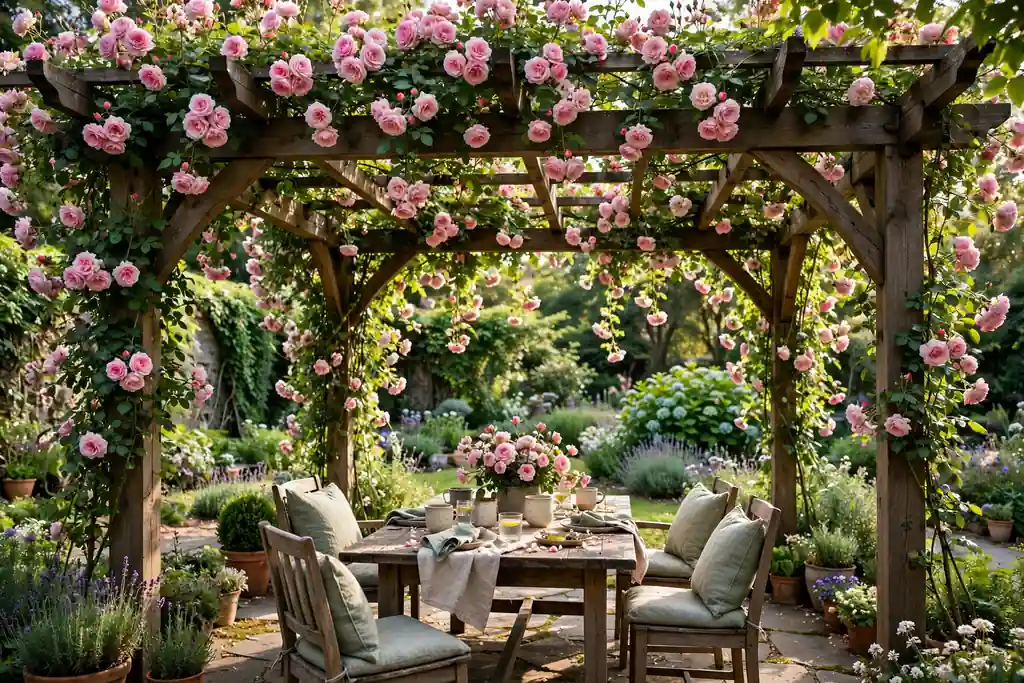
Train climbing roses over a pergola above a seating area for shade, scent, and a flowering roof in summer. Plant climbers at the pergola posts, tie stems along the top beams, and let flowering side shoots hang just above head height. A pergola rose roof suits a patio, a lawn corner, or a terrace where you sit in the evening, since the scent gathers under the frame.
Choose a strong pergola that can carry mature growth, and keep climbers clear of lights and gutters. Prune after flowering as the plant type requires, and tie in new stems each year before they grow woody and hard to bend. For seat styles and placement under a frame, these garden bench ideas show how to choose the spot first and match the seat to it.
10. Set Aside a Cutting Row for Bouquets
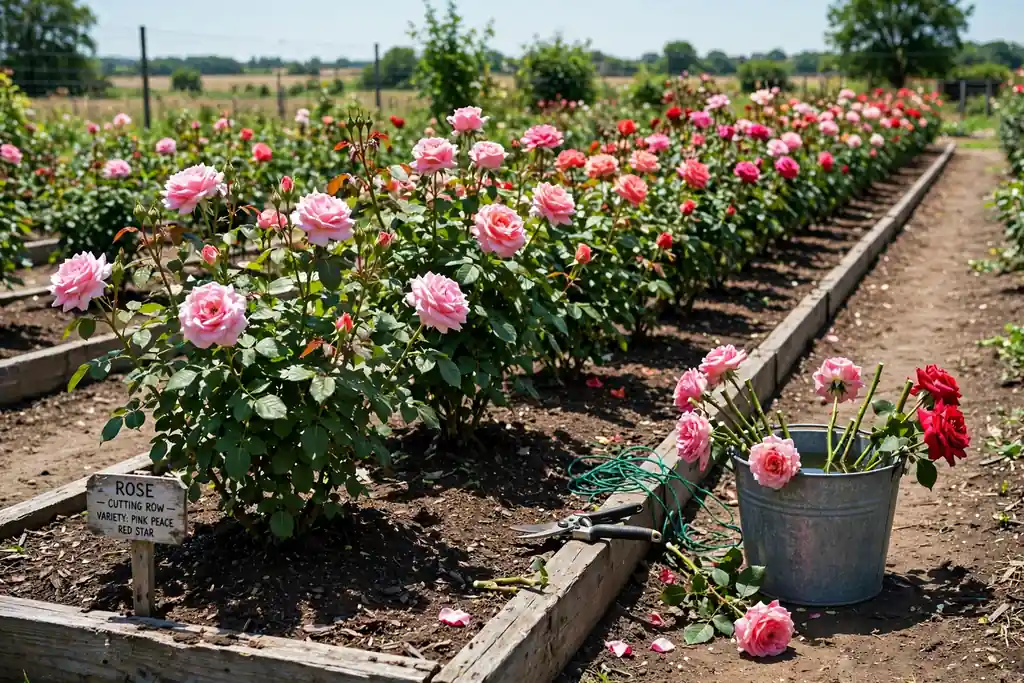
Plant a row of roses grown for cutting, spaced for picking rather than for display, so you can bring flowers indoors without leaving gaps in the show borders. Choose long stemmed, scented varieties, plant them in a straight row you can walk beside, and cut in the morning into a bucket of water. Cut stems just above an outward facing bud, strip leaves below the water line, and change vase water every two or three days.
Keep the cutting row apart from the display border, and feed and water it well, since picked plants need to replace stems often. A cutting row can sit at the back of a vegetable garden, along a side fence, or in a sunny corner that is easy to reach with snips and a bucket. Grow a mix of colors so one bunch never depends on a single plant.
11. Put a Bench Under a Rose Arch for a Scented Pause
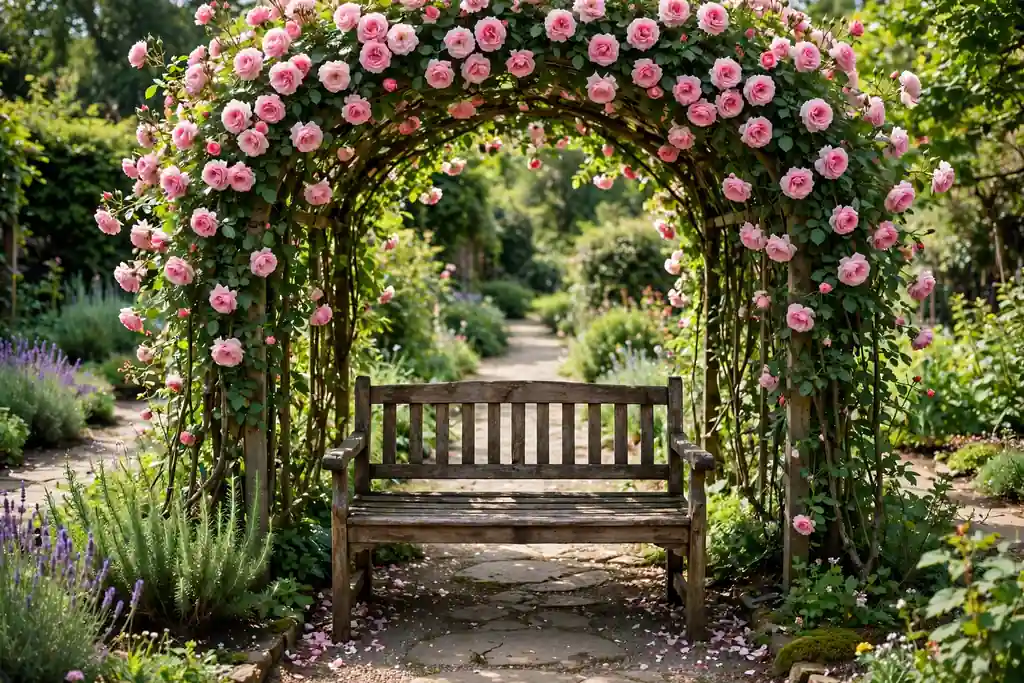
Place a bench under a rose arch on a garden walk for a sheltered, scented pause halfway along a border or between two garden areas. The arch frames the seat, gives climbing roses something to grow over, and turns an ordinary stretch of path into a destination. Site the bench where it gets morning or evening light rather than deep shade all day, and anchor the arch firmly so it does not lean as the planting grows heavier.
Train climbers away from the seat itself so thorns and stems do not brush sitters, and keep a clear step of paving at the bench feet. A narrow bench fits this spot better than a wide one, since the arch already takes up visual space. Add one pot on each side of the arch to anchor the seat in planting, and prune after flowering as the plant type requires.
12. Build a Rose Welcome Bed by the Front Path
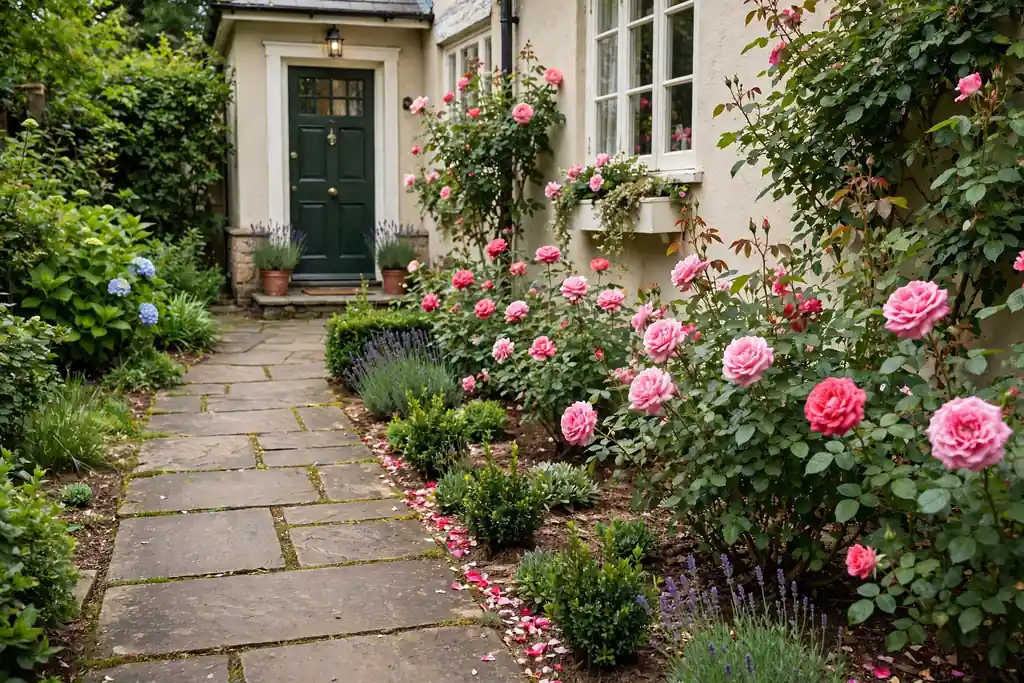
Plant a rose bed beside the front path so visitors meet flowers before they reach the door. Put taller shrub roses at the back of the bed, away from the path, and shorter roses or lavender near the paving, so blooms do not lean over walkers or block the house number. Keep the bed edged and the path clear, and repeat one or two rose varieties along the whole run so the planting reads as a plan.
Water the bed well in dry spells, because a path bed dries out faster than a bed in open lawn. Choose repeat flowering, disease resistant varieties for a front garden, since this bed is seen every day and needs to look cared for with ordinary care. Deadhead often in summer, and keep the bed mulched to cut down on weeds near the entrance.
13. Grow Roses Up an Obelisk in a Small Bed
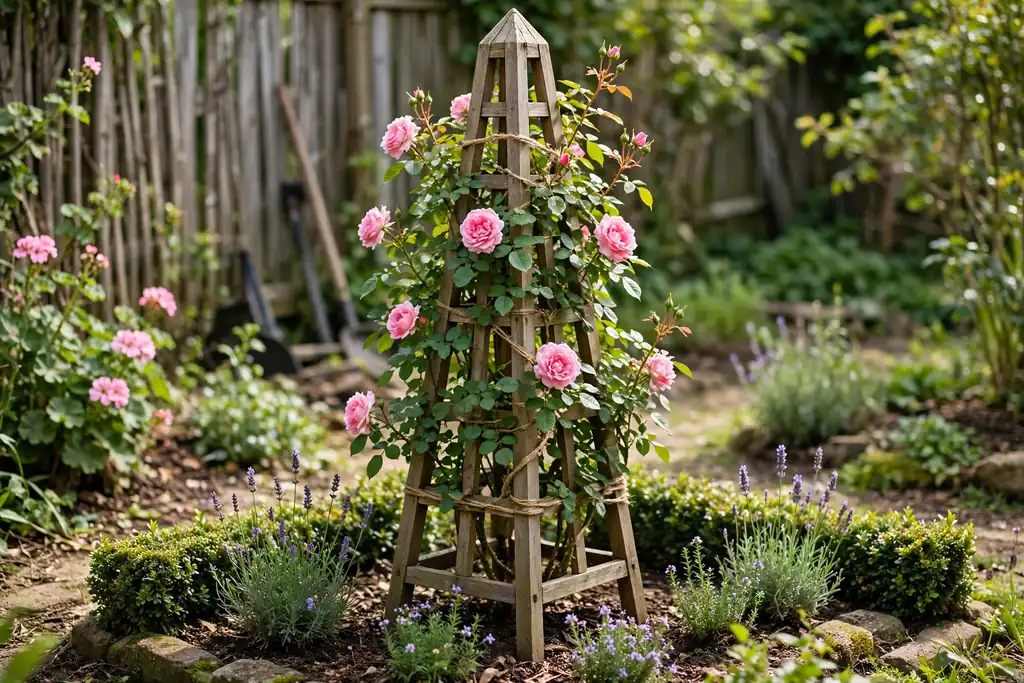
Train a climbing or rambling rose up an obelisk in a small square bed for height in a space too small for a border. An obelisk takes little ground, gives a clear vertical shape, and suits a patio corner, a small front bed, or the center of a herb bed. Plant the rose at the base, tie stems in a spiral around the frame, and let flowering shoots fill the sides.
Fix the obelisk firmly in the ground or in a large pot, since a rose covered frame catches wind. Prune and tie in new stems each year, and keep the base planted low so the frame does not look bare at ground level. One obelisk rose can anchor a small bed the way a shrub border anchors a large one, with far less space.
14. Choose Easy Shrub Roses for a Low Care Bed
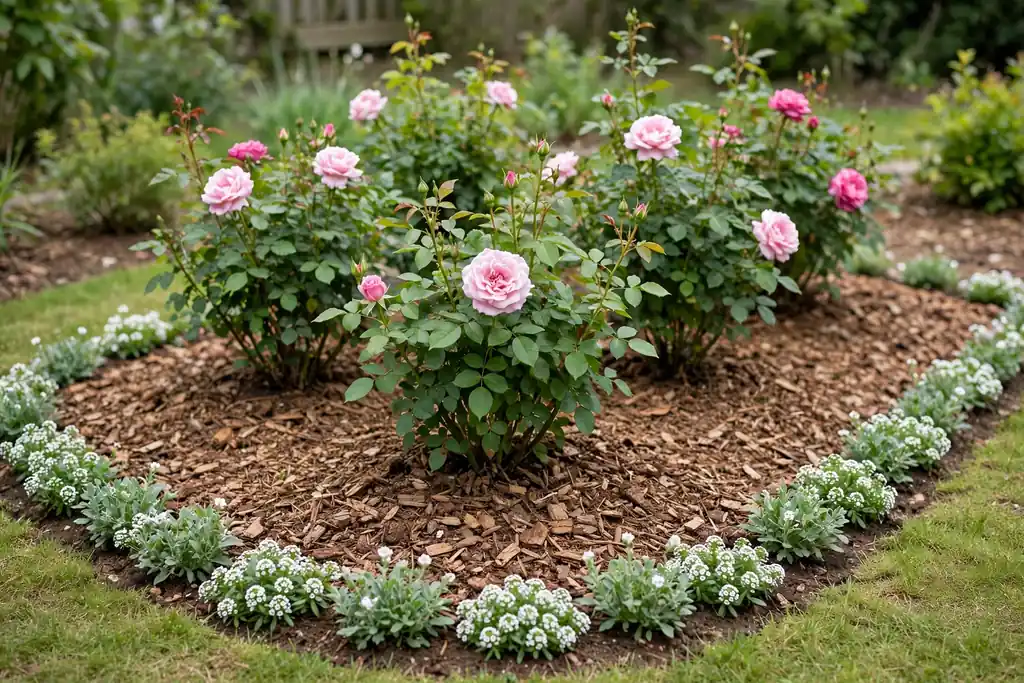
Build a bed from easy shrub roses when you want roses without a demanding routine. Choose disease resistant, repeat flowering shrub types, plant them in sun with good air flow, mulch in spring, and give them a simple yearly prune by type. This bed suits a busy gardener, a first rose garden, or a garden that is only visited on weekends, since the plants forgive missed deadheading better than fussy types.
Keep the bed simple: roses, mulch, and one low edging plant, rather than a complex mix that needs constant trimming. Water at the base in dry spells, feed once in spring as the label directs, and check leaves now and then for pests or disease so problems are caught early. A low care rose bed still flowers well, it simply asks for fewer, well timed jobs.
15. Let Rambling Roses Climb a Wall or Shed
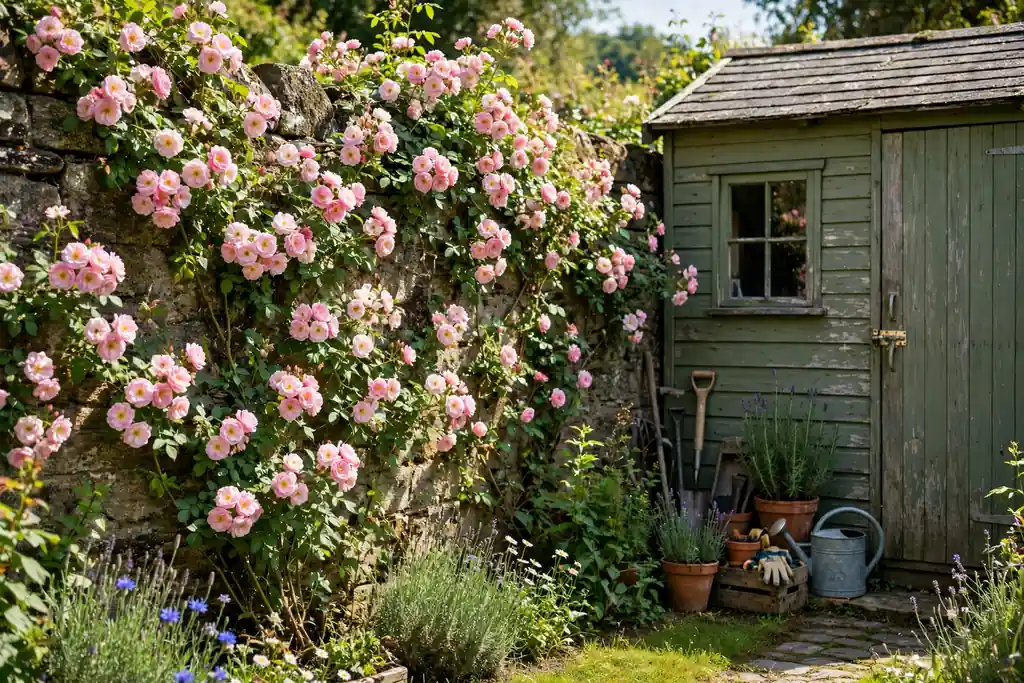
Train rambling roses up a sunny wall, over a shed, or along a garage wall for a large flowering display from a small patch of ground. Ramblers grow long, flexible stems that can cover a wall in a few seasons, and they flower in a big single flush that suits a backdrop. Fix wires or a trellis to the wall first, plant at least a foot out from the base, and tie stems sideways along the wires.
Water well at a wall base, since soil there can be dry, and mulch to hold moisture. Prune after flowering as the plant type requires, removing old stems to make room for new growth from the base. Keep ramblers clear of gutters, windows, and roof edges, and check ties each year, since a mature rambler is heavy when wet.
16. Plant a Blush and White Rose Bed for a Calm Look
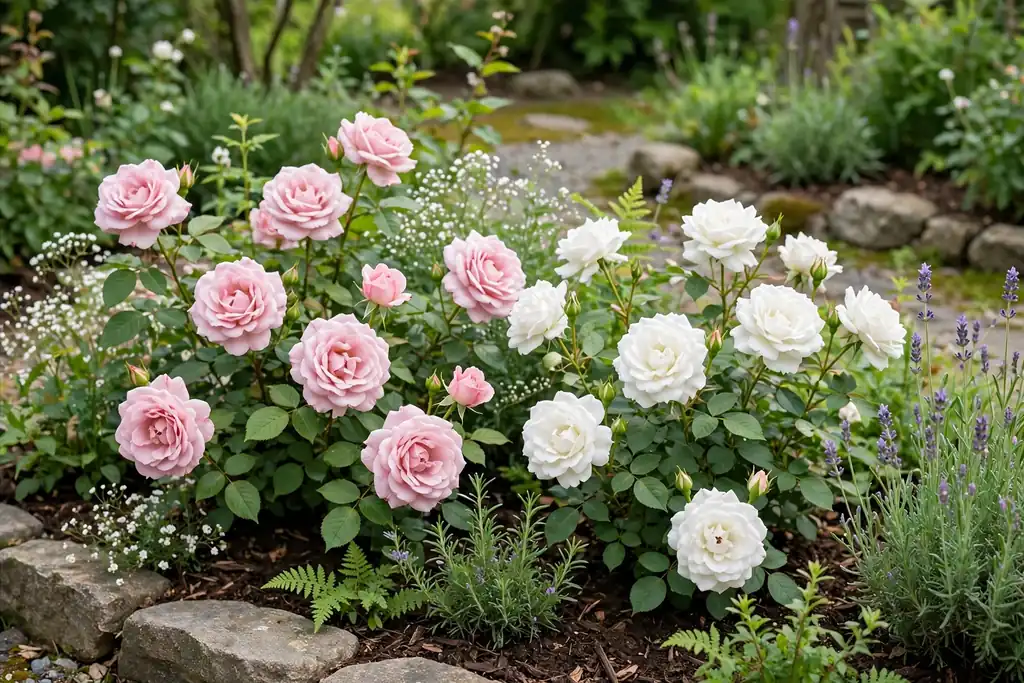
Plant a bed of blush pink and white roses for a calm, soft look that suits a front garden, a wedding garden, or a bed seen from a bedroom window. Mix blush shrub roses with white roses in roughly equal amounts, keep the foliage mostly green, and avoid adding a third strong color, so the bed stays restful. Repeat the same blush and white pairing in a pot nearby to link the spaces.
Choose varieties with different flowering times within the blush and white range, so the bed does not peak and finish in one month. Add white foxgloves or white cosmos among the roses for height in early summer, and keep the edging low and green. This color scheme also cuts well for the house, since blush and white stems suit most rooms.
17. Make a Round Rose Bed as a Lawn Centerpiece
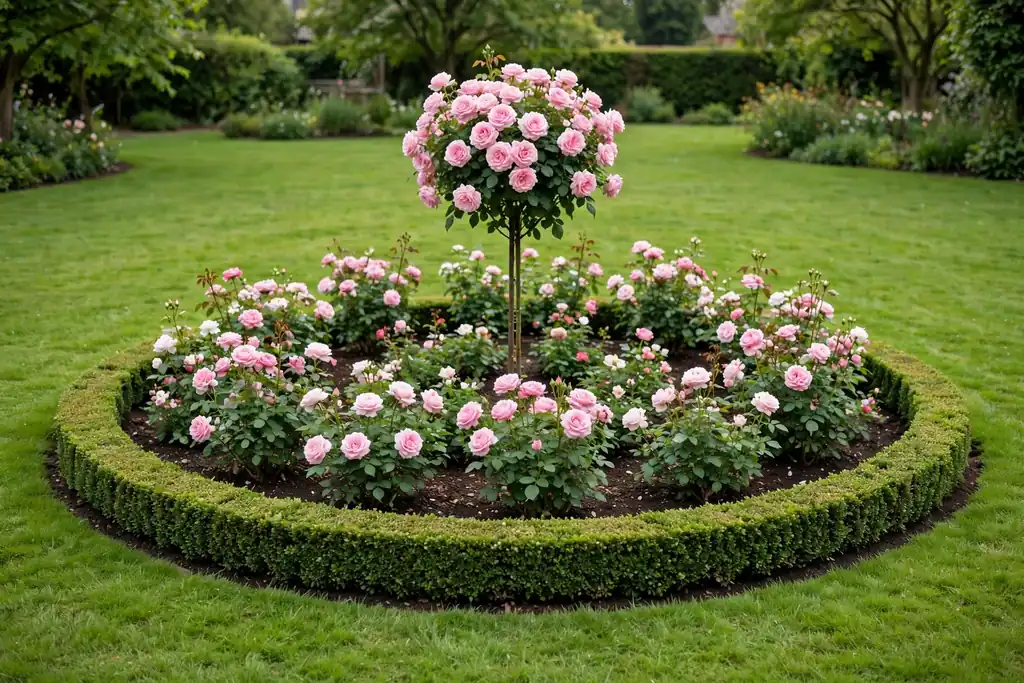
Plant a round rose bed in the middle of a lawn as a centerpiece that can be seen from every side. Put one standard rose or a tall shrub rose in the center, ring it with mid height shrub roses, and edge the circle with low roses or lavender. A round bed needs a clear edge, such as stone, brick, or a mown strip, so the mower can finish each side cleanly and the shape stays crisp.
Keep the circle wide enough to walk around for pruning, and choose varieties that flower at the same time for a full display, with repeat types to carry the show into autumn. A round bed suits a front lawn, a large back lawn, or a courtyard where a rectangular border would feel cramped. Water from the edge inward, and mulch the whole circle in spring.
18. Raise Roses in a Raised Bed for Drainage and Reach
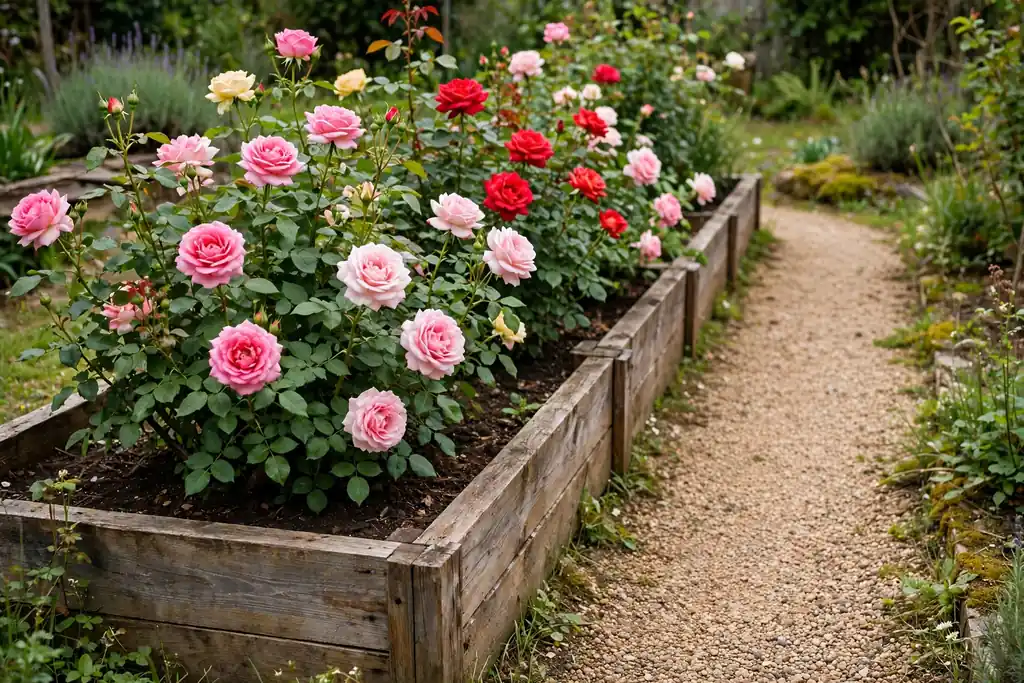
Grow roses in a raised bed when the soil is heavy, wet, or hard to work, or when bending low is difficult. A raised bed warms up early, drains well, and keeps the planting contained and easy to reach from all sides. Build the bed no wider than you can reach across from one side, fill it with a mix of garden soil and compost, water deeply after planting, and mulch the surface to hold moisture.
Raised beds suit a slope, a paved yard, or a garden with poor soil, since you control the soil inside the bed. Keep paths beside the bed wide enough for a wheelbarrow, and put the roses you visit daily, such as cutting types, nearest the house. For stepped layouts that suit steeper ground, these tiered garden ideas show how to give each level a clear job.
19. Pair Roses With Clematis on the Same Support
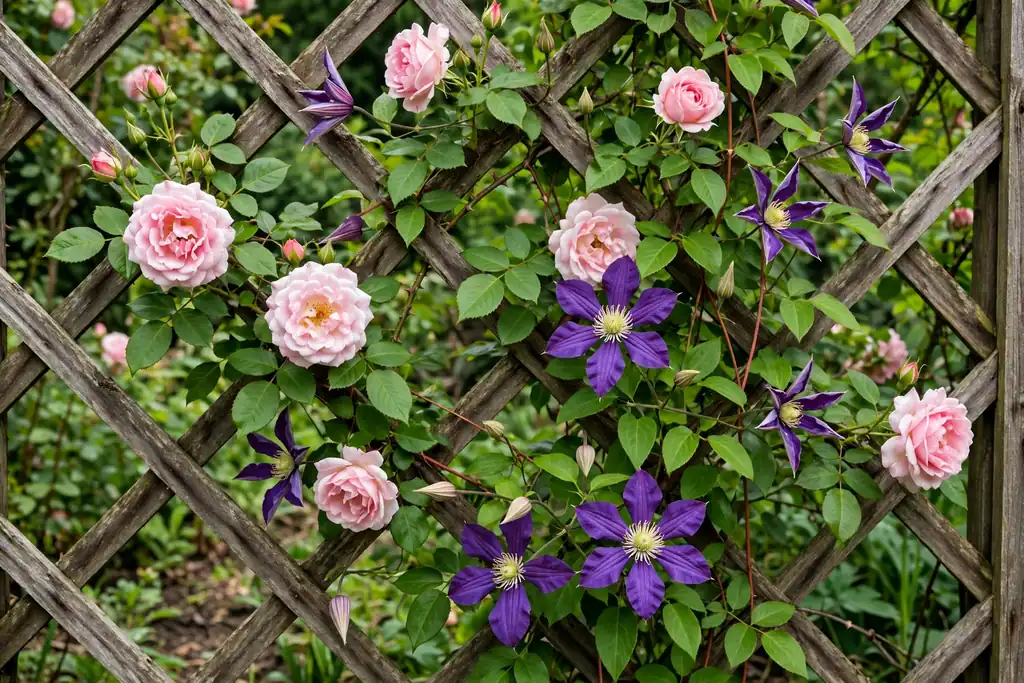
Grow clematis through a climbing rose on the same arch, trellis, or pergola for two flowering layers from one support. Plant the rose first, let it establish for a season, then plant the clematis at the same base, a little to one side, and train its stems through the rose branches. Choose a clematis that flowers when the rose is between flushes, so the support rarely stands bare.
Water and feed both plants well, since they share the same soil, and prune each by its own type and time, taking care not to cut the other plant by mistake. Label both plants while they are young, since bare stems look alike in winter. This pairing suits an arch, a wall trellis, or a pergola post where one plant alone would leave gaps.
20. Grow Compact Patio Roses on Steps and Balconies
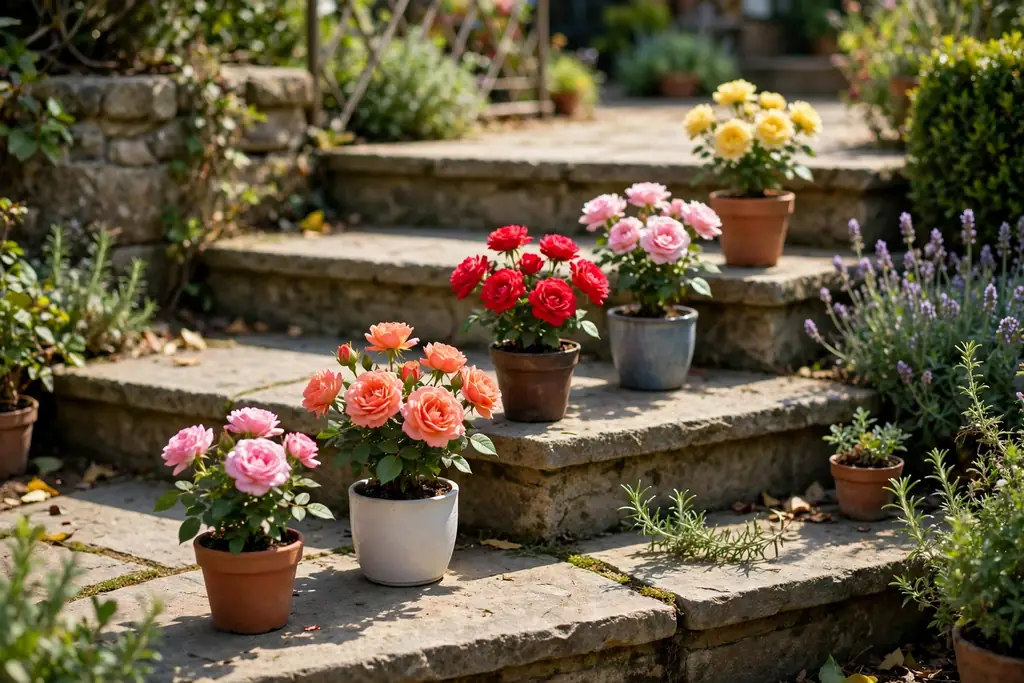
Grow compact patio roses in small pots on sunny steps, a balcony, or a narrow ledge where a large shrub would never fit. Use deep pots with drainage, fresh potting mix, and one compact plant per pot, and group pots in odd numbers and in different heights for a fuller look than a single pot alone. Patio roses flower on short stems, so they suit railings, steps, and small tables.
Water pots often in hot weather, since shallow pots dry out fast, and feed lightly through the season. Move pots to follow the sun if one spot turns shady, and bring tender pots under cover if a hard frost is forecast early or late in the season. Deadhead spent blooms to keep new flowers coming, and replace tired plants every few years as pots run out of room.
21. Lay Out a Formal Rose Garden With Gravel Paths
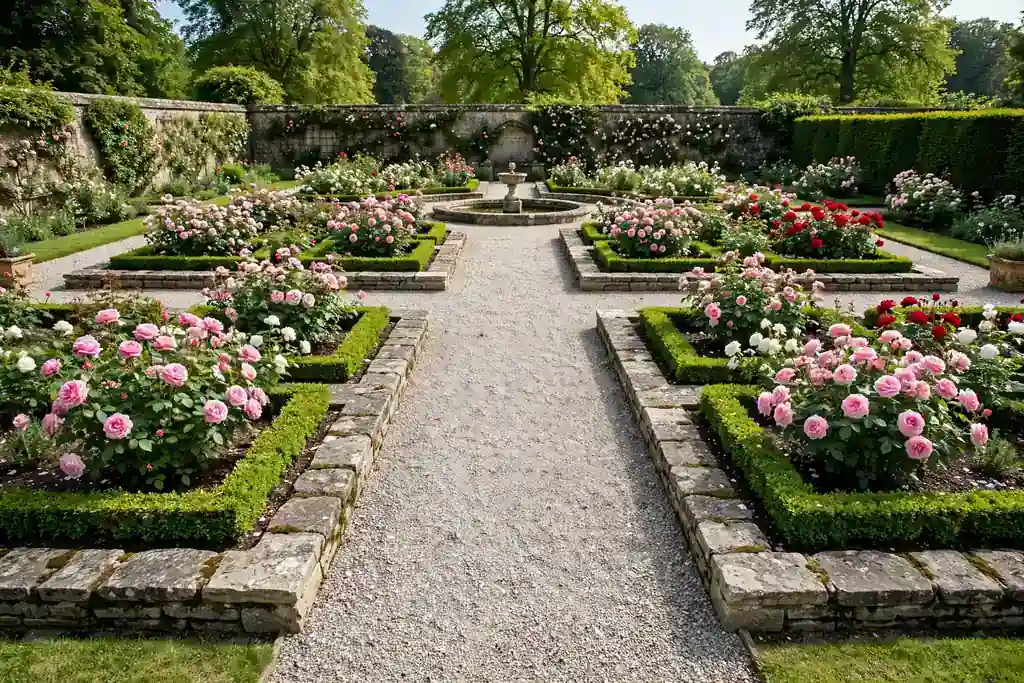
Lay out a formal rose garden with straight gravel paths, stone edging, and beds in a clear pattern for a tidy, classic look. Divide the area into four or more beds around a central point, such as a standard rose, a sundial, or a small fountain, and edge each bed with low boxwood, lavender, or stone. Gravel paths keep feet dry, show the bed shapes clearly, and suit a front garden or a courtyard.
Plant each bed with one rose variety or one color, so the pattern reads from the house and from the path. Keep the paths wide enough for a wheelbarrow, and top up gravel each year where it thins. A formal layout needs regular edging and deadheading to stay crisp, but the structure itself carries the garden through winter, when the roses are bare.
22. Build a Four Season Rose Garden With Structure and Hips
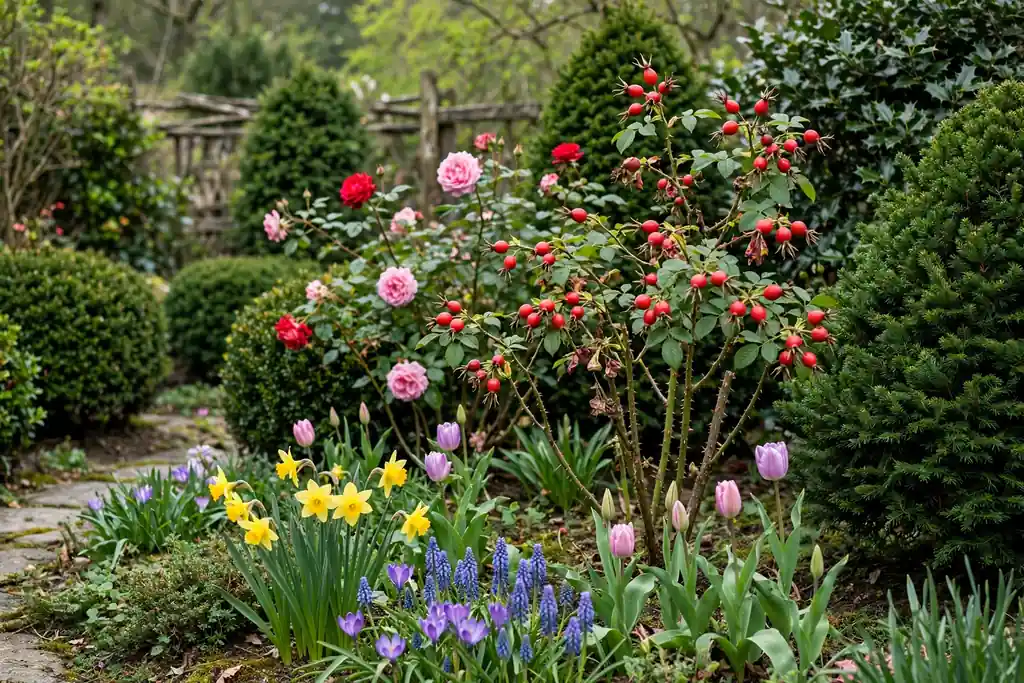
Build a rose garden that holds interest all year by adding evergreen structure, seasonal underplanting, and roses chosen for hips as well as flowers. Use evergreen shrubs, grasses, and a stone edge for winter shape, plant spring bulbs under the roses, and leave hips on some roses in autumn for color and birds. Choose roses known for good hips, and stop deadheading those plants in late summer so hips can form.
Refresh seasonal pots in spring with bulbs and annuals, in summer with flowering pots, and in autumn with grasses and late color. Keep one or two pots empty in reserve, so swaps are quick. This backbone plus seasonal change approach keeps a rose garden current without a full redesign each year, and it means the garden still looks cared for when the roses rest.
Conclusion
A beautiful rose garden starts with the spot, not the shopping list. Give roses sun, air, and soil that drains well, then choose one structure, such as a border, a hedge, or an arch, and build around it. Space plants by the label, water at the base, mulch in spring, and prune by rose type, and the garden will reward ordinary care with months of flowers and scent. Pick one idea from this list, set it where you will actually sit or walk, and add pots, seats, and cutting rows only after that first planting feels right.
Save this list on Pinterest before your next nursery trip, and work through it one area at a time: structure first, then planting, then the comfort details that make the rose garden yours.
FAQs
What is the best spot for a rose garden?
A sunny, open spot with at least six hours of sun, good air flow, and soil that drains well suits most roses. Avoid deep shade, frost pockets at the bottom of a slope, and spots where water stands after rain. Morning sun helps leaves dry early, which keeps them healthier, and a spot you pass daily means you will notice watering, deadheading, and picking needs in time.
How much sun do roses need to flower well?
Most roses flower best with at least six hours of direct sun a day. In hot areas, some afternoon shade is welcome, but full shade gives weak growth and few flowers. If your garden is mostly shady, choose roses rated for part shade, plant them in the brightest spot you have, and keep the bed open so light reaches the lower leaves.
How often should I water roses?
Water roses deeply at the base once or twice a week in dry weather, rather than lightly every day, so roots grow down and hold the plants steady. Newly planted roses need more frequent water in their first season, while pots may need water daily in hot, windy weather. Check soil with a finger before watering, water in the morning or evening, and mulch the surface to hold moisture.
When should I prune roses?
Prune in late winter or early spring, before new growth starts in earnest, following the guidance for your rose type. Shrub roses usually need a light tidy and removal of dead or crossing stems, climbers need old stems thinned and new stems tied in, and ramblers are usually pruned after flowering. Always use sharp, clean snips, cut just above an outward facing bud, and remove prunings from the bed.
Which roses are easiest for beginners?
Easy shrub roses that are disease resistant and repeat flowering are the simplest start. They forgive missed deadheading, need only a simple yearly prune, and flower for months with ordinary care. Groundcover roses and compact patio roses are also forgiving, since they stay small and need little shaping. Start with two or three plants in a sunny bed, learn their routine for a season, then add more.
Can I grow roses in pots on a patio or balcony?
Yes, if you choose roses suited to containers, use deep pots with drainage holes, and water and feed them through the season. Shrub, patio, and compact climbing types all grow in pots, though large ramblers need a very large pot and a strong support. Pots dry out faster than beds, so check soil often in summer, and in cold areas move tender pots to a sheltered corner for winter.