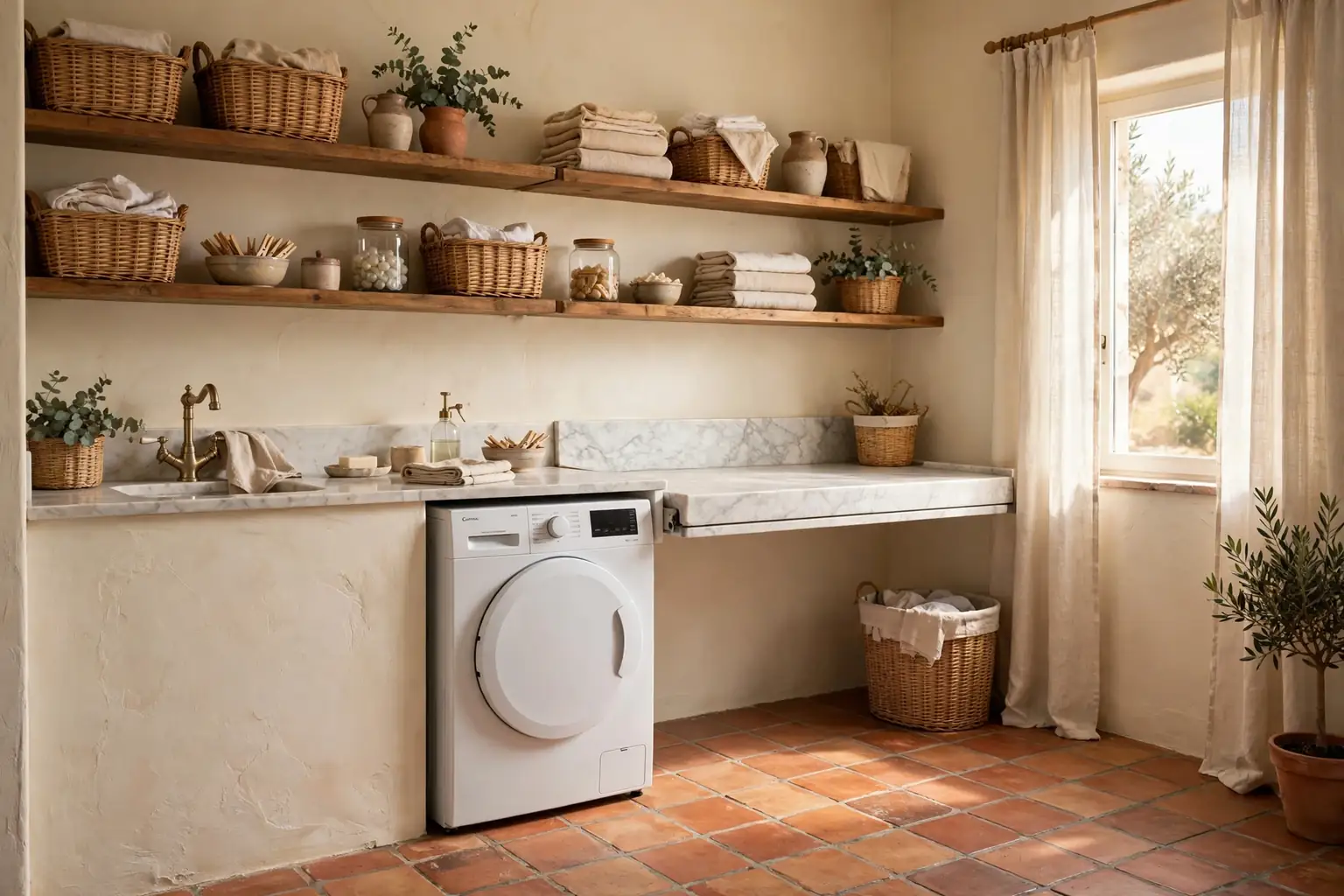
An Italian laundry room feels calm and hardworking at the same time. Warm plaster walls, terracotta tile, worn wood, and plain linen set the tone, while every basket, shelf, and hook has a clear job. These 14 Italian laundry room ideas cover floors, walls, storage, sinks, and drying, so you can borrow one detail or plan a whole room from them. Start with the surfaces that take the most wear, then add storage where clutter collects, and finish with small touches that make wash day more pleasant.
Key Takeaways
- Keep the palette warm and limited: cream plaster, terracotta, walnut, and soft blue or green, repeated across tiles, wood, and textiles.
- Choose materials that handle water and wear, such as tile floors, stone counters, and washable linen.
- Give every corner a job: sorting, washing, drying, folding, or ironing, so nothing drifts onto the floor.
- Use open shelves and baskets for daily items, and closed cabinets for supplies you use less often.
- Let one Italian detail lead, such as an arch, a patterned tile border, or a marble counter, and keep the rest of the room simple.
- Air dry where you can: a wooden rack, a wall rail, or a sunny corner saves energy and suits linen and delicates.
1. A Terracotta Tile Floor with a Patterned Border
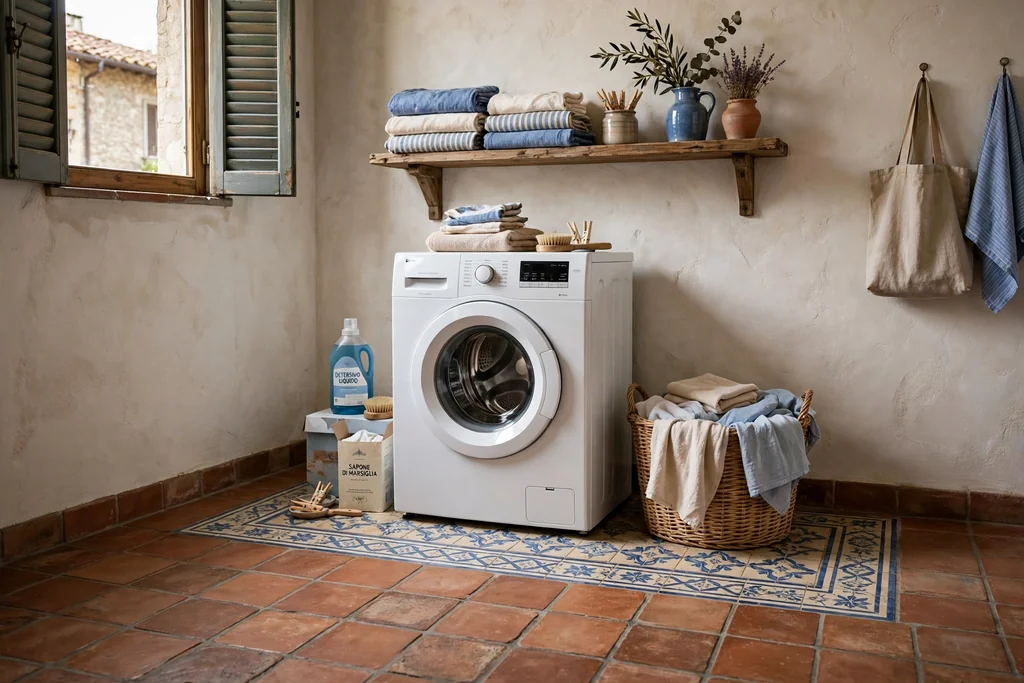
A terracotta tile floor gives an Italian laundry room its warm base and stands up well to water, mud, and dropped baskets. Lay plain terracotta tiles across the room, then frame the main work zone with a border of patterned tiles in cream and soft blue. The border reads like a rug made of tile, and it marks the washing and folding area without adding a fabric rug that would stay damp.
Keep the pattern simple and even, with the same tile repeated around the edge, and use a grout tone close to the terracotta so the floor reads as one warm surface. Seal the tile and grout as the maker directs, since terracotta is porous and can stain near a sink. If a full tile job is too much, lay the patterned border only around the washer and sink, and use plain tiles for the rest of the floor.
2. Warm Limewash Plaster Walls
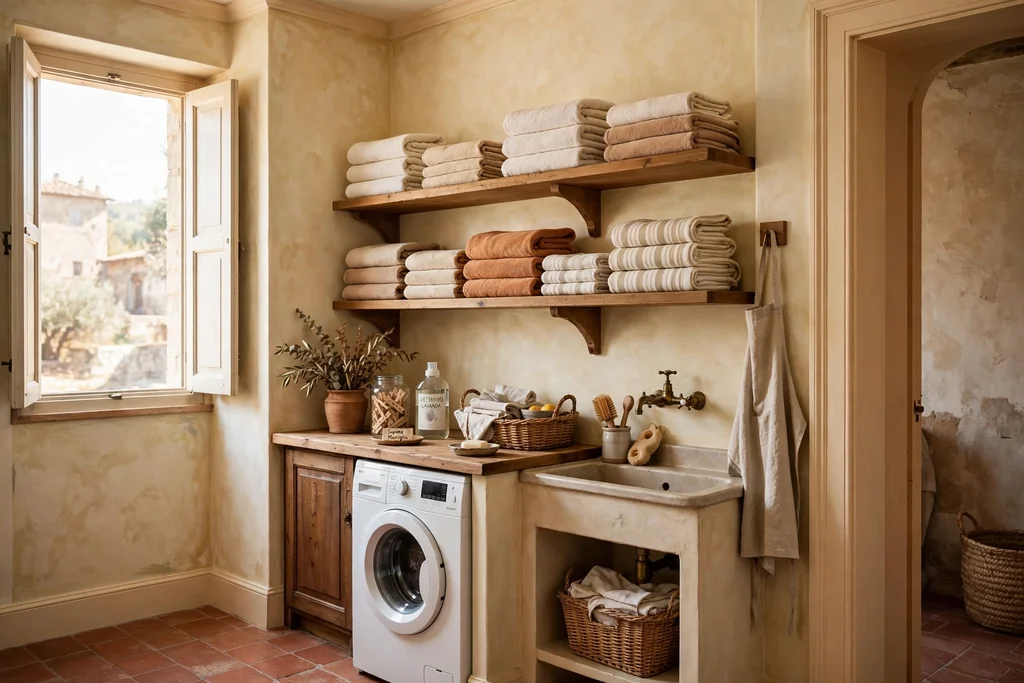
Wash the walls in a warm limewash plaster tone, such as cream or pale terracotta, to give the room a soft, hand finished look that plain paint rarely gives. Limewash has a cloudy depth that suits both old houses and newer rooms that feel too flat, and it pairs naturally with wood shelves and terracotta floors. Choose a muted tone rather than a bright orange, and test a patch in daylight and lamplight before you commit.
Keep the ceiling and trim in warm white so the walls stay the main color, and leave one wall plain if the room is small, so the space still feels bright. In a damp laundry room, check that the wall finish suits the moisture level, and keep the wall behind the washer and sink protected with tile. A single limewash wall behind open shelves often gives the whole room its Italian character.
3. A Marble Topped Folding Counter
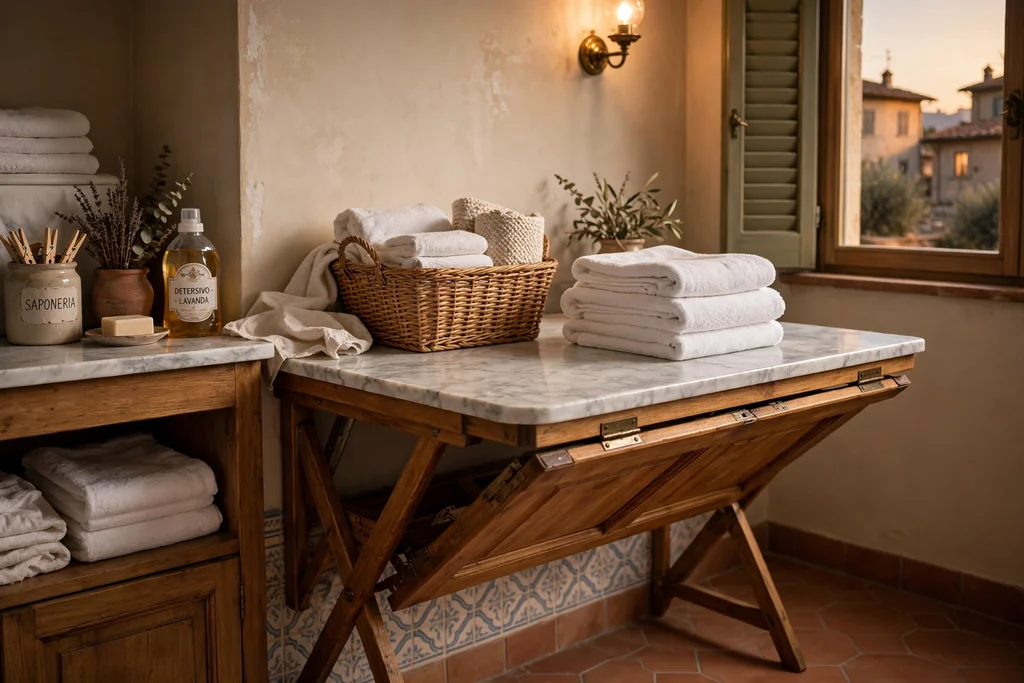
A marble topped counter gives you a cool, smooth surface for folding warm clothes straight from the dryer. Set the counter at a comfortable standing height above the washer and dryer or along one free wall, with open space below for baskets. White or cream marble with soft grey veins keeps the look calm, while a wood or iron base below adds warmth.
Keep the counter mostly clear, with one basket for clean laundry and one for items to iron, so folding never means clearing clutter first. Wipe spills quickly, since marble stains more easily than sealed wood, and use a board or tray under damp items. If a full marble slab is out of reach, a marble offcut or a stone topped bench over a simple wood frame gives the same cool folding surface.
4. A Freestanding Wooden Drying Rack
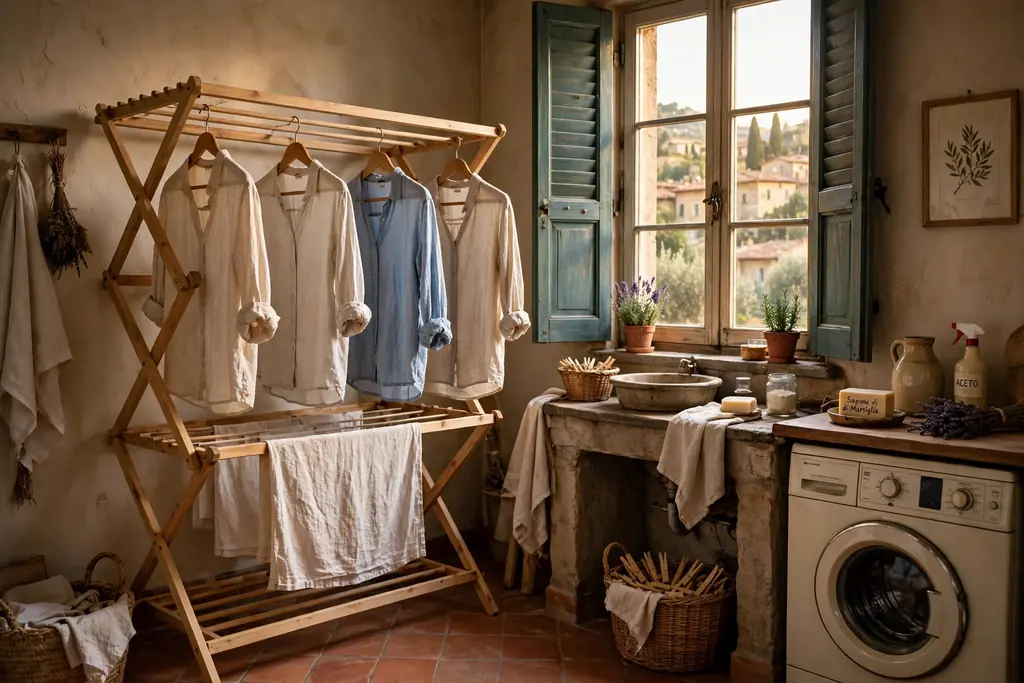
A freestanding wooden drying rack, the kind used in Italian homes for generations, gives linen and delicates a place to air dry without a tumble dryer. Choose a sturdy folding rack in beech or walnut that opens flat for shirts and towels and folds away behind a door when not in use. Place it near a window or a vent, where moving air shortens drying time.
Hang shirts on hangers hooked over the top rails, and lay knitwear flat on the lower tiers so it keeps its shape. Keep the rack clear of the washer door swing, and wipe the wood dry if it gets splashed. For a small room, a narrow rack that fits in a gap beside the washer works better than a wide one that blocks the walkway.
5. Open Walnut Shelves with Woven Baskets
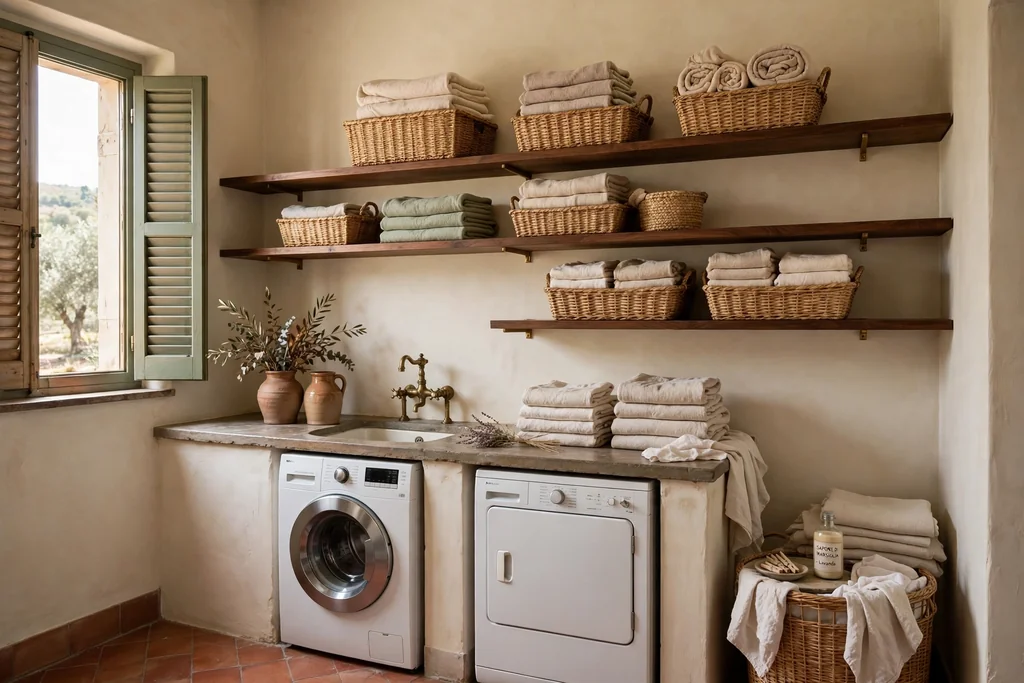
Hang open walnut shelves on one wall for folded towels, baskets, and wash supplies, and keep the display loose rather than packed. Thick wood shelves with simple iron brackets suit an Italian room, because they show the handmade pieces that give the room character, such as woven baskets and ceramic jars. Put daily items at hand height and lighter items higher up.
Edit the shelves hard: one row of folded towels, a basket for cleaning cloths, and empty space between groups. Label each basket, one for whites, one for colors, one for delicates, so sorting starts before wash day. Dust open shelves weekly, and keep anything that must stay dry, such as powdered detergent, in a closed jar rather than an open basket.
6. A Deep Farmhouse Sink with a Brass Tap
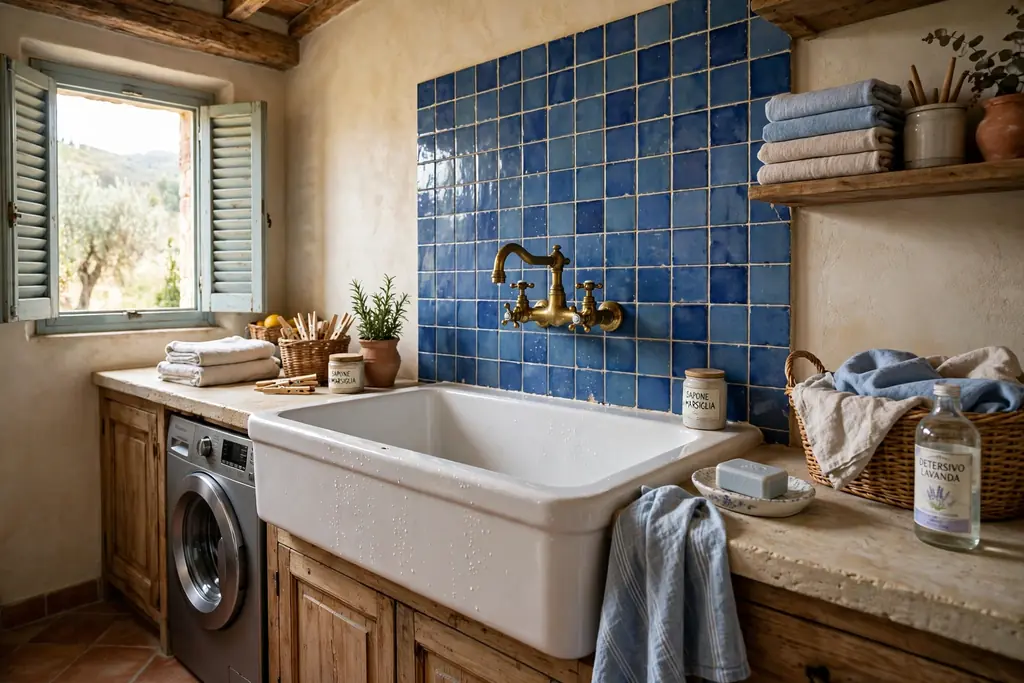
A deep farmhouse sink turns hand washing, soaking, and stain treatment into a simple job instead of a splash over a small basin. Set the sink at a height that lets you work without bending, with a tiled splashback behind it and a draining board or stone slab beside it for wet items. A brass tap adds a warm metal accent that suits wood shelves and terracotta nearby.
Keep a small brush, a bar of soap, and a stain cloth in a ceramic dish by the sink, so hand washing never means hunting for supplies. Wipe brass fittings regularly, since laundry products dull the finish faster than in other rooms. If plumbing work is limited, a freestanding utility sink in a similar deep shape gives the same working depth with less building work.
7. An Arched Niche for the Washer and Dryer
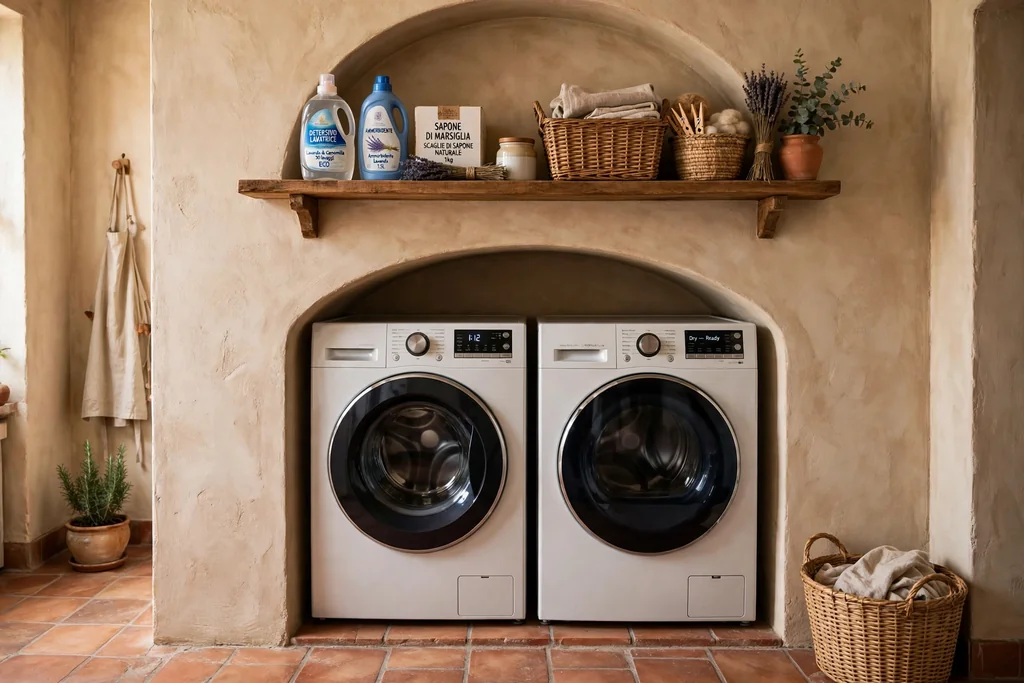
An arched niche brings the curved doorways of Italian homes into the laundry room and gives the machines a tidy home of their own. Build or suggest an arch around the washer and dryer bay, with the machines set back into the recess and a shelf above for detergent and baskets. Paint the inside of the arch a shade warmer than the wall, such as pale terracotta, so the shape reads clearly.
Leave enough space around each machine for hoses, vents, and door swing, and keep the front of the niche open or fitted with linen curtains rather than solid doors, so heat and moisture can escape. If building an arch is not possible, a freestanding arched frame in wood around the machines gives a similar shape with no wall work. Measure the machines twice before you build, including hoses at the back.
8. Linen Curtains in Place of Cabinet Doors
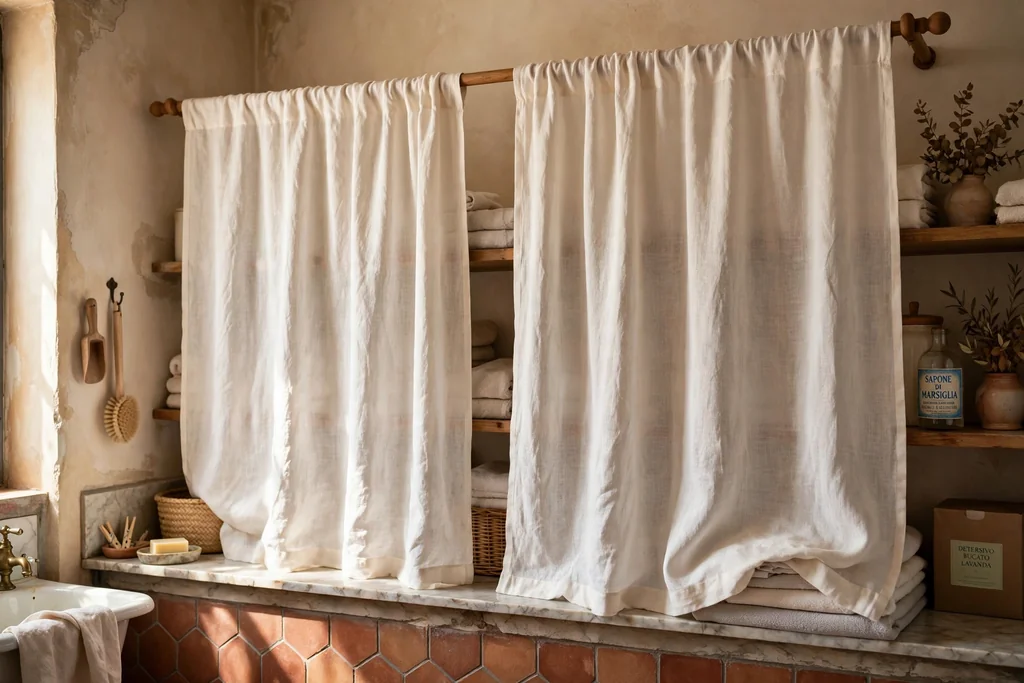
Hang plain linen curtains in place of cabinet doors for a soft, Italian farmhouse look that also hides clutter fast. A simple rod and a curtain in warm white, oatmeal, or pale sage covers open shelving or a washer bay, and the fabric can be removed and washed when it picks up dust or splashes. The slightly relaxed drape is part of the appeal, so do not chase a pressed, formal finish.
Choose a washable linen or cotton, and hem the curtain so it clears the floor and does not drag near wet areas. Keep one spare curtain if the laundry room gets daily use, so one can wash while the other hangs. This idea suits a rented home well, since a rod and curtain leave far fewer marks than new cabinet doors.
9. A Blue and White Majolica Tile Splashback
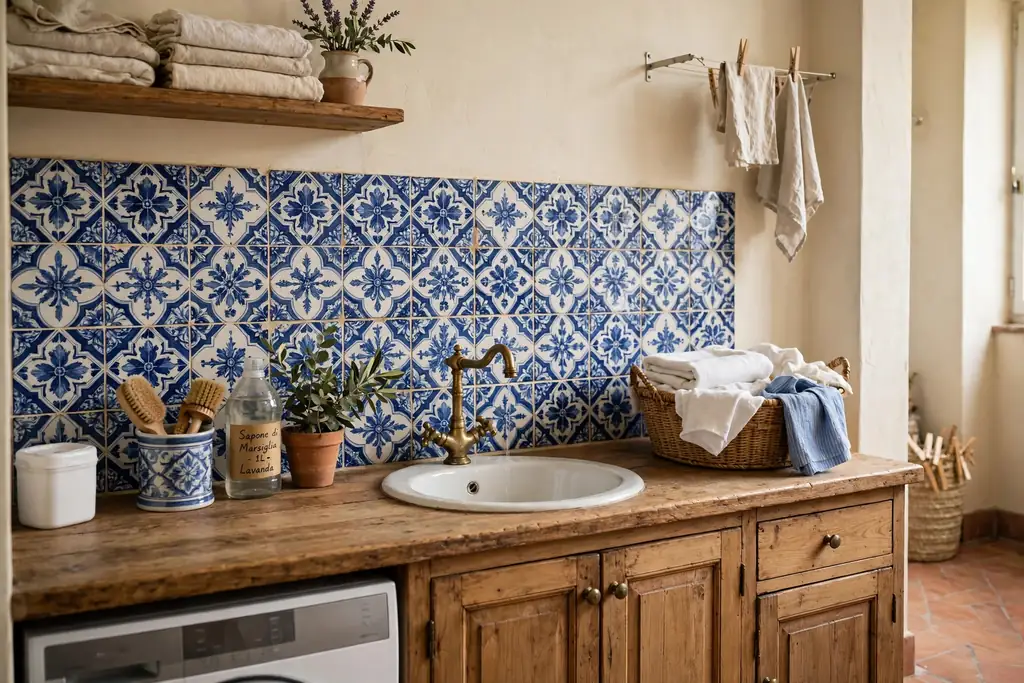
A blue and white majolica tile splashback gives the sink wall a strong Italian detail and a surface that wipes clean. Hand painted style tiles in blue, cream, and soft green suit a cream plaster wall and a wood counter, and the pattern draws the eye to the working part of the room. This suits a laundry room with one plain wall that needs character without new cabinets.
Run the tile in a simple straight or brick pattern so the pattern stays the focus, and use a grout tone close to the cream tile so the wall reads as one surface. Seal the tile and grout as the maker directs, since the sink wall takes regular splashes. If full tiling is too much, a small tiled panel behind the sink alone gives the same warmth for less work.
10. A Wall Mounted Ironing Station
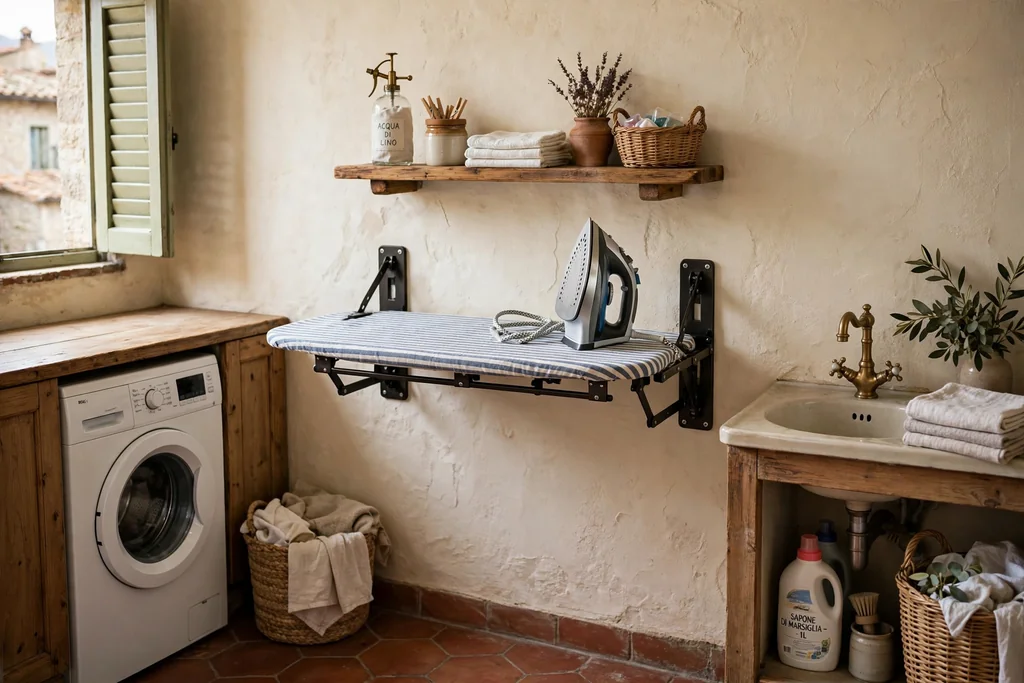
A wall mounted ironing station keeps pressing close to the washer and dryer, so clothes move from dryer to hanger without a trip to another room. Fix a fold down ironing board to the wall at a height that suits the person who irons most, with a small shelf above for the iron, a spray bottle, and a linen press cloth. A heat safe rest for the iron keeps the board clear when the iron cools.
Fold the board flat against the wall after use, and keep the wall above it clear of shelves so long items such as shirts and trousers have room. Store the iron unplugged and cool, with its cord wrapped, and keep a small basket nearby for items that need pressing. For a narrow room, a slim board that folds into a wall cabinet works better than a full size freestanding board.
11. Labelled Glass Jars for Wash Supplies
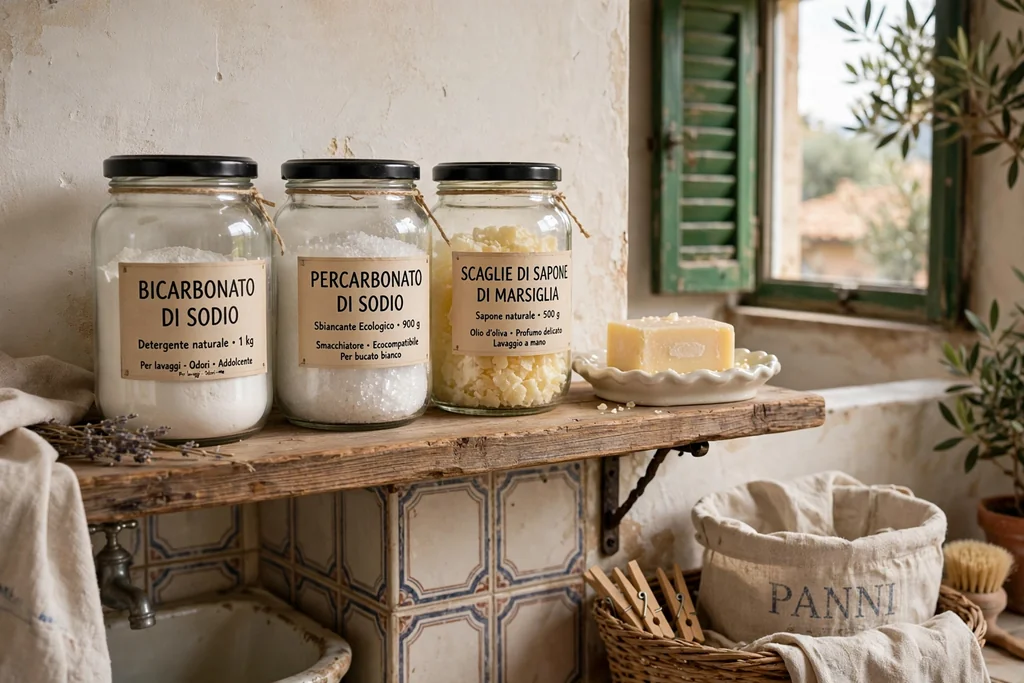
Decant detergent, stain powder, and pegs into labelled glass jars for a tidy shelf that also shows at a glance what needs refilling. Clear jars with wood or metal lids suit an Italian laundry room far better than a row of mismatched plastic bottles, and they keep powdered supplies dry. Place the jars on one open shelf, grouped by job, with scoops kept inside the jars they serve.
Label each jar in plain words, such as whites, colors, and stain soak, so anyone in the household can find the right supply. Keep jars out of reach of small children, and never move a product into a jar without its safety notes, especially for strong cleaners. One or two strong ceramic pieces beside the jars, such as a soap dish, keep the shelf from looking like a shop display.
12. Exposed Wood Beams and a Hanging Rail
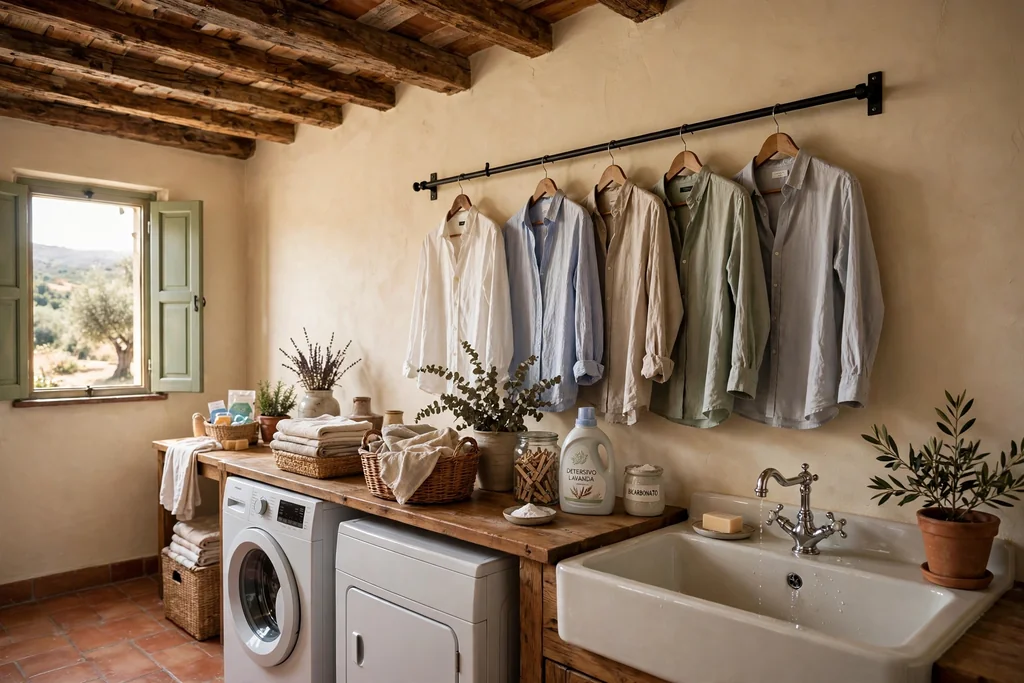
Leave ceiling beams exposed, or add slim wood beams to a plain ceiling, to bring warmth overhead in a laundry room that can otherwise feel plain and boxy. Dark walnut beams suit a rustic room, while pale oak beams keep a smaller room feeling light. Below them, fix a sturdy iron or wood rail to the wall for hanging freshly ironed shirts and air drying delicates on hangers.
Check the ceiling height first, since beams in a very low room can feel heavy. In a low room, use fewer, slimmer beams in a pale wood, and keep the ceiling itself in warm white. Hang the rail where clothes will not drip onto folded laundry, and leave space between hangers so air moves around each item. Check that rail fixings go into studs or solid masonry, since a full rail of wet clothes is heavy.
13. A Sunny Corner for Air Drying and Plants
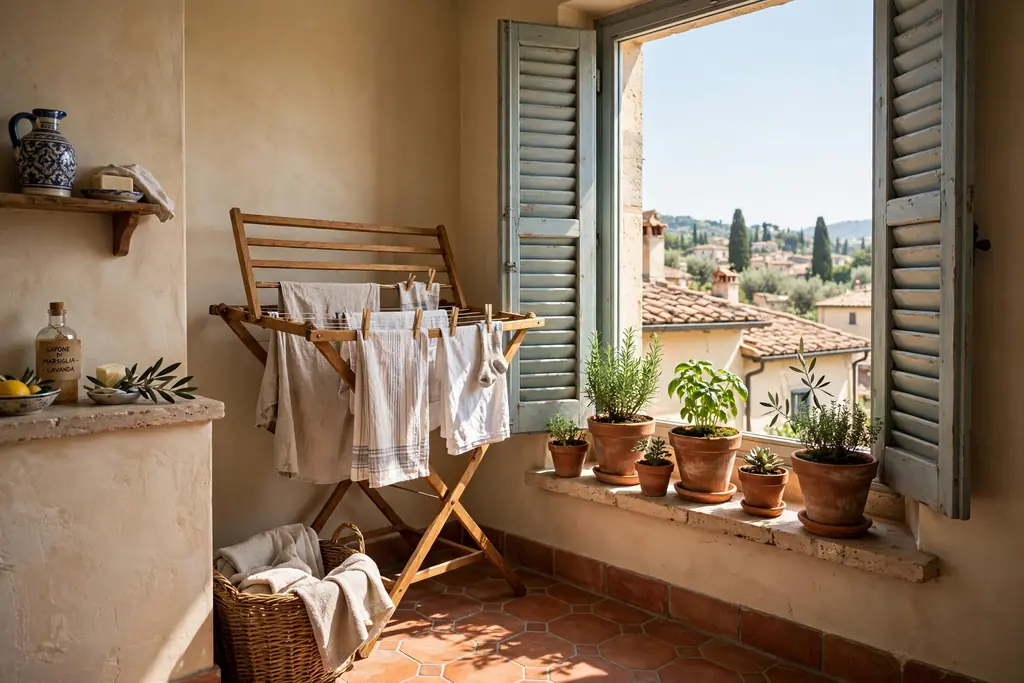
Set aside the sunniest corner of the laundry room for air drying and a few plants, so wash day borrows light and air from the rest of the house. Place a small wooden rack or a wall rail near the window, with terracotta pots of herbs or trailing plants on the sill and a stone slab below to catch drips. The pots suit the warm palette, and the plants soften a room that is mostly machines and shelves.
Use pots with drainage holes and saucers, and water only when the top of the soil feels dry, since most indoor plants dislike wet roots. Rotate the pots weekly so each plant grows evenly toward the light. Keep plants clear of the dryer vent and away from harsh heat, and choose hardy plants if the room swings between warm and cool through the day.
14. A Sorting Nook with Baskets and a Folding Bench
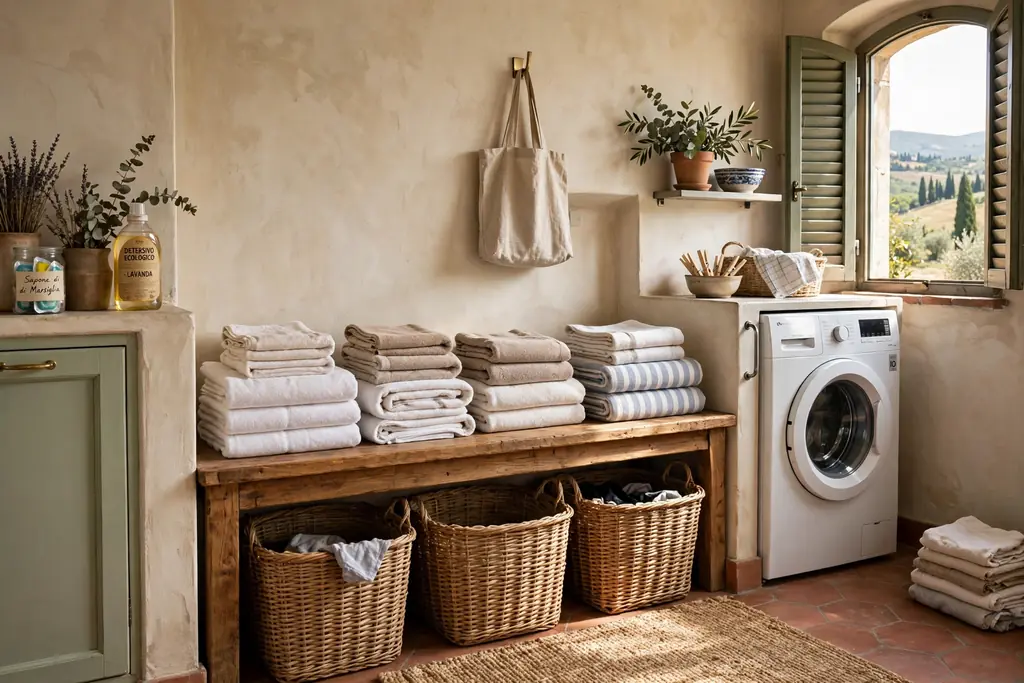
A sorting nook turns an unused corner into the first step of every wash, so sorting never happens on the floor. Set a low bench along one wall, with three woven baskets below or beside it, one for whites, one for colors, and one for delicates, and a small shelf above for stain treatment supplies. The bench top gives you a place to fold small items and to set down a basket while you sort.
Add a cushion in a washable linen or cotton cover if the bench doubles as a seat for putting on shoes, and keep the wall above it simple, with one print or a small shelf, so the nook feels calm rather than crowded. Empty the baskets on a set routine, such as each evening, so the nook stays a working station rather than a pile. A similar palette and warm wood tones link this nook to the Italian kitchen ideas and Italian living room ideas already on Dwell Ovell.
Conclusion
An Italian laundry room does not need a large space or a full rebuild. A warm floor, a plain plaster wall, one good counter, and storage that matches how you actually wash, dry, and fold will carry most of the look. Pick the idea that fixes your biggest daily frustration first, whether that is sorting, drying, or folding space, and add the next detail only when the first one earns its place. Save this post on Pinterest for your next wash day refresh, and return to it when you are ready to plan the next corner.
FAQs
What colors suit an Italian laundry room?
Warm cream, terracotta, walnut, olive, and soft blue or green suit an Italian laundry room. Keep the palette to three or four tones, repeated across walls, tiles, wood, and textiles, so the small room stays calm.
How do I make a small laundry room feel Italian?
Start with one warm surface, such as a terracotta tile floor or a limewash wall, then add wood shelves, woven baskets, and linen curtains. Small details, such as a brass tap or a patterned tile border, give the Italian feel without new cabinets.
What is the best floor for an Italian laundry room?
Terracotta tile, or a terracotta look tile, is a good choice because it handles water and wear and suits the warm palette. Seal the tile and grout as the maker directs, and add a washable runner in the folding area for comfort.
How can I air dry clothes in a small laundry room?
Use a folding wooden rack near a window or vent, a wall rail for hangers, or a narrow rack that fits a gap beside the washer. Hang shirts on hangers and lay knitwear flat, and leave space between items so air moves around them.
Should laundry room cabinets have doors or curtains?
Both work. Solid doors hide clutter and protect supplies from dust, while washable linen curtains give a softer farmhouse look and are easy to change. Curtains suit open shelving and rented homes, while doors suit supplies that must stay dry.
How do I keep an Italian laundry room tidy?
Give every corner a job, one for sorting, one for washing, one for drying, and one for folding, and label baskets and jars so items go back to the same spot. Empty sorting baskets on a set routine, and keep the folding counter clear between loads.