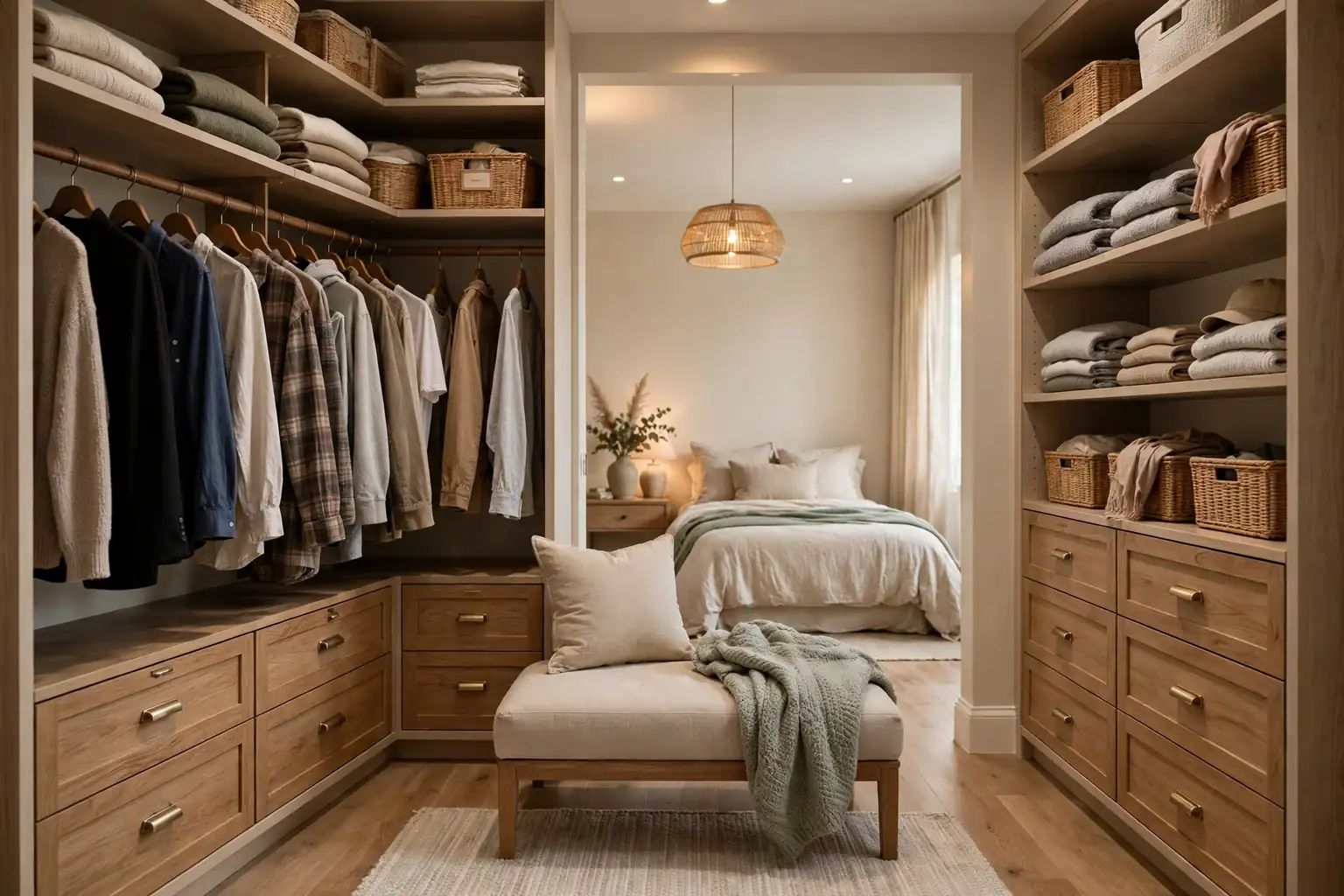
A closet that works feels quiet in the morning. You open the door, see what you need, and get dressed without digging through a pile or hunting for a missing shoe. A closet that does not work does the opposite: it hides clothes, wastes the top shelf, and turns a small daily task into a search. These 22 closet design ideas cover layouts first, then doors, shelves, shoes, accessories, and light, so you can fix the part that causes the most trouble first. Start by emptying the closet, sorting what you actually wear, and measuring the width, depth, and door swing before you buy anything.
Key Takeaways
- Measure first: width, depth, hanging length, and door swing decide which closet layout will actually work.
- Give daily clothes the easy spots at eye level, and move seasonal or rarely worn pieces up high or to another closet.
- Double hanging for shirts and trousers frees more space than a single long rail in most closets.
- Closed bins and doors calm the look, while a small amount of open storage keeps daily items easy to grab.
- Light inside a closet, even a simple battery light, makes colors easier to tell apart in the morning.
- Keep one empty bin or shelf so new clothes have a home instead of landing on a chair or the closet floor.
1. Double Hanging Rails for Shirts and Trousers
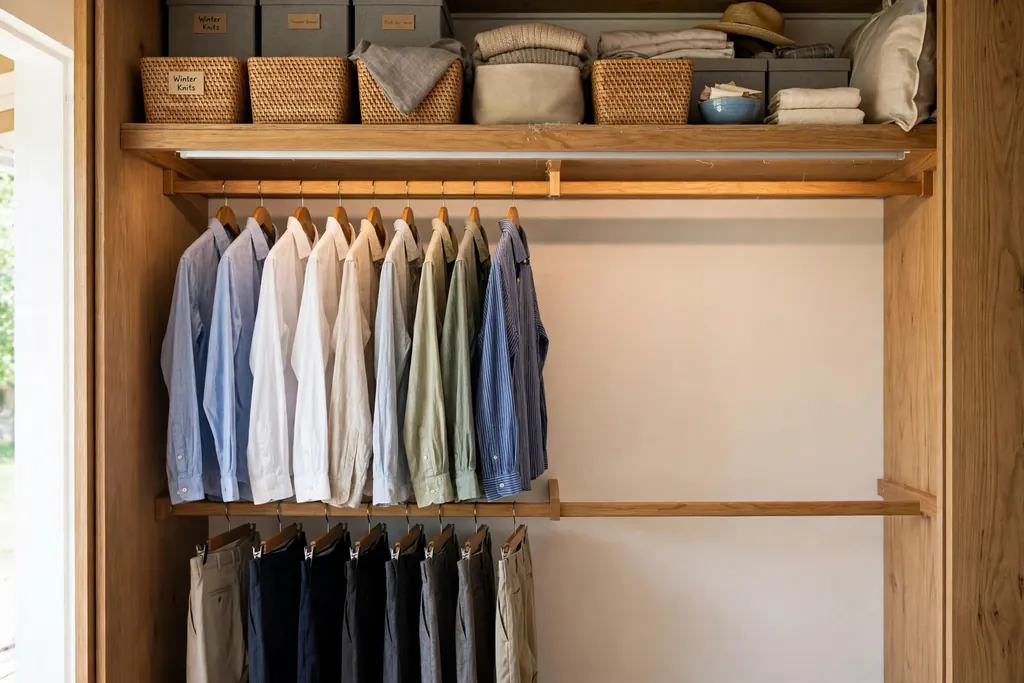
Swap one long rail for two stacked rails and you gain a full second row of hanging space for shirts, blouses, trousers, and jackets. The upper rail holds shirts and short jackets, the lower rail holds trousers and skirts, and a shelf above the top rail still holds folded items or boxes. This layout suits most reach-in closets, since short clothes rarely need the full height of the closet.
Measure your longest shirt and trouser before you set the rail heights, so hems clear the rail below and shoes or boxes below still fit. Use slim, matching hangers so clothes slide easily and take up less width. Keep one tall section at one end for coats and dresses, so long pieces are not forced onto a short rail and crushed at the hem.
2. Floor-to-Ceiling Built-In Closet Wall
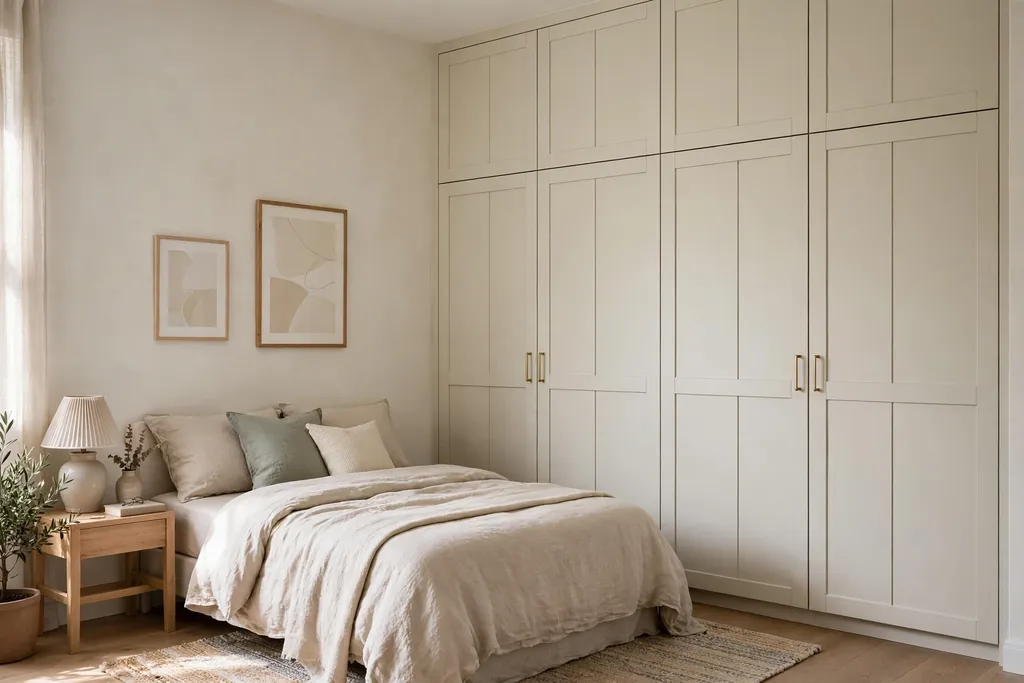
Run closet storage from floor to ceiling along one wall for the most storage in a bedroom with a plain, straight wall. The tall run removes wasted space above a standard wardrobe and gives a clean, built-in look, especially when the doors match the wall color. Inside, plan hanging space, shelves, and drawers around what you own, not around a standard layout that may not fit your clothes.
Keep daily clothes between waist and eye level, shoes low, and seasonal boxes up high where a small step stool can reach them. Leave room for doors and drawers to open fully, and keep sockets and light switches clear of the frame. For a full wardrobe wall in a bedroom, these bedroom wardrobe ideas show fitted, sliding, and freestanding options to compare before you commit to a built-in run.
3. Walk-In Closet with a Center Island Bench
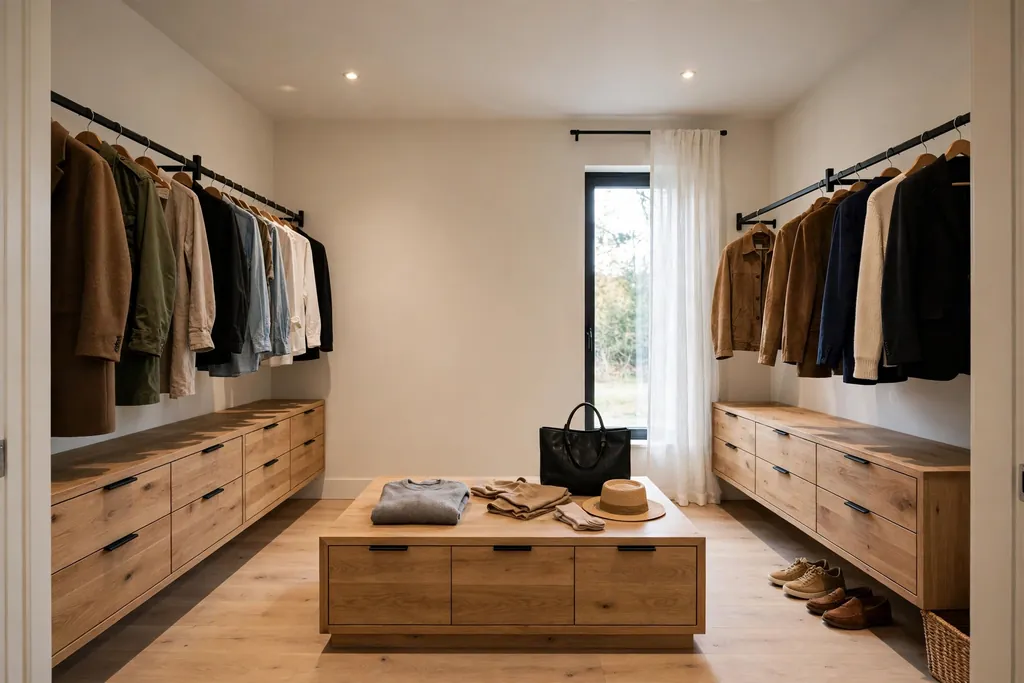
A walk-in closet with a low island or bench in the center gives you a place to fold, lay out an outfit, and sit while you put on shoes. The island can hold drawers for accessories, a tray for jewelry, and a folded sweater stack on top, while rails and shelves run around the walls. This layout suits a walk-in with enough floor space to walk around the island without squeezing past hanging clothes.
Keep the island narrow enough that you can reach the back of the wall shelves from the walkway, and keep the top mostly clear so it stays useful for laying out clothes. A padded bench top makes the island double as seating, and a mirror on one wall lets you check an outfit without leaving the closet. If the walk-in is small, a slim ottoman gives most of the same benefit in less space.
4. Open Closet with Shelves and a Rail
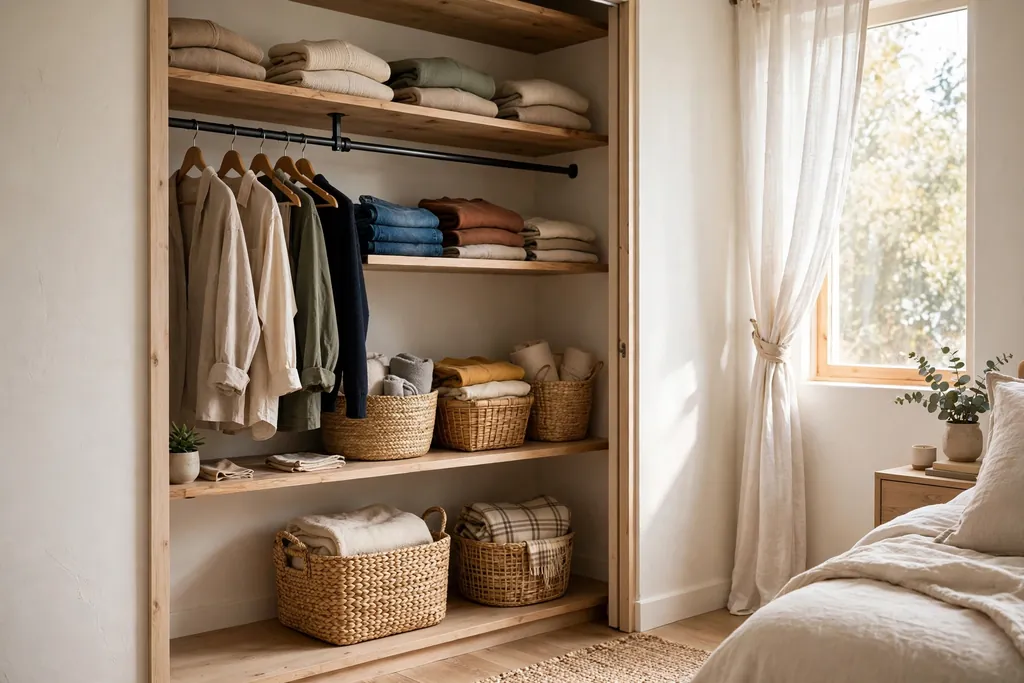
Skip doors and use an open rail with shelves above and below for a closet you can see at a glance. An open setup suits people who dress quickly, like to plan outfits the night before, or enjoy a boutique style display of favorite pieces. It also costs less than a fitted wall and can be built from a simple rail, brackets, and shelves in a spare wall or alcove.
The trade-off is dust and visual clutter, so keep the rail to clothes you wear often and store the rest in closed boxes on the top shelf. Group clothes by type and color, hang them facing the same way, and leave a little space between hangers so outfits are easy to pull out. Add a small tray on a shelf for belts, scarves, and sunglasses, and dust the open shelves weekly.
5. Sliding Mirrored Closet Doors
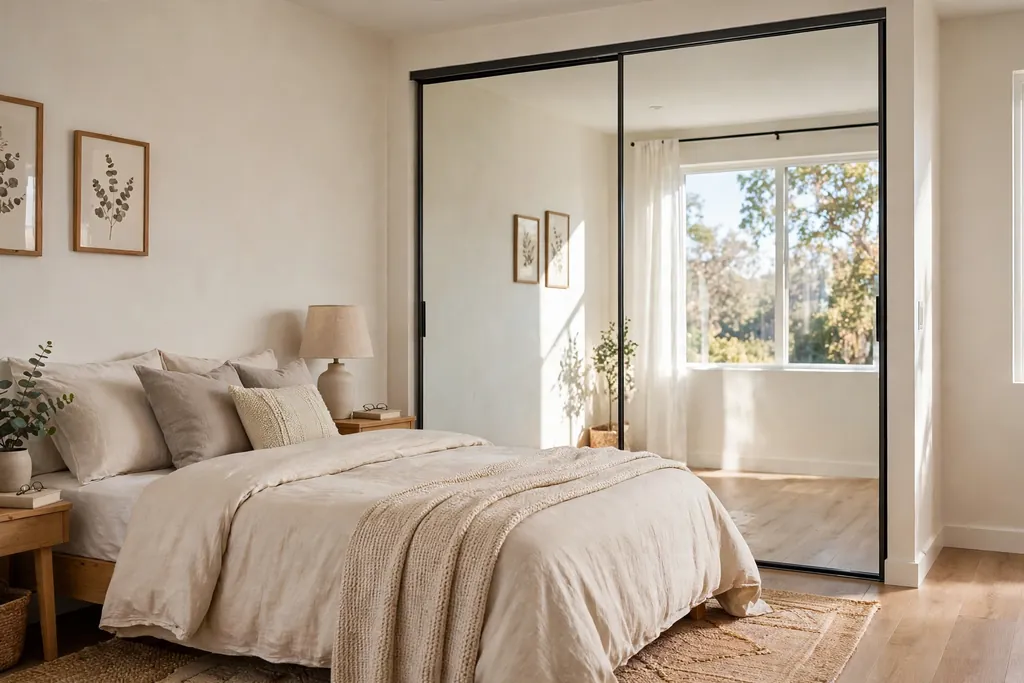
Choose sliding doors with a mirror finish when floor space is tight and you want the room to feel larger. Sliding doors need no swing space, so a bed or a chair can sit closer to the closet, and the mirror reflects daylight across the room. This works well in a small bedroom or a room with a bed close to the closet wall.
Keep the mirror clean with a soft cloth, and check the sliding track for dust so the doors glide smoothly. If a full mirror feels too bright, use one mirrored door and one plain door, or a mirror panel on the door you use most. Fix the doors firmly on their track, and keep the floor in front of the closet clear so the doors slide fully open.
6. Glass-Front Doors with Soft Interior Light
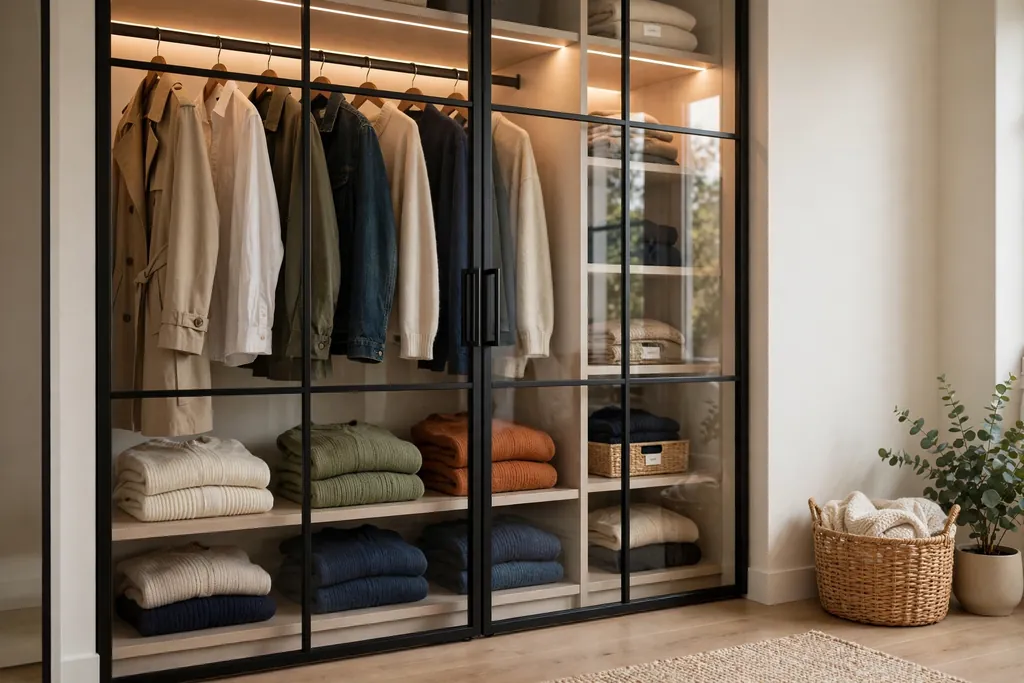
Fit glass-front doors with a soft light inside for a closet that shows neat clothes and makes morning choices easier. Glass suits a closet with a tidy habit, since everything is visible, and the light helps you tell navy from black on dark mornings. Use frosted or ribbed glass if you want a softer view that still hides small clutter.
Keep the display simple: hang clothes by color, fold knitwear in even stacks, and use matching boxes for small items. Wipe the glass inside and out with a soft cloth, and check that lights do not touch fabric. If you rent, a glass-front freestanding wardrobe gives a similar look without fitting work, and it can move to your next room.
7. Angled Shoe Wall with Clear Shelves
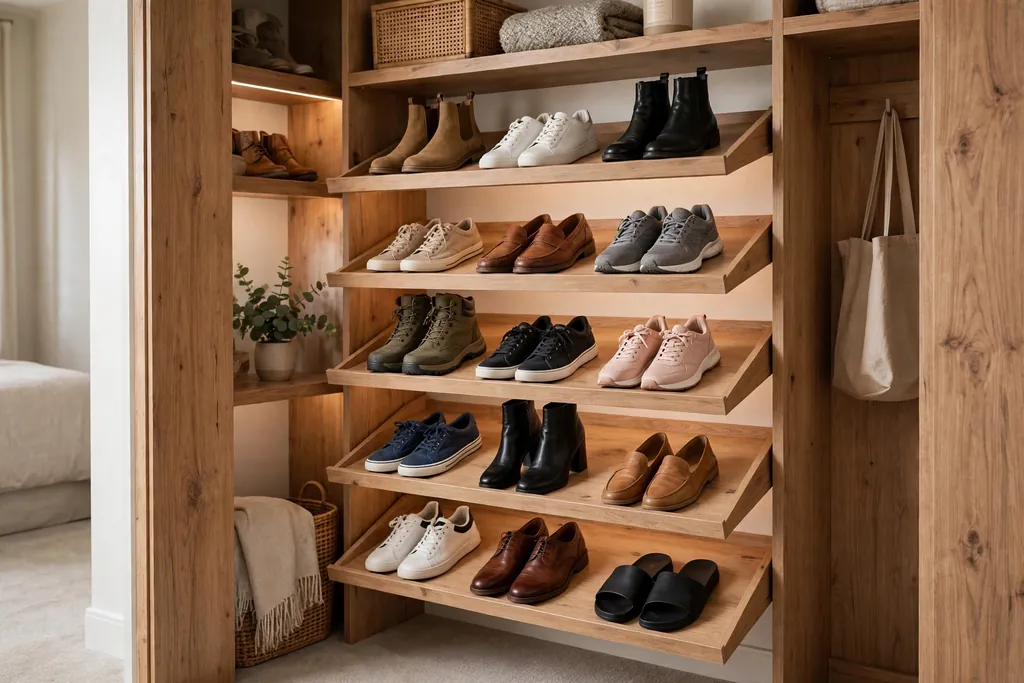
Turn one closet wall into an angled shoe wall, with slanted shelves that show each pair at a glance instead of hiding shoes in a pile on the floor. Angled shelves suit shoes you wear often, since you can see each pair and pull one out without moving the rest. Keep daily shoes at easy reach, and move occasion shoes higher or to a box.
Keep heavy boots on the floor or on a flat low shelf, since angled shelves suit lighter shoes better. Wipe shoes before putting them away, so dirt does not build up on the shelves. One shoe wall per person is usually enough, and a second wall often signals that it is time to pass on unworn pairs. Leave a small gap at the bottom of the wall for a tray that catches dirt from outdoor shoes.
8. Matching Bins for Folded Clothes
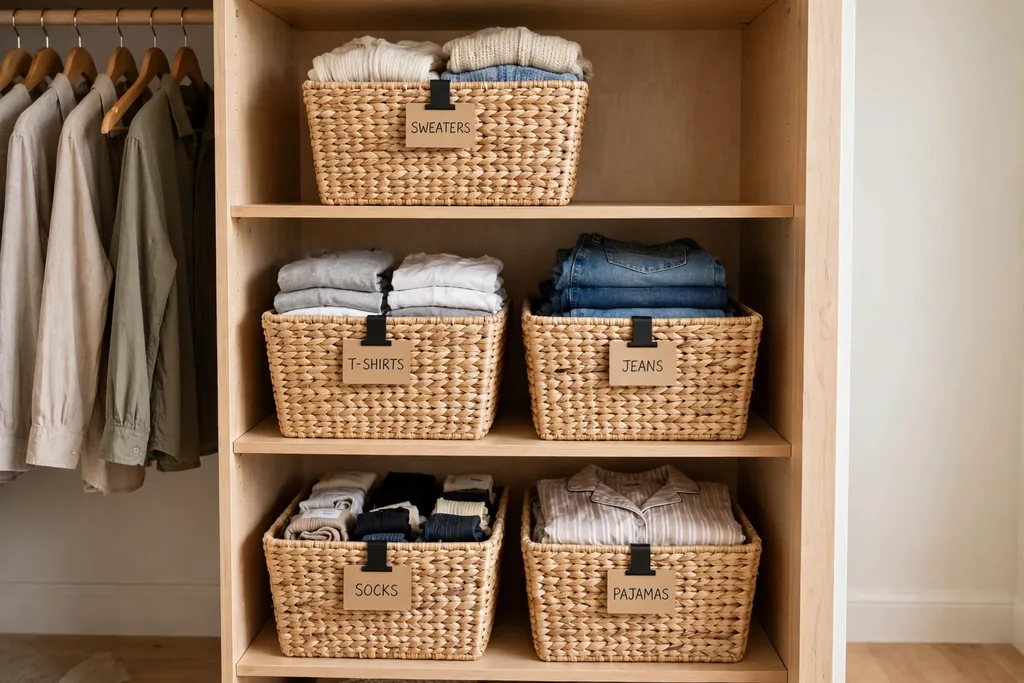
Matching bins turn open shelves into closed storage without doors. Use bins of one material, such as woven seagrass or cotton, in two sizes at most, and label the front of each one. Sort by type, such as knitwear in one, gym clothes in another, and sleepwear in a third, so you can pull out one bin instead of searching a shelf.
Keep bins light enough to lift with one hand, and store heavy items elsewhere. Line bins with fabric if they hold small items that slip through the weave. Replace a bin when the weave frays, since a damaged bin snags clothes. Open shelves with bins suit a closet that needs soft texture as well as order, and they keep folded stacks from toppling when you pull one item out.
9. High Seasonal Boxes with Clear Labels
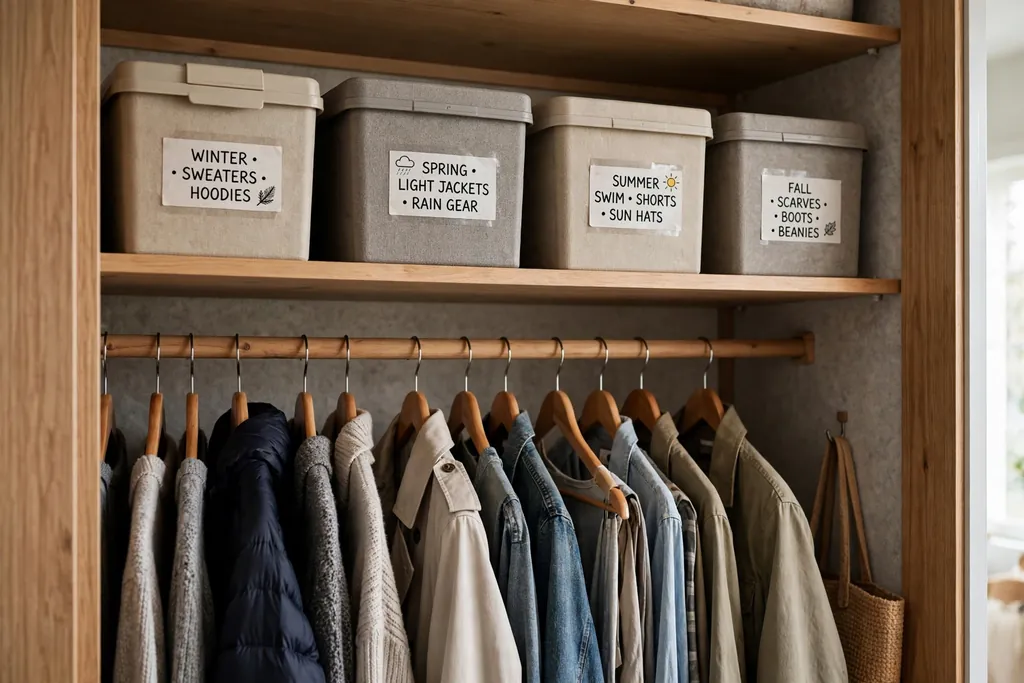
Use the top shelf for seasonal boxes, with a clear label on each box for winter coats, summer clothes, or holiday pieces. Seasonal rotation keeps the daily closet slim, since out-of-season clothes no longer crowd the rails you use every morning. Swap the boxes twice a year, at the same time you review what you did not wear.
For more ways to keep a bedroom calm while you rotate clothes, these bedroom storage ideas cover beds, closets, walls, and small pieces you can add without a remodel. Keep a small step stool near the closet if the top shelf is high, so you actually use it instead of piling items on the floor. Choose boxes with lids that keep out dust, and keep one box empty for items you plan to pass on.
10. Pull-Out Drawers with Accessory Trays
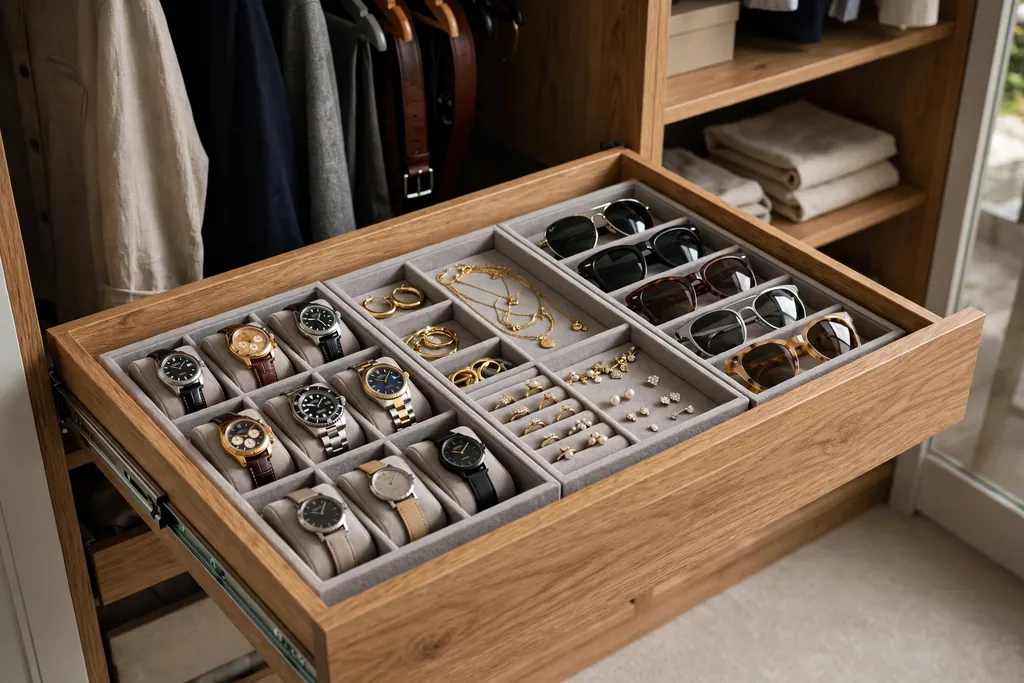
Add pull-out drawers with shallow trays inside for watches, jewelry, sunglasses, and small accessories that otherwise scatter across a shelf. A drawer with dividers keeps each group separate, so you can see everything when the drawer opens and put each piece back in its own spot. This suits a walk-in closet or a built-in run with room for at least one bank of drawers.
Keep daily pieces in the top drawer and rarely worn pieces lower down. Line trays with soft fabric so metal and glass do not scratch, and wipe the trays now and then to clear dust. If drawers are not possible, a shallow tray on a shelf gives a similar result, as long as it has a fixed spot and a clear edge so items do not slide off.
11. Pull-Out Racks for Belts, Scarves, and Ties
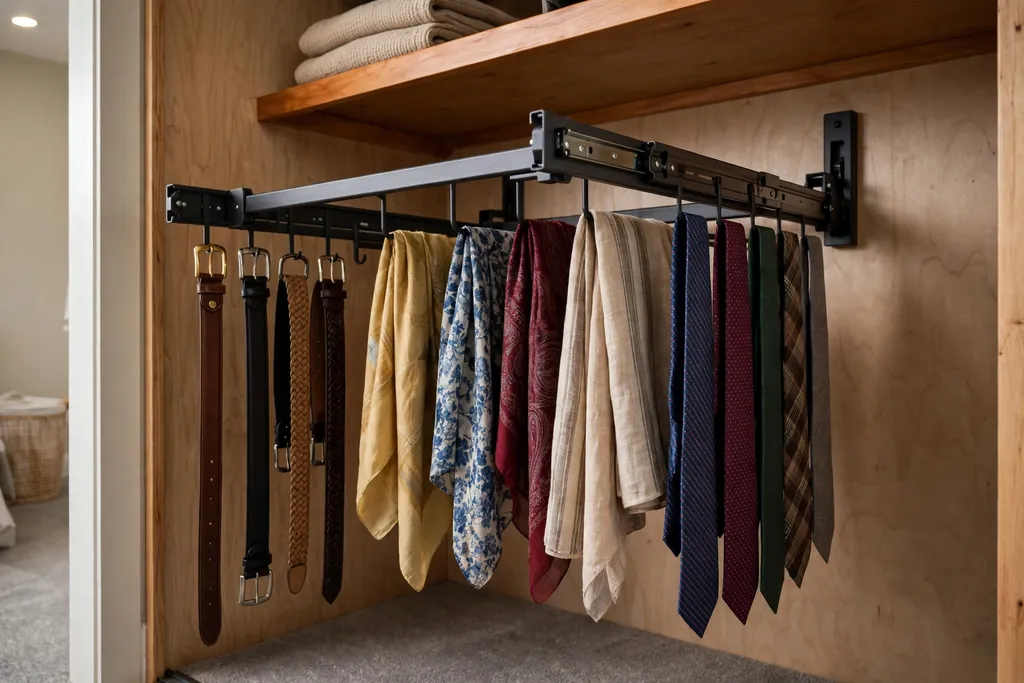
Fit a pull-out rack on the side wall of the closet for belts, scarves, and ties, so each piece hangs separately instead of tangling in a drawer. A pull-out rack slides out for choosing and slides back flat against the wall, which suits a narrow closet where a full accessory drawer would not fit. Group belts on one rack, scarves on another, or use hooks on the rack for mixed pieces.
Keep the rack at a height where you can see each piece without bending, and do not overload it, since a heavy rack sticks and pulls clothes off nearby hangers. Roll scarves instead of hanging them if they are delicate, and keep silk pieces away from rough hooks. A rack near the mirror or dressing nook saves a second trip across the room in the morning.
12. Built-In Laundry Hamper in the Closet
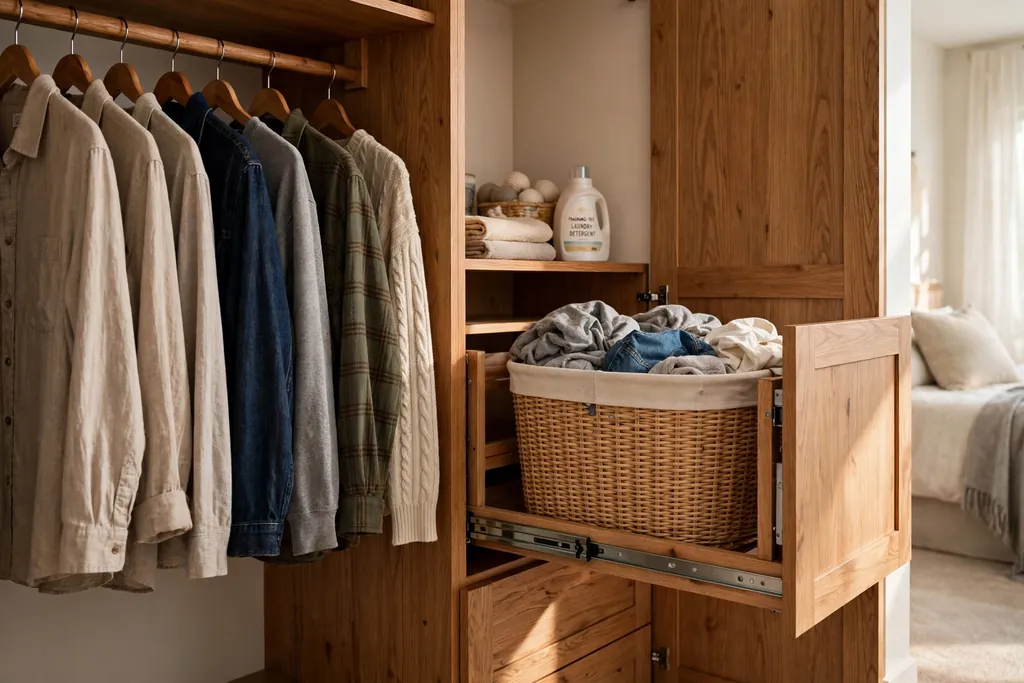
Build a laundry hamper into the closet, with a pull-out bin or a tilt-out basket, so worn clothes go straight into laundry instead of onto a chair or the floor. A hamper in the closet suits a bedroom closet used daily, since it keeps dirty clothes out of sight and in one place until wash day. Use one bin for darks and one for lights if you sort laundry at the closet.
Choose a bin with airflow, so clothes do not stay damp, and line it with a washable bag that lifts out for carrying to the machine. Empty the hamper on wash day and wipe the bin now and then. Keep the hamper away from clean clothes if space allows, so worn clothes do not transfer lint or odor to fresh outfits.
13. Dressing Nook with a Mirror and a Stool
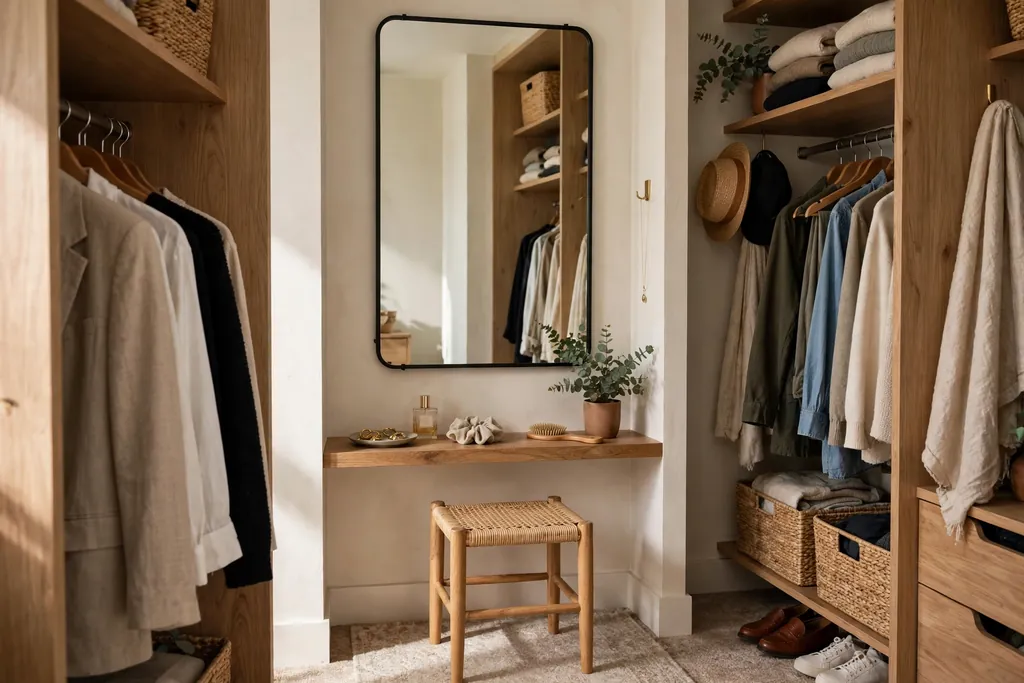
Carve a small dressing nook into a walk-in closet, with a mirror, a small stool, and a shallow shelf for daily items. The nook gives you a spot to sit, check an outfit, and put on shoes without leaving the closet or balancing on one foot in the bedroom. It suits a walk-in with a spare corner or the end of a long closet run.
Keep the nook lit with a small lamp or a mirror light, and keep only daily items on the shelf, with the rest in drawers nearby. Choose a stool that slides fully under the shelf so the walkway stays clear. If you share the closet, place the nook at one end, so one person can dress while the other still reaches the main rails.
14. Painted Back Wall for a Reach-In Closet
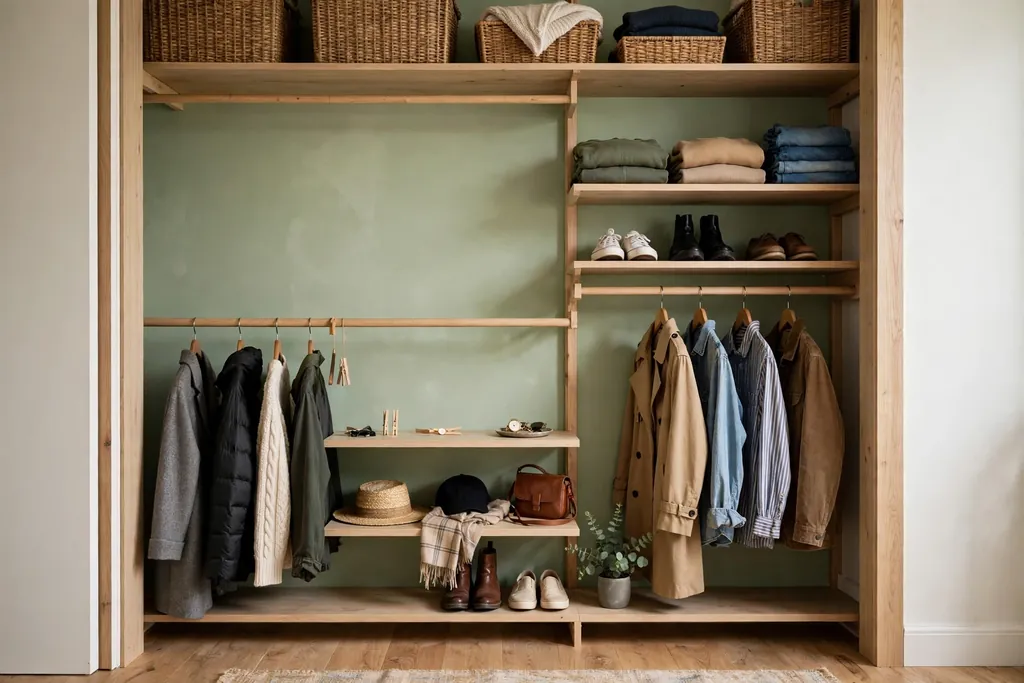
Paint the back wall of a reach-in closet in a soft color, or line it with removable wallpaper, to make a plain closet feel finished every time you open the door. A pale sage, warm white, or soft blue back wall makes clothes stand out, while a simple pattern adds interest without taking any storage space. This is a low cost makeover that suits renters, since removable wallpaper peels off without damage.
Paint or paper the back wall before you fit new shelves, so edges stay neat behind the units. Keep the color light if the closet is small and dark, since a dark back wall can make clothes harder to see. Add a light at the same time if the closet has none, since color alone will not help if the closet stays shadowed.
15. L-Shaped Corner Closet Layout
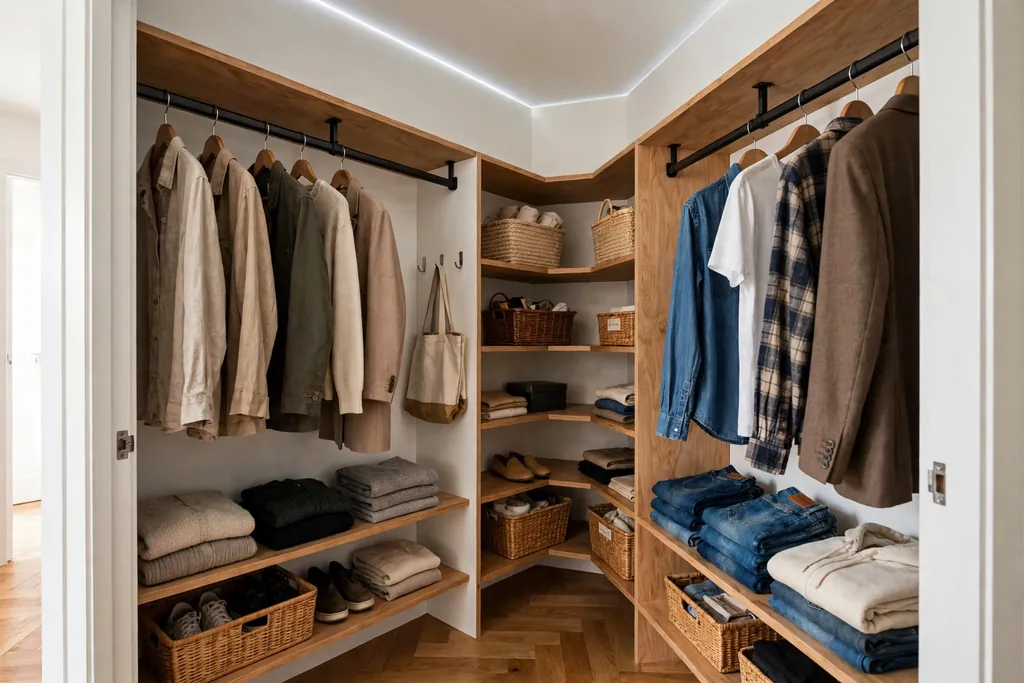
Wrap closet storage around a corner in an L shape when a single straight wall is too short or a door and a window break up the walls. The corner section can hold long hanging clothes or deep shelves, while the straight run holds daily clothes and drawers. This uses wall space that often goes to waste and keeps storage in one zone instead of spreading it across the room.
The corner needs care, since deep corners are hard to reach. Use a pull-out rail or simply store seasonal boxes in the deepest part, with daily clothes on the easy-to-reach rails. Measure both walls and the corner angle, since older rooms are rarely square, and leave room for doors to open without hitting the bed or the closet frame.
16. Split Zones for a Shared Closet
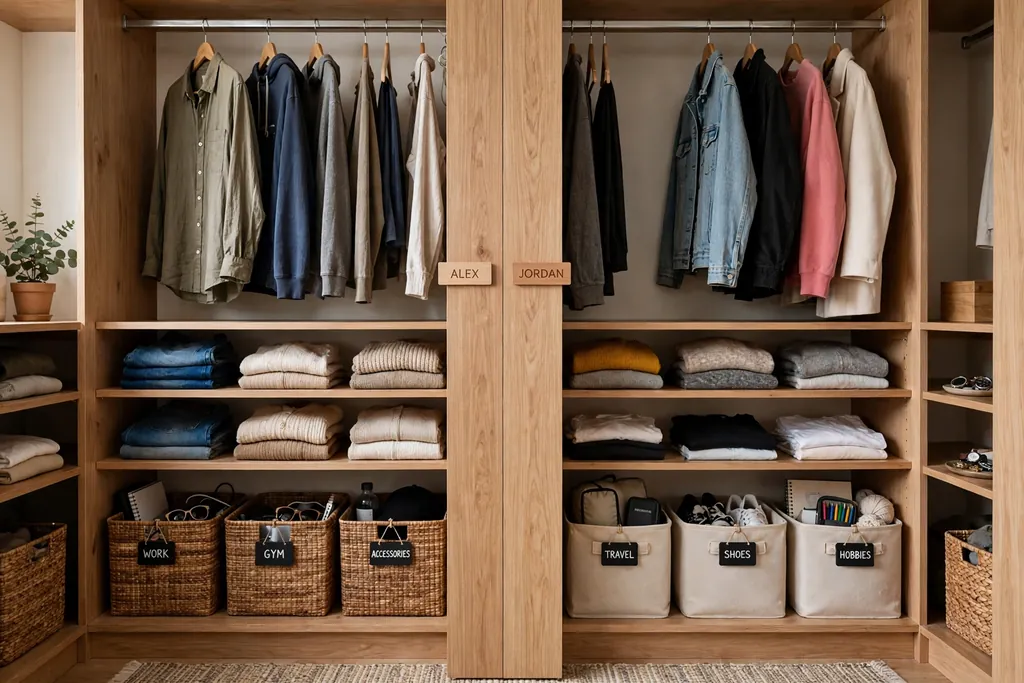
Split a shared closet into two clear zones, one per person, with a divider rail, a change of hanger color, or a shelf unit down the middle. Each zone gets its own hanging rail, shelf, and drawer or bin, so clothes do not drift into the other side and mornings stay calm. This suits couples, siblings, or roommates who share one closet and one getting-ready time.
Agree on the split by what each person owns, not by an exact half, since one person may need more hanging space and the other more shelves. Label bins and keep shared items, such as ironing supplies or shoe care, in one shared spot at the end of the run. Review the split each season, and move the divider if one side fills up while the other stays empty.
17. Daily Outfit Rail for the Week Ahead
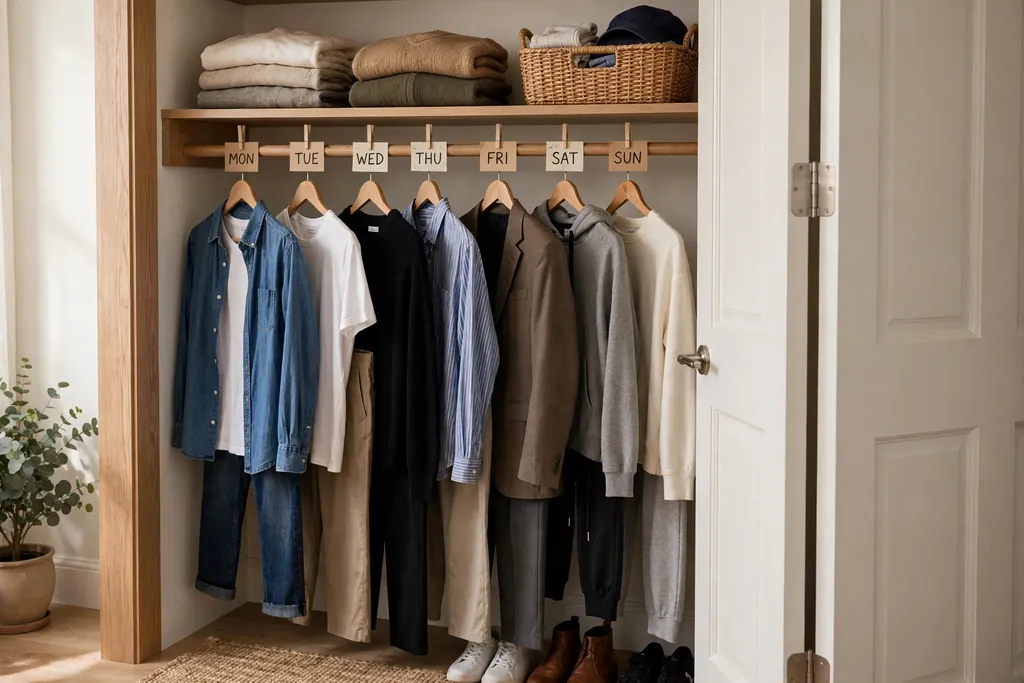
Add a short daily outfit rail near the closet door for the week ahead, with five to seven outfits hung in day order. A weekly rail cuts morning decisions, since you choose outfits once on Sunday instead of each morning, and it keeps the main closet tidy because daily clothes are not pulled out and put back each day. It suits busy mornings, school runs, and work weeks with a set routine.
Hang the next day outfit at the front of the rail each evening, and return worn clothes to the laundry or the main closet the same day so the rail resets. Keep the rail short, since a long rail becomes a second closet and loses its purpose. If floor space is tight, a wall rail or a valet hook on the closet door gives a one-day version of the same idea.
18. Hooks and Over-Door Storage for Bags and Hats
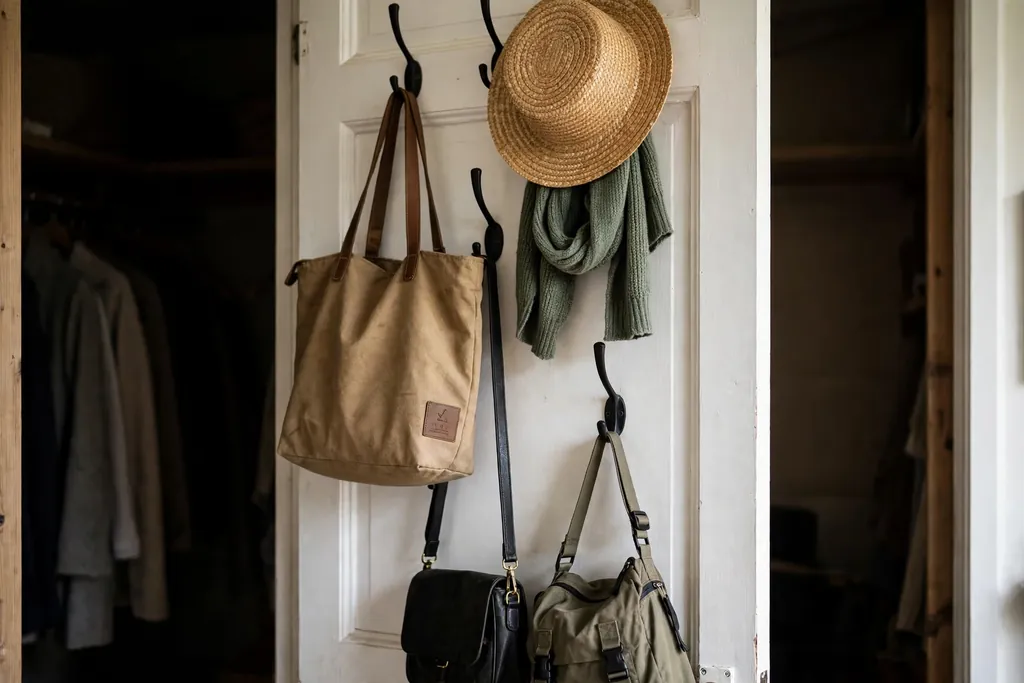
Use hooks on the closet side wall and an over-door rack on the inside of the closet door for bags, hats, and tomorrow outfit. Hooks turn unused wall and door space into storage with no drilling into the main closet frame in many cases, and they keep bags off the floor where they get scuffed. Limit hooks to items you use daily, since an overloaded door is hard to open and looks messy.
Hang the heaviest bag lowest, and keep the top hook for a light hat or scarf. Choose hooks with a flat profile, so the door still closes fully and does not mark the frame. Keep hooks clear of hanging clothes, or bags will push clothes aside and wrinkle them. If the door is used often, choose hooks with a soft backing to protect the door surface.
19. LED Strip Lighting with a Motion Sensor
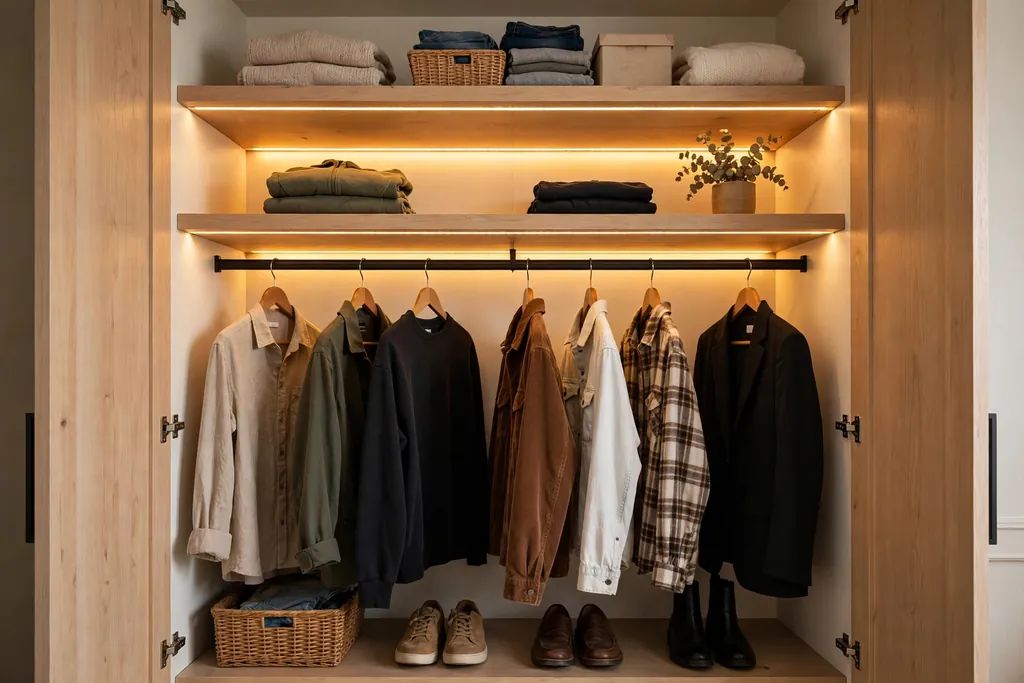
Fit LED strip lights along the top shelf or under each shelf, with a motion sensor that turns them on when the door opens. Light inside a closet makes colors easier to tell apart, shows the back of deep shelves, and stops you from pulling out the wrong item in a dark corner. LED strips suit closets of any size, since they are slim and give even light across a shelf.
Keep lights away from fabric and follow the maker fitting guide, especially for wired lights, which need a professional where wiring is involved. Battery lights suit renters and small closets, but check batteries now and then so the light does not fade. Choose a warm white tone that matches the bedroom light, so clothes look the same in the closet as they do in the room.
20. Fresh-Air Care: Cedar, Breathable Bags, and Dust Covers
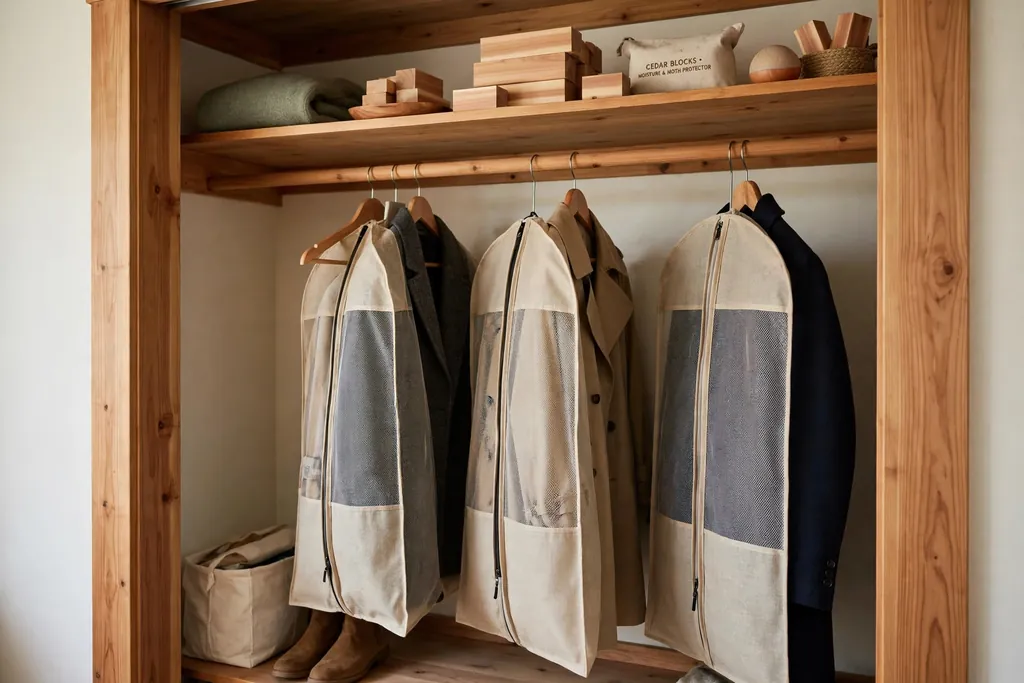
Keep a closet fresh with cedar blocks or sachets, breathable garment bags for stored coats, and dust covers for rarely worn pieces. Cedar helps deter moths in wool and knitwear, breathable bags protect coats from dust while letting air move, and covers keep occasion clothes clean between wears. This care suits a closet with wool, silk, or stored seasonal clothes.
Do not seal wool in airtight plastic for long storage, since trapped damp can damage fibers, and keep cedar away from direct contact with delicate fabric if the maker advises it. Air the closet now and then by leaving the door open, and wipe shelves before a seasonal swap. Replace cedar blocks when their scent fades, and wash garment bags when they collect dust.
21. Under-Stairs and Sloped-Ceiling Closet Solution
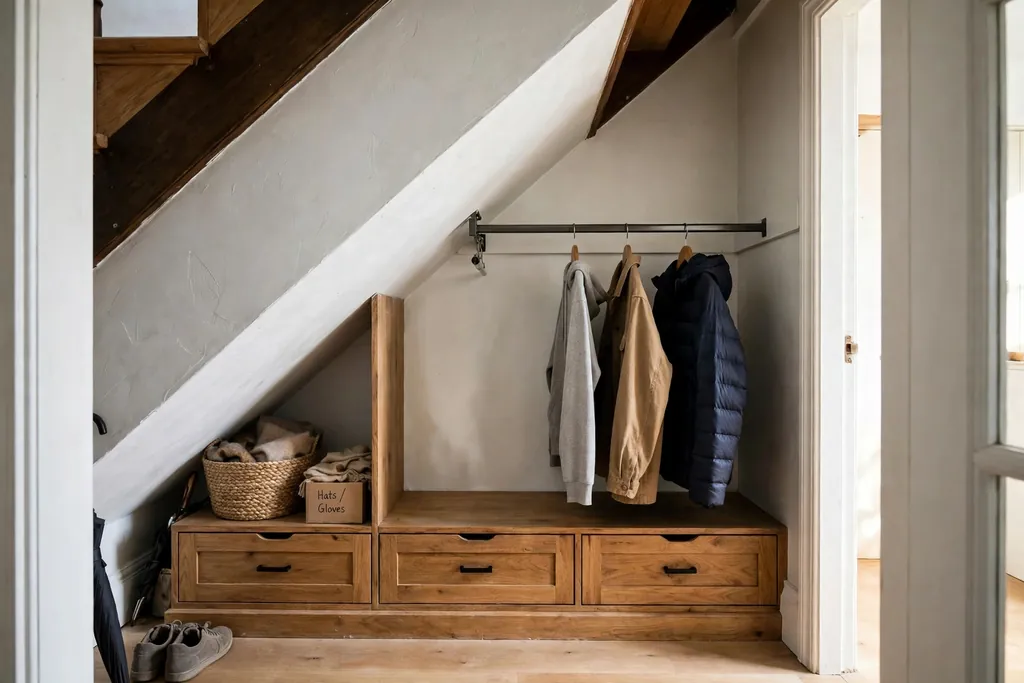
Turn an under-stairs nook or a sloped-ceiling corner into a closet with low drawers under the slope, a short rail where the ceiling is higher, and shelves that step down with the ceiling line. The stepped layout uses space that a standard wardrobe cannot, since drawers fit under the low slope while hanging clothes use the tall end. This suits attic bedrooms, hall stairs, and rooms with a sloped roof.
Keep daily clothes in the tall section and shoes, bags, or folded items in the low drawers, so you do not need to crouch for items you reach for each morning. Add a light at the tall end, since sloped corners stay dark, and measure the slope at several points before you order units. A curtain front suits an awkward shape well, since it follows the slope without custom doors.
22. Hall Closet for Coats, Bags, and Shoes
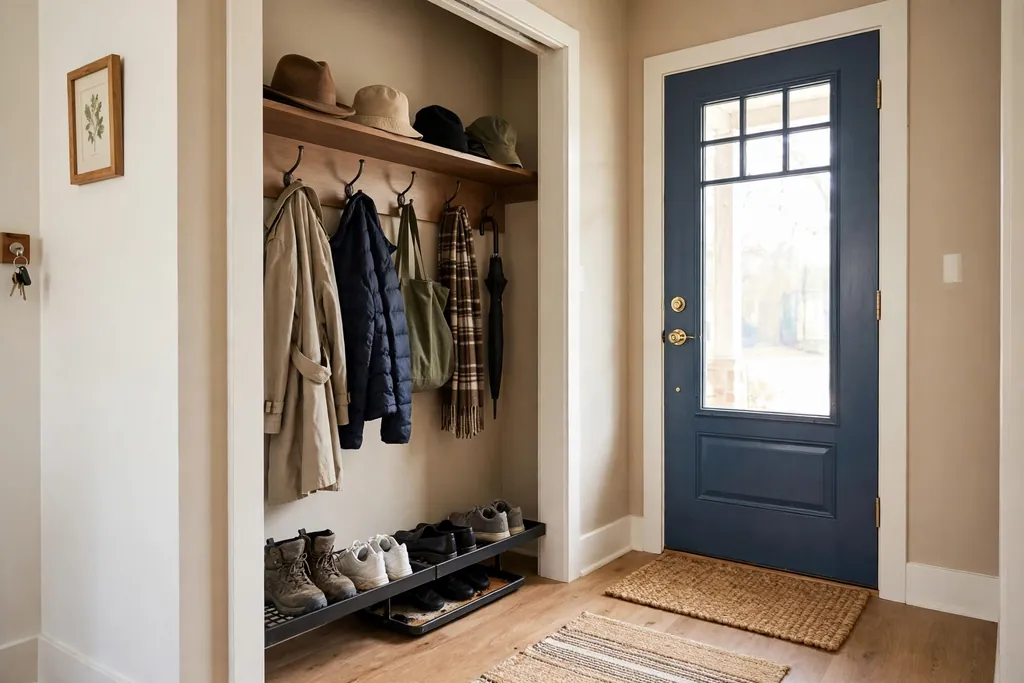
Design a hall closet as a coat and bag station, with hooks at two heights, a shelf for hats and gloves, and a tray or low shelf for shoes. A hall closet keeps coats and bags by the front door, so bedroom closets stay free for clothes and the hallway stays clear of piles. It suits families, since children can reach low hooks while adults use the higher rail.
Keep one hook per person plus one spare for guests, and keep the shoe tray to daily pairs only, with the rest in the bedroom closet. Add a small basket on the shelf for keys, gloves, and dog leads, so small items do not scatter across the hall. Wipe the shoe tray weekly, and review the hall closet each season so outgrown coats and unused bags move out.
Conclusion
A good closet starts with what you own and how you dress, not with a shopping list. Measure the space, give daily clothes the easy spots, use height for seasonal pieces, and add light so you can see what you have. One change, such as double hanging rails or a shoe wall, can make mornings calmer, and a second change can build on it without a remodel. Pick the idea that fixes your biggest daily frustration, try it for a week, and adjust the inside layout before you change anything else.
Save this list on Pinterest before your next bedroom refresh, and work through it one area at a time: layout first, then shelves and shoes, then light and care that keep the closet pleasant to use.
FAQs
How do I start designing a closet that stays tidy?
Start by emptying the closet, sorting what you actually wear, and measuring the width, depth, and door swing. Give daily clothes eye-level spots, move seasonal pieces up high, and leave one empty bin or shelf for new items. A closet stays tidy when every group has one clear home and the daily routine matches the layout.
What is the best layout for a small reach-in closet?
Double hanging rails for shirts and trousers, a shelf above for folded items or boxes, and a tall section at one end for coats and dresses work well in most small reach-in closets. Add hooks on the door for bags, keep shoes low on a shelf or tray, and add a light so the back of the closet stays visible. Measure hanging lengths before you set rail heights.
How can I add storage to a closet without a remodel?
Use a freestanding rail, shelf dividers, matching bins, over-door hooks, and a pull-out rack, all of which fit inside an existing closet without building work. A painted back wall and a battery LED light also refresh a closet with little cost. Start with the spot that causes the most mess, and add one piece at a time.
Should closet doors be sliding, hinged, or open?
Sliding doors save floor space and suit small bedrooms, hinged doors open fully and suit a closet you reach into often, and open closets suit people who like to see everything at a glance. Mirrored sliding doors also brighten a small room, while glass-front doors suit a tidy closet with interior light. Choose by floor space, light, and how tidy the closet stays.
How do I organize shoes in a closet?
Give shoes one wall or one shelf, keep daily pairs at easy reach, and move occasion shoes higher or into boxes. Angled shelves show each pair clearly, flat shelves suit boots, and a tray at the bottom catches dirt from outdoor shoes. Wipe shoes before storing them, and pass on pairs you have not worn in a season.
How much light does a closet need?
A closet needs enough even light to tell colors apart and see the back of shelves, which a strip light along the top shelf or under each shelf usually gives. A motion sensor saves you from hunting for a switch, and warm white light matches bedroom light so clothes look the same outside the closet. Keep lights clear of fabric, and use a professional for wired fitting.