
A secret garden does not need a large plot or a stone wall. It needs a sense of arrival, a place that is partly hidden, and a reason to step in and stay a while. A curving path, a tall hedge, a rose arch, or a seat tucked behind shrubs can give even a small yard that feeling. These 28 secret garden ideas cover entrances, paths, planting, seating, water, and light, so you can start with one corner and build from there. Pick the idea that fits your light, your soil, and the way you like to spend time outside.
Key Takeaways
- Start with one hidden corner, not the whole yard, and finish it before moving on.
- Use height first: hedges, arches, climbers, and tall grasses create privacy faster than low planting alone.
- Keep the destination partly out of sight, so the path itself feels like a discovery.
- Choose plants that suit your light and soil, and mix evergreen structure with seasonal flowers.
- Add one comfortable seat and one small detail, such as a lantern or a bird bath, to make the corner feel finished.
- Leave room to move and to tend plants, since a secret garden still needs regular care.
1. Rose Arch Entrance
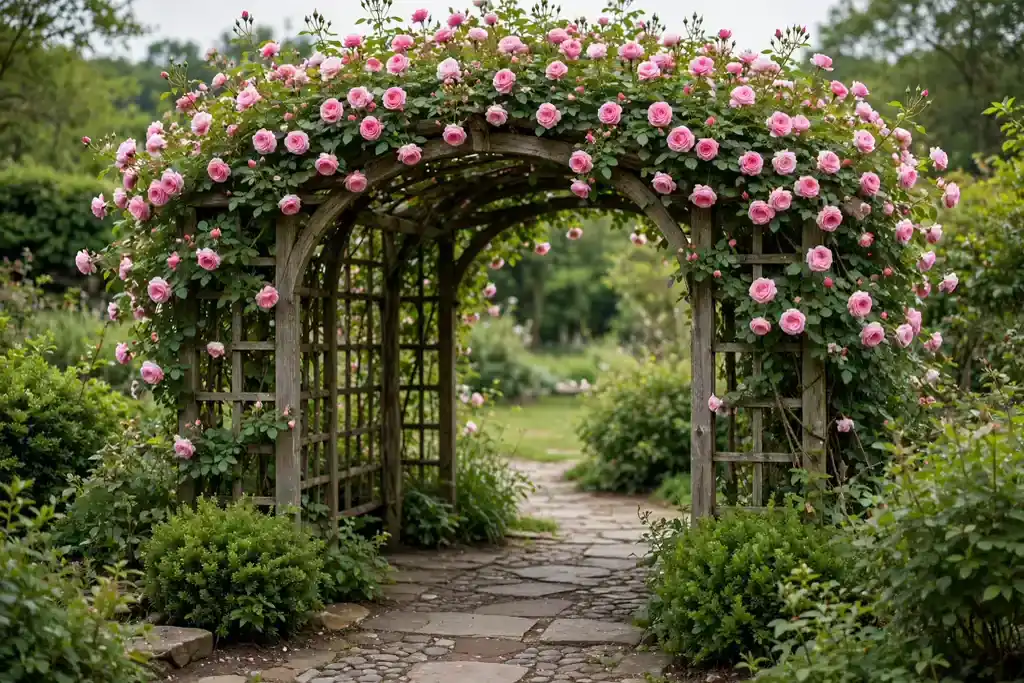
Frame the way into your garden with a sturdy arch covered in climbing roses, so visitors pass under flowers before they see what lies beyond. The arch marks a clear threshold, and it turns an ordinary gate or path opening into a moment of arrival. Choose a repeat flowering rose for color through the season, and tie new stems sideways along the arch to encourage more blooms.
Fix the arch firmly into the ground, since a rose covered frame catches wind. Prune lightly after the first flush of flowers, and feed in spring with a rose feed suited to your soil. If your path is narrow, keep the arch wide enough to walk through without brushing thorns, and trim side shoots that reach into the walkway.
2. Living Willow Tunnel
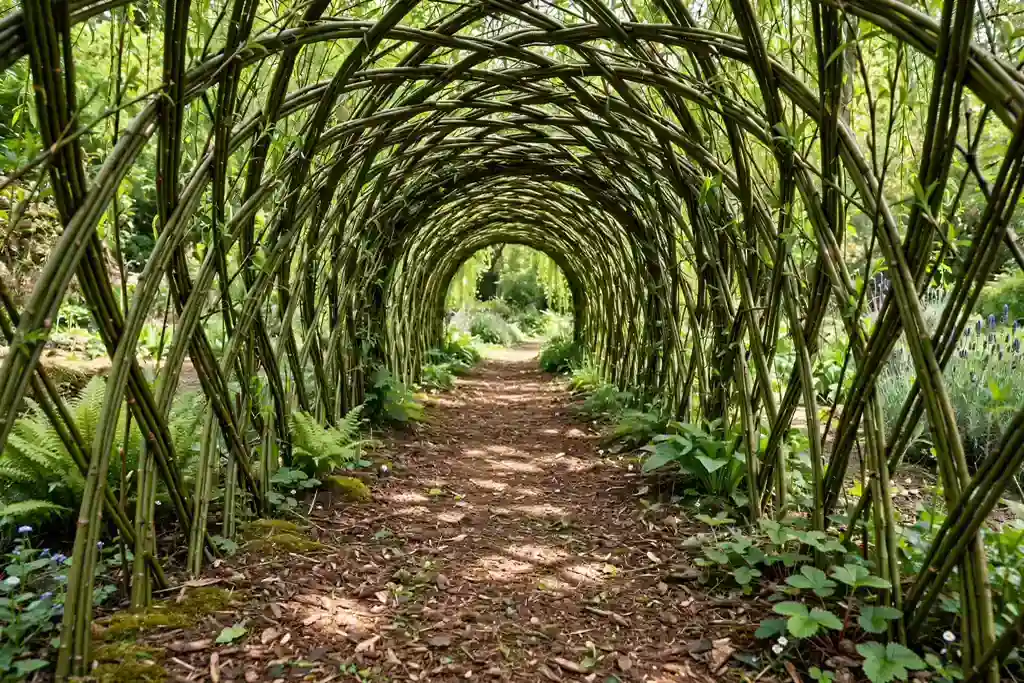
Weave a tunnel from living willow rods for a green passage that children and adults both enjoy walking through. Plant rods in two parallel lines in autumn or winter, bend the tops together, and tie them to form an arch. Willow roots quickly in damp soil, so the tunnel fills in within a season or two.
Weave new shoots into the frame each winter, and cut back any stems that block the path. This idea suits a longer garden, but a short three metre tunnel can work in a modest yard. Keep the ground beneath clear with bark mulch, and check that willow does not shade a vegetable patch or a neighbour boundary you need to keep clear.
3. Walled Corner Nook with a Bench
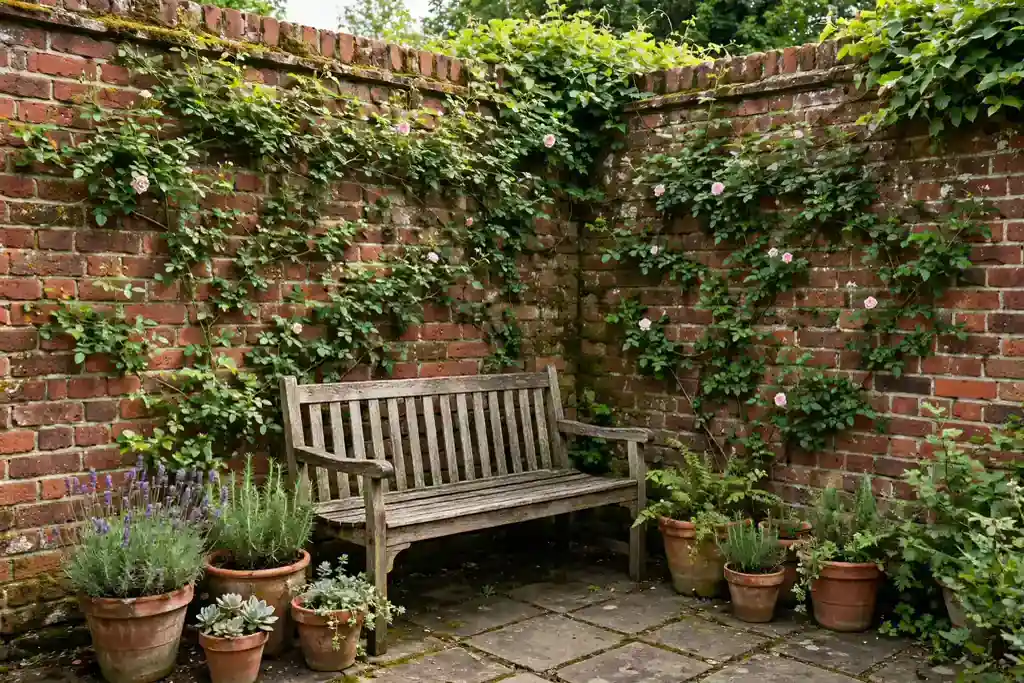
Turn a walled corner into a reading nook with a simple wooden bench, a cushion, and planting that softens the brick or stone around it. Walls hold warmth and shelter the seat from wind, which makes the corner usable on cooler days. A bench that faces into the garden, rather than out toward the house, feels more private.
Add pots at either end of the bench for seasonal color, and a small side table for a book and a drink. Paint or oil the bench each year, and check the wall for loose mortar before fixing a trellis to it. If the corner is damp, choose a bench with feet that lift the wood off the ground.
4. Curving Stepping Stone Path
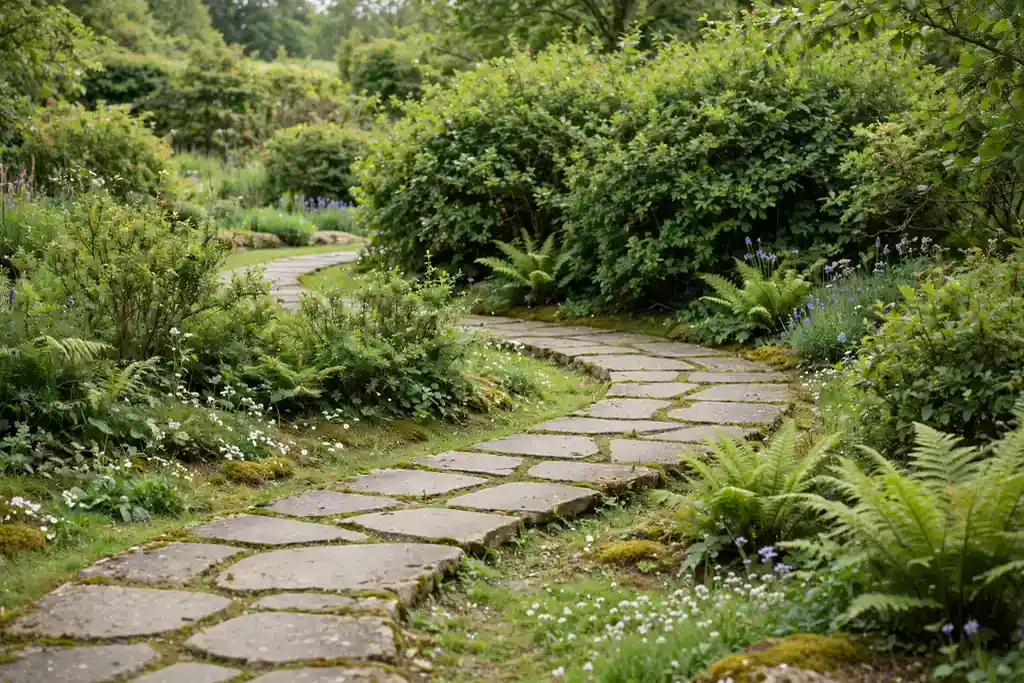
Lay a curving path of flat stepping stones that disappears behind shrubs, so walkers cannot see the end from the start. The curve slows the walk and builds curiosity, which is the heart of a secret garden. Space the stones at a natural walking stride, and set them level so they are safe in wet weather.
Use stone, reclaimed slabs, or gravel edged boards to suit your budget and style. Plant low ground cover such as creeping thyme between stones, and keep the path wide enough for a wheelbarrow during maintenance. Edge the path with small plants that brush the legs lightly, not thorny shrubs that catch clothing.
5. Moon Gate in a Hedge

Cut a round opening, a moon gate, through a tall hedge or build one from timber and climbers, for a classic secret garden entrance. The circular frame draws the eye and frames the view beyond like a picture. It works best in a hedge at least two metres tall, where the opening feels like a doorway rather than a hole.
Keep the opening wide enough to pass through comfortably, and trim the hedge around it twice a year so the circle keeps its shape. Plant a fragrant climber such as jasmine near the gate, so the scent greets visitors as they step through. If you build with timber, treat it against rot and check fixings each spring.
6. Scented Jasmine Arbor Seat
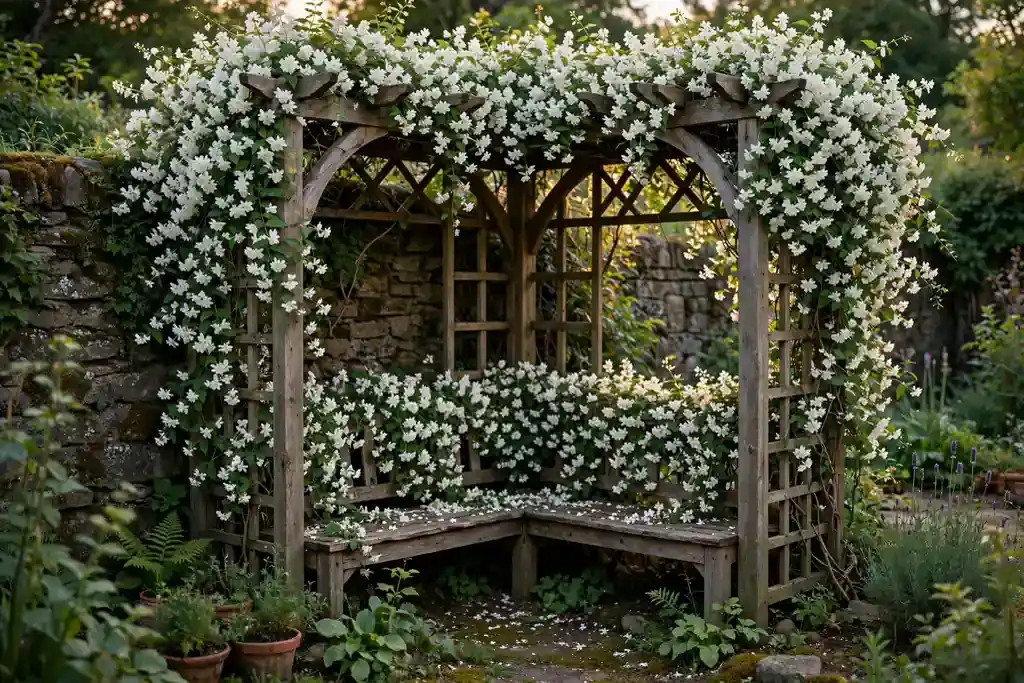
Build a small arbor over a seat and cover it with jasmine, so the corner smells sweet on warm evenings. The arbor gives shade and a sense of enclosure, while the scent makes the seat a destination in its own right. Choose a seat with a back and arms for long sits, and place it where it catches evening sun if you can.
Train jasmine stems along the arbor roof and tie them in as they grow, rather than letting them tangle. Prune after flowering to keep the roof open enough for light. In cold areas, choose a hardy jasmine variety and plant it against a sheltered wall, or grow it in a large pot you can move under cover in winter.
7. Fern Grotto in Deep Shade
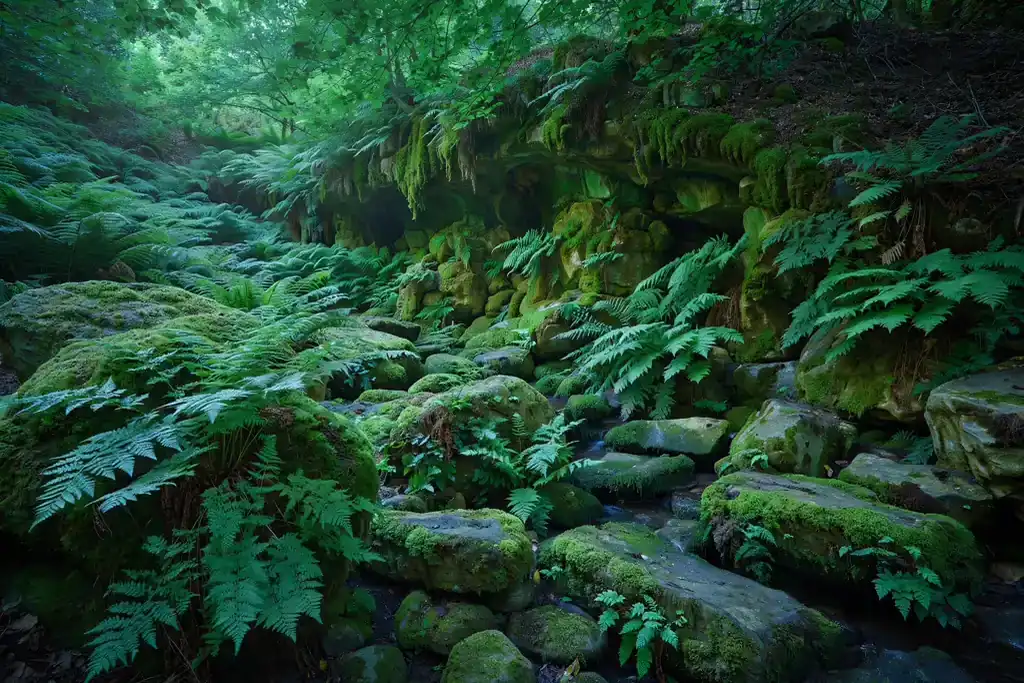
Fill a shaded corner under trees with ferns, mossy stones, and a small seat, for a cool grotto that feels far from the rest of the garden. Ferns thrive where lawn and sun loving flowers struggle, so shade becomes an asset here. Layer ferns of different heights, from low hart’s tongue to tall ostrich fern, for a lush, layered look.
Keep the soil moist with leaf mulch, and water in dry spells, since ferns suffer quickly when they dry out. Add a few large stones for structure, and a simple stone or wood seat that suits the damp setting. Avoid planting ferns where they will be trampled, and clear fallen leaves gently so you do not damage new fronds.
8. Reading Chair Behind Tall Grasses
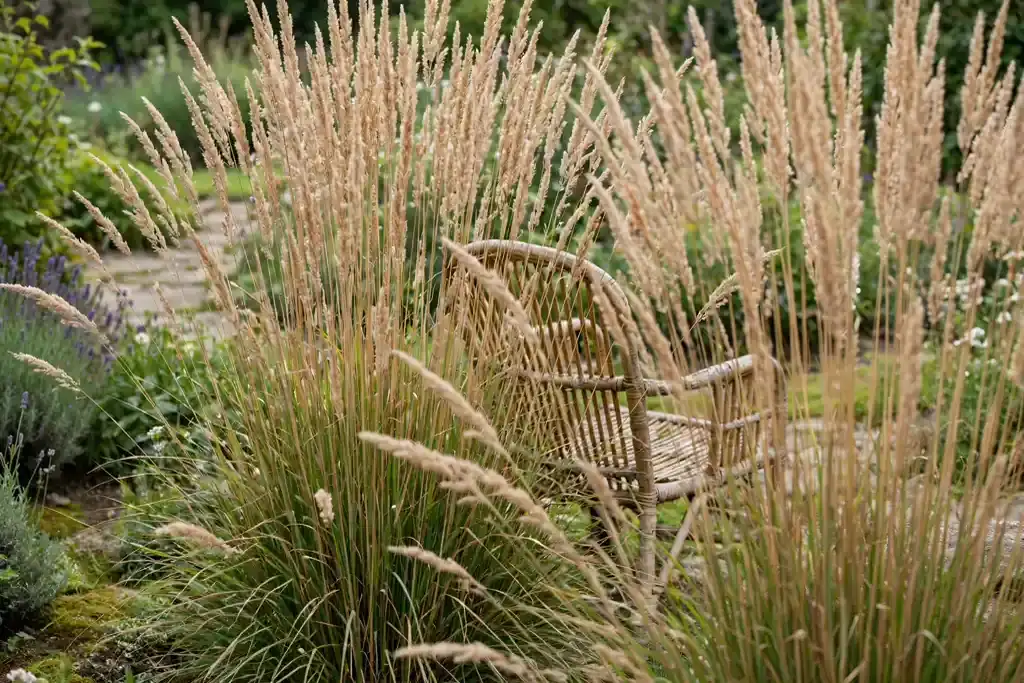
Hide a single comfortable chair behind a screen of tall ornamental grasses, so it feels like a private room with a view of the sky. Grasses move in the wind and rustle softly, which adds sound to the sense of seclusion. Miscanthus and tall feather reed grass both give height without needing a wall or fence.
Plant grasses in a loose curve around the chair, leaving a gap to walk in, and cut them back in late winter before new growth starts. Choose a chair that can stay outside, such as teak or powder coated metal, and add a weatherproof cushion you can bring in at night. Keep the grass clumps divided every few years so they stay vigorous.
9. Reclaimed Door as a Garden Gate
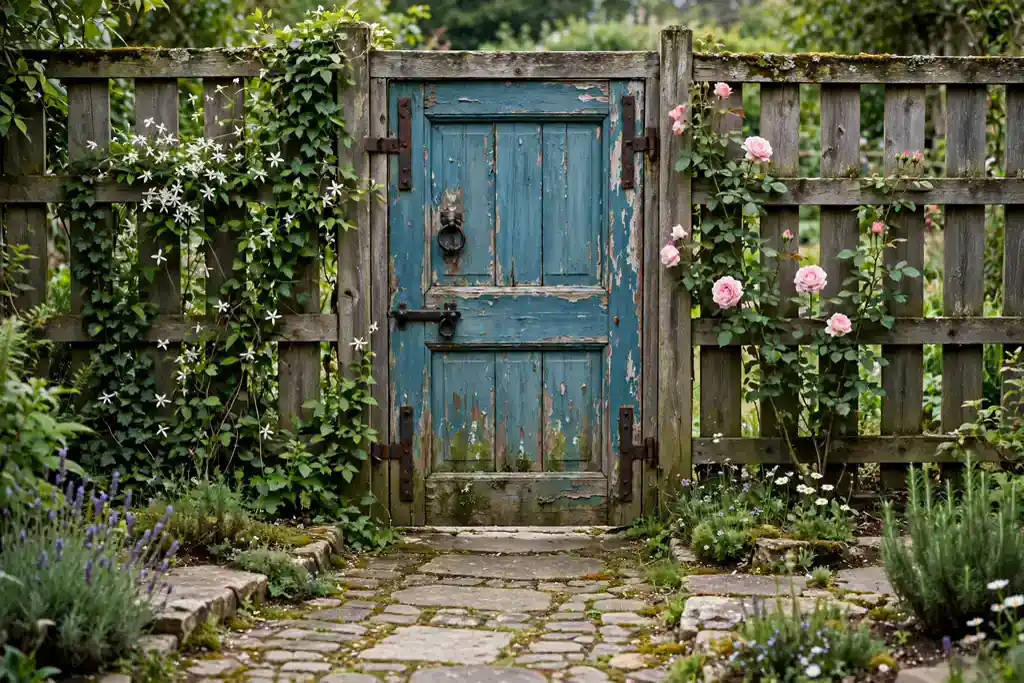
Set an old wooden door into a fence or hedge as a garden gate, and paint it a color that stands out against the green around it. A real door feels more like an entrance to another place than a plain garden gate, and it invites curiosity about what lies behind it. Look for a solid door in good condition, and hang it on strong posts with outdoor hinges.
Sand and paint the door with exterior paint, and seal the bottom edge against damp. Add a simple latch and a small handle, and plant climbers on the fence beside it so the door sits within greenery. Check the door each year for rot at the base, and keep the path on both sides clear so it opens freely.
10. Sunken Round Lawn Nook
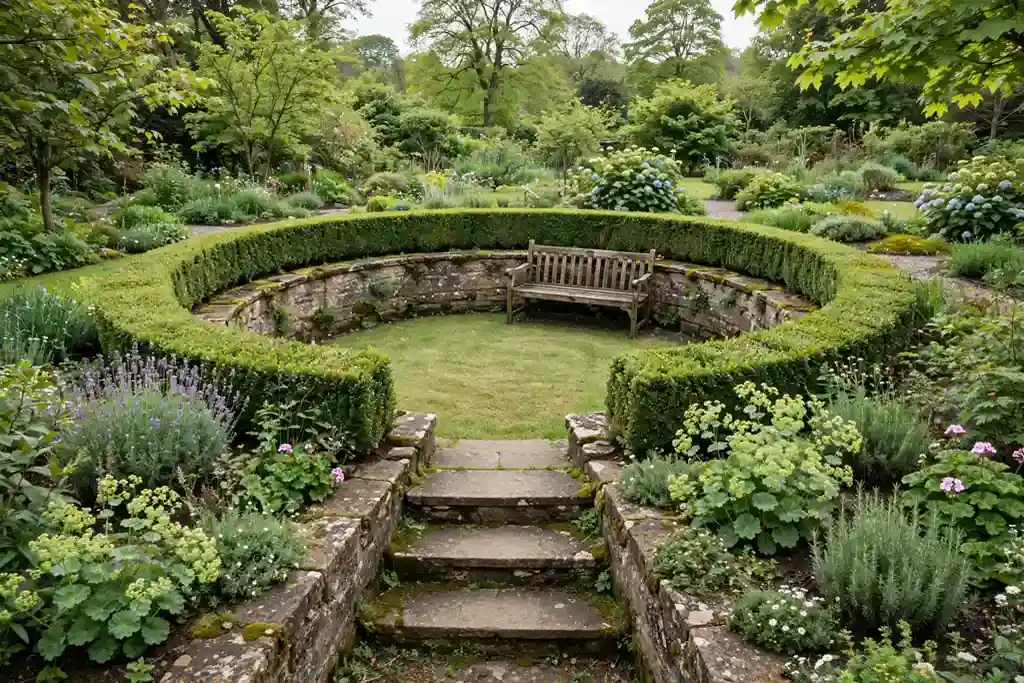
Dig a shallow circular hollow, or use a natural dip, and ring it with low hedging or tall planting for a sunken nook that feels sheltered from every side. Sitting slightly below the surrounding garden changes the view and blocks wind, which makes the space feel calm and separate. A round shape suits a bench, a fire bowl, or a small table and chairs.
Keep the hollow shallow, no more than a couple of steps down, and make sure rainwater drains away rather than pooling. Use stone or brick edging for the steps, and plant the rim with lavender or low shrubs for scent. This idea needs more work than most, so plan the dig carefully and keep the spoil for raised beds elsewhere.
11. Mirror on a Garden Wall
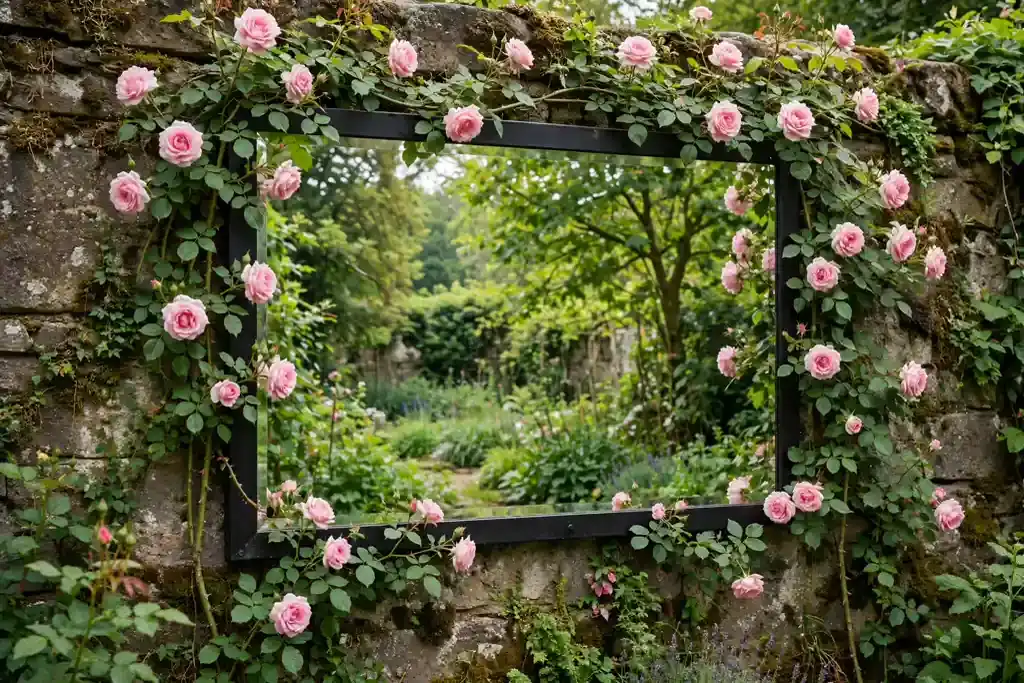
Fix a weatherproof mirror to a wall or fence at the end of a path, framed with climbers, to make a small garden feel deeper than it is. The mirror reflects planting and sky, so the corner seems to continue beyond the wall. It works best where it reflects greenery, not the house or a neighbour window.
Choose an outdoor mirror or an acrylic mirror made for outside use, and angle it slightly downward so it reflects plants rather than glare. Frame it with a trellis and a climbing rose or ivy, leaving the glass clear. Clean it a few times a year, and check the fixing after storms, since mirrors are heavy and wind can loosen them.
12. Herb Spiral Behind Shrubs
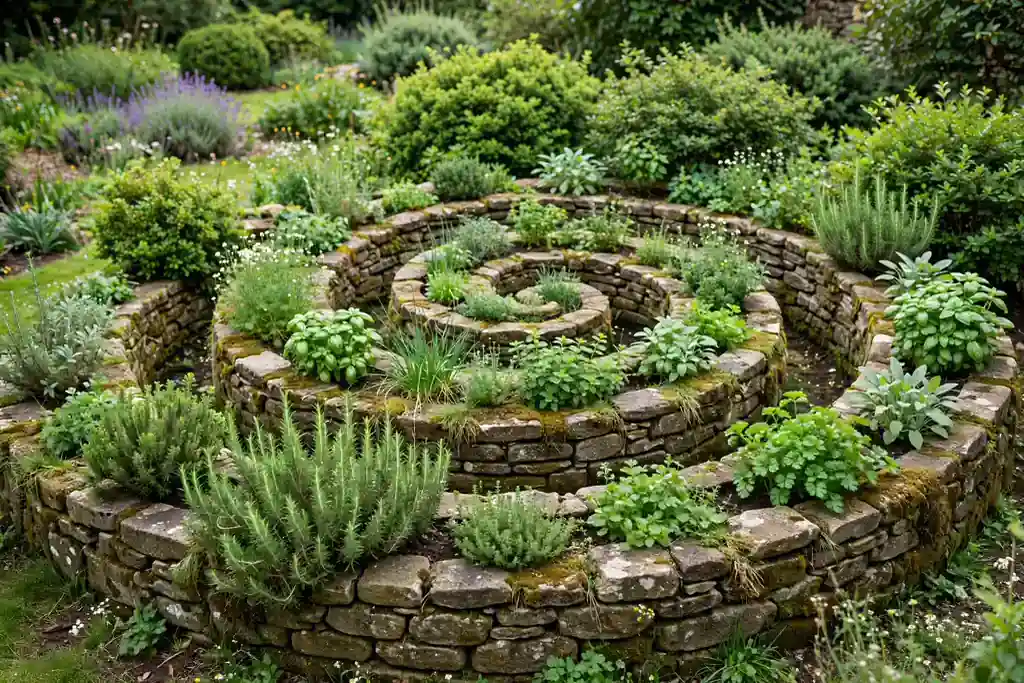
Build a small stone herb spiral tucked behind shrubs, so cooks must step around planting to find it. The spiral rises in tiers, which gives each herb the sun and drainage it prefers, with rosemary and thyme at the dry top and parsley and chives lower down. It turns a useful patch into a hidden feature.
Stack stones without mortar for a natural look, and fill with free draining soil mixed with grit. Plant the spiral in spring, and label herbs with small stone or wood markers if you like. Keep mint in a pot sunk into the spiral, since it spreads fast and will take over the lower tiers if left free.
13. Mossy Stone Steps to a Lower Terrace

Build a short flight of wide stone steps down to a lower terrace, with moss and low plants softening the edges, for a garden that reveals itself in levels. Steps slow the walk and mark a change of place, which is exactly what a secret garden needs. Wide, shallow steps feel safer and more relaxed than steep ones.
Set each step level and firm, with gravel or soil joints for drainage. Plant small ferns or creeping thyme in the joints, and keep the steps clear of fallen leaves in autumn. Add a handrail or a low wall if the drop is more than a few steps, and light the steps with small solar lights for evening use.
14. Hidden Pond in a Fern Corner
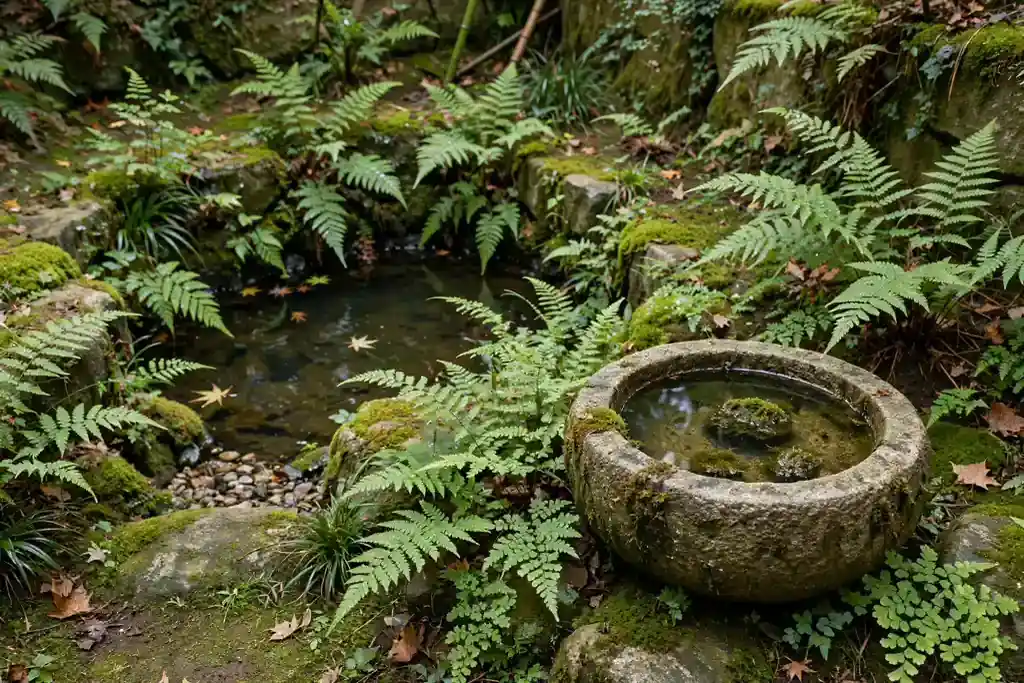
Tuck a small pond or a large water bowl into a fern corner, where the sound of water and the sight of reflections reward visitors who find it. Even a shallow bowl with a small solar pump gives movement and attracts birds, which adds life to a quiet corner. Keep the water feature small enough to maintain easily.
Site it where it gets some light but not all day sun, which encourages algae. Add a few water plants such as miniature water lilies, and a flat stone at the edge where birds can drink. Clean the bowl regularly, top up water in dry weather, and keep the area safe for small children with a shallow depth and a secure edge.
15. Hammock Behind a Shrub Screen
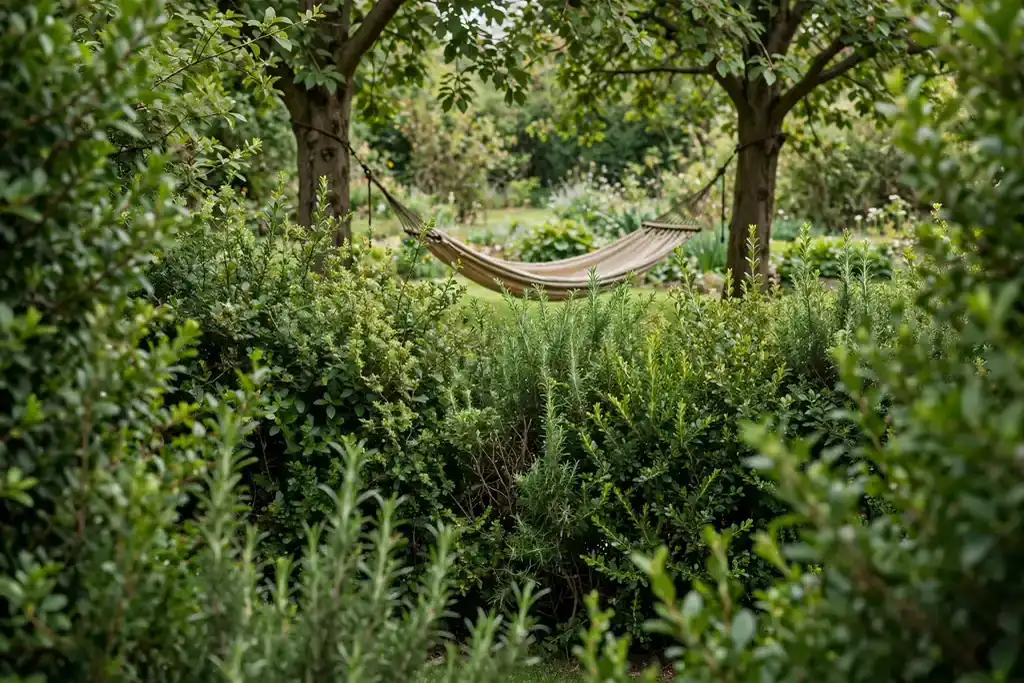
Hang a hammock between two trees or sturdy posts behind a screen of shrubs, for a lazy corner that stays out of sight from the house. The screen gives privacy, while the trees give shade and a gentle sway. This is one of the simplest secret garden ideas, since it needs little more than a strong fixing and a comfortable hammock.
Check that trees or posts can carry the weight safely, and use wide tree straps rather than screws that damage bark. Keep the ground beneath clear of sharp stones, and add a small basket for a book and sunscreen. Take the hammock in during winter, and check ropes and fabric each spring before first use.
16. Rose Covered Pergola Walkway
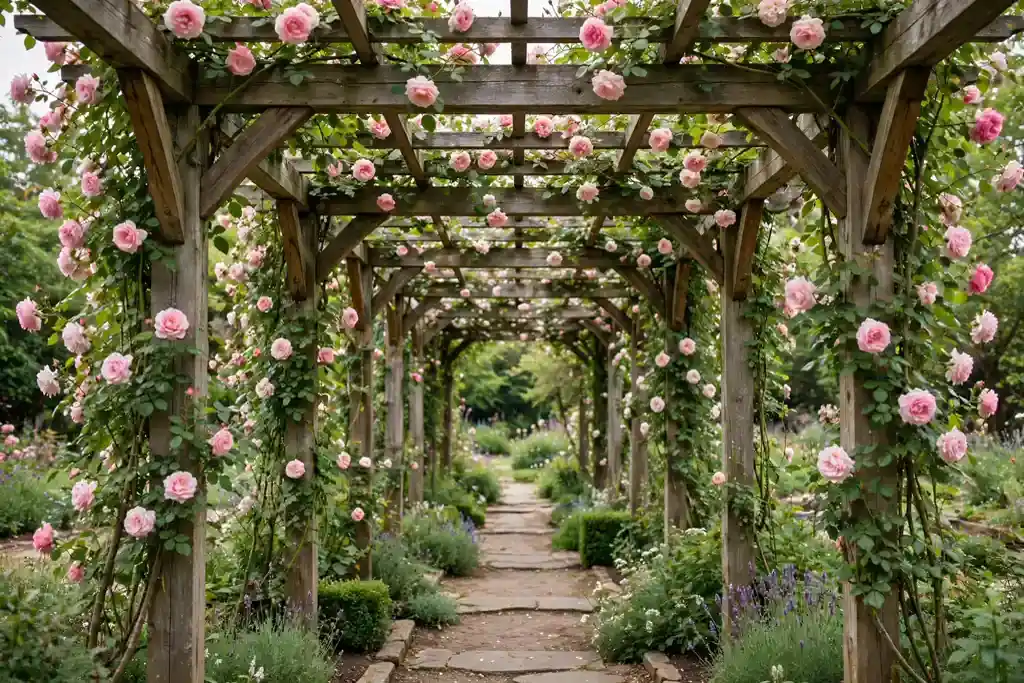
Run a pergola along a path and cover it with climbing roses, so the walk itself becomes a tunnel of flowers and scent. Unlike a single arch, a pergola walkway gives a longer journey, with light filtering through leaves overhead. It suits a straight or gently curving path between two parts of the garden.
Build the pergola from sturdy timber posts and cross beams, and plant one rose at each post for even cover. Tie stems along the beams, and prune in winter to keep the walkway clear of thorns at head height. Add a bench halfway along if the walkway is long, so walkers can pause under the roses.
17. Potting Bench Nook
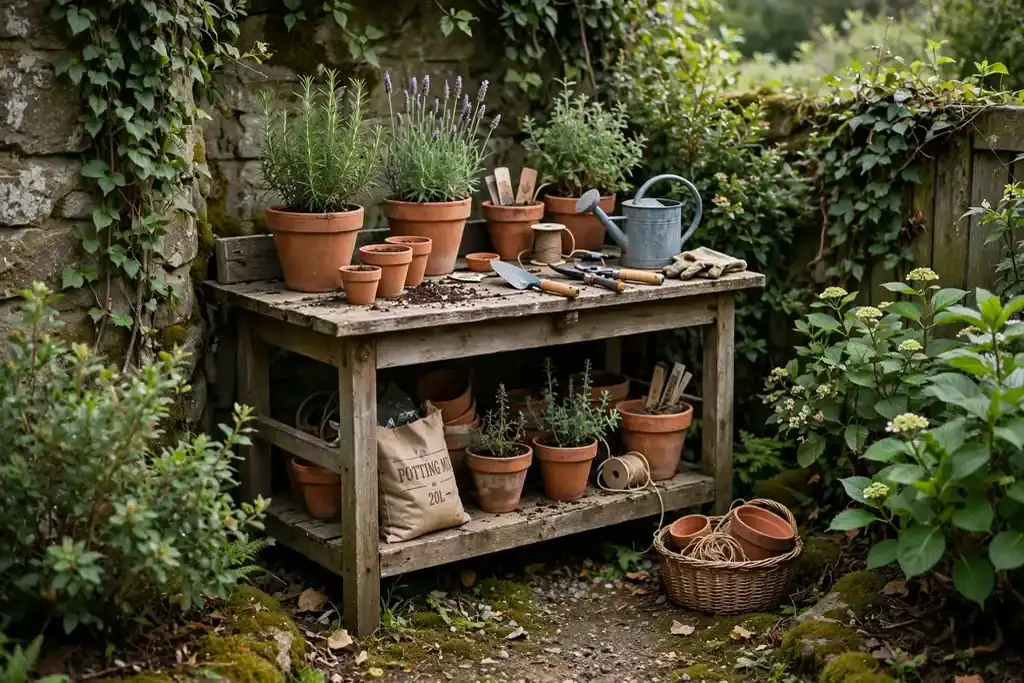
Tuck a potting bench into a sheltered corner, screened by shrubs and shaded by a small roof, for a working nook that feels like a secret room. A bench with a shelf below and hooks above keeps tools, pots, and twine in one place, and it gives you a reason to visit the quiet corner often. This idea suits gardeners who like to pot up seedlings away from the main beds.
Choose a bench at a comfortable working height, and add a small bin for compost and a bucket for water. Keep the roof simple, such as a lean to against a fence, so rain does not soak the work surface. Tidy tools back onto hooks after use, since a tidy bench stays inviting and a cluttered one quickly feels like a shed corner.
18. Wildflower Meadow Patch
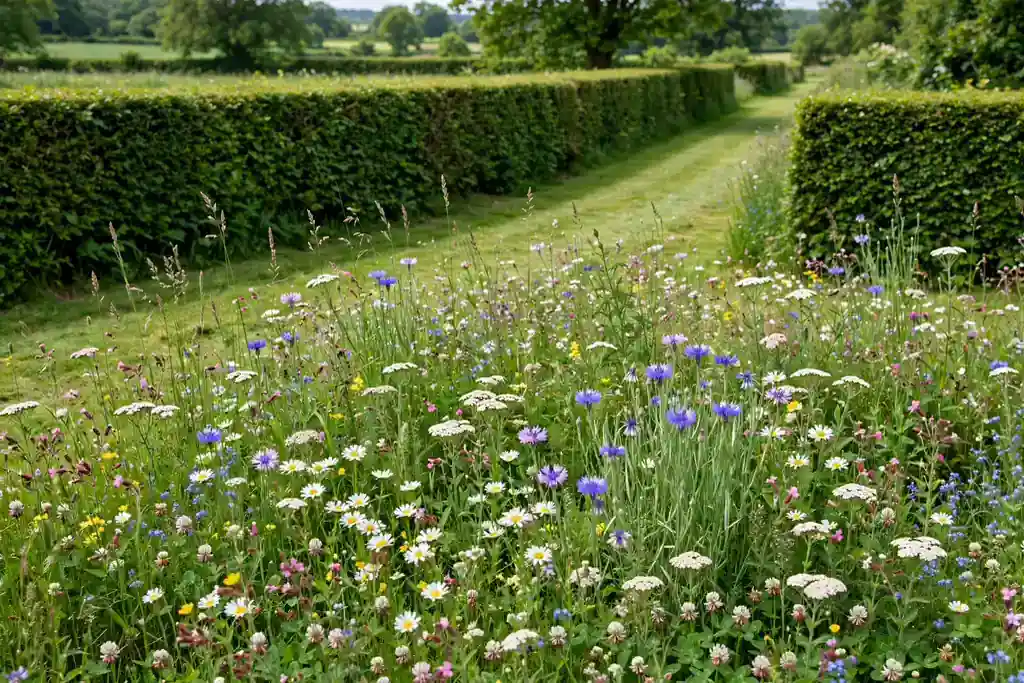
Leave a patch of lawn behind a hedge to grow as a wildflower meadow, mown only once or twice a year, for a corner that changes with the seasons. Wildflowers bring bees and butterflies, and the tall grasses hide a seat or a path within them. This idea needs less weekly work than a lawn, but it does need a yearly cut and clear.
Sow a mix suited to your soil, or plant plugs of oxeye daisy, knapweed, and red clover into existing grass. Cut in late summer after seeds have set, and remove the cuttings so the soil stays poor enough for flowers to compete with grass. Keep a mown path through the meadow, so you can walk in without trampling flowers.
19. Moonlight Garden of White Flowers
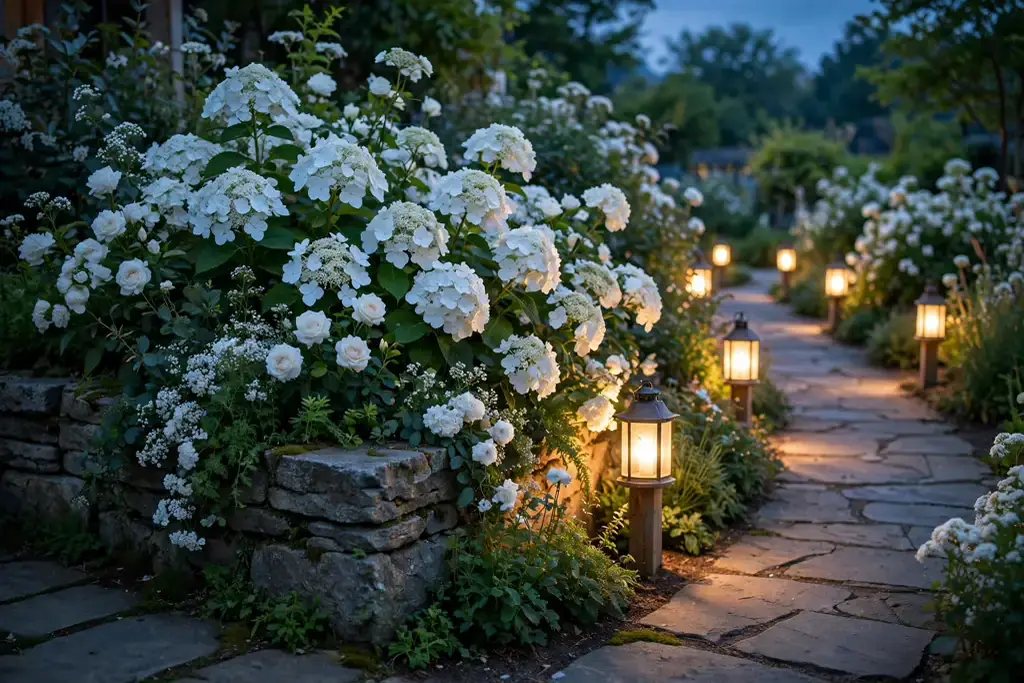
Plant a corner with white and pale flowers that glow in evening light, plus night scented stock and jasmine, for a garden that comes alive after dark. White flowers reflect moonlight and lamp light, so the corner stays visible and inviting at dusk. This idea suits a seat near the house, where you can enjoy it on summer evenings.
Mix white roses, white phlox, and pale lilies with silver foliage plants such as artemisia for contrast in daylight too. Add a few lanterns or solar lights along the path, and keep the planting near the seat so scent reaches you. Deadhead regularly to keep flowers coming, and cut back spent stems in autumn.
20. Kitchen Garden Disguised by Flowers
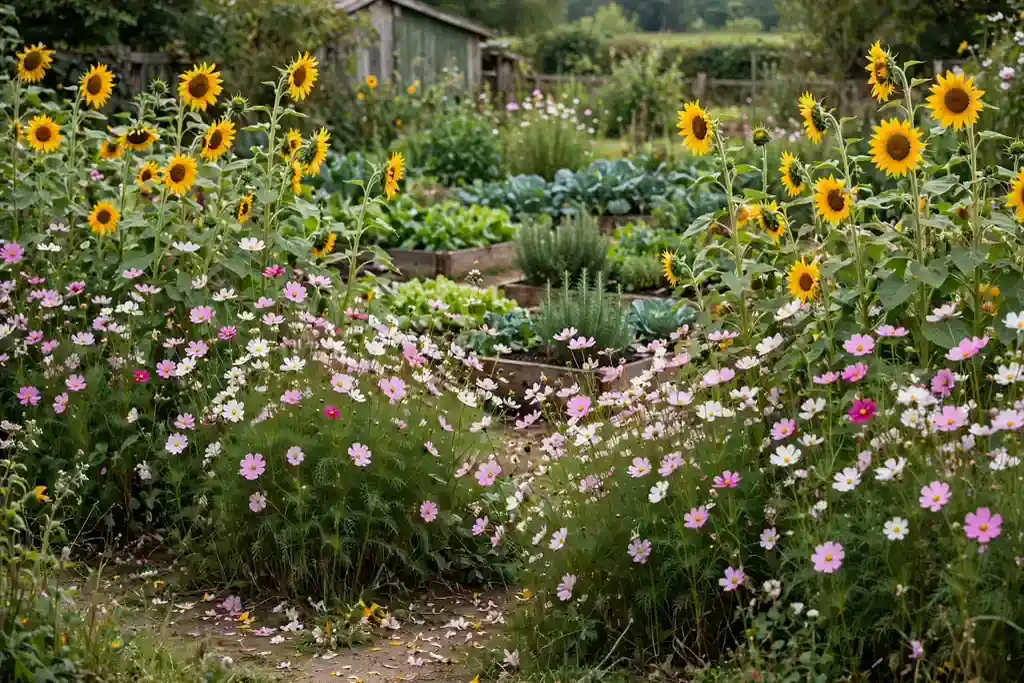
Hide a small vegetable patch behind a flower border, so visitors see color first and only find beans, herbs, and salad leaves when they step behind it. Tall flowers such as sunflowers and cosmos screen the beds, while the vegetables stay in sun and easy reach for picking. This keeps a productive garden looking ornamental from the main path.
Plant the flower screen on the side facing the house, and keep the vegetable beds in neat rows behind it. Rotate crops each year, and mulch paths with bark so the hidden patch stays tidy. Pick regularly, since a productive patch that is left to go to seed quickly loses its charm.
21. Cottage Corner with a Bird Bath
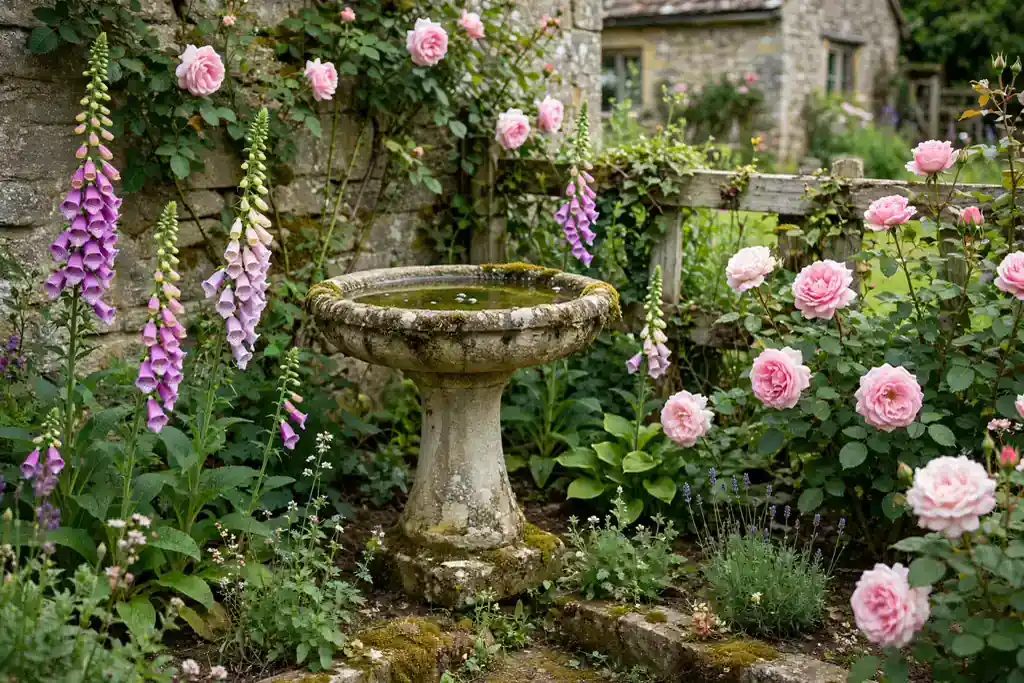
Make a cottage style corner with a stone bird bath, roses, foxgloves, and a low picket edge, for a spot that feels like a storybook garden in miniature. Birds visiting the bath add movement and sound, and the planting around it gives the corner a soft, full look. This idea works well in a small front or side garden.
Keep the bird bath water fresh, and scrub it weekly to stop algae building up. Plant foxgloves and hollyhocks at the back, with lavender and geraniums at the front, for layers of height. Choose a bird bath with a wide, shallow bowl, and site it where cats cannot hide close by in dense shrubs.
22. Green Curtain of Climbing Vines
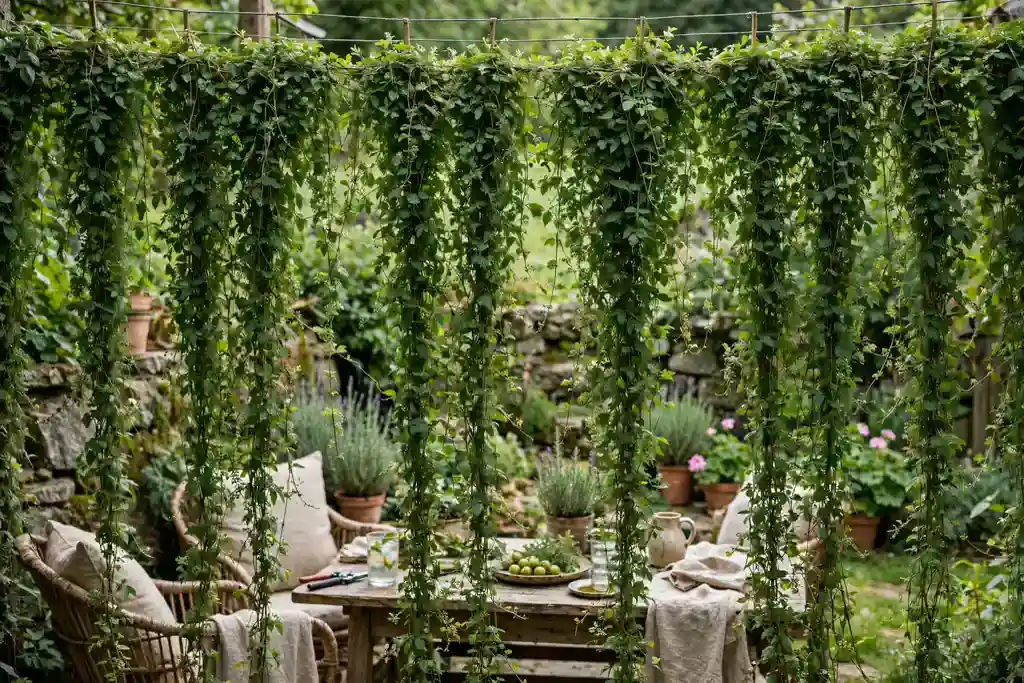
Grow a curtain of climbing vines over a simple frame or wires, so a seating area gains a living wall that moves with the breeze. Clematis, honeysuckle, and annual sweet peas all work on wires, and mixing two climbers gives flowers across a longer season. The curtain screens the seat without the heaviness of a fence.
Fix wires firmly to posts or a wall, and space them about 30 centimetres apart for stems to grip. Prune each climber to its own needs, and check wires yearly for sagging under weight. Keep the base of the vines mulched and watered in dry weather, since climbers at a wall or fence often sit in a rain shadow.
23. Bamboo Screen Path
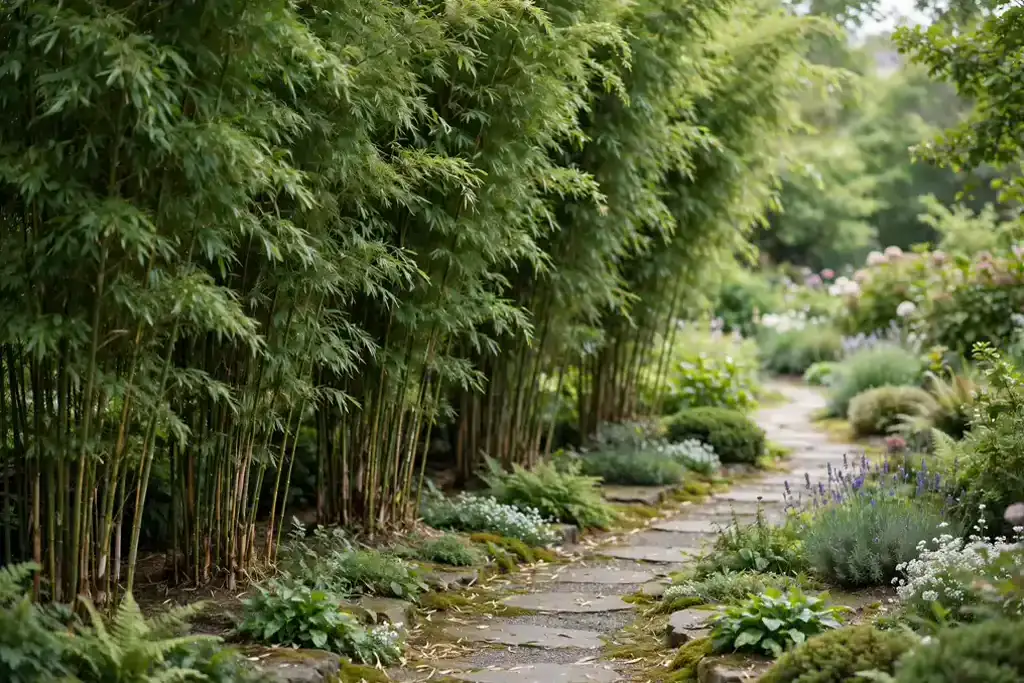
Plant a clump forming bamboo along one side of a path, for a tall, rustling screen that hides the garden beyond. Bamboo grows fast and stays green through winter, so the path feels enclosed all year. Clump forming types are safer than running types, which spread far beyond where you plant them.
Give bamboo a large planting hole with rich soil, and water well in the first year until it settles. Contain it with a root barrier if you plant near a boundary, and thin old canes each spring to keep the screen fresh. Keep the path clear of fallen leaves, and cut back any canes that lean over the walkway.
24. Tiny Fairy Corner with Miniature Plants
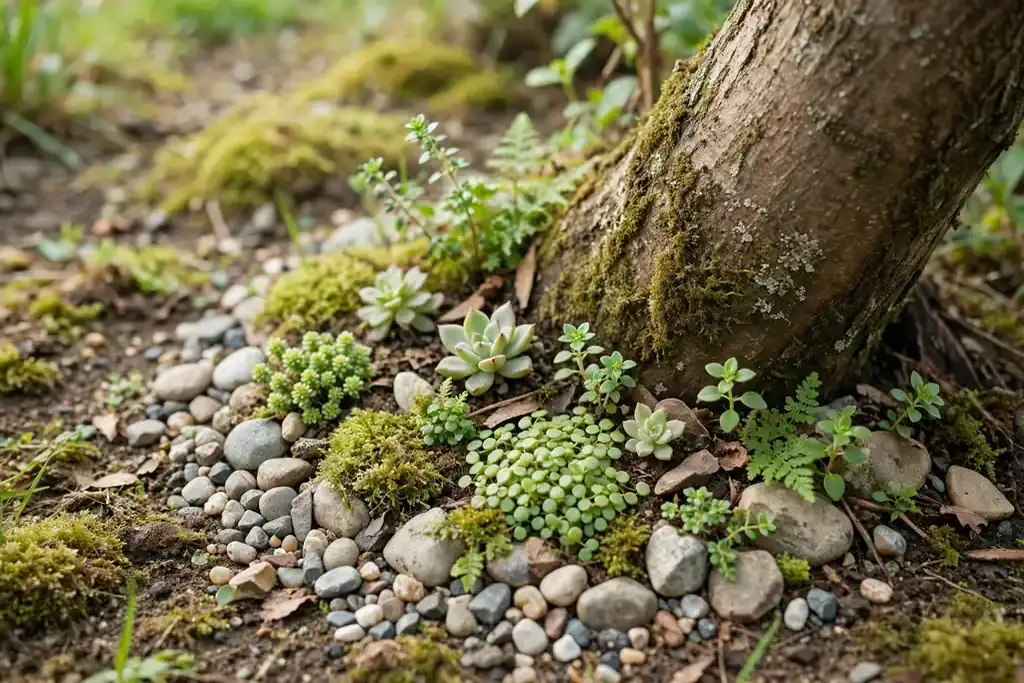
Create a tiny corner with miniature plants, small stones, and a few simple ornaments, tucked at the base of a tree or beside a path. The small scale invites a closer look, and it gives children a garden of their own within the larger garden. Keep the ornaments simple and weatherproof, so the corner still looks like a garden, not a toy shelf.
Use small ferns, miniature hostas, and creeping thyme for planting, and add a tiny path of pebbles. Water gently, since small plants dry out fast in sun, and site the corner in light shade if you can. Tidy fallen leaves by hand, and replace any ornament that breaks before it looks neglected.
25. Gravel Courtyard Behind a Gate
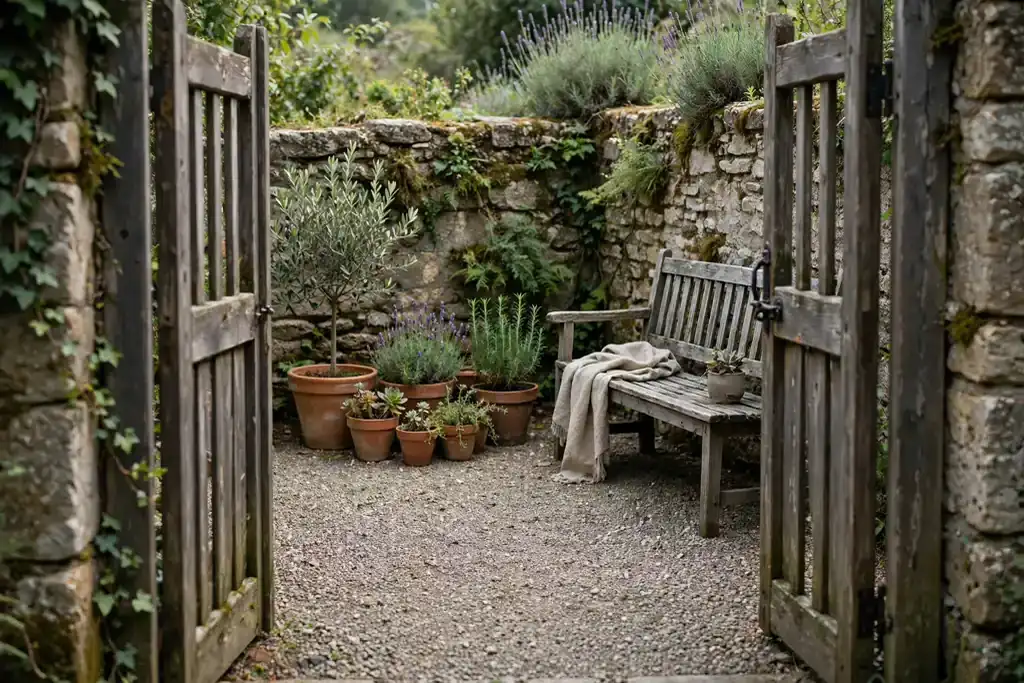
Turn the space behind a side gate into a small gravel courtyard with a bench, pots, and a climbing plant on the wall, for a hidden outdoor room. Gravel drains well, needs little mowing, and crunches underfoot, which adds to the sense of arrival. This idea suits narrow side gardens that otherwise go unused.
Lay a weed membrane and a level gravel layer, and edge it with stone or timber so gravel stays in place. Group pots of different heights in corners, and add a wall mounted lantern for evening use. Rake the gravel occasionally, and top it up yearly where foot traffic wears it thin.
26. Espalier Fruit Wall in a Side Passage
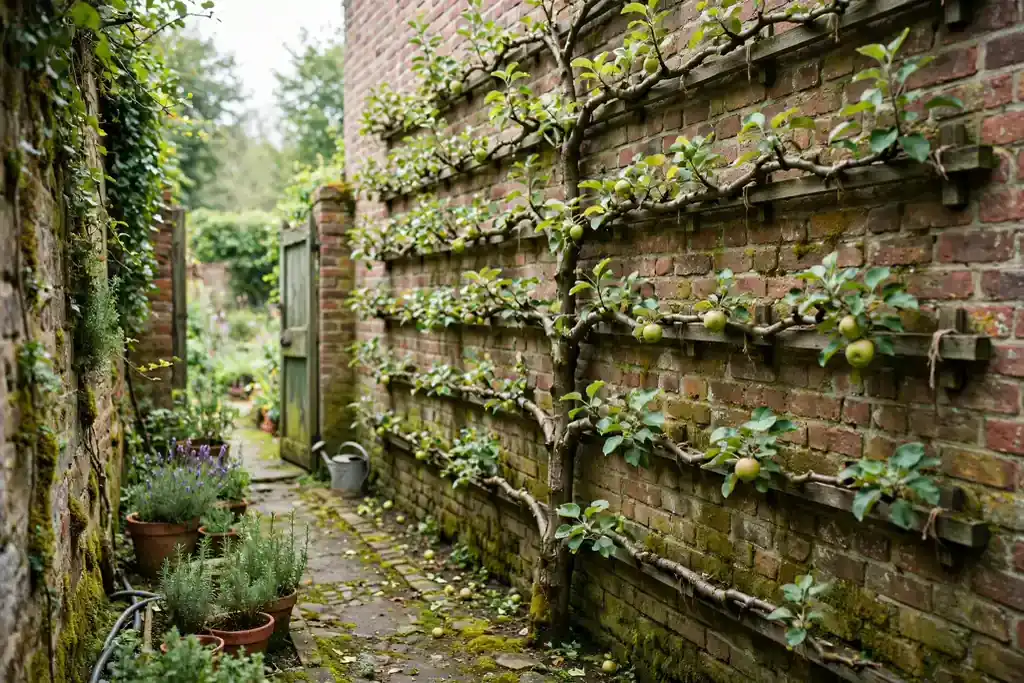
Train an apple or pear tree flat against a wall in a side passage, so a narrow space gains fruit, flowers, and structure without blocking the walkway. Espalier trees are pruned to horizontal tiers, which makes them easy to pick and to care for in a tight space. Spring blossom and autumn fruit give the passage two seasons of interest.
Fix horizontal wires to the wall, and tie new shoots to them as they grow, pruning in summer to keep the tiers clear. Choose a variety suited to your climate and a rootstock that keeps the tree compact. Water in dry spells, and thin fruit in early summer so the remaining fruit grows to a good size.
27. Wall Pocket Garden on a Back Wall
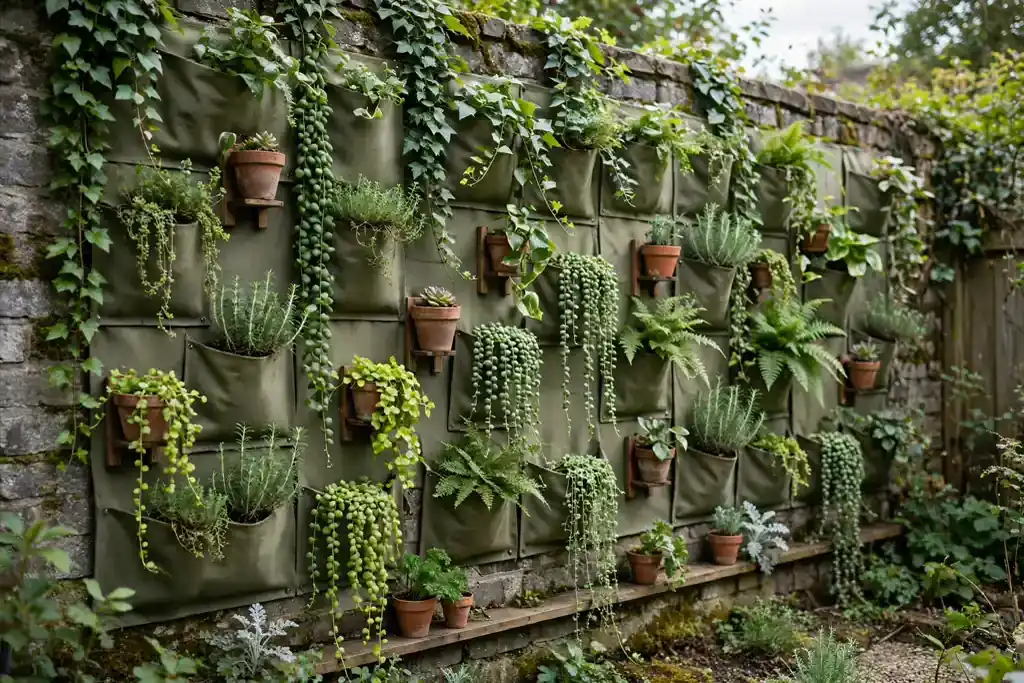
Cover a plain back wall with pockets, small pots, and a trellis of trailing plants, for a vertical garden that hides a dull surface. Wall pockets suit herbs, strawberries, and trailing flowers, and they bring planting to eye level in a small yard. This idea works where ground space is tight but wall space is free.
Fix pockets or a trellis firmly to the wall, and use a free draining compost mix so roots do not sit wet. Water little and often, since wall plantings dry out faster than ground beds, and feed during the growing season. Check fixings yearly, and replace any pocket that holds water or shows mould.
28. Spring Bulb Surprise Corner
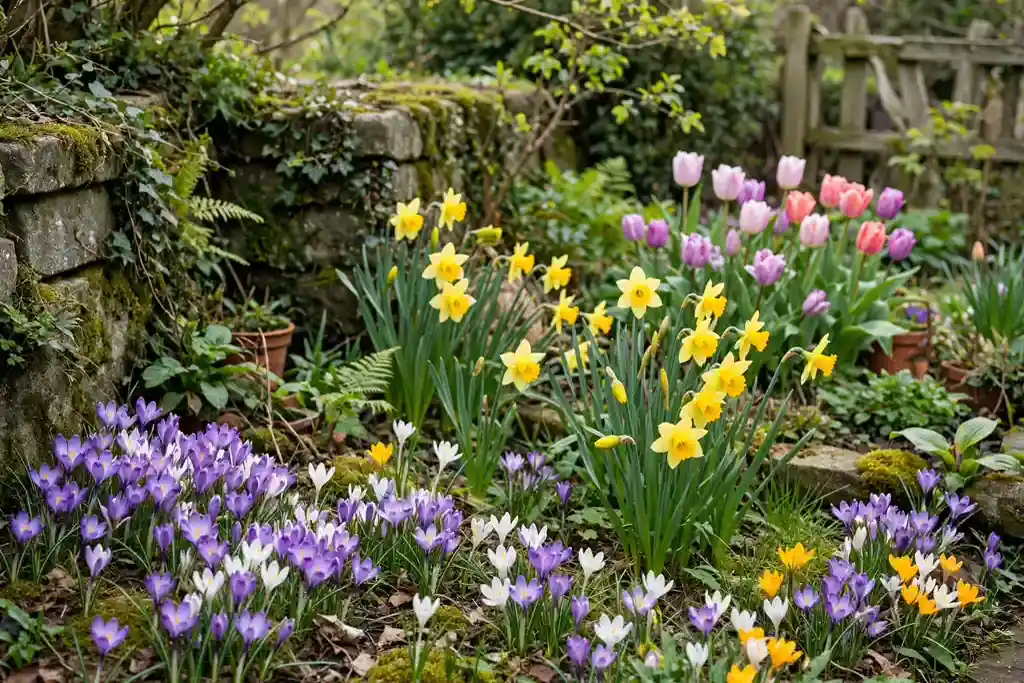
Plant a quiet corner thickly with spring bulbs, so it bursts into color just when the rest of the garden is waking up. Layers of snowdrops, crocus, daffodils, and tulips give weeks of flowers from one planting, and the corner feels like a surprise each year. Plant bulbs in autumn, in drifts rather than rows, for a natural look.
Let bulb foliage die back naturally after flowering, since the leaves feed next year bulbs. Mark the corner with a small stone or label, so you do not dig bulbs up by accident. Add a seat nearby if you can, since a bulb corner deserves a pause, and underplant with ferns that fill the space once bulbs fade.
Conclusion
A secret garden is less about size and more about how a space unfolds. One arch, one curving path, or one seat behind tall grasses can give a yard a hidden heart, and each idea in this list can stand alone or join with others over time. Start with the corner you pass most often, add height and a seat, and let planting fill in around it. The best secret gardens grow slowly, with a new discovery each season, and they reward the gardener who takes time to sit in them.
FAQs
1. What makes a garden feel like a secret garden?
A secret garden feels hidden because the destination is partly out of sight. Height from hedges, arches, or climbers, a curving path, and a seat tucked behind planting all help. You do not need walls or a large plot, only a sense of arrival and a place that is not visible at first glance.
2. How do I make a secret garden in a small yard?
Start with one corner and use vertical planting to create privacy without taking floor space. A trellis with climbers, a tall grass screen, or a mirror on a wall can all work in a small yard. Choose one seat and one path, and keep the rest simple so the corner feels calm rather than crowded.
3. What plants are best for a secret garden?
Choose plants that suit your light and soil first, then mix evergreen structure with seasonal color. Climbers such as roses, jasmine, and clematis cover arches and walls, while ferns suit shade and grasses suit sun. Scented plants near a seat, such as lavender and jasmine, make the corner more inviting.
4. How much does a secret garden cost to create?
Cost depends on how much structure you add. A grass screen, a hammock, and a gravel path can be low cost, while a pergola, stone steps, or a walled nook cost more. Start with planting and one seat, then add timber or stone features over time as budget allows, rather than building everything at once.
5. How do I keep a secret garden private without a tall fence?
Layer planting at different heights to block sightlines without a solid fence. Tall shrubs and grasses at the boundary, climbers on a trellis, and a hedge that you trim twice a year all give privacy while keeping the garden green. A curving path also helps, since it stops visitors seeing the whole garden from one spot.
6. What maintenance does a secret garden need?
A secret garden needs the same care as any garden, plus regular trimming of screens and climbers so paths stay clear. Water new planting well in the first year, prune climbers after flowering, and cut grasses back in late winter. A yearly tidy of the seat, path, and any water feature keeps the hidden corner feeling cared for rather than overgrown.