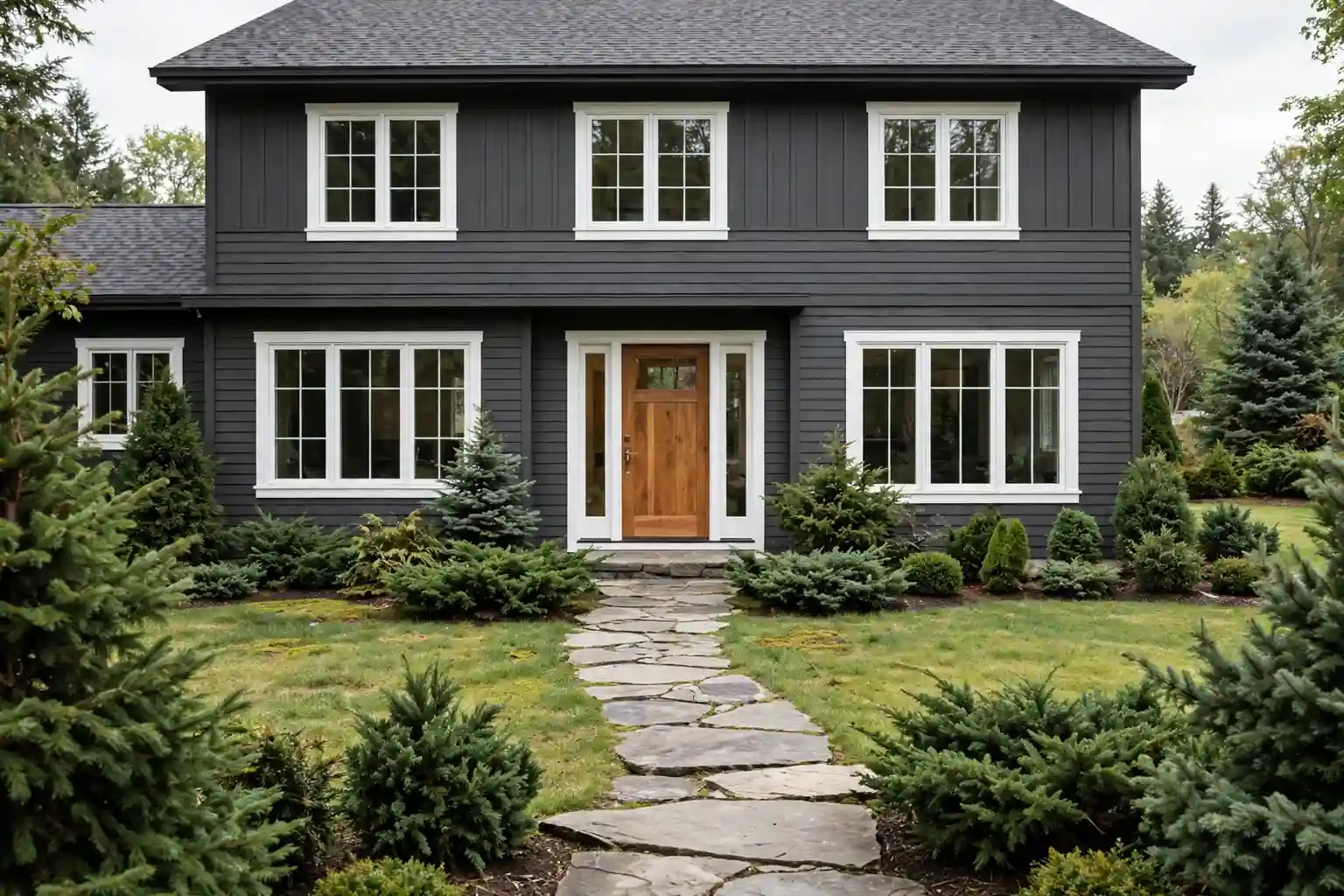
A dark exterior can make a house look grounded, calm, and confident, but only when the shade, trim, and materials work together. The same charcoal can look sharp on one house and flat on the next, depending on light, roof color, and the plants beside it. These 27 dark exterior house color schemes cover siding, brick, stone, wood, and stucco, plus the trim, door, roof, and lighting choices that keep each one from feeling heavy. Start with your house style and your light, test large samples, and pick the scheme that suits both.
Key Takeaways
- Test a dark shade on a large board in morning, midday, and evening light before painting a whole wall, since dark colors shift more than pale ones.
- Give every dark scheme a lighter partner: white or cream trim, warm wood, pale stone, or bright planting, so the house keeps clear edges.
- Match the dark shade to the house style: charcoal and black suit modern and farmhouse forms, navy and forest green suit colonial and craftsman forms.
- Repeat the accent once more, in hardware, a door, or a light fixture, so the scheme looks planned rather than accidental.
- Keep the roof in the plan: a dark house with a dark roof needs warm wood or pale stone to break up the mass.
- Use warm light and layered planting at the entry, since dark walls absorb light and can make a porch feel dim.
1. Charcoal Horizontal Siding with Crisp White Trim
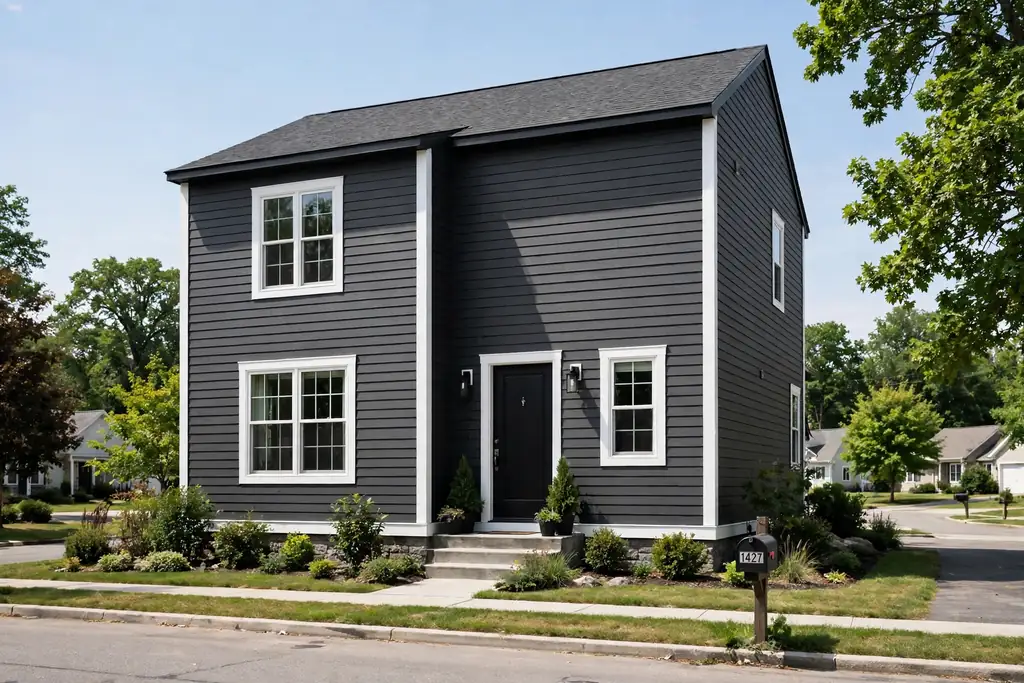
Charcoal horizontal siding with white trim is the most reliable dark scheme, because the contrast draws the eye to the shape of the house rather than to one flat dark wall. Paint or clad the siding in a soft charcoal with a grey base, then keep window frames, corner boards, and fascia in bright white. The white lines give the dark walls a clear outline, which matters most on a plain, boxy house.
Keep the door and porch simple so the contrast does the work. A black door with white trim reads as part of the scheme, while a wood door adds warmth if the house faces north and needs softening. Check the charcoal against the roof in daylight: a charcoal that leans blue can clash with a brown roof, while a neutral charcoal sits well with grey, black, and brown roofs alike.
2. Matte Black Modern Farmhouse with Timber Beams
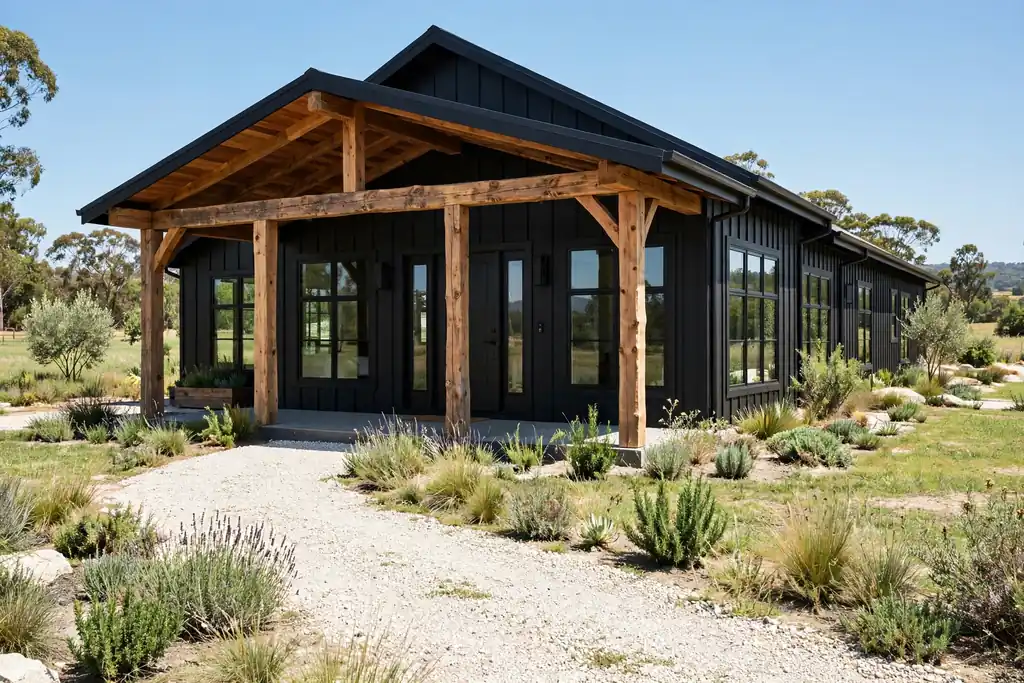
A matte black modern farmhouse works because timber beams and porch posts break the black into readable sections. Use matte or satin black siding, then add natural wood at the gable peaks, the porch posts, and the beam ends. The wood warms the black and stops a large farmhouse from reading as one solid block.
Keep windows large and frames black, so the glass reads as part of the dark wall rather than as a hole in it. Add a wood front door or wood planters to repeat the timber note at ground level. A matte finish hides small marks better than gloss on a large wall, but it also shows dust on a dry, dusty road, so plan on a wash down each season.
3. Deep Navy Colonial with Brass Details
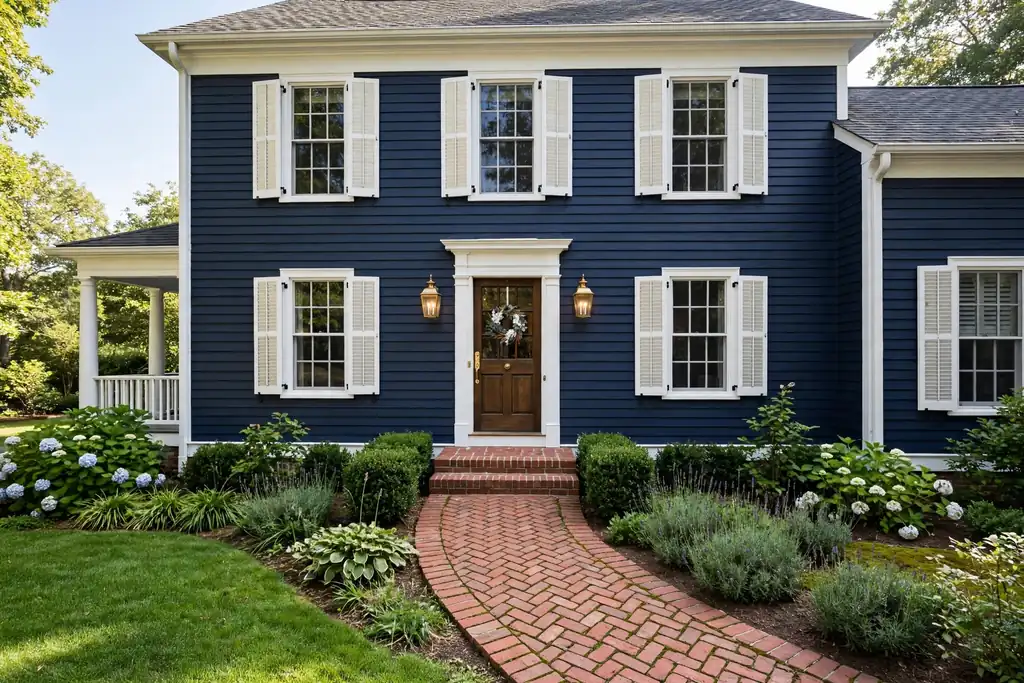
Deep navy suits a colonial house because the symmetrical form and divided windows give the dark color structure to sit on. Paint the siding navy, keep shutters and trim white, and add brass in the door hardware, the lanterns, and the house numbers. Brass warms the cool navy and gives the entry a clear focal point after dark.
Use a navy with a grey base rather than a bright blue, so the house reads as dark and calm from the street. For more door color ideas in this family, see these blue front door colors. Keep the roof grey or black, since a brown roof can pull navy toward purple in warm evening light. A white door frame helps the entry stand out against the navy wall.
4. Forest Green Craftsman with a Stone Base
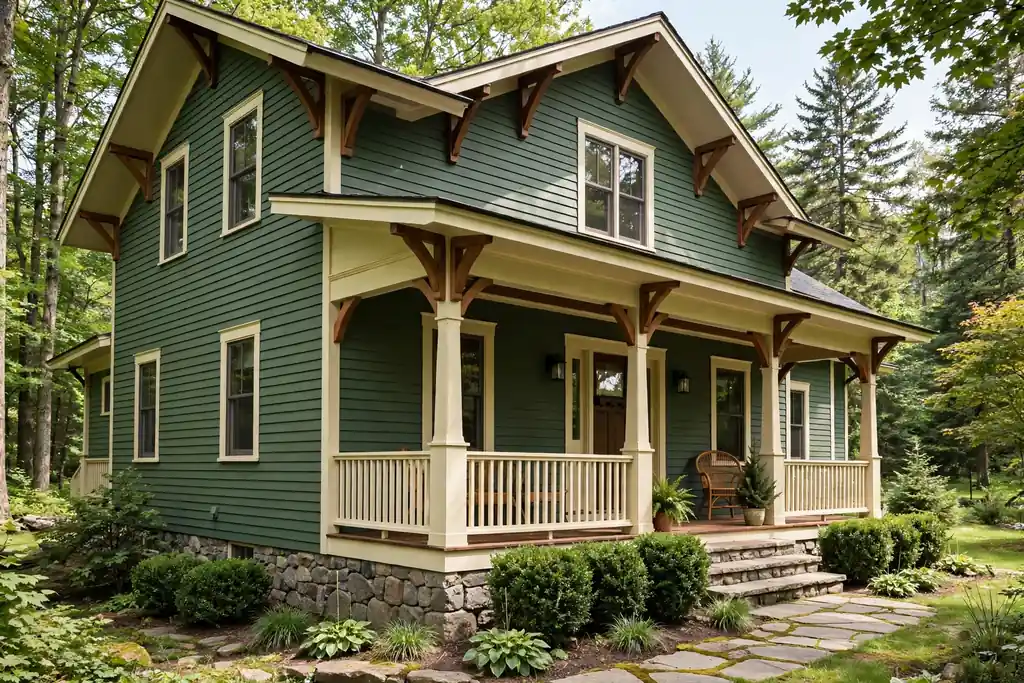
Forest green craftsman siding pairs naturally with a stone base, because both materials come from the same woodland palette. Paint the siding a deep, muted green, keep the trim cream, and let a stone foundation or stone porch piers ground the house. The stone adds texture at ground level, where a flat green wall would otherwise meet the lawn without a break.
Repeat the stone once more, in a chimney, a low garden wall, or stone steps, so the base does not look like an afterthought. Wood brackets and exposed rafter tails in a warm stain suit this scheme and keep the green from feeling flat. Forest green needs decent daylight, so on a heavily shaded lot, pick a green one step lighter than the sample you first like.
5. Espresso Brown with Cream Trim and Terracotta Pots
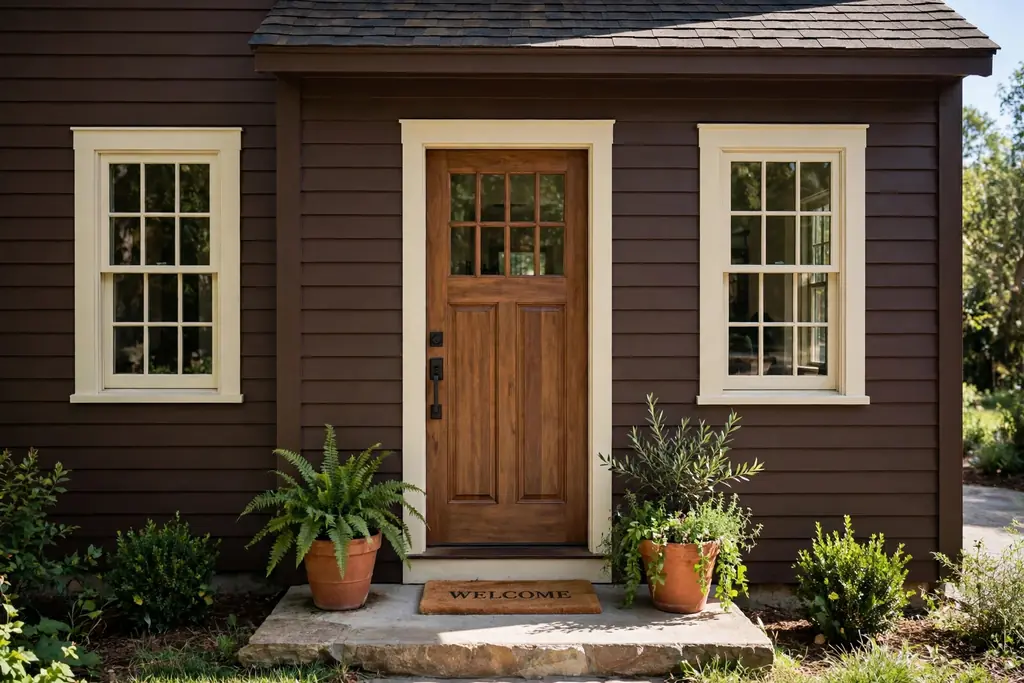
Espresso brown is a warm dark scheme, closer to chocolate than to black, and it suits houses with warm brick, stone, or wood nearby. Pair espresso siding with cream trim, which softens the brown without the stark edge that bright white gives. Terracotta pots at the entry repeat the warm tone at ground level and add a handmade texture beside the painted wall.
Keep the door in a warm wood stain or a deep cream, since a black door can make espresso read muddy. A brown roof suits this scheme better than a grey one, and warm brass or bronze hardware fits the palette. In a hot, sunny climate, note that dark brown walls absorb heat, so check insulation and ventilation before committing to the darkest espresso.
6. Slate Grey Minimalist with Black Window Frames
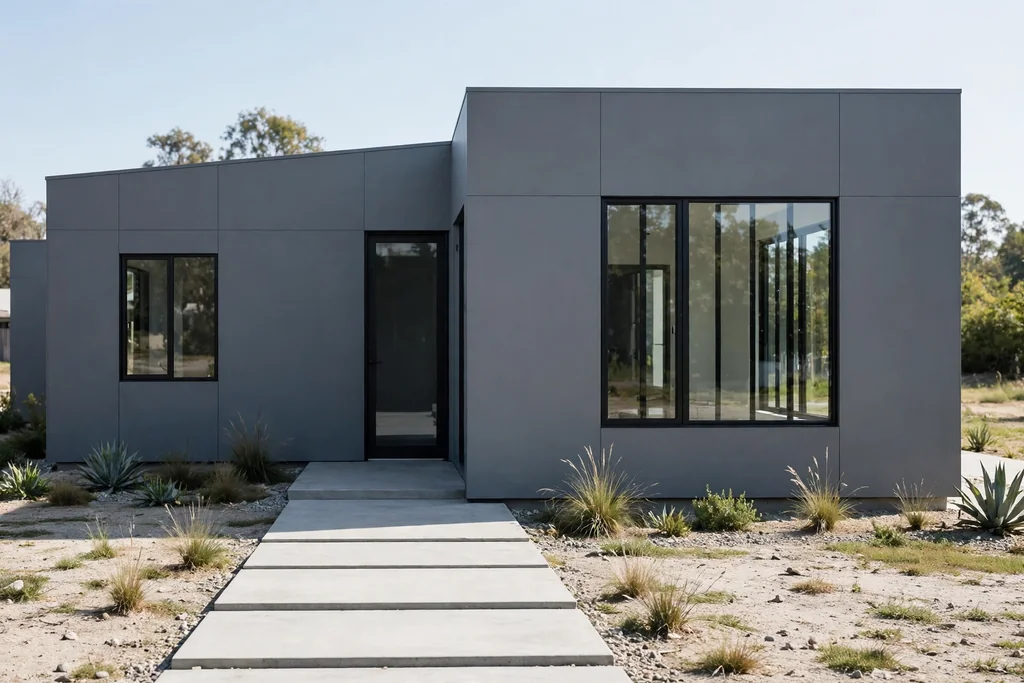
Slate grey with black window frames suits a minimalist house because the palette stays quiet and the lines stay clean. Use a mid to dark slate grey on flat siding or render, keep the trim minimal, and set black framed windows flush in the wall. The black frames read as thin graphic lines, which suits a house with few decorative details.
Avoid adding shutters, brackets, or mixed trim colors here, since extra detail fights the minimal form. A single wood accent, such as a cedar entry panel or a wood bench, stops the grey and black from feeling cold. Slate grey shifts with light, looking bluer on a bright day and greyer at dusk, so test it on the wall that faces the street.
7. Dark Teal Coastal Cottage with a White Porch
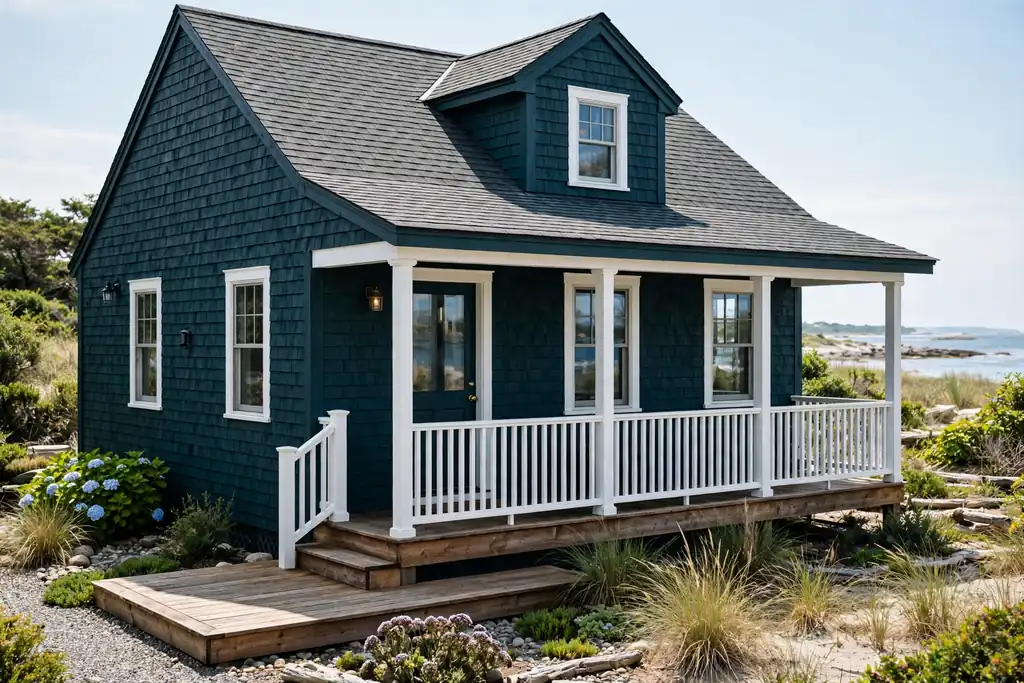
Dark teal gives a coastal cottage color without the brightness of a pale beach palette. Paint the siding a deep teal with a green base, keep the porch rails, posts, and window trim white, and let the white porch read as a bright frame around the darker walls. The contrast keeps the cottage cheerful even with a dark main color.
Use a teal that holds its green in shade, since a blue leaning teal can turn nearly navy on a cloudy day. A white or pale grey roof, a wood deck, and pale planters suit this scheme. Keep the door white or a soft cream, and add one brass lantern, so the entry has a warm note against the cool teal and white.
8. Black Painted Brick with a Warm Cedar Door
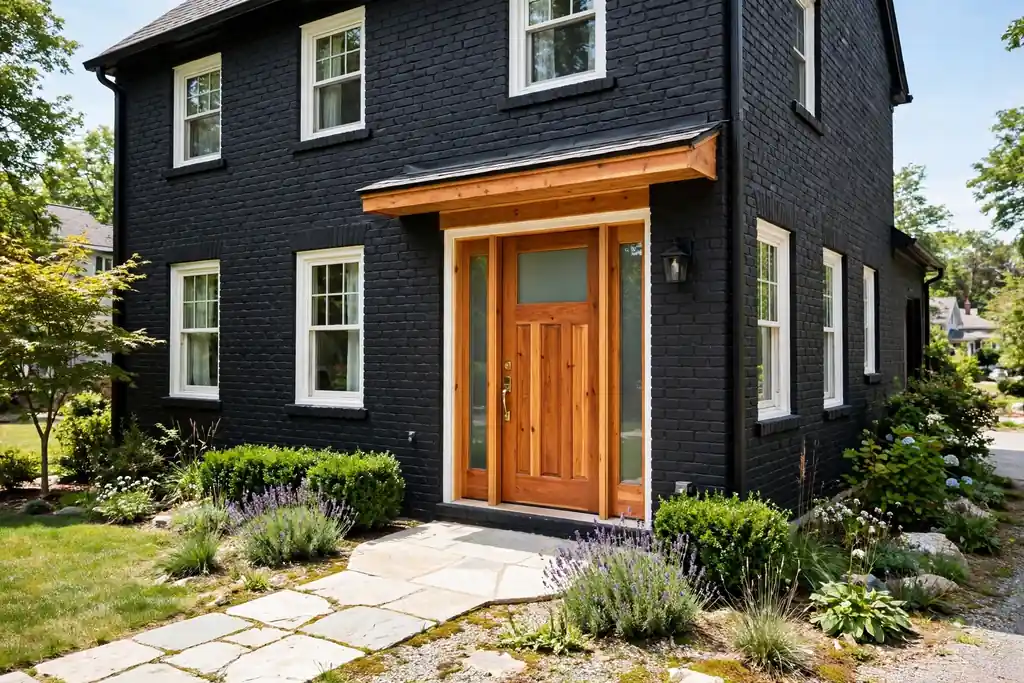
Painting brick black changes a traditional house fast, because the brick texture stays visible while the color turns modern. Use a matte black masonry paint, keep the mortar lines subtle, and set a warm cedar door against the black wall. The cedar is the single warm note, and it draws the eye straight to the entry.
Keep window frames white or black depending on the house: white frames give a classic black and white house, black frames give a moodier, more modern one. Check the brick condition first, since painted brick needs sound mortar and a breathable paint suited to masonry. A pale stone path or light steps help, since a black house with a dark path can lose its entry at dusk.
9. Charcoal Board-and-Batten for Vertical Rhythm
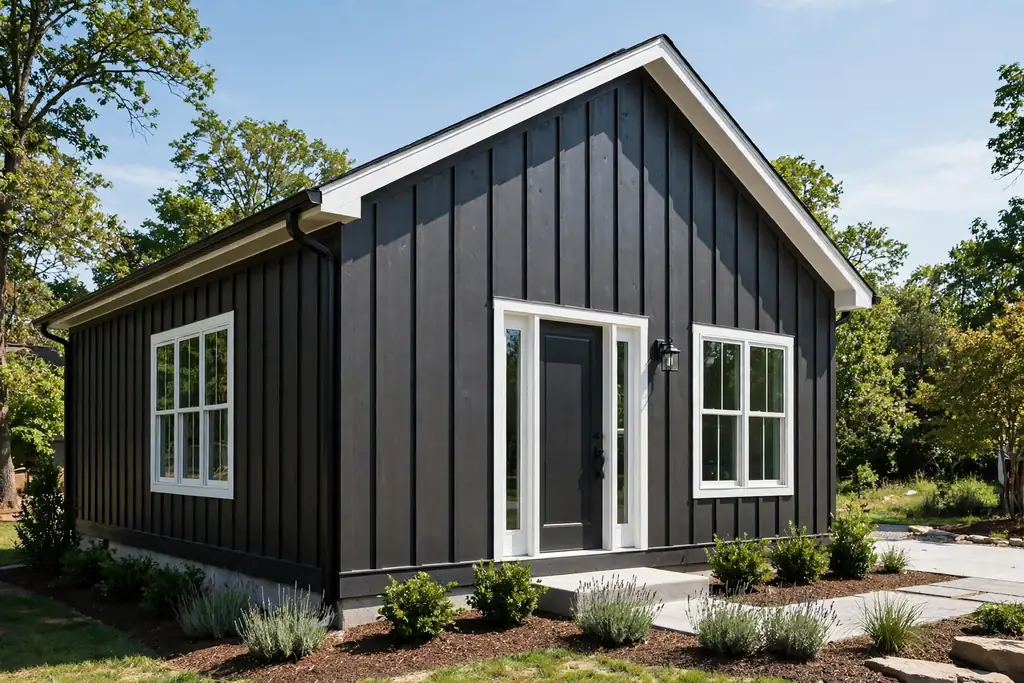
Charcoal board-and-batten siding adds vertical rhythm to a house that would otherwise read as one wide dark slab. The narrow battens cast thin shadows down the wall, which gives the charcoal depth and movement through the day. This suits tall, narrow houses, gable ends, and modern additions where horizontal siding would look flat.
Paint battens and boards the same charcoal, so the rhythm comes from shadow rather than from a second color. Keep trim white or pale grey, and keep the roof simple, since a busy roofline fights the vertical lines. Board-and-batten also suits a partial application: use it on a gable or an entry projection, with horizontal siding elsewhere, to mark the entry without darkening the whole house.
10. Midnight Blue with Copper Gutters and Lanterns
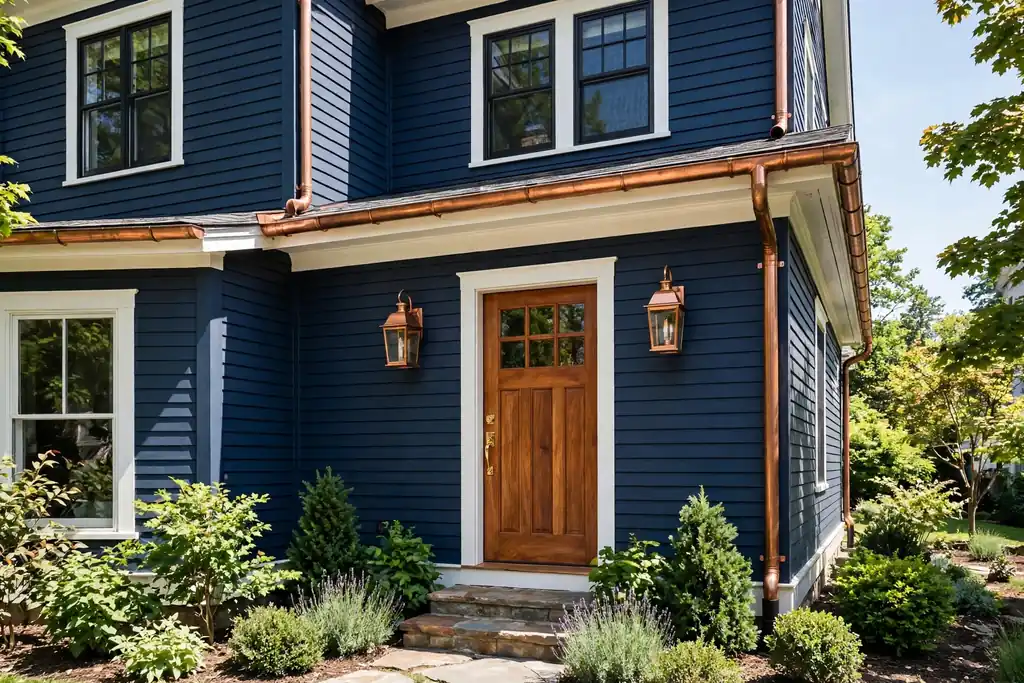
Midnight blue with copper details is a dark scheme built on metal rather than on trim color. Paint the siding a near black blue, keep the trim white or pale grey, and add copper in the gutters, downspouts, and entry lanterns. New copper shines bright, then weathers to a soft brown, so the accent changes with the house over time.
Use copper sparingly: gutters and one or two lanterns are enough, since copper on every fixture can look busy. A grey or black roof suits midnight blue, and a wood door adds warmth beside the cool metal. Check the blue at dusk before committing, since midnight blue reads as pure black in low light, which some owners want and others do not.
11. Dark Olive with Limestone Trim
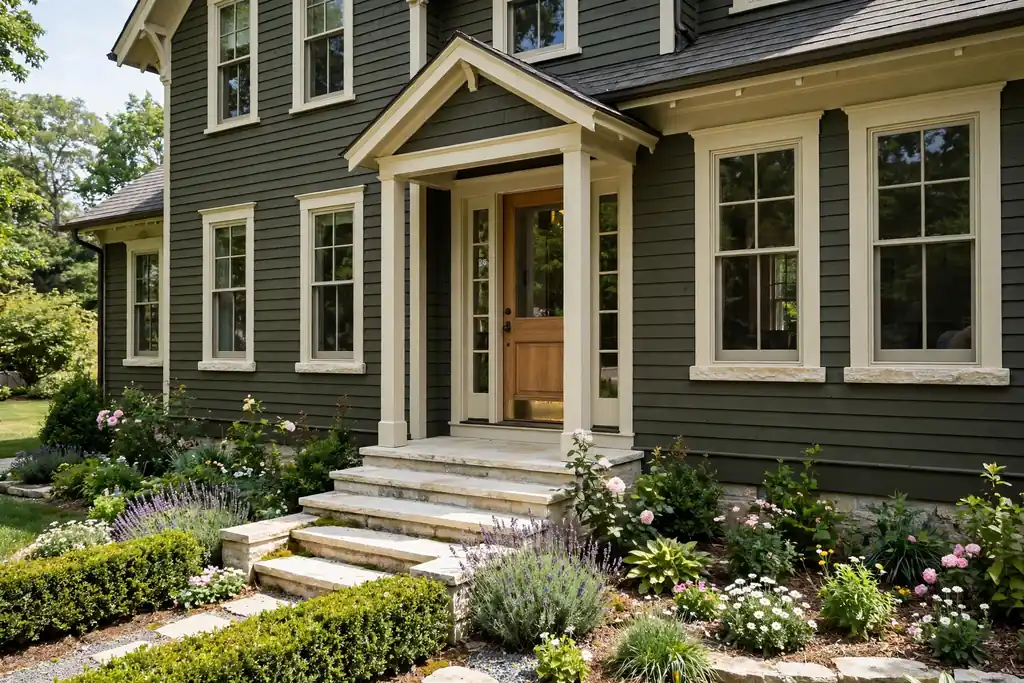
Dark olive with limestone trim suits a house with traditional bones, because the earthy green and pale stone feel settled rather than new. Paint the siding a muted olive with a brown base, and use limestone or pale stone for window sills, the door surround, and the steps. The stone gives the olive a light edge without the sharpness of white paint.
Keep the roof brown or grey, and use bronze or black hardware, since bright brass can look too crisp against olive. Olive can turn muddy beside cool grey stone or a grey roof, so test the pair on site. A cream door or cream trim on the porch keeps the entry bright, which matters because olive absorbs light like other dark shades.
12. Graphite Stucco with an Arched Entry
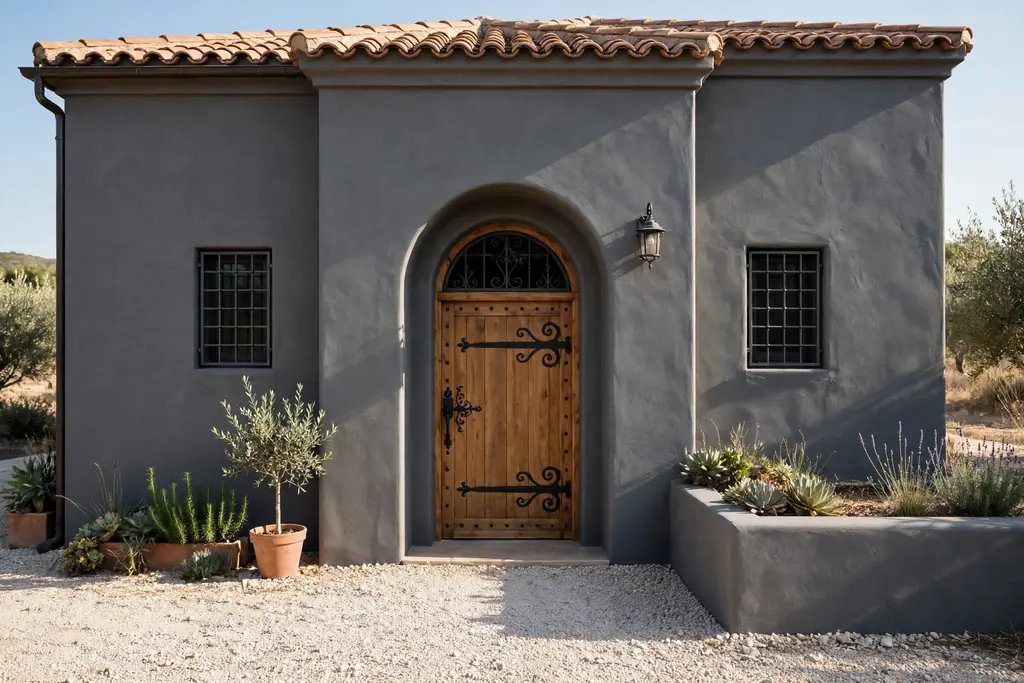
Graphite stucco gives a Mediterranean or Spanish style house a dark, modern update without losing its soft, rounded form. Use a dark graphite render on the main walls, keep the arched entry in the same graphite or a shade lighter, and add terracotta roof tiles above. The warm roof tiles stop the graphite from feeling cold, which is the main risk with dark stucco.
Keep window frames dark bronze or black, and use a wood door with iron details to suit the arch. Stucco shows texture well in a dark color, so a fine, even render reads better than a heavily textured one, which can catch shadows unevenly. Pale gravel or light stone at the entry gives the dark walls a bright base.
13. Black Cedar Shingles with White Window Frames
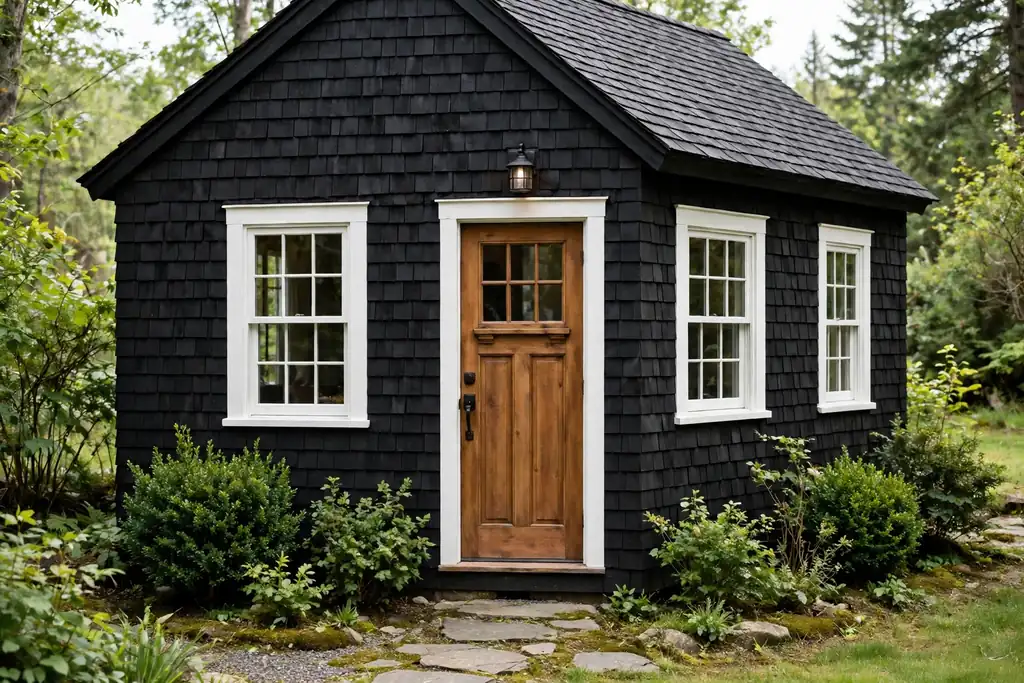
Black cedar shingles suit a cottage or shingle style house because the small shingle pattern breaks the black into texture. Stain the shingles near black, keep window frames and trim white, and let the white frames read as a grid across the dark wall. The texture keeps the house from looking flat, which is the main risk with a large black wall.
Use a stain rather than a solid paint where the shingle grain should stay visible, and expect the stain to weather over time. A white door or a wood door both work here, while a black door can disappear into the wall. Keep the roof dark grey or black, and add pale planting at the base, since dark shingles against dark soil can hide the bottom of the house.
14. Dark Walnut Cladding with a Glass Entry
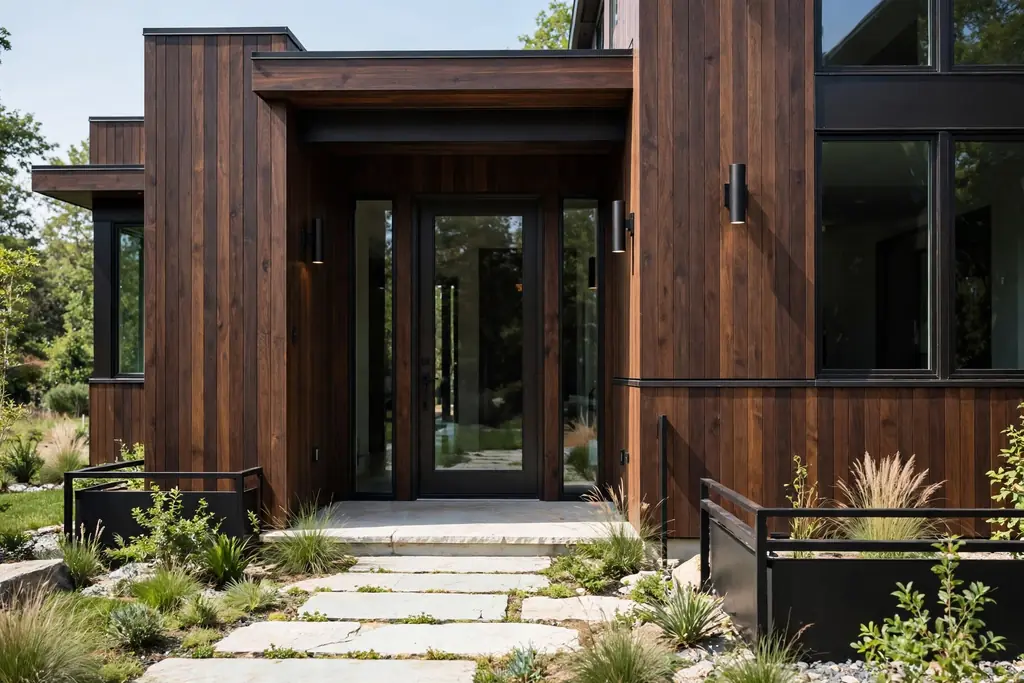
Dark walnut wood cladding with a glass entry suits a contemporary house because the wood grain and the glass give the dark color two different surfaces to play against. Clad the main walls in dark walnut boards, keep the joints tight and horizontal, and set a full glass entry door or sidelights beside the wood. The glass reflects light and sky, so the dark wall never reads as a solid block.
Protect the cladding with an exterior oil or stain suited to the wood, and plan on regular care, since dark wood shows weathering faster than painted siding. Keep other materials quiet: black metal, pale stone, and plain concrete suit walnut, while bright trim fights it. A pale stone path leading to the glass entry helps visitors find the door at night.
15. Charcoal Siding Paired with a Red Brick Chimney
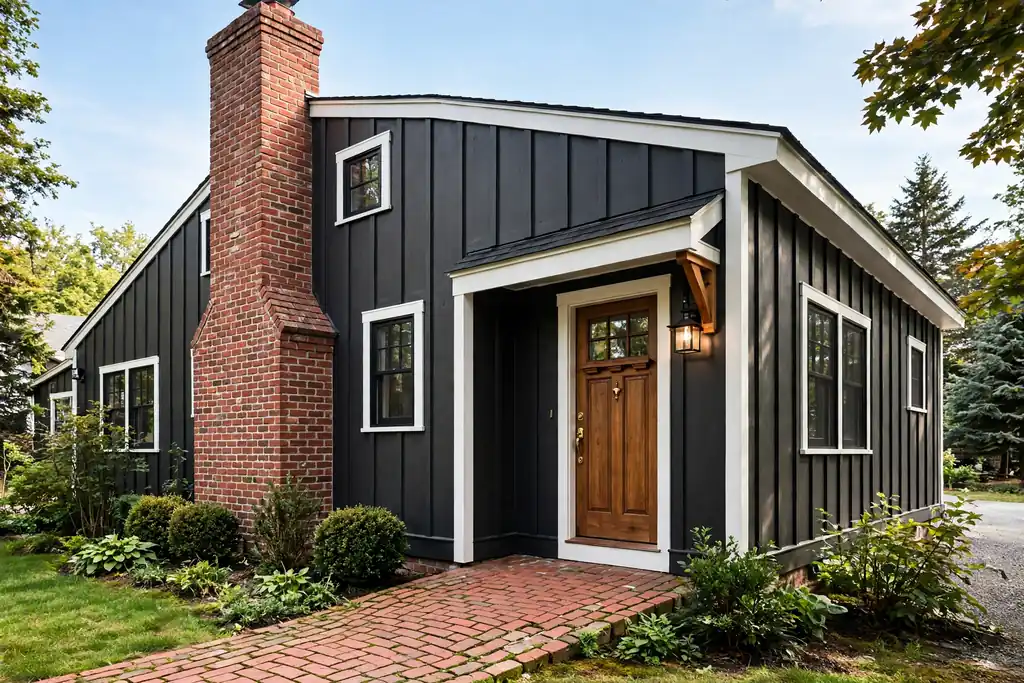
Charcoal siding with a red brick chimney works because the brick gives the dark house a warm, original feature to anchor it. Keep the chimney in its natural red brick, paint the siding charcoal, and use white or cream trim to separate the two. The brick reads as a vertical warm stripe against the dark walls, which suits a house where the chimney sits on the front or side face.
Repeat the brick once more at ground level, in a brick path, brick steps, or a low brick planter, so the chimney does not stand alone. A brown or grey roof suits both materials, and a wood door echoes the warmth of the brick. If the brick is painted already, stripping it back is a large job, so this scheme suits houses where the brick is still bare.
16. Dark Stone Veneer on the Lower Story
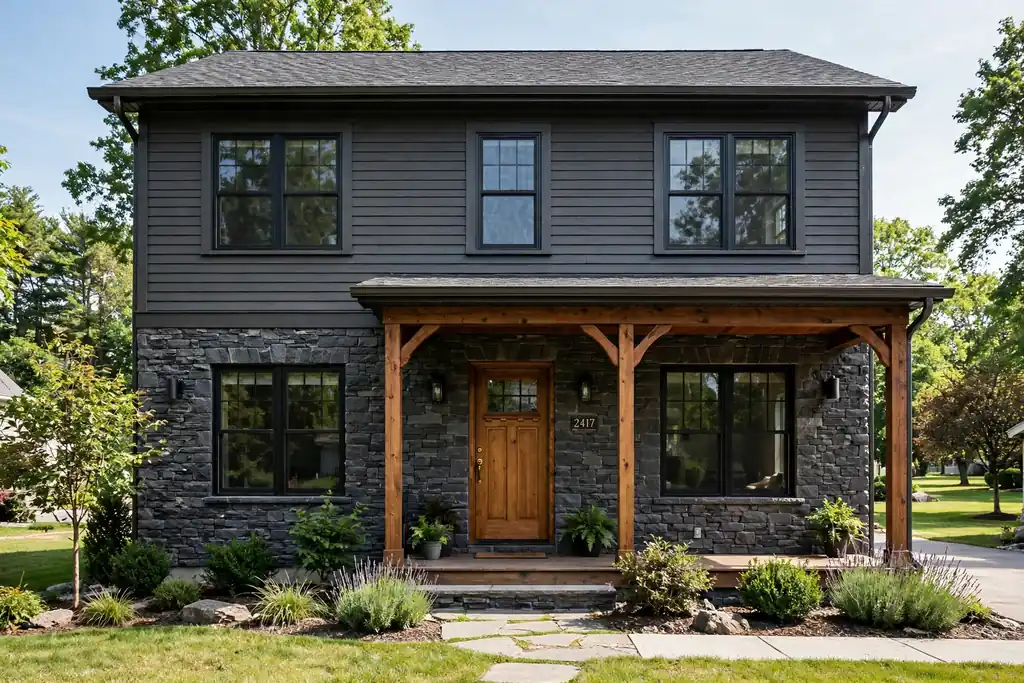
Dark stone veneer on the lower story grounds a two story house, because the heavy material sits where a house naturally needs weight. Use dark grey or charcoal stone on the ground floor, keep the upper story in a dark siding or render a shade lighter, and separate the two with a simple trim board. The stone adds texture and shadow at the level people see up close.
Keep the stone color in the same family as the siding, so the house reads as one scheme rather than two separate houses stacked together. A wood door and wood porch posts warm the stone, while black hardware keeps the look tidy. Stone veneer needs a proper base and drainage detail, so this is a scheme to plan with a builder rather than as a paint only change.
17. Dark Grey Siding Under a Black Standing-Seam Roof
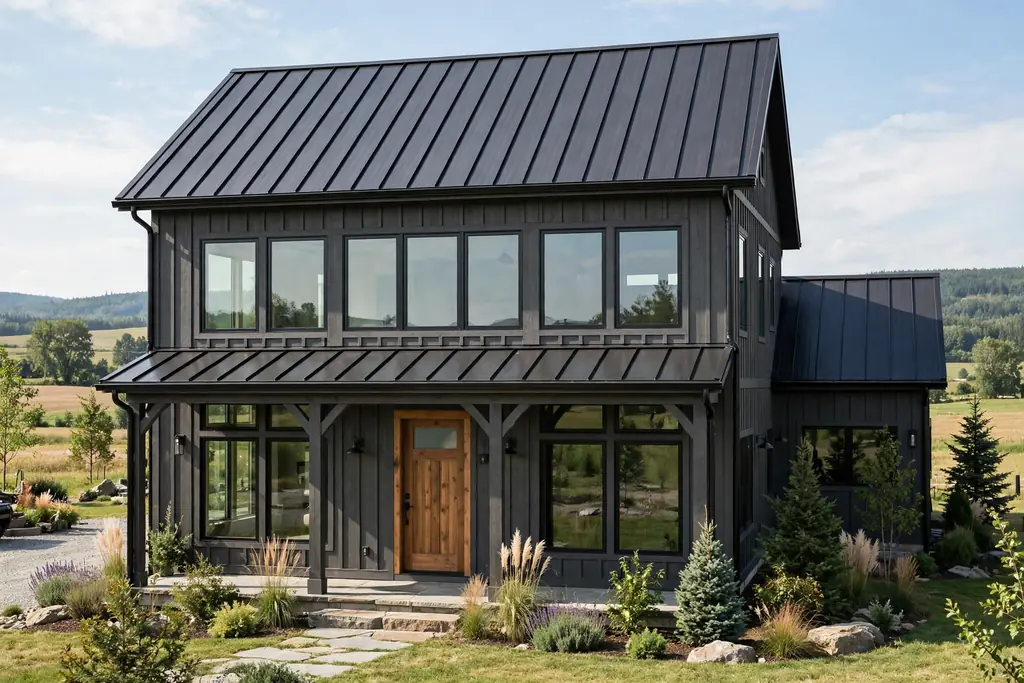
Dark grey siding under a black standing-seam metal roof suits a modern or barn style house because the roof lines become part of the color scheme. Use a mid dark grey on the walls, keep the roof black with visible seams running down the slope, and keep trim black or dark grey. The roof and walls read as one dark form, with the seams giving the roof its detail.
Break the dark mass with wood at the entry, a pale stone terrace, or large windows that reflect the sky. A black roof absorbs heat, so check attic ventilation and insulation before choosing this scheme in a hot climate. Keep gutters black to match the roof, and use warm porch light so the entry does not disappear under the dark roofline at night.
18. A Deep Green Front Door as the Focal Point
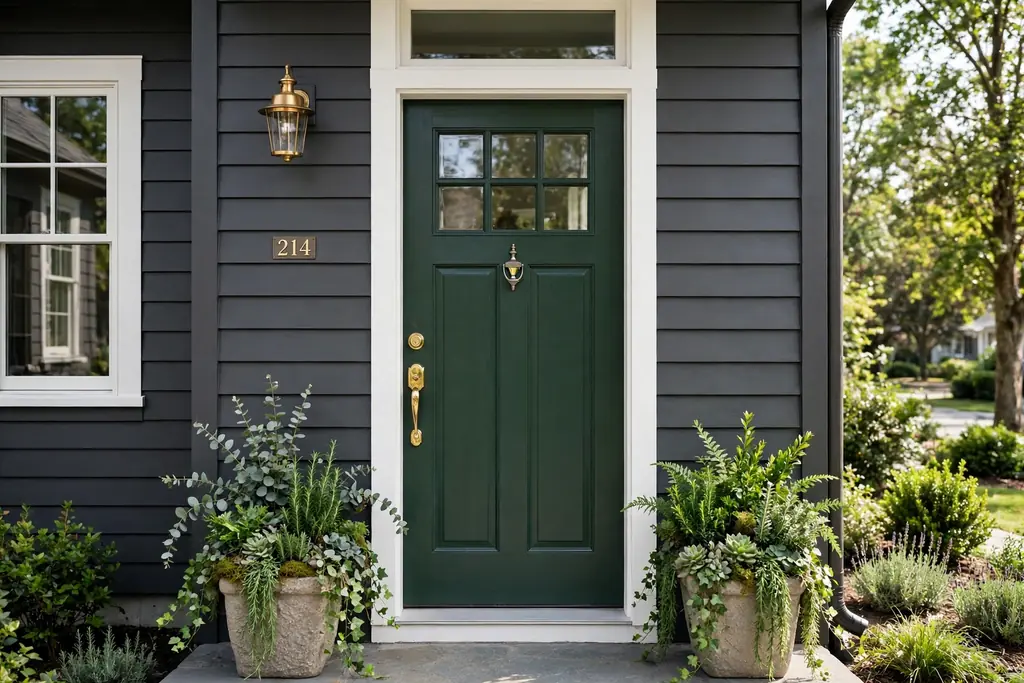
A deep green front door on dark grey siding makes the entry the focal point without repainting the whole house. Paint the siding a soft dark grey, keep trim white or pale grey, and paint the door a deep, muted green with a satin finish. The green reads as a deliberate color note against the neutral grey, and it suits houses where a full green exterior would feel like too much.
Repeat the green once, in a planter glaze, a wreath, or a bench cushion, so the door does not look random. Brass or black hardware both suit deep green, while chrome can look too cold beside it. For more ways to use a strong door color against a dark house, see these blue front door colors, which cover how hardware and trim change a dark entry.
19. Charcoal Siding with a Warm Wood Slat Screen
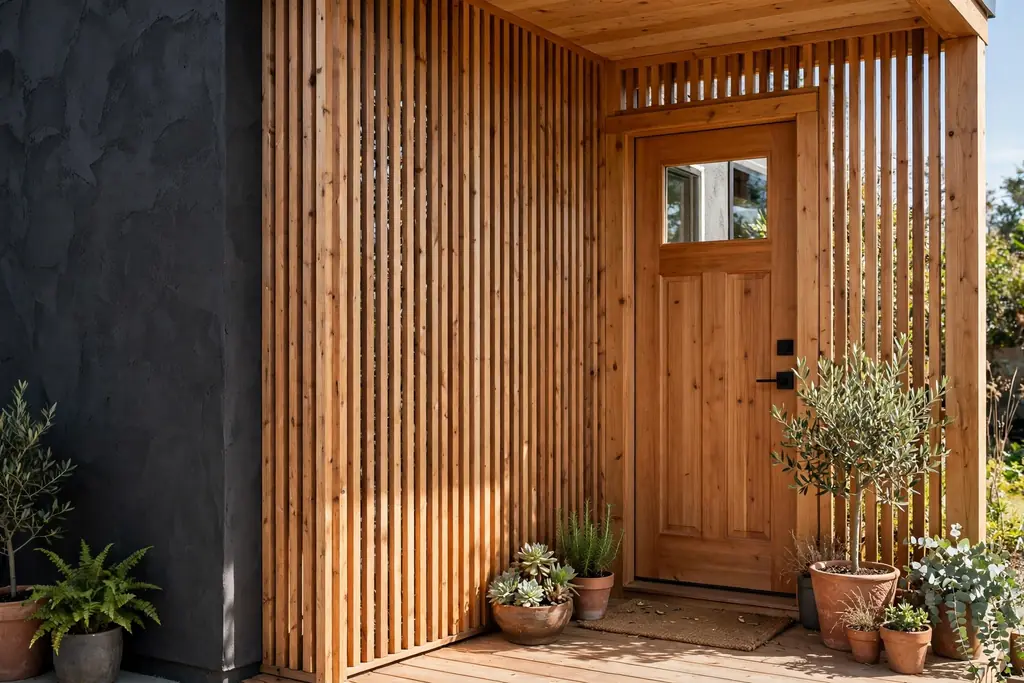
A warm wood slat screen beside charcoal siding adds privacy and warmth in one move. Use vertical or horizontal wood slats to screen a porch, a side yard, or a bin area, and set them against a charcoal wall. The slats cast striped shadows on the dark wall, and the wood tone gives the eye a warm place to rest.
Keep the slats in a natural cedar or warm stain, and space them evenly, since uneven gaps show clearly against a dark background. Use the same wood for the front door or planters to tie the screen to the entry. A slat screen also softens a long, flat charcoal wall without adding a second paint color, which keeps the scheme simple.
20. Dark Walls with a White Pergola and Pale Porch Ceiling
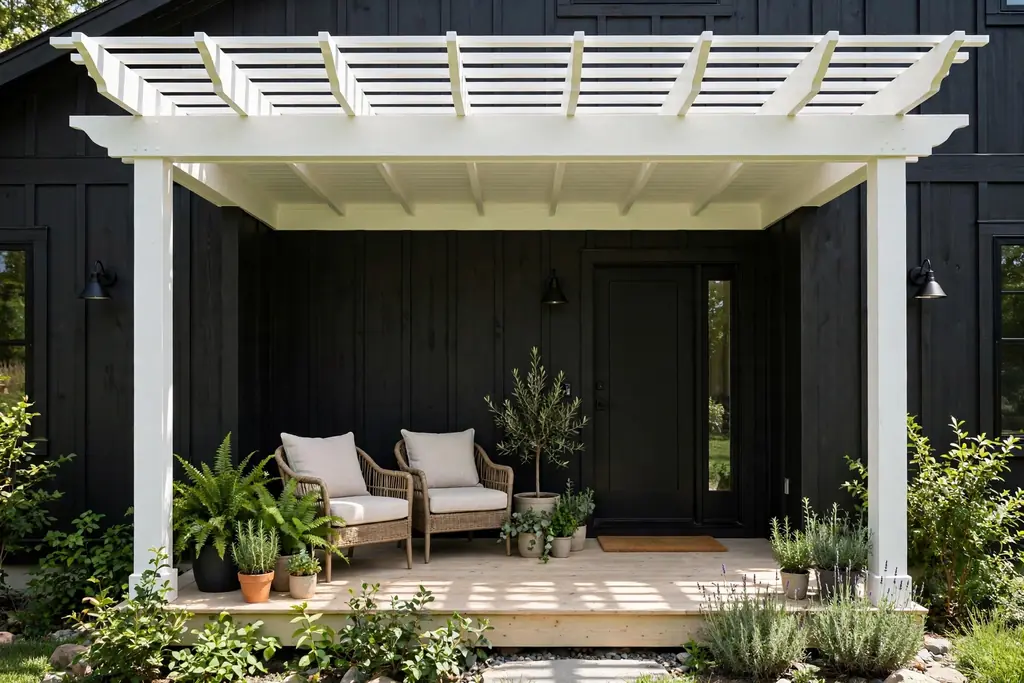
A white pergola and a pale porch ceiling lift a dark house at the exact place people gather. Paint the walls charcoal or deep navy, build the pergola in white, and paint the porch ceiling a pale blue grey or warm white. The white overhead structure frames the entry and reflects light down onto the porch, so the dark walls do not make the seating area feel dim.
Keep porch furniture in pale wood or light cushions to repeat the bright note at seating height. A white pergola needs regular cleaning, since dark walls make dirt on white paint more visible by contrast. This scheme suits a house with a deep porch, where the ceiling is large enough to matter, rather than a shallow stoop.
21. Tonal Layering: Black Trim on Dark Grey Walls
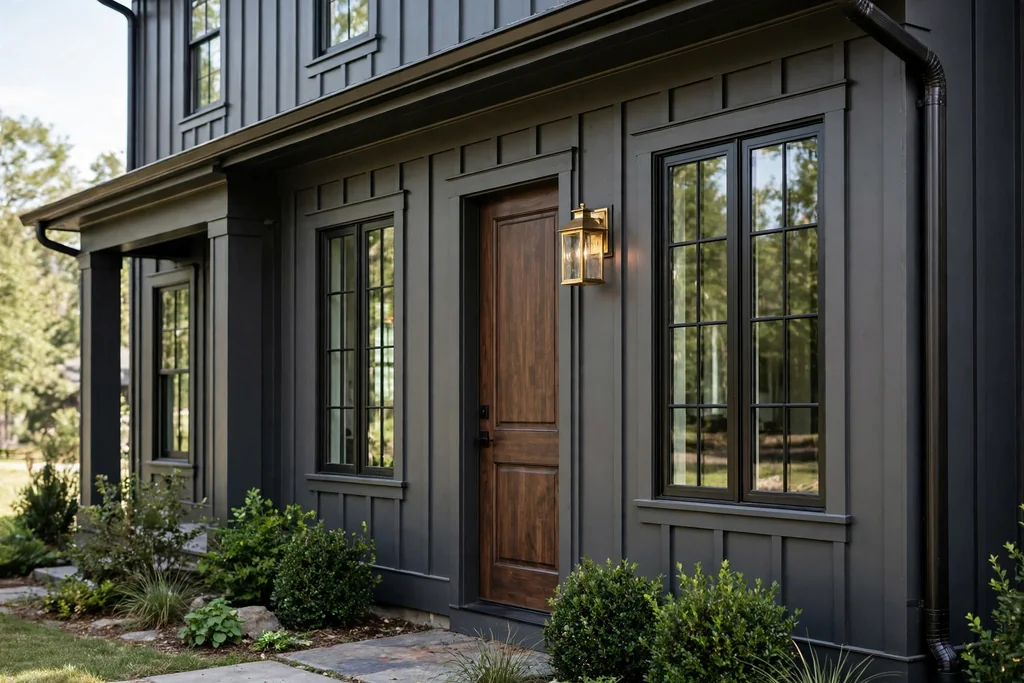
Tonal layering uses black trim on dark grey walls, so the house reads as shades of one color rather than as dark against white. Paint the walls a mid dark grey, use near black for window frames, fascia, and gutters, and keep the door black or dark wood. The subtle contrast gives the house depth without the sharp outline that white trim creates.
This scheme needs good light to work, since the trim contrast is quiet and can disappear on a shaded facade. Add one warm material, such as wood or brass, so the grey and black do not feel cold. For help pairing dark tones with lighter partners inside and out, see these wall color combinations, which show how one strong color needs a calmer partner beside it.
22. Dark Exterior with Brass Numbers and Warm Path Lights
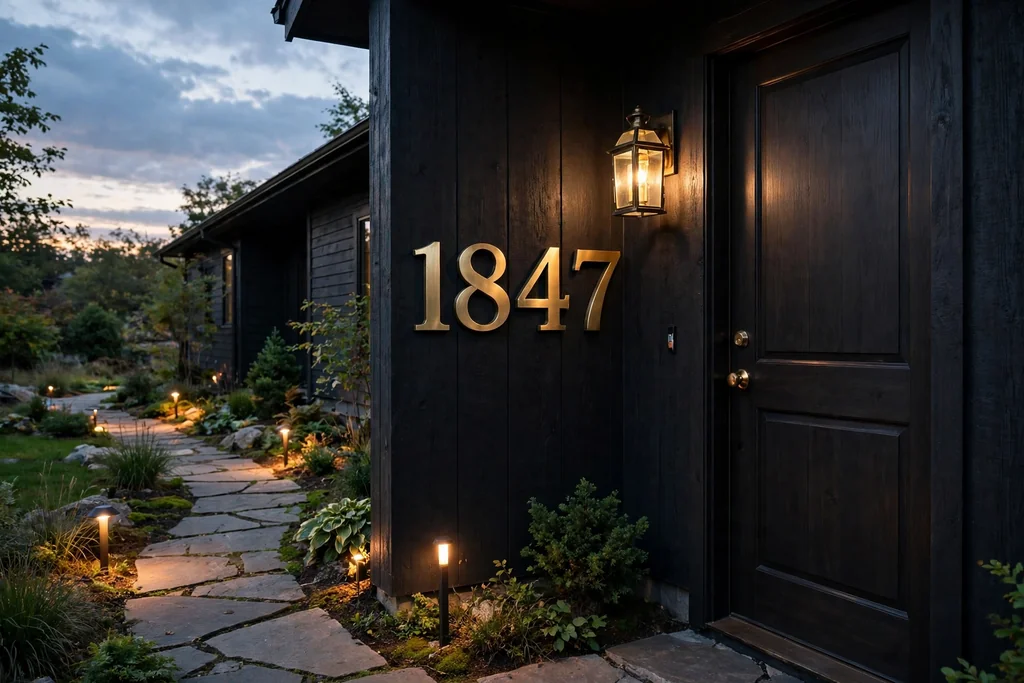
Brass numbers and warm path lights are small details that make a dark exterior readable after dark. Paint the walls charcoal, navy, or forest green, then mount large brass house numbers beside the door and set warm path lights along the walk. The brass catches daylight, and the warm lights outline the path at night, so visitors can find the entry on a dark facade.
Keep the light color warm, around the tone of a household lamp, since cool white light can make dark walls look cold and flat. Space path lights evenly and keep them low, so they light the walk rather than glaring into eyes. Repeat brass once more, in a lantern or door handle, so the numbers do not sit alone.
23. Two-Tone Dark: Charcoal Above, Black Below
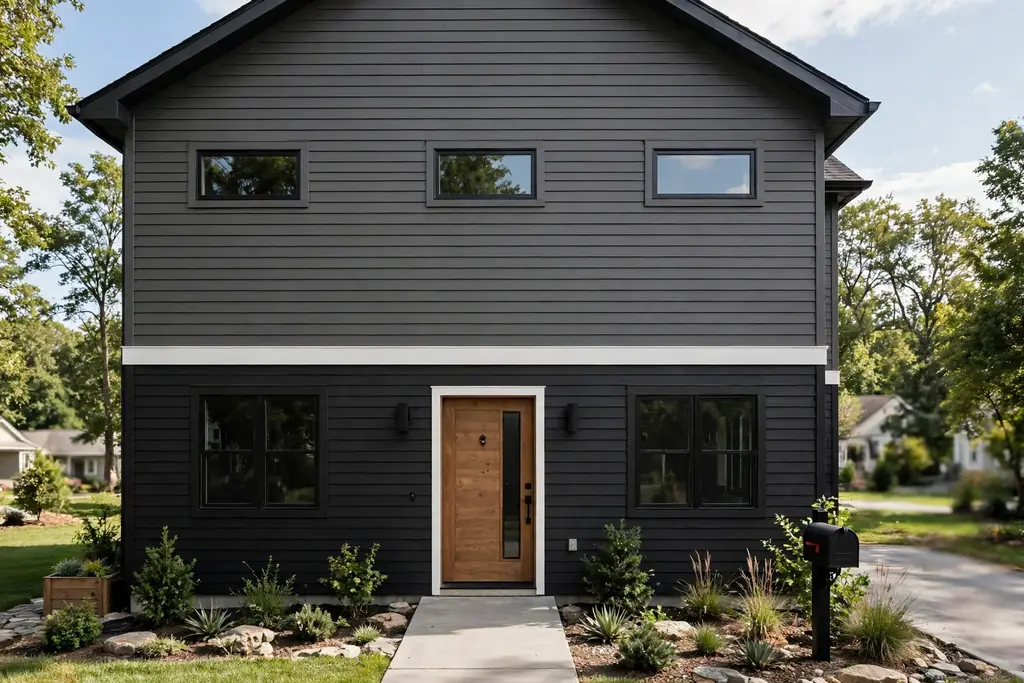
A two-tone dark scheme splits the house by height: charcoal on the upper story, black on the lower story, with a trim board between them. The darker base grounds the house, while the slightly lighter upper story keeps the roofline from feeling heavy. This suits a two story house with a clear floor line, such as a band board or a change in siding.
Keep the split at a real architectural line, not at a random height, so it looks built in rather than painted on. Use the same trim color on both stories to tie them together, and keep the door in wood or a lighter tone so the entry stands out from the black base. Test both shades together on one corner, since two dark shades can merge into one at a distance.
24. Dark Walls Softened by Layered Evergreen Planting
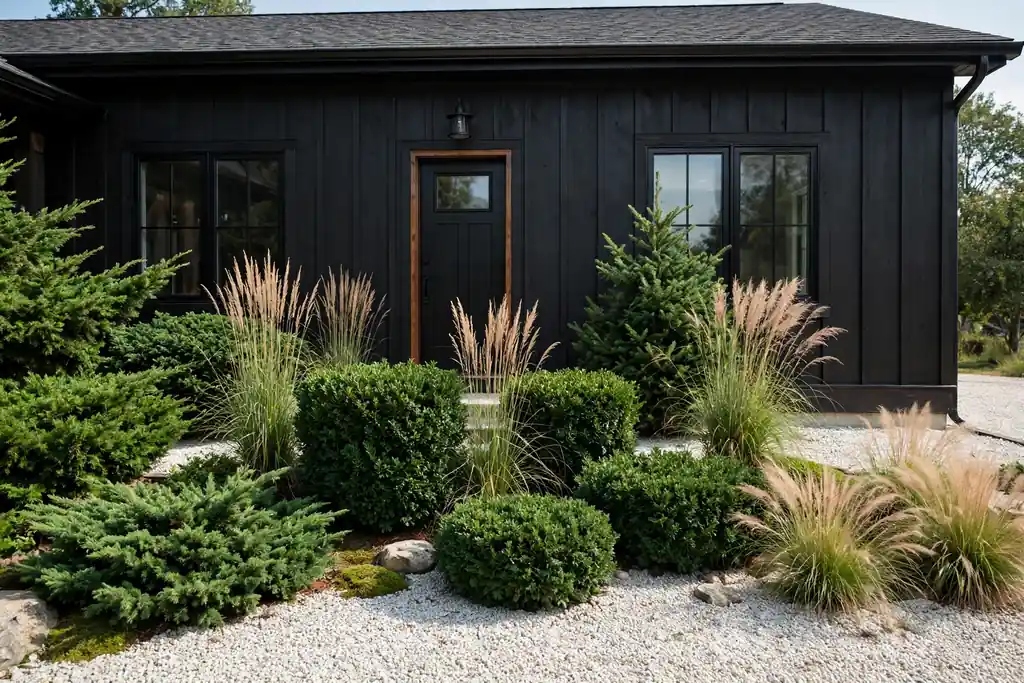
Layered evergreen planting softens a dark house because green foliage against a dark wall reads as texture rather than as more color. Plant a tall evergreen hedge or small trees at the back of the bed, mid height shrubs in front, and low grasses or ground cover at the edge. The layers break up the flat dark wall and give the house a planted frame through winter as well as summer.
Choose plants that suit the light and soil on that side of the house, and leave space between the plants and the wall for air and care. Pale gravel or light stone mulch brightens the bed and stops dark soil from merging with the dark wall. Keep plants clear of gutters and vents, and prune the layer nearest the wall so it does not hold damp against the siding.
25. A Warm Lighting Plan for Dark Exteriors
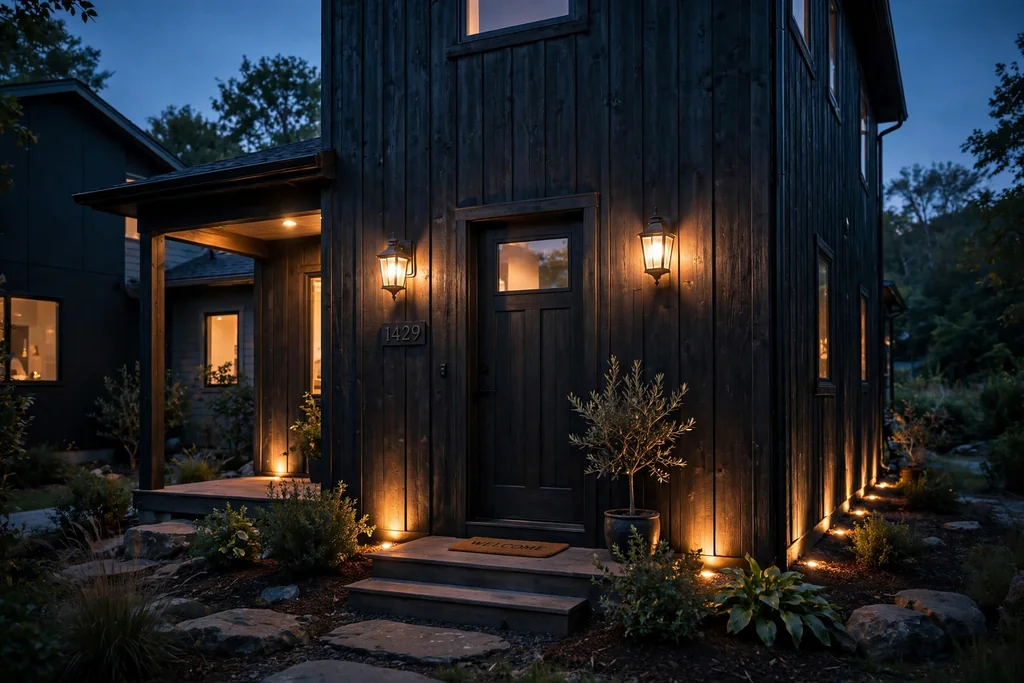
A warm lighting plan is a scheme in its own right, because light decides how a dark house looks for half the year. Use wall lanterns beside the door, uplights at the base of the walls, and one light over the garage or porch, all in a warm tone. Uplights wash the dark siding with light and show its texture, while door lanterns mark the entry.
Put the lights on a timer or a dusk sensor, so the house is lit as daylight fades rather than only when someone remembers. Avoid a single bright floodlight, which flattens dark walls and creates harsh shadows. Keep fixtures in one finish, such as black or bronze, so the lighting hardware does not add a second color story to the scheme.
26. Dark Garage Doors that Blend with the House
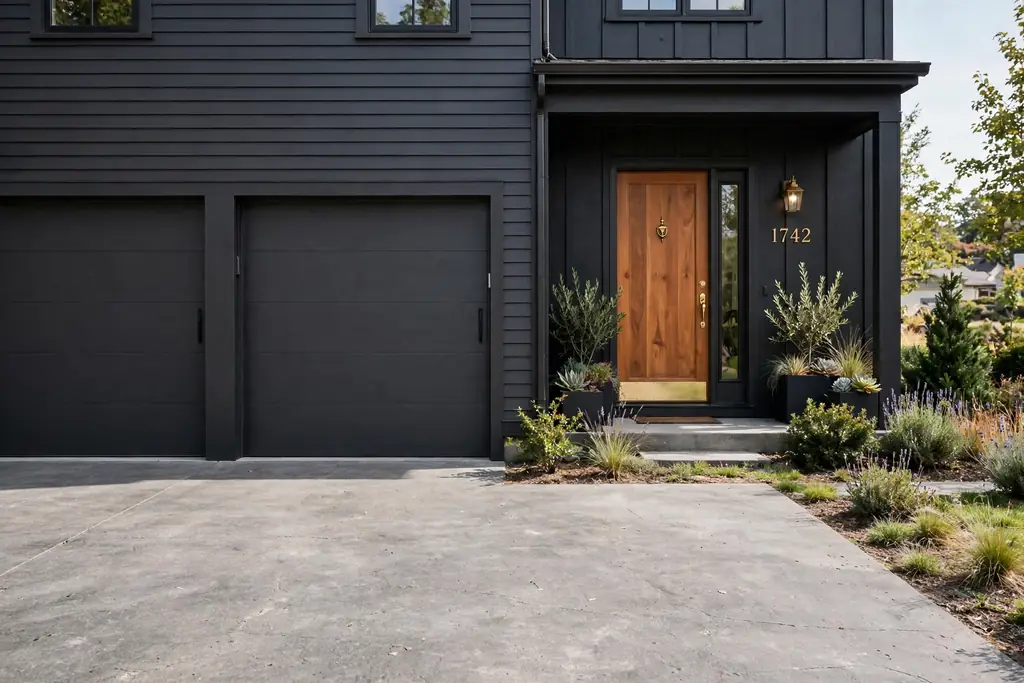
Dark garage doors that match the house siding stop a large garage from dominating the front of the house. Paint or clad the garage doors in the same charcoal, black, or dark grey as the walls, keep the trim around them minimal, and use black hardware. The garage then reads as part of the house, rather than as a separate pale block.
Add wood or brass at the entry door nearby, so the front of the house still has a focal point once the garage blends in. Keep the driveway in a mid tone, such as grey concrete or pale gravel, since a black driveway beside black doors can lose the edge of the house. This scheme suits a house where the garage faces the street and takes up a large share of the facade.
27. Dark Scheme for a Small House with Light Gables and Steps
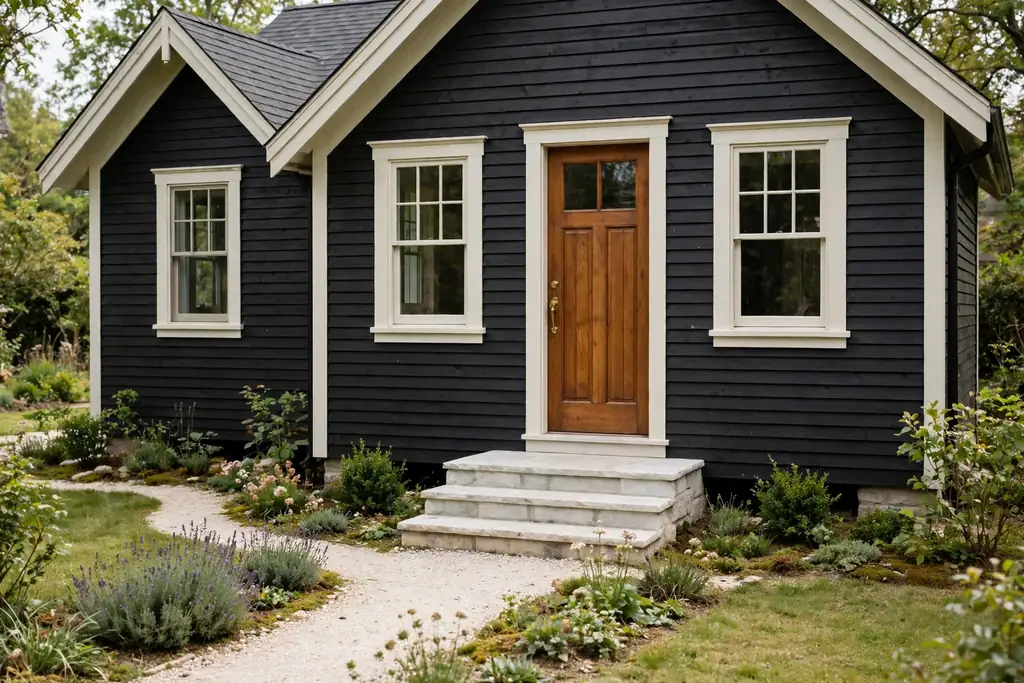
A small house can carry a dark scheme when the gables and steps stay light. Paint the main walls charcoal or deep green, keep the gable ends, window trim, and porch steps in white or pale stone, and let those light areas frame the dark walls. The light gables draw the eye up, which keeps a small house from feeling squat under a dark color.
Keep the door in a warm wood or a clear color, such as deep red or brass toned hardware, so the entry is easy to find on a small facade. Use pale planting and a light path to brighten the base, and avoid darkening the roof as well, since a dark roof plus dark walls plus a small footprint can feel heavy. This scheme works best when at least one third of the front face stays light.
Conclusion
A dark exterior works when the shade suits the house, the trim gives it edges, and one warm partner keeps it welcoming. Start with the house style and the light on your street, test two or three large samples through a full day, and choose the scheme where the trim, door, and roof all have clear jobs. Small choices, such as brass hardware, warm path lights, or layered evergreens, often matter more than picking the darkest shade on the card. Save this list on Pinterest, narrow it to three schemes, and test those three on your own walls before you commit to one.
FAQs
Will a dark exterior make my house look smaller?
A dark color can make a large, plain house look more grounded, but on a small house it can feel heavy if the roof, trim, and ground are dark too. Keep gables, trim, steps, or the porch ceiling light, and use pale planting and a light path, so the dark walls have bright edges. Testing a large sample on the front wall will show whether your house reads as grounded or as smaller.
Do dark exteriors fade faster than light colors?
Dark paints absorb more sun and heat, so they can fade and show chalking sooner than pale colors, especially on south and west walls. A quality exterior paint, a satin or matte finish suited to the surface, and a wash down each season will slow that wear. Plan on checking south facing walls first, since they take the most sun.
What trim color works best with a dark house?
White trim gives the sharpest outline and suits charcoal, navy, and black houses. Cream trim softens warm dark shades, such as espresso and olive, while black trim gives a quiet, tonal look on dark grey walls. Pick the trim that matches the undertone of the main color: bright white with cool dark shades, warm cream with warm dark shades.
Should the roof match a dark exterior?
The roof does not need to match, but it needs to sit in the same warm or cool family as the walls. A grey or black roof suits charcoal, navy, and slate schemes, while a brown roof suits espresso, olive, and forest green schemes. If the roof is terracotta, a graphite or dark olive wall often works better than a blue leaning charcoal.
Can I paint brick, stucco, or wood siding dark?
Yes, with the right product for each surface: masonry paint for brick, a render suited coating for stucco, and exterior paint or stain for wood siding. Check the surface condition first, since dark paint will not hide cracked mortar, peeling render, or rotted boards. Bare brick and stucco need a primer suited to the material, and wood needs a clean, dry surface before painting.
How do I keep a dark entry welcoming at night?
Use warm light at more than one height: lanterns beside the door, path lights along the walk, and one uplight on the wall or planting. Warm bulbs suit dark walls better than cool white bulbs, which can make the entry look cold. Brass hardware, a wood door, and pale steps also help visitors find the entry after dark.