
Scottish style in a bedroom comes from a few honest materials used well: wool, wood, tartan, and colours borrowed from hills, heather, and stone. It does not need a castle theme or a room full of pattern. One tartan duvet, a wood panelled wall, or a basket of wool blankets can set the tone, while plain bedding and calm walls keep the room restful. These 34 Scottish bedroom ideas cover bedding, walls, windows, floors, furniture, and small rooms, so you can start with one change or build a layered scheme over time. Pick the ideas that suit your room size and light first, then repeat one or two colours from your tartan in solid pieces.
Key Takeaways
- Start with one main Scottish piece, usually tartan bedding or a wool throw, and build solids around it.
- Use wool, wood, and linen for texture, and keep bright pattern to one or two places in the room.
- Repeat one or two colours from your tartan in cushions, curtains, or a rug so the scheme looks planned.
- Pair deep green, heather purple, or navy with cream, oat, and warm wood so dark colours stay cosy, not heavy.
- Choose washable, practical layers near the bed, since wool throws and tartan bedding get daily use.
- Renters can get the same character from textiles, baskets, and removable pieces, with no paint or fixed work.
1. Make a Red Tartan Duvet Cover the Focal Point

Use a classic red tartan duvet cover with white or cream sheets and plain pillowcases, so the bed becomes the clear focus of the room. A medium scale check reads well from the doorway, while wood furniture and a solid rug keep the rest of the room calm. This suits a bedroom with good daylight, where the red tones look warm rather than loud.
Keep the walls plain and the throw solid, so the tartan does the work on its own. If your walls are already a strong colour, choose a tartan that shares that tone in a thin stripe instead of adding a new bold colour. Wash the cover on its own first, and check the care label, since wool look fabrics need gentler handling than cotton.
2. Fold a Muted Tartan Throw Across the Foot of the Bed

Fold a muted green or navy tartan throw into a wide band across the foot of a plain bed for pattern you can add or remove in seconds. The throw adds colour and warmth without changing your bedding set, and it suits cream, oat, or soft grey bedding that needs definition. Use a washable wool blend if the throw will be pulled up daily.
Keep the pillows solid when the throw is patterned, so the bed stays calm. In a small room, this one throw may be all the tartan you need, since it can be folded away when you want a quieter look. Shake it out weekly and store it in a basket when it is not on the bed.
3. Mix Tartan Cushions With Solid Bedding

Place two tartan cushion covers on the bed and separate them with a solid cushion in a colour pulled from the check, such as cream, green, or navy. The solid break stops the pattern from merging into one block, and the mix suits plain duvets in any colour. Vary the cushion sizes rather than adding more prints: larger tartan squares behind, a smaller solid in front.
Use removable covers so the cushions are easy to wash and easy to change with the season. If the tartan is bold, keep the throw and rug solid. This is a good first tartan step for readers who like the pattern but worry it will look too strong on a full duvet.
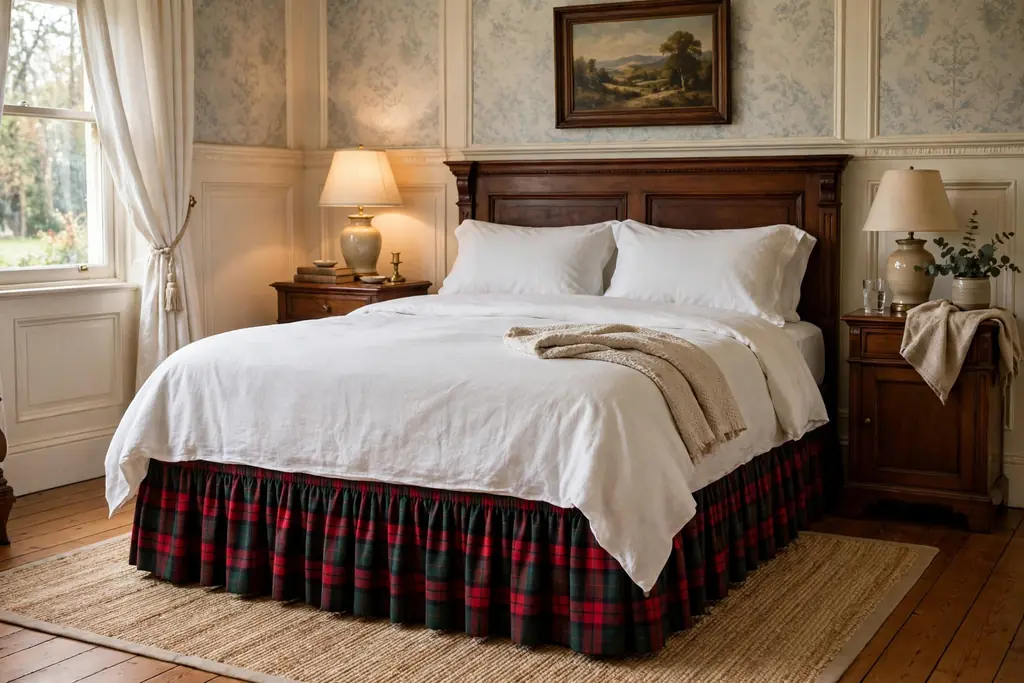
4. Add a Tartan Bed Skirt to Hide Under Bed Storage

If you store boxes under the bed, a tartan bed skirt hides them and brings pattern low in the room while the bedding stays plain. Choose a tailored, small to medium check that will not fight with a rug pattern, and measure the drop from the base to the floor so the skirt just clears the ground. This suits traditional beds with visible frames.
It is less useful for low platform beds, where a skirt can bunch and trap dust. Keep the skirt colour close to the bedding tones, and leave a clear gap at the foot so you can still reach the storage boxes. For more ways to use plaid in a bedroom, see these plaid bedroom ideas.
5. Hang a Wool Tartan Blanket as a Wall Panel
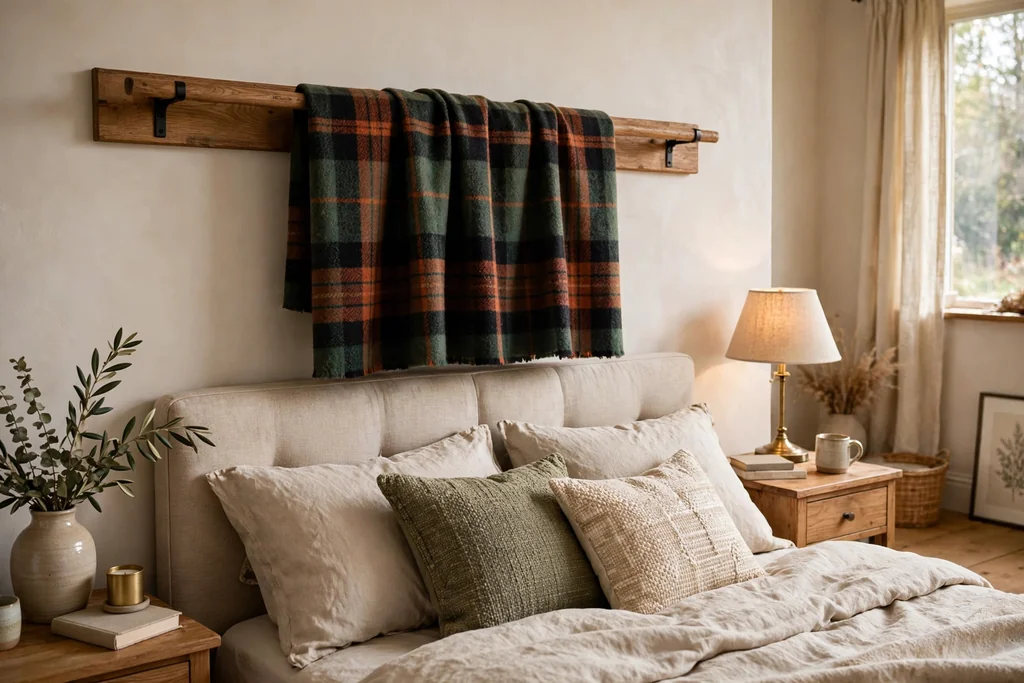
Hang a folded wool tartan blanket on a simple wooden rail above the headboard to fill a wide blank wall with softness that framed prints do not give. Centre it over the bed and keep the lower edge clear of the pillows. This suits rooms with plain walls and enough height above the bed.
Wool needs airing from time to time, so take the blanket down now and then and rotate it with a lighter cotton throw in summer rather than leaving it up all year untouched. Use fixings suited to the weight of the blanket and the wall type, and keep the rest of the wall plain so the panel stays the focus.
6. Paint a Deep Green Wall Behind the Bed

Paint the wall behind the bed in a deep forest green for a Highland feel that still works with plain bedding and wood furniture. One dark wall gives the room a clear back panel and leaves the other walls plain for art and storage. Test the paint beside your bedding in daylight and lamplight, since green can look much darker at night.
Pair the green wall with cream bedding, a wood headboard, and one tartan accent, so the room stays cosy rather than dark. In a small or low light room, use the deep green on the bed wall only, and keep the ceiling and other walls pale. Renters can get a similar depth from a large dark green throw and cushions instead of paint.
7. Add a Warm Wood Panelled Wall Behind the Headboard
Fit vertical or horizontal wood panels on the wall behind the headboard for warmth and structure that paint alone does not give. Natural pine or a warm stained wood suits tartan bedding, cream walls, and simple furniture, and the panels make the bed area feel finished even when the bedding is plain. Keep the panel height just above the headboard for a calm look.
Leave the panels plain, with no art hung on them, so the wood grain stays visible. Dust the grooves now and then, since panelled walls collect dust near the bed. If fixed panels are not practical, a freestanding wood headboard in a similar tone gives a smaller version of the same effect.
8. Use Heather Purple in Cushions and a Throw

Bring heather tones into the bedroom through two or three soft purple pieces, such as cushion covers and a folded throw, paired with cream bedding and light wood. Heather purple reads as a Scottish moor colour without needing tartan, and it suits rooms that already have grey or oat tones. Keep the purple muted rather than bright, so the room stays restful.
Repeat the same purple in only one more place, such as a small vase of dried stems or a book cover, and keep the rest of the room neutral. Sample the fabric beside your bedding first, since purple can shift under warm lamplight. If purple feels too strong, use it on one cushion only and keep the throw in oat or cream.
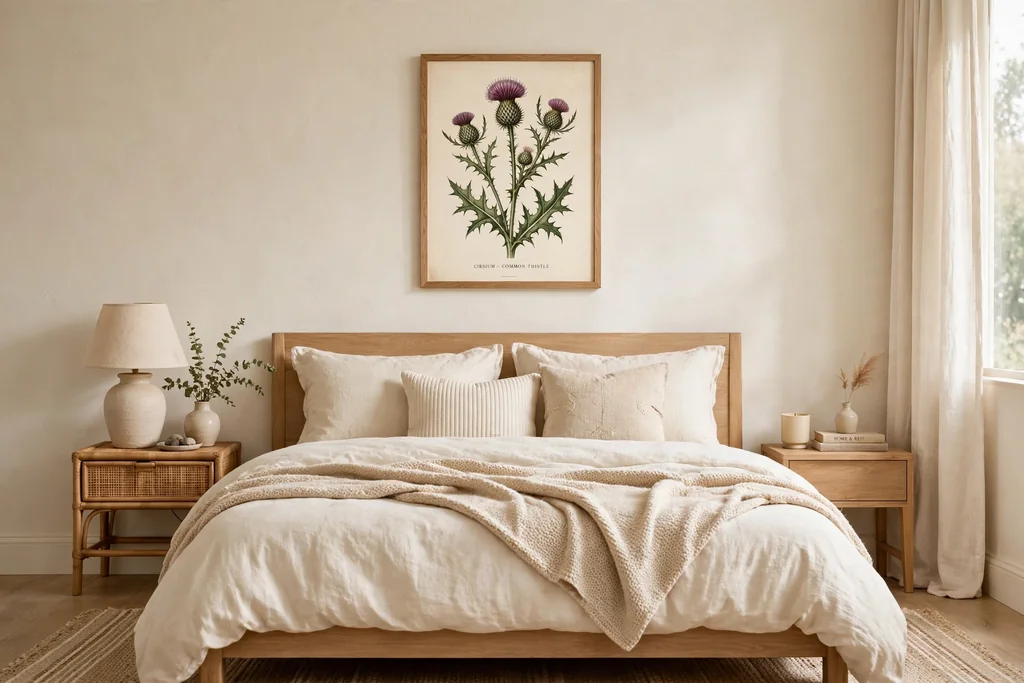
9. Hang Thistle Art Above the Bed
Hang one framed thistle print above the bed as a clear Scottish note that takes no floor space and needs no pattern elsewhere. A simple line drawing or a muted botanical print suits cream walls and wood frames, while a large coloured print suits a plain room that needs one focal point. Centre the frame over the bed at eye level from the doorway.
Keep the frame size in proportion to the bed: a wide bed needs a wide frame or a pair of smaller frames, while a single small print can look lost above a large bed. Use secure fixings suited to the frame weight, and keep other wall art in the room to a minimum so the thistle print stays the focus.
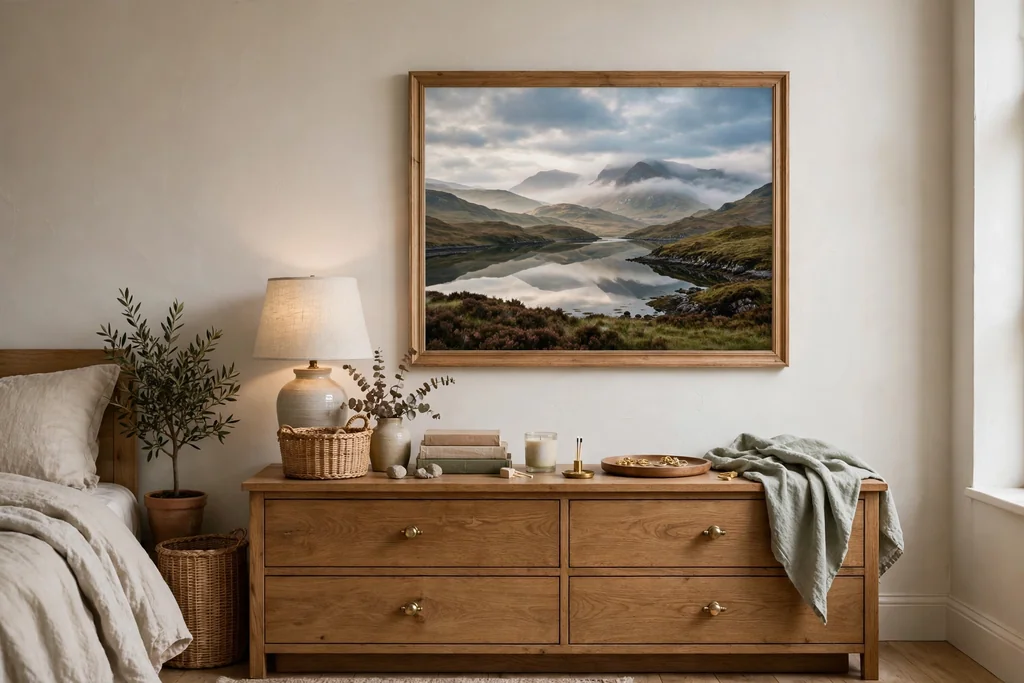
10. Frame a Highland Landscape Print for the Main Wall
Choose a framed print of hills, a loch, or a glen for the main wall, and let its colours guide the bedding accents. A landscape in muted green, grey, and blue pairs well with cream bedding, a wood frame, and one tartan cushion in a colour from the print. Hang it where you see it from the door, not crowded above the pillows if the bed already has a strong headboard.
Keep the frame simple in wood or black, so the landscape stays the focus. If you use a large print, keep the rest of that wall clear. A smaller print works on a dresser wall or in a reading corner, where it can be seen up close without dominating the room.
11. Layer a Chunky Knit Throw Over the Duvet

Lay a chunky knit throw across the lower half of the bed for texture you can see and feel, over plain or tartan bedding. A cream or oat knit suits most colour schemes, while a deep green or heather knit ties the bed to a Scottish palette. The knit layer also gives extra warmth you can push aside during the night.
Choose a knit that washes well if it will be used daily, and fold it neatly each morning so the bed stays tidy. Keep pillow patterns simple when the throw is thick, since too much texture at the head and foot of the bed can look busy. Store a spare knit in the blanket basket for guests.
12. Keep a Basket of Spare Wool Blankets Beside the Bed
Place a sturdy woven basket beside the bed or under a bench, filled with one or two folded wool blankets, so extra warmth is always within reach. Roll or fold the blankets neatly, and leave room for air to move around them. This works well in a small room where a second chair would block a walkway.
Choose a basket with handles if you move it for cleaning, and keep it clear of radiators and heat vents. Limit the basket to blankets you use each week, and return the throw to it each morning as part of making the bed. A basket also suits a guest room, where visitors can help themselves to an extra layer.
13. Pair a Dark Wood Bed Frame With Cream Bedding

Use a dark wood bed frame with cream or oat bedding for a traditional Scottish base that lets tartan and wool accents stand out. The dark frame grounds the room, while the pale bedding keeps it light and makes the bed easy to remake. This pairing suits rooms with wood floors and plain walls.
Repeat the dark wood once more, in a nightstand or a picture frame, so the frame does not look isolated. Keep the bedding layers simple: sheets, a duvet, and one throw, rather than a pile of cushions that must be moved each night. Dust and polish the wood frame now and then, since dark wood shows dust in daylight.
14. Paint a Pine Dresser in Soft Sage

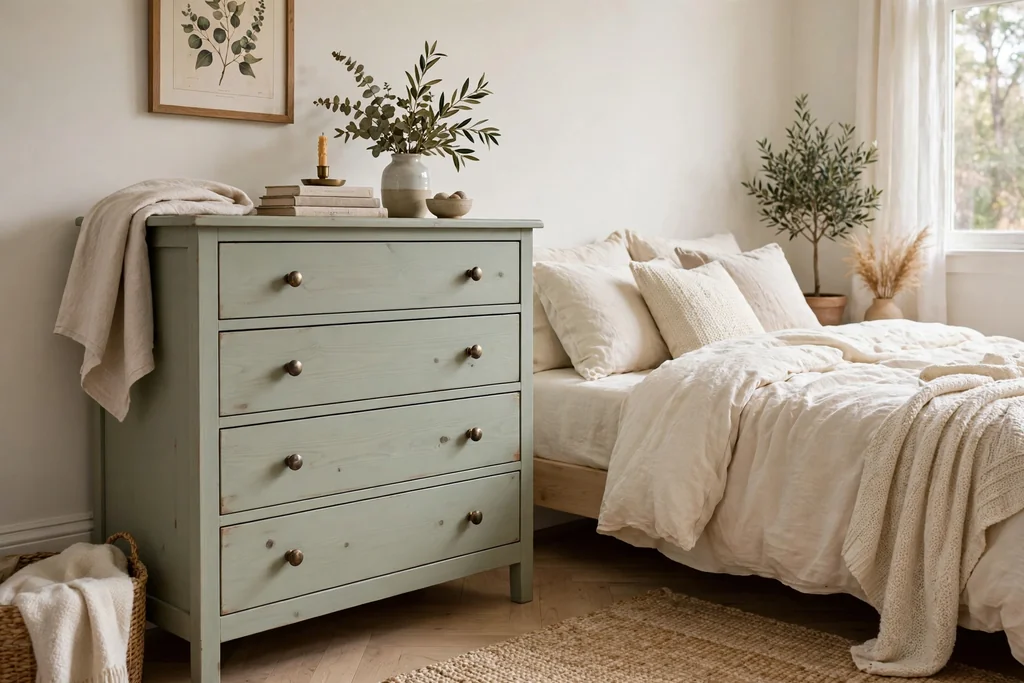
Paint a plain pine dresser or chest in soft sage green for a cottage feel that pairs well with cream bedding, wood floors, and tartan accents. Sage is calm enough for a bedroom, and it gives an old piece of furniture a fresh use without replacing it. Keep the drawer handles simple in wood or dark metal, so the painted finish stays the focus.
Sand and prime the piece first, and use paint suited to furniture so the finish lasts through daily use. Leave the top mostly clear, with one small vase or a folded tartan cloth, so the dresser still works for daily items. If you rent or prefer no paint, a sage runner across the dresser top gives a similar colour note.
15. Fit a Tartan Roman Shade at the Window

Fit a tartan Roman shade at a bedroom window for pattern and privacy without taking floor space, which helps when a bed sits close to the window. Choose a flat shade rather than soft folds if the check is large, so the repeat stays readable when the shade is raised. A muted tartan suits most wall colours, while a bold red tartan needs plain bedding nearby.
Use a cordless or child safe fitting where needed, and keep curtains off the plan if you use a patterned shade. Add a plain roller behind the shade if you need full darkness at night. Measure the window frame carefully, so the shade covers the glass fully when lowered.
16. Hang Heavy Lined Curtains in a Wool Check
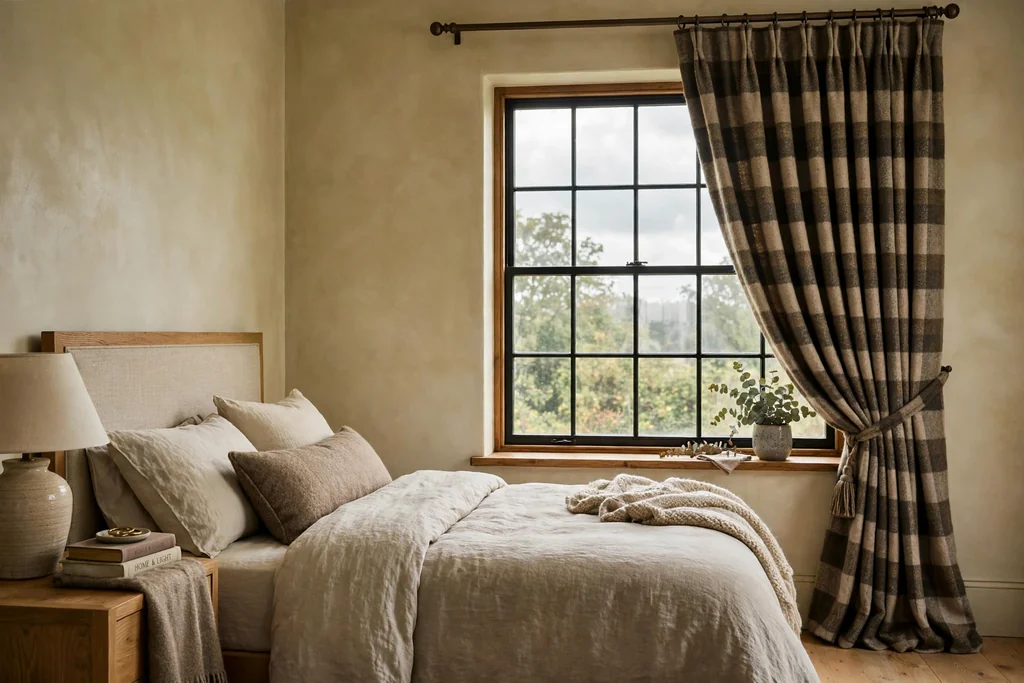
Hang heavy, lined curtains in a wool check at the main bedroom window for warmth, privacy, and a clear Scottish textile at eye level. Lined curtains help a window area feel less cold at night and give the room a finished edge around the glass. Hang the rod high and wide, so the panels frame the glass and fall in long folds when open.
Close the panels fully at dusk in cold months, and open them fully during the day for light. Keep curtain fabric clear of radiators and portable heaters. For more ideas on warm, layered bedrooms, see these hygge bedroom ideas.
17. Use Natural Linen Curtains for Soft Daylight
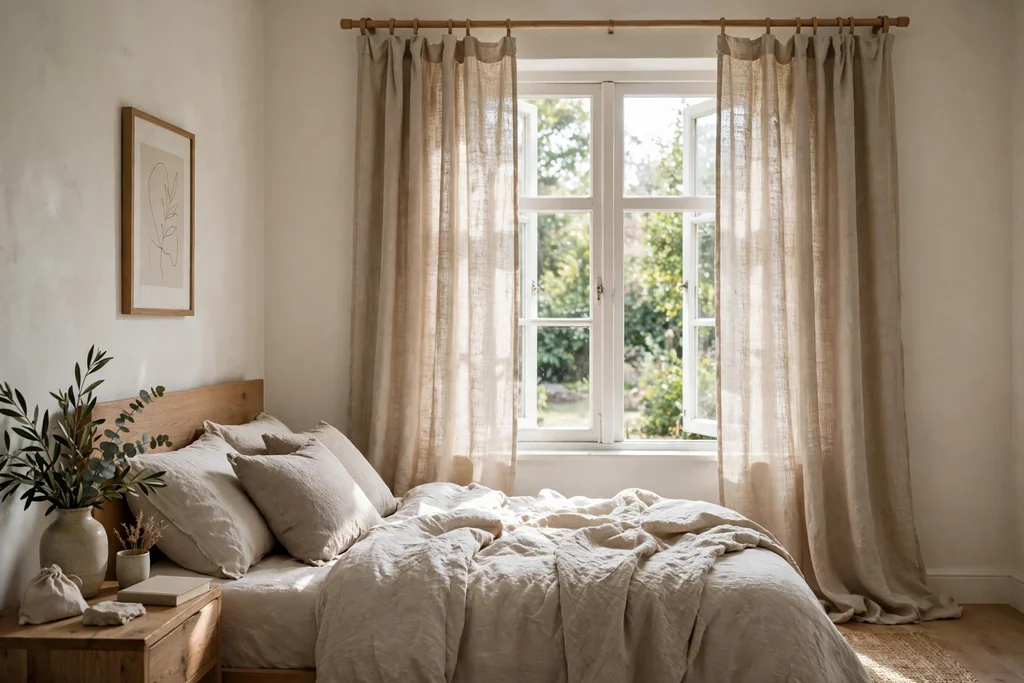
Hang natural oat or cream linen curtains at the window for soft daylight and a calm base that lets tartan bedding stand out. Linen falls in relaxed folds and suits a cottage bedroom with wood furniture and wool layers. Use a plain linen panel when the bed already carries tartan, so the window does not compete with the bed.
Hang the panels so they clear the floor slightly, and wash them now and then, since linen near a window collects dust. In a cold room, add a plain thermal lining behind the linen, so you keep the soft look with better insulation. This idea suits readers who like Scottish character in the bed and furniture, with quieter windows.
18. Lay a Tartan Flat Weave Rug Beside the Bed
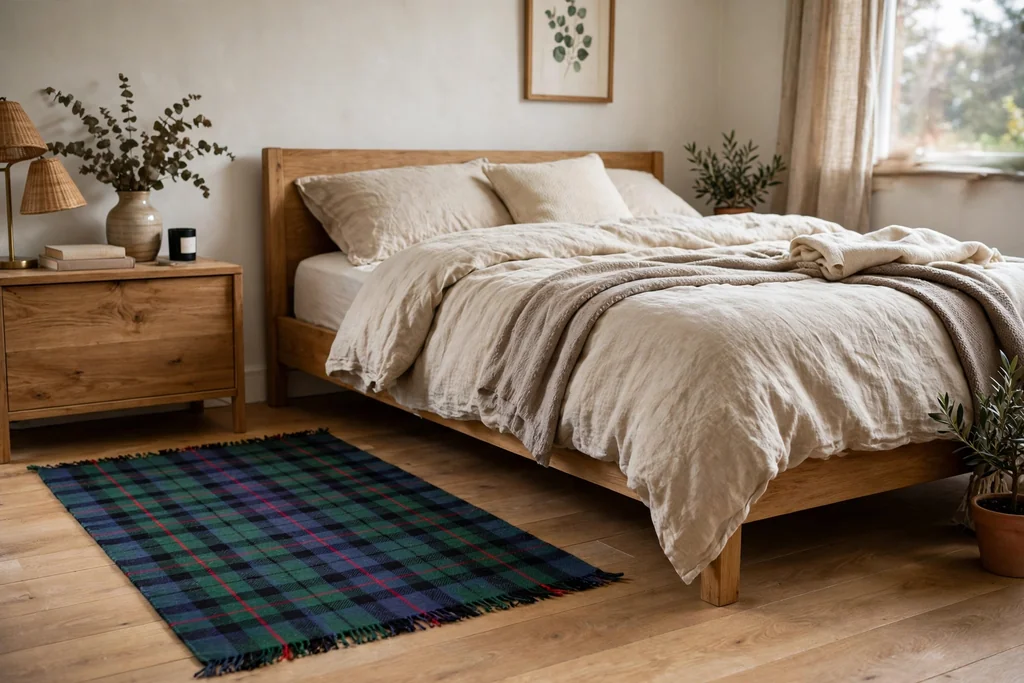
Place a tartan flat weave rug beside the bed, on the side you use most, so the first step in the morning lands on pattern and warmth. A flat weave suits a bedroom well, since it is easy to vacuum and does not catch on doors. Choose a check that shares a colour with the bedding, and use a non slip pad underneath.
Keep the rug size generous enough to step onto when you sit on the edge of the bed, and keep the rest of the floor plain if the rug is bold. In a shared room, use matching runners on both sides of the bed for a balanced look. Shake the rug outside now and then, since flat weaves trap dust near the bed.
19. Anchor the Bed With a Large Wool Rug Underneath
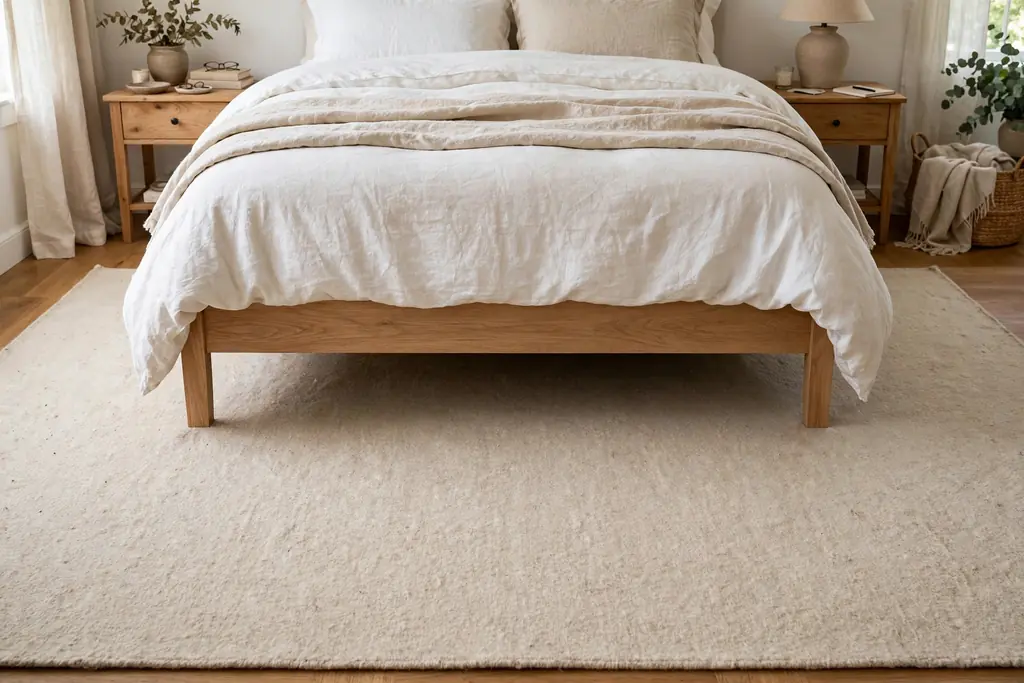
Place a large wool rug under the lower half of the bed, extending out on both sides, so the bed links to the room and bare feet land softly. A plain wool rug in oat, grey, or muted green suits tartan bedding, since it gives warmth without adding another pattern. Pull the rug far enough forward that your feet land on it when you sit on the edge of the bed.
Use a rug pad to reduce slipping, and check that the added height does not catch the bedroom door. Vacuum the rug weekly, since wool near the bed collects dust and fibres. If a large rug is too much for the room, a single runner on your side of the bed gives most of the benefit.
20. Use Brass Bedside Lamps for Warm Evening Light
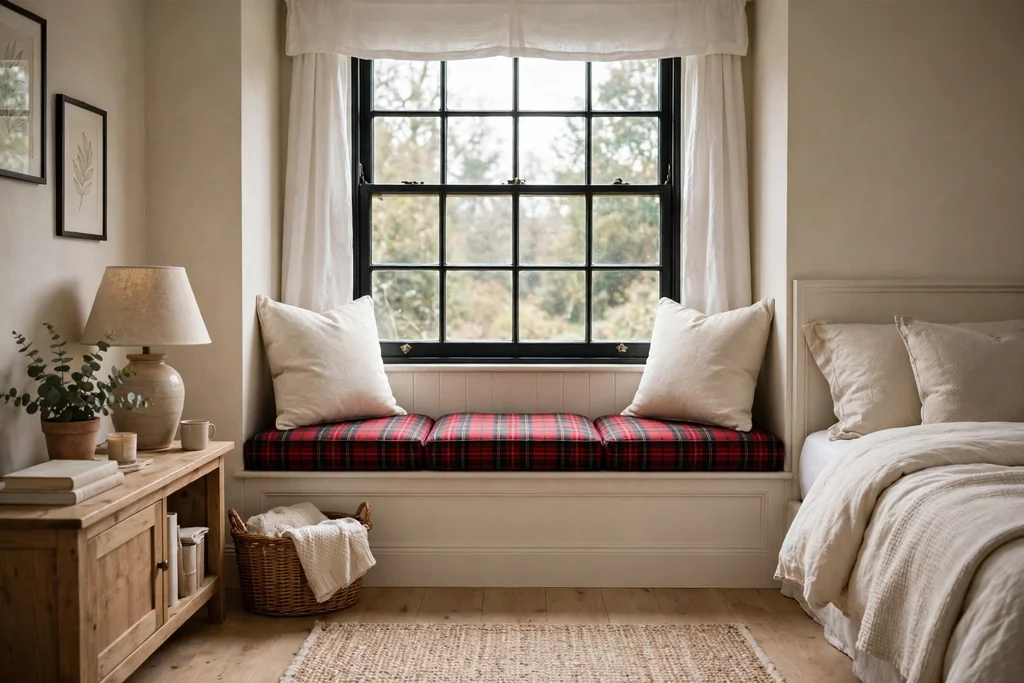
Place brass bedside lamps with warm fabric shades on both nightstands for low, warm light that suits wood furniture and wool textiles. Brass adds a traditional metal note without the shine of chrome, and warm bulbs keep reds, greens, and creams looking soft at night. Put the switches where you can reach them without getting up.
Keep the lamp style the same on both sides if you have two tables, and keep the shades at a safe distance from the bulb, following the lamp maker guidance. If space is tight, a brass wall lamp frees the nightstand, but check that plug access works before you commit. Turn off the bright ceiling light in the evening, and let the lamps carry the room.
21. Place a Wooden Storage Trunk at the Foot of the Bed

Put a wooden storage trunk at the foot of the bed for spare blankets, out of season bedding, and a seat while dressing. A pine or oak trunk suits a Scottish cottage bedroom, and a folded tartan throw on top ties it to the bed. Measure the walkway at the foot of the bed first, and choose a trunk depth that leaves a clear path to the door.
Use the trunk for items you reach for weekly, not for long term storage you forget about, and keep the lid easy to open. Line the inside if you store wool, so the wood does not snag the fabric. In a narrow room, use a low trunk at one side of the foot instead, so it takes less visual space.
22. Create a Reading Corner With a Tweed Armchair
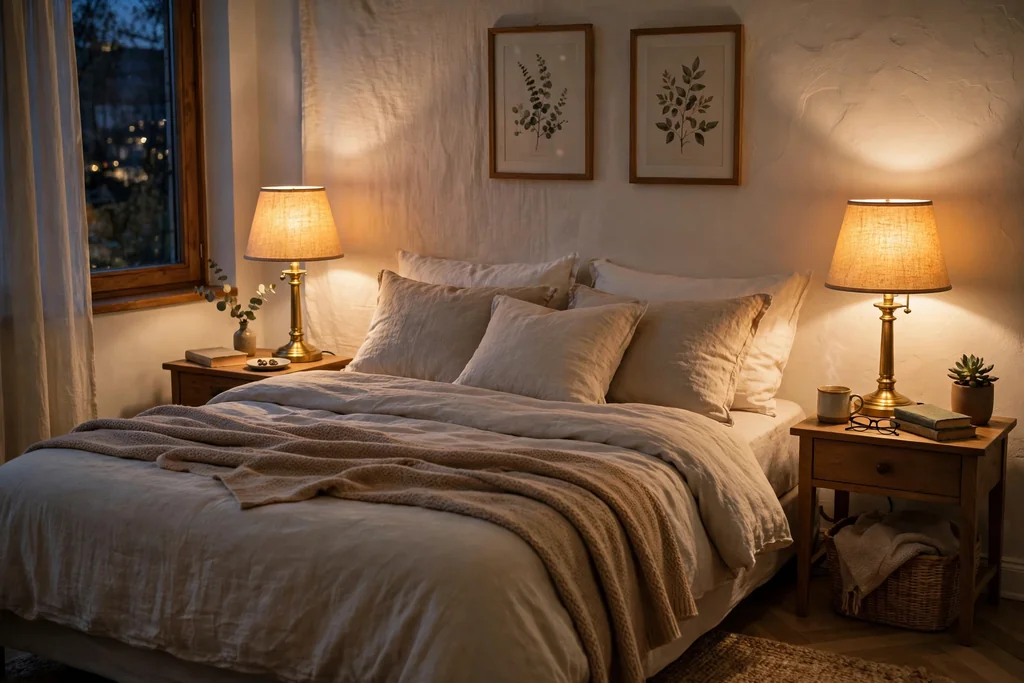
Set one tweed armchair in a corner with a small side table, a reading lamp, and a folded wool throw over one arm. Tweed gives a Scottish textile note away from the bed, and the corner gives the bedroom a second use that is still quiet. Angle the chair slightly toward the room, so it does not look pushed away.
Add a solid cushion in a colour from the chair fabric, and keep the chair clear so it stays an invitation, not a clothes pile. This needs a corner with enough depth for legs and a table, so in a very small room use a tweed cushion on a plain chair instead. Keep a book and a small lamp within reach, and leave the route to the bed clear.
23. Build a Window Seat With Tartan Seat Pads
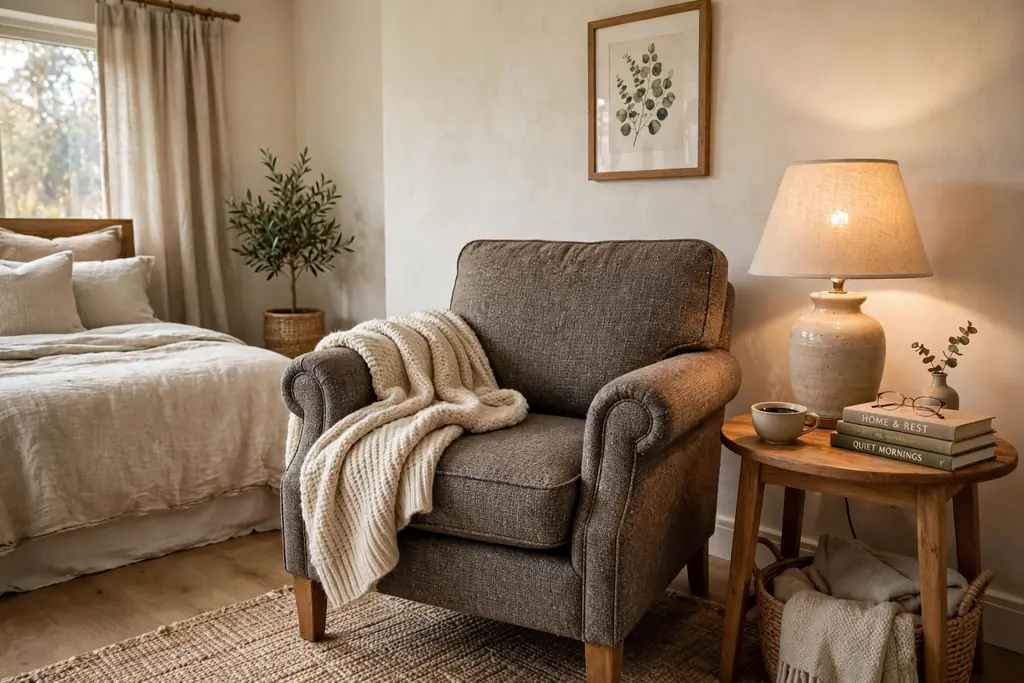
Build or dress a window seat with tartan seat pads and plain cushions, so a bay window or a wide sill becomes a daytime sitting spot. Use a muted tartan on the seat pads and solid cushions behind, so the seat is comfortable and the pattern stays controlled. Add a small shelf or basket nearby for books.
Choose seat pads with removable, washable covers, since a window seat gets daily use and sunlight. Keep the seat clear of clutter, and leave the window glass easy to open for air. In a room with no built in seat, a low bench under the window with the same tartan pads gives a similar result.
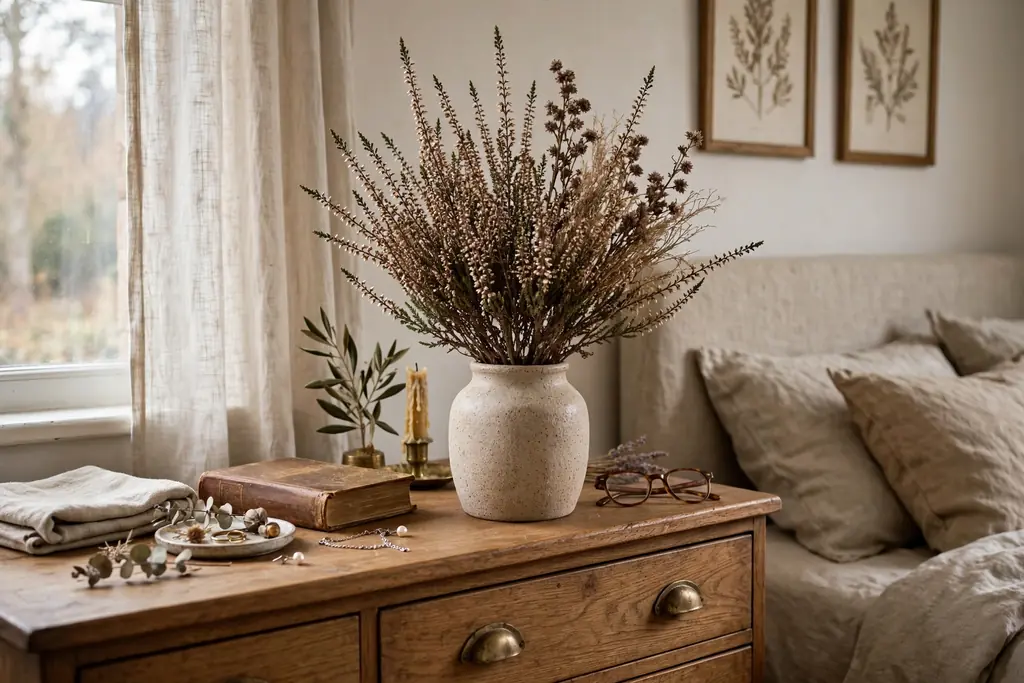
24. Put Dried Heather Stems in a Vase on the Dresser

Place a small bunch of dried heather stems in a sturdy vase on the dresser for a simple Scottish plant note that needs no watering. Heather suits a wood or stone vase, and its muted purple tones link to heather cushions or a throw elsewhere in the room. Keep the arrangement small, with space around it, so the dresser still works for daily items.
Dust the stems gently now and then, and replace them when they shed too much. If dried stems bother allergies in your household, use a framed heather print instead, or a small potted plant that suits your home. Keep the vase away from the edge of the dresser, so it cannot be knocked off easily.
25. Group Wood Framed Coastal Photos on One Wall

Choose three to five photos of the Scottish coast, hills, or islands, print them in a similar size, and frame them in light or medium wood. Group them at eye level on one wall, with even spacing, so they read as one display rather than scattered pictures. Personal photos from trips give the display meaning without buying more decor.
Avoid a scattered gallery across every wall, and keep the frames in the same wood tone. If you prefer privacy, use landscape photos rather than portraits. Lean one larger frame on a dresser if wall space is short, and keep the colours in the photos close to the bedding palette for a settled result.
26. Cover a Wardrobe Opening With a Tartan Curtain
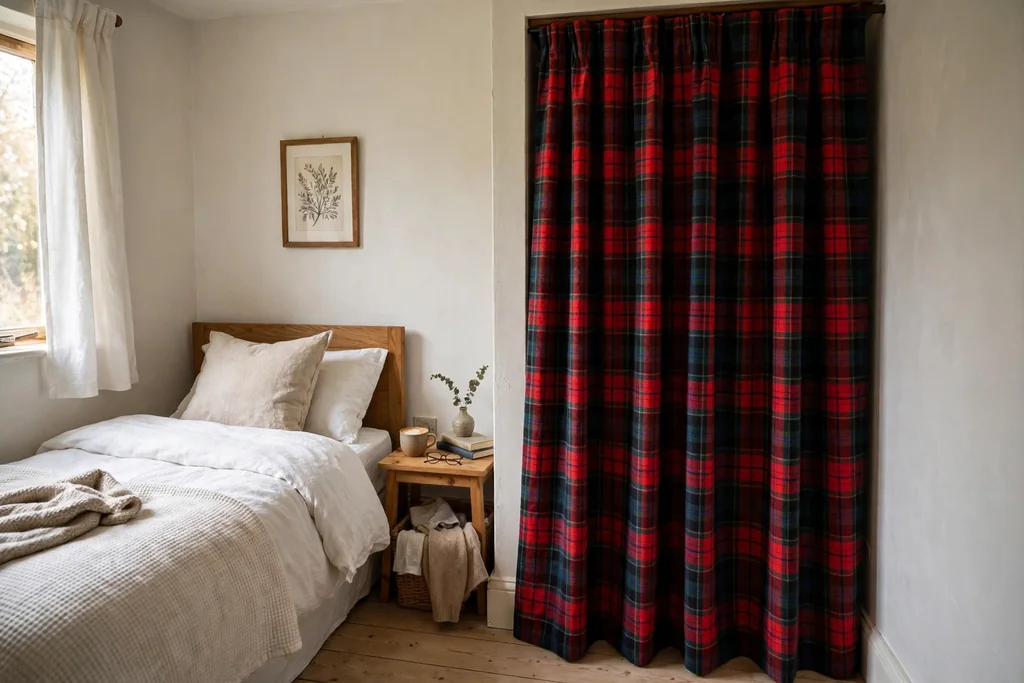
Hang a tartan curtain on a tension rod or ceiling track across a wardrobe opening, in place of doors that swing into a small bedroom or bifold doors that no longer run well. Choose a heavier cotton tartan that hangs straight, with a medium check aligned across both panels. Measure for fullness, so the fabric covers the opening without gaps.
This is a rental friendly change if you keep the original doors stored safely, but check your lease before removing any fittings. Keep the curtain colour close to the bedding tones, and keep the floor in front of the wardrobe clear, so the curtain can move freely. Fold the curtain back during the day if you use the wardrobe often.
27. Use Small Tartan Lampshades at Eye Level
Fit small tartan lampshades on bedside lamps to repeat the pattern at eye level without adding another large surface. Small checks work best, because the shade curves and distorts wide repeats. Warm white bulbs keep reds and creams from looking harsh, and the shades suit a room where the bedding is plain.
Check that each shade sits at a safe distance from the bulb, and follow the lamp maker guidance on maximum wattage. If your bedding is already tartan, choose shades in a solid colour from the check instead, so the room does not carry the same pattern in too many places. Dust the shades often, since bedside lamps collect dust near bedding.
28. Keep Pale Walls and Highlight Dark Wood Beams

If your bedroom has dark wood beams, keep the walls pale cream or white and let the beams carry the character, with plain bedding and one tartan accent. Pale walls stop a beamed room from feeling dark, while the beams give a cottage structure that needs no extra decor. Keep the ceiling and beams clean and free of hanging items.
Pair the beams with wood furniture in a similar tone, and keep the rug and curtains plain, so the beams stay the main feature. In a room with no real beams, a dark wood picture rail or a wood headboard gives a smaller version of the same contrast, without fixed structural work. This idea suits older homes and cottages best.
29. Make a Low Bothy Style Bed Nook

Make a low, cosy bed nook in the bothy spirit: a low wood bed frame, layered wool blankets, a chunky knit throw, and a small shelf for a book and a lantern style lamp. Keep the colours muted, with cream sheets, a tartan throw, and dark wood, so the nook feels sheltered rather than crowded. Leave the wall above the bed mostly plain, with one small print.
Keep the nook practical: a clear path to the door, a lamp you can reach from the bed, and storage for the extra blankets close by. Use a safe lamp, not an open flame, near bedding and curtains. This idea suits a small bedroom or a guest room, where a low bed makes the ceiling feel higher.
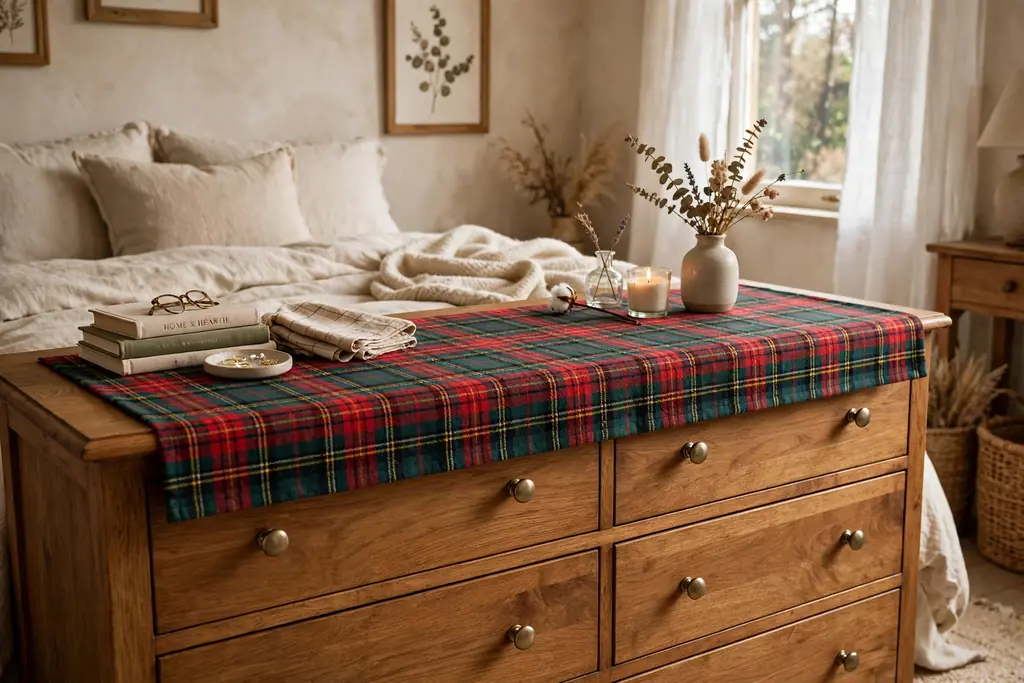
30. Lay a Tartan Runner Across the Dresser Top

Lay a tartan runner across a dresser or chest of drawers to soften a hard surface, protect it from scratches, and link the dresser to the bedding colours. Choose a runner that stops short of the drawer handles and does not hang where drawers will catch it. Leave clear zones for daily items, instead of covering the whole top with decor.
A washable runner is the practical choice if you keep hand cream or perfume on the dresser. Keep the runner colour close to one tartan accent in the room, and pair it with one small vase or a framed photo, rather than a crowded display. Fold the runner away for a plainer look when you want a change.
31. Use Tartan Storage Boxes on an Open Shelf
Place two or three tartan fabric boxes on an open shelf or wardrobe shelf to tidy scarves, books, and small items while repeating the room pattern in small doses. Use matching boxes in one size family, so the shelf looks ordered, and label the contents if the boxes are opaque. Keep the boxes to light, soft goods, since fabric boxes are not right for heavy items.
Leave breathing room between groups on the shelf, so the storage reads as tidy, not crowded. Put heavy books in rigid boxes elsewhere, and save the tartan boxes for items you reach for often. If the shelf already holds a strong pattern, use solid boxes in a colour from the tartan instead.
32. Dress a Guest Bed With a Folded Tartan Welcome Throw
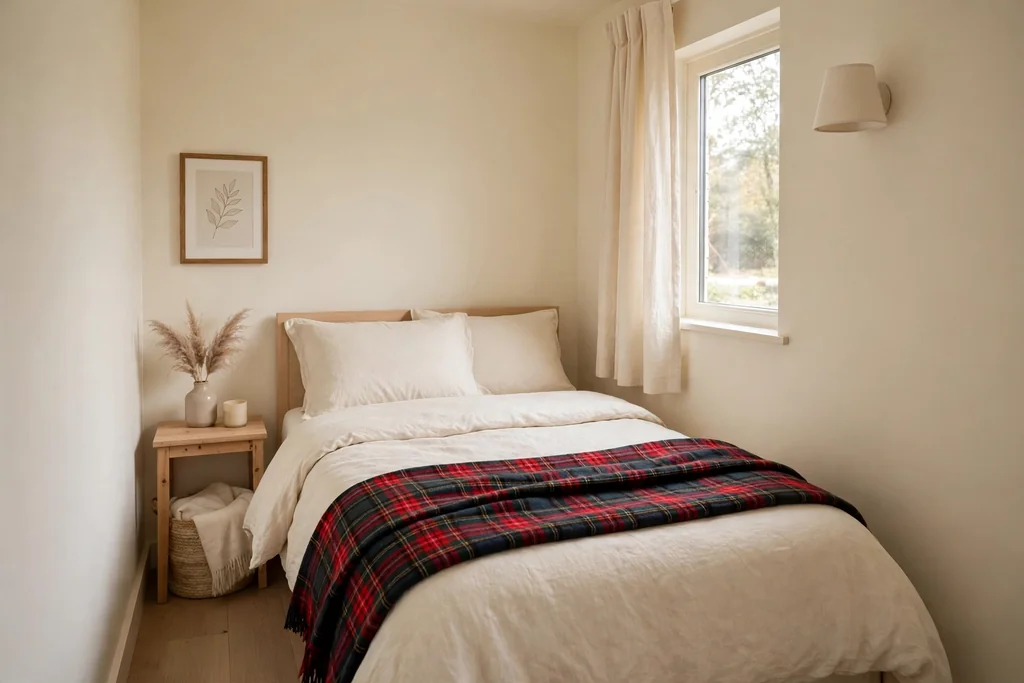
Dress a guest bed with plain cream bedding, a folded tartan throw at the foot, and a small tray on the nightstand holding water and a book, so visitors feel welcomed without a themed room. The throw gives guests an extra layer they can pull up or push aside, and it adds Scottish character in one clear place.
Keep the guest room simple: clear surfaces, an empty drawer or hanging space, and a lamp that is easy to switch on at night. Wash the throw before guests arrive, and keep a spare blanket in the basket by the bed, so guests can add warmth without asking. This idea also works in a main bedroom when you want one tartan accent only.
33. Use One Tartan Accent Only in a Small Bedroom

In a small bedroom, use tartan in one place only, such as a throw, a cushion pair, or a Roman shade, and keep everything else plain. One strong accent gives Scottish character without closing in the room, while cream walls, light wood, and a plain rug keep the space feeling open. Pick the accent you see first from the door, so it sets the tone at once.
Repeat that tartan colour in one solid piece only, such as a single cushion cover, and leave the rest of the room neutral. Avoid tartan on the bed, the window, and the floor at the same time in a small room, since three patterned surfaces can feel busy. This controlled dose suits modern rooms as well as traditional ones.
34. Keep a Rental Bedroom Scottish With Textiles Only

Build a Scottish bedroom from textiles alone, with no paint, panels, or fixed work: tartan bedding or a throw, wool cushions, a flat weave rug, and a basket of blankets. Textiles can be changed with the season, washed easily, and taken with you when you move, which makes them ideal for rentals. Start with the bed, then add the rug and one window textile.
Keep the base calm with cream bedding and plain curtains, so the tartan and wool pieces stand out. Store the original fittings and any removed items safely, and check your lease before changing anything fixed. For warm, layered ideas that work in a rental, see these winter bedroom ideas.
Conclusion
A Scottish bedroom works best when a few honest materials do the work: tartan in one or two places, wool layers you actually use, wood furniture with visible grain, and colours borrowed from hills and heather. Start with the bed, add one wall or window change, and finish with a rug and a reading corner if space allows. Live with each change for a few nights before adding the next, and keep the base calm so the character pieces stand out. Save this list on Pinterest, and work through it one area at a time: bed, walls, windows, then floors and small details.
FAQs
What makes a bedroom look Scottish without looking themed?
A Scottish bedroom looks characterful rather than themed when you use a few real materials and muted colours, not a room full of symbols. Tartan bedding or a throw, wool layers, wood furniture, and heather or deep green accents give the character, while plain walls and cream bedding keep the room restful. Limit tartan to one or two places, repeat one or two colours from the tartan in solids, and leave most surfaces plain. That balance gives a Scottish feel you can live with daily, rather than a display that tires quickly.
Which tartan colours work best in a bedroom?
Muted tartans in green, navy, or red with cream or grey lines work best in a bedroom, since they pair well with plain bedding and wood furniture. A classic red tartan suits a bed that should be the focal point, while a muted green or navy tartan suits a throw, cushions, or a Roman shade in a calmer room. Test the fabric beside your bedding in daylight and lamplight, since tartan can look stronger at night. If you are unsure, start with a muted check on a throw or cushions, and add a larger tartan piece only if the room still needs it.
How can I add Scottish character to a small bedroom?
Use tartan in one place only, keep the walls pale, and let wool texture do the rest. A folded tartan throw, a pair of tartan cushions, or a tartan Roman shade gives character without closing in the room, while a plain rug and light wood furniture keep the space feeling open. Avoid tartan on the bed, the window, and the floor at the same time in a small room. A basket of blankets, a small framed landscape print, and one warm lamp add character without taking floor space.
Can renters create a Scottish bedroom without painting or drilling?
Yes, renters can build the whole look from textiles and freestanding pieces. Tartan bedding or a throw, wool cushions, a flat weave rug, a basket of blankets, and a tartan curtain on a tension rod all work without paint or fixed fittings. Use a freestanding wood headboard, a leaning framed print, and a trunk at the foot of the bed for furniture character. Keep any original doors and fittings stored safely, and check your lease before removing anything fixed, so the room can be returned to its original state.
What bedding layers suit a Scottish bedroom in winter?
Layer the bed in stages, with sheets, a duvet, a folded wool throw, and a chunky knit layer you can add or remove during the night. Wool and wool blend throws give warmth exactly where it is needed, while a tartan throw at the foot adds pattern as well as warmth. Keep a spare blanket in a basket beside the bed, so you can add a layer without remaking the whole bed. Choose washable layers where possible, since winter bedding gets daily use, and check care labels for wool pieces before washing.
How do I mix tartan with other patterns in a bedroom?
Mix tartan with one other pattern at most, vary the scale, and share a colour between the two. A large tartan check pairs well with a small stripe or a plain texture, while a small tartan pairs well with a larger, simple shape such as a knit or a wood grain. Keep the second pattern to one place, such as a cushion or a rug, and leave the rest of the room in solids. If the tartan is bold, skip a second pattern and use texture instead, such as knit, linen, or wool, to give depth without visual competition.