Sheet No.: 68
Brand: Dwell Ovell (dwellovell.com)
Author: Clara Bennett
Parent keyword: Kitchen Nook Ideas
Keyphrase: kitchen nook ideas
Slug: kitchen-nook-ideas
Categories: Kitchen & Dining (primary: Kitchen & Dining)
Publish slot: Sept 16, 2026, 3:00pm America/New_York
Status: Draft file only (do not publish)
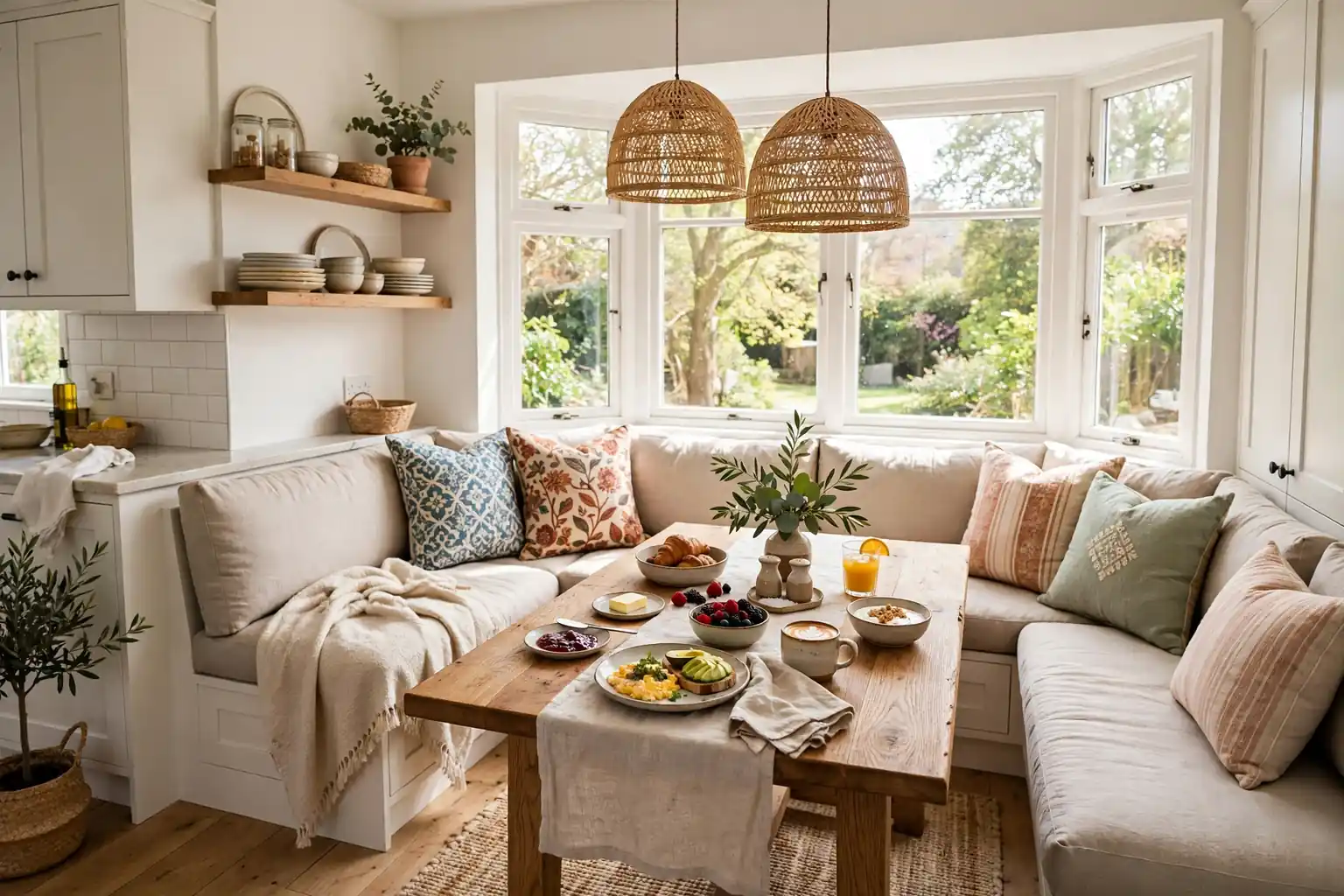
A kitchen nook is a small eating spot tucked into a corner, a bay window, or the end of a counter, and it can change how a kitchen feels day to day. It gives breakfast a set place, gives children a spot for homework while dinner cooks, and gives guests a seat that does not block the cook. The best nook fits the corner you already have, rather than forcing a large table into a small room. These 26 kitchen nook ideas cover benches, tables, seating mixes, storage, light, and simple styling, so you can pick the layout that suits your space, your budget, and the way your household actually eats.
Key Takeaways
- Measure the corner first, including wall length, window position, and how far chairs or a bench must pull out to sit down.
- A built-in bench saves floor space and adds storage, while freestanding chairs are easier to move and replace.
- Round tables suit tight corners, because they leave more passing room than a square table of the same size.
- Keep the nook easy to clean, with washable cushion covers, a wipeable table top, and a clear route to the kitchen.
- Use one light source over the table, plus daylight from the window, so the nook works for morning coffee and evening meals.
- Repeat one material or color from the kitchen, such as wood, linen, or black metal, so the nook reads as part of the room.
1. L-Shaped Banquette with Under-Seat Storage
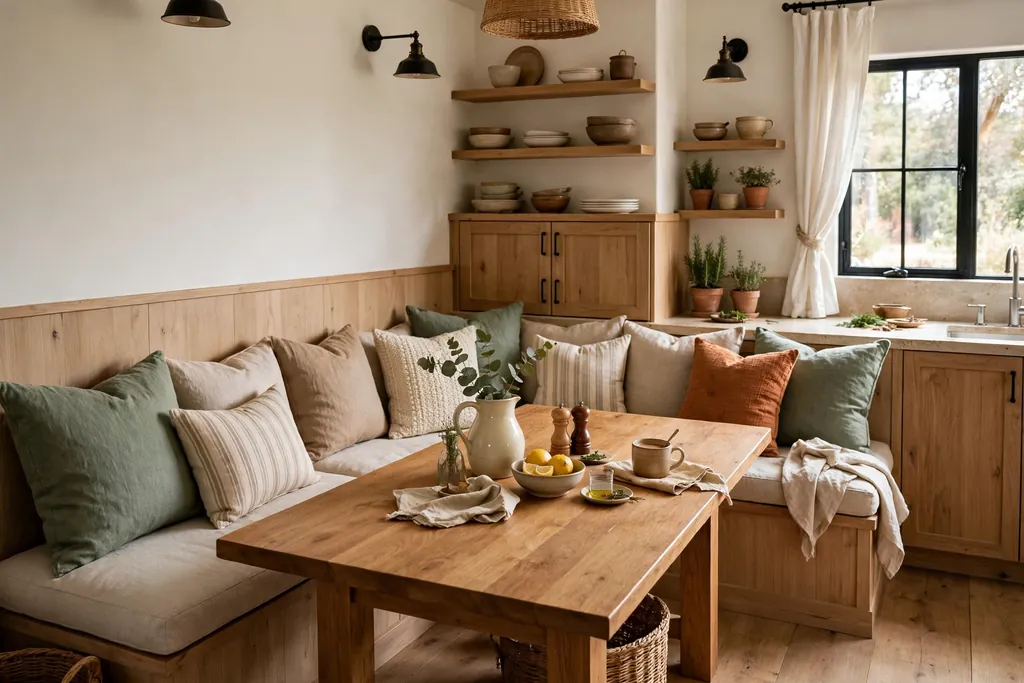
Build a bench into two walls of a corner, with a rectangular or square table in front of it and one or two chairs on the open side. The L shape seats three or four people in a footprint that a table with four chairs would crowd. Lift-up bench seats hide placemats, board games, tablecloths, and rarely used serving dishes, which keeps the nook tidy without a separate cupboard.
Choose firm foam cushions with removable, washable covers, since a bench seat gets daily use. Leave a small gap between the bench back and the wall if you plan to tuck a cushion behind it, and keep the table narrow enough that the person in the middle of the bench can slide out without moving the whole table.
2. Bay Window Seat Nook
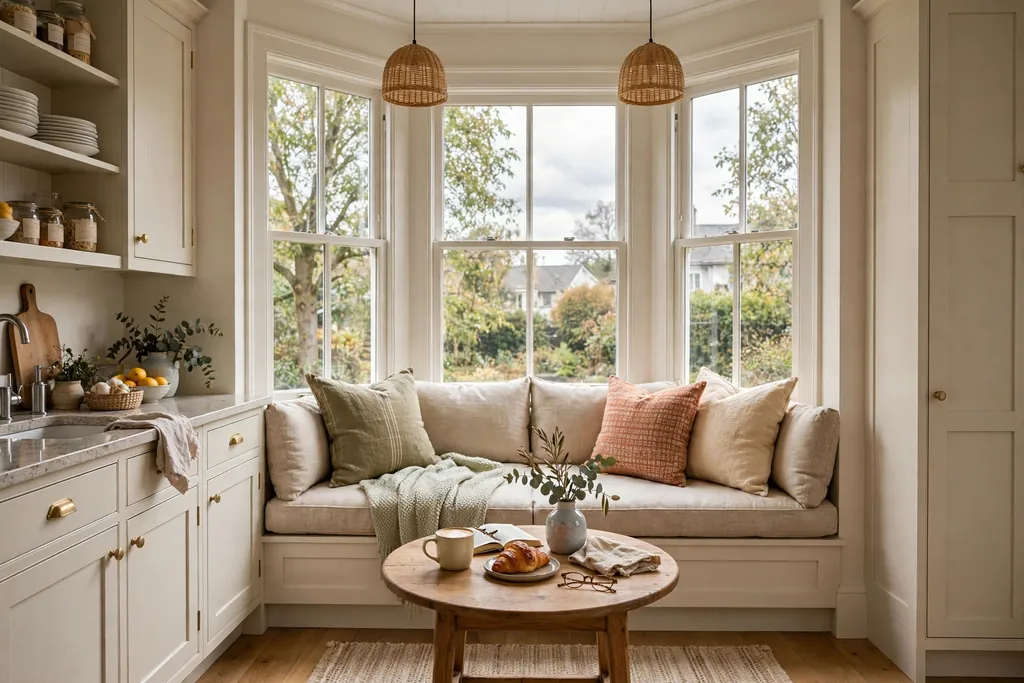
Turn a bay window into the nook itself, with a seat fitted across the bay and a small round or oval table in front of it. Daylight does most of the work here, and the view gives the seat a purpose beyond eating. This layout suits a kitchen with a projecting window, where a standard table would block the light or sit awkwardly in front of the glass.
Keep the seat cushion in a fabric that tolerates sun, and add a thin back cushion rather than a deep pile of pillows that eats into sitting room. A low shelf or a narrow ledge along the bay holds a book or a phone, and a single pendant or wall light keeps the seat usable after dark.
3. Round Pedestal Table in a Tight Corner
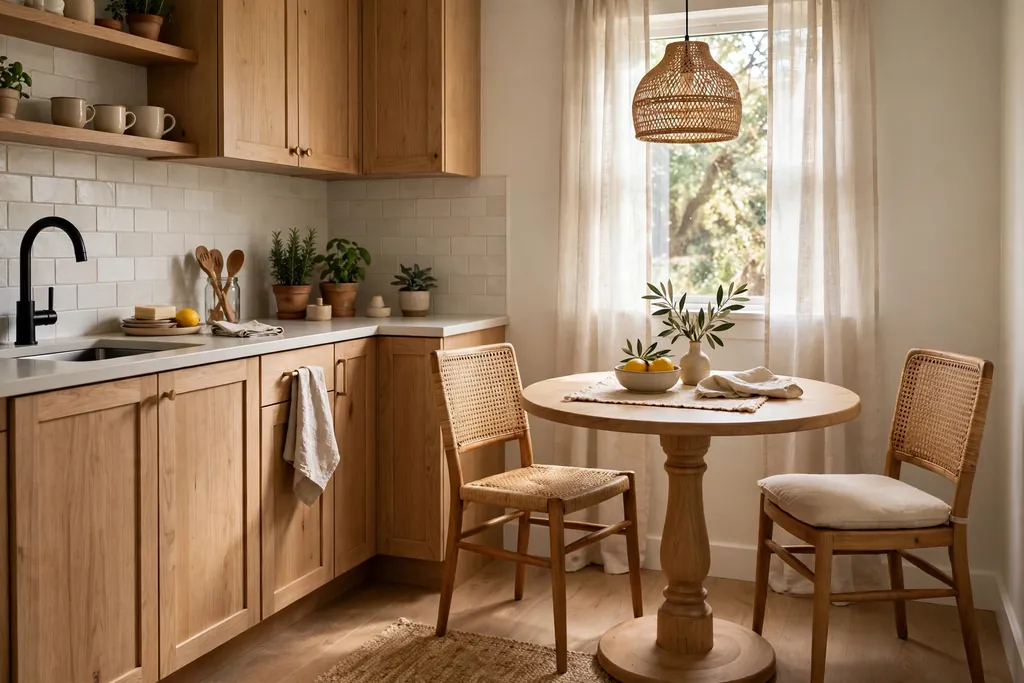
Place a round pedestal table in a corner that is too small for a four-legged table and four chairs. One central leg means no one straddles a table leg, and chairs tuck fully under the top when the nook is not in use. A 30 to 36 inch top seats two comfortably and three at a pinch, which is enough for most weekday breakfasts.
Pair the table with two light chairs that are easy to pull out, and keep the wall behind the table clear so chairs can push back. If the corner also holds a radiator or a vent, leave clearance around it and choose a table top that tolerates warmth without warping.
4. Bench on One Side, Chairs on the Other
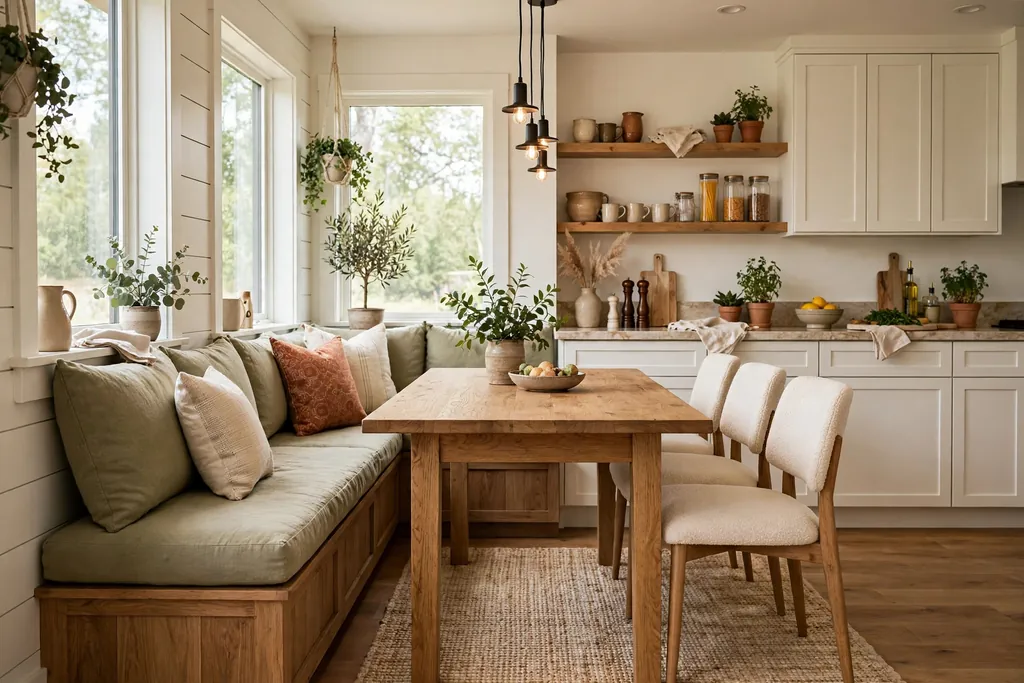
Put a simple bench along the wall and two freestanding chairs opposite it, with a rectangular table between them. The bench side seats children close together or two adults without a gap, while the chair side stays flexible for guests who need more room or a chair with arms. This mix also lets you move one chair away when the nook needs to double as a work spot.
Match the bench height to the chairs so everyone sits at the same table height, and add a cushion to the bench for comfort. Keep the bench shorter than the table by a few inches at each end, so people can get in and out from the ends as well as the front.
5. Counter-Height Breakfast Nook
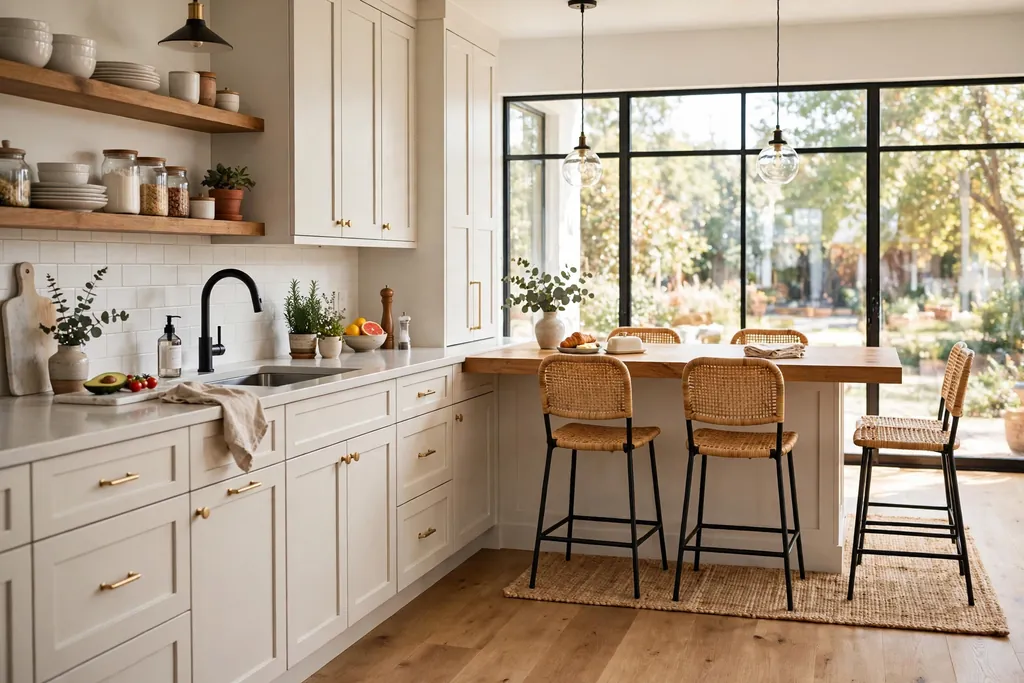
Use the end of a kitchen counter or a short raised bar as the nook, with two or three counter stools tucked under it. This layout suits a kitchen with no spare corner, because the eating spot borrows space the counter already uses. It works best for quick meals, coffee, and homework, rather than long family dinners that need elbow room and a full table setting.
Pick stools with a footrest and a seat height that leaves room for knees under the counter overhang. If the counter is also a prep surface, keep a tray or a runner on the eating end so plates and school books stay clear of chopping and cooking mess.
6. Two-Person Bistro Nook
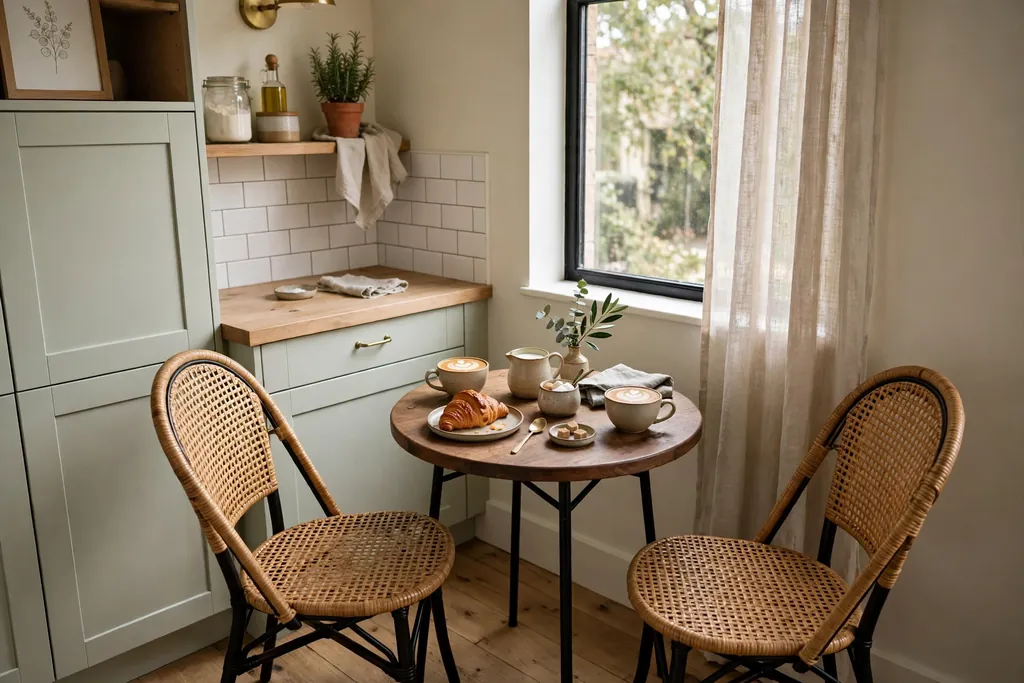
Set a small bistro table and two chairs in a sunny corner for a nook made for two. A bistro set takes very little floor space, folds or stacks in many cases, and gives a couple or a parent and child a set place to eat without opening up a large table. It also suits a kitchen in a small apartment, where a full dining table would dominate the room.
Choose a table top that wipes clean and chairs that stack or fold, so the corner can clear for cleaning or for a larger gathering. A small rug under the set marks the nook as its own spot, but keep the rug flat and low pile so chair legs do not catch on it.
7. Farmhouse Trestle Table Nook
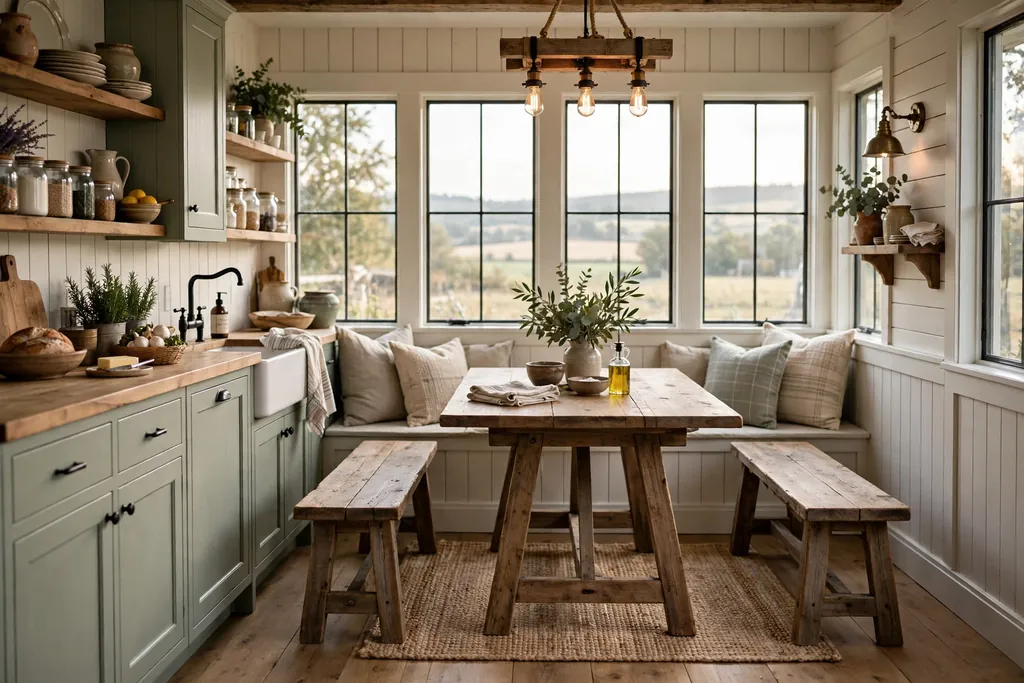
Use a trestle table with a thick wood top and two end benches or a bench and chairs for a nook with a relaxed, farmhouse feel. The trestle base leaves leg room open, unlike four corner legs, and the wood top tolerates daily meals, homework, and craft projects. This layout suits a larger kitchen corner or an open kitchen diner where the nook can hold six people.
Seal the wood top so spills wipe off, and use placemats for hot dishes. If the benches are long, add a cushion runner rather than loose cushions that slide off, and keep one end of the table clear so someone can sit down without climbing over a bench.
8. U-Shaped Family Banquette
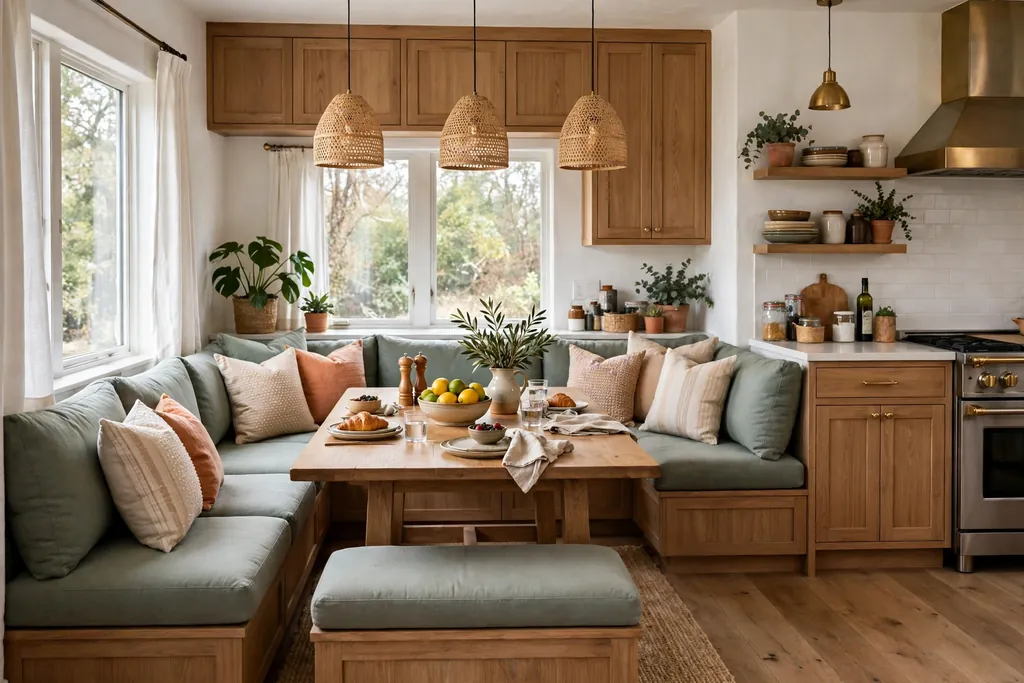
Wrap a bench around three sides of a table for a U-shaped nook that seats five or six people in a compact corner. The U shape works well for a family that eats together daily, because everyone faces inward and passes dishes across a short distance. It needs a corner with enough wall on two sides, plus room to slide into the middle seat from one open end.
Make the table top easy to lift or slide if you can, since the middle seat is hardest to reach. Keep the bench depth shallow enough that adults can sit upright without feeling wedged, and use a durable, wipeable cushion fabric on the seat, with softer covers only on the back cushions.
9. Reading Nook with Bookshelf Ends
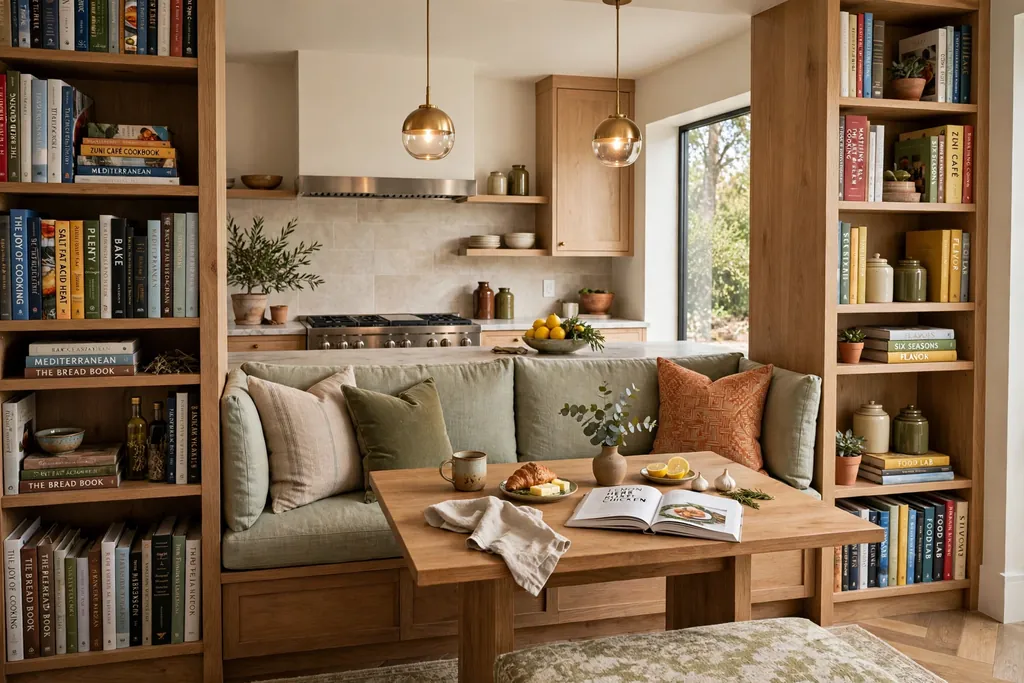
Add bookshelves at one or both ends of a banquette nook, so the eating spot doubles as a reading corner. Cookbooks live within reach of the cook, while novels and school books have a set home instead of piling on the table. This idea suits a household that lingers at the table after eating, with coffee, homework, or a puzzle.
For shelf styling that stays tidy rather than crowded, see our guide to how to style open shelves. Keep heavy books low, leave breathing room between groups, and keep the shelf nearest the table clear of small items that could fall onto plates. A small reading light on the shelf end helps in the evening.
10. Fold-Down Wall Table Nook
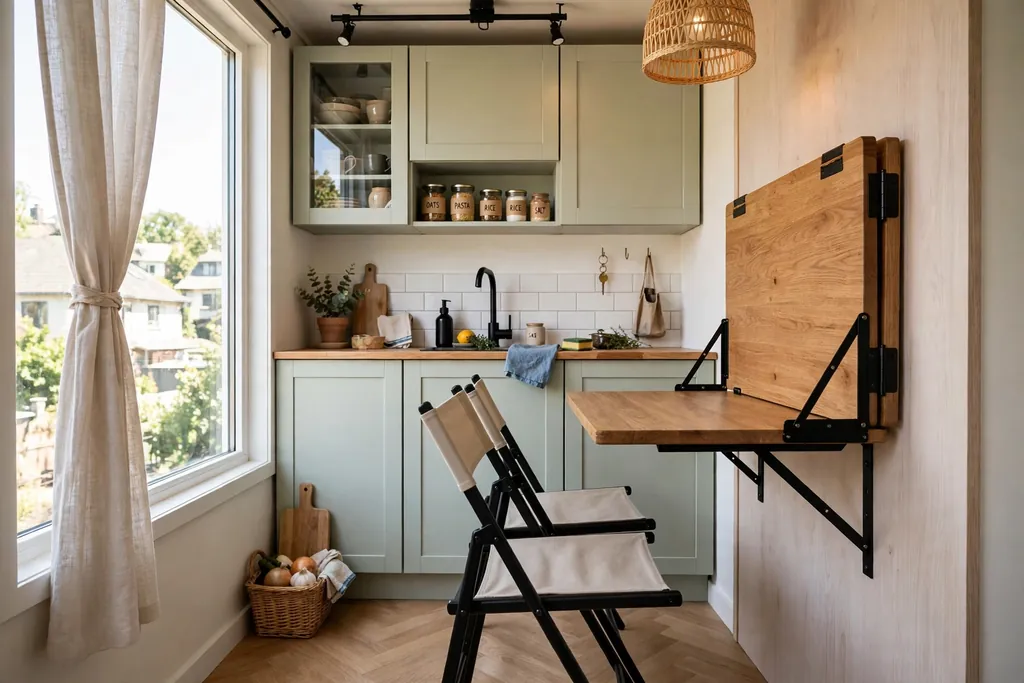
Fix a fold-down table to the wall of a tiny kitchen, with two folding chairs stored flat nearby. When the table is down, it seats two for a meal; when it is up, the floor clears for cooking and cleaning. This is one of the most practical nook options for a studio or a galley kitchen, where a permanent table would block the main walkway.
Fix the table into wall studs, not plasterboard alone, and check that it locks flat when folded up. Keep the chairs light enough to hang on wall hooks, and store placemats and a small vase in a wall pocket or a nearby drawer so setting the table takes a minute, not a search.
11. Plant-Filled Garden Nook
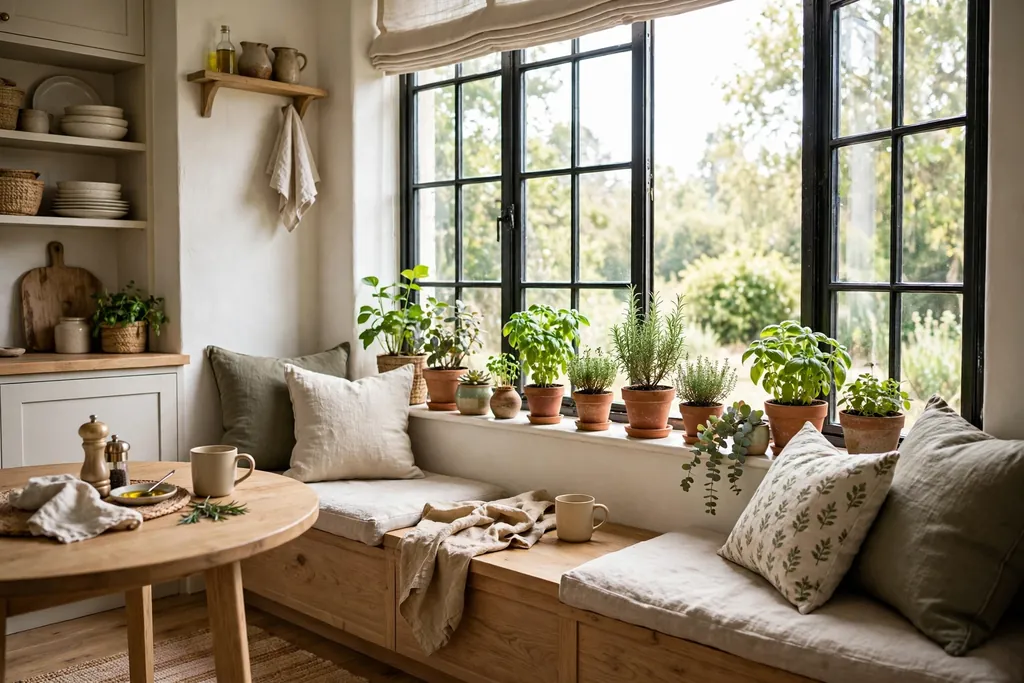
Place the nook beside the brightest window and fill the sill, a nearby shelf, and one floor pot with plants, so the eating spot feels like a garden corner inside the kitchen. Herbs on the sill stay within reach while you cook, and leafy plants soften hard kitchen surfaces. This layout suits a kitchen that looks onto a garden, since the indoor plants link the nook to the view outside.
Keep plants off the table itself, except for one small pot that lifts away for cleaning, so plates have full room. Water plants over the sink, not at the table, and choose pots with saucers to protect wood and paint. If you also have outdoor seating, our guide to kitchen balcony ideas shows how to plan a small eating spot outside the kitchen door as well.
12. Pendant-Lit Evening Nook
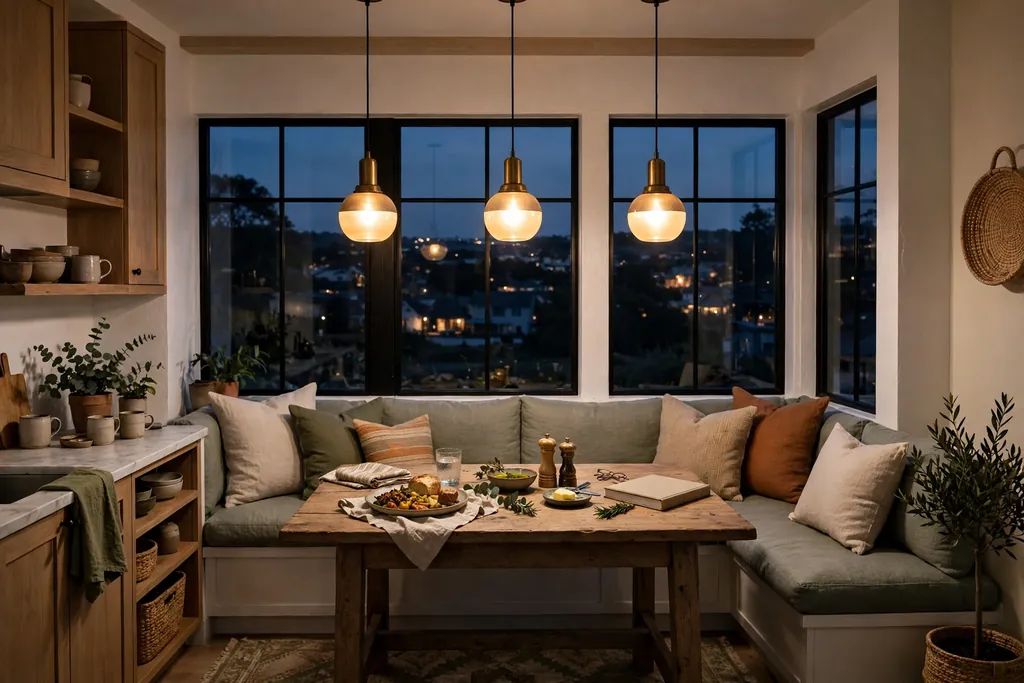
Hang one or two pendant lights low over the nook table, so the spot works as well in the evening as it does in daylight. A pendant marks the table as a set place, even in an open plan kitchen, and warm white bulbs make evening meals feel calm. This idea suits a nook without a window, or a corner that turns dark early in winter.
Hang the pendant high enough to see across the table, and keep the cord length even if you hang two. Use a dimmer if your wiring allows it, so the same light suits homework, dinner, and a late coffee. Keep the shade clear of steam from the cooker, and wipe it often, since kitchen air leaves a film on glass and metal.
13. Retro Diner Booth Nook
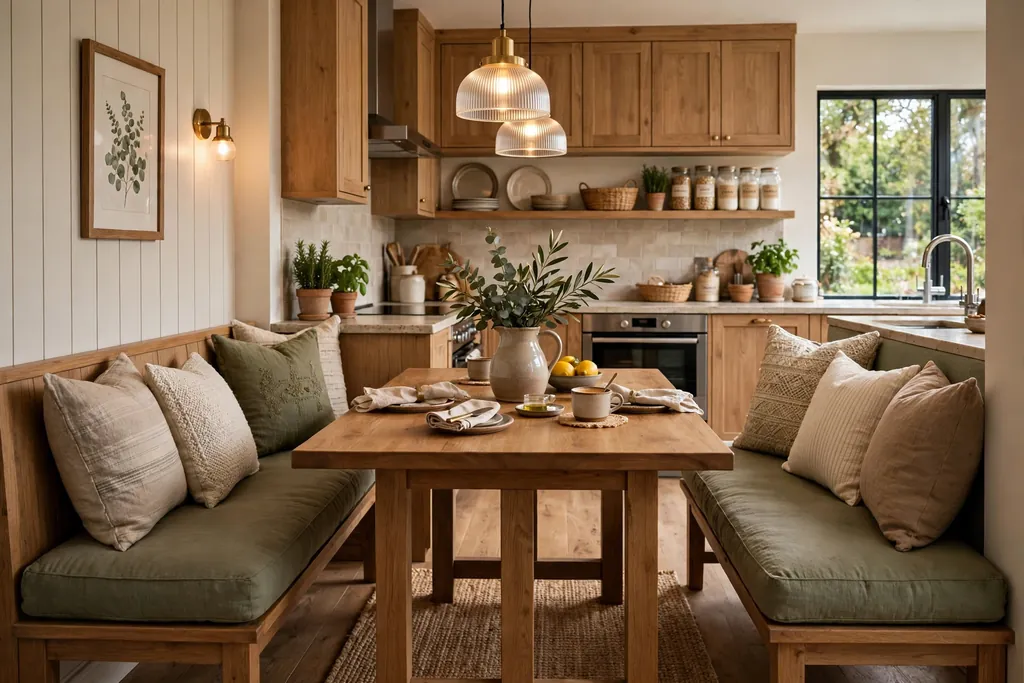
Build two facing benches with a fixed table between them for a diner booth nook. The booth seats four in a narrow space, because benches need less pull-out room than chairs, and the fixed table keeps the layout from drifting into the walkway. Vinyl or wipeable fabric suits a booth, since it wipes after sticky meals and holds its shape.
Keep the table top narrow enough that people can pass dishes across it, and add a small shelf or a wall hook at each end for bags. A booth suits a long, narrow kitchen corner better than a square one, so measure the bench length against the wall before you commit to the build.
14. Patterned Cushion Statement Nook
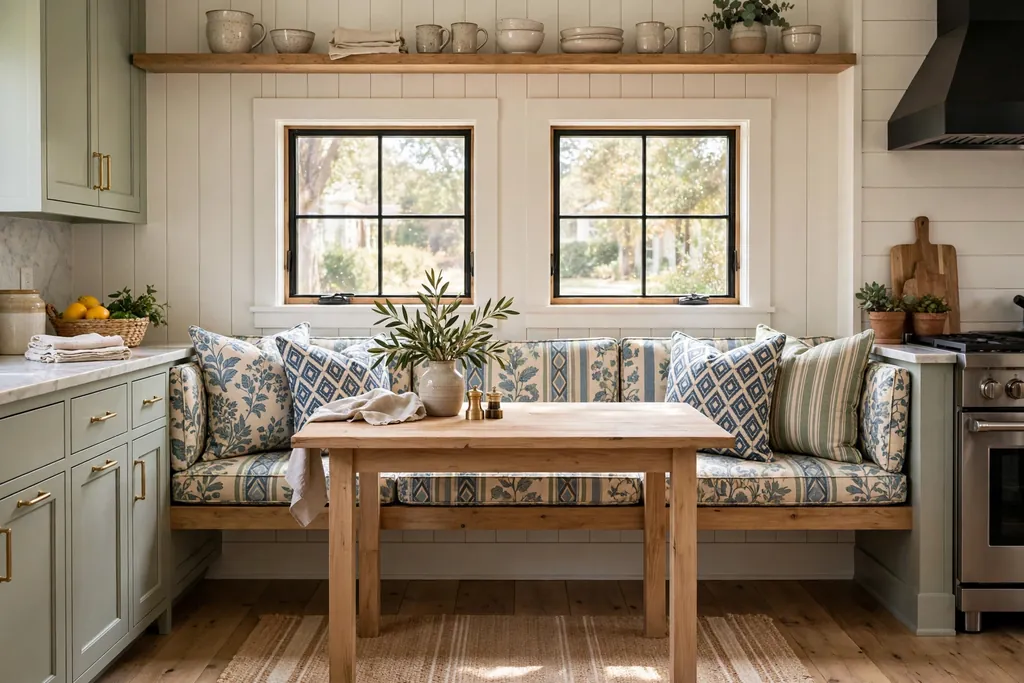
Keep the table, bench, and chairs plain, and let patterned cushions carry the color and pattern in the nook. Stripes, checks, or a bold floral on the bench cushions give the corner a clear identity without repainting or buying new furniture. This is a low cost refresh, and it suits a renter or anyone who likes to change the look by season.
Use one pattern in two or three cushions, plus one plain cushion in a color picked from the pattern, so the mix reads as planned rather than random. Choose removable covers you can wash, and keep a spare set so the nook still looks dressed while one set is in the wash.
15. Island-Adjacent Overflow Nook
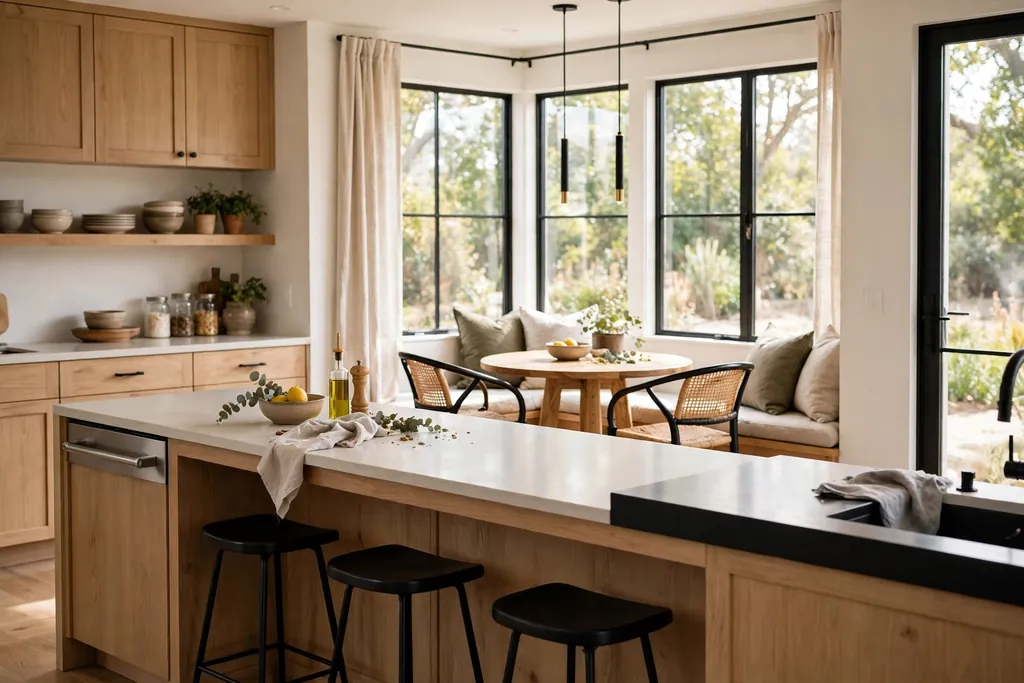
Place a small table and two chairs just beyond the kitchen island, so the island handles prep and the nook handles eating. Guests can sit in the nook with a drink while the cook works at the island, without crowding the work zone. This layout suits an open plan kitchen where a full dining table would sit too far from the action.
Leave a clear walkway between the island and the nook table, wide enough to carry a hot dish safely. Keep the nook table lower than the island counter, so the two surfaces read as separate jobs, and match one material, such as wood or black metal, across both pieces.
16. Nook with a Serving Ledge
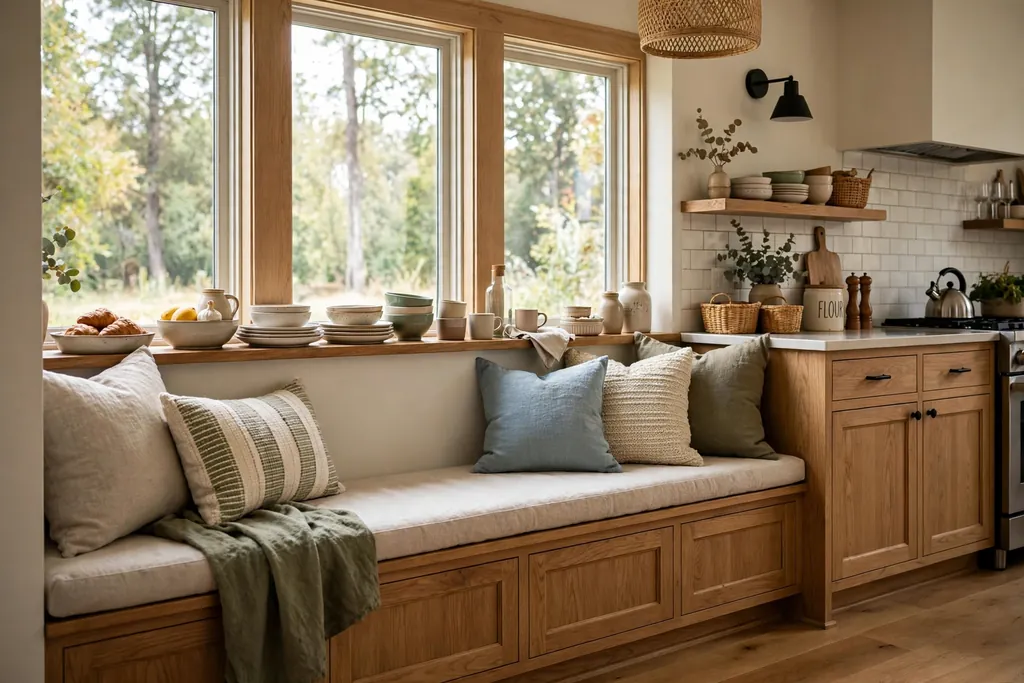
Add a narrow serving ledge or sideboard along the wall behind the bench, at a height just above the bench back, for serving dishes, a water jug, and extra plates. The ledge keeps the table clear during a meal, because serving dishes move off the table but stay within reach. It also gives the nook a finished, built-in look without a full wall of cabinets.
Keep the ledge shallow, so it does not push the bench too far from the wall, and fix it firmly if it holds heavy dishes. Use it for items you use at the table only, not as general kitchen storage, or it will fill up and stop serving its purpose.
17. Rustic Reclaimed Wood Nook
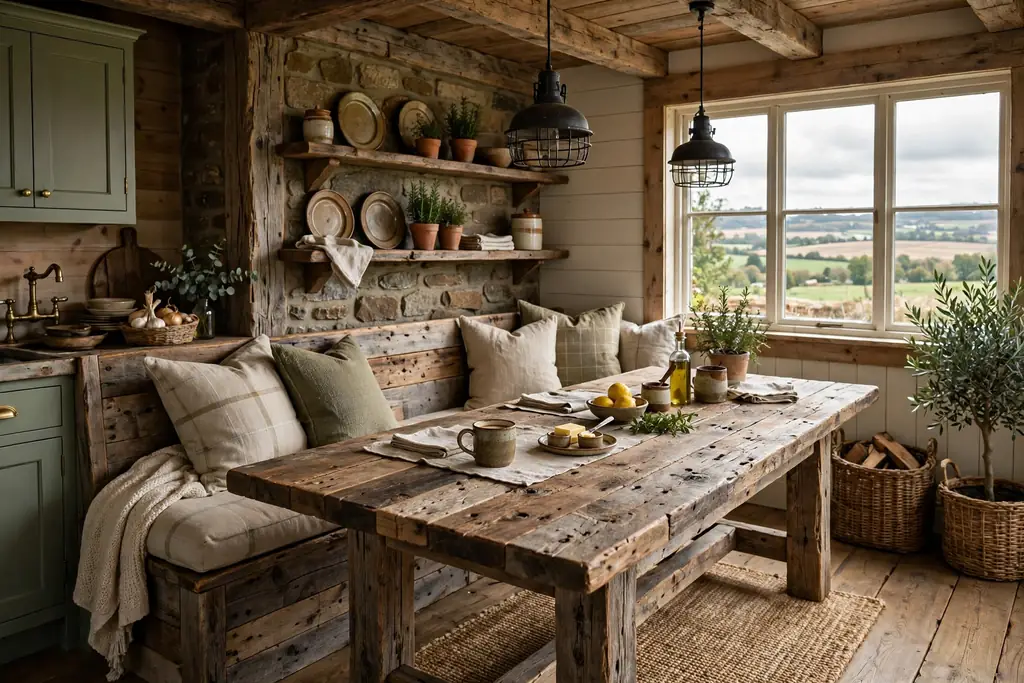
Build the nook table and bench from reclaimed or rough-sawn wood, with visible grain and a matte finish, for a rustic corner that suits a farmhouse or cottage kitchen. The wood adds warmth against plain cabinets and tile, and small marks from daily use blend into the finish rather than standing out. This idea suits a household that uses the table hard, for meals, homework, and projects.
Sand the top smooth enough that plates sit flat and crumbs wipe away, even if the edges keep a rustic profile. Seal the wood against spills, and pair it with plain chairs or a simple bench so the wood, not a mix of styles, leads the look.
18. Light Scandinavian Nook
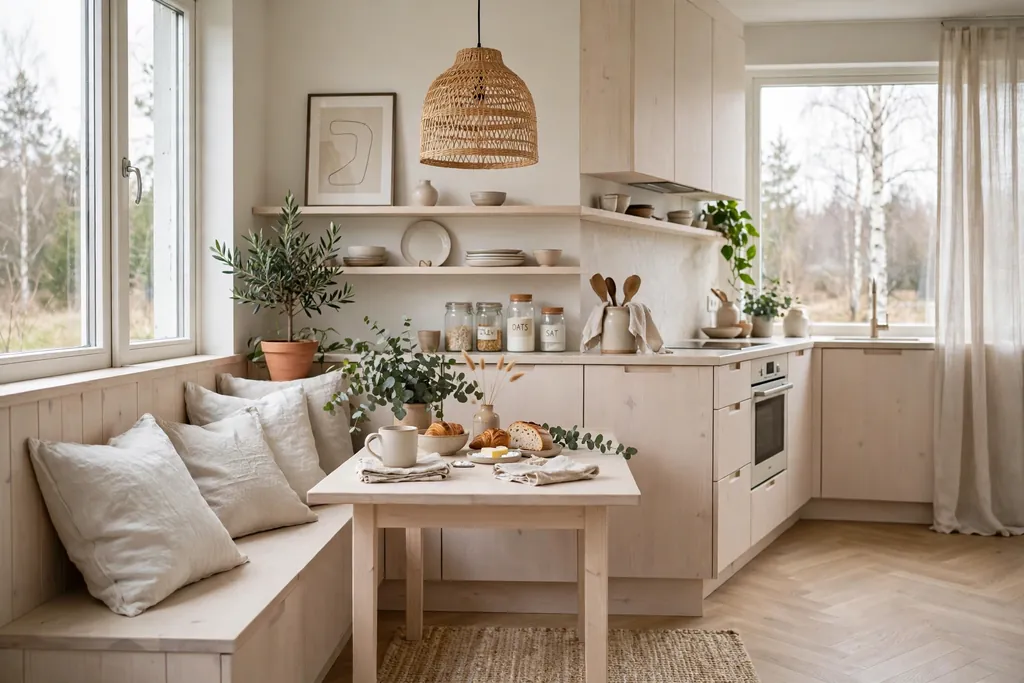
Use pale wood, white walls, and simple linen cushions for a light, calm nook with very little visual clutter. A light wood table, two simple chairs, and a bench with a plain cushion keep the corner bright, which suits a small or north-facing kitchen. The restraint also makes the nook easy to clean and easy to change with one new cushion or a plant.
Keep the palette to pale wood plus white and one soft accent, such as sage, grey, or pale blue, so the nook stays calm. Avoid filling the walls around it, and leave one clear surface, such as the table top when not in use, so the corner does not collect clutter.
19. Cafe Curtain Window Nook
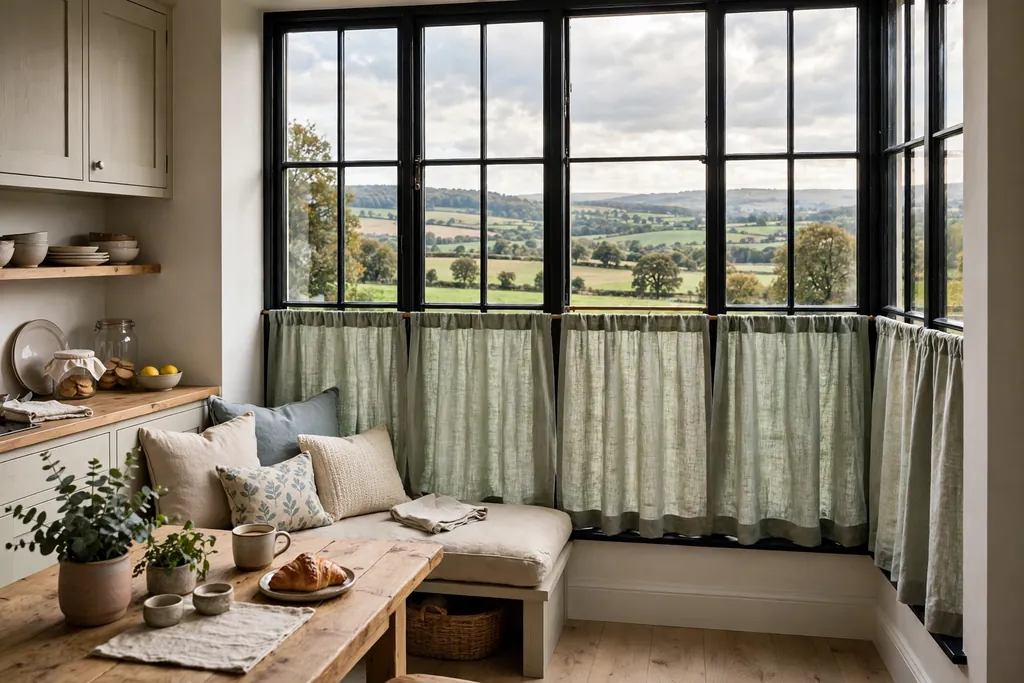
Hang cafe curtains on the lower half of the nook window for privacy at seated height, while the upper glass stays open for daylight. Cafe curtains suit a nook window that faces a street or a close neighbor, because they screen the table without darkening the corner. A plain linen or a simple check both work, depending on the rest of the kitchen.
For more window treatments that suit a kitchen seating spot, see our guide to kitchen window decor ideas. Choose washable fabric, hang the rod at mid window height, and keep the hem above the sill so it does not sit in water or brush against the table. Keep the curtain clear of any heat source.
20. Homework and Work Nook with Task Light
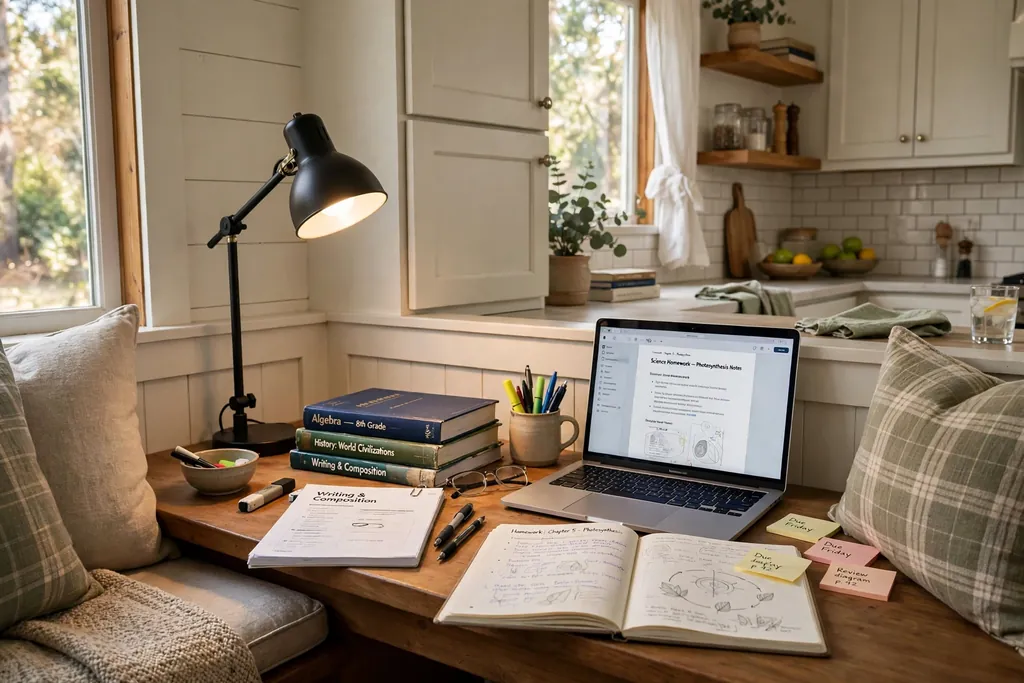
Set the nook up for homework and laptop work as well as meals, with a task light, a power outlet nearby, and a wipeable table top. Children can do school work where an adult can see them while cooking, and adults can answer emails over coffee without moving to another room. This dual use suits a household where the kitchen table is the busiest desk in the house.
Keep school supplies in one basket or drawer by the nook, so the table clears fast for dinner. Use a task light with a warm bulb for evening work, and keep cords off the walkway with a small cable clip on the table leg or wall. Agree a clear-up time, so work does not spread across the table at mealtimes.
21. Expandable Table Nook
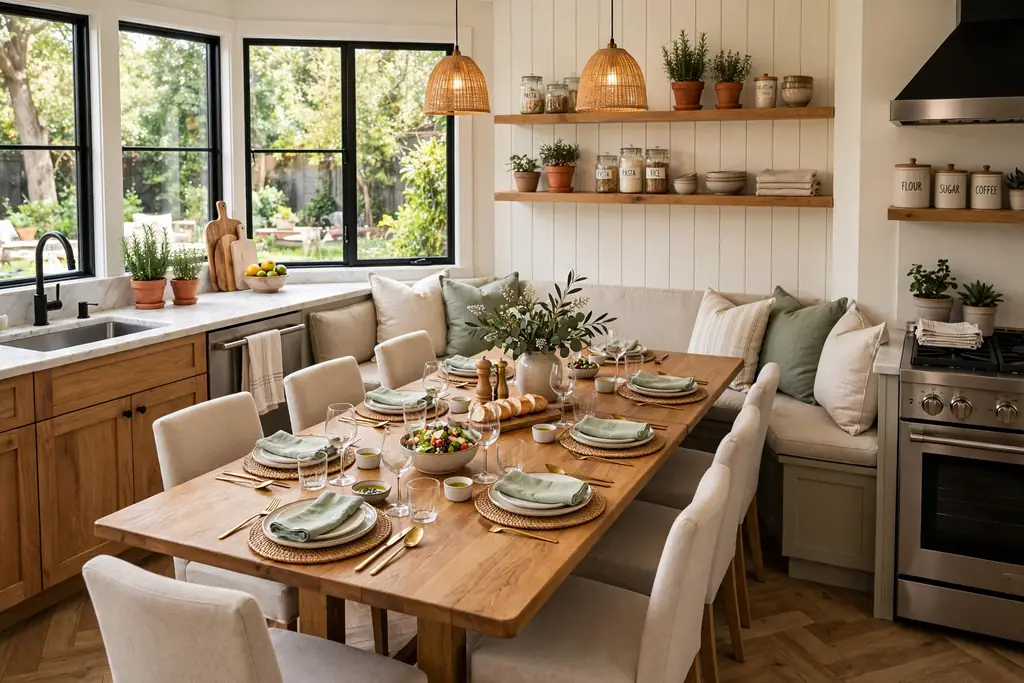
Choose a table with a drop leaf, a butterfly leaf, or a pull-out extension, so the nook seats two on weekdays and four or six when guests come. The table stays small for daily use, which keeps the corner open, and grows only when it needs to. This is a practical middle ground between a tiny bistro table and a large permanent dining table.
Test the extension before you buy, and check that the extra leaf stores inside the table or flat nearby. When the table grows, add folding chairs from another room rather than buying chairs that crowd the corner every day. Keep the floor around the nook clear, so the larger table still has room to pull chairs out.
22. Hearth-Warm Nook by the Kitchen Fireplace
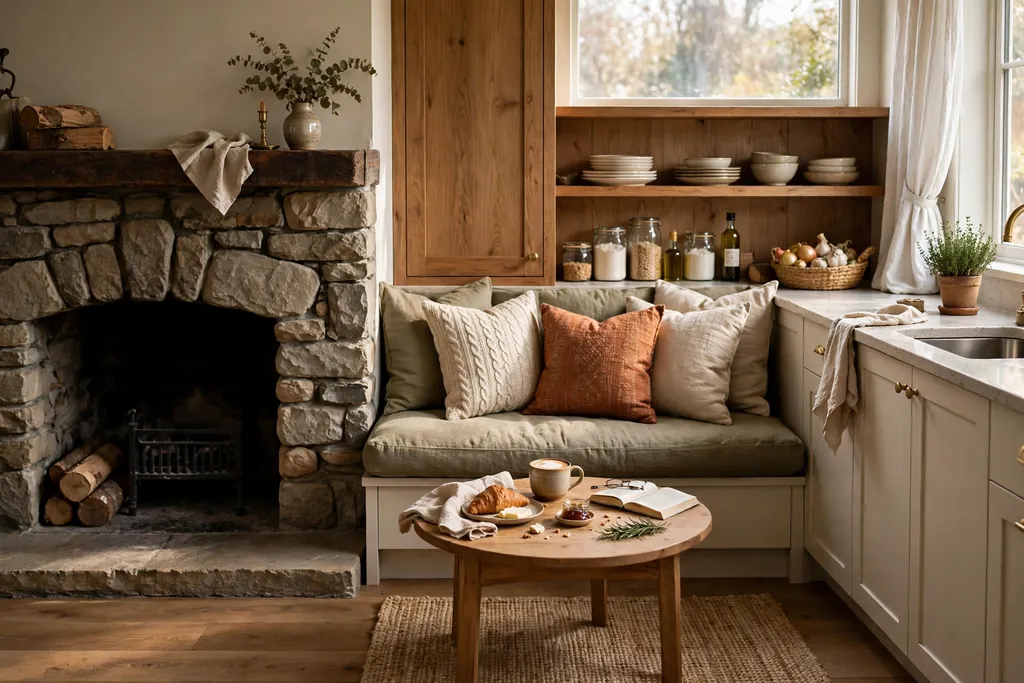
Place the nook beside a kitchen fireplace or a wood stove, where the warmth makes the corner the most used seat in cold months. A bench with thick cushions and a small table near the hearth gives the nook a reason to be used beyond meals, for reading and quiet coffee. This layout suits a larger kitchen or a kitchen with a fireplace on one wall.
Keep all fabric, cushions, and paper well clear of the fire, and follow the stove or fireplace guidance for clearances. Use a hearth rug that tolerates heat and ash, and keep the table top clear of candles or items that could fall toward the fire. Choose a wipeable cushion fabric, since a hearth corner collects dust.
23. Coastal Rattan Nook
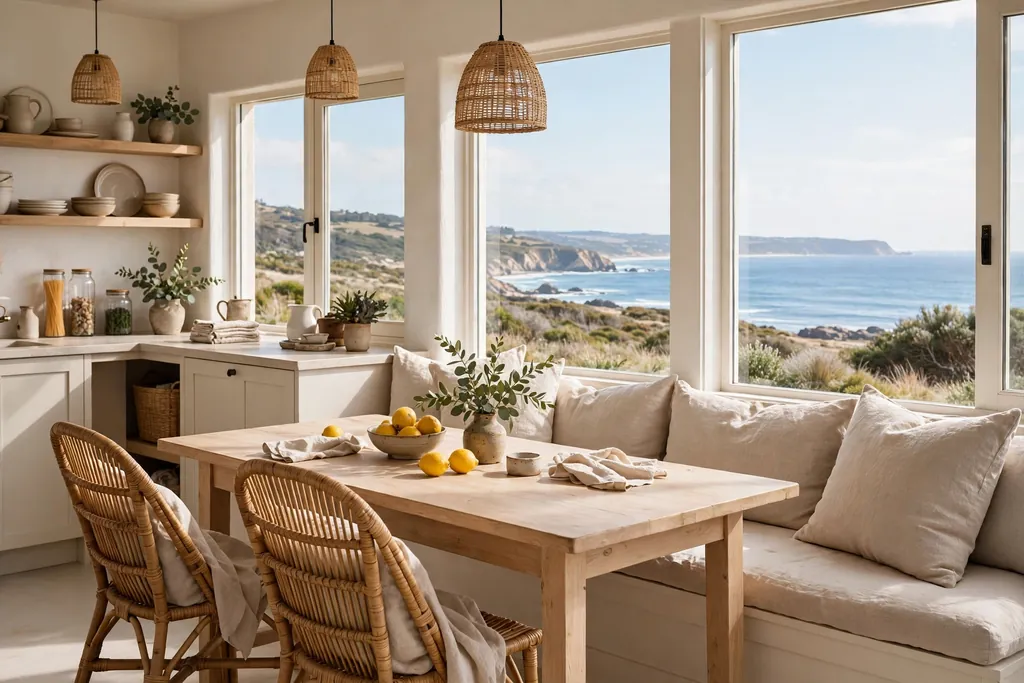
Use rattan or wicker chairs, a light wood table, and white or sandy linen cushions for a coastal nook that feels relaxed and bright. Rattan suits a kitchen with plenty of daylight and a view, and it pairs well with white cabinets, pale floors, and plants. The texture adds interest without a strong color, so the nook stays calm.
Check that rattan chairs fit under the table and support daily use, since some decorative rattan is light. Keep the cushions washable, and avoid placing rattan right beside the cooker, where steam and grease will mark it. One coastal touch, such as a woven pendant or a striped cushion, is enough alongside plain pieces.
24. Dark Panelled Nook
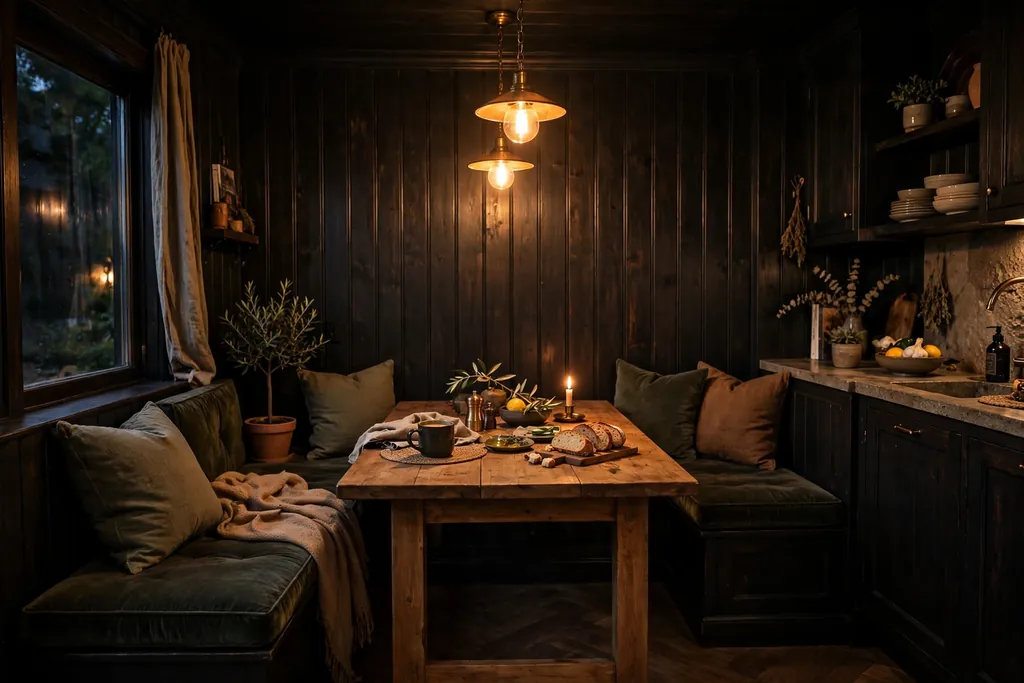
Line the nook walls with dark wood panelling or deep green or navy paint, with a wood table and warm lighting, for a cozy corner that feels separate from a bright kitchen. Dark walls suit a nook with a window, since daylight keeps the corner from feeling closed in, and the contrast makes the seating spot feel intentional. This idea suits a household that wants a snug evening spot for dinner and conversation.
Balance the dark walls with a light table top or light cushions, so plates and food stay visible. Use warm white bulbs, and add a mirror or a light picture frame if the corner feels too dark in the day. Keep the panelling wipeable, since a nook wall near a table takes splashes.
25. Kid-Friendly Wipe-Clean Nook
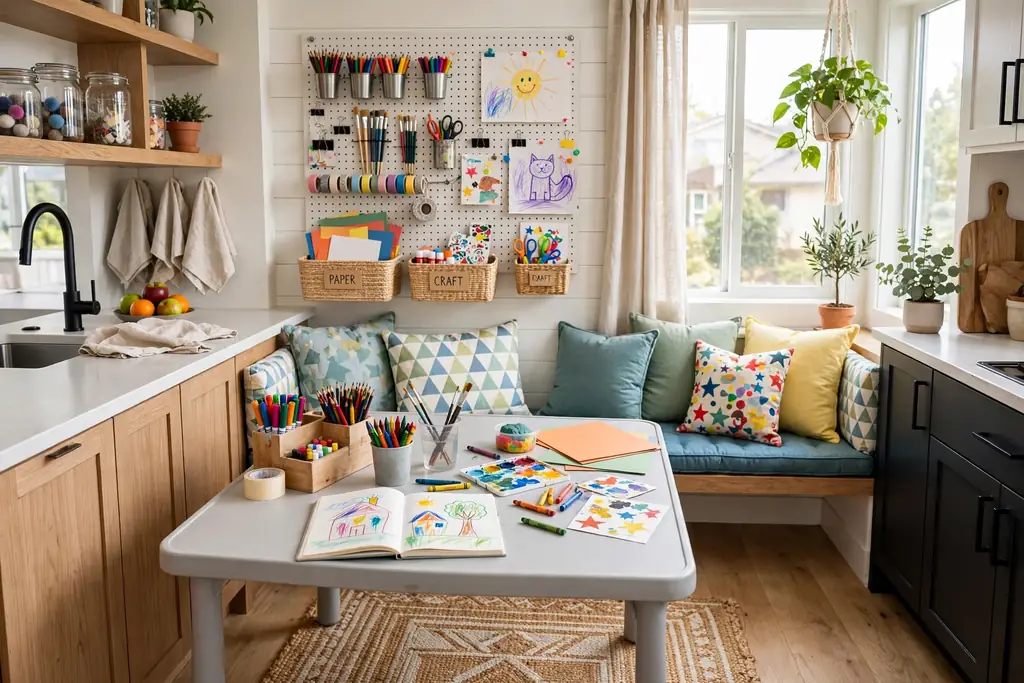
Design the nook for children first, with a wipeable table top, vinyl or coated fabric cushions, and a bench that hides art supplies and placemats. A bench seat means children sit close together without chairs tipping, and a table at the right height lets them eat, draw, and do homework without climbing. This layout suits a family kitchen where the nook takes daily spills and sticky hands.
Keep a small cleaning caddy in the bench storage, with cloths and a spray suitable for the table surface, so spills clear fast. Use placemats that wipe clean, and keep one drawer or basket for crayons and paper, so art supplies have a set home and do not spread across the kitchen.
26. Seasonal Dressing Nook
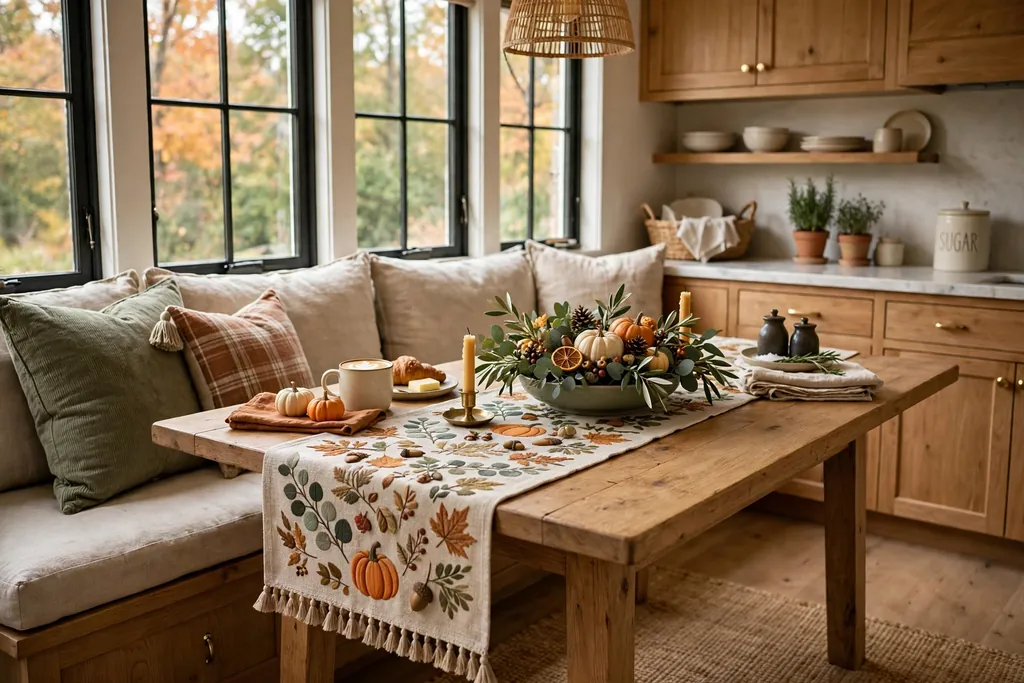
Keep the nook furniture plain all year, and change only the linens, cushions, and table centerpiece by season. A light linen runner and green stems suit spring, while a plaid runner and a small candle group suit winter, and the change takes minutes. This idea suits anyone who likes a fresh look without buying new furniture or repainting.
Store seasonal nook items in one labelled box in the bench or a nearby cupboard, so the swap stays simple. For table styling that works across seasons, see our guide to everyday dining table decor. Keep the centerpiece low, so people can see across the table, and keep it clear of the cooking zone.
Conclusion
A good kitchen nook starts with the corner you have, not the table you wish you had. Measure first, pick a layout that leaves room to sit down and stand up, and choose seating you can clean and live with daily. A bench with storage, a round table in a tight corner, or a simple bistro set can all work, as long as the light, the table height, and the walkway around it suit the way your household eats. Start with one change, such as a bench cushion, a pendant light, or a washable runner, and let the nook earn its place before you add more. Save this list for your next room refresh, and pick the nook idea you want to try first.
FAQs
How much space does a kitchen nook need?
A small nook for two needs a corner roughly the size of a bistro table plus room to pull chairs out, while a banquette nook needs enough wall length for the bench plus a table and a walkway on the open side. Measure the wall, the table size, and the pull-out room before you buy, and leave a clear path to the kitchen work zone. If the corner is very tight, a fold-down table or a round pedestal table usually fits better than a rectangular table with four chairs.
Is a banquette or a table with chairs better for a small kitchen?
A banquette usually wins in a small kitchen, because a bench against the wall needs less pull-out room than chairs on both sides, and under-seat storage replaces a separate cupboard. Chairs win if you need flexibility, such as moving seats to another room or seating guests with different needs. A mix, with a bench on the wall side and chairs on the open side, gives you most of the space saving plus some flexibility.
What table shape works best in a kitchen nook?
A round table suits a tight or square corner, because it leaves more passing room and no one sits at a sharp corner. A rectangular table suits a long banquette or a family nook, because it seats more people along a bench. An oval table is a useful middle ground in a bay window, where it follows the curve of the seat. Match the shape to the corner, not just to the style you like.
How do I make a kitchen nook comfortable for long meals?
Use firm foam cushions with a seat depth that supports the thighs, a table height that lets elbows rest without hunching, and a light over the table that does not glare. Add a back cushion on a bench, since a hard wall gets uncomfortable fast, and keep the table top clear enough for plates, glasses, and elbows. A rug underfoot and a throw on the bench help in cold months, but keep both washable.
Can I add a kitchen nook to a rented home?
Yes, if you use freestanding pieces: a small table, two chairs, a bench that does not fix to the wall, and cushions you can take with you. A fold-down table needs wall fixings, so check your lease before fitting one, and a built-in banquette is usually an owner project. Cafe curtains on a tension rod, a rug, and a pendant that plugs in rather than hardwires are renter friendly ways to mark the nook without permanent changes.
How do I keep a kitchen nook from collecting clutter?
Give everything in the nook a set home: school supplies in one basket, placemats in the bench, and mail in another room, not on the nook table. Clear the table after each meal, and run a short reset each evening, with chairs pushed in and the centerpiece back in place. If the nook doubles as a work spot, use a single tray for work items, so they lift off the table in one move when dinner is ready.
A. SEO Brief
Intent: Help readers plan a kitchen nook that fits their corner, budget, and daily routine, whether they want a built-in banquette, a tiny bistro set, or a flexible table and chairs mix. Readers want layout guidance they can measure and copy, plus practical notes on seating, storage, light, and cleaning.
Primary keyphrase: kitchen nook ideas
Secondary terms: kitchen breakfast nook, banquette seating, kitchen corner seating, small kitchen nook, bay window nook, kitchen nook table, built-in kitchen bench
Sheet title: “26 Kitchen Nook Ideas to Inspire Your Next Room Refresh”
Count note: Sheet count is 26, which is above 10, so the count is kept exactly at 26. The article delivers 26 distinct numbered ideas, numbered continuously 1 to 26.
Article title / H1: 26 Kitchen Nook Ideas to Inspire Your Next Room Refresh
SEO title (55 characters): 26 Kitchen Nook Ideas to Inspire Your Next Room Refresh
Meta description (see 68-meta.json for final character count): Discover 26 kitchen nook ideas, from L-shaped banquettes and bay window seats to tiny bistro corners, with tips on seating, storage, light and layout.
Slug: kitchen-nook-ideas
Internal links used (verified live dwellovell.com URLs only, fetched 2026-10-24):
– https://dwellovell.com/how-to-style-open-shelves/ (open shelves styling)
– https://dwellovell.com/kitchen-balcony-ideas/ (small kitchen and balcony seating ideas)
– https://dwellovell.com/kitchen-window-decor-ideas/ (window decor)
– https://dwellovell.com/everyday-dining-table-decor/ (dining table decor)
Research limits: No live competitor research or search volume checks were claimed for this draft. No prices, products, measurements beyond general size guidance, statistics or brand endorsements are stated. Tips are general decorating guidance. All internal links above were fetched live and returned article pages.