
Choose upholstery fabric for dining room chairs by matching durability to daily use, stain resistance to meals with kids or pets, and color and pattern to your table and room. Order samples, test them in your dining room light, and check cleaning codes before you buy.
Dining chairs take more wear than most seats in a house. They are pulled out and pushed in, sat on for long meals, and exposed to food, drinks, and crumbs every day. A fabric that looks right in a shop can feel too rough, show every mark, or fade near a window once it is home. Working through the choice in order, from measuring the chairs to testing samples, keeps the decision practical instead of rushed.
This guide covers the full process. It starts with the chairs you already have and how they are used, then explains fabric families, durability, weave, color, and pattern in plain terms. Later steps cover samples, yardage, and the small details, such as piping and seat shape, that change how a fabric looks once it is fitted. By the end, you should be able to narrow a long list of fabrics to one clear choice.
Key Takeaways
- Measure the seat, back, and chair frame before choosing fabric, and note whether the seat is loose, fixed, or shaped.
- Match durability and stain resistance to how the chairs are used each day, not only to how the fabric looks.
- Order samples and test them in your dining room light, beside your table, before ordering full yardage.
- Check the cleaning code on every fabric you consider, and make sure it fits how you are willing to clean the chairs.
- Choose color and pattern scale with the room in mind, and repeat at least one color already present in the space.
- Keep a record of the fabric name, color, cleaning code, and supplier once you decide, so a future repair or extra chair matches.
Supplies You May Need
- A measuring tape and a notebook for chair measurements
- Fabric samples or swatch cards in your shortlisted fabrics
- Plain paper and a pencil for sketching the seat and back shape
- A camera or phone for photos of samples beside your table
- A small notebook or folder for fabric names, colors, and cleaning codes
- A stain test kit, only if you want to test samples with water, coffee, or food at home
- A seam ripper and a staple remover, only if you plan to remove old upholstery yourself
- Foam or batting, only if you plan to replace worn seat padding at the same time
1. Measure Your Dining Chairs

Measure each chair before you look at fabric, since size and shape narrow the choice more than color does. Measure the seat width and depth, the seat height from the floor, the back height and width, and the thickness of any seat cushion. Note whether the seat is a loose cushion, a fixed upholstered seat, or a shaped seat with a curved front edge.
Write down whether the back is fully upholstered, partly upholstered, or open, and whether the chair has arms that will also need fabric. Chairs in one set can differ slightly, so measure more than one chair and use the largest measurements for yardage. A fabric with a large pattern also needs extra care at this stage, since the pattern must sit straight on each seat and back.
2. Note How Each Chair Is Used

Think about who sits in the chairs and how often they are used, since daily dining needs a tougher fabric than a chair used mainly for guests. Note whether children, pets, or frequent spills are part of everyday meals, and whether the chairs are used for homework, work, or long gatherings as well as eating. A chair at the head of the table may get more use than a side chair, so it may need the most durable choice in the set.
Also note where the chairs sit in the room. Chairs near a window get more sun, chairs near a kitchen door get more passing traffic, and chairs on a rug sit differently from chairs on a hard floor. These details help you weigh stain resistance, fading, and ease of cleaning, rather than choosing a fabric on looks alone. Write a short note for each chair, so the final choice fits the hardest used chair in the set.
3. Learn the Main Fabric Families
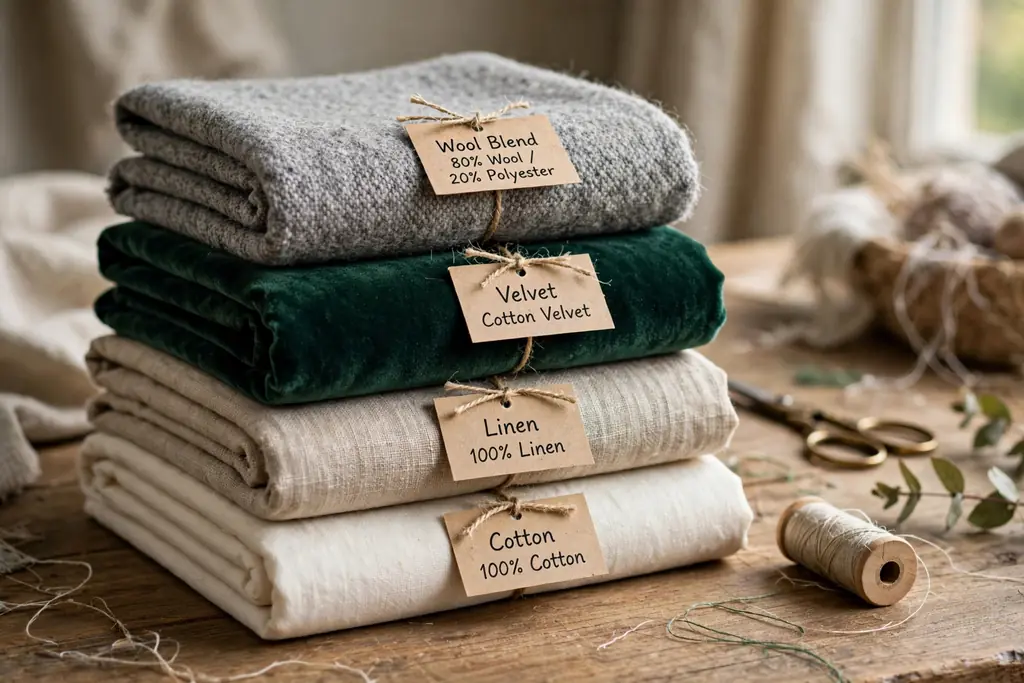
Start with the broad fabric families, since each one behaves differently on a dining chair. Cotton and linen feel natural and breathable, and they suit relaxed and classic rooms, but they can stain and wrinkle more easily than some other options. Wool blends feel warm and hold their shape well, while velvet gives a soft, dense surface that suits a formal dining room and needs gentler care.
Synthetic fabrics, such as polyester and blends made for upholstery, often resist stains and wear well, which suits daily dining. Leather is a separate choice: it wipes clean and ages with use, but it needs its own care routine and a higher budget than most cloth fabrics. Ask what each fabric is made from before you judge it, since a blend can combine the look of a natural fiber with the durability of a synthetic one.
4. Compare Durability for Daily Dining
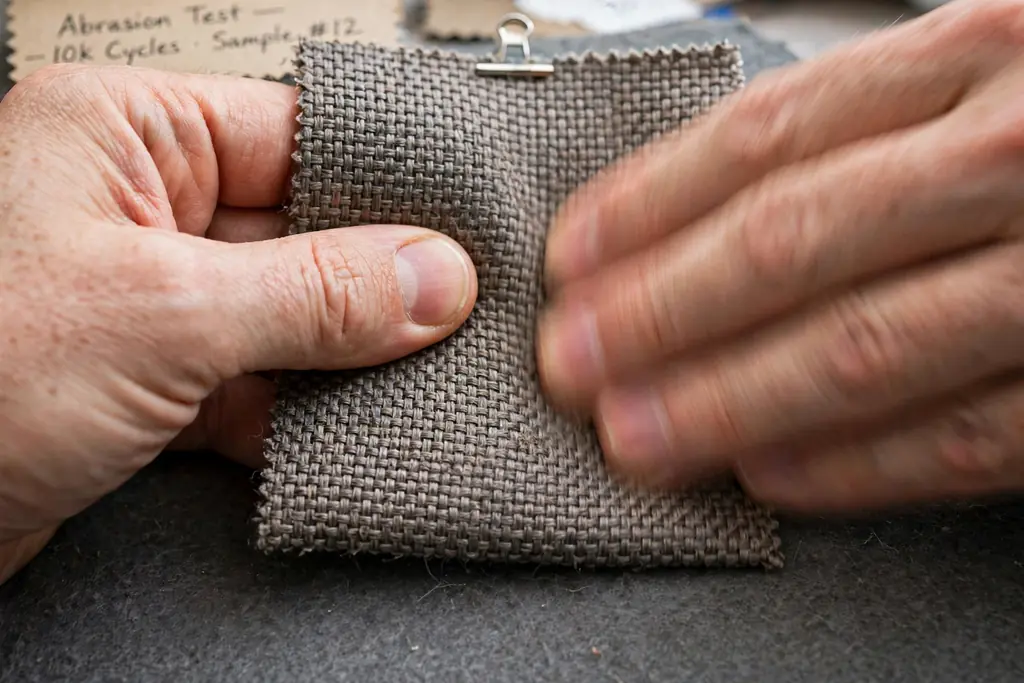
Durability matters most on chairs used every day, since the seat takes friction each time someone sits down and stands up. Look for the abrasion or rub rating listed by the fabric maker, and choose a higher rating for daily dining than you would for a chair used only on special occasions. A fabric made for upholstery, rather than for curtains or light cushions, is the safer starting point for dining seats.
Check the fabric weight and weave as well. A tight, firm weave usually holds up better on a seat than a loose, open weave, which can snag or stretch. Hold the sample firmly and rub it lightly with your hand: a fabric that pills or pulls at once is a poor match for a busy dining room. Keep durability at the top of the list for the most used chairs, even if a softer fabric looks more inviting at first glance.
5. Test Stain Resistance and Cleaning Codes
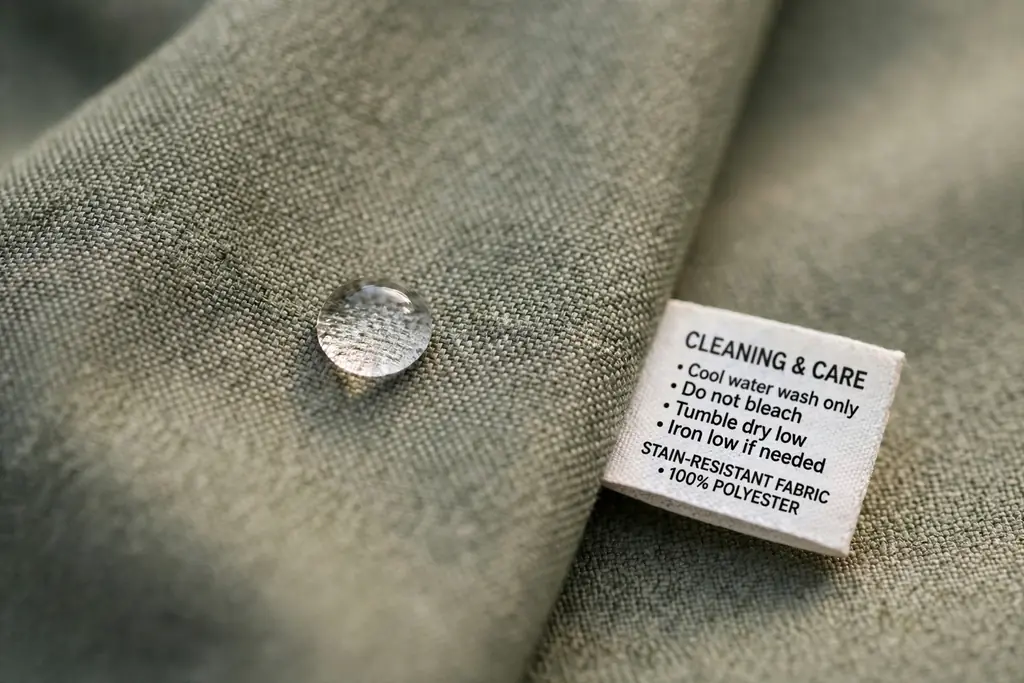
Stain resistance is a separate question from durability, and it matters most where food and drink are involved. Some fabrics are treated to resist spills, while others absorb liquid at once. Place a few drops of water on a sample and watch how fast it soaks in, then blot it and check for a mark. Repeat the test only on samples you own, not on shop display fabric, and test in a hidden corner of the sample first.
Read the cleaning code on every fabric you consider. Common codes tell you whether to clean with water based cleaners, solvent based cleaners, or vacuum only, and whether the fabric should be handled by a professional cleaner. Choose a code you can live with: a vacuum only fabric is a poor match for a house with young children, while a fabric you can spot clean at home suits daily meals. Keep the code with your fabric record, since it guides every later clean.
6. Choose a Weave and Texture for Comfort
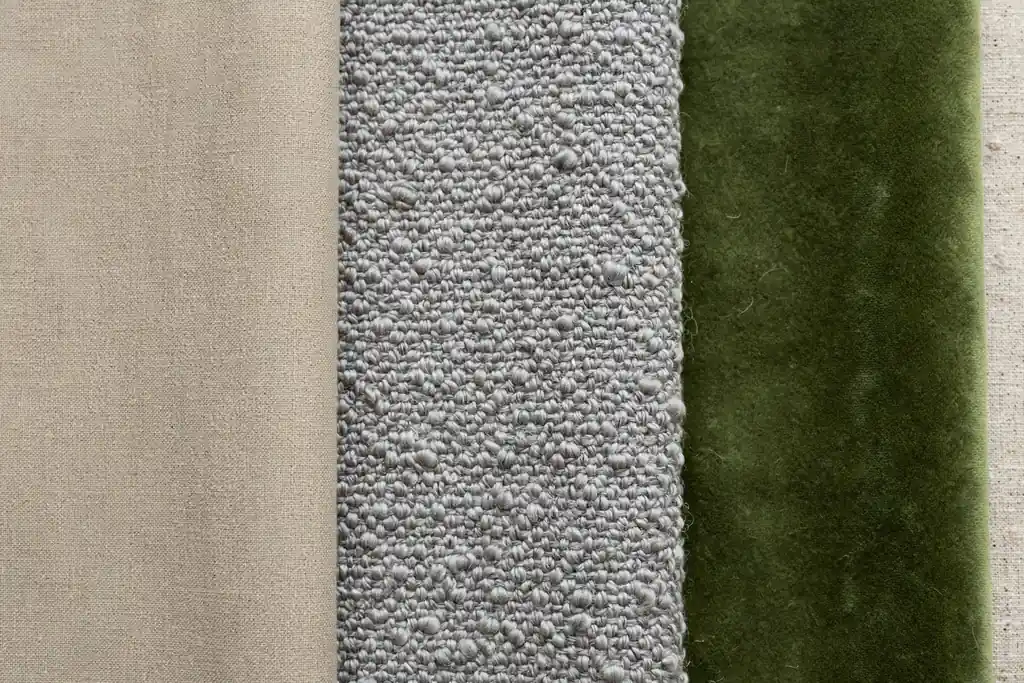
Weave and texture decide how a dining chair feels during a long meal, so sit on samples when you can and touch them in the shop. A smooth, tight weave feels cool and neat, a nubby or slubbed weave feels more relaxed, and a pile fabric such as velvet feels soft but shows pressure marks where people sit. Think about bare arms and legs as well as clothes: a rough texture can feel uncomfortable against skin in warm weather.
Texture also changes how a fabric looks in the room. A matte weave reads as calm and quiet, while a fabric with sheen catches light and draws attention to the chairs. In a small dining room, a simple texture keeps the chairs from competing with the table and wall color. In a large room, a stronger texture can give plain chairs more presence. Choose texture for comfort first, then check that it suits the room.
7. Pick a Color That Works With Your Table and Room
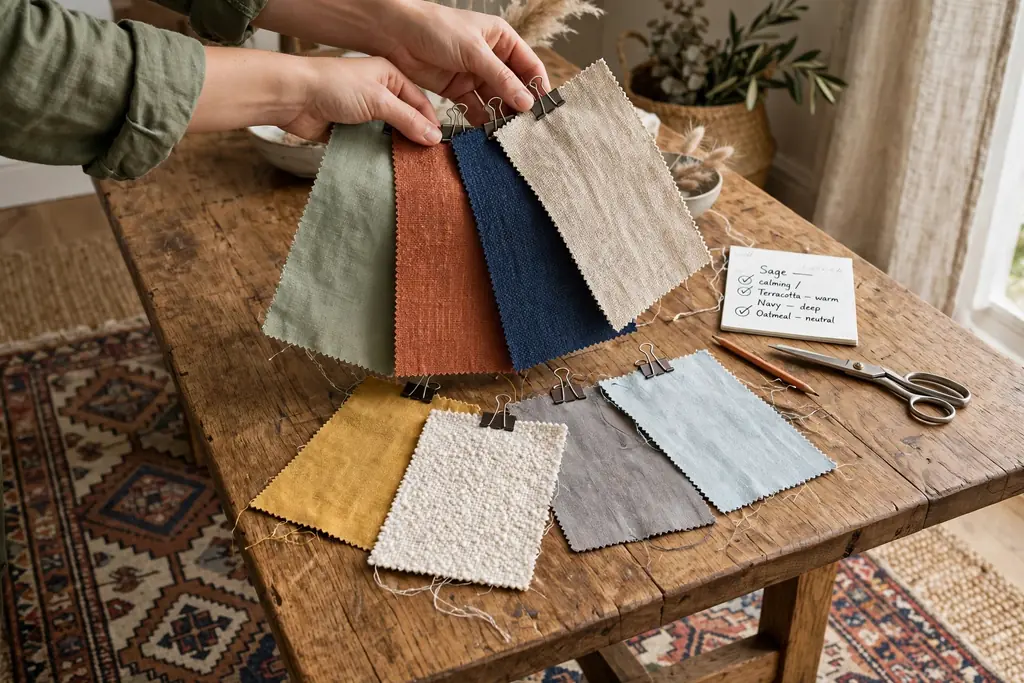
Choose color with the table and room in view, not from a sample alone. Hold each sample against the table wood or painted finish, the floor, and the wall color, and look at it in daylight and in evening light. A color that matches the table exactly can look flat, while a color that repeats a tone from a rug, curtains, or artwork ties the chairs into the room. For table styling ideas that pair with new chair fabric, see these fall table decor ideas.
Think about marks as well as looks. Very pale fabrics show food marks fastest, while very dark fabrics show dust and pet hair. A mid tone, or a fabric with a slight mix of tones, often hides everyday marks better than a single flat color. If you love a pale fabric, plan for washable seat covers or a fabric with a stain resistant finish, and keep the rest of the room calm so the chairs can carry the light color.
8. Decide on Pattern Scale and Placement
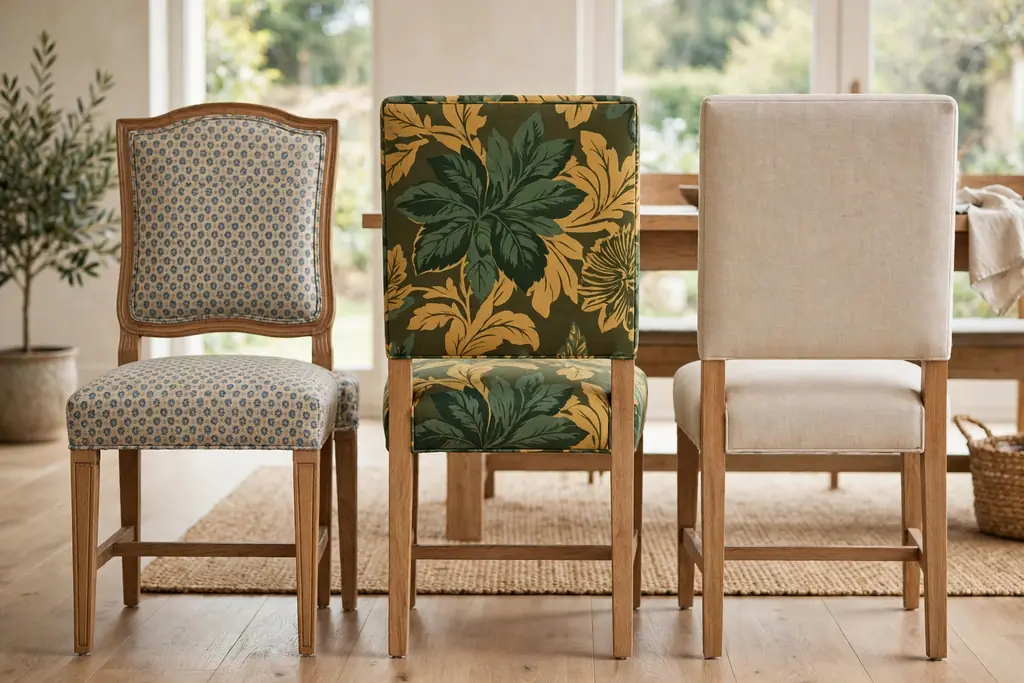
Pattern scale matters as much as the pattern itself. A small, tight pattern reads almost like a solid from across the room and suits a busy dining space, while a large pattern makes a clear statement and suits a single pair of chairs or a room with plain walls. Check how the pattern repeats on the sample, and ask how the repeat will fall on a seat and a back, since a motif cut in half at the seat edge can look unfinished.
Place the pattern with care. A striped fabric needs stripes that run straight on every chair, and a floral or geometric print needs its main shapes centered on the back rather than cut off at the edge. If the room already has a patterned rug or curtains, use a plain fabric or a small pattern on the chairs, so the room does not carry two competing patterns. For seasonal table ideas that sit well beside patterned or plain chairs, see these spring table decor ideas.
9. Check Light, Sun, and Fading
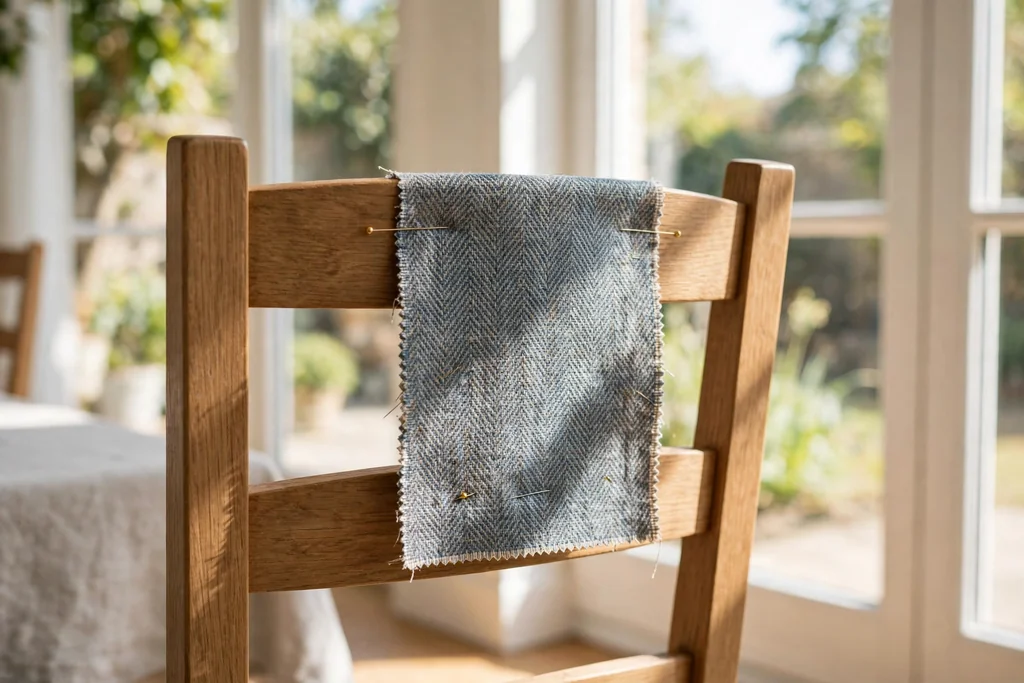
Light changes fabric color more than most people expect, so test samples in the room where the chairs will sit. Tape or pin a sample to a chair back and look at it in morning light, midday light, and evening light, and beside the table at mealtimes. A fabric that looks warm in a shop can look grey or pink at home, depending on the bulbs and the wall color.
Sun is a separate concern. Chairs beside a large window or glass door get direct sun for part of the day, and some fabrics fade faster than others in that spot. If your chairs sit in sun, ask about fade resistance and consider a fabric known for holding color, or plan to move the chairs or use window coverings during the strongest sun. A sample left on a sunny chair for a week gives a useful early sign of fading before you commit to full yardage.
10. Order Samples and Test Them at Home
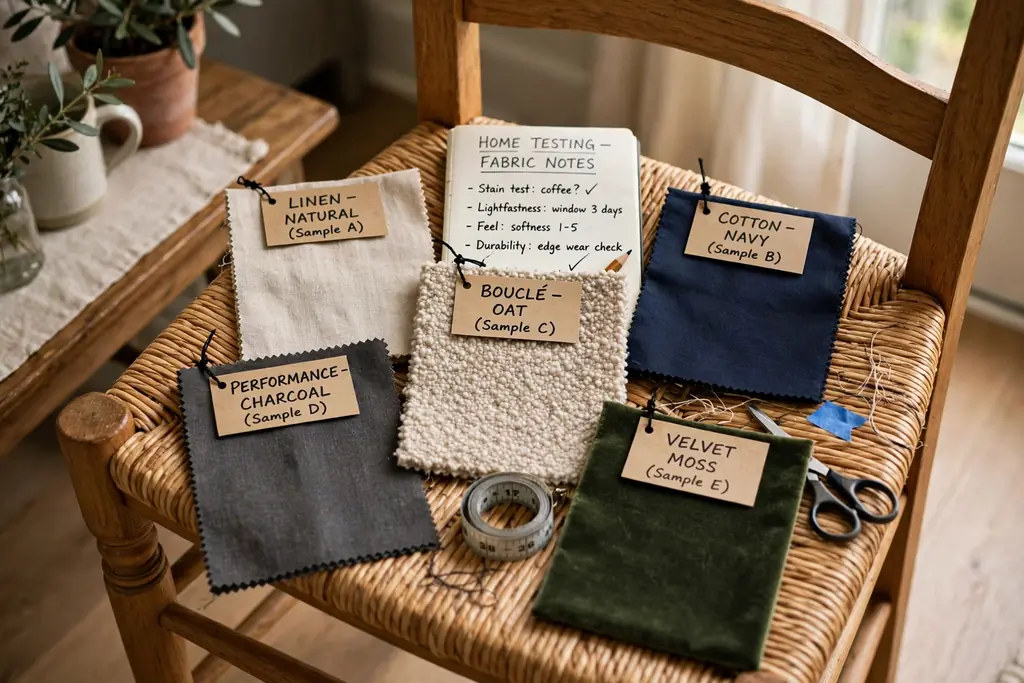
Order samples of every fabric on your shortlist, and test them at home before buying yardage. A sample lets you check color in your light, feel the texture, test stain resistance, and see the pattern scale on a real chair. Order samples in the exact color you plan to buy, since a fabric can look quite different in a neighboring shade.
Live with the samples for a few days. Sit a sample on a chair seat during a meal, spill a little water on a corner you own, and fold it to see how it creases. Photograph each sample beside the table with its name written on the back, so you can compare them later without mixing them up. Narrow the list to two or three fabrics, then order larger samples of those, if available, before making the final choice.
11. Calculate Yardage and Allow for Pattern Matching
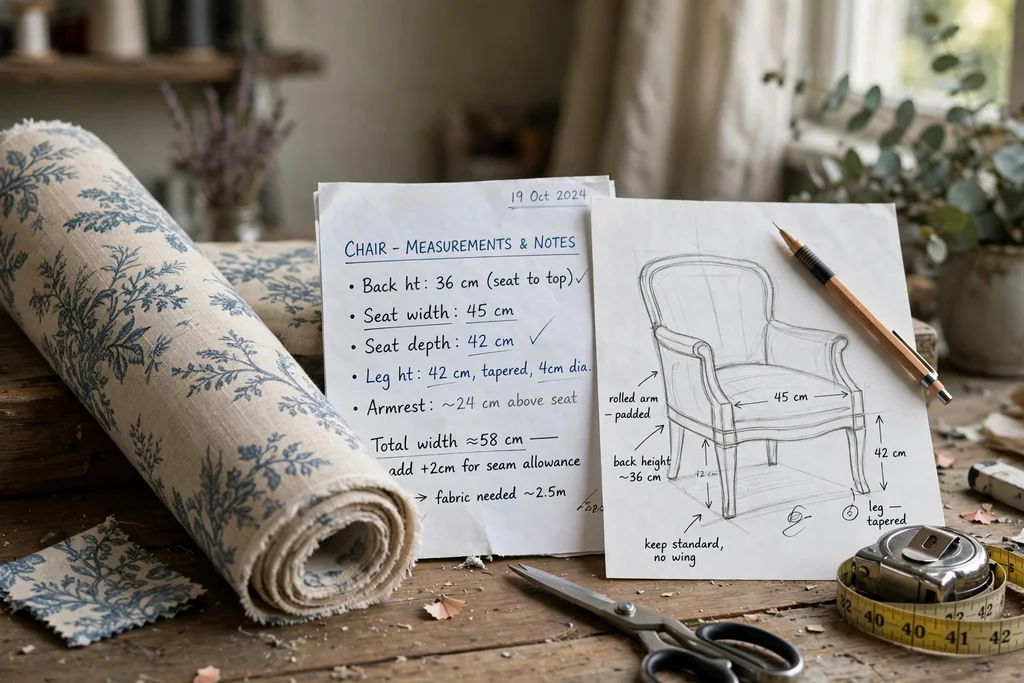
Yardage depends on the chair shape, the fabric width, and whether the pattern needs matching. Measure the seat, back, and any arms, and add extra for seams, tucking, and pattern repeats. A plain fabric needs less yardage than a large pattern, since patterned pieces must be cut so the design lines up across the seat and back. Ask the supplier or upholsterer to confirm the total before you order, and keep the chair measurements with the order.
Buy a little extra fabric beyond the calculated total. Extra yardage covers a cutting mistake, lets you match a pattern on a later chair, and gives you material for a future repair or a matching cushion. A single extra length is often enough for a set of dining chairs, and it costs far less than reordering a fabric that has sold out. Store the extra fabric clean, dry, and labeled with the fabric name and color.
12. Plan the Seat, Back, and Piping Details
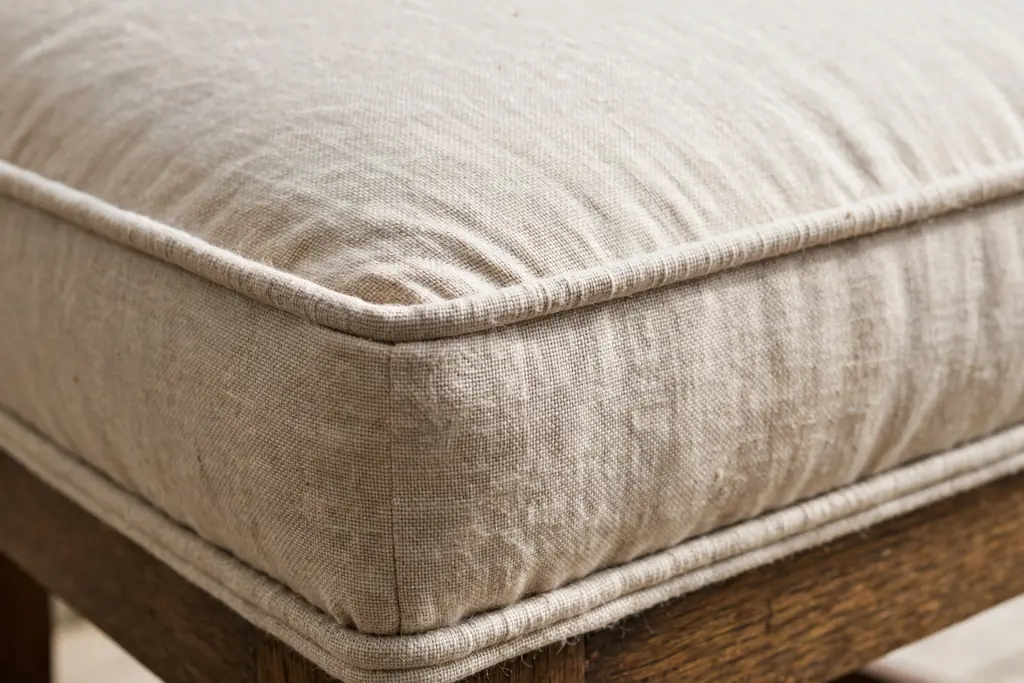
Small details change how fabric looks once it is fitted, so plan them before the fabric is cut. Decide whether the seat will have piping around the edge, a plain seam, or a tailored welt, and whether the back will be plain, buttoned, or panelled. Piping in the same fabric gives a neat, finished edge, while piping in a contrasting color draws attention to the chair shape and suits a bolder room.
Check the seat shape as well. A shaped or curved seat needs fabric cut and fitted with care, and a loose cushion needs fabric on both sides, since the underside shows when the cushion is lifted. Note whether the chair legs, frame, or wood trim will stay visible, since the fabric must meet the wood cleanly at those edges. Share these details with the upholsterer in writing, with a photo of each chair, so the finished chairs match the plan.
13. Set a Budget and Compare Options
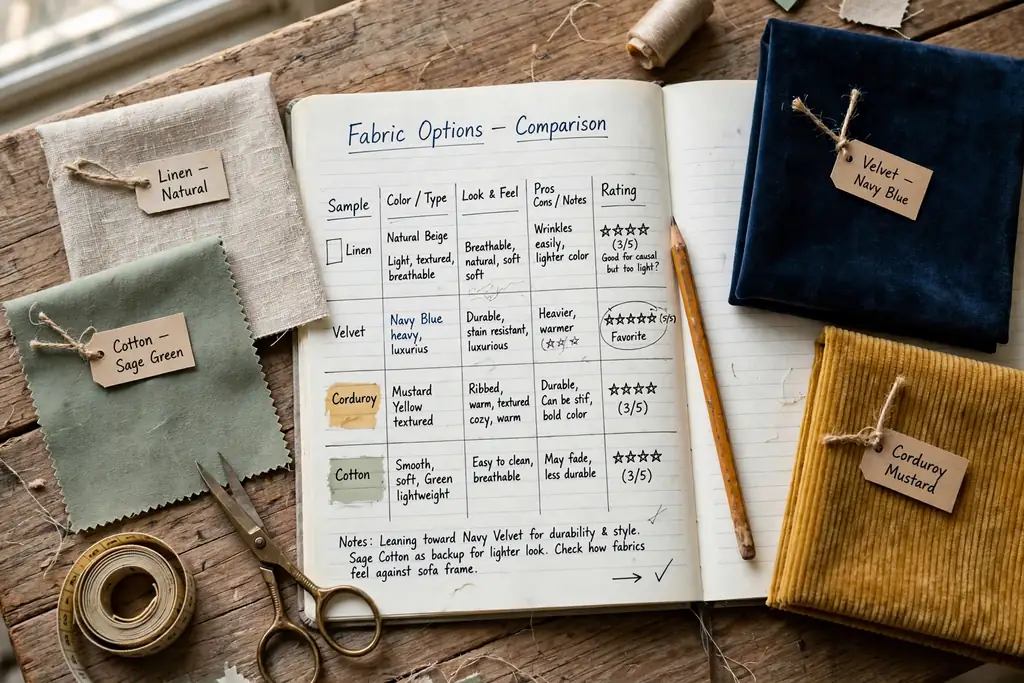
Set a budget before you fall in love with one fabric, and compare options within it. Fabric cost varies with fiber, weave, pattern, and finish, and the total job also includes padding, labor, and any extra yardage for pattern matching. Ask for a clear breakdown, so you can see what the fabric itself costs and what the fitting costs, rather than comparing two totals that include different work.
Compare like with like. A cheaper fabric that needs replacing sooner can cost more over time than a durable fabric that lasts through years of daily meals. Weigh durability, cleaning, and color together, and keep at least one fallback fabric on your list in case the first choice sells out or arrives in a different shade. A shortlist of two or three fabrics, each with a known cost, makes the final decision calmer and easier to defend.
14. Make the Final Choice and Keep a Fabric Record
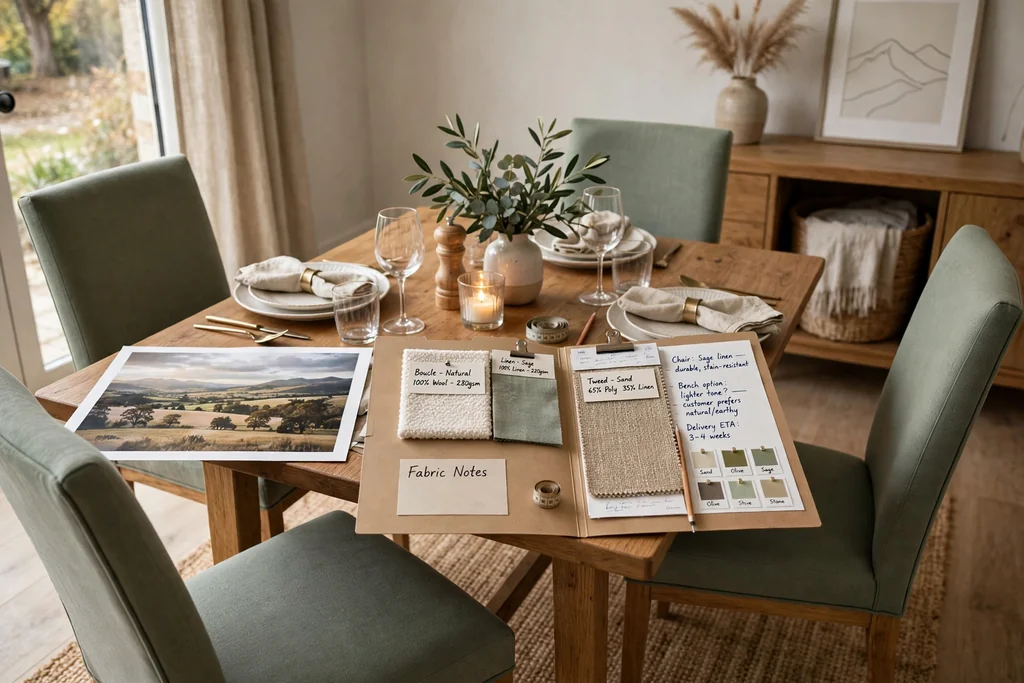
Make the final choice by testing your shortlist against the notes from earlier steps, not by looks alone. Check each fabric against daily use, stain resistance, cleaning code, color in your room light, and pattern scale, and choose the one that passes the most tests. If two fabrics tie, choose the one with the easier cleaning code and the better durability rating, since those matter most on dining chairs used every day.
Once you decide, keep a full fabric record. Write down the fabric name, maker, color name and code, fiber content, cleaning code, yardage ordered, and supplier, and keep a small cutting of the fabric with the record. Photograph the finished chairs and store the record with household papers, so a future repair, an extra chair, or a matching cushion uses the same fabric. A clear record turns a good choice into one you can repeat later.
Conclusion
Choosing upholstery fabric for dining room chairs comes down to measuring the chairs, matching durability and stain resistance to daily use, and testing samples in your own room light. Color and pattern should work with the table and the room, while cleaning codes, yardage, and small details such as piping shape the final result. Order samples, live with them for a few days, and keep a record of the fabric you choose, so the chairs look right at the table and hold up to everyday meals.
FAQs
What is the best fabric for dining room chairs used every day?
The best fabric for dining room chairs used every day is a durable upholstery fabric with good stain resistance and a cleaning code you can manage at home. Look for a tight weave, a higher abrasion rating, and a finish or fiber that resists spills, then test a sample with water and food marks before ordering. A mid tone often hides everyday marks better than a very pale or very dark solid.
How do I test upholstery fabric samples at home?
Test upholstery fabric samples at home by placing each sample on a chair seat in your dining room light and living with it for a few days. Check the color in daylight and evening light, feel the texture, fold it to see creasing, and test a corner you own with a few drops of water, blotting at once. Photograph each sample beside the table with its name on the back, so you can compare them fairly.
Should dining chair fabric be stain resistant?
Yes, dining chair fabric should be stain resistant if the chairs are used for daily meals, especially with children or pets. A stain resistant finish or a fiber that resists spills gives you time to blot a mark before it sets, and it makes routine cleaning simpler. If you choose a fabric without stain resistance, plan for washable covers or professional cleaning, and accept that marks will need faster attention.
What cleaning code should I look for on dining chair fabric?
Look for a cleaning code that matches how you are willing to clean the chairs, and check it before you buy. Water based cleaning codes suit most homes, since spills can be spot cleaned at home, while solvent based or vacuum only codes suit chairs used less often or cleaned by a professional. Keep the code with your fabric record, and follow it for every clean, since the wrong cleaner can set a stain or damage the fabric.
How much fabric do I need to reupholster dining chairs?
The amount of fabric you need to reupholster dining chairs depends on the chair shape, the fabric width, and whether the pattern needs matching. Measure the seat, back, and arms, add extra for seams and pattern repeats, and ask the supplier or upholsterer to confirm the total before ordering. Buy a little extra beyond the calculated total, so a cutting mistake or a future repair does not leave you short.
Can I mix different fabrics on dining chairs?
Yes, you can mix different fabrics on dining chairs, as long as the mix looks planned rather than random. Use one fabric on the two end chairs and another on the side chairs, or use a pattern on the back and a plain fabric on the seat, and repeat at least one color across both fabrics. Keep the durability and cleaning codes similar across the set, so all the chairs age and clean in the same way.