
To style and care for white couch slipcovers, fit the cover snugly, smooth wrinkles, and layer natural pillows and a soft throw, then keep it fresh with prompt spot care, regular washing on a gentle cycle, and air drying before refitting. This guide covers measuring, fitting, styling, washing, stain care, and seasonal swaps step by step.
A white slipcover can make a living room feel bright and calm, but it also shows every wrinkle, spill, and pet hair. The answer is a routine, not constant fussing: a good fit, a small styling palette, and a simple wash cycle you actually follow. Work through the steps in order, from measuring and fitting to styling and care, and the sofa will look relaxed and clean on an ordinary day, not only on wash day. For warm accent ideas that pair well with a white base, see these fall living room decor ideas.
Key Takeaways
- Measure the sofa and check the slipcover size before fitting, so the cover sits snugly instead of bagging or pulling.
- Choose a white shade that suits the room light, and keep the styling palette to two or three natural tones.
- Fit the cover from the back to the front, tuck excess fabric into crevices, and smooth wrinkles by hand.
- Style with pillows and a throw that add texture, and keep one accent color repeated at least twice.
- Deal with spills promptly, wash on a gentle cycle when the care label allows, and air dry before refitting.
- Rotate cushions, protect the sofa from strong direct sun, and swap accents by season rather than replacing the slipcover.
Supplies You May Need
- A measuring tape for sofa width, seat depth, back height, and arm width
- A spare set of pillow covers in natural tones, so the sofa can be restyled while covers are in the wash
- A soft lint roller and a clean, light colored cloth for spot care
- A laundry bag for ties, if the slipcover has loose ties or a separate cushion cover set
- A place to air dry the slipcover flat or on a line, away from direct heat
1. Measure the Sofa Before Choosing a Slipcover
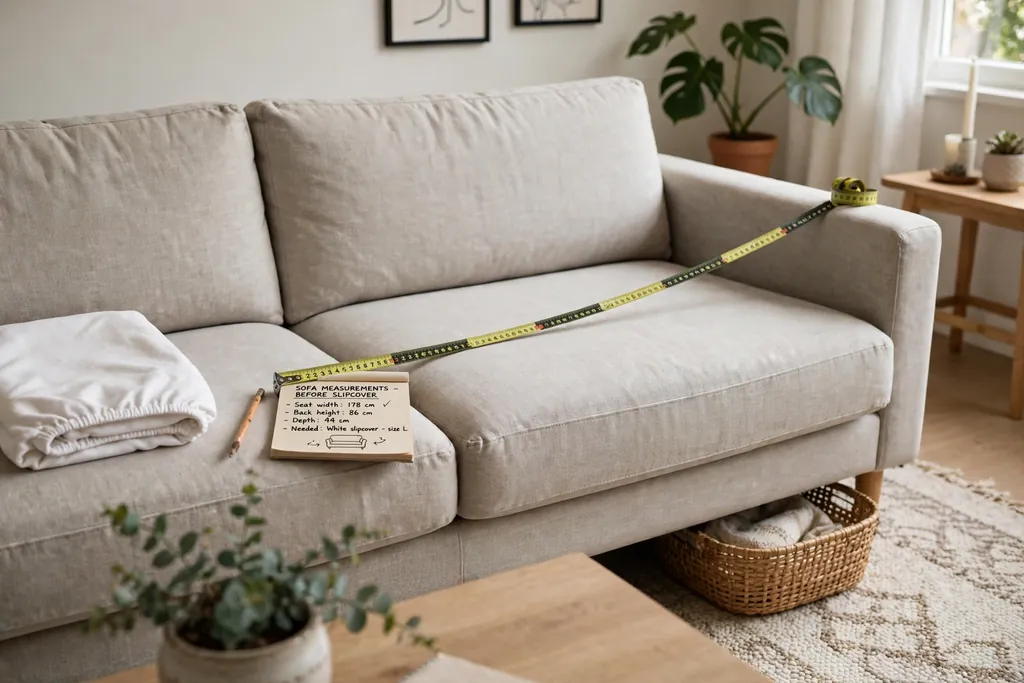
Measure the sofa before you buy or refit a slipcover, because a cover made for a different sofa shape will never sit well, however carefully you tuck it. Measure the overall width from outer arm to outer arm, the seat depth from the front edge to the back cushion, the back height from the seat to the top of the back, and the arm height and width. Note whether the sofa has a chaise, a corner section, loose back cushions, or a single bench cushion, since each shape needs a different cover pattern.
Write the measurements down and compare them with the size range given for the slipcover. If the sofa falls between two sizes, check how the cover is shaped: a cover with separate cushion covers and elastic or tie details will usually adjust better than a single loose drape. Keep the measurements with the care label, so a second cover can be ordered later without measuring again.
2. Choose a Fabric Weight and Weave for Daily Use
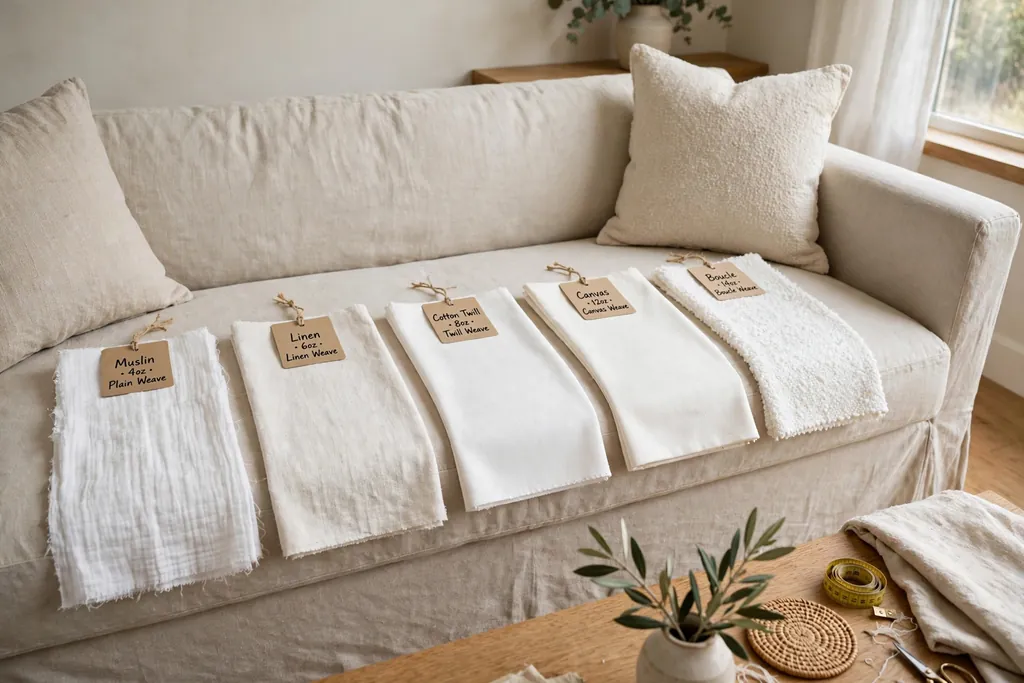
Choose a fabric weight that matches how the sofa is used every day. A light, thin fabric will show the sofa shape underneath and may wrinkle quickly, while a heavier cotton or cotton blend weave usually drapes more smoothly and holds its shape after washing. Feel the fabric if you can, and look for a weave that is tight enough that the sofa color underneath does not show through the white.
Think about who uses the sofa. In a home with children or pets, a washable, midweight fabric that can be laundered often is more practical than a delicate weave that needs special handling. In a low traffic reading room, a softer, lighter weave may be fine. In both cases, the care label matters more than the fabric name: if the label does not allow machine washing, the slipcover will be hard to keep white in daily use.
3. Pick a White Shade That Suits the Room Light
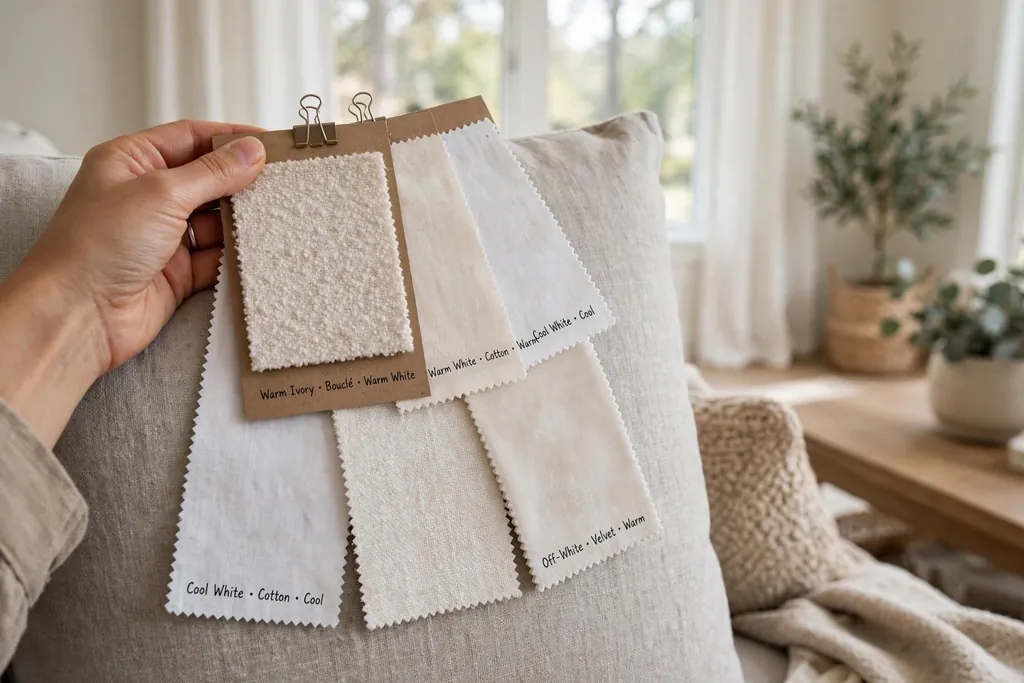
Pick a white shade that suits the room light, not just the shade that looks best in a photo. A bright, cool white can look crisp in a sunny room with pale floors, but it can look stark in a north facing room with little daylight. A warm white, with a soft cream note, usually suits rooms with warm wood, brass, or beige rugs, while a cooler white suits rooms with grey, silver, or pale blue accents.
Hold a fabric swatch against the sofa in daylight and again in evening lamplight, and check it beside the rug, curtains, and wall color. If the white clashes with the wall, the sofa will look grey or yellow by comparison, even when the fabric itself is fine. For help matching the white to the rest of the room, see these living room color schemes, and keep wall and trim whites in the same warm or cool family as the slipcover.
4. Fit the Slipcover From Back to Front
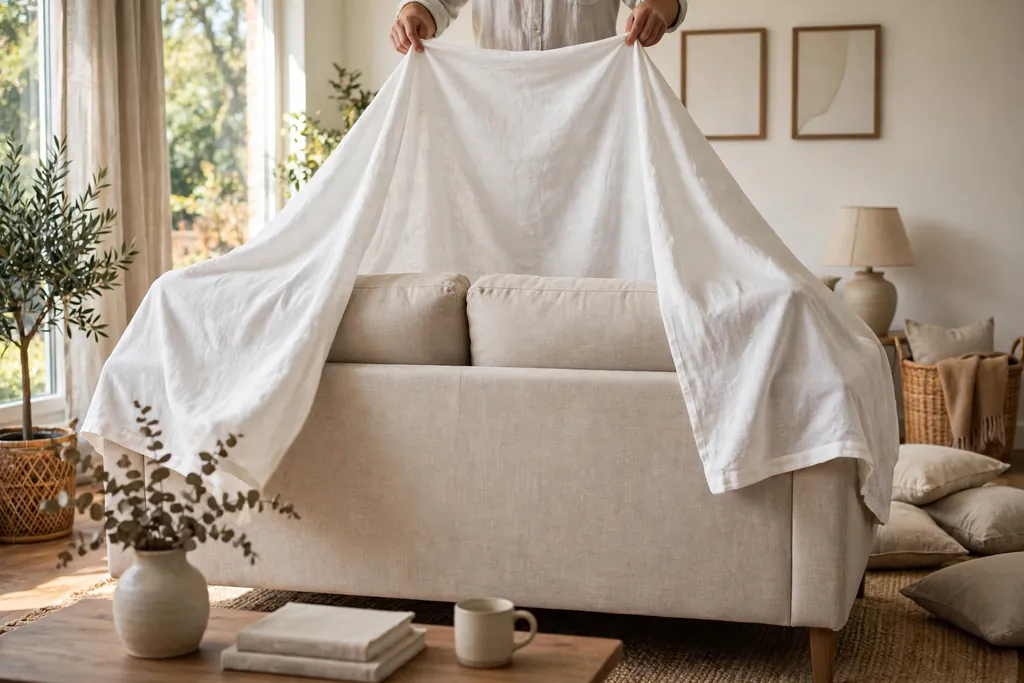
Fit the slipcover starting at the back of the sofa and working toward the front, so the main body of the cover is in place before you shape the seat and arms. Drape the cover over the back, center it so the seams line up with the sofa corners, and pull it down evenly on both sides. Then work the cover over each arm, checking that the arm seams sit on the arm edges rather than sliding toward the seat.
Once the back and arms are placed, smooth the fabric down the front of the sofa and tuck the seat area last. Step back and check both sides from the front: if one side hangs lower, lift and recenter the cover before tucking, rather than pulling one side tight after the other side is already tucked. A centered start saves repeated adjustments later.
5. Tuck, Smooth, and Shape the Cushions
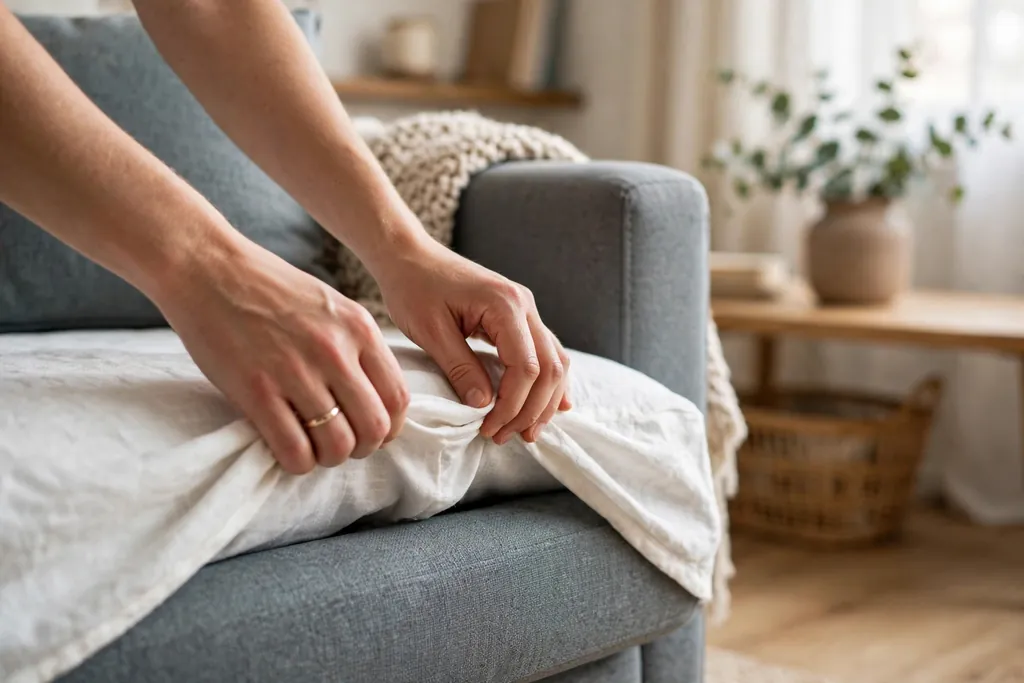
Tuck excess fabric into the crevices between the seat and back, and between the seat and arms, using your hands or a smooth, blunt tool such as a wooden spoon handle. Push the fabric in a little at a time, working from the center outward, so the tuck stays even and does not bunch at one end. The goal is a smooth seat surface with no loose folds that slide out when someone sits down.
Shape each cushion cover separately if the slipcover has them, aligning seams with cushion edges and smoothing wrinkles from the center toward the corners. Sit on each cushion briefly, stand up, and smooth the fabric again: this shows where the cover pulls or bags in real use. A cover that looks smooth when empty but bags badly after sitting may need a firmer cushion underneath or a tighter tuck at the back crevice.
6. Style With Pillows in Natural Tones

Style a white slipcovered sofa with pillows in natural tones, such as linen, oatmeal, sage, soft grey, or warm tan, so the white stays the main color and the pillows add warmth. Start with two larger pillows at the ends, add medium pillows in front of them, and finish with one small accent near the center if the sofa is wide enough. Keep the pillow count low enough that each seat can still be used without moving a pile first.
Repeat one accent color at least twice, for example in a pillow and a throw, or in a pillow and a piece of art nearby, so the arrangement looks planned. Limit strong patterns to one or two pillows, and pair each patterned pillow with a plain one beside it. On a white base, texture matters as much as color: linen, knit, and woven covers each read differently, even in the same tone.
7. Add a Throw Without Hiding the Slipcover

Add a throw for warmth and texture, but keep it from hiding the slipcover you chose the white for. Drape the throw over one arm, fold it across the back at one end, or fold it in thirds and lay it across a seat that is not the main sitting spot. A throw in a natural tone, such as oatmeal, soft grey, or muted green, adds a layer without competing with the white.
Choose a throw weight that suits the season: a light cotton throw for summer evenings, a heavier knit or wool style throw for winter. Keep the throw within reach of the main seat, so it is used rather than folded away as decoration. If the throw keeps sliding off the arm, fold it more narrowly or drape it over the back instead, where it has more fabric to grip.
8. Balance the White Sofa With the Rest of the Room

Balance the white sofa with the rest of the room, so it does not look like a bright island in a darker space. Repeat the white, or a near white, somewhere else in the room, such as in curtains, a lamp shade, or a light rug border. Add one mid tone, such as wood in a coffee table or a woven basket, to ground the seating area, and one darker note, such as a dark frame or a deep green plant pot, so the eye has a resting point.
Check the view from the doorway, since that is how most visitors see the room first. If the sofa looks too bright from there, add a warm toned rug or a wood tray on the coffee table to break up the white at floor level. If the room looks flat, add texture rather than color: a woven basket, a wood frame, and a linen pillow each add interest without changing the palette.
9. Deal With Spills Promptly and Gently
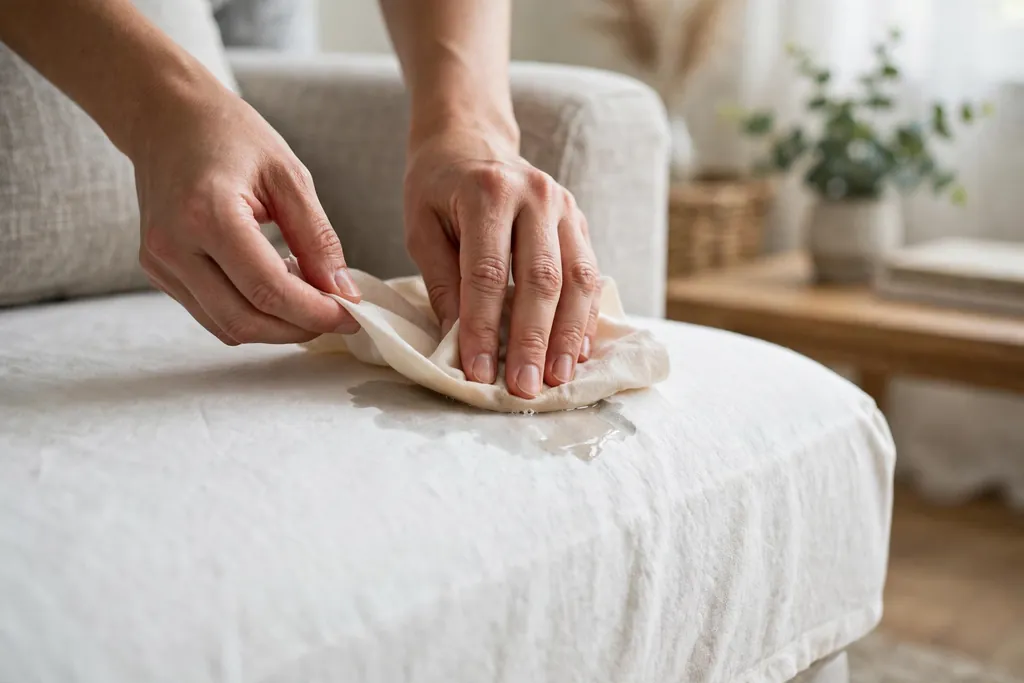
Deal with spills promptly, since a stain that sits on white fabric is harder to shift later. Blot the spill with a clean, light colored cloth, pressing gently rather than rubbing, which can spread the mark and push it deeper into the weave. Work from the outside of the mark toward the center, and change to a clean part of the cloth as the mark lifts.
Check the care label before using any cleaning product, and test anything new on a hidden part of the slipcover first, such as the underside of a cushion cover. Avoid advice that promises a single product will remove every stain: different spills respond differently, and a method that suits one mark may set another. If the mark remains after blotting and a gentle wash, repeat the wash rather than using a stronger treatment without checking the label.
10. Wash the Slipcover on a Gentle Cycle

Wash the slipcover when it starts to look dull or after a spill that blotting did not fully lift, following the care label for water temperature and cycle. In general, a gentle cycle with a mild detergent suits most washable cotton slipcovers, and washing the cover on its own, or with similar light colors, helps keep the white bright. Close any zippers or ties before washing, so they do not catch on other fabric.
Remove the slipcover from the sofa in sections, keeping cushion covers with their cushions, so refitting is straightforward. Shake each piece outside before washing to remove crumbs and pet hair, and check pockets or folds for small items. If the slipcover has a separate skirt or tie set, wash those pieces in a laundry bag so ties do not tangle around other items.
11. Dry and Refit Before the Cover Sets Wrinkled

Air dry the slipcover when the care label allows, since high heat can shrink fabric and make refitting difficult. Lay the cover flat or hang it on a line out of strong direct sun, and refit it while it is still slightly damp if the label allows: a damp cover is easier to smooth and shape, and it dries into the sofa shape with fewer wrinkles. Smooth each section by hand as you fit it, tucking crevices last, as in step 5.
If the cover must be tumble dried, use the lowest heat setting the label allows and remove it promptly, before it is fully dry, so it can be smoothed on the sofa. Check the fit after the first wash and dry: if the cover has shrunk slightly, refit it while damp and let it finish drying on the sofa. Keep a note of the wash setting that worked, so the next wash follows the same routine.
12. Handle Common Marks by Type, Not by Guesswork
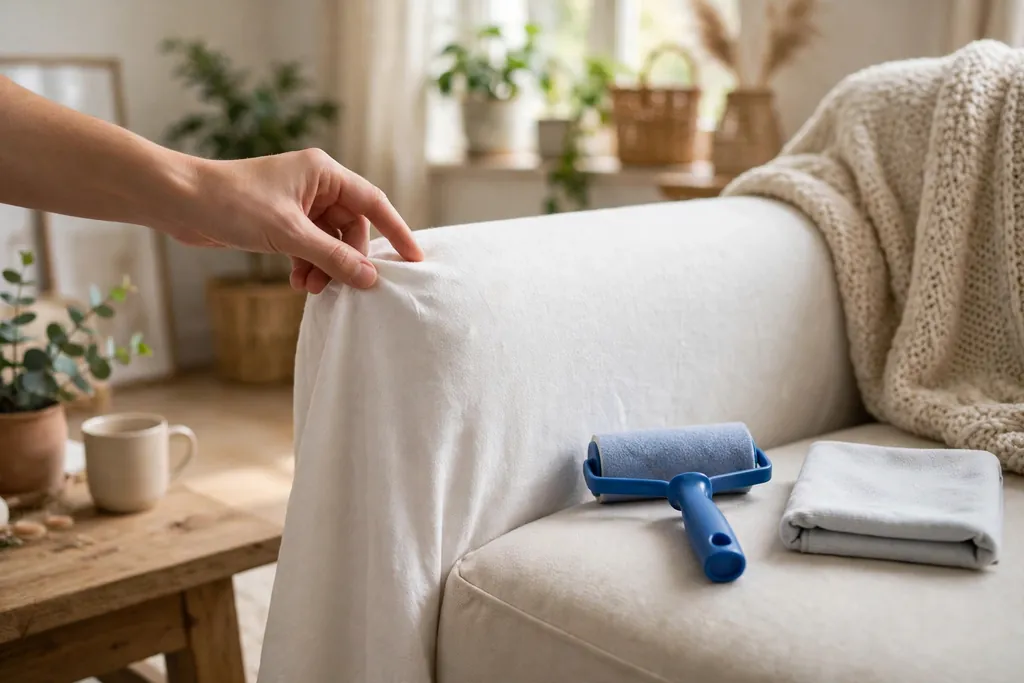
Handle common marks by type, starting with the gentlest method that suits the mark and the fabric. For a food or drink spill, blot first, then wash as in step 10, rather than rubbing the mark while it is still wet. For dust and everyday soil, shake the cover outside and wash on the regular routine, since built up dust dulls white faster than a single spill.
For pet hair, a lint roller or a damp cloth wiped in one direction usually lifts more hair than shaking alone, and washing the cover after a heavy shedding period helps. For marks from shoes or bags on the arm, wipe the arm section with a damp cloth and check whether the mark lifts before washing the whole cover. In every case, check the care label first, and do not mix cleaning methods on the same mark without rinsing and checking the result.
13. Protect the Sofa From Sun, Pets, and Daily Wear

Protect the slipcover from the wear that dulls white fastest: strong direct sun, repeated sitting in the same spot, and pet claws on the same arm. If the sofa sits in strong sun for part of the day, use curtains or a sheer panel during the brightest hours, and rotate seat cushions regularly so one cushion does not fade or flatten faster than the others. Rotate back cushions as well if they are loose, so wear spreads evenly.
Keep a throw on the seat most used by pets, so claws and hair land on a washable layer rather than on the slipcover itself, and trim pet nails on a regular routine. Fluff and rotate pillows weekly, and shake the slipcover sections outside between washes to remove dust. These small habits keep white looking fresh far longer than washing alone, since they slow the wear that washing cannot reverse.
14. Swap Accents by Season and Store the Spare Set Well

Swap accents by season instead of replacing the slipcover, so the white base stays the same while the room changes. In spring and summer, use light linen pillows, a pale throw, and a green plant note. In fall and winter, switch to warmer tones, a heavier knit throw, and a wood or brass accent on the coffee table. Store the off season pillow covers washed, folded, and in a clean, dry place, so the swap takes minutes.
If you keep a second slipcover, store it the same way: washed, fully dry, folded loosely, and out of direct sun, so it does not yellow in storage. Label the storage bag with the sofa measurements from step 1, so the spare can be identified without unfolding it. A white slipcover that is swapped and stored well will look fresh each season, without needing a new cover every year.
Conclusion
A white couch slipcover works best when fitting, styling, and care are treated as one routine. Measure and fit the cover snugly, choose a white shade that suits the room light, and style with natural pillows and a throw that add texture without hiding the white. Keep the cover fresh with prompt spot care, gentle washing, and air drying, protect it from strong sun and daily wear, and swap accents by season. Follow those steps, and a white sofa can stay bright, relaxed, and comfortable to live with. For more ideas from Dwell Ovell, browse the home page for home decor guides.
FAQs
How do I keep a white couch slipcover looking clean?
A white couch slipcover stays clean with a simple routine: blot spills promptly, shake the cover outside between washes, wash it on a gentle cycle when the care label allows, and air dry it before refitting. Rotate cushions and keep a throw on the most used seat, so wear and marks do not build up in one spot.
Can I wash a white couch slipcover in a washing machine?
Many washable slipcovers can be machine washed, but always check the care label first, since some fabrics need a gentler setting or hand washing. When the label allows machine washing, use a gentle cycle, close zippers and ties, and wash the cover on its own or with similar light colors, then air dry it if the label allows.
How do I fit a white slipcover so it does not look baggy?
Fit the cover from the back to the front, center the seams on the sofa corners, and tuck excess fabric into the crevices between seat and back and between seat and arms. Smooth wrinkles from the center outward, shape each cushion cover separately, and refit the cover while it is still slightly damp after washing, if the label allows, so it dries into shape.
What color pillows go with a white couch slipcover?
Natural tones work best with a white couch slipcover, such as linen, oatmeal, sage, soft grey, and warm tan, with one accent color repeated at least twice in the room. Limit strong patterns to one or two pillows, pair each patterned pillow with a plain one, and use texture, such as linen beside knit, to add interest without adding more color.
How often should I wash a white couch slipcover?
Wash a white couch slipcover when it starts to look dull, after a spill that blotting did not fully lift, or on a regular routine that suits how the sofa is used, such as every few weeks in a busy home and less often in a low traffic room. Shaking the cover outside and spot care between washes will stretch the time between full washes.
How do I stop a white slipcover from yellowing or fading?
A white slipcover is less likely to yellow or fade if it is kept out of strong direct sun during the brightest hours, washed with similar light colors, and stored fully dry and out of sunlight when not in use. Avoid drying it on high heat, rotate cushions so one spot does not fade faster than the rest, and follow the care label for water temperature and drying.