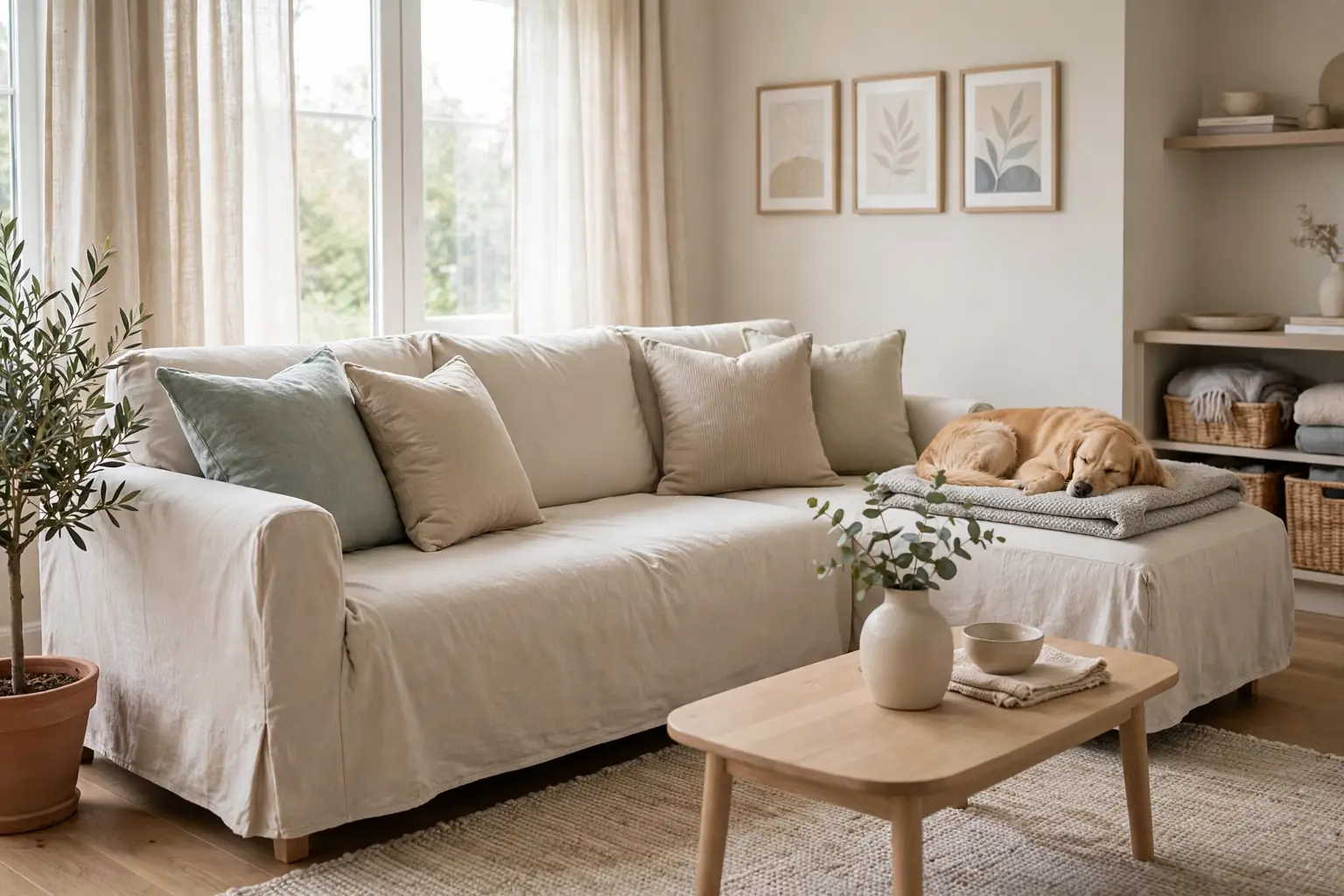
Choose a pet friendly sofa slipcover by starting with a tightly woven, machine washable fabric in a color close to your pet’s coat, then match the fit to your sofa shape and check that cushion, arm, and back pieces stay put when pets jump up. A second washable cover makes laundry day simple and keeps the sofa usable every day.
A slipcover earns its place in a pet home only if it handles real daily use: a dog shaking off rain by the door, a cat kneading the same arm every evening, fur collecting along the seat seams. The right cover protects the sofa underneath, washes without fuss, and goes back on in minutes. The wrong one slides off, shows every hair, and ends up folded in a closet. This guide walks through each choice in order, from measuring the sofa to setting a washing routine, so you can buy once and live with the cover comfortably. For more living room textile ideas, see these fall living room decor ideas.
Key Takeaways
- Start with your pet’s habits, not the color chart: shedding, scratching, muddy paws, and jumping each point to different fabric and fit choices.
- Choose a tightly woven, machine washable fabric, and check the care label before you buy, not after the first wash.
- Measure the sofa, note its arm shape and cushion style, and match the cover type to that shape so it stays in place.
- Pick a color or pattern close to your pet’s coat, or a midtone pattern that breaks up visible fur between washes.
- Protect the spots pets use most: seat cushions, armrests, and the front edge where paws push off.
- Buy a second cover if the budget allows, so one can wash while the other stays on the sofa.
- Set a simple routine: shake out and lint roll daily, wash on a regular cycle, and refit while the fabric is slightly damp if the maker allows it.
What You Need Before You Shop
- A tape measure, plus the sofa’s width, depth, seat height, arm height, and back height written down
- A note of the sofa style: arm shape (rolled, track, or sloped), cushion style (attached or loose), and leg height
- A photo of the sofa from the front and the side, for comparing fit guides
- A note of your pet’s habits: shedding level, scratching spots, muddy paw frequency, and favorite sleeping place on the sofa
- A fabric swatch or a spare cushion cover to test fur pickup and washing, if you can get one
- A lint roller, a rubber grooming mitt, or a damp cloth for daily fur removal
- A laundry plan: washer capacity, drying space, and how often you are willing to wash the cover
1. Measure Your Sofa and Note Its Shape
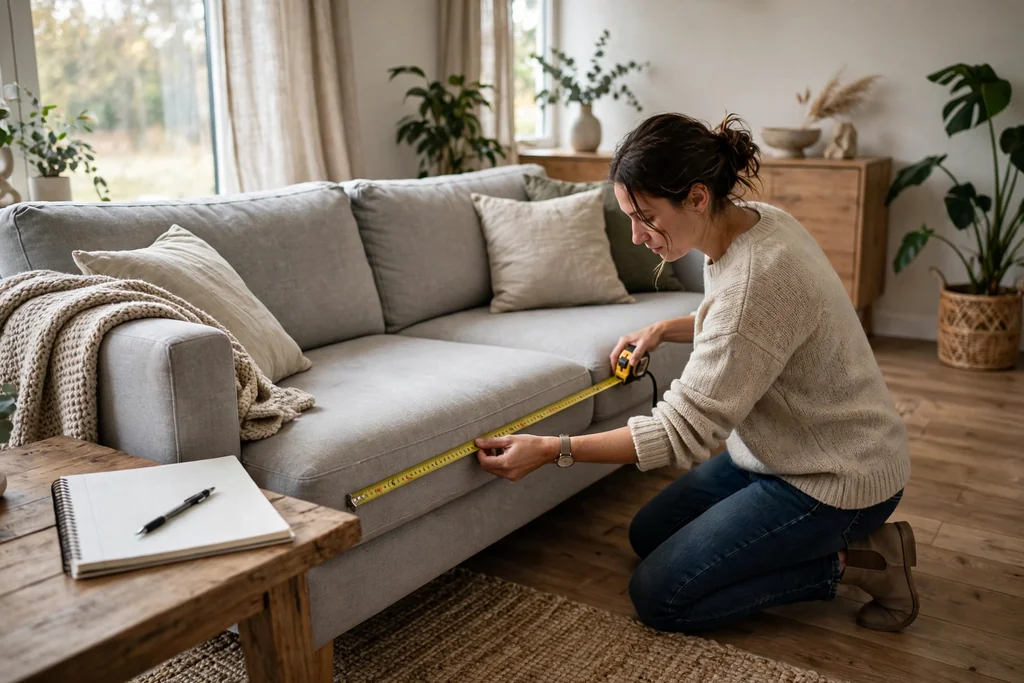
Measure the sofa before you look at covers, since fit decides whether a cover stays put or slides off every time a pet jumps up. Record the full width from outer arm to outer arm, the depth from the front edge to the back, the seat height from the floor, and the height of the arms and the back. Note whether the arms are rolled, flat track arms, or sloped, and whether the cushions are loose or attached, since each shape suits a different cover style.
Write the numbers down and keep them with you while you shop, and compare them with the maker’s size chart rather than guessing from a name like “three seater,” which varies widely. Measure twice at the widest points, including any feet or legs that add height, and check doorways and hall turns too if the cover ships in a bulky box. A cover sized from real measurements fits closer, wrinkles less, and gives claws fewer loose folds to catch.
2. Start with Your Pet’s Habits
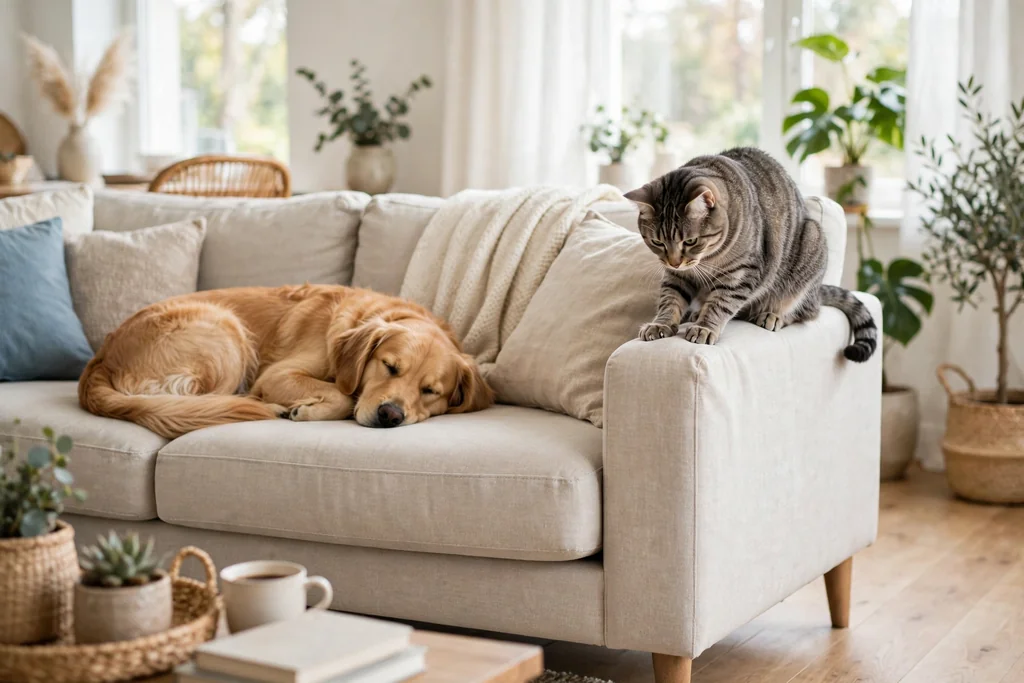
Watch how your pet actually uses the sofa for a few days before choosing, since habits matter more than breed labels. A heavy shedder calls for a color that hides fur and a fabric that releases it in the wash. A cat that kneads or scratches needs a tight weave with no loose loops to snag. A dog that comes in muddy needs a cover you can remove and wash often, plus a washable throw for the seat during wet weather.
Note where your pet sleeps, which arm gets kneaded, and whether paws push off the front edge when jumping down. Those spots take the most wear, so they deserve the strongest fabric and the best coverage. If more than one pet uses the sofa, plan for the heaviest wearer: the cover that handles the scratcher and the shedder together will also handle a calm napper with ease.
3. Choose a Durable, Tightly Woven Fabric
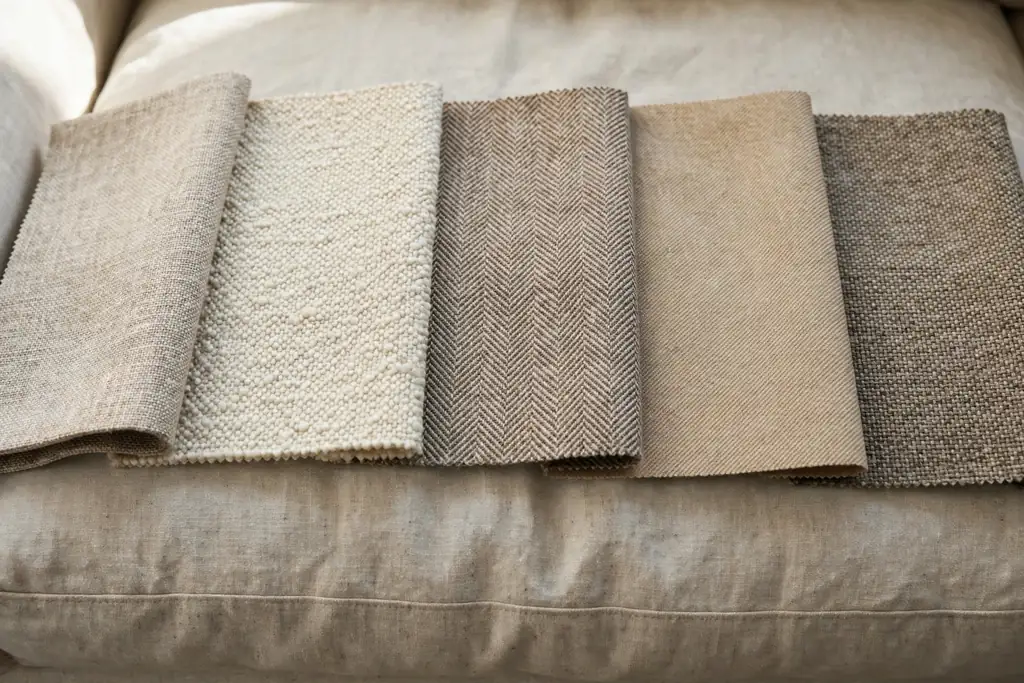
Fabric weave matters more than thickness alone. A tightly woven fabric gives claws less to catch on and keeps fur sitting on the surface, where a lint roller or vacuum can lift it, instead of working deep into the fibers. Look for a smooth, close weave and run your hand across it: if you can easily lift a thread with a fingernail, a cat’s claw will find it too.
Avoid loose weaves, open knits, and fabrics with long loops or raised piles that trap fur and snag. A plain weave in a sturdy cotton blend, a canvas weight cotton, or a smooth synthetic blend is a practical starting point for most pet homes. Ask for a swatch when possible and test it at home: rub it with a dry cloth, press a piece of tape on it to mimic fur pickup, and wash it once before committing to a full cover.
4. Put Washability First
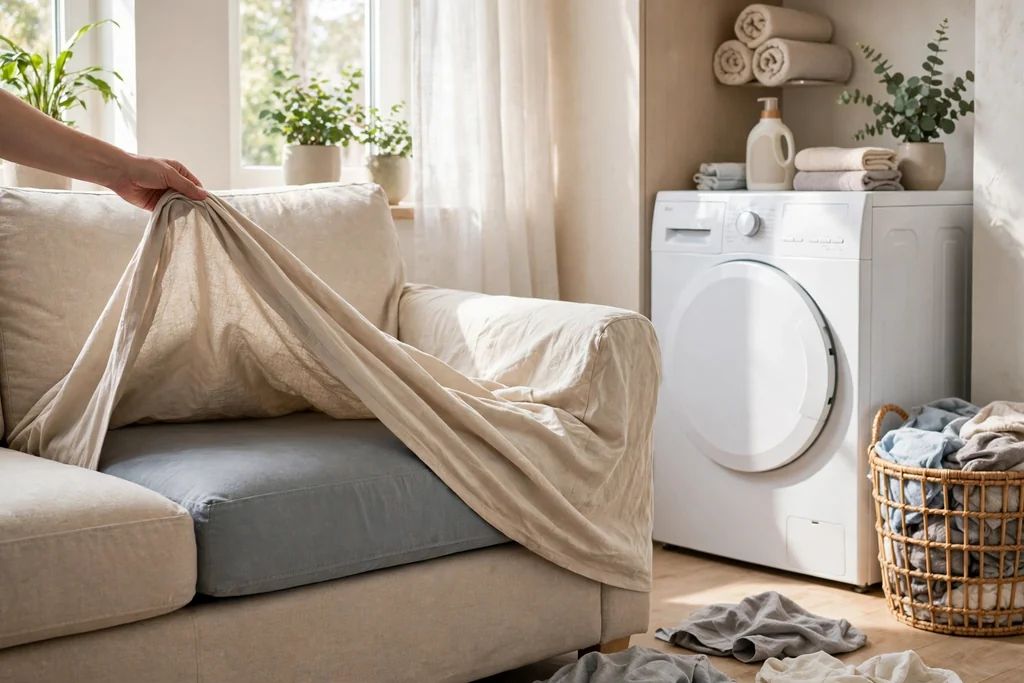
A pet slipcover that cannot go through the wash regularly will not last in a pet home, no matter how good it looks on day one. Check the care label before you buy: machine washable, a normal wash temperature your machine can reach, and a drying method you can actually use. If the label calls for dry cleaning only, or for line drying you have no room for, the cover will spend more time waiting to be cleaned than on the sofa.
Think about the full laundry cycle, not just the wash. A cover that fits your washer without cramming will clean better and wear more slowly than one you have to force in. Check whether the fabric shrinks on first wash, whether colors hold after repeated washes, and whether the cover can go back on while slightly damp, which often makes fitting easier. If the maker allows it, wash a new cover once before first use so any early shrinkage happens before you fit it.
5. Check the Fit: Loose, Relaxed, or Tailored
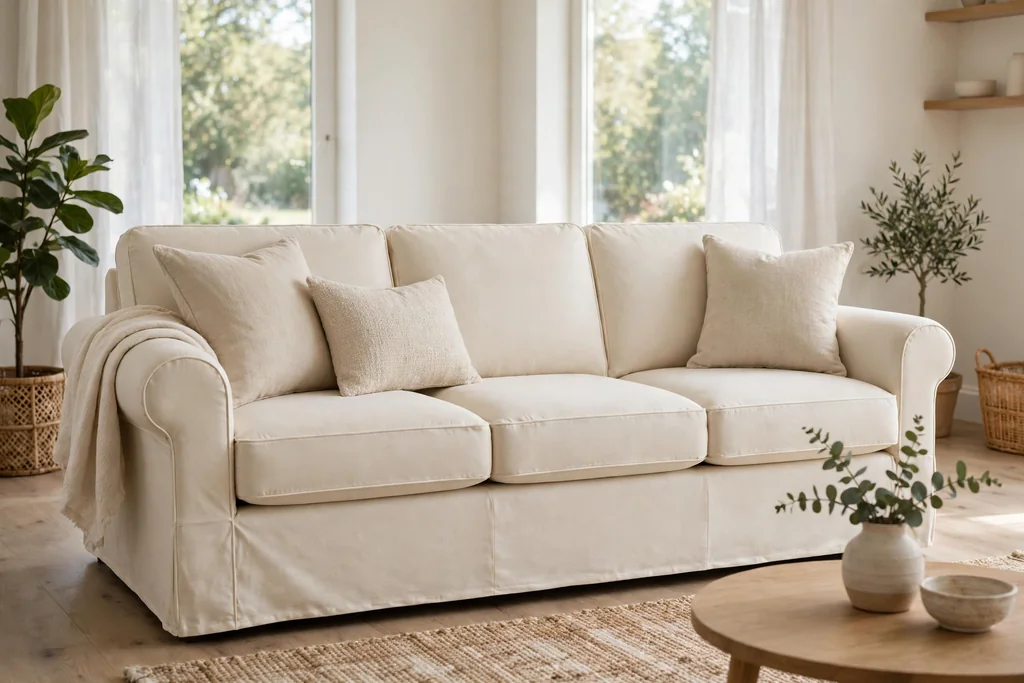
Slipcovers come in loose, relaxed, and tailored fits, and each behaves differently with pets. A loose cover drapes softly and is easy to remove, but it can bunch under a jumping dog and needs frequent straightening. A relaxed fit follows the sofa shape more closely with some softness at the seams, which suits most family rooms. A tailored fit looks neat and stays put best, but it demands accurate measurements and a sofa shape the maker supports.
Match the fit to your sofa and your patience for daily tidying. If your pet launches onto the sofa from the floor, a closer fit with elastic edges, ties, or tuck-in flaps will hold its shape better. If you like to change covers with the seasons, a relaxed fit is faster to swap. Whichever fit you pick, check how the cover handles the seat cushions: separate cushion covers fit better and wash more easily than one large piece stretched over the whole seat.
6. Pick Colors and Patterns That Hide Pet Hair
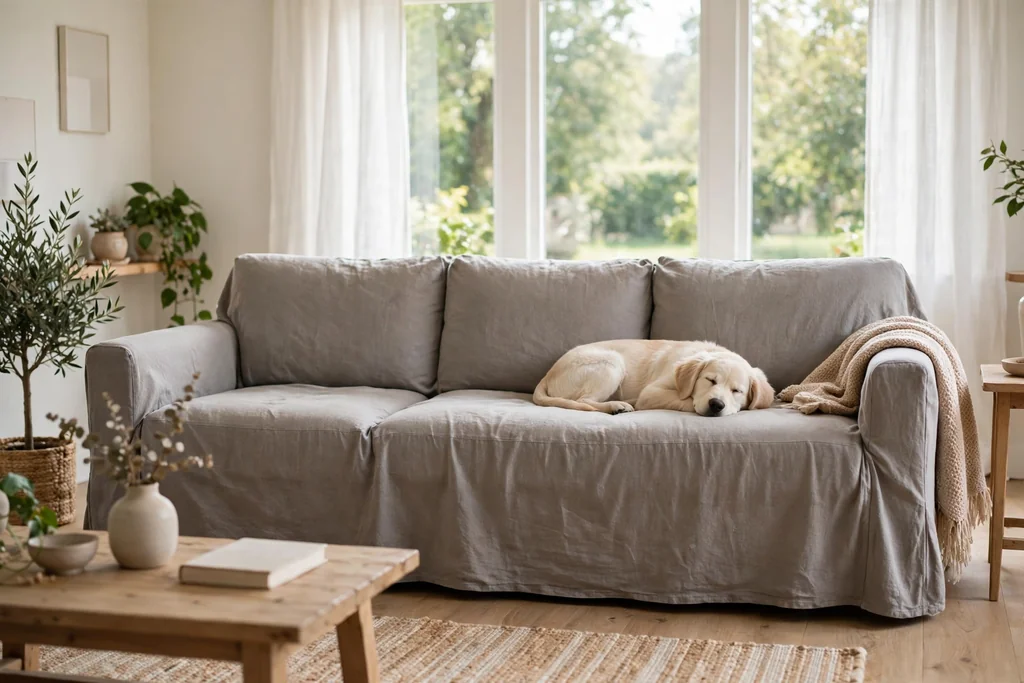
Color is a practical choice in a pet home, not just a style choice. A cover close to your pet’s coat color will show far less fur between washes than a high contrast color: cream covers show dark fur quickly, and charcoal covers show light fur just as fast. If you have pets of several colors, a midtone warm gray, taupe, or muted green is a forgiving middle ground.
Patterns help too. A small, low contrast pattern, such as a subtle check, a fine stripe, or a tone on tone print, breaks up the outline of fur and light marks better than a flat solid color. Keep the pattern quiet enough that it still suits the room, and repeat the cover color somewhere else, such as a throw or a cushion, so the sofa links to the rest of the space. Avoid very pale solids if your pet sheds heavily, and avoid very dark solids if your pet is light colored.
7. Look for Claw Resistance and Repair-Friendly Details
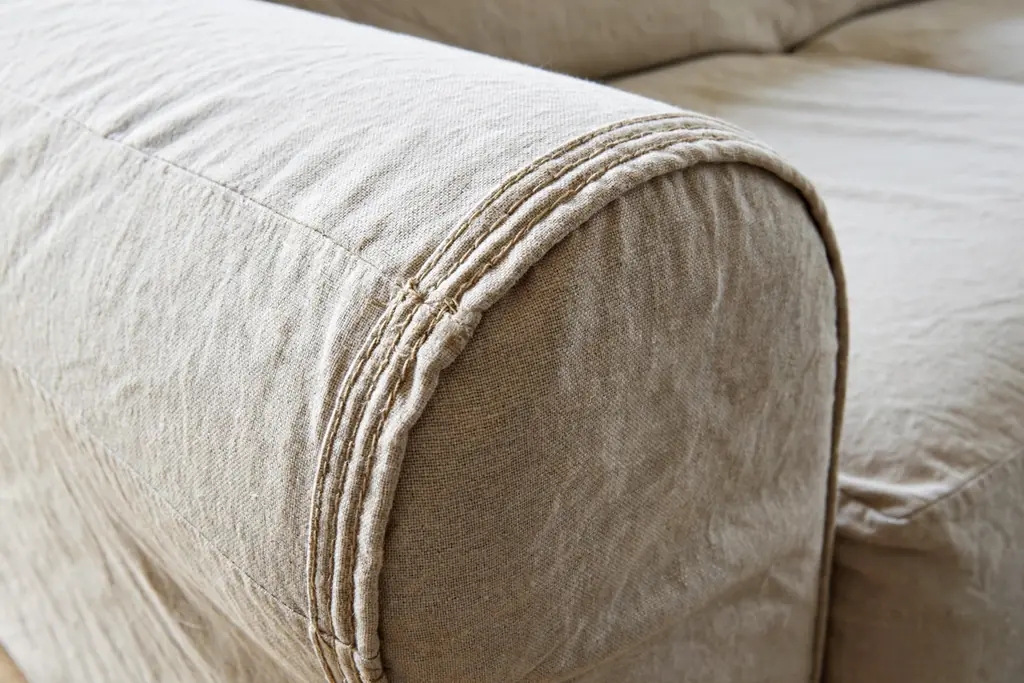
No fabric is fully claw proof, so look for details that reduce damage and make repairs simple. A tight weave, reinforced seams at the arms and seat edges, and double stitched stress points all help a cover last longer under kneading and scratching. Covers with separate pieces for arms, back, and cushions are easier to repair or replace one section at a time than a single piece cover.
Check the seams before you buy: pull gently at an arm seam and a seat seam to see whether stitching holds firm and fabric puckers evenly. Look for covers sold with spare fabric or matching repair patches, and keep a needle and matching thread at home for quick seam fixes. If your cat scratches one arm repeatedly, a washable arm cap or a folded throw over that arm can take the wear instead of the cover itself, and it is far cheaper to replace.
8. Protect Cushions, Arms, and Backs Separately
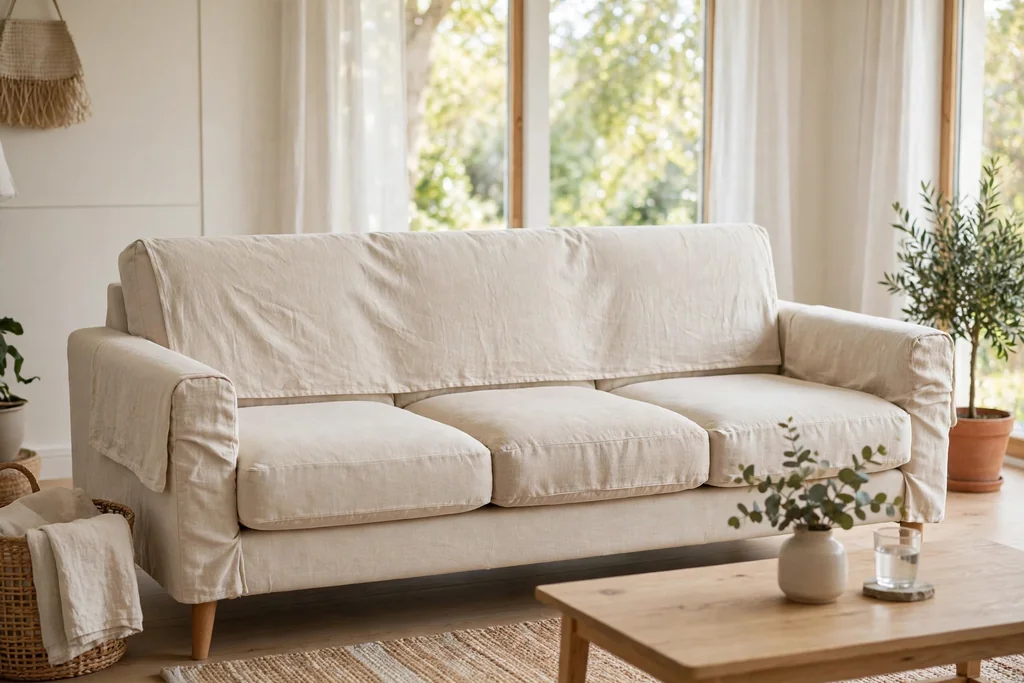
Pets wear out a sofa unevenly, so think of the cover as separate zones rather than one sheet. Seat cushions take weight, fur, and moisture. Arms take kneading, scratching, and leaning. The back takes fur where pets rest their heads, and the front edge takes pressure from paws pushing off. A cover system with separate cushion covers, arm covers, and a back panel lets you wash the dirtiest piece without stripping the whole sofa.
When you fit the cover, tuck fabric firmly into the creases between cushions and arms, and check the fit after a pet has used the sofa a few times, since fabric settles. Add foam inserts or non-slip pads under the seat cover if it slides, and use the cover’s ties or elastic hems as the maker directs rather than leaving them loose. Pay attention to the front edge in particular: a cover that pulls tight there will not ride up when a dog jumps down.
9. Test Comfort for People and Pets
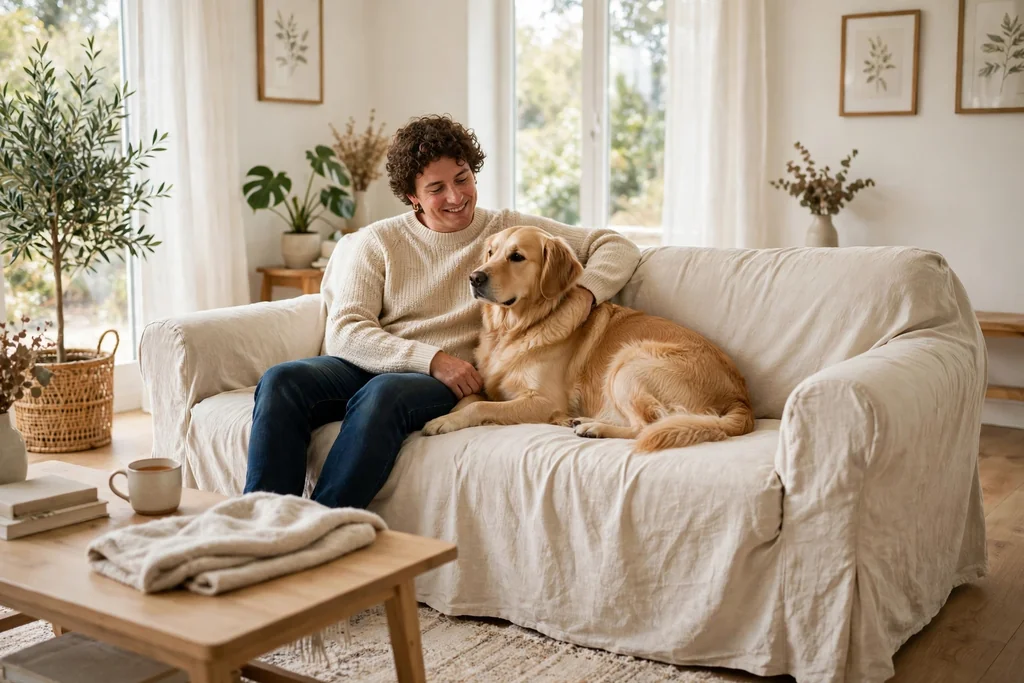
A cover that protects the sofa but feels stiff, slippery, or noisy will not stay on the sofa for long, since both people and pets will avoid it. Sit on the covered sofa yourself, lean back, and shift position a few times: the fabric should stay in place, breathe in warm weather, and not slide you forward off the seat. Watch your pet too: if a dog slips on a smooth cover when jumping up, a slightly textured weave or a non-slip base layer may suit better.
Check the cover in the seasons you live with. A heavy canvas that feels fine in winter can feel hot in summer, while a light cotton that suits summer may feel thin under a large dog in winter. If your home runs warm, favor a breathable weave and a lighter color that does not hold heat. Comfort is what keeps the cover in daily use, and a cover in daily use protects the sofa far better than a heavy cover folded away.
10. Plan for Layers: Throws and Washable Toppers
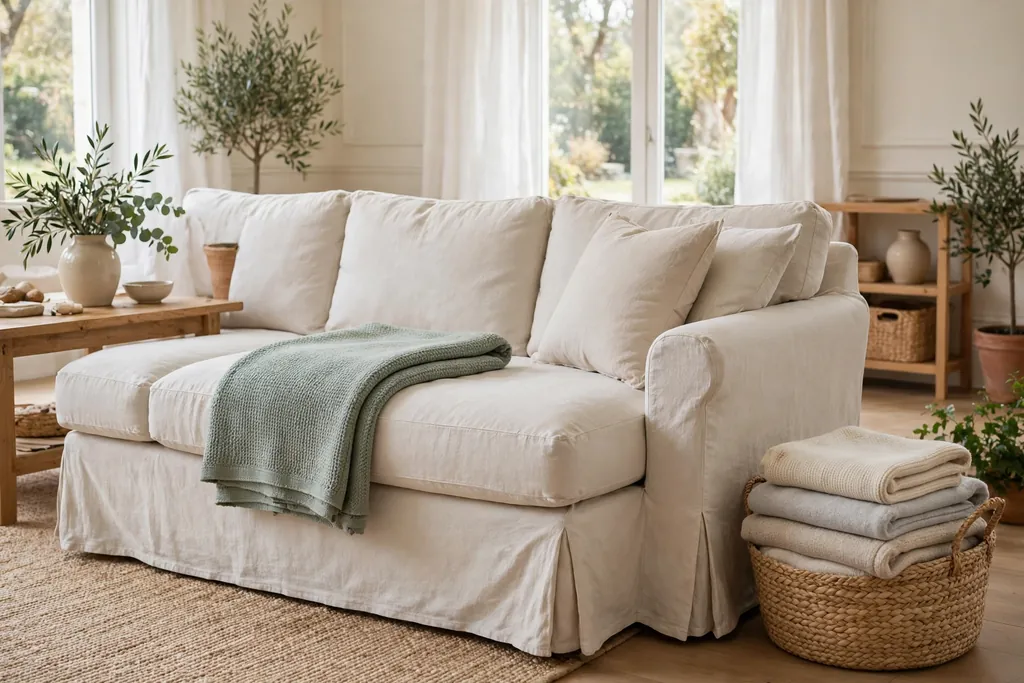
Layers are the simplest way to extend a slipcover’s life in a pet home. A washable throw over the seat or the favorite sleeping spot takes the daily fur and dirt, and it can go in the wash midweek while the main cover stays on. A second throw on the arm your cat kneads protects the seam underneath. Layers also let you change the room’s look without buying a new cover.
Keep layers light and washable, and fix them so they do not slide: tuck the throw into the seat crease, use a throw with a textured underside, or fold it over the back and seat in one piece. Too many layers can trap heat and fur between them, so use one or two at a time and wash them on a regular cycle. Choose throws in colors that match or repeat the cover color, so the sofa still looks planned rather than piled up.
11. Check Fastenings, Ties, and Non-Slip Backing
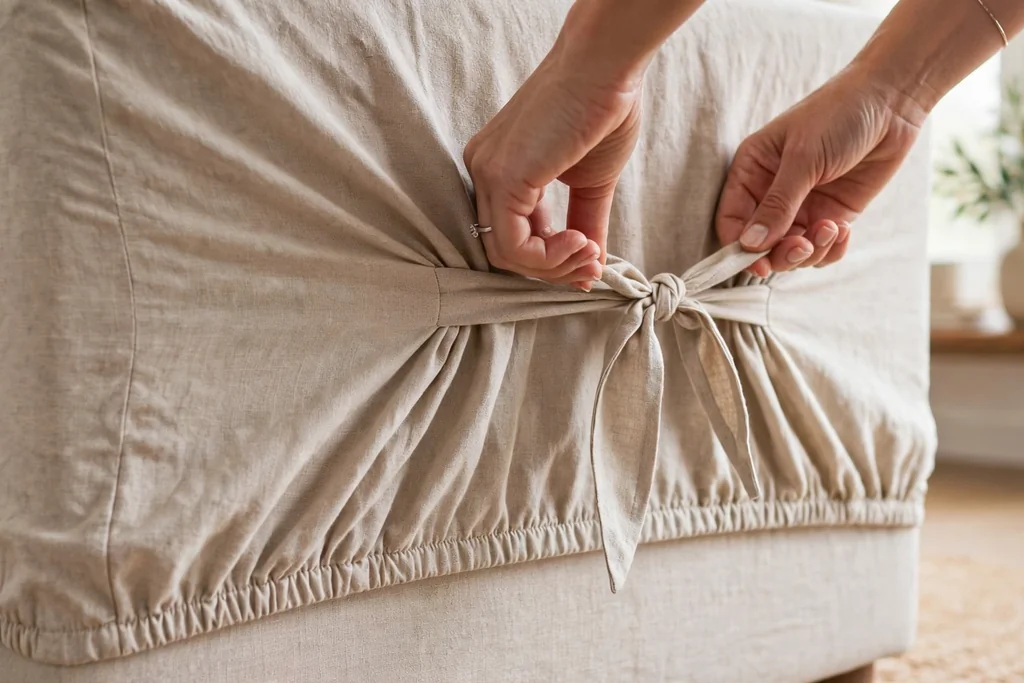
Fastenings decide whether a cover survives a week of pets or needs refitting every evening. Look for elastic hems that grip the sofa base, ties that anchor the cover at the back or under the seat, tuck-in flaps that hold fabric in the creases, and zippers on cushion covers that close smoothly without catching fabric. Test each fastening before you rely on it: tie the ties, tuck the flaps, and sit down firmly to see what moves.
Non-slip backing or a separate non-slip pad under the seat cover helps on smooth sofa frames and leather bases, where fabric tends to travel. Avoid fastenings with small buttons, beads, or dangling ties within a pet’s reach, since chewing pets may pull them loose. If a tie comes undone often, re-tie it under the sofa frame or behind a cushion where paws cannot reach it, and check fastenings each time you refit after washing.
12. Think About Seasonal Swaps and a Spare Cover
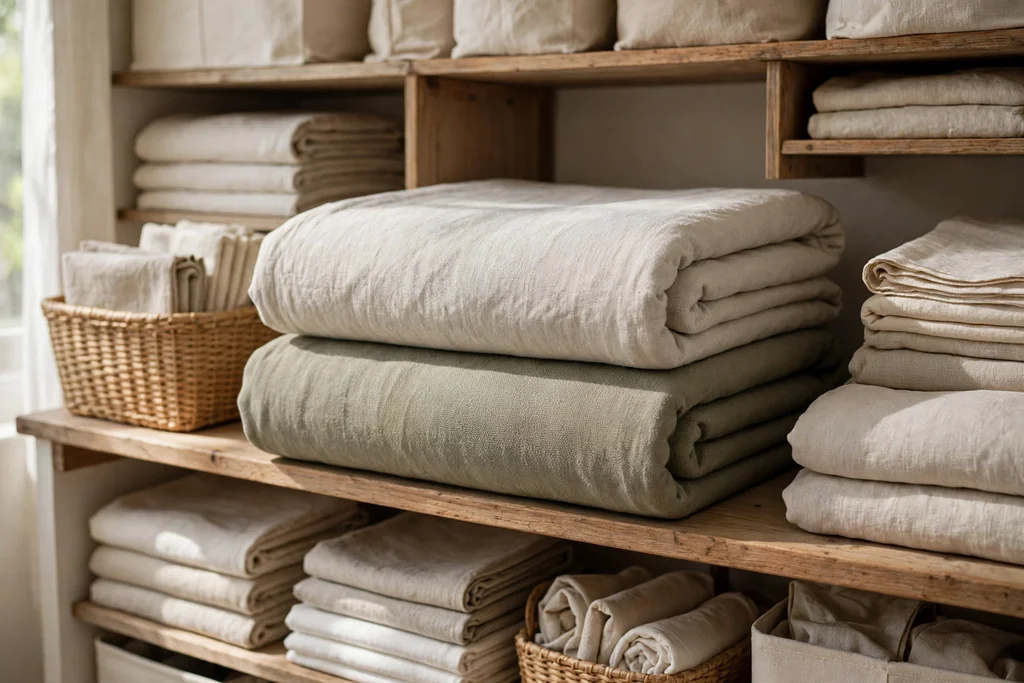
A second cover is one of the most useful purchases for a pet home. With a spare, one cover can be in the wash while the other is on the sofa, so the sofa is never left bare on laundry day. A spare also covers accidents: if a cover tears or stains badly, the sofa stays protected while you repair or replace it. If a full second cover is too much, a spare set of cushion covers plus a washable throw gives most of the same protection.
Seasonal swaps work well too. A lighter, breathable cover suits summer shedding and warm rooms, while a slightly heavier cover suits winter, when pets spend more time indoors and muddy paws are common. Store the off-season cover washed, fully dry, and folded in a breathable bag, and check it for damp or odors before refitting. Label the bag with the sofa it fits, since covers for different sofas look alike once folded.
13. Set a Care Routine Before You Buy
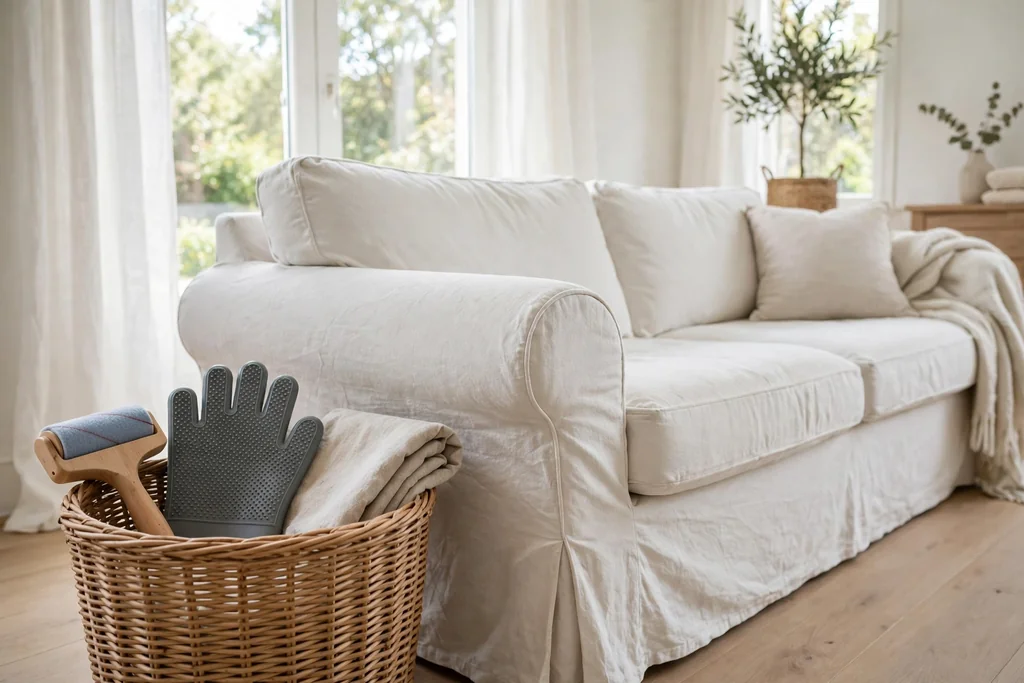
Decide the care routine before you buy, and choose a cover that fits the routine you will actually keep. A realistic routine for most pet homes is: shake the cover or throw outside daily or every other day, lint roll or vacuum the seat and arms, wash the cover on a regular cycle that matches shedding and dirt levels, and refit promptly so the sofa is not left bare. Spot clean muddy paw marks with a damp cloth as soon as you notice them, rather than letting them set.
Keep cleaning supplies close to the sofa: a lint roller, a rubber mitt, and a damp cloth in a nearby basket make daily care a one minute job instead of a chore. Vacuum the sofa underneath the cover when you wash it, since fur and grit collect there too. If the routine you can keep is a wash every two weeks, choose a darker midtone or a pattern that hides fur well between washes, and use a throw on the favorite spot to stretch the interval.
Conclusion
Choosing a pet friendly sofa slipcover comes down to a few practical decisions made in the right order: measure the sofa, watch your pet’s habits, pick a tightly woven washable fabric, match the fit to the sofa shape, and choose a color that hides fur between washes. Add separate protection for cushions, arms, and the front edge, check fastenings and comfort, and keep a spare cover and a simple washing routine. Done this way, a slipcover stops being a cover you fight with and becomes part of everyday living with pets: the sofa stays protected, the room still looks cared for, and laundry day stays simple.
FAQs
Can a slipcover really protect a sofa from pets?
Yes, a well fitted, washable slipcover protects the sofa underneath from fur, dirt, claws, and spills, as long as it covers the seat, arms, and back and is washed regularly. It will not make a sofa indestructible, and heavy scratching can still wear fabric over time, so check seams and high wear spots often.
What fabric is best for a sofa slipcover with dogs?
A tightly woven, machine washable fabric in a sturdy cotton blend or a smooth synthetic blend is a practical choice for most dog homes, since it releases fur in the wash and gives claws less to catch. Test a swatch at home for fur pickup and washing before buying a full cover, and favor separate cushion covers for easy laundering.
What fabric works best for a sofa slipcover with cats?
A smooth, tight weave without loops or raised pile works best for cat homes, since claws catch less easily on flat fabric than on nubby or looped textures. Reinforced seams at the arms and a washable throw over a favorite kneading spot add extra protection where cats work the fabric most.
How often should I wash a pet sofa slipcover?
Wash the cover as often as shedding and dirt demand, which for many pet homes means every one to two weeks, with throws washed more often. Shake the cover out and lint roll between washes, spot clean muddy marks promptly, and always follow the care label for temperature and drying.
Should I buy a loose or tailored slipcover for a pet home?
A relaxed or tailored fit usually works better than a very loose cover in a pet home, since closer fits with elastic hems, ties, or tuck-in flaps stay in place when pets jump up. A loose cover is easier to remove and swap, but it bunches and needs straightening more often.
How do I keep a slipcover from sliding off the sofa?
Tuck fabric firmly into the seat and arm creases, use the cover’s ties and elastic hems as directed, and add a non-slip pad under the seat cover if the sofa base is smooth. Check the fit after washing, refit while the fabric is slightly damp if the maker allows it, and re-tuck after pets have used the sofa a few times.