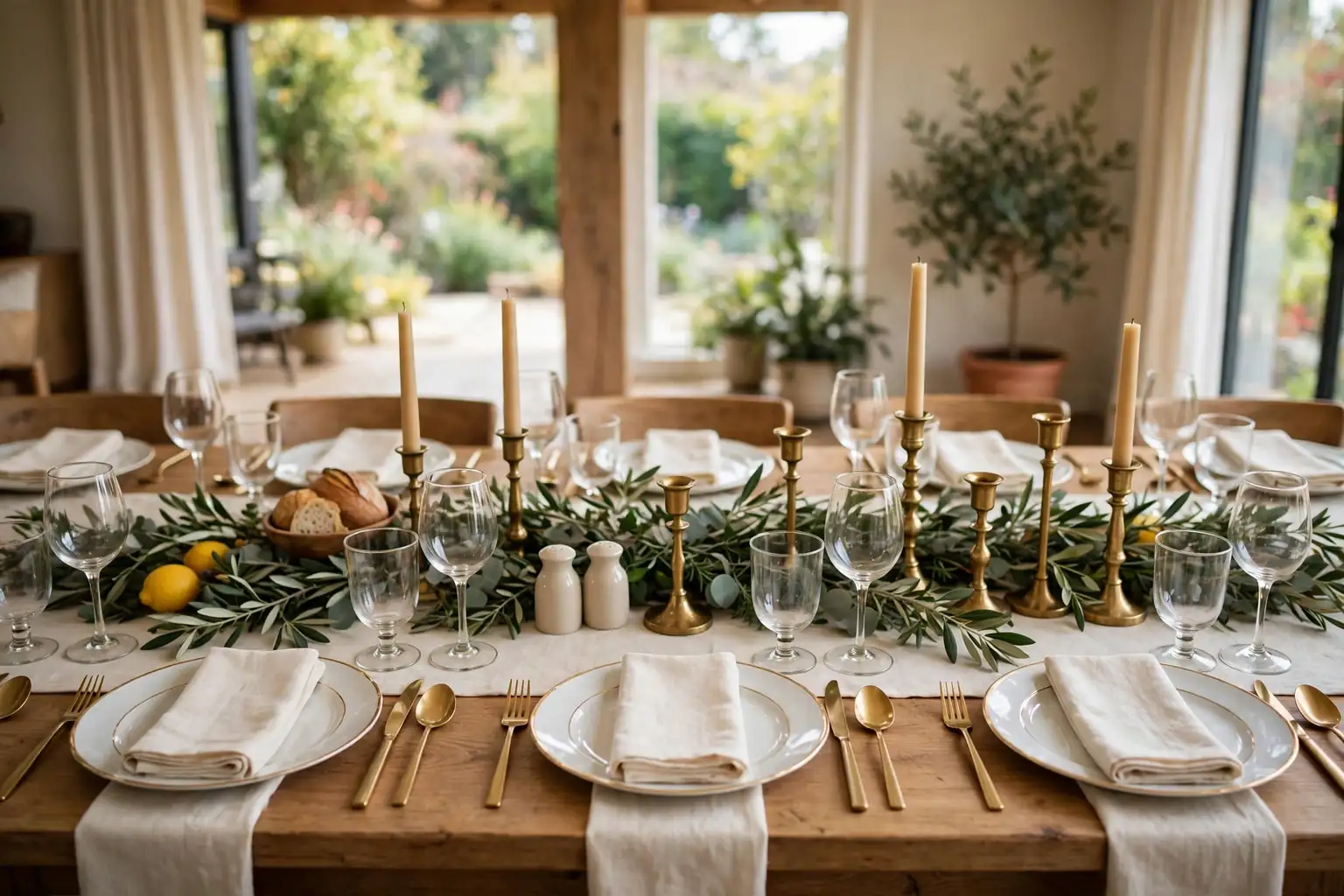
An elegant table setting uses one calm palette, plain plates, matching cutlery, a folded linen napkin, and one low centerpiece, so the table looks refined without extra decor. Start with pieces you already own, repeat one accent at each place, keep the centerpiece below eye level, and leave room for serving dishes and conversation.
Start with the base you already own, such as white plates, plain glasses, and linen or cotton napkins, then add one simple layer at a time. Keep the centerpiece low and narrow, set one clear accent at each place, and repeat the same accent at every seat, so the table reads as calm and planned. For a warmer seasonal version of these settings, see the fall table decor guide, and for a holiday version, browse the Christmas table setting ideas.
Key Takeaways
- Pick one calm palette first, then repeat it in napkins, candles, and one centerpiece accent.
- Keep the centerpiece low and narrow, so guests can see across the table and serving dishes still fit.
- Start with plates, glasses, and napkins you already own, then add one or two refined layers.
- Set one clear accent at each place, such as a fold, a sprig, a ribbon, or a place card, and keep the rest simple.
- Use candlelight with care: keep flames clear of fabric, paper, and greenery, and use flameless candles near children or dried material.
- Leave empty space at each place for elbows, glasses, and serving dishes, and test the full setting before guests arrive.
1. Gold Rimmed White Plates
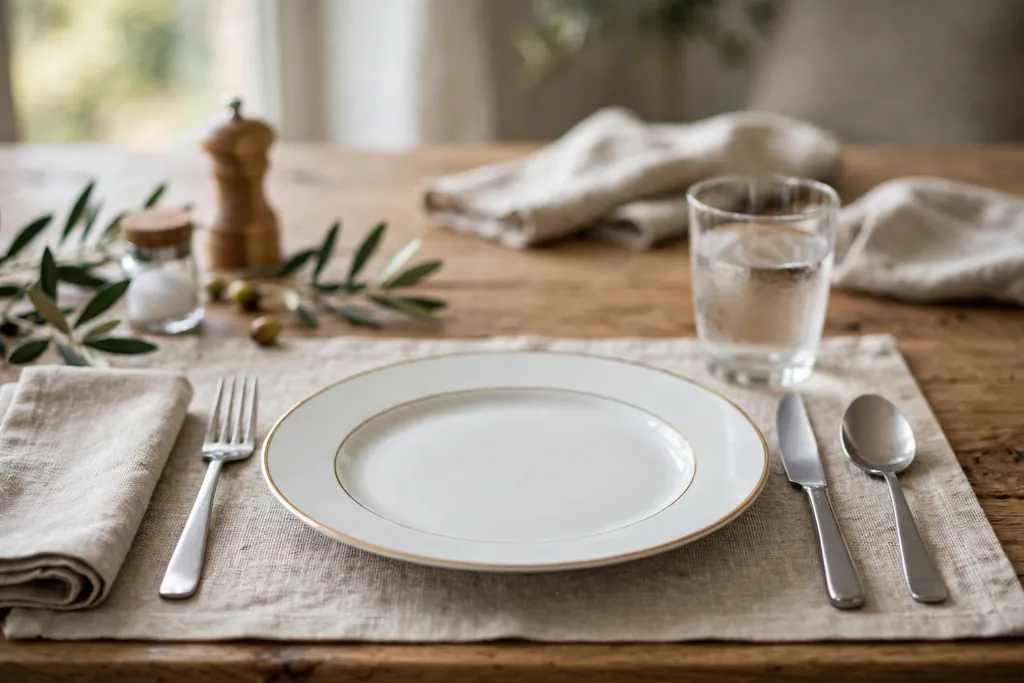
Set white plates with a thin gold rim at each place, with plain cutlery and a clear glass, and keep the rest of the table plain. The gold rim gives a classic, refined note at once, and it works with a cream runner, a bare wood table, or a white tablecloth. Keep gold to the plate rim and one other small piece, such as a candle holder, so the table stays calm rather than busy.
Polish the rims before the meal, since fingerprints show more on metal trim than on plain ceramic. Pair gold rimmed plates with cream or ivory napkins, and avoid a second strong pattern on the runner or placemat. If gold rimmed plates feel too formal for everyday meals, use them only for a dinner with guests and keep everyday settings plain.
2. Simple Linen Napkin Fold
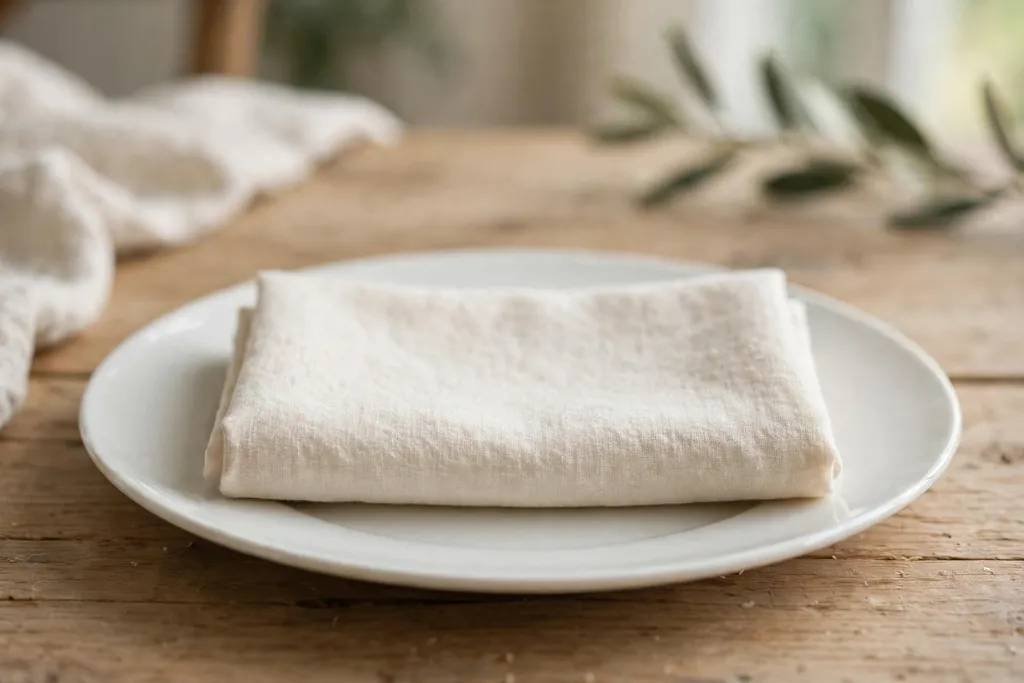
Fold each linen napkin in a simple rectangle, lay it on the plate or to the left of the fork, and keep the same fold at every place. The plain fold looks neat and refined, and it suits a formal dinner as well as a quiet weeknight meal, since it adds no bulk and no extra pieces. Iron linen napkins before folding, so the edges sit flat and the fold holds its shape.
Choose napkins in cream, ivory, or soft white for the calmest look, and keep cutlery and glasses plain, so the napkin texture carries the detail. For everyday meals, use cotton napkins in the same fold and skip ironing. If a napkin still creases, fold it once more into a narrow rectangle and lay it under the fork, where the fold stays hidden until the meal starts.
3. Single Herb Sprig on the Napkin
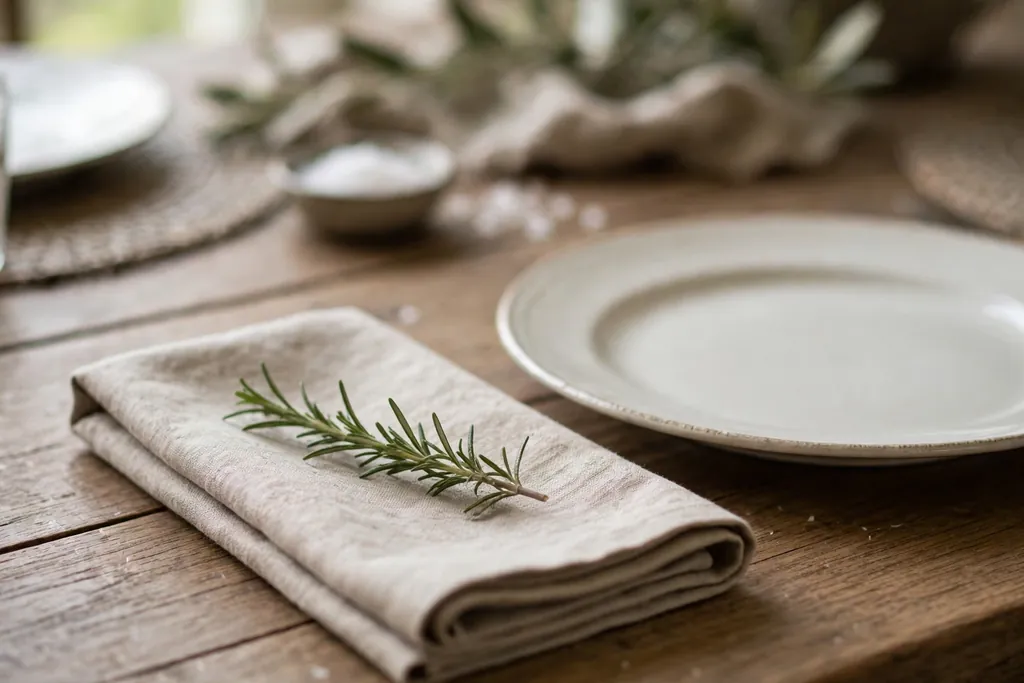
Lay one short herb sprig, such as rosemary, thyme, or bay, across each folded napkin, with the stem pointing toward the plate edge. The single sprig adds scent and a fresh green note with no vase and no extra cost, and it suits a dinner with guests as well as a family meal. Keep the sprig short, so it does not brush the plate or fall into food.
Use the same herb at every place, so the table looks matched, and trim stems to the same length before setting them out. For a gathering, add a small place card under the sprig, so the napkin doubles as a place marker. Remove the sprig before washing napkins, and use fresh herbs from the kitchen or garden where you have them.
4. Brass Taper Candles in a Row
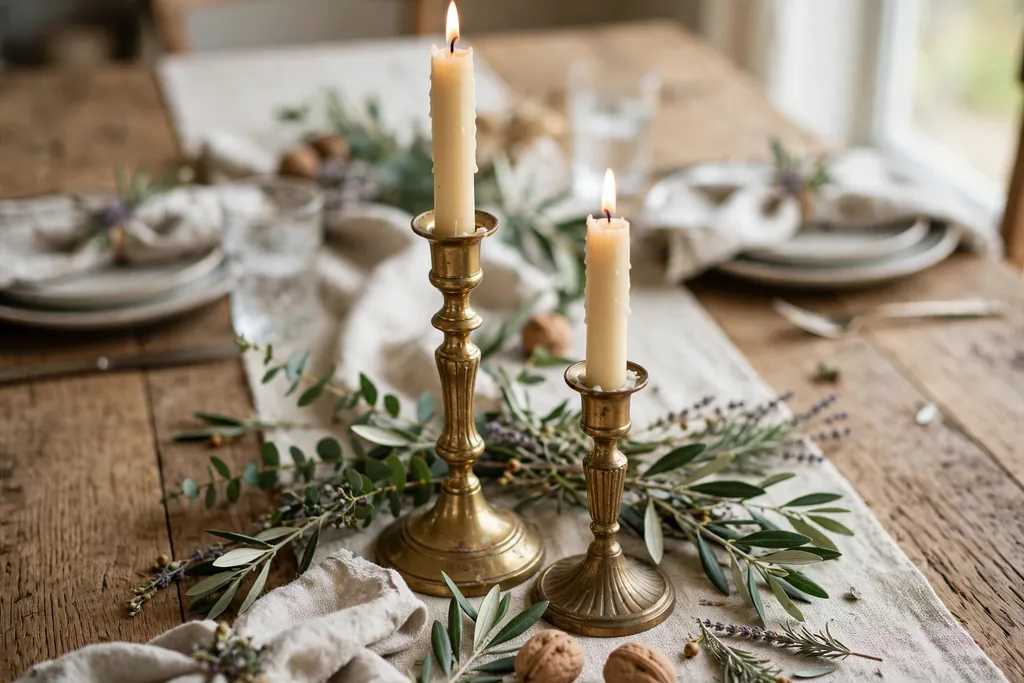
Set brass candlesticks of two heights down the center of the table, with cream taper candles in each, and keep the rest of the centerpiece simple, such as a plain runner or a few short sprigs at the base. Brass adds a warm metal note that suits both everyday dinners and larger gatherings, and it works with cream, white, green, and gold palettes.
Check that candlesticks sit level and that tapers fit snugly, so candles do not lean or drip onto the table. Use a tray or small plates under the candlesticks if wax drips are a concern, and trim wicks before lighting. For a table with children, use flameless tapers in the same brass holders for the same look without a flame.
5. Clear Stemware and Plain Glasses
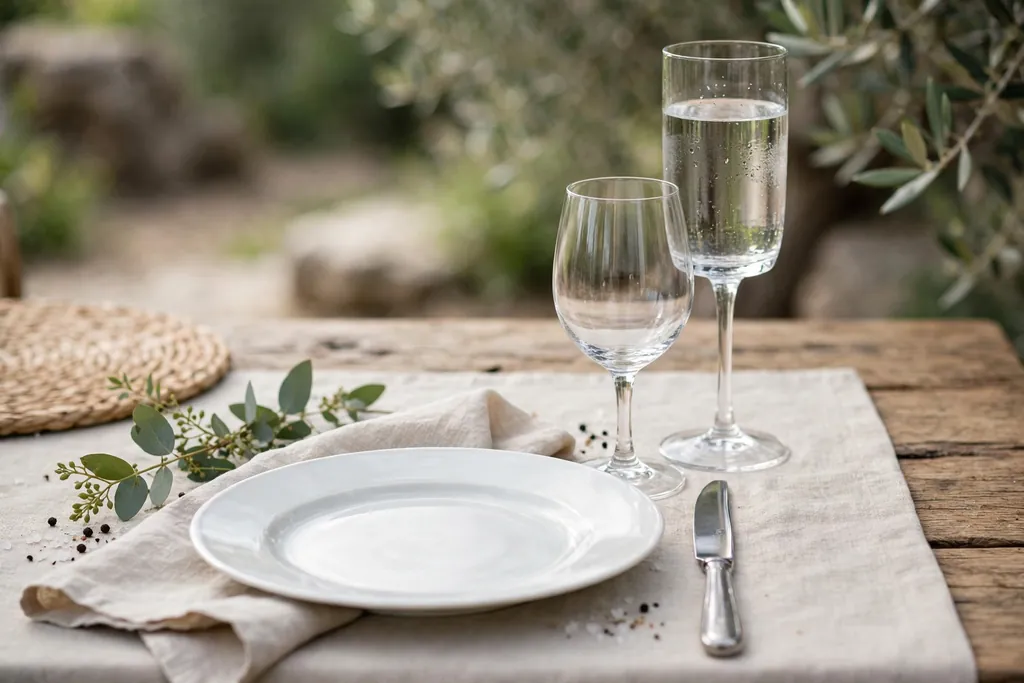
Set one clear water glass and, where the meal calls for it, one clear wine glass at each place, above the knife and in a straight line. Clear glass keeps the table light and open, and it lets the plates, napkins, and centerpiece carry the color, rather than competing with patterned glass. Use the same glass shape at every place, so the table reads as matched.
Polish glasses before the meal, since water spots show more on clear glass than on colored glass. Keep glasses short enough to see over when guests are seated, and set them above the knife, so they do not crowd the plate. For everyday meals, use one glass per place and skip the second glass, so the table stays simple and easy to clear.
6. Slim Metal Chargers Under Plates
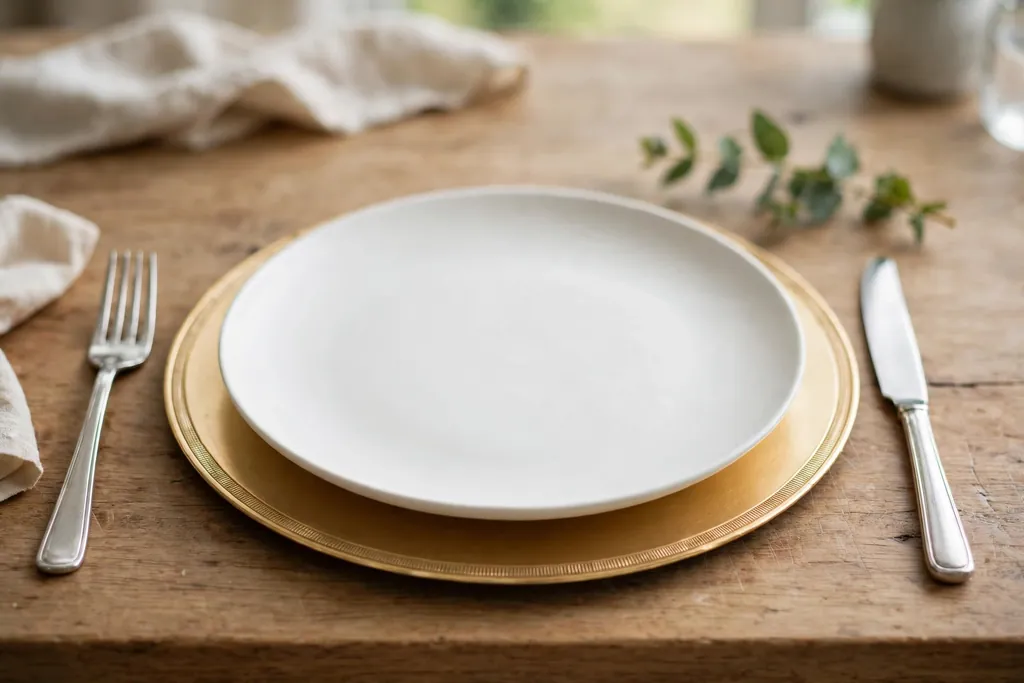
Set one slim metal charger, in gold or silver, under each dinner plate, with the plate centered on top and cutlery in its usual spots. The charger adds a thin, refined frame around each plate, and it suits a dinner with guests without a new dinner set. Keep the charger color to one metal only, and repeat that metal in one other piece, such as cutlery or a candle holder.
Choose chargers with a flat top, so plates sit level and glasses do not wobble. Wipe chargers clean after meals and store them flat, since thin metal can bend if stacked carelessly. If chargers vary in size, put the largest ones at the ends of the table, where the difference looks planned rather than uneven.
7. Handwritten Place Cards
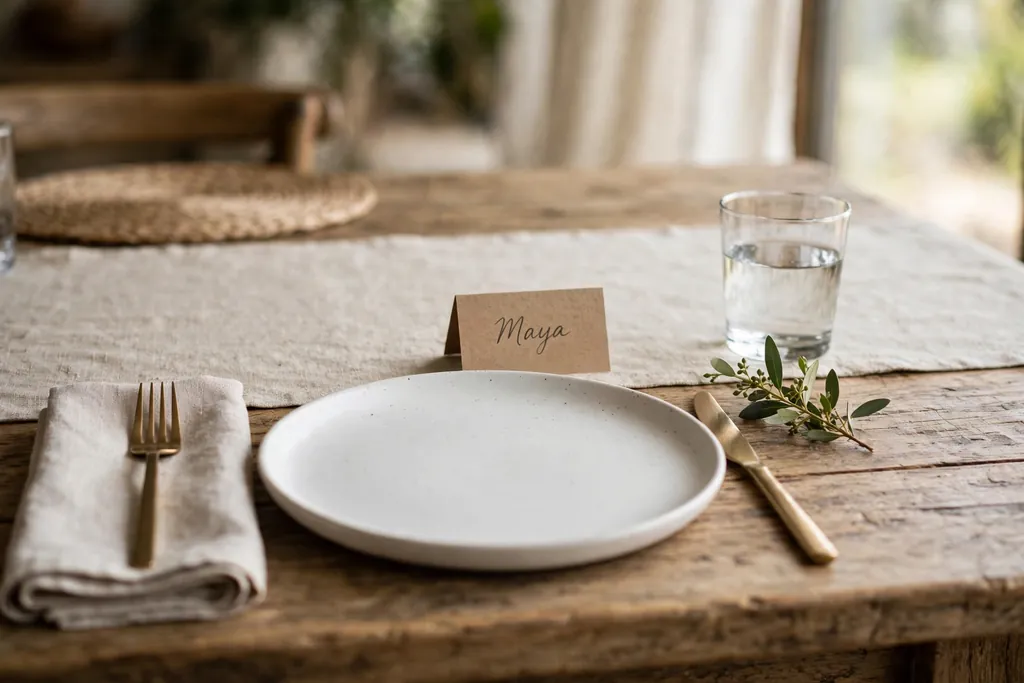
Set one small place card at each place, with the guest name written in clear, large lettering, and lay a short sprig beside the card or tucked under a napkin fold. Place cards mark each seat, help guests settle in, and double as a small keepsake, and they work for a family dinner as well as a larger gathering. Choose cards small enough to sit beside a plate without crowding the glass.
Write names before setting the table, so cards are ready when plates go down, and keep the note short, since a long note will be read once and then set aside. For everyday meals, skip the names and use the sprig alone as a simple place marker. For a large group, seat guests with mixed interests near each other, so conversation flows.
8. One Stem in a Small Bud Vase
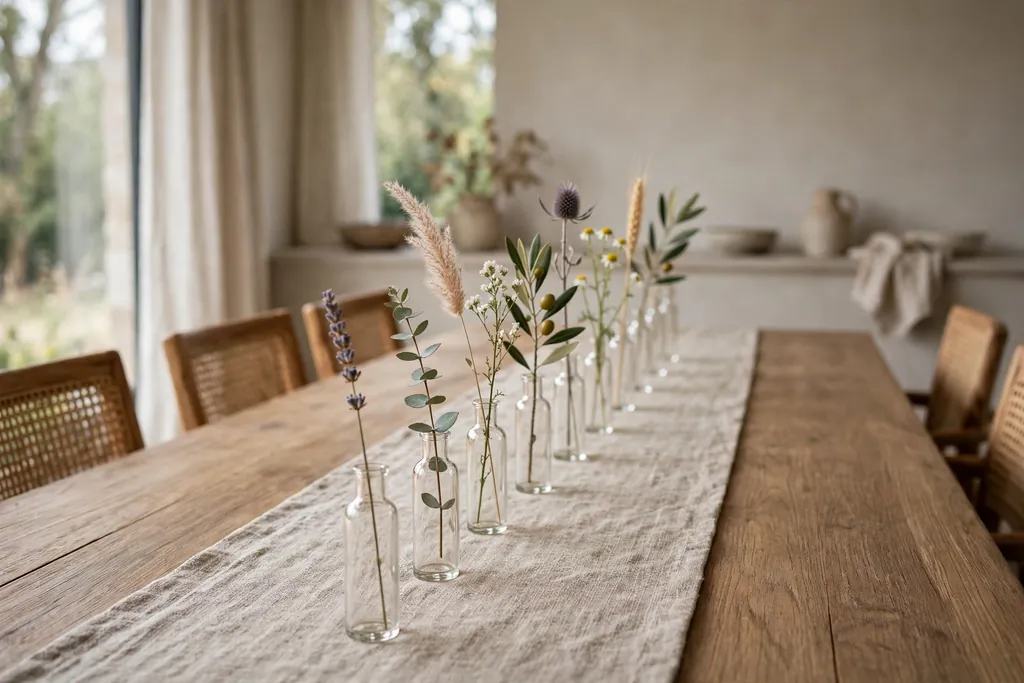
Set a row of small bud vases down the center of the table, each holding one stem, such as a rose, a ranunculus, or a sprig of herbs. The single stems give a light, fresh centerpiece that leaves sightlines open, and they suit a small table as well as a long one, since you can add or remove vases to fit the length. Use the same vase shape at every spot, so the row reads as one centerpiece.
Keep the vases low and the stems short, so guests can see across the table. Fill vases with fresh water before the meal and trim stems at an angle, so they drink well. For everyday meals, use one vase with one stem at the center and skip the full row.
9. Neutral Linen Runner
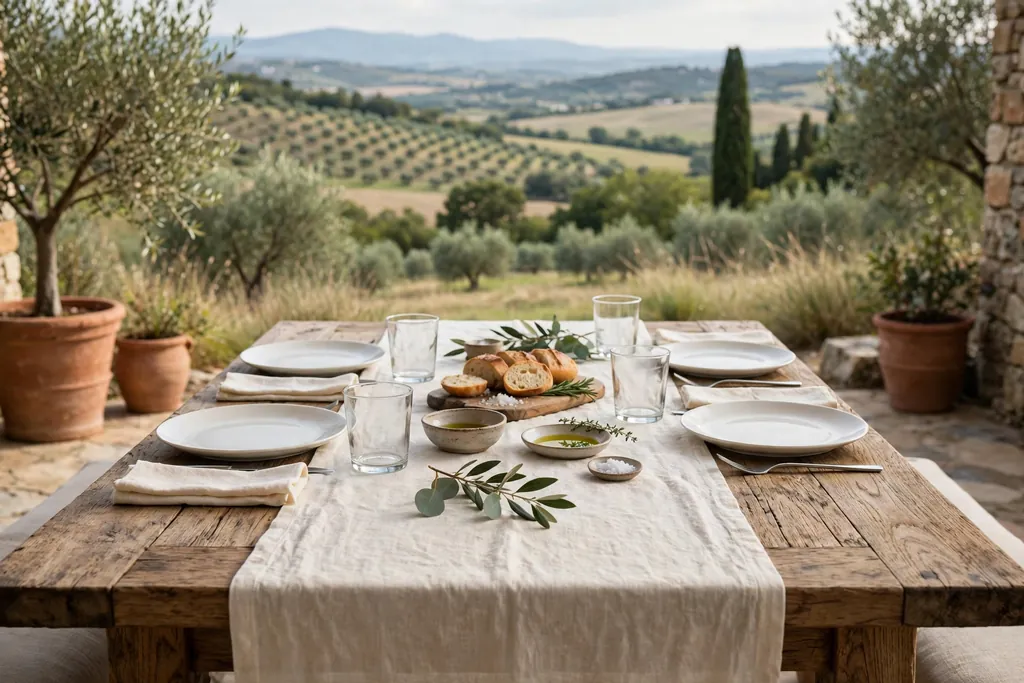
Lay a neutral linen runner, in cream, ivory, or soft grey, down the center of the table, then set plain plates, glasses, and napkins at each place on either side of it. The runner adds texture along the whole table without covering it, and it suits both everyday meals and larger gatherings. Choose a solid color for a busy table, and let the runner hang evenly at both ends.
Smooth the runner flat and center it, so it does not slide when plates are set down. If the runner is thick, use it alone and skip a tablecloth, so plates sit level. Wash and iron the runner before a gathering, since creases show more on a bare table than under a patterned cloth.
10. Low Greenery Sprig Runner
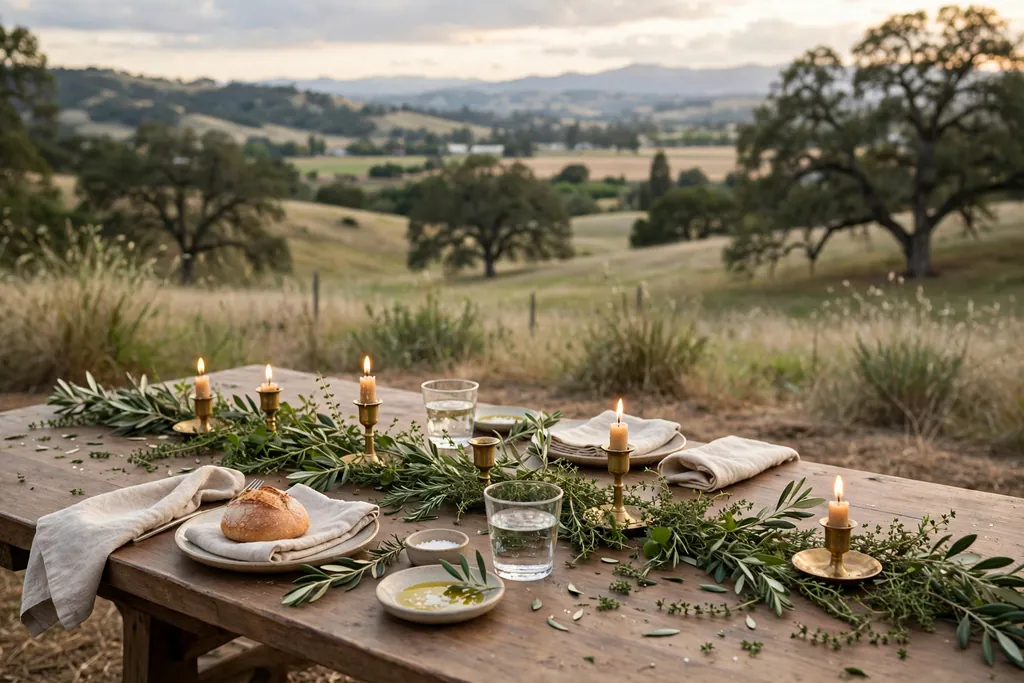
Lay a loose runner of short greenery sprigs, such as eucalyptus, olive, or cedar, down the center of the table, then set short candles in holders along it at uneven intervals. The greenery carries color along the whole table without adding height, and it suits a long dining table for a gathering. Trim the stems so they stay inside the table edges and do not brush plates or glasses.
Secure the runner so it does not slide when plates are set down, and keep real flames clear of dry leaves. Use flameless candles if the runner will sit near curtains or if children will be at the table. Shake fresh stems outdoors before laying them out, and check them daily, since fresh greenery dries and sheds over the week.
11. Candle Cluster on a Small Tray
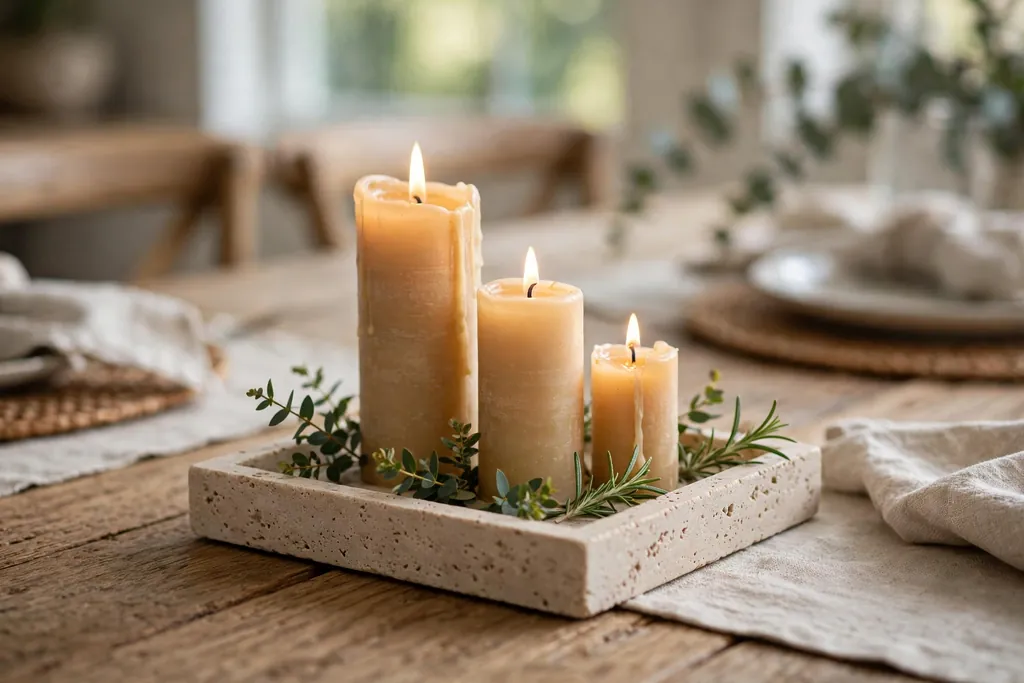
Group candles of different heights on a small tray at the center of the table, with a few short sprigs tucked between the holders. The tray keeps the group contained, so it reads as one centerpiece, and it lifts off in one move when serving needs the full surface. Choose a tray short enough to see over when guests are seated, and keep the candle group low and narrow.
Place the tray on a runner or a mat to protect the table, and use battery candles inside closed or narrow holders, since a real flame needs air and a safe holder. Wipe the tray before the meal, since dust shows more on a flat surface than on a patterned cloth. For a small table, use one candle group only and skip a second cluster at the ends.
12. Cream on Cream Layered Places
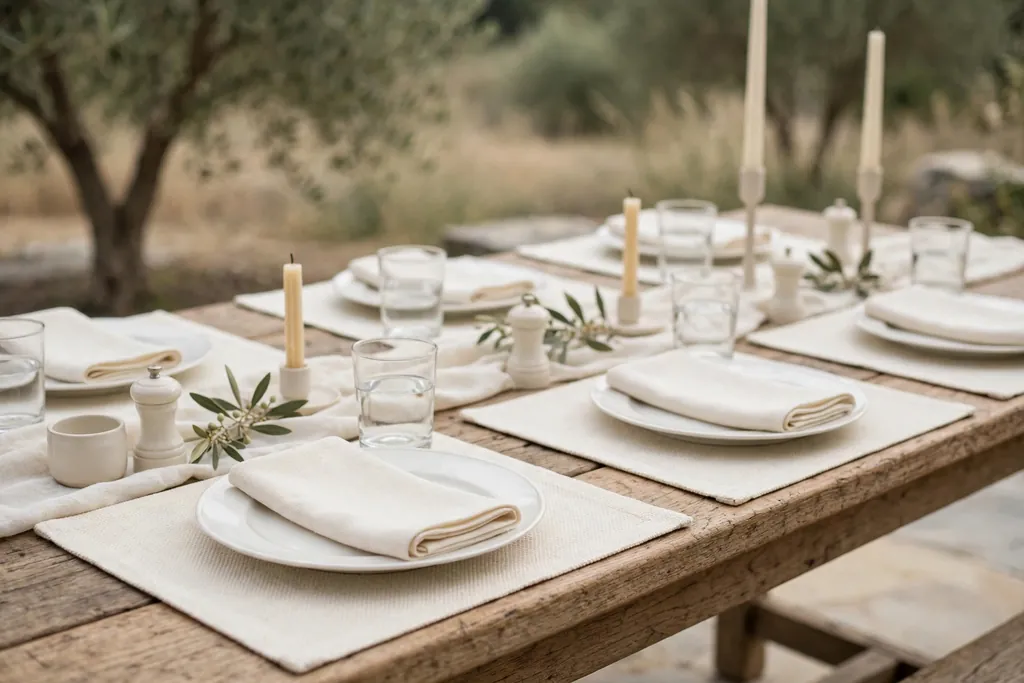
Set white plates on cream placemats, add cream napkins folded in a simple rectangle, and keep the centerpiece to white candles and one pale green sprig at each place. The layered creams suit a bright dining room and a calm mood, and they pair well with glass, pale wood, and silver cutlery. Add one soft accent, such as a single green sprig, so the table does not look flat.
Use clear glasses so the cream shows through, and keep the candle group low enough to see across. Iron cream napkins before the meal, since creases show more on pale cloth than on color. If the table will hold children, use flameless candles in the same holders for the same glow without a flame.
13. Velvet Ribbon Napkin Tie
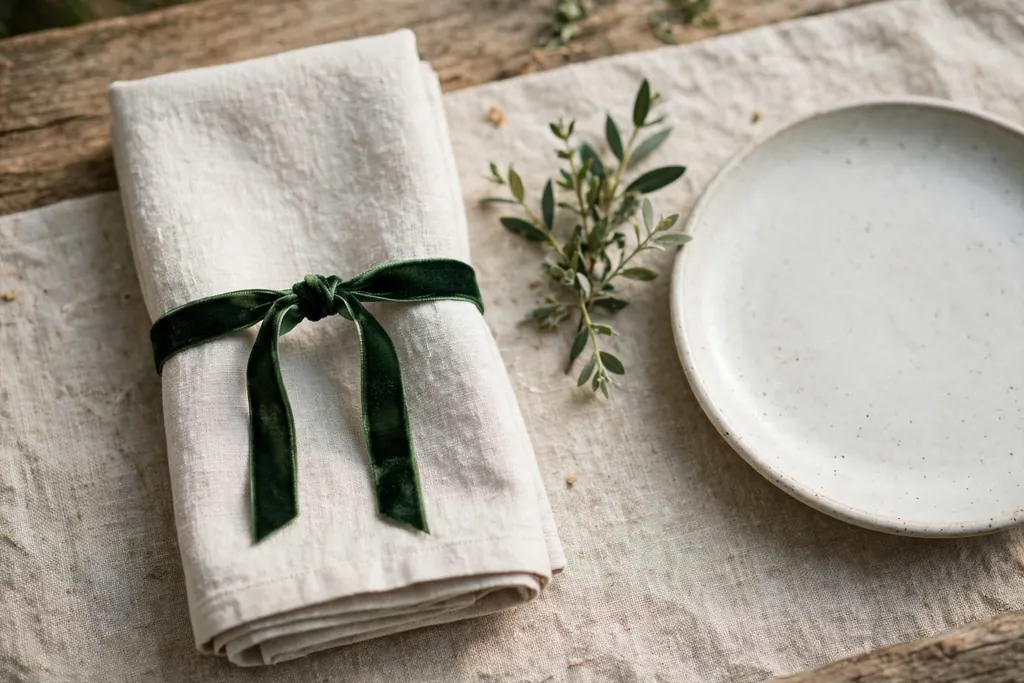
Tie each folded napkin with a narrow velvet ribbon in deep green, burgundy, or navy, and tuck a small sprig of greenery under the ribbon knot. The velvet tie adds a soft, dressy detail without a new dinner set, and it suits a formal meal as well as a small gathering. Keep the ribbon narrow, so it does not bulk up the napkin fold.
Fold napkins first, wrap the ribbon around the middle, and tie a simple knot rather than a large bow, so the napkin still lies flat. Trim ribbon ends at an angle and tuck the sprig under the knot so it stays put. Save ribbon pieces after the meal, since velvet ribbon stores flat and can be used again.
14. Layered Dinner and Salad Plates
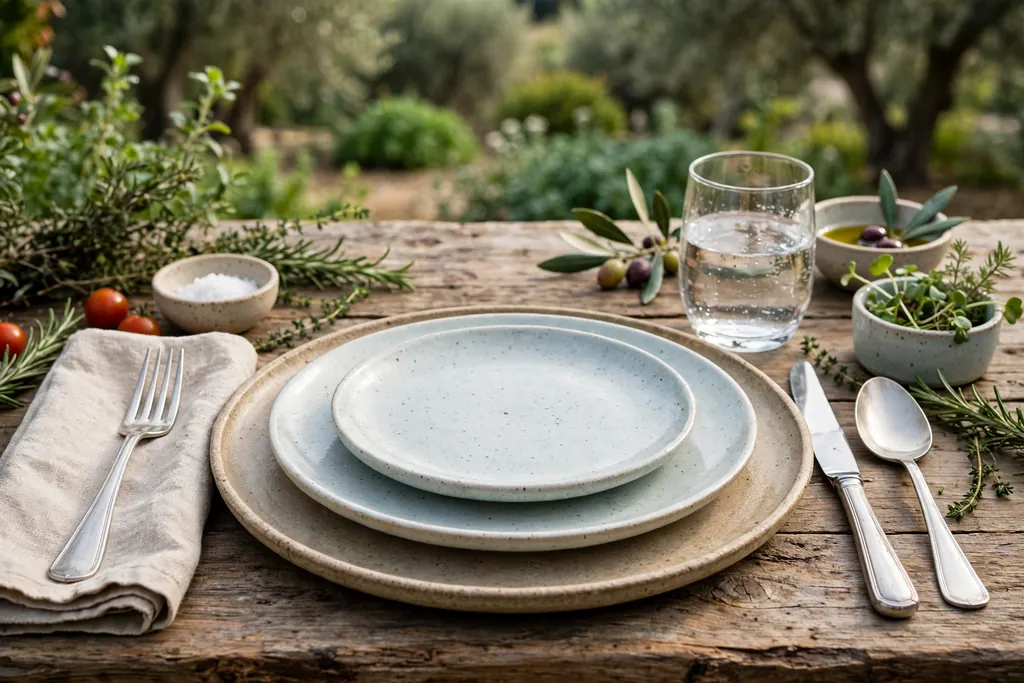
Set a dinner plate at each place, with a smaller salad plate centered on top, and keep cutlery in its usual spots, with forks on the left and knives on the right. The layered plates give a classic, restaurant style look, and they suit a dinner with guests where a first course will be served. Use plain plates in the same color family, so the layers read as one setting rather than two competing patterns.
Clear the salad plate with the first course, so the dinner plate stays clean for the main course. Keep glasses and napkins plain, so the layered plates stay the main detail. For everyday meals, skip the second plate and use the dinner plate alone, so the table stays simple and easy to clear.
15. Short Menu Card at Each Place
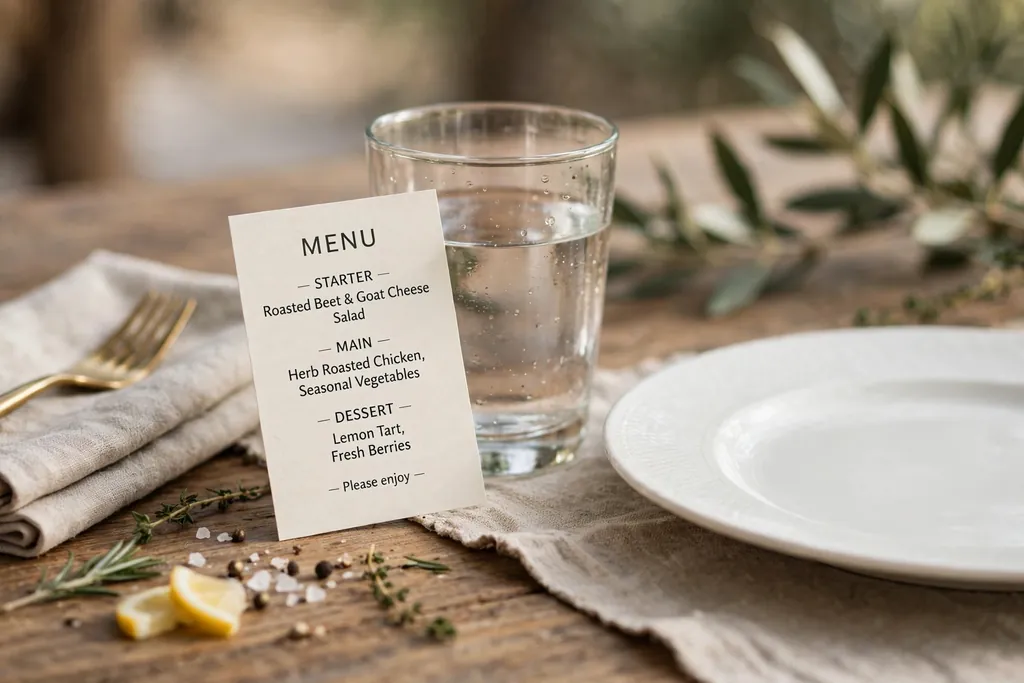
Set one small menu card at each place, listing the courses in short lines, with the card leaning against a glass or lying flat above the plate. A menu card adds a refined, restaurant style touch, and it helps guests with dietary needs see what is coming, without asking during the meal. Keep the card small, with large, clear lettering and only the course names, so it does not crowd the place.
Write or print cards before setting the table, and use the same card design at every place. For a simple meal, list two or three courses only, and skip a long description. For a gathering, add a short welcome line at the top, and keep the rest of the table plain, so the menu card stays the one printed detail.
16. Citrus Bowl as a Low Centerpiece
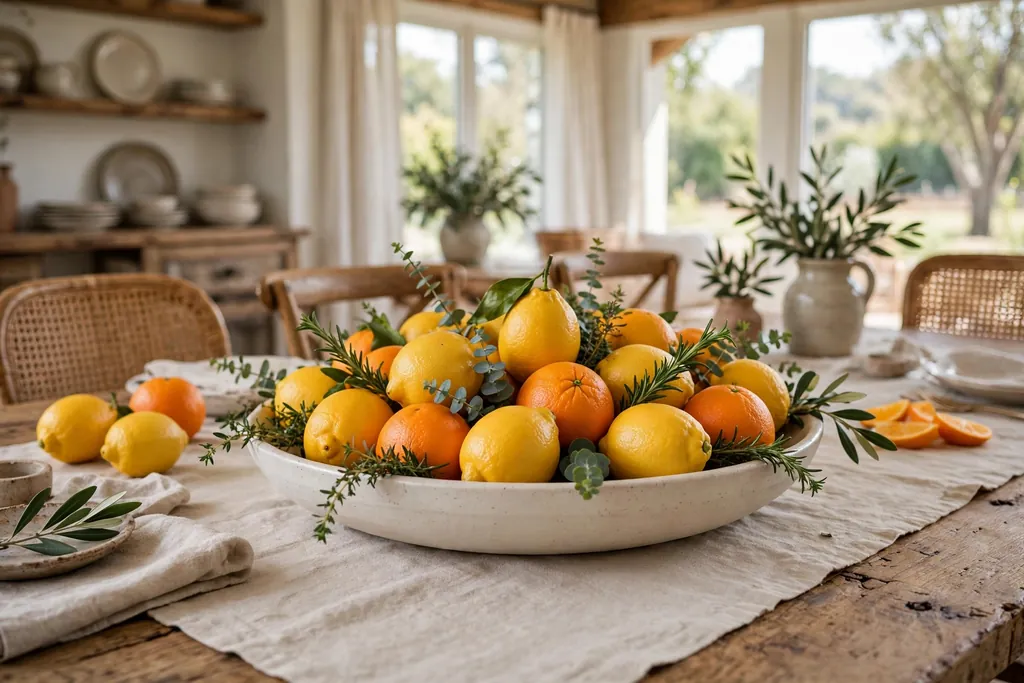
Fill a wide, shallow bowl with lemons, oranges, or limes, plus a few short greenery sprigs, and set it in the center of the table. The fruit gives real color and shape, and the bowl takes up only one spot, leaving the rest of the table free for plates and serving dishes. Keep the bowl low and wide rather than tall, so it does not block sightlines.
Check the fruit on the day of the meal and move any soft piece to the kitchen, since one spoiling piece can mark the rest. For a calmer winter version of this idea, with white linens and a single metallic accent, see the winter table decor guide. At the end of the meal, the bowl can move to the counter, which makes clearing the table a single step.
17. Dark Chargers with Gold Cutlery for Evening
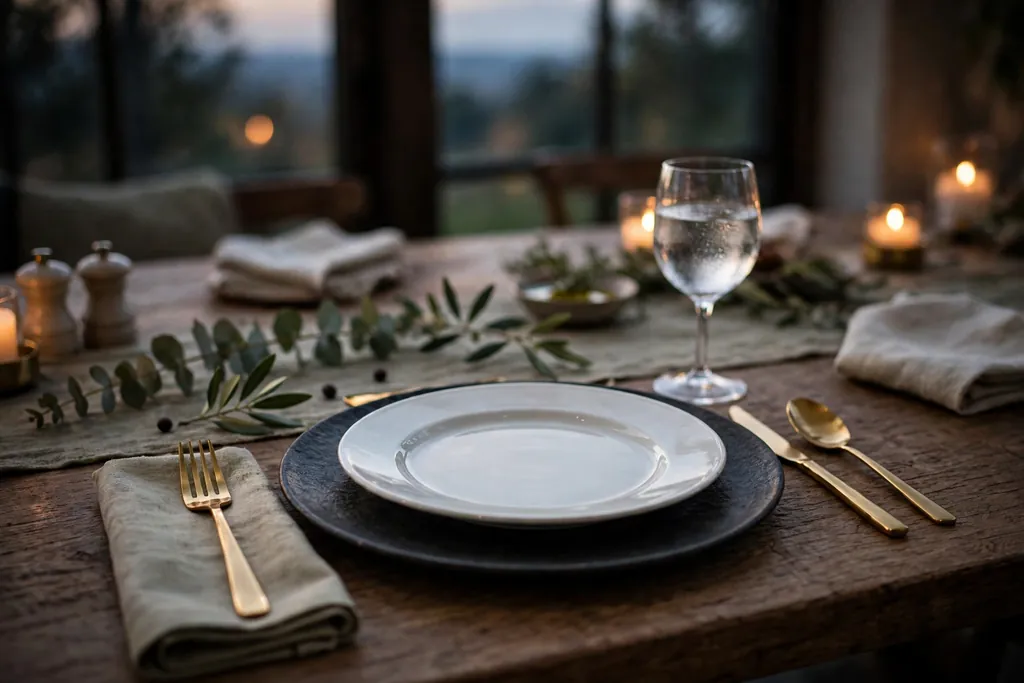
Set dark chargers, in black or deep charcoal, under white plates, add gold cutlery and gold napkin rings, and keep the centerpiece to dark candle holders with cream candles. The dark and gold pairing suits an evening meal and a formal room, and it lets a single pale accent, such as a sprig at each place, stand out clearly.
Use clear glasses so the gold shows through, and keep the candle group low enough to see across. Polish gold pieces before the meal, since fingerprints show more on metal than on wood. If dark plates feel too dark for a daytime meal, use dark chargers with white plates instead, so the table stays bright while keeping the evening palette.
18. Bare Wood Table with One Linen Accent
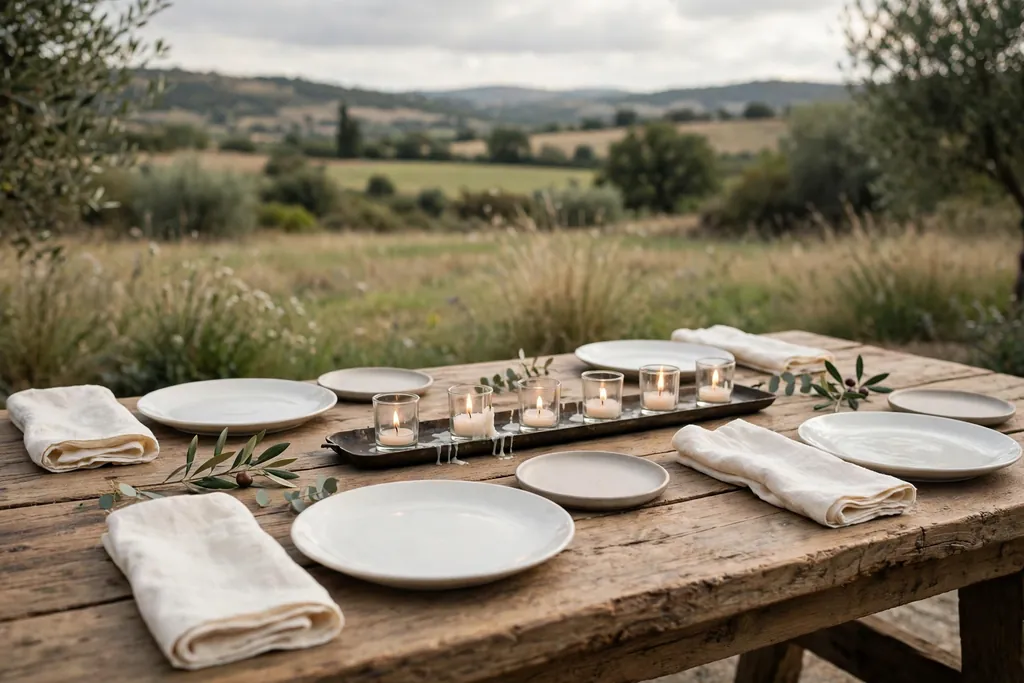
Leave a wood table bare, with no runner or cloth, and let the grain do the work, then set folded linen napkins in cream or soft white at each place, with simple cutlery and plain plates. This approach suits a farmhouse or rustic dining room, and it keeps the table easy to wipe after everyday meals, while the linen keeps the setting refined.
Use placemats under plates if the wood marks easily, and keep the centerpiece to one low group, such as a tray with candles, so the wood still shows. Fold napkins the same way at every place for a tidy look, and iron linen napkins before a gathering, since creases show more on bare wood than under a patterned cloth.
19. Simple Setting for Two
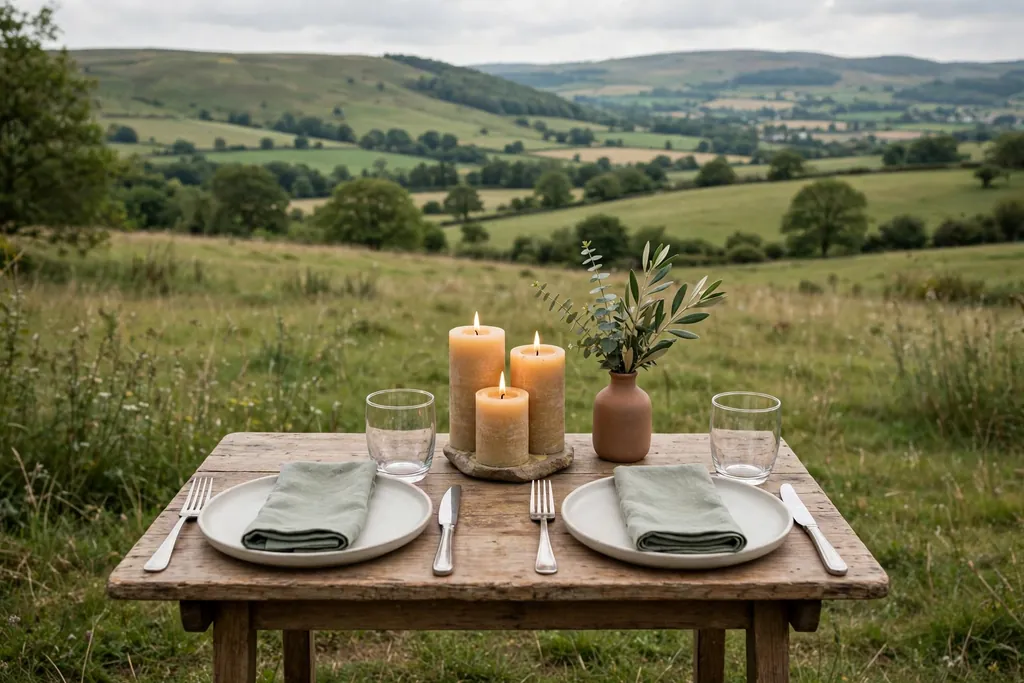
Set two places opposite each other, with matching plates, glasses, and folded napkins, and one low candle group and a small vase of sprigs between them. The small group keeps conversation easy, since nothing tall blocks the view, and the candlelight makes an ordinary weeknight meal feel special. Keep the rest of the table clear, with just plates, glasses, and cutlery, so a small table does not feel crowded.
Use a short runner or two placemats to frame the places, and add a second candle only if the table is long enough. Clear the centerpiece in one move after the meal, and keep one sprig at each place as the single shared accent. This setting works for everyday meals as well as a quiet dinner for two, with no extra pieces needed.
Conclusion
An elegant table does not need a new dinner set or a large budget. Start with the plates, glasses, and napkins you already own, pick one calm palette, keep the centerpiece low, and set one clear accent at each place. Everyday meals stay simple with a folded napkin and a single sprig, and dinners with guests gain a runner, chargers, candles, and place cards on the same base. Try one idea from this list at your next meal, keep what works for your table, and change only one layer at a time until the setting feels like yours.
Frequently Asked Questions
What makes a table setting look elegant?
An elegant table setting uses one calm palette, plain plates, matching cutlery, a folded napkin, and one low centerpiece, with one repeated accent at each place. Keep the centerpiece below eye level, leave room for serving dishes, and avoid several competing patterns, so the table reads as calm and planned rather than busy.
How do I set an elegant table without buying new dishes?
Use what you already own and change one layer: add a neutral runner, fold napkins a new way, tie napkins with ribbon, add candles and a sprig at each place, or set a low fruit bowl as the centerpiece. White plates with gold rims, cream on cream layers, and a single herb sprig all change the look of a table with no new dinner set.
What colors work best for an elegant table setting?
Cream, ivory, white, soft grey, pale green, and warm wood work well for an elegant table, with one metal accent in gold, silver, or brass. Pick one accent color plus white and wood, and repeat the accent at least twice, such as napkins plus a candle holder, so the table looks planned rather than random.
How do I keep a centerpiece low enough for conversation?
Keep the centerpiece under seated eye level, use a tray or board to group candles and greenery in one low cluster, and place tall pieces, such as branches, at the ends of a long table or on a sideboard. A row of bud vases, a low fruit bowl, or a small candle cluster all leave sightlines open across the table.
What is the best elegant setting for a small table?
The best small table setting uses one placemat per place, compact plates, short glasses, and a single centerpiece, such as one small vase or one candle group. Skip chargers and runners on a very small table, fold napkins flat, and set extra dishes on a sideboard so the table stays free for eating.
How do I set an elegant table for guests with place cards?
Write each guest name in clear, large lettering on a small card, set one card at each place beside the plate or tucked under a napkin fold, and add a short sprig for a finished look. Place cards mark each seat, help guests settle in, and work for family dinners as well as larger gatherings.