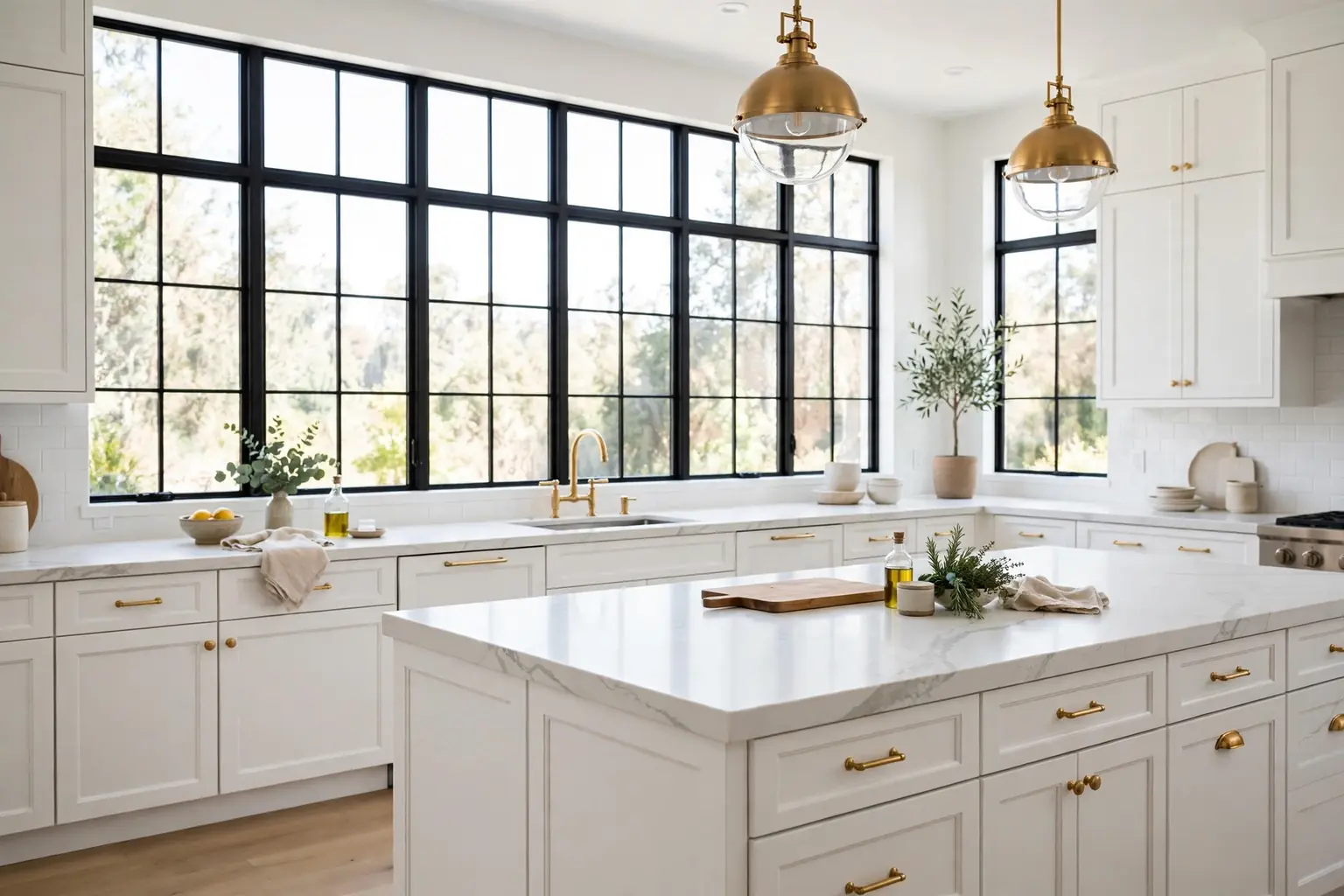
Choose white quartz kitchen countertops by deciding how much pattern you want, then matching the finish and edge to your cabinets, backsplash, and lighting. Pure white slabs suit a clean, minimal look, while soft gray or gold veining adds movement without a busy pattern. Bring samples home, check them in daylight and evening light, and compare care needs.
White quartz works in many kitchens because the base color stays light and calm while the pattern can range from nearly plain to clearly veined. That range is the main choice to make first. A plain slab keeps attention on cabinets, hardware, and a backsplash, while a veined slab becomes a feature of the room on its own. The sections below walk through each decision in order, so you can compare samples with a clear list of what to look for. For more room ideas, visit the Dwell Ovell home page.
Key Takeaways
- Decide on the amount of veining first, since it sets the look of the whole kitchen more than any other single choice.
- Compare polished, honed, and matte finishes in your own kitchen light, because the same slab can look different under daylight and evening bulbs.
- Choose an edge profile that suits your cabinet style and how the counter will be used each day.
- Pair white quartz with cabinets and a backsplash that share an undertone, so the whites do not clash.
- Take samples home and check them next to cabinet doors, flooring, and paint before you place an order.
- Plan simple daily care and quick wipe ups, and check the care guidance for your chosen finish.
1. Learn the Main White Quartz Color Families
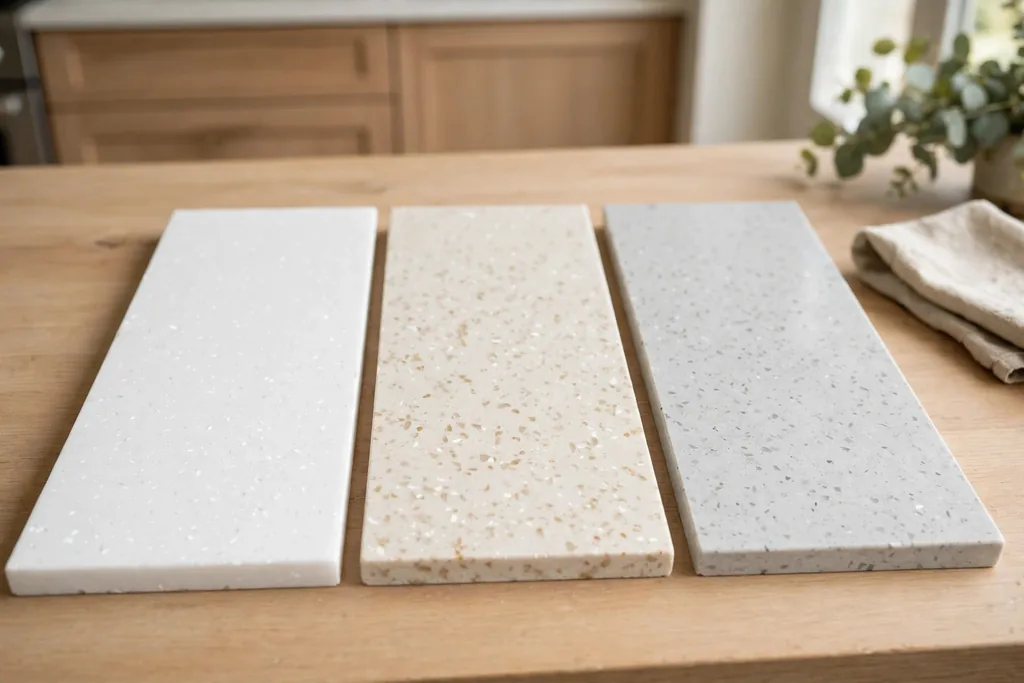
White quartz is not one single shade. Some slabs read as bright, cool white, others as warm white with a creamy cast, and others sit between the two with a soft gray tint. The undertone matters because it decides whether the counter blends with cool gray cabinets, warm wood, or crisp white paint. Hold a sample against your cabinet door and your wall color in daylight to see whether the white leans cool or warm.
Start by sorting samples into three groups: bright white, warm white, and soft white gray. Bright white suits kitchens with cool grays, black hardware, and stainless steel. Warm white pairs well with cream cabinets, natural wood, and brass tones. Soft white gray works as a middle ground when your kitchen mixes warm and cool elements. Naming the family first makes every later choice easier, from backsplash tile to faucet finish.
2. Compare Finishes: Polished, Honed, and Matte
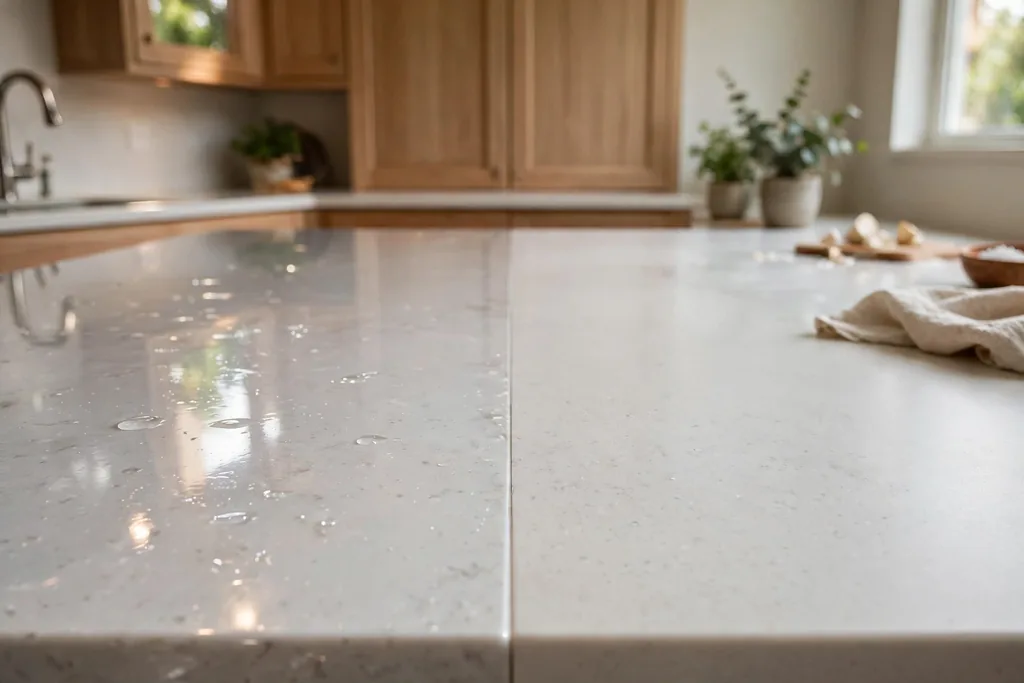
A polished finish has a clear shine that reflects light and makes veining stand out. It suits kitchens where you want a bright, crisp surface and where the counter is a focal point. A honed finish has a softer, low shine look that feels calm and muted, and it can suit farmhouse, rustic, and relaxed modern kitchens. A matte finish is flatter still, with very little reflection, and it pairs well with flat front cabinets and natural textures.
Each finish also changes how the surface feels and how marks show in daily use. Shine can highlight fingerprints and water spots, while a softer finish can hide them better but may show some marks of its own. Ask for a sample in each finish you are considering, wipe it with a damp cloth, and look at it from different angles. The finish you like in the store may read differently under your kitchen lights, so a home check is worth the time.
3. Read Veining Patterns Before You Choose
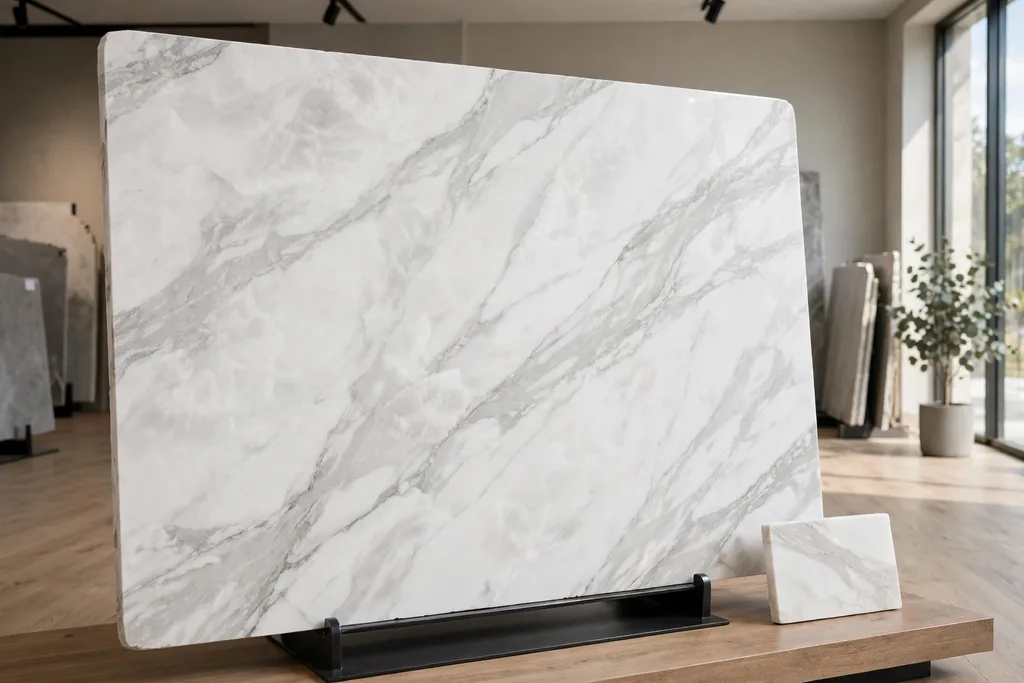
Veining is the pattern of lines running through a slab, and it ranges from faint and fine to bold and wide. Fine veining gives a quiet look that suits small kitchens and busy backsplashes, because it adds interest without competing for attention. Medium veining suits most kitchens, since it reads as natural stone character while staying easy to pair with other materials. Bold veining makes a clear statement and works best when the rest of the kitchen stays simple.
Look at the full slab, not only a small sample, when veining matters to you. A sample may show one quiet corner of a slab that is much busier elsewhere, or one bold streak that does not repeat across the whole piece. Ask how the pattern runs across the slab and where the main cuts will fall, such as across an island or beside a sink. A slab with a calm section for the main work area and a livelier section for an island can give you both looks in one kitchen.
4. Check Thickness and Slab Layout
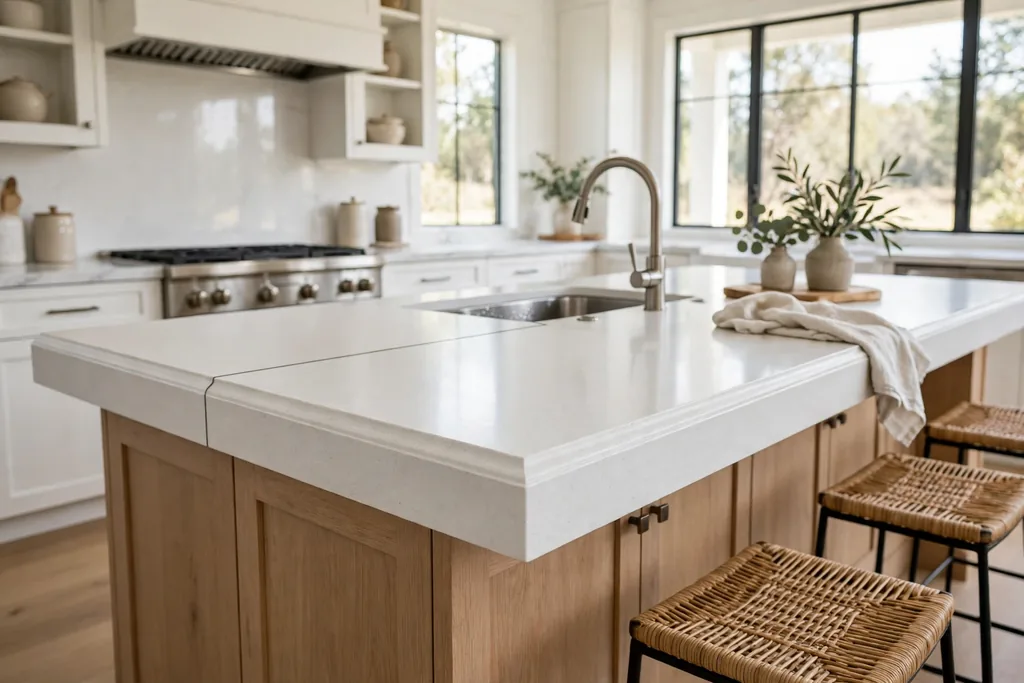
Most kitchen counters use a standard slab thickness, and the edge can be built up to look thicker if you want a chunkier profile. A thicker looking edge suits large islands and bold cabinet styles, while a slim edge suits a light, modern kitchen. Think about how the edge will meet the cabinet front and whether you want a small overhang for seating at an island or peninsula.
Slab layout matters as much as thickness. Seams are the joins where two pieces meet, and their placement affects both the look and the pattern flow. Long runs, L shapes, and large islands often need at least one seam, so ask where seams will sit and whether veining can be lined up across them. A well placed seam near a sink or a cooktop is less noticeable than one cutting across an open island, so raise the question before cutting begins.
5. Choose an Edge Profile
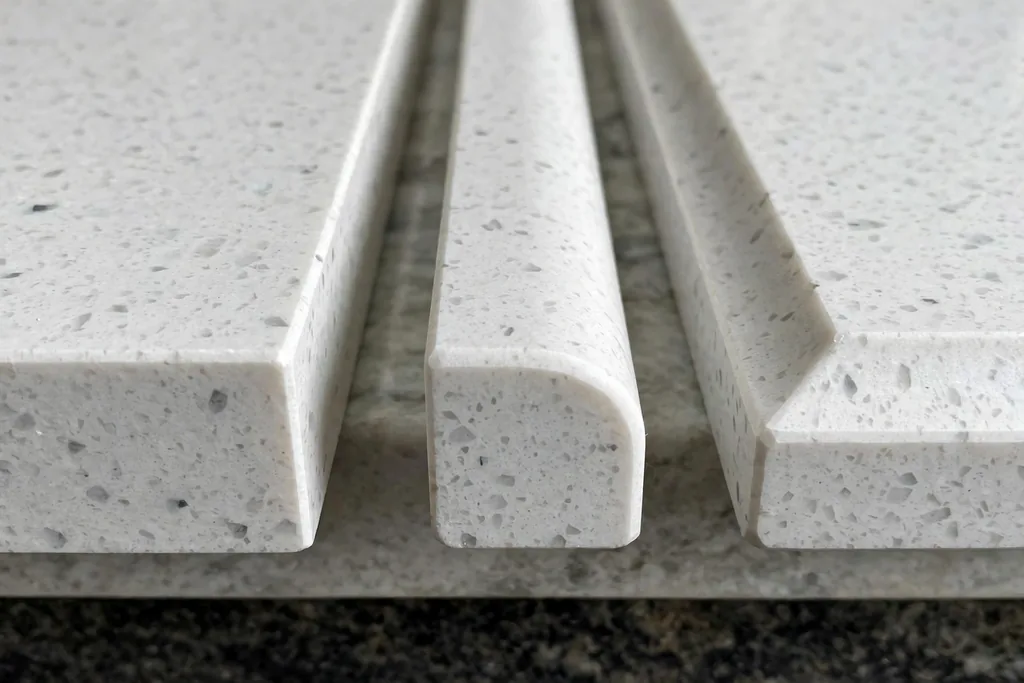
The edge profile is the shape of the counter edge, and it changes the style of the kitchen more than many people expect. A straight, square edge suits modern and minimal kitchens. A slightly rounded eased edge softens the look and suits family kitchens where people lean on the counter often. A beveled edge adds a small angled detail, while an ogee or layered edge suits classic and traditional rooms with detailed cabinets.
Practical use matters too. A rounded edge is kinder to hips and elbows in a busy kitchen, while a sharp square edge can chip more easily if heavy pots hit it. A thicker built up edge looks substantial on an island but adds weight and cost to the job, so weigh the look against the budget for the whole project. Ask to see and touch edge samples, since a profile that looks good in a photo may feel different in daily use.
6. Pair White Quartz with Cabinet Colors
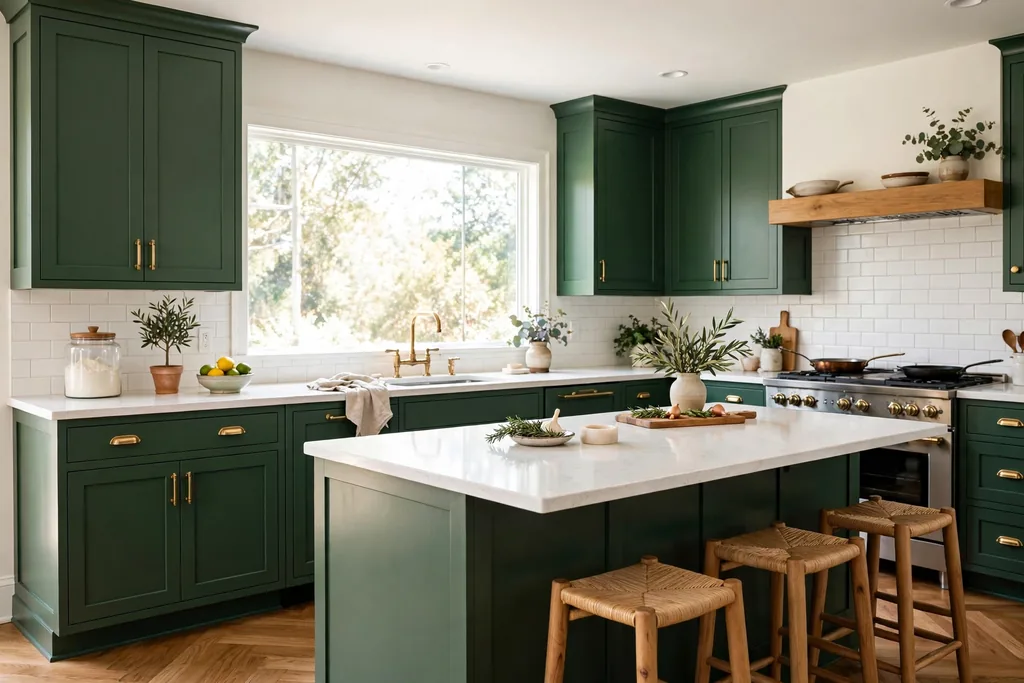
White quartz pairs with almost every cabinet color, but the pairing changes the mood of the room. White cabinets with white quartz give a bright, seamless look, so vary the hardware, backsplash, or flooring to keep the room from feeling flat. Gray cabinets with white quartz give a cool, calm kitchen, especially with soft gray veining that ties the two together. Navy, green, and other deep colors make white counters stand out and give the kitchen a clear contrast point.
Wood cabinets need a closer look at undertones. Warm wood with warm white quartz feels soft and welcoming, while warm wood with bright cool white can clash if the whites pull in opposite directions. Bring a cabinet door sample, or a photo of your cabinets in daylight, when you shop for slabs. The goal is a pairing where the counter and cabinets sit comfortably together, with one of them leading and the other supporting.
7. Match a Backsplash Without Clashing
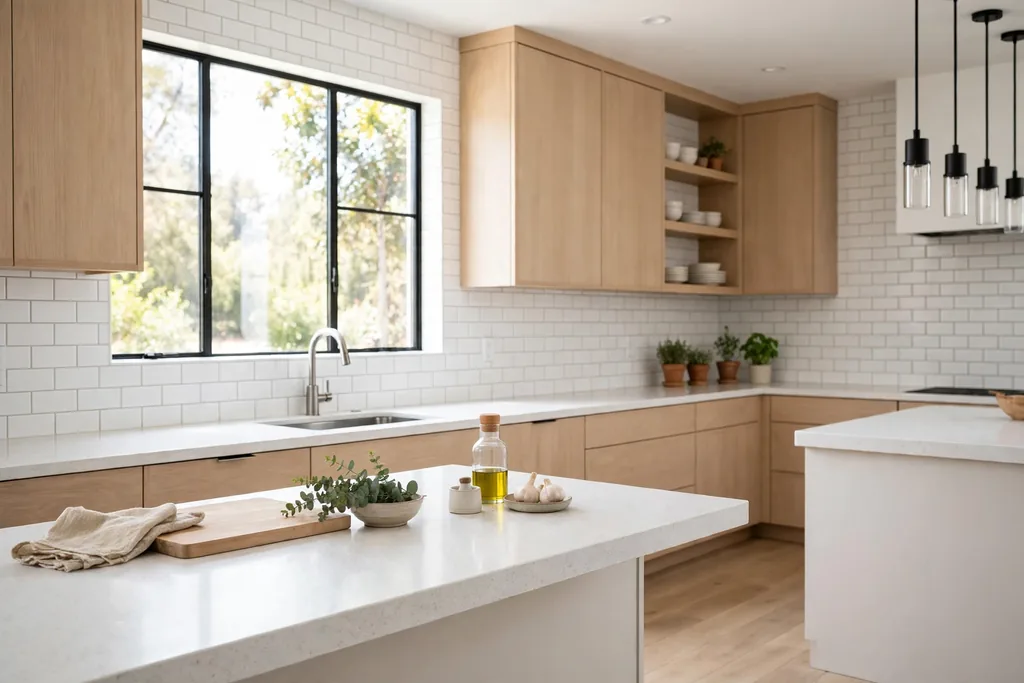
The backsplash sits right next to the counter, so a clash there is hard to ignore. A simple rule helps: let either the counter or the backsplash carry the pattern, and keep the other quiet. If your quartz has bold veining, a plain subway tile or a solid color slab backsplash keeps the kitchen calm. If your quartz is nearly plain, a patterned tile, a herringbone layout, or a textured stone backsplash can add the interest the counter does not.
Check whites together before you decide. Tile whites vary just as quartz whites do, and a cool white tile next to a warm white counter can look mismatched once both are installed. Place the tile sample flat against the quartz sample, in the same light the kitchen gets, and step back to view them together. Grout color matters too: a matching grout keeps the backsplash quiet, while a dark grout draws attention to each tile and adds pattern of its own.
8. Plan Sinks, Faucets, and Cooktop Cutouts
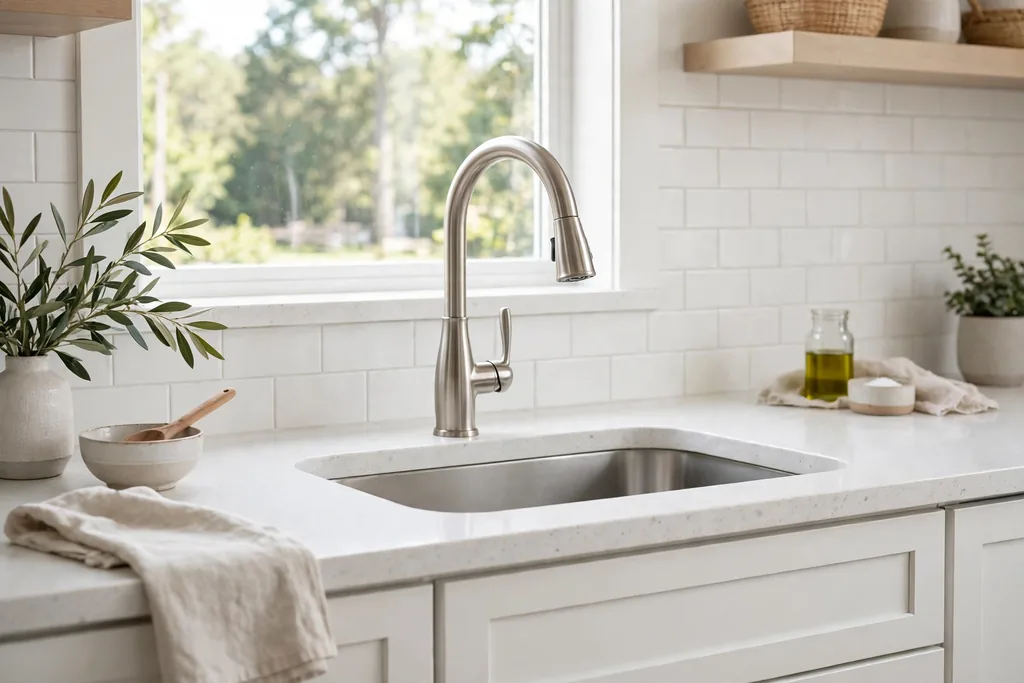
Cutouts for sinks, faucets, and cooktops should be planned before the slab is cut, since changes after cutting are limited. An undermount sink gives a smooth line from counter to sink and makes wiping crumbs into the sink easy. A farmhouse sink changes the front edge of the counter run, so its width and apron height need to be set early. A drop in sink is simpler to fit but leaves a rim on the surface that needs cleaning around.
Faucet placement follows the same rule. Check the number of faucet holes, the reach of the faucet over the sink, and whether a soap dispenser or filtered water tap needs its own hole. Cooktop cutouts need exact measurements and clear space around burners for safe use. Write down every cutout, its size, and its position, and confirm them on the template before cutting starts, so the finished counter fits the fixtures you already own or plan to buy.
9. Use Lighting to Show the True White
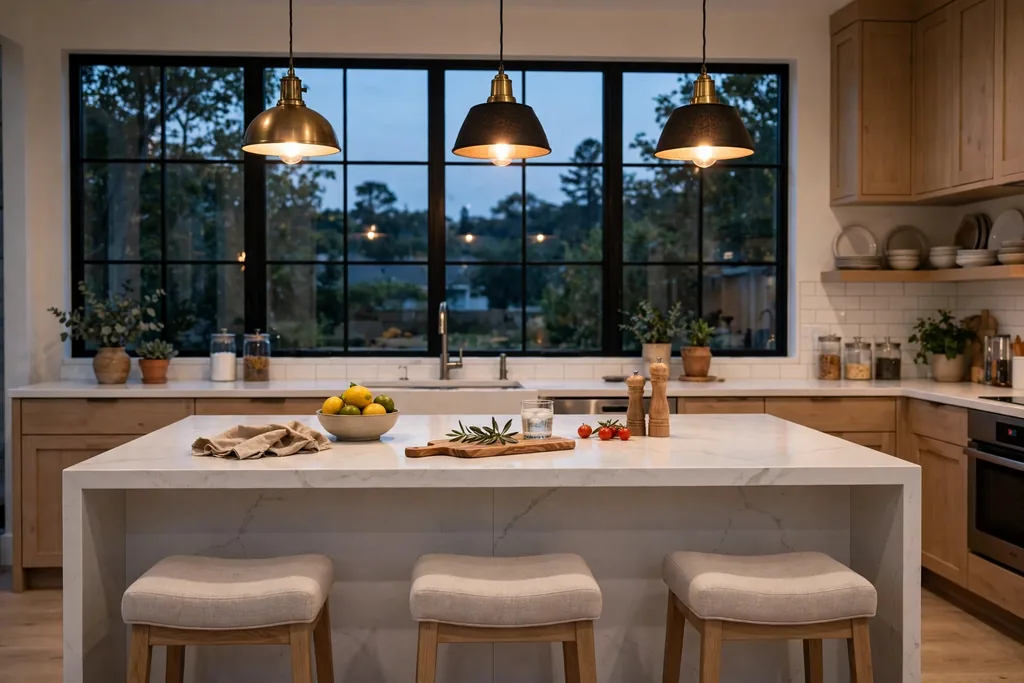
White quartz changes with light, so check samples under the light your kitchen actually has. Daylight from a window shows the truest white, while warm evening bulbs can make a cool white look warmer and a warm white look creamier. Under cabinet lights add brightness to the work surface and can make veining stand out, while a single ceiling light can leave corners in shadow and make the counter look gray.
Plan lighting in layers where you can. Daylight and general ceiling light set the overall tone, under cabinet lights brighten the work areas, and pendant lights over an island add warmth and focus. Check your chosen slab under each layer, not only in a bright showroom. If the kitchen has little daylight, a slightly brighter white may keep the room feeling open, while a warm white can stop a north facing kitchen from feeling cold.
10. Plan Cleaning and Daily Care
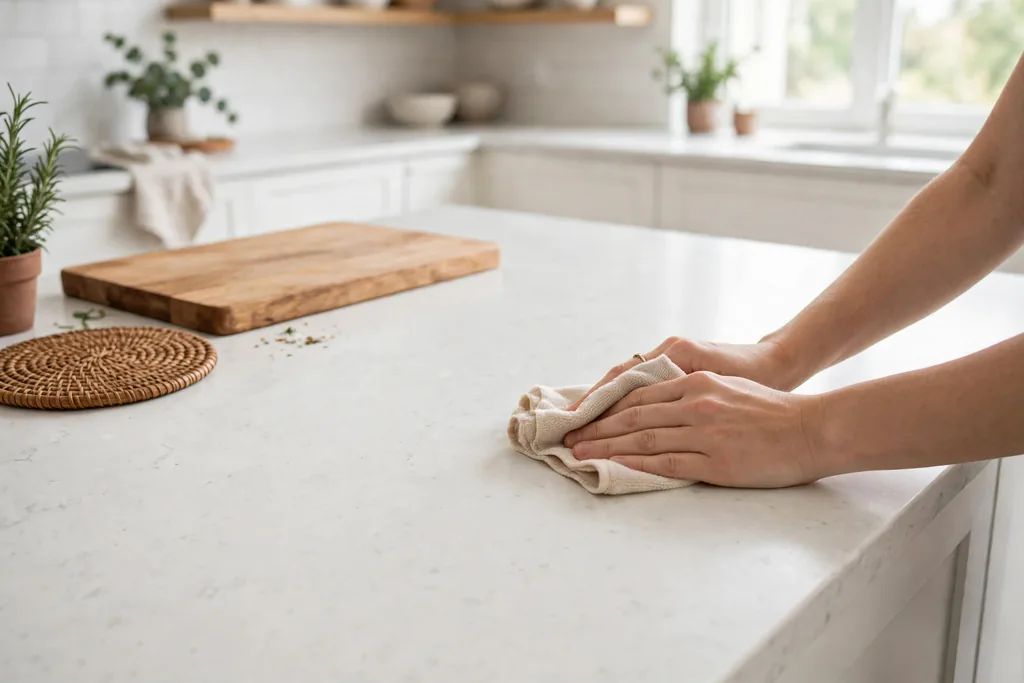
White quartz is a practical choice for daily kitchen use, but a simple care routine keeps it looking its best. Wipe spills soon after they happen, especially strongly colored foods and drinks such as tomato sauce, coffee, and red wine, since sitting spills are harder to remove from any light surface. Use a soft cloth with warm water and a mild soap for daily cleaning, and dry the surface after wiping to avoid water marks.
Avoid harsh pads and strong cleaners that can dull the finish over time, and use trivets or boards under very hot pans and for heavy chopping. Cutting boards protect both the counter and your knives, and they keep the surface free of small scratches that catch the eye on a white background. Read the care guidance that comes with your slab and keep it with your kitchen records, so everyone in the household follows the same routine.
11. Match White Quartz to a Design Style
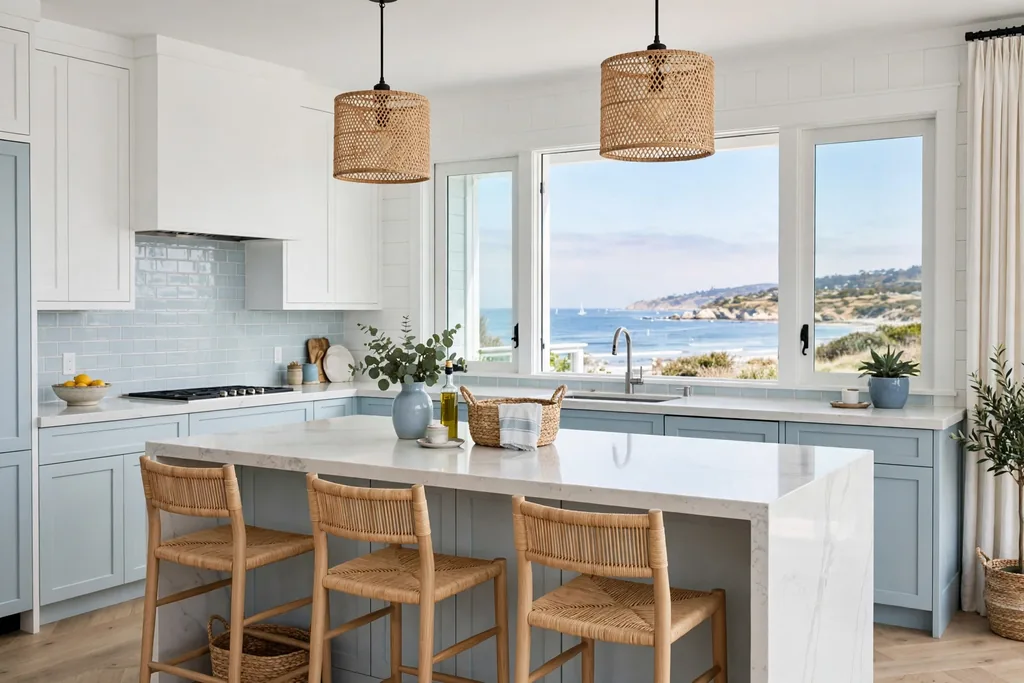
White quartz adapts to many styles, but the details around it set the style. A modern kitchen pairs white quartz with flat front cabinets, simple hardware, and a plain backsplash for a clean, open look. A farmhouse kitchen pairs it with shaker cabinets, wood accents, and a farmhouse sink for warmth. A classic kitchen pairs it with detailed cabinets, a layered edge profile, and brass or bronze hardware.
Coastal kitchens pair white quartz with light wood, pale blues, and woven textures for an airy feel. A transitional kitchen mixes modern and classic details, such as simple cabinets with a soft edge profile and a quiet backsplash. Pick the style that matches the rest of your home, then let the veining, finish, and edge follow that style. A counter that fits the home around it will look right for years, even as small decor items change.
12. Compare Samples at Home Before Deciding
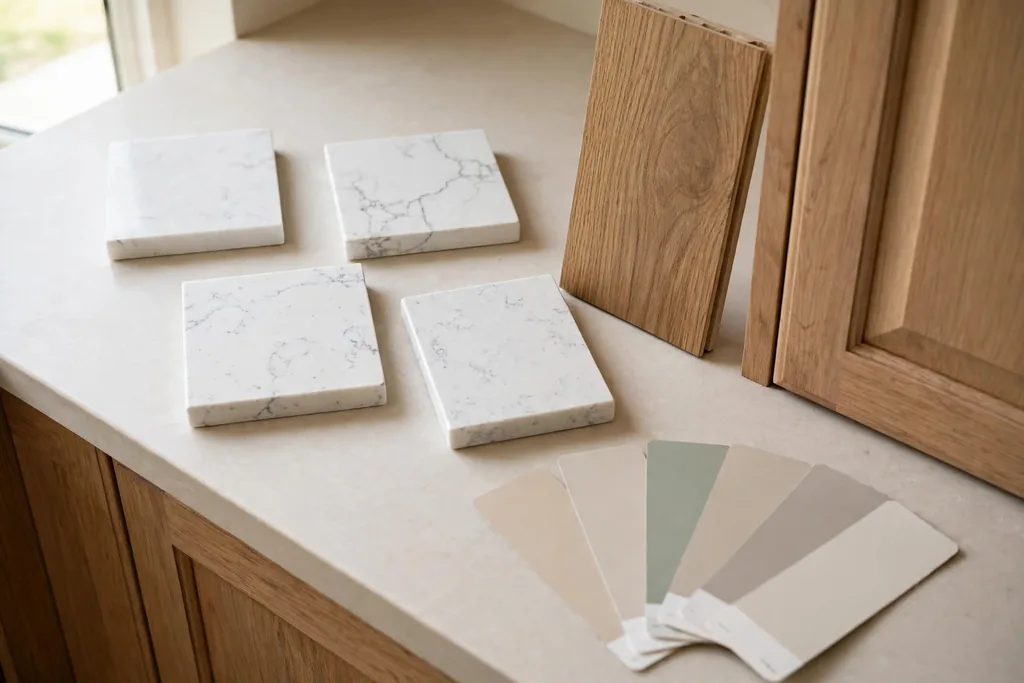
The last step is also the most useful: compare samples at home before you order. Borrow or buy samples of your top two or three slabs, in the finish you plan to use, and place them on your existing counters or on a board near the cabinets. Live with them for a few days, and look at them in morning light, afternoon light, and evening light, with the kitchen lights on and off.
Test each sample the way you will use the counter. Set a mug, a cutting board, and a pan beside it, wipe it with a damp cloth, and check how it looks next to your flooring, wall paint, and hardware. Note which sample still looks good at the end of the day, when the kitchen is in normal use rather than showroom light. The sample that looks right in your own kitchen, next to your own cabinets, is the one to order.
Conclusion
Choosing white quartz kitchen countertops comes down to a short list of choices made in the right order: color family, finish, veining, edge, cabinets, backsplash, lighting, and care. Start with the amount of pattern you want, then check each later choice against that first decision. Samples checked at home, in your own light and next to your own cabinets, will tell you more than any showroom display. With those checks done, you can order with confidence and enjoy a bright, practical kitchen surface for years.
FAQs
What is the best white quartz color for a kitchen?
The best white quartz color is the one whose undertone matches your cabinets and flooring, so check samples at home in your own light. Bright white suits cool gray and black kitchens, warm white suits cream and wood kitchens, and soft white gray works as a middle ground when your kitchen mixes warm and cool elements.
Should I choose polished, honed, or matte white quartz?
Choose polished white quartz for a bright, reflective surface that shows veining clearly, honed for a softer low shine look, or matte for a flat, calm surface with very little reflection. Compare all three in your kitchen light, since shine changes how marks and fingerprints show in daily use.
Does white quartz show stains easily?
White quartz can show sitting spills more clearly than a dark counter, so wipe up strongly colored foods and drinks soon after they happen. Daily cleaning with a soft cloth, warm water, and mild soap, plus quick wipe ups, keeps a white surface looking clean in normal kitchen use.
What backsplash goes with white quartz countertops?
A plain backsplash goes well with boldly veined white quartz, while a patterned tile or textured backsplash suits nearly plain white quartz. Match the whites first, since tile whites vary, and choose a grout color that either quiets the backsplash or adds pattern, depending on the look you want.
What edge profile is best for white quartz kitchen countertops?
A straight or slightly rounded eased edge suits most kitchens, since it looks clean and is kind to hips and elbows in daily use. A beveled edge adds a small detail, while a layered or ogee edge suits classic rooms with detailed cabinets, so match the edge to your cabinet style and how the counter will be used.
How do I pick white quartz that will not clash with my cabinets?
Hold a quartz sample directly against a cabinet door and check both in daylight and evening light before ordering. Pick a shared undertone, either cool or warm, and let either the counter or the cabinets lead, with the other supporting, so the two surfaces sit comfortably together.