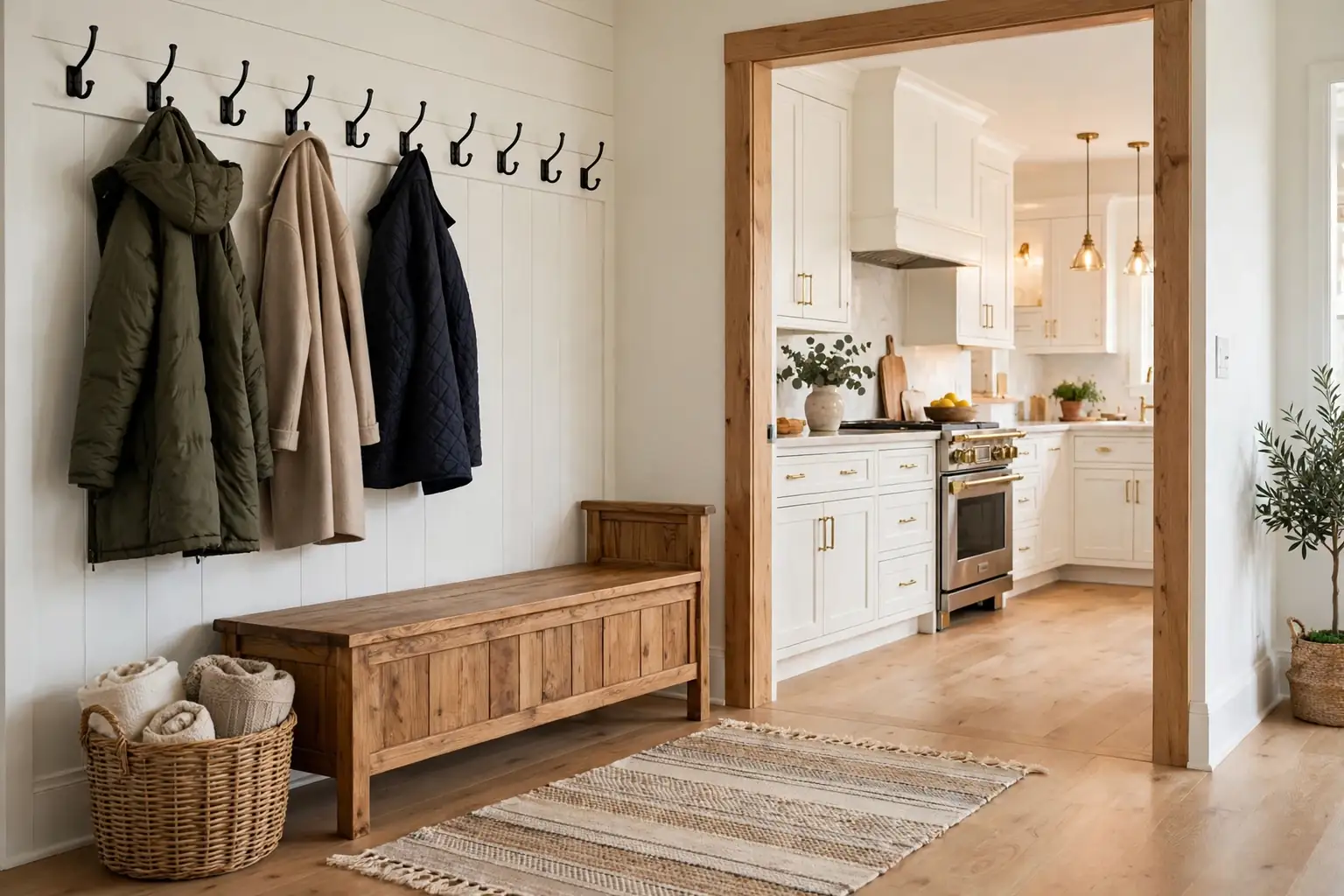
The spot where you come into the kitchen sets the tone for the whole room. When coats pile on a chair, shoes crowd the doorway, and keys vanish into a drawer, the kitchen feels busy before you even start cooking. A small entry setup fixes that without a remodel. These 11 kitchen entryway ideas use the wall, the floor, and the back of a door you already have, so the doorway stays clear, useful, and warm. Pick one idea that fits your space, live with it for a week, and add a second only if the first one earns its place.
Key Takeaways
- Give every daily item a fixed home: coats on hooks, shoes in one cabinet or basket, and keys in one bowl or on one hook.
- Keep the walkway clear. A bench, a table, or a rug should sit against a wall, never in the path between the door and the stove.
- Use one repeated material, such as warm wood or woven baskets, so the entry looks planned rather than pieced together.
- Choose pieces you can clean easily, since an entry by a kitchen collects crumbs, mud, and cooking splashes.
- Start small. One bench or one rail can change how the doorway works, and you can build from there.
1. Set a Bench With Hooks Above It
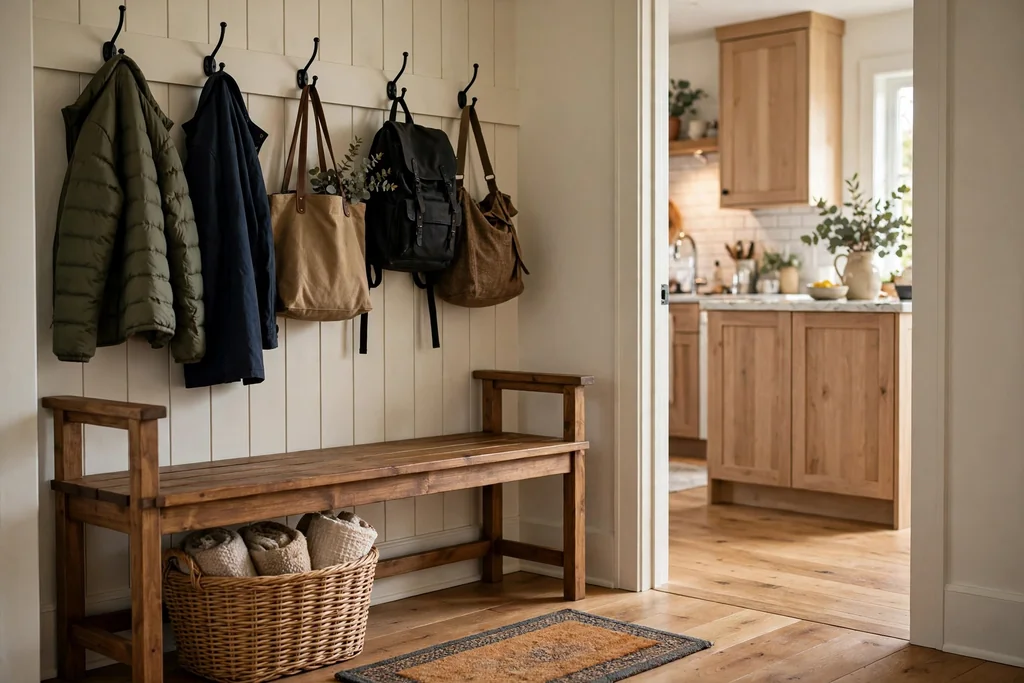
A low bench with a row of hooks above it turns a bare kitchen doorway into a place to sit, drop a bag, and hang a coat in one move. Fix the hooks into wall studs so they hold a wet coat and a heavy tote without pulling loose. Keep the bench shallow, about the depth of a seat cushion, so it does not narrow the walkway. Slide one basket under the bench for shoes or market bags. This setup suits a back door entry best, where people arrive with hands full and need somewhere to pause before stepping into the kitchen.
2. Add a Narrow Console Table by the Door
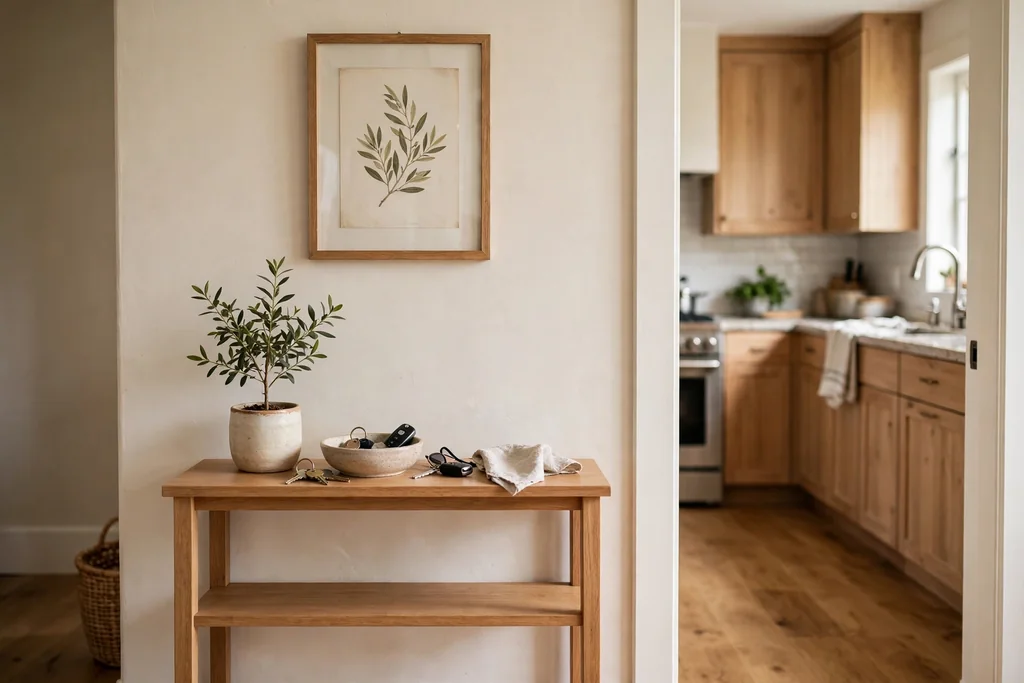
A slim console table gives the entry a landing spot for keys, mail, and a phone without taking floor space a chair would need. Choose a table no deeper than a dinner plate is wide, and push it flat against the wall beside the door. Put a small bowl on top for keys and one plant or a stack of two cookbooks for warmth. Leave the space under the table open for a basket, so the table does not become a second storage pile. If the door swings inward, check that it clears the table before you fix anything to the wall above it.
3. Hang Open Shelves for Everyday Kitchen Items
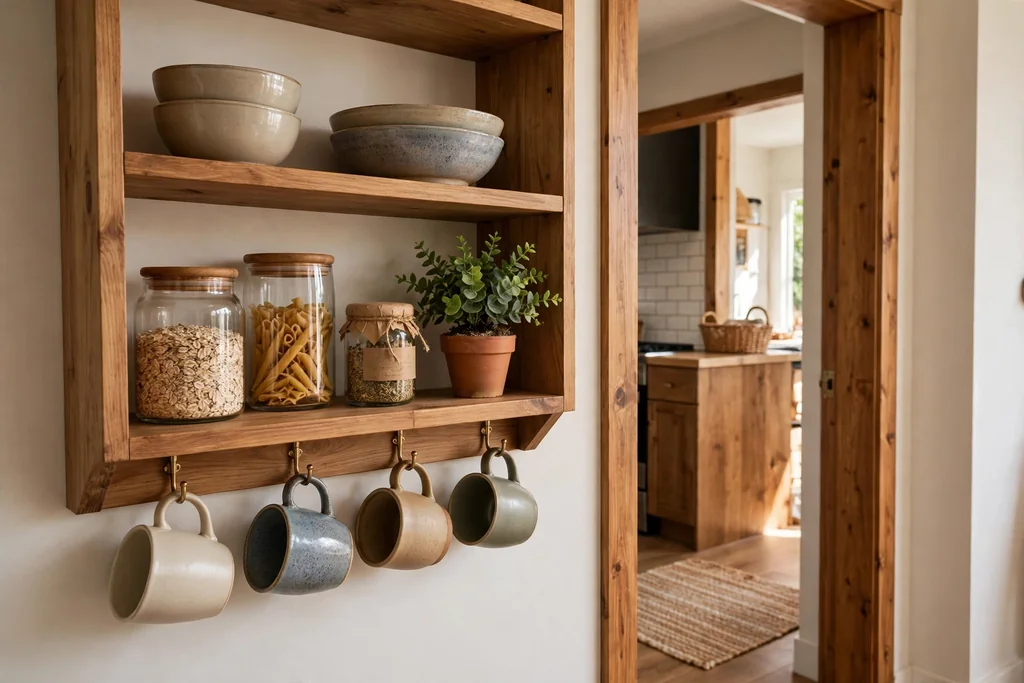
Open shelves beside the kitchen doorway put everyday items where you reach for them on the way in or out. Use two short shelves rather than one long one, so the display stays light and nothing sits out of reach. Keep mugs, a small plant, and a jar of utensils on the lower shelf, and lighter items such as bowls on the upper shelf. The same grouping rules in this guide to how to style open shelves apply here: fewer items, repeated materials, and clear space between groups. Anchor the shelves into studs, and keep heavy pots off them.
4. Hide Shoes in a Closed Cabinet
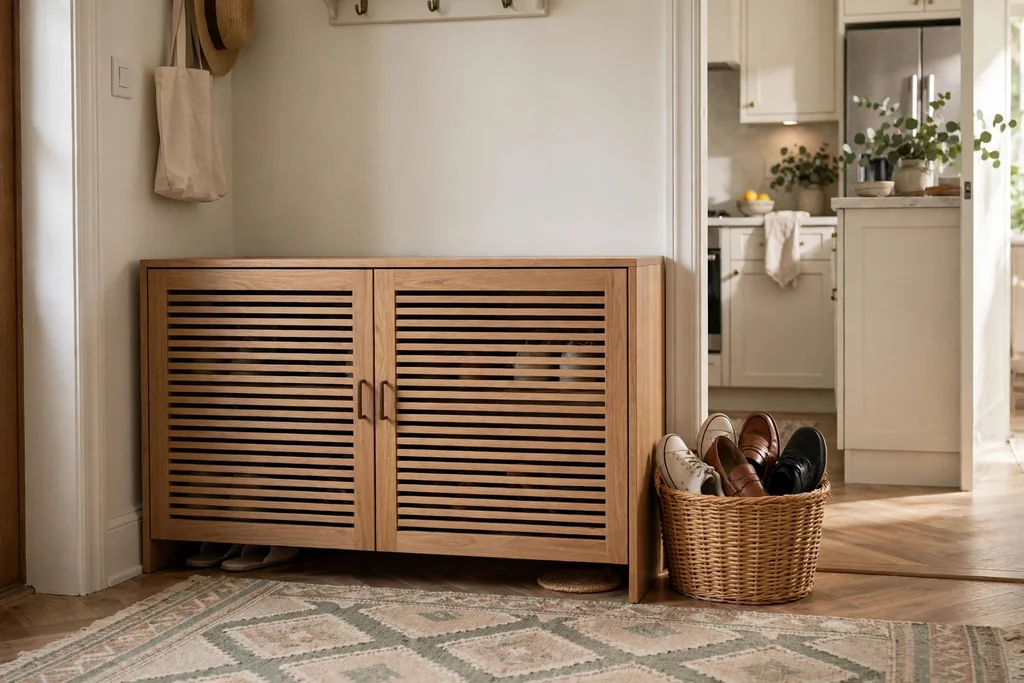
A low cabinet with closed doors keeps shoes out of sight and stops the doorway from looking like a shoe shop. Pick a cabinet with slatted or vented doors so shoes can air out, and set it against the wall nearest the door. Inside, one pair per person is a fair rule; out of season pairs belong in a closet, not in the entry. A cabinet top at seat height can double as a perch for putting shoes on, which is handy if you have no room for a bench. Wipe the cabinet weekly, since this is the spot that collects the most floor dirt.
5. Lay a Washable Runner Rug in the Path
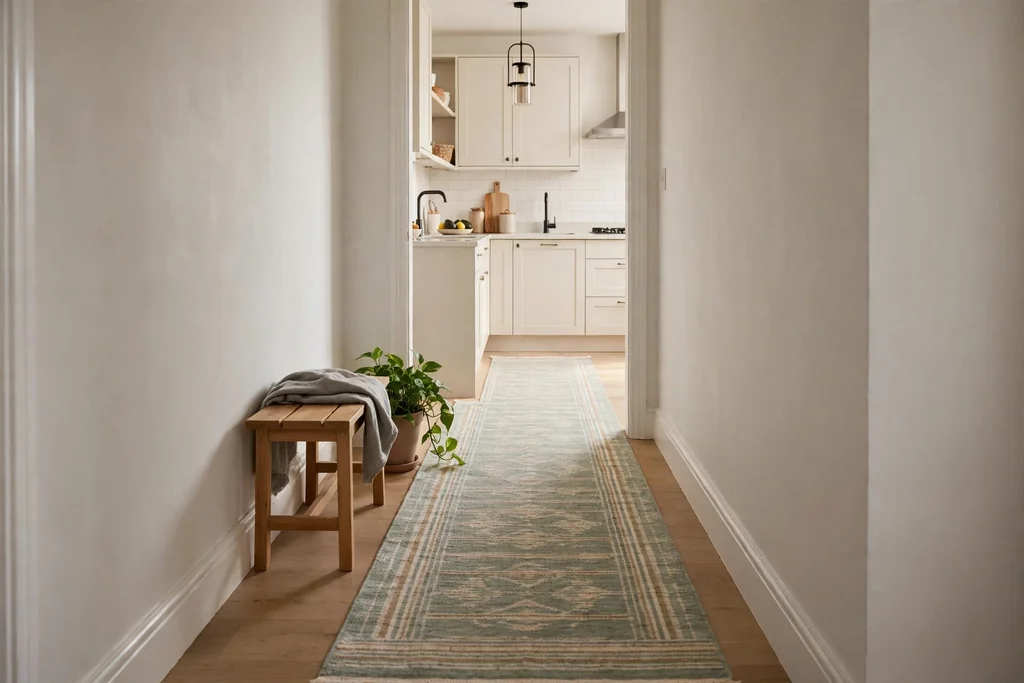
A runner rug marks the entry path and protects the floor between the door and the kitchen. Choose a low pile, washable rug with a nonslip backing, because this strip takes wet shoes, dropped crumbs, and daily foot traffic. Measure first so cabinet doors and the dishwasher still open over it, and leave a clear margin of bare floor on each side so the rug does not look squeezed in. A plain or small pattern hides marks better than a pale solid color. Shake the rug outside once a week and wash it when the season changes.
6. Fix a Peg Rail for Aprons and Bags
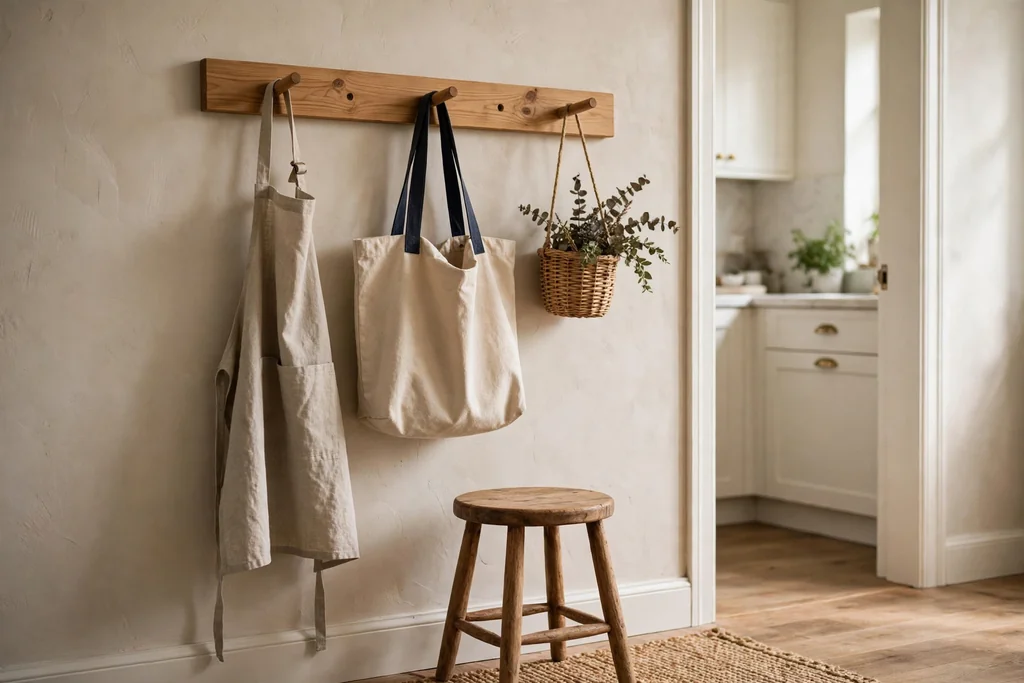
A wooden peg rail is a simple, low cost way to hang aprons, tote bags, and a market basket right where you need them. Fix the rail at a height every adult in the house can reach, and space the pegs wide enough that a coat on one peg does not cover the next. Hang aprons nearest the kitchen, and bags nearest the door, so each item is grabbed in the order you use it. A rail suits a narrow wall or the side of a tall cabinet where a full hook board would not fit. Keep one peg free, so guests always have a place to hang a coat.
7. Build Cubbies for Each Person
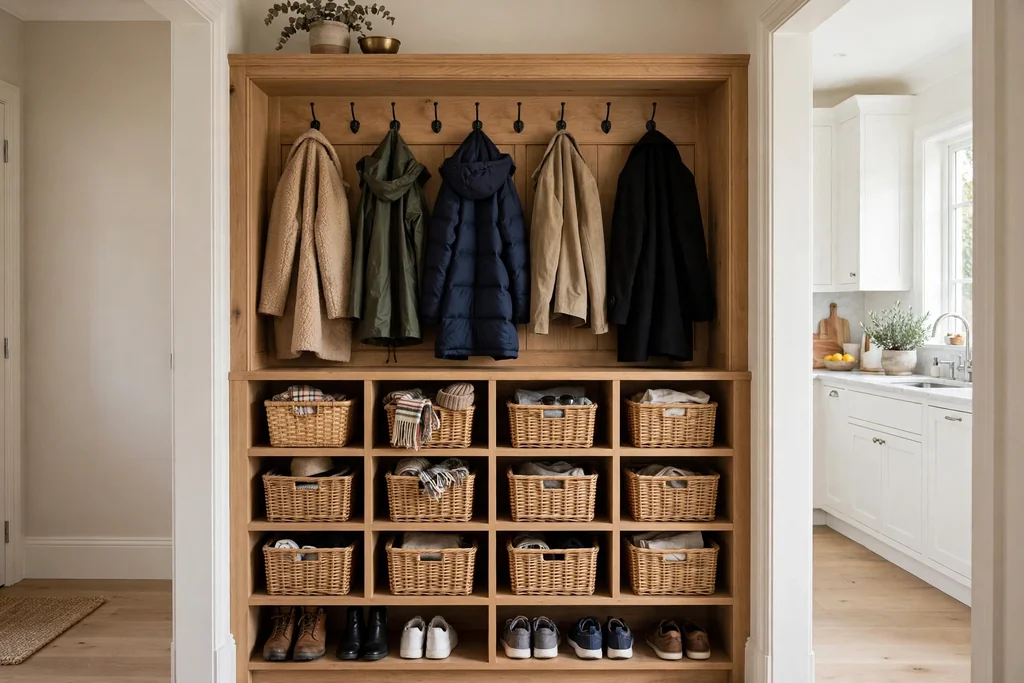
Cubbies give each person in the house one labeled slot for a coat, a bag, and a pair of shoes, which ends the pile by the door. A small unit with three or four openings fits most kitchen entries, and baskets inside each opening hide small items such as gloves and hats. Put the unit against the wall beside the door, not facing it, so the open fronts do not block the view into the kitchen. Label each basket with a name or a simple tag if children share the space. This idea works best when everyone agrees that only the current season’s gear lives in the cubbies.
8. Create a Small Command Station With a Chalkboard
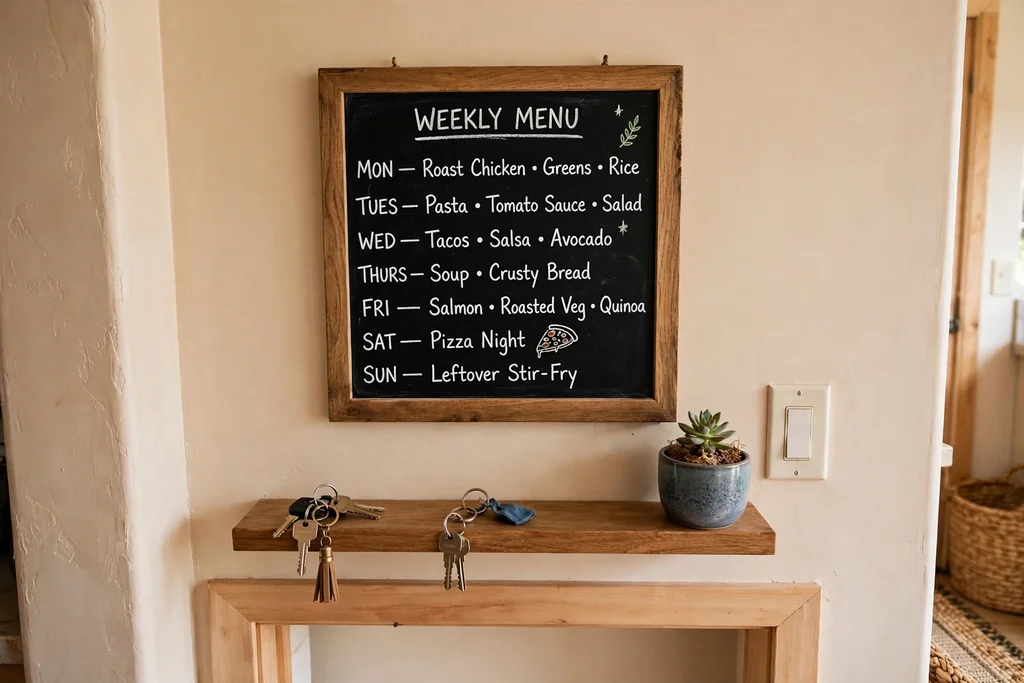
A chalkboard or a small whiteboard above a narrow shelf turns the entry into the place where the week gets planned. Write the weekly menu, a shopping list, and one note for the household on the board, and keep a small bowl on the shelf below for keys and loose change. Hang the board at eye level beside the door, away from steam from the stove so the writing stays clear. This station suits a busy kitchen entry, since it puts planning where people already pass each day. Wipe the board clean each Sunday and start the week fresh.
9. Hang a Mirror and a Small Light by the Door
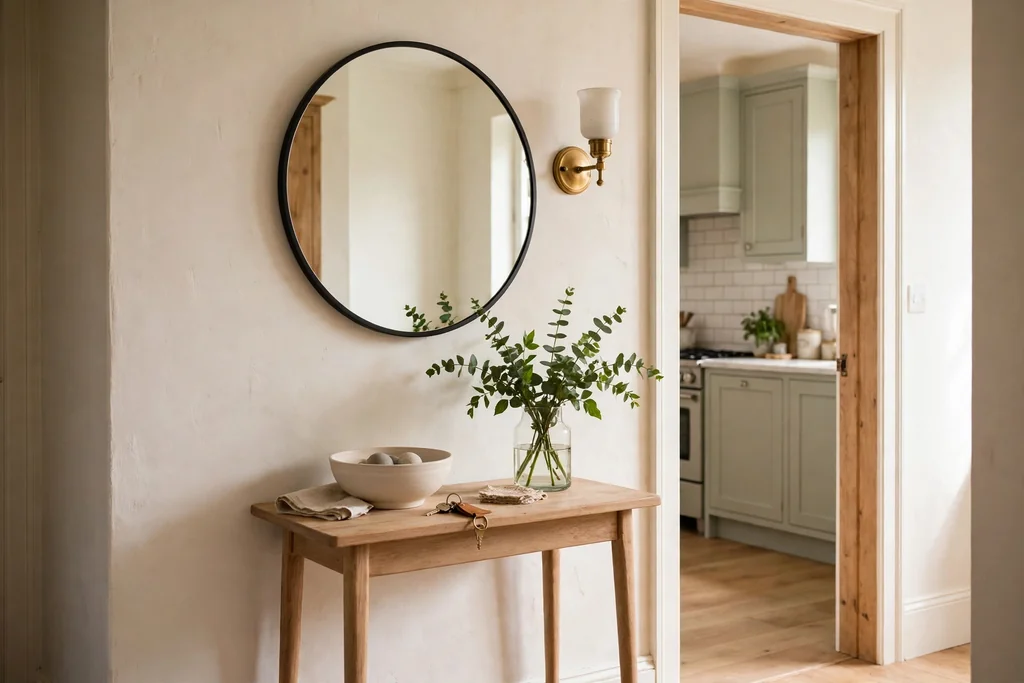
A mirror above a small entry table makes a narrow kitchen doorway feel wider and gives you a last check before you leave. Choose a round or oval mirror no wider than the table below it, and hang it at face height for the adults in the house. Add a small wall light or a battery lamp beside it, so the corner is lit in the evening when the kitchen lights are low. Keep the table top to three items at most, such as a key bowl, a small vase, and a candle holder used only when you are home. A mirror near a door also bounces daylight deeper into the kitchen.
10. Use the Pantry Door as Entry Storage
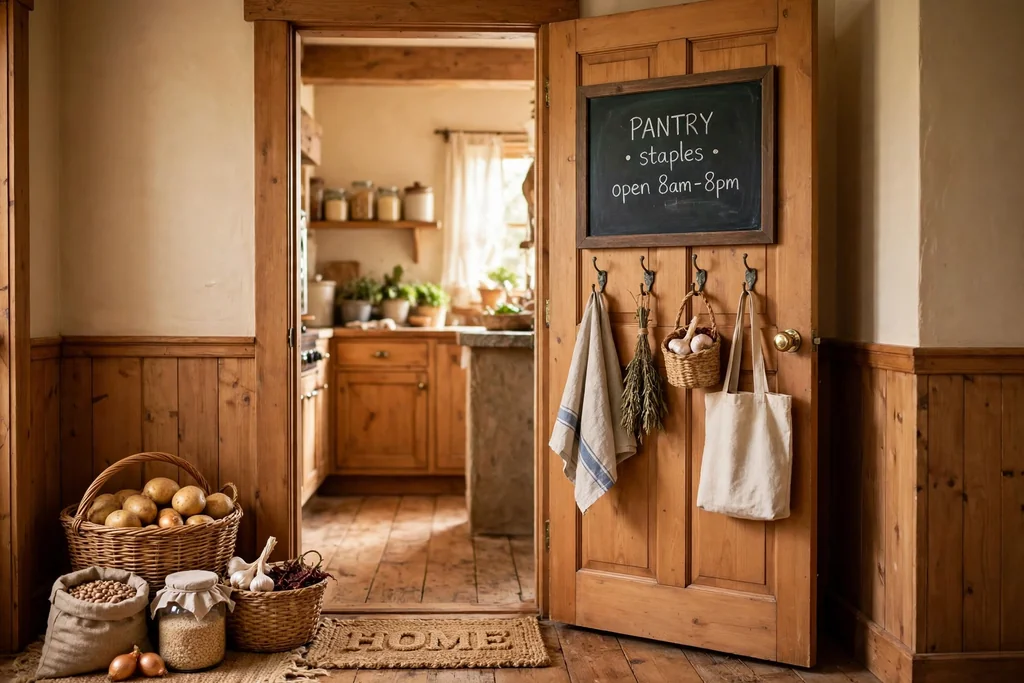
The pantry door is often the largest unused surface in a kitchen entry, and a few fittings turn it into useful storage. Hang a slim rack on the inside of the door for spice jars or cleaning cloths, and fix two hooks on the outside for an apron and a tea towel. Check first that the door still closes fully with the rack fitted, and that nothing rattles when the door moves. This idea suits a small entry with no spare wall, since it adds storage without taking any floor space. Keep the heaviest items low on the rack so the door hinges are not strained.
11. Swap One Seasonal Touch at the Door
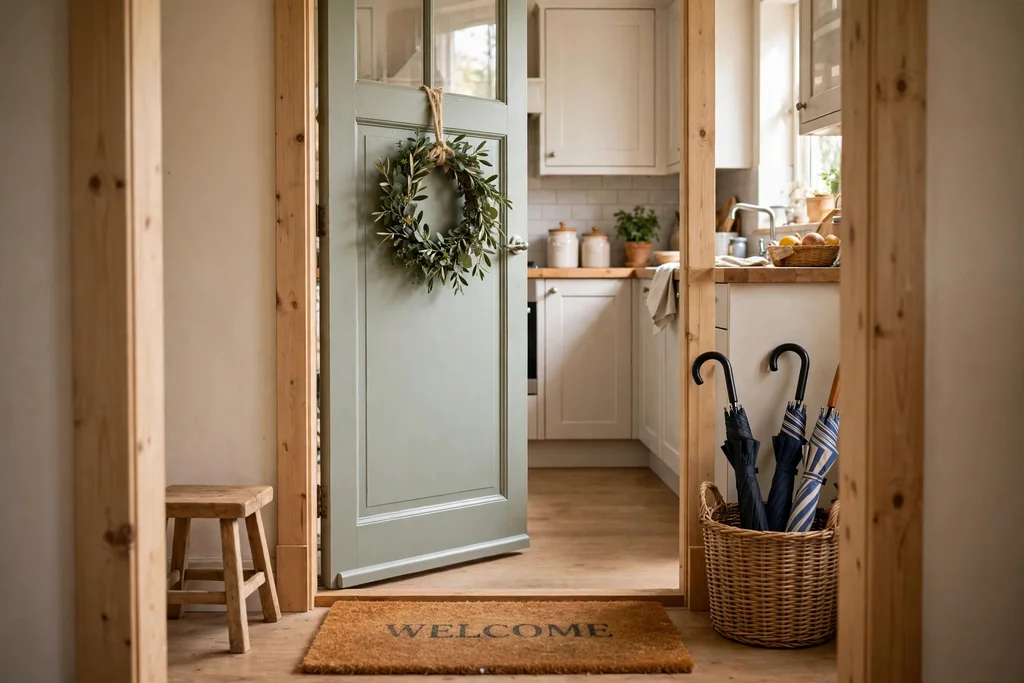
One seasonal change at the kitchen door keeps the entry feeling fresh without a full redecoration. In spring, swap in a light doormat and a small vase of green stems; in autumn, use a plain green wreath on the door and a basket for umbrellas. Change only the mat, the wreath, and one basket item, and leave the bench, hooks, and shelves as they are. This keeps the entry useful all year, since the working parts never move. The same approach works for the rest of the kitchen, as these thanksgiving kitchen decor ideas show with one styled zone and a steady palette.
Conclusion
A cozier kitchen entry does not need more furniture. It needs a clear path, a fixed home for coats, shoes, and keys, and one warm detail such as wood, a woven basket, or a plant. Start with the item that causes the most clutter in your doorway, whether that is shoes, coats, or keys, and fix that first. Once that habit sticks, add a runner, a mirror, or a chalkboard to suit how your household actually uses the door. A doorway that works well makes the whole kitchen feel calmer, from the first step inside to the last dish put away.
FAQs
What is the best setup for a small kitchen entryway?
A peg rail, a narrow console table, and one basket usually beat a bench in a small entry, since they use wall space rather than floor space. Keep the walkway fully clear, and choose one closed cabinet or basket for shoes so the floor stays tidy. If you can fit only one piece, make it the peg rail, because coats and bags cause most of the clutter by a kitchen door.
How do I keep a kitchen entryway tidy with children?
Give each child one cubby or one basket with their name on it, and set a simple rule that only current season gear lives there. Keep hooks at a height children can reach, and place a small stool nearby if the rail is high. Check the cubbies once a week and move outgrown or out of season items to a closet, so the entry never has to hold more than it was built for.
What kind of rug works best in a kitchen entry?
A low pile, washable runner with a nonslip backing works best, since it handles wet shoes and crumbs and can go in the wash. Avoid thick pile rugs, which catch on shoes and trap dirt, and avoid rugs without a backing, which slide on smooth kitchen floors. Measure around cabinet doors and the dishwasher before buying, and choose a pattern that hides marks between washes.
How can I add entry storage without blocking the doorway?
Use the walls and the backs of doors instead of the floor. A peg rail, open shelves, a mirror, and a rack on the pantry door all add storage while the walkway stays open. If you need floor storage, choose one shallow piece against a wall, such as a low shoe cabinet, and keep everything else off the floor. Stand in the doorway after setup and check that you can walk through without turning sideways.
Where should keys and mail go in a kitchen entry?
Put a small bowl or one hook on a console table or a shelf right beside the door, at the spot your hand reaches first when you come in. Keep mail in the same place, in a slim tray or a single upright holder, and sort it once a week so the pile does not grow. One fixed spot works better than two, since keys end up where the habit already points.
Can a kitchen entry feel cozy without a bench?
Yes. A runner rug, warm wood on a peg rail or shelf, a plant, and a small light give the same warm feel without a bench. A mirror helps a narrow entry feel wider, and a woven basket softens hard kitchen surfaces. If seating matters, a single stool tucked under a console table gives you a perch without the footprint of a full bench.