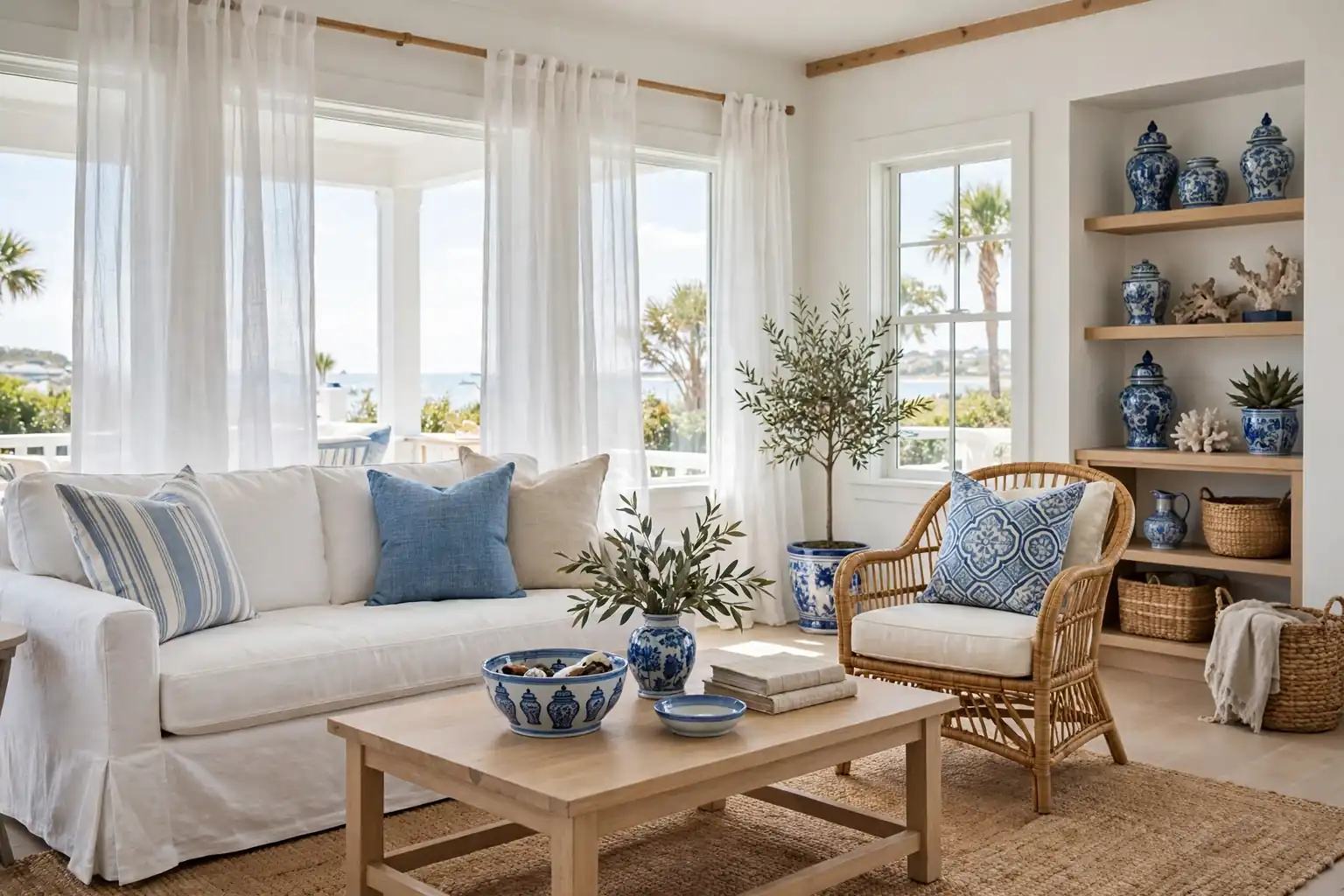
A Serena and Lily inspired living room on a budget starts with a white slipcovered sofa, natural textures such as rattan and jute, and blue and white accents, plus light linen curtains and simple greenery. The 19 ideas below show low-cost swaps, secondhand finds, and styling steps that build the relaxed coastal feel without a full room of new furniture.
Start with the largest surfaces first: the sofa cover, the rug, and the curtains. Those three set the palette, and every later layer, from pillows to ceramics, should repeat white, sand, wood, or soft blue. Shop secondhand for rattan and wood pieces, change covers rather than furniture where you can, and keep one clear focal point, usually the sofa wall or the fireplace. For a related warm room built on the same neutral base, see farmhouse decor ideas for living room.
Key Takeaways
- Start with a white or cream slipcover, a jute rug, and sheer linen curtains to set the coastal base.
- Repeat white, sand, natural wood, and soft blue through every layer, and keep other colors out of the room.
- Buy rattan, wood, and ceramic pieces secondhand where possible, and change covers instead of replacing furniture.
- Mix textures, such as linen, rattan, jute, and woven baskets, so a simple palette still feels layered.
- Keep surfaces calm: one styled tray, one vase of stems, and one group of ceramics per surface.
- Work in budget order: covers and paint first, then the rug, then lighting, then small decor last.
1. White Slipcovered Sofa in Washable Cotton
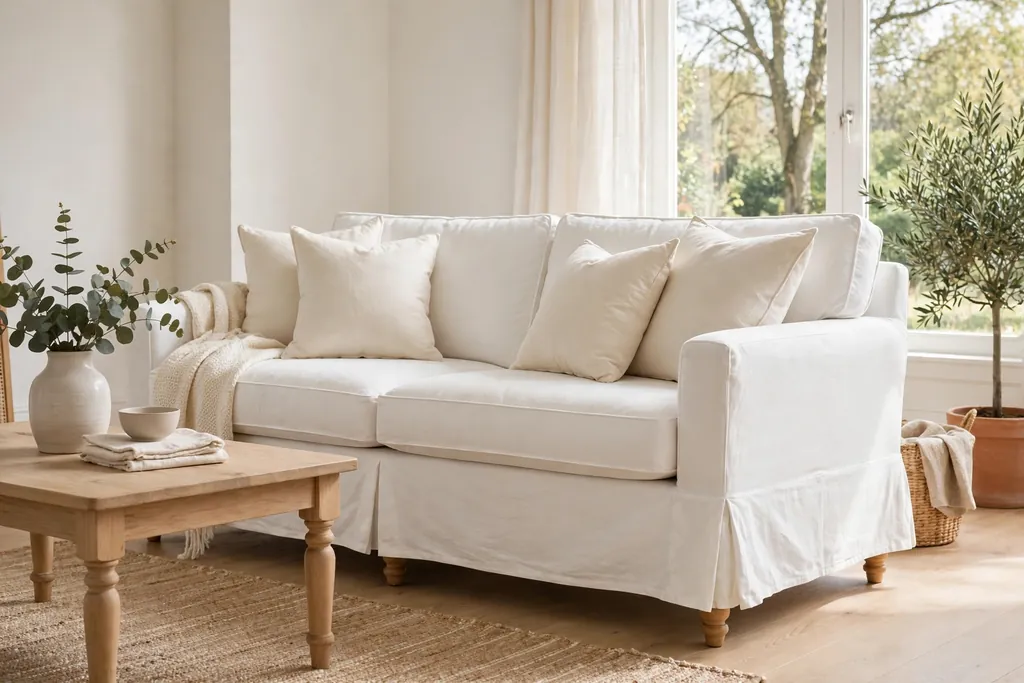
A white slipcovered sofa is the clearest starting point for this style, because it gives the room its light base and its relaxed shape at once. If a new sofa is out of budget, a washable slipcover over an existing sofa gives the same look for far less, and a spare cover means the seat can be washed when life happens. Choose cotton or a cotton blend in white or warm cream, with a skirt that just brushes the floor.
Keep the cover fresh by washing it on a gentle cycle and putting it back on slightly damp, so creases settle as it dries. If pure white feels risky, choose warm cream or light oatmeal, and keep a folded throw over the seat for everyday use. Pair the sofa with wood legs or a low wood frame showing below the skirt, so the soft cover has a solid base.
2. Blue and White Striped Pillow Covers
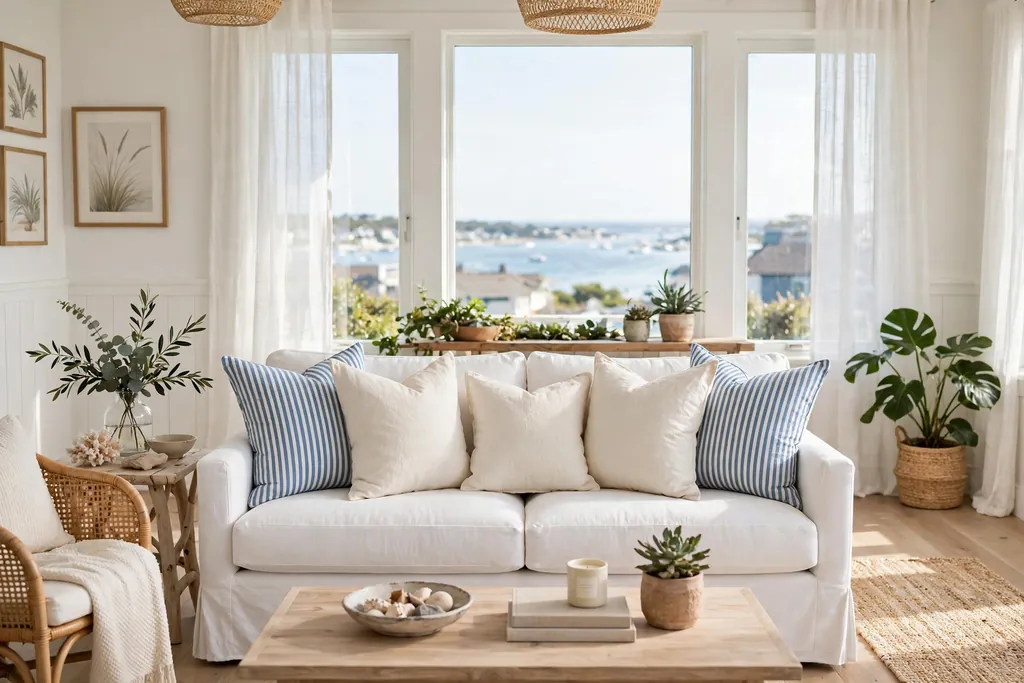
Blue and white striped pillow covers are one of the lowest cost ways to bring the coastal note into the room, since covers cost less than new pillows and can be swapped by season. Mix one wide stripe, one narrow stripe, and one plain white or cream linen cover, all in the same soft blue, and keep the count to what fits without a pile on the floor when someone sits down. The stripe reads as coastal at once, without a loud pattern elsewhere.
Use zip covers so they can be washed, and fluff inserts daily, since linen covers show dents more than firmer fabrics. Repeat the same blue in one other place, such as a throw or a ceramic jar, so the pillows link to the rest of the room. If the sofa already has a pattern, use plain blue and white covers in one stripe scale only, so the room stays calm.
3. Natural Jute Rug Under the Seating Area
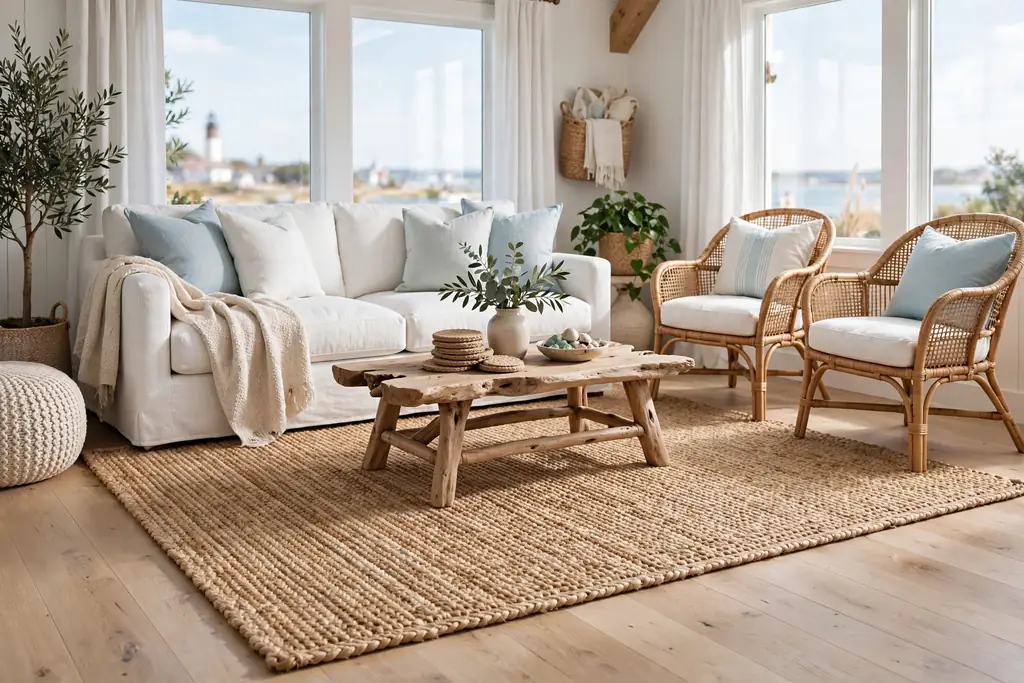
A natural jute rug under the sofa and chairs grounds the room in the same way a wood floor does, with texture that suits bare feet and the coastal palette. Choose a rug large enough for the front legs of the sofa and chairs to sit on it, in a natural tan tone with a simple woven border. The plain weave keeps the room calm, and it lets striped pillows and blue ceramics stand out against it.
Use a rug pad below so the jute does not slide on a smooth floor, and vacuum weekly so dirt does not build up in the weave. Shake the rug outside now and then, and blot spills at once, since jute marks if liquid soaks in. In a small room, one jute rug alone is enough, since layering a second rug over it needs floor space to show both edges.
4. Secondhand Rattan Armchair by the Sofa
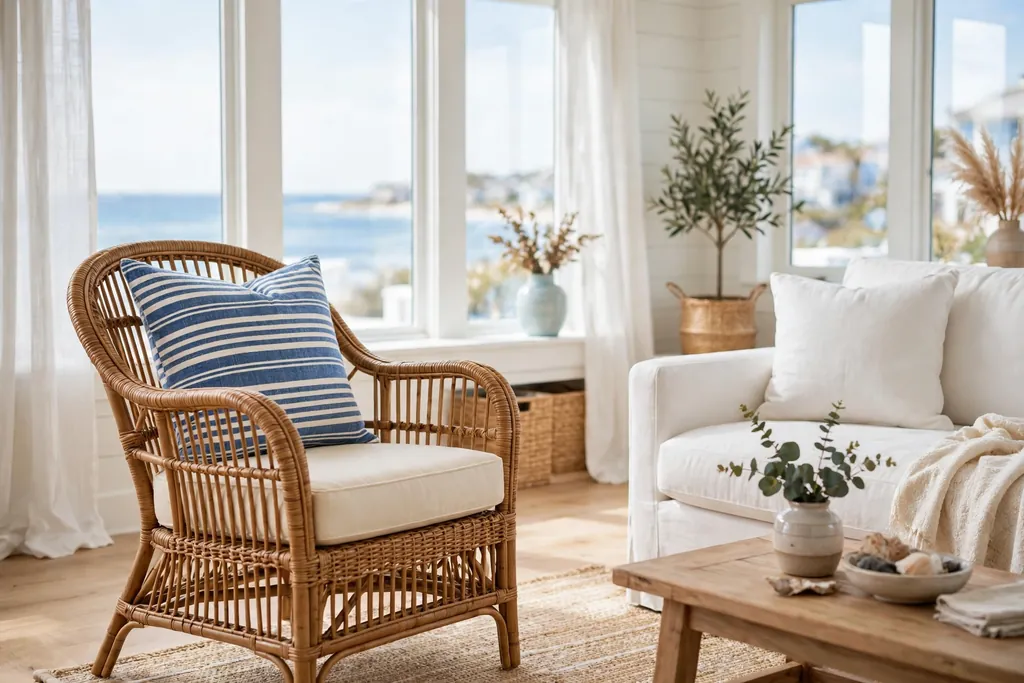
A rattan armchair beside the sofa adds the woven texture this style depends on, and secondhand chairs are often the best value way to get it. Look for a chair with a firm frame, tight weaving, and no broken strands, and check that it sits level on your floor before buying. One chair is enough to set the note; a pair works when the room has space for a conversation layout.
Add a plain cream cushion and one striped pillow, so the chair links to the sofa rather than standing apart. Wipe rattan with a dry cloth, and keep it out of strong direct sun, which can dry the weave over time. If a full rattan chair is hard to find, a rattan side table or a woven stool beside the sofa gives the same texture in a smaller piece.
5. Driftwood Finish Coffee Table
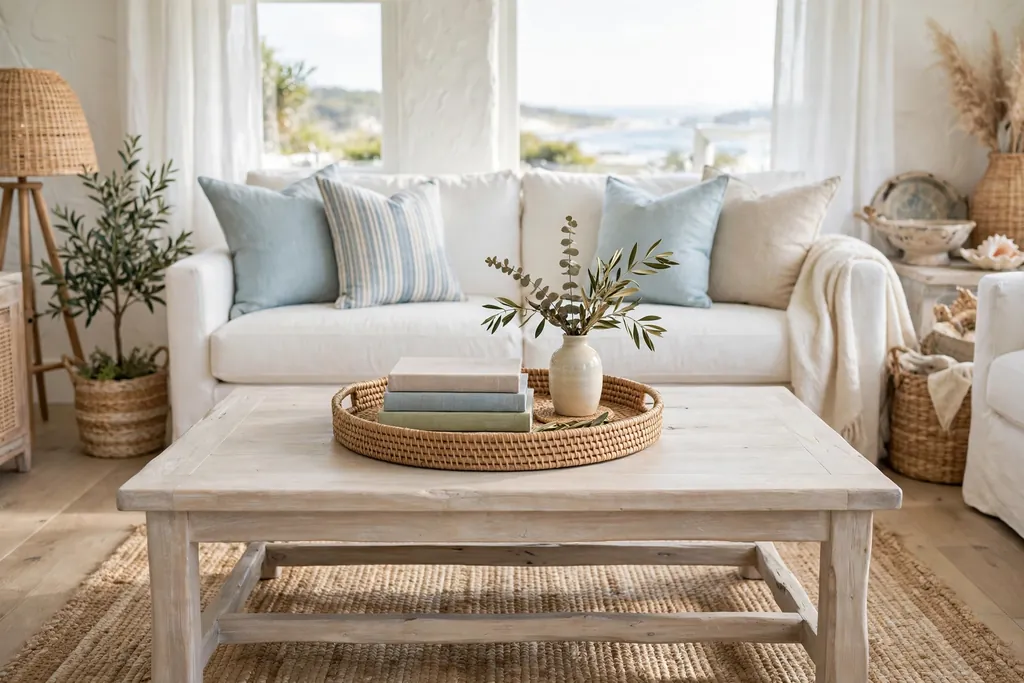
A coffee table in a driftwood finish, with pale weathered wood and visible grain, anchors the seating area without darkening the room. Look for a simple rectangular or round top with a lower shelf, so books and baskets have a home below and the top stays clear for cups. The pale wood tone sets the guide for other wood in the room, so keep side tables and frames within a close family of light tones.
Style the top with restraint: a woven tray, a stack of two books, and one small vase, leaving at least half the top clear. Wipe the top with a dry cloth for dust and a damp cloth for spills, and use coasters under hot drinks so the finish stays even. If a new table is out of budget, sanding and whitewashing an existing wood table gives a similar pale finish with paint and a brush.
6. Sheer White Linen Curtains
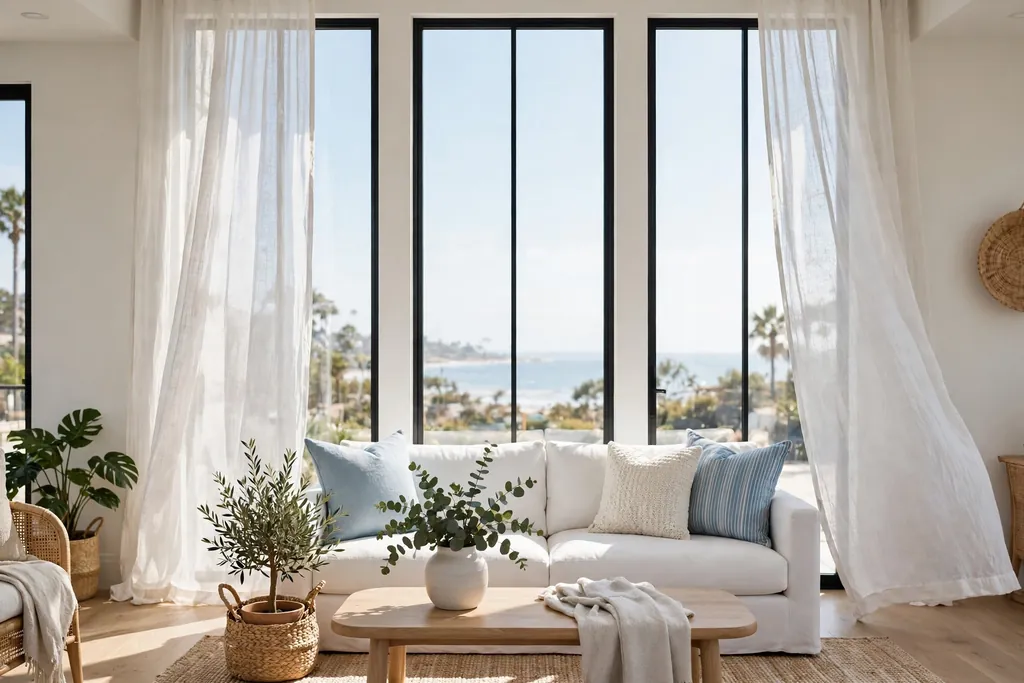
Sheer white linen curtains soften tall windows and let daylight fill the room, which is what keeps this pale palette from feeling flat. Hang the rod close to the ceiling and wider than the window frame, so the window looks taller and the curtains can stack clear of the glass. Choose natural white or cream linen, and let the panels fall to the floor with a small break rather than pooling, so they stay clean and easy to vacuum around.
Use rings with clips for a relaxed gathered look, and keep the curtain color close to the sofa so the window treatment links to the seating area. Wash linen curtains on a gentle cycle and hang them damp to reduce creases, and open them fully during the day, since this style depends on daylight to show the linen weave. For a related room on the same neutral base, see farmhouse decor ideas.
7. Seagrass Baskets for Throws and Everyday Storage
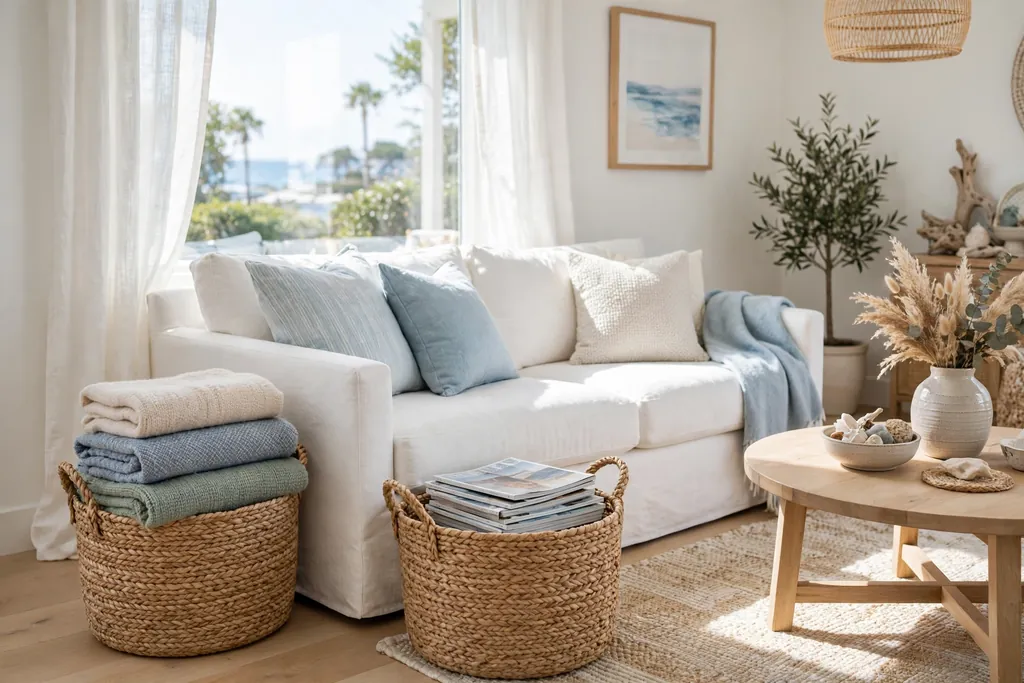
Seagrass baskets beside the sofa hold throws, magazines, and everyday clutter while adding the woven texture the room needs. Use a large basket for throws, a medium basket for magazines or toys, and a small basket on a shelf for remotes and chargers. The natural color works with almost any calm palette, and the baskets keep the room tidy without closed cabinets.
Place baskets where the clutter actually happens: beside the sofa for throws, near the television for remotes, and by the door for shoes or bags. Choose baskets with handles for pieces that move often, and line baskets used for plants or damp items. Shake baskets outside monthly, since woven fibers gather dust and crumbs, and replace a basket when the weave starts to fray at the rim.
8. Coastal Gallery Wall with Simple Framed Prints
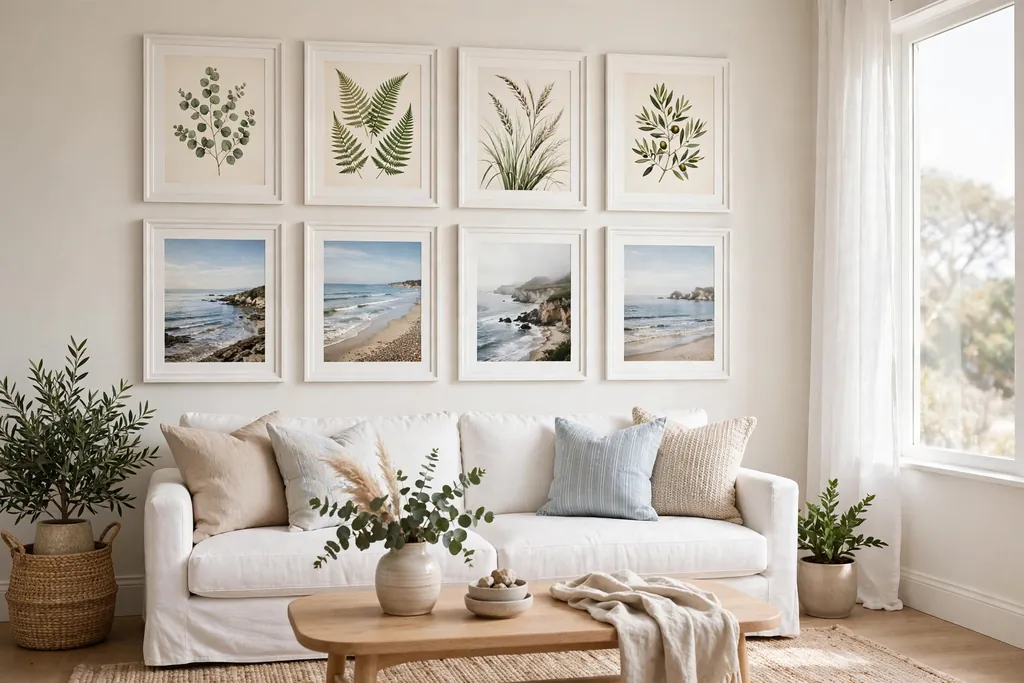
A gallery wall of coastal prints in simple white or light wood frames gives one wall a clear focal point for very little money, especially when prints are bought as plain art prints and framed at home. Start with one larger piece at eye level from the sofa, such as a shoreline or botanical print, then build around it with smaller prints, keeping a similar gap between frames. The calm palette matters more than matching sizes.
Lay the arrangement on the floor first, and take a photo before hanging, so the spacing stays even once frames go up. Keep the wall around the gallery simple, with no competing shelf or large mirror beside it, and check that heavy frames have secure fixings. If the wall is small, a group of three or five frames gives the same coastal note without crowding the room.
9. Blue and White Ceramic Jars on a Console
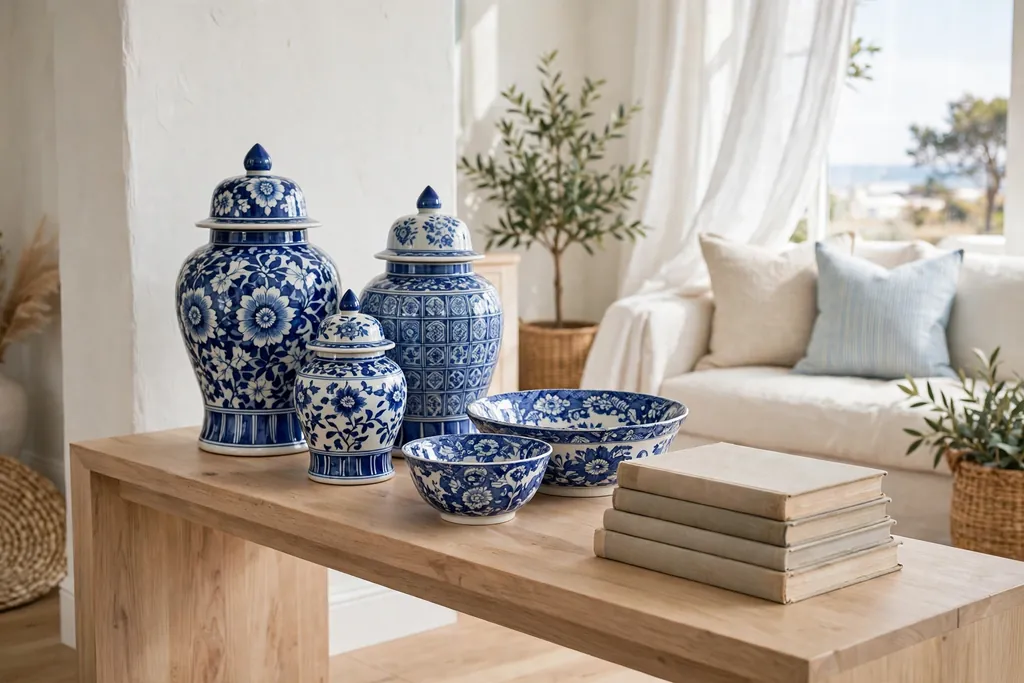
Blue and white ceramic jars, from ginger jars to simple bowls and vases, give a calm living room a classic accent that links to the blue in pillows and art. Group two or three pieces on one console or shelf, with books beside them, rather than spreading single pieces across every surface. Thrift shops and secondhand markets are a good source for these, since the shapes are simple and small chips on the base do not show.
Keep the group to one surface, and vary heights, with one taller jar and one or two smaller bowls, so the group has a clear shape. Dust ceramics weekly, since open shelves gather dust, and keep them clear of walkways and chair backs where they could be knocked. If blue feels strong, use it only in ceramics and one pillow, and keep the rest of the room in cream, white, and wood.
10. Woven Pendant Light Over the Seating Area
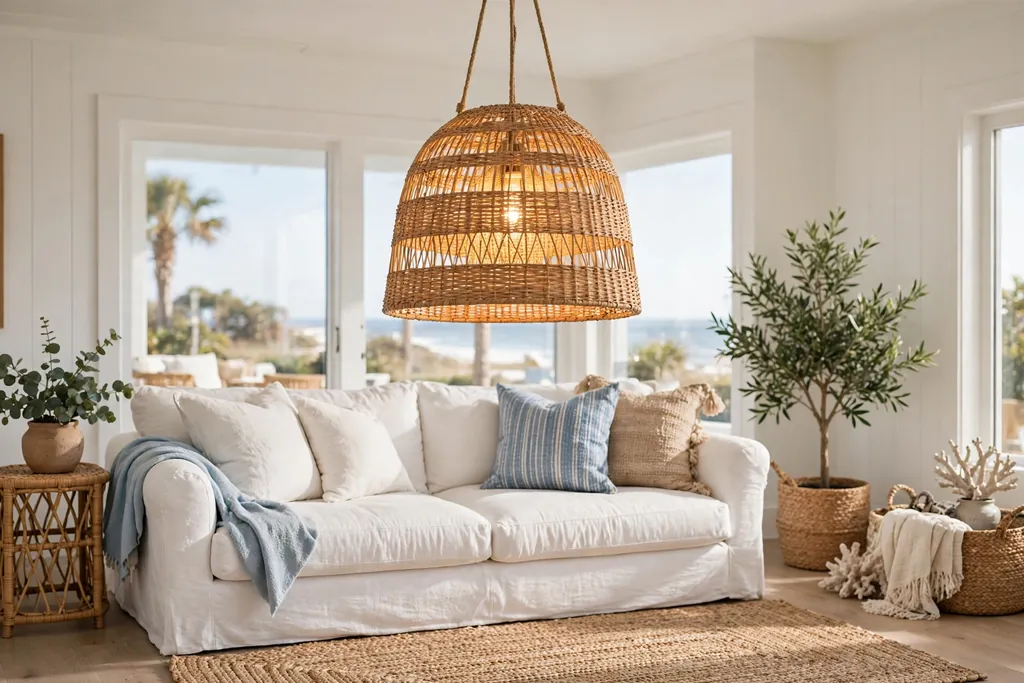
A woven pendant light, in rattan or a similar natural fiber, brings the room’s light down to eye level and adds texture overhead for less than a full fixture change. Choose a shade large enough to read from the sofa, with an open weave that lets light through, and hang it high enough to see across the room but low enough to feel close to the seating below. One strong pendant beats three small ones competing for attention.
Use a warm white bulb so linen, wood, and skin tones read warm rather than cold, and put the main light on a dimmer if your wiring allows it. Dust the weave with a dry cloth, since woven shades gather dust in their gaps. If rewiring is out of budget, a woven shade fitted over an existing pendant cord gives the same look without an electrician.
11. Light Wood Console Behind the Sofa
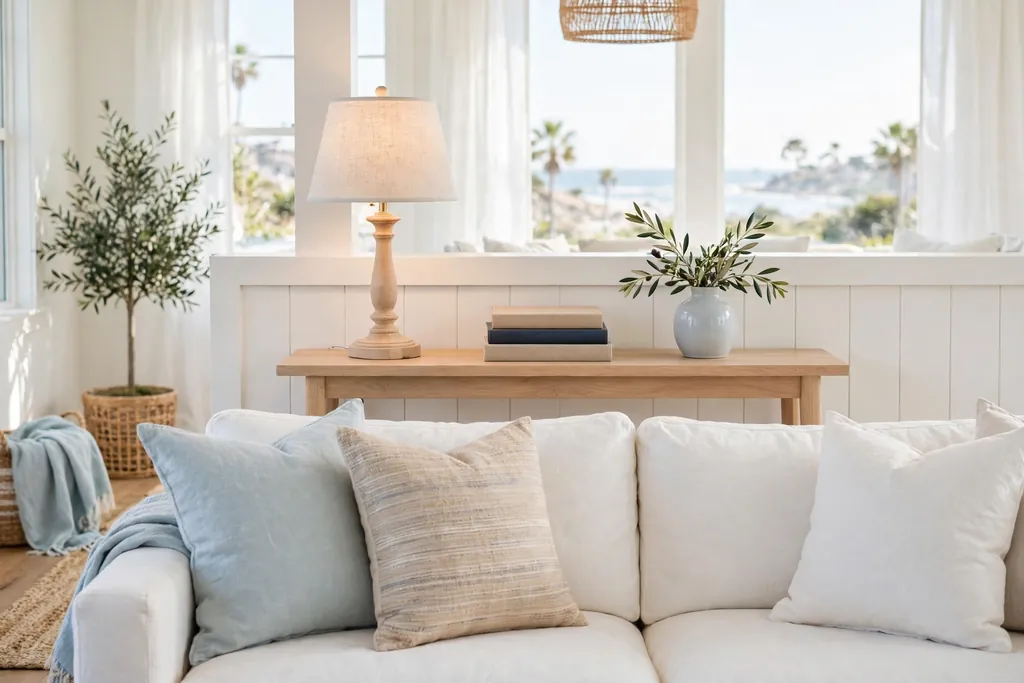
A light wood console behind the sofa gives the room a work surface and a display ledge in a spot that often stays empty. Choose a console close to sofa height in pale oak or whitewashed wood, and style the top with a lamp at one end for evening light, a stack of books in the middle, and a small vase or bowl at the other end. The table also marks the edge of the seating area in an open plan room, without a wall or a screen.
Keep the tabletop mostly clear, with one lamp, one book stack, and one small object, so it does not become a shelf for mail and chargers. Slide a basket or two below for throws or games, and measure the depth first, since a table that sticks too far into a walkway will get bumped daily. Place the lamp so its light falls over the sofa for reading, and keep cords tucked behind the table, out of the walkway.
12. Woven Tray Styling on the Coffee Table
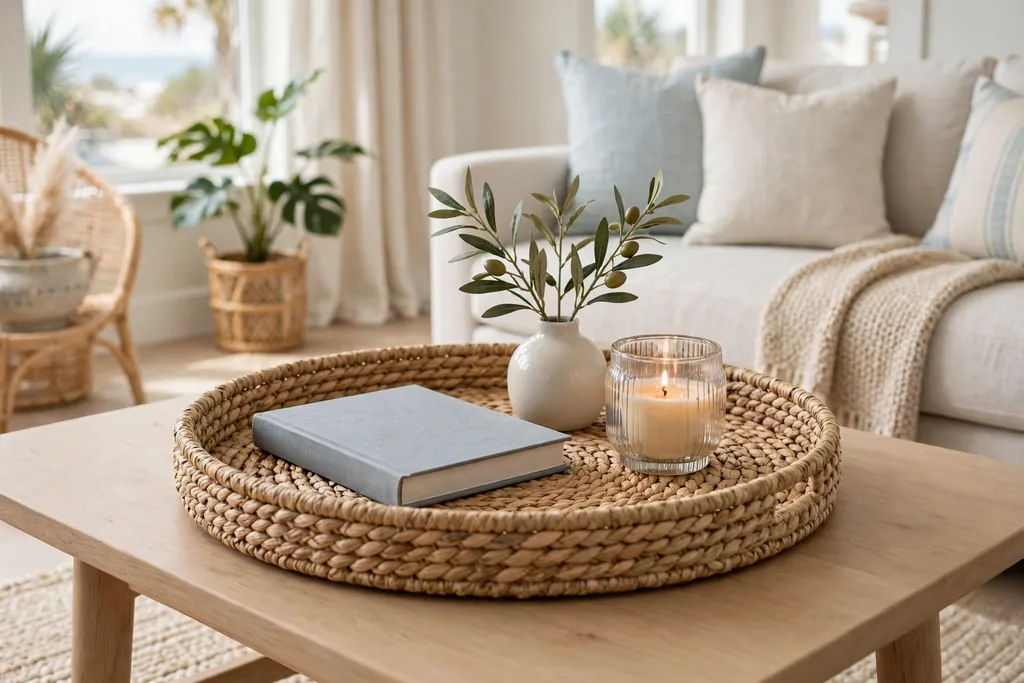
A woven tray on the coffee table groups small items into one neat unit and adds another layer of natural texture for very little money. Set a round or rectangular tray in seagrass or rattan in the center of the table, with a book, a small vase, and a candle holder inside it, and leave the rest of the top clear for cups. The tray also makes clearing the table fast, since the whole group lifts off in one move.
Keep the tray contents to three or four items, and match the tray tone to the rug or baskets so the textures link across the room. Wipe the tray with a dry cloth, and keep candles on stable holders away from curtains and dried stems. If the coffee table is small, a single woven placemat under a vase and a book gives the same grouped look in less space.
13. Soft Blue Knit Throw on the Sofa Arm
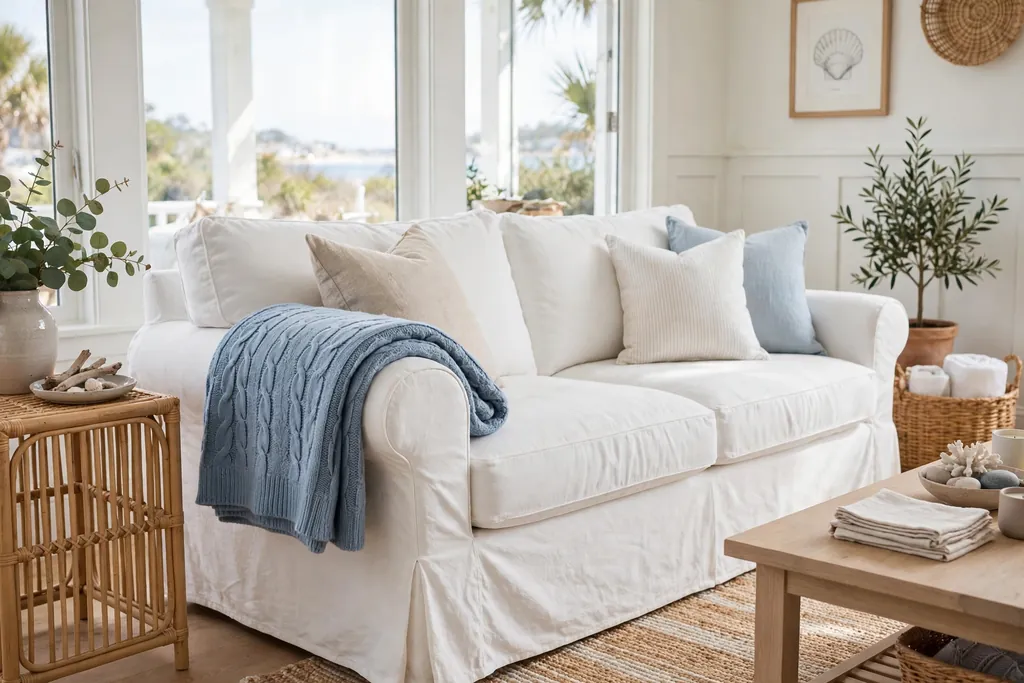
A soft blue knit throw folded over one sofa arm adds color and warmth without a new piece of furniture, and it is the easiest layer to swap by season. Choose a knit or cotton throw in a muted blue that matches the striped pillows, and fold it to a neat width so it reads as planned rather than tossed. The throw also protects the sofa arm in the spot that gets the most use.
Wash the throw on a gentle cycle and fold it the same way each time, so the sofa keeps a tidy shape between uses. Keep one throw per seating area, not one per seat, since several throws on one sofa crowd the cushions. In warm months, swap the knit for a light cotton throw in the same blue, so the color thread stays while the weight changes.
14. Olive Branches in a Tall Glass Vase
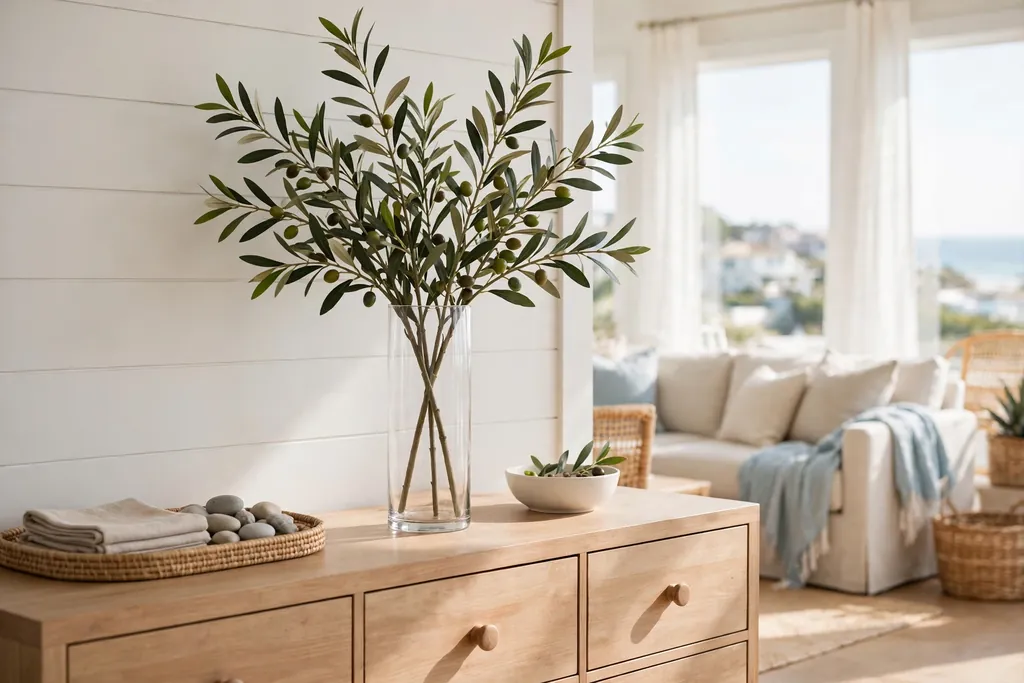
Olive branches in a tall glass vase give the room fresh greenery with a coastal feel, and a few stems cost far less than a large arrangement. Choose a clear glass or white ceramic vase tall enough to hold the stems upright, trim the stems at an angle, and set the vase on a console, a side table, or the floor beside the fireplace where it can be seen from the sofa. The grey green leaves suit the soft blue and cream palette without adding a new color.
Change the water every day or two, remove any stem that wilts, and keep the arrangement clear of direct heat and strong sun. Fresh stems last longer in a cool spot, and dried olive branches work as a longer lasting swap when fresh stems are hard to find. Keep the vase low on side tables, so it does not block conversation or the view across the room.
15. Whitewashed Mantel Shelf Styling
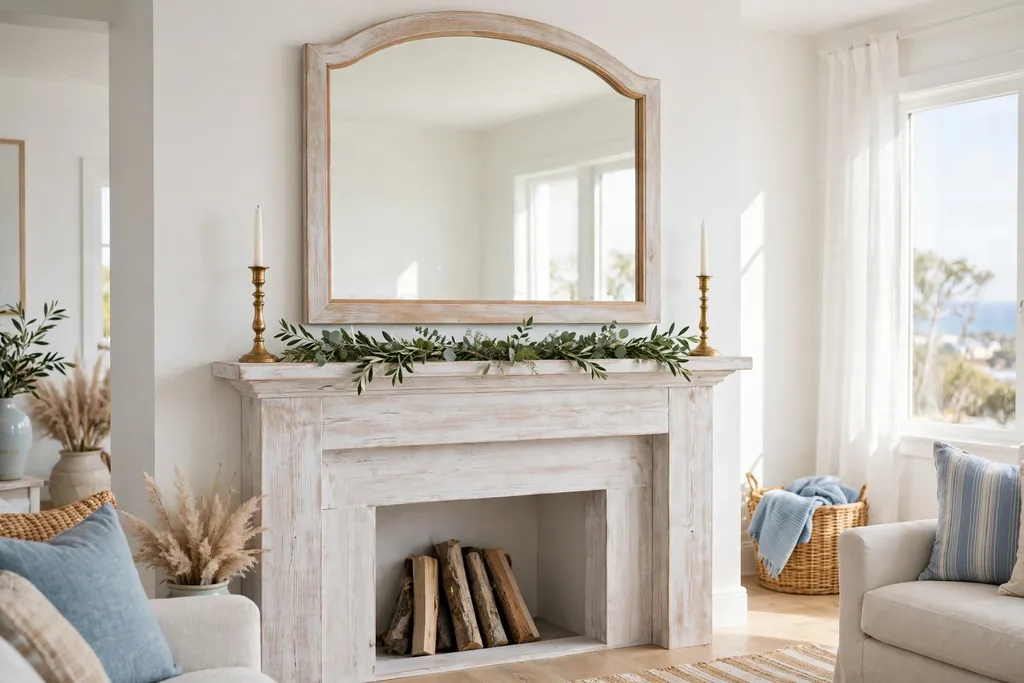
A whitewashed mantel, whether a thick beam or a painted shelf, gives the room a pale focal point even when the fireplace is rarely lit. Keep the styling simple: a large mirror or framed print above, a pair of candlesticks or vases at the ends, and one low row of greenery in the middle. The pale wood itself carries most of the interest, so the objects on it can stay few and quiet.
Keep anything flammable clear of the firebox, and set candles on stable holders away from curtains and dried stems. Change one item by season, such as a vase of fresh stems in spring or pine in winter, so the mantel feels fresh without a full restyle. If the room has no fireplace, a whitewashed shelf mounted at mantel height on a plain wall gives the same ledge for seasonal styling, and a coat of whitewash paint over an existing dark shelf is a low-cost way to get there.
16. Rattan Mirror Above the Console
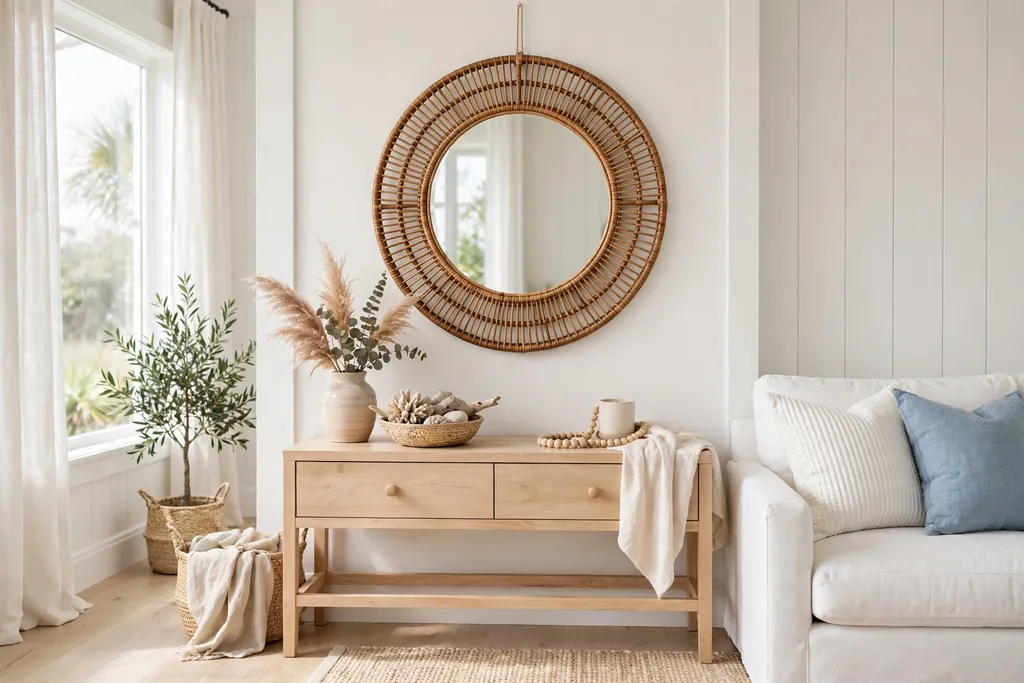
A round rattan mirror above the console or sofa adds a woven frame that echoes the rattan chair and the woven pendant, while bouncing daylight around the room. Choose a mirror large enough to read from across the room, with a simple rattan or woven frame, and hang it at eye level from the sofa, centered over the console below. The mirror works best on a plain wall, where its frame can be seen clearly.
Check the hanging wire and wall fixing before hanging, since round mirrors with thick frames can be heavier than they look. Keep the wall around the mirror simple, with no competing art beside it, and wipe the glass with a dry cloth so dust does not dull the reflection. If a rattan mirror is out of budget, a plain round mirror with a woven wreath hung beside it gives a similar natural frame note.
17. Open Wood Shelves with Ceramics and Books
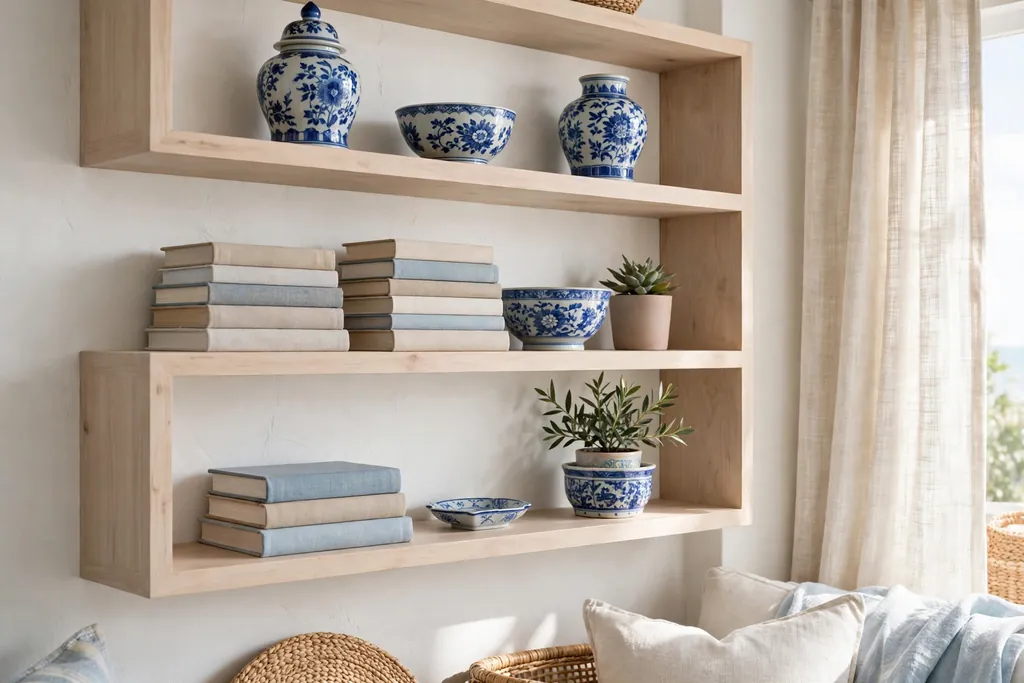
Open wood shelves on one living room wall give the room a place to show ceramics, books, and small plants without a full cabinet build. Use two or three thick shelves in pale wood on simple brackets, and keep the wall to one run so the display stays calm. This idea works best when the shelves hold items you use and enjoy, such as bowls, vases, and well loved books, rather than a full collection.
Style each shelf with a mix of heights: a stack of books lying flat, a tall vase, and a small plant, with clear space between groups so the shelf reads as tidy. Keep the palette to cream, wood, soft blue, and green from plants, and leave one shelf partly empty so the display can change. Dust open shelves weekly, since open storage gathers dust faster than closed cabinets.
18. Linen Shade Table Lamps for Evening Light
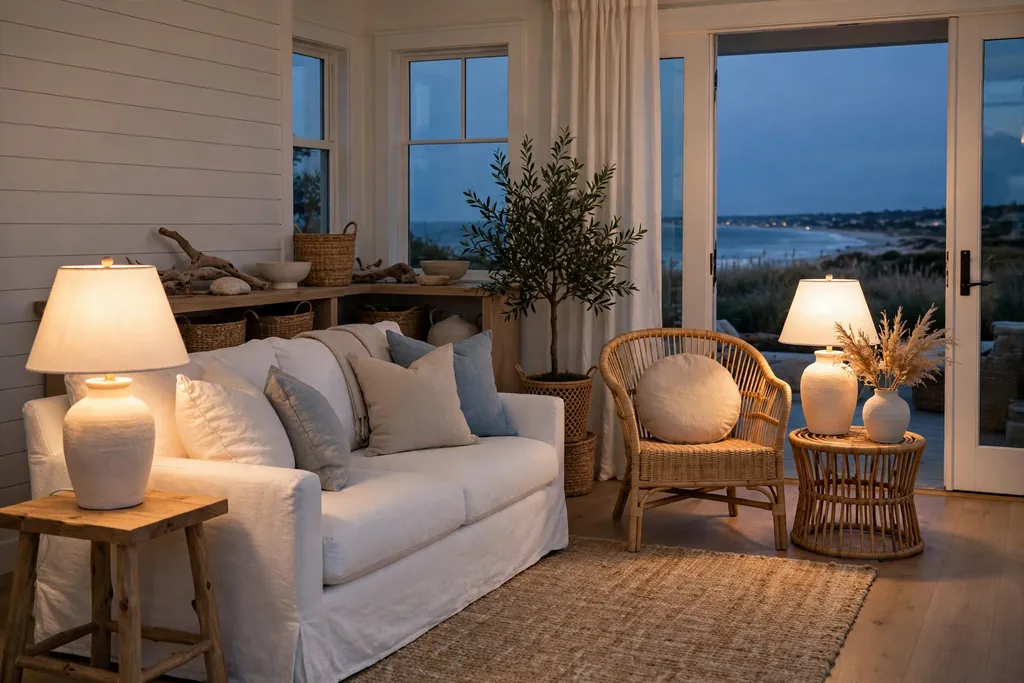
Soft evening light comes from lamps at seating height, not from one bright overhead fixture. Use table lamps on side tables at both ends of the sofa, with linen or cotton shades and warm white bulbs, plus one small lamp on the console as a third layer. The layers together make cream, wood, and rattan look warmer after dark, and they let one person read while another watches television without harsh light.
Put lamps on dimmers where the wiring allows it, and keep switches within reach of the sofa so no one crosses a dark room. Use shades in white or cream, which soften the bulb, and keep lamp bases clear of throws and paper. Choose lamp bases in wood, ceramic, or woven finishes that repeat a material already in the room, so the lamps link to the rest of the decor.
19. Three Low-Cost Swaps That Change the Room First
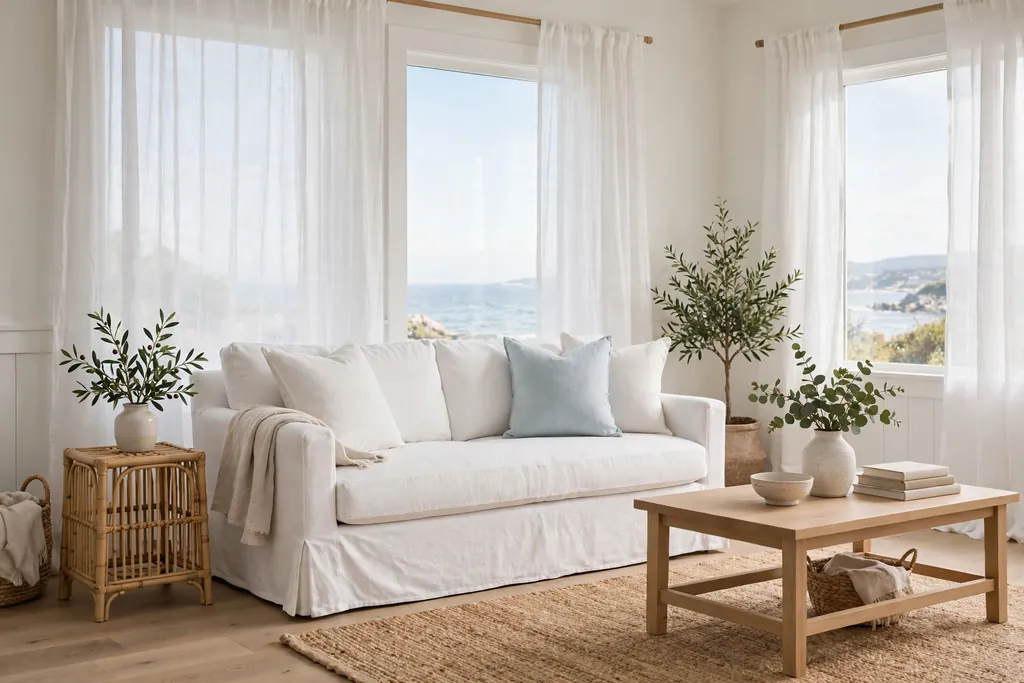
When the budget is tight, start with three swaps that change the room most for the least money: paint or whitewash one dark wood piece, change the sofa and pillow covers, and swap the curtains for sheer white linen. Those three set the palette, and everything after them, from baskets to ceramics, simply repeats it. Buy the rest secondhand, one piece at a time, and live with each piece for a few weeks before adding the next.
Set a simple order and stick to it: covers and paint first, then the rug, then lighting, then small decor last. Keep a short list of pieces you still need, with the size and tone for each, so secondhand shopping stays focused instead of filling the room with near matches. Skip anything that does not repeat white, sand, wood, or soft blue, since one off-palette piece can pull the whole room away from the calm coastal feel.
Conclusion
A Serena and Lily inspired living room on a budget does not need a full room of new furniture. A white slipcover, a jute rug, sheer linen curtains, and a few secondhand rattan and wood pieces will carry most rooms, and the blue and white accents, from striped pillows to ceramic jars, give the room its coastal character. Start with covers, paint, and curtains, add the rug and lighting, and finish with baskets, ceramics, and greenery.
For a related warm room on the same neutral base, see farmhouse decor ideas for living room, and for the wider farmhouse version of the same palette, see farmhouse decor ideas. Keep what you use often, store the rest together, and let the room return to a simple, usable base between seasons. Work through this list one idea at a time, and keep the palette calm, so each new layer adds warmth without crowding the room.
FAQs
What is a Serena and Lily inspired living room?
A Serena and Lily inspired living room is a relaxed coastal room built on white linen, natural textures such as rattan and jute, light wood, and blue and white accents. The style uses a calm palette of white, cream, sand, and soft blue, with woven baskets, striped pillows, and simple greenery. This post uses “inspired” to describe the styling direction only, and it does not claim affiliation with or endorsement by any brand.
How do I get the Serena and Lily look on a budget?
Start with the three lowest cost swaps: a washable slipcover over your existing sofa, blue and white striped pillow covers, and sheer white linen curtains. Then add a jute rug, shop secondhand for rattan and wood pieces, and finish with baskets, ceramics, and greenery one piece at a time. Changing covers and paint costs far less than replacing furniture, and it sets the palette for every later layer.
What colors work best in a Serena and Lily inspired living room?
White, cream, sand, natural wood tones, and soft blue work best together, because they suit linen, rattan, jute, and daylight in a bright room. Repeat soft blue in at least two places, such as a pillow and a ceramic jar, and keep other colors to wood and green from plants. Avoid adding a second strong color in the same room, since the calm palette is what keeps the layered coastal look from feeling busy.
What sofa works best for this style on a budget?
A slipcovered sofa in white, cream, or light oatmeal cotton works best, because it looks soft from day one and the cover can be washed when life happens. If a new sofa is out of budget, a washable slipcover over an existing sofa gives the same look, with a deep seat and a skirt that just brushes the floor. Keep cushions plump by flipping them weekly, and add striped and plain linen pillows in the same soft blue and white palette.
How do I keep a white living room practical with children or pets?
Choose washable slipcovers and pillow covers, a jute rug with a pad below, and a coffee table with a woven tray that lifts off in one move for quick clearing. Keep a basket of throws by the sofa for everyday use, use cream or oatmeal rather than pure white where marks show most, and keep ceramics and mirrors clear of walkways and chair backs. Washable covers and wipe clean wood mean the room can stay pale without staying off limits.
Where should I spend first, and where can I save?
Spend first on the sofa cover, the rug, and the curtains, since those large surfaces set the palette for the whole room. Save on rattan chairs, wood tables, mirrors, and ceramics by shopping secondhand, and save on decor by changing covers instead of replacing furniture. Leave lighting and small decor until last, so every small piece you buy repeats a color or material already in the room.