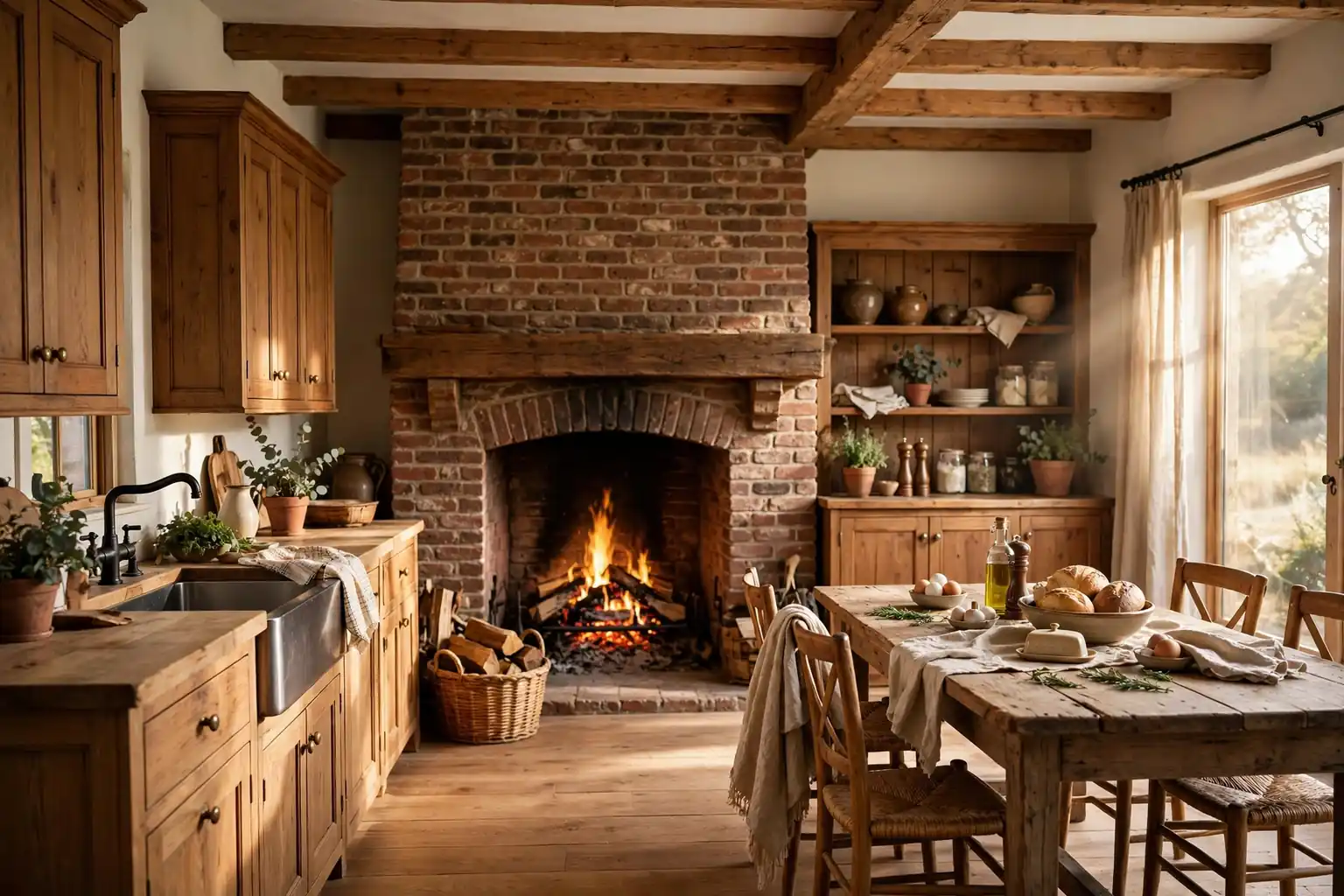
A fireplace can give a kitchen a natural gathering point, steady warmth on cold mornings, and a place where cooking, eating, and talking overlap. The right design depends on your layout, your fuel choice, and how much wall or floor space you can spare. These 26 kitchen fireplace ideas cover brick, stone, tile, steel, and plaster surrounds, plus corner spots, islands, nooks, and small rooms, so you can find a version that fits a working kitchen rather than fighting it. Check local fire and building rules, flue requirements, and clearances before you build or buy anything.
Key Takeaways
- Put safety first: confirm flue, clearance, and ventilation rules before choosing a fireplace type.
- Match the fireplace to the layout: corners, islands, dividers, and end walls each suit a different design.
- Keep the cooking triangle clear: a fireplace should not block the path between sink, stove, and fridge.
- Choose a surround material that handles heat, splashes, and daily cleaning.
- Add storage near the fire, such as a log niche or cabinets, so the wall works hard all year.
- Style the mantel lightly so it stays easy to dust and does not crowd a working room.
1. Make a Brick Surround the Focal Wall
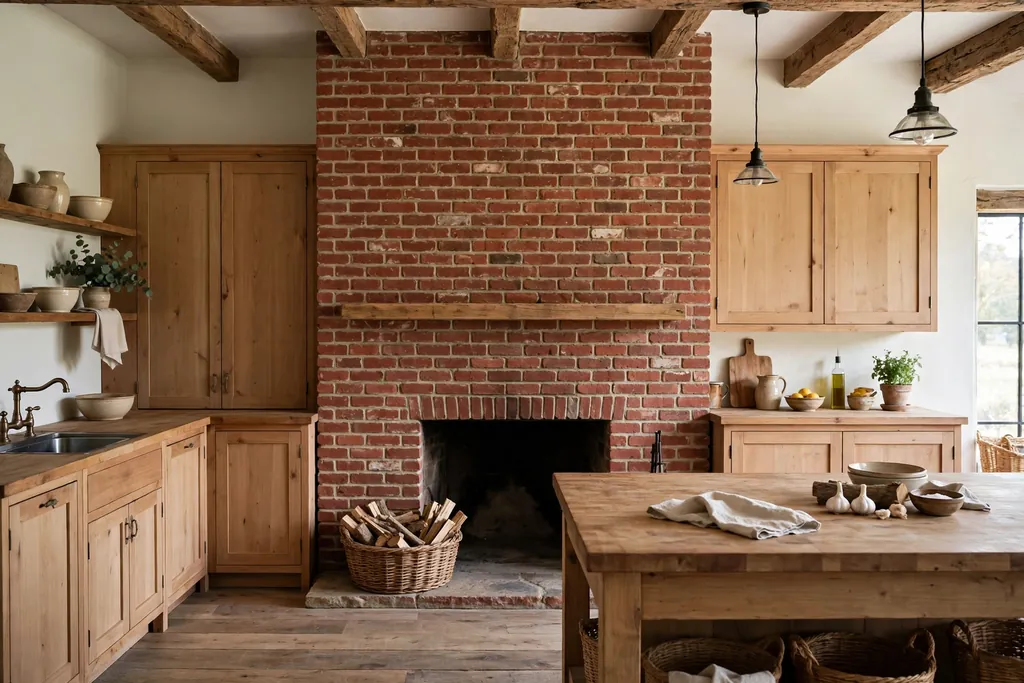
A brick fireplace gives a farmhouse kitchen a warm, familiar anchor. Lay the brick floor to ceiling on one wall, keep the mortar lines neat, and pair it with plain wood cabinets so the texture stands out. A simple wood mantel holds a clock or a small plant, and the hearth gives you a spot to set a basket of kindling.
Choose a brick tone that matches your floor. Red brick suits warm wood, while whitewashed brick suits pale cabinets and light counters. Seal the brick near the cooking zone so grease and steam wipe off easily, and leave the firebox opening wide enough for easy loading and cleaning.
2. Divide the Kitchen and Dining Room With a Double-Sided Fireplace
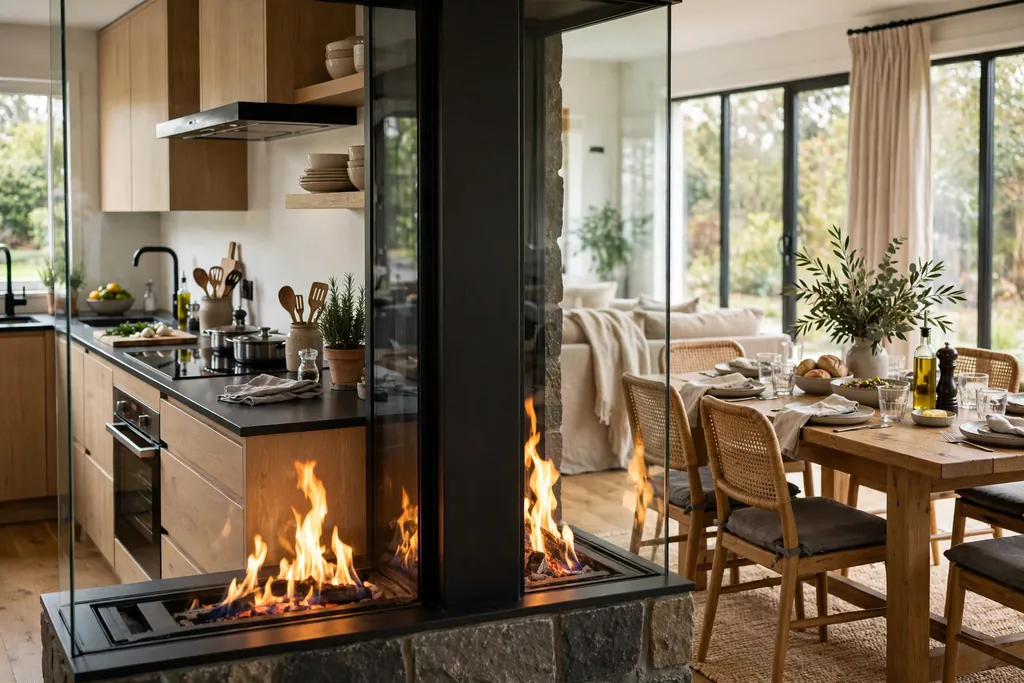
A double-sided fireplace lets two rooms share one fire. Build it into the wall between the kitchen and the dining area, with glass or an open grate on both sides, so cooks and diners both see the flames. It works best in an open plan room where the wall already separates cooking from eating.
Keep both sides clear of furniture and curtains, and use a raised hearth so the fire stays visible from a seated height. A gas or electric model suits this design well, since it needs less tending than wood and both sides stay tidy during a meal.
3. Tuck a Fireplace Into the Corner of an L-Shaped Kitchen
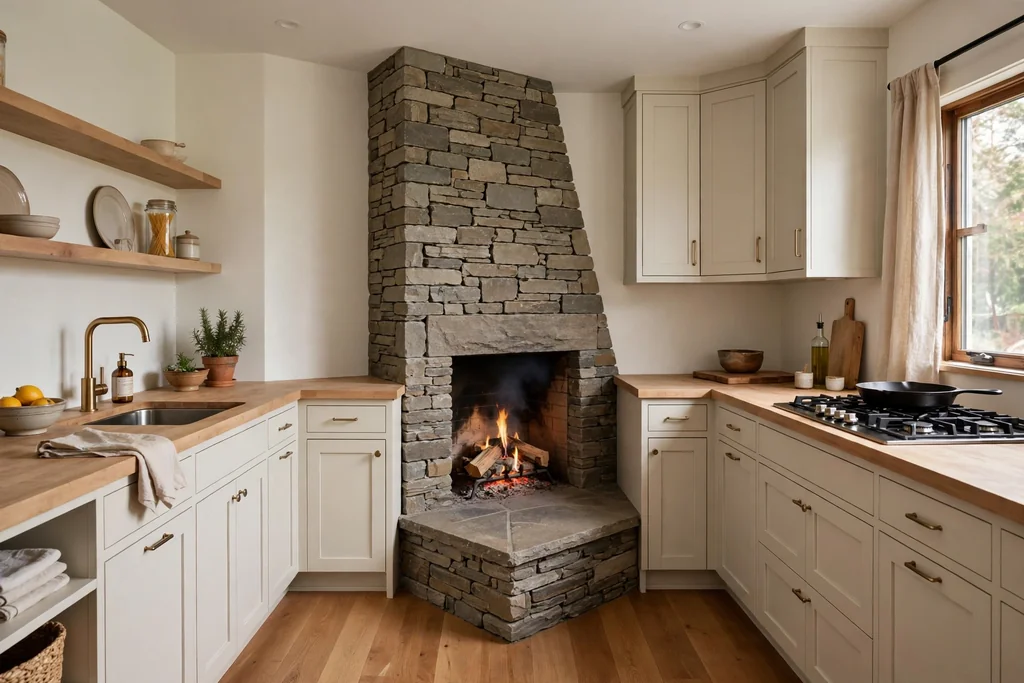
A corner fireplace uses a spot that often goes to waste in an L-shaped kitchen. Angle the firebox at 45 degrees, run the chimney up the corner, and keep the counters on the two adjoining walls. The angled face pulls the eye into the corner and frees the main walls for cabinets and windows.
Add a small triangular hearth and a wall shelf above for a plant or a cookbook stand. Keep the corner clear of the stove and sink paths, and check that the door swing of nearby cabinets does not hit the hearth edge.
4. Warm a Small Kitchen With a Freestanding Wood Stove
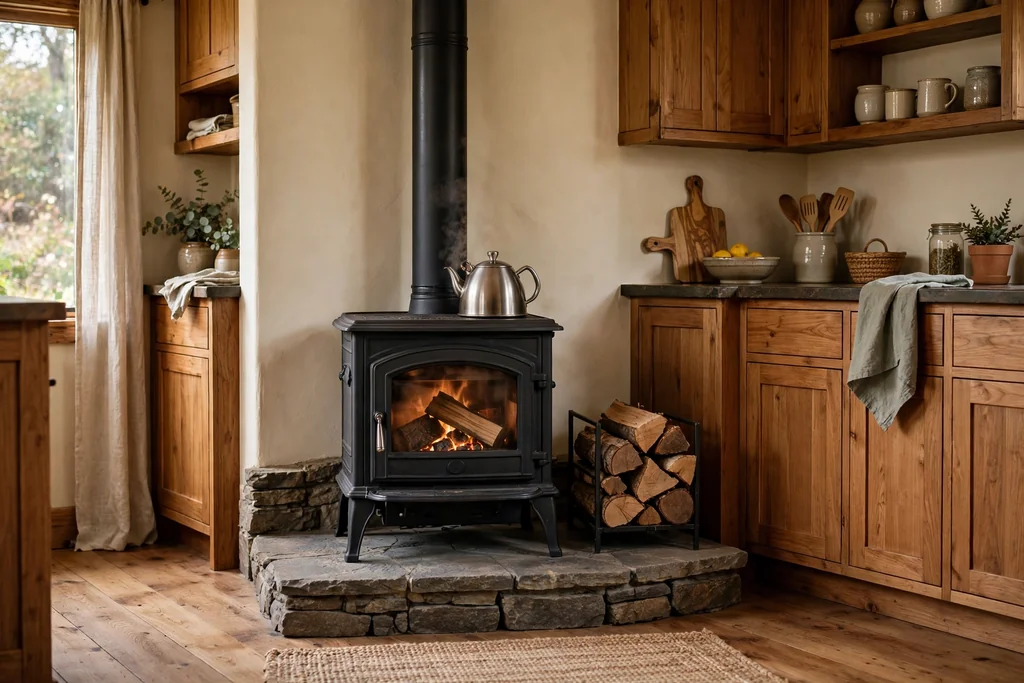
A freestanding wood stove brings real heat to a kitchen without a full masonry build. Place it on a noncombustible hearth pad in a corner or against a short wall, run a proper flue through the roof, and leave the clearance the maker specifies on every side. The stove body gives off steady heat, and the flat top can hold a kettle.
This option suits older homes and cabins where a brick chimney already exists or a flue can be added. Store logs in a small rack beside the stove, never on top of it, and fit a carbon monoxide alarm in the room as a basic safety step.
5. Set a Linear Gas Fireplace Into the Kitchen Island
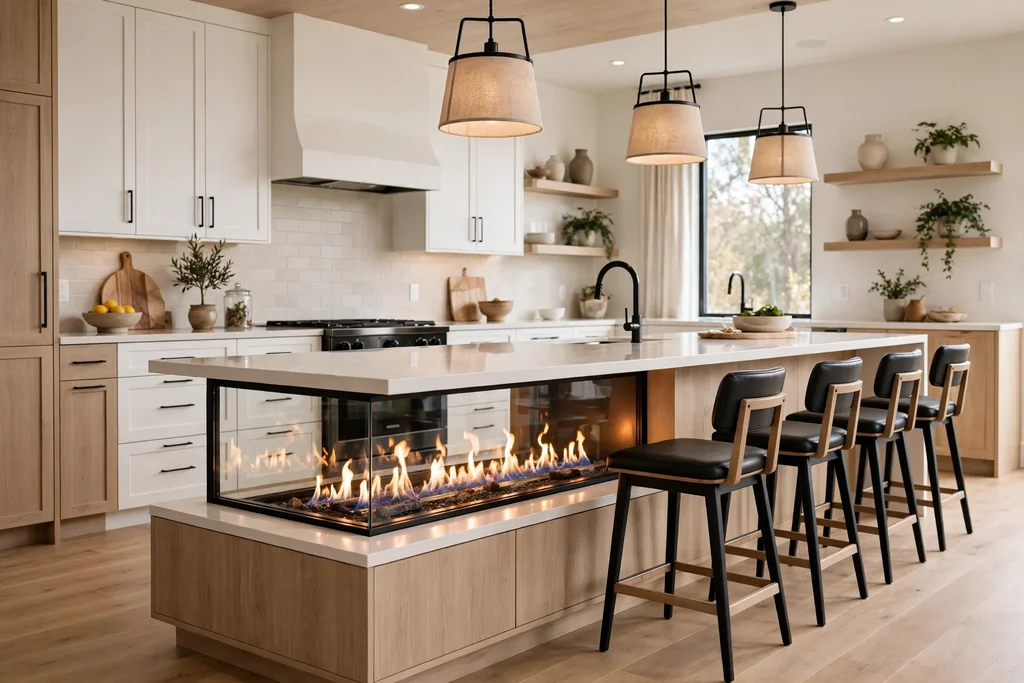
A linear gas fireplace turns a kitchen island into a seating feature as well as a work surface. Fit a long, low firebox into the seating side of the island, below the counter overhang, so people on bar stools face gentle flames while they eat or talk. The flames run horizontally, which suits a long island shape.
Keep the firebox on the seating side only, away from the prep side, and choose a model with a cool touch glass front if children use the stools. Run the gas line and venting through the island base during the build, since retrofitting them later is far harder.
6. Frame the Fire With Stone and Open Shelves
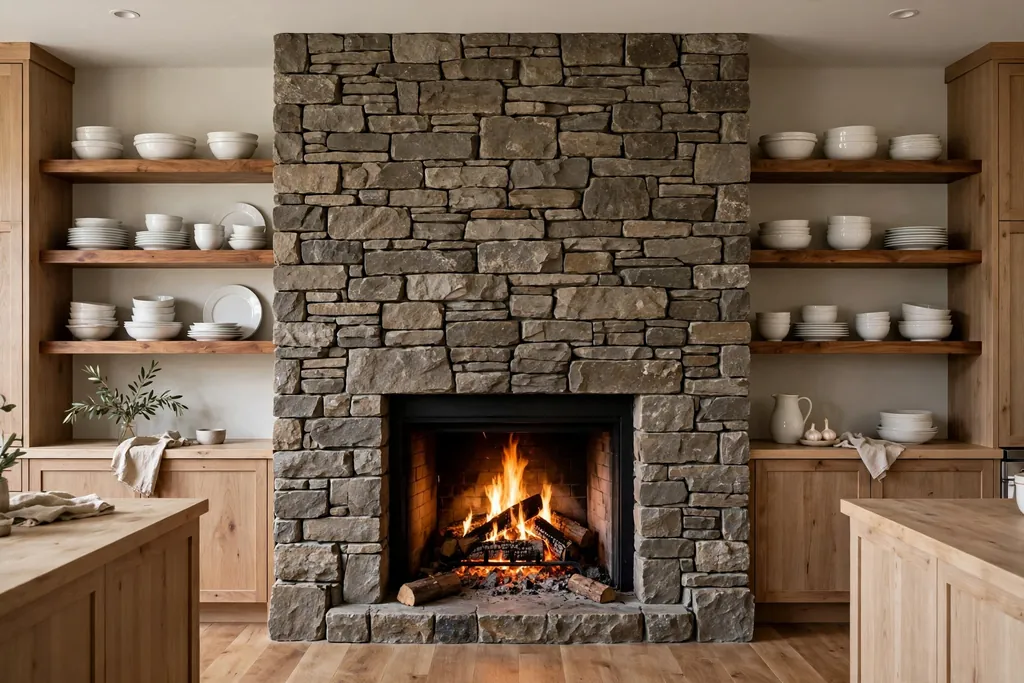
A stone surround with open shelves on both sides balances a large fireplace wall. Build the stone from floor to ceiling, add wood or metal shelves at counter height and above, and use them for everyday dishes, bowls, and cookbooks. The shelves make the wall useful, not just decorative.
Style the shelves lightly so they do not look crowded. Group dishes by use, leave gaps between groups, and keep heavy items low. Our guide to how to style open shelves shows how to keep a shelf wall calm and practical, which matters twice as much beside a fire.
7. Choose a Marble Surround for a Refined Kitchen
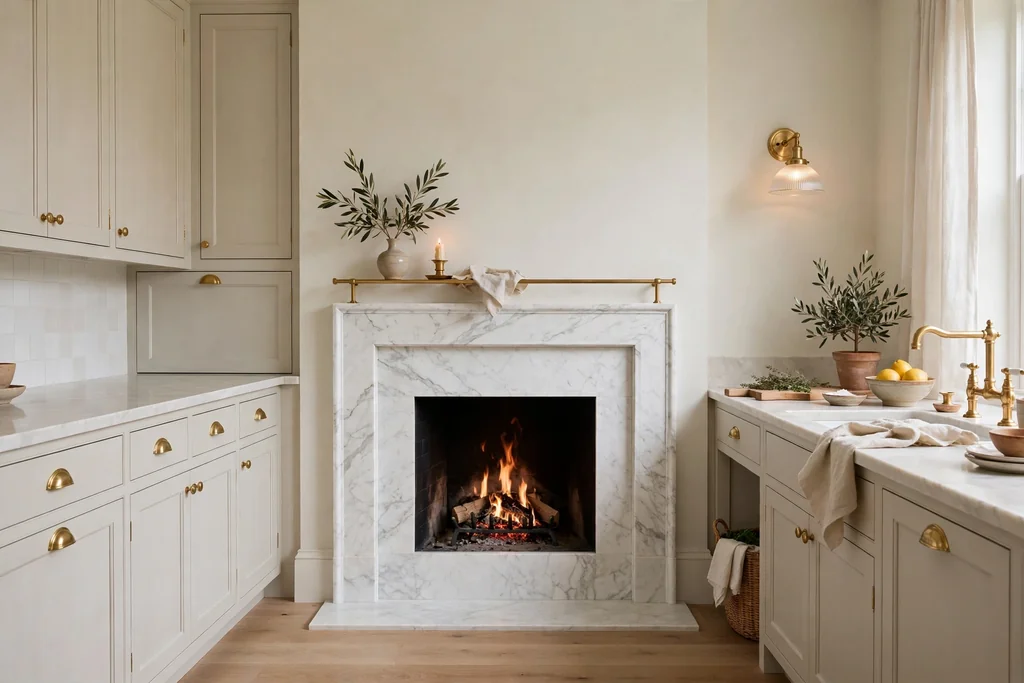
Marble gives a kitchen fireplace a smooth, cool finish that suits pale cabinets and brass fittings. Use a simple slab surround with a thin mantel shelf, and keep the firebox opening neat and rectangular. The pale stone reflects light, so the wall feels calm even in a busy room.
Marble marks more easily than stone or brick, so seal it and wipe splashes quickly, especially near the stove. If you cook often, place the fireplace on a wall away from the main splashing zone, and use a plain hearth stone that matches the surround.
8. Limewash a Plaster Fireplace for a Soft Modern Look
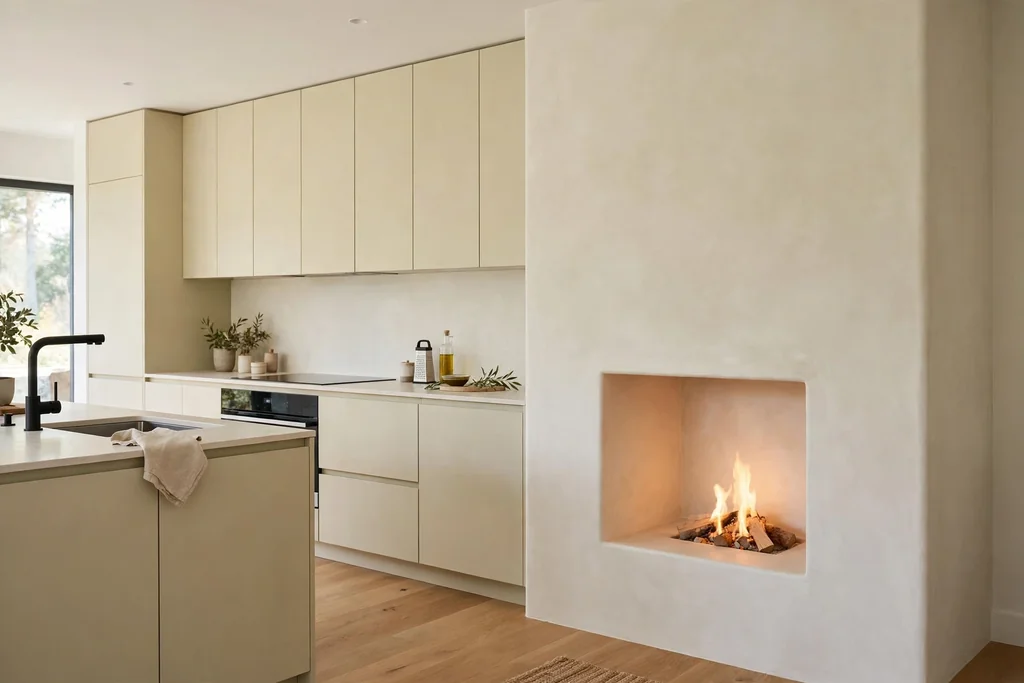
A limewashed plaster fireplace suits a light, modern kitchen where brick or stone would feel heavy. Plaster the breast smooth, wash it with limewash in warm white or pale clay, and skip the mantel for a clean line. The soft texture adds interest without pattern or shine.
This finish works well with flat front cabinets and wood floors. Keep the plaster away from direct splashes by placing the fireplace on a dining side wall, and touch up the limewash every few years where hands and heat wear it thin.
9. Tile the Surround With Handmade Patterned Tiles
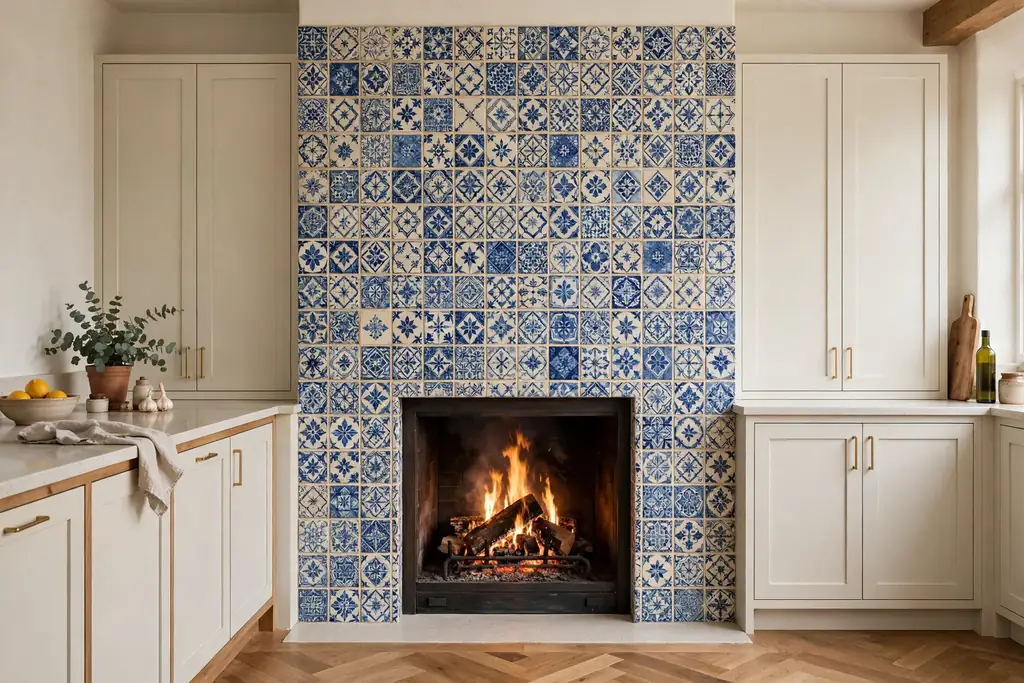
Handmade tiles turn a fireplace surround into the kitchen’s main pattern. Choose a simple repeat in two or three colors, tile the face and the hearth edge, and let the rest of the room stay plain. The tile surface wipes clean, which is a real advantage near cooking.
Test a few tiles against your cabinets and floor before ordering, since handmade glazes vary from batch to batch. Keep the grout lines tight and sealed, and pick a grout color close to the tile so the pattern reads clearly rather than looking busy.
10. Build a Cooking Hearth With a Kettle Crane
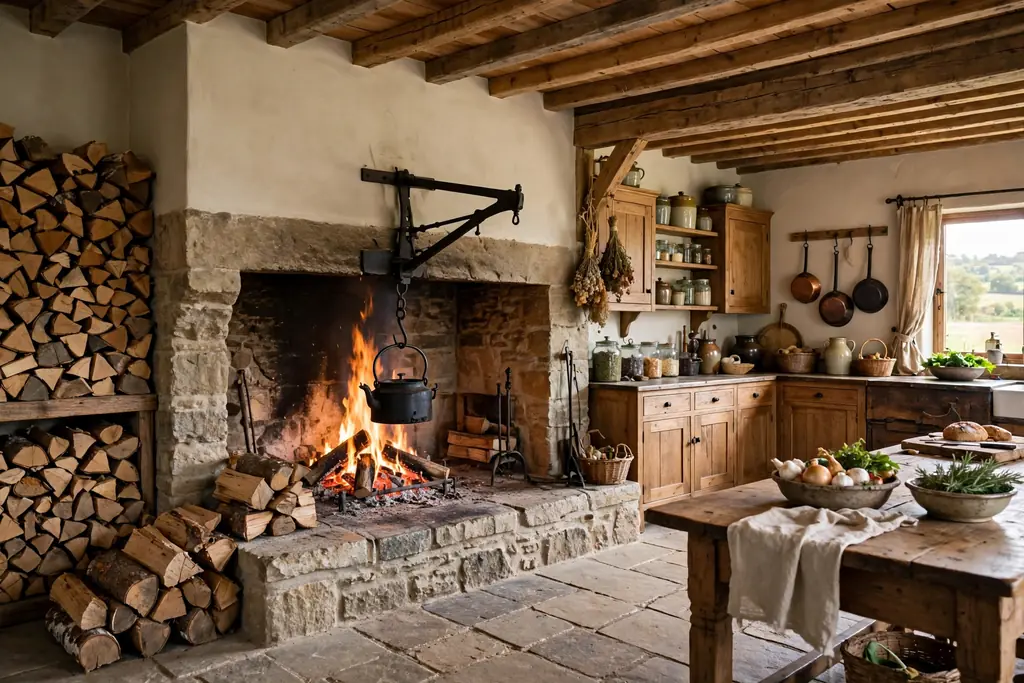
A cooking hearth brings back the oldest kitchen fireplace job: cooking over fire. Build a wide, open firebox with a raised stone hearth, fit an iron crane that swings a kettle or pot over the flames, and add a wood store beside it. It suits a large country kitchen with a proper chimney.
Use the hearth for slow cooking, stock, and bread baking in a Dutch oven, and keep your everyday stove for fast meals. Fit a spark guard for open flames, keep oven gloves and long handled tools nearby, and never leave a cooking fire unattended.
11. Open the Fireplace to the Patio With Glass Doors
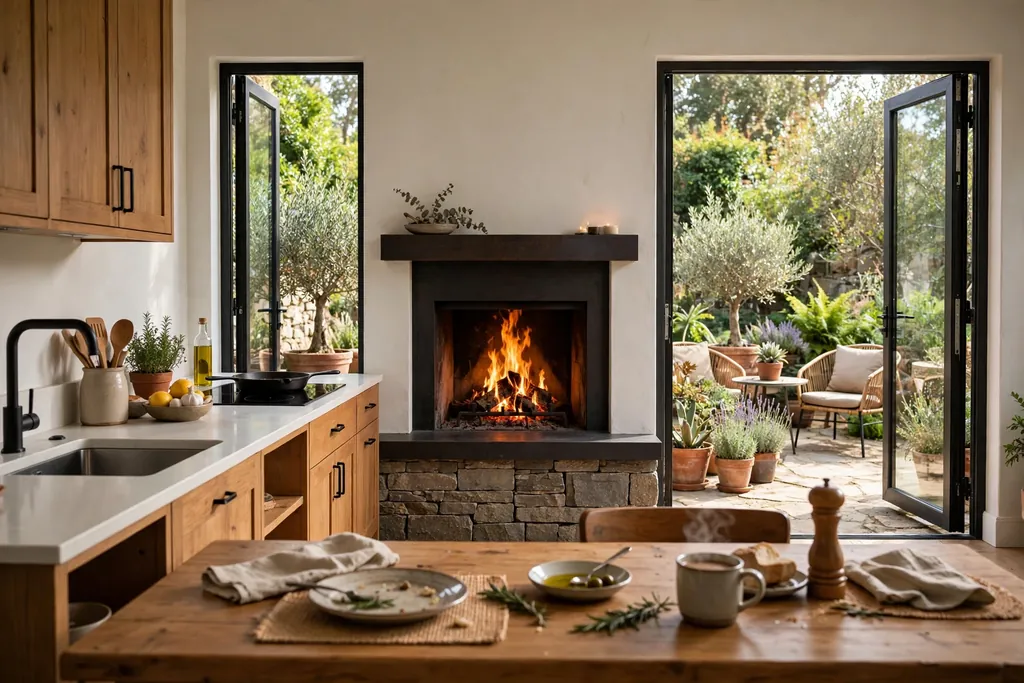
A fireplace that opens to a patio links the kitchen to the garden. Build a firebox with glass doors on the garden side, or place a two-sided unit in the outside wall, so the fire can be seen from the kitchen table and from patio chairs. It stretches the usable season for outdoor eating.
Fit weatherproof doors and a flue arrangement suited to an outside wall, and keep the patio side clear of cushions and plants. In summer, the closed doors keep drafts out, and in winter the fire makes the patio feel like another room.
12. Fit a Compact Electric Fireplace in a Small Kitchen
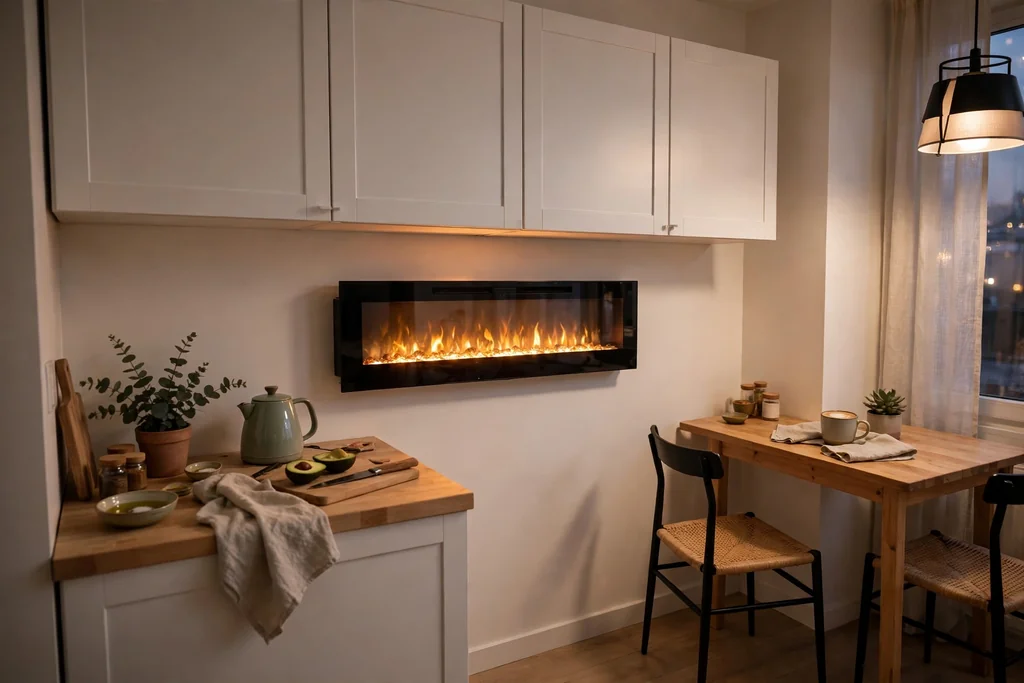
A compact electric fireplace suits a small kitchen or a flat where a flue is not possible. Choose a slim wall mounted or inset model, plug it into a standard outlet, and enjoy flame effect and gentle heat without a chimney, gas line, or ash. Many models fit under a wall cabinet or at the end of a counter run.
Pick a model with a timer and a heat setting you can switch off in summer, so the flame effect works year round. Keep the unit clear of tea towels and paper, and measure the wall depth carefully before buying so the unit sits flush.
13. Wrap a Banquette Around a Breakfast Nook Fireplace
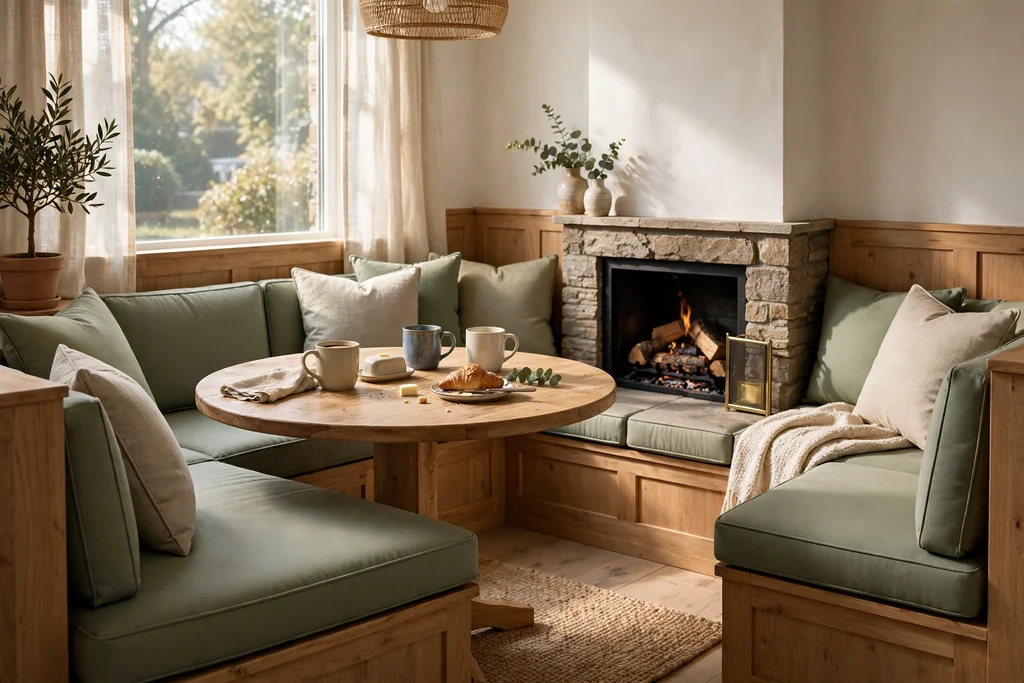
A banquette wrapped around a small fireplace makes the breakfast nook the warmest seat in the house. Build bench seating in an L shape around the firebox, add a round or square table, and cushion the benches in a wipe clean fabric. Morning coffee and homework both land here first.
Keep the table small enough that everyone can slide in and out easily, and leave a gap between the bench and the firebox that meets the maker’s clearance rules. Add a cushion store under the bench seats for throws and placemats.
14. Flank the Fireplace With Floor-to-Ceiling Pantry Cabinets
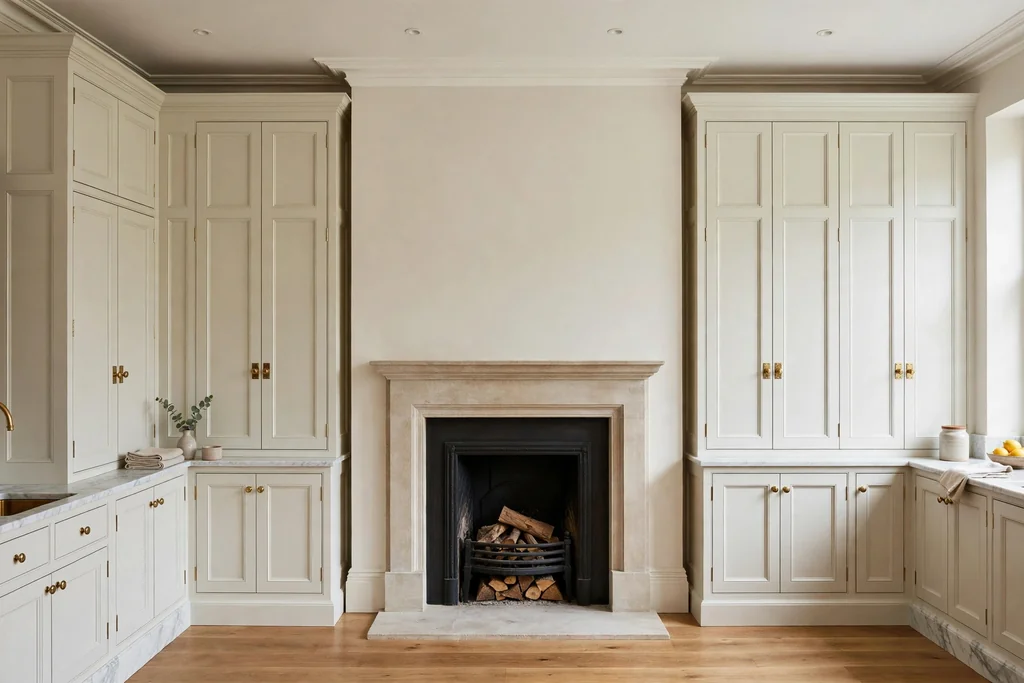
Pantry cabinets on both sides of a fireplace turn a feature wall into storage. Build tall cabinets flush with the surround, use one side for dry food and the other for appliances, and keep the fireplace face slightly proud so it still reads as the center. The symmetry suits a formal kitchen.
Fit pull out shelves inside the tall cabinets so nothing gets lost at the back, and keep heat sensitive food and plastics away from the firebox side. Label the shelves if several people cook, so the wall stays orderly.
15. Add a Log Storage Niche Beside the Firebox
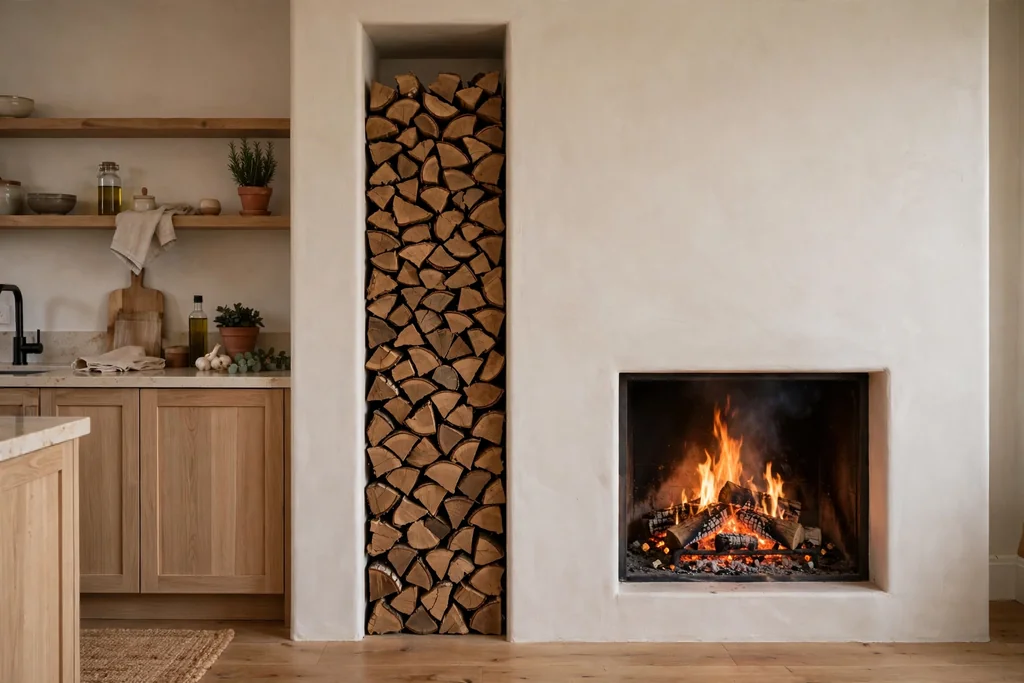
A log storage niche keeps fuel tidy and close at hand. Build a tall, open slot beside or below the firebox, stack split logs in neat rows, and let the wood ends add texture to the wall. The niche also breaks up a wide expanse of brick or plaster.
Store only dry, seasoned wood indoors, and keep the stack small enough to use within a few weeks so dust and insects do not build up. Line the niche with a wipe clean surface, and leave an air gap around the firebox that meets clearance rules.
16. Keep It Minimal With a Flush, Mantel-Free Fireplace
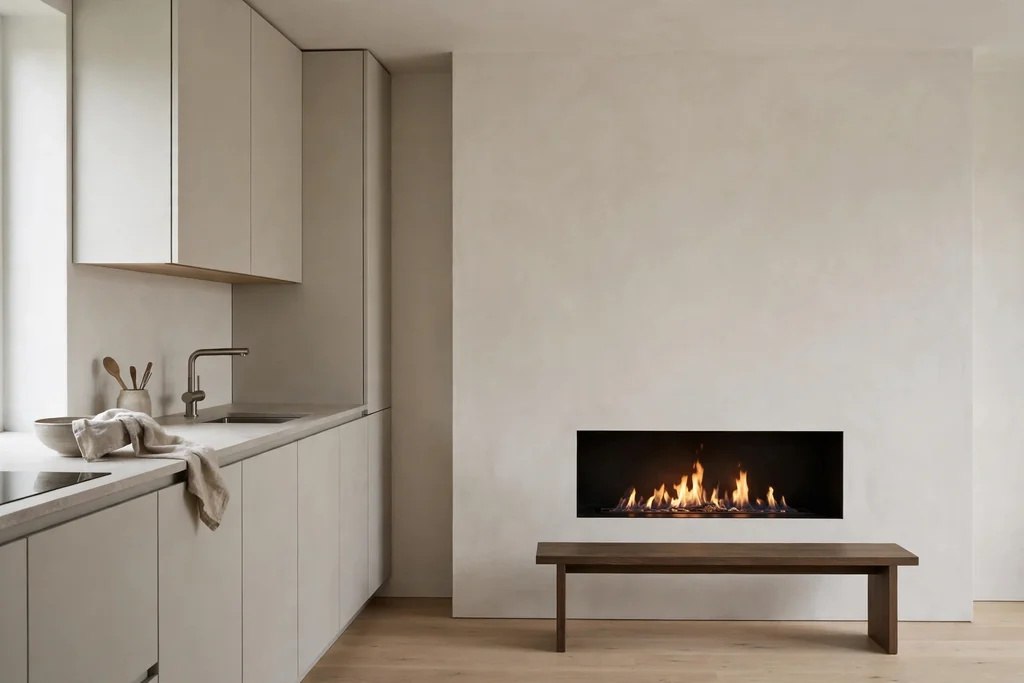
A flush fireplace sits level with the wall, with no mantel and no raised hearth. Plaster or clad the wall in one material, set a slim gas or electric firebox into it, and let the flames be the only decoration. The result suits a handleless kitchen where clean lines matter most.
This design needs careful planning, since the firebox, venting, and wall finish must line up exactly. Use a heat resistant wall finish around the opening, and add a low bench or a row of plants in front if the wall needs grounding.
17. Put a Fireplace in the Kitchen Conservatory
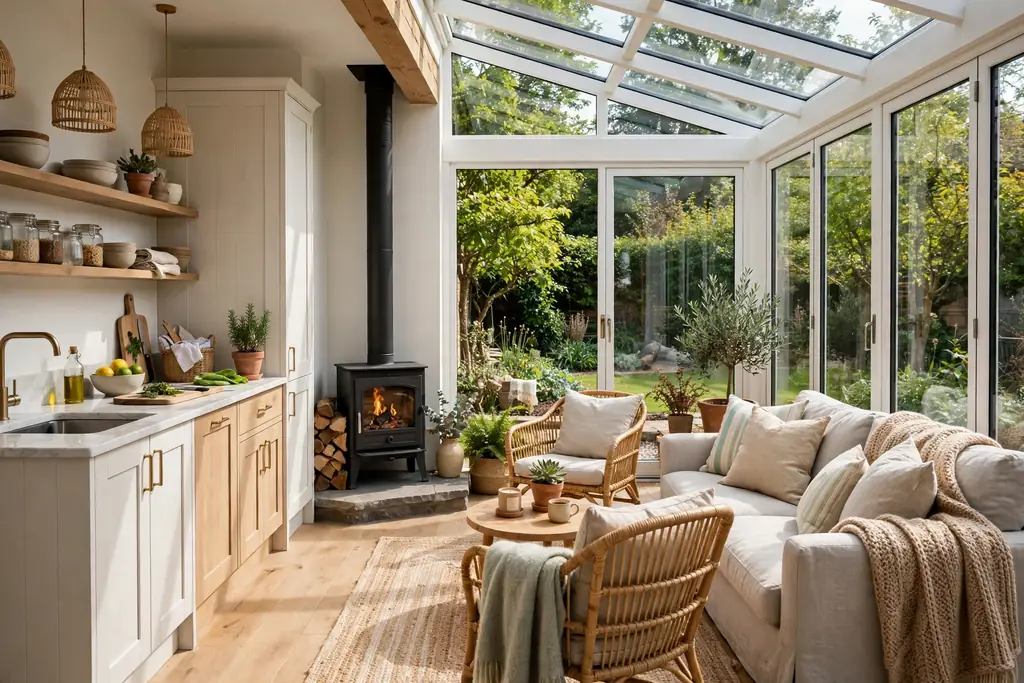
A fireplace in a glass conservatory or sunroom eating area takes the chill off a room that cools fast. Place a small wood stove or gas fire against the solid wall where the conservatory meets the house, so the flue runs through the house wall rather than the glass roof. Add seating that faces both the garden and the fire.
Choose a model sized for the room, since a large stove will overheat a glass space quickly. Keep blinds and curtains clear of the stove, and add a rug and throws so the seating area feels like part of the kitchen, not an afterthought.
18. Top the Fireplace With a Reclaimed Wood Beam Mantel
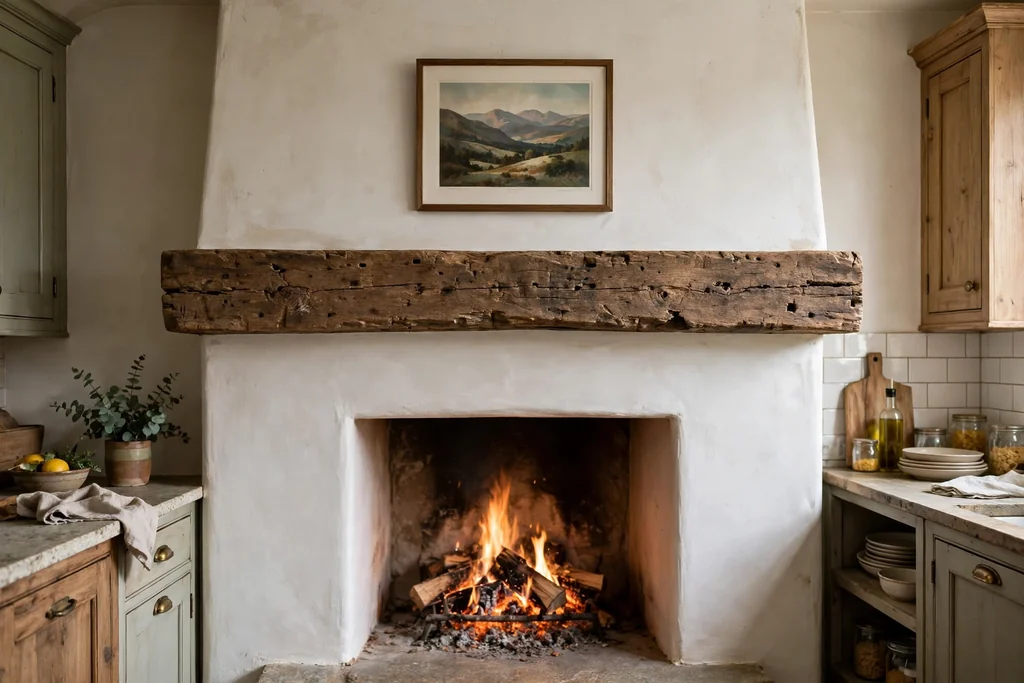
A reclaimed wood beam mantel adds age and warmth to a plain fireplace. Fix a solid beam across the breast, keep its natural marks and nail holes, and hang one piece of art or a mirror above it rather than a crowded row of objects. The beam gives the wall a clear horizontal line.
Check the beam is fixed to solid masonry or studs, since old beams are heavy, and keep it at the clearance height the fire maker specifies. For a seasonal table nearby, our Thanksgiving kitchen decor ideas show how to dress a room for a gathering without crowding the working surfaces.
19. Use a Black Steel Surround in an Industrial Kitchen
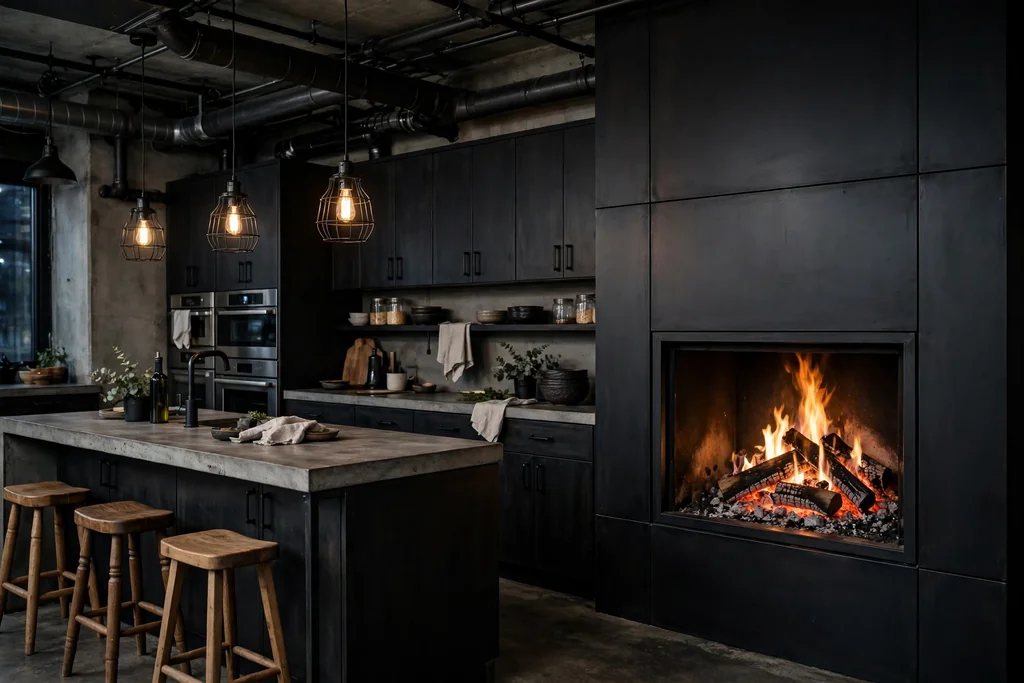
A black steel surround suits an industrial kitchen with dark cabinets, concrete counters, and metal fittings. Use a flat steel plate surround with a simple rectangular opening, and let the dark metal contrast with pale walls or wood floors. The steel wipes clean and handles heat well.
Keep the steel finish matte rather than glossy so fingerprints and dust show less, and pair it with warm wood stools or a wood mantel shelf to stop the wall feeling cold. Check the steel is fixed with heat resistant fixings and an air gap behind it.
20. Build a Firewood Display Wall Next to the Fireplace
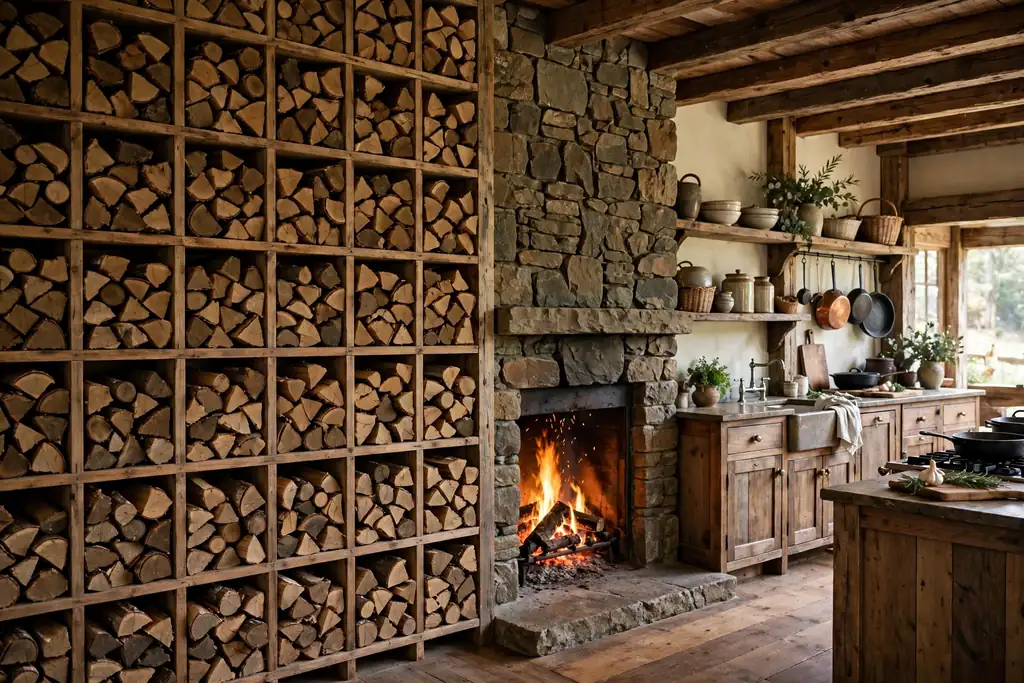
A firewood display wall turns fuel into decor. Stack logs in a floor-to-ceiling grid or in open cubbies beside the fireplace, sort them by length, and keep the ends flush so the wall reads as a pattern. It suits a rustic or cabin kitchen where wood is already part of daily life.
Use only dry wood, brush the logs before bringing them in, and keep the display away from the stove and sink splash zone. If you burn little wood, fill part of the wall with books or baskets so the display still looks full in summer.
21. Make a Morning Coffee Corner Beside the Fireplace
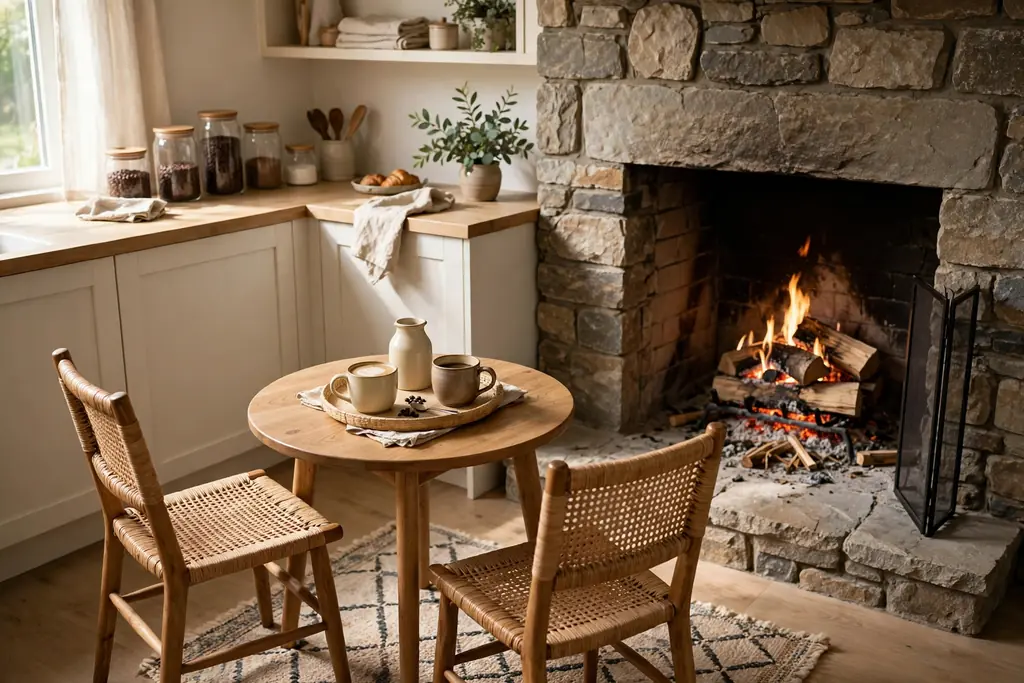
A coffee corner beside the fireplace makes slow mornings easy. Place a small table and two chairs at an angle to the fire, add a shelf or a trolley for mugs, coffee, and a kettle, and keep the spot clear of cooking traffic. The fire gives the corner a reason to linger.
Keep the coffee kit compact so the corner does not spread into the prep zone. A tray holds the mugs and jars together, and a small rug marks the seating area without blocking the path to the fridge or the back door.
22. Restore a Cast-Iron Fireplace Insert
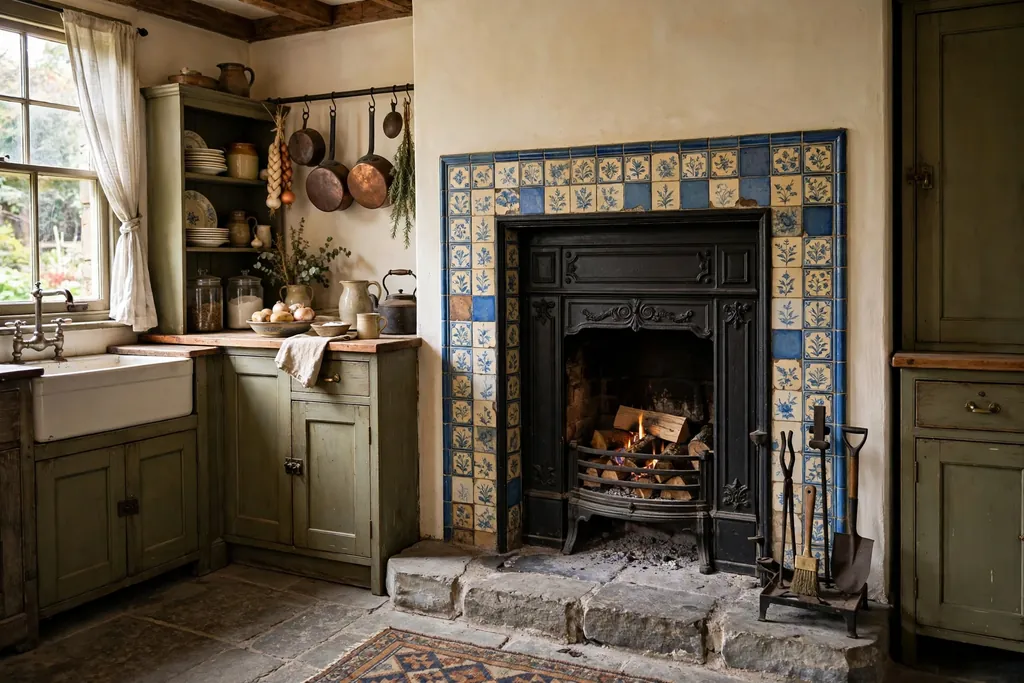
A restored cast-iron insert suits a period kitchen where the original fireplace survives. Clean the iron, repair the grate, fit a working damper, and pair it with the original tiles or a simple stone hearth. The small firebox suits gentle heat and a coal or wood fire.
Have a chimney sweep check the flue and the insert before first use, and fit a fireguard if children or pets use the room. Keep the iron blacked with stove polish a few times a year, and store the tools on a small stand beside the hearth.
23. Shape an Arched Firebox With Herringbone Brick Inside
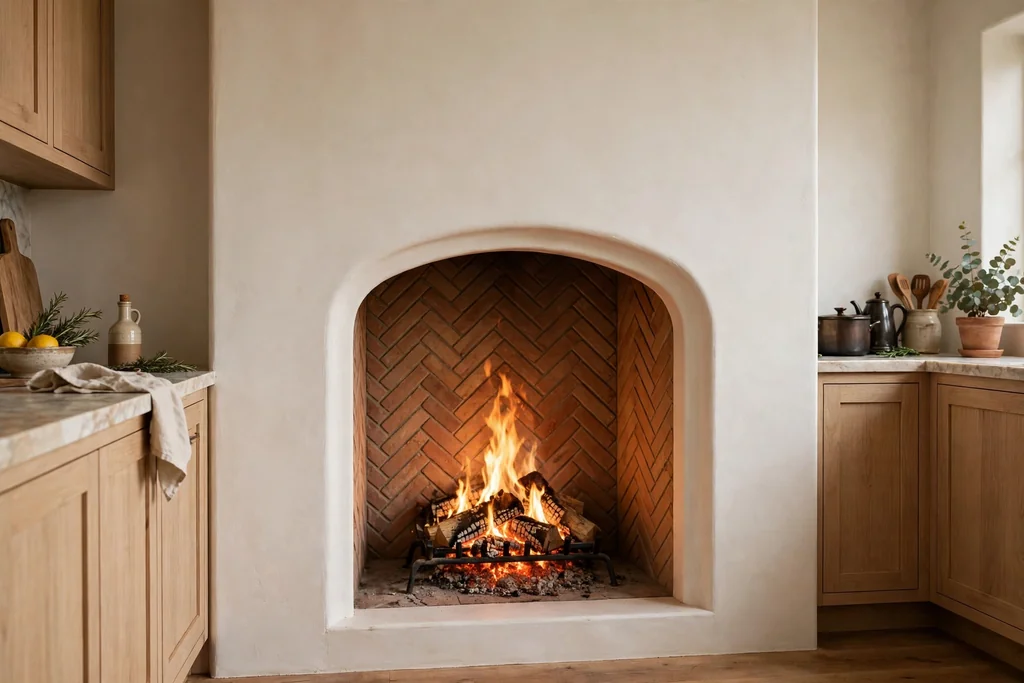
An arched firebox with herringbone brick inside adds craft detail to a simple surround. Build a soft arch over the opening, lay the inner bricks in a herringbone pattern, and keep the outer surround plain plaster or stone so the pattern draws the eye. The arch softens a square room.
This detail needs a skilled bricklayer, since the arch and the pattern must line up neatly. Keep the arch opening wide enough for standard logs, and use firebrick inside the box, where heat is highest, rather than ordinary brick.
24. Add a Hearth Bench for Extra Seating
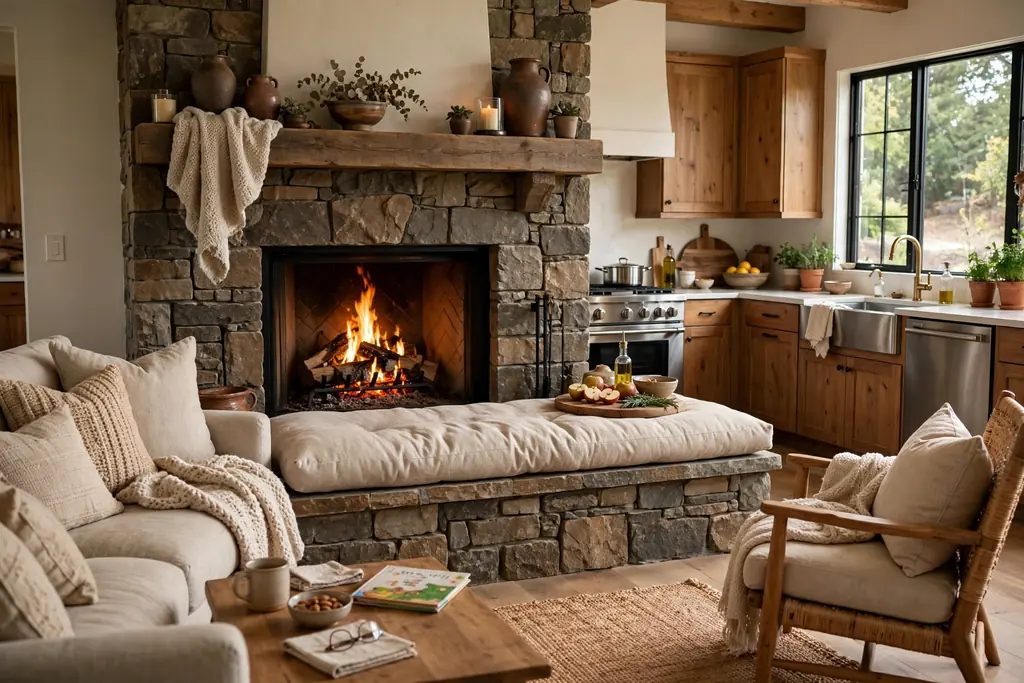
A hearth bench extends the fireplace into a seat. Build a low stone or wood bench across the front of the hearth, cushion it with a thick pad in a wipe clean fabric, and use it for extra seating when guests gather. Children and pets claim it first on cold days.
Keep the bench height low enough to sit comfortably, and check the surface stays cool enough to sit on when the fire burns. Store the cushion indoors in summer, or use the bench as a plant stand when the fire is out.
25. Anchor the End Wall of a Galley Kitchen
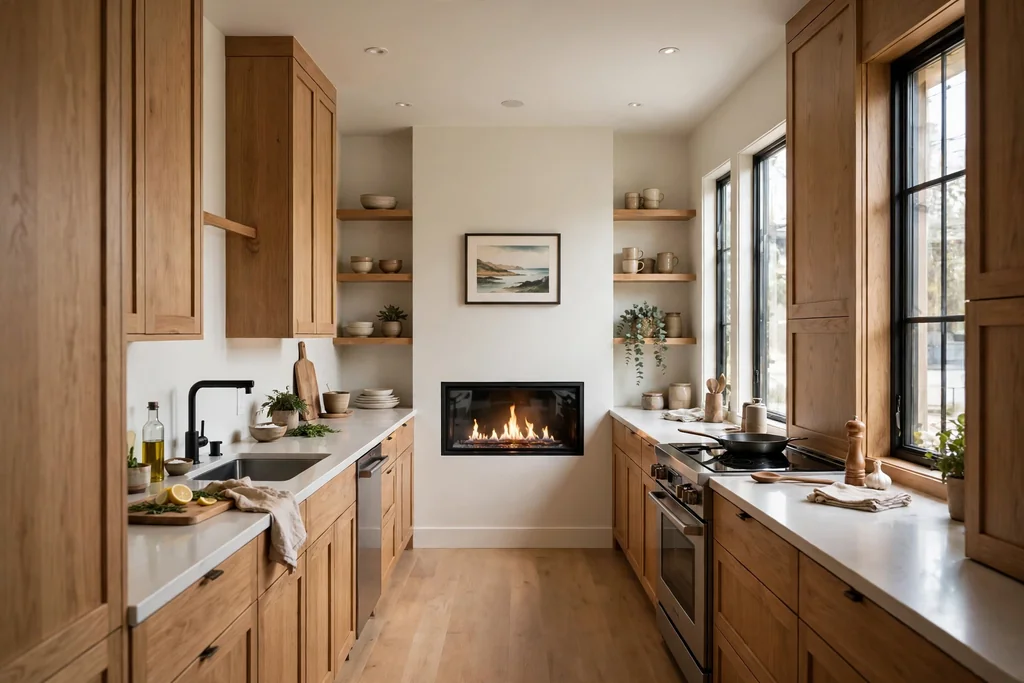
A fireplace at the end of a galley kitchen gives a long, narrow room a destination. Place a slim firebox on the end wall, flank it with shallow shelves or a narrow console, and let the flames draw the eye down the length of the room. The end wall is often blank, so nothing useful is lost.
Choose a shallow model that does not eat into the walking path, and keep the end wall clear of the fridge door swing. A mirror or a single picture above the fire doubles the sense of length in a narrow room.
26. Add a Warming Shelf Above the Mantel
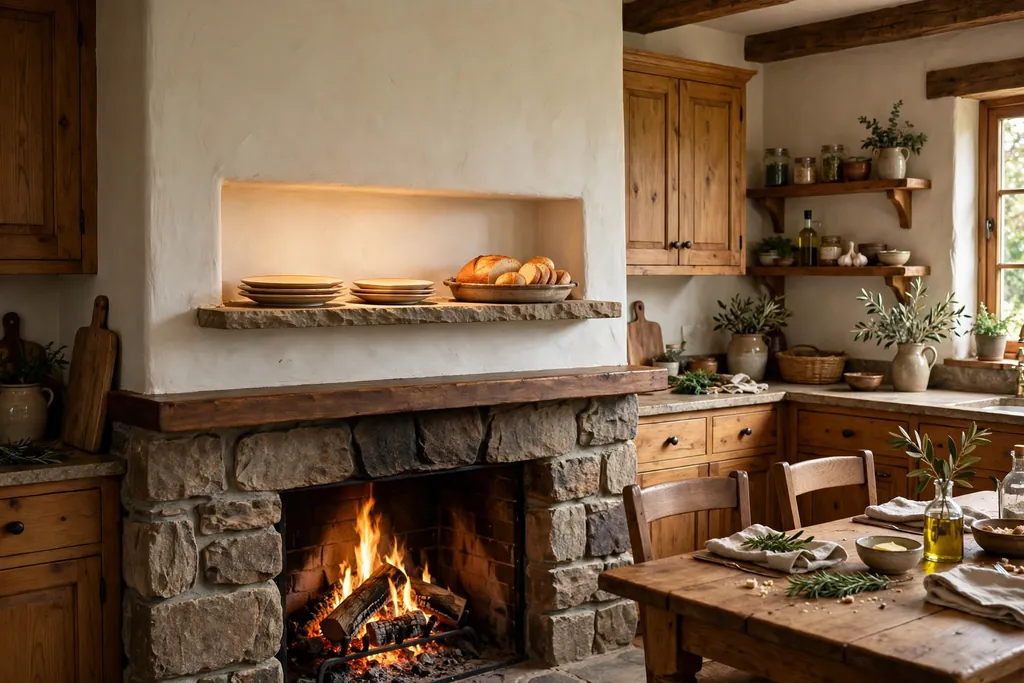
A warming shelf above the mantel gives a kitchen fireplace a practical job. Fit a shallow stone or metal shelf above the firebox, high enough to stay clear of direct flames, and use it to warm plates, bread, or serving dishes before a meal. It suits a kitchen where the fireplace sits near the dining table.
Check the shelf temperature with a thermometer before relying on it, and keep cloths, paper, and plastic well away. Use the shelf only for heat safe dishes, and wipe it down after each use so food marks do not bake on.
Conclusion
A kitchen fireplace works best when it fits the way you already cook, eat, and gather. Start with the practical limits, flue, clearance, fuel, and floor space, then choose a surround and a spot that support daily life rather than interrupting it. Whether you pick brick, stone, tile, steel, or plaster, keep the mantel simple, the storage close, and the paths around it clear. The fire will then do what it has always done in a kitchen: warm the room, slow people down, and give everyone a place to gather.
FAQs
Can you put a fireplace in a kitchen?
Yes, in many homes, if the room has a suitable flue, gas line, or power supply, and the design meets local fire and building rules. Wood and gas models need proper venting and clearances, while electric models need only a standard outlet and a safe wall position. Always check local rules and have a professional assess the chimney or venting before you buy.
What type of fireplace is safest for a kitchen?
An electric fireplace is usually the simplest safe choice, since it has no real flame, ash, or flue gases, and the heat can be switched off. Sealed gas models are also practical, with a fixed glass front and controlled venting. Open wood fires need the most care, with spark guards, alarms, and regular chimney cleaning.
How much clearance does a kitchen fireplace need?
Clearance depends on the model and the fuel, so always follow the maker instructions and local rules. As a general guide, keep curtains, towels, paper, and furniture well away from the opening, use a noncombustible hearth, and leave an air gap behind steel or wood surrounds. A professional installer can confirm the exact distances for your model.
Can a fireplace go in a small kitchen?
Yes. A compact electric model, a slim linear gas fire in an island, or a small corner wood stove can fit a small kitchen without taking a full wall. Choose a shallow model, keep the hearth small, and place it where it does not block the sink, stove, and fridge path.
Does a kitchen fireplace add value to a home?
A well built fireplace can make a kitchen feel warmer and more inviting, which buyers often notice. The effect depends on the quality of the build, the safety of the installation, and whether the design suits the home. A poorly placed or unsafe fireplace can put buyers off, so professional installation and clean paperwork matter.
How do you keep a kitchen fireplace clean?
Brush ash out once the fire is fully cold, wipe the surround with a cleaner suited to its material, and clean the glass on gas and wood models with a proper stove glass cleaner. Sweep the chimney at least once a year for wood fires, check gas models on the maker service schedule, and dust the mantel often, since kitchens collect grease as well as dust.