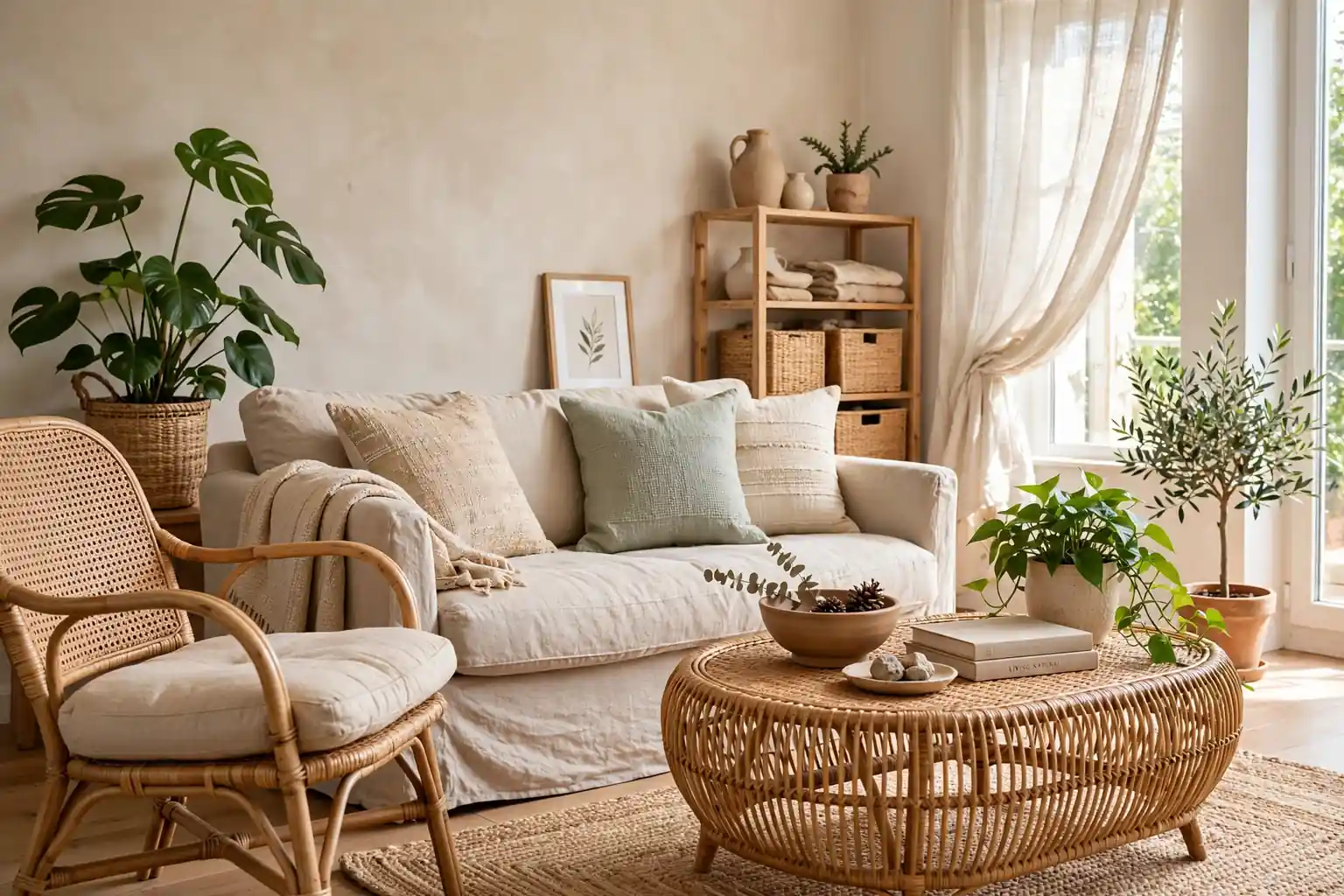
Rattan decor adds natural texture to a home through woven chairs, lights, baskets, and furniture that bring warmth without heavy color or pattern. Use one or two rattan pieces per room, pair them with linen, wood, and plants, and keep the palette pale so the weave stays the focus.
Start with the piece that will be used most, such as a chair, a light, or a storage basket, then add a smaller rattan accent only if the room still needs texture. Rattan suits living rooms, bedrooms, dining areas, entries, and porches, and it works best against plain walls, light wood, and soft textiles. For a warm wood and woven base in a living room, see the farmhouse decor ideas on Dwell Ovell, for a light coastal base that pairs well with rattan, see the coastal fall decor guide, and for living room styling order, see the fall living room decor guide.
Key Takeaways
- Use one or two rattan pieces per room, so the weave reads as texture rather than a theme.
- Pair rattan with linen, light wood, cotton, and plants, and keep most of the room in white, cream, sand, or soft green.
- Choose the most used piece first, such as a chair, a pendant light, or a storage basket, then add a smaller accent.
- Mix one open weave with one tighter weave for contrast, and keep other patterns plain.
- Keep rattan out of damp spots and direct rain, and dust the weave regularly so it stays clean.
- Repeat the same rattan tone in two rooms to link the home, rather than matching every piece exactly.
1. Rattan Accent Chair in the Living Room
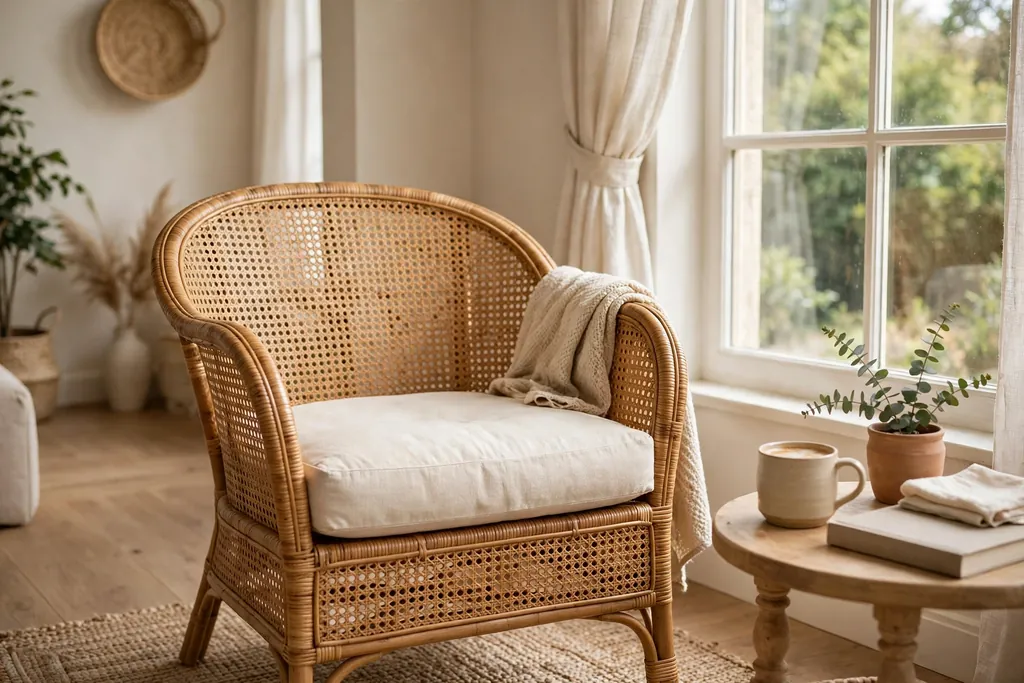
Place a rattan accent chair near a window or beside a sofa, with a plain linen cushion and a small side table. The open weave gives the chair a light look, even though the frame is sturdy, and it adds texture without a strong color. A single chair works well in a small room, while a pair suits a larger living room with space between the chairs.
Keep the cushion in cream, sand, or pale sage, and add a folded throw only in cooler months. Check that the chair sits at a comfortable height for the side table beside it, and leave clear floor space in front so the chair stays easy to get in and out of.
2. Rattan Pendant Lights Over a Dining Table
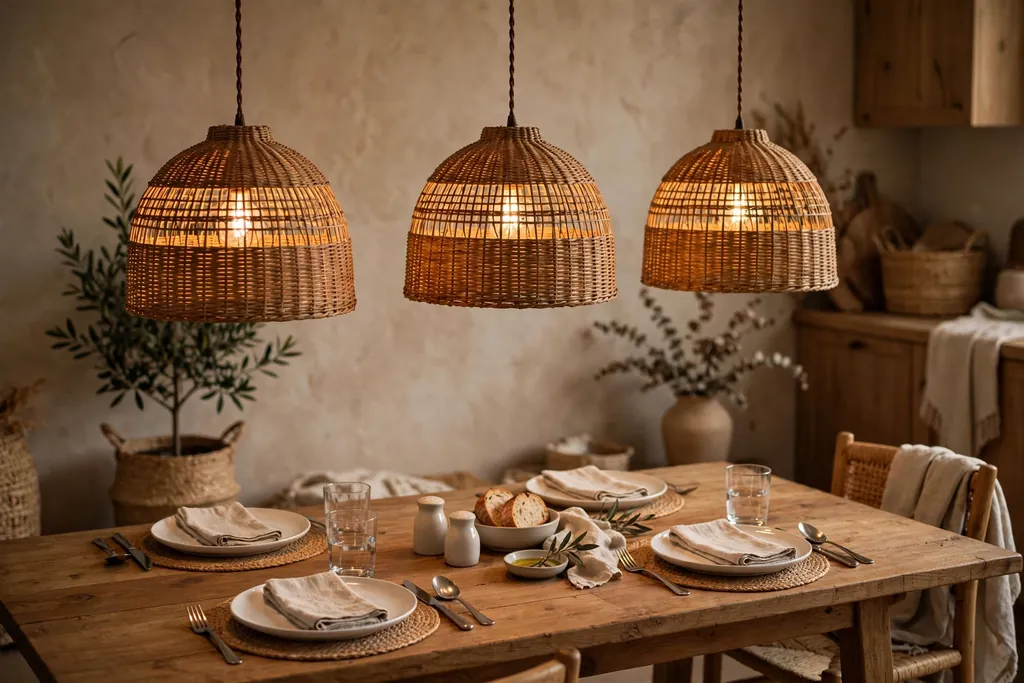
Hang two or three rattan pendant lights over a dining table, spaced evenly along the length of the table. The woven shades soften the light and cast a gentle pattern, while the open weave keeps the fixtures from looking heavy above the table. This idea works best over a plain wood or white table, where the shades can be the main feature.
Hang the shades high enough to see across the table, and use warm white bulbs for evening meals. If the dining area is small, one larger rattan pendant can give the same woven effect without crowding the ceiling.
3. Rattan Headboard in the Bedroom
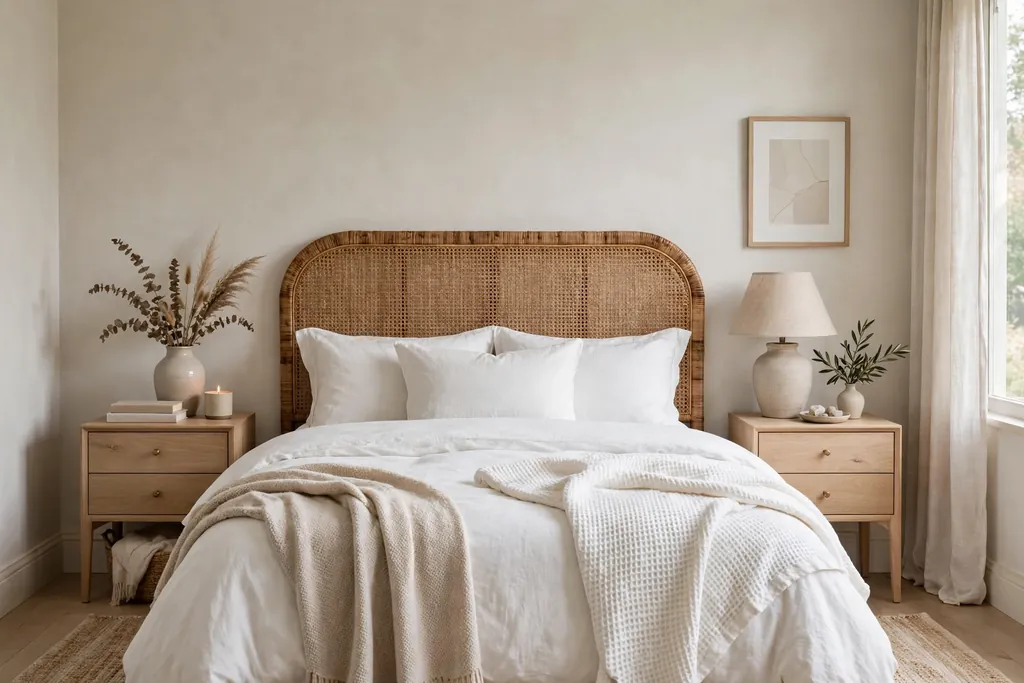
Use a rattan headboard, either a full woven panel or a rattan insert in a wood frame, to add texture behind the bed. The weave softens a plain bedroom wall and pairs well with white or cream bedding, light wood nightstands, and a simple lamp. A headboard also frames the bed without paint or wallpaper.
Choose a headboard that is wide enough to sit behind both pillows, and keep wall art above it simple or leave the wall bare. Dust the weave with a dry cloth, and avoid placing the headboard where it will be brushed by a door or a closet.
4. Rattan Coffee Table in the Living Room
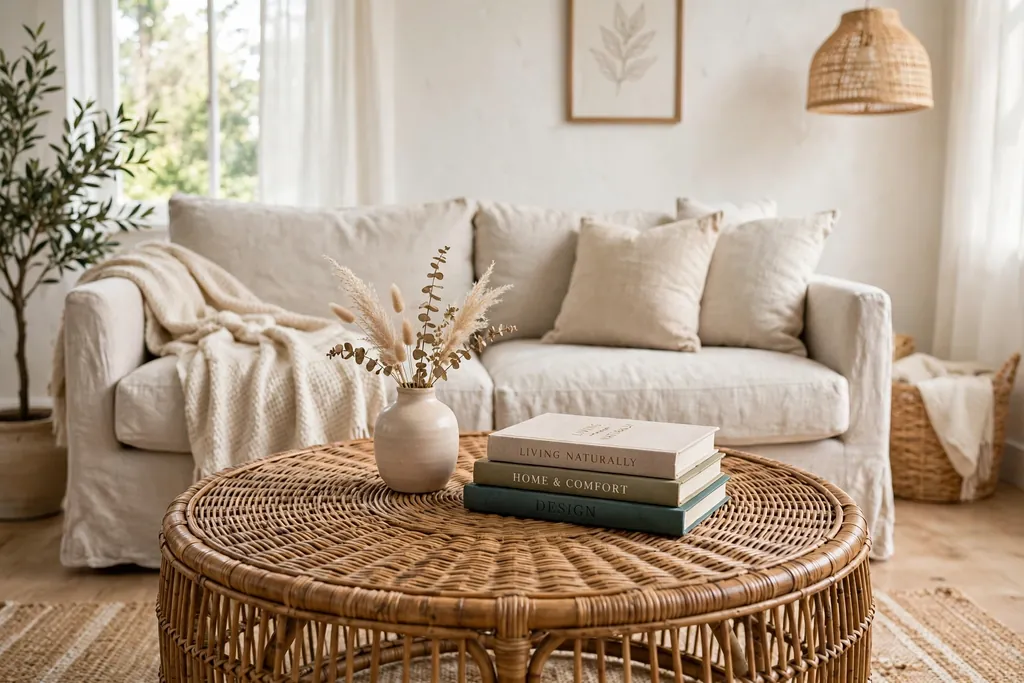
Set a rattan coffee table in front of the sofa, with a glass top if you want a flat surface for cups and books, or a solid woven top for a softer look. The table adds natural texture at the center of the room, and its light frame keeps the seating area from feeling crowded. A round rattan table suits a small room, since it has no corners to walk around.
Style the top with only two or three items, such as a small vase, a stack of books, and a candle in a glass holder. Keep the table height near the sofa seat height, so reaching for a cup feels natural.
5. Rattan Dining Chairs Around the Table
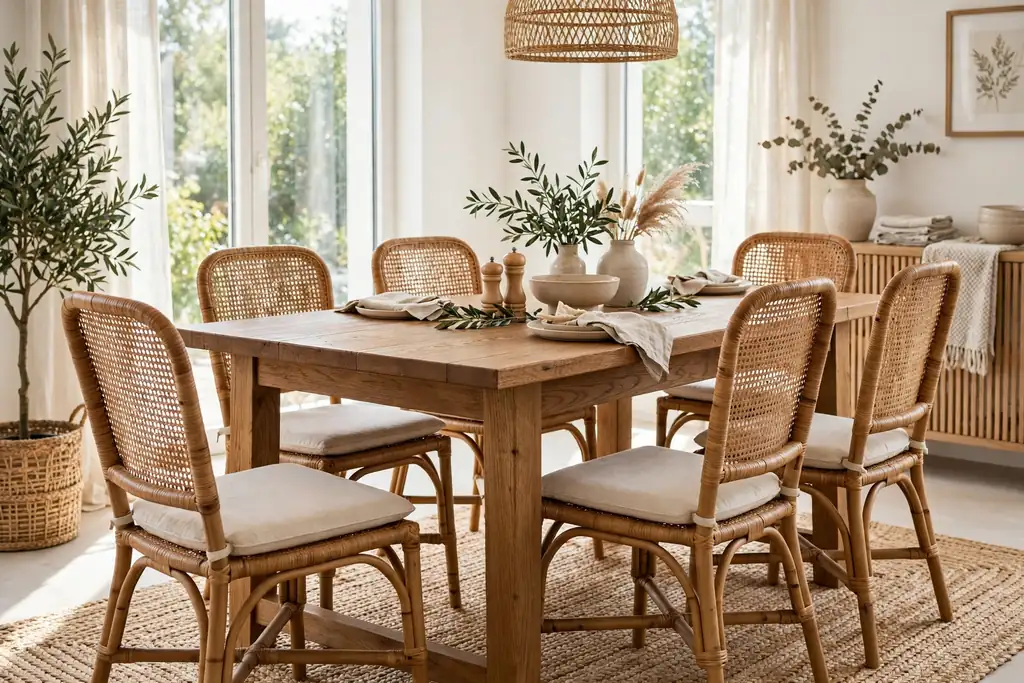
Use rattan dining chairs around a wood or white dining table, with plain seat cushions tied on if the seats need softening. Woven chair backs add texture at every place setting, and the chairs are light enough to move for guests or cleaning. This idea suits a dining room, a kitchen nook, or a covered porch used for meals.
Keep the table setting plain, with simple plates and linen napkins, so the chairs carry the texture. Check that chairs slide under the table easily, and wipe the weave after meals, since food and dust settle in the open pattern.
6. Rattan Room Divider in an Open Space
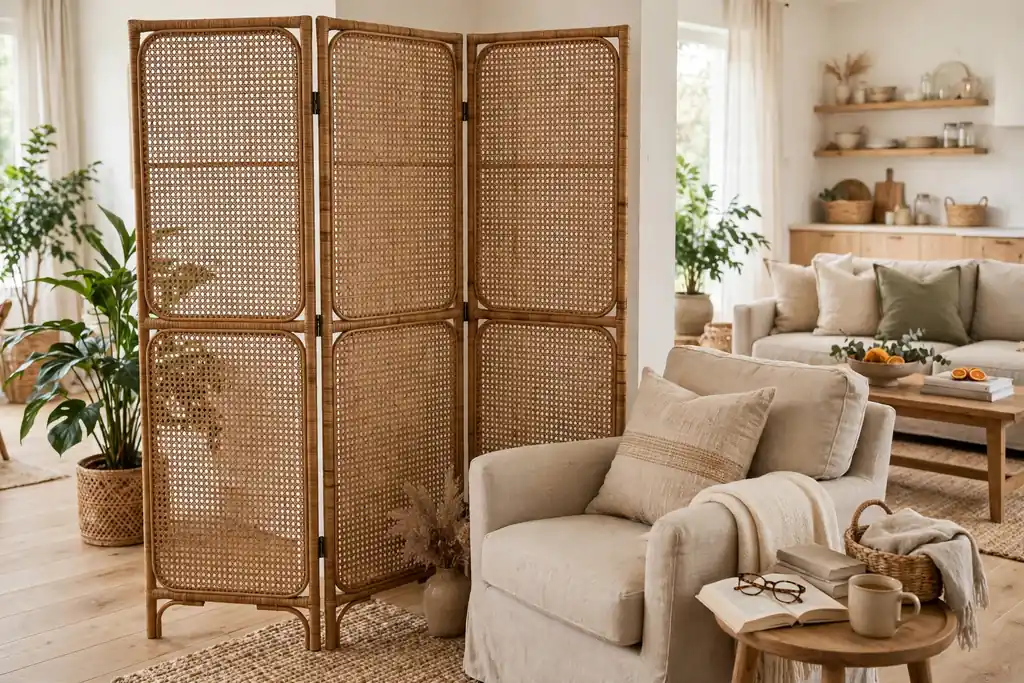
Stand a rattan room divider in an open living area to mark a reading corner, a work zone, or a sleeping area without building a wall. The woven panels give privacy while still letting light pass through, so the divided space does not feel closed off. A three panel divider folds flat for storage, which suits a rented home or a room that changes use.
Place the divider where it will not block a walkway or a heater, and anchor it with a heavy plant or a small table at one end if it wobbles. Keep the panels in a pale rattan tone, so the divider reads as a light screen rather than a dark barrier.
7. Rattan Sunburst Mirror in the Entry
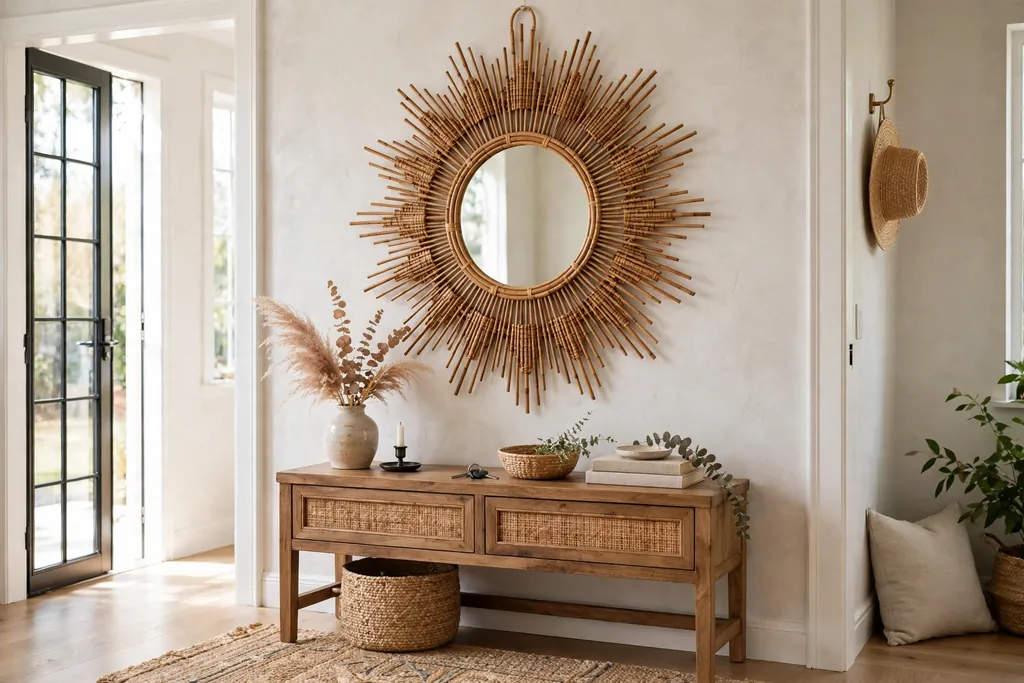
Hang a rattan sunburst mirror in an entry, a hallway, or above a console, where it can catch light and add a woven frame to a plain wall. The radiating rattan spokes give the mirror a clear shape, and the round mirror itself helps a small entry feel wider. This is a good first rattan piece, since it needs no floor space.
Hang the mirror at eye level, centered over the console or bench below it. Keep the surface below the mirror clear except for a small dish for keys, so the mirror and its frame stay the focus.
8. Rattan Storage Baskets for Daily Clutter
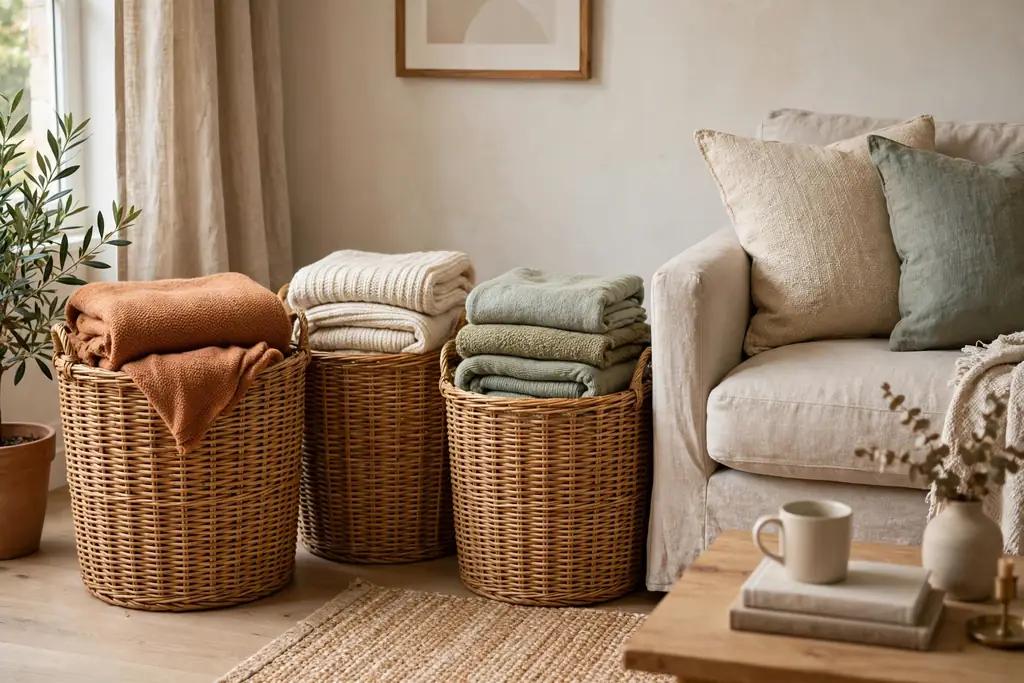
Set large rattan baskets beside the sofa, by the door, and in bedrooms for throws, toys, magazines, and shoes. Baskets hide daily clutter while adding woven texture at floor level, and lidded baskets keep the contents out of sight in a bedroom or bathroom. Choose baskets with handles, so they are easy to move for cleaning.
Give each basket one job, such as throws only or shoes only, rather than filling one large basket with mixed items. Empty each basket once a week, so it does not slowly fill with things that belong elsewhere, and keep baskets out of damp spots.
9. Rattan Serving Tray on an Ottoman
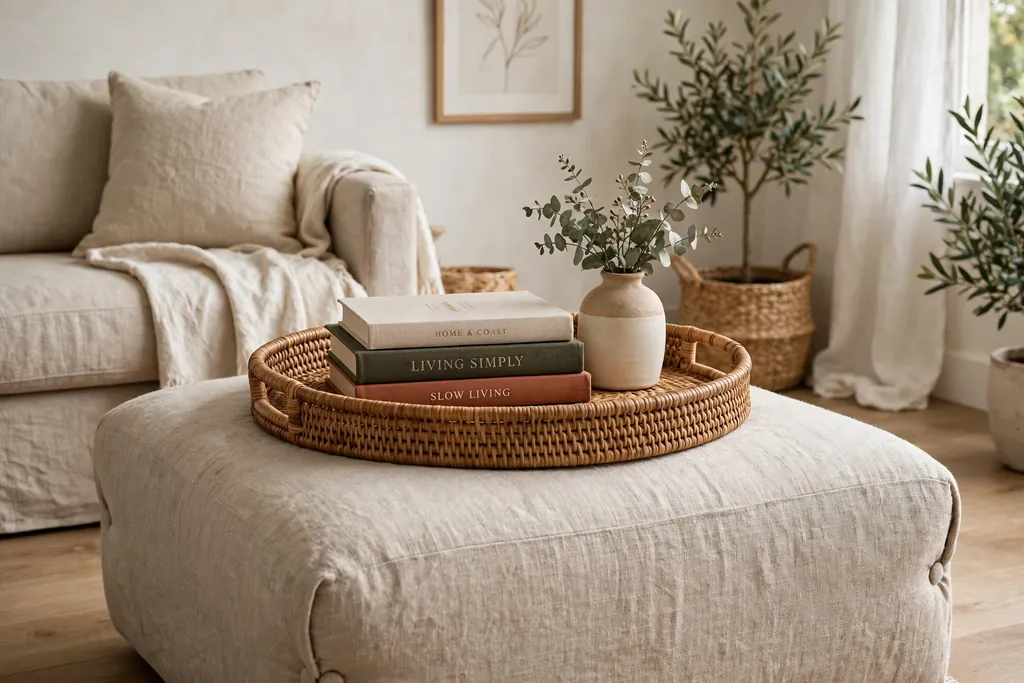
Place a rattan serving tray on an ottoman or a large coffee table to hold a vase, a candle, and a small stack of books. The tray defines one display area, keeps small items from sliding, and adds a woven layer over plain upholstery or wood. A tray with raised edges works best, since it holds items in place when the ottoman is used.
Use the tray in the living room for daily drinks and books, or carry it to the porch for outdoor serving. Lift the whole tray aside in one move when the ottoman is needed as a footrest, and wipe the tray clean after use.
10. Rattan Side Table Beside a Chair or Bed
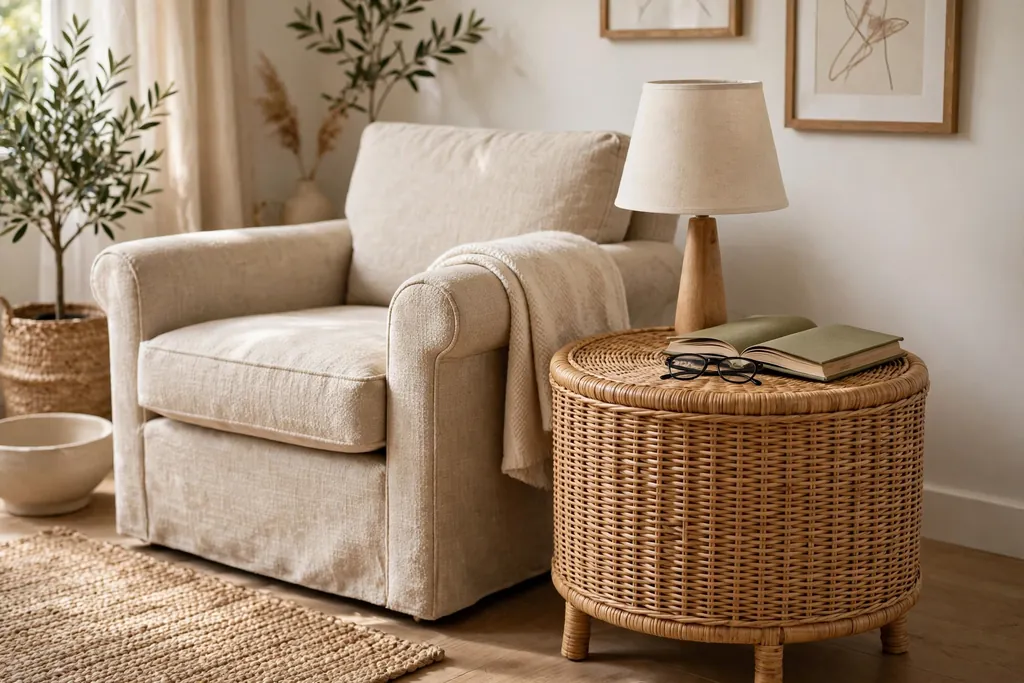
Add a small rattan side table beside an armchair or a bed, in place of a solid wood table. The woven table is light to move, adds texture at seating height, and pairs well with a lamp, a book, and a small vase. A round top suits a tight corner, while a square top gives more room for a lamp and a drink together.
Keep the tabletop to two items at most, so the table stays useful rather than crowded. If the table will hold a lamp, check that the base sits flat on the woven top, and use a lamp with a plain linen shade.
11. Rattan Front Credenza in the Living Room
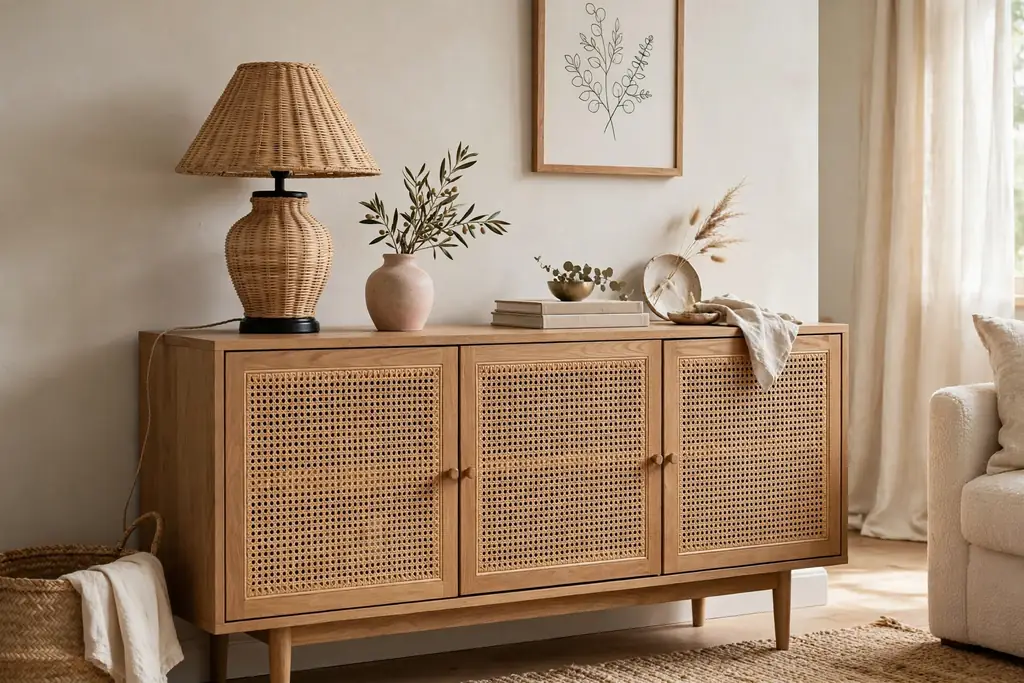
Use a sideboard or credenza with rattan front doors in a living room or dining room, to store books, games, table linens, or media items. The woven doors hide storage while adding a large area of natural texture, and the piece can anchor a wall that would otherwise hold only a plain console. Pair it with a mirror or plain art above, so the doors stay the feature.
Keep the top of the credenza simple, with a lamp at one end and a small vase at the other. Open the doors fully before loading the shelves, and keep heavy items low, so the piece stays stable.
12. Rattan Hanging Planters for Greenery
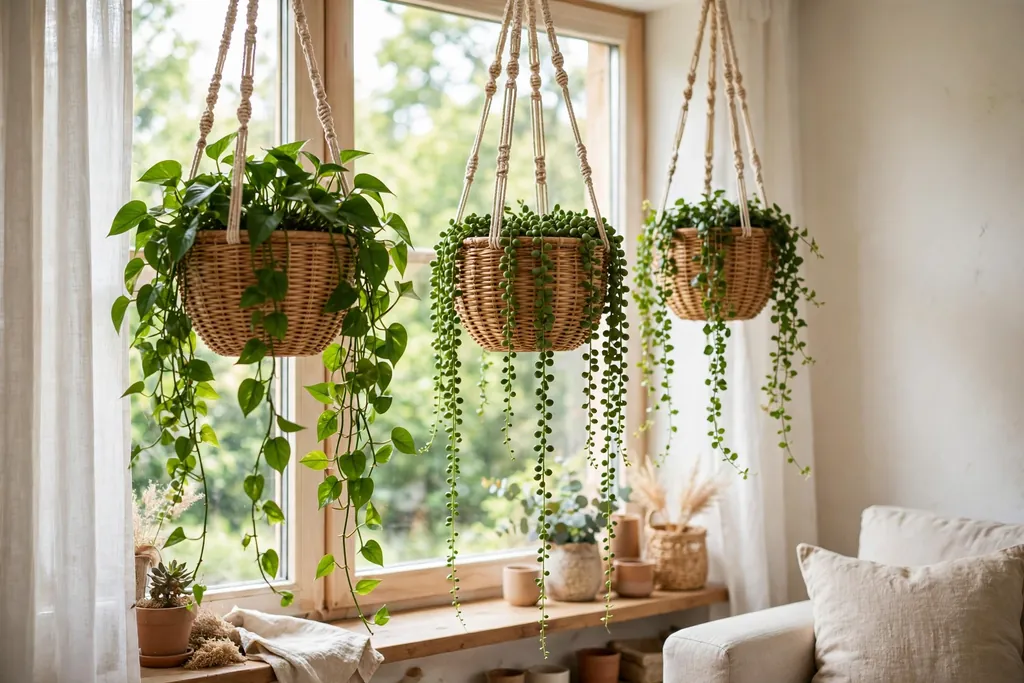
Hang rattan planters from ceiling hooks or wall brackets, with trailing plants such as pothos or ivy, to add greenery at eye level and above. The woven planters soften a plain wall or a window corner, and hanging plants free up floor and table space. This idea works well in a kitchen, a living room, or a covered porch with good light.
Use a lined inner pot, so water does not drip through the weave onto floors or furniture. Hang planters where they will not be brushed by doors, and check the hooks regularly, since a watered plant is heavier than a dry one.
13. Rattan Lounge Chairs on the Porch
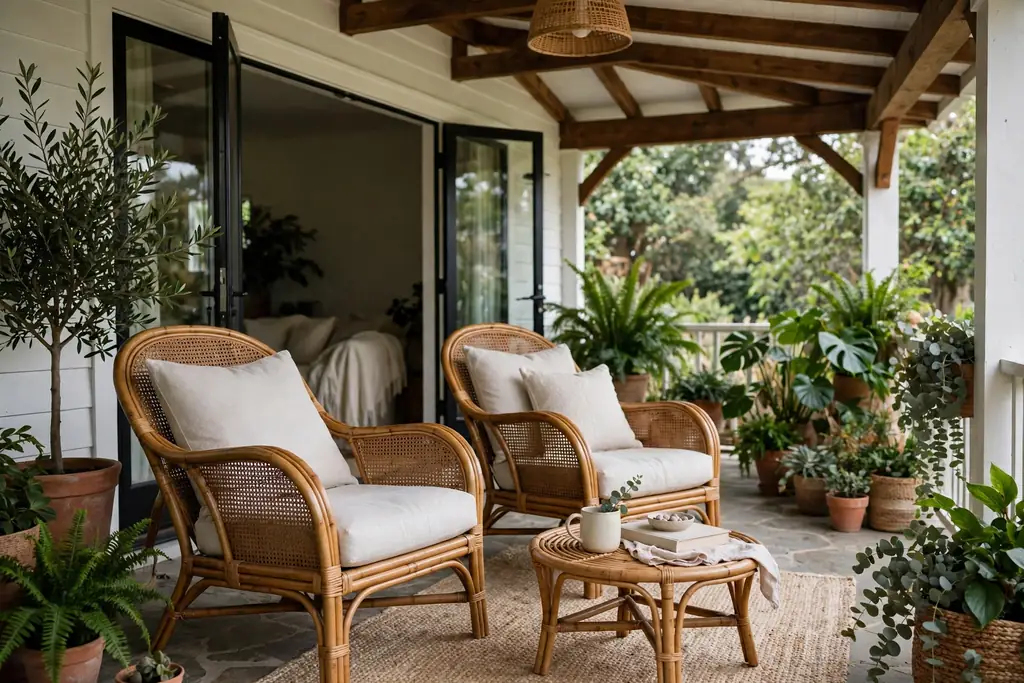
Set rattan lounge chairs with weather resistant cushions on a covered porch or patio, with a small side table between them. Rattan suits outdoor living because it looks natural beside plants and wood decking, and lounge chairs give the porch a clear use for reading and evening drinks. Keep the set under cover, since rattan should not sit in direct rain.
Choose cushions in a pale, washable fabric, and store them indoors during heavy rain or winter. Brush the weave after dusty weather, and check the chair frames at the start of each season for loose joints.
14. Rattan Entry Bench with Storage Below
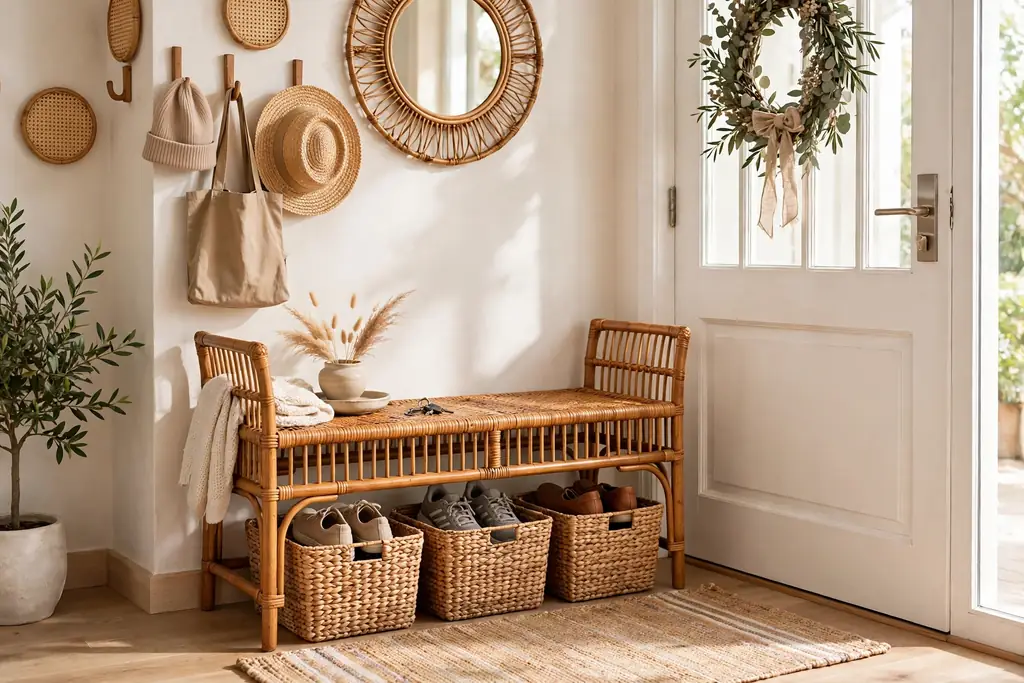
Place a rattan bench by the front door, with an open shelf or baskets below for shoes, bags, and hats. The bench gives a place to sit while putting on shoes, and the woven seat and storage add texture to an entry that often holds only a plain console. A bench with a cushion in cream or sand is more comfortable for daily use.
Keep the bench top clear except for a small dish for keys, and keep one basket per person below, so shoes do not pile up. Measure the entry first, so the bench leaves a clear path to the door.
15. Rattan Open Bookshelf in a Study or Living Room
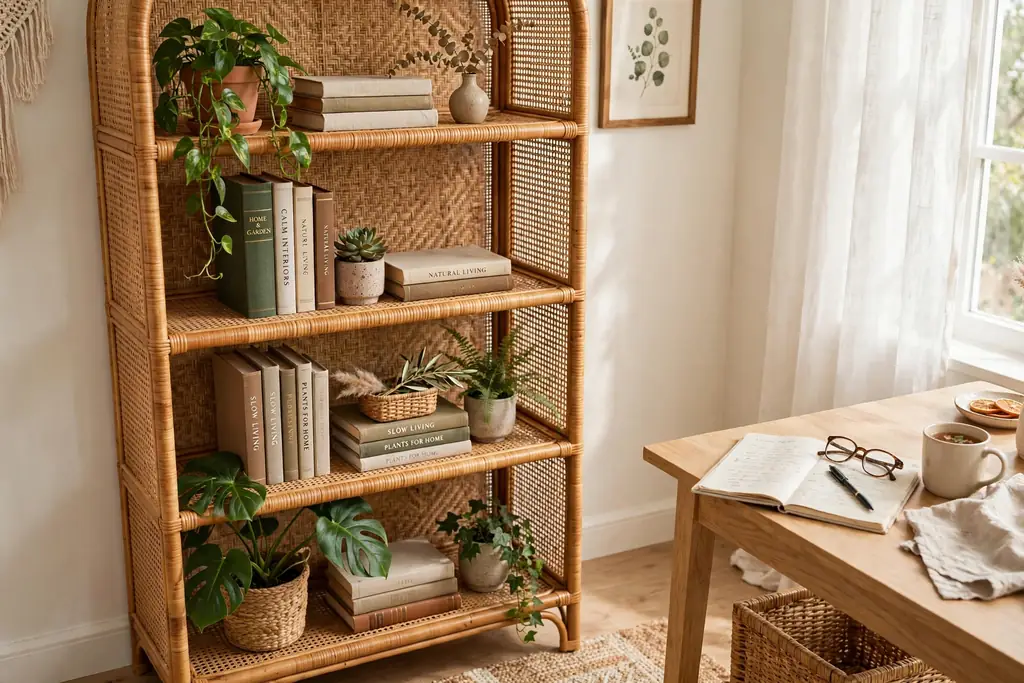
Use an open rattan bookshelf, with woven side panels or a rattan back, to hold books, plants, and a few decorative pieces. The open frame keeps the shelf from looking like a heavy bookcase, while the weave adds texture behind the books. This idea suits a study corner, a living room wall, or a bedroom used for reading.
Group books by size, leave breathing room between groups, and place plants on the top shelf where they get light. Keep heavy books on the lowest shelf, so the unit stays stable, and dust the woven panels with a dry cloth.
16. Rattan Floor Lamp with a Woven Shade
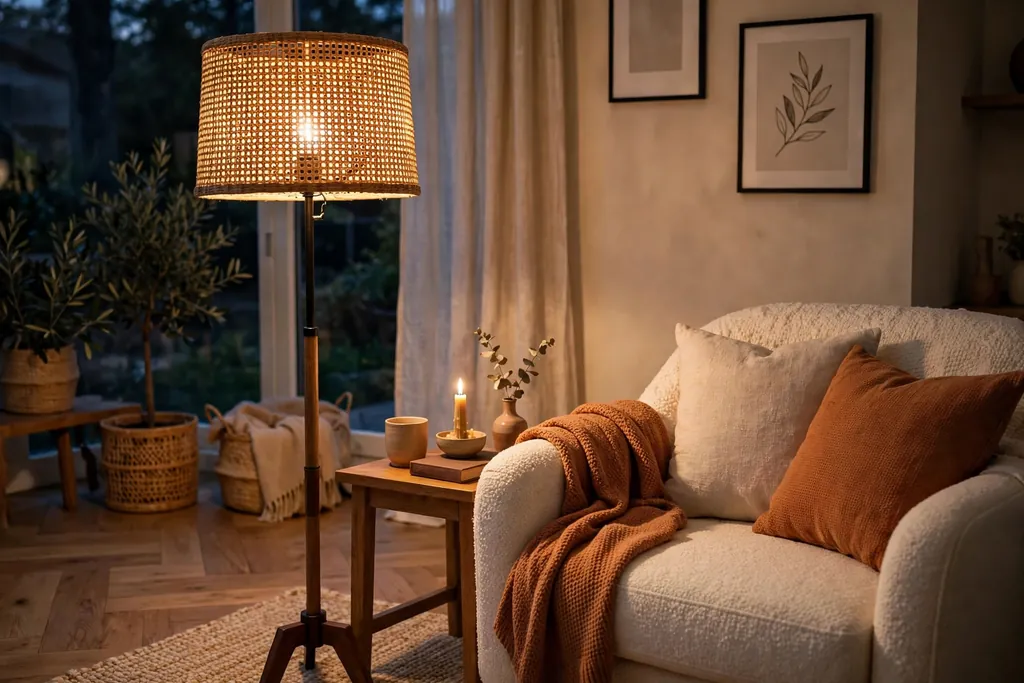
Place a floor lamp with a rattan shade beside an armchair or a sofa, to give warm light through a woven pattern in the evening. The shade softens the bulb and adds texture at standing height, while the lamp itself takes little floor space. This idea works well in a reading corner, where a table lamp would crowd a small side table.
Use a warm white bulb, and keep the shade clear of curtains and throws. If the lamp will be used for reading, choose a shade that lets enough light fall on the book, and place the lamp slightly behind the chair.
17. Rattan Wall Panels as Woven Art
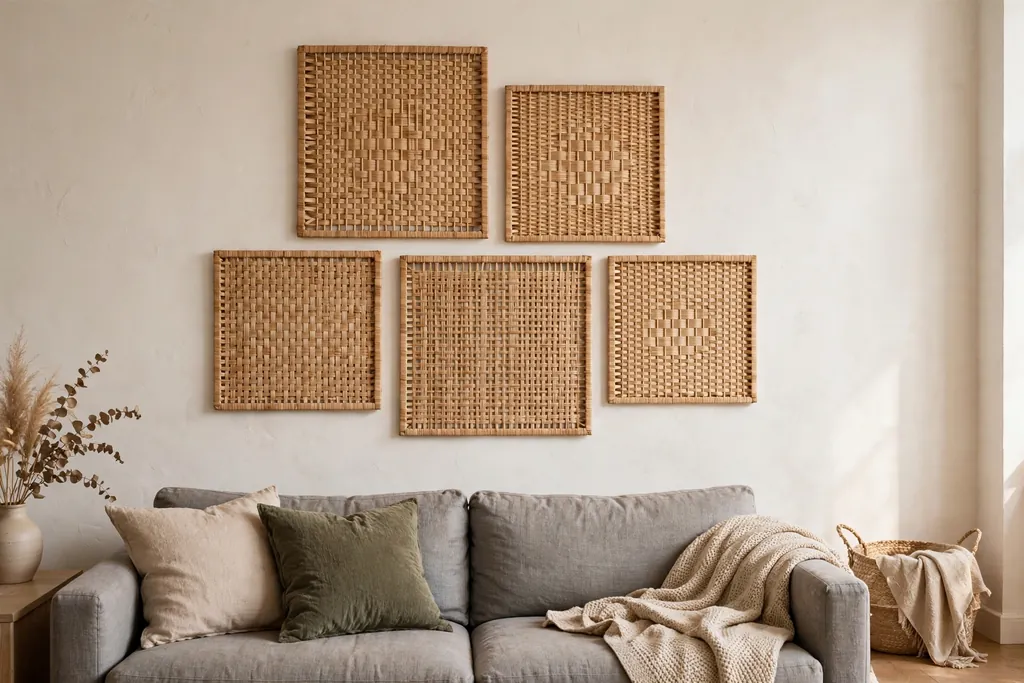
Hang flat woven rattan panels, or a set of three small rattan wall hangings, on a plain living room or bedroom wall. The panels add large scale texture without paint or a framed print, and they suit a wall that already holds a sofa or a bed, where a picture frame might compete with furniture below. Keep the panels in one rattan tone for a calm group.
Lay the panels on the floor first to plan spacing, then hang the largest panel slightly off center to anchor the group. Leave even gaps between panels, and keep other wall decor on that wall to a minimum, so the weave stays the feature.
18. Rattan Hanging Swing Chair in a Corner
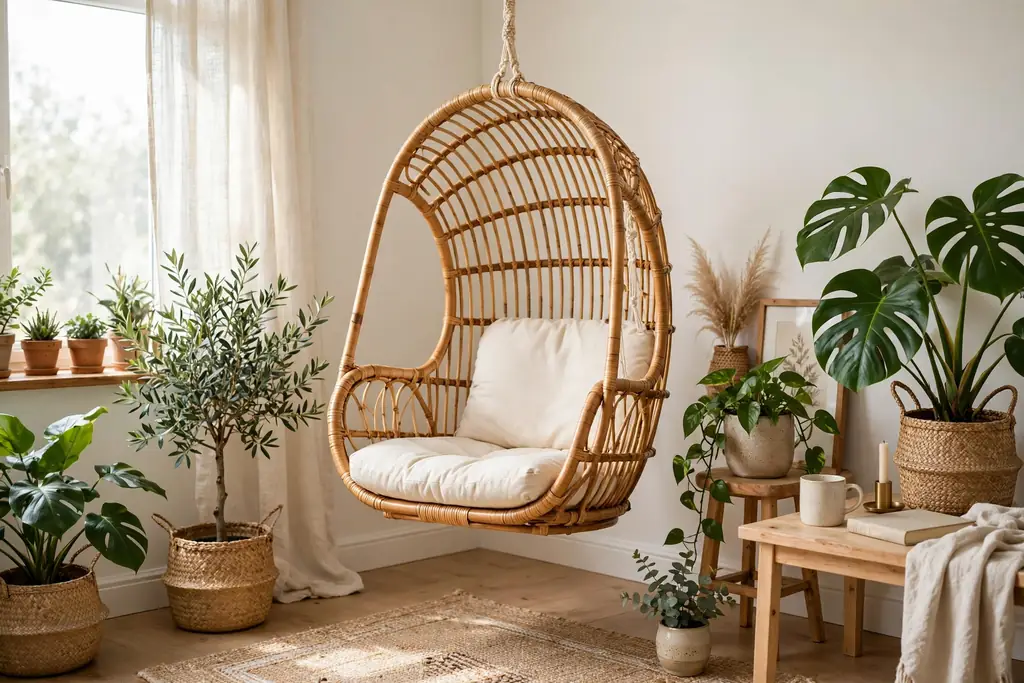
Hang a rattan swing chair from a sturdy ceiling joist or a freestanding frame, in a living room corner, a bedroom, or a covered porch. The hanging chair adds a playful seat and a strong woven shape, and it gives a corner a clear purpose beyond a plant or a floor lamp. Add a plain cushion and a small throw for comfort.
Check the ceiling fixing or frame rating before hanging the chair, and leave clear space around it so it can move without hitting walls or furniture. Keep the chair away from doors and high traffic paths, and test the height so feet touch the floor when seated.
19. Rattan Placemats and Chargers at the Table
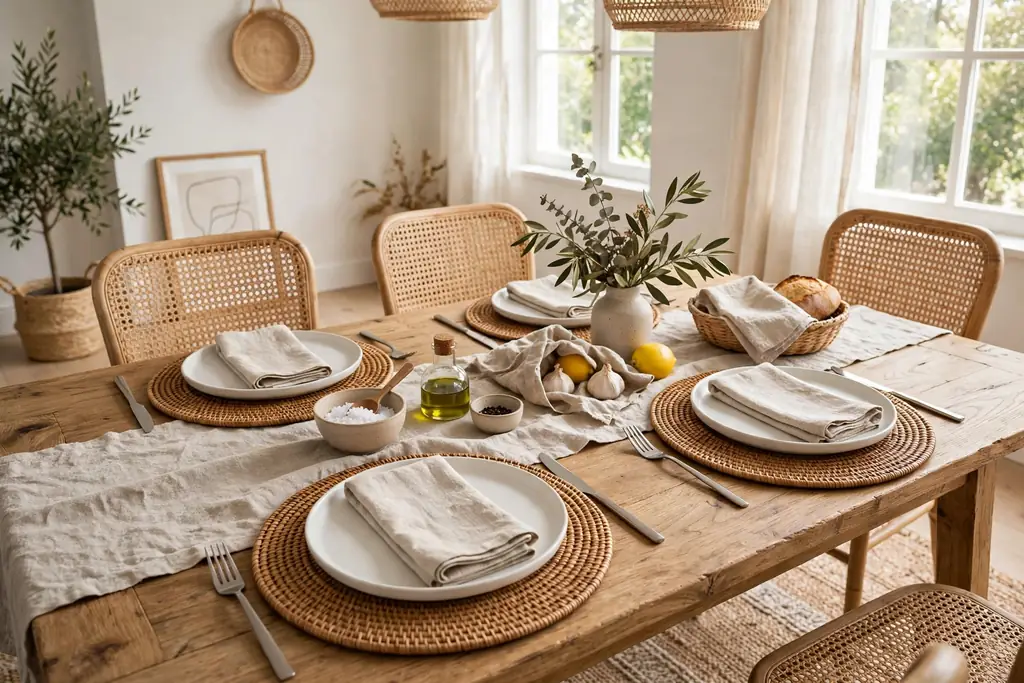
Set rattan placemats and chargers under each place setting, instead of a full tablecloth, to add woven texture to a dining table. Each mat defines a place, protects the table, and pairs well with plain plates, linen napkins, and simple glassware. This is a low cost way to try rattan, since mats store flat when not in use.
Wipe mats clean after meals, and store them flat so they do not curl at the edges. For a special meal, add a small rattan napkin ring at each place, but keep the rest of the table plain, so the woven mats stay the focus.
Conclusion
Rattan decor works best when the weave is allowed to do the work: one or two pieces per room, pale colors, plain textiles, and light wood let the natural texture show without crowding the space. Start with the piece you will use most, such as a chair, a light, or a basket, then add a smaller accent only where the room still needs warmth. Pick the ideas that fit your rooms, your budget, and your daily routine, and repeat one rattan tone through the home to link the rooms. With simple care, dusting, and protection from damp, rattan pieces will stay useful and good looking for years.
FAQs
What is rattan decor?
Rattan decor is decorating with furniture and accents made from rattan, a natural woven material used for chairs, lights, baskets, headboards, and storage. It adds warm, open texture to a room, suits pale and coastal styles, and works best in small doses, with one or two pieces per room paired with linen, wood, and plants.
How much rattan should I use in one room?
Use one or two rattan pieces in one room, such as a chair and a basket, or a pendant light and a tray, so the weave reads as texture rather than a theme. If the room already has rattan furniture, keep other woven accents small, and let plain textiles and light wood balance the look.
Does rattan work in a modern home?
Rattan works in a modern home when the shapes are simple and the palette stays pale, such as a rattan pendant light over a plain table, or a rattan front credenza against a white wall. Keep other patterns plain, use one rattan tone, and pair the weave with clean lines, light wood, and neutral textiles.
How do I clean rattan furniture?
Clean rattan furniture by dusting the weave with a dry cloth, then wiping it with a lightly damp cloth and letting it dry fully in fresh air. Avoid soaking rattan or using harsh cleaners, keep pieces out of damp spots, and check joints now and then, since dry rattan can loosen if it is left in very dry heat.
Can rattan be used outdoors?
Rattan can be used outdoors on a covered porch or patio, with weather resistant cushions, but it should not sit in direct rain for long periods. Natural rattan lasts longer under cover, so store cushions indoors during heavy rain, brush the weave after dusty weather, and check frames at the start of each season.
What colors pair best with rattan decor?
White, cream, sand, pale sage, soft green, and light wood pair best with rattan decor, because pale tones let the warm weave stand out without competing with it. Add one muted accent, such as olive cushions or a terracotta pot, in small doses, and keep most of the room plain so the texture stays the focus.