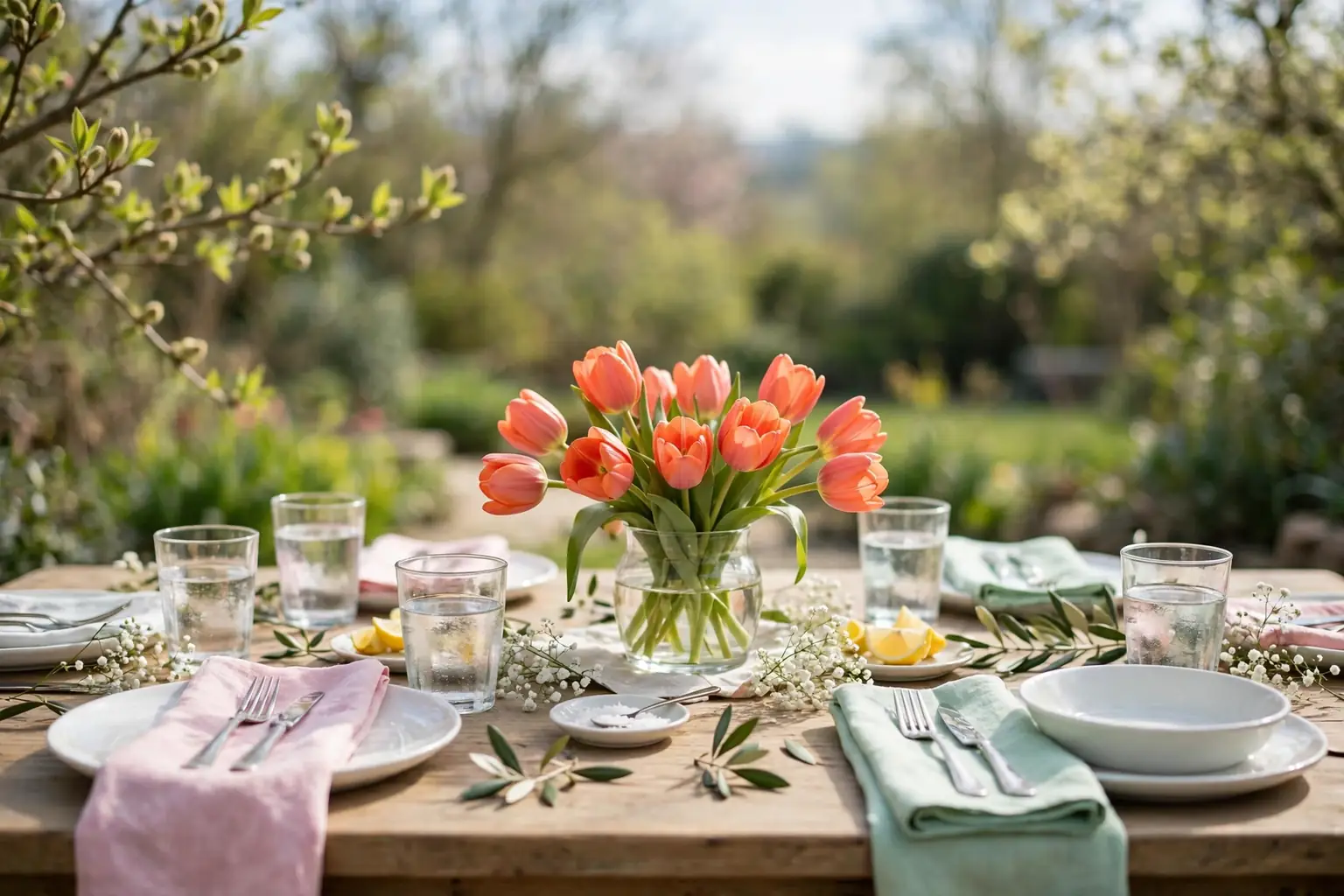
Spring table decor works best with fresh flowers, light colors, and one low centerpiece that leaves room for plates and glasses. Start with a plain cloth or runner, add tulips, daffodils, or wildflowers in low vases, then layer pastel napkins, simple dishes, and a touch of greenery. The 21 ideas below cover everyday meals, brunches, and spring gatherings.
A good spring table needs only three layers: a calm base, one flower group, and a small color repeat at each place. Pick two or three colors and use them in the flowers, napkins, and one extra detail, such as candles or a ribbon. Keep the centerpiece low so guests can talk across the table, and leave space for serving dishes. For seasonal styling in other rooms, visit the Dwell Ovell home page, and for a cooler weather table, see Fall Table Decor.
Key Takeaways
- Start with a plain cloth or runner, then add one low flower group as the centerpiece, so the table stays open for plates and serving dishes.
- Pick two or three spring colors, such as blush pink, soft yellow, and leaf green, and repeat them in flowers, napkins, and candles.
- Keep flowers low and narrow, below eye level when guests sit down, so conversation across the table stays easy.
- Use fresh flowers where they show most, at the center and at each place, and use greenery or faux stems to fill gaps.
- Match the table to the meal: simple settings for weeknights, fuller layers and place cards for brunches and gatherings.
- Refresh water daily and trim stems at an angle, so cut flowers last through the weekend and beyond.
1. Low Tulip Centerpiece in a Glass Vase
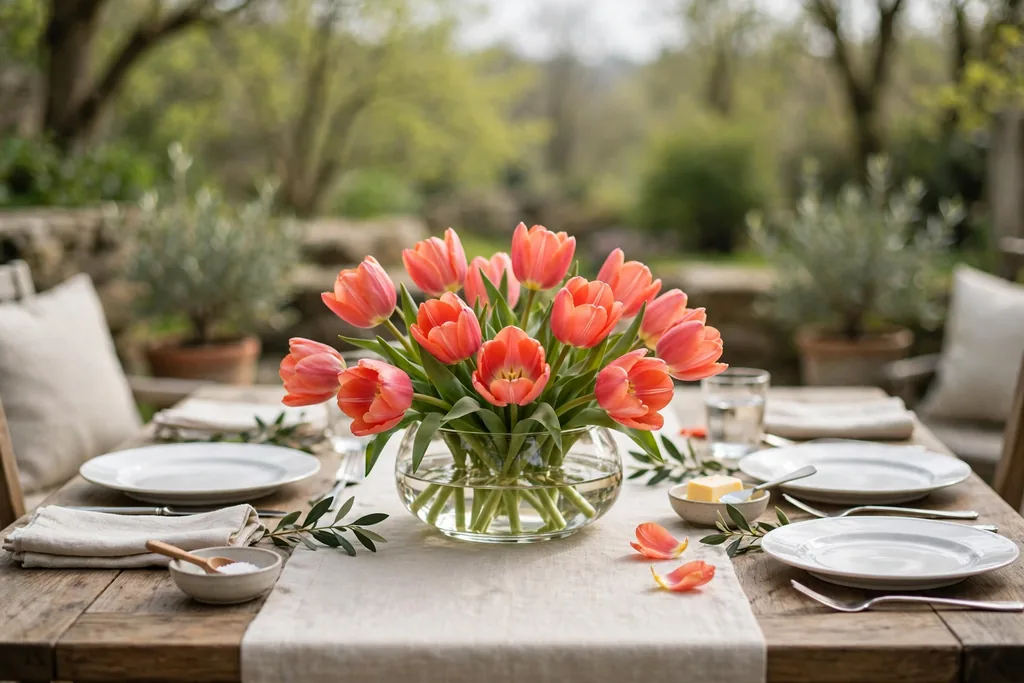
Set a low, wide glass vase in the center of the table and fill it with tulips in one color, such as coral, yellow, or soft pink. Trim the stems so the blooms sit just above the rim, and add a little greenery only at the base, so the tulip heads stay the focus.
Tulips keep growing after cutting, so they may lean or open wider over a few days, which suits a relaxed spring table. Change the water daily and keep the vase out of direct sun, so the blooms last longer and the water stays clear.
2. Pastel Linen Tablecloth with White Dishes
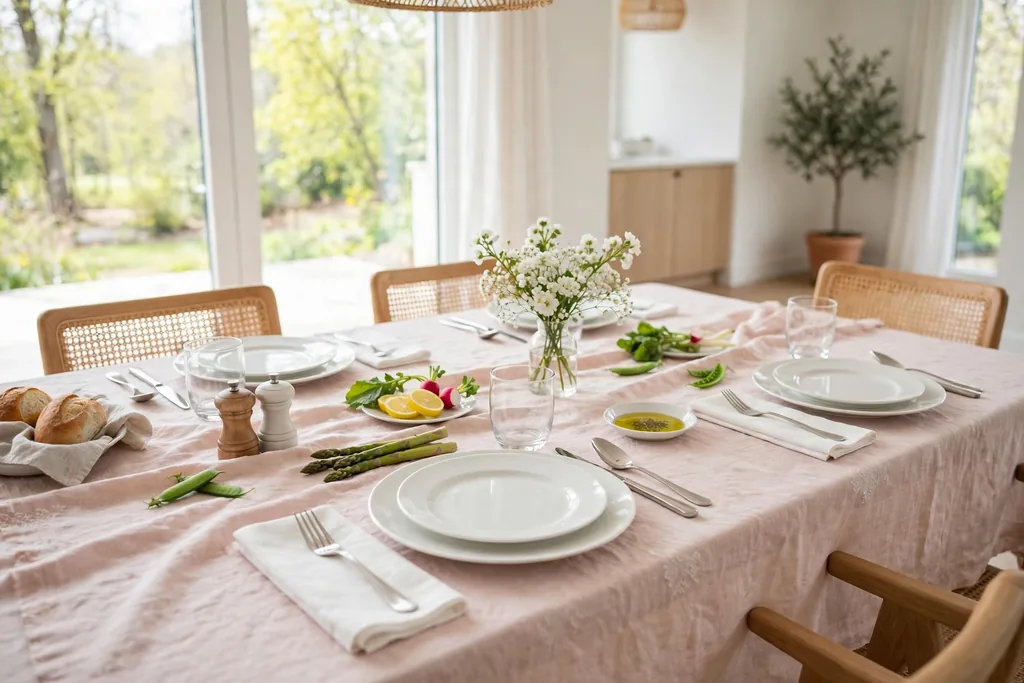
Lay a pastel linen tablecloth in blush, mint, or pale blue, then set plain white dishes at each place. The pale cloth carries the spring color, while white plates keep the table calm and let the food and flowers stand out.
Iron or steam the cloth before a gathering, since creases show more on pale linen than on a patterned cloth. If the table is used daily, use a washable pastel cloth or a runner over a plain base, so spills are easy to handle.
3. Wildflower Mason Jars at Each Place
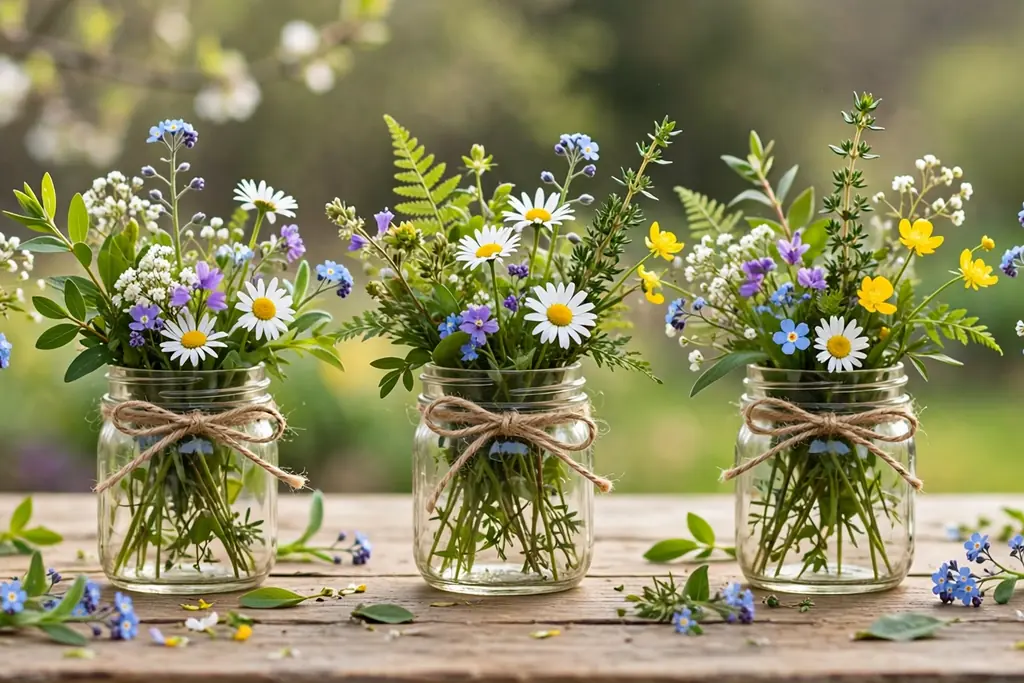
Fill small mason jars with a few wildflower stems, such as daisies, chamomile, and sprigs of greenery, and set one jar at each place or between every two places. Tie a short length of twine or ribbon around each jar neck for a finished look.
Mason jars suit a casual spring table because they are sturdy, cheap to repeat, and easy to move when serving dishes arrive. Use short stems and small blooms, so the jars do not crowd the plate or block the view across the table.
4. Lemon and Greenery Runner
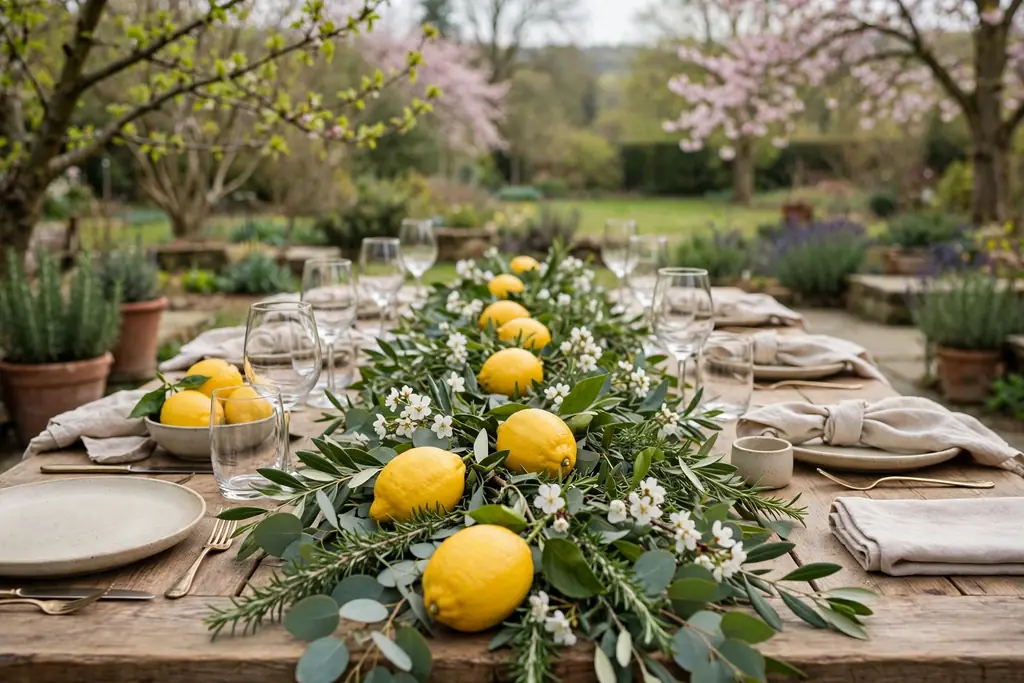
Lay a runner of fresh greenery down the center of the table, then tuck whole lemons, lemon halves, and small white blooms among the leaves. The yellow fruit gives a bright spring note, while the greenery keeps the runner full without a large flower arrangement.
This runner works well for a lunch or brunch table, where the citrus also suits the menu. Wipe lemons before setting them out, and replace any cut lemon halves after the meal, since cut fruit does not keep well at room temperature.
5. Blush Pink and Gold Place Settings
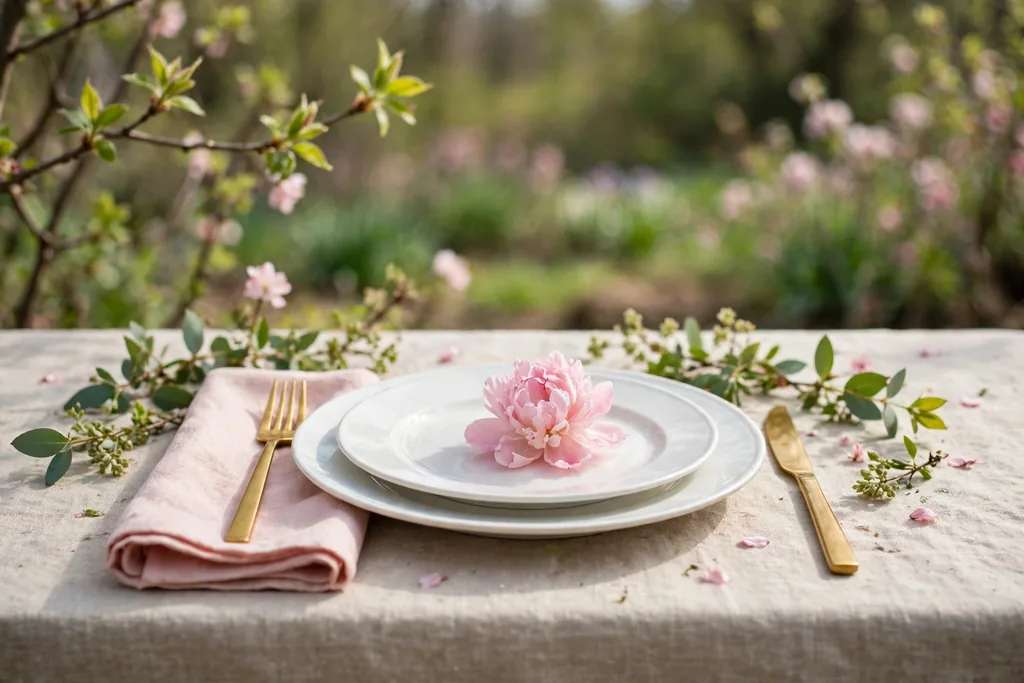
Set blush pink napkins, gold toned cutlery, and plain white or cream plates at each place, with a single pink bloom laid on each napkin. The soft pink and warm gold pairing reads fresh in spring, without the heavier feel of deep metallics used in winter.
Keep the gold to one element, such as the cutlery or a thin rim on the plates, so the table stays light. Add clear glasses rather than colored ones, so the pink and gold remain the only strong colors on the table.
6. Potted Herbs as Living Centerpieces
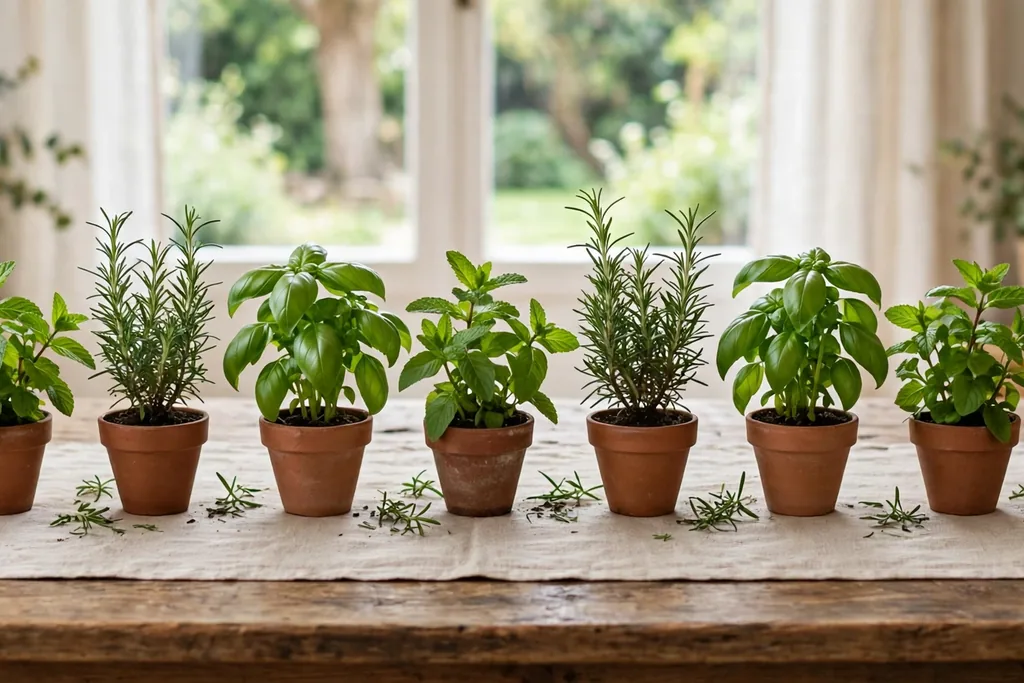
Line up small pots of herbs, such as basil, mint, rosemary, and parsley, down the center of the table, with one pot per two places. The herbs give scent and green color, and guests can snip a few leaves for salads or drinks during the meal.
Use pots with saucers, so watering does not mark the table, and choose pots in one material, such as terracotta or plain white ceramic, for a matched look. After the meal, the pots can move to a windowsill, which makes this centerpiece useful well past spring.
7. White and Sage Green Table with Eucalyptus
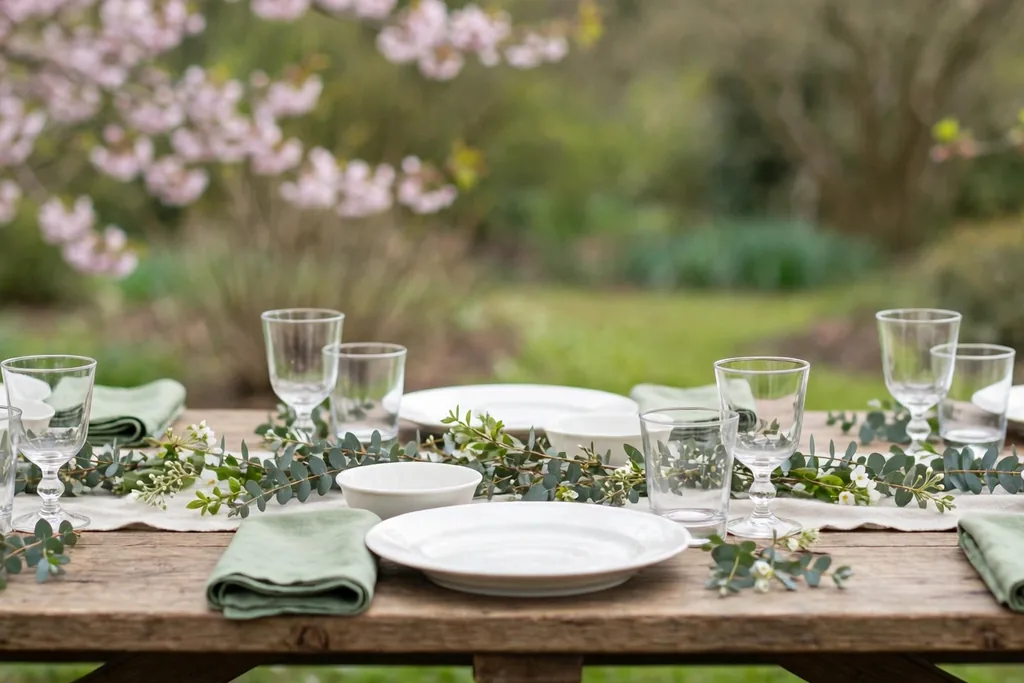
Pair white dishes and a white or cream cloth with sage green napkins, then lay short eucalyptus sprigs along the center of the table. The sage and white palette suits a bright room, and the eucalyptus adds texture without strong color.
Eucalyptus dries well, so sprigs left on the table keep their shape for days after the meal. Keep the sprigs short and flat, so they sit under the sightline, and brush off any loose leaves before guests sit down.
8. Floral Napkin Rings with Fresh Blooms
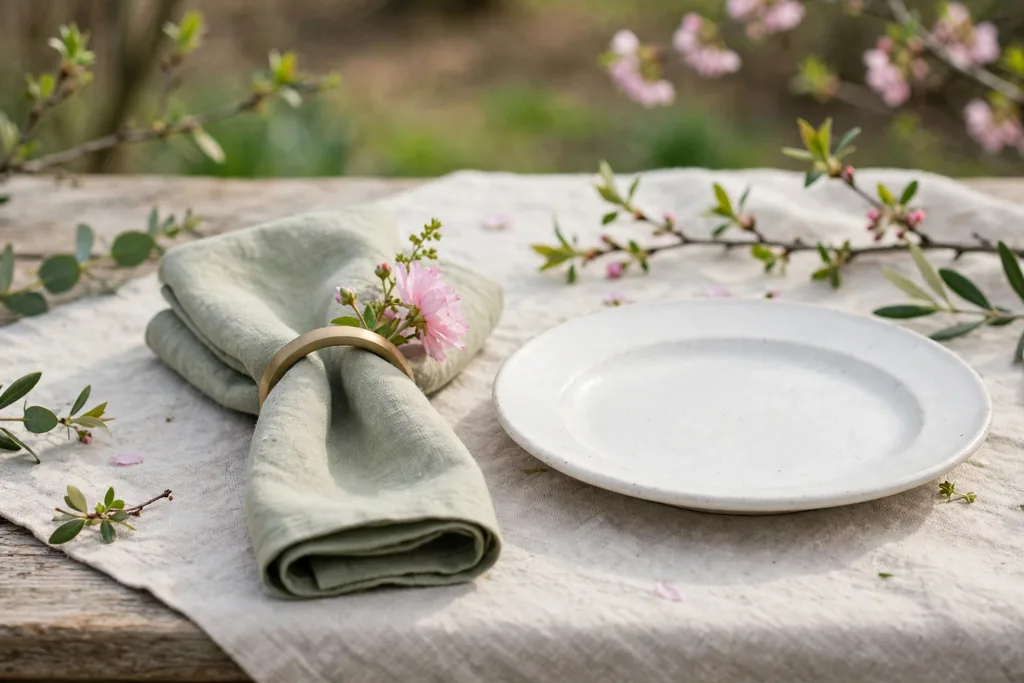
Fold cloth napkins in a simple rectangle or roll, then slip each one through a plain ring and tuck a small fresh bloom, such as a ranunculus bud or a sprig of lilac, behind the ring. Use the same bloom at every place for a matched table.
Choose blooms with short stems and no heavy pollen, so they do not mark the napkin or the plate. Remove the blooms before washing the napkins, and compost the stems after the meal.
9. Yellow Daffodils on a White Table
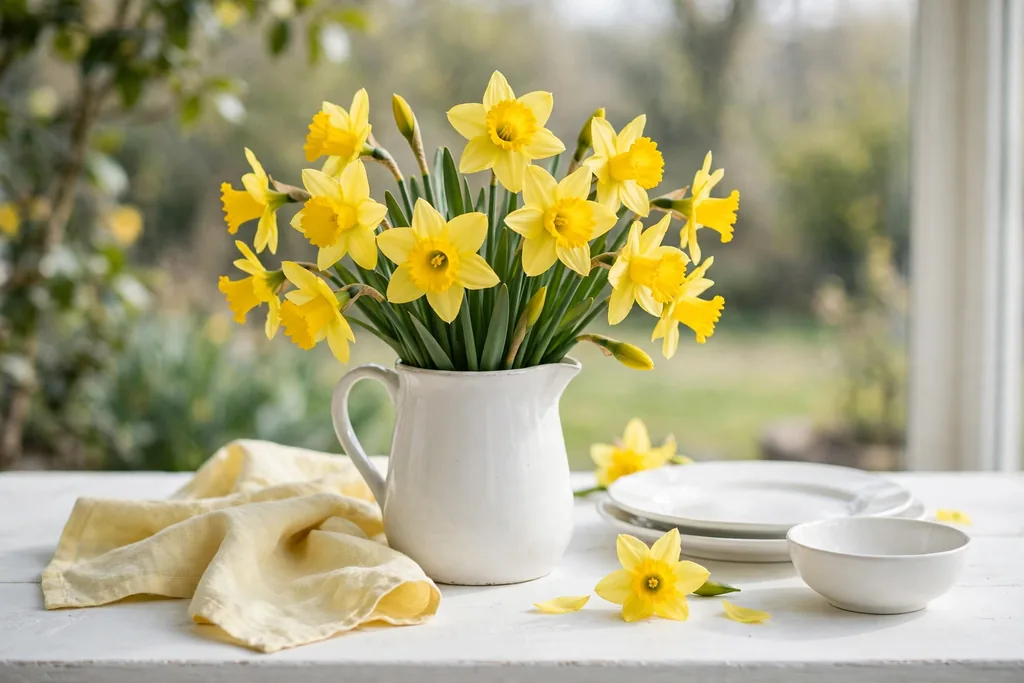
Group daffodils in a white pitcher or a plain white vase, and set the group on a white tablecloth with white dishes and pale yellow napkins. The yellow blooms carry all the color, which makes this one of the simplest spring tables to put together.
Daffodil stems release a sap that can shorten the life of other flowers in the same vase, so keep daffodils on their own. Trim the stems and change the water daily, and keep the arrangement away from fruit bowls, since daffodil sap can affect ripening fruit nearby.
10. Rustic Wood Table with a Wildflower Garland
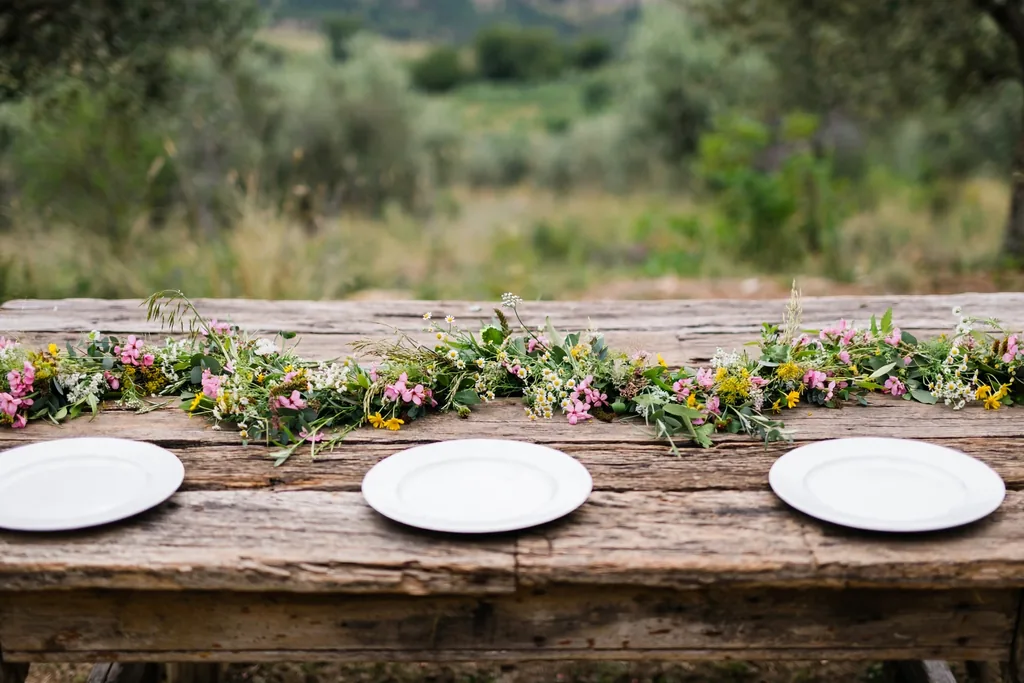
Leave a wood table bare, then lay a loose wildflower garland down the center, with small blooms in pink, white, and yellow mixed with greenery. Set plain plates and simple glasses at each place, so the garland stays the main spring detail.
A bare wood table suits a farmhouse or rustic dining room, and it is easy to wipe after a meal. Use placemats under plates if the wood marks easily, and keep the garland narrow, so serving dishes still fit on either side.
11. Blue and White Porcelain with Spring Blooms
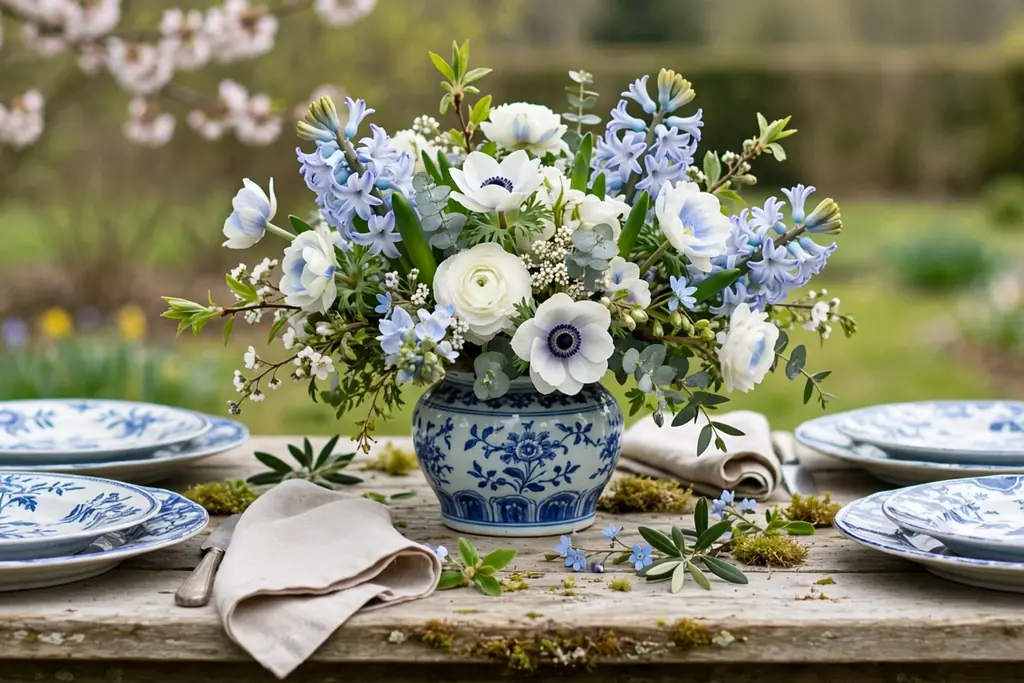
Set blue and white porcelain plates at each place, with a blue and white vase or jug holding white and pale blue blooms in the center. The classic blue and white pairing reads crisp in spring, and it works with both formal and everyday meals.
Repeat the blue in one more place, such as the napkins or a thin ribbon tied around the vase, so the pattern does not look isolated. Keep the flowers simple, with white blooms and green leaves, so the porcelain pattern remains visible.
12. Outdoor Garden Table with Pastel Bunting
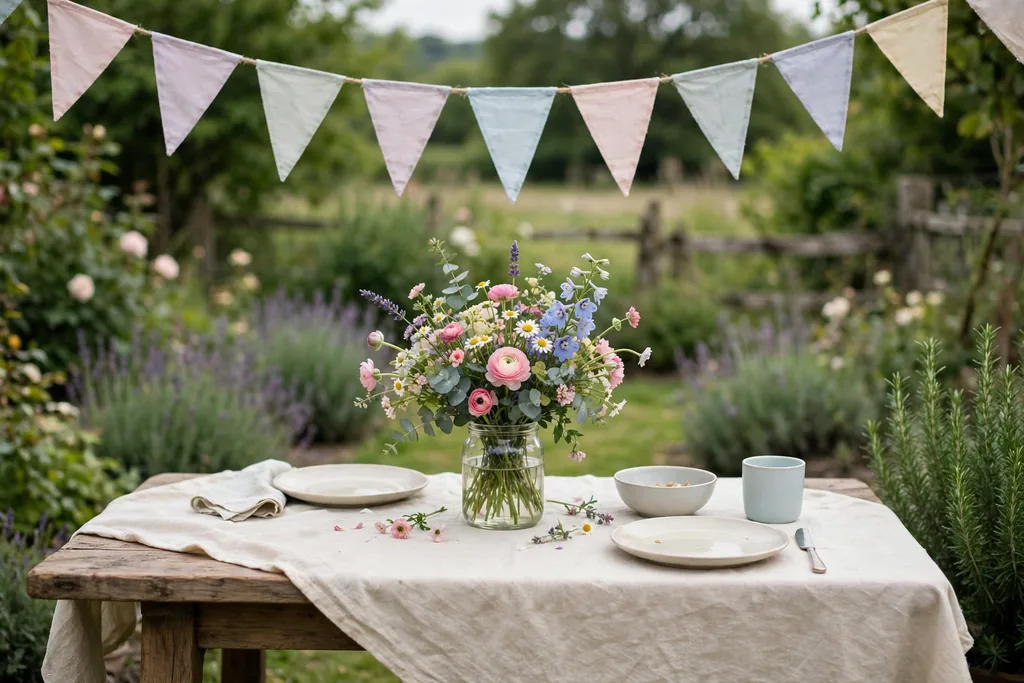
For a patio or garden table, hang a short strand of pastel bunting above or behind the table, then set a plain cloth, simple dishes, and a low jar of garden flowers at the center. The bunting adds spring color overhead, which leaves the table surface free for food.
Use outdoor safe bunting made of fabric or treated paper, and fix it so it cannot blow onto plates or candles. Bring paper or fabric bunting inside after the meal if rain is likely, and use sturdy, heavier dishes outdoors, so light plates do not lift in a breeze.
13. Peach and Coral Table for a Spring Dinner
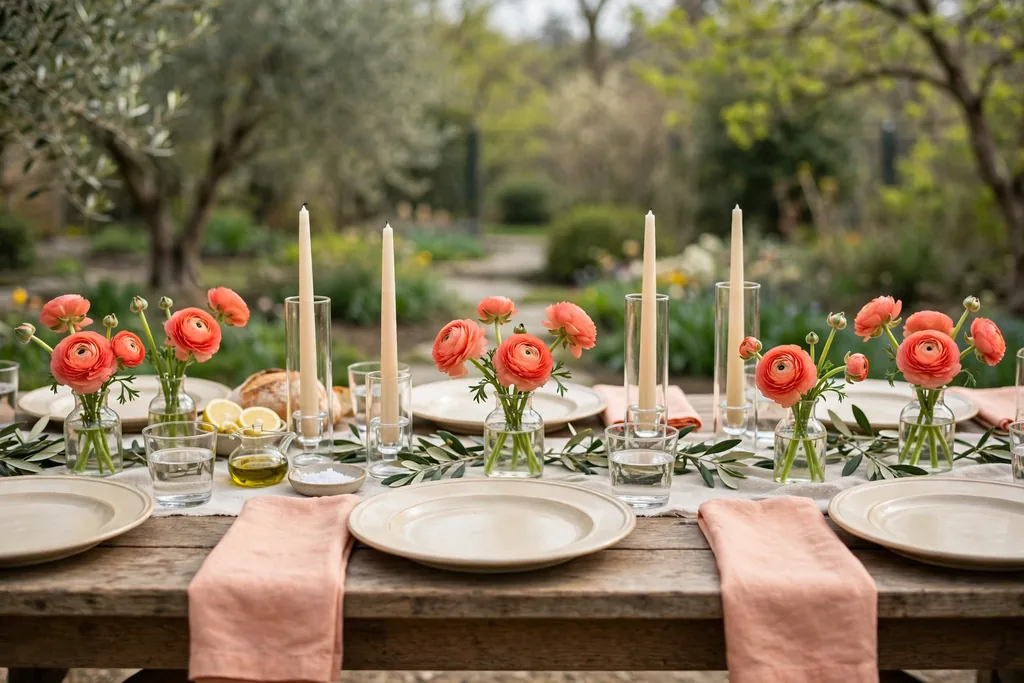
Combine peach napkins, coral blooms such as ranunculus or peonies, and cream plates for a warm spring dinner table. Add slim candles in glass holders between the flower groups, so the table glows softly in the evening.
Peach and coral suit a dinner table because they read warm under candlelight as well as daylight. Keep the flower groups low and in odd numbers, such as three small vases, so the center stays balanced without blocking the view.
14. Minimalist White Table with Single Stem Vases
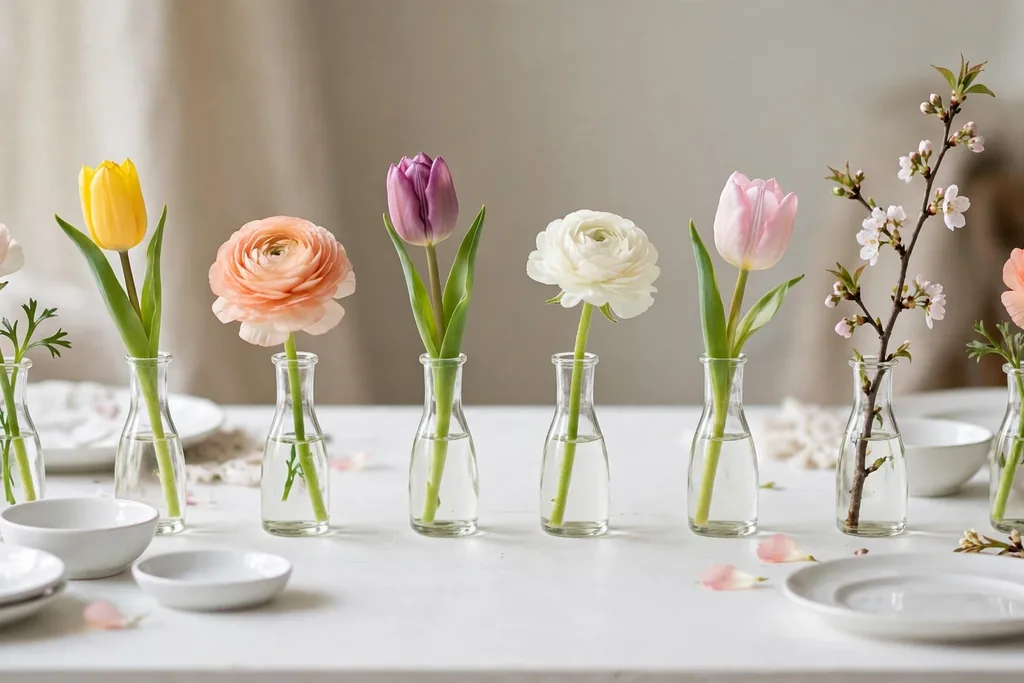
Set a white cloth, white dishes, and clear glasses, then place a row of small bud vases down the center, each holding a single stem, such as one tulip, one ranunculus, or one sprig of blossom. The single stems give a clean, modern spring look with very little effort.
This idea suits a small table, where one large arrangement would crowd the space. Vary the stem heights slightly, but keep every bloom below eye level, and use the same vase style throughout, so the row reads as one arrangement.
15. Vintage Floral China with a Lace Runner
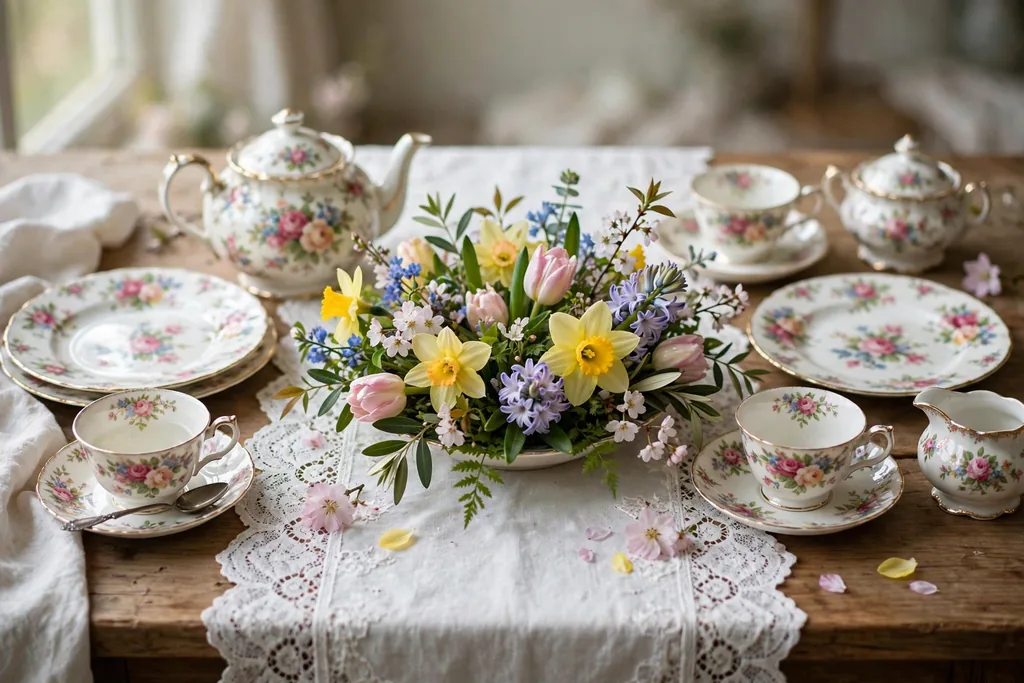
Set vintage floral china at each place, and lay a white or cream lace runner down the center, with a low bowl of mixed spring blooms on top. The lace and floral china together give a soft, traditional spring table, suited to afternoon tea or a family lunch.
Keep the rest of the table plain, with clear glasses and simple cutlery, so the patterned china stays the focus. Handle vintage pieces with care, and check for chips before setting the table, since thin china can chip if stacked carelessly.
16. Lavender Sprigs and Purple Accents
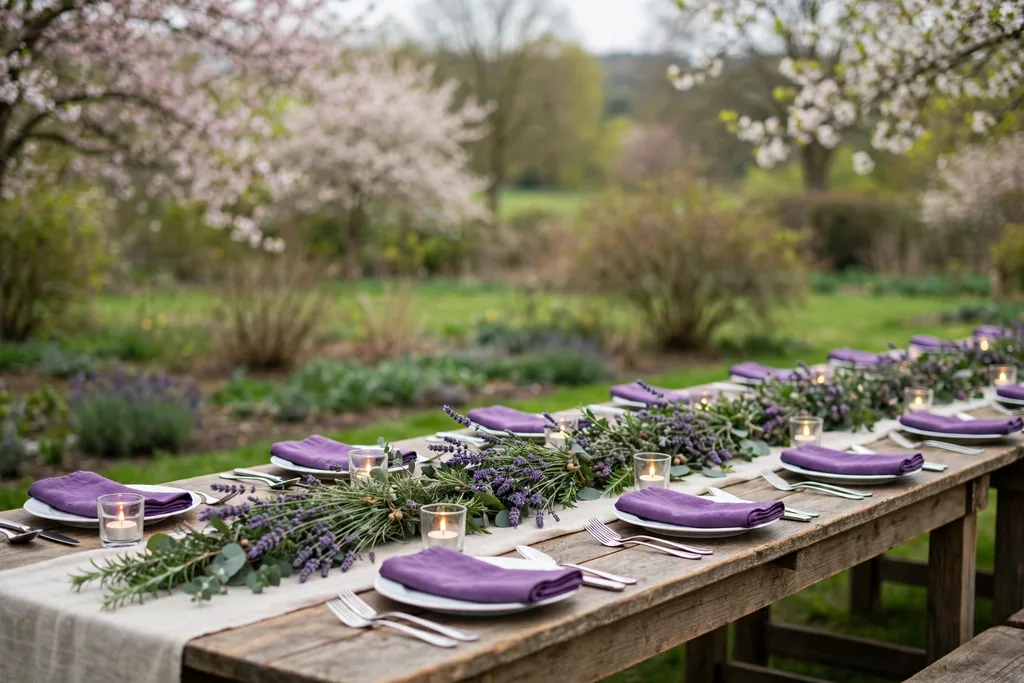
Lay fresh or dried lavender sprigs along the center of the table, and repeat the purple in napkins, a ribbon, or small candles at each place. Lavender gives scent as well as color, and its slim stems suit a narrow table where a wide arrangement would not fit.
Use lavender sparingly near food, since its scent is strong, and keep sprigs on the runner rather than on plates. Dried lavender keeps its color for weeks, so this table can stay set for several spring meals with only the napkins changed.
17. Green and White Botanical Table with Leaf Placemats
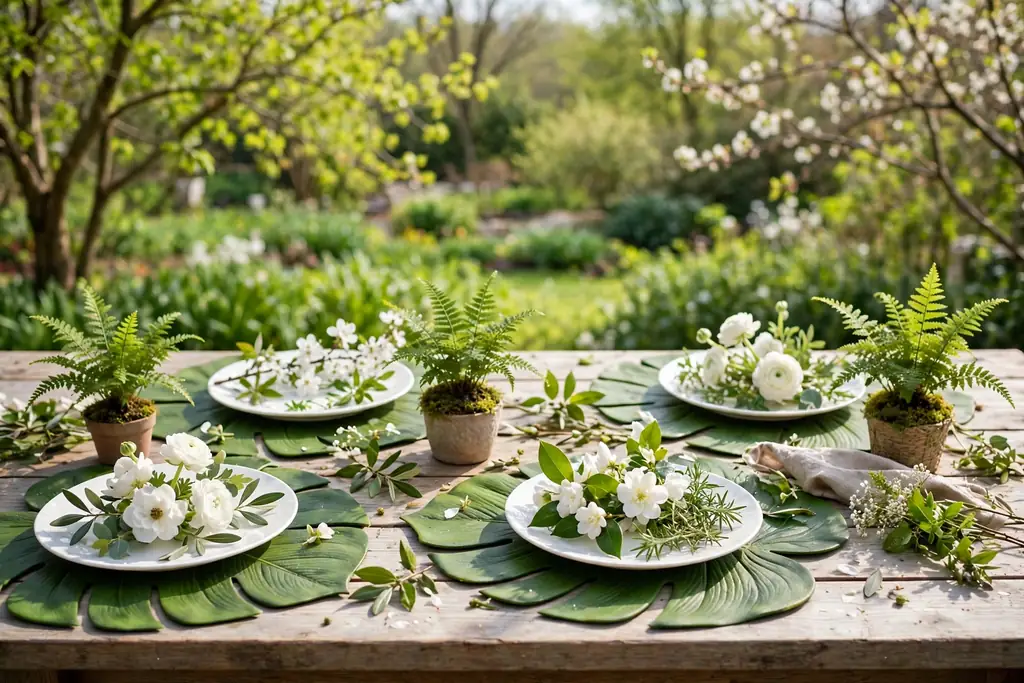
Set leaf shaped or green linen placemats under white plates, and fill the center with white blooms, green leaves, and a few potted ferns in plain pots. The green and white palette suits a bright dining room and pairs well with wood and glass.
Keep the greens to two or three leaf types, such as fern, eucalyptus, and hosta leaves, so the table looks planned rather than random. Wipe leaf placemats after meals, and use plain white napkins, so the green stays the only strong color.
18. Bright Coral and Mint Breakfast Table
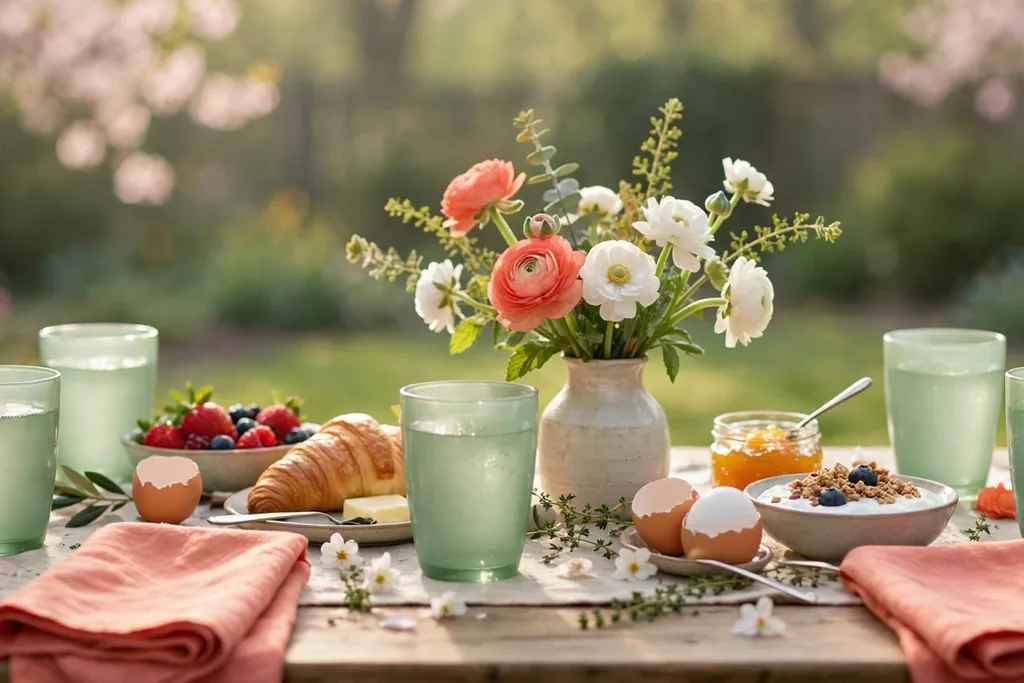
For a spring breakfast table, pair coral napkins or a coral runner with mint green dishes or glasses, and set a small vase of coral and white blooms in the center. The bright pairing suits morning light and a casual menu of fruit, pastries, and coffee.
Keep the breakfast table simple, with one flower vase and no candles, so there is room for serving plates and cups. Use washable napkins and sturdy dishes, since breakfast tables are often cleared in a hurry.
19. Spring Brunch Table with Fruit and Flowers
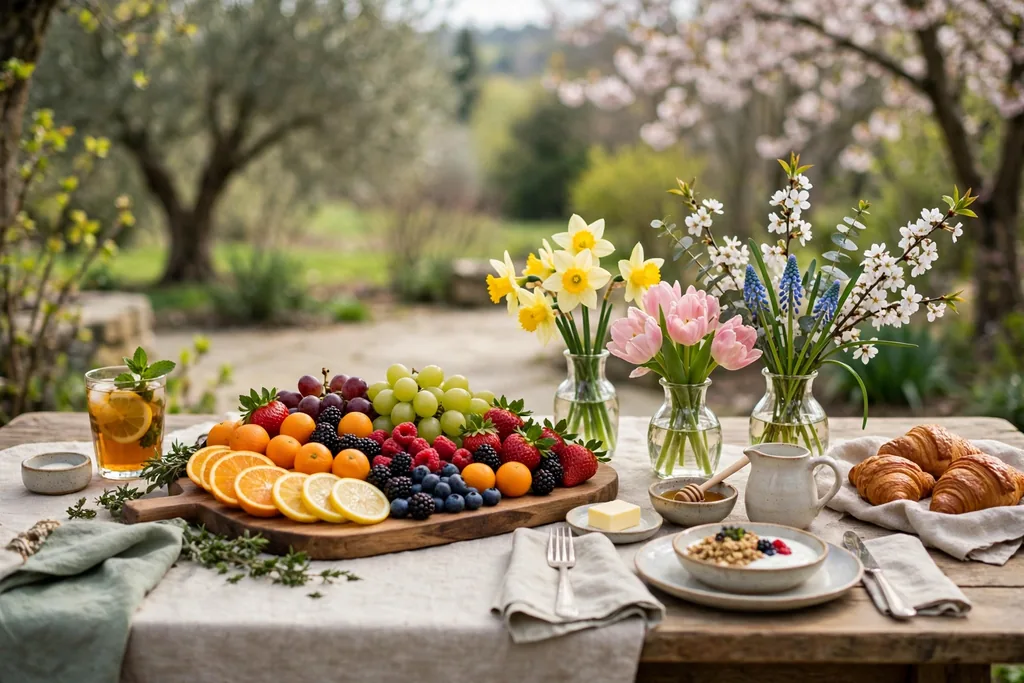
Set a brunch table with a fruit bowl or board of citrus, berries, and grapes at the center, flanked by two small vases of spring blooms. The fruit gives real color and shape, and it doubles as part of the menu, which suits a brunch gathering.
Keep the fruit board low and wide, so guests can reach it without standing, and refill it during the meal rather than piling it high at the start. Check soft berries before setting them out, and keep flowers clear of the fruit, so petals do not fall into food.
20. Soft Lilac and Silver Table for a Spring Evening
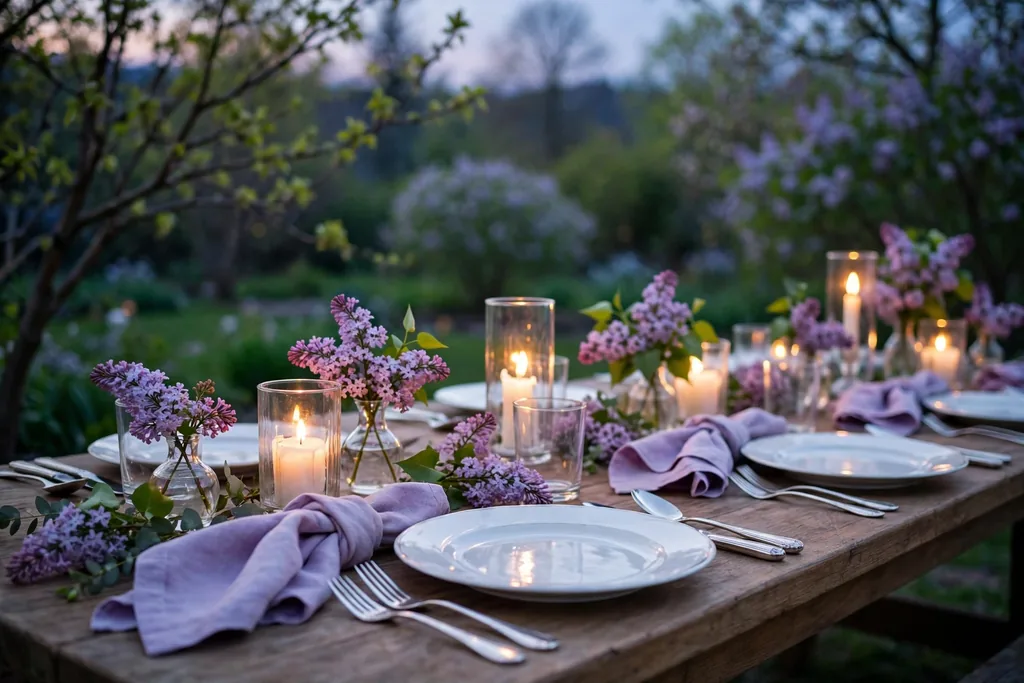
Pair lilac napkins and lilac blooms, such as lilac sprigs or hyacinths, with silver toned cutlery and clear glass candle holders. The cool lilac and silver pairing suits an evening spring meal, where candlelight softens both colors.
Use lilac in two places only, such as the napkins and the flowers, and keep plates white or cream, so the table does not turn purple overall. Hyacinths have a strong scent, so use a few stems rather than a large group, especially in a small room.
21. Farmhouse Table with a Bucket of Tulips
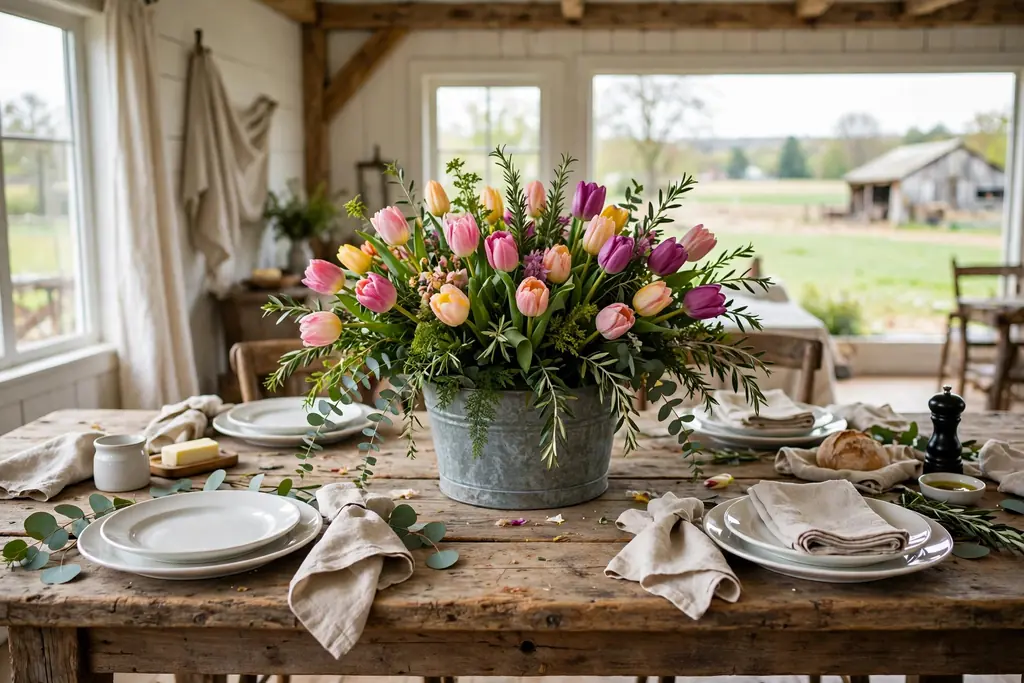
Set a galvanized bucket or a woven basket filled with tulips and greenery in the center of a farmhouse table, with plain linen napkins and simple white dishes at each place. The bucket gives a relaxed, gathered look that suits a long wood table.
Line the bucket with a watertight container, so water does not leak onto the wood, and trim the tulip stems so the blooms sit just above the bucket rim. Keep the bucket to one end of a very long table, or in the center of a round table, so it does not block serving dishes.
Conclusion
Spring table decor does not need a large budget or a complex arrangement. Pick a plain base, one low flower group, and two or three colors, then repeat those colors in napkins and one small detail at each place. With the centerpiece low and the table open for serving, the table will feel fresh for everyday meals and ready for spring gatherings alike. Save the ideas that suit your table shape and your light, and reuse them through the season with different blooms.
FAQs
What is the easiest spring table decor for beginners?
The easiest spring table decor is a plain cloth, one low vase of tulips or daffodils, and pastel napkins at each place. This simple set takes minutes, needs no special tools, and leaves room for plates and serving dishes, so it suits a first spring table well.
How do I keep a spring centerpiece low enough to talk across?
You keep a spring centerpiece low by using a wide, short vase or a row of bud vases, and trimming stems so blooms sit below eye level when guests are seated. Test the height by sitting at the table before guests arrive, and remove any stem that blocks the view across.
What colors work best for spring table decor?
Blush pink, soft yellow, pale blue, mint green, and lilac work best for spring table decor, because they echo spring blooms and read light in daylight. Pick two or three of these colors and repeat them in flowers, napkins, and candles, rather than using every spring color at once.
How long do fresh spring flowers last on a table?
Fresh spring flowers usually last four to seven days on a table, depending on the bloom and the room temperature. Tulips and daffodils last about five days, while ranunculus and peonies can last up to a week, if you trim stems, change the water daily, and keep the vase out of direct sun.
Can I use faux flowers for spring table decor?
Yes, you can use faux flowers for spring table decor, especially for a table that stays set for weeks or for outdoor meals in wind. Choose faux blooms with varied petal shapes and matte finishes, mix them with real greenery, and keep the arrangement low, so it reads as a fresh spring group rather than a stiff display.
How do I decorate a small table for spring?
You decorate a small table for spring with one small vase or a row of bud vases, a single color repeat in the napkins, and no runner, so the surface stays free for plates. Use single stem vases or one short jar of blooms, and skip large bowls or wide garlands, which crowd a small table quickly.