
To make a succulent wreath, pin rosette cuttings into a sphagnum moss wreath form until the surface is covered, then lay the wreath flat for two to three weeks while roots take hold. Water lightly, give it bright indirect light, and hang it where air can move around it to keep the rosettes compact and fresh.
A succulent wreath is a living decoration, so it behaves a little differently from a wreath made of cut greenery. The plants need light, air, and very little water, and they reward a gentle routine with steady growth and full rosettes. The steps below cover choosing plants, building the wreath on a moss form, letting it root flat before hanging, and keeping it fresh through the seasons.
Key Takeaways
- Choose small rosette succulents for the main surface, plus a few trailing types for the outer edge.
- Let cuttings callus for a day or two before pinning, so cut ends dry and root more reliably.
- Pin cuttings close together on a damp moss form, since gaps show the moss until plants fill in.
- Lay the wreath flat for two to three weeks after planting so roots take hold before it hangs upright.
- Water lightly and only when the moss feels dry, and give the wreath bright indirect light.
- Refresh the wreath by replacing tired cuttings and propagating trimmings into new plants.
Materials and Tools
- A wire wreath frame with sphagnum moss, or a moss wreath form in your chosen size
- Sphagnum moss, plus extra moss for patching thin spots
- Succulent cuttings: small rosettes such as echeveria and sempervivum, plus trailing types such as string of pearls or sedum
- Floral pins or U-shaped greening pins
- A spray bottle for misting and light watering
- Sharp, clean scissors or pruning snips
- Work gloves, a drop cloth or old sheet, and a shallow tray or bucket
- A wreath hook, nail, or over door hanger rated for the wreath weight
- A small trowel or dibber for making planting holes in the moss
1. Decide on Size, Placement, and Style
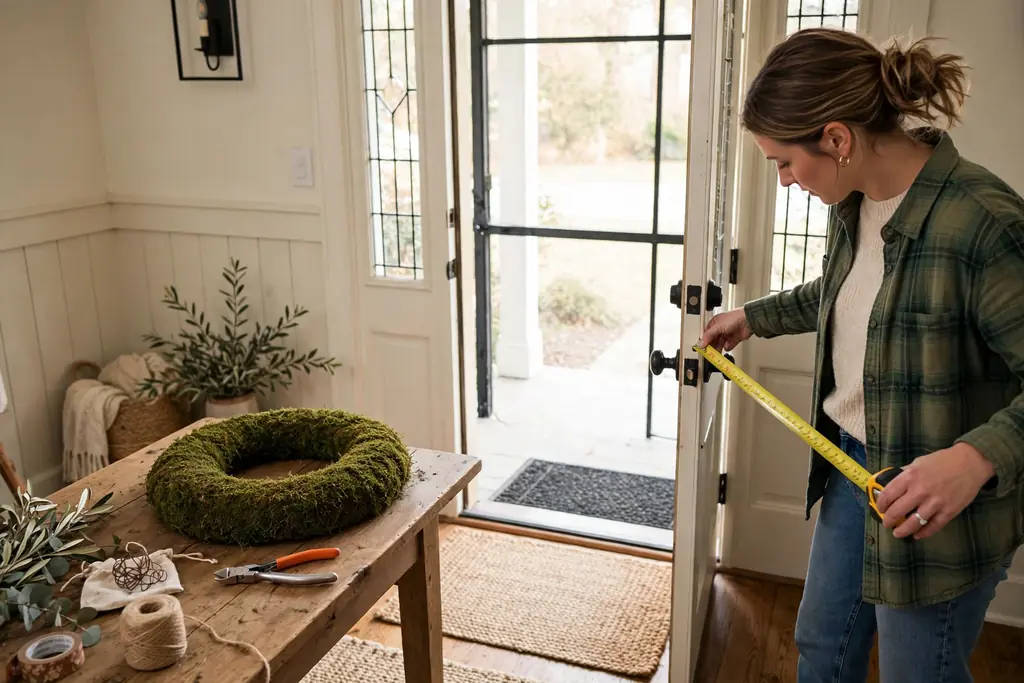
Start by choosing where the wreath will hang and how large it should be. A front door usually suits a wreath between 14 and 20 inches across, while a wall or window often suits a smaller wreath between 10 and 14 inches. Measure the space and leave a margin of several inches around the wreath so it does not crowd trim, handles, or nearby lights.
Next, pick a style to guide your plant choices. A classic succulent wreath uses green and blue-green rosettes in a dense, even ring, a colorful wreath mixes rosettes in dusty pink, purple, and cream, and a woodland style wreath pairs green rosettes with trailing sedum at the edge. A living wreath also suits a farmhouse entryway, where natural wood and neutral colors let the plants stand out, as seen in these farmhouse decor ideas. Writing down your size and style before you shop keeps the project focused and avoids buying cuttings you will not use.
2. Choose Succulents for the Wreath
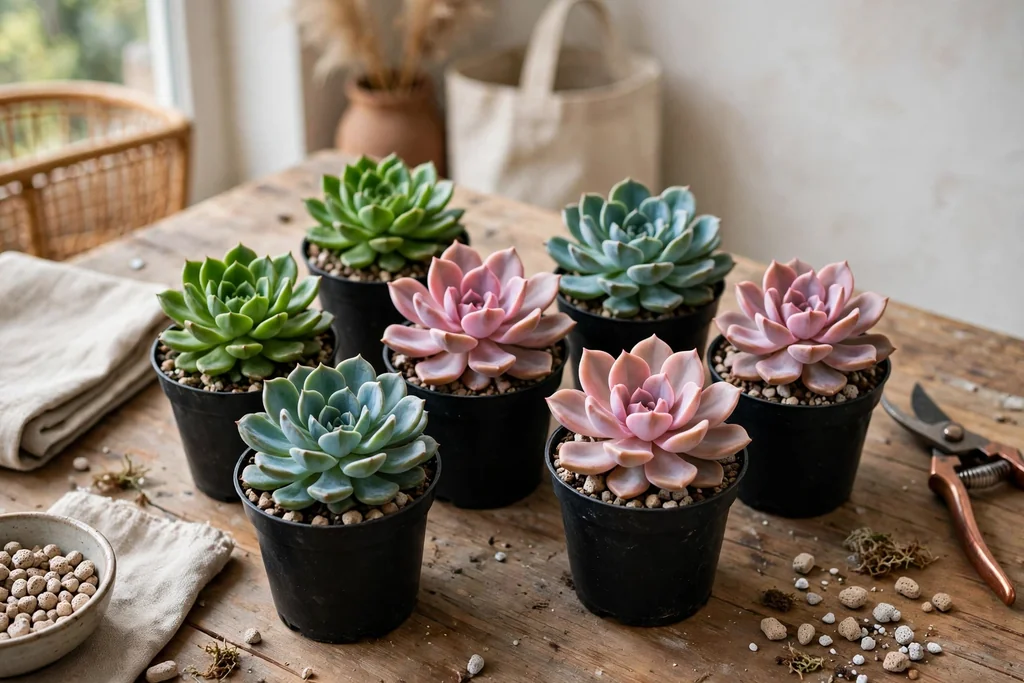
Pick small rosettes for the main surface, since they sit flat against the moss and form a tidy pattern. Echeveria, sempervivum (hens and chicks), and small graptopetalum rosettes are common choices, and they come in green, blue-green, pink, and purple tones. Choose rosettes between 1 and 3 inches across for a standard wreath, since larger rosettes crowd each other and smaller ones take longer to cover the form.
Add a few trailing succulents for the outer edge, such as string of pearls, burro tail sedum, or trailing sedum, so the wreath has a soft, finished outline. Avoid succulents that grow tall or spread fast in a wreath, since they soon outgrow their neighbors and unbalance the shape. Buy a few spare cuttings beyond your estimate, since spares are useful for filling gaps and replacing any cutting that fails to root.
3. Gather Materials and Tools

Lay out everything from the materials list before you start planting. Check that your floral pins are plentiful, your scissors are sharp and clean, and your spray bottle works, since stopping mid-build to search for tools can leave cuttings drying out on the table. Keep a small container for spare pins so they do not end up on the floor.
If your moss form is dry, soak the moss briefly and squeeze out excess water so it is damp, not dripping. Keep cuttings in a cool, bright spot out of direct sun until you need them, and work on a drop cloth, since moss and soil crumbs scatter easily. Having all materials ready keeps the planting rhythm steady and the wreath even.
4. Prepare the Moss Wreath Form

If you are using a wire frame, pack it firmly with damp sphagnum moss and wrap the moss with wire or twine so it holds its ring shape. A pre-made moss form saves this step, but check it before planting: squeeze it gently to confirm the moss is firm and damp all the way around, and patch any thin or loose spots with extra moss tucked in by hand.
Decide which side is the front and mark the top, since a succulent wreath is planted and viewed from one side. Place the form on a drop cloth on your work surface, front side up. A firm, evenly packed form makes pinning easier, since pins grip well and cuttings sit at a consistent depth.
5. Prepare and Sort the Cuttings

Trim each cutting to a stem of about 1 to 2 inches below the rosette, using sharp, clean scissors. Remove any damaged or dried lower leaves, and discard cuttings that feel soft or mushy, since those rarely root well. Lay the trimmed cuttings out for a day or two in a bright spot out of direct sun so the cut ends callus, which means a dry skin forms over the cut and helps the cutting root without rotting.
Sort the callused cuttings into piles by type and color: one pile for the main rosettes, one for accent colors, and one for trailing types. If you have two or three rosette colors, keep them separate so you can control the pattern in each ring. Dampen the moss lightly if it has dried while you sorted, but do not soak it, since wet moss makes pins slip and cuttings rot.
6. Plan the Layout Before You Pin

Plan the layout on the table before pinning anything, since moving pinned cuttings disturbs their roots later. Arrange a few rosettes on the form without pins to test your pattern: a single color ring, alternating colors, or a random mix all work, as long as the pattern repeats evenly around the ring. Place the largest rosettes first in your mind, then fill around them with smaller ones.
Set trailing cuttings aside for the outer edge, and keep accent rosettes spaced evenly rather than grouped in one spot, so no side of the wreath looks heavier than another. Take a photo of your test layout if it helps you remember the pattern once pinning starts. A few minutes of planning here saves a patchy wreath later.
7. Pin the Outer Ring of Rosettes

Start with the outer ring, working in one direction around the form. Make a small hole in the moss with a dibber or the tip of your scissors, insert the cutting stem, and secure it with a floral pin pushed through the base of the rosette into the moss at a slight angle. The pin should sit snug against the rosette without crushing its leaves.
Place each rosette so its outer leaves just touch its neighbor, and keep the rosettes facing outward at the same angle. Work all the way around the ring before moving inward, then check the back to make sure no pin ends stick out where they could scratch a door. A tight outer ring sets the wreath outline and hides the moss edge.
8. Fill the Inner Ring

Once the outer ring is pinned, fill the inner ring with your remaining rosettes, working in the same direction. Use slightly smaller rosettes here if you have them, since the inner circle is tighter and large rosettes crowd each other. Angle each rosette so it faces forward and slightly outward, matching the outer ring, so the wreath reads as one even surface.
Step back after every few rosettes and look at the wreath from the front, since it is easier to fix spacing now than after the wreath is hung. If a rosette sits too high, press it gently into the moss and add a second pin; if it sits too low, lift it and pack a little moss under its base. Fill the inner ring fully before adding trailing plants, so the main surface is complete.
9. Add Trailing Succulents at the Edge
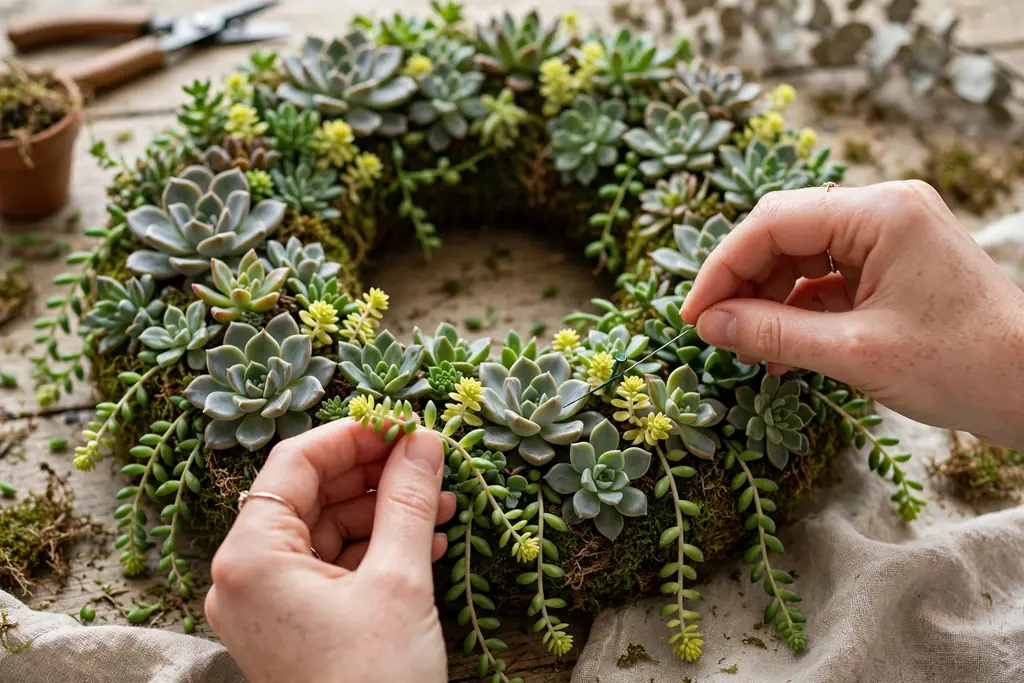
Trailing succulents give the wreath its soft edge and draw the eye outward. Pin short lengths of trailing sedum, string of pearls, or burro tail around the outer edge, spacing them evenly and letting the strands fall outward and downward. Pin each strand at two points, near its base and a few inches along, so it does not swing loose once the wreath hangs upright.
Keep the trailing lengths modest at first, since they grow longer over time and a wreath with very long trails can look unbalanced on a door. If a strand is too long, trim it with clean scissors and keep the trimming for propagation. Check that trailing plants do not cover the main rosettes, since the rosettes are the focus of the wreath.
10. Fill Gaps with Small Cuttings

Gaps show moss, so fill them with small rosettes, single leaves, or tiny sedum sprigs tucked between the larger plants. Use a dibber to open a small hole, insert the cutting, and pin it if needed, pushing the moss gently around its base. Work around the whole wreath, including the inner edge near the center hole, where gaps are most visible once the wreath hangs.
Vary the filler rather than grouping one type in a single spot, and keep filler shorter than the main rosettes so it reads as texture, not as a competing layer. If a section looks crowded, remove a filler sprig rather than adding more, since a wreath with breathing room shows its rosette pattern better than one packed tight. At this stage the wreath should look full from the front with little moss showing.
11. Water and Let the Wreath Root Flat

Water the finished wreath lightly with a spray bottle or a gentle pour, just enough to dampen the moss through, then let excess water drain away. Lay the wreath flat in a bright spot out of direct sun for two to three weeks, and do not hang it yet. Roots form slowly in the moss, and a wreath hung too soon can shed cuttings under its own weight.
During this flat period, check the moss every few days and water lightly only when it feels dry to the touch. Mist the rosettes lightly if the air is very dry, but avoid soaking the leaves, since water sitting in rosette centers can cause rot. After two to three weeks, give a rosette a gentle tug: if it resists, roots have taken hold and the wreath is ready to hang.
12. Hang and Adjust the Wreath

Hang the wreath on its hook, nail, or over door hanger, and step back to check its height and centering. On a front door, the wreath usually sits at eye level or slightly above, with equal space on each side. If the wreath tilts, adjust the hanging loop or add a small pad behind the lower edge so it sits flat against the door.
Check the wreath from across the room or from the street, since that is the view most people will see. Make small adjustments to any rosette that shifted during hanging, pressing it back into the moss and adding a pin if needed. If the wreath will hang on a door that opens often, test the door swing to make sure the wreath clears the frame and any nearby lights.
13. Care for the Wreath Week to Week

A succulent wreath needs bright indirect light, good air movement, and very little water. Hang it where it gets several hours of bright light without harsh midday sun, such as a covered porch, a bright entryway wall, or a window that gets morning sun. Rotate the wreath a quarter turn every week or two so all sides get light and growth stays even.
Water only when the moss feels dry, usually every one to two weeks indoors and more often in hot, dry weather outdoors. Water lightly, let excess drain, and never leave the wreath sitting in a puddle. Remove dried or fallen leaves promptly, since debris trapped between rosettes holds moisture and can cause rot. Bring the wreath inside if frost is forecast, since most rosette succulents dislike freezing temperatures.
14. Refresh, Replace, and Propagate Cuttings

Over time, some rosettes outgrow their spot or lose their tight shape, and a few cuttings may fail. Refresh the wreath by pulling out tired rosettes, trimming them back, and pinning in fresh cuttings from your spares. Replace one or two plants at a time rather than rebuilding the whole wreath, so the established plants keep their roots undisturbed.
Propagate trimmings instead of discarding them: lay healthy leaves or stem cuttings on dry soil or moss in a bright spot, and roots and tiny rosettes usually form within a few weeks. Once rooted, these new plants can fill future gaps or start a second wreath. A wreath refreshed this way can stay looking full for a year or more, with its plants slowly filling in and replacing each other.
Conclusion
Making a succulent wreath and keeping it looking fresh comes down to a simple sequence: choose small rosettes and a few trailing types, pin them close together on a damp moss form, let the wreath root flat for two to three weeks, then hang it in bright indirect light and water lightly only when the moss feels dry. Refresh tired plants as needed and propagate your trimmings, and the wreath will stay full and lively through the seasons.
FAQs
How long does it take to make a succulent wreath?
It usually takes one to two hours to plant a succulent wreath, including preparing the moss form and sorting cuttings. Add a day or two before planting for cuttings to callus, and two to three weeks after planting for the wreath to root flat before it hangs upright.
What succulents work best in a wreath?
Small rosettes such as echeveria, sempervivum, and graptopetalum work best for the main surface, since they sit flat and form a tidy pattern. Add trailing types such as string of pearls, burro tail sedum, or trailing sedum at the outer edge for a soft outline, and avoid tall or fast spreading types that soon outgrow their neighbors.
How often should I water a succulent wreath?
Water a succulent wreath lightly only when the moss feels dry, usually every one to two weeks indoors and more often in hot, dry weather outdoors. Soak the moss lightly, let excess water drain away, and never leave the wreath sitting in water, since wet roots and rosette centers cause rot.
How much light does a succulent wreath need?
A succulent wreath needs bright indirect light for several hours a day, such as a covered porch, a bright entryway, or a window with morning sun. Avoid harsh midday sun, which can scorch rosettes, and rotate the wreath a quarter turn every week or two so growth stays even on all sides.
Why is my succulent wreath losing cuttings?
Cuttings usually fall out when the wreath is hung before roots take hold, when pins are loose, or when the moss dries out completely. Lay the wreath flat for two to three weeks after planting, check that each pin sits snug against its rosette, and water lightly whenever the moss feels dry.
Can a succulent wreath stay outside all year?
A succulent wreath can stay outside in mild weather, but most rosette succulents dislike frost and heavy rain. Bring the wreath inside or under cover if frost is forecast, and move it out of harsh midday sun in summer so rosettes stay compact and keep their color.