
Evergreen Christmas wreaths use fresh fir, cedar, pine, or boxwood as a lasting green base, then add natural texture with pinecones, berries, dried citrus, moss, or seed pods. Choose a full, fresh base, layer one or two textures, and hang it in a sheltered spot for a classic door display that lasts through the season.
Fresh greenery does most of the work in these wreaths, so the best designs keep the extras simple and let the foliage show. A full base, a clear texture, and a plain bow or a few well placed accents read as woodland and calm rather than busy. The ideas below cover classic fir, cedar, boxwood, berries, pinecones, dried citrus, and herbs, so you can match a wreath to a front door, a mantel, or a window. Check that the base feels soft and green, not dry and brittle, and hang the wreath out of harsh wind and direct sun where you can.
Key Takeaways
- Start with a full, fresh evergreen base, since flat or sparse greenery is hard to fix with decorations.
- Layer one or two natural textures, such as pinecones, berries, or dried citrus, rather than mixing many competing materials.
- Keep the color range close to green, brown, cream, and red so the wreath reads as natural and calm.
- Hang wreaths in a sheltered spot and mist fresh greenery lightly if indoor air is dry.
- Choose lighter accents for a wreath hung on glass or a thin hook, and save heavy pinecones for a sturdy door hook.
- A plain linen, velvet, or twine bow suits most of these wreaths and lets the foliage stay the focus.
1. Classic Mixed Fir and Cedar
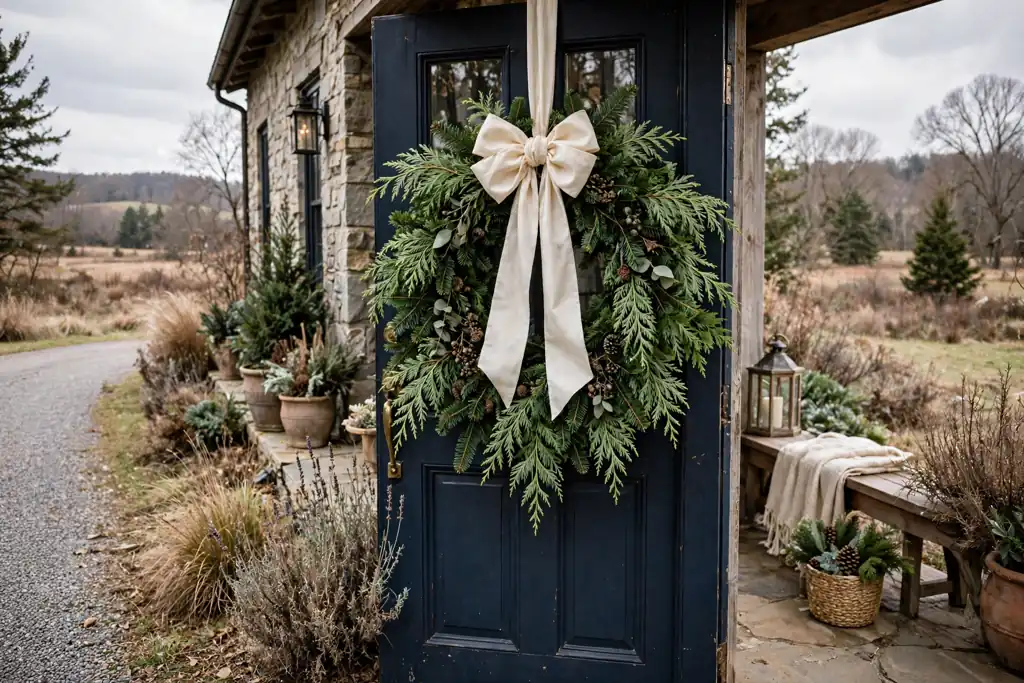
A mixed fir and cedar wreath pairs the dense, soft needles of fir with the flat, layered sprays of cedar. The mix gives the wreath depth, since fir fills the gaps and cedar adds a feathery edge that moves in a light breeze. Hang it on a front door with a plain dark green or cream bow, and let the greenery carry the design.
To keep the mix looking even, spread cedar sprays around the full circle rather than grouping them on one side. Tuck any loose stems into the base with wire, and trim stray ends so the outline stays round. This is a good first choice if you want a traditional wreath that suits most door colors and house styles.
2. Pinecone and Fir Wreath
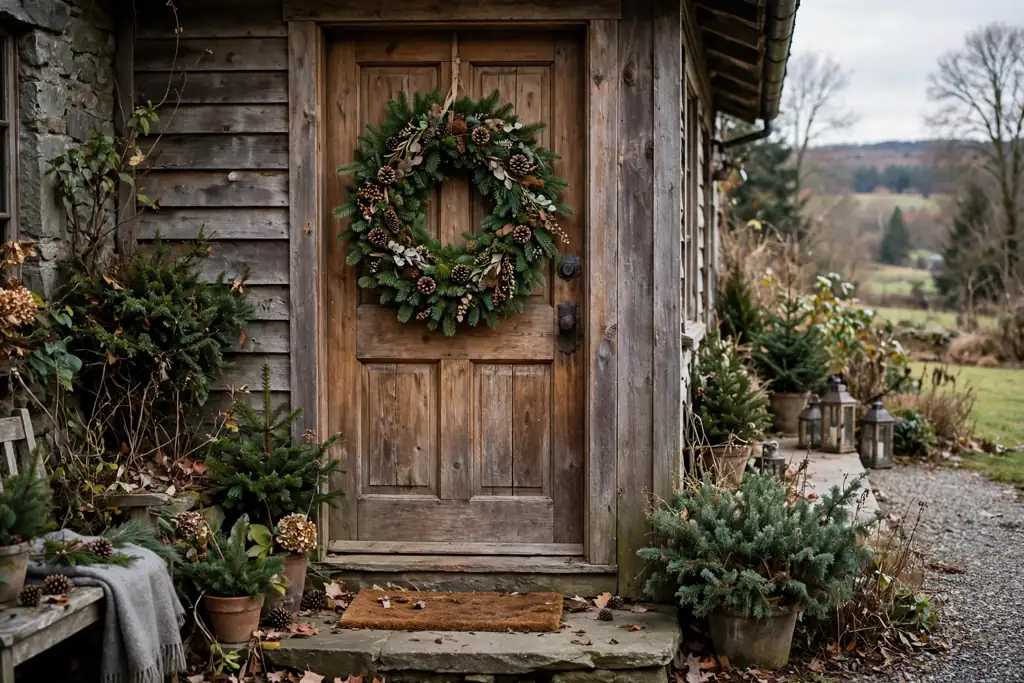
Pinecones add a rough, woody texture that stands out against soft fir needles, and they suit a rustic or cabin style door. Use a mix of small and medium cones, and place larger cones near the bottom or at one side so the wreath does not look top heavy. A few cones are enough, since too many can hide the greenery.
Attach each cone with wire wrapped around its base scales rather than glue alone, so it stays put in cold weather. Check the wreath from a few steps back as you add cones, and leave clear patches of fir between them. A thin twine loop for hanging keeps the woodland feel intact.
3. Cedar and Dried Citrus Wreath
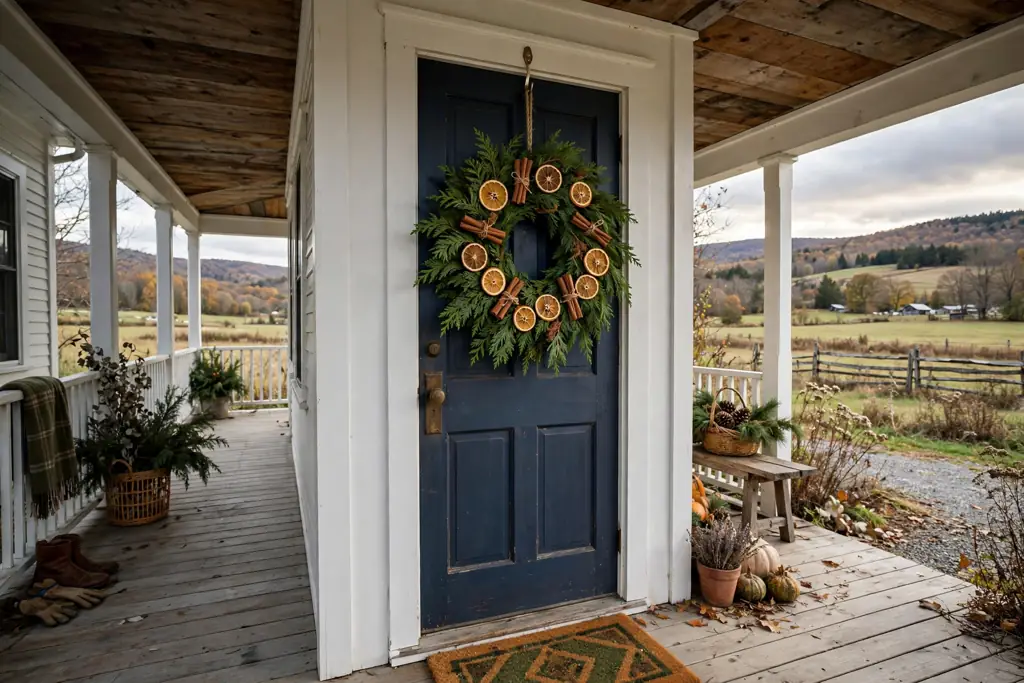
Dried orange slices bring warm color and a thin, crisp texture to a cedar wreath, and they pair well with cinnamon sticks or star anise shapes. Space the citrus slices evenly around the ring, and keep them flat against the greenery so they do not catch wind on a door. The amber color reads well against both dark and light painted doors.
Dry the slices fully before adding them, since damp citrus can soften and curl. Wire each slice at two points so it sits flat, and add a small cluster of cedar tips behind each one for support. This wreath suits a kitchen door or a covered porch where the citrus scent can be noticed up close.
4. Eucalyptus and Fir Wreath
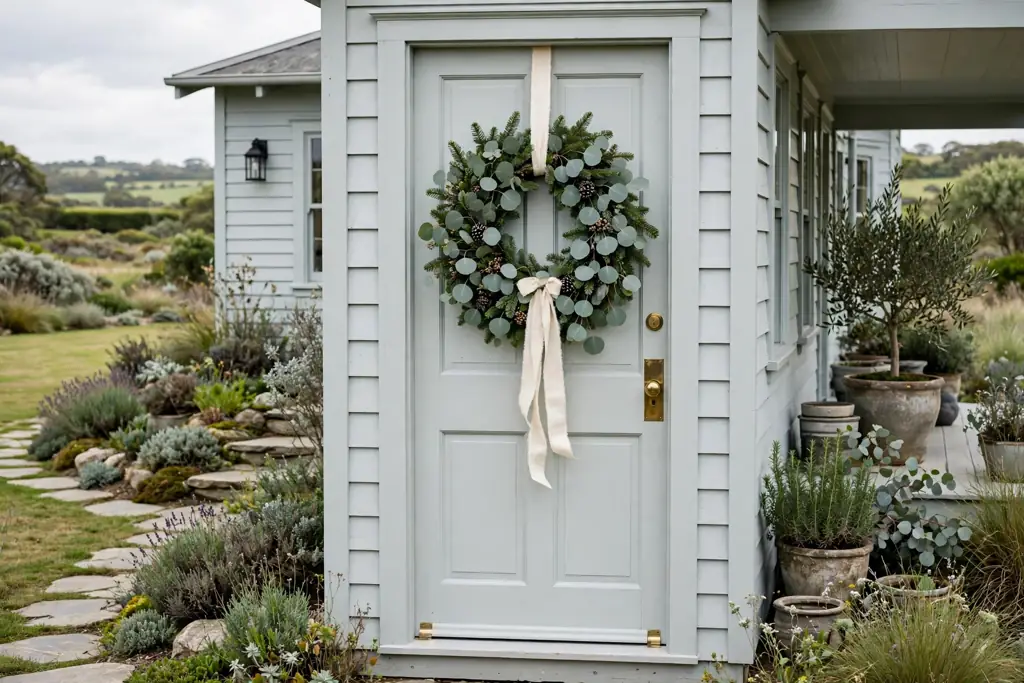
Eucalyptus adds round, silvery green leaves that soften the sharper look of fir, and the mix suits a modern or coastal home. Use short eucalyptus stems tucked between fir branches, so the round leaves dot the wreath rather than forming a separate layer. The pale green tone also lightens a dark door.
Because eucalyptus dries well, this wreath holds its shape even as the fir loses some moisture. Keep the stems short and wired in place, and avoid long trailing pieces on a front door where they can snag. A simple cream ribbon bow finishes the look without adding a new color.
5. Boxwood and Fir Wreath
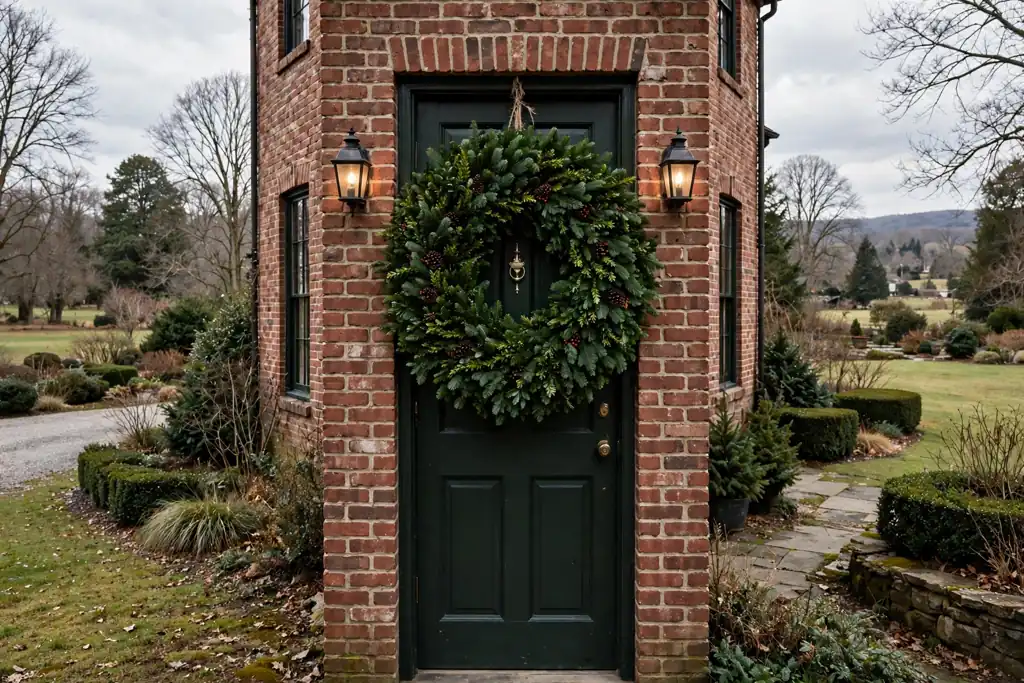
Boxwood gives a neat, small leaf texture that fills gaps in fir and makes the wreath look dense and tidy. This combination suits a formal front door or a brick house, where a clean outline matters. The small leaves also hold up well in cold weather, so the wreath keeps a groomed look for weeks.
Layer boxwood sprigs over the fir base in the same direction, so the leaves lie flat and the ring looks smooth. Trim the outer edge lightly after layering, and add only a small bow or a few berries if you want an accent. Too many extras will hide the tidy boxwood texture that makes this wreath distinct.
6. Magnolia and Fir Wreath
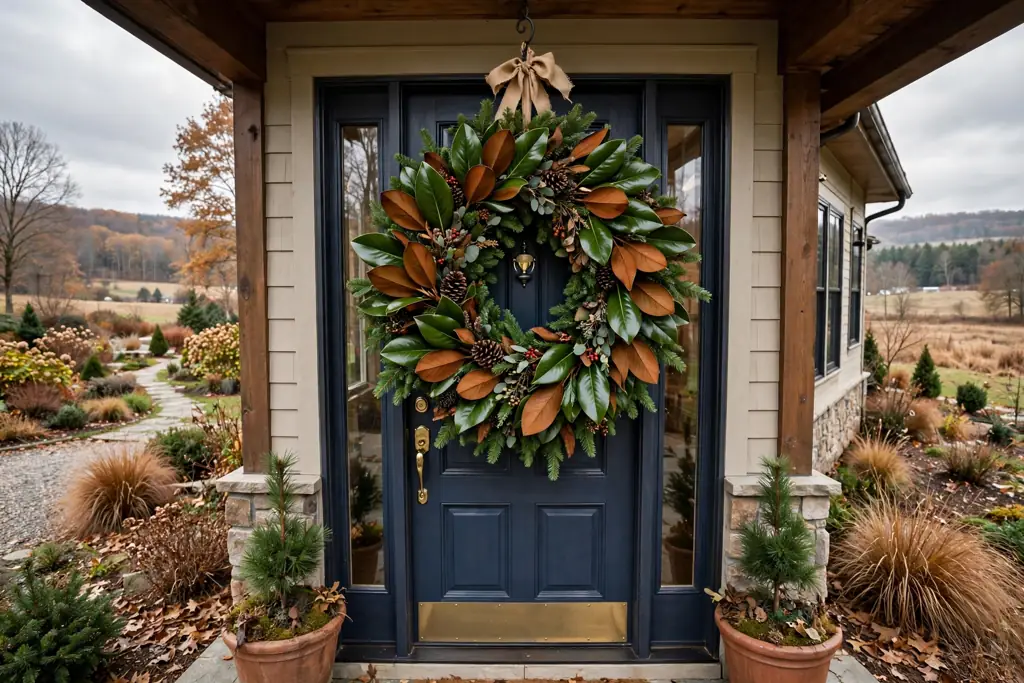
Magnolia leaves add broad, glossy green tops with warm brown undersides, a two tone texture that fir alone does not offer. Place magnolia leaves in small groups around the ring, with the brown side showing on some leaves for contrast. The large leaves suit a wide front door or a double door, where smaller foliage can look lost.
Keep the magnolia groups spaced apart so fir still shows between them, and wire each leaf stem firmly, since broad leaves catch more wind. A deep red or gold bow picks up the warm brown underside without adding a new material. This wreath works well on a porch with other natural wood or wicker details.
7. Winterberry and Fir Wreath

Winterberry stems bring bright red berries in tight clusters, a sharp color contrast against dark fir. Use short berry stems in groups of three, spaced evenly around the ring, so the red reads as a pattern rather than a solid band. This is a classic choice for a white, black, or deep green door.
Push each stem deep into the base and wire it in place, since berry stems can slip as greenery dries. Keep berries away from the hanging point at the top, where a hook or nail can crush them. If you have birds nearby, expect some berries to be nibbled over the season, so start with a generous number.
8. Snow Dusted Fir Wreath

A snow dusted fir wreath uses flocking or a light dusting of artificial snow on fresh fir to suggest a winter woodland scene. Apply the dusting lightly and unevenly, heavier on the outer tips and lighter inside, so the green still shows through. The effect suits a snowy climate or a home with white trim and a simple door.
Use this wreath in a sheltered spot, since rain can wash flocking off and leave patchy spots. Pair it with a plain white or silver bow, and skip pinecones or berries, which can make the snowy look busy. Check the wreath after a storm and shake off real snow gently rather than pulling at the branches.
9. Woodland Moss, Acorn, and Pinecone Wreath

Moss, acorns, and pinecones give this wreath a forest floor feel, with soft, rough, and smooth textures in one ring. Press small moss pads into gaps in the fir base, then add acorns in small groups and a few pinecones for height. The mix suits a stone or timber house, or a porch with potted evergreens nearby.
Attach moss with wire or pins rather than loose placement, so it does not blow off a door. Keep acorns in clusters of two or three, and check that none sit where the wreath presses against the door, since hard shells can mark paint. A twine bow completes the woodland look.
10. Juniper and Rosemary Herb Wreath
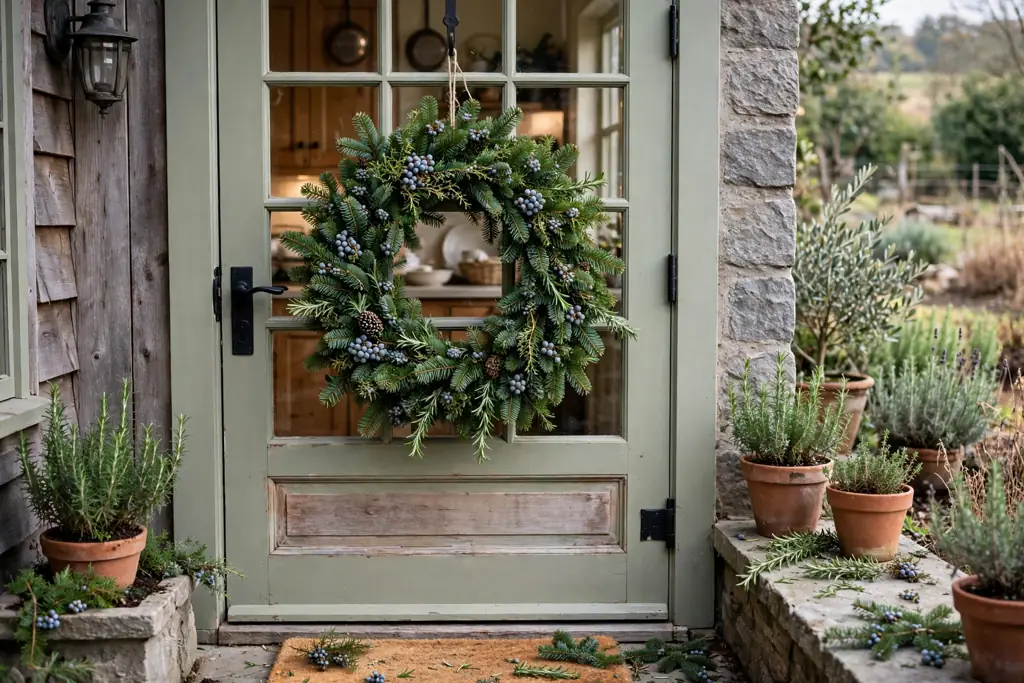
Juniper berries and rosemary sprigs add a fragrant, herb garden texture to a fir base, with blue green berries and needle thin leaves. Tuck short rosemary stems between fir branches, and add small juniper clusters where the greenery looks thin. The scent is noticeable on a sheltered porch or an indoor door.
Use rosemary sparingly, since its thin leaves dry fast in warm indoor air. This wreath suits a kitchen door or a mudroom, where the herbal scent fits the room. A plain linen tie at the top keeps the focus on the greenery and the scent rather than on a large bow.
11. Twig Base with Fir Sprigs Wreath
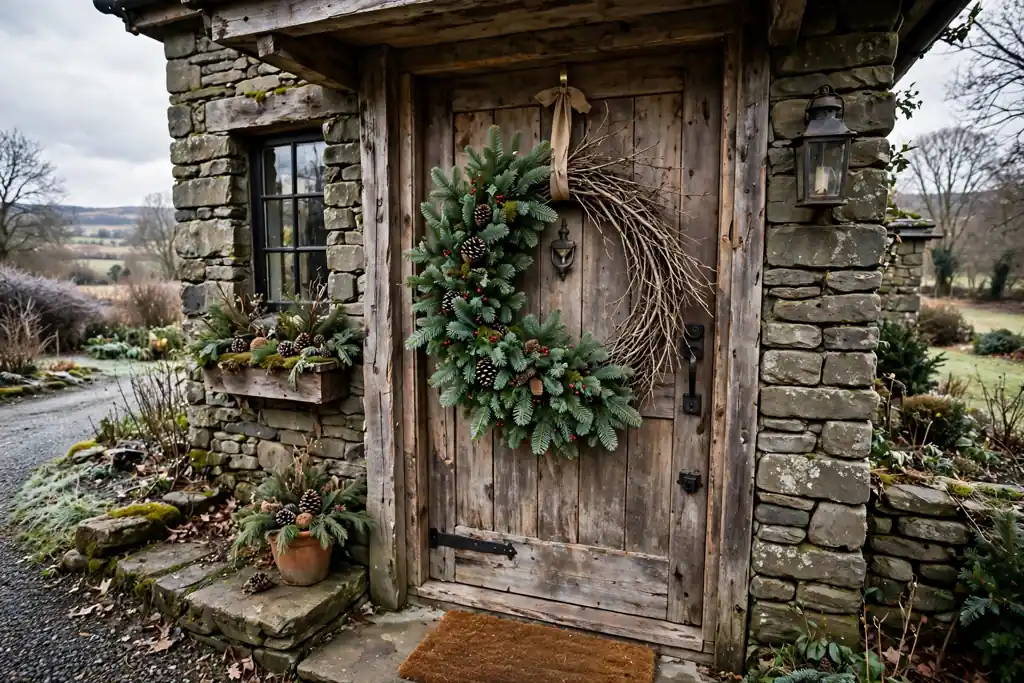
A twig base shows bare branches through gaps in the fir, so the wreath has both woody structure and soft greenery. Start with a grapevine or twig ring, then wire fir sprigs around about two thirds of the circle, leaving part of the twig base visible. The open section keeps the wreath from looking heavy on a narrow door.
Place the bare section at the top or one side, and add a small pinecone or berry cluster where the fir meets the twigs. Wire each fir sprig at two points so it does not slide around the ring. This style suits a rustic door, a barn style entry, or a home with natural wood trim.
12. Asymmetric Crescent Wreath
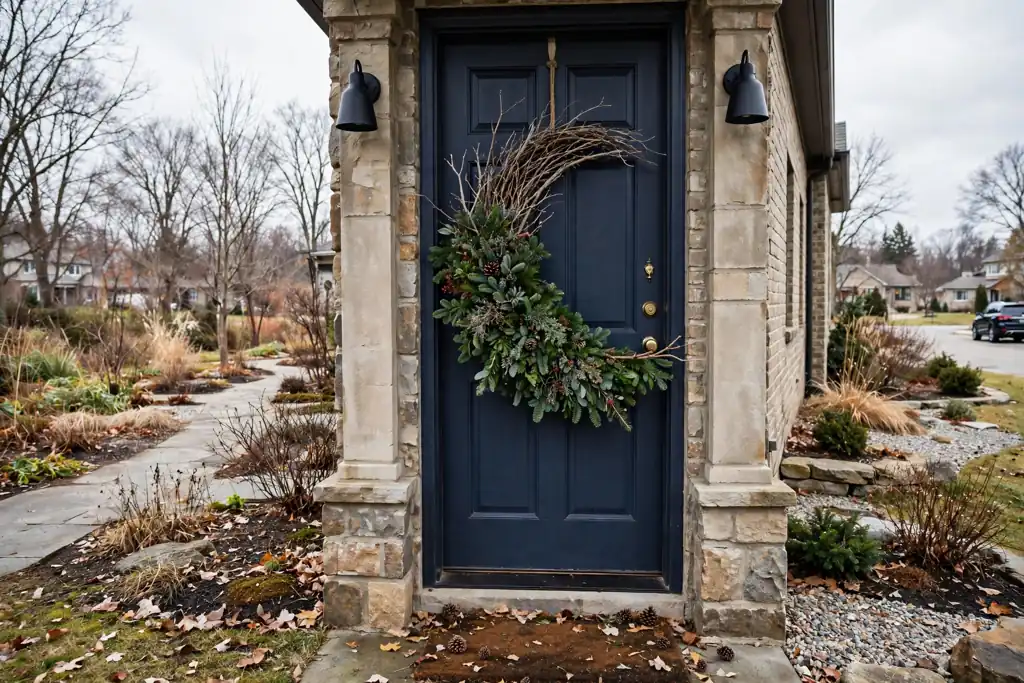
An asymmetric crescent wreath covers only part of the ring with dense fir, leaving the rest of the base bare or lightly dressed. Build up greenery on the lower left or lower right, tapering the foliage toward the top, so the shape feels like a crescent moon. The open space gives the wreath a modern feel while keeping the evergreen texture.
This design needs a firm base, such as a wire or twig ring, since one side carries most of the weight. Hang it with a hook at the top center and check that it sits level, since a heavy side can pull the wreath sideways. A small bow at the point where the greenery ends marks the crescent shape clearly.
13. Layered Double Wreath

A layered double wreath stacks a smaller evergreen ring in front of a larger one, giving a deep, full outline. Use the same greenery for both rings, or pair fir on the back ring with cedar or boxwood on the front, so the layers read as one wreath with depth. The full shape suits a wide front door or a double door entry.
Wire the two rings together at four points around the circle, and check that the front ring does not slide down as the greenery dries. Keep decorations minimal, since the layered foliage is the main feature. A single bow at the bottom center ties the two layers together visually.
14. Fir and Dried Flower Wreath
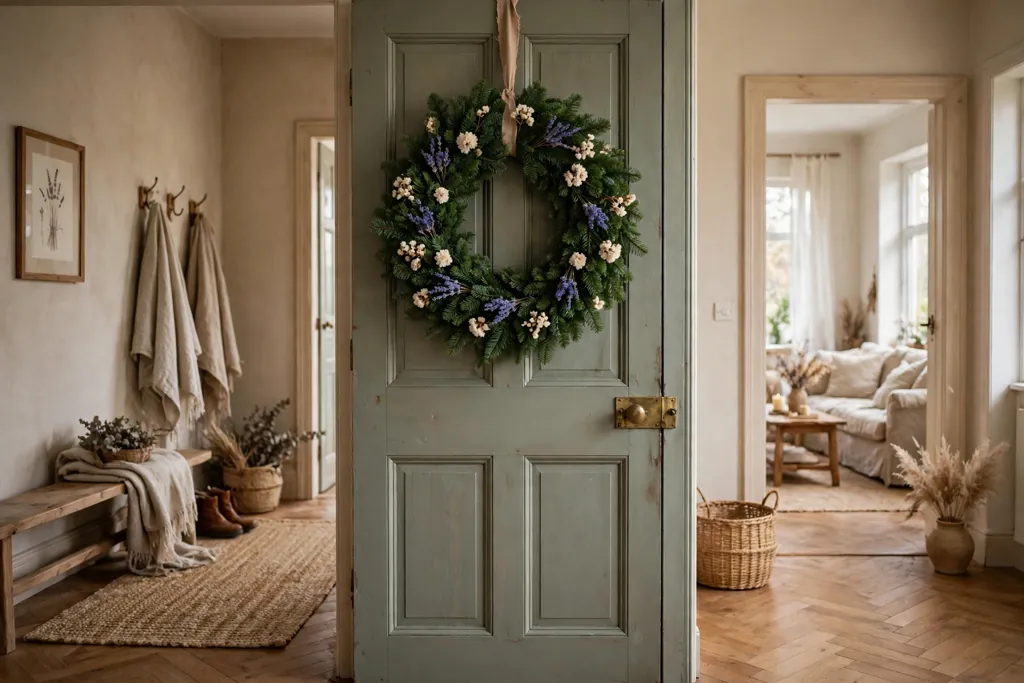
Dried flowers such as lavender, strawflower, or small dried roses add soft color and a papery texture to a fir base. Use short dried stems in small groups, spaced around the ring, and keep the colors muted, such as lavender, cream, or dusty pink. The mix suits an indoor door, a bedroom door, or a covered porch away from rain.
Handle dried flowers gently and wire them by the stem, since dried heads can break off if glued. Keep this wreath indoors or fully sheltered, since rain and strong wind will damage dried petals fast. A thin ribbon in a matching muted tone finishes the design without competing with the flowers.
15. Simple Fir Wreath with a Linen Bow

A simple fir wreath with only a linen bow lets the evergreen texture stand alone, with no berries, cones, or flowers to distract from it. Choose a very full fir base, trim it into a clean round shape, and tie a wide linen bow at the top or bottom. The plain design suits a minimalist home, a modern door, or a house where the door color is already a feature.
Because there are no extras to hide gaps, check the base from all angles and fill any thin spots with extra fir sprigs before hanging. Use a sturdy hook, since a full fresh wreath is heavier than it looks. This is also the easiest wreath to refresh, since you can swap the bow color through the season.
Conclusion
Evergreen Christmas wreaths work best when the greenery leads and the natural textures support it. Pick a full, fresh base, add one or two textures that suit your door and house style, and hang the wreath where wind and sun will not dry it out fast. With that simple approach, a fir, cedar, boxwood, or mixed wreath can carry a front door through the whole holiday season.
Frequently Asked Questions
How long do fresh evergreen Christmas wreaths last?
Fresh evergreen Christmas wreaths usually last three to four weeks outdoors in cool weather, and less time indoors where heated air dries the needles faster. Hang the wreath in a sheltered, shaded spot, mist it lightly every few days, and bring it indoors only for short periods if you want it to last through the season.
Which evergreen is best for a Christmas wreath?
Fir is a good all round choice for a Christmas wreath because its needles are soft, dense, and hold well, while cedar adds a feathery edge and boxwood adds a neat, small leaf texture. Choose fir for a classic full wreath, cedar for a softer outline, or a mix of fir and cedar for depth and a fuller shape.
How do you keep an evergreen wreath fresh on a front door?
Keep an evergreen wreath fresh by hanging it out of direct sun and strong wind, misting the greenery lightly every few days, and avoiding a spot above a heat vent or next to a hot porch light. A north facing or covered porch helps most, and you can soak the base briefly before hanging if the wreath arrives dry.
Can you hang an evergreen wreath indoors?
Yes, you can hang an evergreen wreath indoors, but expect it to dry faster than one kept outside in cool air. Hang it away from radiators, fireplaces, and sunny windows, mist it lightly, and choose a lighter wreath for an interior door so the hook and door are not strained.
How do you attach pinecones and berries to a wreath?
Attach pinecones and berries by wiring them into the wreath base, wrapping wire around the cone scales or the berry stem and twisting it around a branch underneath. Wire holds better than glue in cold and damp weather, and it lets you move or replace an accent without pulling greenery loose.
What size evergreen wreath should I choose for a front door?
A 24 inch wreath suits most standard front doors, while a smaller 18 to 20 inch wreath fits a narrow door and a larger 30 inch wreath suits a wide or double door. Measure the door width and leave clear space around the wreath so it does not cover the handle, the lock, or a door knocker.