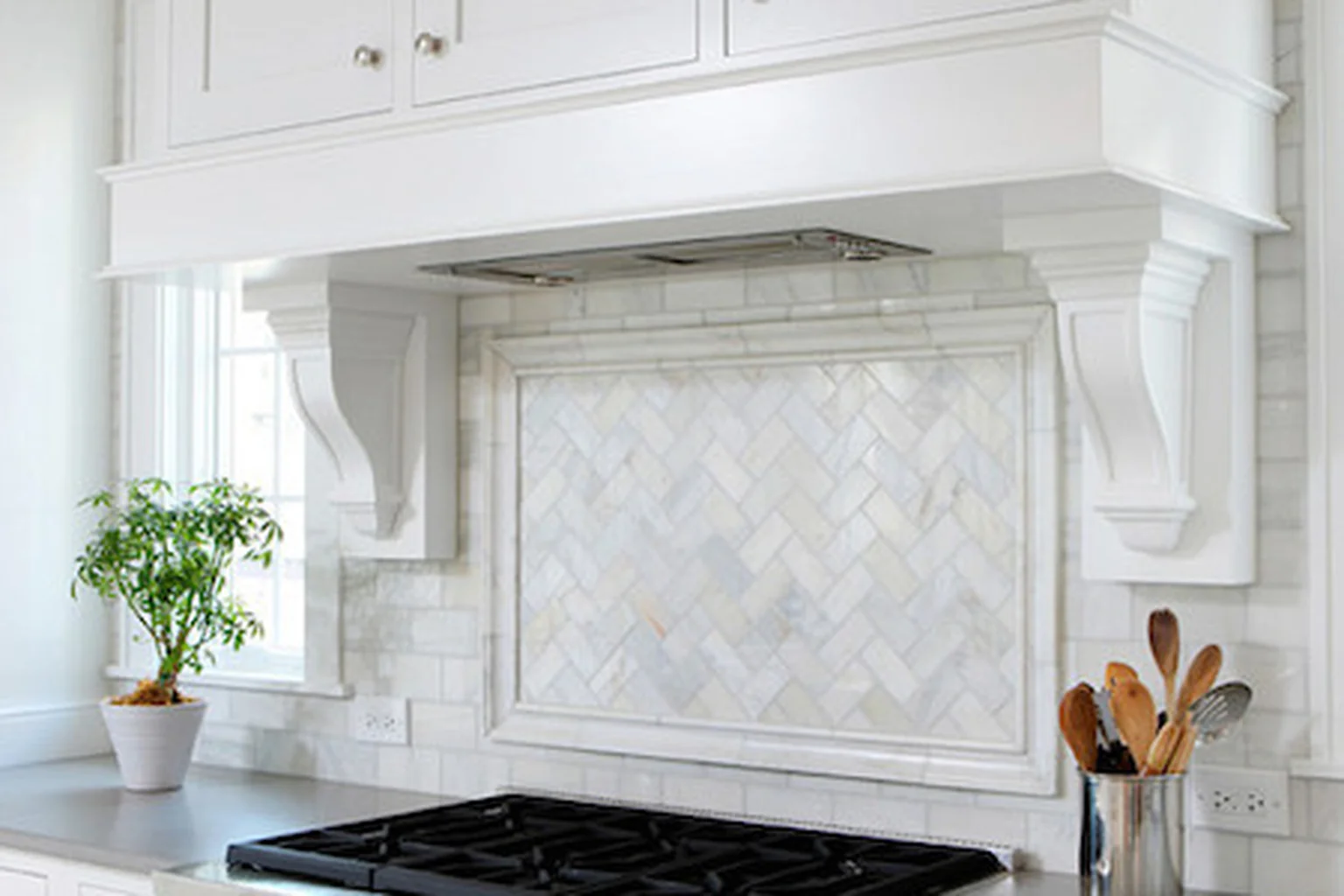
A range hood is one of the largest fixed features in a kitchen, so it sets the tone of the whole room whether you plan it or not. A plain steel box does the job, but a hood with the right shape, material, and finish can tie the cabinets, stove, and walls together. These 12 kitchen range hood ideas cover painted, plaster, metal, wood, tile, and hidden styles, so you can pick one that fits your kitchen size, cooking habits, and budget. Measure your stove width and venting route first, then choose a style. These thanksgiving kitchen decor ideas show how one strong focal point can carry a whole kitchen scheme.
Key Takeaways
- Match the hood width to your stove, or go one size wider over a large range, so steam and cooking smells are caught at the source.
- Choose the material for how you cook and clean: steel and tile wipe down fast, while plaster and raw wood need sealing near steam.
- Let the hood repeat one element already in the room, such as cabinet color, wood tone, or metal finish, so it looks planned rather than added on.
- Check venting before you fall in love with a style: ducted hoods need a clear route outside, and island hoods need ceiling support.
- Keep the shape in proportion to the wall. A deep, wide hood suits a large range wall, while a slim or hidden hood suits a small kitchen.
1. Paint a Classic Chimney Hood to Match the Cabinets
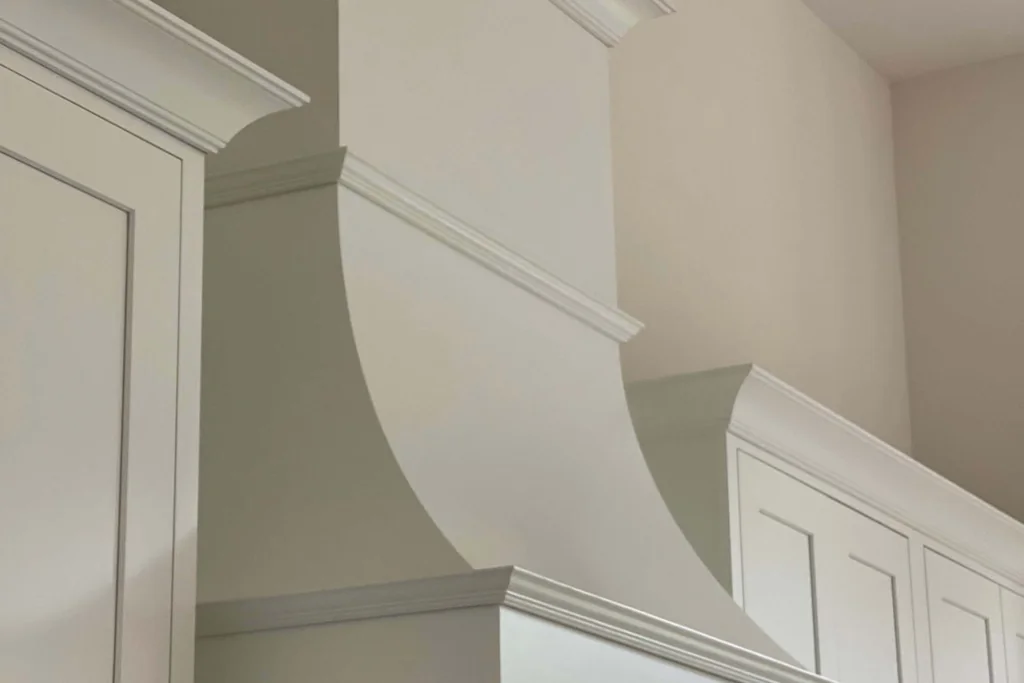
A chimney hood painted the same color as the cabinets reads as part of the kitchen rather than a separate appliance. The straight chimney shape suits shaker and transitional kitchens, and the painted finish hides the seams and fixings that a steel hood shows. Use a durable cabinet paint and a primer made for the hood material, and seal the finish so steam and grease wipe off easily. Keep the trim simple, with one small cornice or a flat panel detail, so the hood stays calm next to busy countertops.
2. Shape a Plaster Hood With a Soft Curved Apron
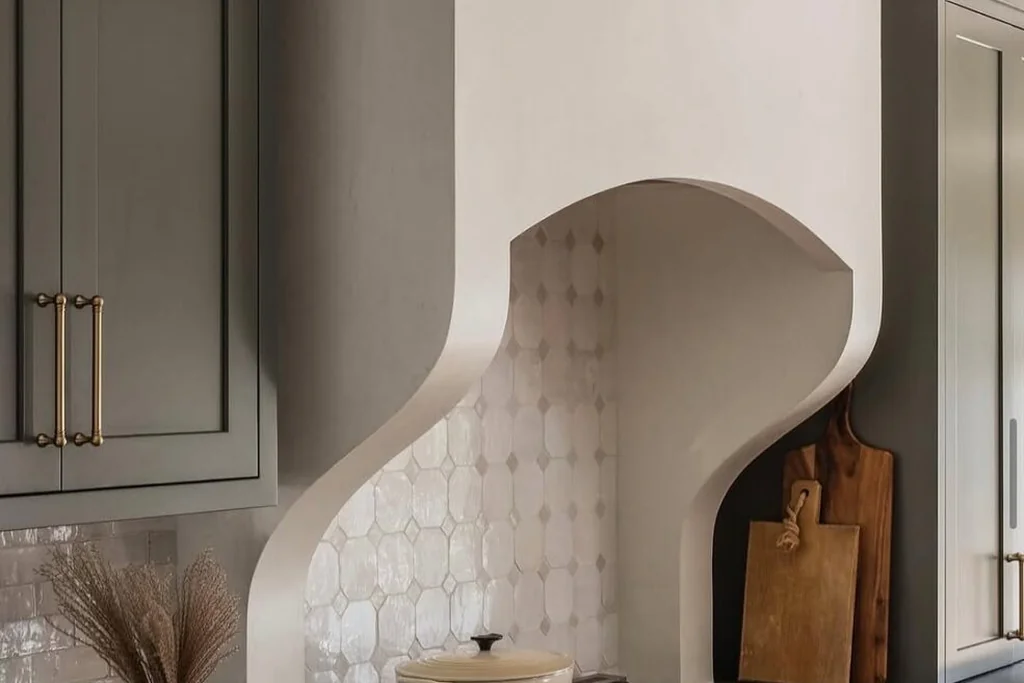
A plaster hood with a gently curved bottom edge brings a warm, hand finished feel to a kitchen, and it suits Mediterranean and relaxed traditional rooms. The curve softens the hard lines of the stove and cabinets, and a limewash or matte plaster finish adds texture that flat paint cannot. Build the shape over a sturdy frame with heat resistant board, and seal the plaster well, since the area above a stove sees steam and splashes daily. Keep nearby walls simple so the curve stays the focal point.
3. Fit a Stainless Steel Canopy for a Professional Look
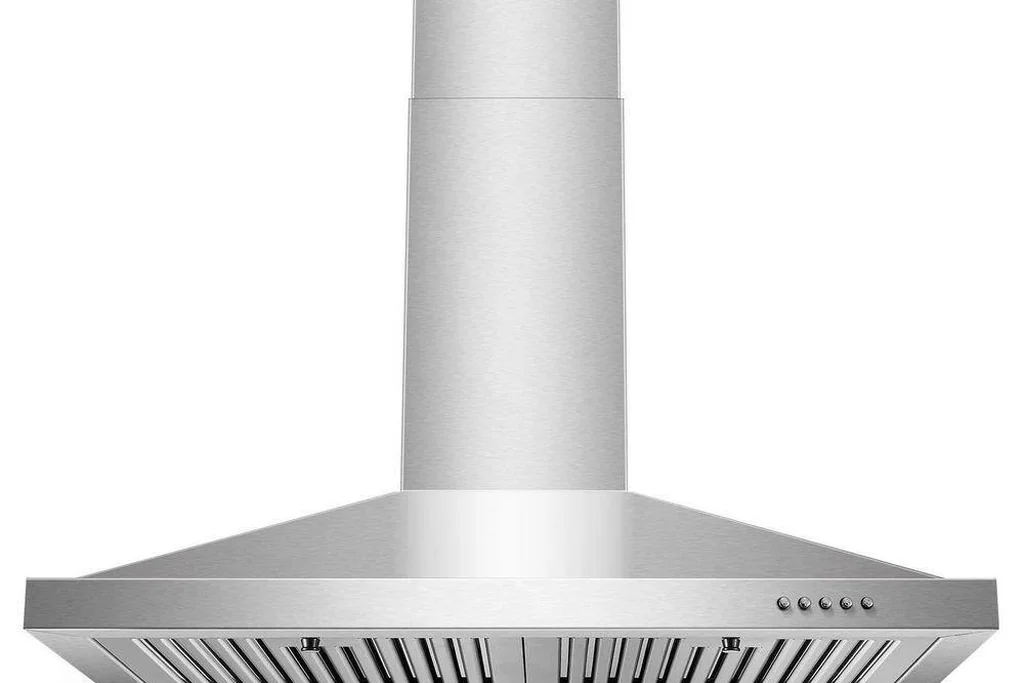
A wide stainless steel canopy hood suits cooks who use the stove hard and want strong extraction with easy cleaning. The canopy shape catches steam across the full width of the range, and the steel surface wipes down with a damp cloth after frying or simmering. Choose a model with a quiet fan setting for everyday cooking and a higher setting for searing, and check the noise level before you buy. Pair it with one other steel element, such as bar pulls or a faucet, so the hood links to the rest of the room.
4. Choose a Hammered Copper Hood as the Room’s Metal Accent
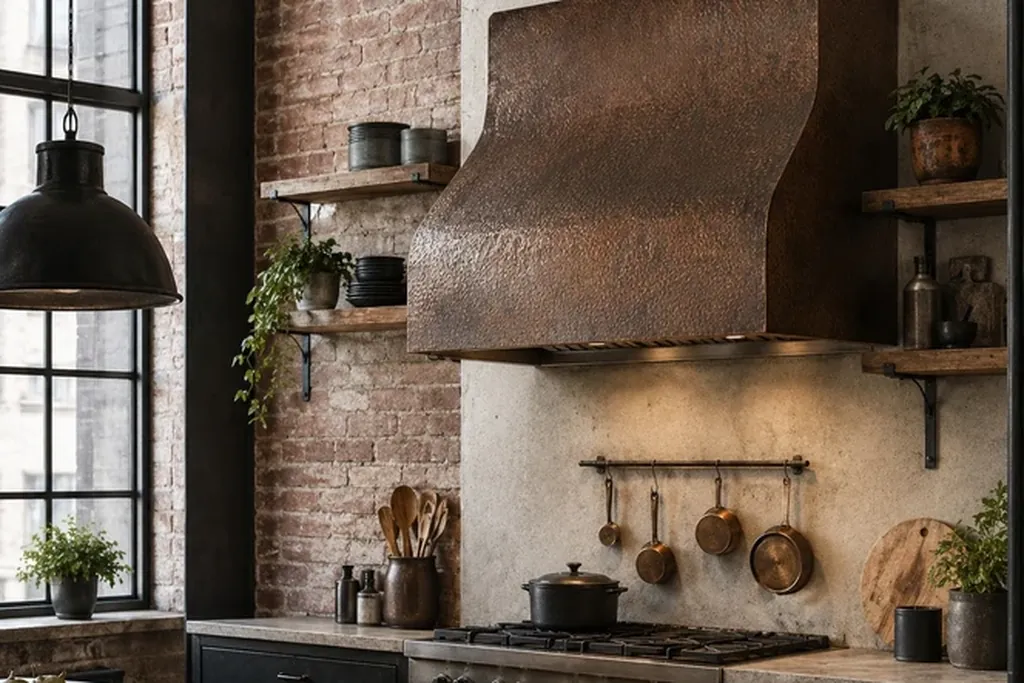
A hammered copper hood adds warmth and a handcrafted texture that flat steel cannot match, and it works well with wood cabinets, cream walls, and stone counters. The hammered surface hides small marks better than smooth metal, which helps above a busy stove. Copper darkens over time, so decide whether you want a lacquered finish that holds its shine or a living finish that ages naturally. Keep other metals in the room limited to one or two finishes so the copper stays the clear accent.
5. Build a Hood Around a Reclaimed Wood Beam
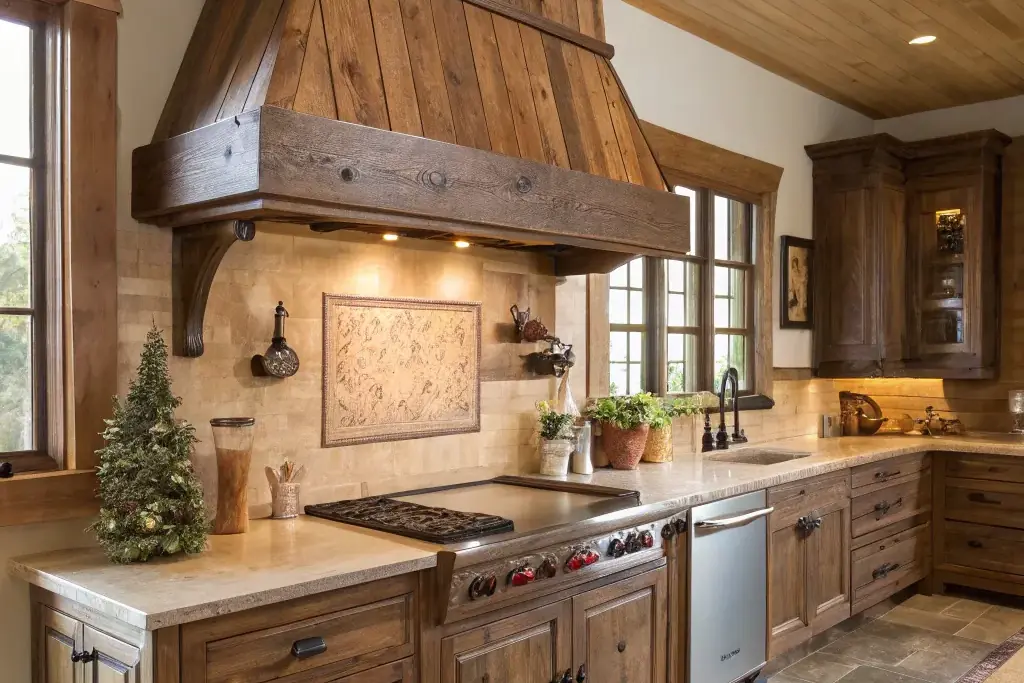
A wood beam across the base of a hood gives a rustic, farmhouse feel and grounds a tall chimney shape. The beam can be a single thick mantel piece or a boxed beam made from reclaimed boards, fixed securely to the wall frame so it carries no weight from the hood itself. Keep the beam clear of the cooktop by the distance your hood maker specifies, and seal the wood against steam and grease. This idea suits kitchens with other wood details, such as open shelves or a butcher block counter, and the same grouping rules in this guide to how to style open shelves help the beam sit well with nearby shelving.
6. Clad the Hood in Handmade Tiles
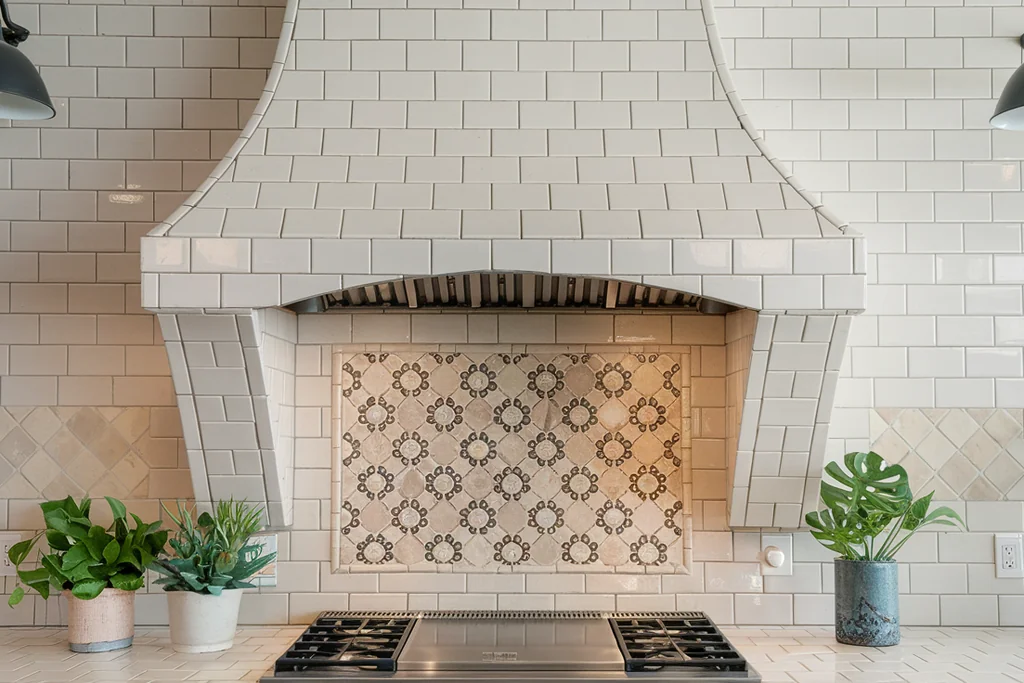
Handmade tiles turn a plain hood surround into a patterned feature, and small variations in glaze give the surface depth that flat paint lacks. Zellige, terracotta, or simple subway tiles in a single color all work, and the grout lines add texture without a busy pattern. Tile is practical above a stove because it resists heat and wipes clean, but choose a grout sealer for the area closest to the cooktop. Keep the tile to the hood itself and let the backsplash stay plain, so the two surfaces do not compete.
7. Hide the Hood Behind Matching Cabinet Panels
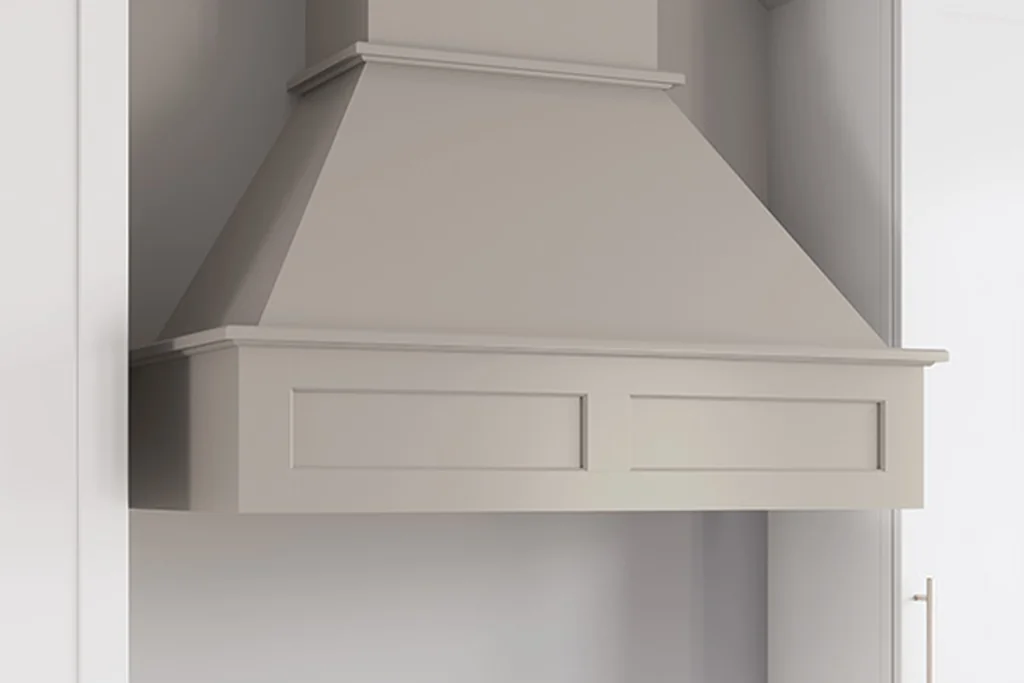
A hood hidden behind cabinet panels suits a kitchen where you want the cabinetry to run unbroken across the wall. The panels match the door fronts in color and profile, and the fan and filters sit inside, reached through a lift panel or a pull out section. This is a good choice for small kitchens, where a large steel hood can dominate, and for minimalist rooms where appliances stay out of sight. Make sure the panel design still allows easy filter cleaning and that the venting route is planned before the cabinets are fitted.
8. Cover a Hood in Vertical Shiplap for a Coastal Feel
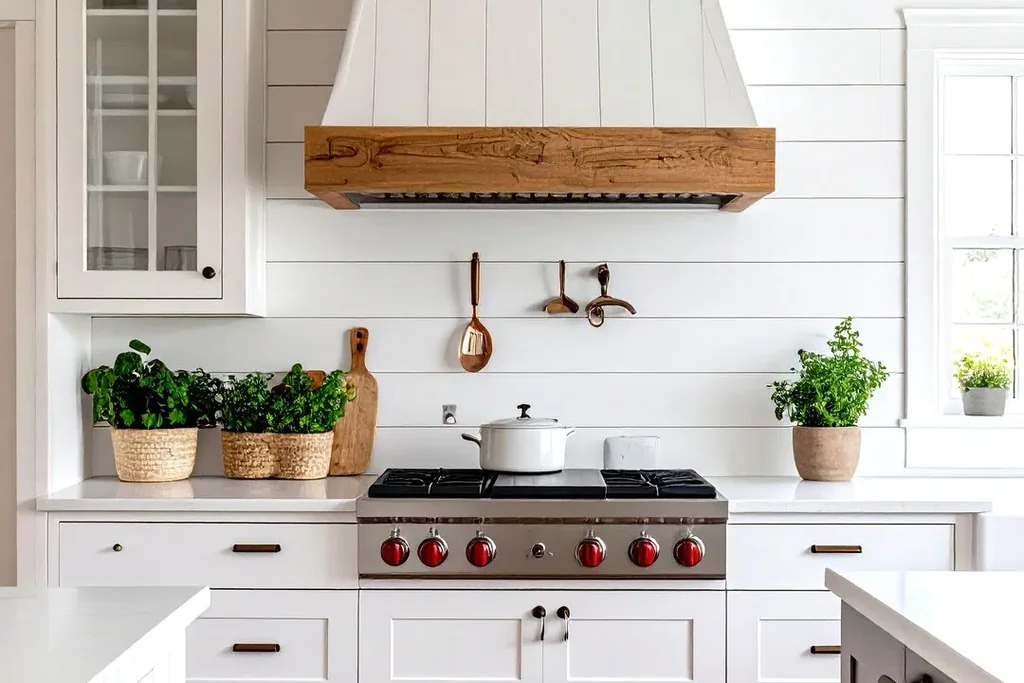
Vertical shiplap boards give a hood a light, coastal texture and suit kitchens with beadboard, painted wood floors, or soft blue and white palettes. The narrow boards add shadow lines that flat panels lack, and a white or pale painted finish keeps the tall shape from feeling heavy. Fit the boards over a heat resistant base and seal the paint, since steam rises straight into the lower boards. Keep the board width consistent with any other shiplap in the room so the hood reads as part of the same scheme.
9. Hang a Glass Canopy Over an Island Range
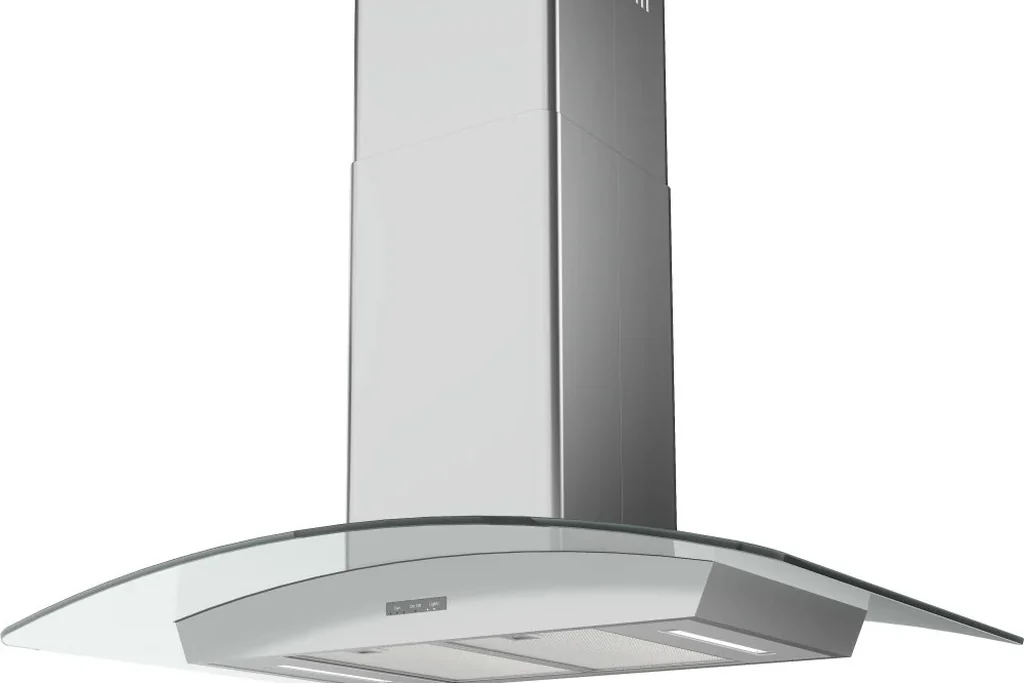
A glass canopy hood suits an island range, where a solid hood would block sight lines across the room. The clear glass sides let light pass and keep the island feeling open, while the steel frame and chimney carry the fan and ducting. This style works best in modern kitchens with clean lines and few upper cabinets, and it needs solid ceiling fixing and a planned duct route. Clean the glass regularly, since it shows grease and steam marks faster than steel, and keep the canopy slim so it does not hang low over the cooktop.
10. Build a Brick or Stone Look Surround for an Old World Feel
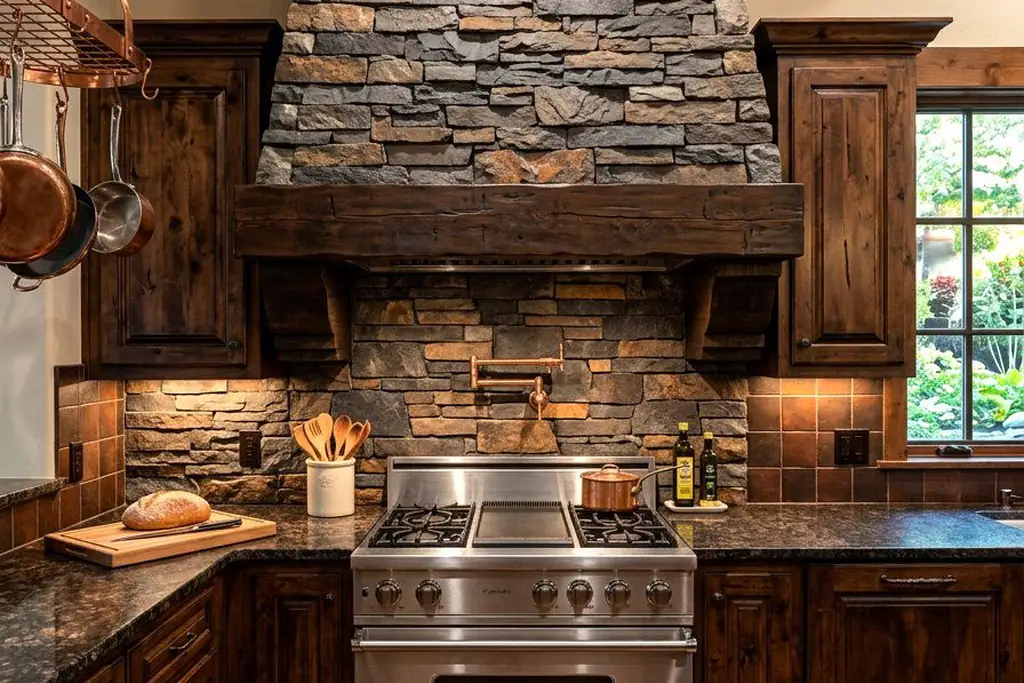
A brick or stone look surround gives a range hood the weight of an old fireplace chimney and suits kitchens with stone floors, wood beams, or farmhouse details. Real brick is heavy and needs proper wall support, so many kitchens use thin brick slips or stone veneer over a framed surround instead. The texture pairs well with a simple wood mantel shelf and a plain backsplash, which keeps the surround as the single strong feature. Seal the surface so cooking grease does not stain the mortar joints.
11. Paint the Hood a Bold Color Against Plain Cabinets
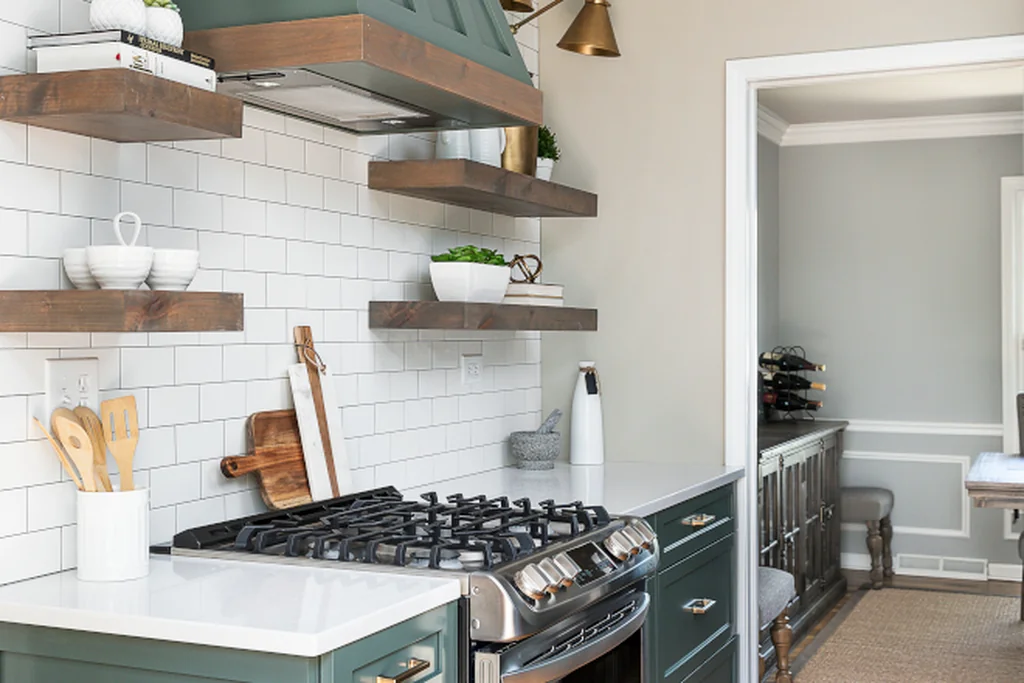
A hood painted in a deep green, navy, or warm black stands out against plain cream or white cabinets and gives the kitchen a clear focal point without changing the whole room. This idea works best when the rest of the kitchen stays quiet, with plain counters and simple hardware, so the color has room to carry the wall. Test a large painted sample next to the cabinets in daylight and evening light before committing, since strong colors shift a lot between the two. Use the same durable cabinet paint as Idea 1 so the finish lasts near steam.
12. Choose a Slim Slide Out Hood for a Small Kitchen
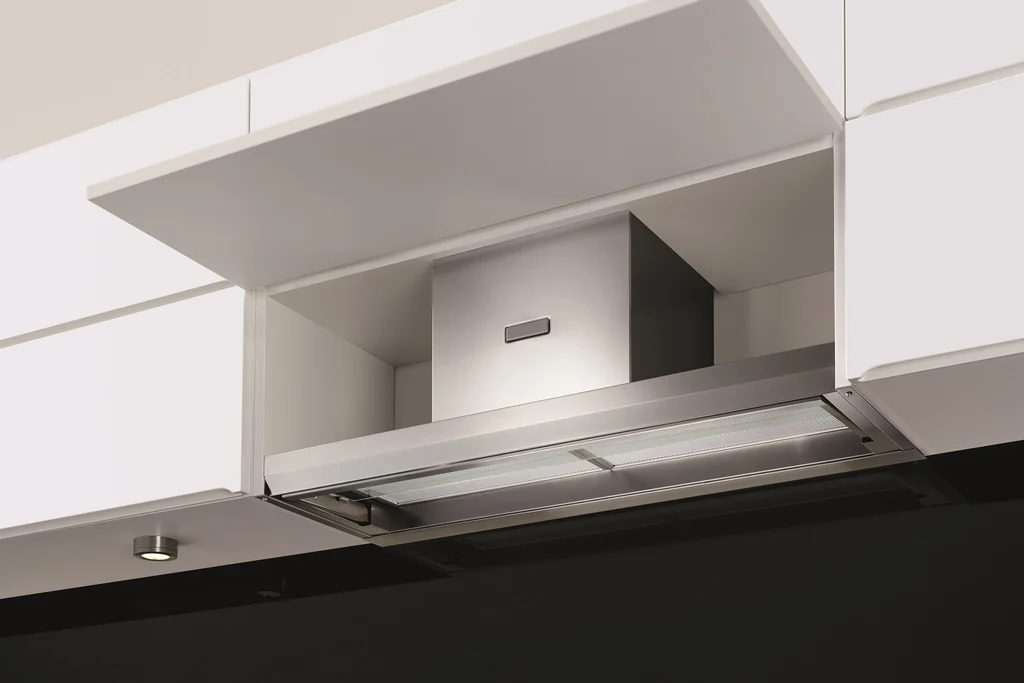
A slim slide out or under cabinet hood suits a small kitchen where wall space is tight and a full chimney hood would crowd the room. The unit hides under a wall cabinet and pulls out only while you cook, so the wall stays clean the rest of the day. This is a practical choice for apartments and galley kitchens, and it leaves room for a shelf or rail above the stove for everyday items. Check the extraction rate against your stove size, since compact hoods vary, and plan for easy filter access in the tight space.
Conclusion
The right range hood does two jobs at once: it clears steam and smells, and it gives the stove wall a finished shape. Pick the material for how you cook, the size for your stove, and the finish for the room you already have, rather than copying a look that needs a different layout. A painted chimney, a plaster curve, a copper accent, or a hidden panel can each work, as long as the venting, height, and cleaning are planned first. Start with one idea from this list, measure the wall and stove carefully, and let the hood set the tone for the rest of the kitchen.
FAQs
How wide should a range hood be?
A range hood should be at least as wide as your stove, and one size wider is a good choice over a large range or a stove used for frying and searing. A wider hood catches steam that drifts past the edges of the pots, which a narrow hood misses. Measure the stove width first, then check the wall space and cabinet gaps before choosing a hood size.
Should a range hood be vented outside?
Venting outside is the most effective option, since it removes steam, grease, and smells from the kitchen rather than filtering and returning the air. A ducted hood needs a clear route through the wall or ceiling, so check the path before you choose a style. If ducting is not possible, a recirculating hood with good filters is a workable fallback, but the filters need regular cleaning or replacement.
How high should a range hood sit above the stove?
The safe height depends on the hood type and the stove, so follow the hood maker’s instructions and local rules for your setup. As a general guide, electric stoves allow a lower hood than gas stoves, which need more clearance for heat and flames. Measure from the cooktop surface, not the counter, and keep the hood level so extraction stays even across the burners.
Can I paint a range hood myself?
Yes, if the hood surface takes paint well and you prepare it properly. Clean off grease, sand lightly, prime with a primer suited to metal or wood, and finish with a durable cabinet paint that resists steam. Plaster and wood surrounds are easier to paint than smooth steel, which needs a primer made for metal to stop peeling. Avoid painting filters, fan parts, or any surface that gets direct heat from the burners.
What is the easiest range hood material to clean?
Stainless steel and glazed tile are among the easiest to clean, since both wipe down with a damp cloth and resist most cooking marks. Smooth painted finishes are next, as long as the paint is sealed and washable. Plaster, raw wood, and unsealed brick need more care, because grease can stain their surfaces, so seal them well if you choose one of those materials.
Do I need a hood over an induction stove?
An induction stove still produces steam, smells, and grease from the food itself, even though the cooktop stays cooler than gas or electric coils. A hood keeps that steam out of the cabinets and walls and stops cooking smells lingering in the room. A slim or hidden hood can suit an induction setup well, since the clearance rules differ from gas, but always follow the hood maker’s guidance for your model.