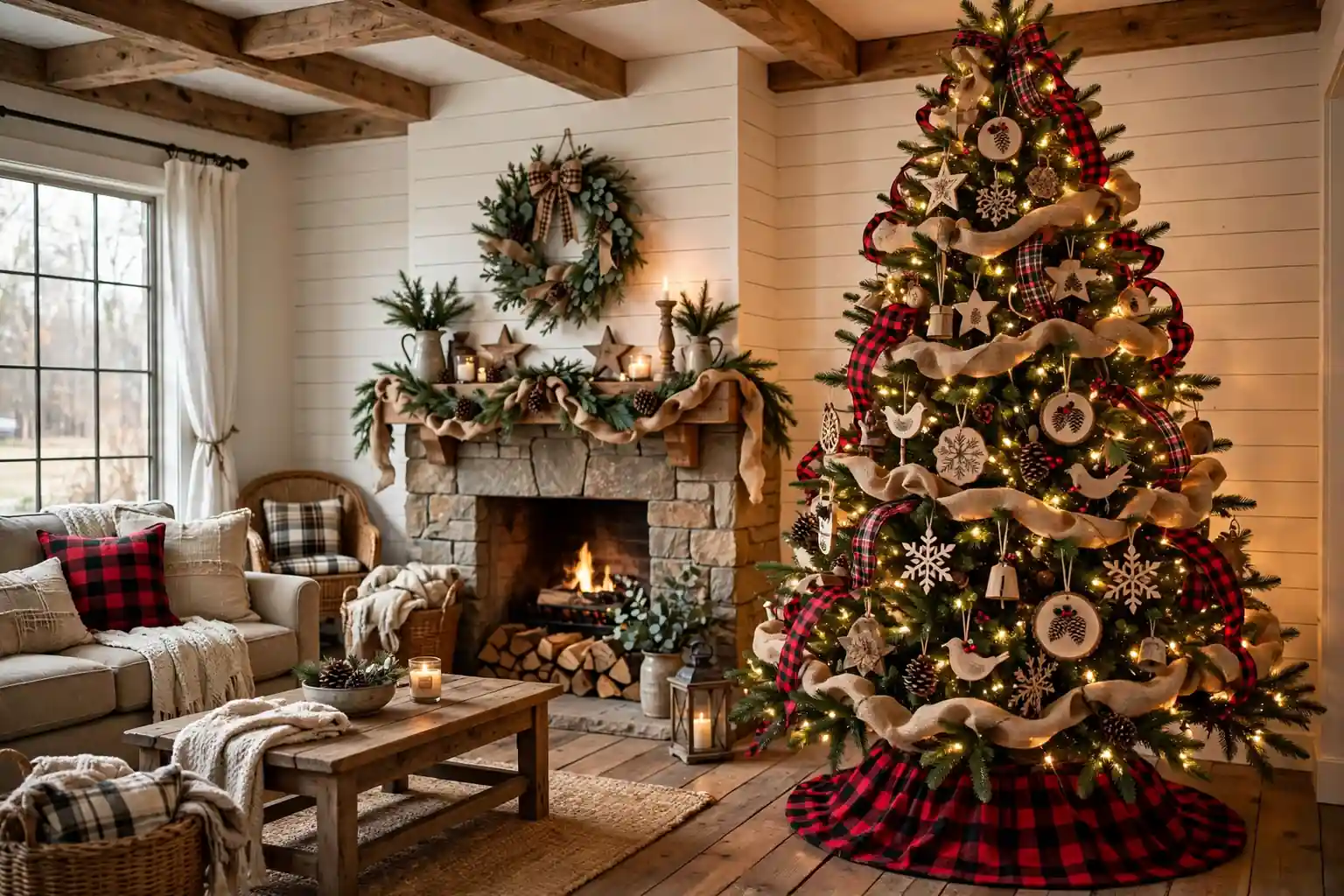
Farmhouse Christmas tree decorations use natural wood, burlap, plaid, galvanized metal, dried fruit, and warm white lights to give a tree a gathered, country feel. Start with a simple garland and a rustic topper, add wooden and fabric ornaments in a small palette, then finish with a woven or plaid tree skirt for a calm, homely look.
Pick a palette first, such as cream, sage, and muted red, or cream, brown, and soft gold, and repeat it from the topper to the base. A farmhouse tree looks best when a few natural textures do most of the work, so leave some green showing between ornaments rather than covering every branch. For the wider farmhouse look behind the tree, see the farmhouse decor guide, and for more seasonal ideas, browse the Dwell Ovell decor ideas index.
Key Takeaways
- Start with lights, then one garland, then ornaments, so each layer stays visible.
- Hold the palette to two or three muted colors plus natural wood and greenery.
- Mix textures: wood, burlap, cotton, metal, pinecones, and dried fruit.
- Place larger ornaments deeper in the branches and smaller, detailed ornaments near the tips.
- Choose one base treatment, a skirt, a collar, or a basket, rather than stacking all three.
- Keep the topper in proportion to the tree, and check the tree from across the room before finishing.
1. Wood Slice Ornaments
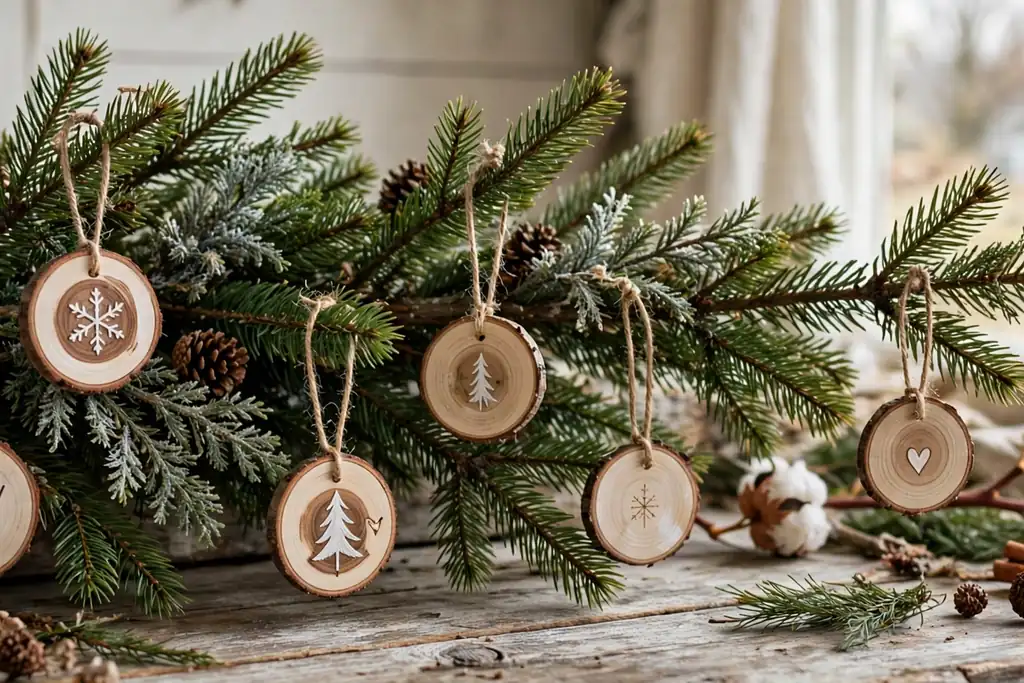
Hang thin wood slice ornaments on a tree, some left plain and some marked with a simple star, tree, or initial in dark ink. The pale wood and bark edge read as rustic at once, and the flat slices hang well on both full and slim trees. Mix a few larger slices near the middle of the tree with smaller slices near the tips.
Hang slices on short twine loops so they sit flat against the branches. If a slice is heavy, hang it on a sturdier inner branch rather than a thin tip. Sand any rough edges before hanging, and store slices flat with tissue between them so the bark edges do not chip.
2. A Wide Burlap Garland
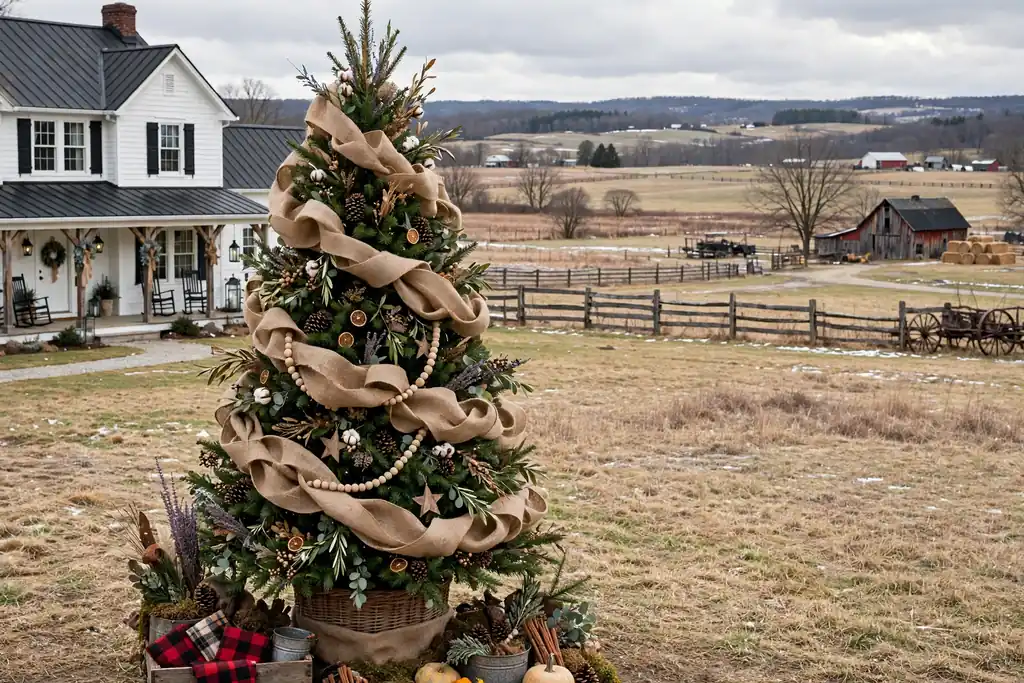
Wrap a wide burlap garland around the tree in loose, even loops, letting it sag a little between branches rather than pulling it tight. Burlap adds a soft, woven texture that suits a farmhouse tree, and it gives plain ornaments a calm background. Use one garland for a slim tree and two lengths for a full tree, joined where branches hide the join.
Start at the top and work down, tucking the garland into branches every few inches so it does not slip. Keep the loops the same depth all the way down, and step back after each loop to check the spacing. If burlap sheds, shake it outdoors before hanging and keep it away from open flames.
3. Plaid Ribbon Loops
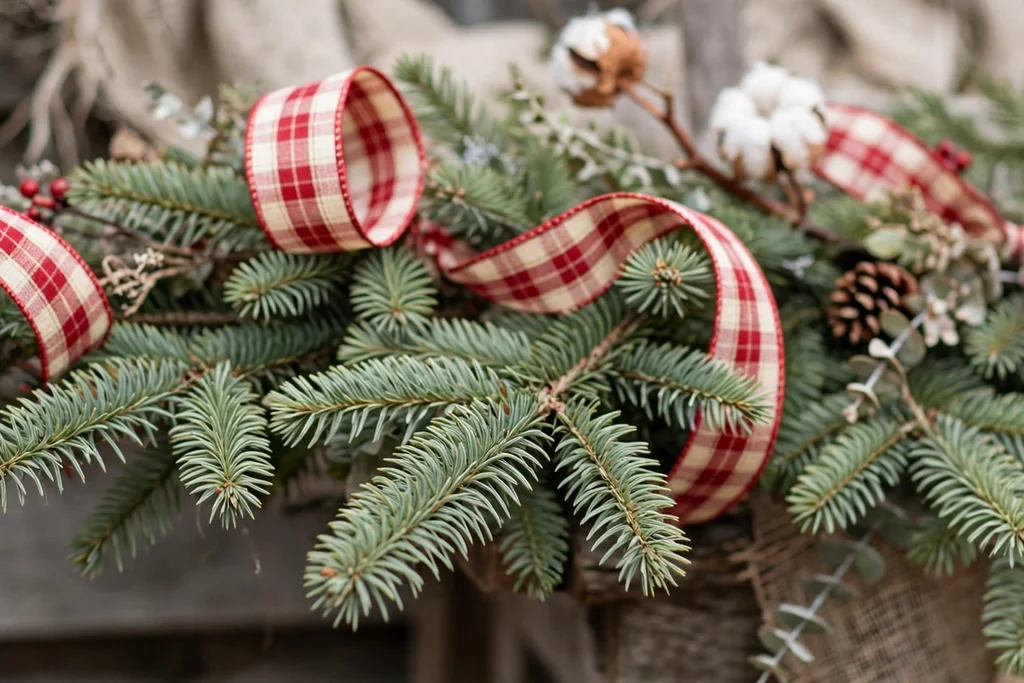
Cut plaid ribbon into strips and pinch each strip into a loop at the end of a branch, with the tails hanging down a few inches. Red and cream buffalo check is the classic farmhouse choice, while green and cream check suits a quieter tree. Loops add color without the weight of a full ribbon wrap.
Use wired ribbon if you want loops that hold their shape, and plain ribbon for a softer drape. Space loops evenly and use the same loop size through the tree so the look stays settled. Tie loops to branches with a short piece of twine rather than wire, so branches are not marked.
4. A Galvanized Metal Star Topper
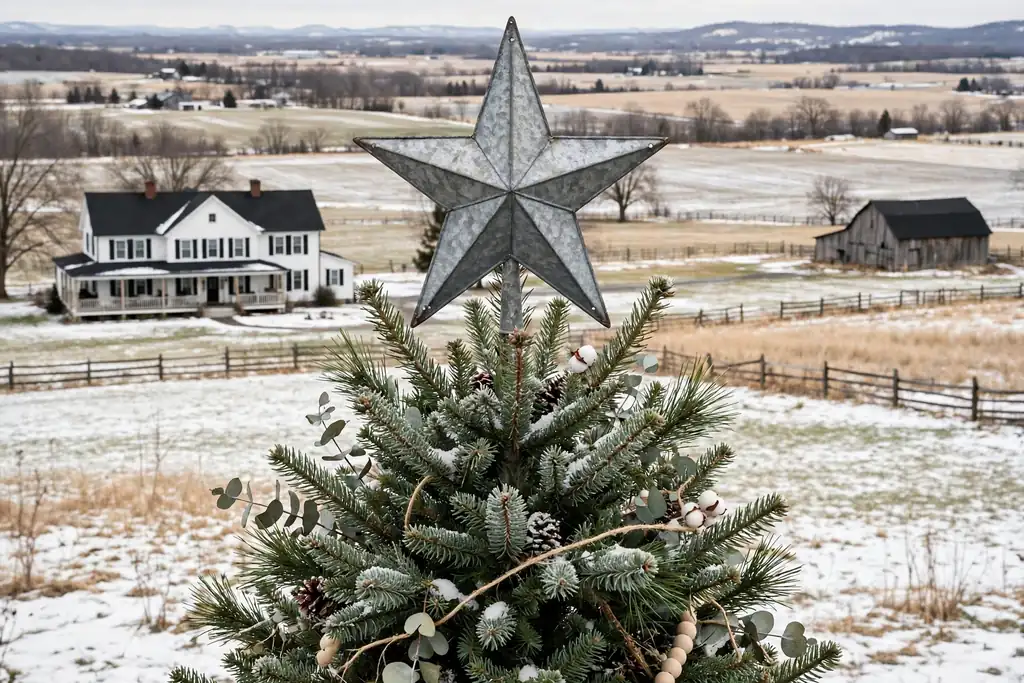
Top the tree with a galvanized metal star, with its soft grey finish and simple punched or folded shape. The metal star suits a farmhouse tree better than a glittering topper, and it pairs well with wood, burlap, and plaid below. Choose a star sized to the tree, about one tenth of the tree height as a rough guide.
Fix the topper firmly to the top stem, and check it from across the room before adding the last ornaments. If the star leans, add a small piece of floral wire around the stem to steady it. Keep the topper clear of ceiling lights and fans, and take it down by the stem, not by a point, to avoid bending it.
5. Dried Orange Slice Ornaments
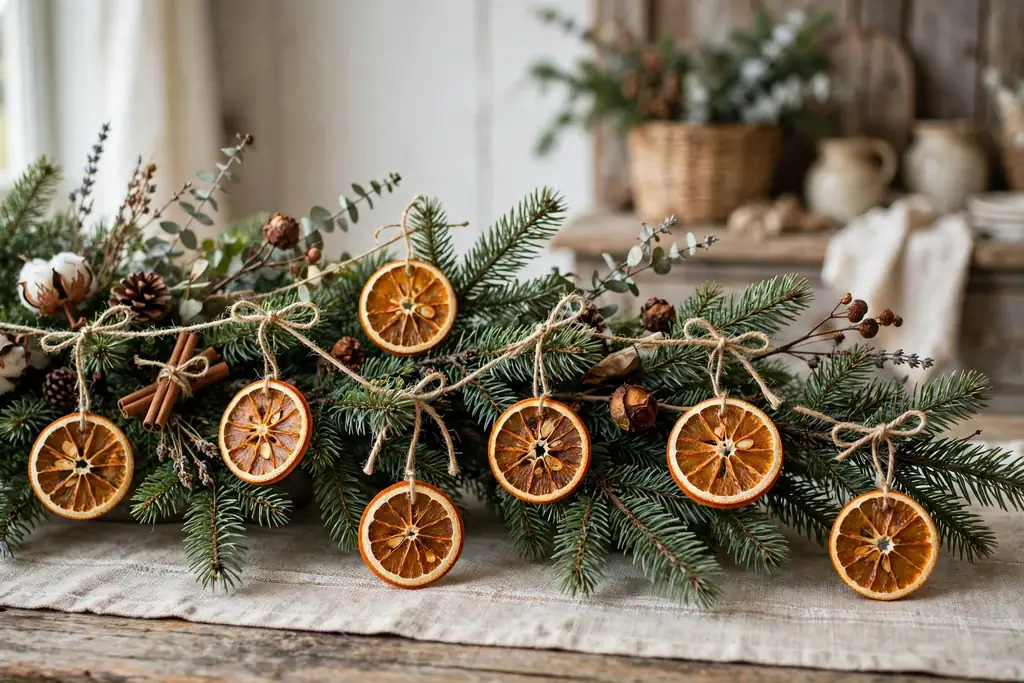
Hang dried orange slices on twine loops, either on their own or grouped in twos and threes on a branch. The warm amber color and round shape add a natural, old fashioned note, and the slices glow softly when lights sit behind them. They suit a tree with wood, cinnamon, and pinecone ornaments.
Dry slices fully before hanging, so they do not bend or mark branches, and hang them where air can move around them. If a slice darkens after a season, replace it rather than trying to clean it. Store dried slices in a dry box with tissue, away from damp rooms, so they keep for another year.
6. Pinecone Ornaments on Twine
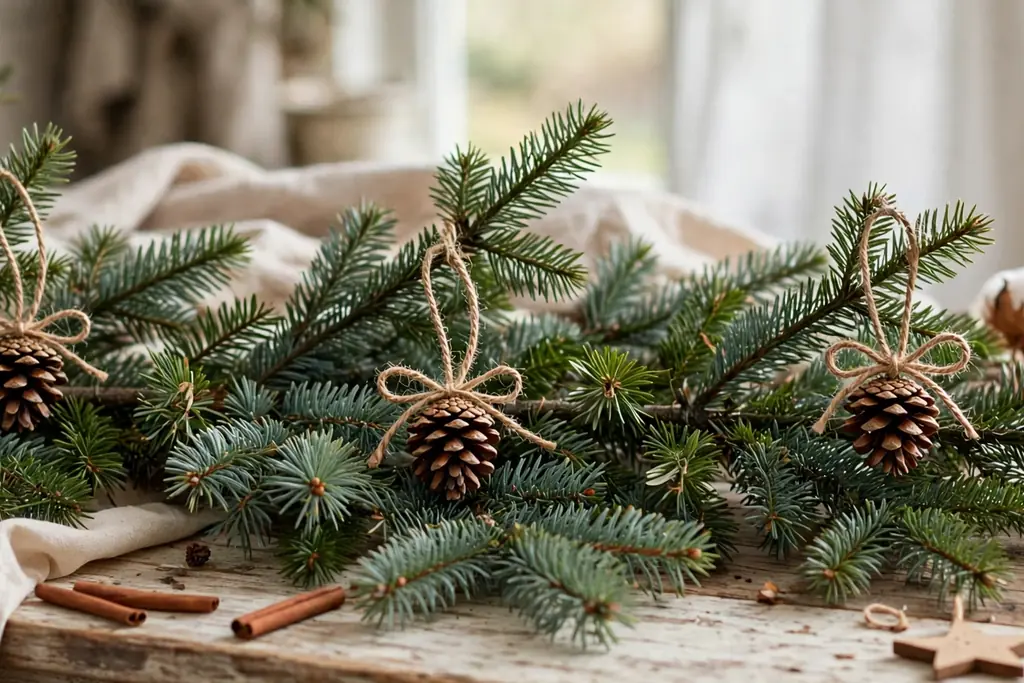
Tie small pinecones to short twine loops and hang them through the tree, with a few larger cones near the base. Pinecones add a woodland texture and a brown tone that grounds brighter ornaments, and they cost little if gathered and cleaned at home. A light dusting of white paint on the tips can suggest frost, but plain cones suit most farmhouse trees.
Clean cones outdoors first, shaking off loose seeds and dust, and check for sap before hanging them near fabric ornaments. Hang cones by the twine, not by a scale, so they do not shed. Keep pinecones away from open flames, and compost cones that break apart at the end of the season.
7. A Buffalo Check Tree Skirt
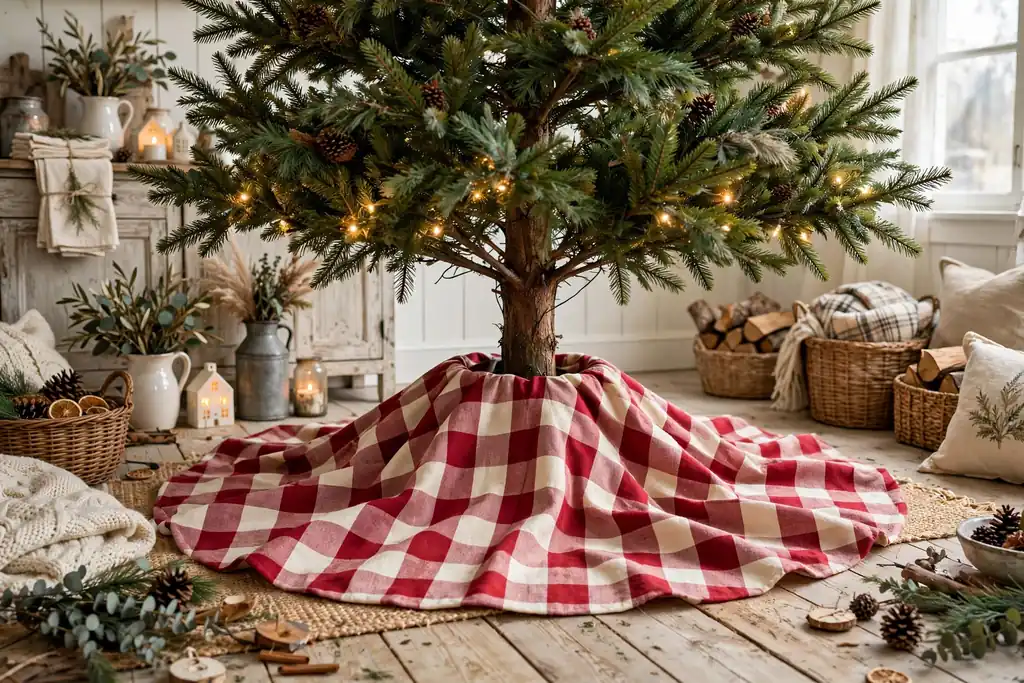
Lay a buffalo check tree skirt under the tree, in red and cream or black and cream, with the checked pattern showing on all sides. A skirt hides the stand, softens the base, and gives wrapped gifts a patterned surface to sit on. Choose a skirt wide enough to reach past the lowest branches, so no bare stand shows from the side.
Smooth the skirt flat and center the opening around the trunk, then arrange gifts on top rather than under the skirt edge. Wash the skirt before the season if it has sat in storage, and check for loose threads at the opening. Fold the skirt flat for storage, rather than bunching it, so the checks do not crease unevenly.
8. A Wood Bead Garland
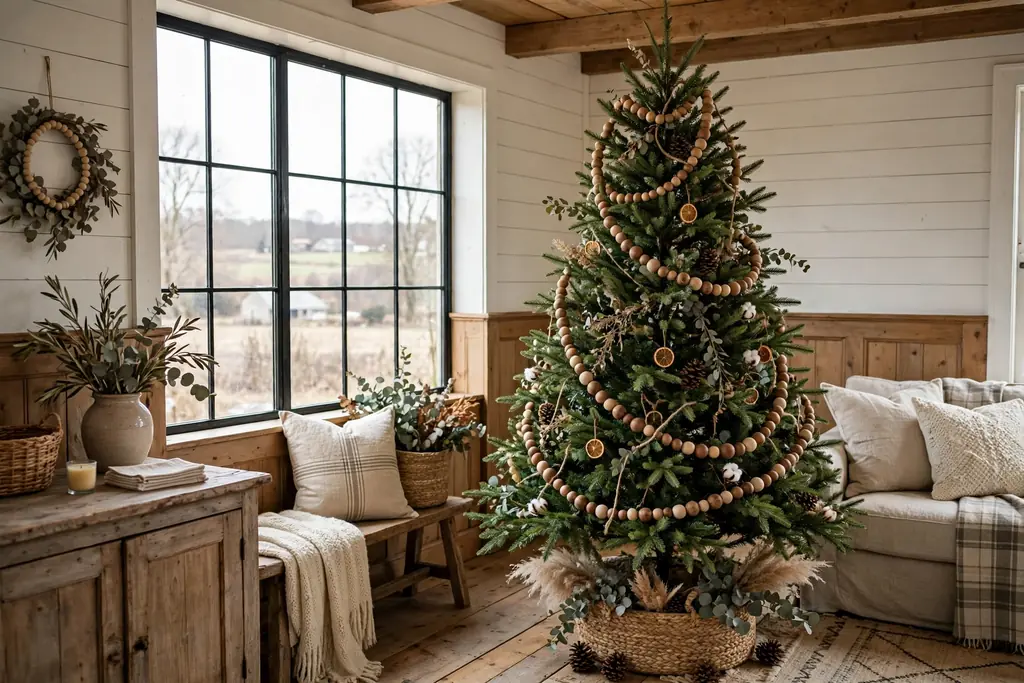
Drape a wood bead garland around the tree, with round wooden beads in natural, cream, and soft brown tones strung on sturdy cord. Beads add a simple, handmade rhythm that suits a farmhouse tree, and they pair well with burlap, plaid, and wood slice ornaments. Use one bead size through the tree, or mix one large bead with two small beads in a repeat.
Hang the garland in loops a little shallower than a fabric garland, so the beads sit on the branch tips and catch light. Keep the cord taut enough that beads do not pool in one spot. If a bead cracks, replace it with a spare from the end of the strand, and store the garland coiled, not knotted, to protect the cord.
9. Cotton Boll Picks
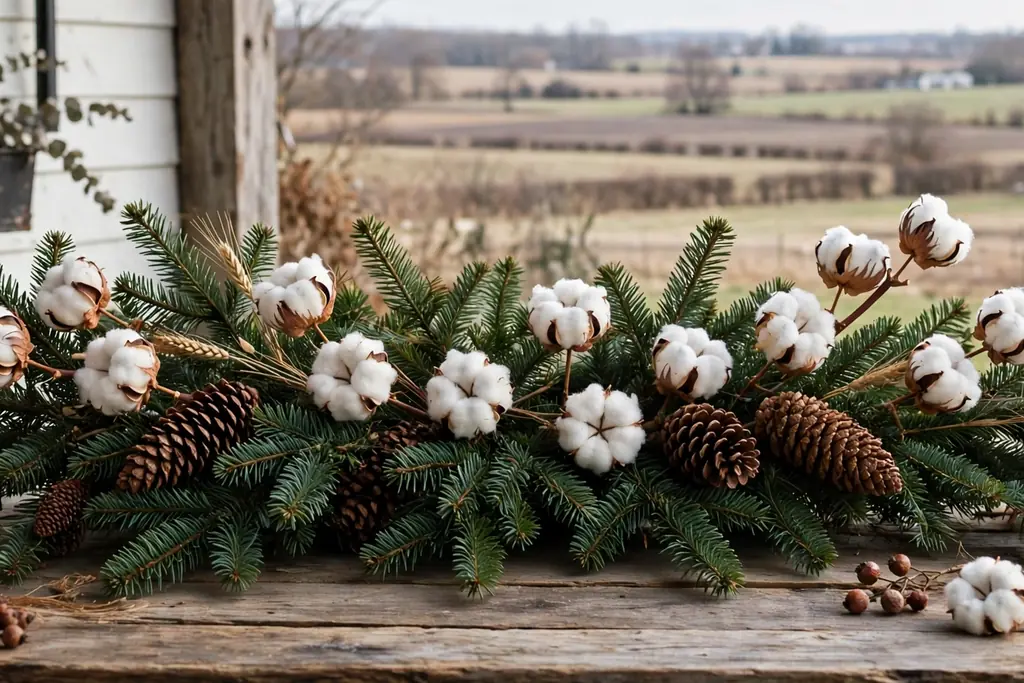
Push cotton boll picks into the outer branches, with two or three white bolls on each stem and a short brown stem showing. Cotton bolls add soft white spots through the green, and they suit a farmhouse tree in the same way cotton stems suit a farmhouse mantel. Use them sparingly, about one pick for every two feet of tree height at first, then add more if the tree still looks bare.
Angle picks outward and slightly upward, so the bolls read as part of the tree rather than as loose additions. Keep cotton away from candles and open flames, since dried cotton catches light easily. Store picks upright in a tall box so stems do not bend and bolls do not crush.
10. Punched Tin Star Ornaments
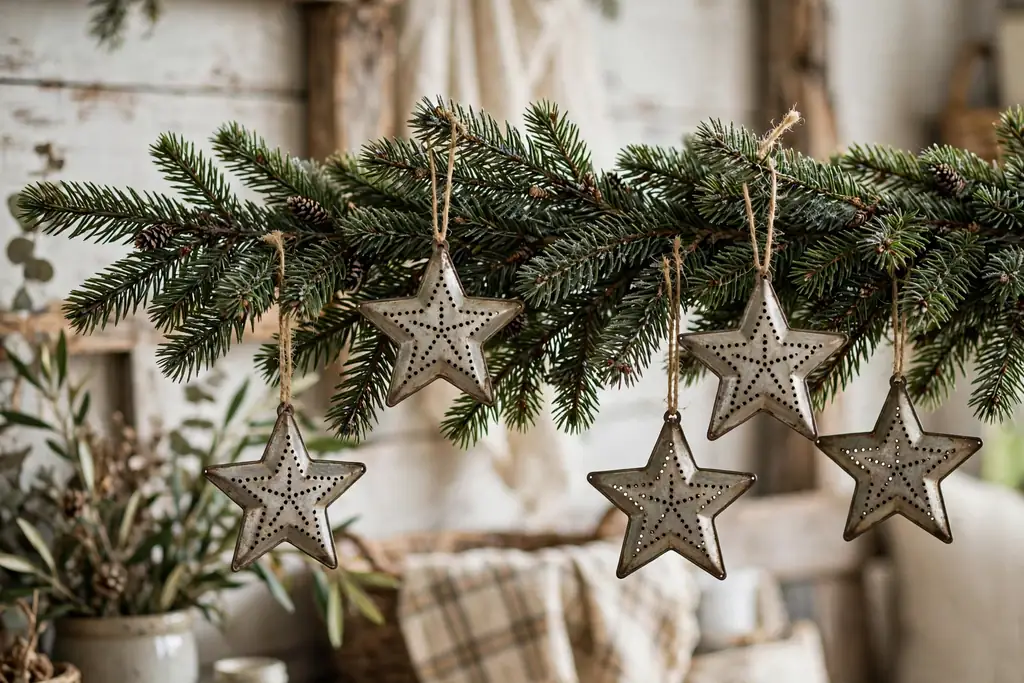
Hang punched tin star ornaments in a soft silver or aged bronze finish, with small holes that let light through. Tin stars add a folk craft note to a farmhouse tree, and their flat shape hangs well on slim branches that cannot hold heavy ornaments. Mix tin stars with wood slices and pinecones for a varied but calm tree.
Hang tin stars on thin twine or wire loops, and check the edges for sharp points before hanging them low where children may reach. If a star tarnishes, wipe it with a dry cloth rather than a wet cleaner, which can mark the finish. Store tin stars flat with tissue between them to avoid dents.
11. Felt Tree and Star Ornaments
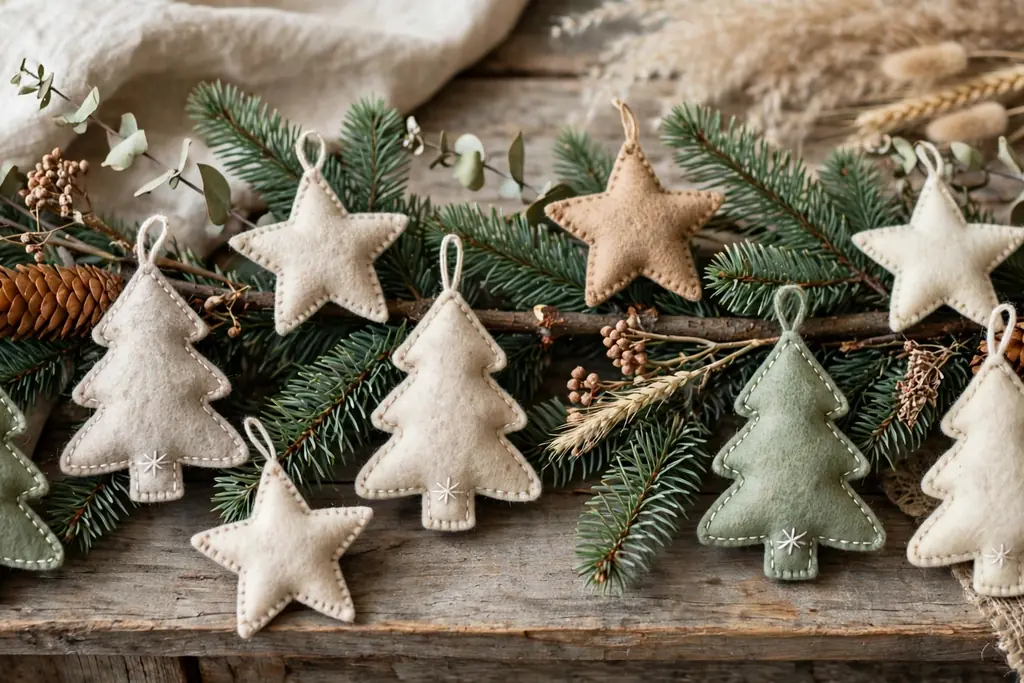
Hang simple felt ornaments, such as small trees, stars, hearts, and mittens, in cream, sage, muted red, and soft grey. Felt adds a soft, handmade texture next to wood and metal, and felt ornaments are light enough for thin branches and for trees in rooms with small children. Keep the shapes simple and the palette small, so the tree does not look busy.
Use a short ribbon loop on each ornament so it hangs straight, and keep felt ornaments away from damp branches if the tree is fresh cut. If an ornament bends, press it flat under a book for a day. Store felt pieces flat with tissue between layers, and keep them out of direct sun, which fades felt colors over time.
12. Jute Wrapped Ball Ornaments
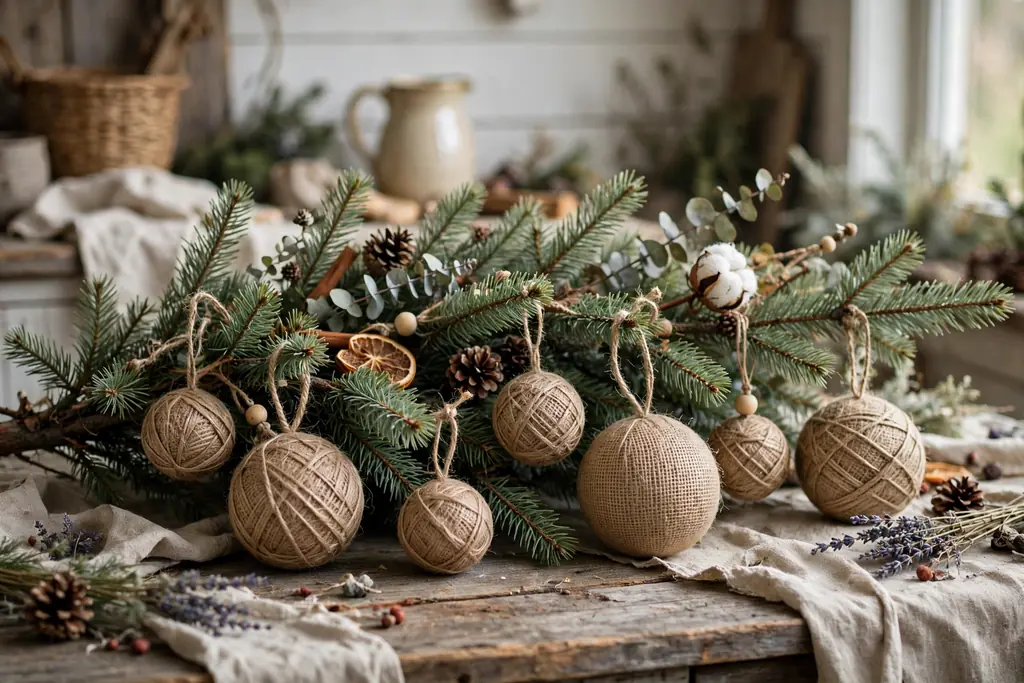
Wrap plain foam or paper balls in jute twine, glued in tight rows from top to bottom, and hang them with a twine loop. Jute balls add a rough, natural texture that suits a farmhouse tree, and they fill gaps between branches without adding bright color. Use one size through most of the tree, with a few larger balls near the base for balance.
Glue the twine end under the last row so no loose end shows, and check that the loop is fixed firmly before hanging. If a ball sheds twine fibers, trim the loose ends rather than pulling them, which can loosen the wrap. Store jute balls in a box with tissue, since the rough surface can catch on fabric ornaments.
13. Warm White Lights Woven Deep in the Branches
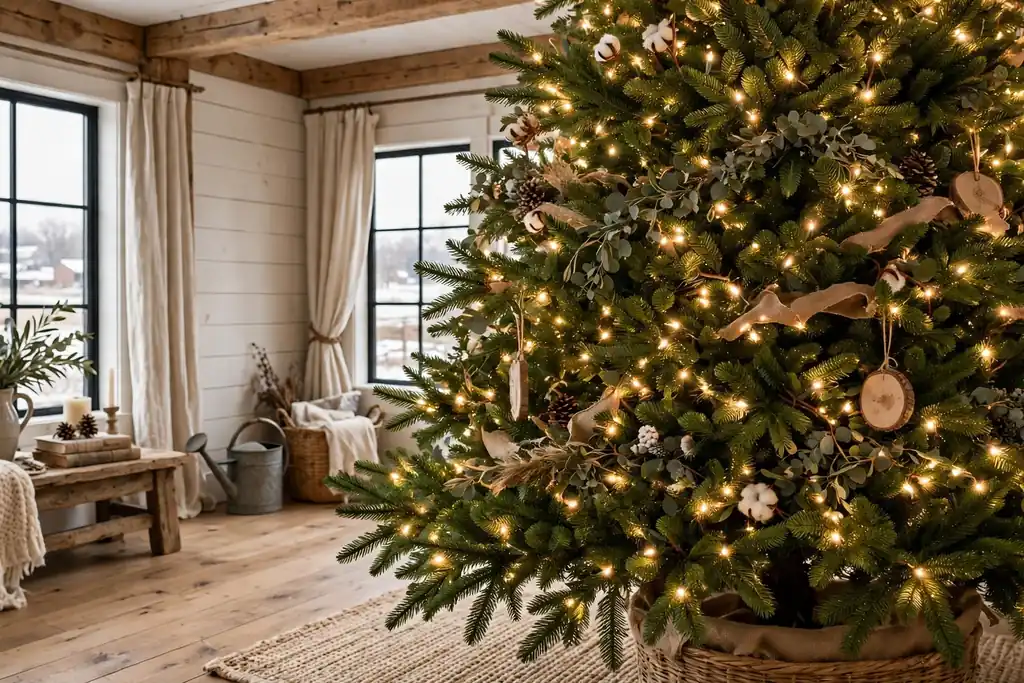
String warm white lights through the tree before adding garlands or ornaments, weaving each strand deep into the branches as well as along the tips. Deep lights give a soft glow from inside the tree, rather than a bright ring on the surface, and warm white suits farmhouse wood and fabric better than cool white. Use one strand per two feet of tree height as a starting point, and add more if the tree still looks dim.
Work from the trunk outward on each branch, then step back and check for dark patches before moving on. Keep plugs and joins clear of the tree skirt, and check cords for fraying before use. Turn lights off when the room is empty, and replace a whole strand if its cord is damaged rather than patching it.
14. A Galvanized Metal Tree Collar
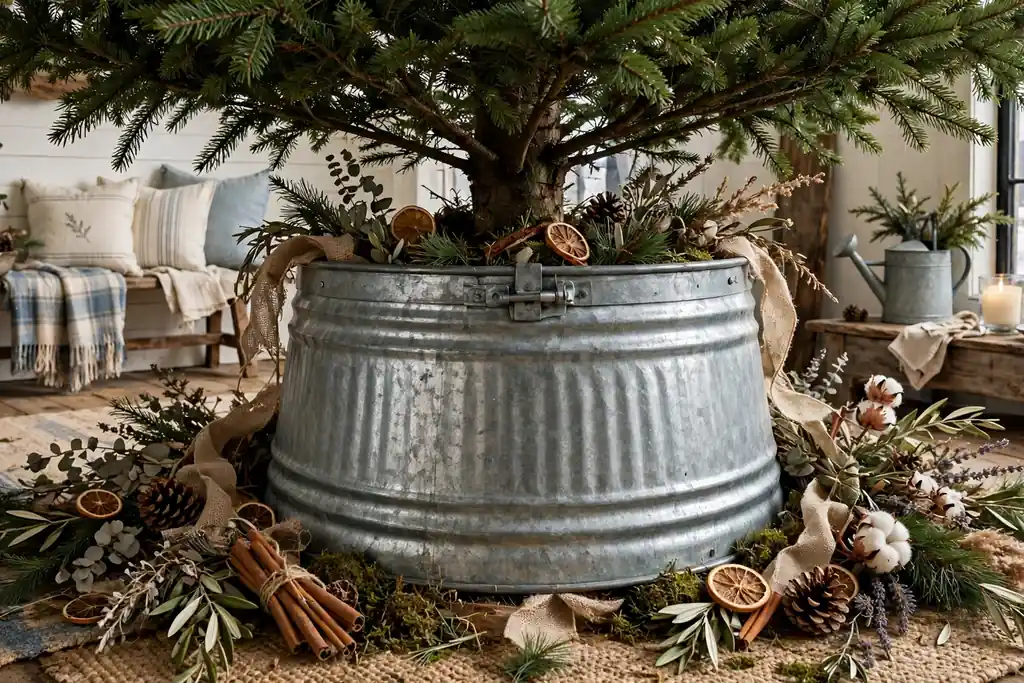
Set a galvanized metal tree collar around the base of the tree in place of a skirt, with its ring of soft grey metal panels hiding the stand. A collar gives a clean, tidy base that suits a farmhouse room with wood floors, and it pairs well with a metal star topper. Choose a collar sized to the stand, with a little room around the trunk.
Assemble the collar on a flat surface, then slide it into place and check that it sits level. Keep the collar clear of light cords, and wipe it dry if a fresh tree drips water near it. At the end of the season, stack the panels flat and dry them fully before storage, so the metal does not spot.
15. Cinnamon Stick Bundles
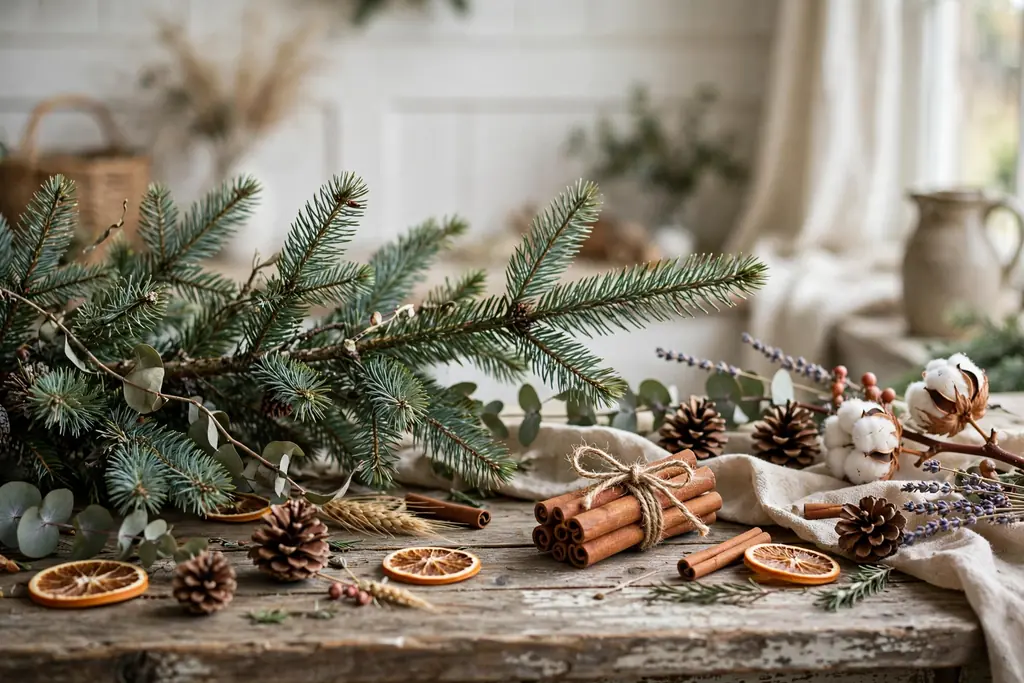
Tie three or four cinnamon sticks together with twine, add a small pine sprig or a dried orange slice, and hang the bundle from a branch. Cinnamon bundles add a warm brown tone and a gentle scent near the tree, and they suit a farmhouse tree with dried fruit and pinecones. Keep bundles small, so they do not weigh down branch tips.
Tie the twine firmly around the middle of the bundle, with a loop at the top for hanging. Hang bundles at nose height or higher if small children are in the home, and keep them away from open flames. Replace bundles each season, since cinnamon scent fades and sticks can dry and crack over time.
16. Burlap Bows on Branch Tips
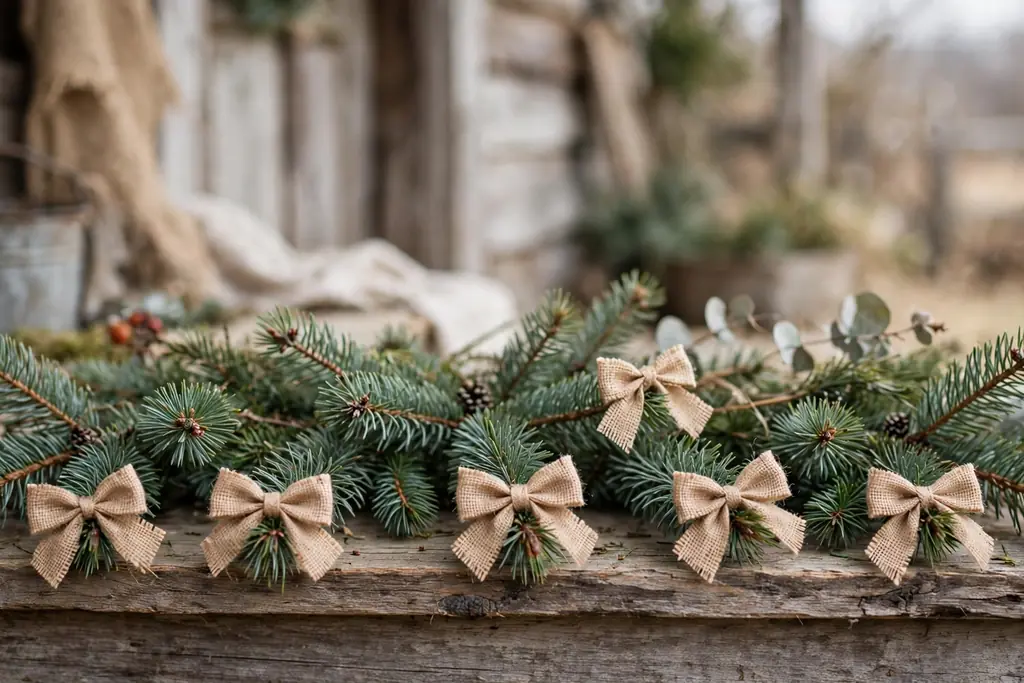
Tie small burlap bows to the tips of outer branches, spread through the tree so the woven texture repeats at every height. Bows differ from a burlap garland because they sit as separate points of texture, and they let more green show between them. Use the same bow size through the tree, with tails cut to the same length.
Tie bows with a short piece of twine around the branch, and fluff the loops so they hold a simple shape. If burlap frays at the cut edge, trim the tail straight rather than pulling threads. Keep bows away from candles, and store them flat in a box so the loops do not crush.
17. Folded Paper Star Ornaments
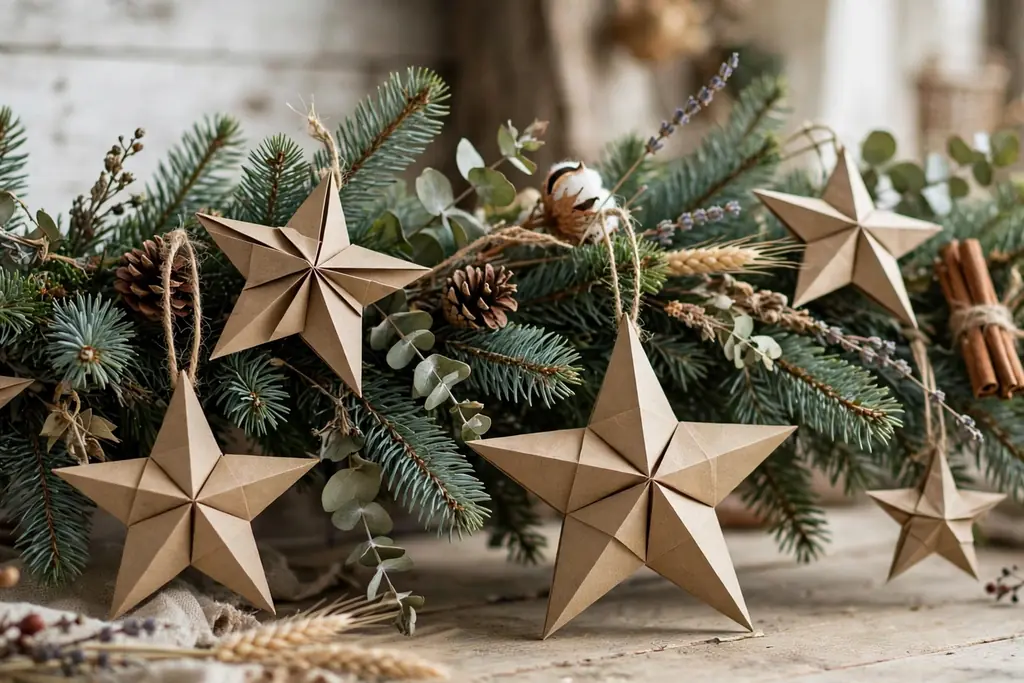
Hang folded paper stars made from kraft paper or plain cream paper, with points that hold their shape when hung. Paper stars add a light, craft made note to a farmhouse tree, and their pale color lifts a tree with many wood and brown tones. Use one paper tone through the tree, rather than mixing bright colors.
Fold stars firmly and hang them on short thread loops, so they do not spin in drafts. Keep paper stars away from damp branches and from heat sources, since paper dries and bends near heat. Store stars flat in an envelope, with tissue between them, so points do not fold over in storage.
18. Red Berry Picks
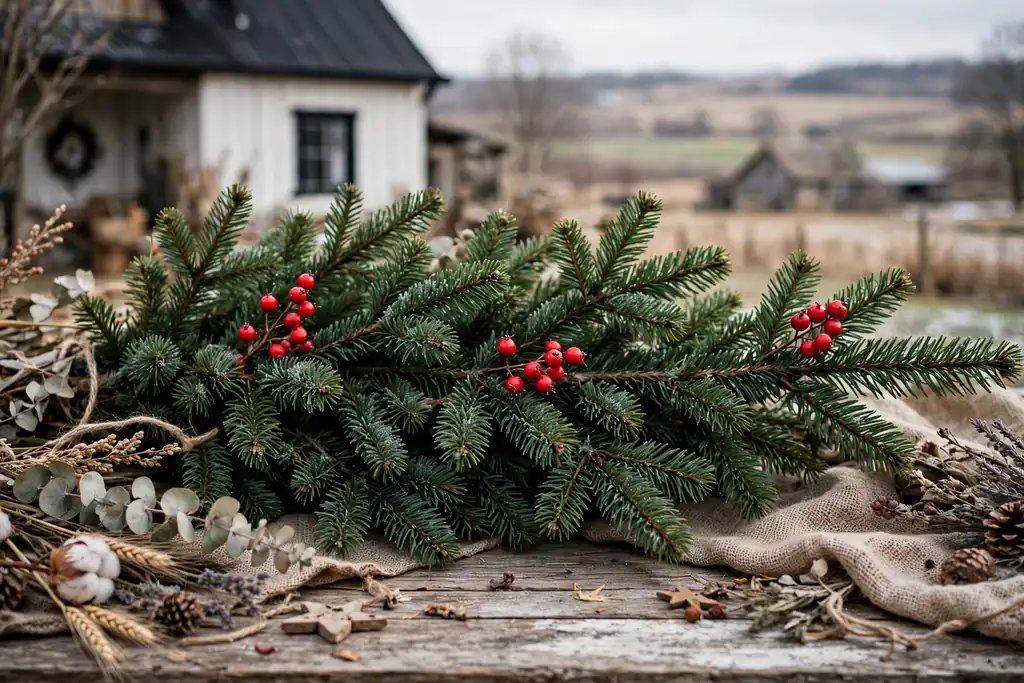
Push red berry picks into the branches, with small clusters of berries on short stems, to add a muted red accent through the tree. Berry picks suit a farmhouse tree with a red and cream palette, and they fill thin spots without adding another ornament shape. Use fewer picks than you think you need at first, then add one or two more in bare patches.
Angle berry stems into the branches so the berries sit just past the branch tips. Keep artificial berries out of reach of small children and pets, since small parts can come loose. If a berry cluster sheds, remove it from the tree rather than leaving loose berries on branches or on the floor.
19. Lanterns Glowing at the Tree Base
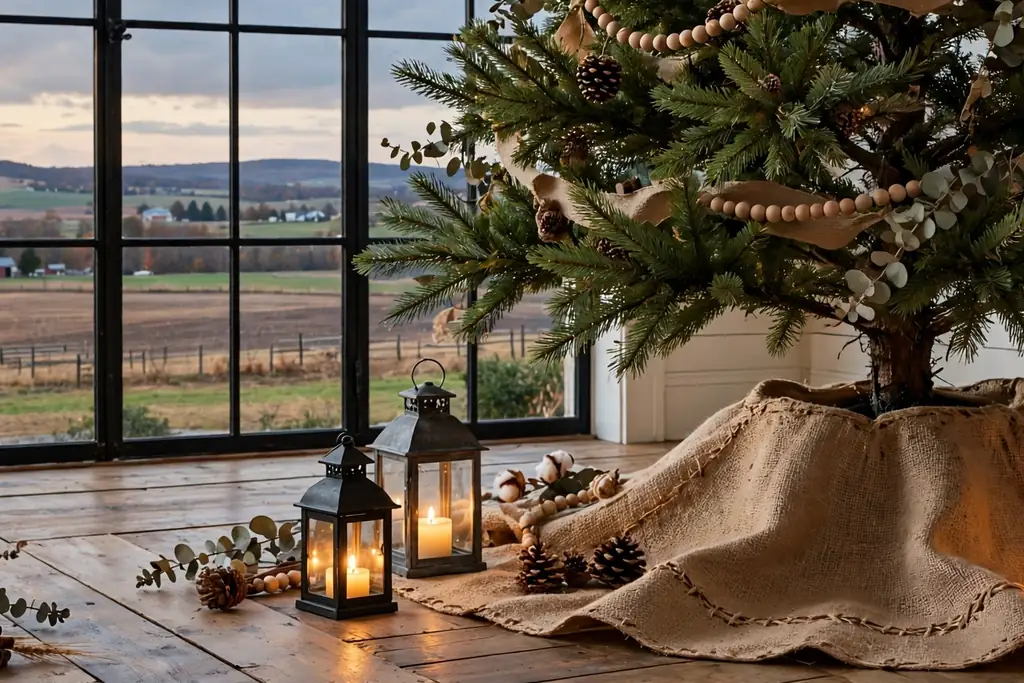
Place one or two small lanterns at the base of the tree, beside the skirt or collar, with battery candles inside. Lanterns add a second layer of warm light at floor level, and they make the base of the tree feel finished, even before gifts are placed. Choose lanterns in wood and glass or black metal and glass, to match the tree topper and ornaments.
Keep lanterns clear of the tree skirt edge and of gift wrap, and use battery candles rather than real flames near fabric and paper. Check lantern glass before the season, and wipe it clean so the light shows clearly. Turn battery candles off at night, and keep spare batteries with the tree decorations for quick changes.
20. A Woven Basket as a Tree Stand Cover
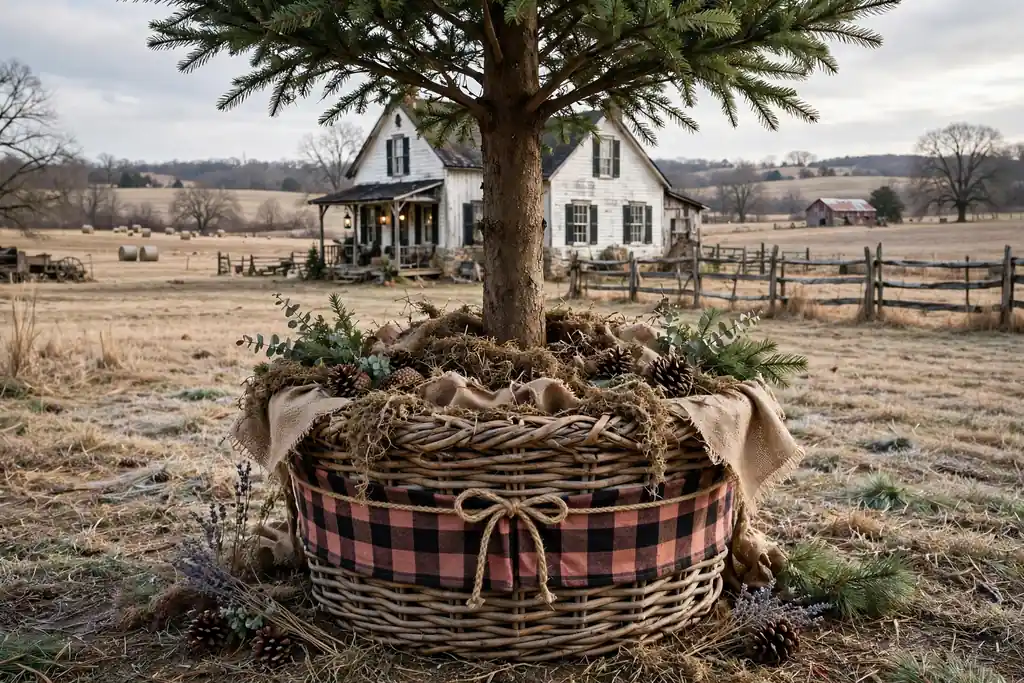
Set the tree stand inside a large woven basket, with the trunk rising through the basket opening, in place of a skirt or collar. A basket base suits a farmhouse living room with other woven pieces, such as storage baskets and trays, and it hides the stand with a natural texture. Choose a basket wide enough to hold the stand steady, with a flat base.
Check that the basket sits level and does not rock when the tree is touched, and add a flat board inside if the stand needs a firmer footing. Keep watering a fresh tree carefully, so water does not soak the basket base, and use a waterproof tray inside the basket if needed. Empty the basket fully before storage, and store it dry.
21. A Wooden Crate Display Under the Tree
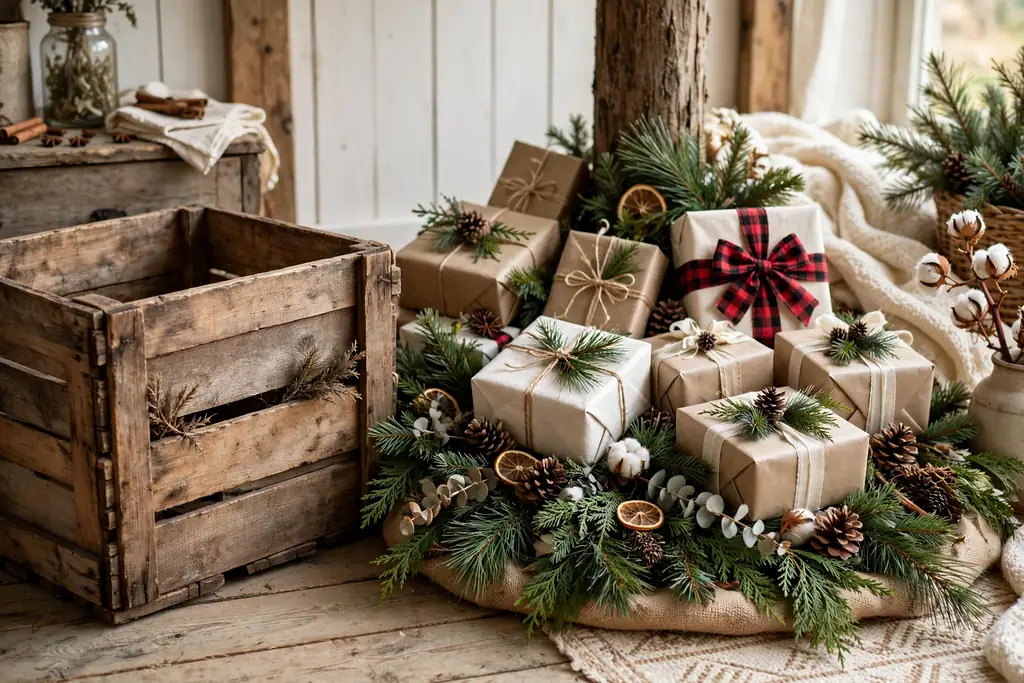
Set a low wooden crate beside the tree base, filled with a few wrapped gifts, pine branches, and pinecones, to finish the display at floor level. A crate display suits a farmhouse tree because it repeats the wood and greenery of the tree itself, and it gives the base a gathered look before gifts pile up. Keep the crate low and clear of walkways, so it does not trip guests.
Line the crate with a piece of fabric or paper if gifts will sit inside it, and keep the pine branches short so they do not brush against light cords. Check the crate for splinters and loose nails before bringing it indoors. At the end of the season, empty the crate and store it dry, with the pine branches composted and gifts removed.
Conclusion
Farmhouse Christmas tree decorations work best when natural materials lead and the palette stays small. Start with warm lights and one garland, add wood, fabric, metal, and dried fruit ornaments in a steady rhythm, then finish the base with a skirt, collar, basket, or crate that matches the room. Step back often, leave some green showing, and keep the topper in proportion to the tree. Choose the ideas that fit your tree and your home, and let the rest wait for another season.
FAQs
What are farmhouse Christmas tree decorations?
Farmhouse Christmas tree decorations are ornaments, garlands, toppers, and base treatments made from natural and rustic materials such as wood, burlap, plaid fabric, galvanized metal, pinecones, and dried fruit. They favor muted colors, simple shapes, and handmade textures over glitter and bright, formal finishes.
How do I decorate a farmhouse Christmas tree on a small budget?
Start with warm white lights, one garland such as burlap or wood beads, and a small set of wood slice, pinecone, and dried orange ornaments, which can be made or gathered at low cost. Add a plaid or burlap base treatment, then add one new ornament type each year rather than buying a full set at once.
What colors suit a farmhouse Christmas tree?
Muted, natural colors suit a farmhouse Christmas tree best, such as cream, sage, soft grey, brown, and muted red or gold, with plenty of green from the tree itself. Hold the palette to two or three colors plus wood tones, and repeat those colors in the garland, ornaments, and base so the tree looks settled.
What is the best topper for a farmhouse Christmas tree?
A galvanized metal star, a simple wood star, or a natural topper such as a pine and berry cluster suits a farmhouse Christmas tree, because each one uses a rustic material and a simple shape. Choose a topper in proportion to the tree, fix it firmly to the top stem, and keep the rest of the tree simple near the top so the topper stands out.
Should I use a tree skirt, a collar, or a basket for a farmhouse tree?
A tree skirt suits a soft, textile look, a galvanized collar suits a tidy, metal accented room, and a woven basket suits a room with other woven storage pieces. Choose one base treatment that matches the room and the topper, and check that it hides the stand fully and sits level before adding gifts.
How do I keep a farmhouse Christmas tree from looking cluttered?
Leave green showing between ornaments, use one garland and one base treatment, and repeat a small palette and a few textures rather than adding a new material at every branch. Step back after each layer, move ornaments from crowded spots to bare spots, and remove one item from any branch that looks full before adding another.