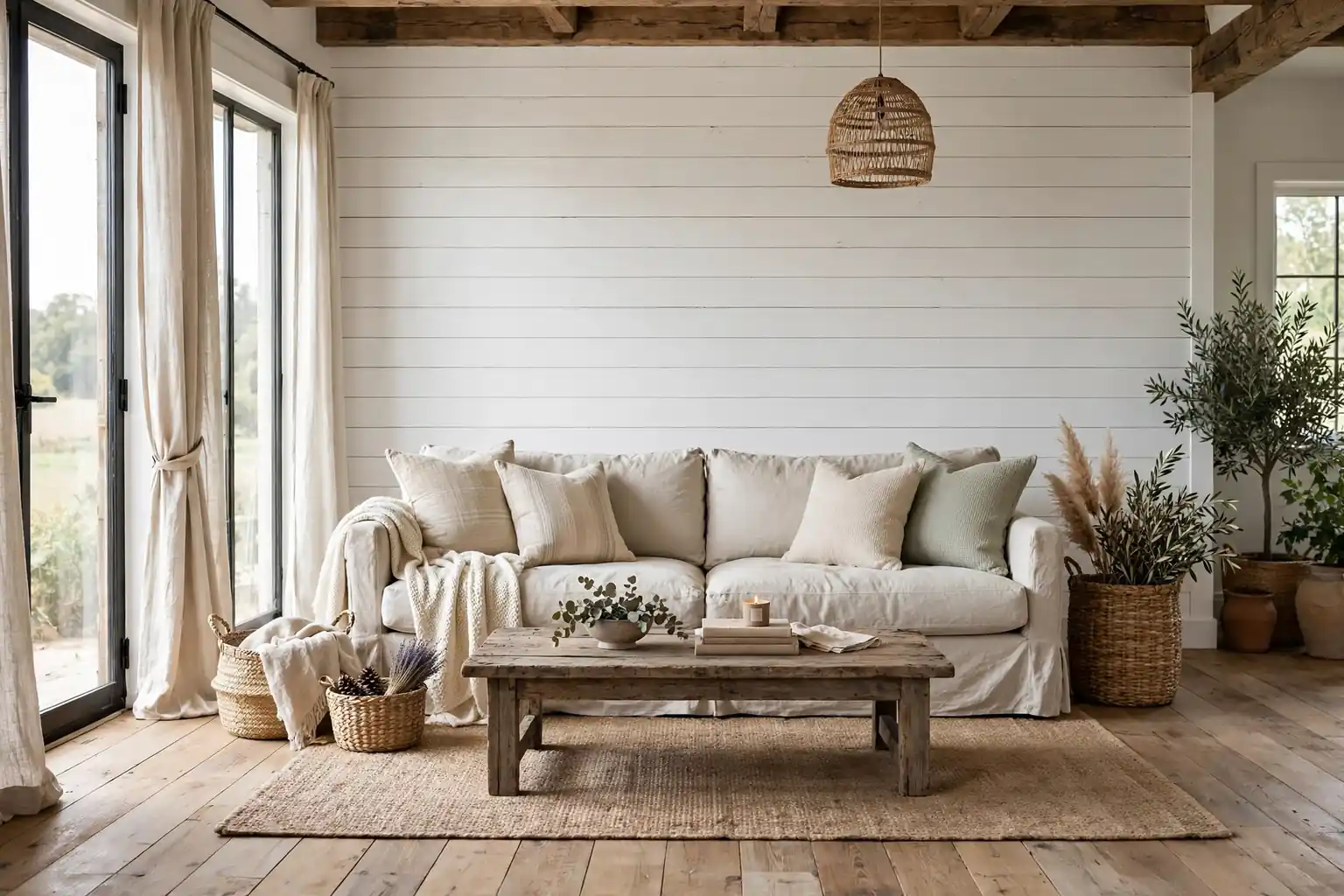
Farmhouse decor ideas for living room spaces work best when you mix warm wood, soft linen, and simple vintage touches with a calm neutral palette. Start with one large wood piece, add layered textiles, and finish with natural greenery and useful storage. The 19 ideas below show how to build that look without a full remodel.
Farmhouse style is less about a strict set of rules and more about a feeling: rooms that invite people to sit down, put their feet up, and stay a while. Keep the base calm, let wood grain and woven texture do most of the work, and add one or two older pieces so the room reads as collected over time rather than bought in one trip. Work through the ideas in order, from walls and seating to light, storage, and finishing touches.
Key Takeaways
- Start with a calm neutral base, then add warm wood, linen, and woven texture for the farmhouse feel.
- Choose one large wood anchor, such as a coffee table or mantel, and keep other wood tones close to it.
- Mix new and older pieces so the room feels collected, not matched set by set.
- Layer textiles in two or three patterns at most, and repeat one accent color through pillows, throws, and art.
- Use baskets, trays, and open shelves for storage that is useful and easy to reach.
- Finish with greenery, soft light, and one seasonal vignette so the room feels lived in all year.
1. Shiplap Accent Wall Behind the Sofa
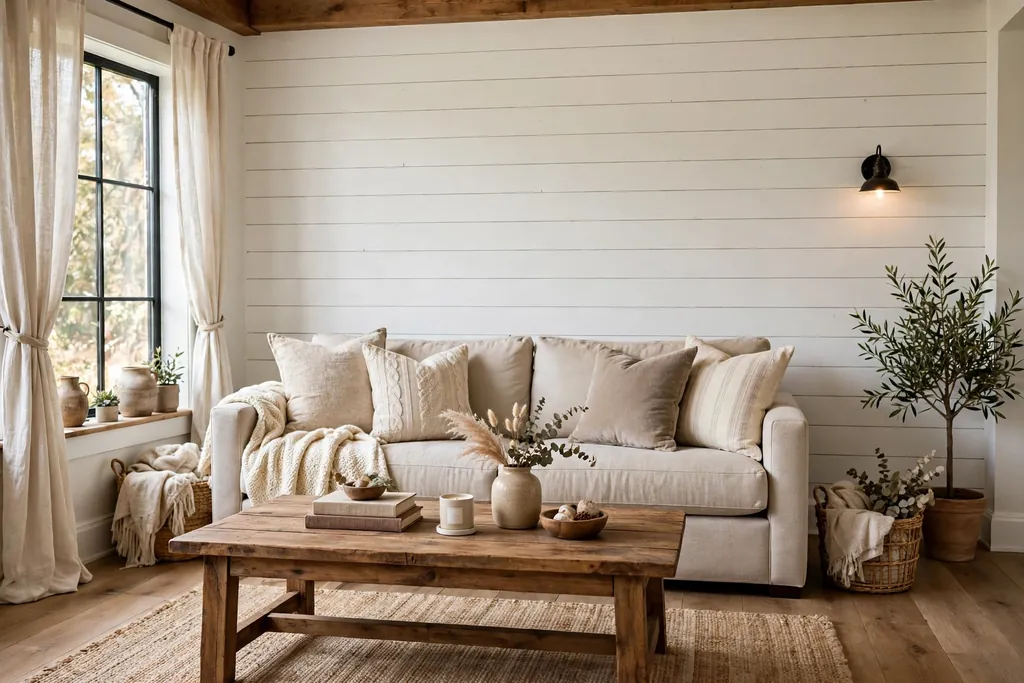
A shiplap wall behind the sofa gives a farmhouse living room its clearest backdrop, because the horizontal boards add texture without a loud color or pattern. Paint the boards white, cream, or a soft warm grey, and let the sofa, pillows, and art stand out against the lines. This works well on one wall only, so the room keeps a calm balance and the boards stay a feature rather than a wrap around the whole room.
Measure the wall first and plan where boards meet outlets, trim, and corners, since neat joins matter more than the board width. Keep the wall mostly clear apart from the sofa and one or two pieces of art, so the texture can be seen. If you rent, peel and stick boards or a single framed shiplap panel gives a similar look without a full wall build.
2. Slipcovered Sofa in Washed Linen
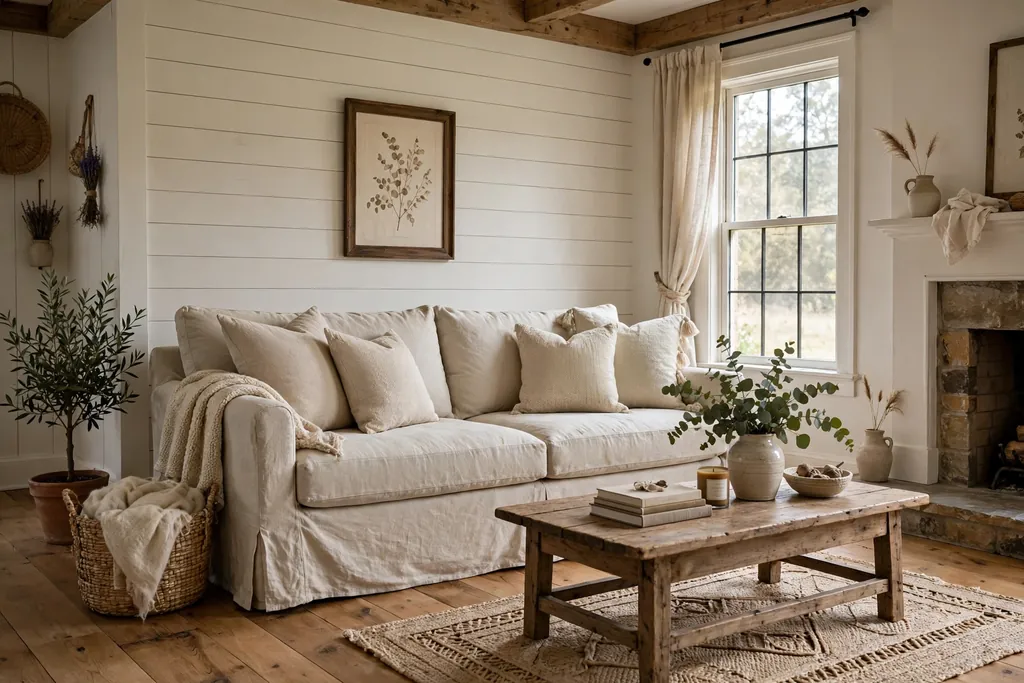
A slipcovered sofa in washed linen is the workhorse of a farmhouse living room, because it looks soft from day one and can be washed when life happens. Choose a natural white, oatmeal, or light grey cover, and let the relaxed wrinkles be part of the look rather than a flaw to iron away. The loose cover also suits families and pets, since a spare cover or a quick wash keeps the main seat fresh.
Pair the sofa with wood legs or a low wood frame peeking below the skirt, so the soft linen has a solid base. Add pillows in linen, cotton, and one checked pattern, and keep the sofa cushions plump by flipping and rotating them each week. If a full slipcover feels like too much, a washable throw over the seat and back gives a similar soft layer on an existing sofa.
3. Reclaimed Wood Coffee Table
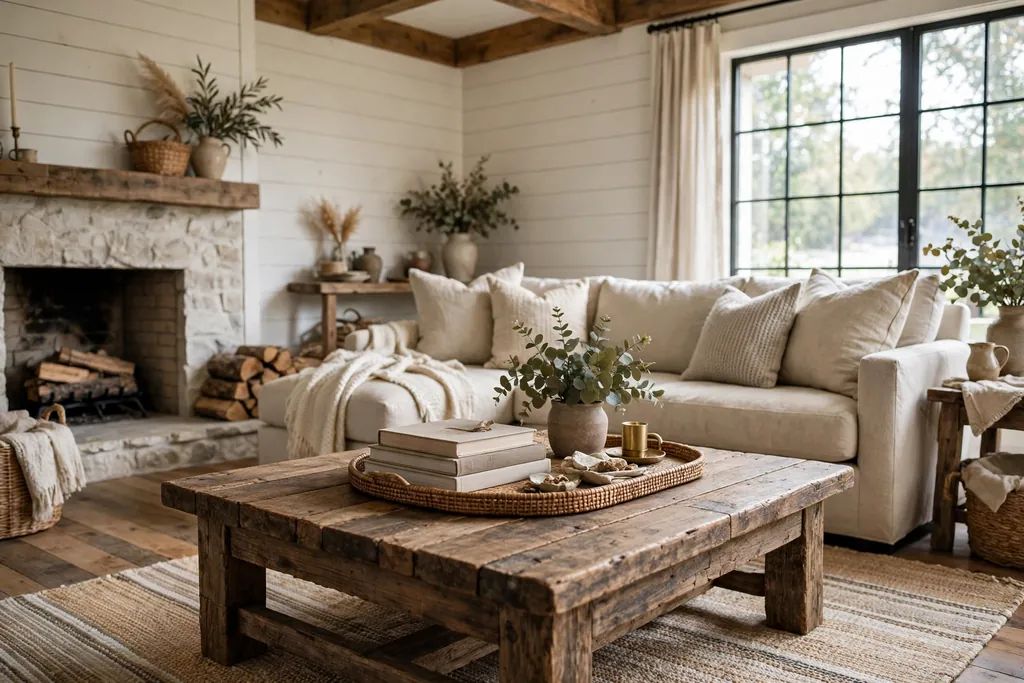
A reclaimed wood coffee table anchors a farmhouse living room with weight, grain, and a story in the surface. Look for a thick top with visible knots and a matte finish, on simple legs or a trestle base, so the table reads as sturdy rather than polished. The wood tone sets the guide for other wood in the room, from side tables to frames, so keep those tones within a close family.
Style the top with restraint: a tray for remotes, a stack of two or three books, and one small plant or candle. Leave clear space for cups and feet, since a coffee table must work as well as look good. Wipe the top with a dry cloth for dust and a damp cloth for spills, and use coasters under hot drinks so the finish stays even over time.
4. Lantern Pendants and a Wrought Iron Chandelier
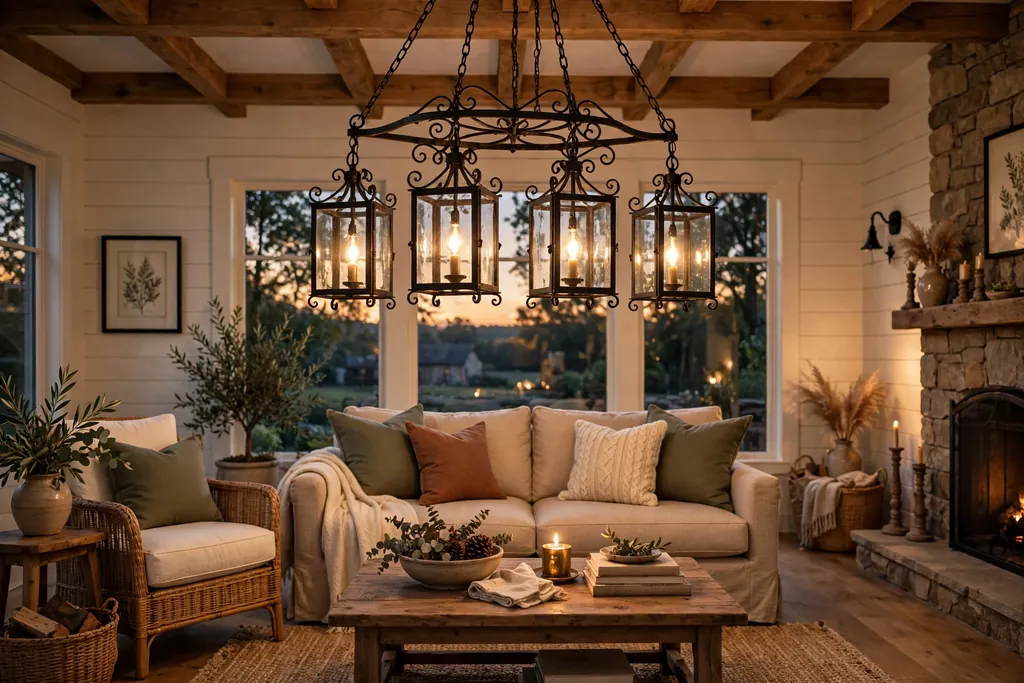
Lantern pendants and a wrought iron chandelier bring farmhouse light down to eye level, where it warms the seating area in the evening. Choose black or aged bronze metal with clear glass, so the bulb and the frame both show, and hang the fixture high enough to see across the room but low enough to feel close to the table or seating below. One strong fixture beats three small ones competing for attention.
Use warm white bulbs so wood, linen, and skin tones read warm rather than cold, and put the main light on a dimmer if your wiring allows it. Add table lamps with linen shades on side tables for a second, softer layer at night. Dust glass panes often, since lantern glass shows fingerprints and dust more than a solid shade.
5. Open Wood Shelves with Stoneware and Books
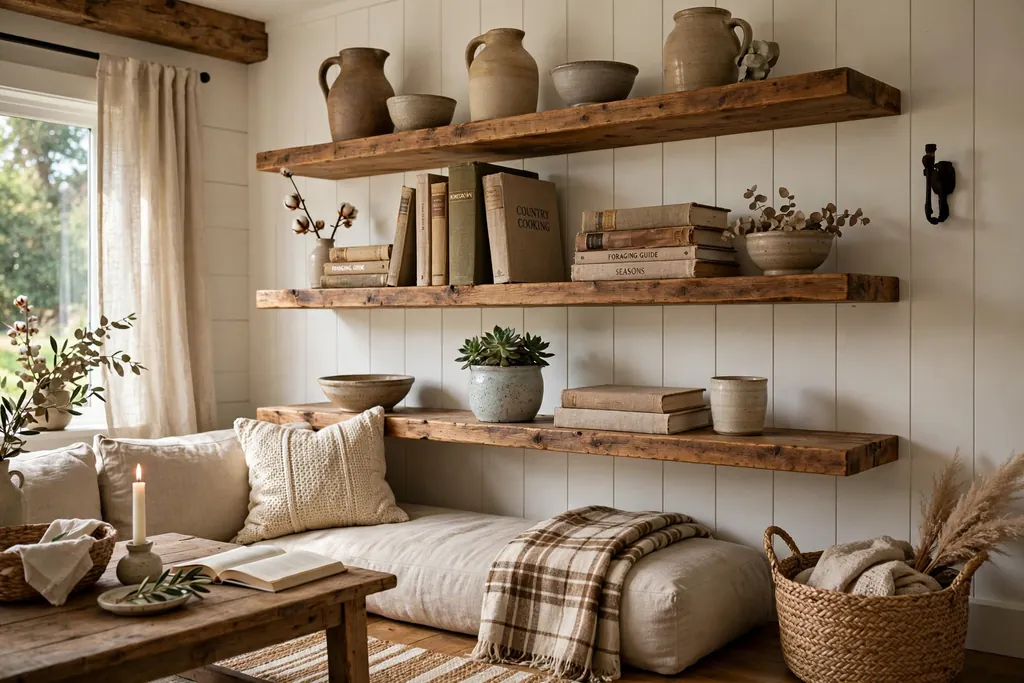
Open wood shelves on one living room wall give a farmhouse room a place to show stoneware, books, and small plants without a full cabinet build. Use two or three thick wood shelves on black brackets, and keep the wall to one run so the display stays calm. This idea works best when the shelves hold items you use and enjoy, such as bowls, vases, and well loved books, rather than a full collection.
Style each shelf with a mix of heights: a stack of books lying flat, a tall vase, and a small plant, with clear space between groups so the shelf reads as tidy. Keep the palette to cream, wood, sage, and one soft accent, and leave one shelf partly empty so the display can change with the seasons. Dust open shelves weekly, since open storage gathers dust faster than closed cabinets.
6. Vintage Ladder for Blankets and Throws
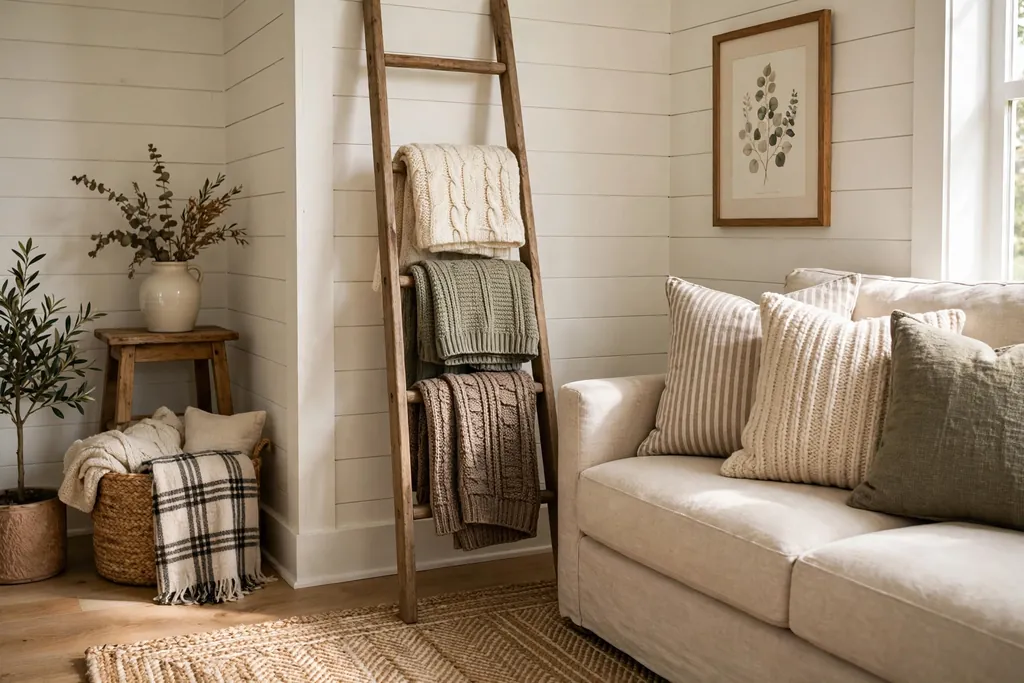
A vintage style wood ladder leaning against the wall turns blanket storage into farmhouse decor, and it keeps throws within reach on cold evenings. Choose a simple ladder in weathered wood or whitewash, tall enough to hold three or four folded throws without crowding the wall. Place it beside the sofa or near a reading chair, where someone can grab a blanket without crossing the room.
Fold throws in a mix of knit, cotton, and flannel, and hang them with the patterned edges showing so the ladder reads as a color strip on the wall. Keep the bottom rung clear of the floor vent or heater, and anchor the top to the wall if children or pets use the room. If floor space is tight, a shorter ladder on a console table gives the same idea in a smaller footprint.
7. Distressed Wood Mantel with Simple Styling
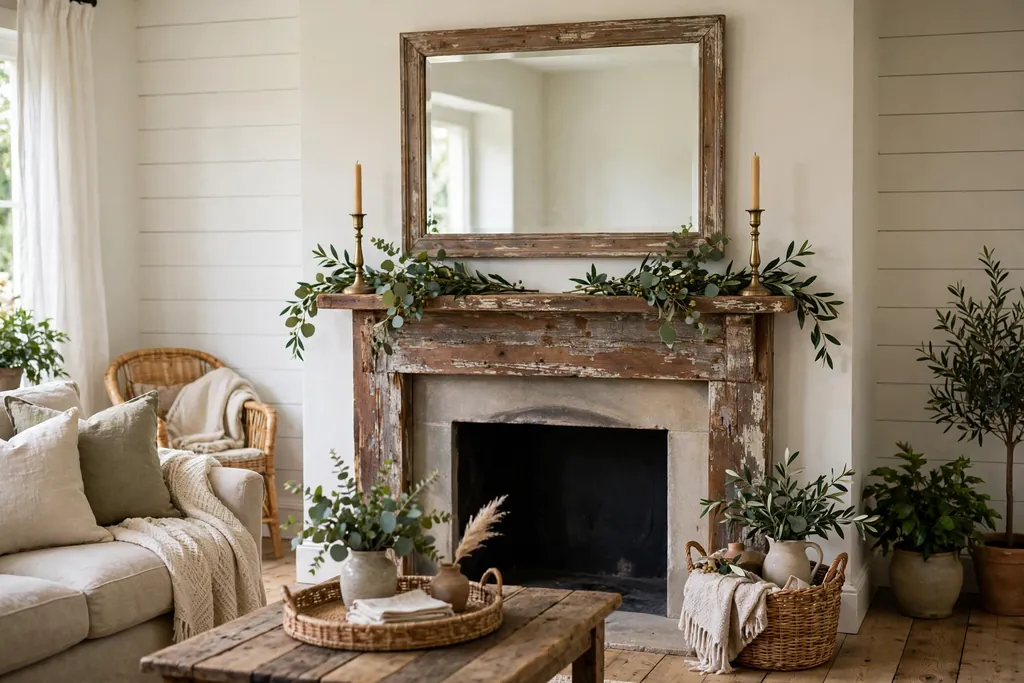
A distressed wood mantel gives a farmhouse living room a natural focal point, even when the fireplace is rarely lit. Keep the mantel styling simple: a large mirror or framed print above, a pair of candlesticks or vases at the ends, and one low garland or row of greenery in the middle. The wood beam itself carries most of the interest, so the objects on it can stay few and quiet.
If your room has no fireplace, a wood shelf mounted at mantel height on a plain wall gives the same ledge for seasonal styling. Keep anything flammable clear of the firebox, and check that candles sit on stable holders away from curtains. Change one item by season, such as a vase of stems in spring or pine in winter, so the mantel feels fresh without a full restyle.
8. Buffalo Check and Gingham Textiles
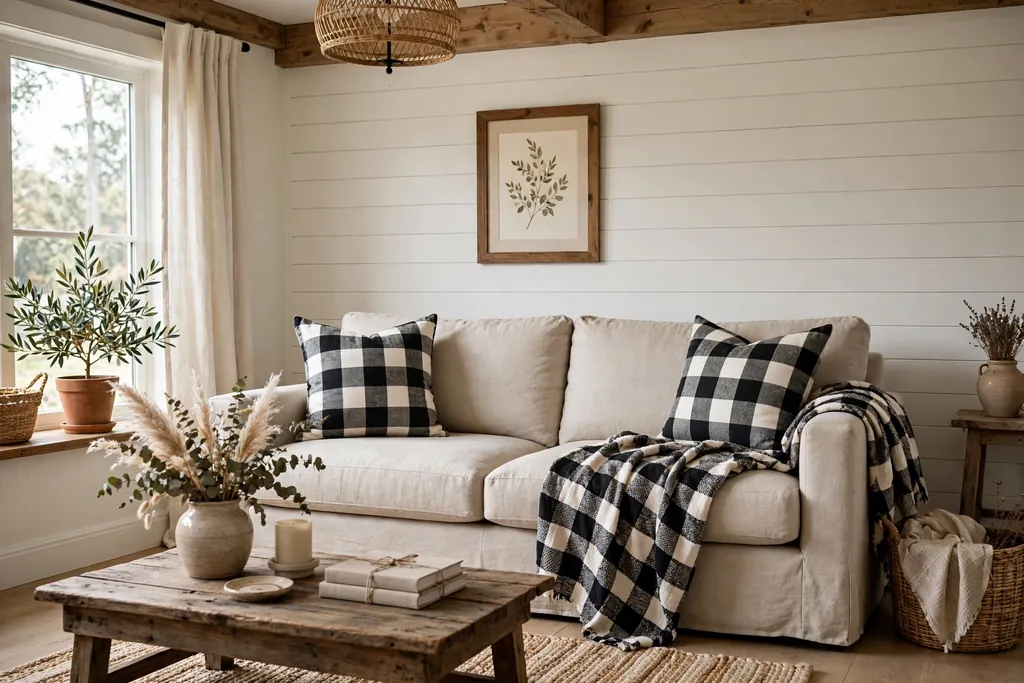
Buffalo check and gingham bring the classic farmhouse pattern into a living room in small, easy doses. Use the check on pillow covers, a throw, or a table runner, and keep the rest of the textiles plain linen or cotton so the pattern stays a clear accent. Black and white check reads bold and graphic, while red and cream or sage and cream checks feel softer and more traditional.
Limit the check to two or three pieces in one room, and repeat the same check color in at least two places, such as a pillow and a throw, so it looks planned. Wash pillow covers before first use, since new cotton can shrink, and keep checked fabric out of direct sun if the color matters to you. If a full check feels loud, a gingham pillow in a small scale gives the same farmhouse note more quietly.
9. Galvanized Metal Accents
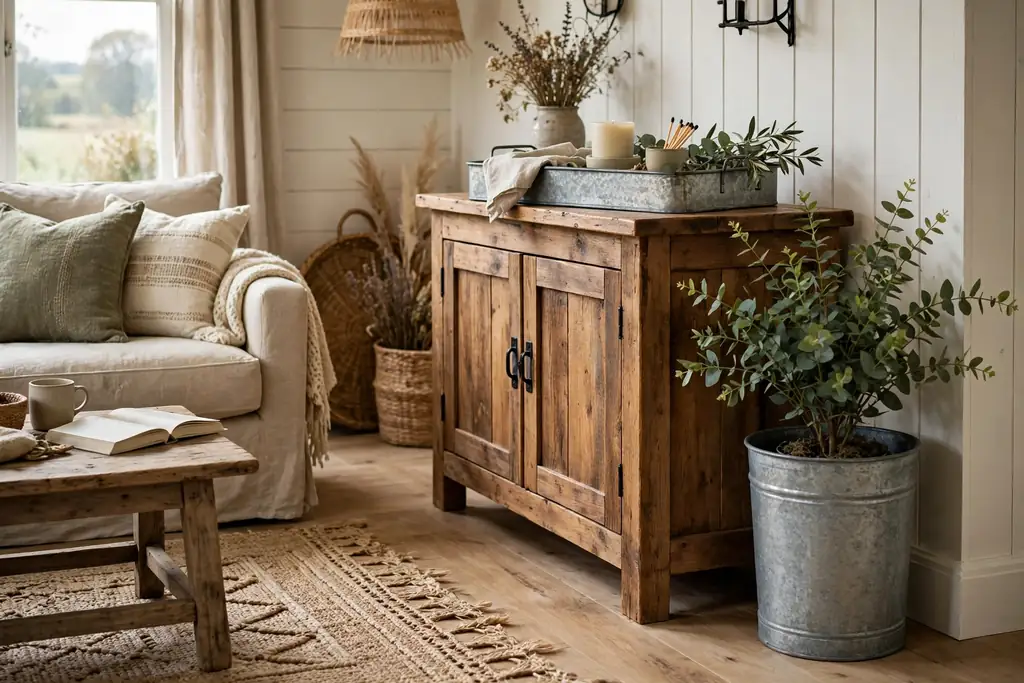
Galvanized metal adds a farmhouse note with a cool, utilitarian edge that balances warm wood and soft linen. Use it in small pieces: a tray on the coffee table, a planter for a large plant, a bucket for firewood or magazines, or a wall pocket for mail and small items. The dull silver finish suits rooms that already have black metal light fixtures or hardware, since the metals link across the room.
Keep galvanized pieces to two or three in one room, and pair them with wood or greenery so they do not read as cold. Wipe metal trays and buckets with a dry cloth, and line planters before adding soil so water does not sit against the metal. If the finish feels too industrial, a galvanized piece with a wood handle or a linen liner softens it at once.
10. Linen Curtains on Dark Wood Rods
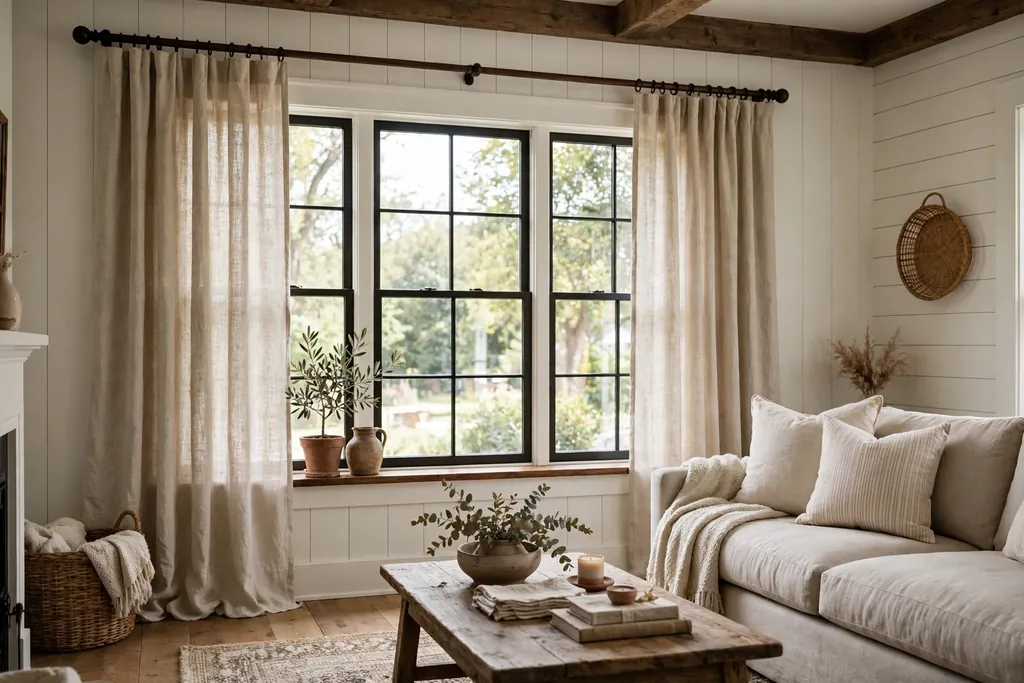
Linen curtains on dark wood rods soften farmhouse windows without blocking daylight. Choose curtains in natural white, oatmeal, or light grey, and hang the rod close to the ceiling and wider than the window frame, so the window looks taller and the curtains can stack clear of the glass. The linen weave filters light gently, which suits rooms with wood floors and pale walls.
Use curtain rings with clips for a relaxed gathered look, and let the curtains fall to the floor with a small break rather than pooling, so they stay clean and easy to vacuum around. Pair the rods with wood furniture in a similar tone, and keep the curtain color close to the sofa or rug so the window treatment links to the seating area. Wash linen curtains on a gentle cycle and hang them damp to reduce creases.
11. Rustic Console Table with Basket Storage
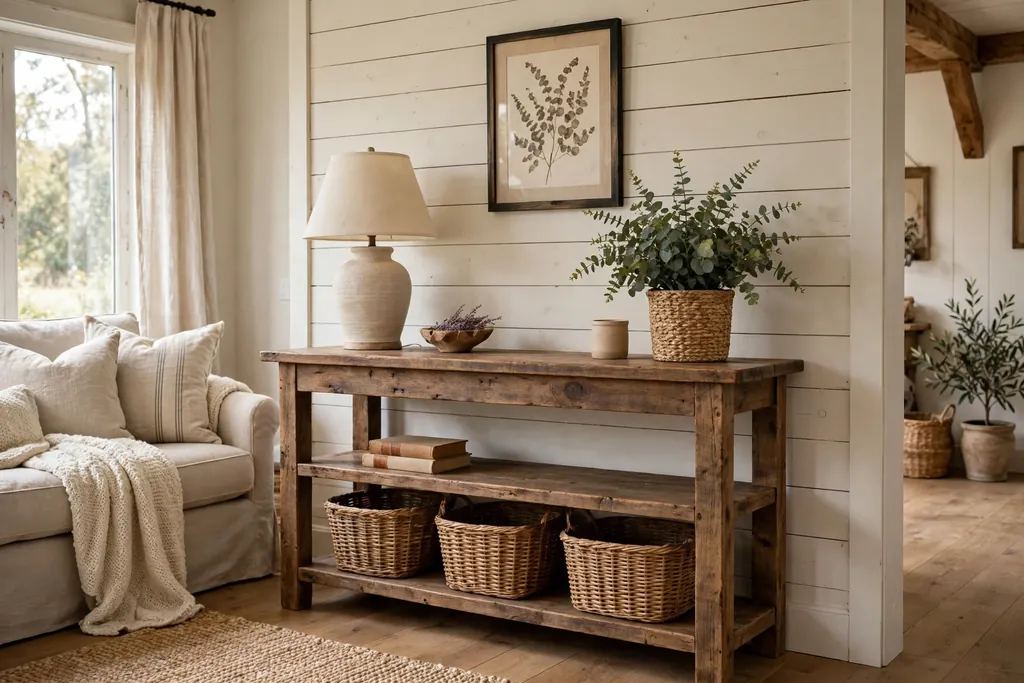
A rustic console table behind the sofa or against a living room wall gives a farmhouse room a work surface and hidden storage in one piece. Choose a wood console with a lower shelf, and slide two or three woven baskets underneath for toys, chargers, magazines, and board games. The baskets keep daily clutter out of sight while the tabletop stays clear for a lamp, a plant, and one stack of books.
Style the top with a lamp at one end for evening light and a tray in the middle to group small items. Label baskets only if the household needs it, and keep one basket empty for quick tidy ups before guests arrive. Measure the console depth first, since a table that sticks too far into a walkway will get bumped daily.
12. Cotton Stems and Dried Florals in a Stoneware Crock
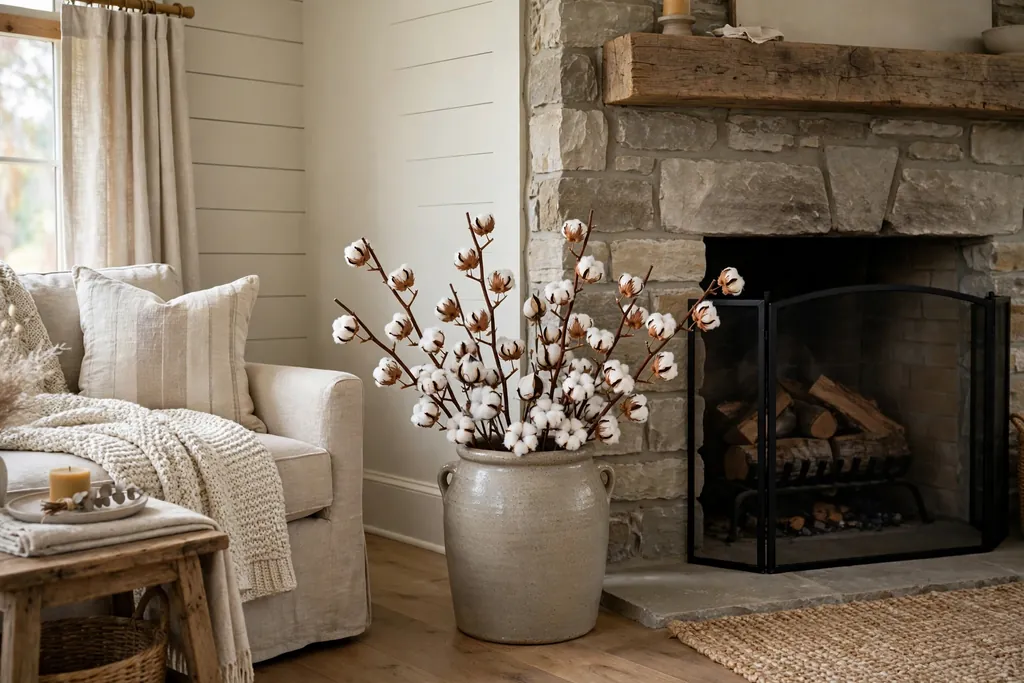
Cotton stems and dried florals in a stoneware crock bring a farmhouse living room to life without weekly flower care. Choose a tall cream, grey, or speckled crock, and fill it with a loose bunch of cotton stems, dried lavender, or wheat, trimmed so the arrangement sits just above the crock rim. Place the crock on the floor beside the fireplace, on a side table, or on the mantel where it can be seen from the sofa.
Keep the stems to one or two types in one crock, so the arrangement reads as simple rather than busy. Dust dried stems gently with a dry cloth or a cool hair dryer, and keep them away from open flames and direct sun, which fades color over time. Swap the stems by season for a low cost refresh, such as wheat in autumn and eucalyptus in winter.
13. Woven Baskets for Everyday Storage
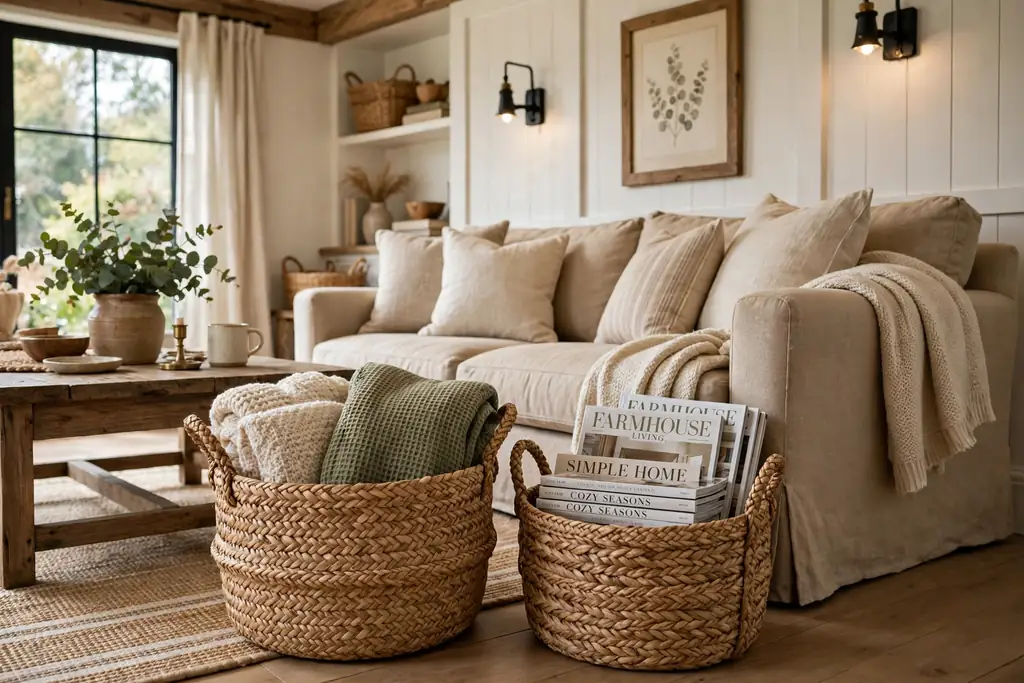
Woven baskets are the quiet storage hero of a farmhouse living room, because they hold real clutter and still look like decor. Use a large seagrass basket for throws, a medium basket for toys or magazines, and a small basket on a shelf for remotes and chargers. The woven texture adds warmth beside wood and linen, and the natural color works with almost any neutral palette.
Place baskets where the clutter actually happens: beside the sofa for throws, near the television for remotes, and by the door for shoes or bags. Choose baskets with handles for pieces that move often, and line baskets used for plants or damp items. Shake baskets outside monthly, since woven fibers gather dust and crumbs, and replace a basket when the weave starts to fray at the rim.
14. Calm Neutral Palette with Sage and Cream Layers
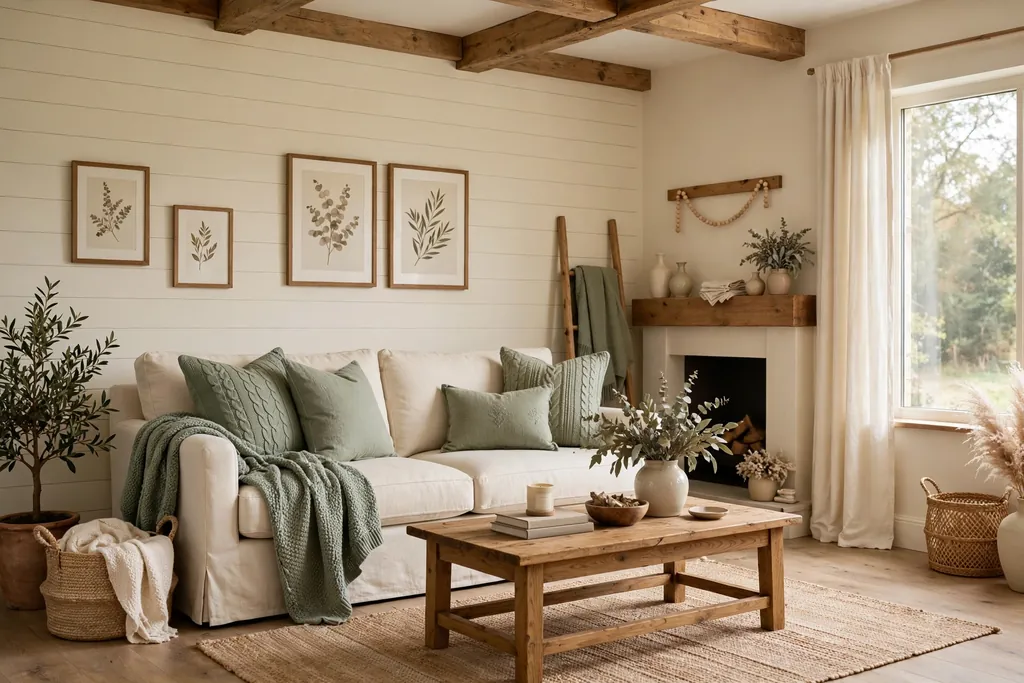
A calm neutral palette with sage and cream layers keeps a farmhouse living room restful while still giving it color. Start with cream walls and a natural sofa, then add sage through pillows, a throw, and one piece of art, and warm the room with wood and woven texture. Sage suits farmhouse rooms because it links to greenery outside and to the garden tones used in other farmhouse touches.
Repeat sage in at least three places, such as a pillow, a throw, and a plant pot, so the color reads as a thread rather than a single item. Keep the rest of the palette to cream, oatmeal, and wood tones, and avoid adding a second strong color in the same room. Test sage fabric beside your wall color in daylight and evening light, since green shifts a lot under warm bulbs.
15. Vintage Finds: Mirror, Clock, and Flea Market Art
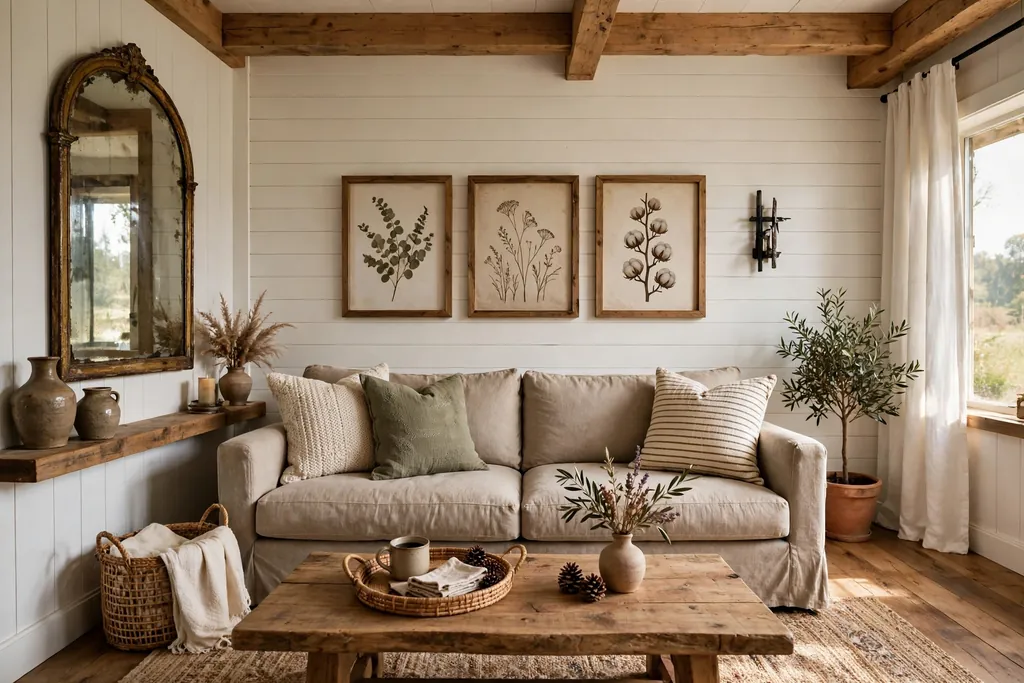
Vintage finds give a farmhouse living room a sense of history that new pieces alone cannot copy. Look for one large piece, such as an arched mirror, a wall clock with a wood frame, or a framed landscape print, and let it anchor one wall. The wear, patina, and older frame tell a story, and they pair well with new linen and wood because the contrast keeps the room from feeling like a showroom.
Hang vintage art at eye level from the sofa, and keep the wall around it simple so the piece can be seen. Check older mirrors and frames for secure hanging wire and wall fixings before hanging, since vintage pieces can be heavier than they look. If flea market shopping is new to you, start with one piece you truly like, live with it for a month, and then decide what second piece the room still needs.
16. Cozy Reading Nook with an Armchair
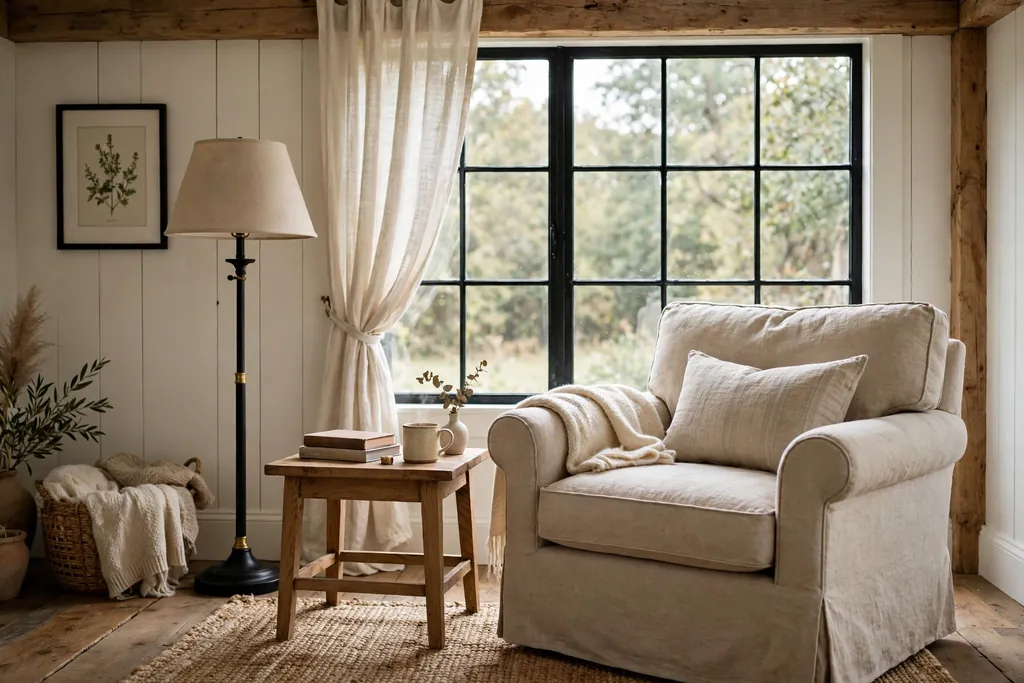
A cozy reading nook turns one farmhouse living room corner into a daily retreat. Place a deep armchair near a window, add a small wood side table for a book and a cup, and finish with a floor lamp that throws light over the shoulder for reading. A soft throw over the chair arm and a basket for books beside the chair complete the corner without a full furniture build.
Choose an armchair in linen, cotton, or a soft plaid, and keep the seat depth generous so legs can tuck up comfortably. Keep the nook clear of the main television view, so it feels like a separate place even inside an open room. If space is tight, a single chair with a wall mounted light and a small shelf gives the same reading spot in a narrow corner.
17. Layered Rugs: Jute Base with a Patterned Top Rug
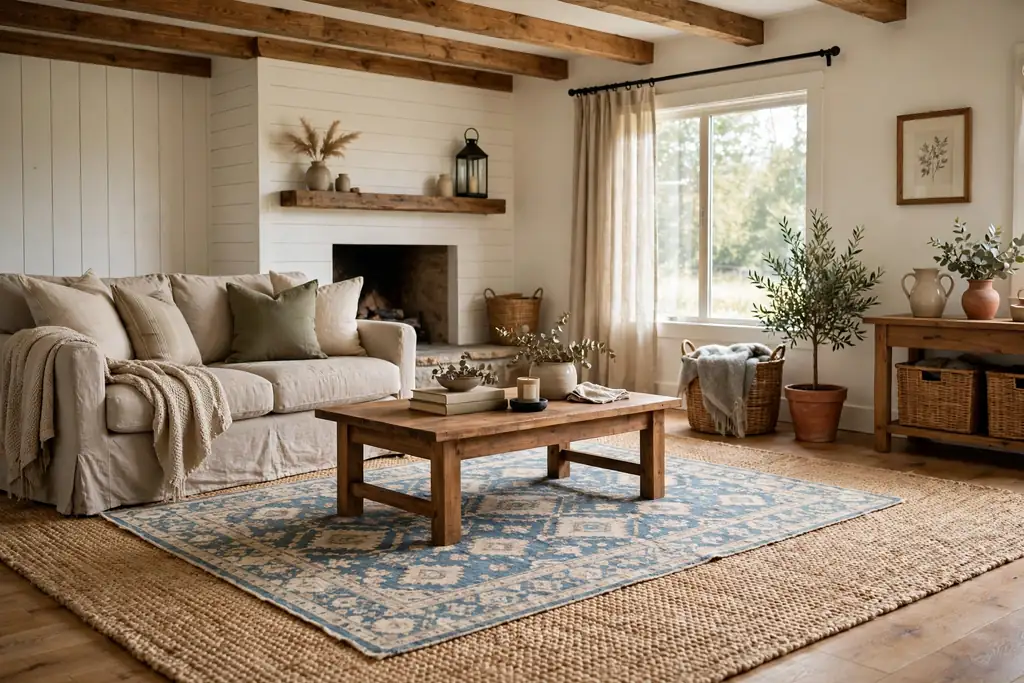
Layered rugs give a farmhouse living room warmth underfoot and a clear zone for the seating group. Start with a large natural jute rug as the base, then layer a smaller patterned rug on top, such as a soft stripe, a faded floral, or a simple geometric print. The jute adds texture and size, while the top rug adds color and softness where feet actually land.
Size the base rug so the front legs of the sofa and chairs sit on it, and center the top rug under the coffee table. Use a rug pad under both layers so the top rug does not slip, and vacuum jute with a suction only setting to protect the fibers. Shake the top rug outside monthly, and rotate both rugs each season so wear stays even across the room.
18. Wood Beam Accents on the Ceiling
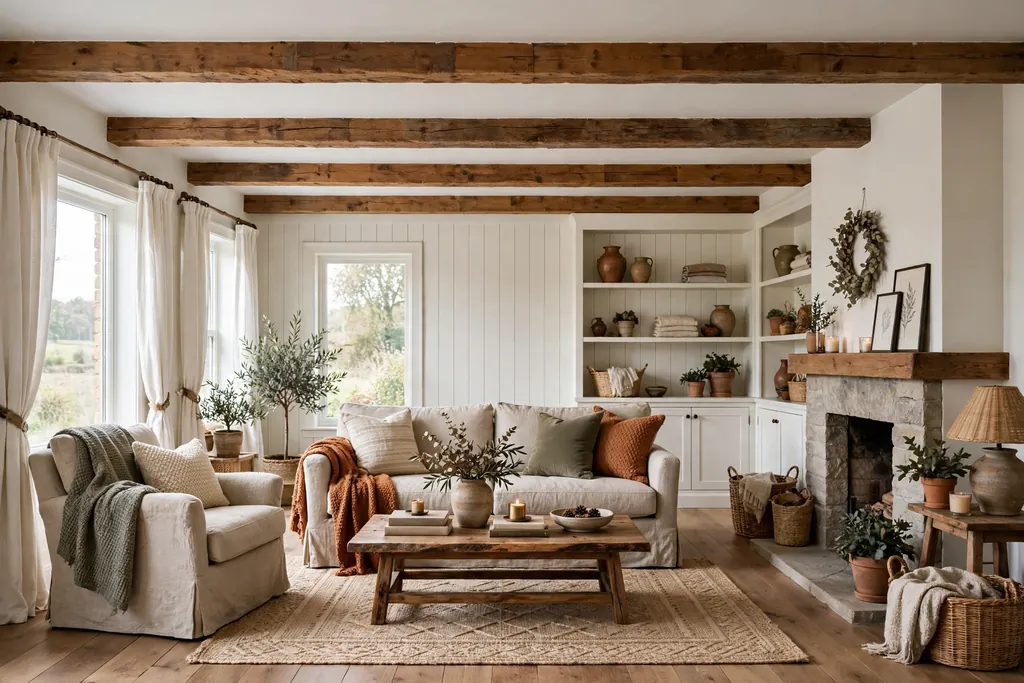
Wood beam accents on the ceiling draw the eye up and give a farmhouse living room the feel of an older home, even in a newer build. Use real wood beams where the ceiling structure allows it, or lightweight faux beams in a wood look where weight or budget rules out solid wood. Stain the beams in a warm mid brown that sits close to the coffee table or floor tone, so the ceiling links to the furniture below.
Space beams evenly across the ceiling and keep them clear of ceiling fans, lights, and vents, since neat spacing matters more than beam count. Paint the ceiling between beams white or cream, so the wood stands out against a light background. Dust beams with a long handled duster, and check that any faux beam fixings are secure before hanging anything from them.
19. Seasonal Farmhouse Vignette on a Tray or Side Table
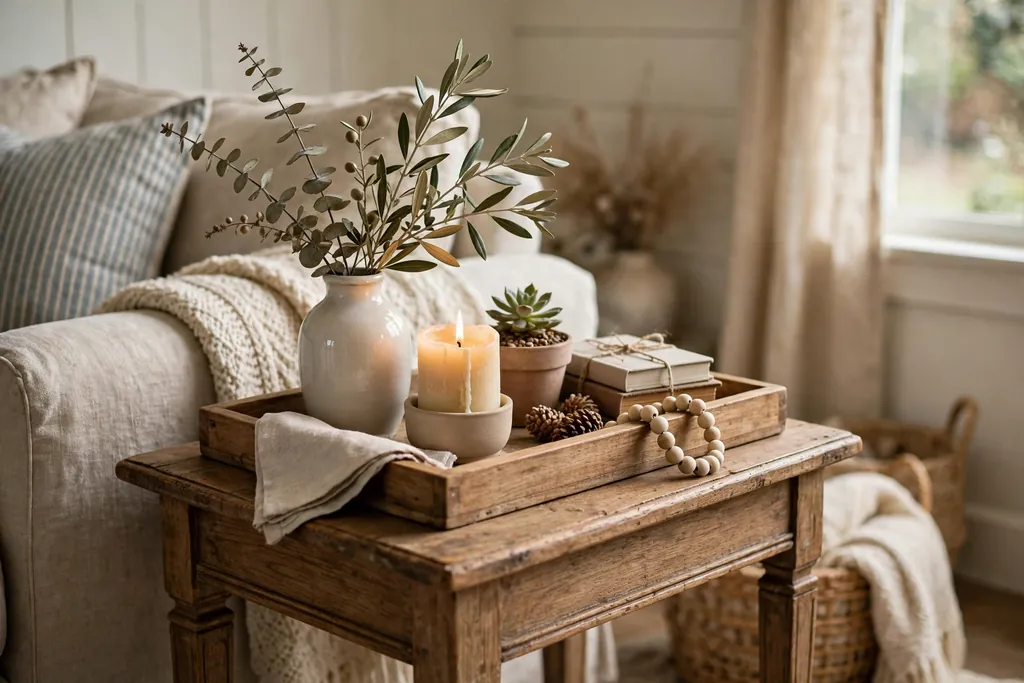
A seasonal farmhouse vignette on a tray or side table lets the living room change through the year without restyling the whole room. Start with a wood tray as the base, add one tall piece such as a vase or candle, one low piece such as a small plant or stack of books, and one seasonal item such as pinecones in winter or a bowl of lemons in summer. The tray groups the pieces so the vignette reads as one display, and it lifts away in one move for cleaning.
Keep the vignette to three or four pieces, and repeat one material from the room, such as wood or stoneware, so it links to the larger space. Change only the seasonal item each time, and keep the tray and tall piece in place, so the refresh takes minutes rather than an afternoon. Store out of season items in one labeled basket, so next season starts with a clear choice rather than a search.
Conclusion
Farmhouse living room decor works when the base stays calm, the wood stays warm, and the textiles stay soft enough for daily life. Start with the wall and sofa, add one strong wood piece and one good light fixture, then layer in baskets, linen, and greenery in that order. Small moves, such as a ladder for throws, a tray vignette, or a new set of pillow covers, let you test the look before a larger change, and they suit renters as well as owners. Keep the palette to cream, sage, and wood tones, repeat one accent through the room, and leave clear space on tables and shelves so the room feels calm rather than crowded. Save this list, pick the three ideas that fix your biggest frustrations first, and build the rest of the room around them over time.
FAQs
What is farmhouse living room decor?
Farmhouse living room decor is a warm, casual style built on natural wood, soft linen, woven texture, and simple vintage touches in a calm neutral palette. It favors comfortable seating, useful storage such as baskets and open shelves, and natural greenery over formal or glossy finishes. The look works in both older homes and newer builds, since the key pieces are wood, linen, and texture rather than a specific house age.
What colors work best in a farmhouse living room?
Cream, oatmeal, soft white, warm grey, and sage work best, because they keep the room calm and let wood grain and woven texture stand out. Add one soft accent, such as sage, dusty blue, or muted red, through pillows and throws, and repeat it in two or three places so it reads as planned. Avoid adding several strong colors at once, since a calm base is what keeps a farmhouse room feeling restful.
How do I make a small living room look farmhouse without clutter?
Choose a light neutral base, one wood anchor such as a coffee table, and storage that hides clutter, such as baskets under a console table and a ladder for throws. Keep open shelves to one short run, limit the check pattern to two pieces, and leave clear space on tables and shelves so the room can breathe. A mirror above the mantel or sofa also helps a small room feel larger by reflecting light across the space.
Can farmhouse decor work with a modern sofa or television?
Yes, if you balance the modern pieces with warm wood, linen, and texture around them. A simple modern sofa in a neutral fabric works well with a wood coffee table, woven baskets, and linen curtains, while a television looks calmer mounted above a wood console or flanked by open shelves. Keep the modern pieces in plain, quiet finishes, and let the farmhouse layers carry the character of the room.
What is the easiest farmhouse living room idea to start with?
Start with textiles and storage, since they need no building work and change the room at once. Swap pillow covers to linen and one check pattern, add a throw on the sofa, place a woven basket beside the sofa, and style a tray on the coffee table. Those four moves cost less than a furniture change, take under an hour, and show whether you want a bolder farmhouse look or a softer version of it.
How do I keep a farmhouse living room from looking dated?
Keep the base timeless and change only the small layers by season. Choose cream walls, a neutral sofa, and wood in a mid tone rather than a trendy finish, and avoid filling every surface with themed objects. Swap pillow covers, stems, and one vignette item through the year, and keep one or two vintage pieces rather than a full set, so the room reads as collected and current rather than themed.