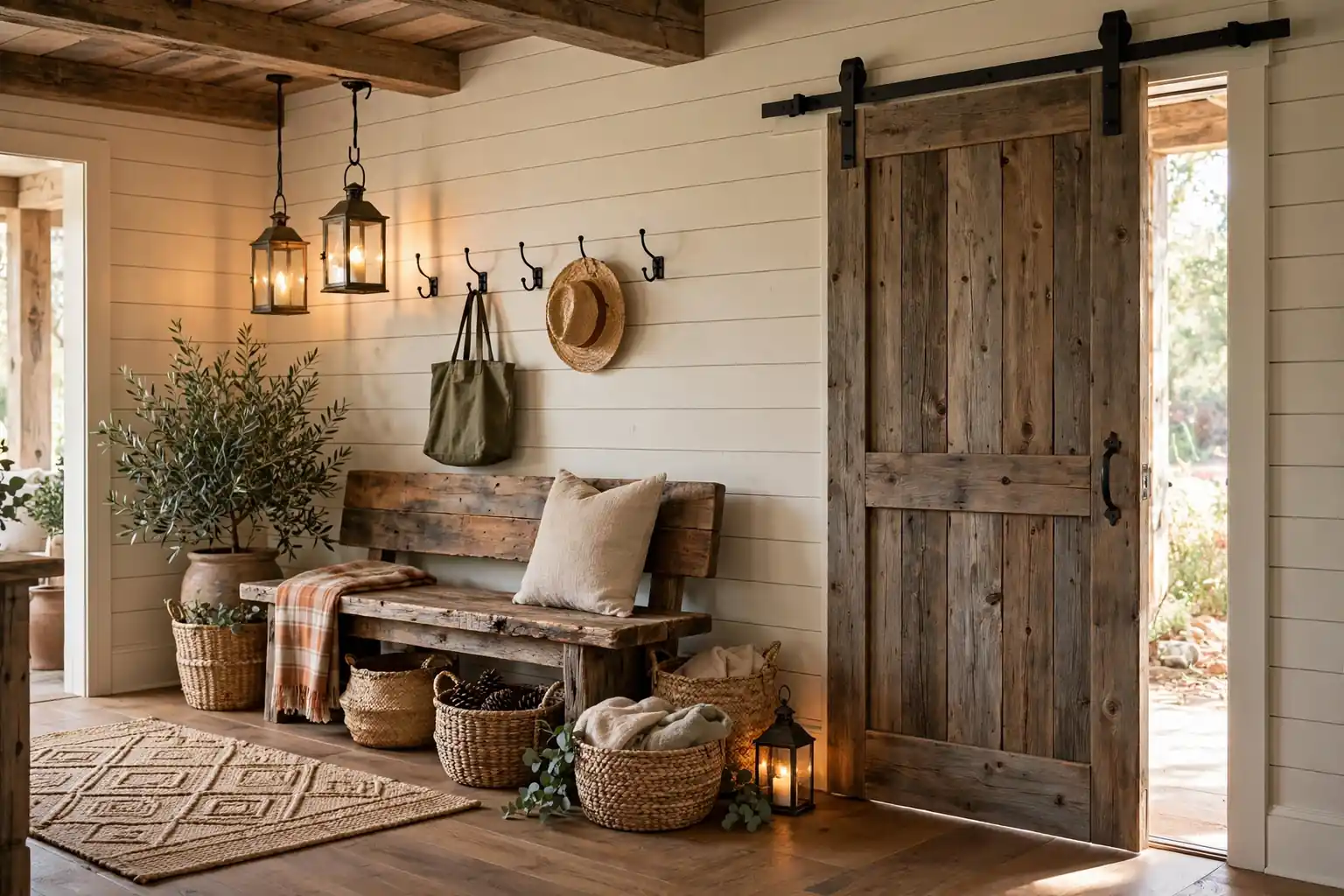
A rustic entryway sets a warm, relaxed tone the moment you walk in, and it does not need a large hall or a full remodel to work. Wood grain, woven texture, iron hardware, and soft light can shape a small apartment landing just as well as a wide farmhouse mudroom, as long as each piece has a clear job. These 22 rustic entryway ideas cover benches, hooks, storage, lighting, and wall detail for homes of every size, so you can start with one change and add more over time. Measure your wall and floor first, keep the walkway clear, and pick the idea that solves your most used spot at the door.
Key Takeaways
- Start with one clear job at the door: a seat, a hook, a shoe spot, and a key spot cover most daily needs.
- Repeat two or three materials, such as warm wood, black iron, and woven fiber, so small pieces read as one planned entry.
- Keep the walkway clear by using wall space and shallow furniture, especially in a narrow entry or apartment landing.
- Choose closed or basket storage for shoes and gear, and open storage only for items that stay tidy on view.
- Use warm, low light at entry height, since harsh overhead light can make wood and stone look cold.
- Add one strong rustic feature per entry, such as a bench, a barn door, or a plank wall, and keep nearby surfaces quiet.
1. Set a Reclaimed Wood Bench With Shoe Storage Below
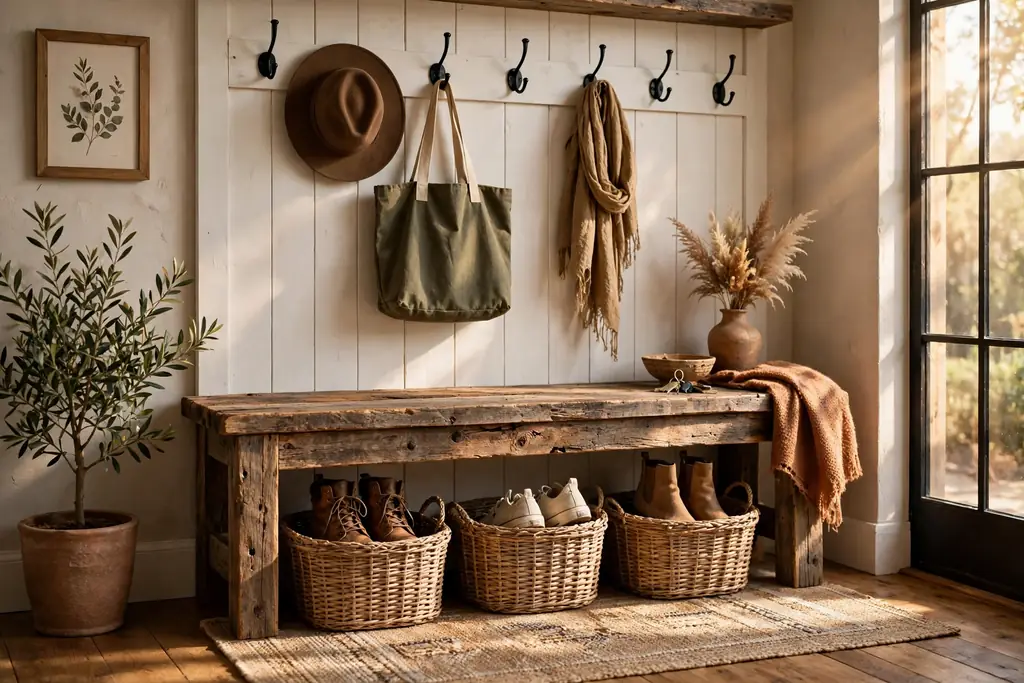
A reclaimed wood bench gives the entry a seat for putting shoes on and a sturdy base for baskets below. The aged grain brings rustic character at once, while the open space under the seat keeps shoes off the walkway. This suits a family entry, a farmhouse hall, or any home where shoes pile by the door each evening.
Keep the bench shallow enough to leave a clear path past it, and limit the baskets below to one pair of daily shoes per person. Choose a cushion in a washable cover for comfort, and wipe the bench and baskets often, since entry storage collects dirt fast. Anchor a tall bench to the wall if it could tip, and keep the top mostly clear so the bench stays ready to sit on.
2. Hang a Sliding Barn Door on the Entry Closet
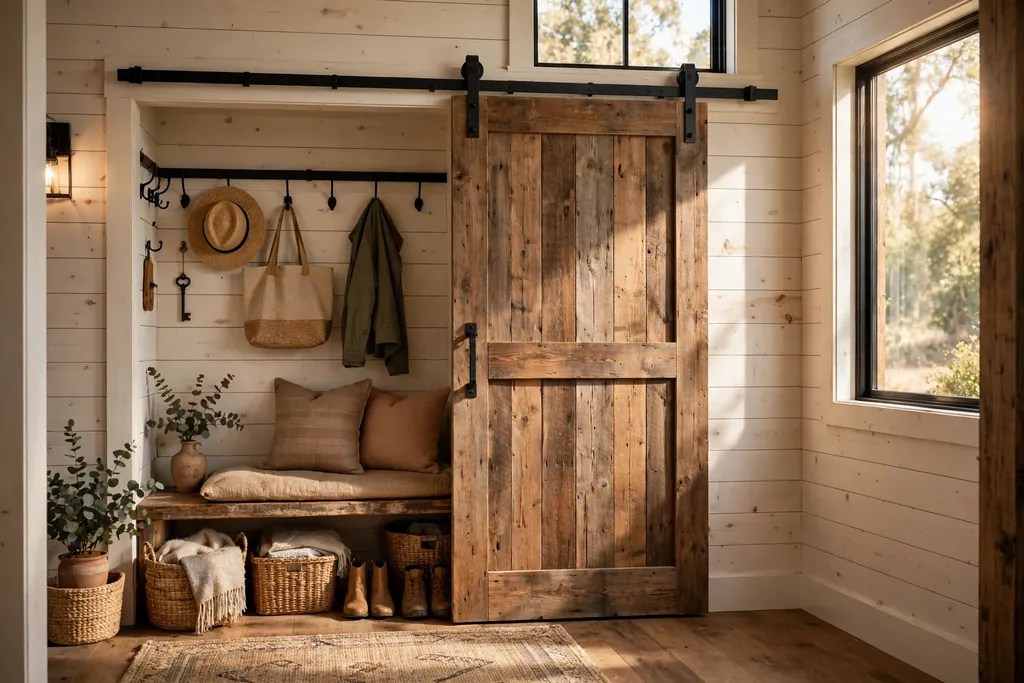
A sliding barn door in warm wood with black iron hardware turns a plain entry closet into a rustic feature and saves the swing space of a hinged door. This suits an entry where a standard door feels plain, or where floor space is tight beside a coat closet. The door also adds wood at a height that balances a bench or console below it.
Check that the wall above the opening can take the rail, and that the door can slide fully clear of the opening without hitting a light switch or a vent. Keep the door tone close to other wood in the entry, and use soft close hardware if the door will be used at night. Leave the wall beside the door mostly plain, so the door reads as a feature rather than one more busy surface.
3. Place a Live Edge Console Table as a Landing Spot
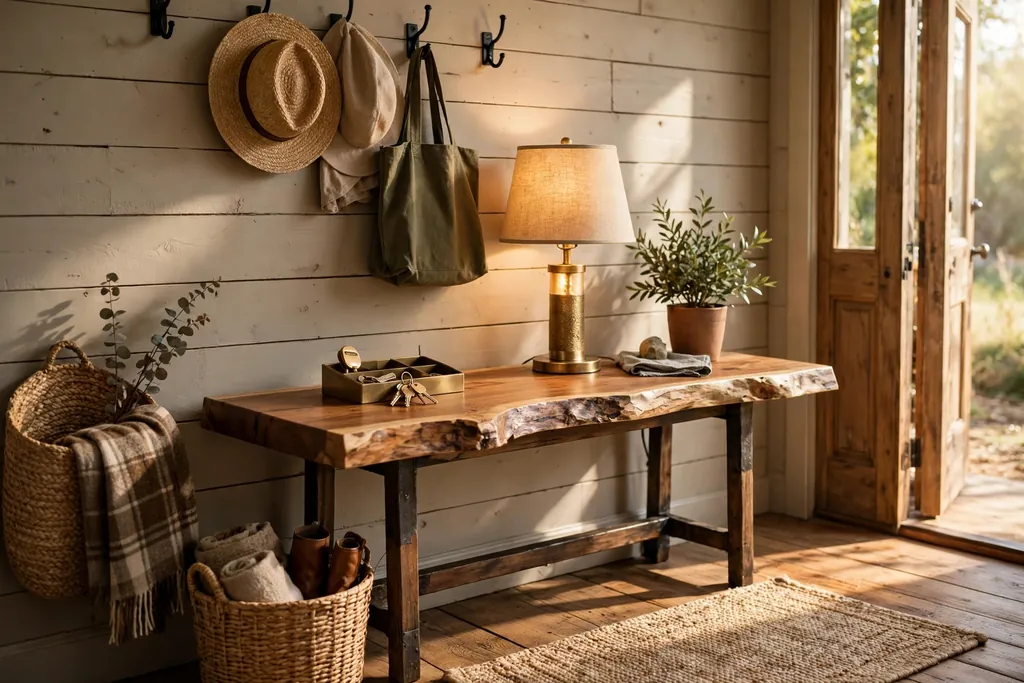
A live edge console table keeps one natural wood edge visible, so the table itself becomes a talking point in a rustic entry. The slab top shows grain and knots, while simple black metal legs keep the look grounded. Use it as a landing spot for keys, mail, and a small lamp, and keep the depth shallow so the walkway stays open.
Keep the top to three items at most: a tray or bowl for keys, one lamp or candle, and one small plant or vase. Seal the top as the maker advises, and use coasters under drinks, since a natural wood top shows rings. If the entry is narrow, choose a console no deeper than a dinner plate is wide, and check that it does not block a door swing.
4. Fix a Wrought Iron Peg Rail for Coats and Bags
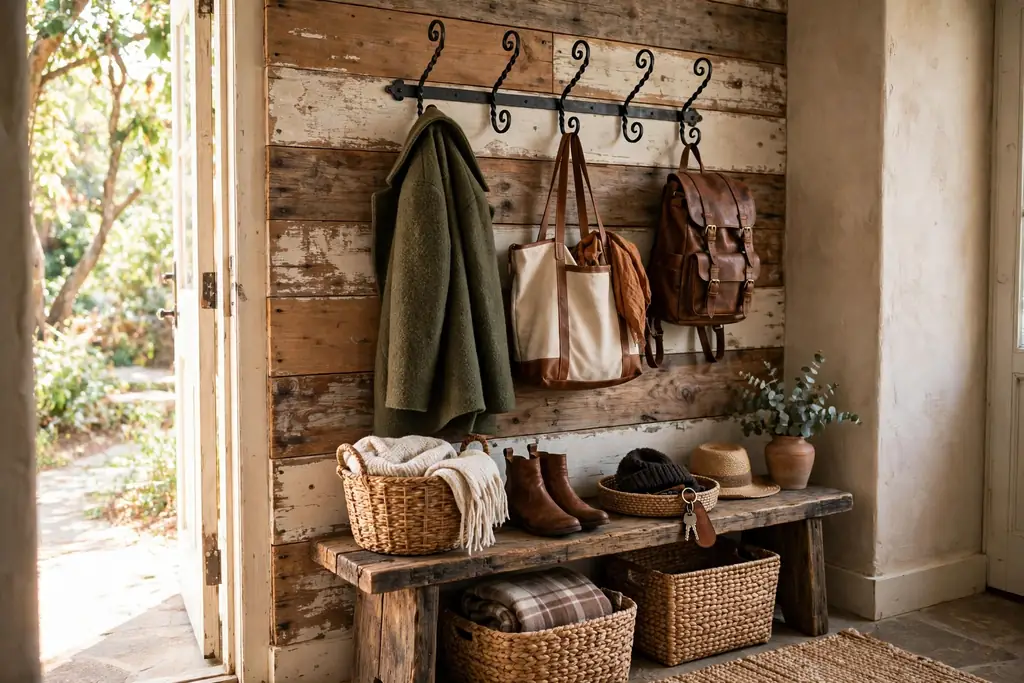
A wrought iron peg rail along the entry wall gives coats, bags, and hats a fixed home without taking any floor space. The dark iron suits reclaimed wood and stone, and it reads as rustic even in a small, plain entry. Space the pegs wide enough that a coat on one peg does not cover the next.
Fix the rail into studs so it holds a wet coat and a heavy tote without pulling loose. Keep one peg free for guests, and move out of season coats to a closet so the rail never fills up completely. If you also need a bench, place the rail above it at a height that lets coats hang clear of the seat.
5. Add a Reclaimed Plank Wall Behind the Bench
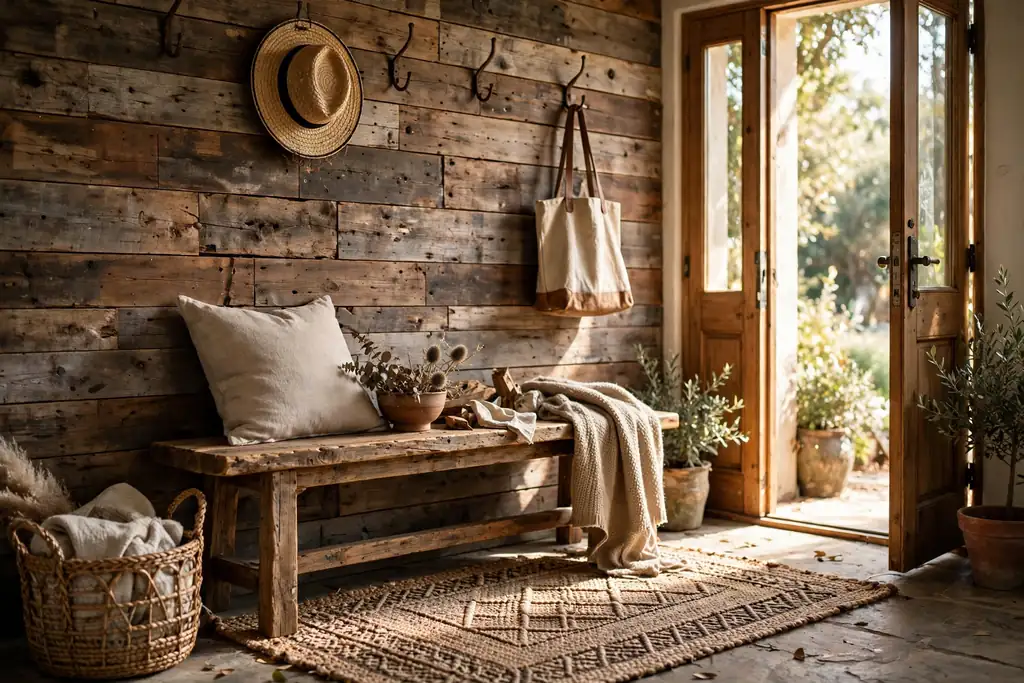
A reclaimed plank wall behind a bench or console gives a rustic entry a clear focal point, even before you change the furniture. Mixed grain and soft tone variation add texture to a plain wall, and the wood suits a linen cushion, a leather bag, and an iron hook alike. Use the wall behind the main entry piece, and keep the other walls warm white so the wood stays the feature.
Check that the boards are clean, dry, and free of old nails before fixing them, and use fixings suited to your wall type. If a full wall feels like too much, try wood panels to picture rail height behind a low bench instead. Pair the wall with plain cushions and a simple rug, so the texture of the wood can show without competing with pattern.
6. Sort Shoes and Gear Into Woven Baskets
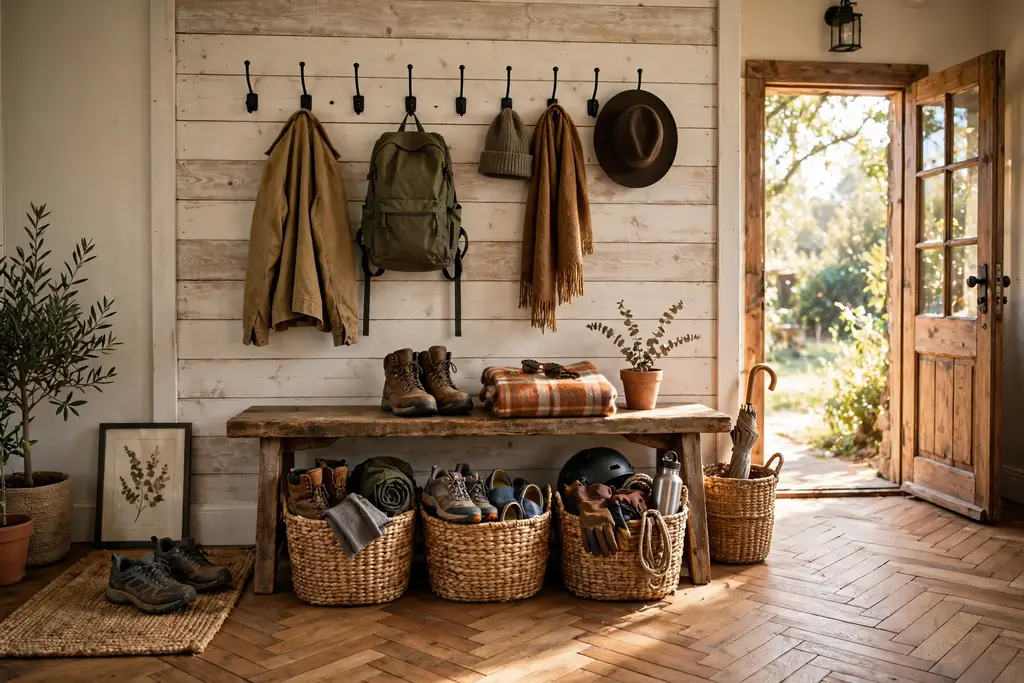
Woven baskets under a bench, on a low shelf, or beside the door turn loose shoes and gear into tidy, movable storage. The natural fiber softens wood and iron, and a basket can be carried to the closet when the season changes. This suits an entry with no closet, a rented home, or a busy household where each person needs one basket.
Give each person one basket and keep daily shoes only in the entry baskets, moving spare pairs to a closet. Choose baskets with handles for easy lifting, and line them if they will hold muddy boots. Label the baskets if more than one person shares the entry, and shake them out outside now and then, since woven fiber traps dust from the door.
7. Store Blankets and Spare Shoes in a Vintage Trunk
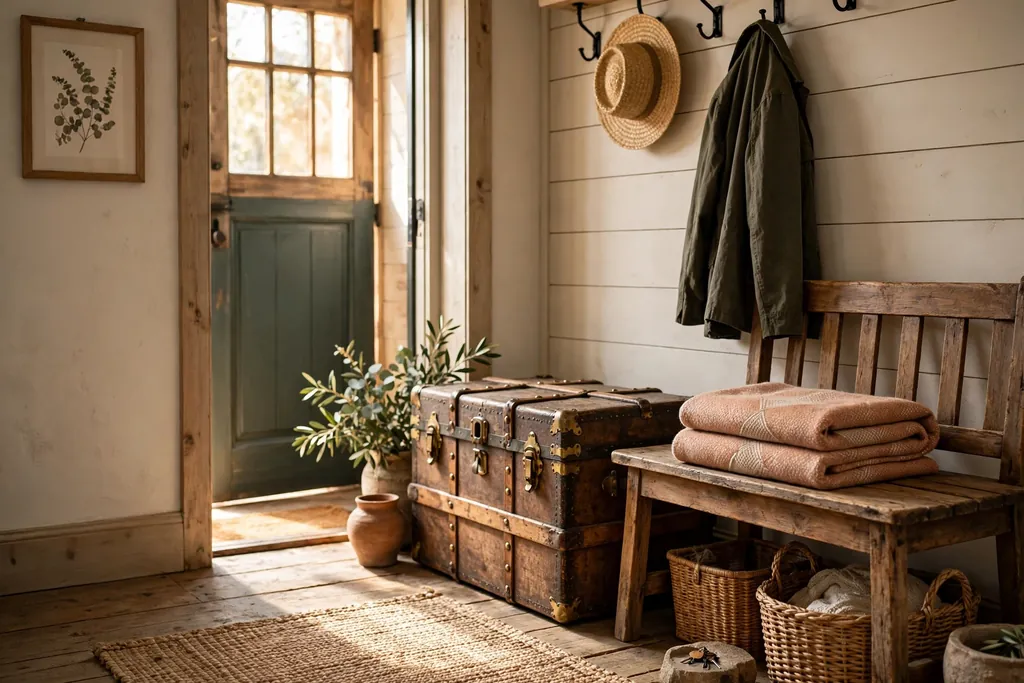
A vintage wooden trunk beside the door or at the end of a bench gives closed storage for blankets, spare shoes, or seasonal gear, while adding aged wood to the entry. This suits a home that needs storage but has no room for another cabinet, and it works as a seat in a larger entry if the lid is flat and sturdy. For a wider look at rustic rooms that use the same aged wood and warm palette, see these stylish rustic decor ideas.
Check the trunk inside and out before you use it, and air it well if it smells musty. Line the inside with a clean cloth if you store blankets, and keep the lid hinges in good order so it stays safe to open. Style the top with one folded throw only, so the trunk stays useful and easy to open.
8. Light the Entry With a Lantern Pendant or Wall Lanterns
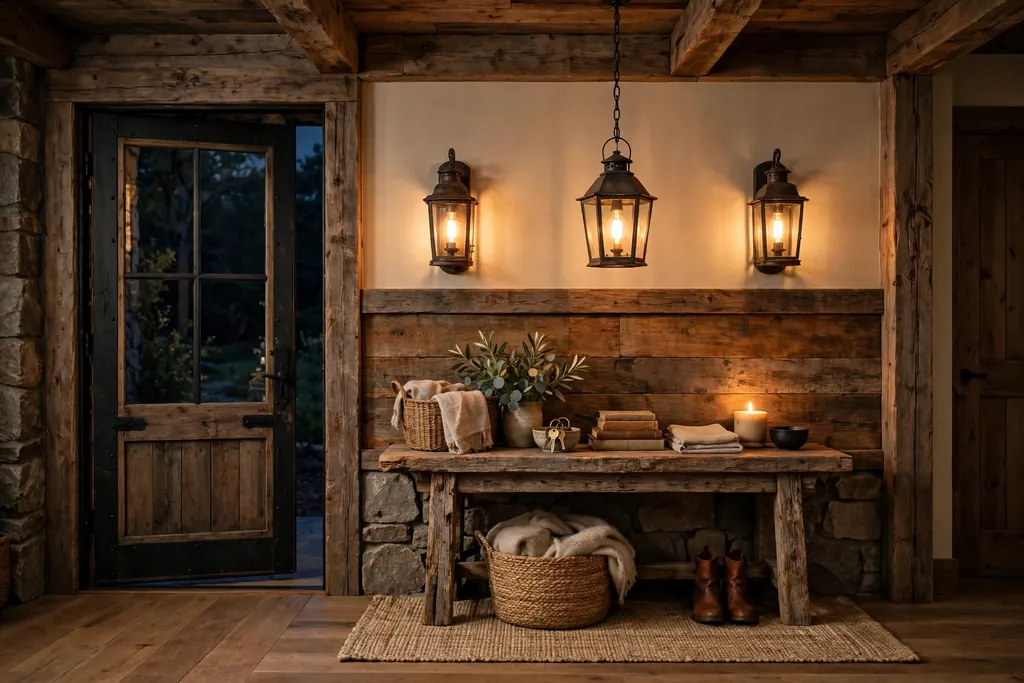
Lanterns and warm wall lights give a rustic entry a low glow that ceiling lights alone cannot match. A lantern pendant over a console, or a pair of wall lanterns flanking a mirror, draws the eye up and makes wood grain look warm in the evening. This suits an entry with little daylight, or a hall that feels cold under a single bright ceiling fitting.
Use warm bulbs with a dimmer where you can, and choose a shade that spreads light along the walls rather than glaring into your eyes. Keep flames clear of curtains, coats, and paper, and use battery candles where real flames are not practical, such as a shelf near coats. If wiring a new fitting is not possible, a plug in wall lantern gives a similar glow with no new wiring.
9. Lay a Jute Runner to Mark the Path
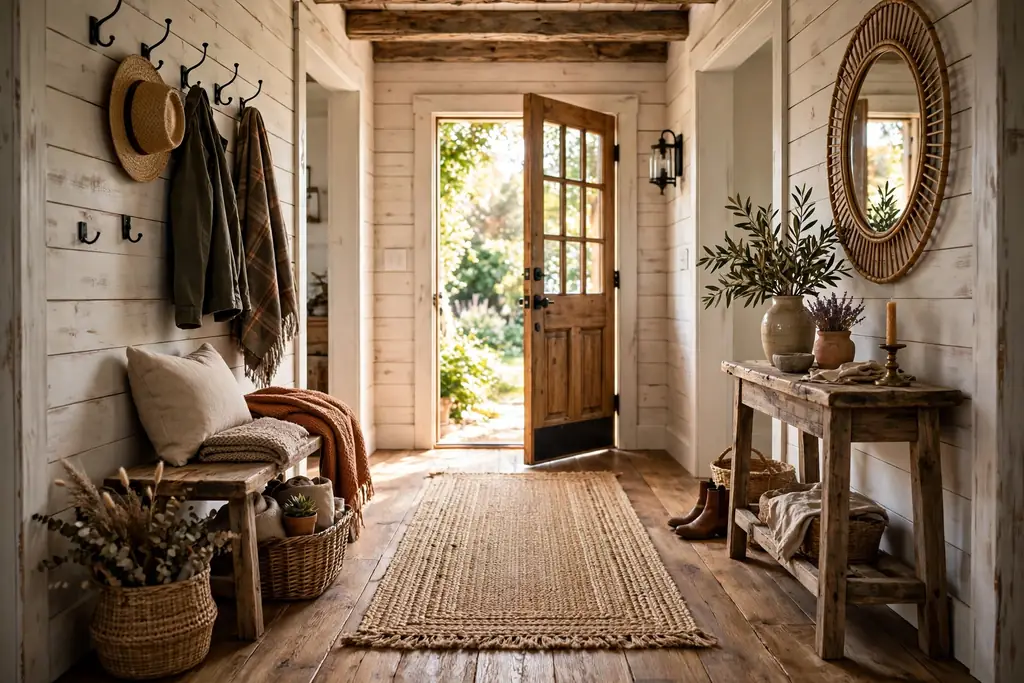
A flatweave jute runner down the center of the entry floor marks the walking path and protects the floor from shoes and dirt. The natural fiber suits rustic wood and iron, and a runner gives a narrow entry a clear direction from the door into the home. A pattern or a bordered edge hides marks better than a solid pale color.
Choose a low pile runner with a nonslip backing, and measure around door swings before you buy. Leave a margin of bare floor on each side so the runner does not look squeezed against the walls. Shake it outside weekly and clean it when the season changes, since entry runners collect dirt faster than rugs in other rooms.
10. Hang a Large Wood Frame Mirror by the Door
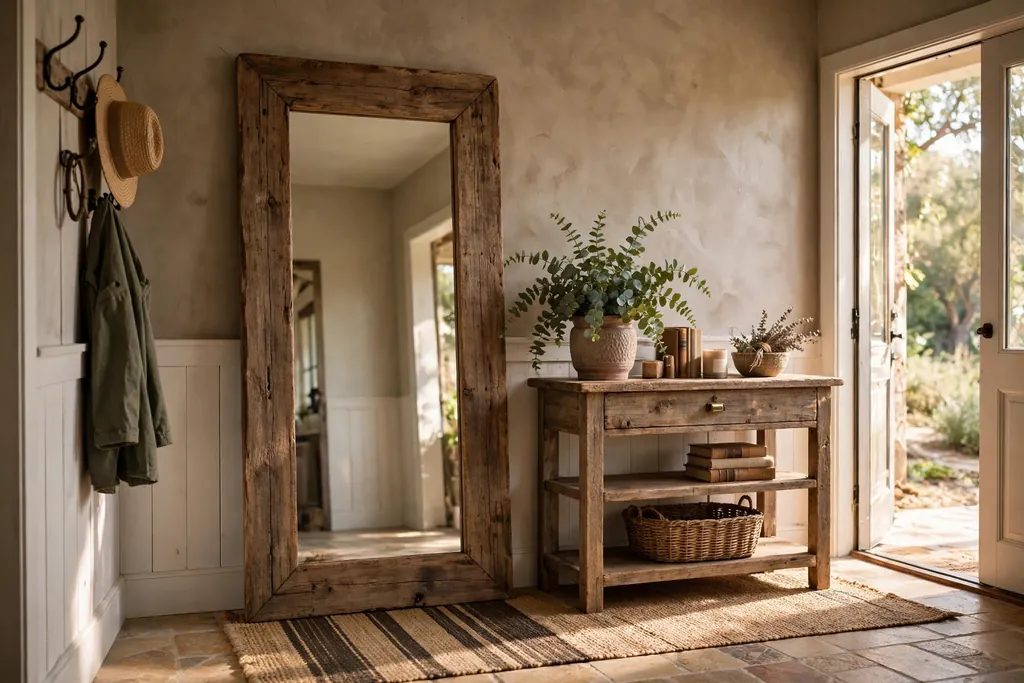
A large mirror in a thick wood frame gives a last check before you leave and a sense of depth in a small entry. The wood frame repeats the bench or console tone, while the mirror bounces daylight from the door or a nearby window deeper into the space. This suits an entry with a blank wall and little daylight, or a narrow hall that needs to feel wider.
Check what the mirror reflects before you fix its position, since a mirror facing a cluttered corner doubles the clutter. Aim it toward a window, a plant, or a calm stretch of wall where possible. Hang it so the center sits at eye level, and secure a leaning mirror at the top so it cannot slide.
11. Build a Wood Key and Mail Station
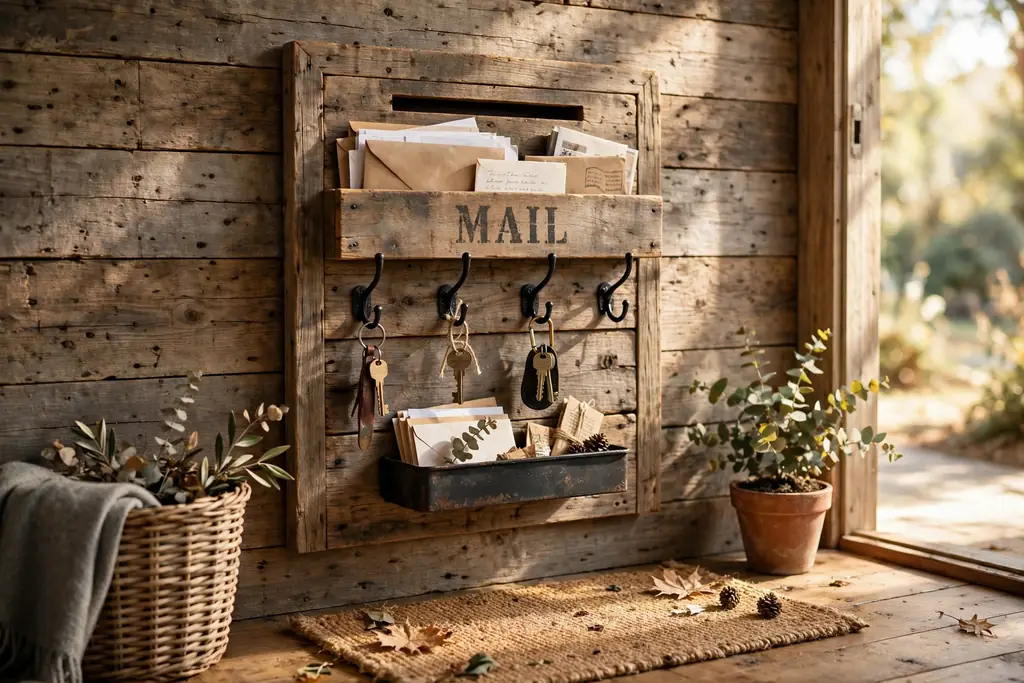
A small wall mounted station in reclaimed wood, with iron hooks for keys, a slot or tray for mail, and a small note holder, stops keys and letters from landing on the first table inside the door. This suits a household where mail and keys tend to drift into the living room, and it works in even a very narrow entry, since it uses wall space only.
Fix the station at hand height near the door you use most, and keep it to the items you handle daily. Sort mail at the station each evening, and move bills and letters to their proper place the same day, so the tray does not grow into a pile. Keep one hook free for a dog lead or lanyard, so the station covers the whole daily exit routine.
12. Catch Mud With a Boot Tray and a Galvanized Stand
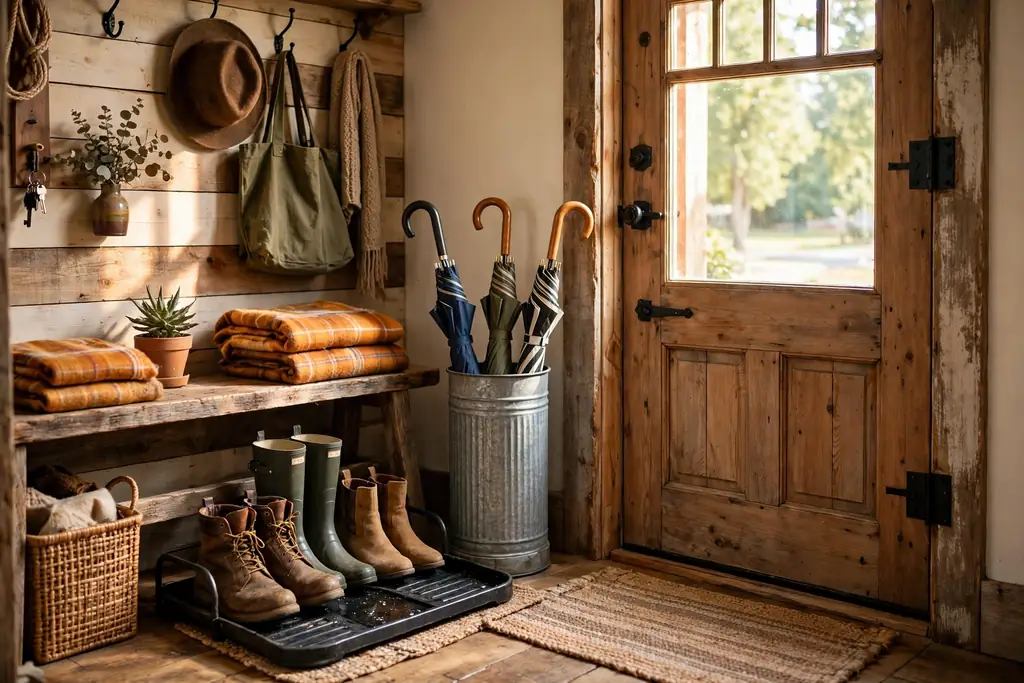
A boot tray by the door, paired with a galvanized metal stand for umbrellas and walking sticks, keeps mud and rain gear in one contained spot. The metal suits a rustic entry, and the tray protects wood floors from wet boots in winter. This suits a home with a garden, a dog, or children who come in with muddy shoes.
Choose a tray with a raised edge and a surface that drains or wipes clean, and empty it often so water does not sit. Keep the umbrella stand near the door but clear of the swing, and wipe the metal dry after wet days to slow rust. In summer, the same tray can hold sandals and the stand can hold a walking stick or a rolled picnic blanket.
13. Build an Open Cubby Hall Tree for the Whole Household
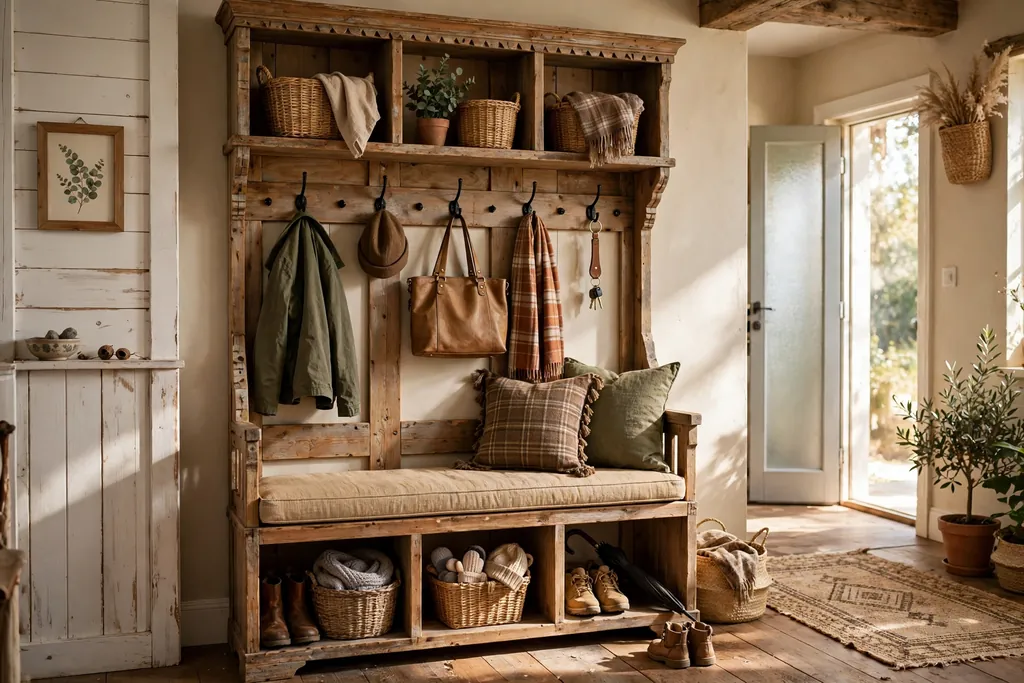
An open cubby hall tree on one entry wall, with a bench seat at the bottom, hooks above, and a cubby or shelf at the top for each person, gives every household member one column for coats, bags, and shoes. This stops shared storage from turning into a mixed pile, and the wood frame gives a wide entry a clear rustic structure. It suits a family entry with a wide enough wall for two or three columns.
Keep each column to one person and label the top cubby if more than one person uses the unit. Put daily items at easy reach, seasonal items up high, and rarely used pieces out of the main flow. Anchor the unit to the wall following the maker instructions, since a tall freestanding unit can tip.
14. Add a Farmhouse Chalkboard for Notes and Reminders
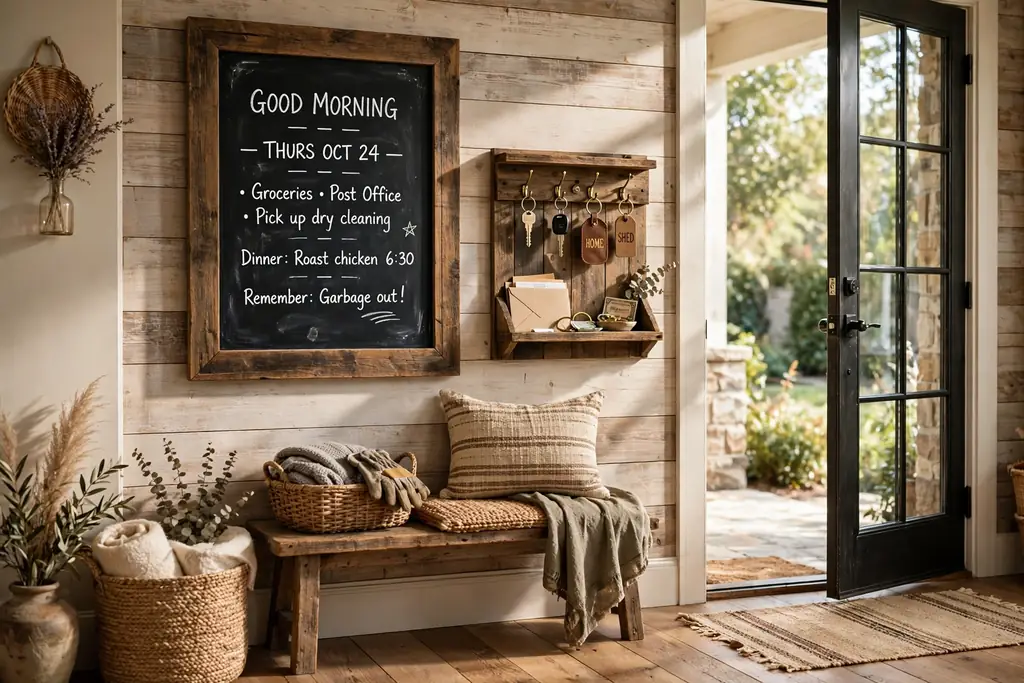
A framed chalkboard or a painted message board in a wood frame gives the entry a place for reminders, shopping notes, and a welcome message, without adding another piece of furniture. The dark board contrasts well with warm wood and pale walls, and it can be wiped clean each week. This suits a family entry, a shared house, or a home where notes tend to pile on the console.
Hang the board at eye level near the key station, and keep the notes short, so the board stays useful rather than crowded. Use chalk markers for a cleaner look, and wipe the board fully once a week so old notes do not linger. If the entry is small, choose a board no wider than the console below it, so the pair reads as one zone.
15. Stack Wooden Crates as Open Wall Shelves
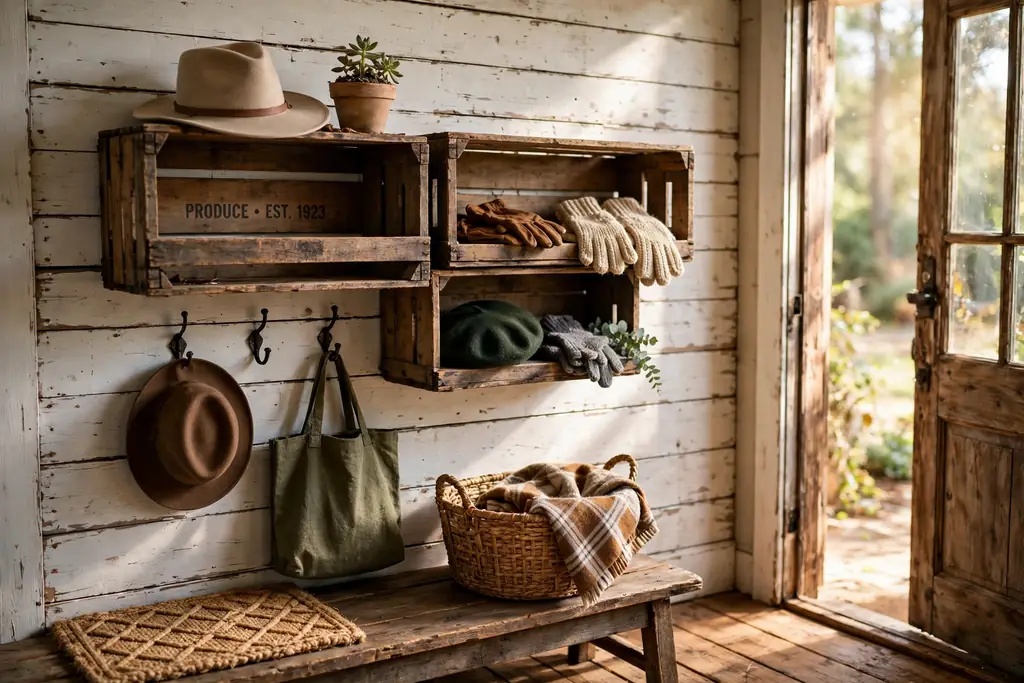
Wooden crates fixed to the entry wall as open shelves give display and storage in a rustic, low cost form. Use one or two crates for hats, gloves, small plants, and a candle, and leave gaps between groups so the shelves do not look crowded. This suits a rented home or a small entry, since crates are light, cheap to replace, and easy to move.
Fix the crates into studs or use fixings rated for your wall type and the weight you plan to hold. Put heavier items low and lighter items high, and keep the crate count low in a small entry, since open shelves add visual weight. If the entry already has a plank wall, keep the crates on a plain wall instead, so the wood does not compete with itself.
16. Warm a Plain Wall With a Stone Veneer Feature
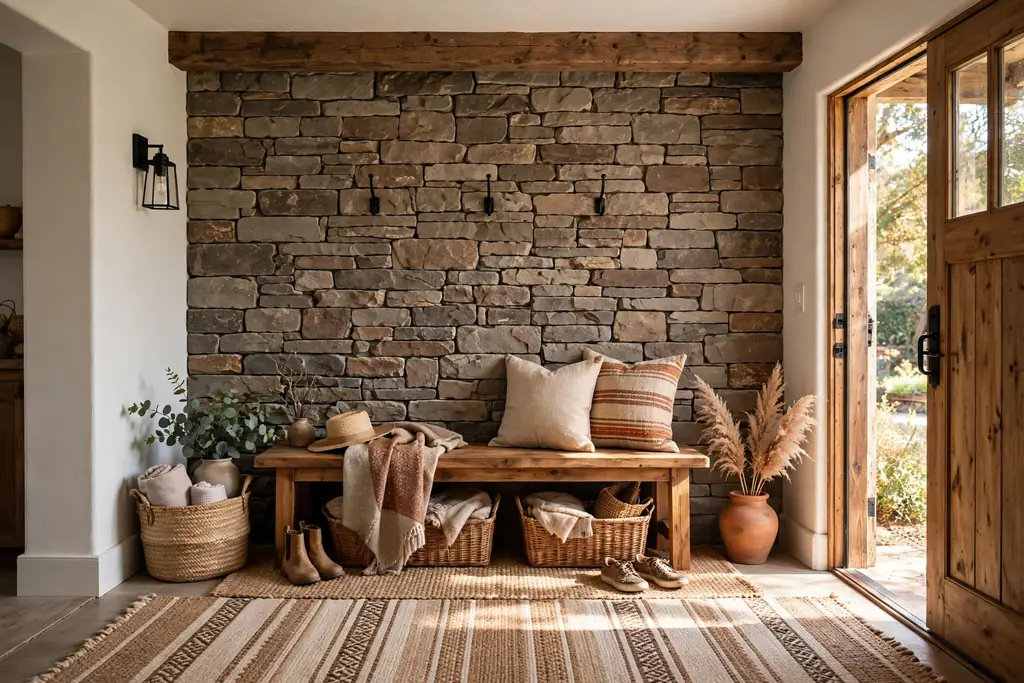
A stone veneer feature wall behind a bench or beside the front door adds rough, natural texture that pairs well with warm wood and iron. The stone gives the entry a sense of age and weight, even in a newer home, and it suits a wide entry or a mudroom wall that needs one strong feature. Keep the rest of the entry simple, so the stone stays the focus.
Use a veneer made for interior walls, and follow the maker instructions for fixing and sealing, since real stone is heavy and porous. Keep the stone to one wall or one section, and pair it with plain cushions and a simple runner, so the texture can show. Wipe the stone now and then, since entry walls collect dust from the door.
17. Soften the Corner With Dried Stems and a Potted Plant
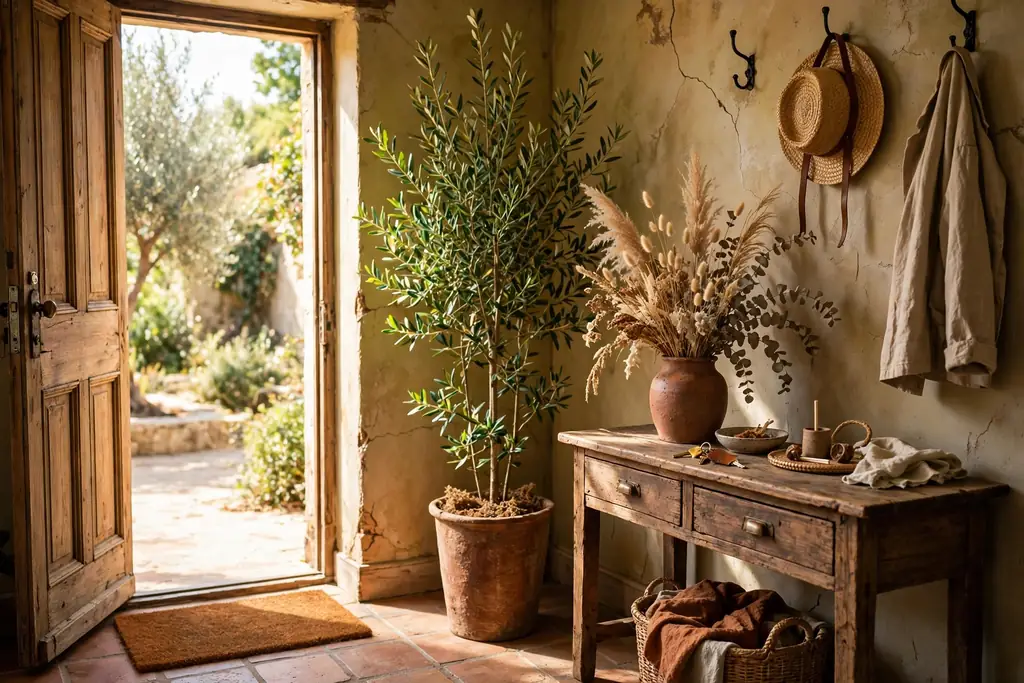
One tall plant in a corner, plus a vase of dried stems on the console, adds natural texture to a hard surfaced rustic entry. Plants soften paint, wood, and metal, and dried stems need no watering, which suits a dark corner or a household that travels often. This suits an entry with some daylight, even if it is only from a glazed door or a nearby window.
Choose a plant that suits the light you actually have, such as a snake plant or pothos for low light, and keep the pot in a tray so watering does not mark the floor. Use one woven basket for the plant pot, in the same natural tone as the bench baskets, so the corner reads as planned. Wipe leaves often, since entry plants collect dust from the door.
18. Fit a Slim Shelf and Mirror Combo for a Tiny Entry
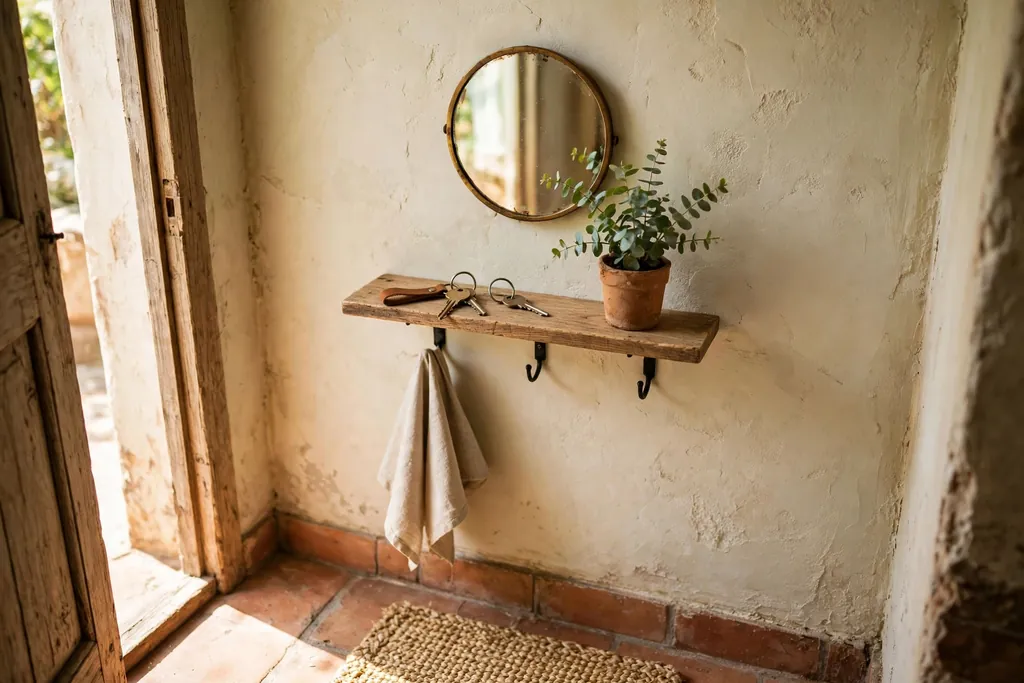
A slim wall shelf paired with a small mirror gives a tiny entry a landing spot, a last check, and a display ledge, all in the depth of one shelf. The shelf holds keys and a small plant, while the mirror above it draws the eye up and makes the landing feel taller. This suits an apartment landing, a hallway with no floor space for a console, or a rented home where one shelf needs only a few fixings.
Keep the shelf shallow and the items light, since a loaded shelf above a walkway takes knocks from passing bags. Place the largest item at the back and smaller items in front, and leave a gap at each end so the shelf does not run into a door frame. Dust the shelf weekly, since entry shelves collect dust from the door.
19. Add a Wood Slice Side Table Beside the Bench
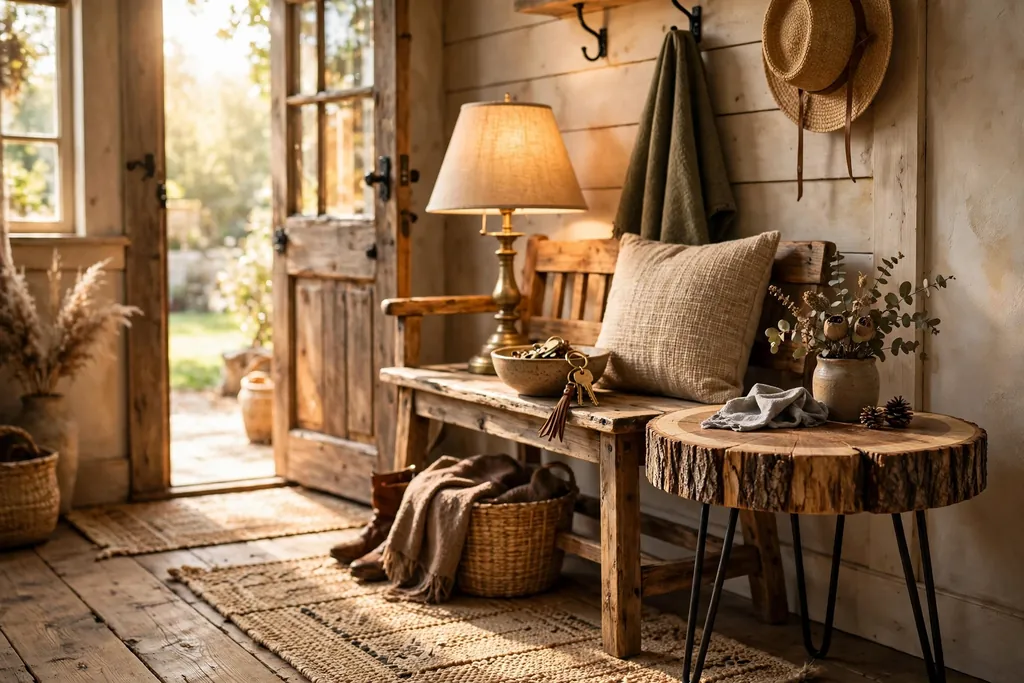
A wood slice side table, made from a thick round of timber on short iron legs, gives a rustic entry a small surface for a lamp, a book, or a bowl for keys. The round shape breaks up the straight lines of a bench and console, and the bark edge or live edge adds natural detail at a small scale. This suits an entry corner that is too small for a full console, or a wide entry that needs a second surface.
Seal the top as the maker advises, and keep the table top mostly clear, with one lamp or one bowl, so the wood slice stays visible. Check that the legs sit level on the floor, since a wobbly side table beside a bench gets knocked often. If the entry already has a live edge console, use a plain wood slice here instead, so the two pieces do not compete.
20. Run a Rope and Iron Rail for Coats in a Narrow Hall
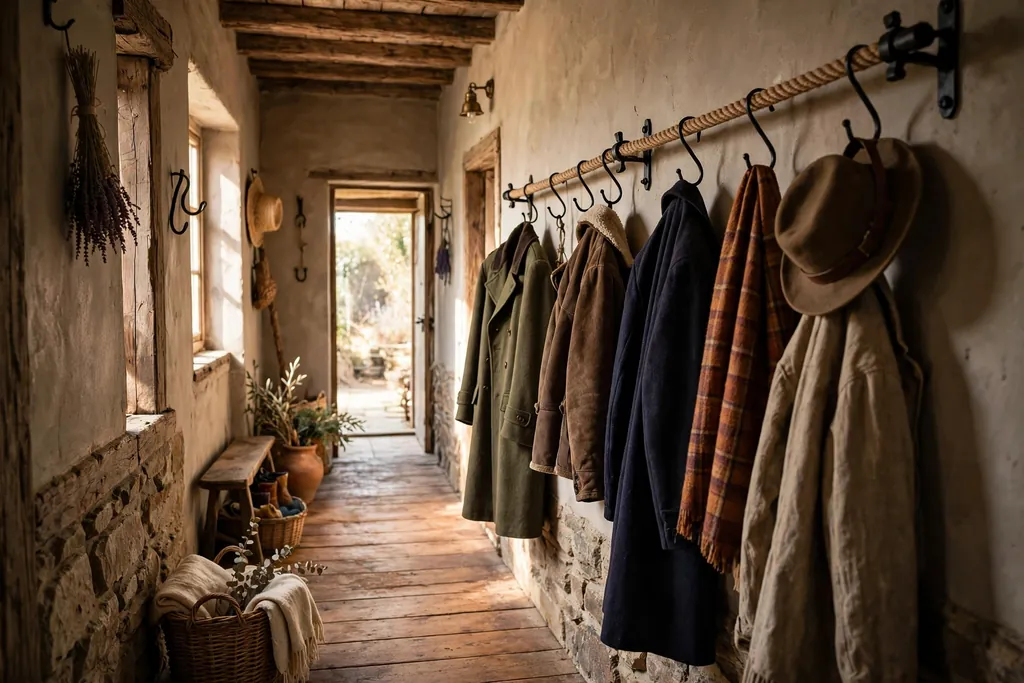
A rope rail with iron brackets, or a simple iron rail fixed along a narrow hall wall, gives coats a hanging spot where a hall tree would block the path. The rope adds a rustic, coastal touch, while the iron brackets keep the rail sturdy. This suits a long, narrow entry, a hallway with no closet, or a home where coats need to hang in a line rather than on a crowded rail.
Fix the rail into studs at a height that lets coats hang clear of the floor, and space the hooks or rings wide enough that coats do not bunch. Keep daily coats only on the rail, and move spare coats to a closet, so the hall never fills up completely. For more small entry ideas that use the same wall first approach, see these DIY entryway makeover ideas.
21. Create a Rotating Seasonal Display on the Console
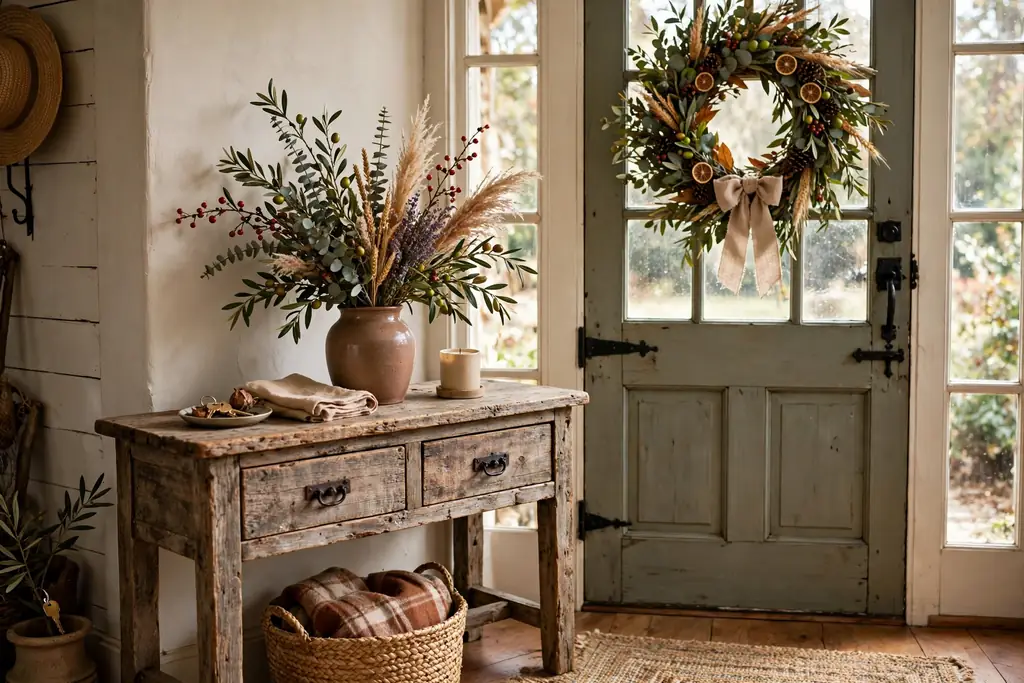
One small seasonal display spot, such as a wreath on the door, a vase of seasonal stems on the console, or a pinecone bowl in winter, lets a rustic entry feel fresh through the year without redecorating the whole space. A single display spot also gives you a reason to clear and reset the console each season. This suits a reader who likes to change decor often but wants to keep the rest of the entry steady.
Keep the display to one change at a time, such as stems in spring and a wreath in winter, and store the out of season pieces in one labeled box. Use the seasonal swap as a chance to wipe the console, check hooks and baskets, and move out items that no longer belong at the door. Avoid adding a second display spot, since two seasonal corners can make a small entry feel crowded.
22. Turn a Closet Alcove Into a Mini Mudroom Nook
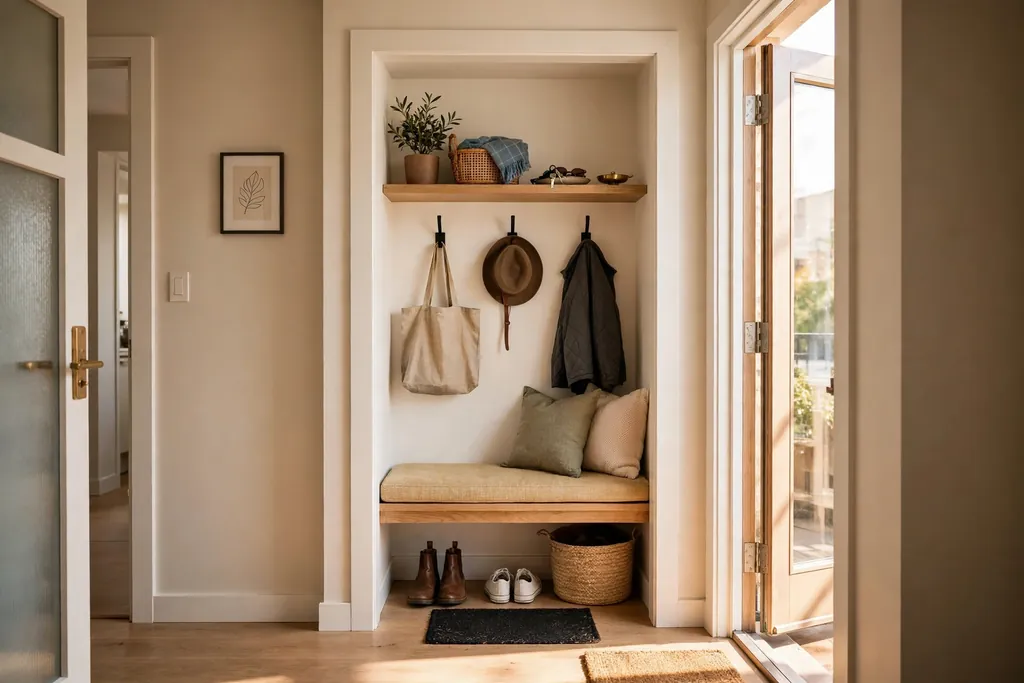
A shallow closet alcove near the front door can become a mini mudroom nook with a low bench, wall hooks, and one shelf above, even in a small apartment. Removing the closet door, where the home allows it, opens the nook to the entry and turns wasted closet depth into daily storage. This suits a small home with a hall closet that holds little, or an apartment where a freestanding hall tree would block the path.
Keep the nook to one bench, one row of hooks, and one shelf, so the small space stays usable rather than crammed. Put daily shoes under the bench in one basket, daily coats on the hooks, and spare items on the high shelf. Measure the alcove depth first, since a bench that is too deep will block the hall, and keep the walkway past the nook fully clear.
Conclusion
A good rustic entryway is less about buying more pieces and more about giving the door zone a clear job. Pick the idea that solves your biggest daily annoyance first, whether that is shoes by the door, coats with no home, or a dark, bare wall. Measure the space, keep the walkway clear, and repeat one wood tone and one iron finish so the result reads as planned. Add one idea at a time, live with it for a few days, and let the entry grow into a warm, welcoming start to the home.
If you found an idea here that suits your home, save this post on Pinterest so you can find it again when you are ready to start. Pin the look you like most, whether it is a reclaimed wood bench, a barn door, or a slim shelf and mirror combo, and use it as a guide for your next weekend refresh.
FAQs
How do I make a small entryway look rustic without crowding it?
Start with wall storage and one shallow piece, such as a peg rail, a slim shelf, and a jute runner. Repeat one wood tone and one iron finish, and keep the floor mostly clear, so the rustic materials show without blocking the path. Add a bench only if the walkway still has room to pass comfortably after it is in place.
What wood works best for a rustic entryway?
Reclaimed pine, warm oak, and weathered barn wood all suit a rustic entry, since their grain and tone variation carry the look. Pick one main wood tone and repeat it in at least two places, such as a bench and a mirror frame, so the mix reads as planned. Seal the wood with a matte finish to reduce dust and protect it from wet coats and muddy shoes.
How do I keep a rustic entryway tidy with children or pets?
Give every person one hook, one basket, and one shoe spot, and keep daily items only at the door. Move spare coats, out of season gear, and extra shoes to a closet, and build a short evening reset into the routine, so baskets and hooks never fill past their planned size. A boot tray by the door also contains mud before it spreads into the home.
Can I create a rustic entryway in a rented home?
Yes. Use freestanding pieces, woven baskets, a leaning mirror, a boot tray, and a runner, all of which move with you. For wall storage, use a small number of well placed fixings, or adhesive hooks for light items, and check your lease and wall type first. A vintage trunk or a wood slice table adds rustic character with no wall changes at all.
How much should I spend on a rustic entryway refresh?
Start with the spot that causes the most daily friction, and spend first on storage that solves it, such as a bench, a rail, or baskets. Paint, a runner, and a mirror often change the whole entry for less than a new furniture piece, so try those before a larger purchase. Add one idea at a time, so you can see what the entry still needs before buying more.
How do I keep wood and iron in a rustic entryway in good condition?
Wipe wood with a dry or lightly damp cloth, and reseal tops that take wet items, such as a console near the door. Wipe iron hooks and rails dry after wet days to slow rust, and keep baskets shaken out and aired. Check wall fixings now and then, since heavy coats and bags can loosen a rail over time.