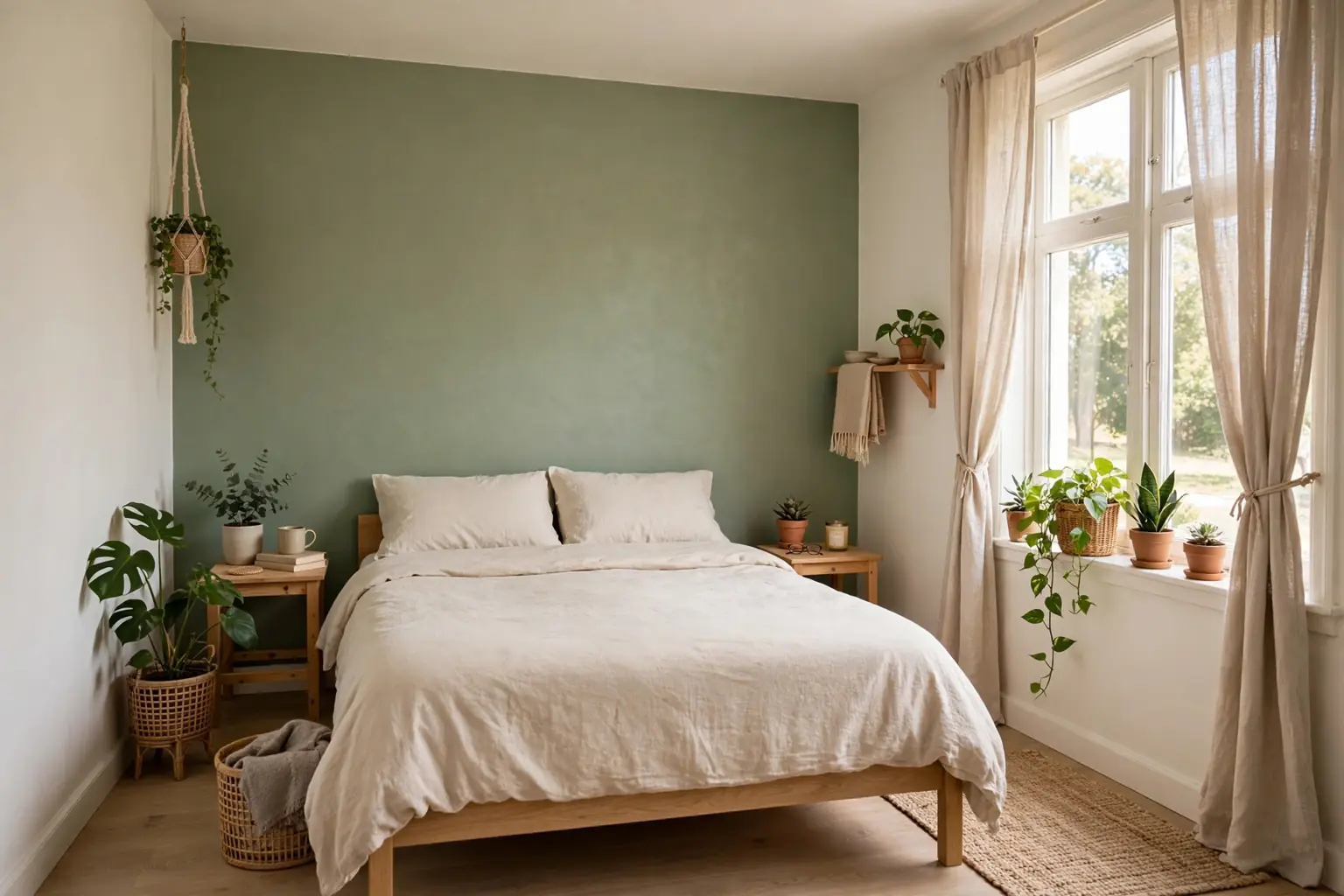
A room with personality does not need a large budget or a full set of new furniture. The rooms that feel most personal usually start with a clear palette, one or two layers of soft texture, and a few items that show who lives there, such as art, books, plants, or photos. These 14 budget friendly aesthetic room ideas work in bedrooms, studios, and small living rooms, and most can be done in an afternoon with paint, fabric, thrifted frames, or items you already own. Start with the change that fixes what bothers you most, then add one idea at a time so the room stays calm as it gains character.
Key Takeaways
- Pick three tones and repeat them across walls, bedding, curtains, and art, so small budget swaps look planned instead of random.
- Spend first on the bed, the window, and the light, since those cover the most area and shape how the room feels every day.
- Add personality through items you can move, such as art, cushion covers, plants, and baskets, rather than fixed changes you cannot undo.
- Keep one surface mostly clear in each zone, so art, plants, and texture have room to show without the room feeling crowded.
- Edit before you buy, and reuse, repaint, or thrift pieces before buying new, so the budget goes to changes you will notice daily.
- Layer light at two heights, with a soft main light plus a bedside or table lamp, so the room feels warm in the evening.
1. Set a Three Tone Palette and Repeat It Everywhere
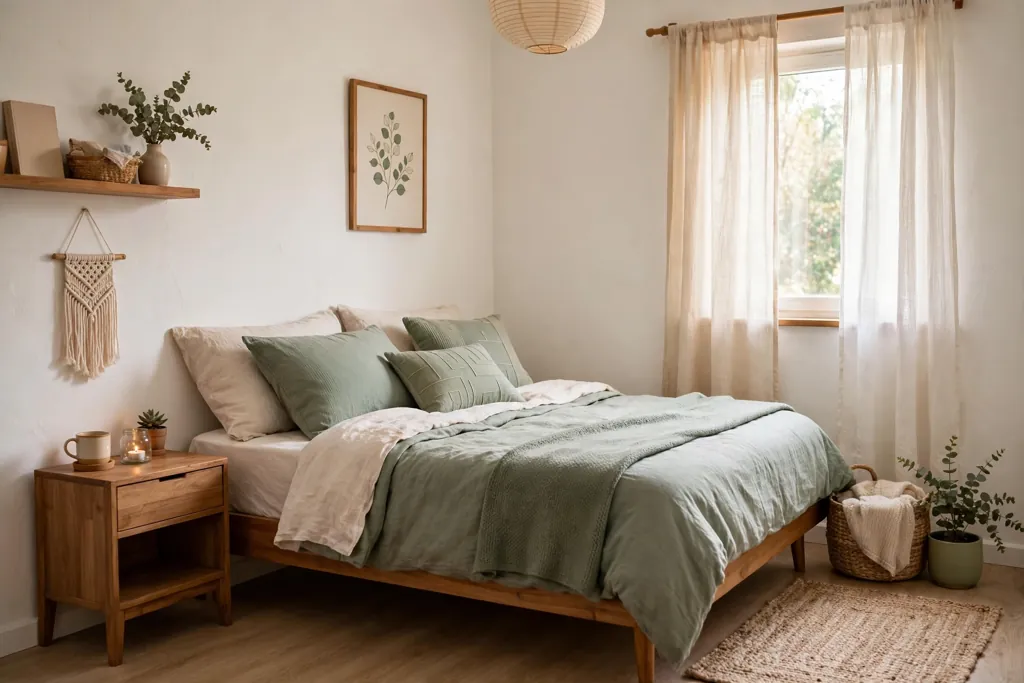
A three tone palette is the cheapest way to make a room look pulled together. Choose a warm white for walls and bedding, a mid wood tone for furniture, and one soft accent, such as sage, dusty terracotta, or muted blue, for cushions, art, and a throw. When the largest surfaces agree, even thrifted and reused pieces look like they belong in the same room.
Apply the palette to the bed first, then the curtains, then the rug, since those cover the most area. Keep strong color to items you can move, such as a cushion cover or a print, so a change of mood costs little. If a new item does not match one of the three tones, leave it out, since one off palette piece can undo the calm the rest of the room creates.
2. Paint One Wall in a Soft Muted Color
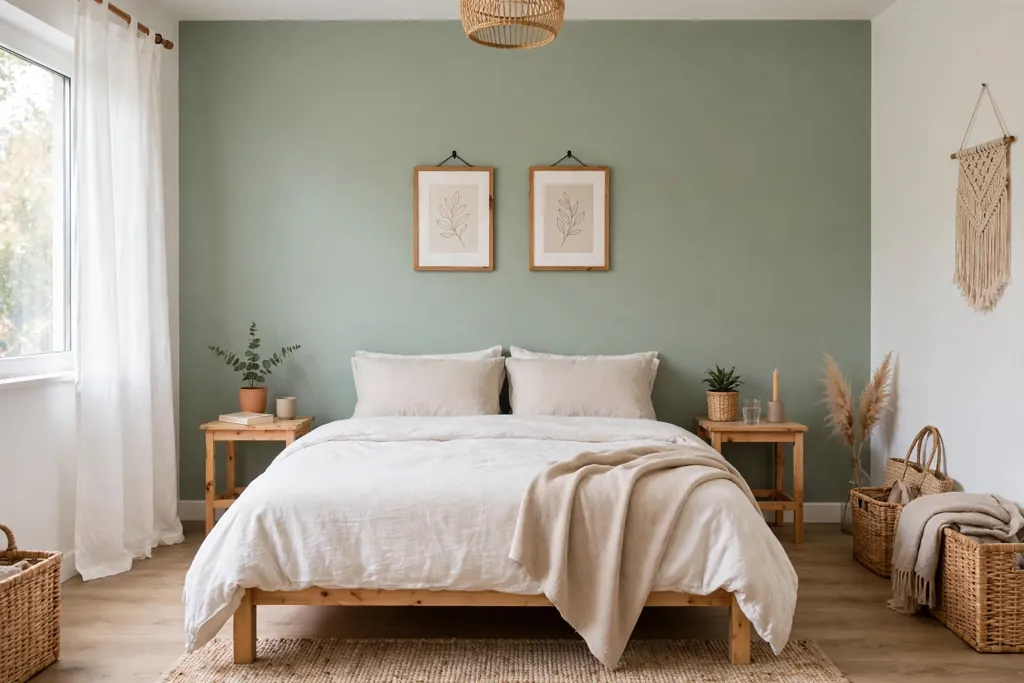
Painting a single wall in a soft muted color gives a room a clear focal point for the cost of one small can of paint. A soft sage, warm clay, or dusty blue behind the bed or the sofa adds depth without closing in a small room, and it makes plain bedding and wood furniture look more deliberate. This suits a room where every wall is the same flat white and nothing draws the eye.
Prep matters more than the paint brand: fill small holes, wipe the wall, and tape the edges before you start. Keep the other walls warm white, and repeat the accent color once more in a cushion or a print, so the wall does not stand alone. If you rent and cannot paint, a large fabric panel or a peel and stick panel on the same wall gives a similar focal point with no lasting change.
3. Hang Plain Curtains High and Wide
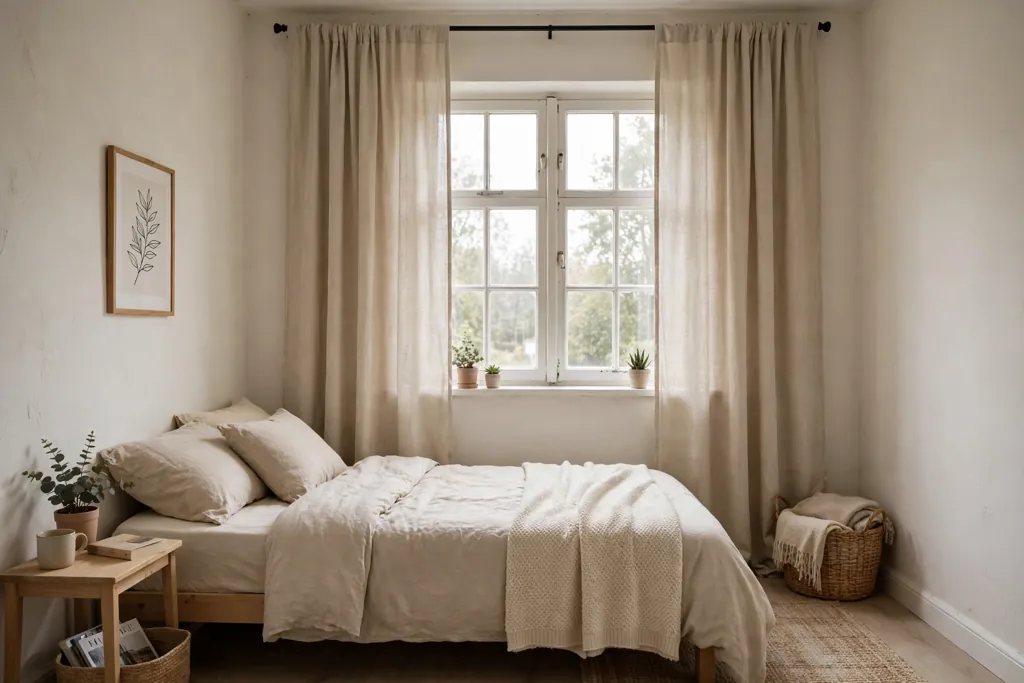
Plain curtains hung close to the ceiling and wider than the window make a small room feel taller and calmer for little money. The extra height draws the eye up, and the extra width lets the curtains stack clear of the glass during the day, so daylight still fills the room. Choose one warm neutral that matches the bedding, and keep the fabric plain so it suits any future palette change.
Use a simple rod and rings, and check that the curtains clear the floor by a small margin so they do not collect dust. If you need darkness for sleep, add a plain blackout lining behind the same curtains rather than a second patterned pair. Washable fabric keeps the setup practical, since curtains collect dust fast. For more budget bedroom ideas that pair with this change, see these bedroom decor ideas on a budget.
4. Layer One Flatweave Rug With a Smaller Soft Rug
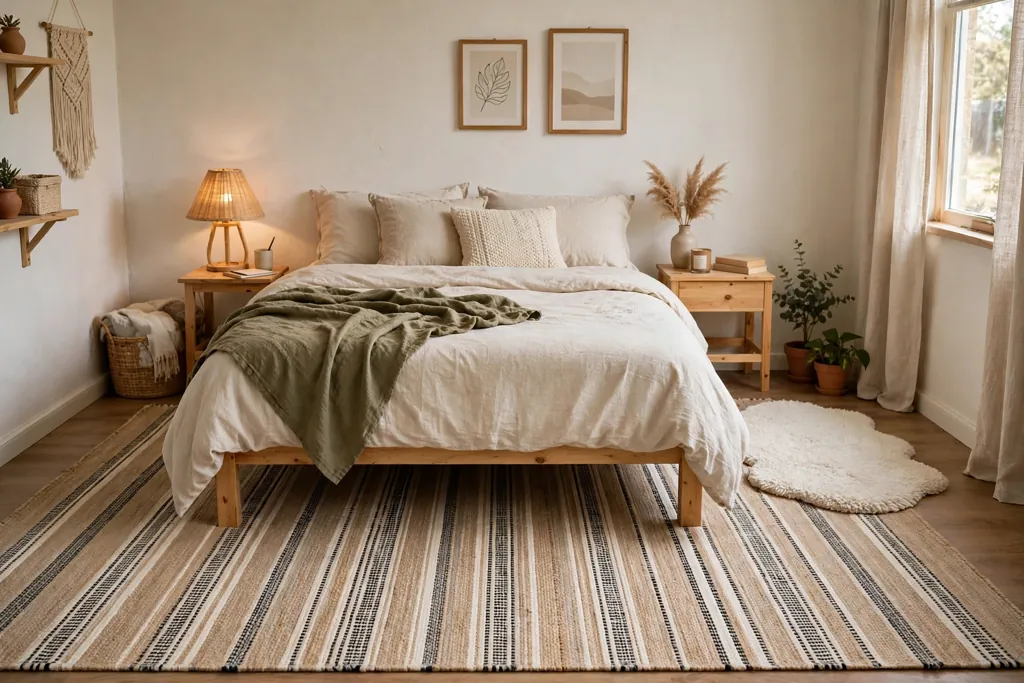
One large flatweave rug anchors a room and adds warmth underfoot without the bulk or cost of thick pile. Layer a smaller soft rug beside the bed or in front of a chair, where your feet land first, so the room gains two textures for less than one large plush rug. The base rug marks the main zone, while the top rug adds color and softness exactly where you feel it.
Size the base rug so it extends past the sides of the bed or the front legs of the seating group, and keep the top rug smaller by a clear margin on all sides. Use a rug pad or gripper under the top layer so it does not slide, and keep both rugs in the room palette, with pattern on only one layer. Vacuum both layers often, since natural fibres show dust, and rotate the top rug now and then so it wears evenly.
5. Swap Only the Cushion Covers and One Throw
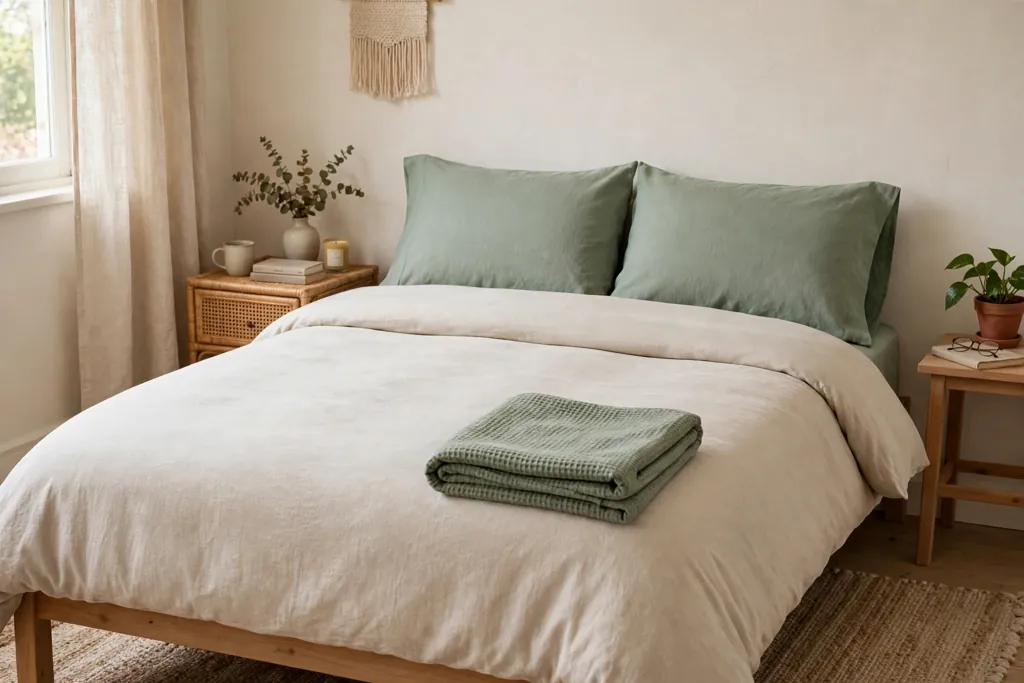
When a full bedding or sofa set is out of reach, new cushion covers and one throw can change a room for little money. Choose covers in the room accent color and a throw in a warm texture, such as waffle cotton or soft wool, so the bed or sofa gains a new mood without a new purchase. This small swap also suits a seasonal refresh, since covers store flat when not in use.
Keep the bed or sofa to one throw and two or three cushions, plus sleeping pillows, so making the bed or tidying the sofa stays quick. Store spare covers in a flat box in the closet, not on a chair, so the room stays clear between uses. If two people share the bed, pick a throw color you both like, since it will be the most visible layer.
6. Build a Picture Ledge Gallery You Can Rotate
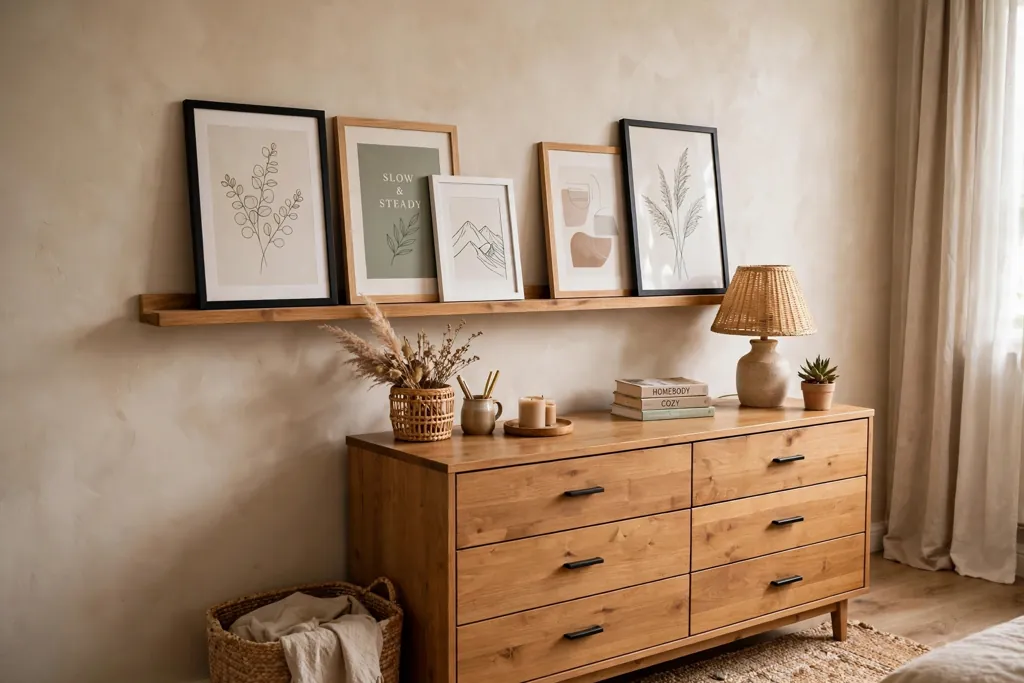
A narrow picture ledge lets you lean framed prints against the wall instead of hanging each piece separately, which suits renters and anyone who likes to change the display. Hang one or two ledges above a dresser or beside the bed, overlap frames of different sizes, and lean the largest frame at the back. Rotating art with the seasons keeps the room fresh without buying new furniture.
Print your own photos or free art prints at home, and use simple frames in one finish, such as natural wood, so the group looks planned. Keep the ledge clear of the walkway, secure the frames so they cannot slide off, and leave one end empty so the arrangement looks intentional rather than crowded. A ledge also lets you test a new print for a week before you commit to hanging it.
7. Fill Thrifted Frames With Your Own Prints
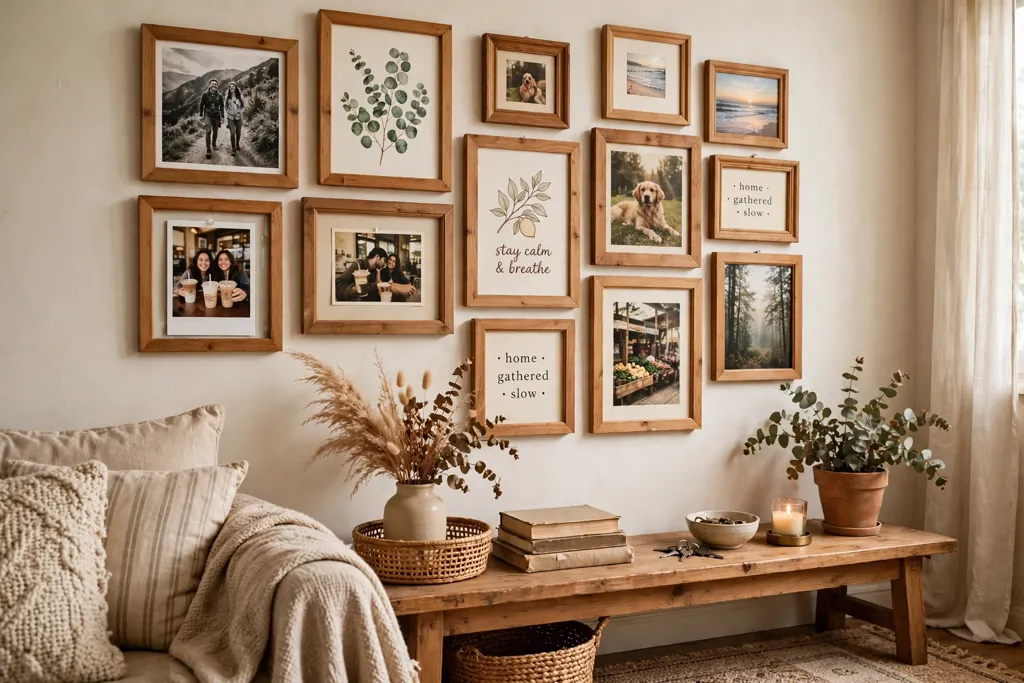
Thrifted frames in different shapes can look planned when they share one finish and one style of art inside. Look for solid wood frames with simple lines, clean the glass, and paint or sand only the frames that truly need it. Fill them with your own photos, pressed leaves, postcards, or printed art, so the wall shows your taste instead of a matching store set.
Group three to five frames on one wall, with even gaps and one larger frame as the anchor, rather than scattering single frames around the room. Keep the art to the room palette, with one accent color repeated in at least two frames. Hang the group so its centre sits at eye level, and use fixings suited to the frame weight and your wall type.
8. Layer Light at Two Heights Instead of One Ceiling Light
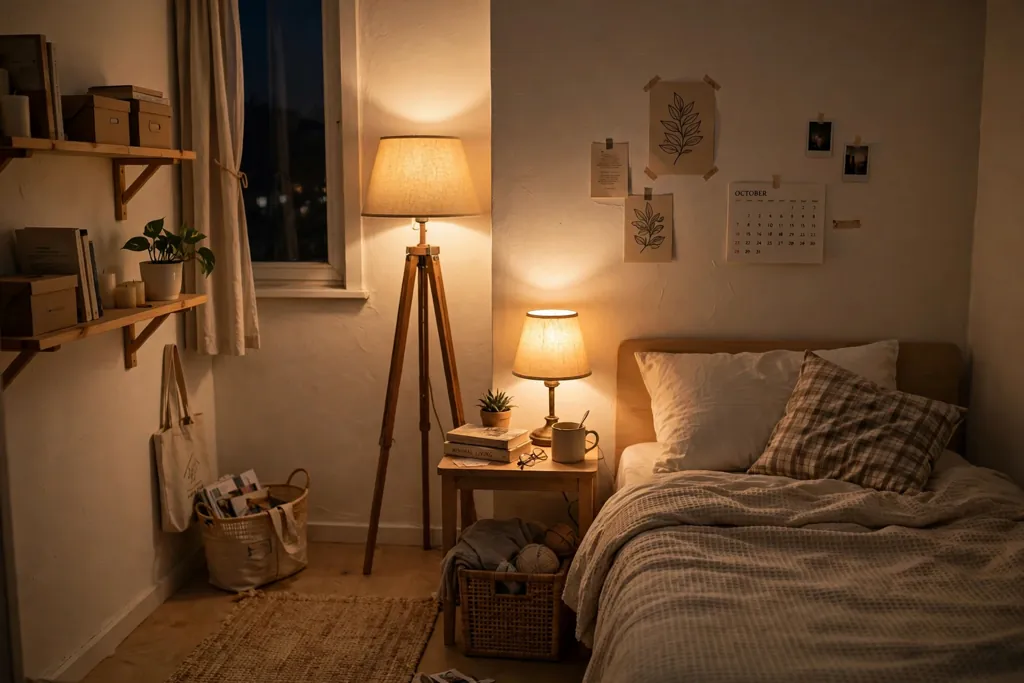
A single ceiling light flattens a room and makes it feel harsh in the evening. Two levels work better on a budget: a soft main light, such as a floor lamp or a dimmable ceiling bulb, plus a task light beside the bed or chair for reading. Warm bulbs keep the room inviting after dark without extra decor, and a plug in dimmer shifts the mood without rewiring.
Place the bedside or table lamp at shoulder height when you sit up in bed or in a chair, and keep a second lamp near a dresser or desk if the room has one. Turn the ceiling light off in the evening and let the lower lamps carry the room, so art, plants, and texture show in a soft glow. Keep lamp shades plain in cream or linen, so the light stays warm and the lamps suit any palette change.
9. Make a Reading Corner From a Stool, a Basket, and a Lamp
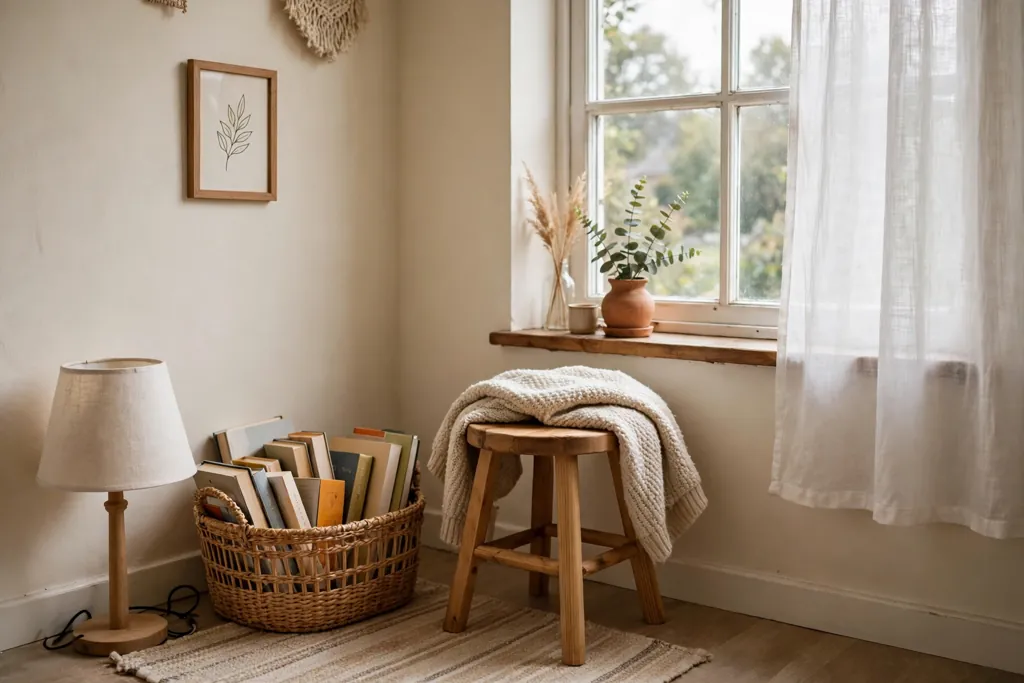
A reading corner needs only three pieces: a seat, a light, and a place for books. Use a stool, a small chair you already own, or a storage bench, add a table or clip on lamp, and set a basket beside it for books and a throw. This turns an unused corner or window wall into a second use for the room, and it suits a bedroom, a studio, or a small living room.
Keep the corner to what you use: one seat, one lamp, one basket, and one throw, so it stays inviting rather than becoming overflow storage. Place it near daylight if you can, and keep the wall above it plain or hang one print, so the corner feels like a destination. If floor space is tight, a wall shelf beside the chair holds a book and a cup with no table at all.
10. Style One Shelf Run With Books, Baskets, and Breathing Room
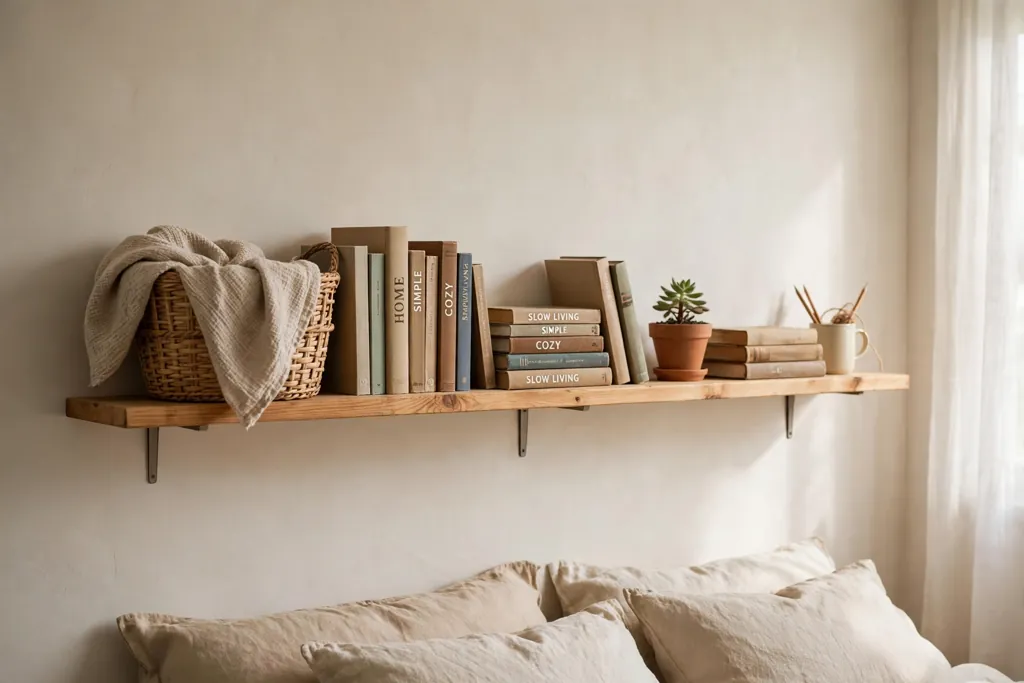
One run of open shelves on a single wall can hold books, baskets, and a few personal items, and it uses wall space instead of floor space. Fix shelves into studs or with fixings suited to your wall type, and keep the top shelf for light, rarely used items. A shelf run forces a regular edit, since everything on show must earn its place, which helps a small room stay calm.
Group items by use, with books upright in one group, a basket for small items in another, and one plant or print as the accent. Leave gaps between groups so the shelves read as display rather than overflow, and use baskets in one material to hide anything you would rather not show. Dust the shelves weekly, since open storage collects dust fast, and keep heavy items low for safety.
11. Add Plants in Plain Pots and Propagate Cuttings
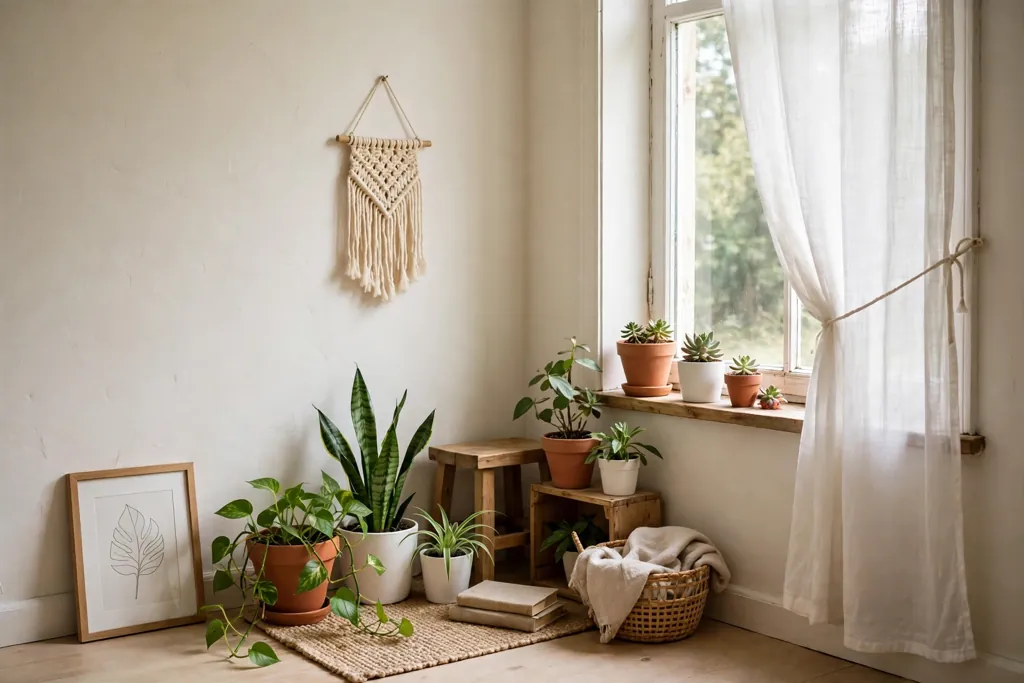
Two or three easy plants in plain terracotta or white pots bring life to a room without filling every surface. A tall floor plant fills an empty corner, a trailing plant softens a shelf, and a small plant on a nightstand adds green at eye level. Match each plant to the light it will actually get, and group plants that need similar watering together, so care stays simple.
Keep pots plain and in one material, so the plants, not the pots, carry the interest, and use saucers under pots on wood floors. Propagate cuttings from plants you already own in a glass of water, then pot them once roots form, so new plants cost nothing. Start with a few plants rather than a dozen, since a room needs plants you can actually keep alive.
12. Place One Large Mirror Where It Reflects Daylight
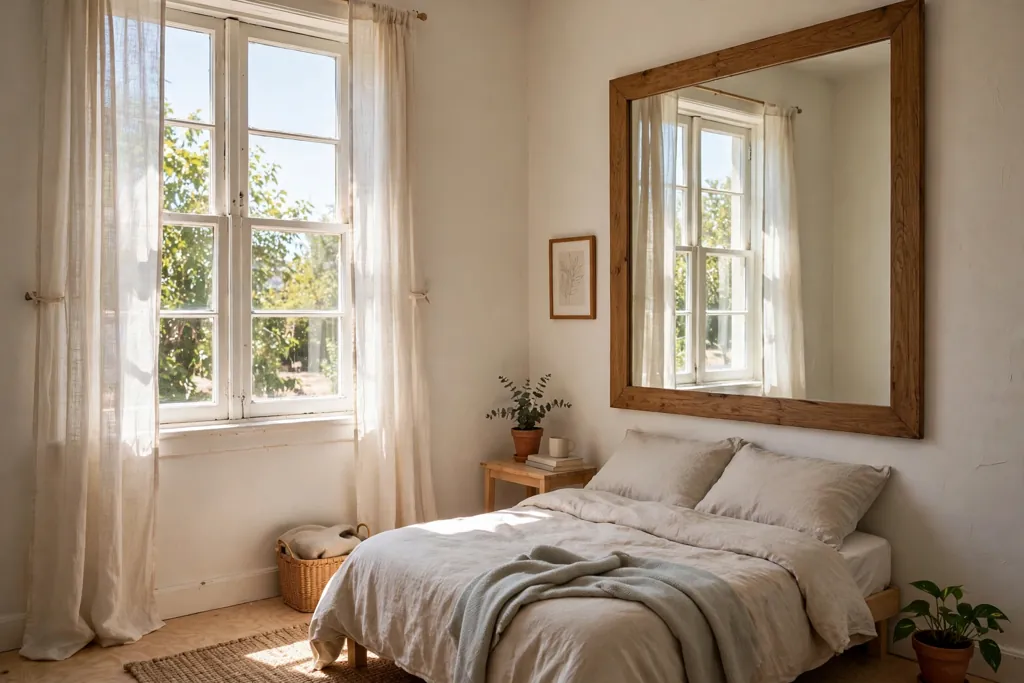
One large mirror opposite or beside a window bounces daylight deeper into the room and makes the far wall feel farther away, which matters in a small room. A single large mirror works better than several small ones scattered around the room, and a simple wood or plain frame suits the calm palette. Lean a full length mirror against the wall if hanging is not allowed, and secure it so it cannot slide.
Check what the mirror reflects before you fix its position, since a mirror that reflects a messy corner doubles the mess. Aim it toward the window, a plant, or a calm stretch of wall, and keep the area it reflects tidy. A mirror also helps a dark corner near a reading chair, where it can bounce lamp light back into the seating area in the evening.
13. Make a Simple Fabric Panel Headboard
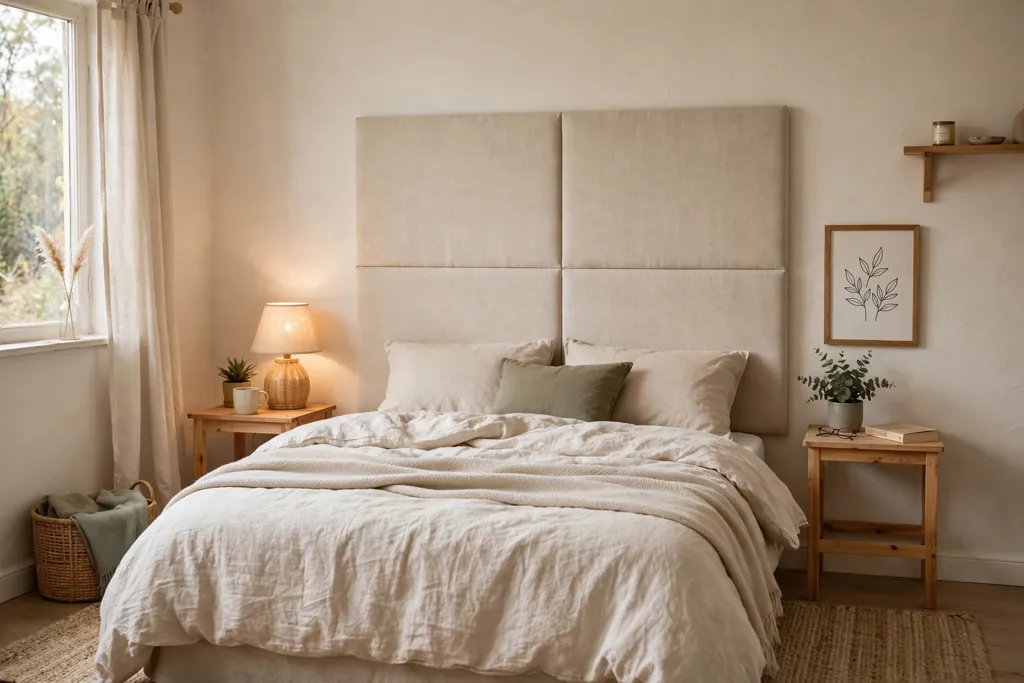
A fabric panel headboard softens a bedroom without the price of an upholstered bed frame. Stretch a plain or lightly patterned fabric over a board, pad it thinly, and fix it to the wall behind the bed at pillow height. The fabric adds comfort for reading in bed, and the pale tone keeps a small room feeling open.
Pick a washable fabric if you can, and a simple shape, such as a straight panel, so it stays easy to clean and easy to remove. Keep the bedding in a matching warm white or soft tone, and add one darker cushion for contrast. Measure the bed width first, so the panel spans the bed without crowding the nightstands. For a full storage plan that pairs with a tidy bed wall, see these bedroom storage ideas.
14. Give Every Mess One Basket, Box, or Hook
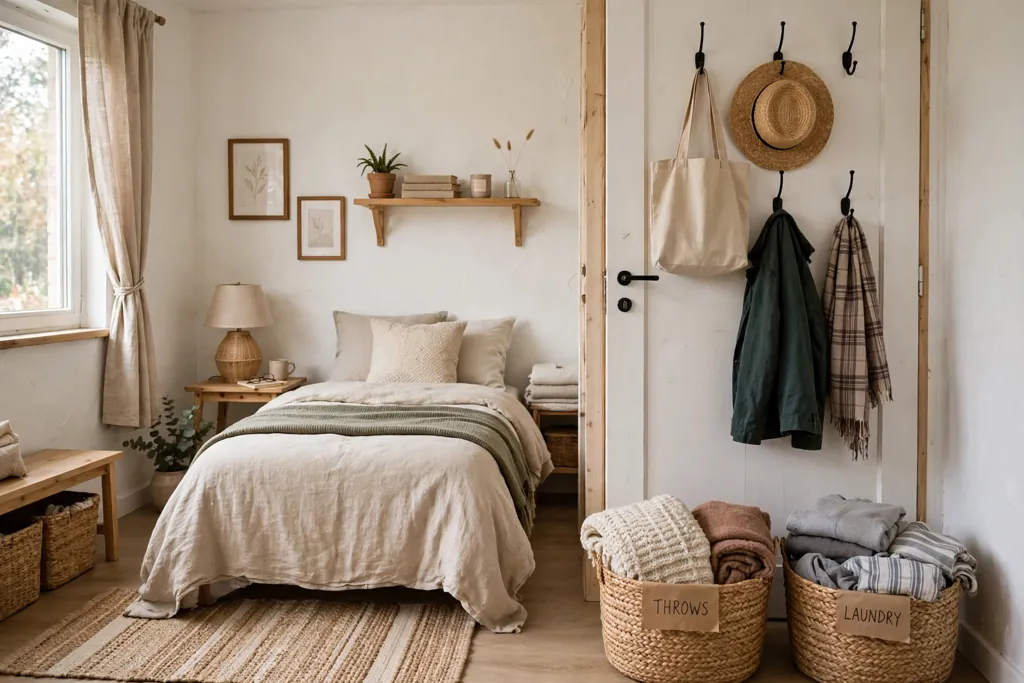
A room looks aesthetic when every common mess has one clear home. Give throws one basket, laundry one basket, chargers one small tray, and robes and bags hooks on the back of the door, so items land in the right place without thought. Baskets in one material hide clutter in a natural texture, and they move easily when you clean.
Keep one basket empty on purpose, as a quick tidy basket before guests arrive, and empty it once a week so it does not become overflow. Use flat boxes under the bed for spare bedding and off season clothes, with a label on each one, so you can find an item without pulling every box out. For more ideas on keeping a small room calm on a budget, see these minimalist bedroom ideas on a budget.
Conclusion
A room with personality comes from a few clear choices repeated well, not from a long list of new purchases. Pick three tones, fix the bed, the window, and the light first, then add art, plants, and baskets that show who lives there. Edit before you buy, reuse and thrift where you can, and add one idea at a time, so the room stays calm as it gains character. With those layers in place, a small room can feel personal, warm, and finished every day, on a budget you can actually keep.
If you found an idea here that suits your room, save this post on Pinterest so you can find it again when you are ready to start. Pin the look you like most, whether it is a painted accent wall, a picture ledge gallery, or a reading corner by the window, and use it as a guide for your next weekend refresh.
FAQs
How can I make a small room look aesthetic on a tight budget?
Start with the palette, the window, and the light, since those cover the most area for the least money. Paint one wall or hang plain curtains high and wide, swap cushion covers and one throw, and add a picture ledge with your own prints. Edit first, thrift frames and furniture, and add plants from cuttings, so the budget goes to changes you notice daily.
What colors work best for a budget friendly aesthetic room?
Warm white, oatmeal, soft sage, dusty terracotta, and muted blue suit most small rooms, since they stay calm and suit wood, linen, and plants. Use warm white for walls and large bedding pieces, a mid wood tone for furniture, and one soft accent for cushions, art, and a throw. Keep strong color to items you can move, so a change of mood costs little.
Can I make a rental room look aesthetic without painting or drilling?
Yes, with changes that leave no mark: peel and stick panels, leaning mirrors, picture ledges fixed with renter friendly strips where allowed, over door hooks, freestanding shelves, and furniture you can move. Plain curtains, layered rugs, cushion covers, baskets, and plants also work, since they travel with you when you move and need no wall damage.
How do I add personality without making a small room feel cluttered?
Give every item a home, and keep one surface mostly clear in each zone. Use a picture ledge for art you can rotate, one basket per job for throws and laundry, and closed boxes under the bed for spare bedding. Limit open shelves to books, one basket, and one plant or print per run, so personal items show without covering every surface.
What is the easiest first change for a plain room?
Swap the cushion covers and one throw, and hang plain curtains high and wide if the window still has bare glass or a short curtain. Those two swaps change the largest soft surfaces in the room in an afternoon, with no tools and no paint. Add a lamp with a warm bulb in the evening, and the room will already feel softer and more personal.
How many decor items should a small aesthetic room have?
There is no fixed number, but a useful rule is one feature per zone: one accent wall or gallery, one rug layer, one reading corner, one shelf run, and one or two plants. If a surface fills up, remove one item before adding another, and keep a spare basket for overflow. A room feels aesthetic when each item has room to show, not when every surface is covered.