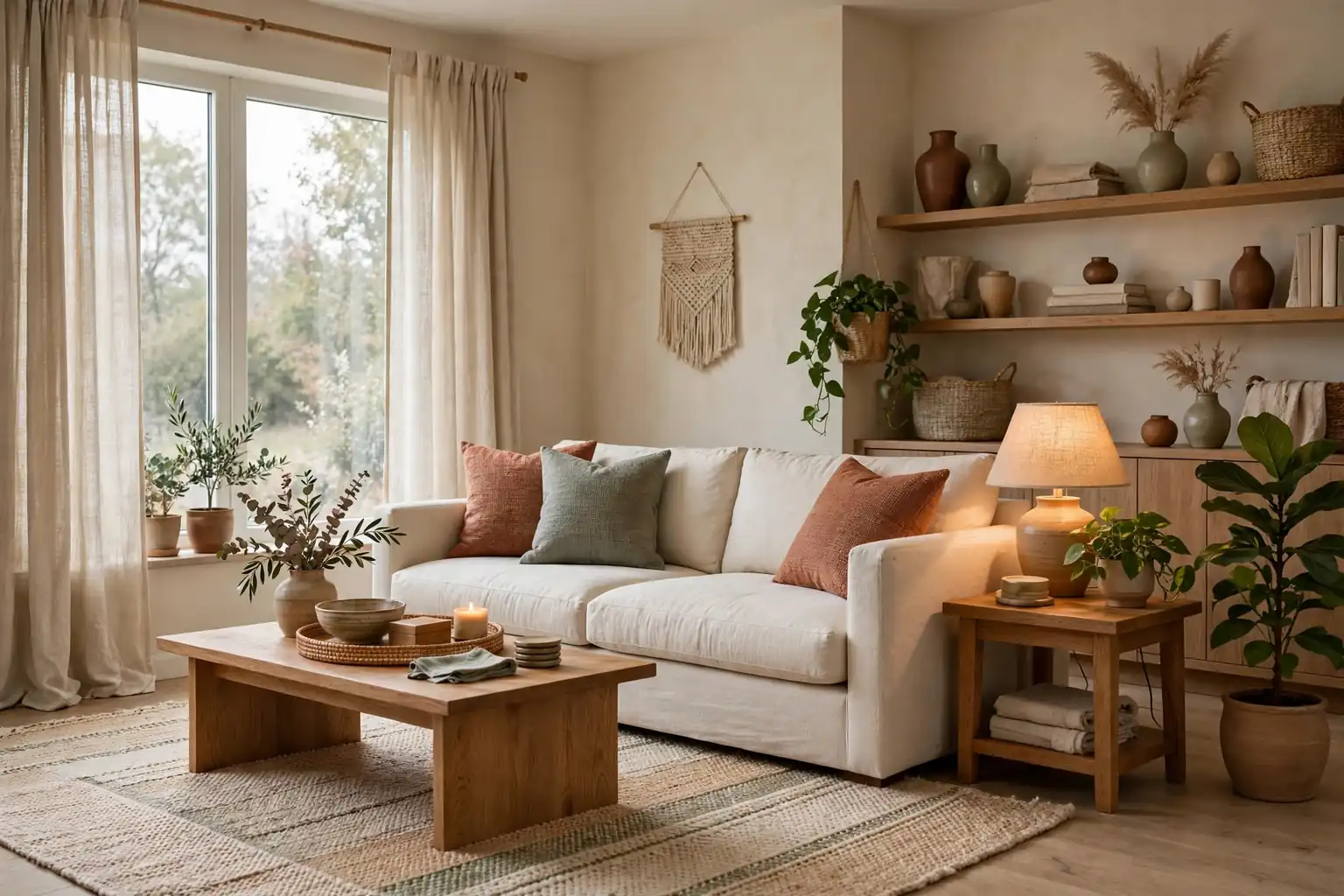
A room can feel cozy and current at the same time when soft textures meet clean, simple shapes. You do not need new furniture or a full renovation to get there. Small changes in lighting, textiles, and styling often make the biggest difference, because they change how a room feels when you walk in and how it works day to day. These 22 easy room decor ideas cover living rooms, bedrooms, entries, and small corners, so you can start with one idea or combine a few across a weekend. Pick a calm base, repeat one or two materials, and add warmth where you sit, read, and rest most.
Key Takeaways
- Layer light at different heights, with lamps and candles beside overhead light, so rooms feel warm in the evening.
- Keep one calm base of warm white, cream, and soft neutrals, then add one accent color in small, repeated doses.
- Use texture to add coziness: linen, wool, woven baskets, wood, and a soft rug underfoot.
- Give each room one clear focal point, such as art, a rug, or a styled shelf, and keep nearby surfaces quiet.
- Start with swaps you can reverse, such as cushions, curtains, throws, and styling, before you commit to paint or wallpaper.
- Repeat plants, wood, or baskets in more than one room so the whole home feels connected.
1. Layer Light at Different Heights
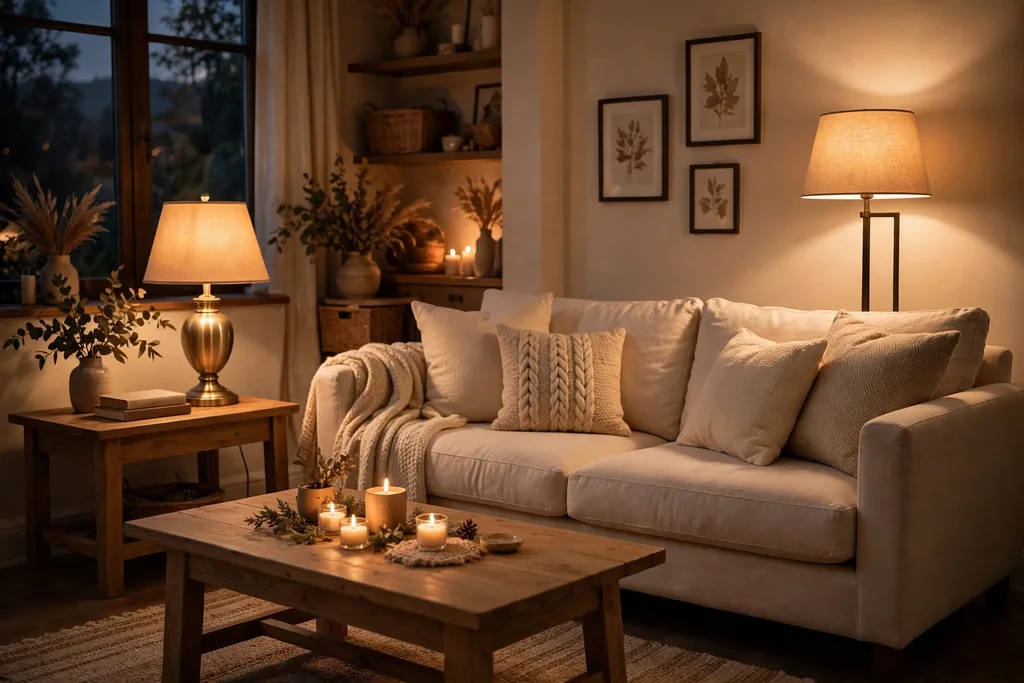
Layered lighting makes a room feel cozy after dark, when a single ceiling light can feel flat and harsh. A table lamp beside the sofa, a floor lamp in a corner, and a small candle group on a side table each add light at a different height, so the room glows rather than glares. This suits almost any room, and it works well in rentals, since lamps need no wiring changes.
Start with warm bulbs, and put the brightest lamp where you read or work. Keep cords tidy behind furniture, and use a dimmer or a lower watt bulb where the light feels too strong. If a room still feels dark in one corner, add a small lamp there instead of a brighter ceiling bulb, so the light stays soft and even across the room.
2. Anchor the Room With a Large Textured Rug
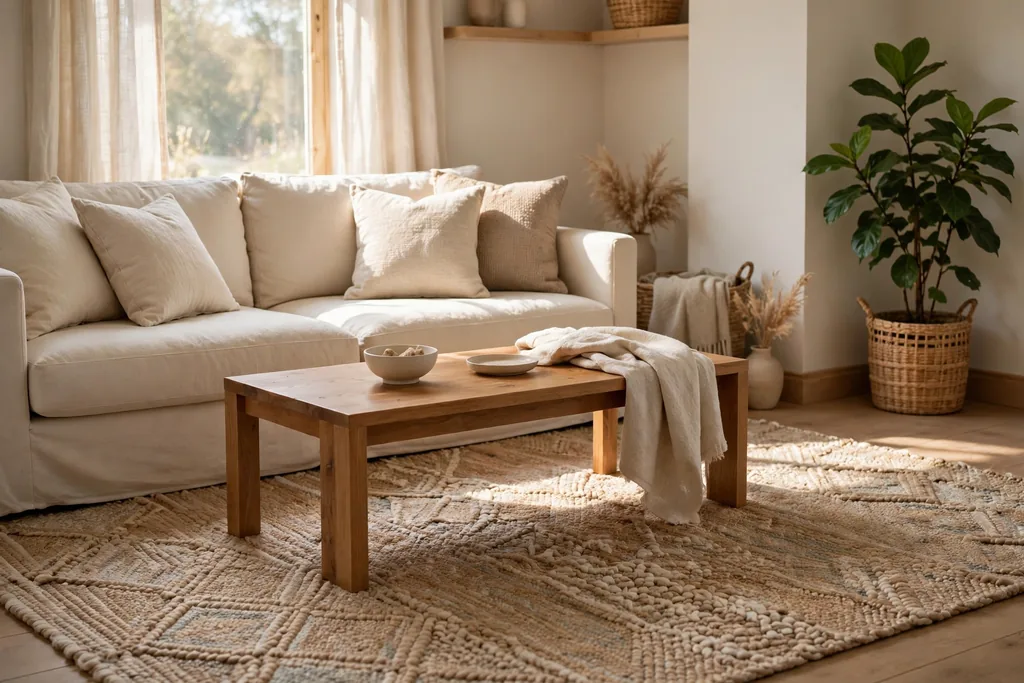
A large textured rug anchors seating and makes a bare floor feel warm underfoot. Choose a rug big enough for the front legs of the sofa and chairs to sit on it, so the seating group reads as one area rather than separate pieces. A flatweave, wool, or woven cotton rug in a soft neutral suits most rooms and lets cushions and art carry the color.
Keep the rug pattern simple if your sofa already has pattern, and vacuum often in a busy room, since textured fibres show dust. If you already own a smaller rug you like, layer it over a larger plain base rug, with a clear margin on all sides, and use a gripper pad underneath so the top layer does not slide.
3. Hang Long Linen Curtains Close to the Ceiling
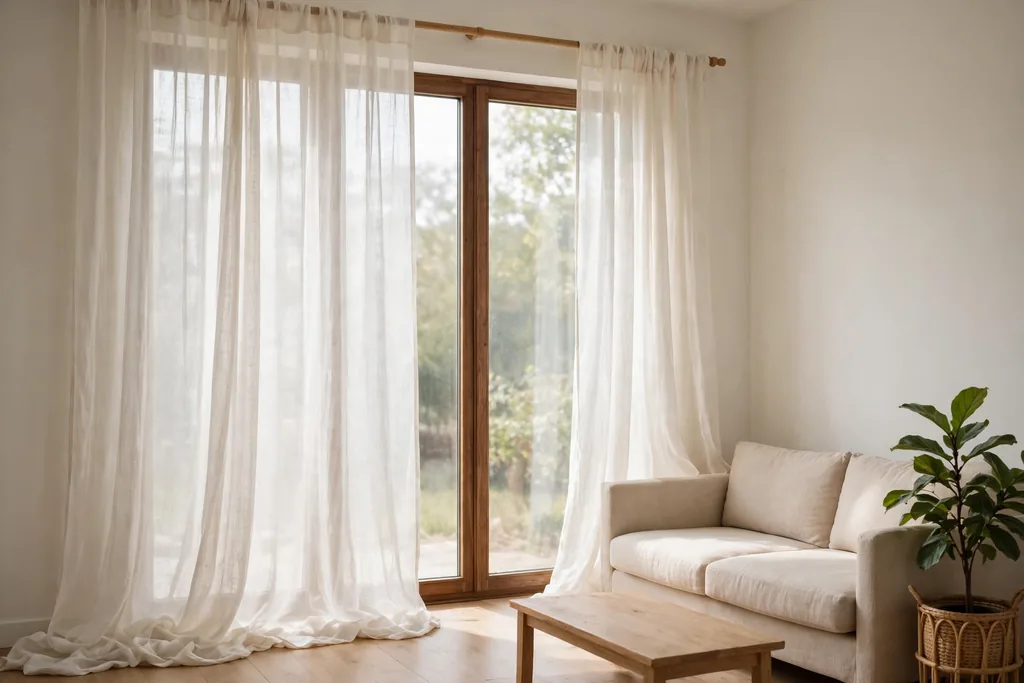
Long linen curtains soften a window wall and make a ceiling feel taller, even in a small room. Hang the rod close to the ceiling and wide enough that the curtains clear the window frame when open, so daylight still fills the room. Warm white, oatmeal, or soft grey linen suits a cozy, current look, and sheer layers work well where you want light without a bare window.
Measure twice before you buy, since curtains that stop above the floor can make a room look unfinished. Let the fabric just touch the floor, and steam or wash it as advised on the label before hanging, so the linen falls in soft folds. Pair plain curtains with a simple wood or black rod, and keep the rest of the window wall free of clutter.
4. Layer Throws and Cushions in One Palette
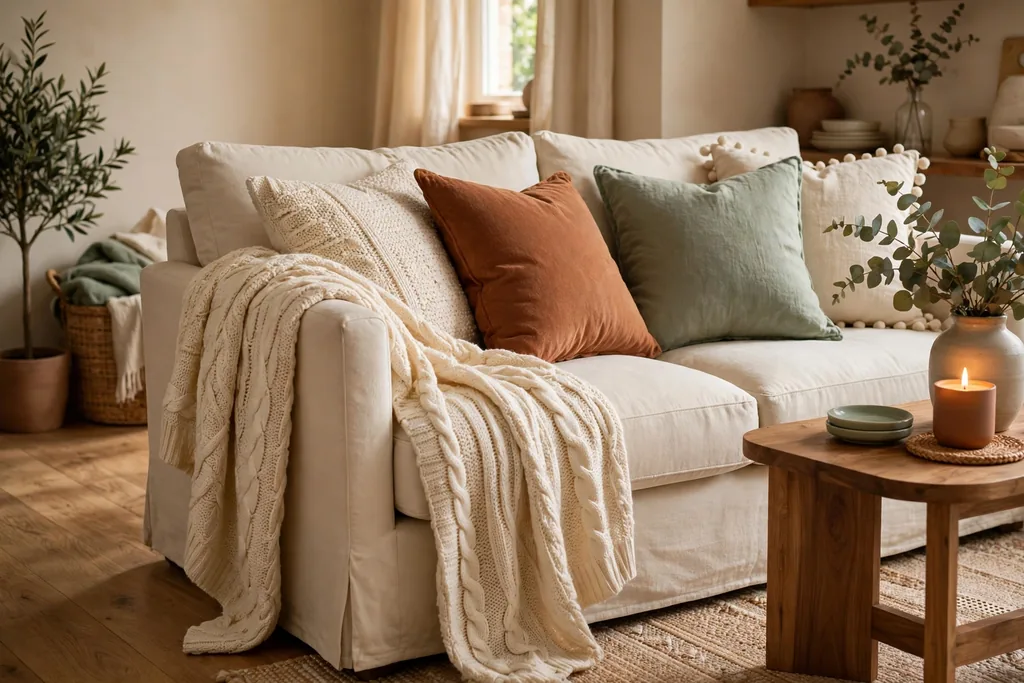
Throws and cushions are the fastest way to make a sofa or bed feel cozy, and they cost far less than new seating. Pick one palette, such as cream, rust, and sage, and use it across the cushions, a throw over one arm, and a folded throw in a basket nearby. The repeat makes the room look planned, even when the pieces come from different shops.
Mix textures rather than patterns: pair smooth linen cushions with a chunky knit throw and one velvet cushion, and keep the total count modest so the sofa stays easy to sit on. Swap cushion covers with the seasons if you want a fresh look, and store spare covers in a basket or a drawer, so the change takes minutes rather than a shopping trip.
5. Hang One Oversized Piece of Art
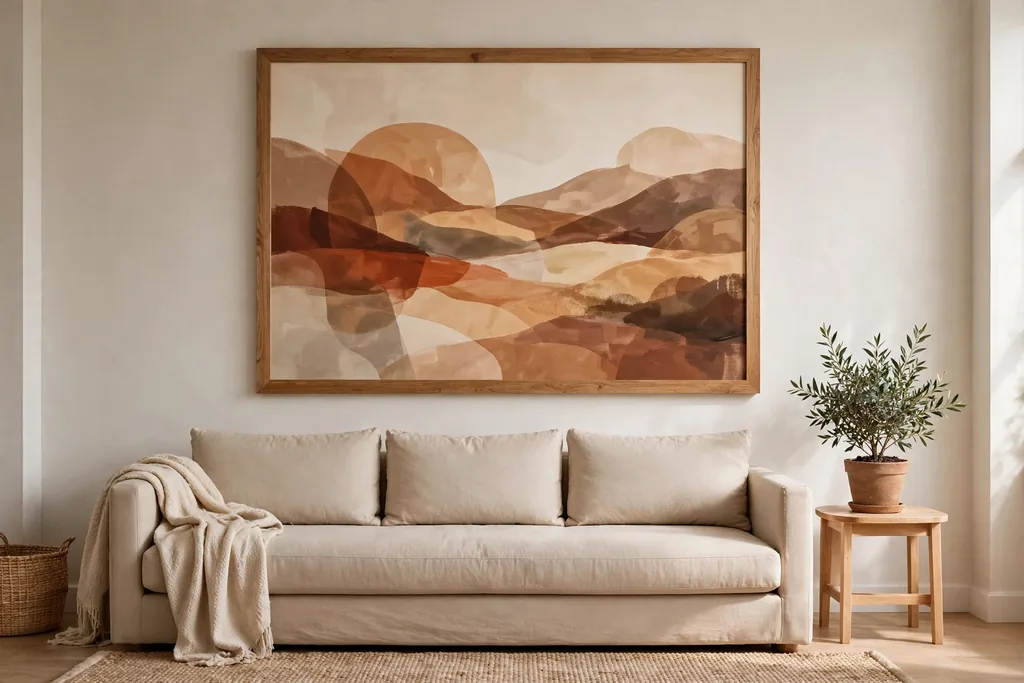
One oversized piece of art gives a room a clear focal point and can make a plain wall feel finished in a single step. Choose art with warm, earthy tones and a simple frame, and hang it above a sofa, a bed, or a console table, with its centre near eye level. A large print suits a room where smaller frames would look lost, and it keeps the wall calm, since one strong image replaces a busy mix.
Leave breathing room around the frame, and keep the furniture below it simple, so the art stays the feature. If a large framed print is out of reach, try a large canvas or a framed textile, and check the wall fixing suits the weight before you hang it. For more ideas on giving a room a warm focal point, see these stylish rustic decor ideas.
6. Build a Small Gallery Wall With Matching Frames
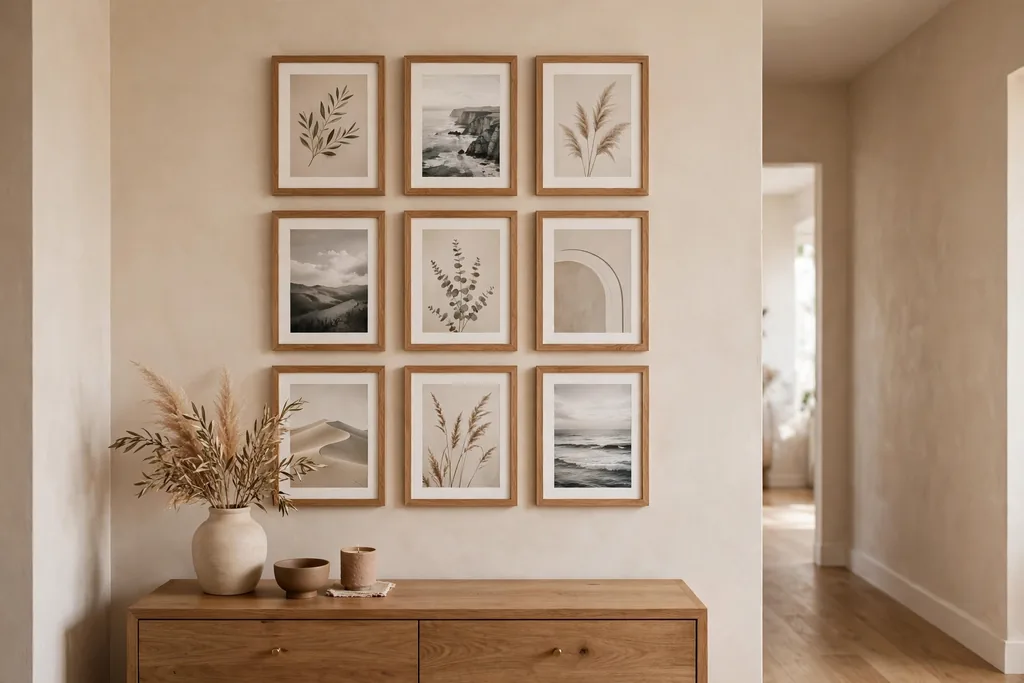
A gallery wall works best when the frames match and the spacing stays even, so a mix of prints and photos reads as one display rather than a cluttered wall. Use wood or black frames in one size family, plan the layout on the floor first, and start with the largest piece near the centre. This suits a hallway, a stair wall, or the wall above a console table, where a single large piece would feel too heavy.
Keep the theme calm, such as landscapes, botanical prints, or family photos in similar tones, and leave the same gap between each frame. Hang the group so its centre sits near eye level, and step back often while you hang, since small shifts show once the whole group is up. If you rent, use picture hanging strips rated for the frame weight, and check the wall surface suits them.
7. Add Plants at Different Heights
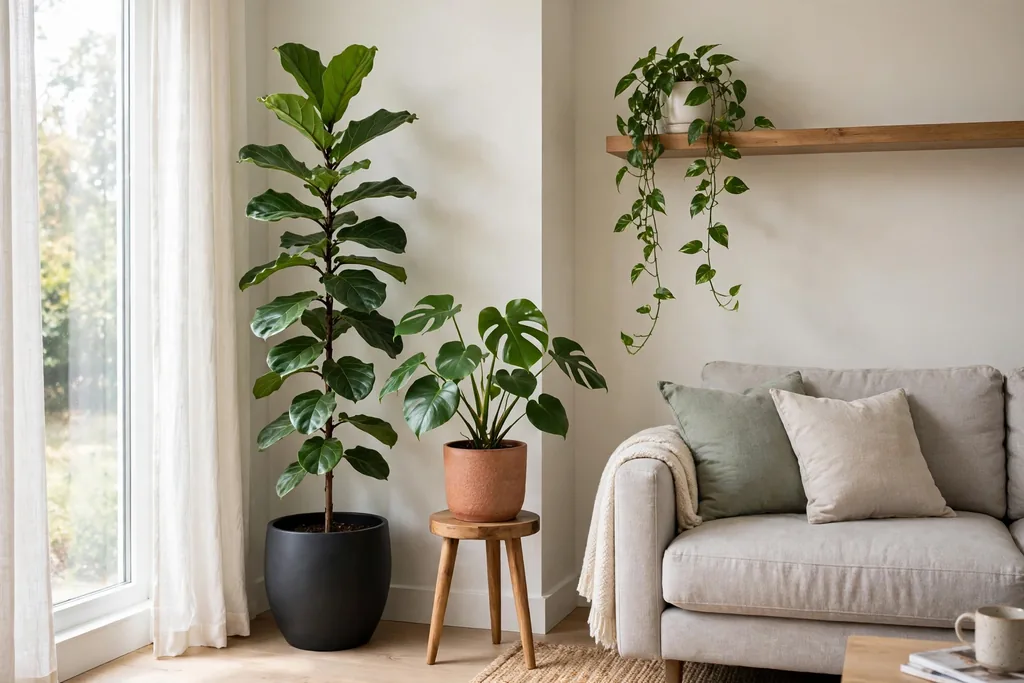
Plants bring life and softness to a room, and grouping them at different heights looks more natural than a single pot on a sill. Try a tall floor plant in a corner, a medium plant on a stand, and a trailing plant on a shelf, so the eye moves up and down the room. This suits living rooms, bedrooms, and bright entries, and it works even in a small space, since a shelf plant uses no floor space.
Pick plants that suit your light, and check the care label before you buy, since a plant that needs strong sun will fade in a dark corner. Use pots in one or two materials, such as terracotta and woven baskets, and empty saucers after watering so roots do not sit in water. Start with two or three easy plants, and add more once you know how much light and water your room gives.
8. Use Woven Baskets for Storage and Texture
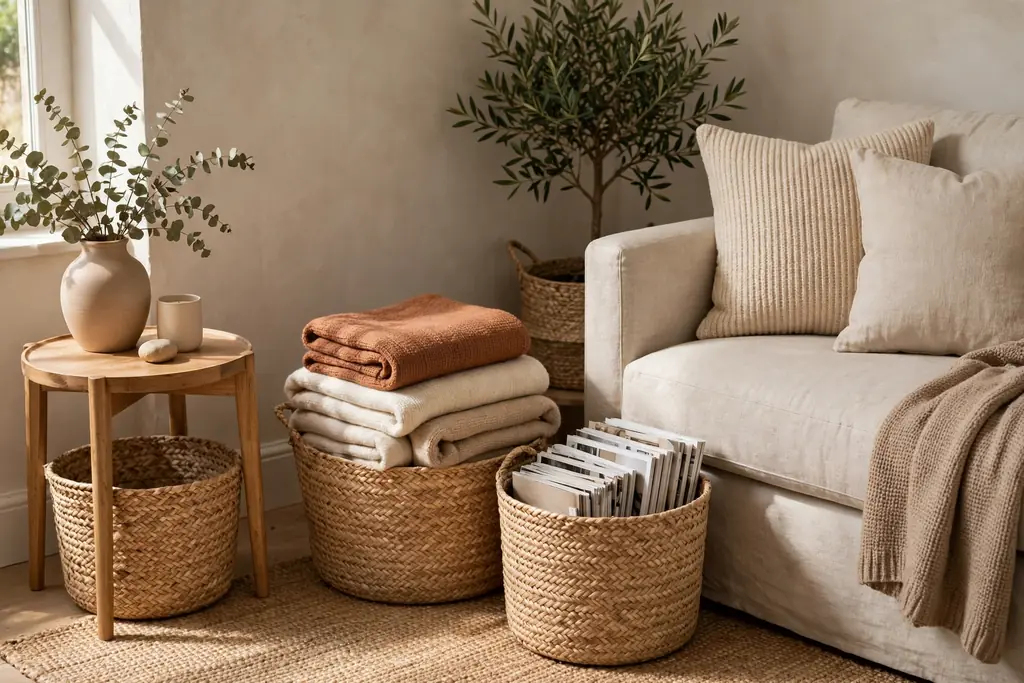
Woven baskets hide clutter and add natural texture at the same time, which makes them useful in almost every room. Use a large basket for throws beside the sofa, a medium basket for magazines or toys, and a small basket under a console table for keys or chargers. Seagrass, cotton rope, and rattan all suit a cozy, current room, and they soften hard furniture edges.
Label nothing, but keep one use per basket, so you can find things without emptying each one. Wipe baskets with a dry cloth, and keep them out of damp spots, since natural fibres can stain. If a basket starts to look messy, empty it, keep only what you use weekly, and move the rest to closed storage, so the basket stays a styling piece as well as a store.
9. Place a Mirror to Bounce Daylight Around
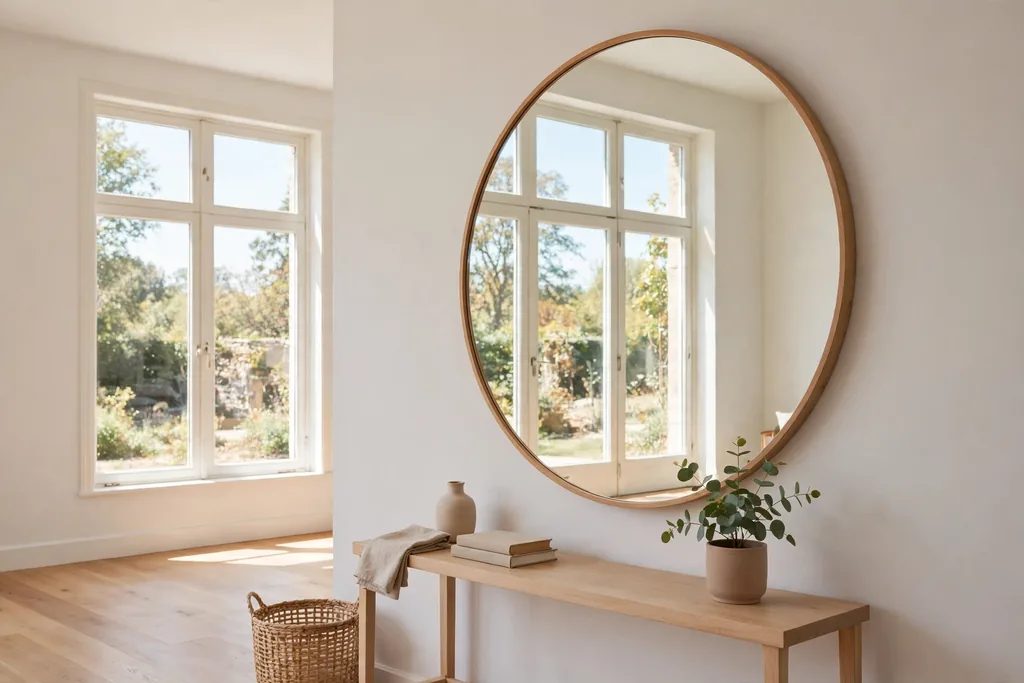
A mirror placed opposite or beside a window bounces daylight deeper into a room and can make a small space feel larger. A large round mirror with a thin wood frame suits a console table, a hallway, or a bedroom wall, and it reflects the brightest part of the room rather than a blank wall. This is a simple fix for a dark corner, and it needs no wiring or paint.
Hang the mirror so its centre sits near eye level, and check what it reflects before you fix it in place, since a mirror that reflects clutter will double the mess. Keep the frame simple if the wall already has art nearby, and wipe the glass often, since dust shows fast in reflected light. In a narrow hallway, a mirror on one wall and plain art on the other keeps the space from feeling like a tunnel.
10. Try One Removable Wallpaper Accent Wall
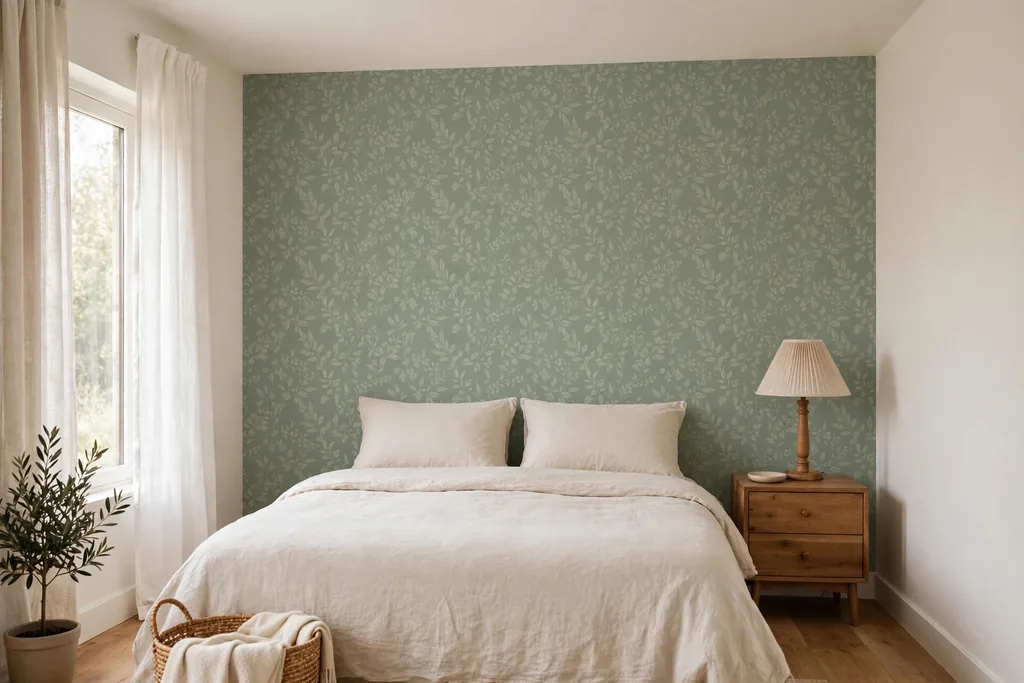
One accent wall in removable wallpaper adds pattern and color without the commitment of a full room of paper. Choose a soft, subtle pattern, such as a small botanical print or a gentle stripe in sage or warm grey, and use it on the wall you see first when you enter the room. This suits a bedroom wall behind the bed, a living room wall behind the sofa, or a small entry wall.
Follow the maker instructions for a smooth, clean wall surface, and smooth out air bubbles as you go, starting from the centre of each strip. Keep the other walls plain, and repeat one color from the paper in cushions or a throw, so the wall connects with the rest of the room. If you rent, confirm the paper is truly removable, and test a small corner first, so you know it lifts cleanly later.
11. Style the Coffee Table With a Tray
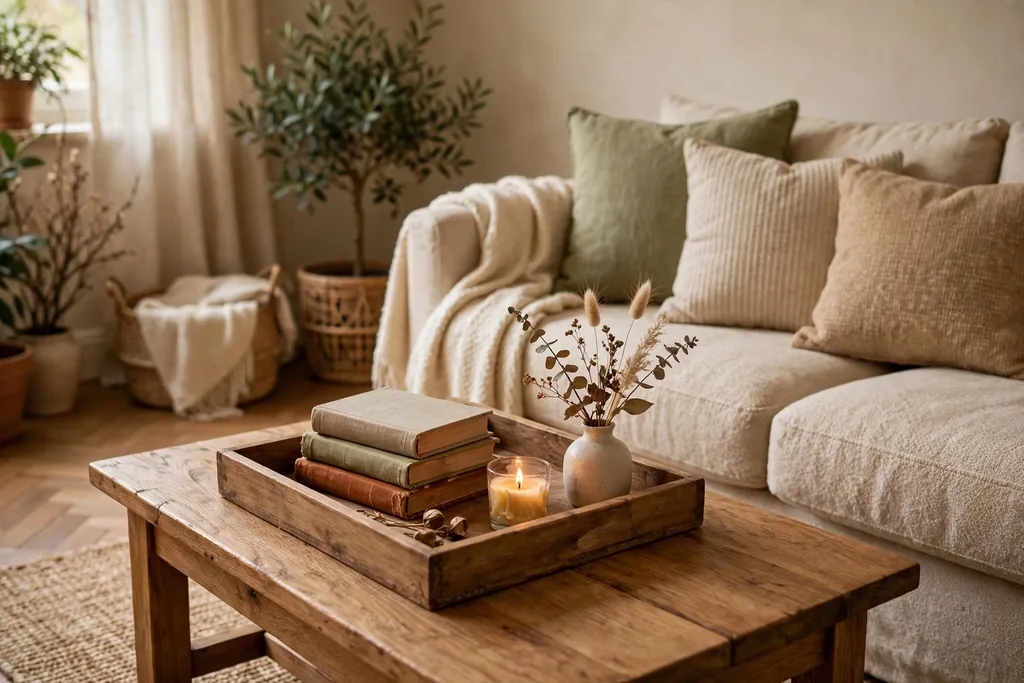
A tray turns a coffee table from a dumping ground into a styled surface, because it groups small items into one tidy area. Put a wood or rattan tray on the table, then add a small stack of books, a candle, and a tiny vase with dried stems, leaving room for a cup of tea. This suits a living room where the table collects remotes, chargers, and mail, since the tray sets a clear boundary for what stays.
Keep the tray items low, so you can still see across the table to talk, and limit the group to three or four pieces in different heights. Clear the tray once a week, and return anything that does not belong, so the table stays easy to use. If your table is small, use a round tray that fits with room to spare, rather than a tray that covers the whole surface.
12. Make a Reading Nook by a Window
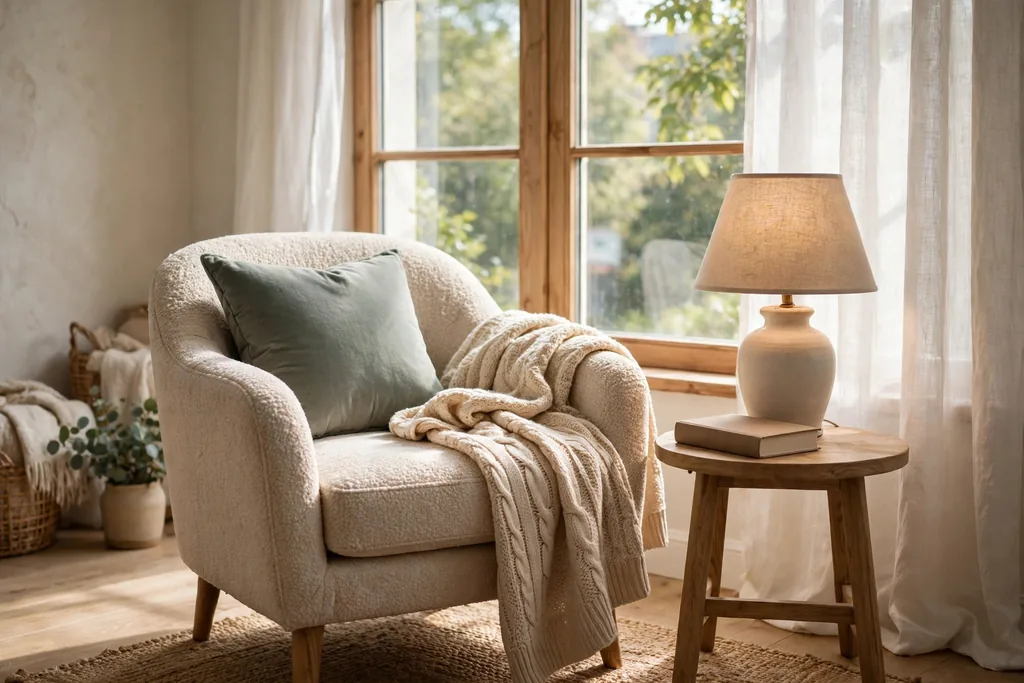
A reading nook needs only a comfortable chair, good light, and a place for a book, yet it can make an unused corner feel like a destination. Place an armchair near a window, add a cushion and a throw, and put a small side table beside it with a lamp and a book. This suits a living room corner, a bedroom bay, or a wide hallway, and it gives a room a second use without new furniture.
Keep the nook simple, with one basket for books nearby, so the corner stays inviting rather than crowded. If the window gives strong sun, choose a washable cushion cover, since pale fabric shows dust and sun marks fast. A floor lamp beside the chair means the nook works in the evening too, when daylight fades but you still want a quiet seat.
13. Group Candles and Lanterns for Evening Glow
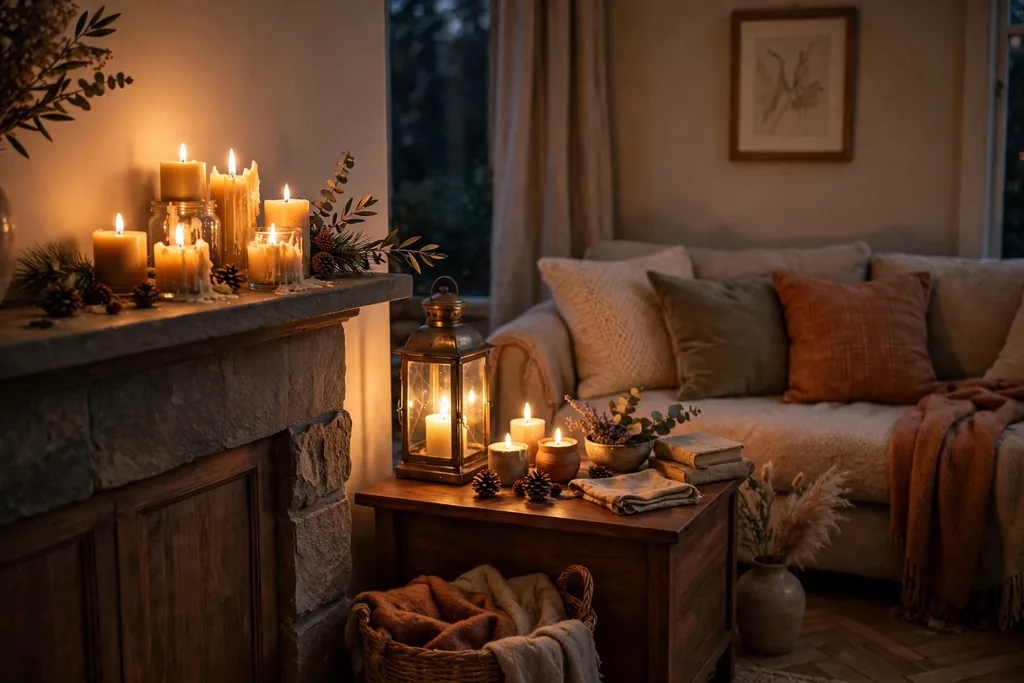
Candles and lanterns give a room a low, warm glow in the evening that lamps alone can miss. Group three or four candles of different heights on a tray, a mantel, or a side table, and add one lantern on the floor nearby for a larger pool of light. This suits a living room, a bedroom, or a bathroom, and it works well for quiet evenings, since the light stays soft and low.
Use sturdy holders that cannot tip easily, keep flames clear of curtains, throws, and paper, and never leave candles burning in an empty room. Battery candles give a similar glow where real flames are not practical, such as a shelf near books or a home with small children. Match the holders in one material, such as glass or wood, so the group looks calm rather than random.
14. Add Warm Wood Accents in Small Doses
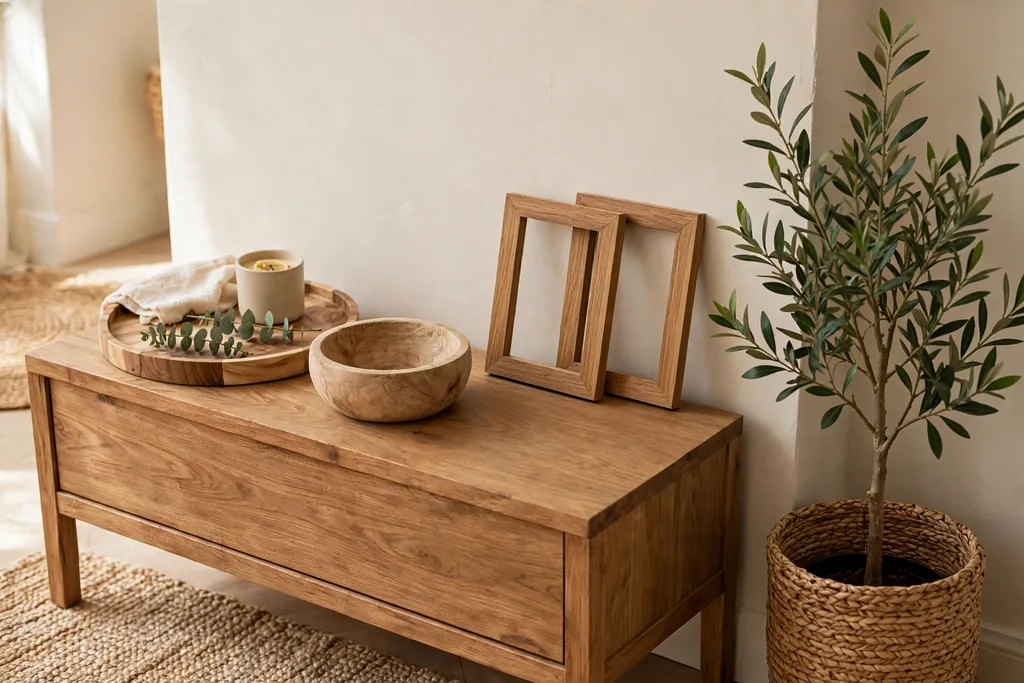
Warm wood accents add a natural, grounded feel to a room, and small doses often work better than large wood furniture. Try a wood tray on a coffee table, wood picture frames on a wall, and a wood bowl on a console table, in a tone close to other wood in the room. This suits a room that feels too white or too smooth, since wood adds grain and warmth without a new sofa or table.
Keep the wood tones close, such as warm oak or light walnut, and avoid mixing many different wood colors in one room, since the mix can look random. Wipe wood with a dry cloth, and use coasters under hot drinks on a wood tray, so rings do not mark the surface. If a room already has a wood floor, repeat that tone in the accents, so the floor and the details feel connected.
15. Style Open Shelves With Space Between Groups
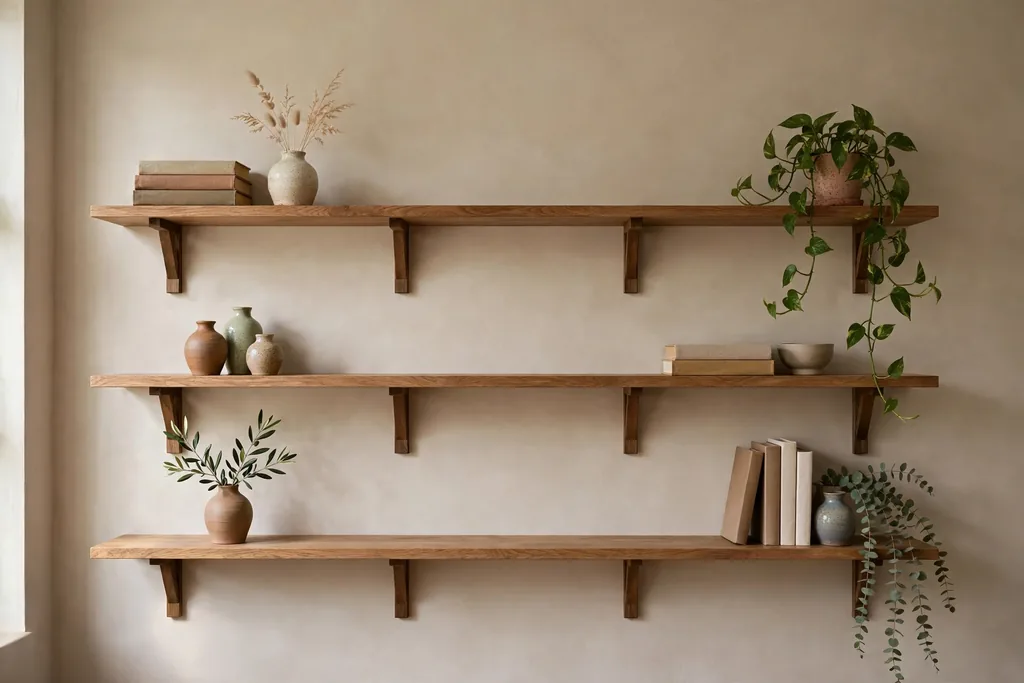
Open shelves look calm when each group has space around it, and crowded when every inch is filled. Use one or two runs of wood shelves on a single wall, and group books, pottery, and a small plant into clusters, leaving gaps between groups. This suits a living room, a kitchen, or a bedroom, and it lets you show pieces you already own in a new way.
Put heavier items low, keep the shelf count low in a small room, and store only items you use or enjoy looking at, so dust stays easy to manage. A single row above a sideboard is often enough, and a plant at one end softens the straight lines of the shelves. For more living room styling ideas, see these stylish rustic living room ideas.
16. Layer Bedding for a Cozy Bedroom
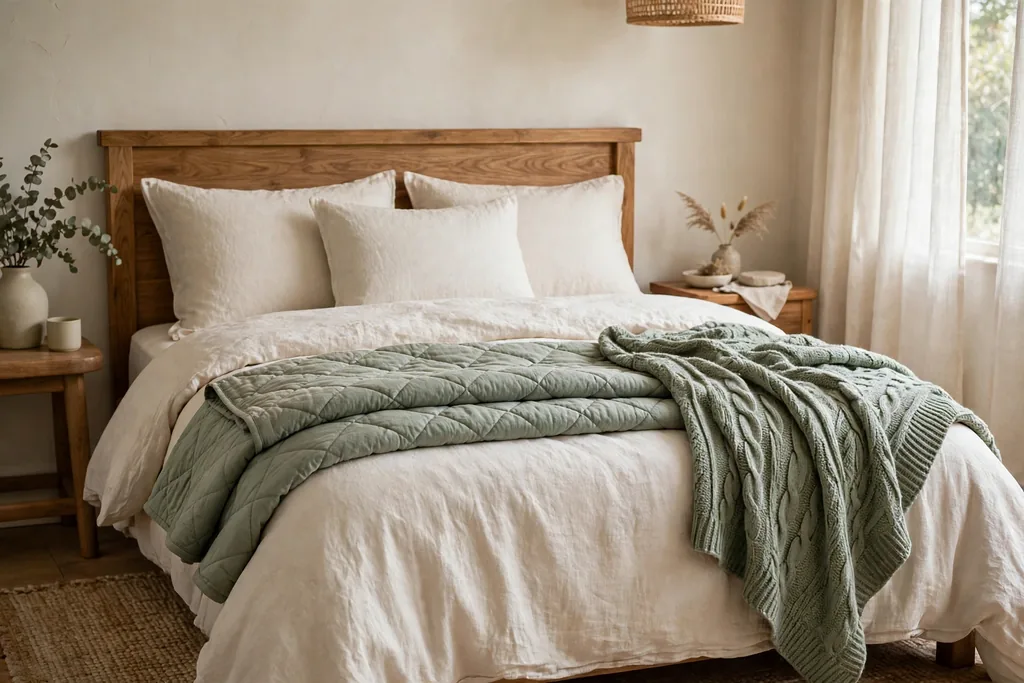
Layered bedding makes a bedroom feel cozy and finished, even when the furniture stays the same. Start with a plain fitted sheet, add a duvet in warm white, fold a light quilt across the lower half of the bed, and finish with a knit throw at the foot. Keep the palette to warm white, oatmeal, and one soft accent, such as sage, so the bed looks calm rather than busy.
Keep sleeping pillows plain, and add only two or three decorative cushions, so making the bed stays quick each morning. Shake the duvet out each day, and wash bedding as advised on the label, so the layers stay light and fresh. For more bedroom ideas in this style, see these stylish rustic bedroom decor ideas.
17. Style a Slim Entry Console
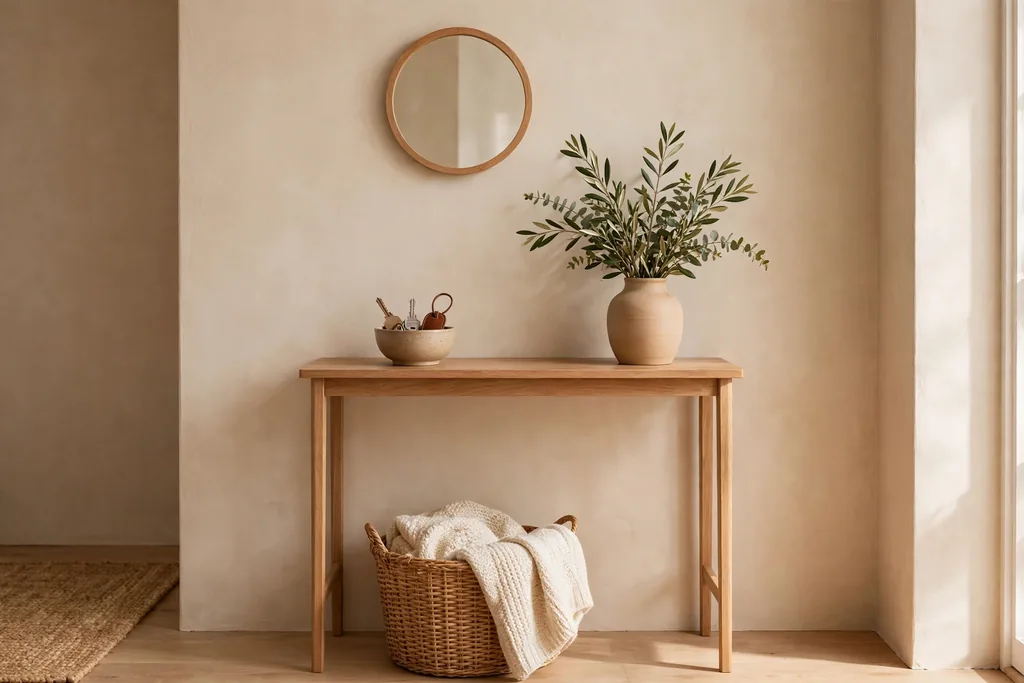
An entry console sets the tone for the whole home, since it is the first surface guests see. Choose a slim table that fits the wall without blocking the walkway, hang a mirror or one piece of art above it, and add a small bowl for keys, a vase with stems, and a basket below for shoes or bags. This suits a hallway, a small entry, or a landing, and it gives keys and mail a home, so they stop landing on the kitchen counter.
Keep the top mostly clear, with three or four items only, and leave the basket below for items you grab daily. Wipe the table often, since entries collect dust, and check the mirror height, so it reflects the room rather than the ceiling. If the entry is very narrow, use a wall shelf and hooks instead of a table, so the walkway stays clear.
18. Repeat One Accent Color in Small Doses
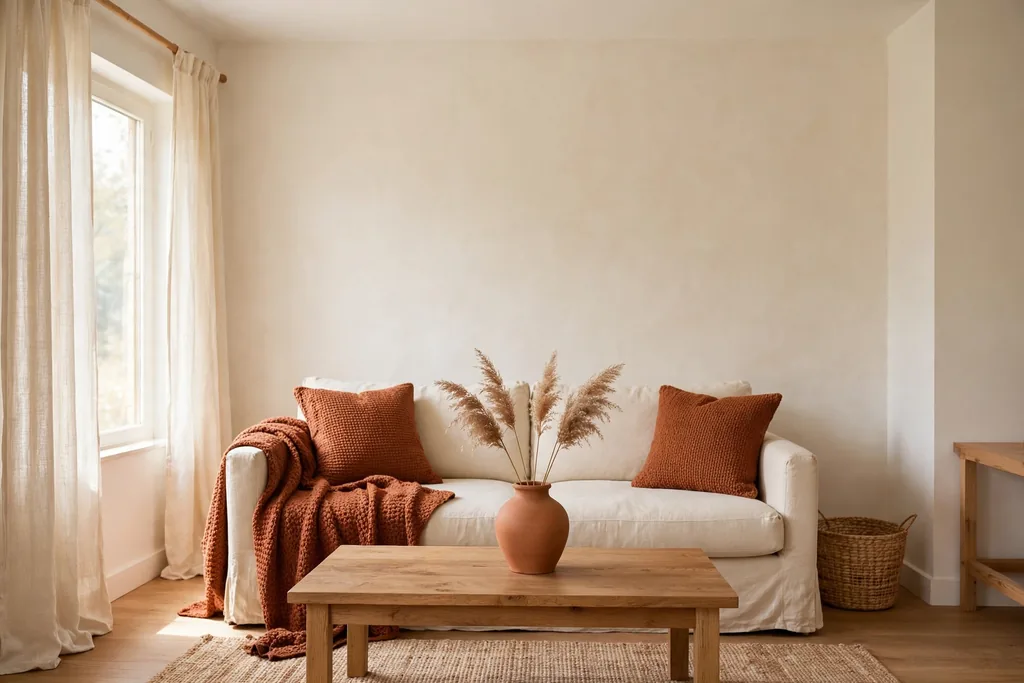
One accent color, repeated in small doses, makes a room feel current without a bold repaint. Pick a warm accent, such as rust or terracotta, and use it in a cushion, a vase, and a throw, spread across the room rather than grouped in one spot. This suits a neutral room that feels flat, since the repeat draws the eye around the space and ties seating, shelves, and windows together.
Keep the accent to about three touches per room, and keep the base neutral, so the color stays a highlight rather than a theme. If the room starts to feel too strong, remove one touch, such as the throw, and keep the cushion and vase, since two repeats are often enough. Swap the accent with the seasons if you like change, by changing cushion covers and a vase only.
19. Add a Pouf and Floor Cushions for Casual Seating
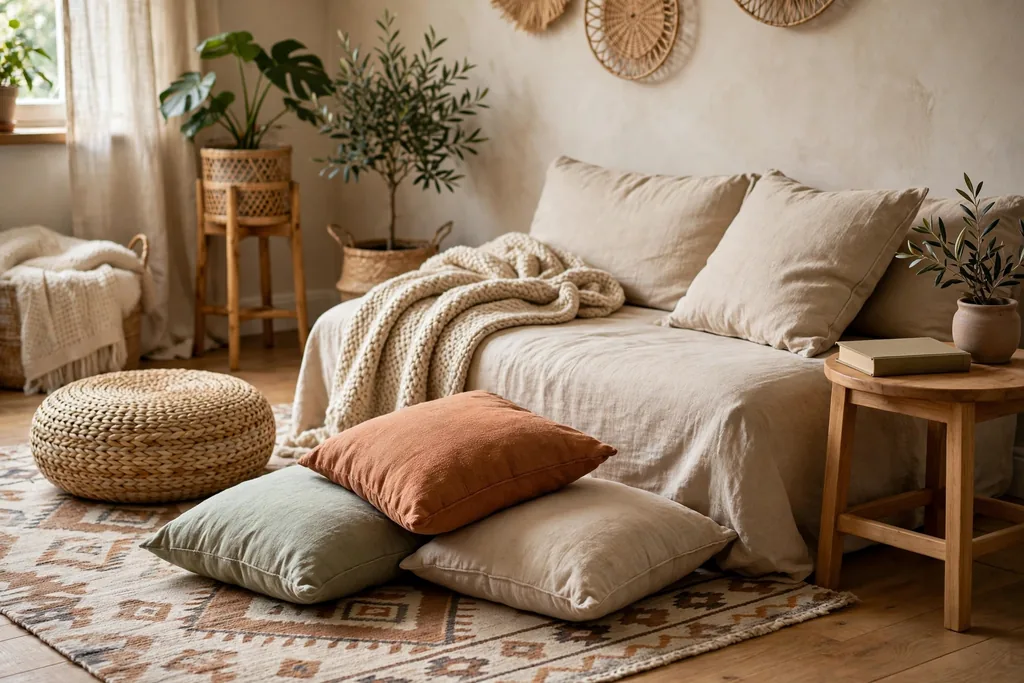
A pouf and a few floor cushions add casual, flexible seating that suits relaxed evenings and guests. Place a round woven pouf near the sofa as a footrest or an extra seat, and keep two floor cushions in a basket nearby for movie nights or reading on the floor. This suits a living room, a family room, or a bedroom corner, and it works well in a small space, since poufs tuck away when not in use.
Choose covers you can wash, since floor seating shows wear fast, and keep the colors in your room palette, so the extra seats look planned. Store floor cushions upright in a basket, so they stay clean and easy to grab, and move the pouf to the side when you need floor space for play or exercise. A pouf in a natural weave also adds texture beside smooth sofa fabric.
20. Restyle a Bookshelf With Books and Breathing Room
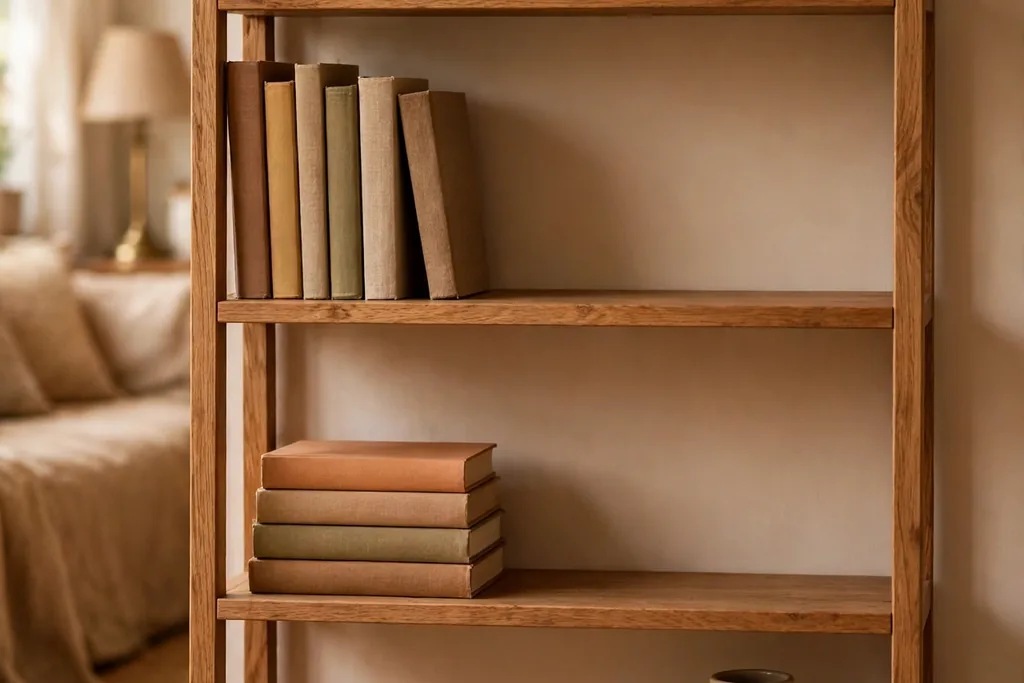
A bookshelf feels current when books sit beside empty space and a few chosen objects, rather than packed tight on every shelf. Group books upright by height, stack a few horizontally to break the rows, and add a small plant, a ceramic vase, or one framed print on some shelves, leaving other shelves partly empty. This suits a living room, a study, or a bedroom, and it turns a storage unit into a display.
Remove books you no longer read or enjoy, and move them to closed storage, so the shelf shows only what you like. Dust the shelves often, since open books collect dust, and keep heavier books low for safety. If a shelf looks bare, add a small stack of books on its side, rather than filling it with new objects, so the shelf stays calm and useful.
21. Hang a Woven Pendant Light Over a Table
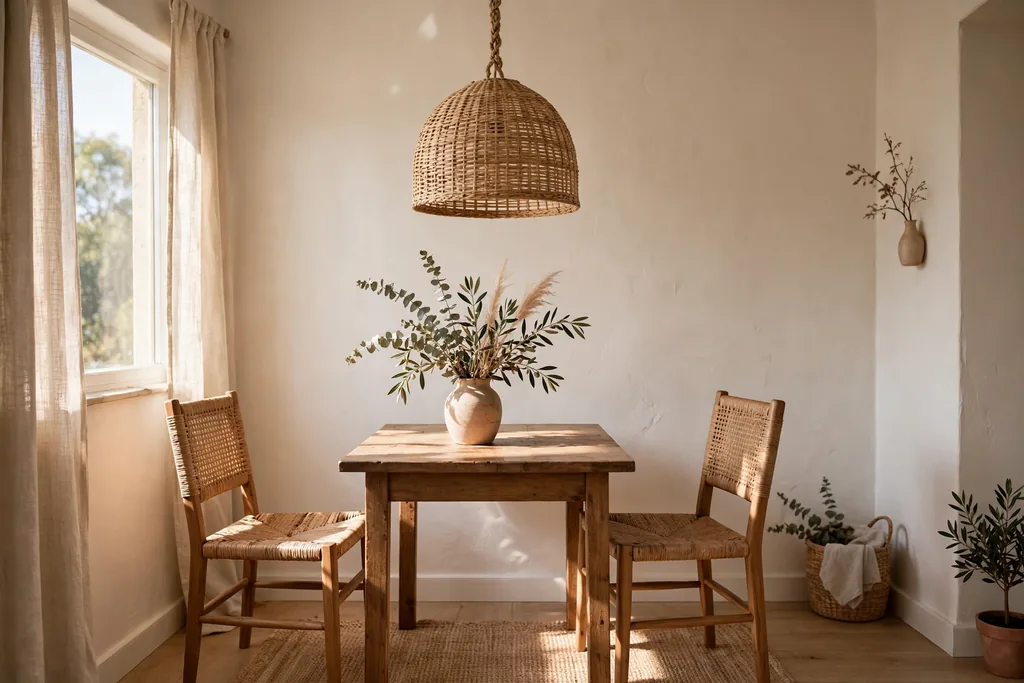
A woven pendant light adds texture above a table and gives a dining corner or a reading spot a clear centre. Hang a rattan or seagrass pendant over a small wood table, with the shade low enough to feel intimate but high enough to see across the table. This suits a dining nook, a kitchen table, or a bedroom side table, and it works well where a ceiling light alone feels too plain.
Check the drop height before you fix the fitting, and use a warm bulb, so the woven shade glows softly in the evening. Keep the table below simple, with a vase and one or two place settings, so the pendant stays the feature. If you rent and cannot change a fitting, try a plug-in pendant with a hook, and check the cord route stays safe and tidy.
22. Rearrange the Layout for Better Flow
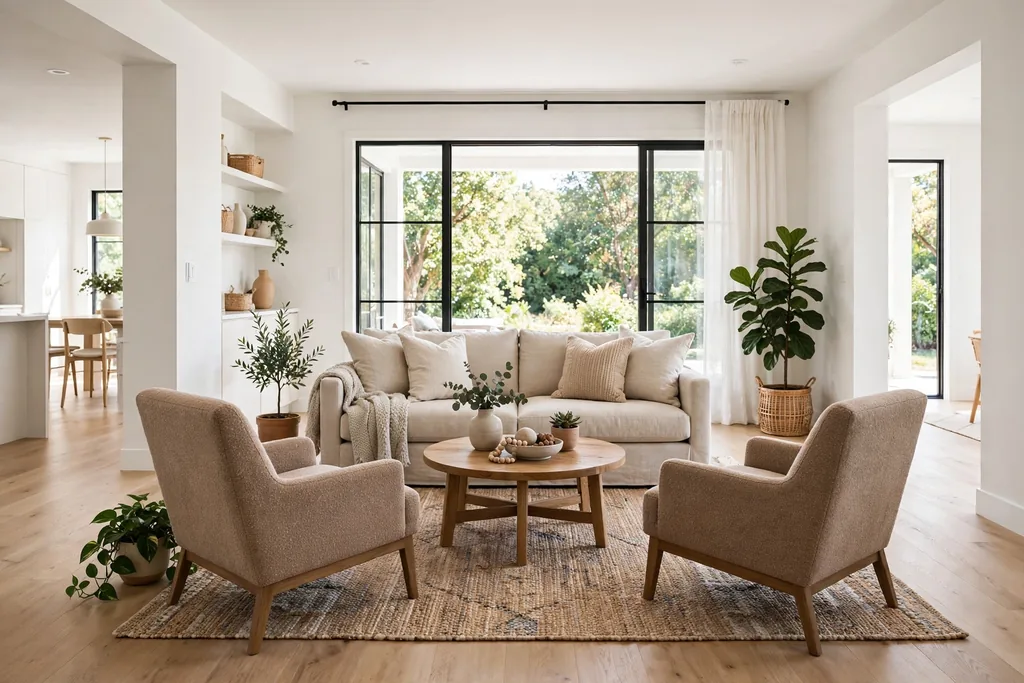
Rearranging furniture costs nothing, yet it can change how a room feels more than any new purchase. Start by clearing the room, then place the largest piece first, such as the sofa facing a window or a fireplace, and angle chairs for conversation, with clear walkways between pieces. This suits a room that feels cramped or awkward, since a new layout can open a path you did not notice before.
Live with the new layout for a few days before you buy anything for it, and note where you still bump into furniture or lack light. Keep the rug under the seating group, and move lamps with the chairs they serve, so light follows seating rather than staying where it was. If a piece still does not fit, move it to another room or to storage, rather than forcing it into a tight corner.
Conclusion
Easy room decor does not need a big budget or a full renovation. Start with light, texture, and one calm palette, add plants and wood in small doses, and give each room one clear focal point. Try one or two ideas from this list first, live with the change for a few days, and then add the next swap, so each room grows cozy and current at a pace that suits your home and your budget. Save this list for your next weekend refresh, and return to it when a room starts to feel flat again.
FAQs
What is the easiest way to make a room feel cozy?
Start with layered lighting, soft textiles, and a rug underfoot. Warm lamps, a throw, cushions in one palette, and a textured rug change how a room feels in an evening, without paint or new furniture, and each swap is easy to reverse if you change your mind.
How can I make a room look current without redecorating fully?
Keep the base neutral and current by using clean shapes, one accent color, and natural materials such as linen, wood, and woven baskets. Swap cushion covers, art, and a pendant shade, and remove clutter, so the room reads fresh without a renovation.
How many accent colors should a cozy room have?
One accent color, repeated in two or three small touches, is usually enough. A neutral base of warm white and cream, plus one warm accent such as rust or sage, keeps a room calm and cozy, while too many strong colors can make it feel busy.
Do I need to buy new furniture to refresh a room?
No. Rearranging furniture, changing cushions and curtains, adding plants, and styling shelves or a coffee table can refresh a room with no new furniture. Buy only after you live with a new layout for a few days and know what is still missing.
How do I choose a rug size for a living room?
Choose a rug large enough for the front legs of the sofa and chairs to sit on it, so the seating group feels connected. Measure the seating area before you buy, and leave a clear margin of floor around the rug, so the room still feels open.
Can these ideas work in a rental home?
Yes. Most ideas here are rental friendly, including lamps, rugs, cushions, curtains, baskets, plants, mirrors, removable wallpaper, and rearranging furniture. Check your lease and wall fixing rules before you hang heavy art or mirrors, and use removable options where you can.