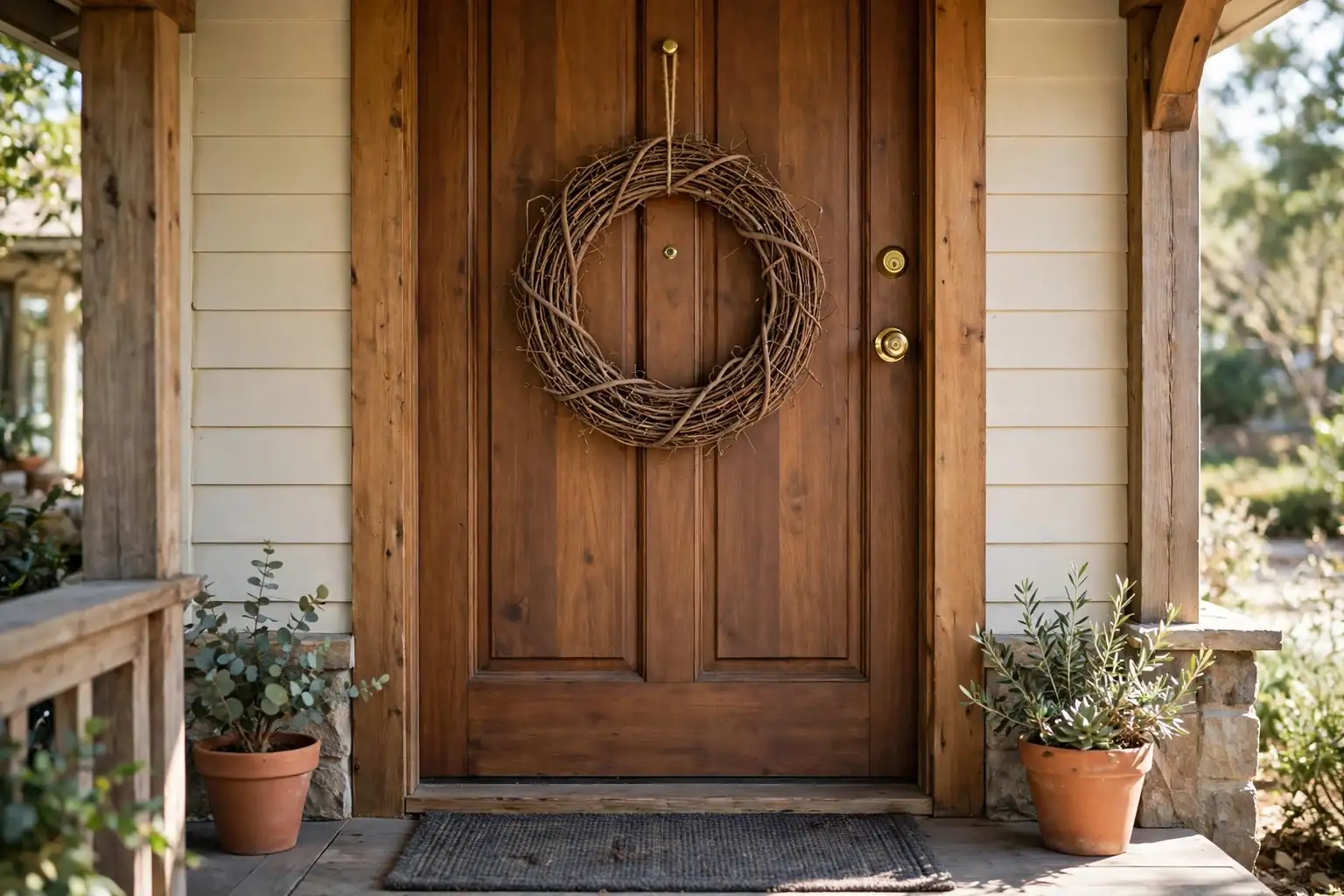
Twig wreaths work best when you start with a sturdy grapevine or willow base, then add natural materials that suit the season and the spot. Use pinecones and berries for winter, dried flowers and moss for spring, and wheat or leaves for fall, and hang the wreath where wind and rain will not pull loose pieces free.
A twig base is useful because it can be left bare, filled lightly, or dressed fully, and it can be refreshed without starting again. Check the base before you add anything: the twigs should feel firm, the ring should hold its shape when lifted, and any loose ends should be tucked in or wired down. For more seasonal ideas to pair with these looks, browse the Dwell Ovell decor ideas index. Hang heavier wreaths on a sturdy hook, keep dried materials out of heavy rain, and bring delicate indoor wreaths inside during storms.
Key Takeaways
- Start with a firm grapevine or willow base, and wire or tuck loose twig ends before adding decorations.
- Match the filling to the season: pinecones and berries for winter, dried flowers and moss for spring, wheat and leaves for fall.
- Keep outdoor wreaths light and well wired, since wind can pull loose dried pieces free.
- Use a hook rated for the weight, especially for pinecone, driftwood, and moss filled wreaths.
- Leave some twig visible in most designs, so the wreath still reads as a twig wreath rather than a solid flower ring.
- Store twig wreaths hanging or flat in a dry place, away from damp rooms that can soften the base.
1. A Bare Grapevine Wreath on the Front Door

A bare grapevine wreath, with twisted brown vines and no filling, gives a plain rustic look for a front door, porch wall, or gate. The open weave lets the door color show through, and the shape suits farmhouse, cottage, and wood sided homes. Hang it with a simple hook and no ribbon for the cleanest result.
Choose a wreath with even thickness all around the ring, since thin spots can snap when the wreath is lifted. Outdoors, tie the top of the ring to the hook with a short length of wire so wind cannot lift it off. Brush off dust and cobwebs now and then, and trim any twig that works loose.
2. A Willow Twig Wreath with Dried Lavender

A willow wreath, made from pale flexible willow stems, pairs well with small bunches of dried lavender tucked around the lower half. The soft purple buds and grey green stems suit a bedroom door, a bathroom wall, or a sheltered porch. Keep the lavender bunches small so the willow shape stays clear.
Dried lavender sheds buds if it is handled often, so hang this wreath where it will not be brushed by passing coats or bags. Keep it out of rain, which can darken the buds and loosen the stems. When the scent fades, replace just the lavender bunches and keep the willow base for another season.
3. A Twig Wreath with Pinecones for Winter

A twig base covered in mixed pinecones, in natural brown tones and varied sizes, gives a winter wreath that needs no greenery. Place larger cones at the bottom and smaller cones toward the top, and leave small gaps of twig showing between them. This style suits wood doors, stone porches, and neutral entry walls.
Pinecone wreaths can be heavy, so use a sturdy hook and test it before leaving the wreath up. Keep the wreath under cover where possible, since soaked cones close up and take a long time to dry. A dry brush removes dust from between the cone scales without pulling cones loose.
4. A Twig Wreath with Moss and Small Ferns

A twig wreath with patches of sheet moss and small dried ferns gives a woodland look for an indoor wall, a hallway, or a covered porch. The green moss softens the brown twigs, and the ferns add a light, feathery edge. Press the moss into the twig weave rather than covering the whole ring, so the structure still shows.
Moss dries and can crumble if it is kept in a very dry room, so this wreath suits a spot away from radiators and direct sun. Handle it by the base, not by the moss, and keep it indoors or under cover in rain. If a patch loosens, press it back in with a small amount of wire rather than pulling the whole section apart.
5. A Twig Wreath with Dried Citrus and Cinnamon

A twig wreath with dried orange slices and cinnamon sticks gives a warm seasonal look for a kitchen door, a dining room wall, or a sheltered porch in late fall and winter. Space the orange slices evenly, add short cinnamon bundles in pairs, and keep the rest of the ring bare so the wreath does not look crowded.
Dried citrus softens in damp air, so keep this wreath under cover and out of direct rain. Bring it indoors during wet spells if the porch is open. When a slice starts to curl or darken, replace just that slice if the base is still in good shape.
6. A Twig Wreath with Eucalyptus Sprigs

A twig wreath with short eucalyptus sprigs tucked into the weave gives a calm grey green look for a modern door or a light interior wall. The round leaves soften the rough twigs without hiding them, and the wreath works from winter into early spring. Use sprigs of similar length for an even ring.
Eucalyptus dries over time and becomes more brittle, so handle the wreath by the base and keep it out of heavy rain. Hang it where it will not be knocked by a door swing. When leaves start to drop, remove the tired sprigs and tuck in fresh ones rather than rebuilding the wreath.
7. A Twig Wreath with Red Berries

A twig wreath with clusters of red berries, real dried winterberry or a natural looking berry spray, adds a clear pop of color to a plain door. Place the berry clusters in three or four groups around the ring, with bare twig between them, rather than covering the whole wreath. This style suits dark green, black, and navy doors in winter.
Check real berry clusters each week, since dried berries can drop over time. Keep real berry wreaths away from spots where children or pets might pick at them. Sweep up fallen berries from the porch so they do not stain the step or the door mat.
8. A Driftwood and Twig Wreath for a Coastal Room

A wreath that mixes small driftwood pieces with twigs gives a coastal look for a beach house entry, a bathroom wall, or a room with pale wood and linen. Use smooth, weathered pieces in varied lengths, wired flat against the twig base, and leave gaps so the ring shape stays clear. Keep the palette to wood tones, white, and sand colors.
Driftwood wreaths can be heavy for their size, so use a hook rated for the weight and hang the wreath on a solid wall or door, not on a hollow panel alone. Check wire fixings after the wreath has been up for a few weeks, since wood can shift as it dries. Wipe pieces with a dry cloth to remove dust.
9. A Twig Wreath with Dried Wheat and Grasses

A twig wreath with dried wheat stems and ornamental grasses gives a harvest look for fall, suited to a front door, a dining room wall, or above a sideboard. Bundle the stems in small groups, angle them in the same direction around the ring, and trim the ends to a similar length for a tidy shape.
Dried wheat sheds grains if it is shaken, so hang this wreath where it will not be bumped. Keep it indoors or on a covered porch, since rain can bend the stems and loosen the bundles. When stems start to break, replace a whole bundle rather than trying to glue single stems back in place.
10. A Twig Wreath with Pussy Willow for Spring

A twig wreath with pussy willow stems, with their soft grey buds, gives a simple spring look for a front door or a hallway wall. The pale buds stand out against dark twigs, and the wreath needs no flowers to look finished. Add a few short green sprigs at the base if the ring feels too bare.
Pussy willow buds are soft and can be crushed by handling, so hang the wreath once and leave it in place. Keep it out of rain, which can mat the buds. This wreath suits a covered porch or an indoor wall best, where the buds stay dry and keep their shape.
11. A Twig Wreath Centerpiece with a Candle

A flat twig wreath laid on a table, with a candle in a glass holder set in the center, works as a centerpiece for a dining table or a sideboard. The twigs form a low ring, the candle adds light, and the display stays low enough for conversation across the table. Add a few pinecones or dried leaves inside the ring for a seasonal touch.
Use a candle in a glass holder, never an open flame next to dry twigs, and keep the flame clear of overhanging stems. Place the wreath on a tray or a heat safe mat to protect the table. Remove the candle before moving the wreath, and keep the centerpiece away from curtains and paper decorations.
12. A Twig Wreath with Dried Hydrangeas

A twig wreath with dried hydrangea heads, in soft cream, mauve, or dusty blue, gives a full but gentle look for a bedroom wall, a living room, or a sheltered porch. Space the hydrangea heads evenly, tuck the stems into the twig weave, and leave some twig visible between heads so the wreath does not look solid.
Dried hydrangeas are fragile and can crumble if pressed, so hang this wreath where it will not be bumped. Keep it out of rain and damp air, which can spot the petals. Dust it with a gentle shake outdoors or a soft dry cloth, and replace any head that starts to shed heavily.
13. A Twig Wreath with Feathers in Natural Tones

A twig wreath with feathers in cream, brown, and grey gives a soft, textured look for an indoor wall or a bedroom door. Tuck short feathers into the weave in small groups, all angled the same way, and keep the feather count low so the twigs still show. This style suits rooms with linen, wool, and wood textures.
Feathers bend easily, so hang this wreath indoors where it will not face wind or rain. Keep it away from open windows on windy days. If a feather bends, remove it and tuck in a fresh one rather than trying to straighten a creased shaft.
14. A Twig Wreath with Autumn Leaves and Acorns

A twig wreath with dried autumn leaves and a few acorns gives a fall look for a front door or a porch wall. Use leaves in muted red, gold, and brown, pressed flat into the weave, and place acorns in small groups rather than scattered singly. The mix suits brick, wood, and painted doors in autumn.
Dried leaves fade in strong sun, so this wreath lasts longest on a shaded porch or indoors. Keep it out of rain, which can make leaves curl and drop. When leaves start to look faded, swap in fresh dried leaves for the worst sections and keep the twig base.
15. A Twig Wreath Above the Mantel with Pine Sprigs

A twig wreath hung above the mantel, with short pine sprigs tucked into the lower half, keeps a fireplace wall looking finished through winter without holiday symbols. Choose a wreath narrower than the mantel, center it above the shelf, and hang it from a plain hook or a simple ribbon loop. The mix of brown twigs and green pine suits living rooms with wood furniture.
Keep the wreath clear of heat from the fire, and use battery candles on the mantel rather than open flames near dried twigs and pine. Dust the wreath when you dust the mantel, since heat can draw dust upward. If the pine sprigs dry out, replace just those sprigs and keep the twig base for the next season.
Conclusion
Twig wreaths work well because the base stays useful across seasons: change the filling, not the whole wreath. Start with a firm grapevine or willow ring, pick natural materials that suit the spot and the weather, and wire loose pieces in place before hanging. A bare twig wreath suits a rustic door, a pinecone or berry version suits winter, and dried flowers, moss, or wheat suit spring and fall. Hang each wreath on a hook that holds its weight, keep dried materials out of heavy rain, and store the base dry so it can be refreshed next season.
FAQs
What is the best base for a twig wreath?
A grapevine or willow base works best for most twig wreaths, since both hold their shape, accept wire and tucked stems, and can be reused. Grapevine gives a rough, rustic weave, while willow gives a smoother, paler ring, so choose grapevine for a farmhouse look and willow for a lighter, cleaner look.
How do I keep dried materials from falling off a twig wreath?
Wire each bunch or cluster to the twig base, rather than relying on glue or tucking alone, and hang the wreath where wind will not pull at it. Check the wreath after the first few days outdoors, and rewire any bunch that has loosened before more pieces drop.
Can a twig wreath stay outdoors all year?
A bare twig wreath can stay outdoors longer than a wreath filled with dried flowers, since it has fewer pieces to shed or fade. Filled wreaths last longer under a covered porch, and delicate fillings such as dried hydrangeas, feathers, and moss are best kept indoors or brought inside during rain and storms.
How do I hang a heavy twig wreath on a front door?
Use an over the door hanger or a wall hook rated for the weight of the wreath, and test it by hanging the wreath and leaving it for a day before relying on it. For a heavy pinecone or driftwood wreath, tie the top of the ring to the hook with wire so the wreath cannot slip off in wind.
How long do dried flowers and leaves last on a twig wreath?
Dried flowers and leaves usually look good for one season, sometimes longer indoors away from sun and damp air. Replace a section when petals crumble, leaves fade, or stems break, and keep the twig base, since it can carry a fresh filling next season.
How should I store a twig wreath after the season?
Store a twig wreath hanging on a hook or flat in a box in a dry place, away from damp rooms and hot attics. Keep the wreath in a bag or box that keeps dust off the filling, and check it before reuse for loose twigs, faded sections, or wire that needs tightening.