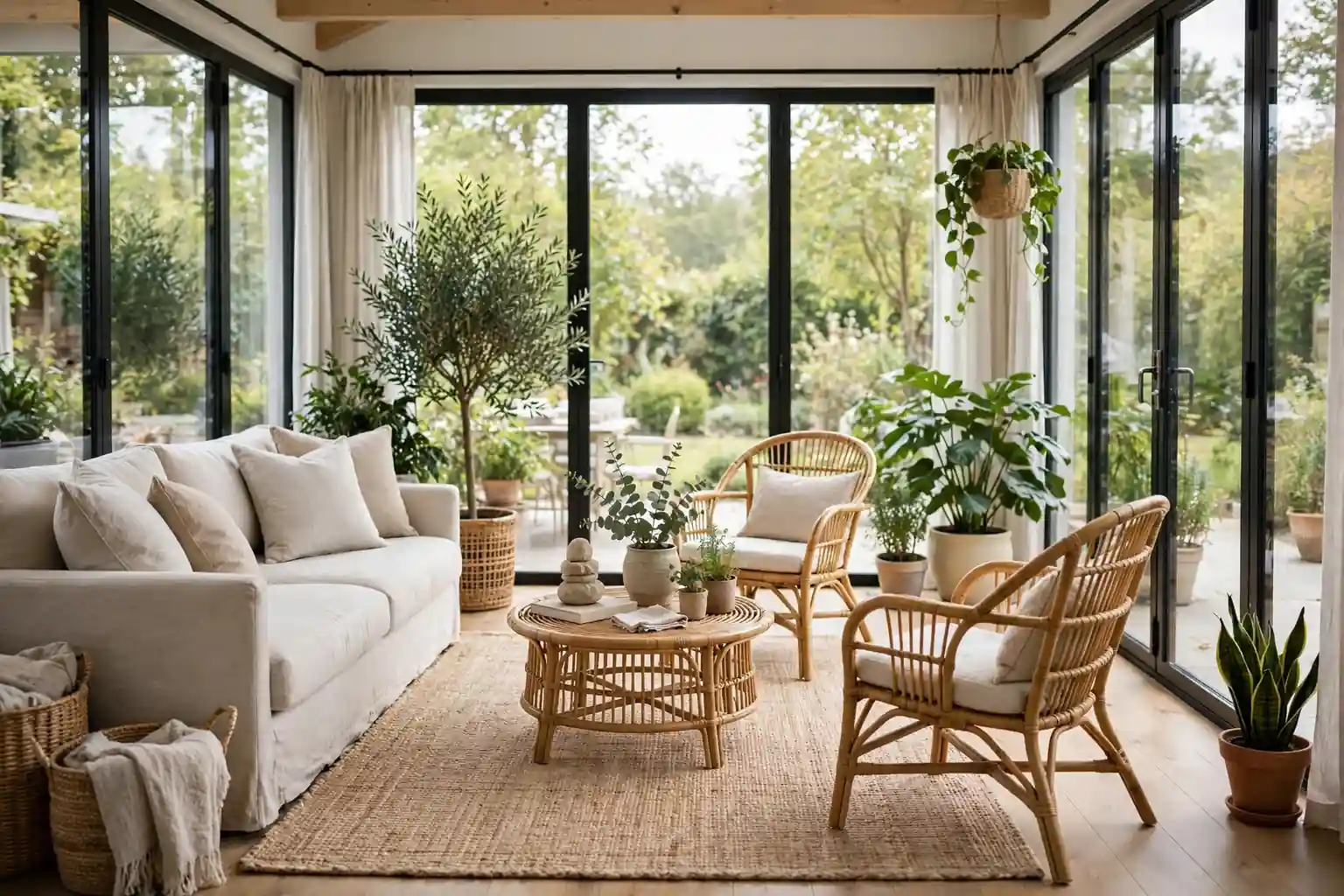
Sunroom decorating ideas work best when you start with light, washable fabrics, seating that faces the view, and shade you can adjust through the day. Add plants that suit bright light, a rug to ground the seating, and low evening light, then repeat one calm palette so the glass room feels bright, comfortable, and easy to use all year.
A sunroom is a room with a lot of glass and a lot of sun, so comfort depends on practical choices as much as on color. Fabrics fade, plants dry out, and seats that face a wall waste the best feature in the room. The 23 ideas below start with layout and light, then cover seating, plants, storage, and seasonal changes, so you can pick one change or work through the room in order. The same calm base that works in a farmhouse living room works here too, with lighter fabrics and more attention to sun and shade.
Key Takeaways
- Face seating toward the view or toward each other, and leave clear paths to doors and windows.
- Choose light, washable fabrics and fade resistant cushions, since sunroom fabric gets strong daily sun.
- Add shade in layers: sheers for soft light, plus blinds or shades you can lower at midday.
- Group plants by light and water needs, and keep pots on trays so water does not mark floors or tables.
- Ground the seating with one rug, repeat one calm palette at least twice, and leave some glass clear.
- Plan for evening use with low lamps or lanterns, and for seasonal change with throws and cushion covers you can swap.
1. Face the Seating Toward the View
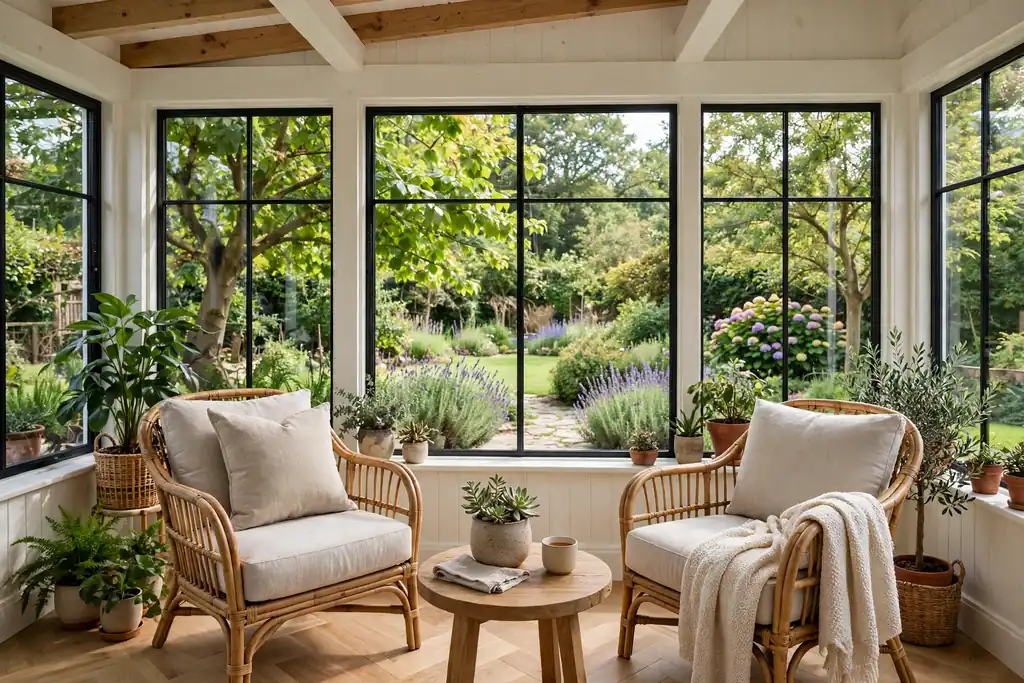
Set the sofa or main chairs so they face the largest window or the best garden view, with a small table between them for cups and books. This layout uses the reason the room exists, and it keeps conversation natural when two people sit facing each other across the table.
Leave a clear path to each door, and keep tall furniture clear of the main window wall, so the view stays open from the seats. If the room is long, place seating at the garden end and a smaller table or reading chair at the house end, so each zone has its own use.
2. Slipcovered Sofa in Light Linen
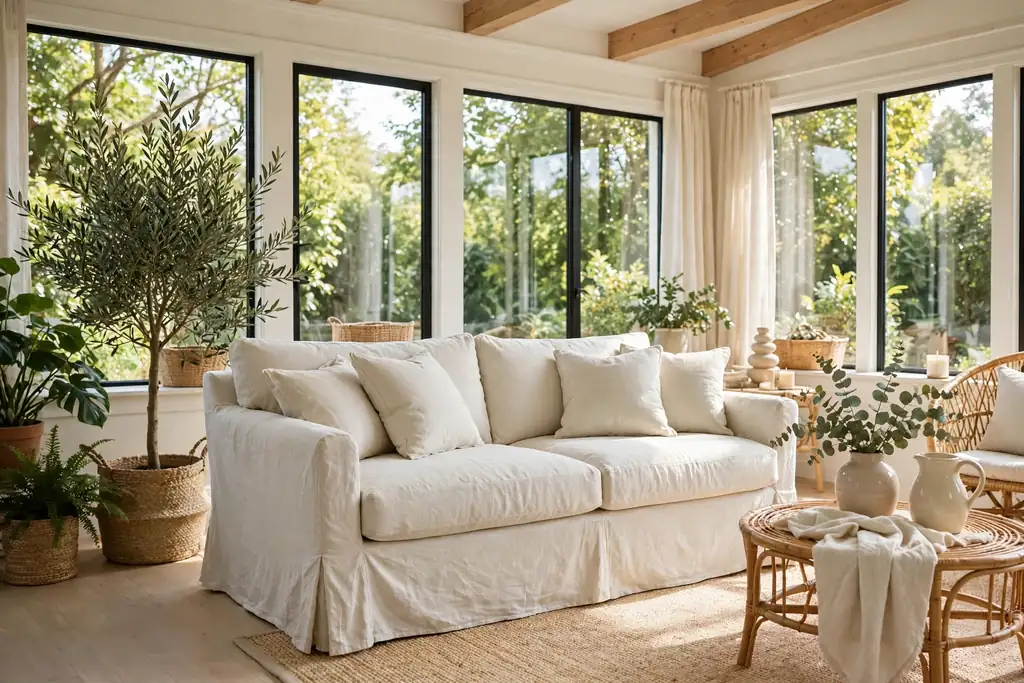
Choose a slipcovered sofa in white, cream, or pale grey linen, so the main seat stays light in a bright room and the cover can be washed. The relaxed linen look suits a sunroom, and a spare cover lets you keep the sofa fresh through summer dust and garden use.
Pair the sofa with wood or rattan legs showing below the skirt, so the soft seat has a solid base. Keep cushion covers in the same light family, and add one accent color through pillows only, so the sofa does not compete with the view outside.
3. Rattan Armchairs for Casual Seating
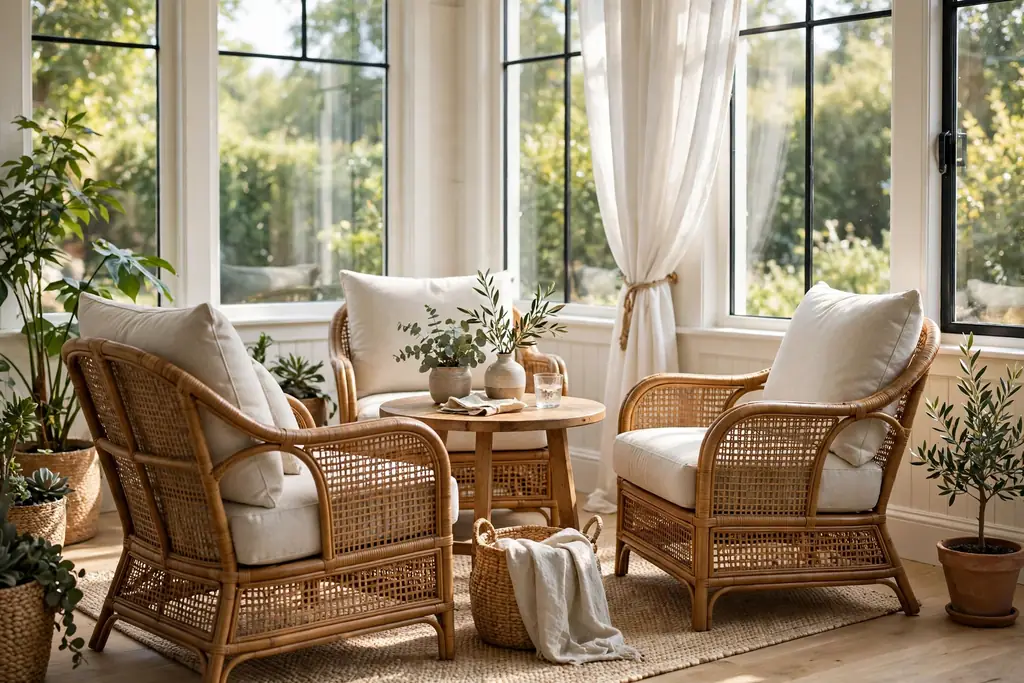
Add one or two rattan armchairs with thick seat cushions, placed at an angle to the sofa so the group feels open rather than boxed in. Rattan is light to move, which helps when you want to shift a chair into sun or shade, and its woven texture suits a glass room.
Choose cushions with removable, washable covers in a pale neutral, and add a small side table beside each chair for a drink. Check that chair legs sit level on the floor, and use small felt pads under the feet so rattan does not mark wood or tile.
4. Sheer Linen Curtains for Soft Light
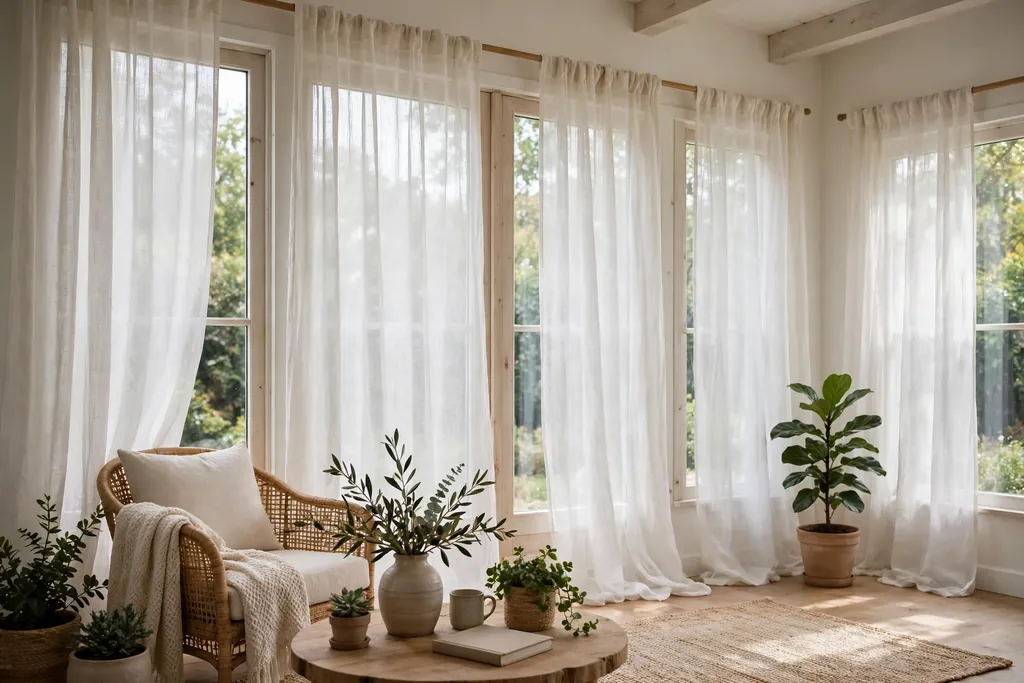
Hang sheer linen curtains on a rod close to the ceiling and wider than each window, so the panels can stack clear of the glass when you want full light. Sheers soften glare without blocking the view, and they give the room a finished edge in the evening.
Use curtain rings with clips for a relaxed gathered look, and let the panels fall to the floor with a small break rather than pooling, so they stay clean. Wash sheers on a gentle cycle and hang them damp to reduce creases, and keep the color close to the wall color for a calm frame.
5. Bamboo Shades for Midday Shade
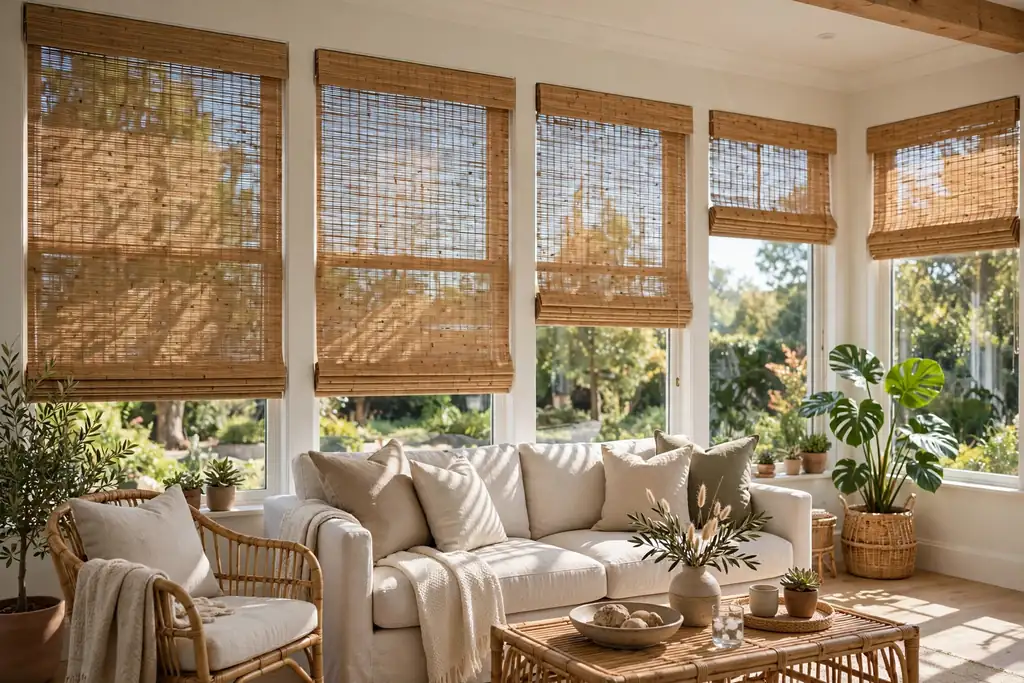
Add bamboo or woven wood shades inside the window frames, so you can lower them at midday when the sun is strongest and raise them fully in the morning and late afternoon. The natural woven texture adds warmth beside linen and rattan, and the shades roll up small when not needed.
Measure each window before ordering, since sunroom windows often vary in width, and choose a cordless or looped control that keeps cords clear of children and pets. Dust the shades with a dry cloth, and lower them on the sunniest side first, rather than closing the whole room.
6. Natural Fiber Rug to Ground the Seating
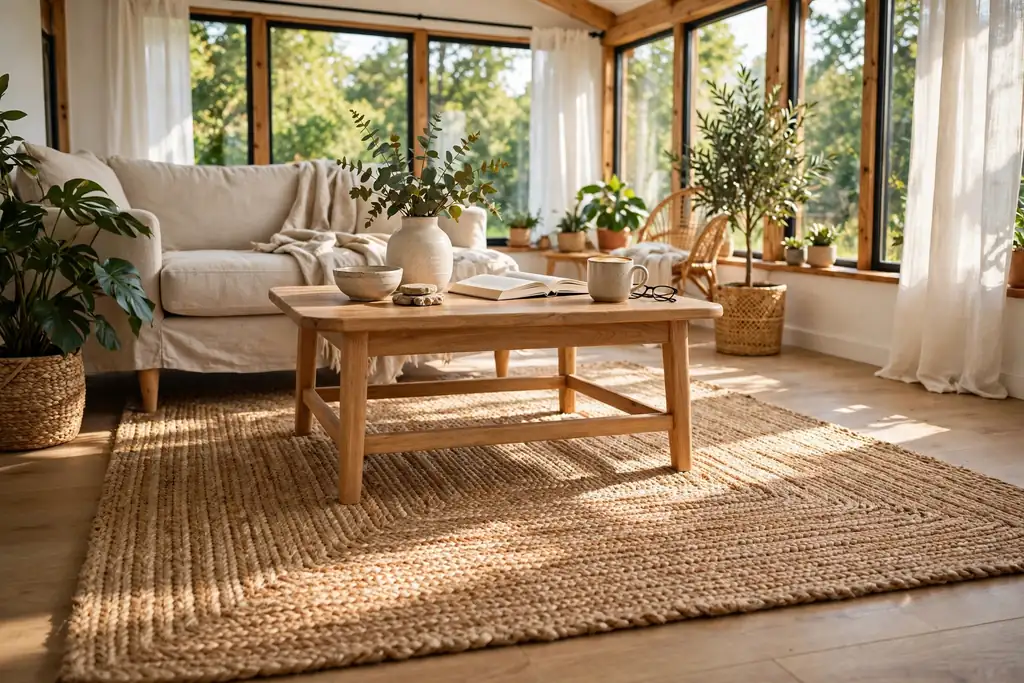
Lay a natural fiber rug, such as jute or sisal, under the coffee table and front legs of the seating, so the group reads as one zone on a hard floor. The woven texture adds warmth underfoot, and a neutral rug lets cushions and plants carry the color.
Choose a rug pad under the rug so it does not slide on tile or wood, and vacuum both sides of the rug edge weekly, since sunroom floors gather dust and pollen. In a small sunroom, one rug in the seating zone is enough, since a second rug can crowd the floor.
7. Grouped Potted Plants for Bright Light
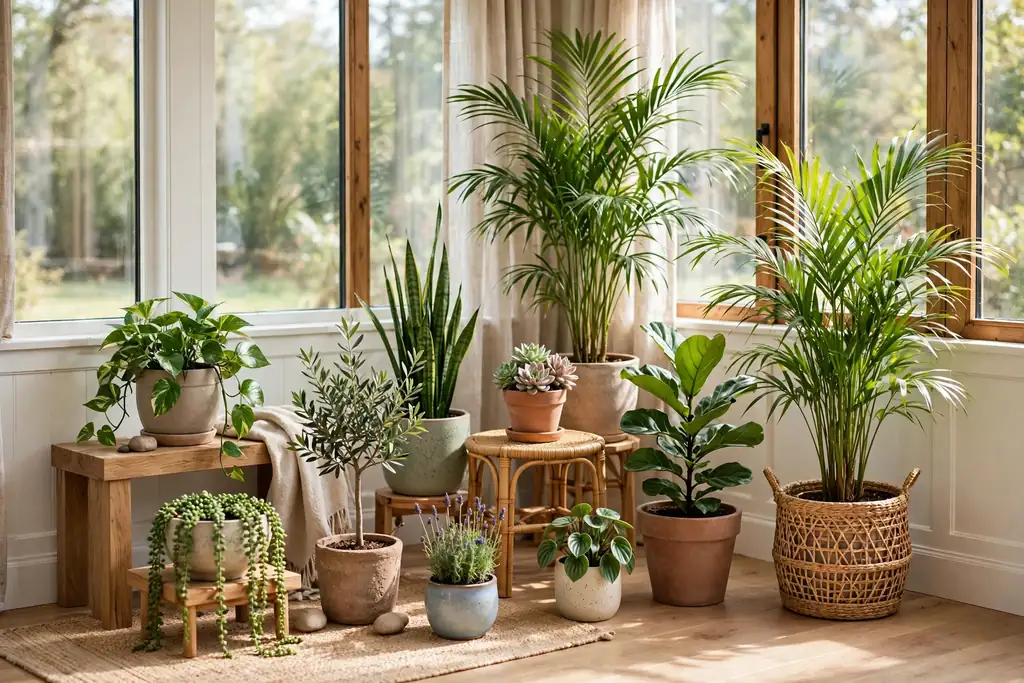
Group potted plants in threes on the floor and on low stands, mixing one tall plant, one medium plant, and one trailing plant, so the group has height and shape. Sunrooms suit plants that like bright light, but check each plant label for its light needs before placing it in direct sun.
Set each pot on a saucer or tray, and water plants over the tray so spills do not mark the floor. Rotate pots a quarter turn each week so growth stays even, and move any plant that scorches or wilts to a spot with softer light for a few days.
8. Hanging Planters Near the Glass
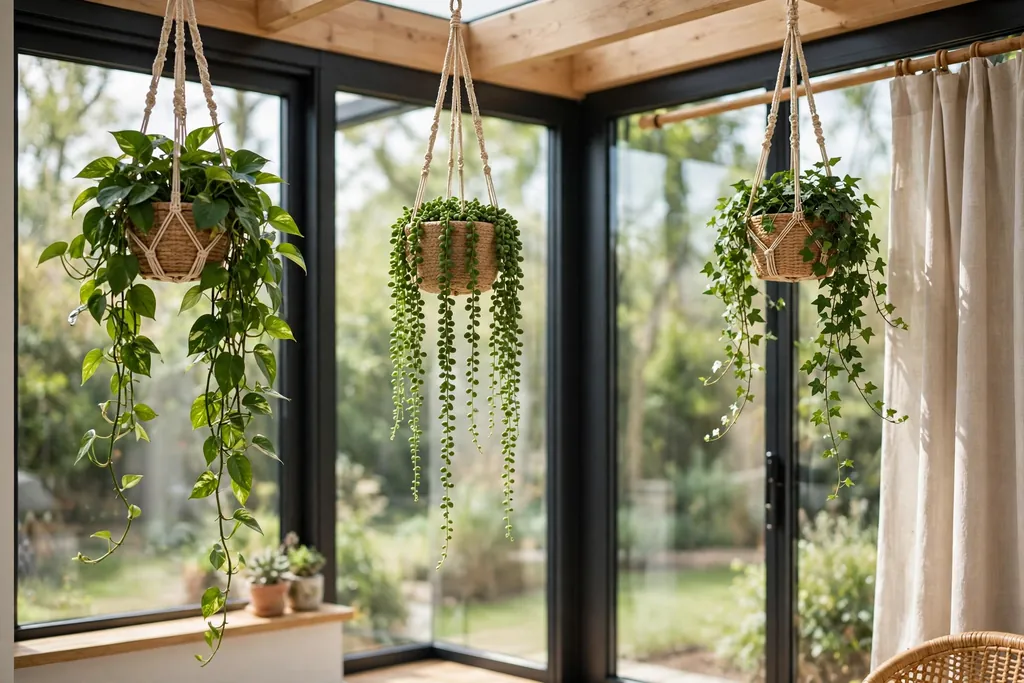
Hang one or two planters from ceiling hooks near, but not against, the glass, using trailing plants that can hang down without blocking the view. Hanging planters use vertical space well in a small sunroom, and they keep floor space clear for seating.
Use hooks rated for the weight of a watered pot, and hang planters where you can reach them easily for watering. Water over a tray or take the planter down to water it, so drips do not fall on seats or the floor below.
9. Small Breakfast Table by the Windows
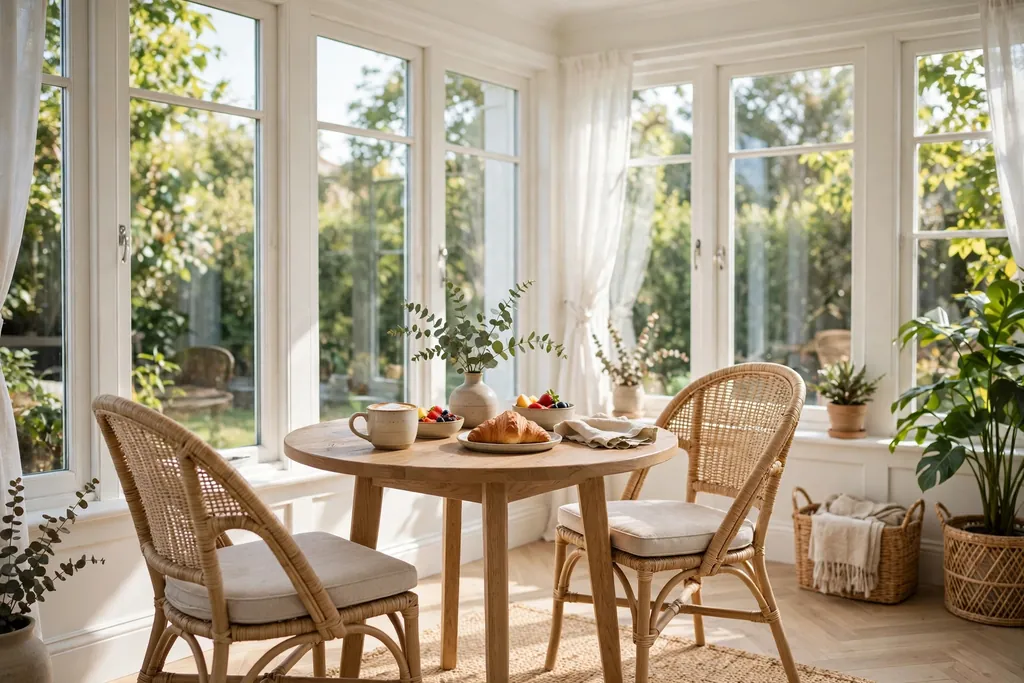
Set a small round table with two chairs by the brightest window, so the sunroom works as a breakfast spot as well as a sitting room. A round table fits a corner or a window bay better than a square table, and two chairs leave room to move around it.
Use a wipe clean top or a washable cloth, since breakfast tables see daily use and spills. Keep the centerpiece low, such as a small vase or a single candle in a holder, so the table stays usable and the view stays clear across it.
10. Reading Nook with an Armchair and Lamp
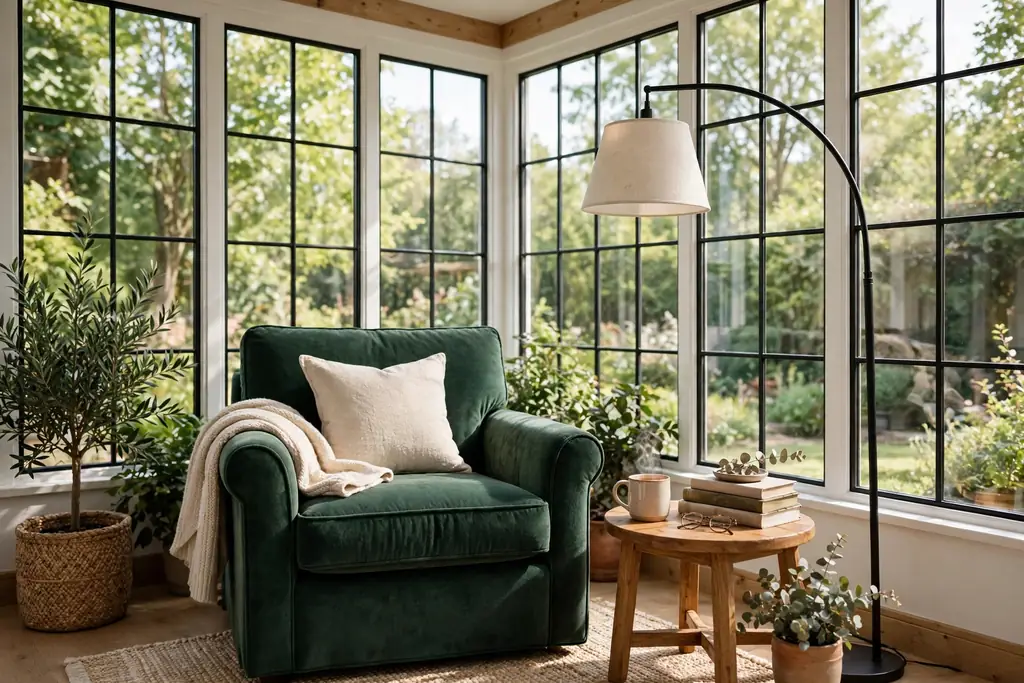
Place one deep armchair in a corner with a small side table and a floor lamp at chair height, so the sunroom has a defined place to read that is not the main sofa. Add a cushion for back support and a throw folded over the chair arm, ready for cooler evenings.
Keep the chair clear so it stays an invitation rather than a pile for clothes or bags. In a tight room, a floor cushion beside a low shelf works instead, with the same small lamp beside it, and the same calm palette as the rest of the room.
11. Daybed or Chaise for Afternoon Lounging
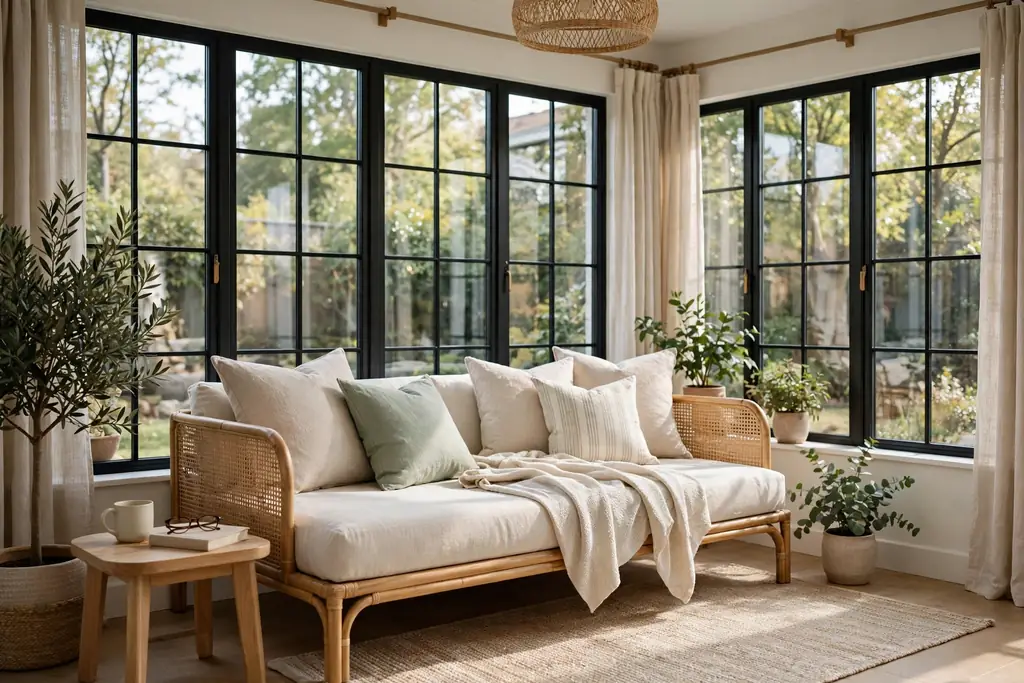
Add a daybed or a chaise lounge along one window wall, dressed with a firm mattress pad, a flat sheet, and two or three pillows in washable covers. A daybed gives the sunroom a place to nap or stretch out, and it can serve as extra seating when guests visit.
Keep a light throw folded at one end, and place a small table or stool at the side for a book and a drink. If the daybed sits in direct sun, use a shade or sheer panel above it at midday, so the seat stays comfortable and fabric fades more slowly.
12. Wicker Coffee Table with a Tray
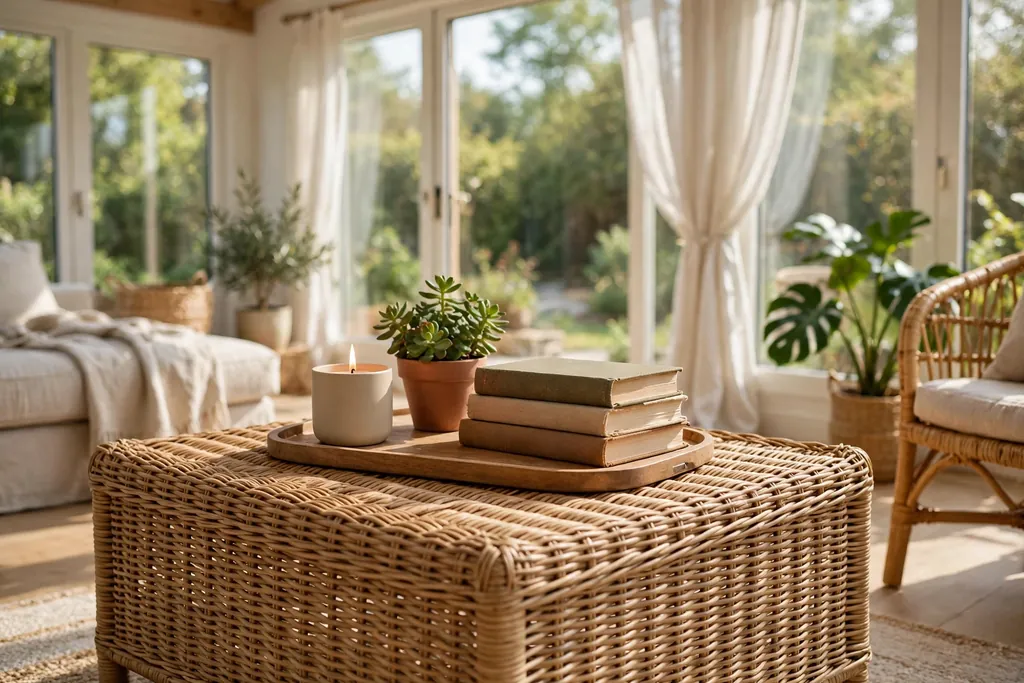
Use a low wicker or rattan coffee table in the center of the seating group, with a wood or metal tray on top to group a candle, a small plant, and a stack of books. The tray keeps small items contained, and the whole tray lifts off in one move when you need the table clear.
Leave clear space on the table for cups, since a coffee table must work as well as look good. Wipe the wicker with a dry cloth for dust and a damp cloth for spills, and keep the tray small enough that cups still fit beside it.
13. Washable Cushion Covers in One Palette
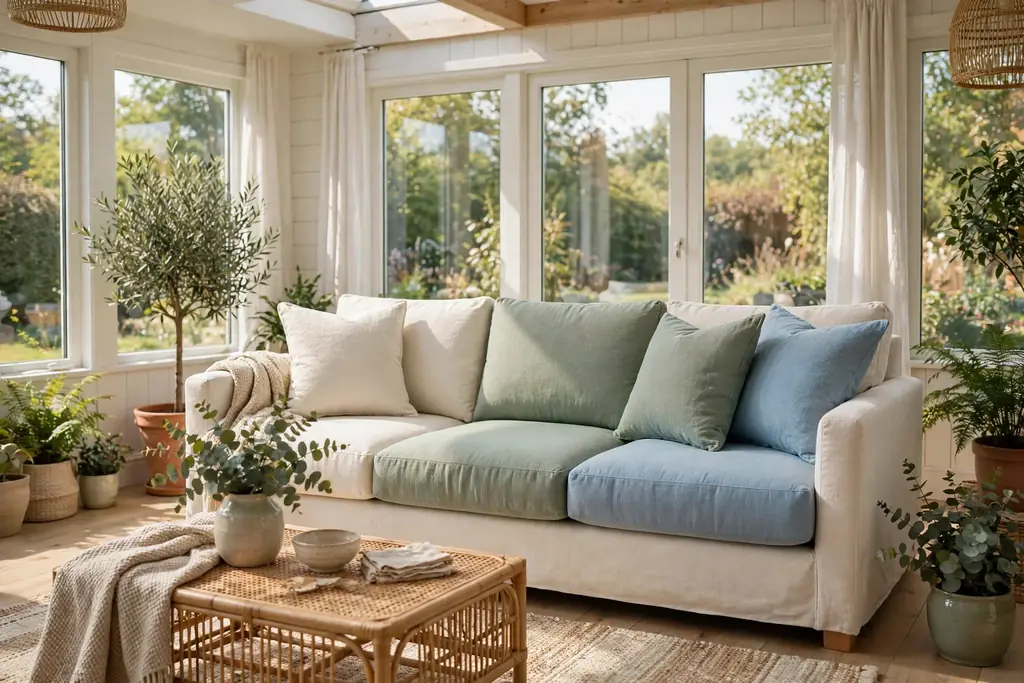
Swap cushion covers to a small palette, such as cream, sage, and soft blue, using plain, knit, and one subtle pattern, and repeat one of those colors somewhere else in the room. Washable zip covers make seasonal and practical changes simple, since covers wash and store flat.
Keep the number of cushions to what fits without a pile on the floor when someone sits down. If the sofa is already patterned, use plain covers in one color only, so the room stays calm and the view stays the main feature.
14. Light Wall Palette of White and Cream
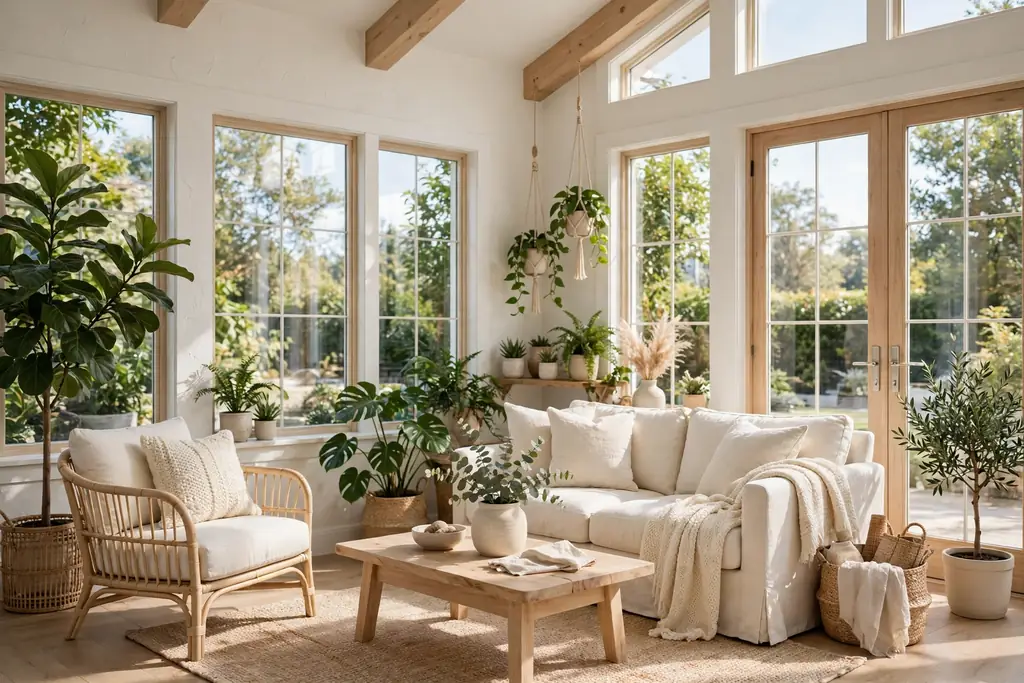
Paint the solid walls white, cream, or a very pale warm grey, so the room reflects daylight and the window frames, plants, and furniture stand out. A light wall color also makes a small sunroom feel larger, since dark walls can close in a glass room.
Test the paint beside your floor and cushion colors in daylight and evening light, since white shifts a lot under warm bulbs. Keep trim in the same light family, and let one accent color come through textiles and plants rather than a bold wall.
15. Coastal Blue and White Accents
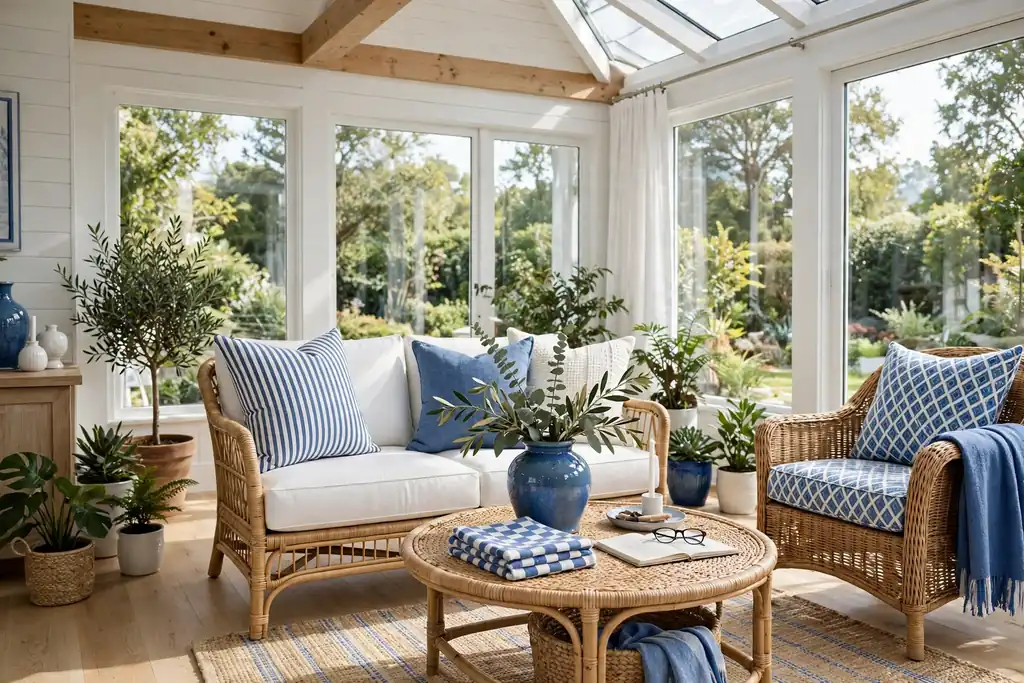
Add coastal blue and white accents through two or three pieces only, such as a striped pillow, a blue ceramic vase, and a white throw, so the room gains a fresh seaside note without a full theme. Blue suits sunrooms because it links to sky and garden tones outside.
Keep the blue to one shade family, such as soft navy or pale sky blue, and repeat it in at least two places so it looks planned. If the room already has a strong accent color, use blue sparingly, in one or two spots only, so the palette does not split.
16. Botanical Prints on the Solid Wall
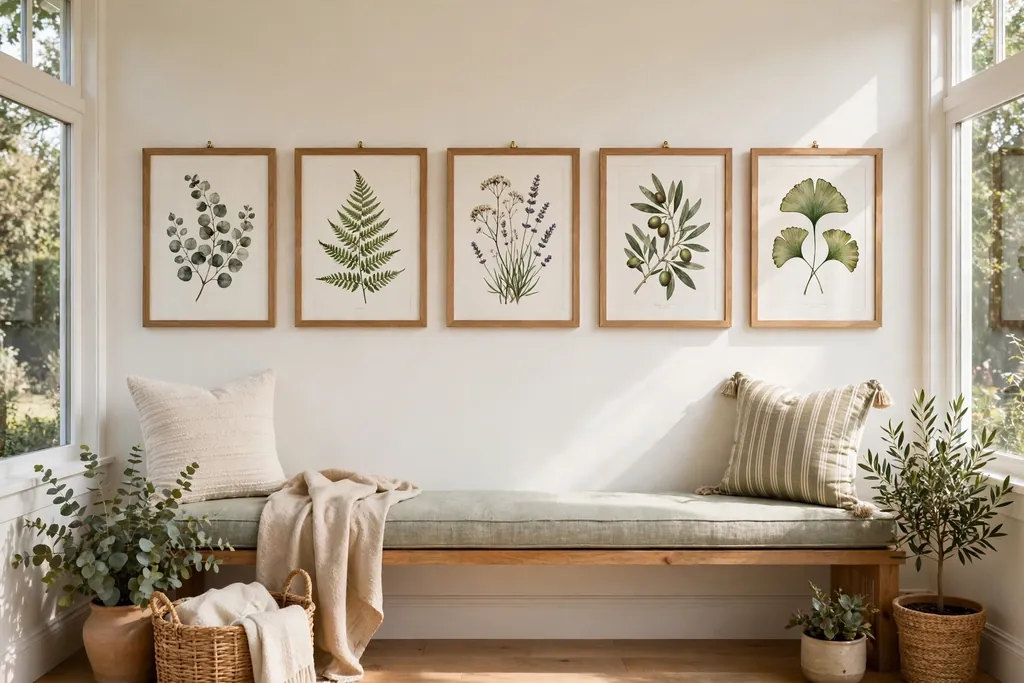
Hang two or three framed botanical prints on the one solid wall, at eye level from the seats, using the same frame color and similar print sizes for a calm group. Botanical prints suit a sunroom because they link the indoor plants to the garden outside.
Hang prints with fixings rated for their weight, and keep glass frames secure, since sunroom walls can get warm in direct sun. Avoid hanging prints on glass or in direct sun if the print will fade, and choose one wall for art so the window walls stay clear.
17. Lanterns and Low Lamps for Evenings
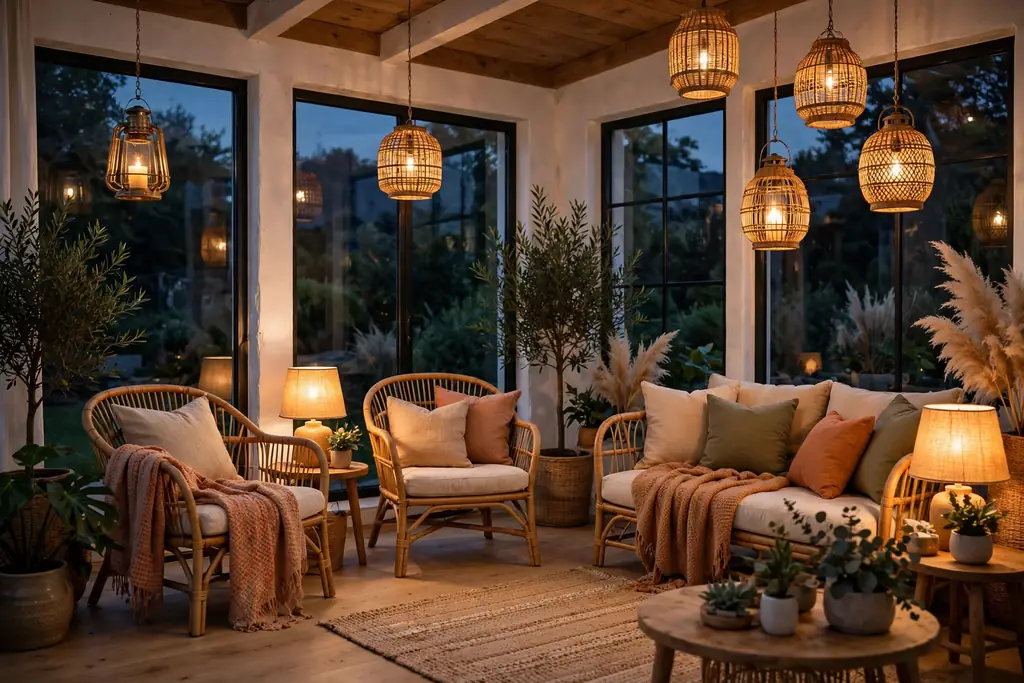
Set lanterns with battery candles on the coffee table and side tables, and add table lamps with linen shades at seating height, so the sunroom works after dark without harsh overhead light. Low, warm light makes cream, wood, and plant tones look richer in the evening.
Use battery candles inside lanterns near fabric or dried stems, and keep real flames in holders, clear of curtains and throws, and never left burning unattended. Put lamps at both ends of the seating area so no one sits in shadow, and keep switches within reach of the sofa.
18. Ceiling Fan for Air Movement
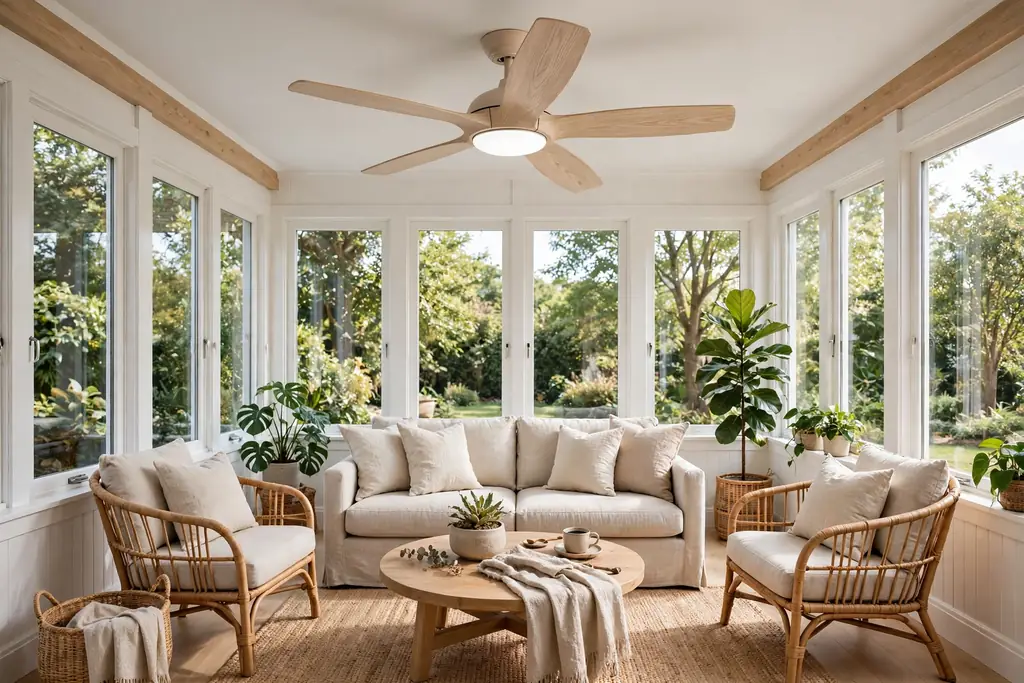
Fit a ceiling fan with light wood blades and a simple light kit, centered over the seating group, so warm air moves on still summer days and the room stays usable without closing the windows. A fan also helps on mild days when you want air movement but no draft from an open door.
Choose a fan size suited to the room, and set the blades high enough to clear heads and tall plants. Dust the blades often, since sunroom dust shows on light blades, and use the fan on a low setting first, so papers and light throws do not blow around.
19. Baskets and a Storage Bench for Clutter
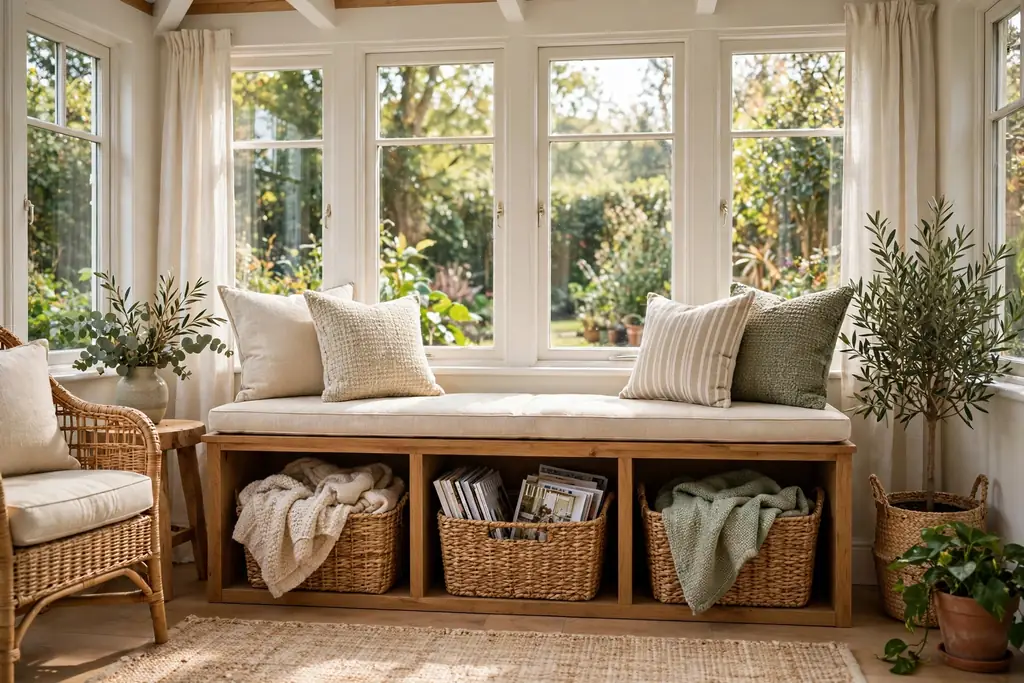
Place a storage bench under a window or against the solid wall, with woven baskets inside or beneath it for throws, magazines, and garden tools. Baskets keep daily clutter out of sight while the bench top stays clear for a plant, a tray, or extra seating.
Label baskets only if the household needs it, and keep one basket empty for quick tidy ups before guests arrive. Shake baskets outside monthly, since woven fibers gather dust, and replace a basket when the weave starts to fray at the rim.
20. Seasonal Cushion and Throw Swap
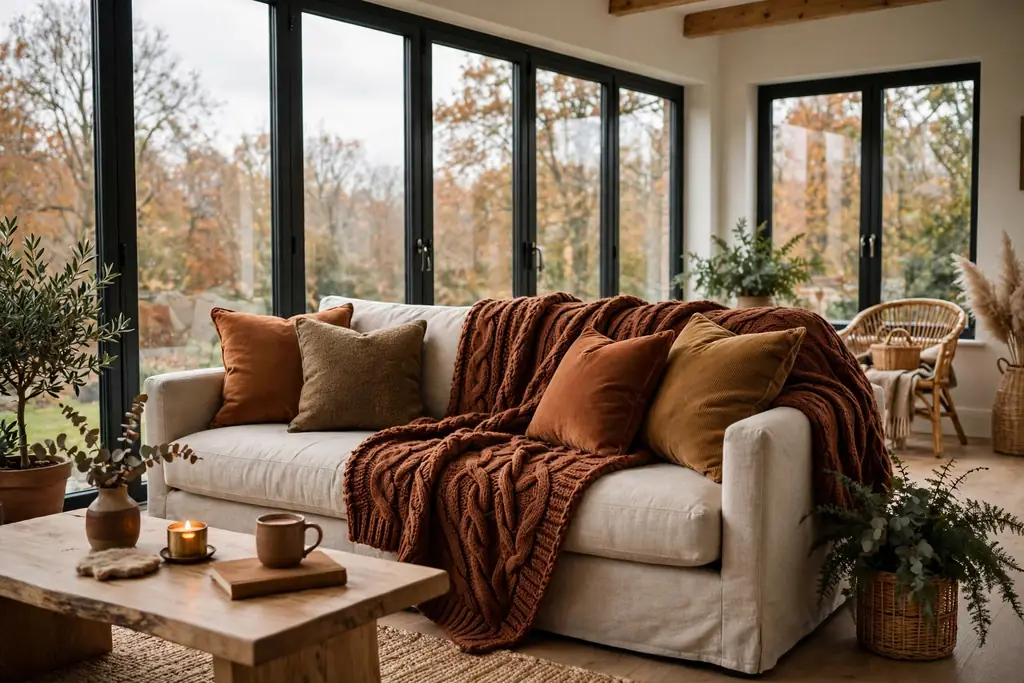
Plan a simple seasonal swap: light cotton throws and pale cushion covers for summer, and heavier knit throws and warmer covers for cooler months, stored in one labeled basket or bag. The same approach works in a fall living room, with warmer colors and thicker fabrics for the cooler season.
Swap one layer at a time, starting with throws, then cushion covers, so the room changes without a full restyle. Wash the outgoing covers before storing them, and store them dry and flat, so the next swap takes minutes rather than a wash day.
21. Small Coffee Cart by the Door
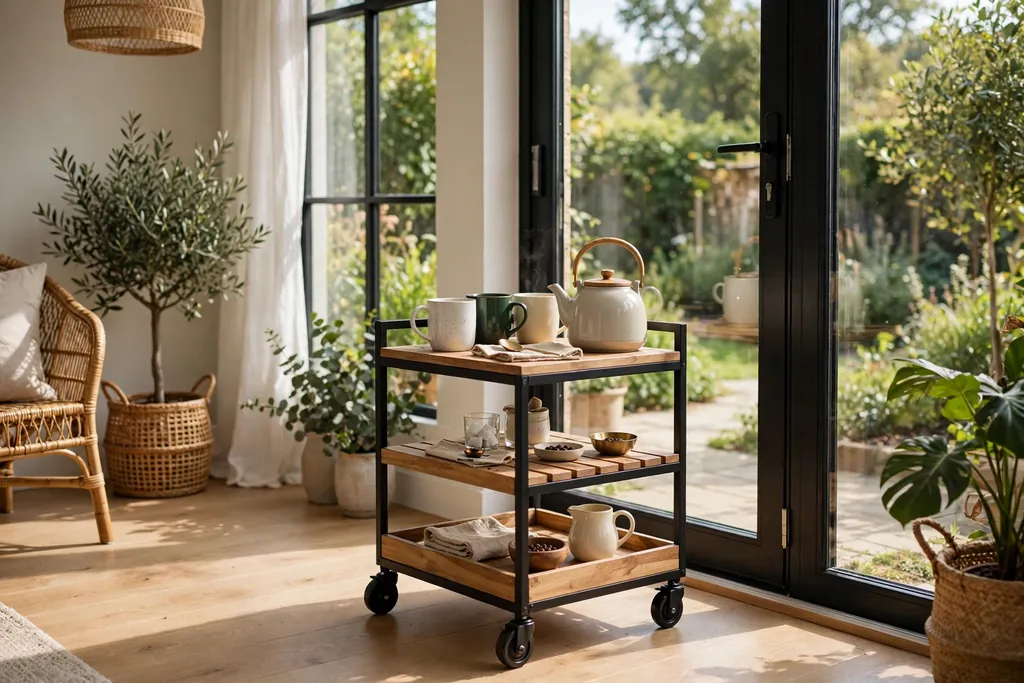
Set a small rolling cart near the sunroom door with mugs, a small teapot or coffee pot, and a jar for spoons, so drinks stay in the sunroom and trips to the kitchen drop. A cart works well in a sunroom used for morning coffee or afternoon tea.
Keep the cart stable and clear of the main walkway, and put heavier items on the bottom shelf. Wipe the cart after use, and move it aside when the room needs extra floor space for guests, since a cart on wheels is easy to shift.
22. Windowsill Herbs in Matching Pots
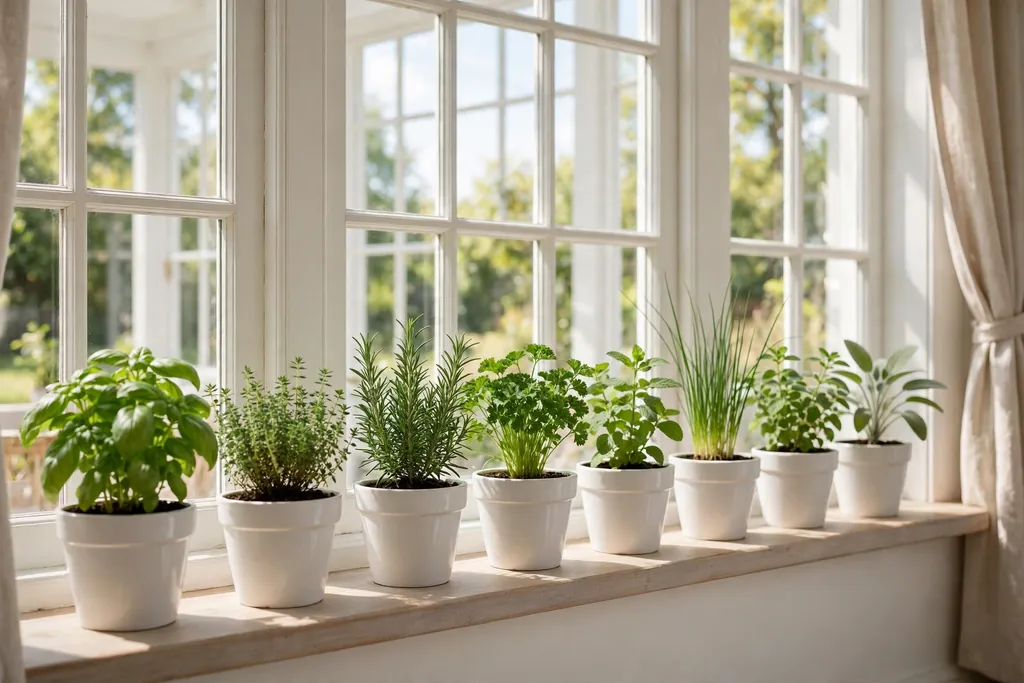
Line the sunniest windowsill with small herb pots in matching terracotta or white pots, such as basil, mint, and parsley, so the sill works as a small kitchen garden. Herbs suit a sunroom sill because they get bright light and stay within reach for cooking.
Water herbs lightly and set each pot on a small saucer, so damp soil does not mark the sill. Trim herbs often for cooking, which also keeps them bushy, and move any herb that wilts in strong midday sun to a slightly shaded spot on the same sill.
23. Entry Bench with Hooks and a Mat
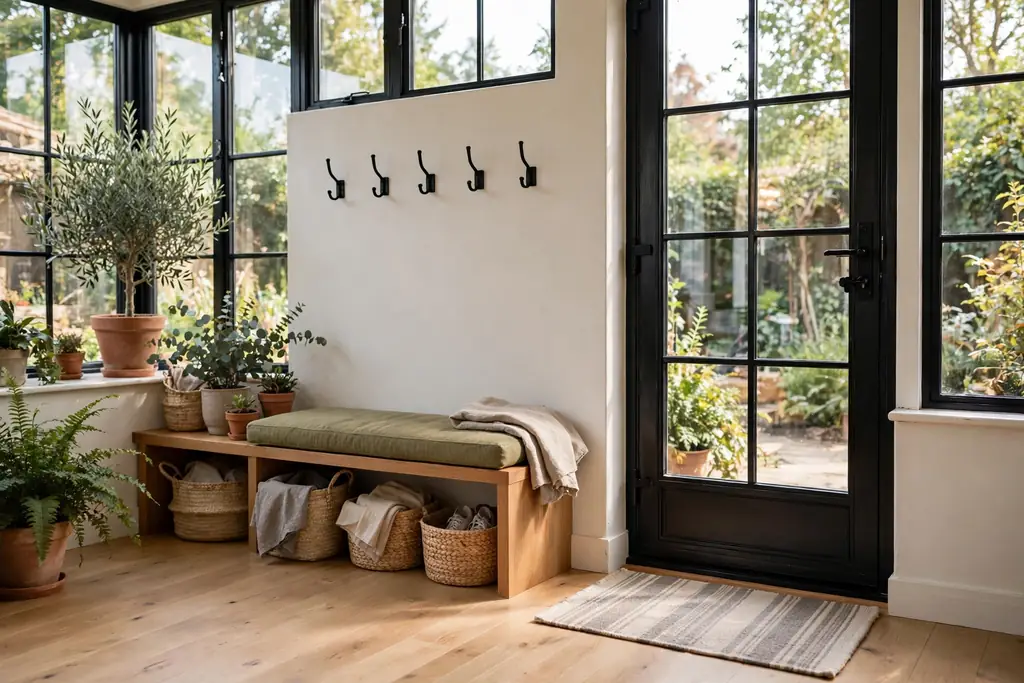
Place a low bench just inside the sunroom door, with wall hooks above it for hats and light jackets, and a washable mat under it for shoes. This entry zone keeps garden shoes and outdoor gear from spreading into the seating area, and it gives guests a clear place to settle.
Keep the bench top mostly clear, with one small tray for keys or sunglasses, so it stays usable as a seat. Shake the mat outside weekly, and wipe the bench after wet days, since sunroom entries see mud and pollen from the garden.
Conclusion
A bright sunroom works best when layout, light, and fabric choices come first. Face seating toward the view, layer sheers with shades you can adjust, choose washable fabrics, and group plants by their light needs. Then add one rug, one calm palette, and low evening light, and swap throws and cushion covers as the seasons change. Start with the one idea that fixes your biggest daily problem, whether that is glare, seating, or storage, and add the next idea only when the first one feels settled.
FAQs
How do you decorate a sunroom on a small budget?
Start with textiles, plants, and shade, since cushion covers, a rug, sheers, and grouped pots change a sunroom for less than new furniture. Use pieces you already own first, such as a side table, a lamp, and baskets, then add one larger piece, like a rug or a chair, only when you know the layout works.
What furniture works best in a sunroom?
Light, movable furniture works best, such as a slipcovered sofa, rattan chairs, a wicker coffee table, and a small side table for each seat. Choose washable cushion covers and fade resistant fabric where possible, and keep pieces low enough that they do not block windows or the view.
How do you keep a sunroom from getting too hot?
Use shade in layers, with sheer curtains for soft light and bamboo shades or blinds you can lower at midday, and open windows or run a ceiling fan for air movement. Keep dark fabrics and heavy rugs to a minimum in the sunniest spots, since they hold heat, and move heat sensitive plants out of direct midday sun.
What plants are good for a sunroom?
Plants that suit bright light work well, but the right plant depends on how much direct sun your room gets and how often you water. Check each plant label for light and water needs, group plants with similar needs together, and start with a few pots so you can learn what thrives before filling every sill and corner.
How do you make a small sunroom feel larger?
Keep walls light, leave some glass clear, and use one rug, one palette, and low furniture that does not block windows. Choose a round table, hanging planters, and a storage bench that serves two uses, and avoid filling every wall and corner, since open floor and clear glass make a small room feel larger.
Can a sunroom be used all year?
Yes, a sunroom can be used all year if it has shade for summer, a heat source or warm throws for cooler months, and fabrics and plants suited to changing light. Add low evening light for dark winter afternoons, swap cushion covers and throws by season, and check windows and doors for drafts before the coldest months.