
Slipcovers for chairs refresh a room fast: choose a loose linen cover for a relaxed dining set, a tailored fit for formal chairs, or a washable stretch cover for daily use with kids or pets. Measure the chair back, seat, and legs first, then match the fabric, fit, and color to the room you already have.
A slipcover changes the look of a chair in an afternoon, and it protects the seat and back underneath. The right choice depends on how the chair is used, how often it needs washing, and how neat or relaxed you want the room to feel. A dining chair used three times a day needs a different cover from an accent chair that is mainly for reading. This guide starts with measuring, then works through fabrics, fits, patterns, and seasonal swaps, so you can pick one idea for a single chair or repeat one look across a whole set.
Before you order or sew, measure the chair back height and width, the seat width and depth, and the leg height, and note whether the back is straight, curved, or winged. A cover made for a straight back will not sit well on a wingback, and a short skirt will look unfinished on a chair with long legs. Keep those measurements beside you as you read, and check the care label for washing before you commit to a light color in a busy house.
Key Takeaways
- Measure the chair back, seat, and leg height before choosing a slipcover, and note the back shape.
- Loose linen suits a relaxed look, while a tailored, skirted cover suits a formal dining room.
- Stretch and washable covers suit daily dining, kids, and pets, where frequent laundering matters most.
- Match the slipcover color to at least one color already in the room, such as the rug, curtains, or wall tone.
- Use one pattern at a time in a small room, and keep the rest of the chairs in a plain fabric.
- Check the fit after washing, since some fabrics shrink, and smooth the cover back into place while it is still slightly damp.
1. Classic White Linen Dining Chair Slipcovers
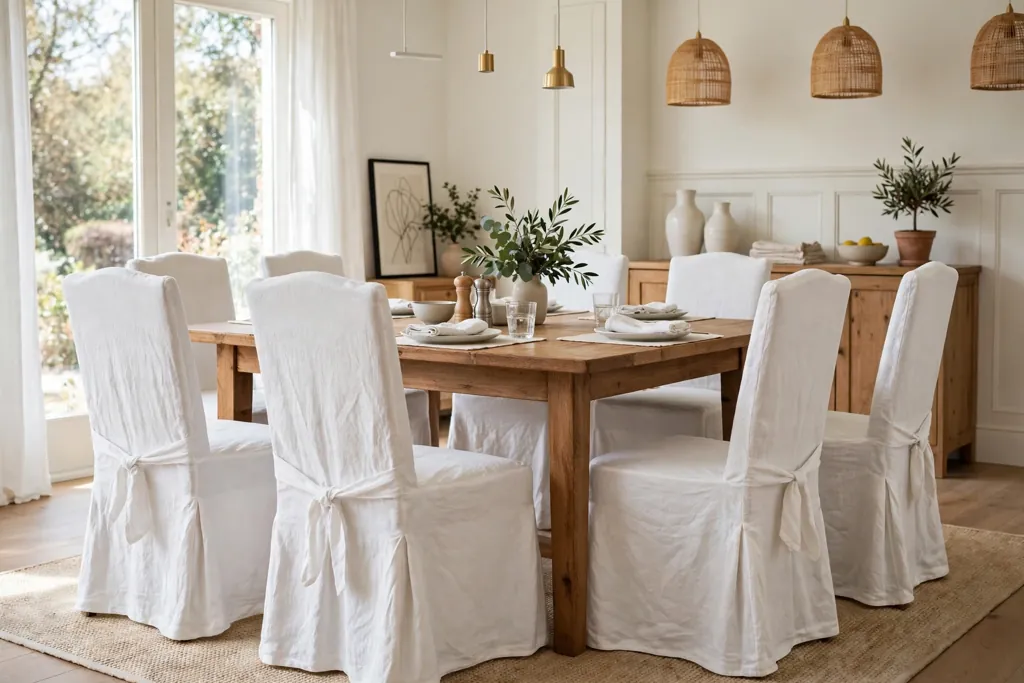
A white linen slipcover gives a dining set a clean, calm look that works with wood, painted, and mixed tables. Choose a natural white or warm white rather than a bright white if the room has cream walls or warm wood, since a cooler white can look harsh beside them. The loose drape softens straight chair backs and hides worn upholstery underneath.
Keep white covers practical by choosing a fabric you can wash at home and by keeping a spare set if the dining table is used daily. Smooth the cover over the back first, then pull it down over the seat and tuck the excess into the seat corners. A quick shake and refit after washing keeps the linen looking relaxed rather than rumpled, and a plain table runner in a matching tone links the chairs to the table.
2. Relaxed Washed Linen Armchair Covers
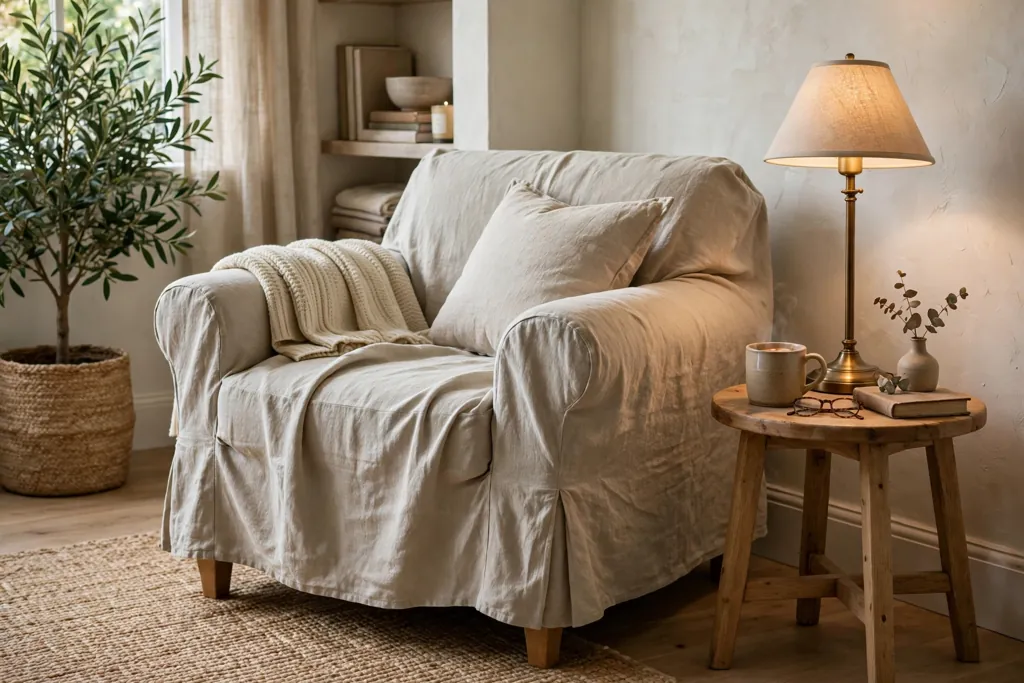
A washed linen cover suits a living room armchair that is used for reading, watching television, or sitting by a window. The fabric already has a soft, broken in feel, so it does not need a crisp press to look right, and the loose fit makes it easy to remove for washing. Choose oatmeal, natural, or light grey for a base that pairs with most sofas and rugs.
Fit the cover over the arms first, then the back, and smooth the seat last, so the fabric sits evenly on both sides. Tuck extra fabric into the creases where the arm meets the seat, and plump the seat cushion under the cover if the chair has a loose cushion. For a living room textile refresh that pairs with a new armchair cover, see these fall living room decor ideas.
3. Tailored Skirted Dining Chair Covers
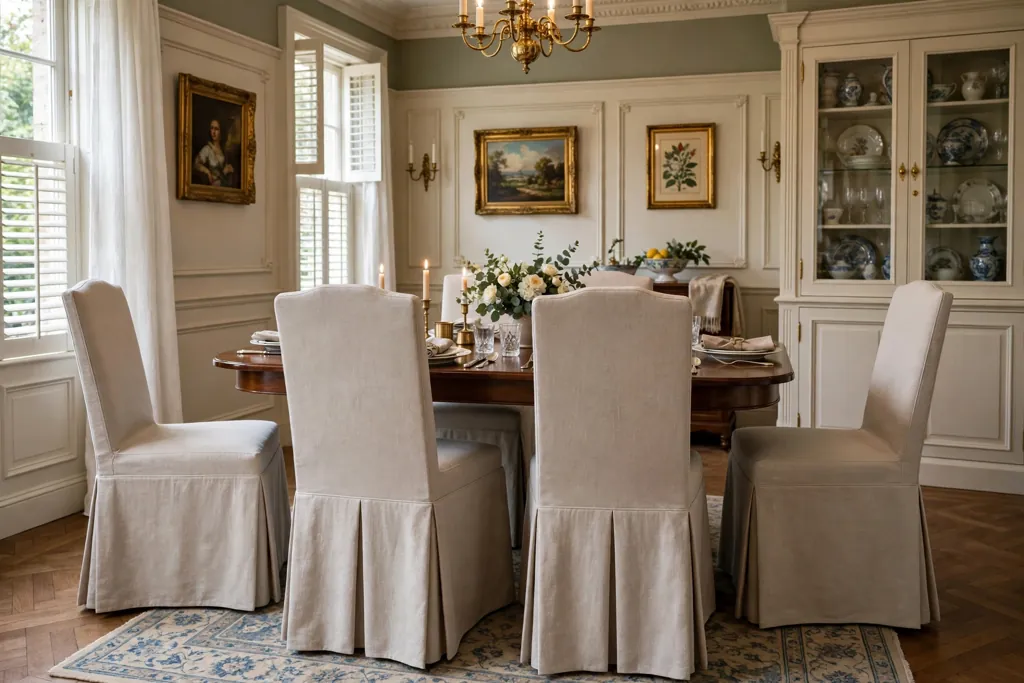
A tailored skirted cover gives a dining chair a neat, fitted shape with a straight skirt that falls to just above the floor. This style suits a formal dining room, a holiday table, or a room where the chairs are always on show. The fitted back and seat keep the chair shape clear, while the skirt hides the legs and gives the set a unified line.
Measure leg height carefully, since a skirt that pools on the floor will catch feet, and a skirt that stops too high will look unfinished. Fit the cover from the top down, smooth the back panel flat, and check that the skirt hangs straight on all four sides. Press the skirt after washing if the fabric holds creases, and keep the dining table centerpiece low so the tailored chairs, not a tall display, set the tone.
4. Stretch Covers for Everyday Dining Chairs

A stretch cover suits dining chairs that are used every day, since the elastic fabric grips the back and seat and stays in place during meals. This is a good choice for chairs with simple, straight backs and no arms, where a loose cover would slip each time someone sits down. Choose a plain color first, so the set looks calm even when the table is set for a busy meal.
Pull the cover over the back, stretch it down over the seat, and smooth the fabric around the corners before tucking the hem under the seat. Check that the seat edge stays covered when someone leans back, and refit the cover after washing while it is still slightly damp, so the stretch settles evenly. Keep one spare cover for the chair that gets the most use, so a spill does not leave one chair bare.
5. Parsons Chair Covers in Plain Cotton
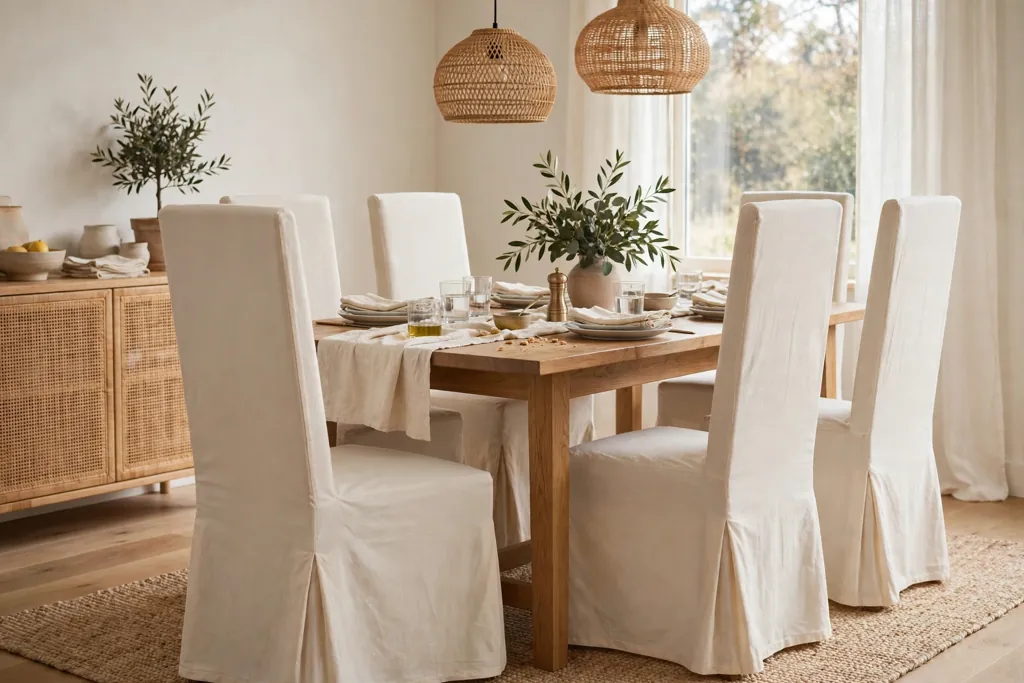
Parsons chairs have a tall, straight back and a simple seat, and a plain cotton cover suits that clean shape well. Cotton is easy to wash, holds color reasonably well, and gives a smooth finish that works in both dining rooms and home offices. Choose a neutral such as cream, grey, or sage, and repeat that color in a table runner or a nearby cushion so the chairs link to the room.
Fit the cover snugly over the tall back, then smooth it over the seat and down the front legs if the design includes a skirt. If the cover has ties or a zip at the back, fasten them before smoothing the front, so the fabric does not twist. Plain cotton also makes a good base for a seasonal change: swap a runner or a centerpiece, and the same chairs read differently without a new cover.
6. Ticking Stripe Farmhouse Covers
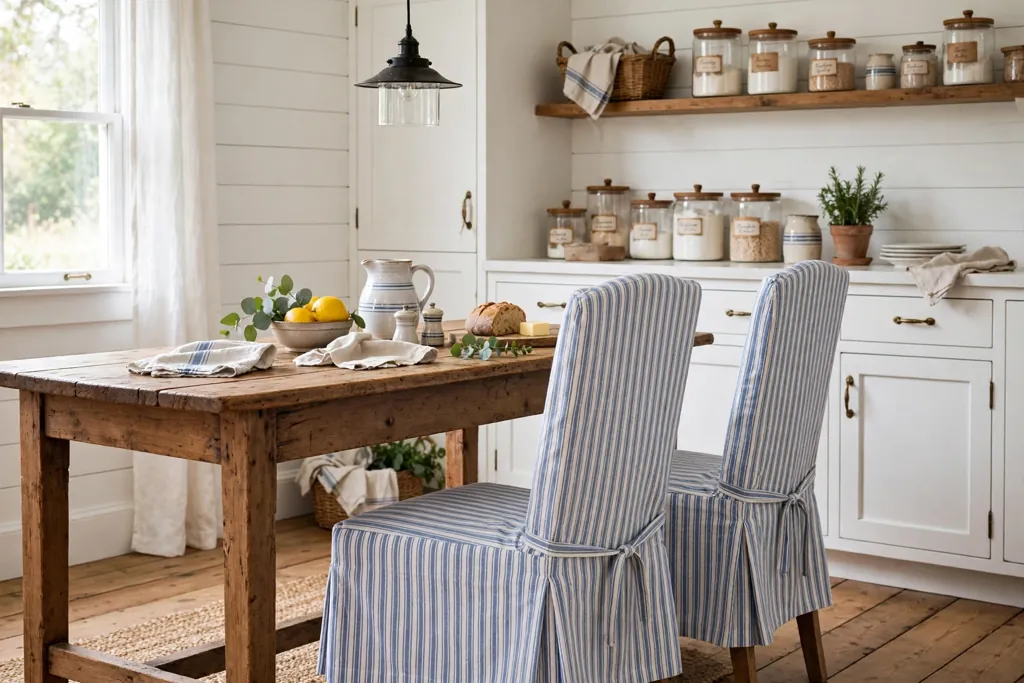
A ticking stripe cover brings a farmhouse note to dining or kitchen chairs without a loud pattern. The narrow stripe, usually in blue, grey, or black on a natural background, reads as a texture from across the room and pairs well with wood tables, white walls, and woven placemats. This style suits a kitchen eating area or a casual dining room best.
Use the stripe on all the chairs in a set for a unified look, and keep the table setting plain so the stripe stays the main pattern. Check that the stripe runs straight down the chair back after fitting, since a twisted stripe is easy to spot. For a farmhouse base to compare against, see these farmhouse decor ideas for the living room, where plain linen and one checked pattern carry most of the look.
7. Velvet Covers for Accent Chairs
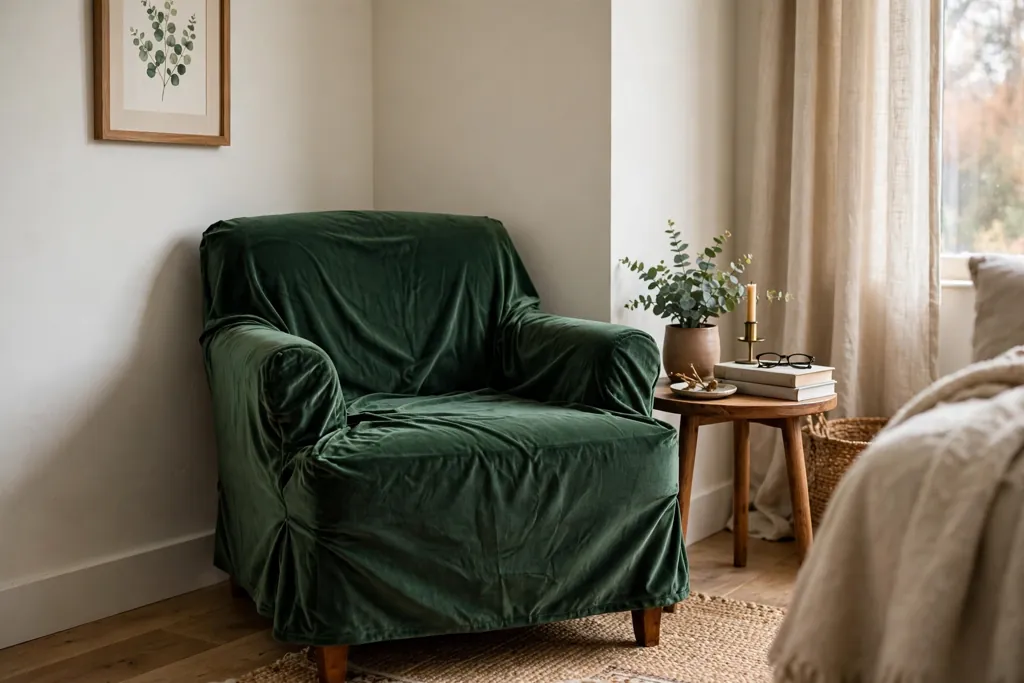
A velvet slipcover gives an accent chair a soft, rich surface that suits a living room corner or a bedroom reading spot. Velvet catches light differently from flat cotton or linen, so a deep green, navy, or rust cover can anchor a seating area even when the rest of the room is neutral. This style works best on a chair that is not used for messy meals, since velvet needs gentler care than washable cotton.
Fit the cover loosely enough that the pile is not flattened at the arm creases, and brush the fabric in one direction after fitting so the color looks even. Keep velvet chairs out of strong direct sun if the color matters to you, since sun can fade one side over time. Pair a velvet chair with a plain cushion in a matching tone, rather than a second strong pattern, so the chair stays the focus.
8. Washable Covers for Homes With Pets
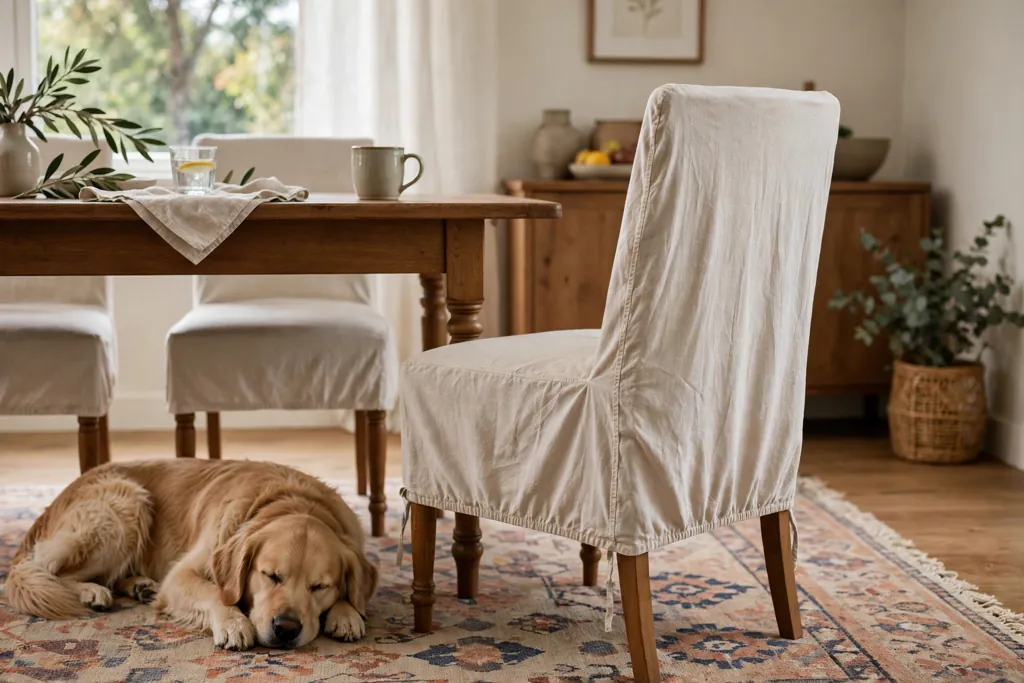
Washable slipcovers are the practical choice when pets sit on chairs, since hair, muddy paws, and the odd spill can be dealt with by removing the cover and washing it. Choose a tight weave in a mid tone that hides hair between washes, and avoid very light colors on the chair your pet uses most. A cover with a removable seat panel is useful, since the seat needs washing more often than the back.
Fit the cover snugly so paws do not catch loose fabric, and tuck the hem well under the seat. Keep a lint roller near the chair for daily hair, and wash the cover before hair works deep into the weave. If the chair has a cushion, wash the cover with the cushion removed, and refit it while the fabric is still slightly damp so it settles back into shape.
9. Easy Care Covers for Family Dining

Family dining chairs need covers that can be removed fast, washed at home, and refitted without a struggle. Choose a plain, durable fabric in a color that hides everyday marks, such as sage, grey, or warm tan, and keep the design simple, with no long ties or fussy trim that children can pull loose. Stretch or elastic hem covers work well here, since they stay put during meals.
Set a simple routine: shake crumbs from the cover after meals, spot clean a spill promptly, and wash the full set on a regular cycle so one chair does not look fresher than the rest. Teach older children to lift, not drag, a chair by its cover, since dragging can pull the hem out of place. A spare set in the same color means a spill at dinner does not leave a chair uncovered for guests.
10. Ruffle Hem Covers for a Cottage Look
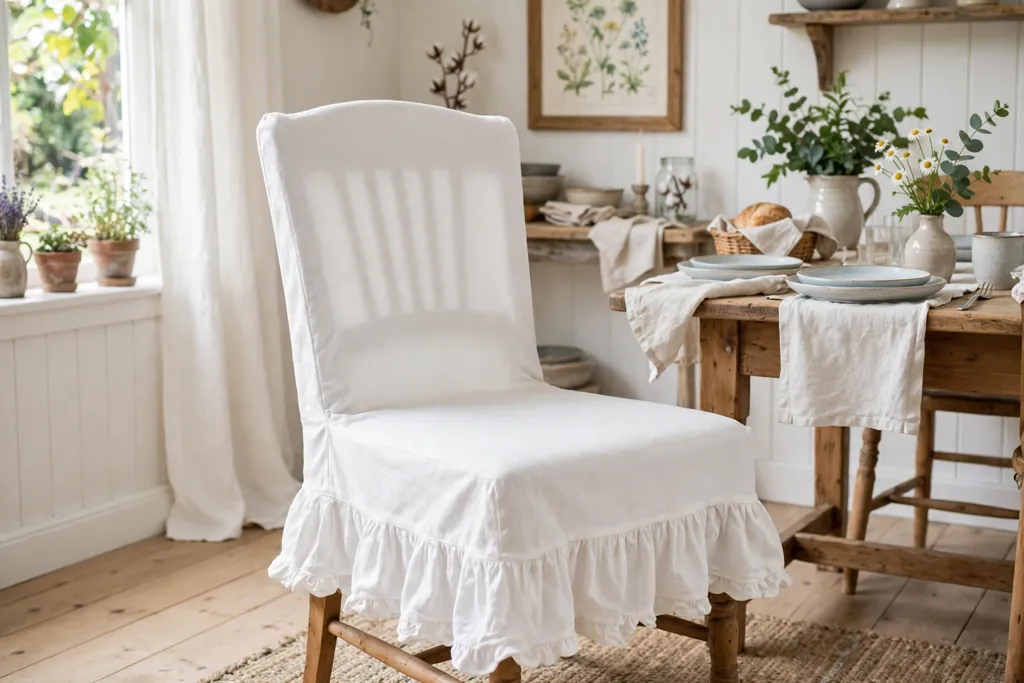
A ruffle hem cover suits a cottage style dining room or bedroom chair, where a soft, gathered edge adds a gentle finish. The ruffle sits at the bottom of the skirt or around the seat edge, and it works best in a light fabric such as cotton or linen in white, cream, or a soft floral. Keep the rest of the room simple, so the ruffle reads as a detail rather than competing with other trims.
Fit the cover from the top down and let the ruffle fall naturally, then adjust it so the gathers sit evenly around the chair. Avoid a ruffle on a chair that is dragged across the floor daily, since the hem will wear faster than a straight skirt. In a bedroom, a ruffle hem chair beside a dressing table or reading corner adds a soft note without a full room change.
11. Short Skirt Covers for a Modern Look
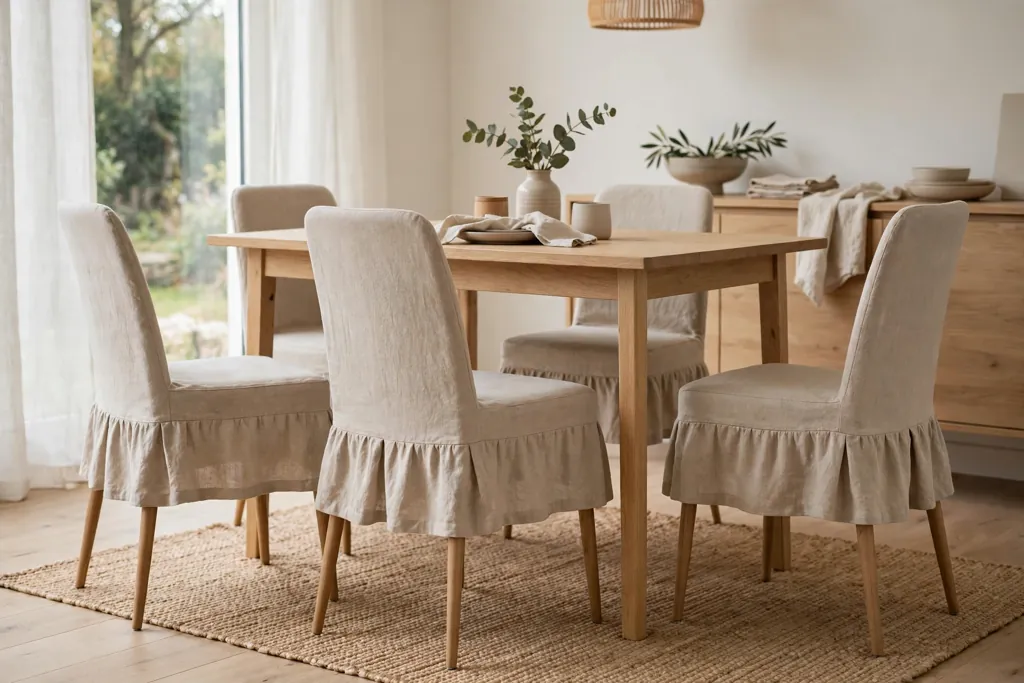
A short skirt cover stops above the chair legs, showing part of the leg and keeping the chair light and modern. This style suits a dining room with slim wooden or metal chair legs, a small space where a long skirt would look heavy, or a room where you want the chair frame to stay visible. Choose a plain fabric in a neutral or muted color so the clean line stays the focus.
Measure where the skirt should end, usually just below the seat, and check that the hem sits at the same height on every chair in the set. Fit the cover tightly over the back and seat so the short skirt does not ride up when someone sits down. Pair short skirt chairs with a simple table and plain placemats, since a busy table setting can crowd the clean chair line.
12. Floor Length Covers for Formal Dining

A floor length cover gives a dining chair a formal, draped look, with the skirt falling to the floor on all sides. This style suits holiday meals, a formal dining room, or a wedding style table at home, where the chairs are part of the display. Choose a smooth fabric that drapes well, such as a heavier cotton or a cotton blend, in white, ivory, or a deep neutral.
Check the floor under each chair before fitting, since a long skirt will show dust and catch on uneven tiles or rug edges. Fit the cover evenly, then walk around each chair and straighten the skirt so it falls the same way on all sides. Keep the skirt clear of chair legs when moving chairs, and lift, rather than drag, a covered chair so the hem stays clean and even.
13. Floral Patterned Chair Covers
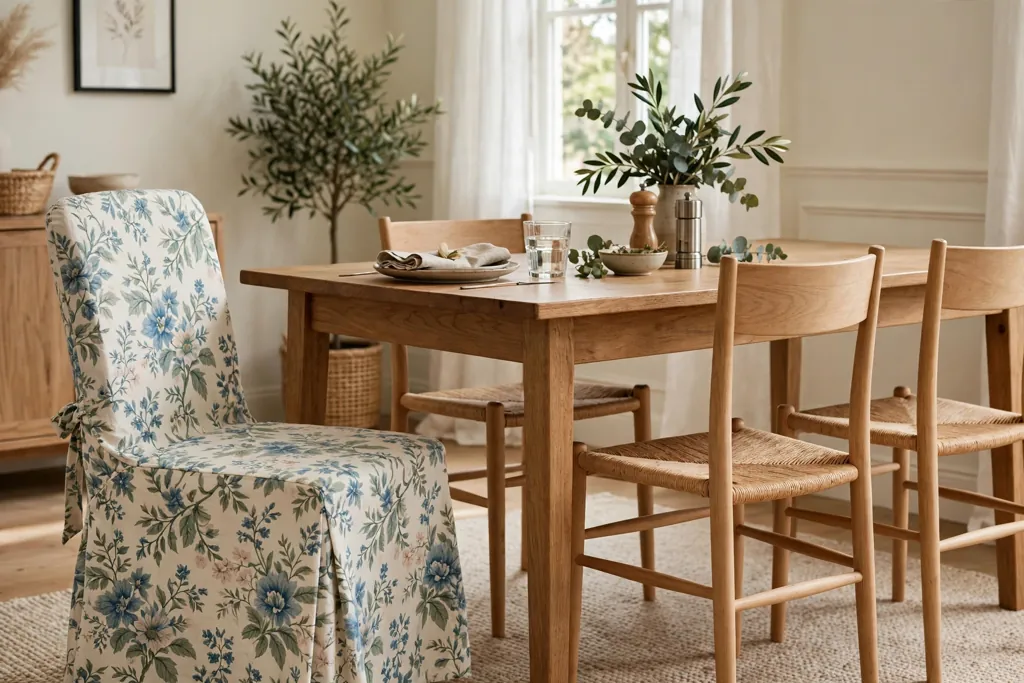
A floral patterned cover suits a dining or living room chair when you want pattern to lead the room. Choose one floral scale, small and scattered for a cottage room, or larger and bolder for a single accent chair, and keep the background color close to the wall or table tone so the pattern does not fight the room. One patterned chair beside plain chairs can be enough in a small space.
Fit the cover so the main flowers sit centered on the chair back, not cut off at the edge, and check the pattern repeat on each chair in a set. Pair floral chairs with plain table linen and solid cushions, so the floral has room to show. If the room already has patterned curtains or a patterned rug, use a smaller floral or a plain cover instead, so the room does not carry two competing patterns.
14. Gingham Check Covers for Casual Dining
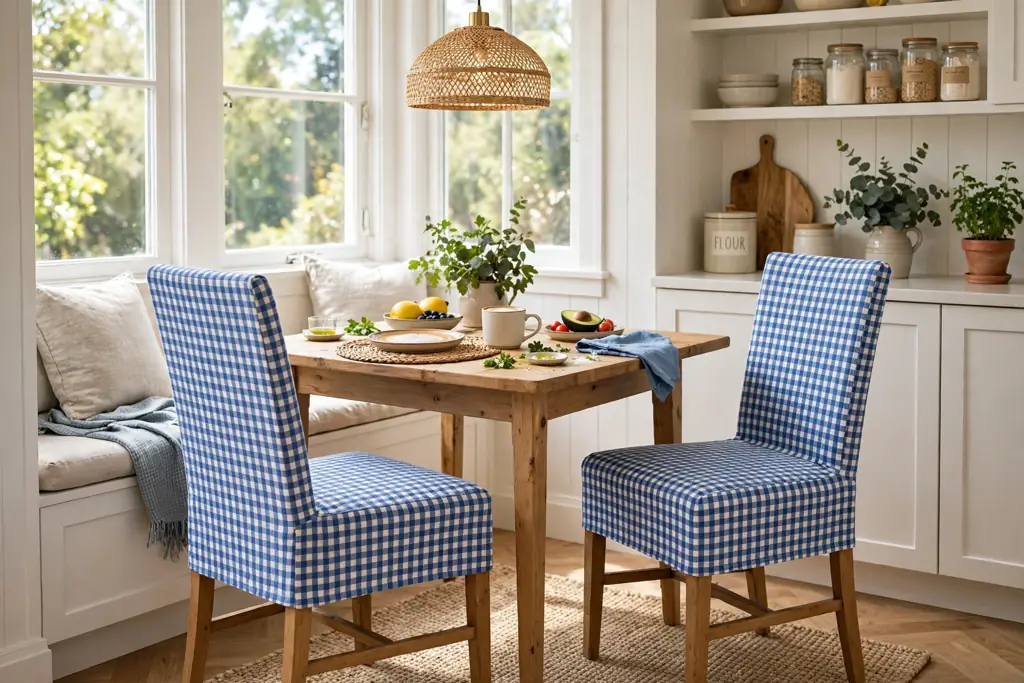
A gingham check cover gives casual dining chairs a fresh, picnic style note that works in kitchens, breakfast nooks, and informal dining rooms. Choose a small or medium check in blue, green, or black on white, and repeat the same check on every chair in the set for a planned look. Gingham pairs well with wood tables, white walls, and simple white dishes.
Check that the check lines run straight across the chair back after fitting, and refit any chair where the pattern twists. Keep the table setting simple, with plain placemats and one solid color in a centerpiece, so the check stays the main pattern. Gingham also works as a seasonal swap: use it in spring and summer, then change to a plain cover when the room moves to warmer autumn tones.
15. Seasonal Swap Covers for Dining and Living Chairs
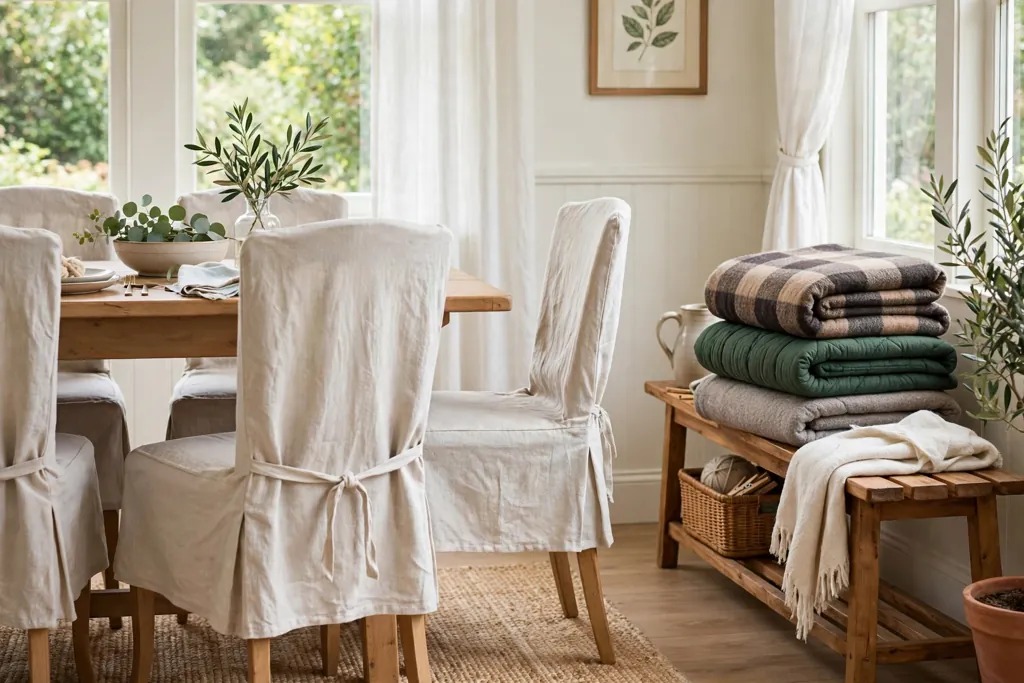
Seasonal swap covers let you change the mood of dining and living chairs without buying new chairs. Use a light linen or cotton cover in spring and summer, then a warmer, heavier cover in autumn and winter, and store the off season set washed and folded. This idea works best when the chair shape stays the same all year, so one fit works for both sets.
Plan the swap around the room, not just the chairs: change the table runner or a throw at the same time, so the new covers link to the rest of the space. Label each stored set by chair type and color, so the next swap takes minutes rather than a search through folded fabric. If storage is tight, keep one neutral set for all year and swap only a runner or cushions by season instead.
16. Folding Chair Covers for Gatherings
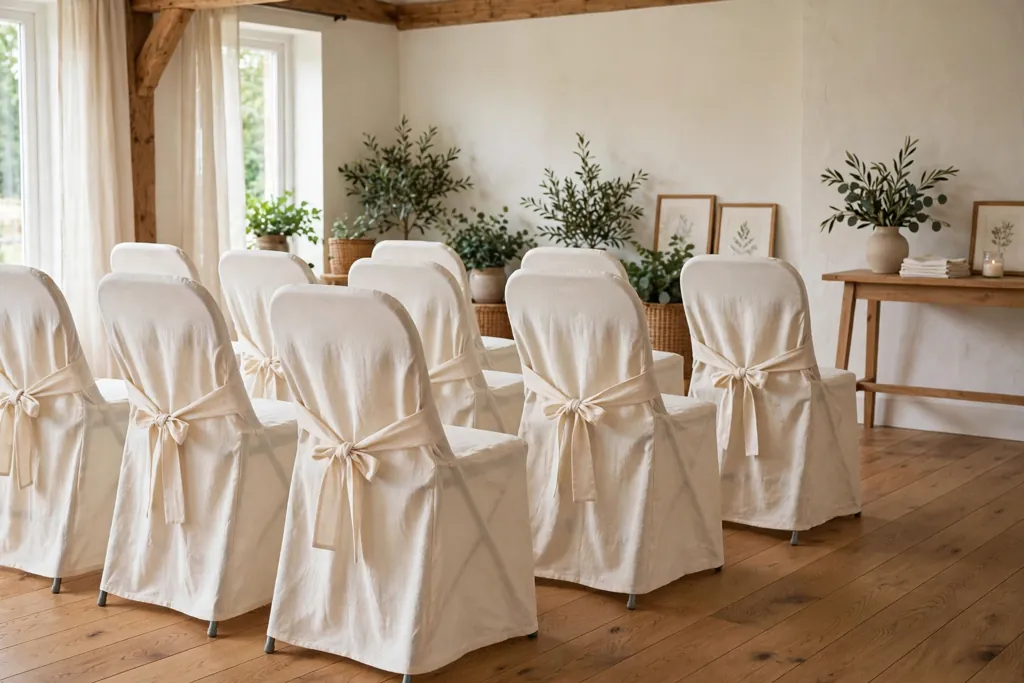
Folding chair covers give plain folding chairs a finished look for gatherings, holiday meals, or a larger table that needs extra seats. A simple cover with a tie or sash at the back turns a stackable chair into a dining chair that matches the rest of the set, at least for the evening. Choose a plain fabric in white, cream, or a color that matches the main dining chairs.
Fit the cover over the folded chair back first, then pull it down over the seat, and tie the sash at the back so it does not slip during the meal. Check that the chair still folds or stacks safely after the cover is removed, and store covers folded, not on the chairs, so the chairs stack neatly. For a one night gathering, a cover that is easy to remove and wash matters more than a perfectly tailored fit.
17. Wingback Armchair Slipcovers
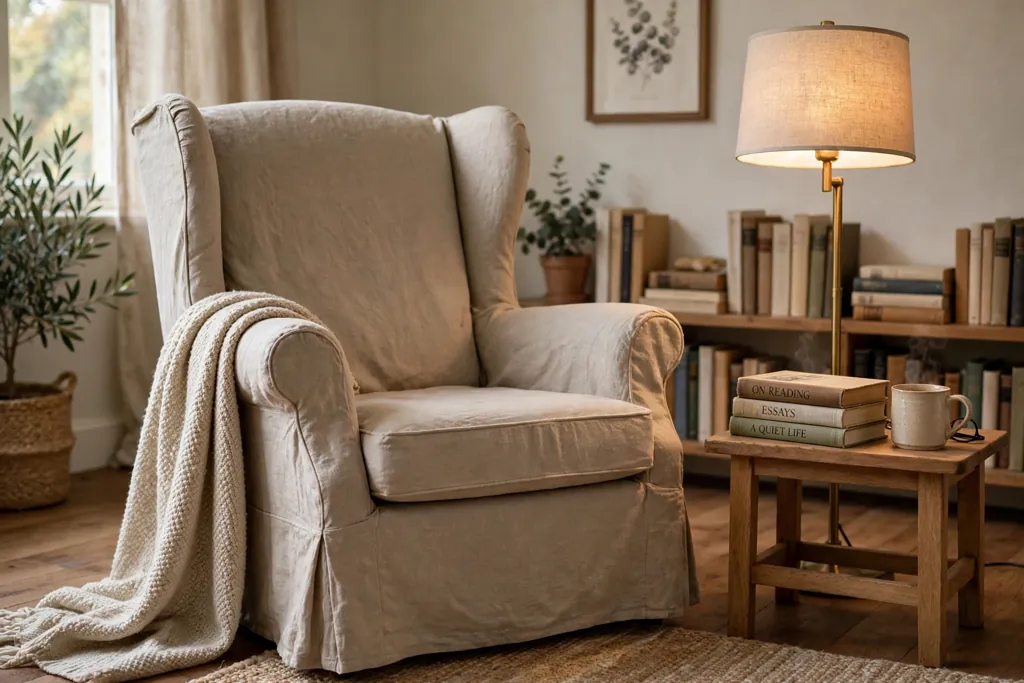
A wingback chair needs a slipcover shaped for its high back and side wings, so choose a cover made for wingbacks rather than a generic armchair cover. The wings add width at the top of the chair, and a cover that ignores them will pull tight across the front and leave the sides bare. Measure the wing width as well as the back height, seat width, and arm height before choosing.
Fit the cover over the wings first, then down the back and arms, and tuck fabric into the creases where the wing meets the arm and seat. Smooth the front panel so it covers the seat fully, and check from the side that no wing edge shows. A wingback in a plain linen or cotton suits a living room reading corner, while a patterned cover can turn the same chair into a clear accent piece.
Conclusion
Slipcovers for chairs work best when the fit matches the chair shape, the fabric matches how the chair is used, and the color links to the room. Start with measurements, choose a loose linen for a relaxed look or a tailored skirt for a formal table, and pick washable or stretch fabrics for daily dining, kids, and pets. Use pattern on one chair or one set at a time, swap covers by season when storage allows, and refit each cover after washing while it is still slightly damp. With the right cover, a worn or mismatched chair can sit comfortably in a dining or living room for years. For more ideas from Dwell Ovell, browse the home page for home decor guides.
FAQs
What are slipcovers for chairs?
Slipcovers for chairs are removable fabric covers that fit over a chair back, seat, and sometimes arms and legs, to refresh its look and protect the upholstery underneath. They come in loose, tailored, and stretch fits, in fabrics such as linen, cotton, and velvet, and they can be removed for washing, which makes them a practical choice for dining and living room chairs.
How do I measure a chair for a slipcover?
Measure the chair back height and width, the seat width and depth, and the leg height, and note whether the back is straight, curved, or winged, since each shape needs a different cover. Compare those measurements with the cover size guide before ordering, and keep the numbers beside you while fitting, so you can check that the back, seat, and skirt all sit at the right height.
What fabric is best for dining chair slipcovers?
Plain cotton and linen work well for most dining chair slipcovers, since they wash at home, drape neatly, and suit both casual and formal tables. For daily family dining, choose a washable stretch or tight weave cotton that stays in place and hides marks, and save velvet or very light linen for chairs that are used less often or for guests.
Can slipcovers work on armchairs and wingback chairs?
Yes, slipcovers can work on armchairs and wingback chairs, as long as you choose a cover shaped for that chair type and measure the arms and wings as well as the back and seat. Fit the cover over the wings and arms first, tuck fabric into the creases, and check from the side that no wing or arm edge shows, since a generic chair cover will pull tight on a wingback.
How do I keep chair slipcovers from slipping?
Choose a stretch cover or a cover with ties, a zip, or an elastic hem for chairs that are used daily, and fit it from the top down, smoothing the back and seat before tucking the hem under the seat. Refit the cover after washing while it is still slightly damp, so the fabric settles evenly, and avoid dragging a covered chair across the floor, which pulls the hem out of place.
How often should I wash chair slipcovers?
Wash dining chair slipcovers whenever they show marks or spills, and on a regular cycle for chairs used daily, so one chair does not look fresher than the rest. Check the care label first, wash covers with any loose cushions removed, and refit each cover while it is still slightly damp, so it keeps its shape and sits evenly on the chair.