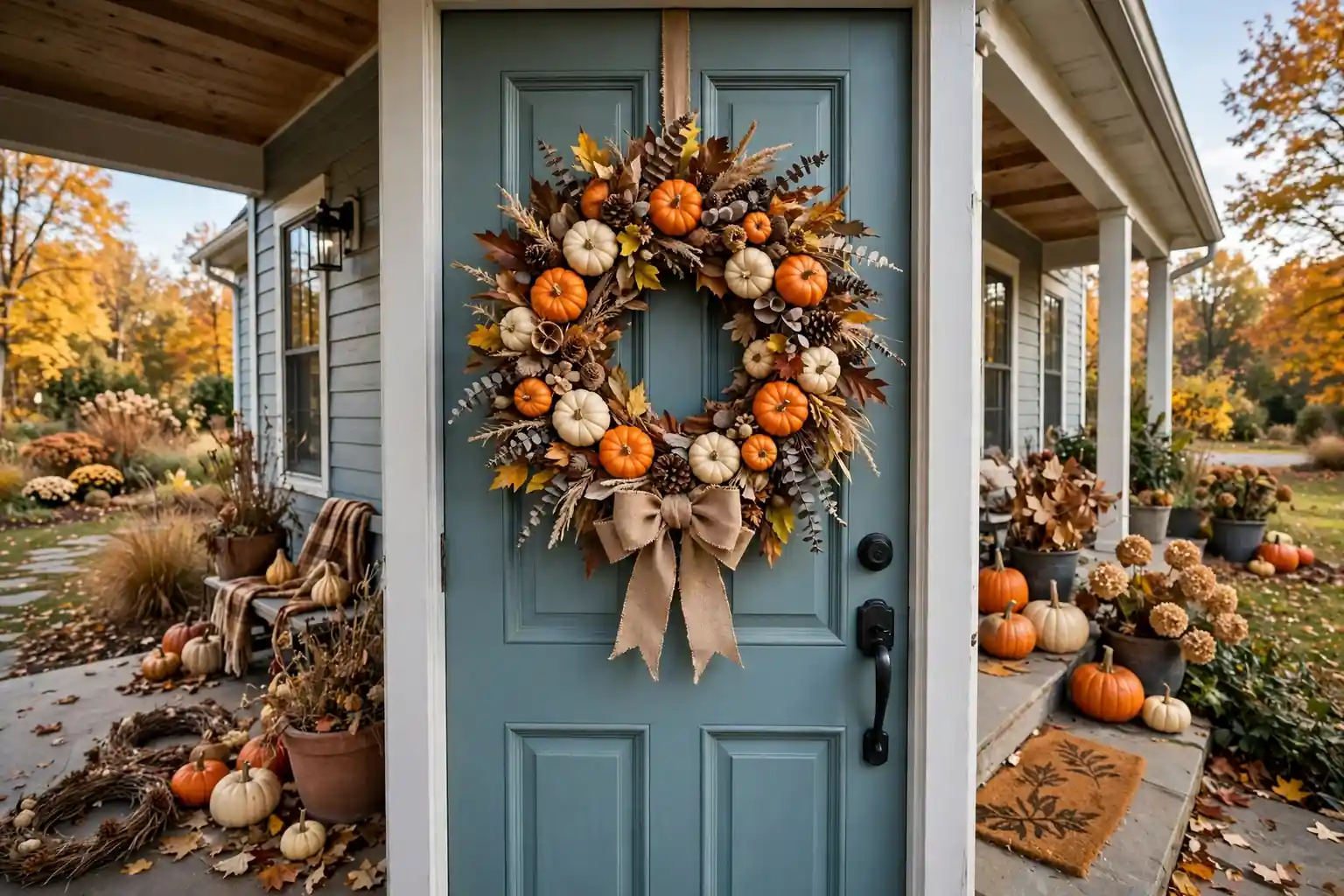
A pumpkin wreath gives a front door fall color, using small pumpkins on a grapevine, foam, or hoop base with leaves, berries, ribbon, or lights. Choose a full round wreath for a bold entrance, a sparse hoop for a modern door, or a lit or Halloween style for evening impact. The 17 ideas below cover classic, rustic, and modern looks.
A wreath is often the first thing guests notice at the door, so it helps to pick one that fits the door color, the porch size, and the rest of the entrance. A full wreath suits a plain door, while a lighter wreath suits a door with glass panels or bold paint. For wider porch styling, pair your wreath with the planters, mats, and lanterns in these fall front porch decor ideas. Hang the wreath at eye level, check that it clears the handle when the door swings, and bring fabric or dried pieces indoors in heavy rain so they last through the season.
Key Takeaways
- Start with the base: grapevine for a rustic look, foam for a full look, and a metal hoop for a sparse modern look.
- Mix pumpkin sizes, with larger pumpkins as anchors and mini pumpkins as fillers, so the wreath reads as gathered rather than uniform.
- Repeat one or two colors from the wreath in pots, mats, or cushions nearby so the entrance looks planned.
- Use a bow, a cluster, or lights as one focal point, not all three at full strength, so the wreath stays easy to read from the walkway.
- Hang the wreath at eye level, secure it against wind, and keep it clear of the handle, lock, and doorbell.
- Choose weather hardy materials for an exposed door, and save dried leaves, fabric, and paper pieces for a covered porch or indoors.
1. Classic Orange Mini Pumpkins on Grapevine
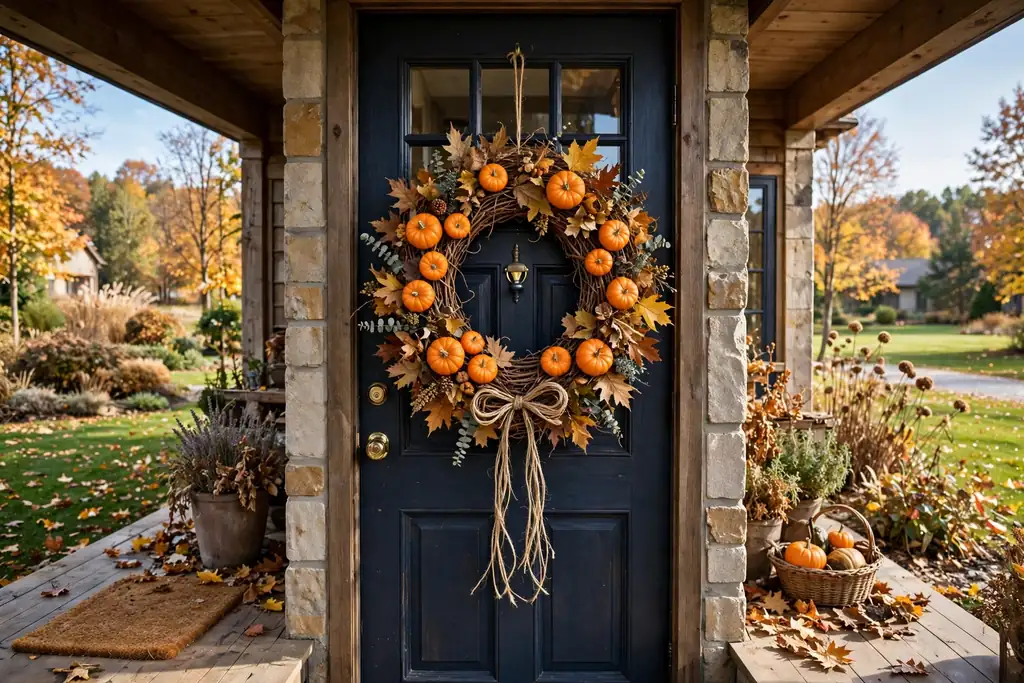
Small orange pumpkins wired around a grapevine ring make the most familiar fall wreath, and the open grapevine texture keeps it from looking heavy. Space five to seven mini pumpkins evenly around the ring, then fill the gaps with dried leaves and a few small berries. A simple twine bow at the bottom finishes the look without competing with the pumpkins.
Keep the pumpkins to a similar size range so no single pumpkin pulls the eye off balance. If a pumpkin sits proud of the ring, wire it at two points rather than one, so wind cannot spin it. This style suits brick, painted wood, and most porch palettes, and it pairs well with mums and a plain doormat.
2. All White and Cream Pumpkins
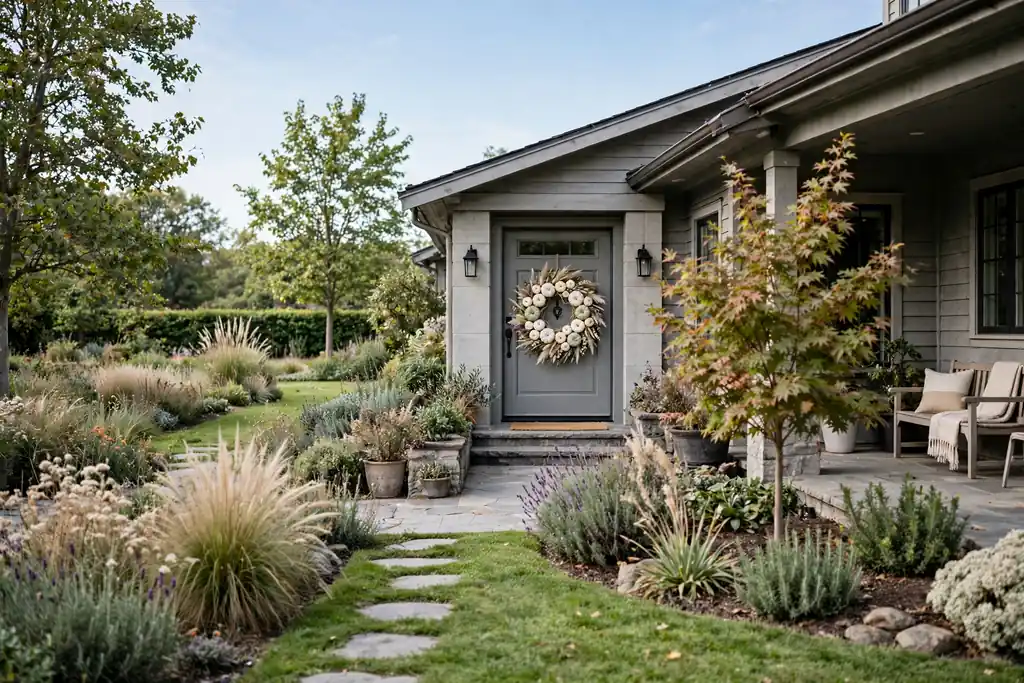
A white and cream pumpkin wreath gives a calm, clean look for doors in gray, navy, black, or sage green. Use white, cream, and pale green pumpkins in varied sizes on a grapevine or foam base, with pale dried grasses or soft green leaves between them. The limited palette lets the shapes and textures do the work.
Avoid adding orange or bright gold pieces here, since one strong color breaks the quiet effect. A cream linen bow or a simple twine loop suits this wreath better than a patterned ribbon. This is a good choice for a modern porch, a light colored door, or a home where the rest of the fall decor is already colorful.
3. Pumpkin and Sunflower Harvest Wreath
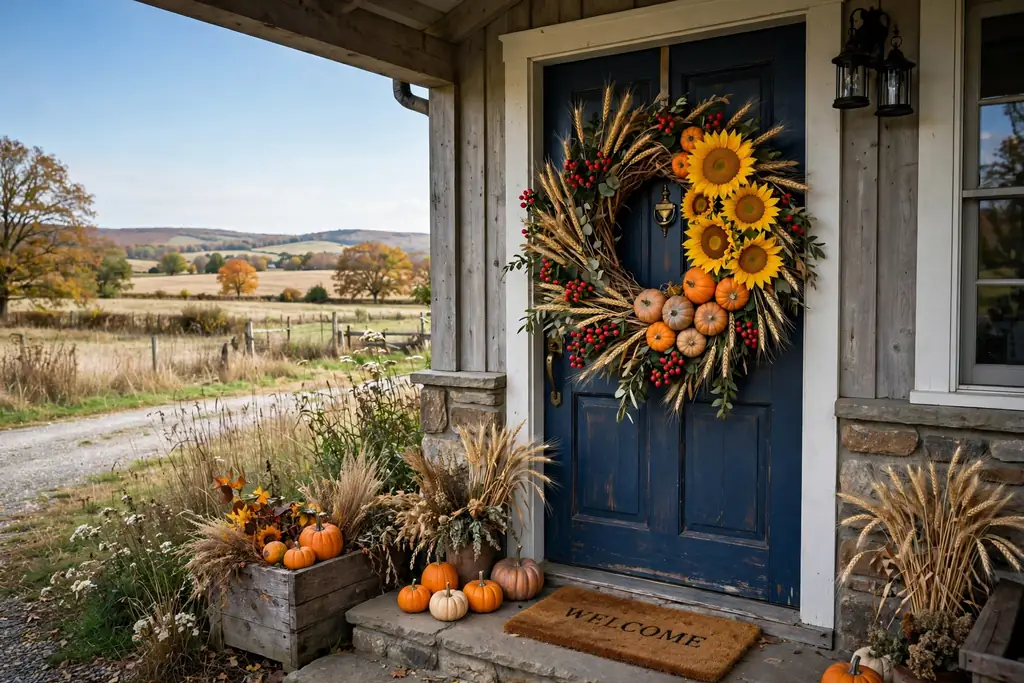
Sunflowers and pumpkins together read as harvest at a glance, and the large flower heads give the wreath a clear focal point. Place two or three sunflower heads on one side of a full leaf base, then tuck mini pumpkins around them with wheat stems and small berries. Keep the sunflowers grouped rather than scattered, so the wreath has one strong cluster.
Balance the cluster by placing a single mini pumpkin on the opposite side of the ring, which stops the wreath from looking lopsided. Faux sunflowers last longer outdoors, while dried sunflowers suit a covered porch. Pair this wreath with gold or rust pots by the door for a harvest entrance that holds together.
4. Rustic Burlap and Pumpkin Wreath
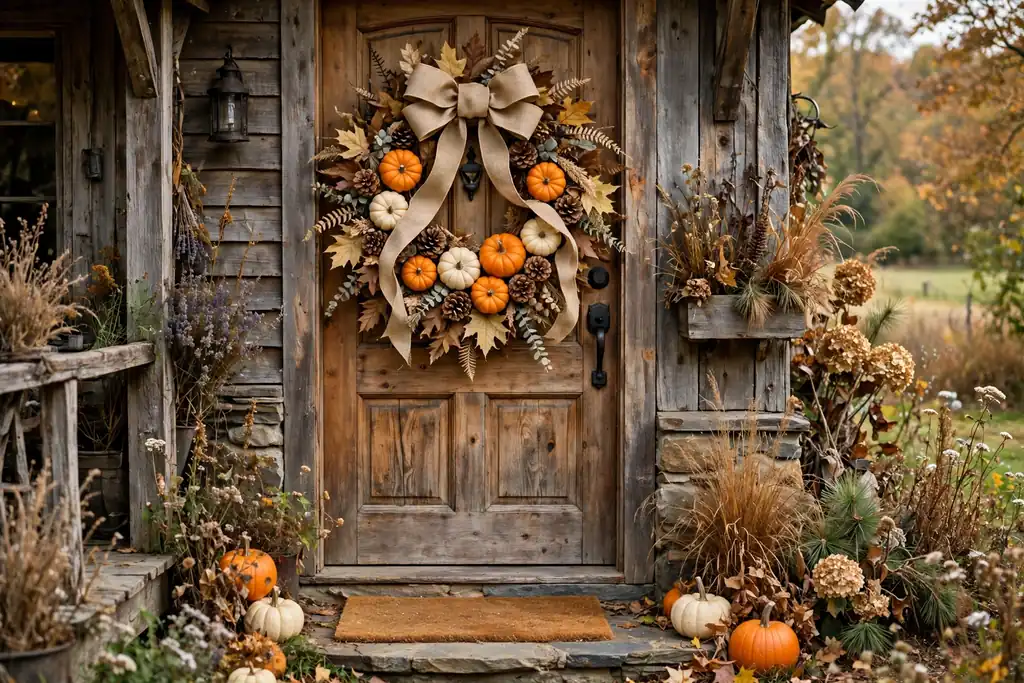
Burlap gives a pumpkin wreath a farmhouse feel, especially when it is used as a wide bow, a wrapped base, or loose loops between pumpkins. Wrap a grapevine ring lightly with burlap ribbon, wire on orange and cream mini pumpkins, and add dried leaves and pinecones in the gaps. The rough texture of burlap contrasts well with smooth pumpkin skins.
Use burlap sparingly on a small wreath, since too much fabric can hide the pumpkins. A single wide burlap bow at the bottom, with short tails, is often enough. Keep burlap pieces under a porch roof where possible, since wet burlap dries slowly and can sag. This style suits wood doors, stone porches, and rustic planters.
5. Velvet Fabric Pumpkins
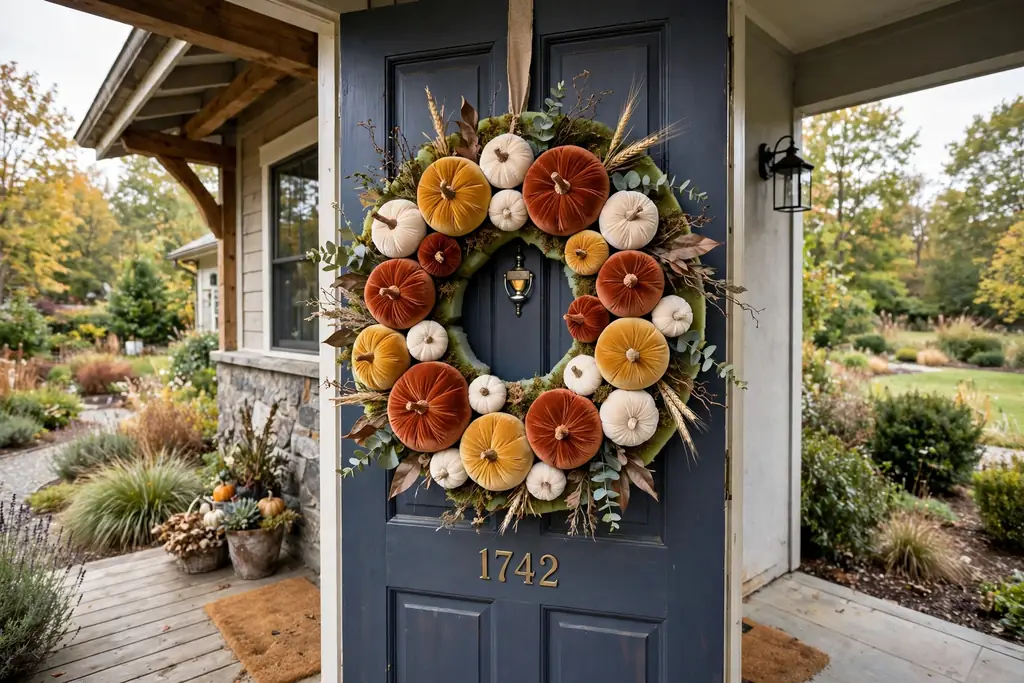
Velvet pumpkins give a wreath a soft, plush look that works well on a sheltered porch or an interior door. Choose velvet pumpkins in rust, mustard, plum, or cream, and attach them to a foam base so the fabric sits snugly against the ring. Fill gaps with velvet leaves or small fabric berries rather than dried leaves, so the textures stay consistent.
Keep velvet pumpkins out of rain, since wet fabric loses its soft finish and takes time to dry. A single color of velvet pumpkin, in two or three sizes, often looks tidier than a mixed rainbow of fabrics. This wreath suits a formal entrance, a painted door, and homes where the fall palette leans toward rich, deep tones.
6. Pumpkin and Dried Leaf Wreath
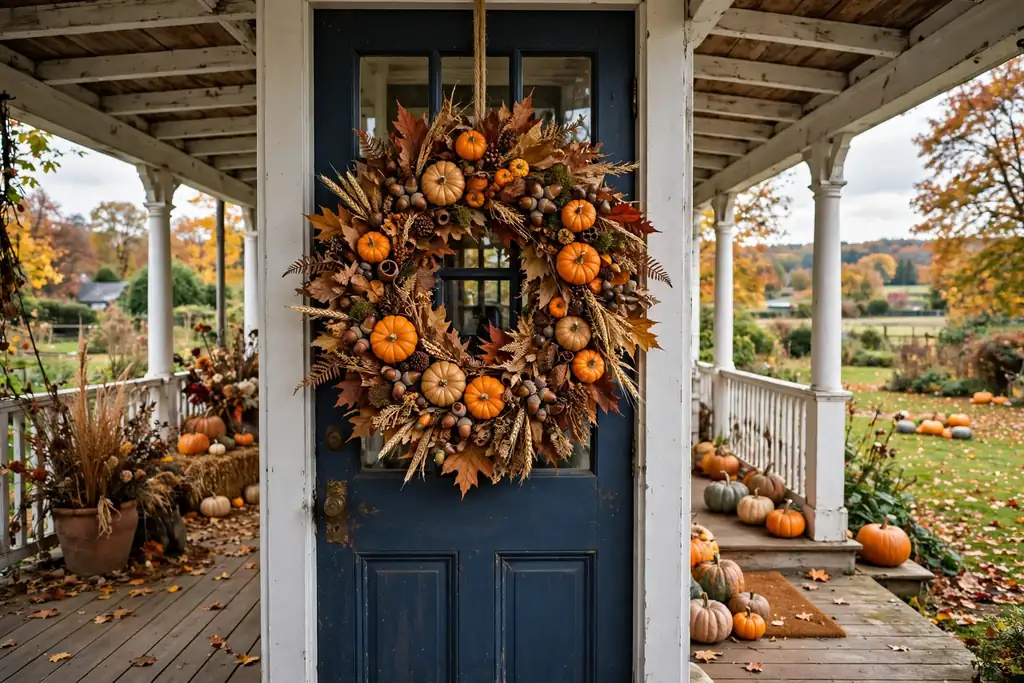
Dried leaves in rust, gold, and brown make a full, natural base that lets mini pumpkins sit like fruit on a branch. Cover a foam or grapevine ring with overlapping dried leaves, then wire on mini pumpkins in orange, cream, and striped varieties. Add a few small acorns or seed heads for detail, but keep the leaf layer as the main texture.
Press or dry leaves flat before use so they lie neatly against the ring, and expect some shedding on an exposed porch. A covered porch suits this wreath best, and a light shake outdoors before hanging removes loose pieces. Pair it with a leaf garland or a simple wooden sign for a natural entrance.
7. Pumpkin and Pinecone Woodland Wreath
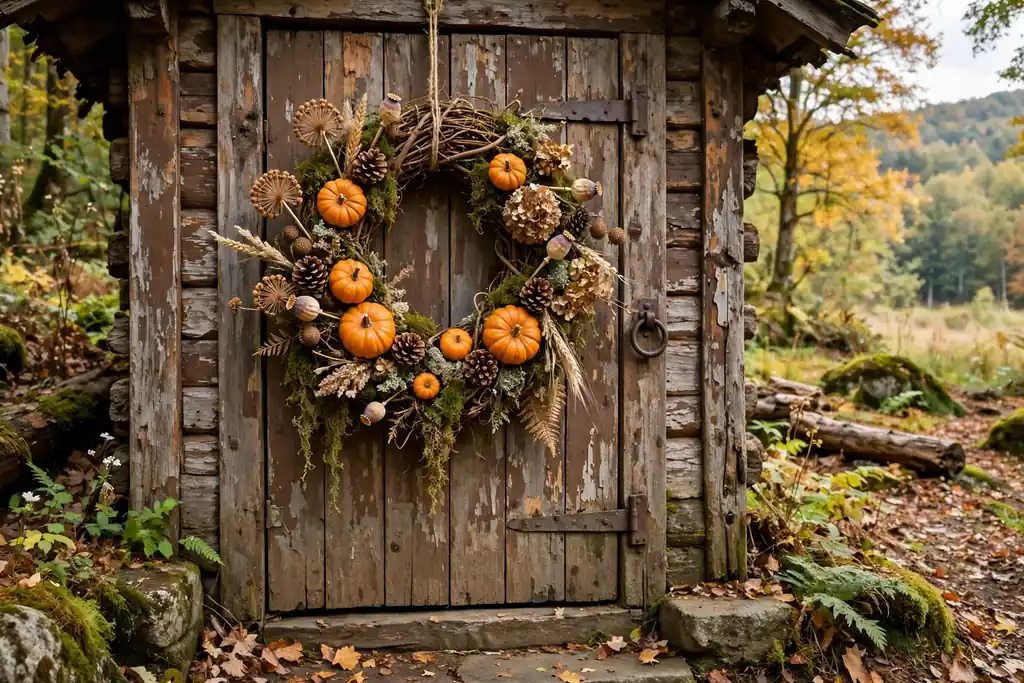
Pinecones, moss, and small pumpkins give a wreath a woodland feel that suits cabins, stone houses, and wooded lots. Start with a grapevine or moss covered base, wire on pinecones of varied sizes, then tuck mini pumpkins and dried seed heads into the gaps. Keep the pinecones as the dominant texture, with pumpkins as accents rather than the main mass.
Use pinecones that are dry and fully open, and wire each one at its base so it cannot roll out of place. A twine bow suits this wreath better than a shiny ribbon. This style works from early fall through Thanksgiving, since it reads as woodland rather than Halloween, and it pairs well with lanterns and wood planters.
8. Asymmetric Crescent Pumpkin Wreath
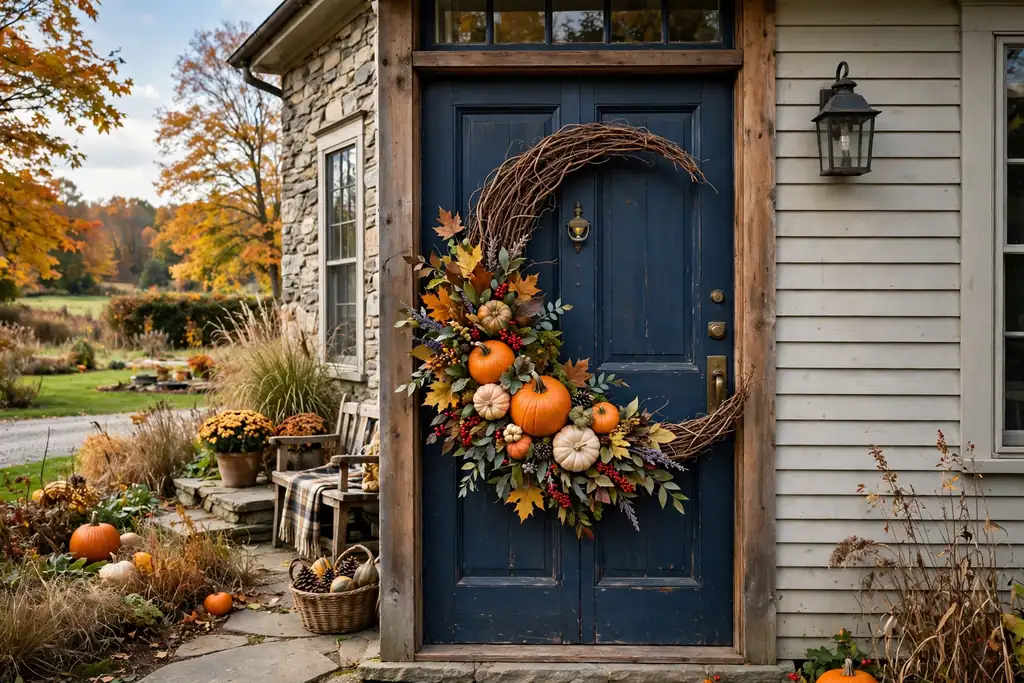
A crescent wreath clusters pumpkins, leaves, and berries along one side of the ring and leaves the rest of the base bare, which gives a modern, airy look. Build the cluster on the lower left or lower right of a grapevine ring, using larger pumpkins at the center of the cluster and smaller pieces trailing outward. Let a few leaves and stems extend past the ring edge for a loose, natural outline.
Keep the bare section truly bare, with only the grapevine showing, so the contrast reads clearly. This style suits a door with glass panels, a narrow porch, or a home where a full wreath would feel too heavy. Hang it so the cluster sits slightly below eye level, where it is easiest to see from the walkway.
9. Pumpkin and Wheat Harvest Wreath
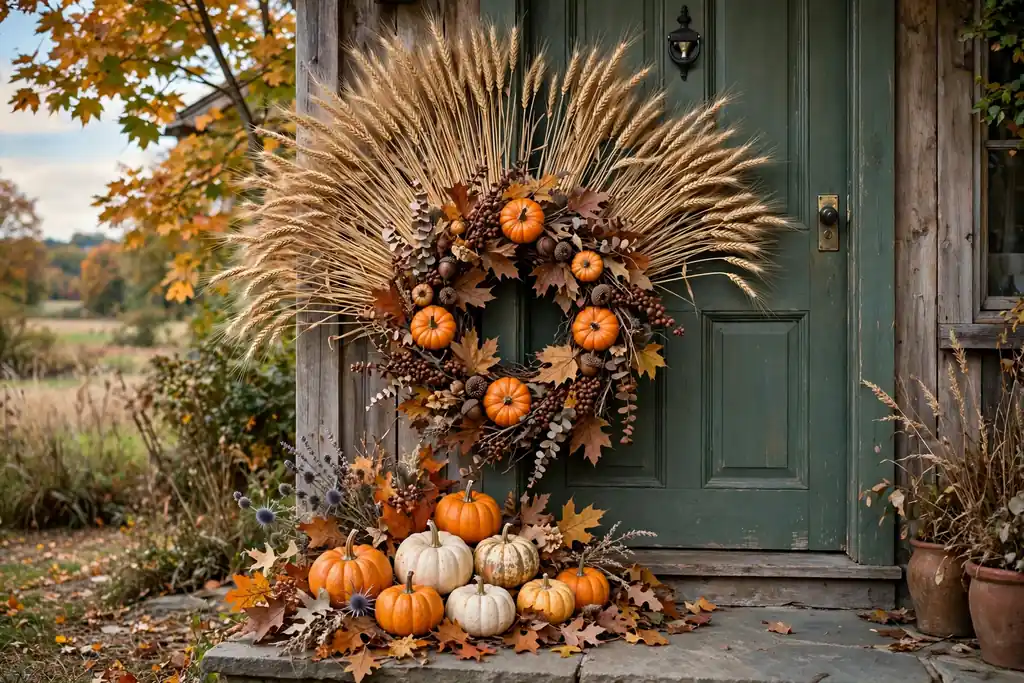
Wheat stems add height and a golden harvest tone that lifts a pumpkin wreath without adding bulk. Fan dried wheat stems behind a cluster of mini pumpkins on one side of a grapevine ring, then add a few dried leaves and small berries at the base of the cluster. The wheat should rise above the ring, not lie flat against it, so the wreath gains vertical shape.
Trim wheat stems to varied lengths so the fan looks gathered rather than cut to a straight line. Keep wheat away from open flames and bring the wreath indoors in heavy rain, since wet wheat droops and sheds. This wreath pairs well with corn stalks, a wooden crate, and gold toned pots at the door.
10. Black and Orange Halloween Pumpkin Wreath
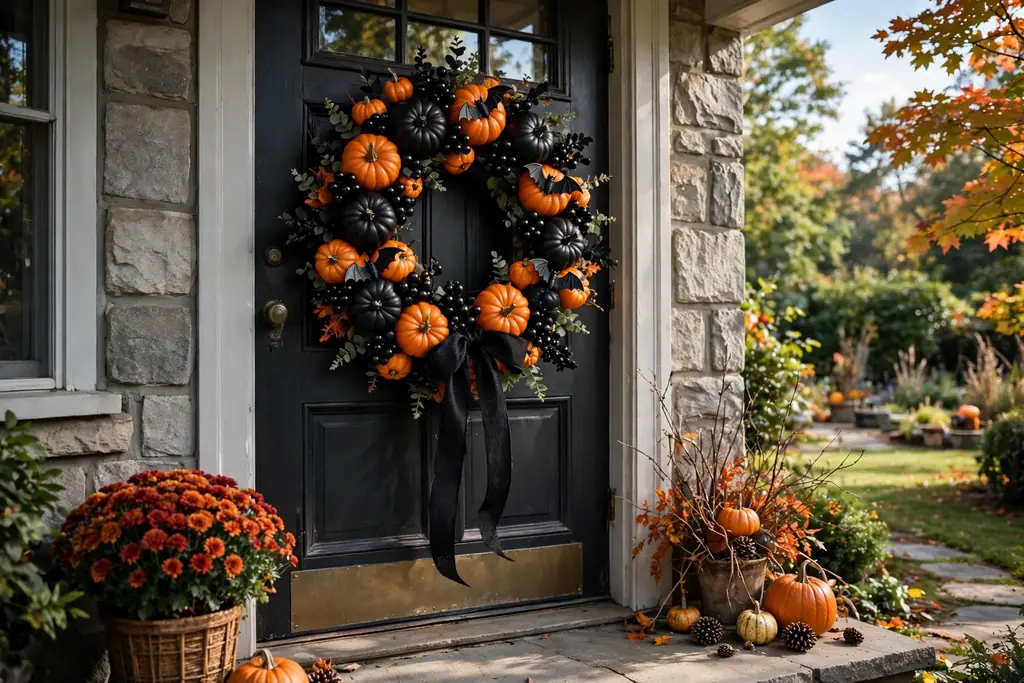
A Halloween pumpkin wreath uses black accents, orange pumpkins, and a few playful details to mark the holiday without covering the whole door. Start with a black grapevine or foam base, add orange and black mini pumpkins, and finish with black berries, a black ribbon, and one or two small bat or spider picks if you like them. Keep the spooky pieces small and removable, so the wreath can shift to Thanksgiving after Halloween.
Place black pieces in groups rather than scattered one by one, so the wreath reads as planned rather than random. Remove the Halloween picks after October 31 and swap the black ribbon for burlap or rust ribbon, and the same wreath works for the rest of fall. This is a good choice for homes with trick or treat visitors, since it signals the holiday at the door.
11. Pumpkin and Berry Wreath
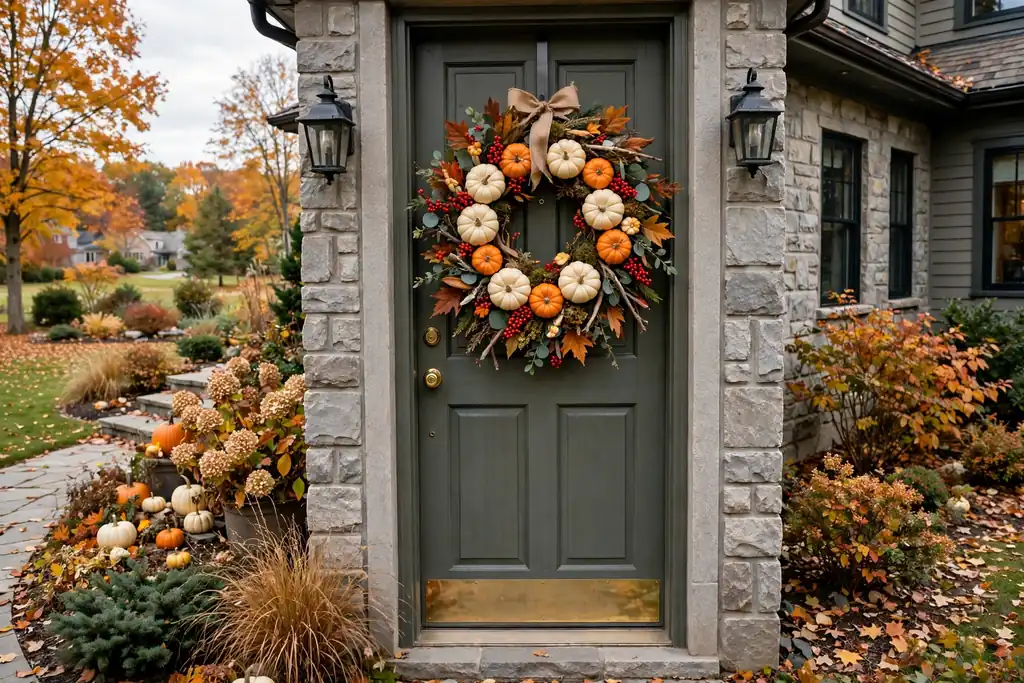
Berries add small pops of color and a finished detail to a pumpkin wreath, especially in red, burgundy, or orange. Cover a foam base with leaves or moss, wire on mini pumpkins in cream and orange, then tuck berry picks into every gap so no base shows through. The berries should sit at the same depth as the pumpkins, not buried behind them.
Use faux berries outdoors, since real berries soften quickly in rain and attract insects. A berry wreath suits a red or dark green door, where the berry color echoes the door paint. Pair it with a simple doormat and one planter, since the wreath itself is already detailed.
12. Sparse Metal Hoop Pumpkin Wreath
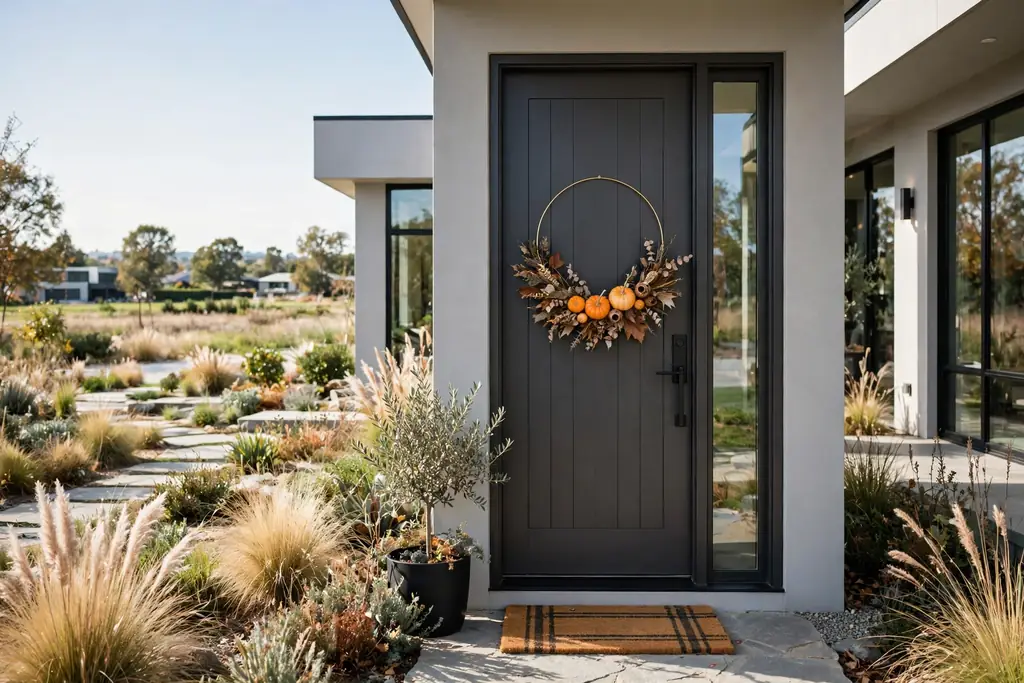
A metal hoop wreath uses only a few pumpkins on a thin gold or black ring, which suits modern doors and small porches. Wire three to five mini pumpkins in one color family to the lower half of the hoop, add a few sprigs of dried leaves or eucalyptus, and leave the top of the hoop bare. The empty space is part of the design, so resist the urge to fill it.
Choose a hoop size that fits the door, with at least a hand width of door showing around it. A thin ribbon loop at the top, rather than a bulky hook, keeps the minimal look. This wreath works well on a glass paneled door, where a full wreath would block light, and it pairs with a single planter rather than a full porch display.
13. Pumpkin and Plaid Ribbon Wreath
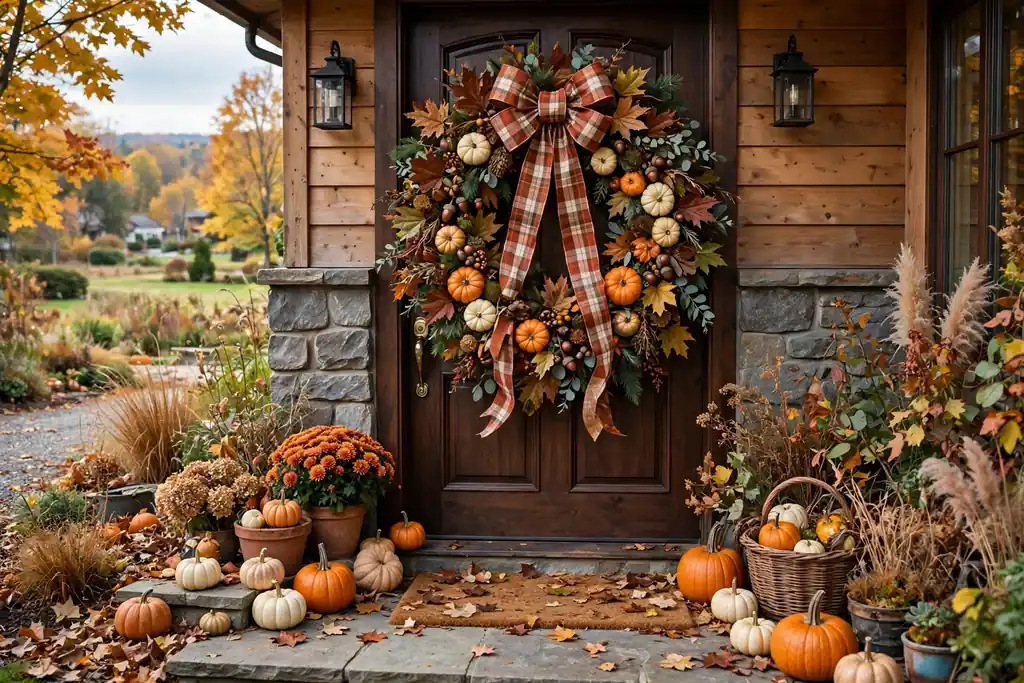
Plaid ribbon gives a pumpkin wreath a cozy, classic fall pattern that ties it to throws, cushions, and table linens nearby. Build a full wreath of mini pumpkins and leaves on a foam base, then add a large plaid bow at the bottom and two or three short plaid loops tucked into the wreath. Choose one plaid in rust, cream, and brown, and keep other patterns off the wreath.
Make the bow the only patterned element, so the pumpkins and leaves stay as the main texture. A wired plaid ribbon holds its loops better outdoors than a soft ribbon. This style suits porches with plaid cushions or a plaid throw on a bench, and it reads well from the street because the pattern is bold at a distance.
14. Pumpkin and Eucalyptus Wreath
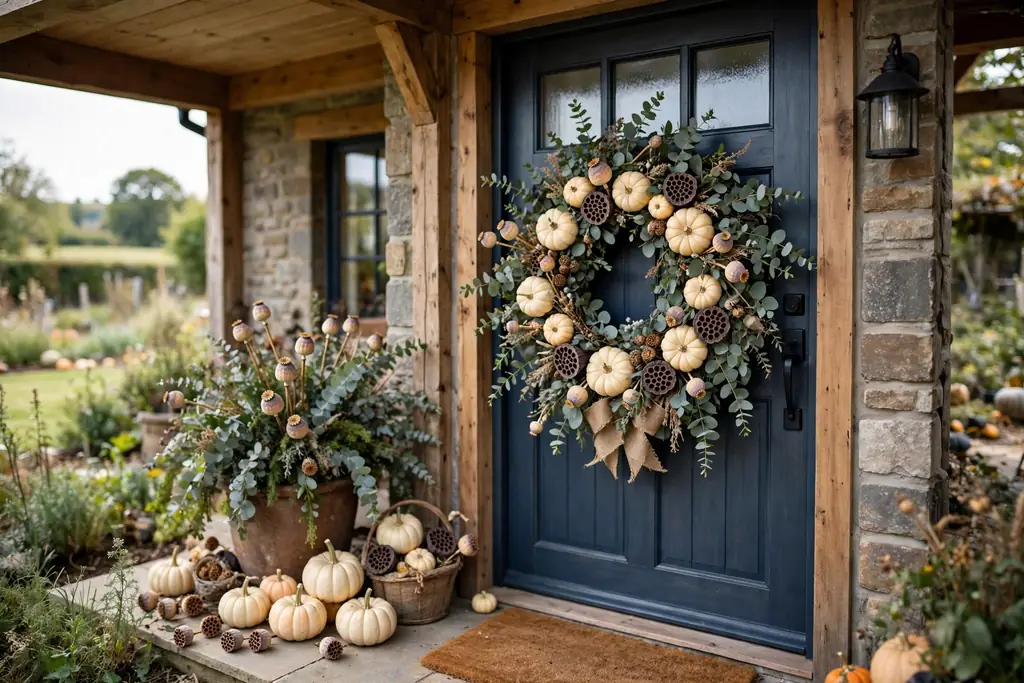
Eucalyptus adds a soft green tone and a rounded leaf shape that cools down the warm orange of pumpkins. Cover a foam base with eucalyptus sprigs, then wire on cream and pale orange mini pumpkins, with a few dried seed heads for contrast. The green should form a full background layer, with pumpkins sitting on top of it rather than hidden inside it.
Use faux eucalyptus outdoors for the longest life, or dried eucalyptus on a covered porch. A simple cream or sage ribbon suits this wreath better than a bright bow. This style suits gray, white, and sage doors, and it works indoors on a mantel or a wall when the front door already has a different wreath. For more room by room fall looks, see these fall decor ideas.
15. Painted Pastel Pumpkins
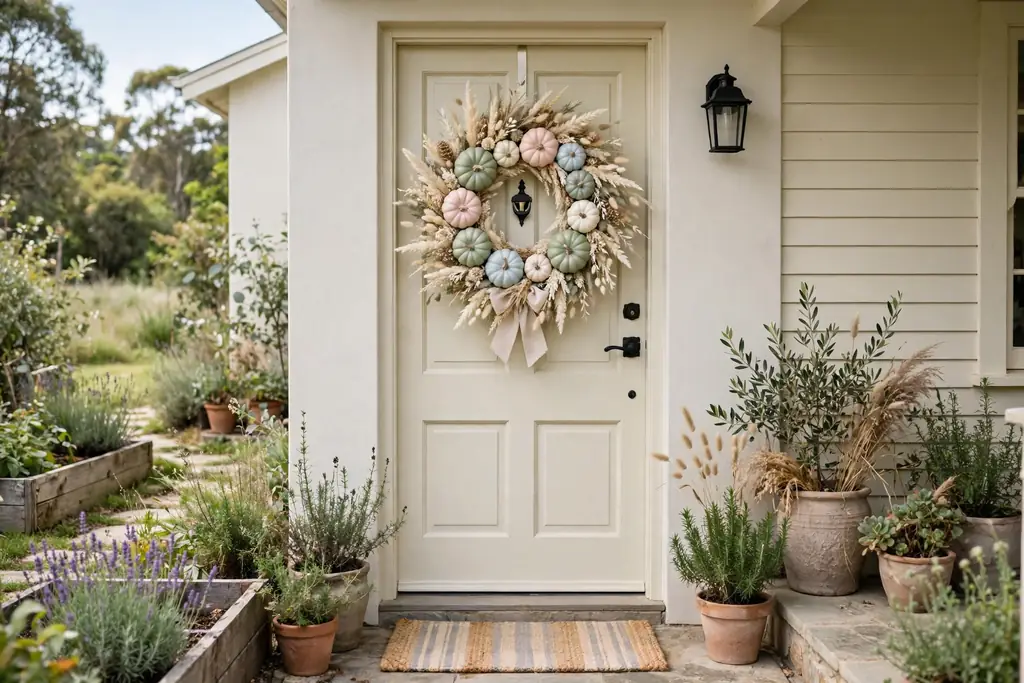
Painted pumpkins in soft sage, blush, pale blue, and cream give a wreath a gentle, modern fall look that suits light colored homes. Paint faux mini pumpkins in a limited pastel palette, let them dry fully, then wire them onto a foam base with pale dried grasses and a few cream berries. Keep the palette to three pastels plus cream, so the wreath stays calm.
Paint only faux pumpkins, since paint seals a real pumpkin skin and shortens its life. A cream or pale sage bow finishes this wreath without adding a new color. This style suits coastal homes, white porches, and doors in pale blue or soft green, where a classic orange wreath would feel too strong.
16. Pumpkin and Corn Husk Wreath
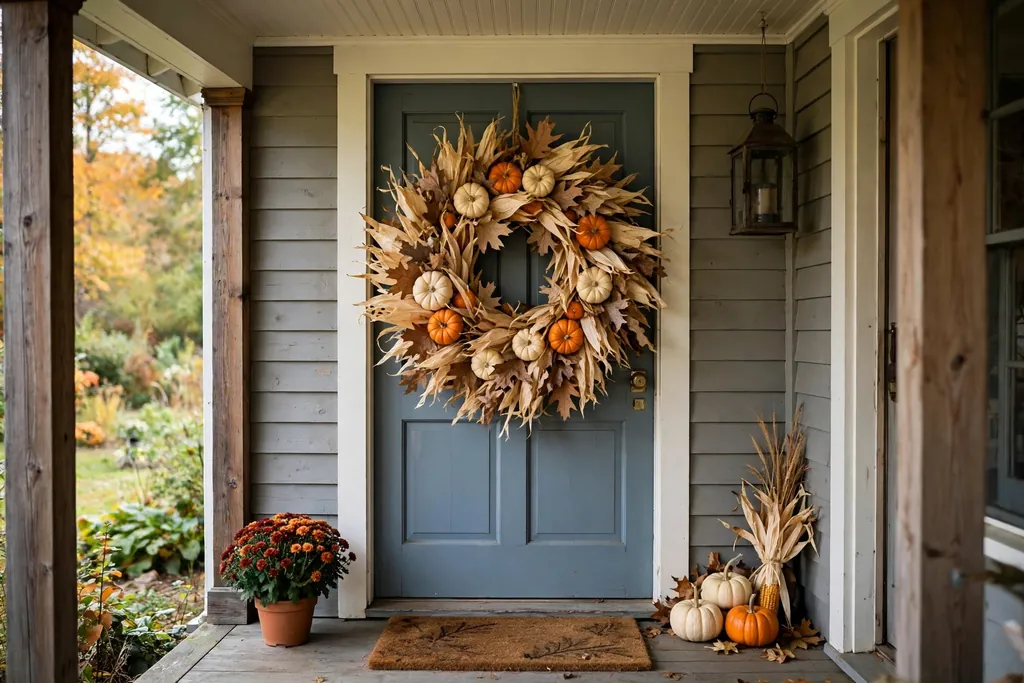
Corn husks add a pale gold, papery texture that suits a harvest wreath and costs little when husks are saved from cooking or crafting. Layer dried corn husks around a grapevine ring, overlapping them like scales, then wire on mini pumpkins in orange and cream with a few dried leaves. The husks should fan slightly outward, so the wreath gains a ruffled edge.
Keep corn husks dry, since wet husks go limp and lose their shape. A covered porch suits this wreath best, and a twine bow matches the natural material better than a shiny ribbon. This is a good handmade option for crafters, and it pairs well with corn stalk bundles and a wooden crate by the door. For more handmade fall projects, browse these DIY fall home decor ideas.
17. Pumpkin Wreath with Warm Fairy Lights
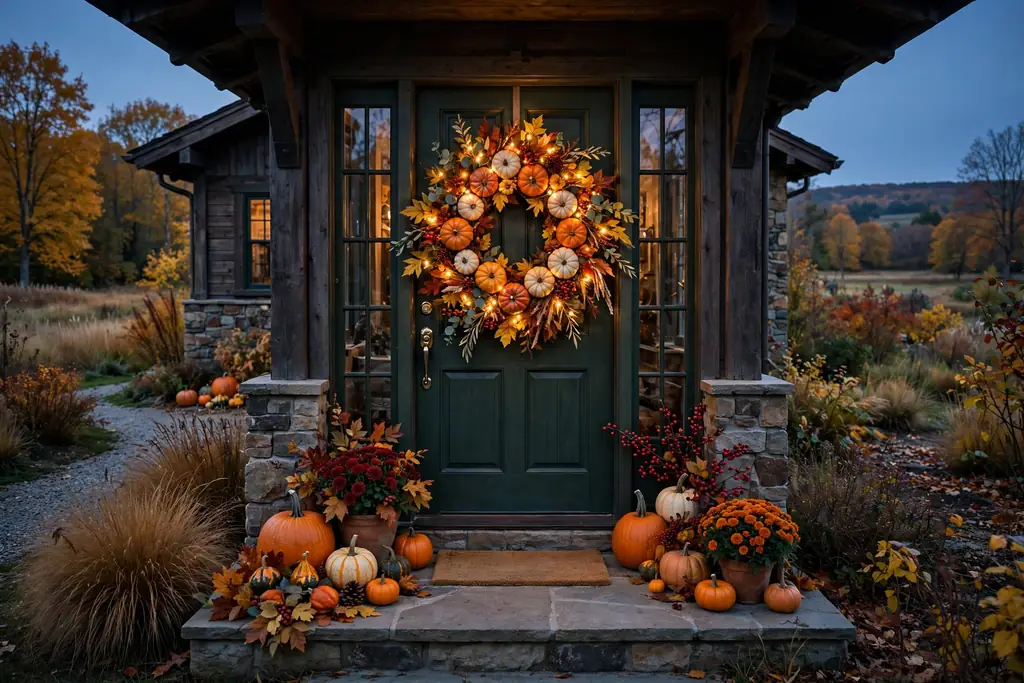
Warm fairy lights turn a pumpkin wreath into an evening focal point, which matters in fall when guests often arrive after dark. Build a full wreath of mini pumpkins, leaves, and berries on a foam base, then weave a battery fairy light string through the wreath, tucking the battery pack behind the ring. Space the lights evenly, with no dark patches and no tangled clumps.
Use warm white lights rather than cool white, since warm light suits pumpkins and wood doors better. Set the battery pack on a timer if it has one, and check that the wreath still hangs flat with the pack in place. This wreath suits a dark porch, a north facing door, or a home where the entrance is used most in the evening, and it pairs well with lanterns on the steps.
Conclusion
A pumpkin wreath works best when the base, the pumpkin size, and the focal point fit the door and the porch around it. A full grapevine wreath suits a plain door, a sparse hoop suits a modern door, and a lit or berry wreath suits an entrance used after dark. Pick one idea from this list, repeat one color from the wreath in a nearby pot or mat, and hang the wreath at eye level with a secure hook. With that simple plan, the front door reads as festive for the whole fall season, from early autumn through Thanksgiving.
FAQs
What is the best base for a pumpkin wreath?
A grapevine base suits a rustic, open wreath, a foam base suits a full wreath that hides the ring, and a metal hoop suits a sparse modern wreath. Choose grapevine for outdoor use, foam for a dense look on a covered porch, and a hoop when you want most of the door to stay visible.
How do I hang a pumpkin wreath on a front door?
Hang a pumpkin wreath at eye level on a sturdy over door hook, a nail, or a suction hook rated for the wreath weight. Check that the wreath clears the handle and lock when the door swings, and add a small pad behind the lower edge if the wreath tilts forward.
Should I use real or faux pumpkins on a wreath?
Faux pumpkins last longer outdoors, hold paint well, and can be reused next year, while real mini pumpkins look natural but soften in rain and warm sun. Use faux pumpkins for an exposed door, and save real mini pumpkins for a covered porch or a short display period.
How do I keep a pumpkin wreath from looking too busy?
Use one focal point, such as a bow, a flower cluster, or lights, and keep the rest of the wreath to pumpkins plus one filler, such as leaves or berries. Limit the palette to two or three colors, and step back to view the wreath from the walkway before adding more pieces.
Can a pumpkin wreath stay up through Thanksgiving?
Yes, most pumpkin wreaths work through Thanksgiving if you avoid Halloween only details or make them removable. Remove black Halloween picks and swap a black ribbon for burlap or rust ribbon after October 31, and the same wreath reads as harvest rather than Halloween.
How do I store a pumpkin wreath after fall?
Store a pumpkin wreath in a large box or a wreath bag, with tissue around fragile pieces and nothing stacked on top of it. Keep the box in a dry place away from heat, remove battery packs from lit wreaths, and check faux pumpkins and ribbon for dust or damage before the next season.