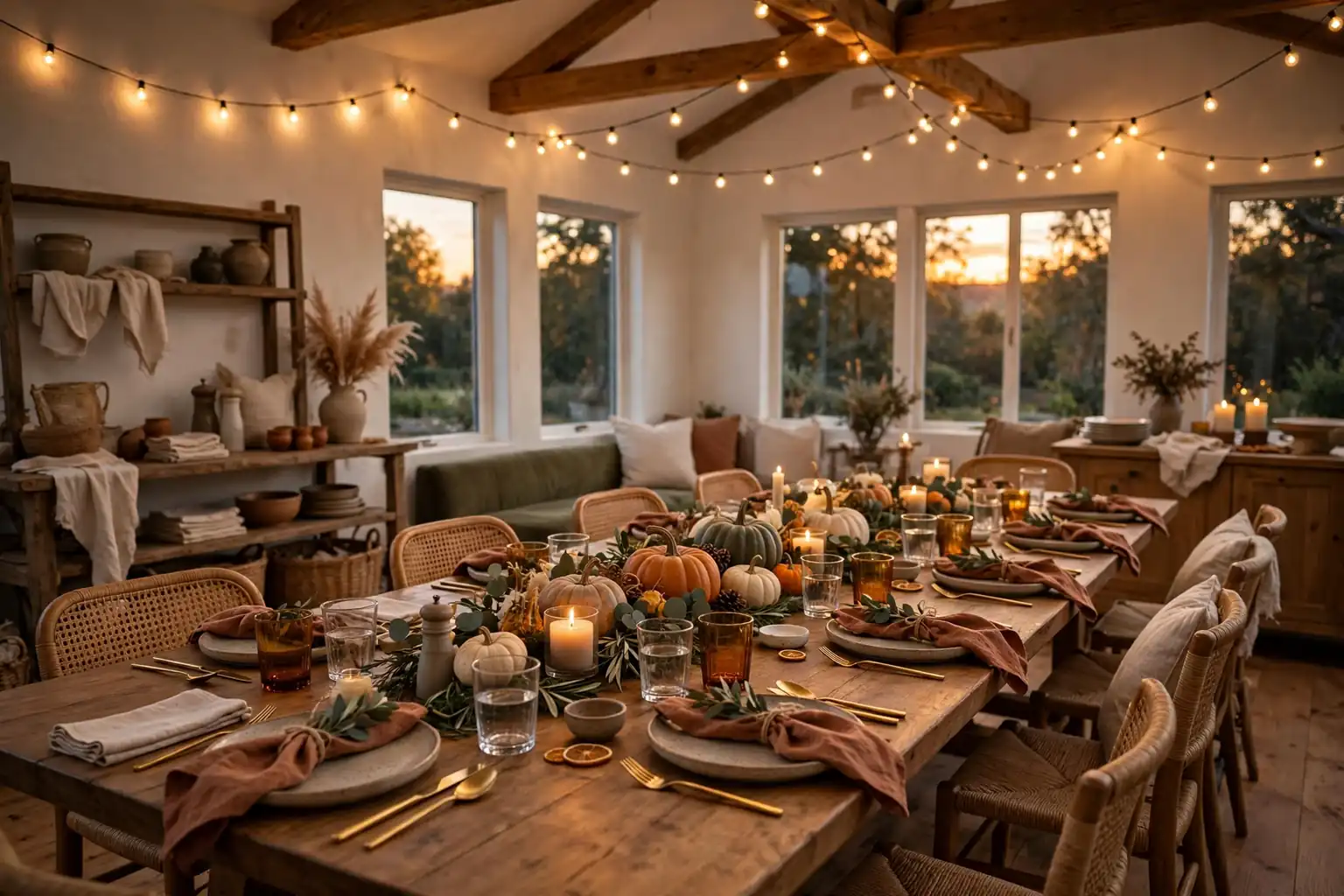
Friendsgiving decor works best when the table stays low, the light stays warm, and guests have room to linger. Use one palette, a centerpiece, and a few touches like name cards, a gratitude display, and a drink station. The 21 ideas below cover the table, the entry, and the lounge, so you can host friends without a formal setup.
Start with what you already own: everyday plates, plain glasses, cloth napkins, and one warm neutral runner or cloth. Then add one seasonal layer at a time, such as pumpkins, dried leaves, or candlelight in safe holders. Keep the centerpiece low enough to see across, leave clear space for shared dishes, and put a few jobs on the decor itself, like labels, a menu board, and a favor station, so hosting feels easy rather than staged.
Key Takeaways
- Keep the table low, warm, and open, so friends can talk across it and pass dishes without moving decor.
- Pick one palette, such as rust, cream, warm wood, and muted green, and repeat it in at least two rooms.
- Let the decor do hosting work: name cards, dish labels, a menu board, and a drink station all help guests settle in.
- Add one personal layer, such as a gratitude tree or a photo display, so the evening feels like a friends gathering, not a formal dinner.
- Use flameless candles near dried leaves, paper, and fabric, and keep real flames in holders, clear of anything that can catch.
- Set up a lounge corner and a clear buffet flow, so guests have somewhere to sit after the meal and somewhere to serve themselves.
1. Long Shared Table with a Low Harvest Runner
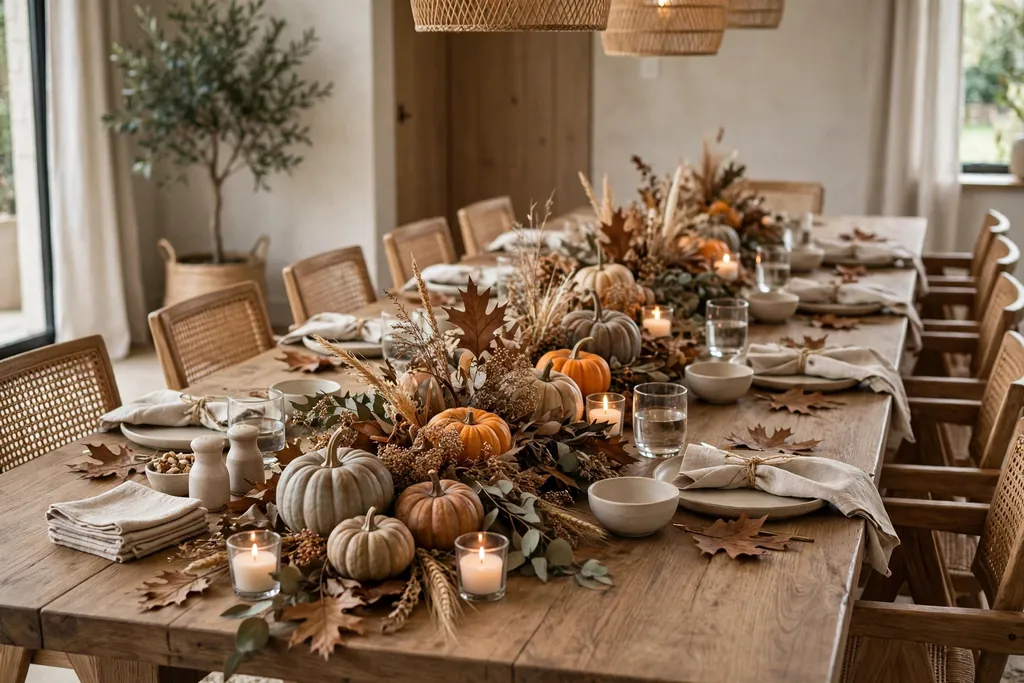
Push tables together into one long shared table if you have the room, then lay a plain runner down the center and add a low line of small pumpkins, dried leaves, and short candles in glass holders. A single long table suits Friendsgiving because everyone sits together, and the low runner leaves room for shared platters at each end.
Keep the runner narrow, so plates and glasses still fit, and keep candles in holders, clear of leaves. If the table is made from two smaller tables, use one long runner or cloth to hide the join, and check that the join does not wobble before guests sit down.
2. Mix and Match Place Settings
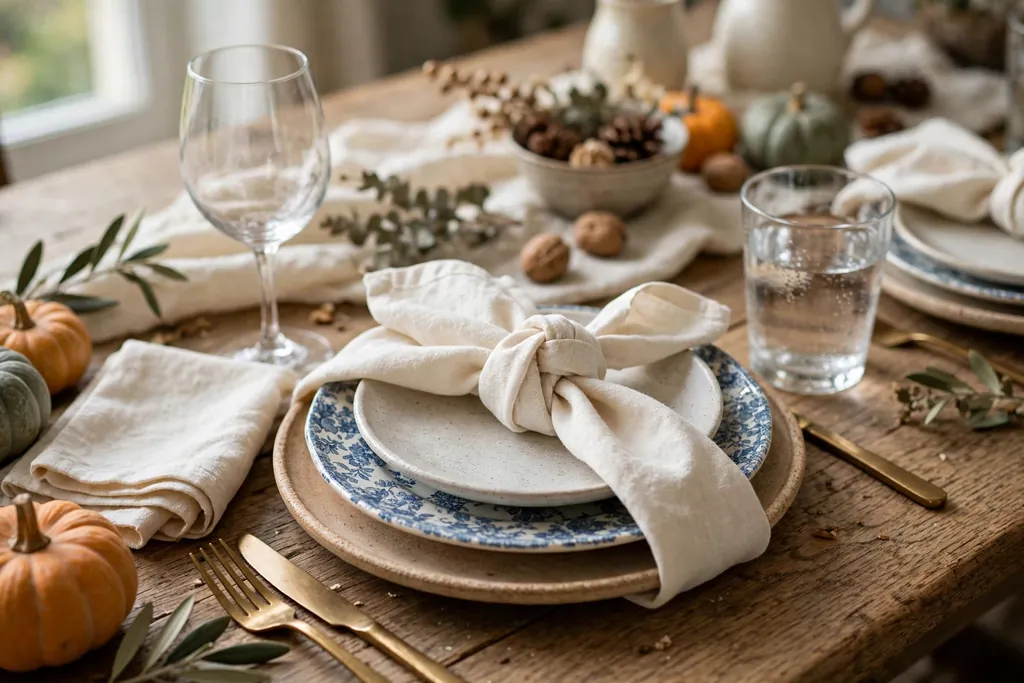
Use the plates, glasses, and cutlery you already own, even if they do not match, and tie them together with one shared detail, such as the same napkin color or the same napkin fold at every place. Mixed settings suit a friends gathering because they look collected over time, and they remove the pressure to buy a full new set.
Repeat one color or material at every place, so the mix looks planned. Put plain glasses throughout if the plates vary in pattern, and keep the napkin fold simple, such as a rectangle or a loose roll, so setting the table stays quick.
3. Name Cards with a Short Personal Note
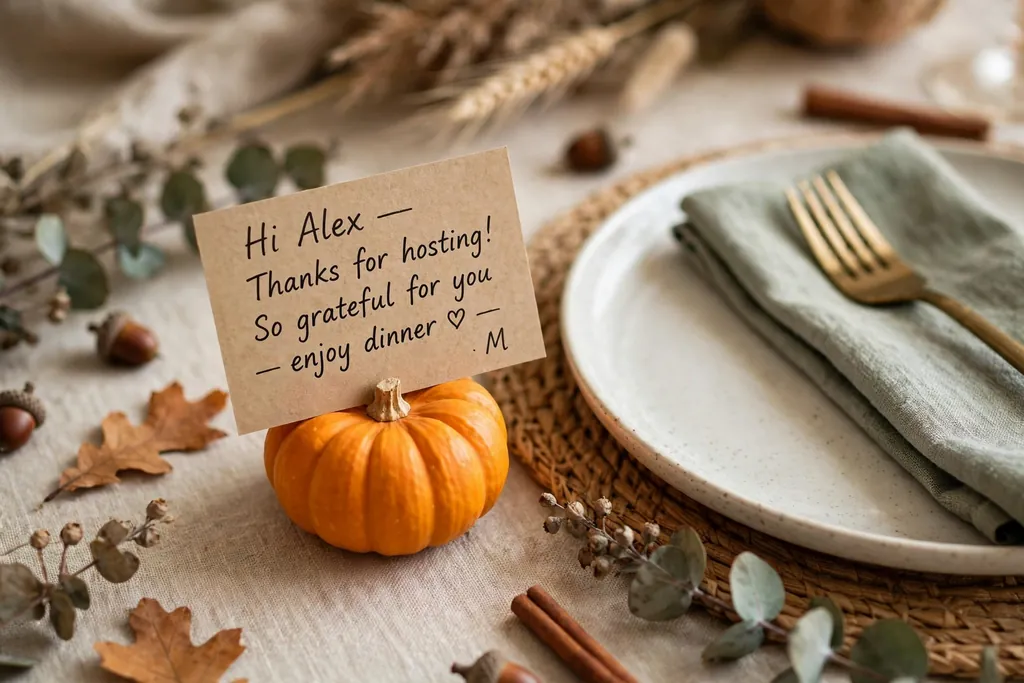
Write each friend’s name on a small card, and add one short line, such as a shared memory, a thank you, or a simple welcome. Stand the card against a glass, lean it on a small pumpkin, or lay it flat above the plate. Name cards mark seats at a larger table, and the note makes the welcome feel personal.
Keep the writing large and the note to one line, since a long note will be read once and then set aside. Use plain card and a pen that does not smudge, and keep cards clear of wet glasses. For a small group, skip assigned seats and use the cards as welcome notes at a drink station instead.
4. Chalkboard or Paper Menu Board
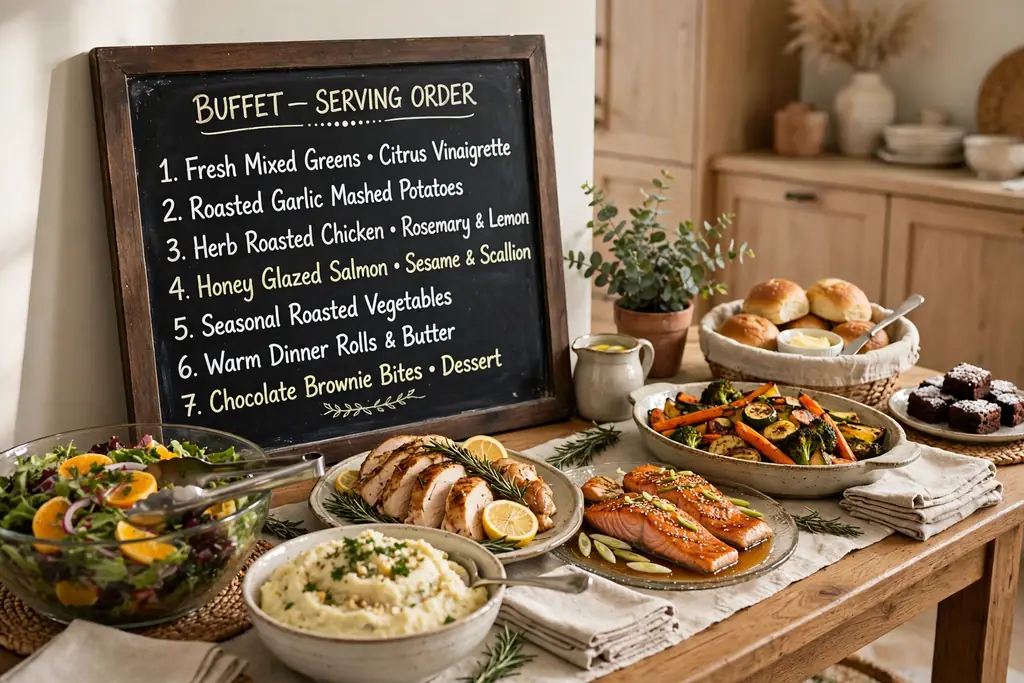
Write the menu on a small chalkboard, a framed board, or a sheet of kraft paper on the wall near the table, listing dishes in serving order and who brought each one. A menu board answers the most asked question at a potluck, and it gives friends credit for what they made.
List dishes in the order they will be served, and note main ingredients guests may need to know, without making claims you cannot stand behind. Put the board where guests can read it while they serve themselves, not behind the table where it blocks conversation. Wipe or replace the board after the meal if it will be reused.
5. Photo Display Wall for Shared Memories
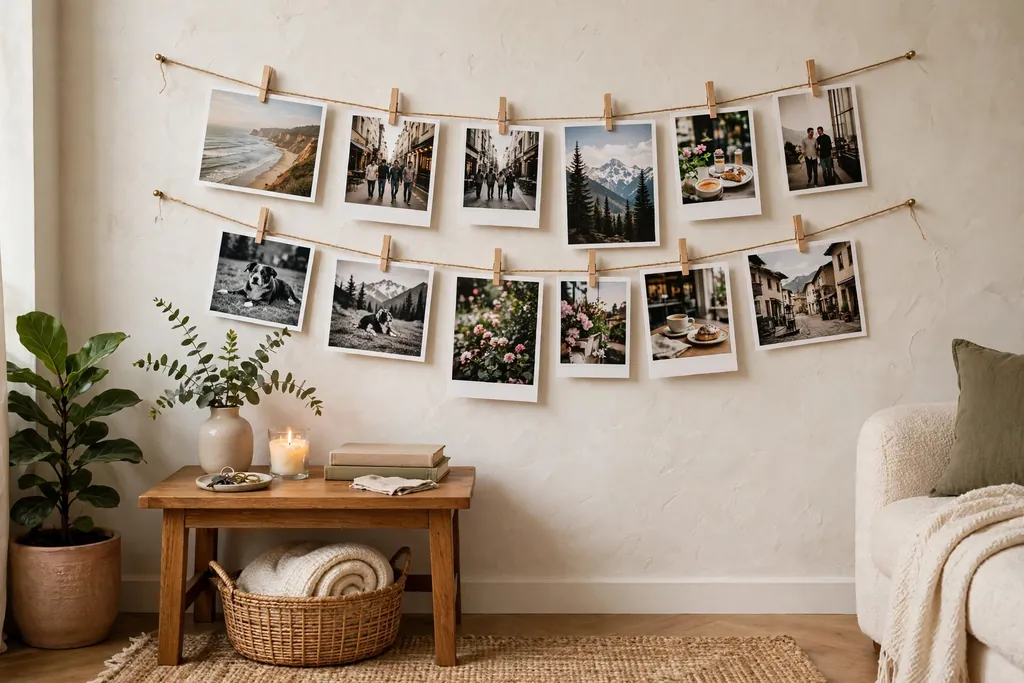
Hang a simple photo display on one wall or along a string with clips, using printed photos of past gatherings, trips, and everyday moments with the same friends. A photo wall gives guests something to look at while they arrive, and it starts conversation without any extra hosting work.
Use a string and clips, a corkboard, or washi tape on a plain wall, and keep photos at eye level. Mix group photos with small everyday shots, and leave one empty clip or space where guests can add a photo from the evening. Take the display down with care, and return borrowed prints to their owners.
6. Lounge Corner with Throws and Floor Cushions
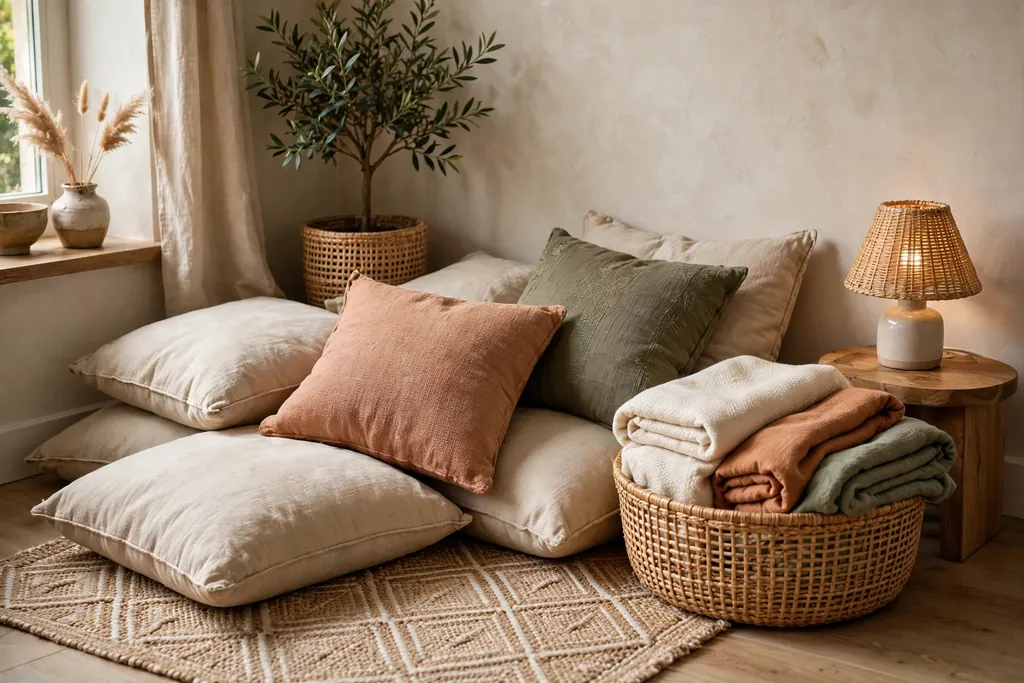
Set aside a lounge corner away from the table, with a sofa or a few chairs, floor cushions, and folded throws in a basket. Friendsgiving often runs long after the meal, and a lounge corner gives guests somewhere to sit, talk, and rest without standing in the kitchen.
Put the basket of throws where guests can reach it, and keep the corner clear of serving traffic. Use washable cushion covers if the group is large, and keep one low side table nearby for drinks. A small lamp or a string of warm lights in this corner keeps the light soft after the main meal ends.
7. Gratitude Tree Guests Can Add To
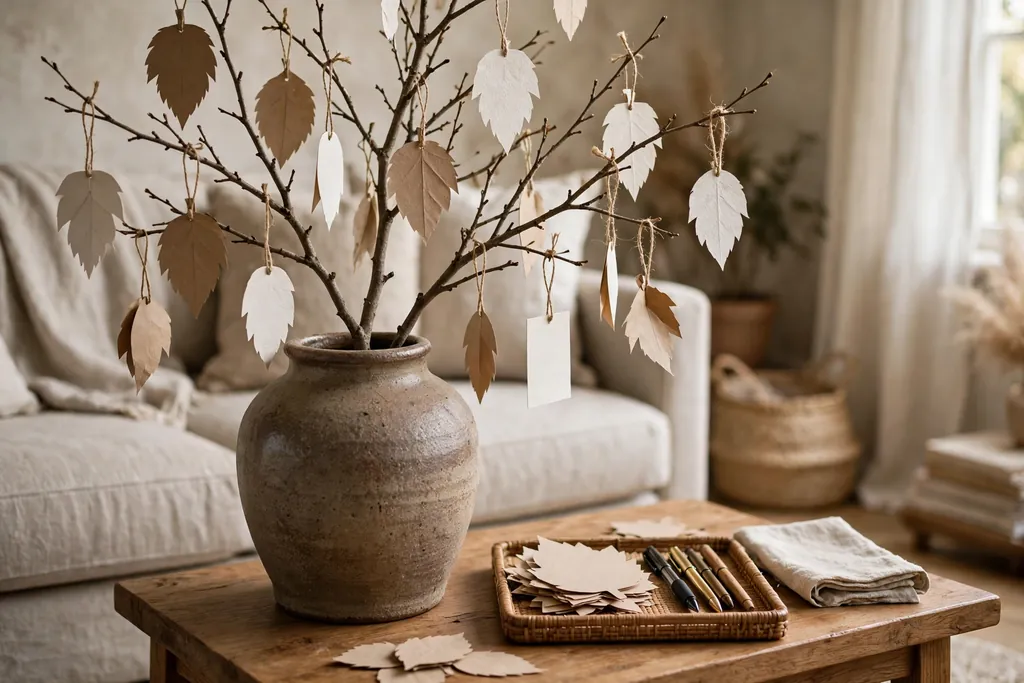
Set a bare branch in a heavy vase or a small potted tree on a side table, with paper leaves, pens, and a short written prompt, such as “Write one thing you are glad about this year.” Guests hang their leaves on the branch during the evening, and the tree becomes a shared display by the end of the night.
Use a heavy vase so the branch does not tip, and keep the leaves and pens in a small tray so they do not scatter. Read a few leaves aloud only if the group is comfortable with it, and keep the rest private. After the evening, store the leaves in an envelope if you want to keep them for next year.
8. Candle Cluster in Varied Holders
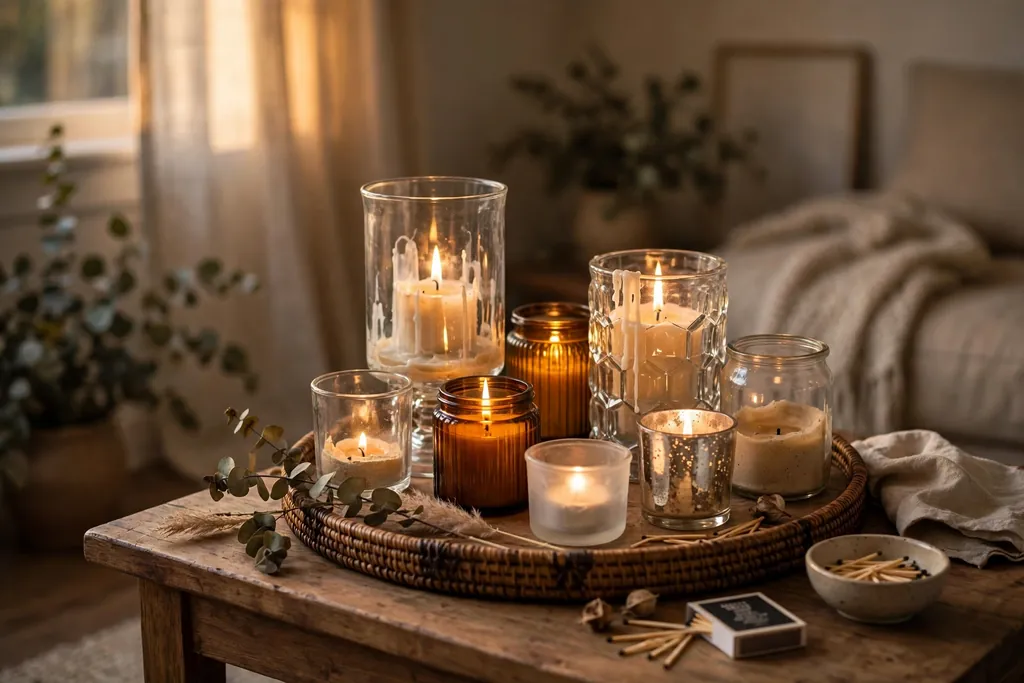
Group candles of different heights in glass holders, jars, and lanterns on a tray at the center of the table or on a sideboard, and light them as the evening starts. Mixed holders look relaxed and collected, and a tray keeps wax, glass, and light contained in one place.
Use flameless candles inside narrow jars and near dried leaves or paper, and use real candles only in proper holders on a stable surface. Keep the cluster low on the table, so guests can see across it, and never leave real flames burning unattended. A tray also makes clearing the table a single step.
9. Kraft Paper Runner Guests Can Write On
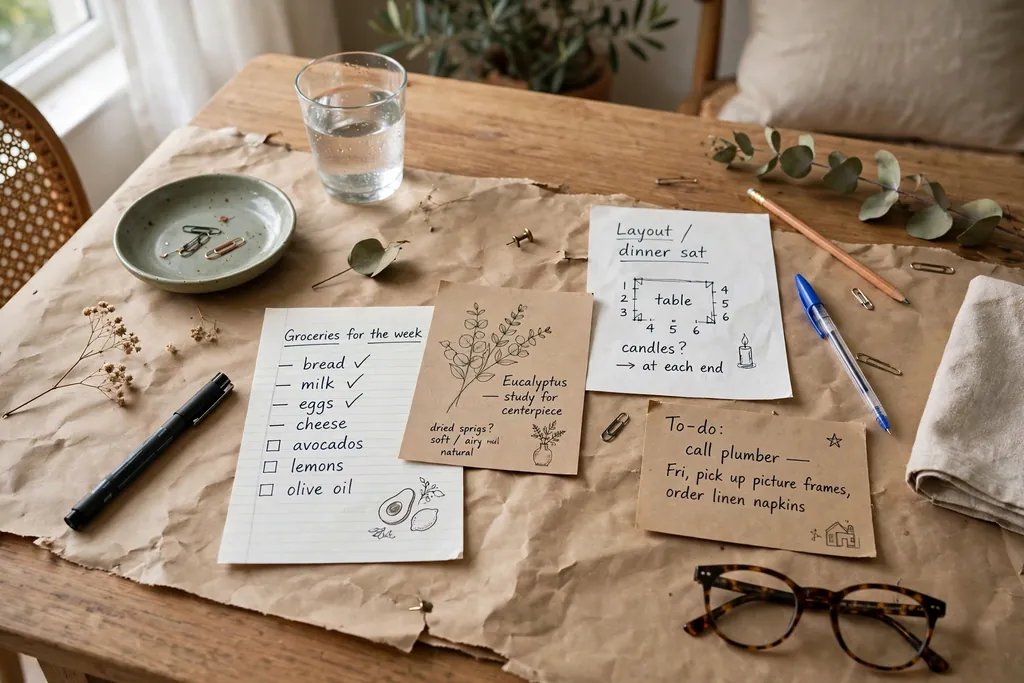
Cover the table with a kraft paper runner instead of cloth, and set out pens or crayons, so guests can write notes, draw, or sign the runner during the meal. This idea suits a relaxed friends gathering because it turns the table covering into an activity, and cleanup means rolling up the paper.
Tape the paper down at the ends so it does not slide, and keep pens clear of food and drinks. Use washable pens for younger guests, and keep one section of the runner clear for serving dishes. At the end of the evening, cut out a signed section to keep, and recycle the rest.
10. Pumpkins and Gourds in a Dough Bowl
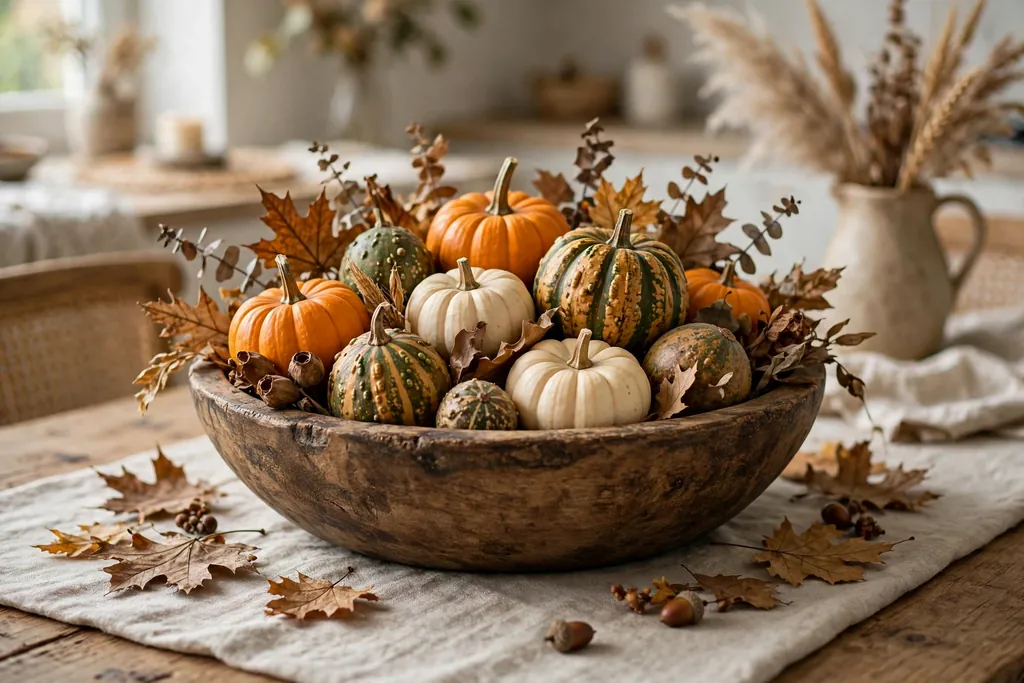
Fill a low wooden dough bowl or a wide tray with small pumpkins, gourds, and a few dried leaves, and set it in the center of the table as a centerpiece that lifts off in one move. The bowl keeps the group contained, and the low shape leaves sightlines open for conversation.
Vary the sizes, with one larger pumpkin in the middle and smaller gourds at the sides, and leave space between pieces so each shape shows. Set real pumpkins on a small mat if the table marks easily, and move the whole bowl to a sideboard when shared dishes need the center space. Wipe the bowl after the meal, since leaves shed.
11. Self Serve Drink Station with Labels
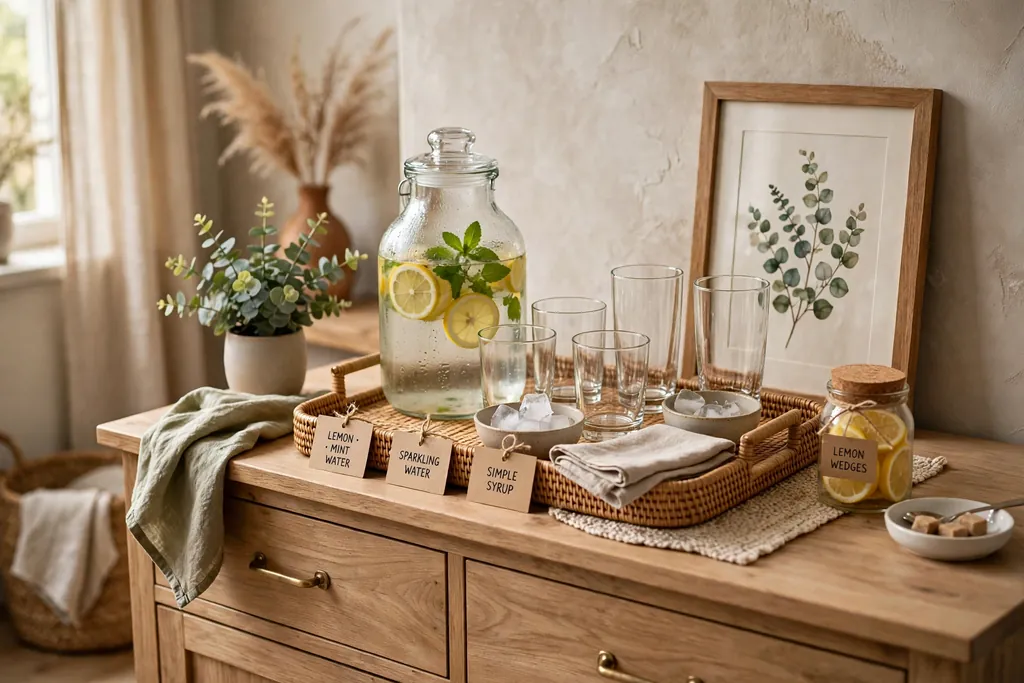
Set a drink station on a sideboard, a cart, or one end of the table, with a tray holding glasses or mugs, a jug or dispenser, and small labels for each drink. Guests can help themselves without leaving the gathering area, and labels answer questions about what is in each jug.
Keep the station on a tray, so drips stay contained and the whole station lifts away after the meal. Put glasses with handles or sturdy tumblers at the front, and keep hot drinks clear of the table edge where guests pass. Wipe the tray during the evening if the station gathers drips.
12. Dessert Table on a Tiered Stand
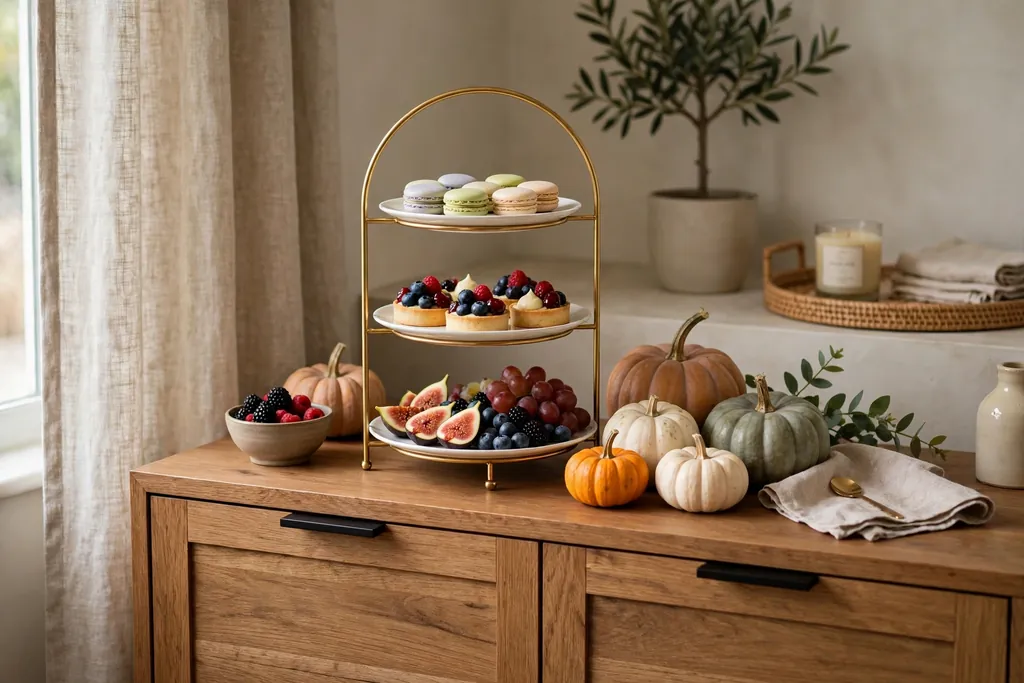
Set a dessert table or one end of a sideboard with a two or three tier stand, and fill it with small bites, fruit, and a few mini pumpkins or dried leaves for color. A tiered stand gives dessert its own spot, so the main table can clear while guests keep grazing.
Put heavier items on the bottom tier, and keep the stand stable and clear of the main serving path. If the stand will hold food, use it for food only, and set a separate small decor group beside it. Wipe the tiers after use, since crumbs and leaf dust collect in the rims.
13. Entry Welcome Station with a Sign
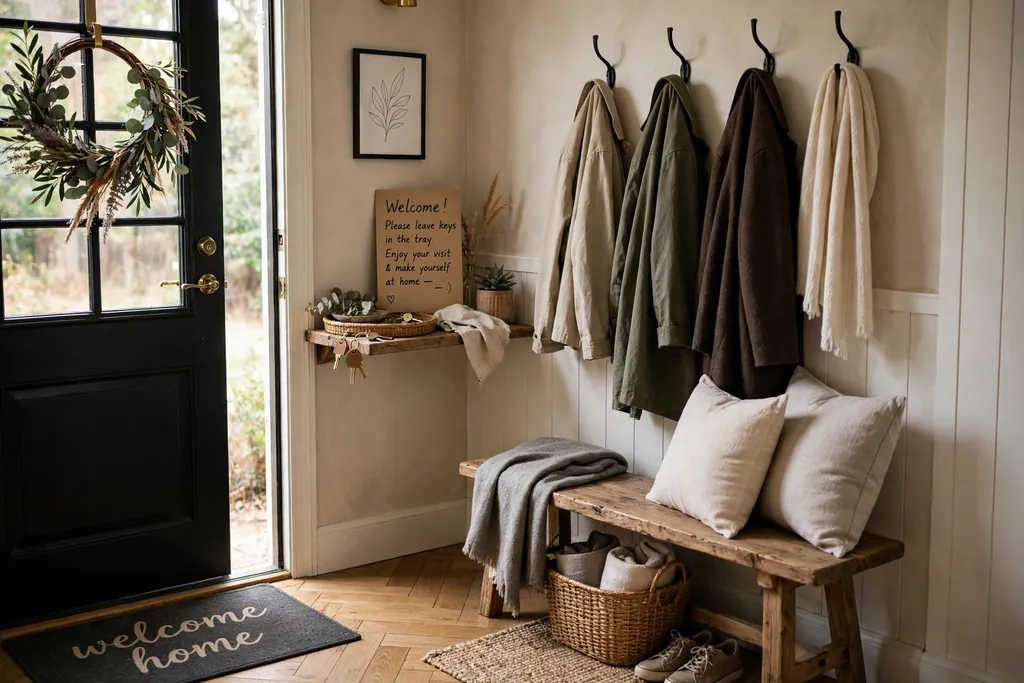
Set a small welcome station near the front door, with a handwritten sign, a tray for keys, and a clear spot for coats and bags. A welcome station helps friends settle in on arrival, and it keeps coats and bags out of the dining room.
Use a bench, a chair, or a small console for the station, and keep the sign short, such as “Welcome, friends, come on in.” Hang coats on hooks if you have them, or set a basket by the door for bags. Keep the entry path clear, so guests can walk in without stepping around bags and shoes.
14. String Lights and Paper Lanterns Indoors
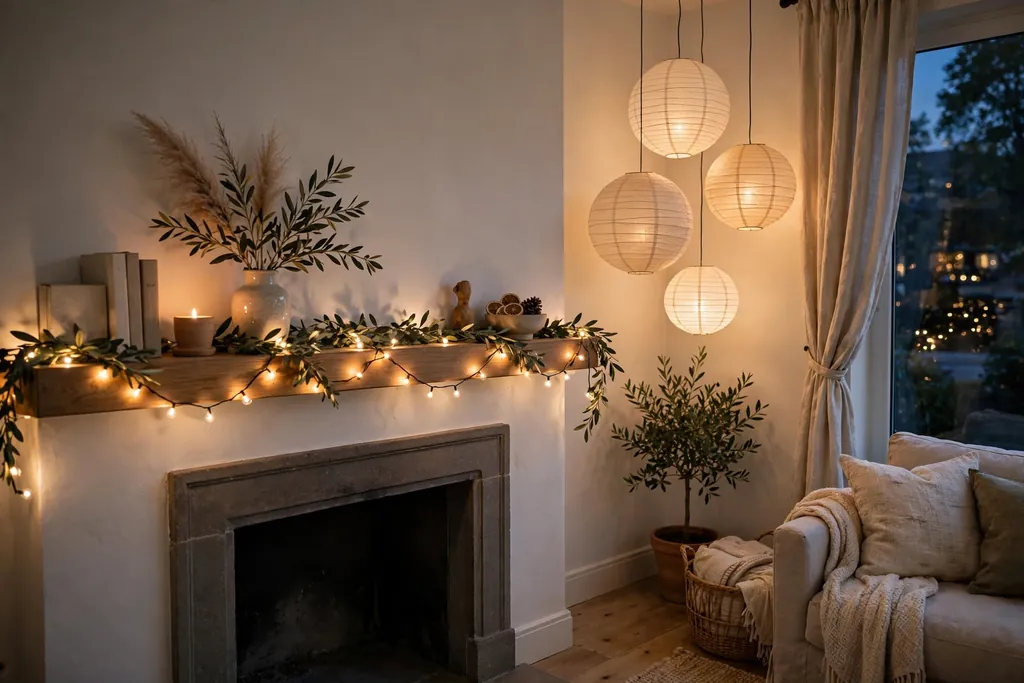
Hang warm white string lights along a mantel, a doorway, or a shelf, and add two or three paper lanterns in a corner or over a side table. String lights and lanterns give a relaxed evening glow that overhead light cannot match, and they suit a friends gathering that runs into the night.
Use battery lights with a timer where plugs are hard to reach, and keep paper lanterns clear of real flames, heat sources, and walkways. Hang lights loosely, so they do not pull on hooks or frames, and check that cords do not cross a path where guests could trip. Switch lights on before guests arrive, so the room already feels warm.
15. Leaf Garland Over a Doorway or Mantel
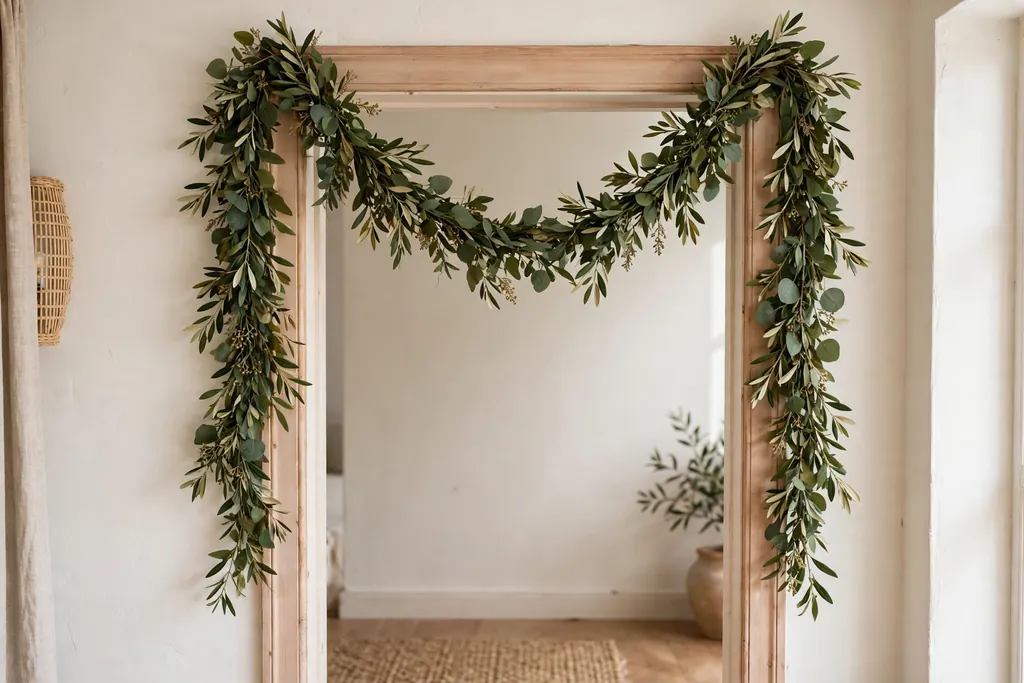
Drape a leaf garland over a doorway, across a mantel, or along a shelf, letting it dip slightly in the middle and trail a little at each end. A garland marks the main gathering room and carries fall color above eye level, where it does not crowd the table.
Secure the garland with small hooks or clear clips so it does not slip, and trim it to fit the space, leaving room at each end. Keep dried garlands clear of real flames and heat sources, and use flameless candles nearby. Dust a faux garland before hanging it, and store it loosely rolled so leaves do not crush.
16. Sideboard Buffet for Easy Flow
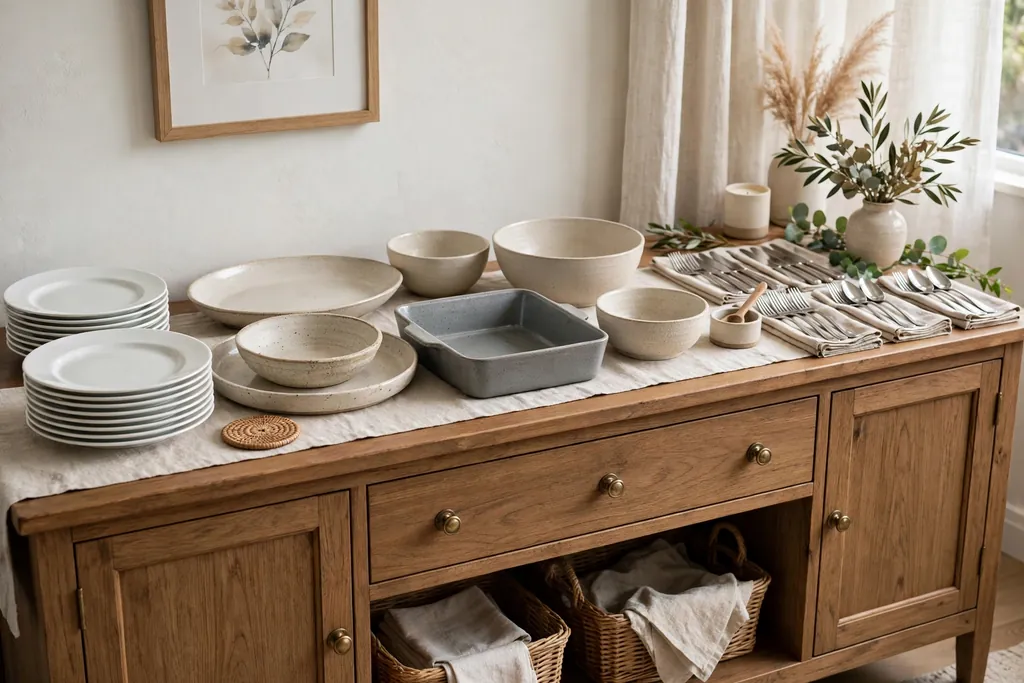
Set the main dishes on a sideboard, a console, or a kitchen counter in serving order, with plates at the start, food in the middle, and cutlery and napkins at the end. A buffet flow suits a potluck Friendsgiving because guests serve themselves, and the table stays free for eating and talking.
Keep the flow in one direction, so guests do not cross each other, and leave space at the end for guests to set down a plate while they add cutlery. Put hot dishes on trivets, and keep serving spoons with each dish. Refill dishes from the kitchen, rather than moving the whole buffet, as the evening goes on.
17. Game Station in a Corner
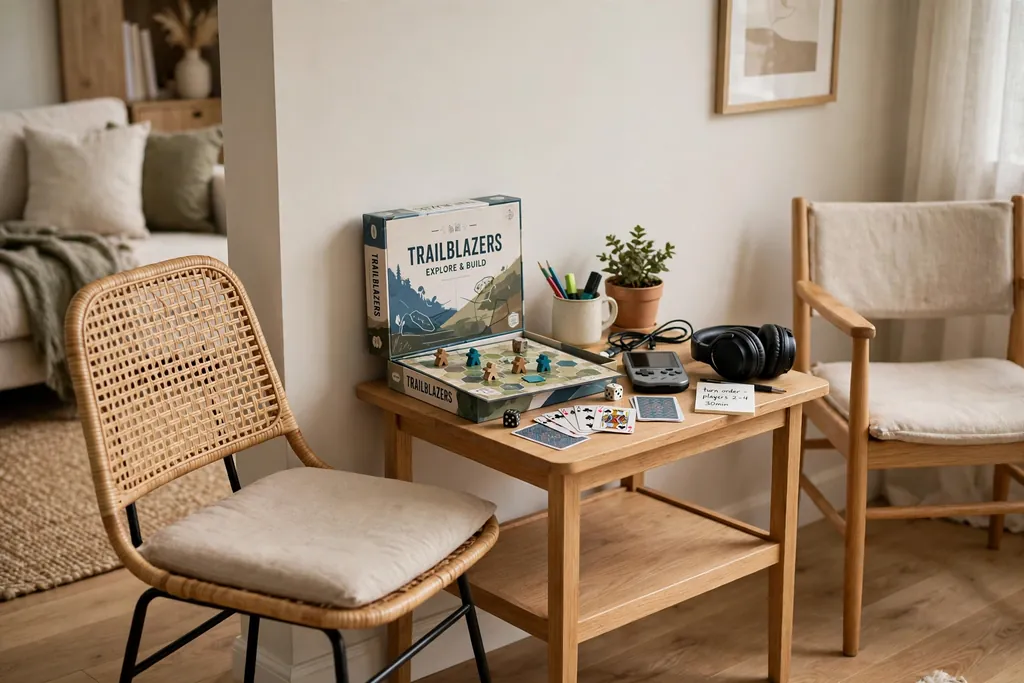
Set a small game station on a side table or a low shelf, with one or two simple games, such as cards, a board game, or a trivia set, and enough chairs nearby for a small group. A game station gives guests something to do after the meal, and it keeps the evening going without a formal plan.
Choose games with short rounds, so guests can join or leave without breaking the game. Keep game pieces in a tray or a small box, so they do not scatter onto the floor, and keep drinks on a separate surface from the game. Put the station away from the buffet flow, so players do not block guests who are serving food.
18. Autumn Wreath on the Front Door
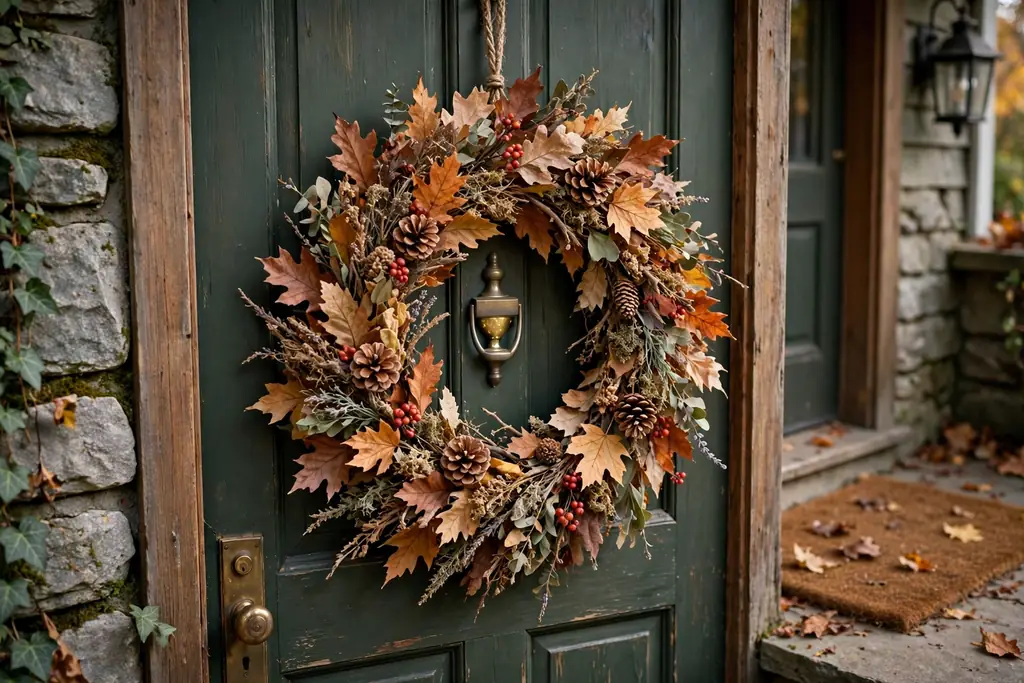
Hang an autumn wreath on the front door, made with dried leaves, small berries, pinecones, or faux foliage, with a simple bow or no bow at all. A wreath sets the tone before guests step inside, and it pairs well with a plain doormat and one planter by the door.
Hang the wreath at eye level, and check that it does not block the handle or the lock. Choose colors that suit your door: rust and gold show well on a dark door, while cream and soft green suit a bright door. Bring a dried wreath inside during heavy rain if it is not rated for outdoor use.
19. Dried Orange Slice Garland in a Window
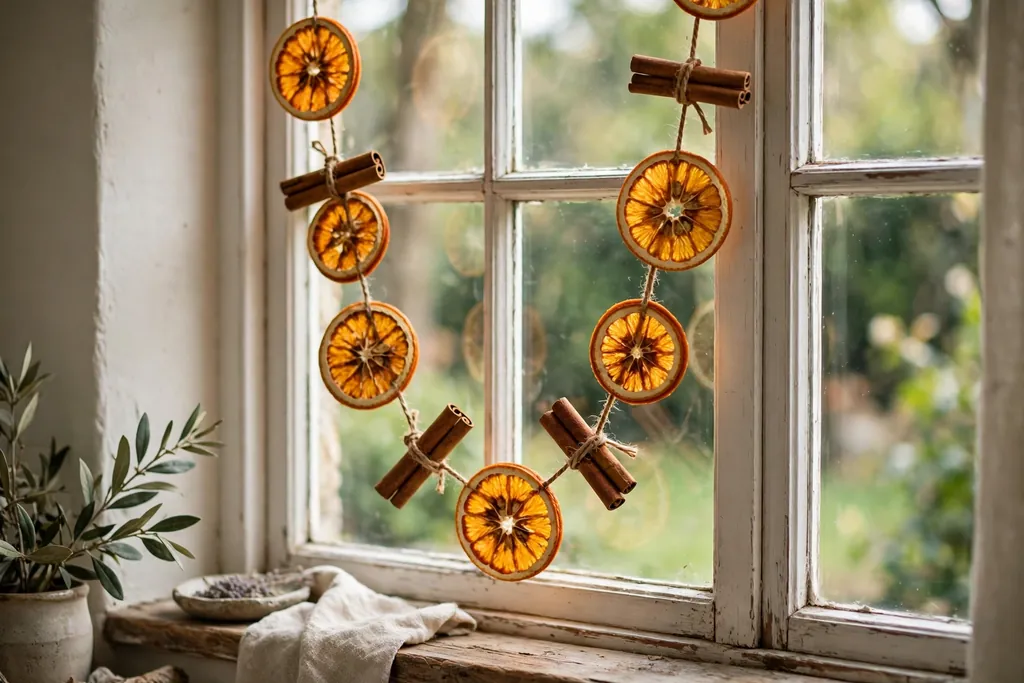
String dried orange slices, cinnamon sticks, and a few dried leaves onto twine, and hang the garland in a window, along a shelf, or above a sideboard. The orange slices catch daylight during the day and add warm color in the evening, and the garland is light enough to hang with small hooks.
Space the slices evenly, and knot the twine on each side of each slice so they do not slide together. Keep the garland clear of heat sources and real flames, since dried fruit and twine can catch. Take it down with care at the end of the season, and compost slices that have softened.
20. Mismatched Chairs with Tied Cushions
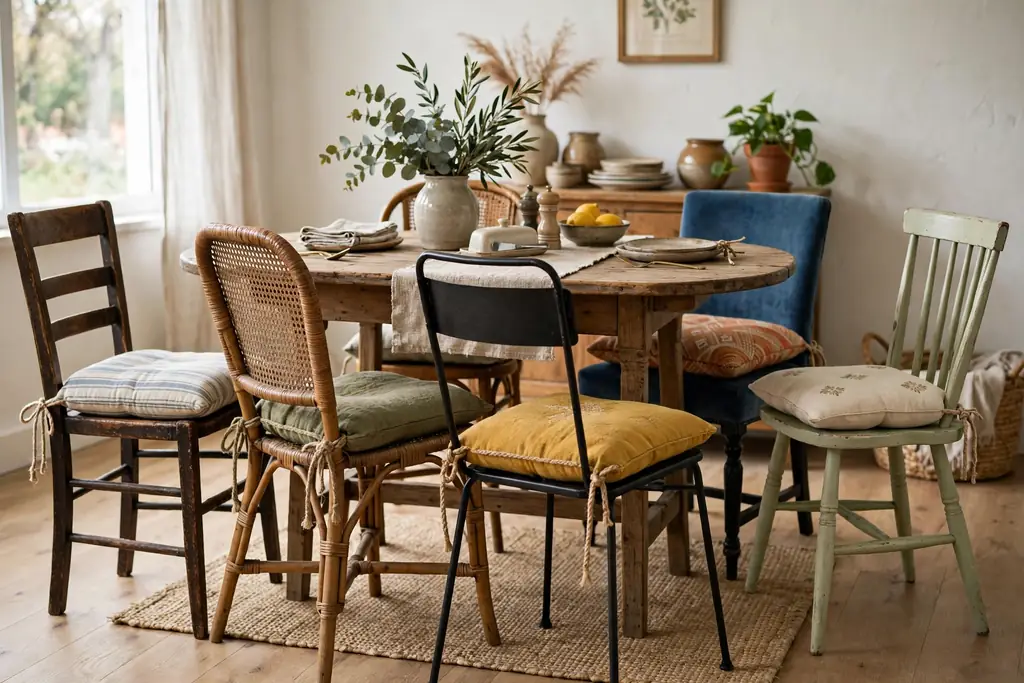
Bring in extra chairs from other rooms, even if they do not match, and tie a cushion or a folded throw onto each seat with twine or a simple fabric tie. Tied cushions make borrowed chairs feel planned, and they add comfort for a long evening at the table.
Use the same cushion color or the same tie style on every chair, so the mix looks tied together. Check that each chair is stable before guests sit down, and keep chair legs clear of cords and rugs that could catch. After the evening, return chairs to their rooms and store the ties with the cushions.
21. Take Home Favor Station by the Door
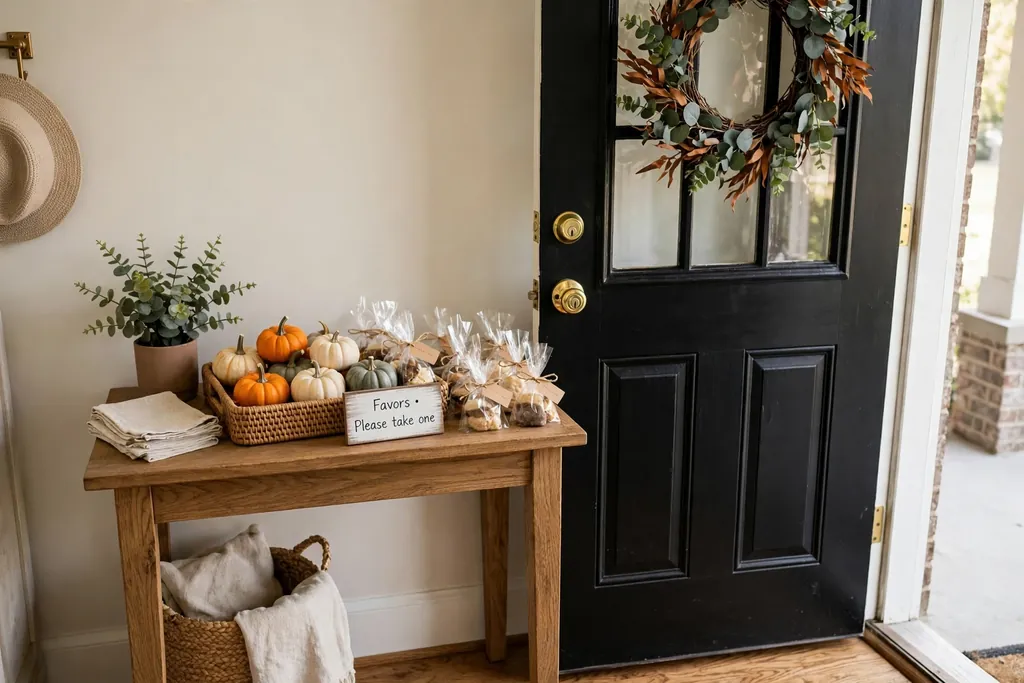
Set a small favor station near the door, with a tray holding mini pumpkins, small jars of jam or spice mix, or wrapped treats, and a short sign inviting guests to take one. A favor station sends friends home with a small piece of the evening, and it clears the table of small decor at the same time.
Keep favors small and sturdy, so guests can carry them home without a bag. Put the station where guests pass on their way out, not in the middle of the dining room, and keep the sign short. Refill the tray once during the evening if it empties early, and pack away leftovers after guests leave.
Conclusion
Friendsgiving decor does not need a formal table or a matching set to work. A low centerpiece, one relaxed palette, warm light, and a few pieces that help guests settle in, such as name cards, a menu board, and a drink station, will carry most gatherings. Add one personal layer, like a gratitude tree or a photo display, and a lounge corner for after the meal.
For more table ideas, see fall table decor ideas, and for seasonal ideas for the whole house, see fall decor ideas for home. Pick the ideas that fit your rooms and your group, keep what you use often in one box, and let the house return to a simple, usable base when the evening ends. Save this list on Pinterest for your next friends gathering, and work through it one idea at a time.
FAQs
What is the easiest friendsgiving decor for a first time host?
Start with a plain runner, a low bowl of small pumpkins, name cards, and a drink station on a sideboard. That set takes little time to lay out, helps guests serve themselves, and leaves the table open for shared dishes. Add string lights in the evening, and the same base works for a small group and a larger one.
How do I decorate for friendsgiving without a formal table?
Use mixed place settings, a kraft paper runner guests can write on, and a sideboard buffet, so the meal stays relaxed and the table stays free for eating. Keep the centerpiece low, use everyday plates and glasses, and add a lounge corner with throws, so guests can move between the table and a comfortable seat.
What should I put on a friendsgiving table centerpiece?
Use one low group, such as a dough bowl of small pumpkins and gourds, a candle cluster on a tray, or a short line of small pumpkins and candles in glass holders. Keep the group low enough to see across, leave room for shared dishes, and use flameless candles near dried leaves and paper.
How can I make friendsgiving feel personal without spending a lot?
Add a gratitude tree guests can add leaves to, a photo display wall of shared memories, and name cards with a short personal note. These three pieces use paper, a branch, and printed photos, and they give the evening a shared story that bought decor alone cannot give.
How do I plan friendsgiving decor for a potluck?
Put a menu board near the buffet listing each dish and who brought it, label drinks at the drink station, and set the buffet in serving order, with plates first and cutlery last. Keep the table clear for eating, and add a favor station by the door, so guests leave with a small piece of the evening.
How do I decorate a small home for friendsgiving?
Choose small scale pieces, such as mini pumpkins, one leaf garland over a doorway, and a single candle cluster, and style surfaces you already use, such as a sideboard, a windowsill, or a shelf. Skip large displays that block walkways, use a buffet on a counter to free the table, and set one lounge corner, rather than seating in every room.