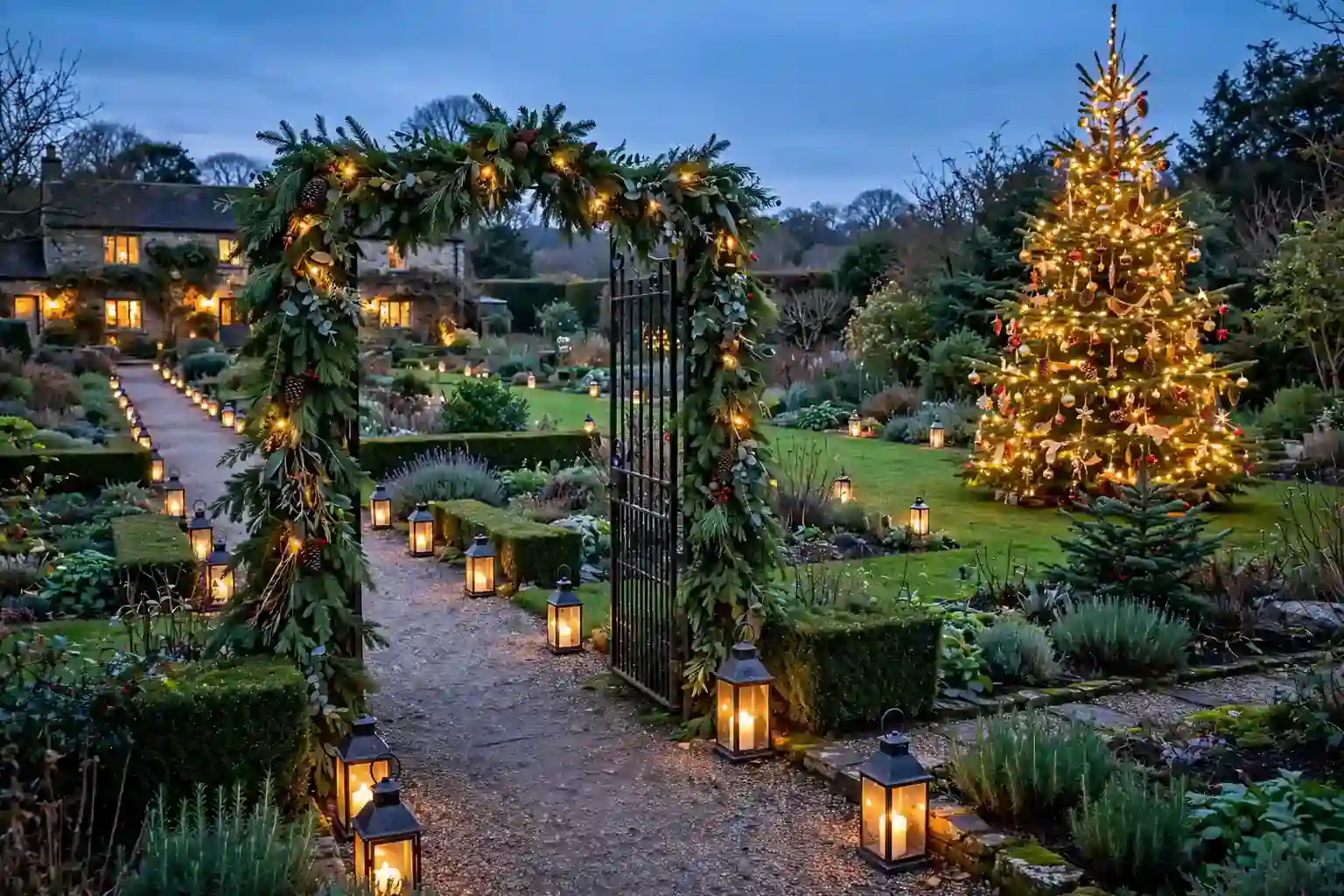
A garden at Christmas works best when it is treated like an outdoor room, with a clear entry, a lit path, a place to sit, and one or two spots that draw the eye. You do not need to decorate every bed and fence. A garland on the gate, lights in one tree, and lanterns along the path can carry the whole look, and the rest of the garden can stay calm and simple. These 29 Christmas garden decoration ideas cover entries, paths, fences, trees, seating, and small details, so you can pick the pieces that suit your space, your weather, and the time you have. Check each piece at dusk, when lights show their true effect.
Key Takeaways
- Start at the entry: a gate garland, a lit path, and a clear walkway set the tone for the whole garden.
- Pick one lit focal point, such as a tree or a pergola, and keep the rest of the lighting soft and simple.
- Use outdoor rated lights and lanterns, and keep cables off walkways and away from standing water.
- Choose weather hardy greenery, pots, and fabrics, and bring cushions and throws inside when rain is forecast.
- Group decorations in threes or in one clear zone, rather than spreading single items across the whole garden.
- Check the display at dusk and from inside the house, since that is when most people will see it.
1. Garland Over the Garden Gate
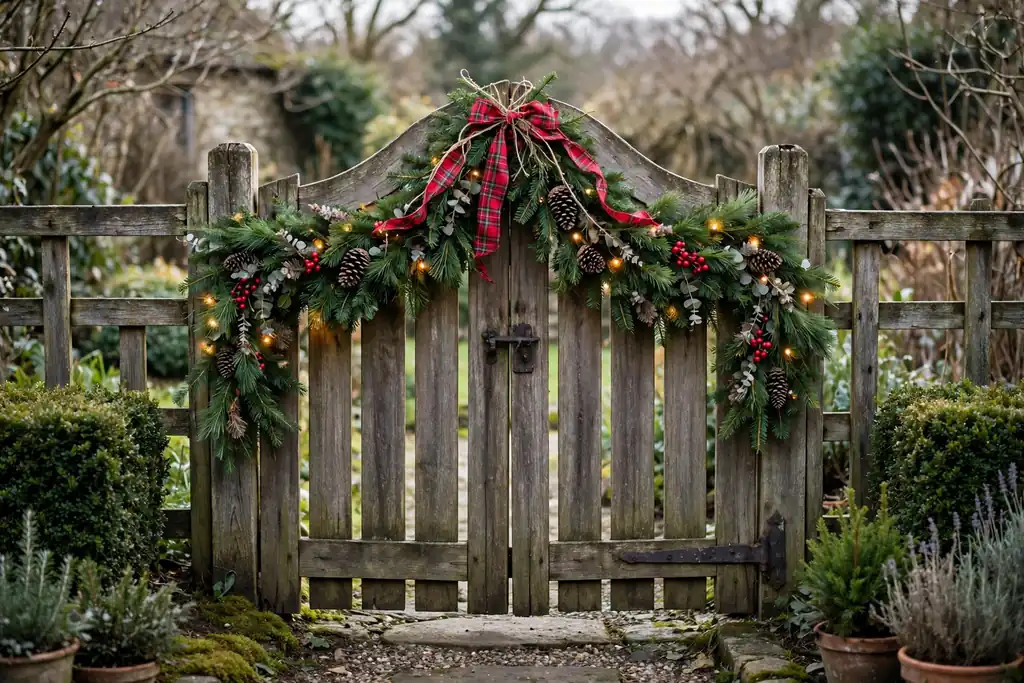
Drape a long evergreen garland over the top of the garden gate so visitors walk under greenery as they arrive. The gate is the first thing people see, so one full garland here does more work than small pieces scattered around the garden. Choose a garland thick enough to read from the street, and fix it at both ends plus the middle so it does not slip when the gate moves.
Add a few pinecones or a simple bow at each end if you like, but keep the middle clear so the gate still opens freely. Check that the garland does not catch on the latch or drag on the ground. In wet weather, shake it out now and then and let it dry, since damp greenery left against a wooden gate can stain the wood over time.
2. Twin Potted Trees by the Path
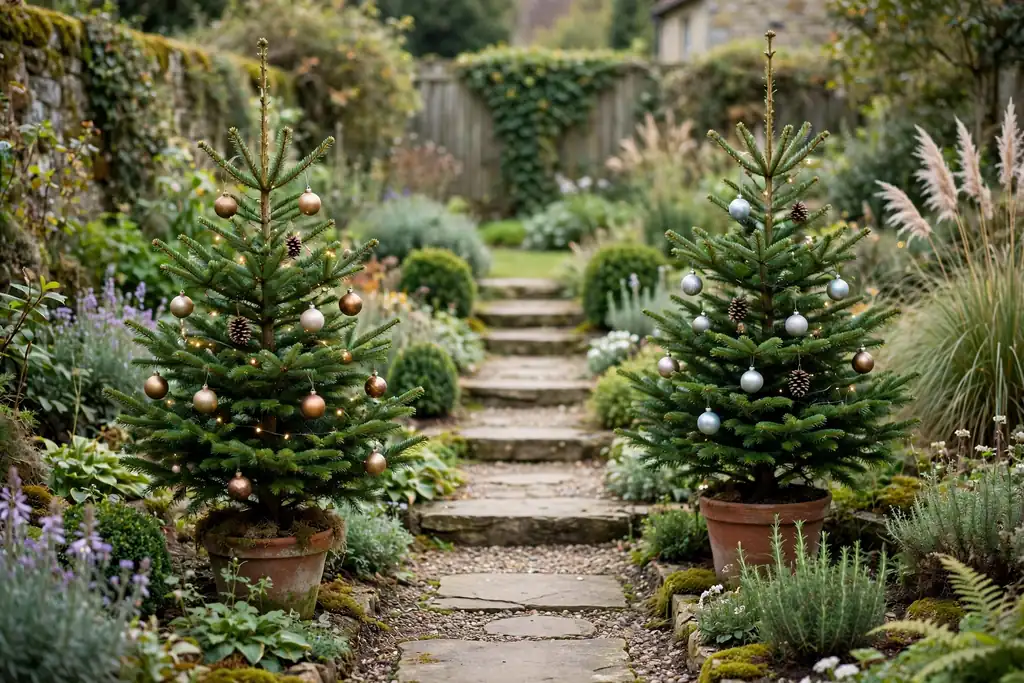
Place one potted Christmas tree on each side of the garden path, near the entry or the front door, to frame the walk in a balanced way. Potted trees suit small gardens well, since they need no digging and can move to a sheltered spot after the season. Pick trees of similar height and pot size so the pair looks planned rather than accidental.
Decorate them lightly, with a few outdoor baubles and a short string of lights on each, and leave the natural shape visible. Weight the pots with stones at the base if wind is a problem in your garden, and water the trees during dry spells so the roots do not dry out. After Christmas, keep the trees in their pots for next year or plant them out if you have room.
3. String Lights in a Garden Tree
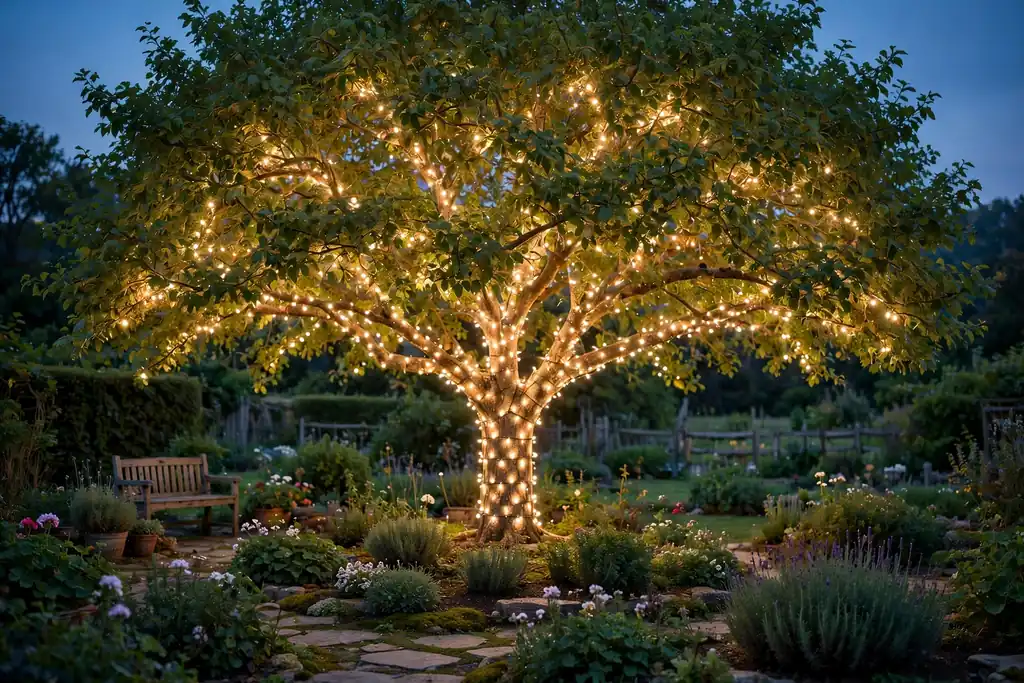
Wrap warm white string lights through the branches of one garden tree, starting at the trunk and working outward, so the whole canopy glows at dusk. A single lit tree gives the garden a focal point and makes the rest of the display feel calm by comparison. Choose lights rated for outdoor use, and keep the plug and any joins under cover and off the ground.
Step back from the tree as you work to check for dark patches, and add a second short string only where a gap shows. Avoid pulling branches down with heavy lights, and do not climb higher than you can reach safely from a stable ladder with someone nearby. Take the lights down in dry weather after the season, and store them loosely coiled so the wires do not kink.
4. Lanterns Along the Garden Path
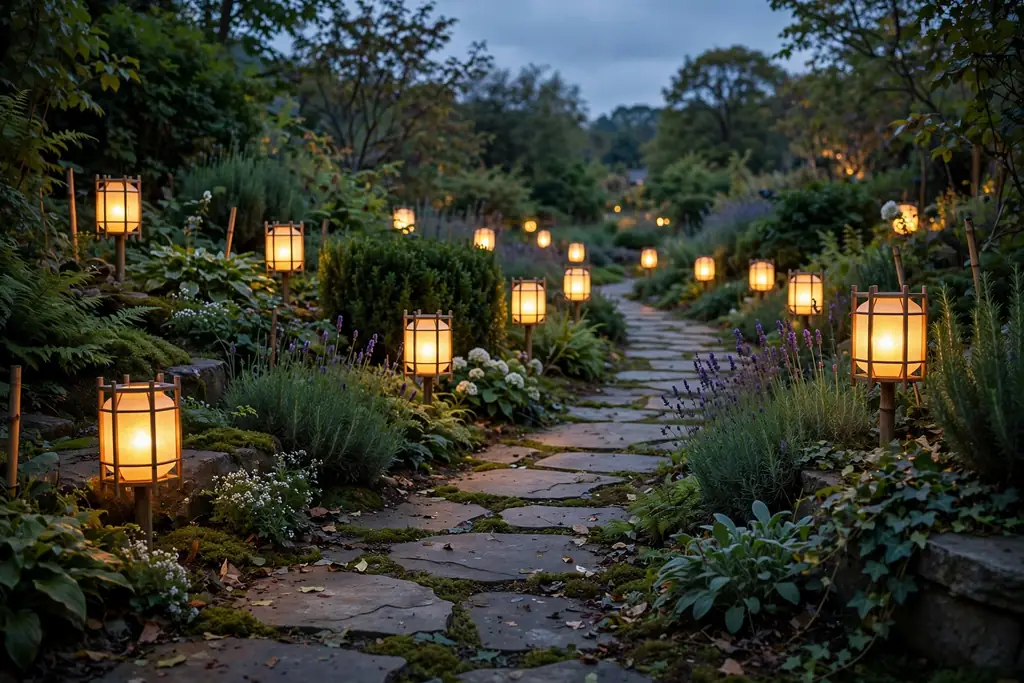
Line the garden path with outdoor lanterns, spaced evenly on both sides or in a row on one side, to light the way after dark. Lanterns give a softer, steadier glow than string lights alone, and they mark the edges of the path clearly on dark evenings. Use battery candles or real candles in closed lanterns, and keep the glass clean so the light stays bright.
Set each lantern on a flat stone or a level patch of ground so it cannot tip, and keep them clear of overhanging branches and dry leaves. Bring paper lanterns inside in rain, and use metal or glass lanterns for spots that stay wet. At the end of the evening, switch off or blow out the candles, and store the lanterns under cover so they are ready for the next night.
5. Wreath on a Fence Panel

Hang a large evergreen wreath on a fence panel that faces the path or the seating area, where it can be seen without blocking a gate. A fence wreath works well in gardens with no porch or door to decorate, and it gives a plain fence a clear festive center. Fix it with a sturdy hook or wire through the fence boards, and check that it sits flat so wind cannot spin it.
Keep the wreath simple, with pinecones, dried orange slices, or a plain bow, and avoid heavy ornaments that pull the greenery out of shape. If the fence faces strong wind, choose a smaller wreath and tie it at two points. Take it down before it dries out fully, since dry wreaths shed needles and can become a fire risk near candles or lights.
6. Living Christmas Tree in a Garden Bed
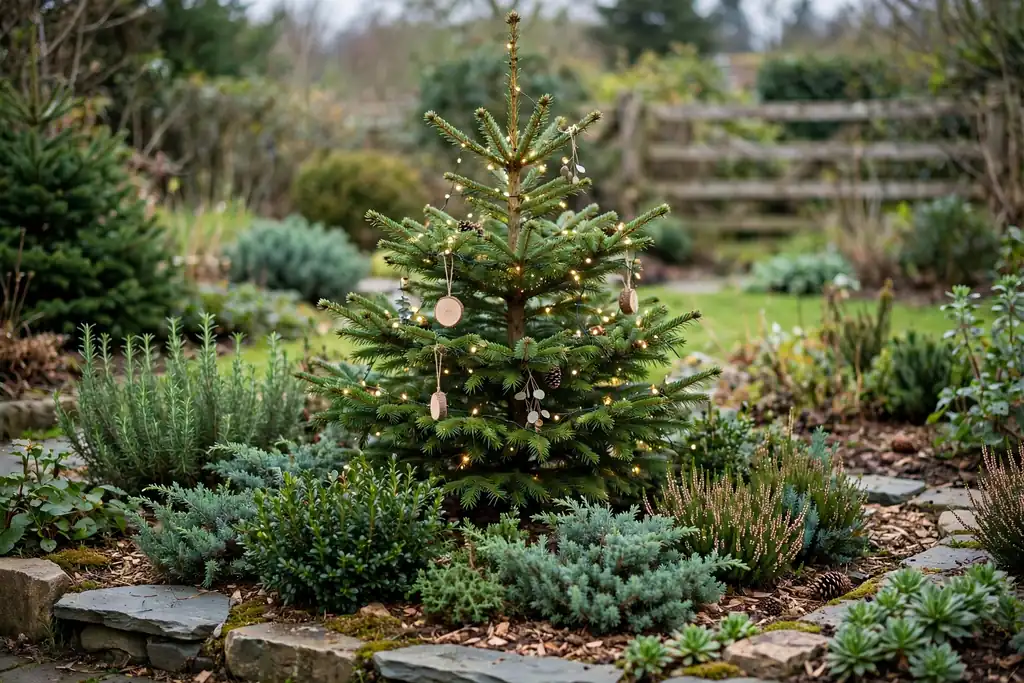
Plant a living Christmas tree as the center of a garden bed, or set a large potted tree into the bed for the season, so the tree looks like part of the garden rather than a decoration placed on top of it. A living tree suits a quiet corner where it can stay after Christmas, and it gives birds a sheltered spot through winter. Surround the base with mulch or low evergreen plants to hide the pot and tie the tree into the bed.
Decorate it only with light outdoor ornaments, since heavy baubles can bend young branches. Keep the tree watered in dry spells, and avoid wrapping lights so tightly that they cut into the bark as the tree grows. If you plant the tree out for good, pick a spot with room for its full grown size, away from paths, fences, and overhead wires.
7. Net Lights Over Garden Shrubs
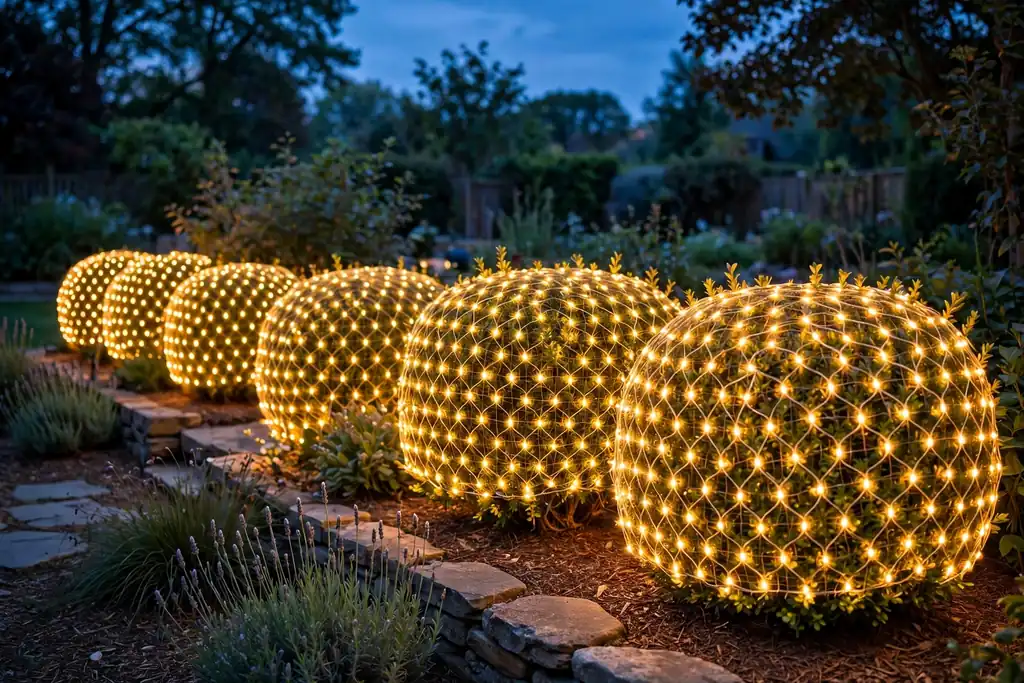
Drape net lights over rounded garden shrubs to cover them evenly with light in minutes, without wrapping each branch by hand. Net lights suit boxwood, holly, and other dense shrubs, and they give a tidy, even glow that looks good from the house as well as the path. Lay the net over the top of the shrub and tuck the edges down the sides, then step back to check for bare patches.
Use one net per shrub rather than stretching a single net across two plants, since stretched nets leave gaps and pull branches out of shape. Keep the plug and joins sheltered, and avoid nets on shrubs with sharp thorns unless you wear gloves. After the season, lift the nets off gently in daylight, so you can see and free any caught twigs before storing them.
8. Winter Window Boxes with Pinecones and Berries
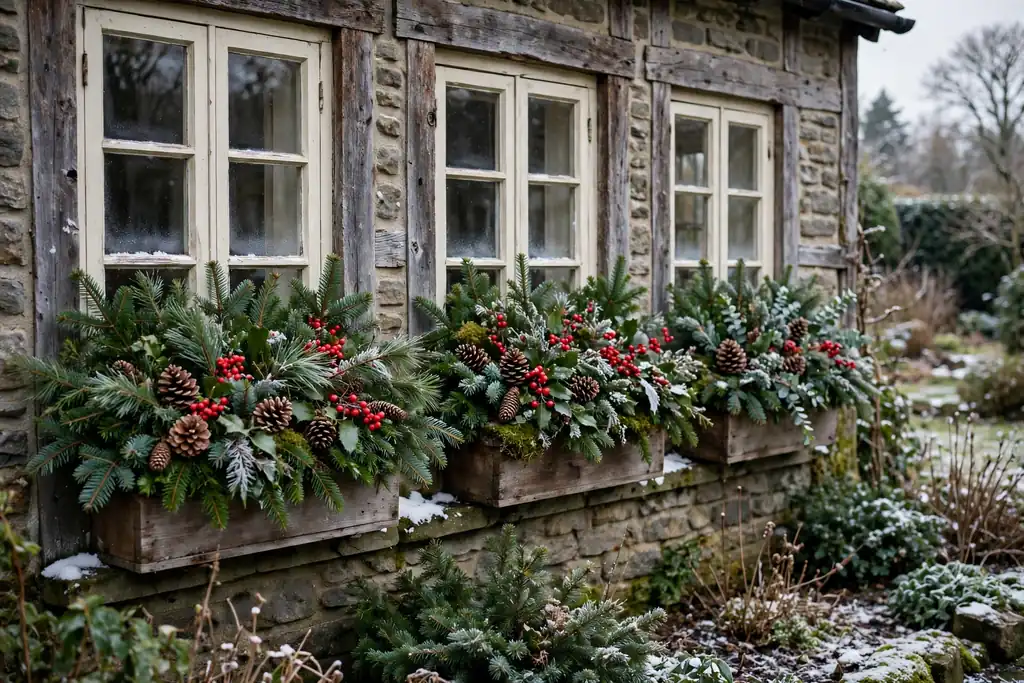
Fill garden facing window boxes with evergreen sprigs, pinecones, and red berries for a festive view from both inside and outside the house. Window boxes suit homes where the garden is seen mainly from indoors, since they frame the view from the window itself. Use a mix of pine, fir, and ivy so the box looks full even after a few sprigs drop.
Push the stems firmly into damp soil or floral foam made for outdoor use, and add the pinecones last, wired in place so wind cannot roll them out. Check the boxes after storms, since wind can loosen light fillers, and replace any berries that birds have eaten or that have gone soft. Keep the boxes watered lightly in dry spells, since evergreen cuttings last longer when they do not dry out fully.
9. Crate Display with Baubles and Greenery
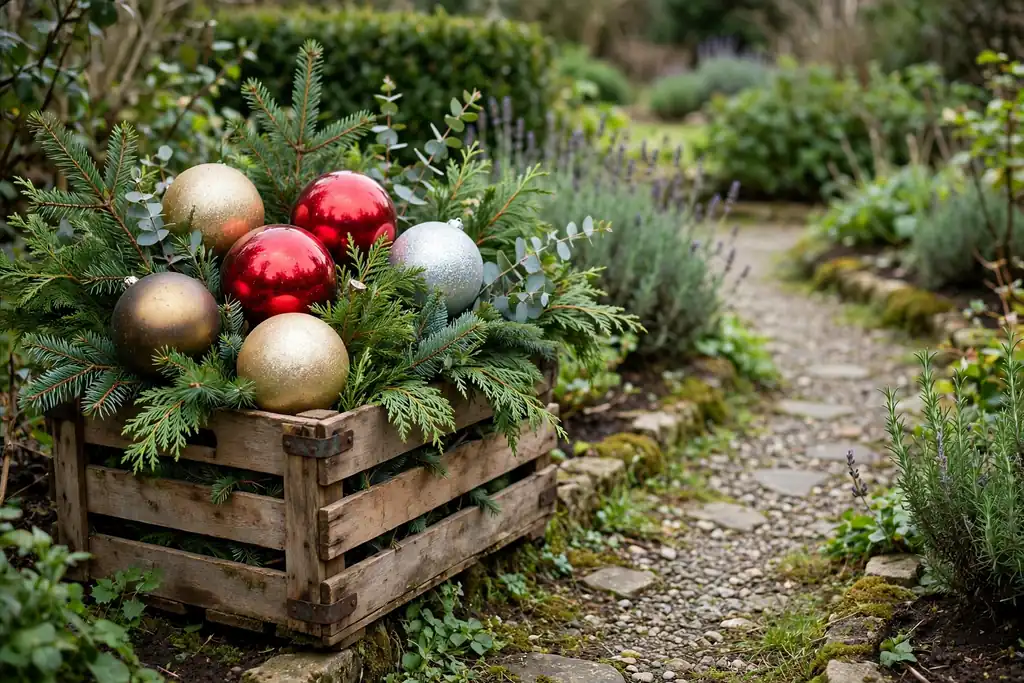
Set a wooden crate beside the path or by the door, fill it with evergreen sprigs, and nestle a few large outdoor baubles among the greenery. A crate display is a quick way to use leftover baubles and cuttings, and it suits small gardens where a full tree would crowd the path. Line the crate with a plastic tray or an old saucer to catch water and protect the wood below.
Place the largest baubles at the back and the smallest at the front, so the display reads well from the path, and keep the greenery taller at the back for depth. Move the crate under cover in heavy rain, since wet wood and wet baubles both dull quickly. At the end of the season, store the baubles wrapped in tissue and keep the crate dry for next year.
10. Fire Bowl Seating Corner
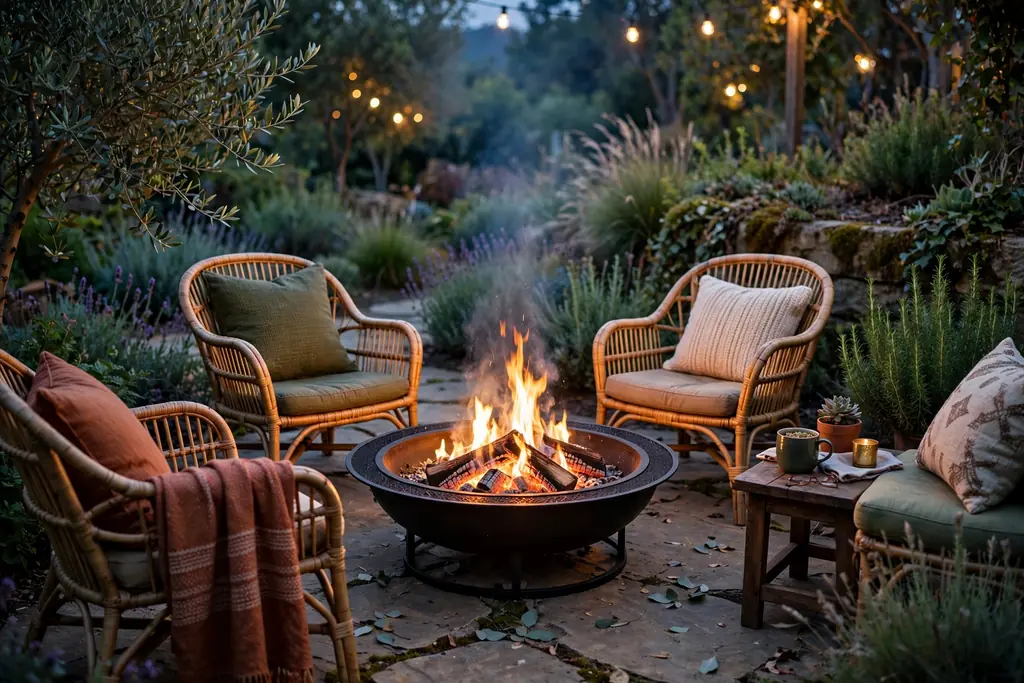
Set a fire bowl in a clear corner of the garden, with two or three chairs around it and a small side table for drinks, to make a warm spot for Christmas evenings outdoors. A fire bowl suits gardens where people gather after dark, and it gives the seating area a reason to be used in winter rather than left empty. Keep the bowl on a level, fireproof base, well clear of fences, trees, dry leaves, and overhanging branches.
Add thick cushions and a throw on each chair, and keep a basket of dry fuel nearby under cover. Never leave a lit fire bowl unattended, and keep a bucket of water or sand close by. Check local rules and neighbor considerations before lighting a fire, and let the bowl cool fully before covering it or moving it. When the fire is out, the corner still works as a seating spot with lanterns in place of flames.
11. Frosted Branches in Tall Garden Urns
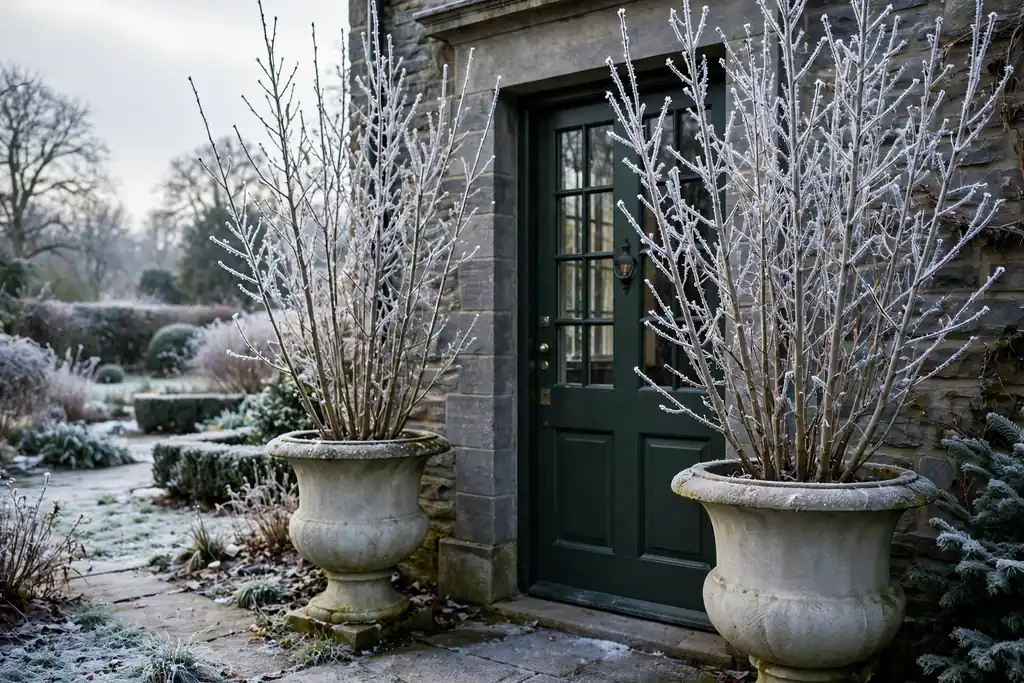
Stand tall bare branches in large garden urns, dusted with a light frost effect, to make a striking winter display by the door or at the end of a path. Bare branches suit modern and small gardens, since they take little floor space and need no soil care beyond a stable pot. Use branches of similar length, and pack the urn with stones or sand so the arrangement cannot tip in wind.
Keep the frost effect light, so the branch shapes still show, and avoid spraying near lights or candles. Place the urns where they will not block the path, and check them after wind, since tall branches catch gusts. If you use real branches, trim any that overhang the walkway, and compost them after the season rather than leaving them to rot in the pot.
12. Red Bows on Fence Posts

Tie large red bows on the tops of fence posts along the path or around the seating area for a simple festive rhythm that needs no lights or power. Bows suit long fences, since one bow on every second or third post gives a pattern without covering the whole fence. Use weather resistant ribbon, and tie each bow firmly with wire or a cable tie hidden behind the knot.
Keep the bow size in proportion to the post, so a small post does not look top heavy, and check the bows after storms, since wind can undo loose knots. Choose a ribbon color that stands out against your fence, such as deep red on dark wood or cream on a painted fence. Take the bows down before they fade or fray, and store the ribbon flat for reuse next year.
13. Festive Path Lights
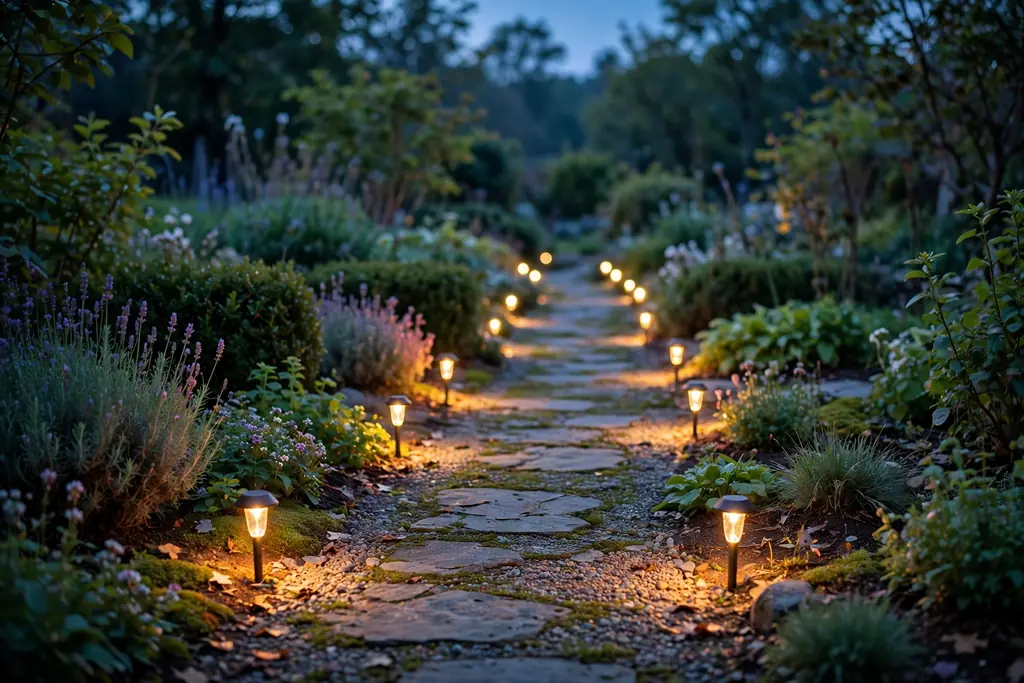
Set small festive path lights along the edges of the garden walk, using warm white or soft colored lights on short stakes, to guide guests safely after dark. Path lights suit gardens with steps, curves, or uneven ground, since they mark the route clearly and prevent trips. Space them evenly, about one large step apart, and keep them low so the light falls on the path rather than into the eyes of walkers.
Push the stakes firmly into soft ground, and avoid placing them where a mower, a wheelbarrow, or a foot will knock them over. Keep cables buried or clipped along the path edge, never stretched across the walk. If you use solar lights, place them where they get daylight during the day, and wipe the panels clean so they charge well through short winter days.
14. Garden Bench with a Plaid Throw

Dress a garden bench with a thick plaid throw and two outdoor cushions, so the bench looks inviting even on cold days and gives guests a place to sit and enjoy the lights. A dressed bench suits a sheltered spot near the house or under a tree, where it can be used for a short sit rather than a long stay outdoors. Choose a throw in a warm check that picks up the colors of your wreath or garland, so the bench ties into the rest of the display.
Bring the throw and cushions inside overnight and in rain, since damp fabric chills quickly and can stain the bench. Fold the throw over the back of the bench rather than spreading it flat, so it stays clean and easy to grab. Add a lantern on the ground beside the bench, so the seat is lit and easy to find after dark.
15. Baubles Hung from Bare Branches
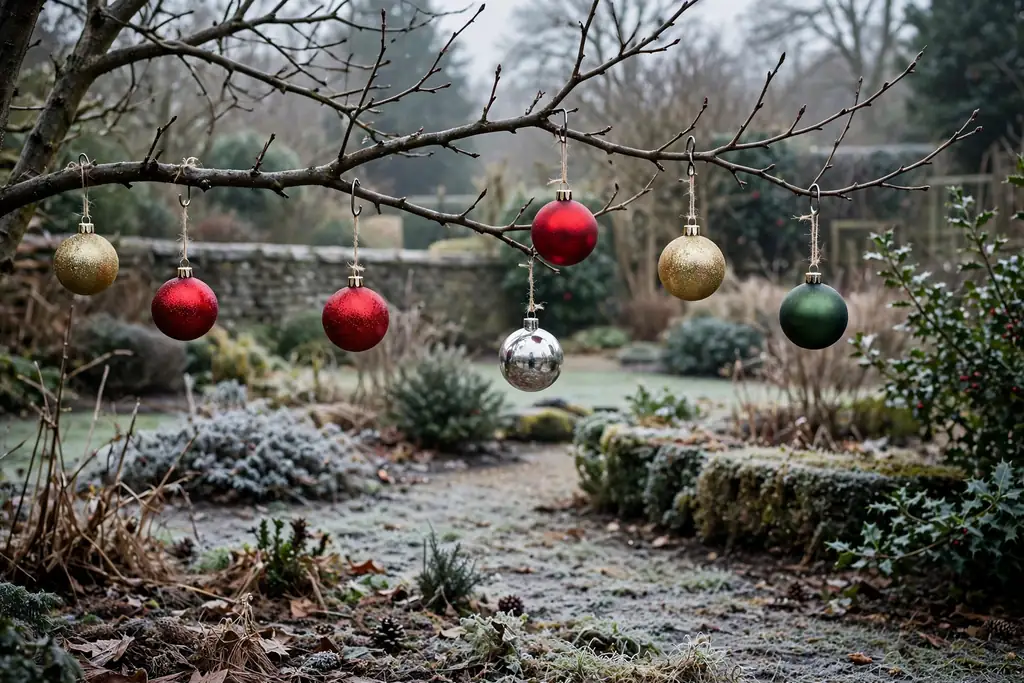
Hang outdoor baubles from the bare branches of a deciduous tree or a large branch arrangement, so color floats in the air above the garden bed. Bare branch baubles suit winter gardens well, since the tree has no leaves to hide the ornaments, and the display changes as the branches move in the wind. Use light baubles and short ribbons, so the branches do not bend under the weight.
Hang the baubles at different heights, with larger ones lower down and smaller ones higher up, and keep them clear of the path so no one walks into them. Check the ribbons after wind, since loose baubles can drop and break on hard ground. Use shatterproof baubles over paths and seating areas, and save glass ornaments for spots where a fall would land on soil.
16. White and Silver Frosty Garden Corner
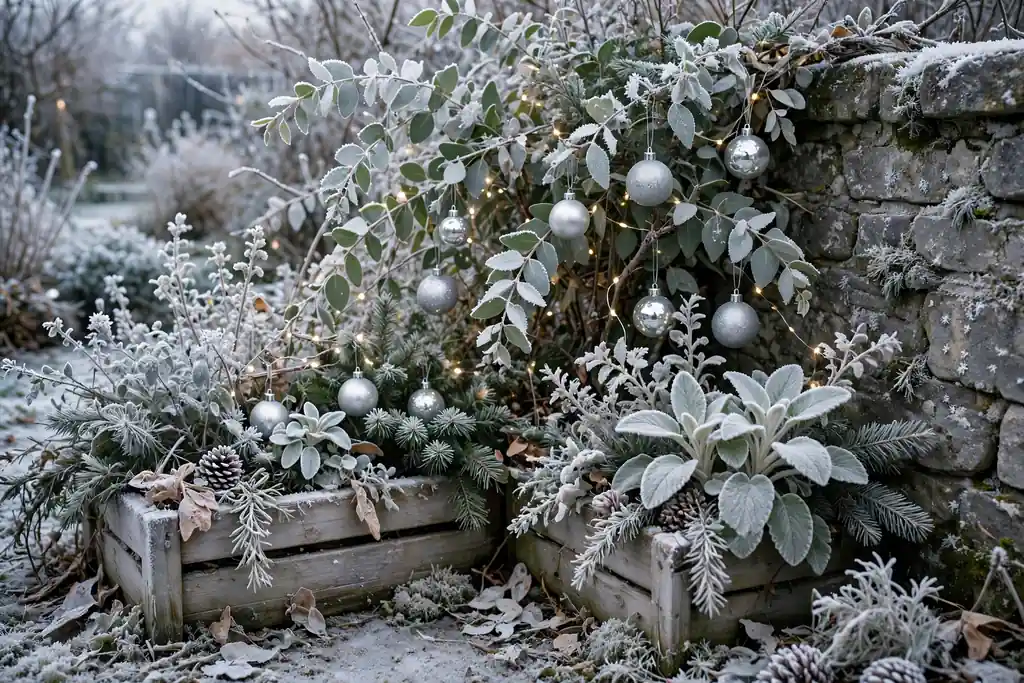
Make one corner of the garden white and silver, with white lights, silver baubles, and pale greenery, for a frosty look that stands out against dark winter soil. A single frosty corner suits gardens that already have strong color elsewhere, since it gives the eye a quiet place to rest. Use white fairy lights on the shrubs in that corner, and keep the ornaments to two tones so the look stays calm.
Add a white planter or a pale stone ornament to anchor the corner in daylight, since lights alone disappear during the day. Avoid mixing in red or gold here, or the frosty effect will be lost. Check the corner at dusk, when the white lights should read as cool and bright rather than dull, and add a second string only if one side looks dark.
17. Wood Slice and Lantern Display
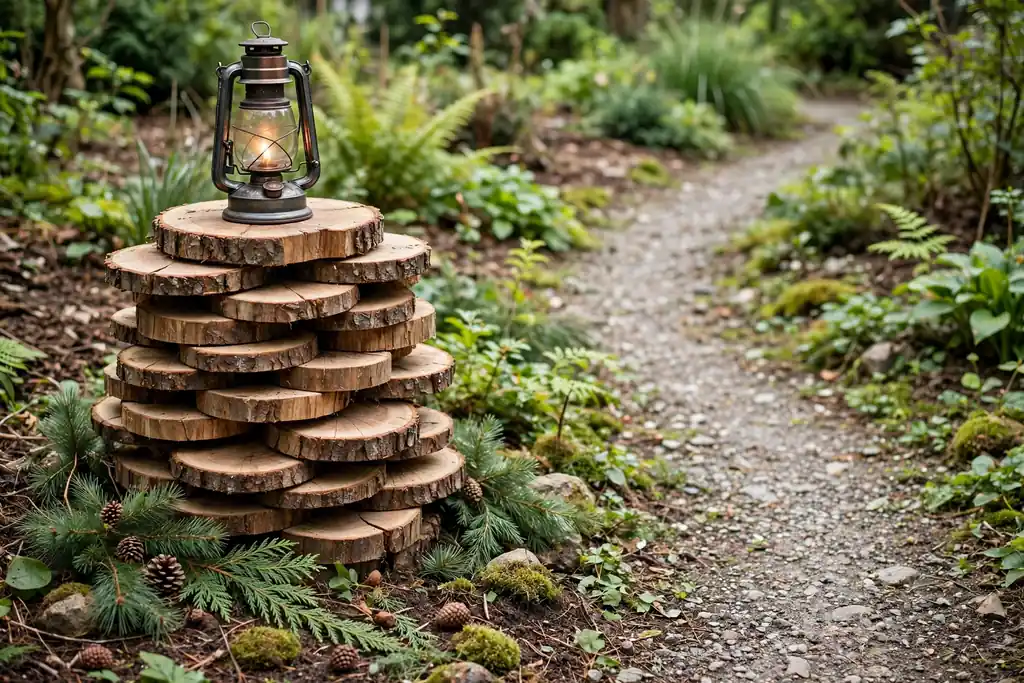
Stack a few wood slices beside the path, top them with a lantern, and tuck evergreen sprigs around the base for a rustic garden display. Wood slices suit cottage and woodland style gardens, since they look like part of the garden itself rather than a shop display. Choose slices of different sizes, with the largest at the bottom, and keep the stack low so it cannot topple.
Set the lantern on the top slice, with a candle or battery light inside, and keep the sprigs clear of the flame if you use a real candle. Treat the wood with a weatherproof finish if you want to reuse the slices, or let them weather naturally for one season. Move the stack under cover in heavy rain, since wet wood can stain paving and attract slugs.
18. Holly and Berry Border Edging

Edge a garden bed with holly sprigs and berry branches pushed into the soil along the front, so the border looks festive even where no lights reach. Holly edging suits front gardens and beds seen from the street, since it frames the whole bed rather than one spot. Use sprigs of similar length, and push them in at a slight angle so they lean outward over the path edge.
Wear gloves when handling holly, since the leaves are sharp, and keep the sprigs clear of walkways so no one brushes against them. Replace any sprigs that wilt or lose their berries, and compost them after the season. If you have pets or small children who use the garden, place the holly edging in beds they do not walk through, since holly berries should not be eaten.
19. Miniature Christmas Scene on a Garden Table
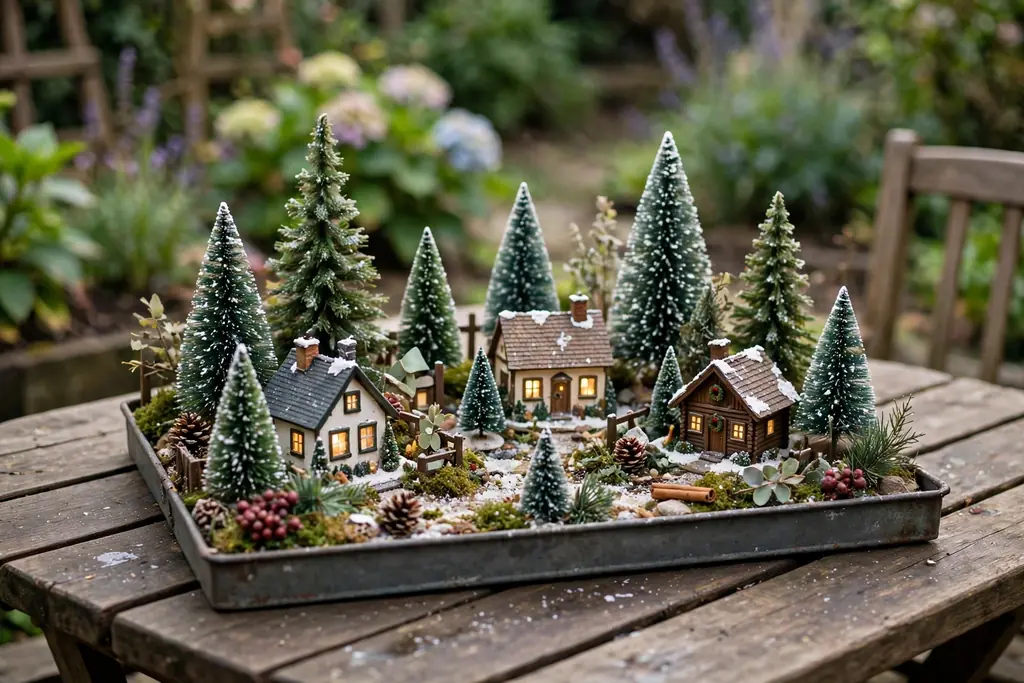
Build a small Christmas scene on a garden table, with miniature trees, tiny houses, and a dusting of fake snow on a tray, for a detail guests discover up close. A tabletop scene suits a sheltered patio or a porch table, where it can be viewed at eye level and protected from wind. Keep the scene on one tray, so it can be carried inside in rain and brought out again in minutes.
Use weather hardy miniatures outdoors, and save delicate pieces for indoors, since damp and frost can crack paint and glue. Add a small string of battery lights around the tray edge to light the scene at dusk. Check the table after wind, since light miniatures can blow off, and store the scene in a lidded box between uses so small parts do not go missing.
20. Topiary with a Simple Star or Bow

Top a shaped topiary, such as a cone or a ball on a stem, with a single star or a large bow for a festive finish that needs no other decoration. A topped topiary suits formal gardens and front entries, since the shape is already neat and the star gives it a clear Christmas role. Fix the star or bow firmly with wire, and check that it sits straight from the path.
Keep the rest of the topiary bare, so the single topper stands out, and trim any stray shoots before adding it. If the topiary is in a pot, weight the pot so wind cannot tip the tall shape. Take the topper down after the season and store it flat, so it keeps its shape for next year.
21. Garland Along the Top of a Fence
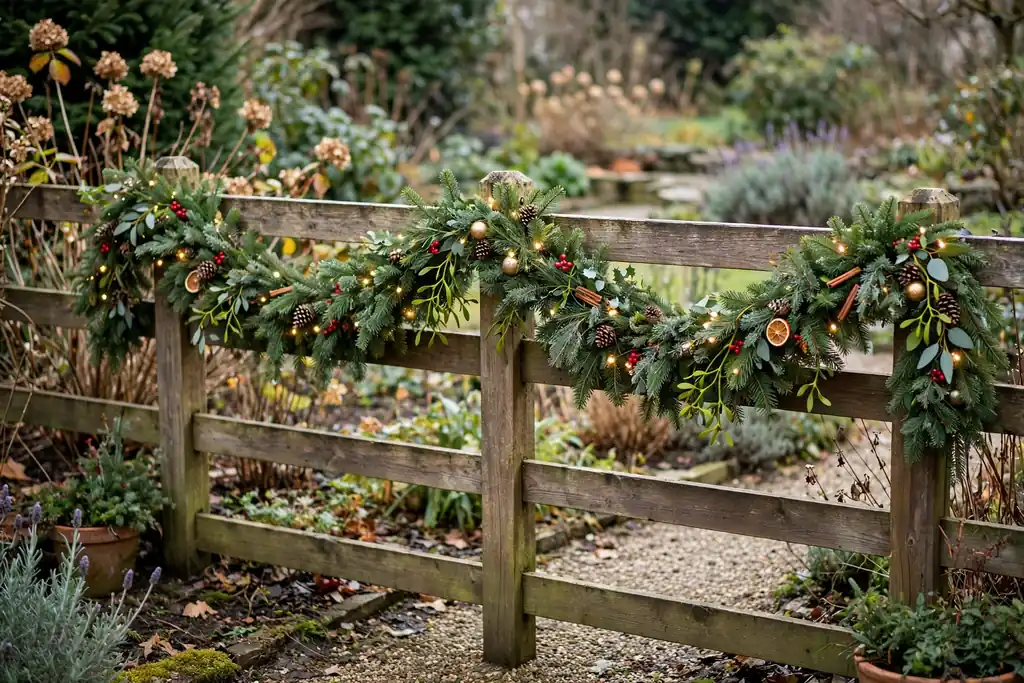
Run a long evergreen garland along the top of the garden fence, fixed at regular intervals, to give a long boundary a festive line that can be seen from across the garden. Fence garland suits gardens with a plain fence that needs softening, and it pairs well with a wreath or bows lower down. Fix the garland with wire or hooks every few feet, so it does not sag between fixings or slide in wind.
Keep the garland clear of gates, so it does not snag when they open, and trim any pieces that hang over a neighbor boundary. Check the fixings after storms, since a loose garland can drop onto plants below. At the end of the season, compost the greenery and keep the wire and hooks for next year.
22. Pergola Draped with Garland and Lights
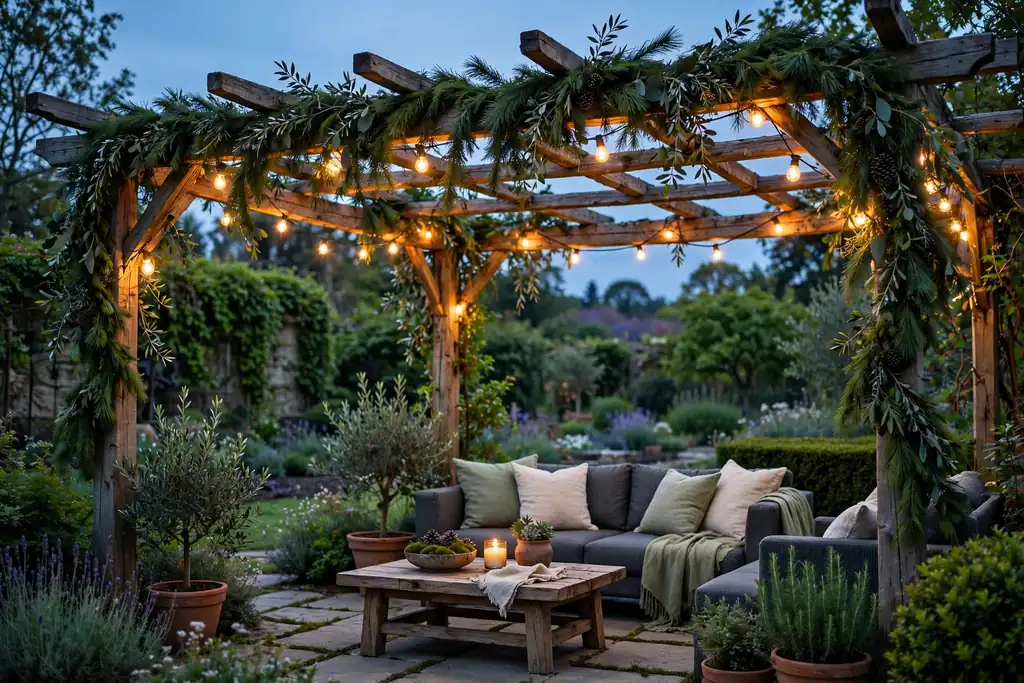
Drape garland and warm string lights across the beams of a garden pergola, so the structure becomes a lit outdoor room for Christmas evenings. A pergola display suits gardens with a seating area underneath, since the lights fall softly on the table and chairs below. Run the garland along the main beams first, then weave the lights through it, keeping plugs and joins under cover.
Leave one beam clear if you need to hang a lantern or a heater, and keep the lights clear of any fabric roof or dry leaves. Check the display from underneath as well as from the path, since the pergola is seen from both angles. Take the garland down before it dries out, and store the lights loosely coiled for next year.
23. Garden Table Set for a Christmas Meal Outdoors
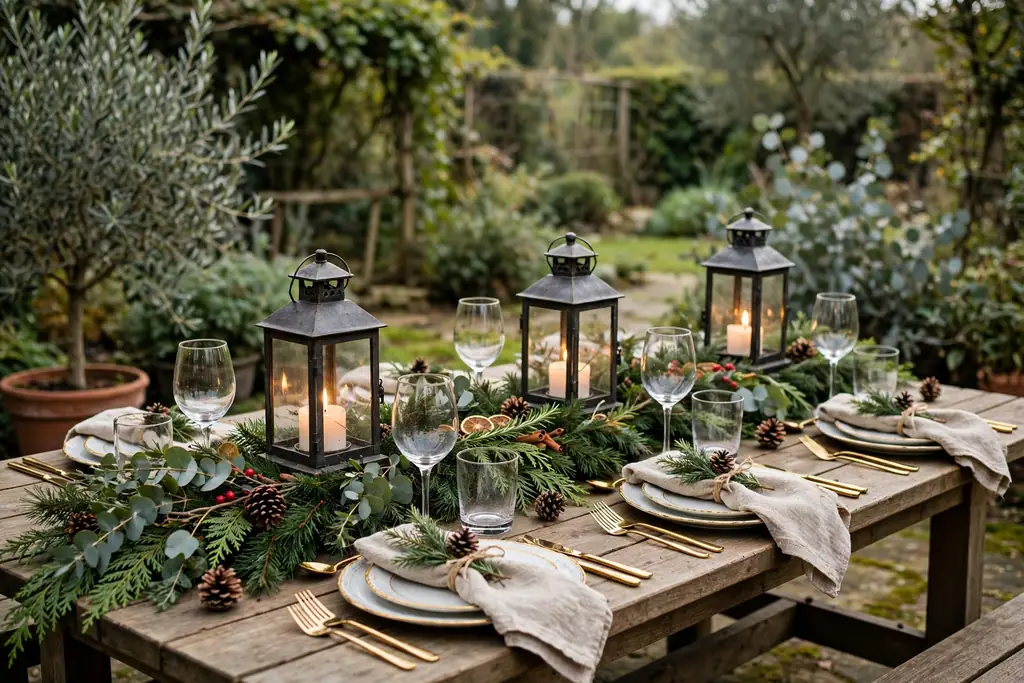
Set the garden table for a Christmas meal outdoors, with a simple evergreen runner, candles in closed lanterns, and a small centerpiece of pinecones and sprigs. An outdoor table setting suits mild days and short festive gatherings, and it makes the garden feel like a room ready for guests. Use sturdy plates and glasses that can handle a breeze, and keep the tablecloth weighted or clipped so it does not lift.
Place the centerpiece low, so guests can see each other across the table, and keep candles in lanterns rather than open flames near the runner. Have a plan to move indoors if rain starts, and bring cushions and throws out only when the meal begins. After the meal, clear the table promptly, since damp and cold can stain wood and fabric left out overnight.
24. Wreath and Lights on the Garden Shed
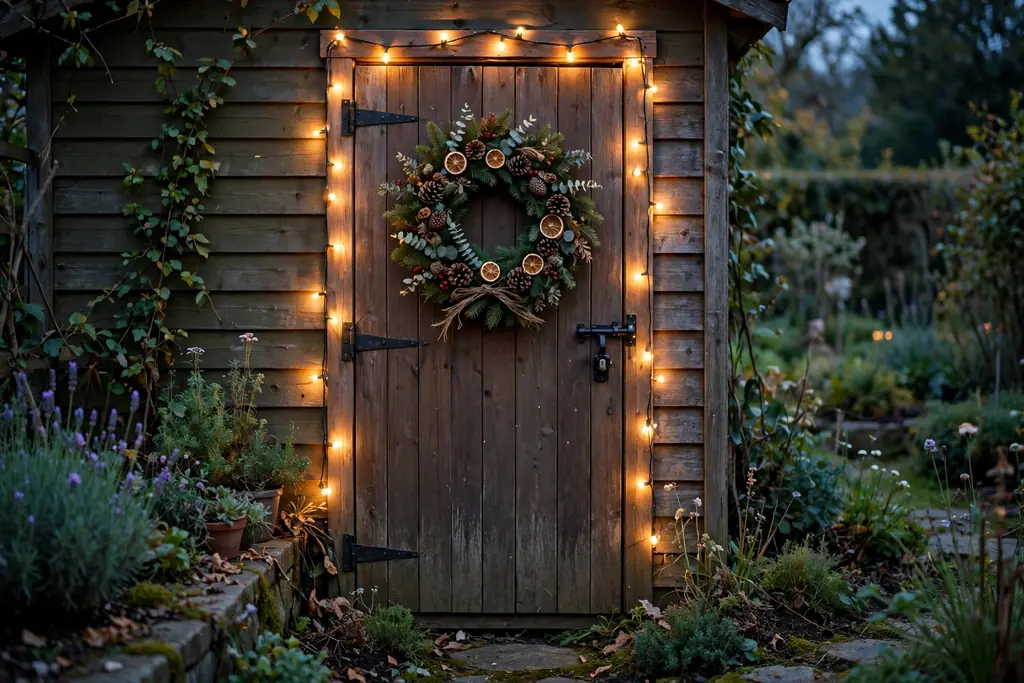
Hang a wreath on the garden shed door and wrap a short string of lights around the door frame, to give a plain outbuilding a festive face. A shed display suits gardens where the shed is visible from the seating area or the path, since it turns a working building into part of the display. Fix the wreath with a hook over the door, and keep the lights clear of the door handle and hinges.
Use outdoor lights with a plug that stays dry, and run the cable along the shed wall rather than across the ground. Keep the wreath small enough that the door still opens fully, and check the lights after rain, since shed roofs can drip onto the door frame. Take the display down before the wreath dries out, and store the lights with the rest of the garden lights.
25. Hardy Winter Pots with Lights
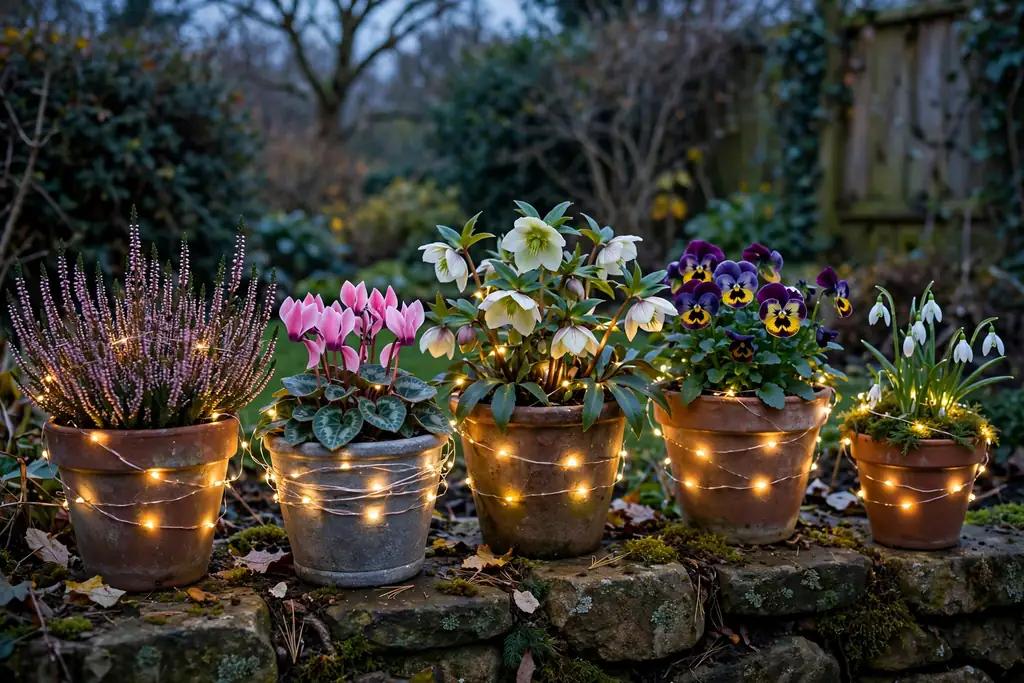
Plant hardy winter flowering plants in pots, such as cyclamen and hellebores in sheltered spots, and wind a short string of battery lights around each pot for a glow at soil level. Winter pots suit entries, steps, and seating corners, since they add color and light where taller displays cannot fit. Choose pots that drain well, and raise them slightly off the ground so water does not sit underneath in frost.
Keep the plants watered in dry spells, and move the pots to a sheltered spot in hard frost if the plant type needs it. Wrap the lights loosely around the pot, not tightly around the stems, so the plants can grow and the lights do not damage them. Replace any plants that finish flowering, and reuse the pots and lights for spring bulbs after Christmas.
26. Festive Bird Table
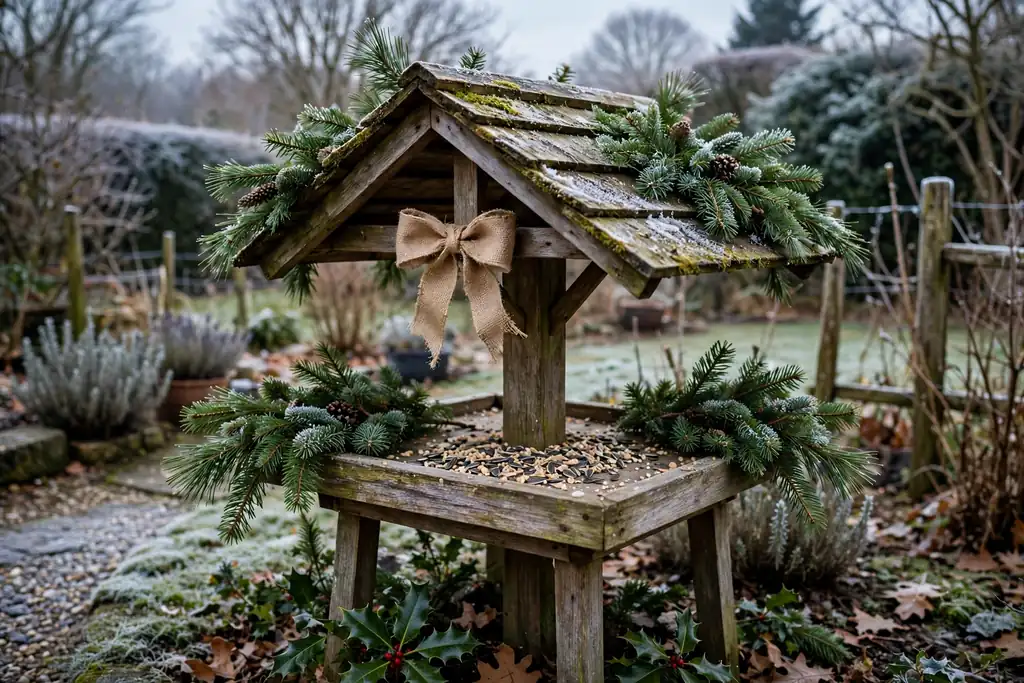
Dress the garden bird table with evergreen sprigs around the base and a simple bow on one post, so it joins the Christmas display while still serving the birds. A dressed bird table suits wildlife friendly gardens, since it keeps the table in use through winter when birds need food most. Keep the decorations on the posts and the base, and leave the feeding surface clear and clean.
Do not put tinsel, glitter, or small loose ornaments on the bird table, since birds can peck at them, and keep any ribbon well away from the feeding area. Clean the table regularly, and keep fresh water nearby in a shallow dish that will not freeze solid overnight. Check the table after wind, since loose greenery can block the feeding surface.
27. Candle Jars Along a Low Garden Wall
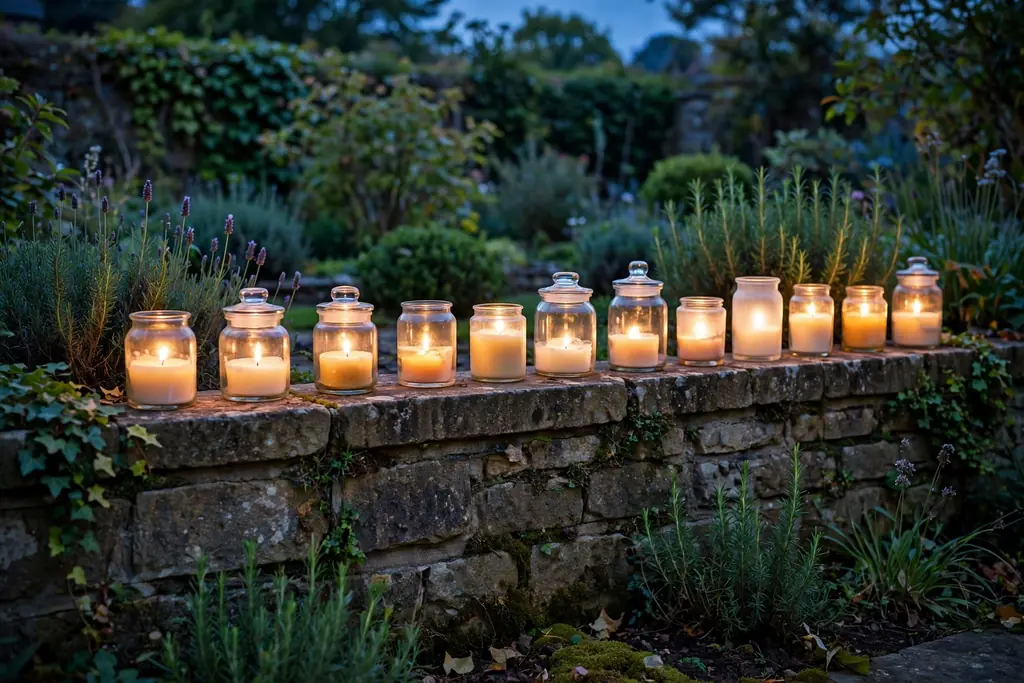
Set candle jars along the top of a low garden wall, spaced evenly, to make a line of warm light that defines the edge of a bed or a seating area. Candle jars suit sheltered walls, since the glass protects the flame from wind and the wall keeps the jars at a safe height. Use jars of similar size, with a candle or a battery light inside each, and set them on a flat part of the wall so they cannot roll off.
Keep the jars clear of overhanging branches and dry leaves, and never leave real candles burning unattended. Bring glass jars inside in hard frost, since water trapped in a jar can crack the glass when it freezes. At the end of the evening, blow out or switch off the candles, and wipe the jars clean so the light stays bright next time.
28. Garden Swing with Lights and a Throw
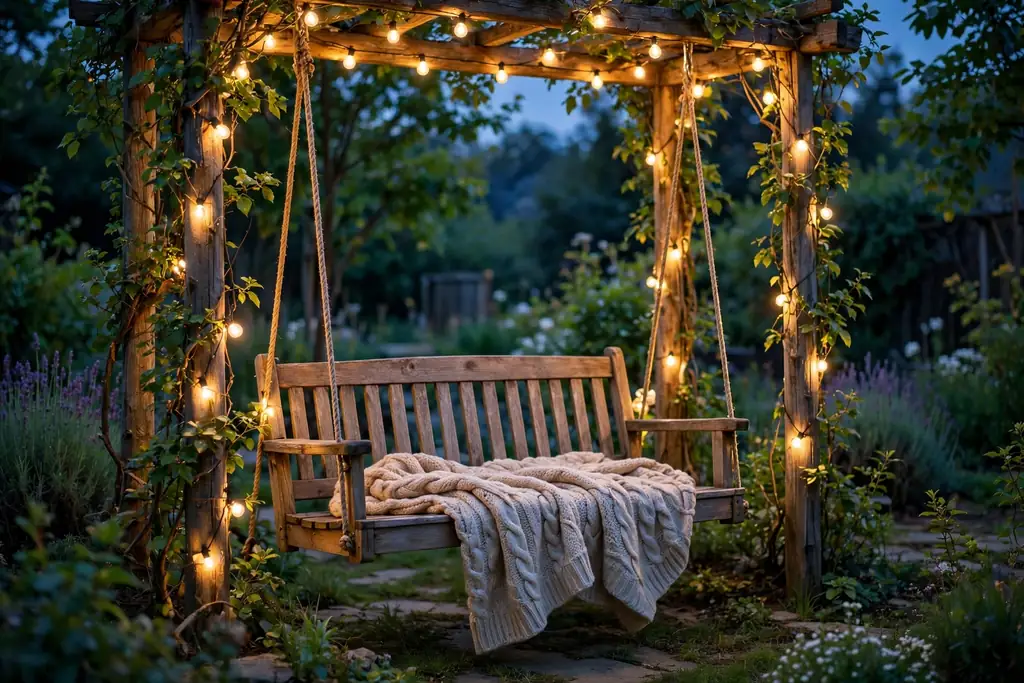
Wrap a short string of lights around the frame of a garden swing, and drape a thick throw over the seat, so the swing becomes a cozy spot for Christmas evenings. A lit swing suits gardens with a sheltered corner, since it gives one person or two a quiet place to sit and look at the rest of the display. Keep the lights on the frame, not on the moving seat, so the wires do not stretch or snag as the swing moves.
Choose a throw that can be brought inside easily, and add a cushion that stays dry under cover. Check the swing fixings and chains before the season, since winter use adds weight and movement. Take the lights down if high wind is forecast, since a swinging frame can tangle loose wires.
29. Star on Top of the Tallest Garden Tree
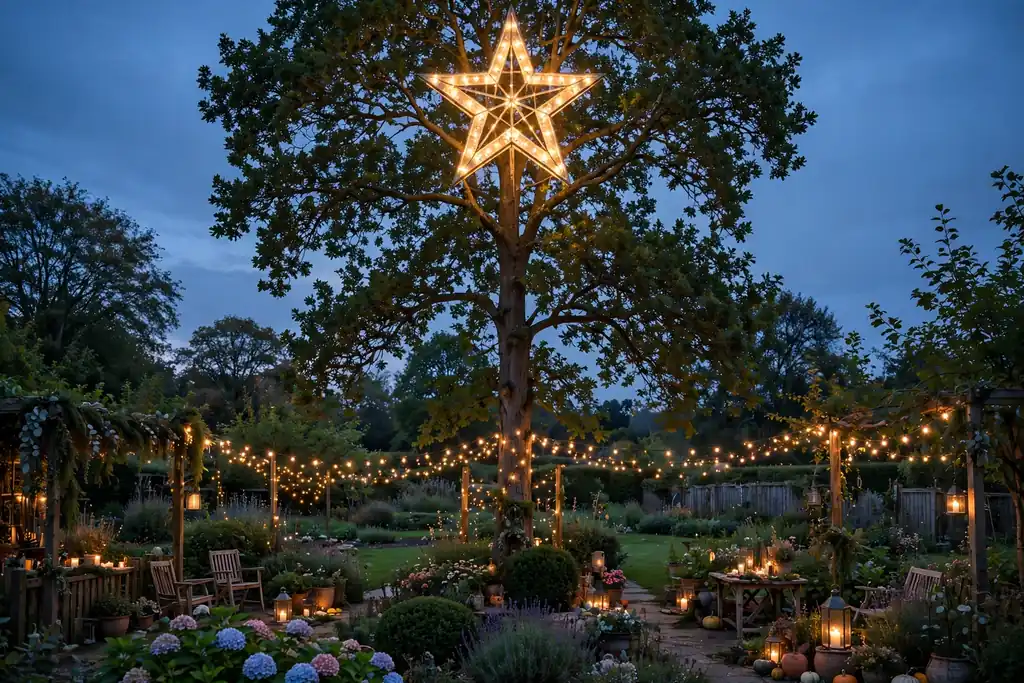
Place a large lit star on top of the tallest garden tree, or on a tall pole beside it if the tree top is out of safe reach, to finish the garden display with one clear landmark. A tall star suits gardens seen from the street, since it can be seen above fences and hedges and gives the whole display a focal point. Fix the star firmly with wire, and keep the cable run neat and sheltered.
Do not climb to a height you cannot reach safely, and use a pole or a lower tree if the tallest tree is too high. Check the star after wind, since a loose star can swing and damage branches or lights. Take the star down in dry weather after the season, and store it in a box where it will not be crushed.
Conclusion
A stylish Christmas garden is not about covering every surface. It is about a clear entry, one lit focal point, a safe path, and a place to sit and enjoy the result. Start with the gate and the path, add lights to one tree or pergola, then pick two or three smaller ideas from this list that suit your garden size and your time. Check the display at dusk, move anything that looks crowded or dark, and bring soft furnishings inside when the weather turns. With that simple order, your garden can work as a welcoming outdoor room through the whole festive season, and most of the pieces can be stored and reused next year.
Save this list before you start, and work through it one zone at a time: entry first, then paths, then seating, then small details last.
FAQs
How do I decorate a garden for Christmas on a small budget?
Start with greenery, lights, and lanterns, since those three pieces carry most of the look. Cut evergreen sprigs from your own garden where you can, use one string of lights on a tree or a pergola, and line the path with jars or lanterns you already own. Add a wreath on the gate or fence as the single focal point, and skip large figures or many separate displays. Reuse pots, crates, and ribbons from year to year, and add one new piece each season rather than buying a full display at once.
What Christmas lights are safe to use outdoors in the garden?
Use lights marked for outdoor use, with a plug and joins that stay dry and off the ground. Keep cables off walkways, away from standing water, and clear of sharp edges on fences and pots. Check the wires for damage before you put them up, and replace any string with cracked insulation or loose bulbs. Switch lights off overnight and when you leave the house, and take them down in dry weather after the season so they can be checked and stored safely.
How can I keep outdoor Christmas decorations safe in wind and rain?
Fix garlands, wreaths, and stars at two or more points, weight pots with stones, and keep tall displays low or sheltered where wind is strong. Use weather resistant ribbon and shatterproof baubles over paths and seating areas, and bring cushions, throws, and paper decorations inside in rain. Check fixings after storms, and take down anything that has come loose before it falls. Store lights loosely coiled and dry, so they last for next year.
When should I put up Christmas garden decorations?
Most people put garden decorations up in late November or early December, when evenings are dark enough for lights to show well. Put up greenery and lights first, since they take the longest, and add soft furnishings and table settings last, close to the day they will be used. Take greenery down before it dries out fully, and take lights down in dry weather after Christmas, so they can be checked, cleaned, and stored for next year.
How do I light a garden path for Christmas without trip hazards?
Use low lights on stakes or lanterns set beside the path, never cables stretched across it. Space the lights evenly, keep them low so the light falls on the path surface, and mark any steps with an extra light on each side. Keep the path clear of loose greenery, pots, and cables, and check the route at dusk to spot dark patches. Battery lanterns work well where no outdoor power point is close, and they can be moved if the layout changes.
Can I leave Christmas garden decorations out all winter?
Greenery, lights, and sturdy ornaments can stay out through the festive season, but check them weekly for wind damage, damp, and fading. Bring cushions, throws, and paper items inside in rain and overnight, and take down wreaths and cut greenery before they dry out. Lights should be switched off when not in use, and any decoration that has come loose should be fixed or removed promptly. A short weekly check keeps the display looking good and safe until you take it down.