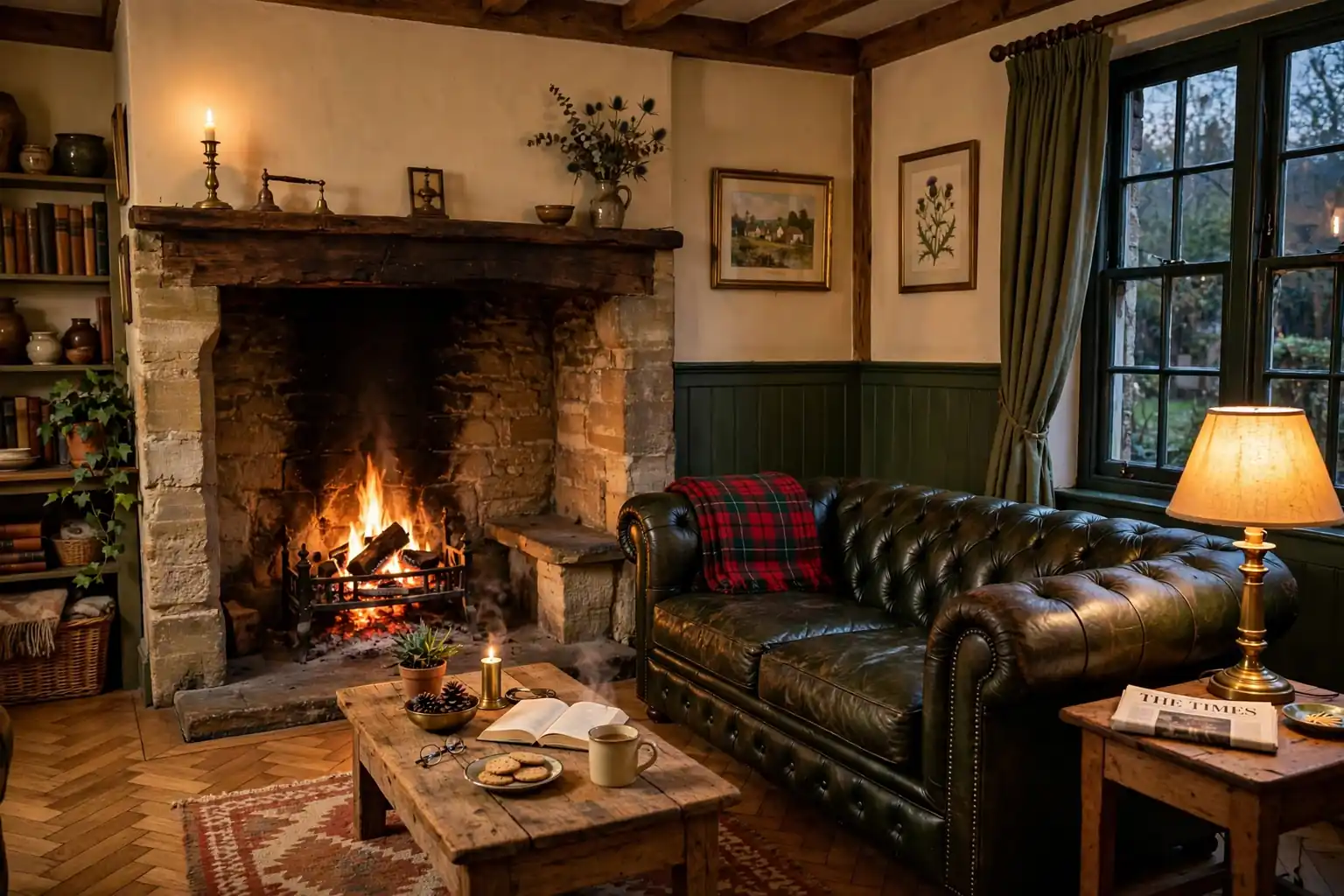
British homes feel cozy for a reason. They layer wool, wood, and pattern over practical layouts, and they give every room a warm place to sit, read, or gather. Think of a fire lit in an inglenook, a tartan throw folded over a sofa arm, and a kitchen table that seats the whole family. These 22 British home decor ideas cover living rooms, bedrooms, kitchens, bathrooms, and entries, so you can borrow one idea for a single room or build a whole home from them. Start with the room you use most, keep the palette soft and muted, and let one honest piece, such as a wood burner or a farmhouse table, set the tone for the rest.
Key Takeaways
- Let muted heritage colours lead, such as sage green, dusty blue, warm cream, and soft red, with pattern kept to one or two prints per room.
- Repeat natural materials at least twice in a room, such as wood, wool, linen, and brass, so the British look feels planned rather than collected at random.
- Build coziness around a warm focus, such as a fireplace, a window seat, or a reading chair with a good lamp, before adding decoration.
- Layer textiles for warmth: a wool throw, a flatweave rug over wood floors, and lined curtains all add softness without clutter.
- Choose furniture that works hard first, such as a boot room bench with storage or a kitchen table with room for guests, and let decoration follow use.
- Start with curtains, bedding, and throws for a low cost refresh, and save panelling, tile, and fireplace work for a weekend project.
1. Warm the Room With an Inglenook Fireplace
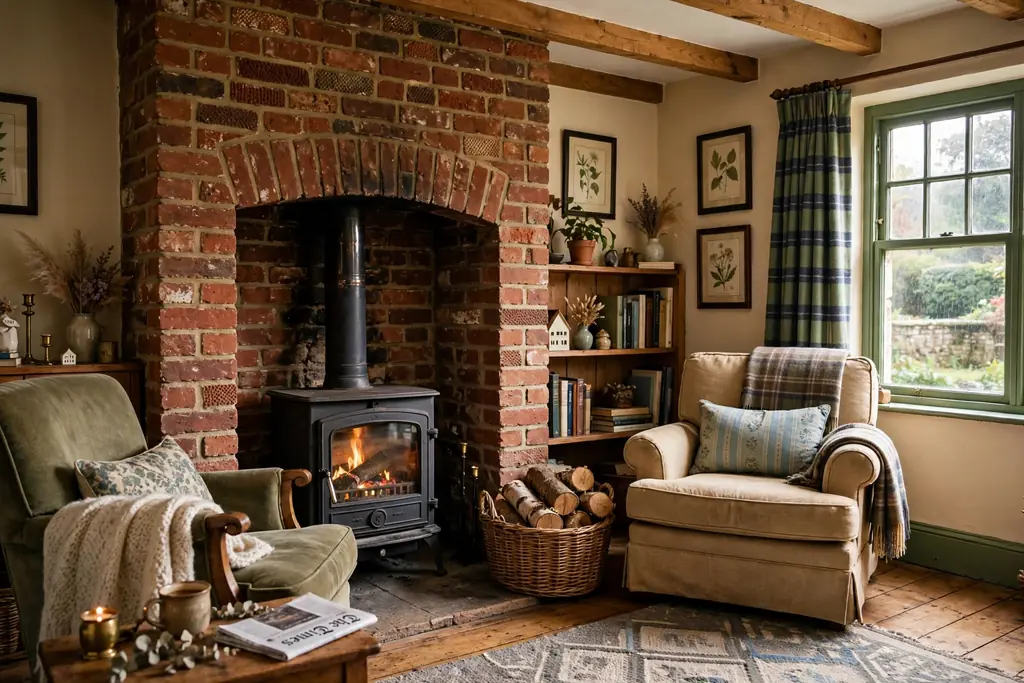
An inglenook fireplace, with its deep recess, brick or stone surround, and space for a wood burner or open fire, gives a living room the warmest focus a British home can offer. The recess frames the fire, seating tucked beside it feels sheltered, and the whole room tends to gather around it on cold evenings. This suits a cottage or period living room with a working chimney, and it works as a first step because the fireplace shapes furniture layout, lighting, and colour for the rest of the room.
Keep the mantel simple, with a clock, a pair of candlesticks, and one framed print, so the fire stays the focus. Use a basket for logs and a fireguard if children or pets share the room. If a real fire is not possible, a wood burner style electric stove set into the recess can give a similar glow, and a painted fire surround in cream keeps a shallow recess looking tidy.
2. Add Painted Wood Panelling to a Plain Wall
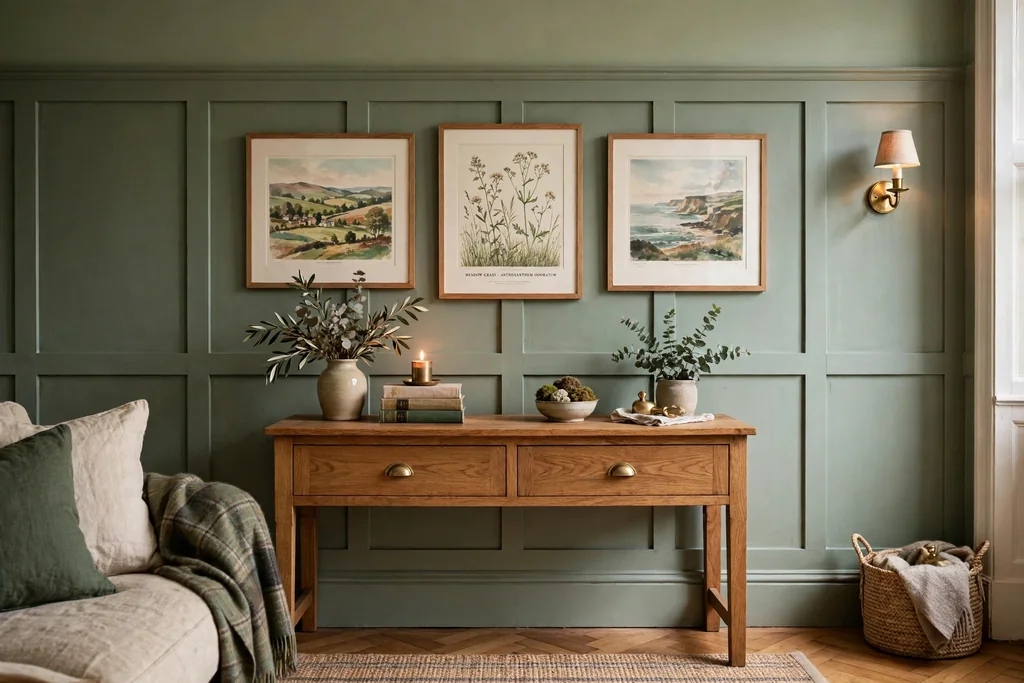
Painted wood panelling, in shaker style rectangles or simple tongue and groove boards, gives a plain living room or hallway the crafted feel of a British period home. Panelling adds shadow and structure to a flat wall, suits rooms that feel bare even when furnished, and pairs well with plain linen curtains and wood floors. This suits a living room feature wall, a hallway, or a bedroom wall behind the bed.
Paint the panelling in the same colour as the wall for a calm look, or one shade deeper for gentle contrast. Keep the boards to dado height in a small room, so the wall does not feel heavy, and run them full height only where ceilings are tall. Finish with a simple shelf or picture rail at the top, which gives a place for small prints without extra holes in the wall.
3. Dress the Bed With Floral Chintz Bedding and Curtains
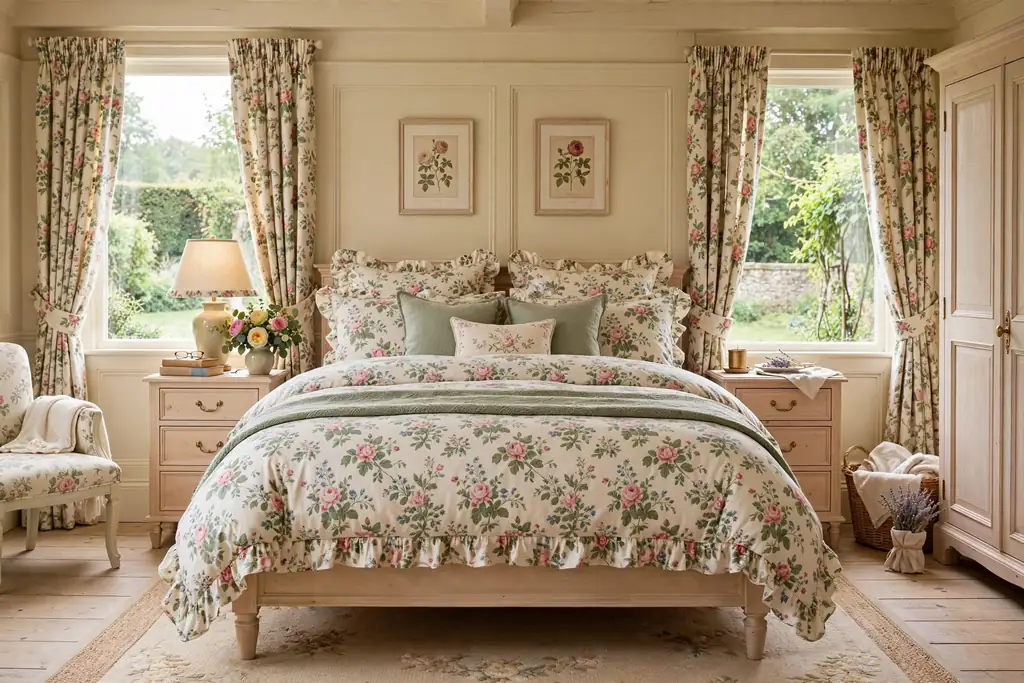
Floral chintz, the glazed cotton print long used in English country bedrooms, brings soft colour to a bed without a full redecoration. A floral duvet cover or a pair of floral curtains in rose, peony, or small sprig prints suits a bedroom that feels plain, and it works well with cream walls and pale wood furniture. This suits a guest bedroom or a main bedroom where you want warmth without dark colours.
Use the floral print in one or two places, such as bedding and one cushion, and keep the rest of the bed plain in cream or white linen. If the print feels busy, choose a smaller scale sprig pattern, which reads as texture from a distance. Wash chintz on a gentle cycle and line dry where you can, so the print and the light glaze last longer.
4. Fold a Tartan Wool Throw Over the Sofa
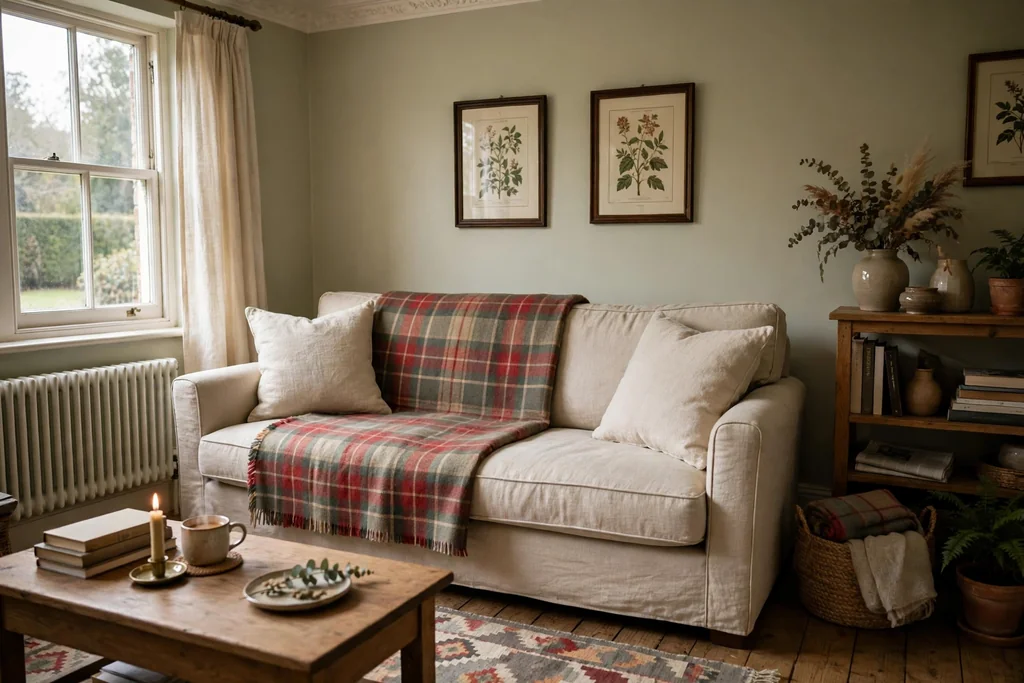
A tartan wool throw in muted red, green, or navy gives a living room instant British warmth and a practical layer for cold evenings. Tartan suits a plain sofa, a leather chair, or a window seat, and it adds pattern without repainting or buying new furniture. This suits a living room that feels finished but not yet cozy, and it is one of the easiest ideas on this list to try.
Fold the throw over one sofa arm or drape it across the back, so it looks ready to use rather than staged. Choose pure wool or a wool blend for warmth, and keep the rest of the cushions plain so the tartan stays the main pattern. If the room already has a strong floral print, pick a tartan in tones that match one colour from that print, so the two patterns sit well together.
5. Build a Bay Window Seat for Reading and Storage
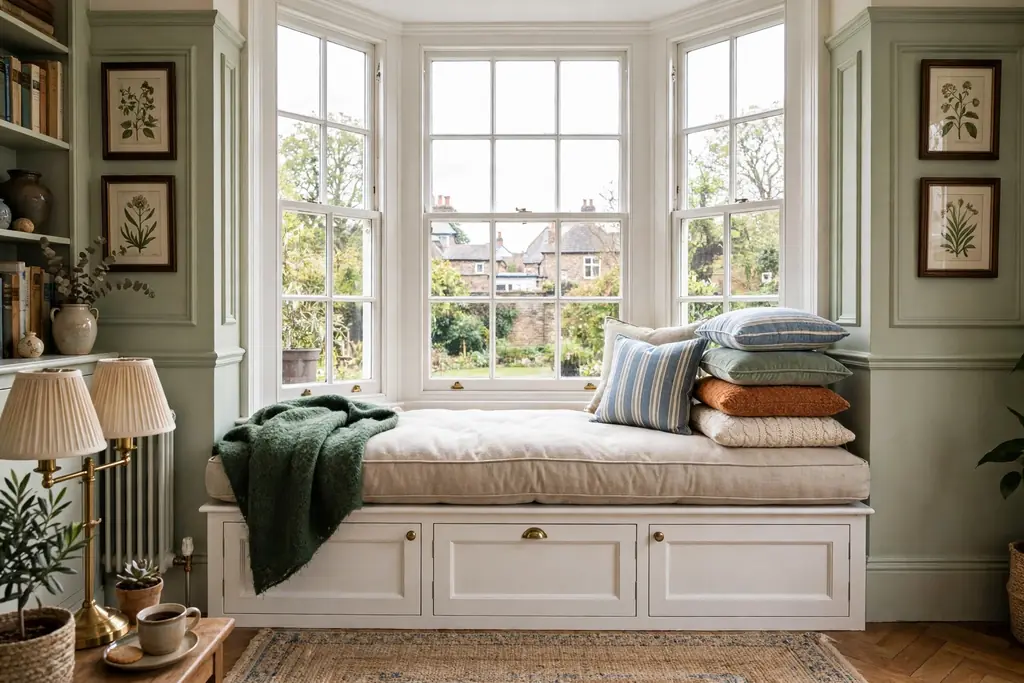
A bay window seat turns an awkward curve of glass into the coziest seat in the house. A fitted bench with a thick cushion, a pile of cushions, and storage below gives a living room or bedroom a reading spot, a place for guests to perch, and a tidy home for blankets or board games. This suits a period home with a bay window, and it works in a bedroom bay just as well as in a living room.
Build the bench to seat height, add a cushion in a hard wearing fabric, and hinge the top or add drawers for storage. Keep the window clear of heavy curtains during the day, using a slim blind or sheer panel instead, so daylight reaches the seat. Add one small lamp or a wall light nearby, so the seat stays useful after dark as well as in daylight.
6. Dress Sash Windows With Linen Curtains and a Slim Blind
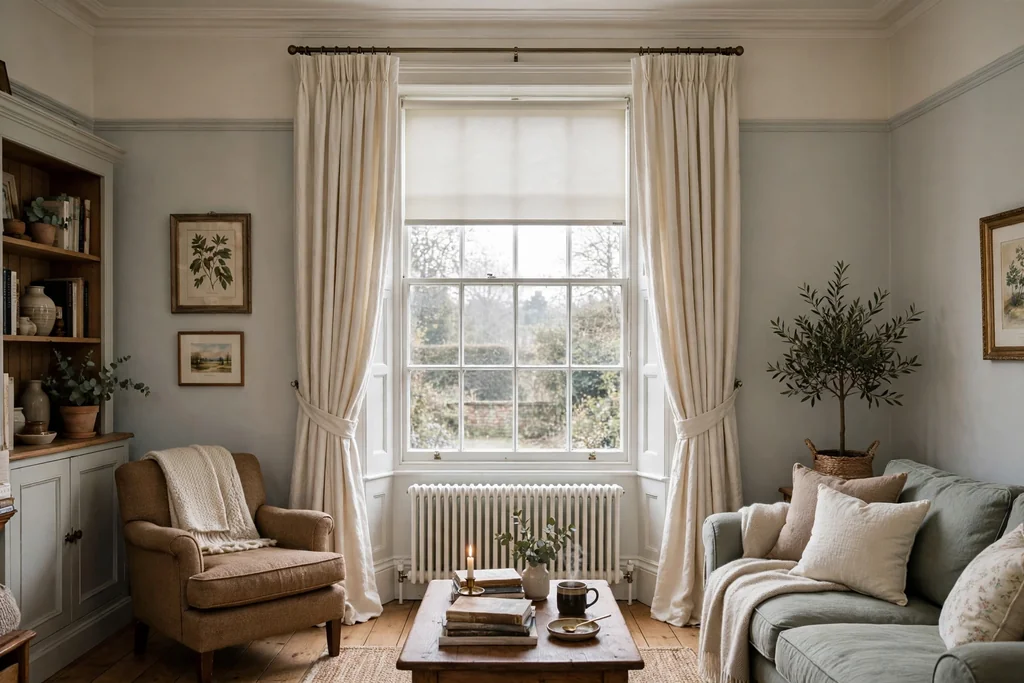
Sash windows are a defining feature of many British homes, and they look best when the dressing stays light. Full length linen curtains in cream or soft sage, hung on a simple rod, soften the window without hiding the frame, while a slim roller or Roman blind inside the recess gives privacy at night. This suits a living room or bedroom with tall sash windows that feel bare or drafty.
Hang curtains just above the frame and let them fall to the floor, so the window looks taller, and keep the blind in a plain colour close to the wall tone. If drafts are a problem, add lined curtains and a draft excluder at the sill, which help more than heavy fabric alone. Keep the sill clear of tall plants, so the lower sash still opens easily for fresh air.
7. Anchor the Living Room With a Chesterfield Sofa
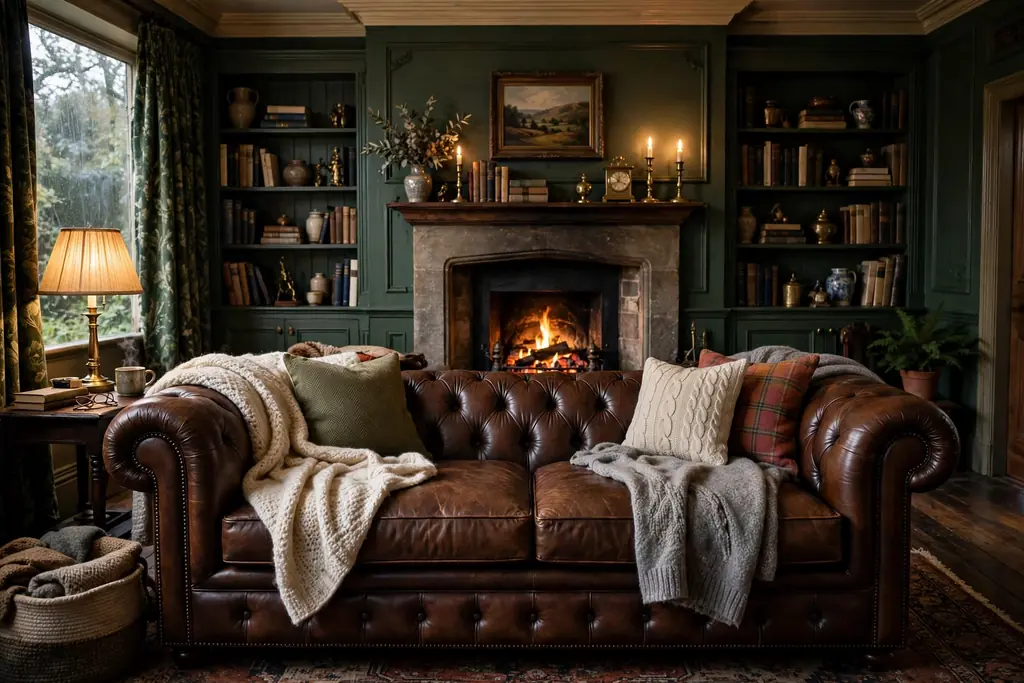
A Chesterfield sofa, with its deep buttoned back, rolled arms, and low seat, anchors a British living room with a piece that suits both formal and relaxed rooms. Leather Chesterfields suit a study or a traditional living room, while a linen or velvet Chesterfield softens the same shape for a family room. This suits a living room that needs one strong piece to set the style for everything around it.
Place the Chesterfield against the longest wall or facing the fireplace, and keep the rug and coffee table simple, so the sofa stays the focus. Pair leather with wool throws and plain linen cushions, which soften the formality, and pair fabric versions with one leather chair for contrast. Condition leather as the maker directs, and keep the sofa out of harsh direct sun so the colour fades evenly.
8. Fit a Farmhouse Kitchen Around a Belfast Sink
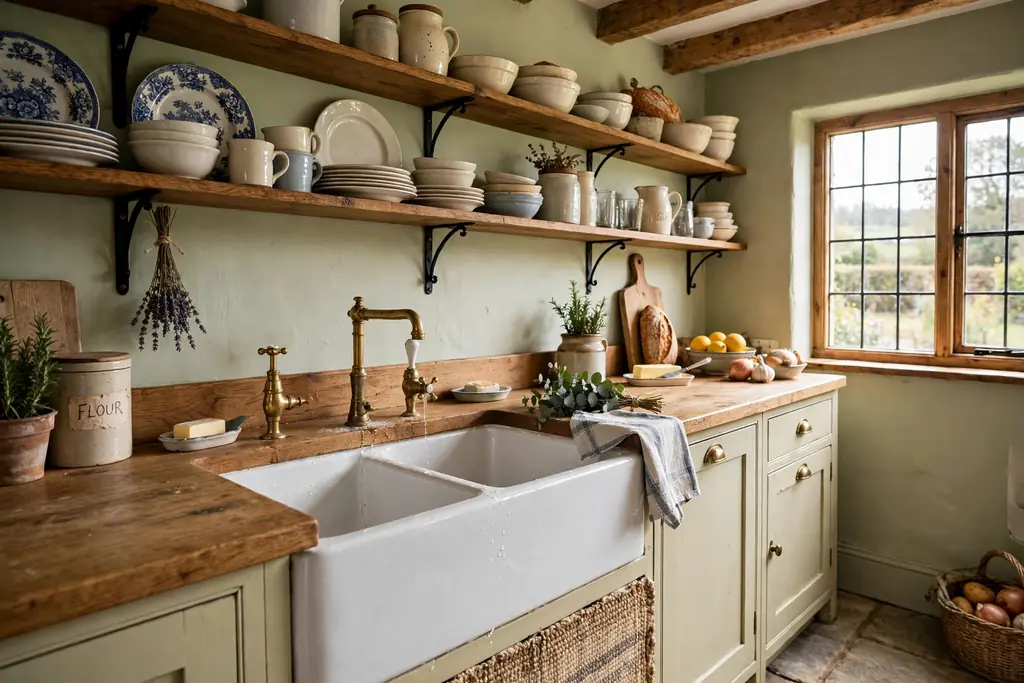
A Belfast sink, deep, white, and set into a wood or painted cabinet run, gives a kitchen the practical heart of a British farmhouse. The deep bowl suits large pans and baking trays, the apron front adds character, and open shelving or a dresser nearby keeps daily crockery in reach. This suits a kitchen with room for a wide sink cabinet, and it works in a modern kitchen as well as a period one.
Pair the sink with a simple bridge tap in brass or chrome, and keep the worktop in wood or stone so the white ceramic stands out. Store washing up items in a small tray or caddy, so the sink edge stays clear, and use a sink mat to protect the base from heavy pans. If plumbing a Belfast sink is a big job, a butler style inset sink gives a similar look with a simpler fit.
9. Lay Victorian Tiles in the Hallway
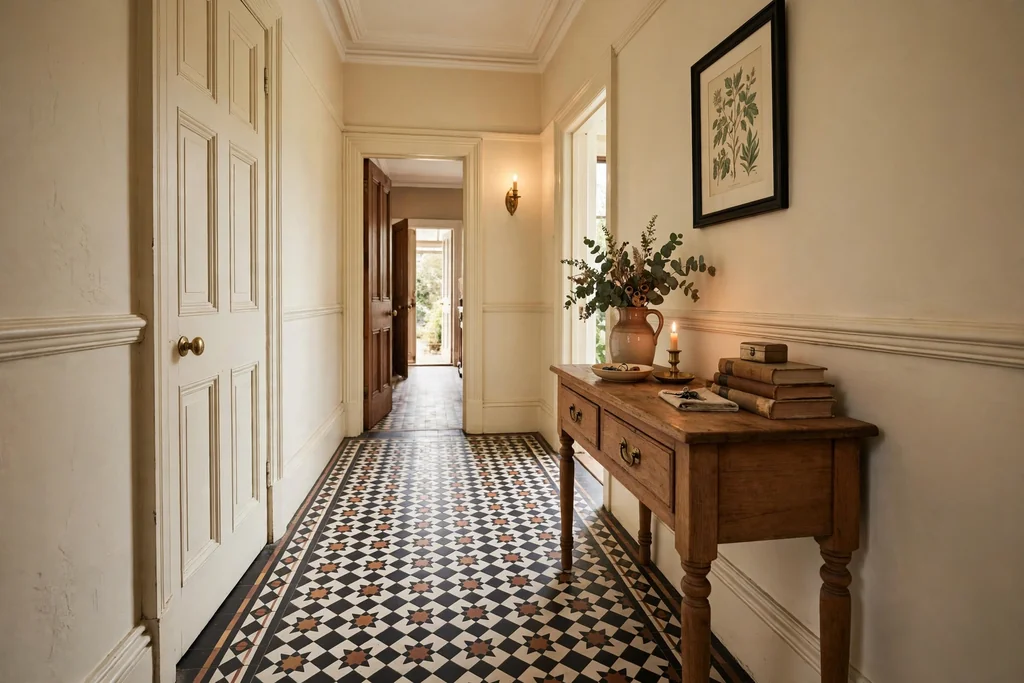
Patterned Victorian floor tiles, in black and white, terracotta and cream, or muted blue, give a hallway the classic look of a British period home the moment you step inside. The pattern adds interest to a narrow space without furniture, and the hard surface suits muddy boots and wet umbrellas. This suits an entry hallway with a sound subfloor, and it works in a small porch as well as a long hall.
Keep the walls plain and the runner minimal, so the tile pattern carries the hallway, and choose a border tile to frame the main pattern neatly at the edges. Seal encaustic style tiles as the maker directs, and sweep and mop with a gentle cleaner, since harsh products can dull the finish. If full tiling is too big a job, a tiled door mat area by the front door gives a similar welcome in a smaller patch.
10. Line a Wall With Built In Bookshelves and a Ladder
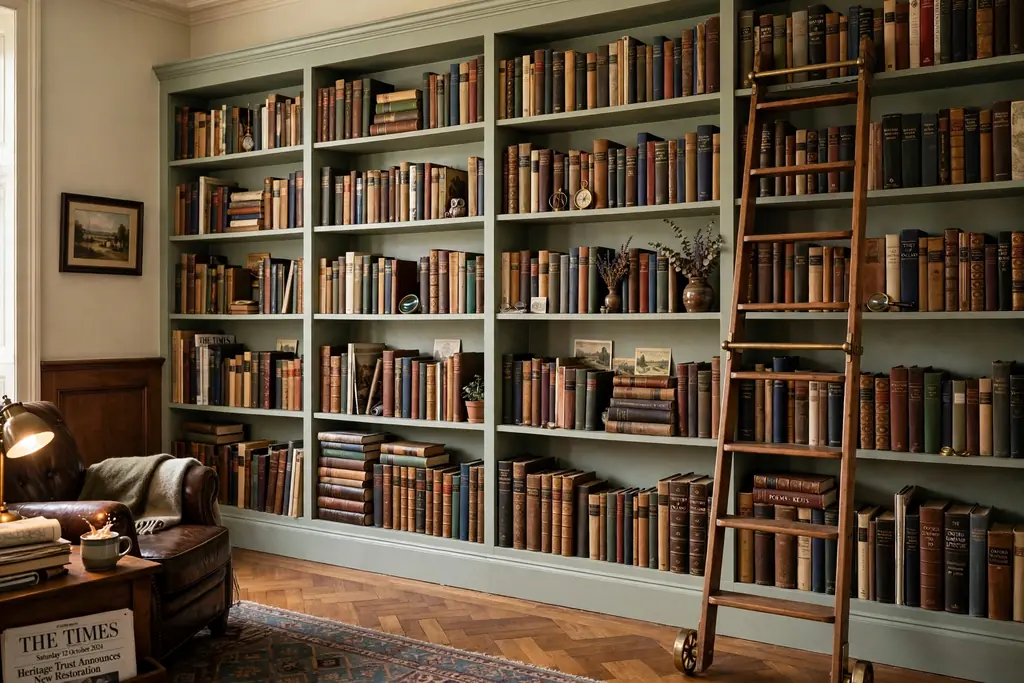
Built in bookshelves, painted in a soft heritage colour and filled with books, give a living room or study the feel of a British library without a separate room. Shelves that run wall to wall make a plain wall useful, and a sliding or leaning ladder adds both reach and charm. This suits a living room with one clear wall, a hallway nook, or a home office that needs storage and character.
Paint the shelves the same colour as the wall trim for a fitted look, and mix books with a few plain objects, such as a vase or a small clock, so the shelves do not look packed. Keep heavy books low, lighter paperbacks higher, and leave some empty space on each shelf. If built ins are out of reach, two tall bookcases joined with a top cornice give a similar fitted effect.
11. Choose an Iron Bed Frame With Wool Bedding
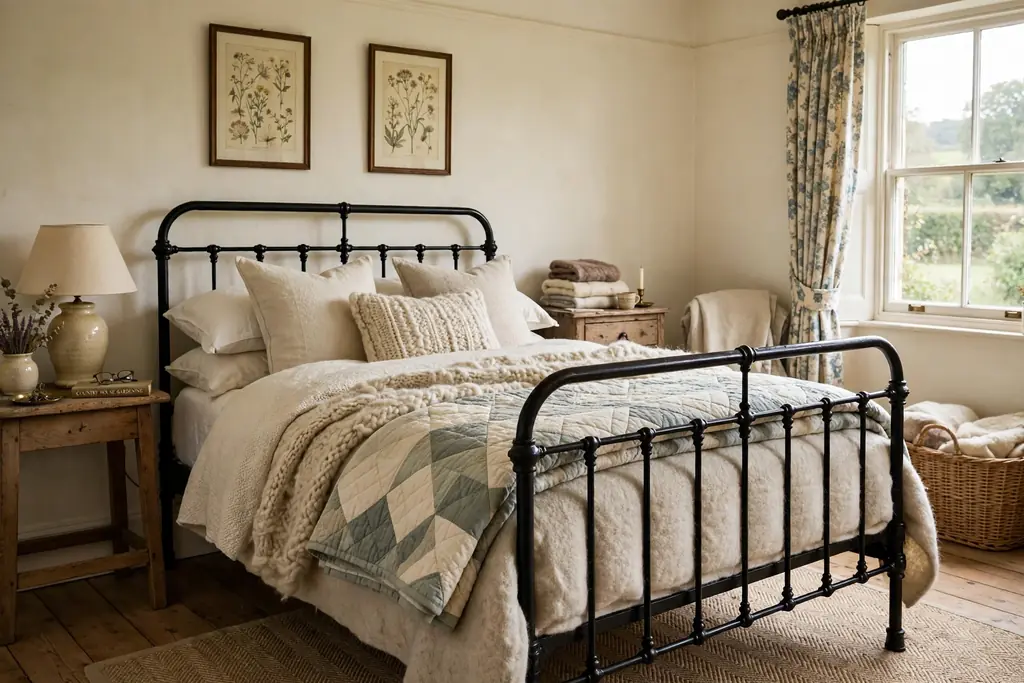
A traditional iron bed frame, in black, cream, or soft grey, gives a bedroom a British country feel that suits both cottages and city flats. The open frame keeps the room feeling light, while layered wool bedding, a cotton sheet, a wool blanket, and a quilt, adds the warmth the frame alone cannot. This suits a bedroom with plain walls and wood floors, where the bed is the main piece of furniture.
Layer bedding in order: a fitted sheet, a flat sheet, a light wool blanket, and a quilt or duvet folded back at the top, so the bed looks inviting and stays warm through the night. Add two sleeping pillows and two square cushions in a muted check or plain linen, and keep the throw folded at the foot. Choose washable wool or a wool blend for the blanket, since bedroom layers need regular washing.
12. Bring the Garden In With Roses and Dried Lavender
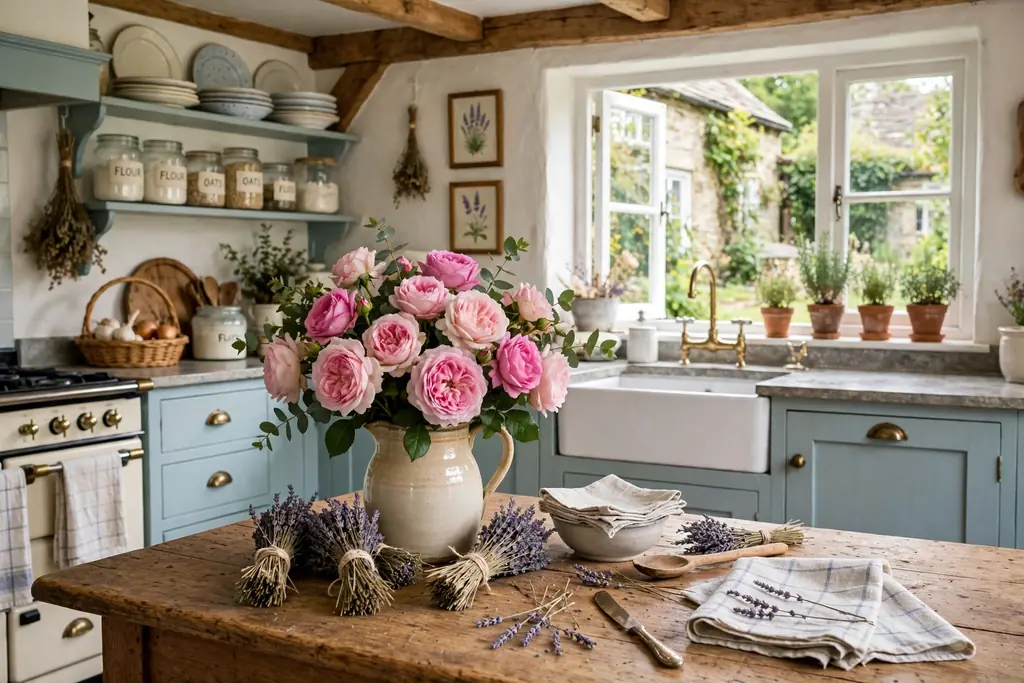
Fresh garden roses in a simple jug, and dried lavender tied in small bunches, bring a British cottage garden indoors without a full floral display. Roses suit a kitchen table or a hallway console, lavender suits a bedroom drawer, a bathroom shelf, or a tied bunch on a door handle, and both add scent as well as colour. This suits any room that feels plain but already has its furniture in place.
Keep rose stems trimmed and water changed every two days, so the display lasts, and place the jug where it gets daylight but not a hot radiator. Dry lavender by hanging small bunches upside down in a dark, airy spot, then tie with twine for shelves and drawers. If fresh flowers are scarce in winter, a pot of forced bulbs or a small rosemary plant gives a similar living touch.
13. Set Up a Tea Corner With a Trolley or Tray Station
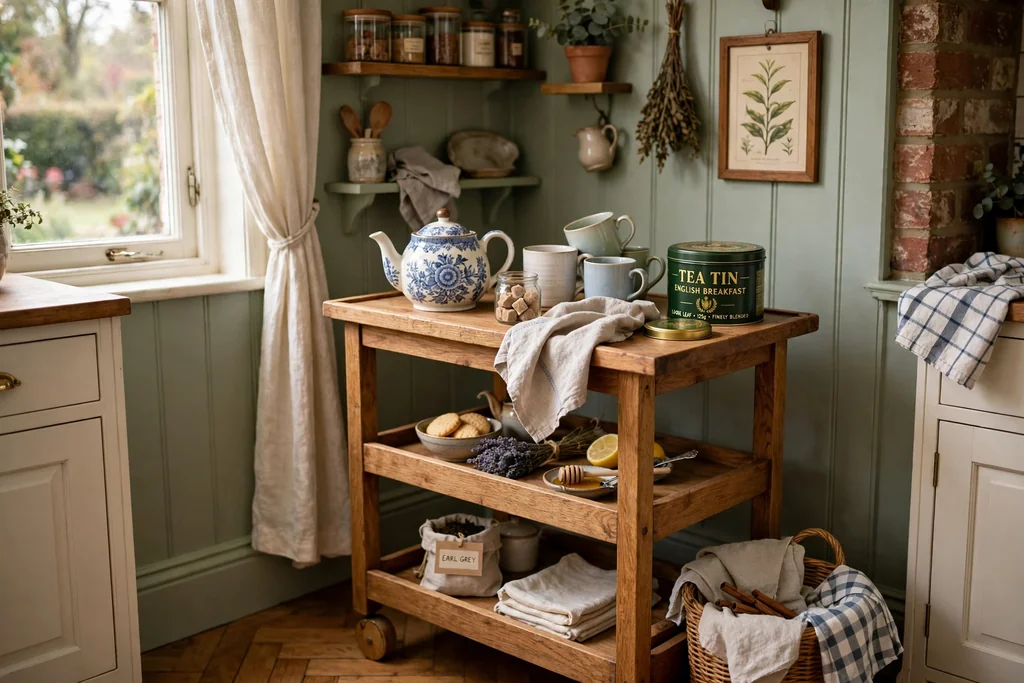
A tea corner, built around a small trolley, a tray on a side table, or a shelf near the kettle, gives a kitchen or living room a distinctly British ritual spot. A teapot, a few mugs, a tin of tea, and a small jar of biscuits, kept together and ready, make tea for guests feel easy rather than a search through cupboards. This suits a kitchen corner, a dining room sideboard, or a living room nook near the sofa.
Keep the station to one tray or one trolley shelf, so it stays tidy, and store extra tea and mugs in the nearest cupboard rather than on display. Choose a sturdy tray with handles if the station moves between rooms, and add a small cloth or mat under the teapot to protect wood surfaces. If space is tight, a wall shelf above the kettle with two hooks for mugs gives the same idea in a much smaller footprint.
14. Warm Plain Rooms With Brass and Copper Accents
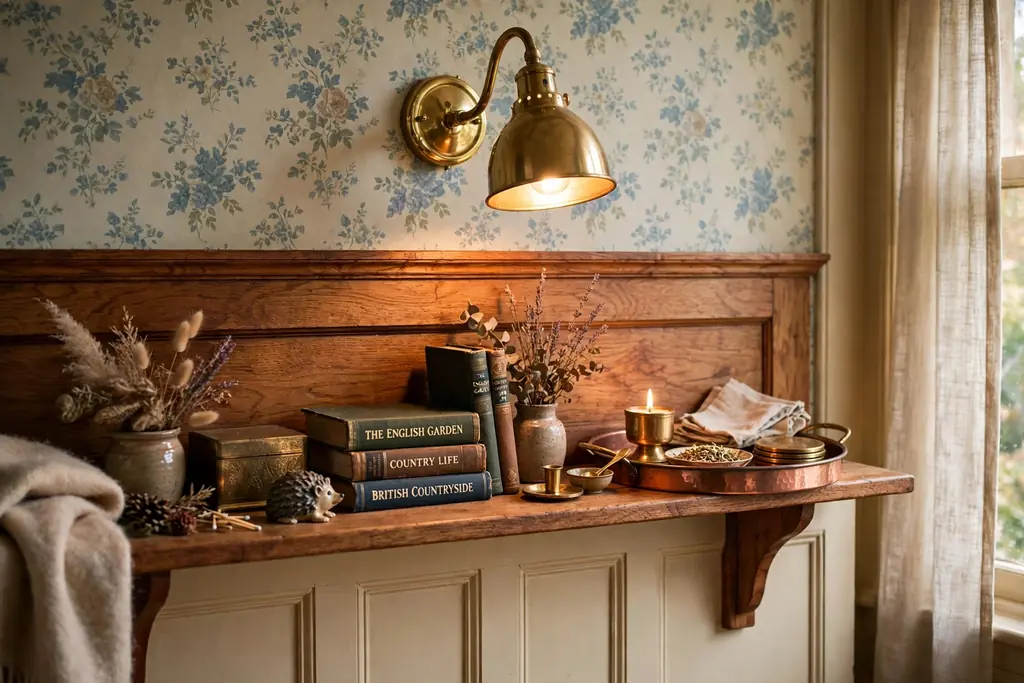
Brass and copper accents, in picture lights, fireplace tools, drawer handles, and small trays, warm a plain British room without a new colour scheme. The metals catch lamplight in the evening, suit wood and painted furniture, and add a crafted detail that feels collected over time. This suits a living room, hallway, or kitchen where the base colours are already calm but the room feels flat.
Use the metals in small doses: a brass picture light over one print, copper pans on a kitchen rail, or brass handles on a painted dresser, rather than all three in one room. Keep finishes close, so polished brass and aged brass do not clash, and polish only as needed, since a soft patina suits the British look. If the room already has chrome taps, keep brass to one room, so the metals do not compete.
15. Paint With a Muted Heritage Palette
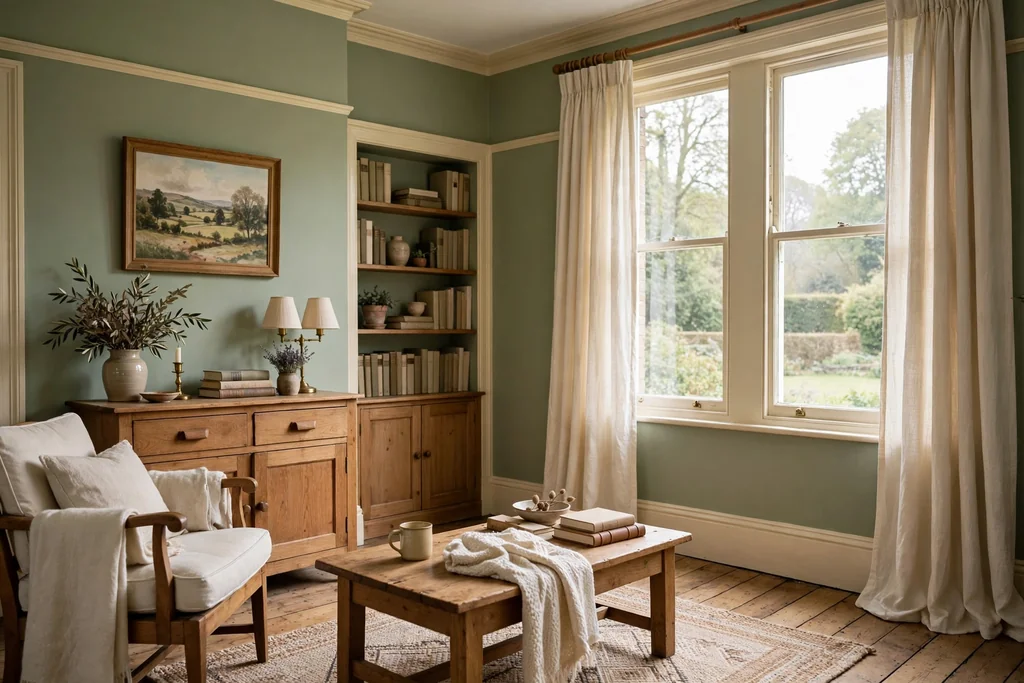
A muted heritage palette, built from sage green, dusty blue, warm cream, soft stone, and a touch of deep red, gives a British home a calm base that suits period and modern rooms alike. These colours sit well with wood, wool, and linen, and they let pattern and texture carry interest instead of bright colour. This suits a whole home repaint, or a single room that feels too stark in bright white.
Pick one main colour for walls, one deeper tone for woodwork or one feature wall, and cream for ceilings and trim, so the scheme stays simple. Test paint in daylight and lamplight before committing, since muted colours shift more than bright ones. Keep the palette consistent across hallways and joining rooms, so the home feels connected even when each room uses a different main colour.
16. Layer Flatweave and Wool Rugs Over Wood Floors
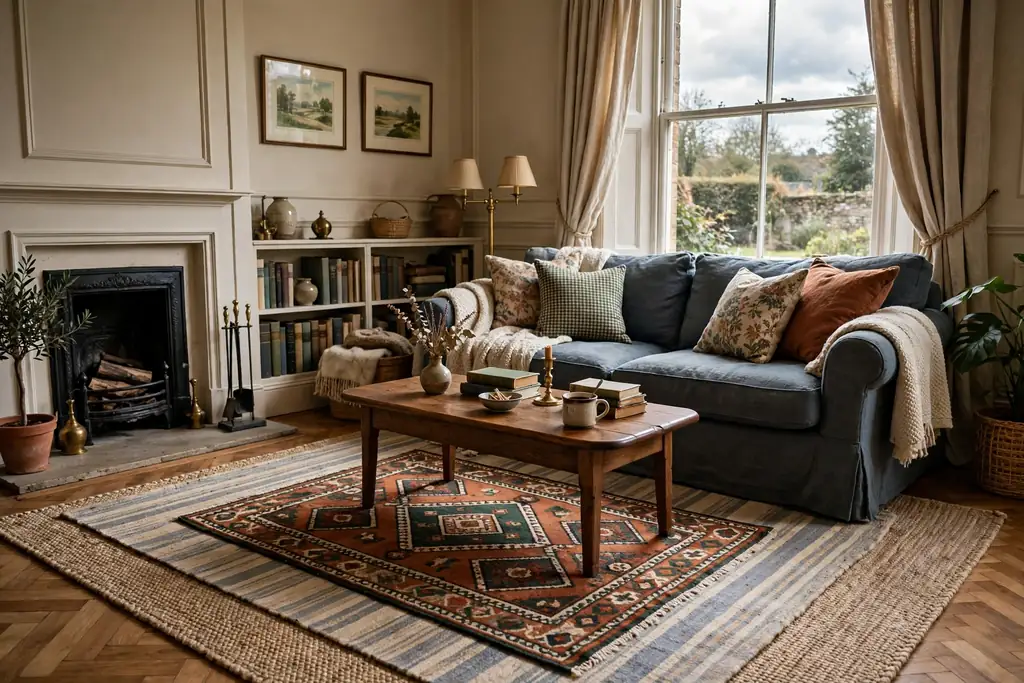
Layering rugs, a large flatweave base with a smaller wool rug on top, or a wool rug over bare wood floors, gives a British living room or bedroom warmth underfoot and a finished look. The layers add texture, soften hard floors, and help define a seating group in an open plan room. This suits a living room with wood floors that feels cold or echoey, and a bedroom where bare feet meet the floor first thing.
Keep the largest rug under the front legs of the sofa and chairs, so the seating group sits together, and let the top rug sit at an angle or centred on the coffee table. Choose a flatweave in a plain or small pattern for the base, so the top rug can carry the pattern, and use a rug grip underneath to stop slipping. Shake rugs outside and vacuum both layers regularly, since layered rugs trap dust between them.
17. Gather Around a Kitchen Table With Windsor Chairs
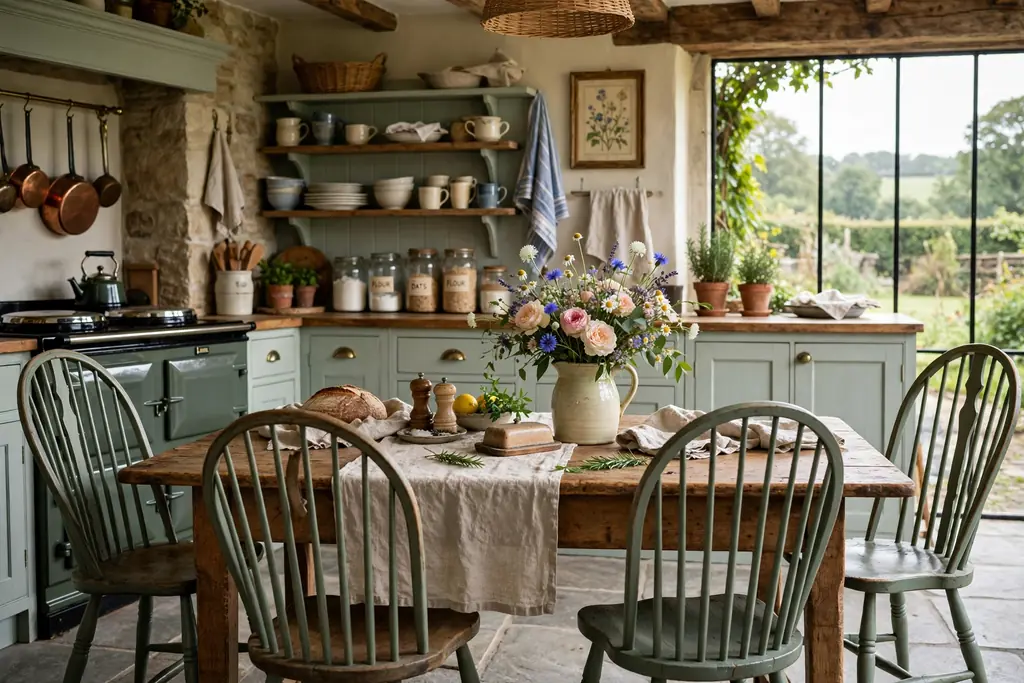
A solid wood kitchen table with Windsor chairs, with their spindle backs and shaped seats, gives a dining space the feel of a British farmhouse kitchen built for long meals. The table suits family dinners, homework, and weekend baking alike, and the chairs tuck in neatly when not in use. This suits a kitchen dining space with room to pull a chair out fully, and a dining room that needs a less formal table.
Keep the tabletop mostly clear between meals, with a linen runner and one jug of flowers, so the wood stays visible. Use placemats at meals, since pale wood marks more easily than dark wood, and keep one chair with arms at the table end for guests who prefer support. If Windsor chairs feel hard for long meals, add flat tied seat pads in a plain linen or muted check.
18. Hang a Gallery Wall of Botanical Prints
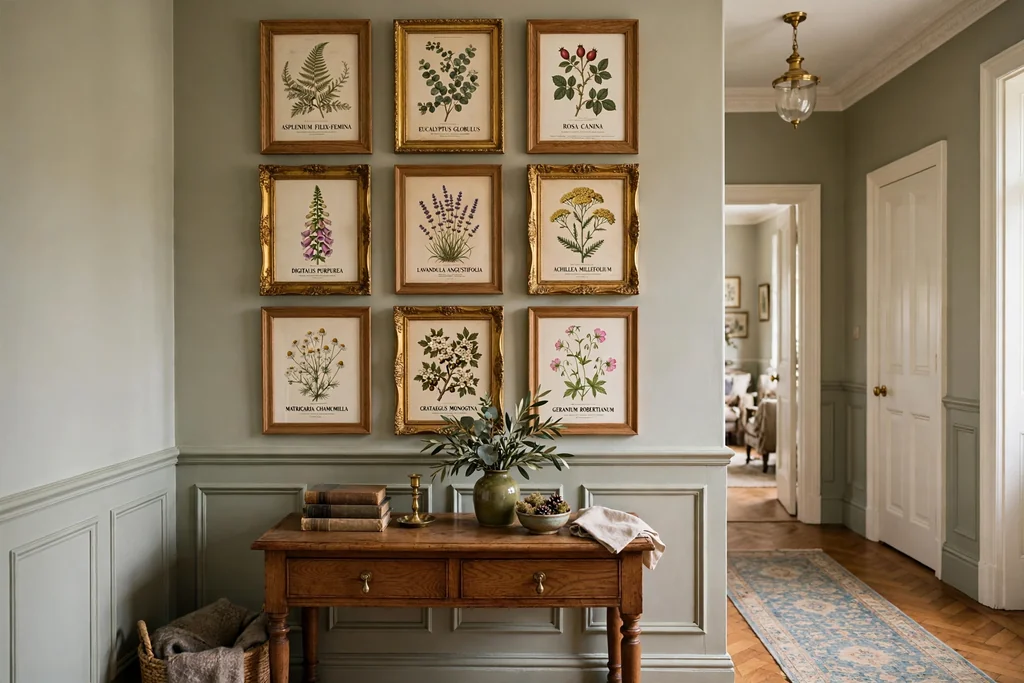
A gallery wall of botanical prints, in simple wood or gilt frames, gives a hallway, stairwell, or living room a British collected feel without a large art budget. Botanical prints suit cream walls and wood furniture, and a group of small prints fills a wall that one large print would leave bare. This suits a stairwell, a hallway above a console, or a living room wall beside a bookshelf.
Plan the layout on the floor first, keeping gaps even and the centre of the group at eye level, then hang from the middle outward. Mix frame finishes only slightly, such as wood with a few gilt frames, so the group looks gathered rather than random. Use prints in a shared palette, such as green and cream, so different plant subjects still read as one collection.
19. Fit a Freestanding Roll Top Bath in the Bathroom
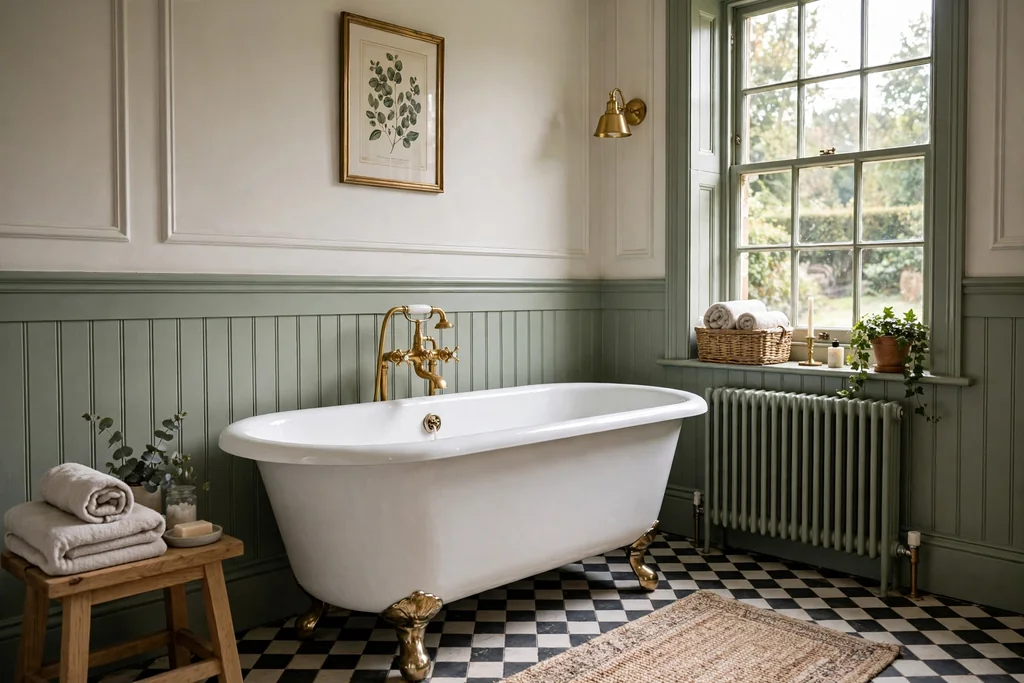
A freestanding roll top bath, in white with ball and claw or plinth feet, gives a bathroom the centrepiece of a traditional British home. The bath suits a bathroom with floor space around it, and it pairs well with painted panelling, a wood stool, and a simple brass tap. This suits a main bathroom being refitted, or a large family bathroom where the bath is used daily.
Place the bath so at least one side has room for a stool or a small table for towels and soap, and keep the floor in tile or sealed wood that can take splashes. Choose a floor mounted or wall mounted filler that suits the plumbing, and check floor strength before fitting a cast iron bath, since it is heavy when full. If space is tight, a smaller slipper bath against one wall gives a similar traditional shape in a smaller footprint.
20. Create a Boot Room With a Bench and Hooks
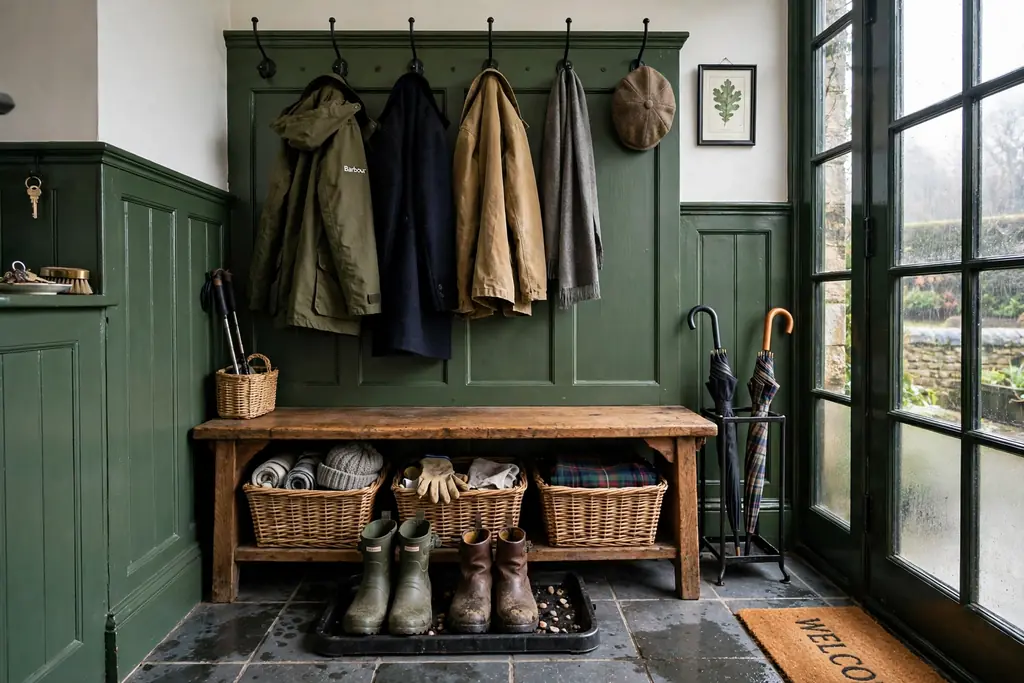
A boot room, even a small one carved from a hallway corner, gives a British home the practical entry it needs for coats, boots, and dog leads. A bench with storage below, a row of sturdy hooks above, and a tray for muddy boots keep the rest of the house clean and the entry tidy. This suits a back door entry, a utility corner, or a hallway wide enough for a shallow bench.
Build or buy a bench at seat height, add baskets or a shelf below for shoes, and fix hooks into studs or solid wall so they hold heavy coats. Keep one hook free for guests, and label baskets by person if the household is large, so the bench stays sorted. Add a small mirror and a dish for keys above the bench, so the entry works for leaving the house as well as coming home.
21. Make an Attic Bedroom Cozy Under the Eaves
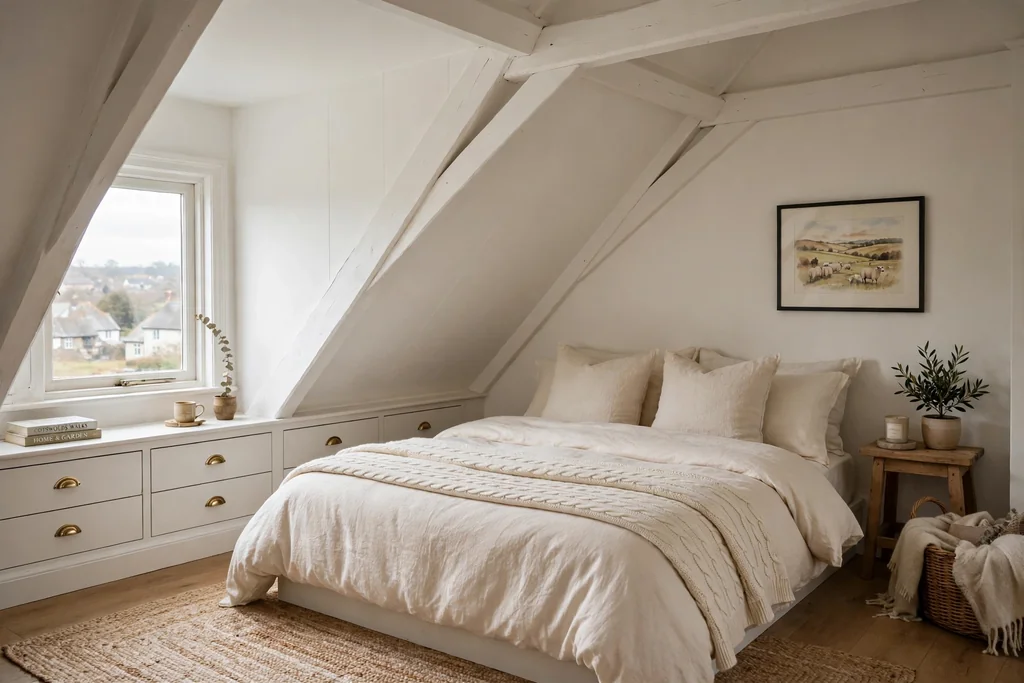
An attic bedroom under sloping eaves feels cozy when the low walls are used well and the palette stays light. A low bed, built in drawers under the eaves, and soft bedding in cream and muted checks turn awkward angles into storage and charm. This suits a loft conversion, a cottage bedroom with dormers, or a top floor room that feels cramped in bright white.
Keep the ceiling and slopes in warm white, so the room feels taller, and use low furniture that fits under the slopes rather than tall wardrobes that crowd the centre. Add a reading lamp at the bed and a small shelf at pillow height, since bedside tables may not fit under a slope. Use the dormer window for a seat or a desk, so the brightest spot in the room gets daily use.
22. Layer Lamplight for Warm Evenings
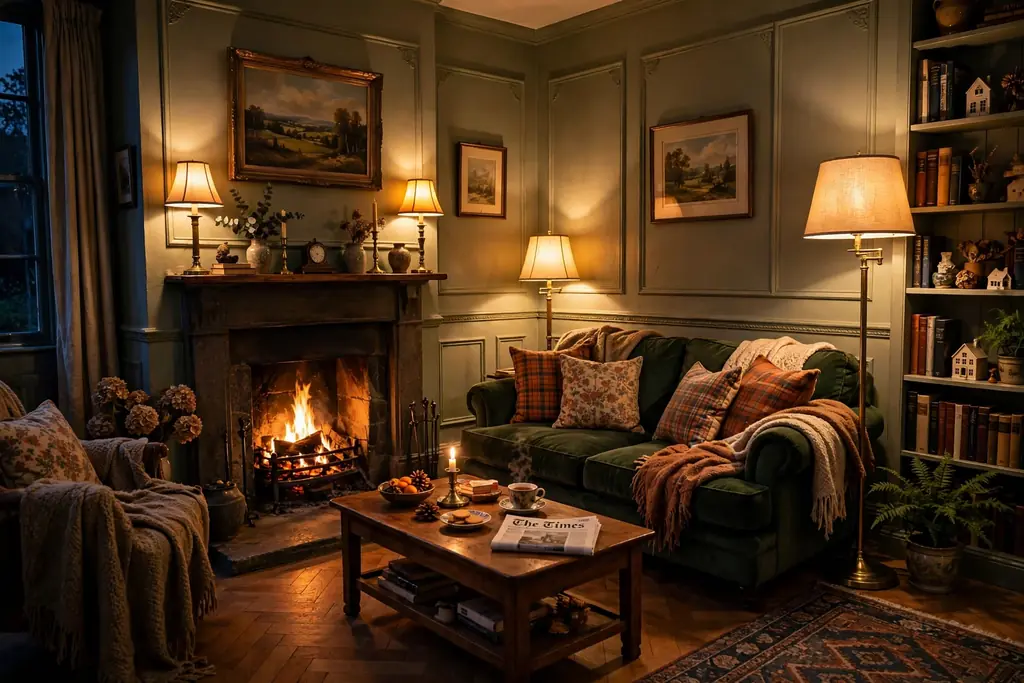
Layered lamplight, from table lamps, a floor lamp, and candles or a fire, gives a British living room its evening warmth far better than one bright ceiling light. Low, warm light flatters wood and wool, makes a room feel smaller and more sheltered, and suits reading, conversation, and quiet evenings alike. This suits any living room or bedroom that feels harsh under overhead light alone.
Place one lamp beside each main seat, one floor lamp in a dark corner, and keep the ceiling light on a dimmer for tasks that need it. Choose warm white bulbs throughout, so all the lamps share one tone, and use fabric shades, which soften light better than clear glass. Keep candles on stable trays away from curtains and throws, and switch lamps on before dusk, so the room feels welcoming as daylight fades.
Conclusion
British decor works because it puts comfort and daily use first, then adds pattern, wood, and wool in calm, muted layers. You do not need a period house or a full refit to get the feel: a tartan throw, a tea corner, layered lamplight, or a gallery wall can shift a plain room toward cozy in a single afternoon. Pick the idea that suits the room you use most, try it properly for a week, and add the next layer only when the first one feels like part of the home. That slow, practical approach is what keeps British rooms feeling warm rather than staged, season after season.
Frequently Asked Questions
What colours define British home decor?
Muted heritage colours define the look: sage green, dusty blue, warm cream, soft stone, and deep red used in small amounts. Keep walls calm, add pattern through textiles such as tartan or floral prints, and repeat wood, wool, and brass so rooms feel connected rather than busy.
How can I make a modern flat feel British without period features?
Start with textiles and furniture, not structure. A Chesterfield style sofa or a linen slipcovered sofa, tartan or wool throws, layered rugs over wood floors, and a gallery wall of botanical prints all add British character without panelling or a fireplace. Add brass accents and lined linen curtains for a finished feel.
Is tartan too bold for a small living room?
Tartan works in a small room when it is the only strong pattern. Use it on one throw or two cushions, keep the sofa and rug plain, and pick a muted tartan in tones that match the wall colour. A small scale check reads as texture from across the room and adds warmth without shrinking the space.
What is the difference between English country and British farmhouse style?
English country style leans floral, with chintz, botanical prints, and soft painted furniture, while British farmhouse style leans practical, with Belfast sinks, Windsor chairs, boot rooms, and sturdy wood tables. Many homes mix the two, using farmhouse pieces in the kitchen and floral textiles in bedrooms and living rooms.
Can I mix British decor with a neutral modern scheme?
Yes, and the mix often works well. Keep the modern base of plain walls and simple furniture, then add British layers one at a time: a wool throw, a wood bench, brass handles, or a roll top bath in a plain bathroom. Stop when the room feels warm, before pattern or antiques start to compete with the clean lines.
Where should I start if I can only change one room?
Start with the living room, since it is the room most people use and see most. Add layered lamplight, a wool throw, and one strong piece such as a bookshelf wall or a Chesterfield style chair, then carry one colour from that room into the hallway. A single warm, finished room makes the whole home feel more inviting.
Save this post on Pinterest to keep these 22 British home decor ideas in one place, and pin the idea that suits your next room refresh so you can find it again when you are ready to start.