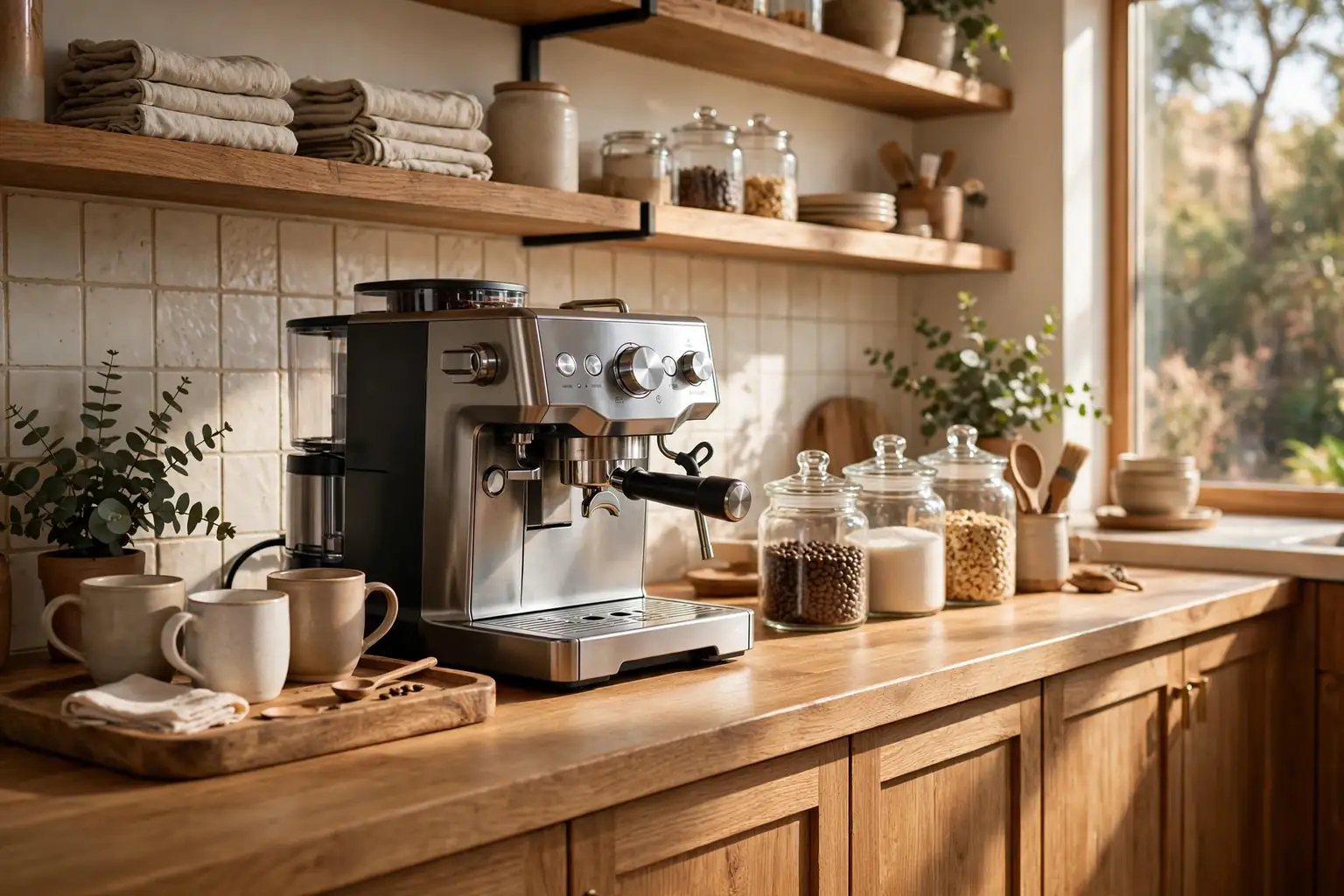
A coffee bar works best when everything you need for a morning cup sits in one place, and nothing extra crowds the counter. A machine, a few mugs, beans, sugar, and spoons are enough to start, and the decor around them should make that small group look planned rather than scattered. These 13 coffee bar decor ideas cover countertops, walls, carts, cabinets, dining rooms, hallways, and large kitchens, so you can match the bar to the space you actually have. Pick one layout, repeat one or two materials from the room, and leave clear space for making coffee, since a bar that is hard to use will not stay tidy for long.
Key Takeaways
- Start with one zone: a tray, a shelf run, a cart, or a cabinet, and keep the machine, mugs, and daily supplies inside that zone.
- Repeat one or two materials from the room, such as wood, ceramic, or matte black, so the bar looks like part of the home.
- Store daily items within reach and move spare beans, filters, and extra mugs to a cabinet, so the bar stays calm.
- Hang mugs or use a rail only where they will not block a walkway or bump a door, and keep the count to the mugs you use each week.
- Leave clear counter space beside the machine for a cup, a spoon, and a milk jug, since a crowded bar slows down every morning.
- Swap small details by season, such as a mug set, a small plant, or a framed print, instead of rebuilding the whole bar.
1. Anchor a Countertop Coffee Station on a Wood Tray
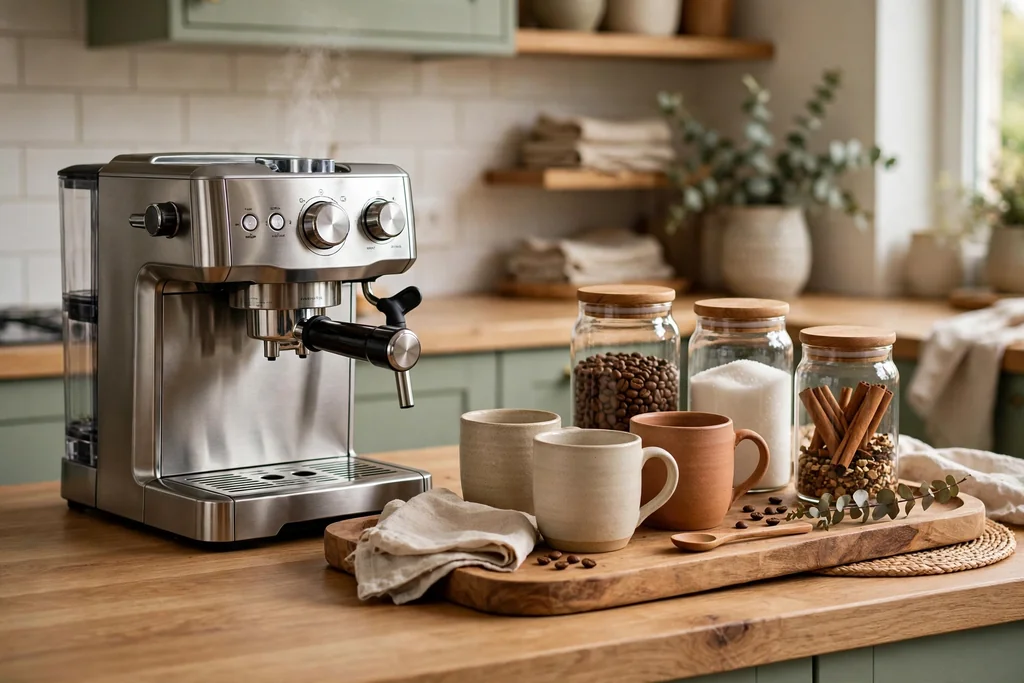
A wood tray is the simplest way to turn a coffee corner into a bar. Set the machine at the back of the tray, place mugs at one side, and keep sugar, spoons, and filters in a small jar or cup at the other side. The tray catches drips, marks the bar as one zone, and keeps small items from spreading across the counter. This suits a kitchen where the coffee corner sits on a short stretch of counter beside a socket.
Keep the tray near a socket and clear of the sink splash zone, and wipe it each week, since coffee splashes stain fast. If the household drinks tea as well, add one small tea tin to the same tray rather than starting a second station. For more counter ideas that pair with this setup, see these kitchen countertop decor ideas.
2. Build a Wall Shelf Coffee Bar for a Small Kitchen
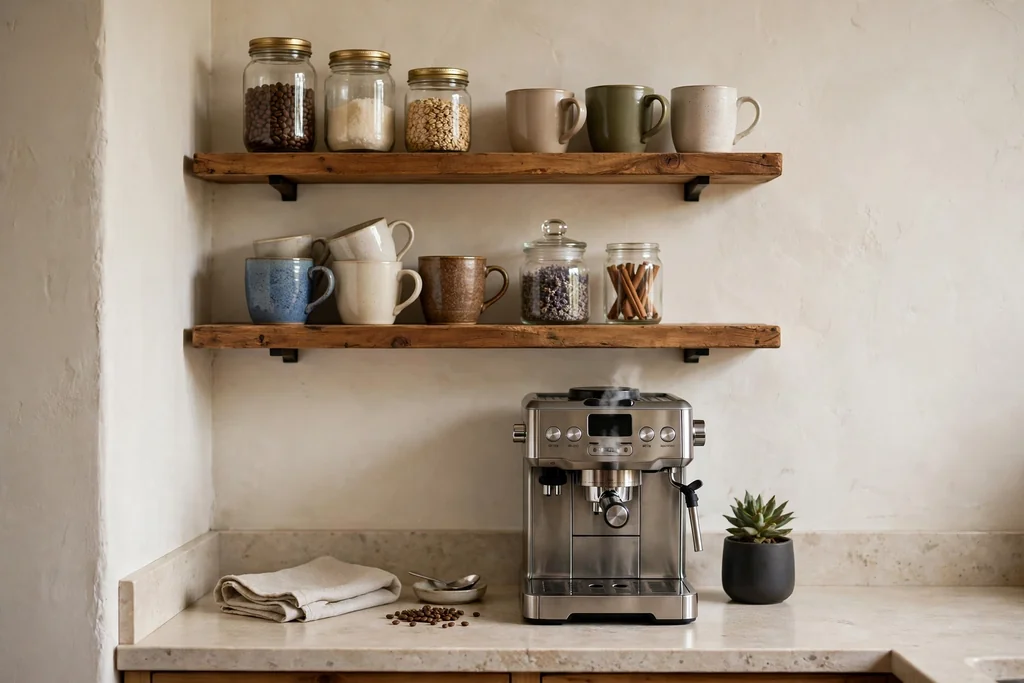
Two or three wall shelves above a counter can hold a whole coffee bar without taking extra floor space. Use the lower shelf for daily mugs and small jars, the middle shelf for beans and tea, and the top shelf for spare mugs or a small plant. The machine stays on the counter below, so the shelves work as storage and display at once. This suits a small kitchen where counter space is tight but one wall is free.
Fix the shelves into studs or with fixings suited to your wall type, and keep the lowest shelf high enough that you can lift a mug down without hitting the machine. Keep the shelf count low and leave gaps between groups, so the wall reads as calm rather than crowded. If the shelves sit near cooking steam, use closed jars for beans and sugar, so contents stay fresh.
3. Roll a Cart Coffee Bar Between Kitchen and Dining
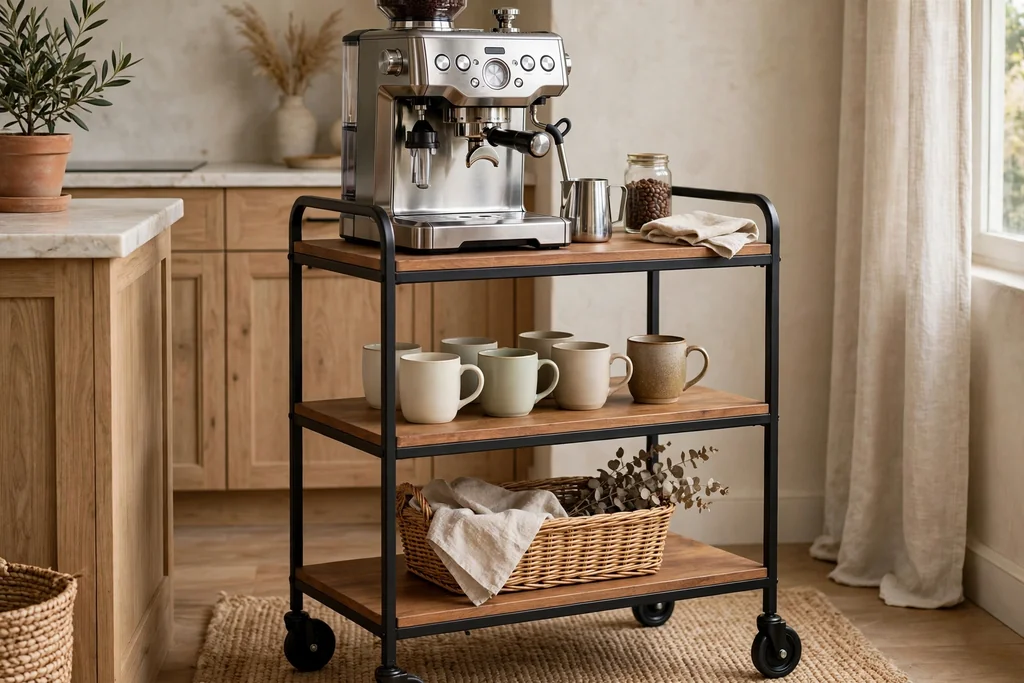
A rolling cart gives you a coffee bar that can move to where it is needed. Set the machine on the top shelf, mugs and beans on the middle shelf, and spare supplies in a basket on the lower shelf. Roll the cart beside the dining table for weekend brunch, then return it to a kitchen corner for weekday mornings. This suits a home where the dining room has no spare counter and the kitchen has one quiet corner.
Choose a cart with a brake on at least two wheels, so it stays put while you pour, and check that the top shelf is deep enough for the machine with room for steam to rise. Keep the cart load light on top and heavier below, so it does not tip when it moves. A small tray on the top shelf keeps drips off the cart surface and makes the whole cart easy to wipe.
4. Hide a Coffee Bar Inside a Cabinet or Armoire
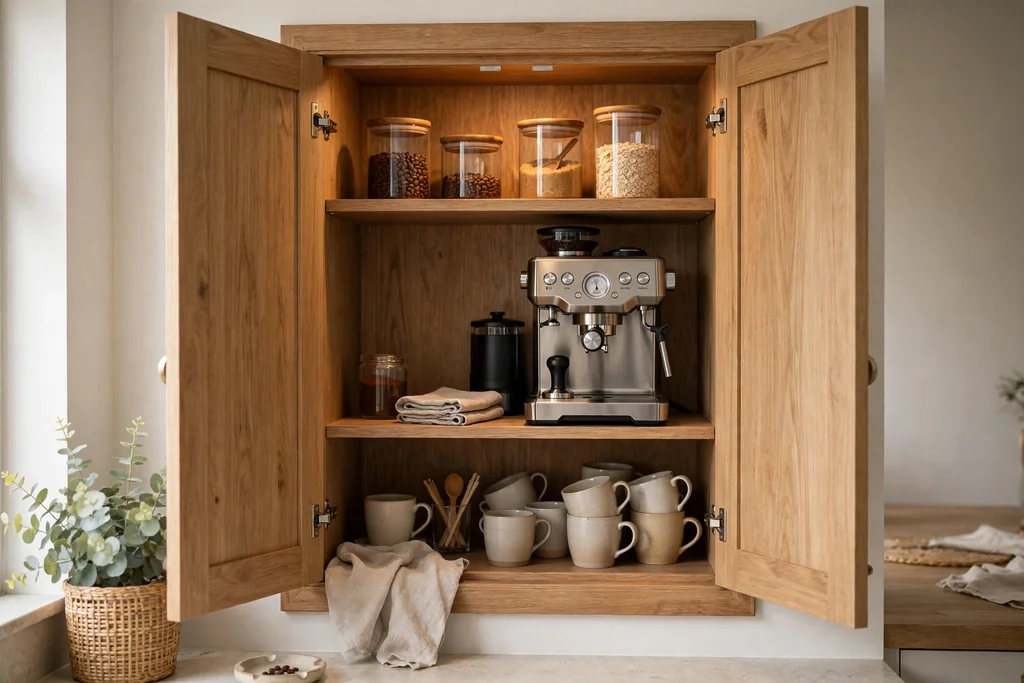
A cabinet or an armoire can hide a coffee bar behind closed doors, which suits a living room, a hallway, or a kitchen where open clutter feels busy. Fit a small shelf inside for mugs and jars, add a heat-safe surface for the machine, and leave the doors open while you brew. When the doors close, the bar disappears, and the room keeps its calm look. This works best with a cabinet that already sits near a socket.
Check that steam can escape while the machine runs, and never brew with the doors fully closed around a hot machine. Line the base with a tray to catch drips, and keep a small bin or cloth inside for used filters and spills. If the cabinet is deep, add a pull-out tray or a turntable, so mugs at the back stay easy to reach.
5. Style a Rustic Wood Coffee Bar in a Dining Corner
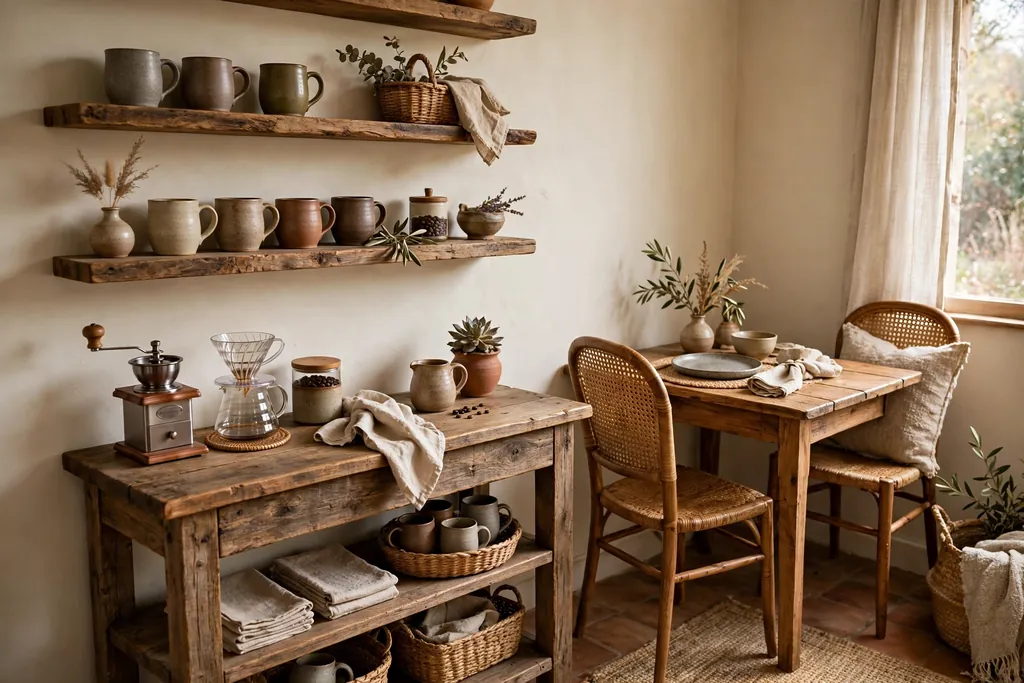
A rustic wood bar in a dining corner suits a home that already uses warm wood, linen, and iron. Use a wood console or a small wood table, add open wood shelves above it, and keep mugs in stoneware with a linen cloth folded nearby. The wood warms a plain corner, and the bar doubles as a serving spot when guests stay for a second cup. This suits a dining room with one empty corner near a socket.
Keep the palette to warm wood, cream, and one dark metal, such as matte black or iron, so the bar matches the dining table without copying it. Add one small plant and one framed print, and leave the rest of the surface clear for cups and a small tray. For more rustic kitchen and dining ideas, see these chic rustic kitchen ideas.
6. Keep a Modern Minimal Bar in Matte Black and White
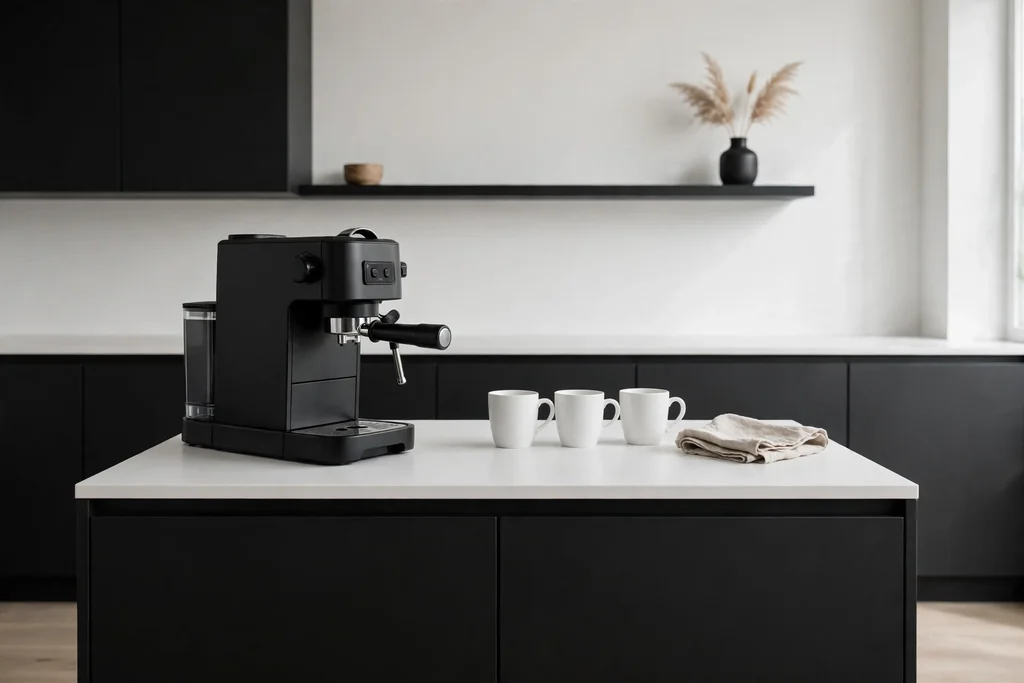
A modern minimal bar uses a small number of pieces in a calm palette, which suits a kitchen with flat cabinets and plain counters. Choose a matte black machine or kettle, white ceramic mugs, and one wood board or tray for warmth. Keep everything else in a cabinet, so the bar shows only the machine, two or three mugs, and one jar. The result looks tidy even in a busy kitchen.
Use one accent only, such as a brass spoon set or a small green plant, and repeat the matte black finish once more nearby, for example in a tap or a light fitting. Wipe the bar daily, since dust and splashes show fast on dark and white surfaces. If the bar starts to collect extra mugs or gadgets, return the extras to a cabinet and keep the visible group small.
7. Set a Breakfast Nook Coffee Corner by the Window
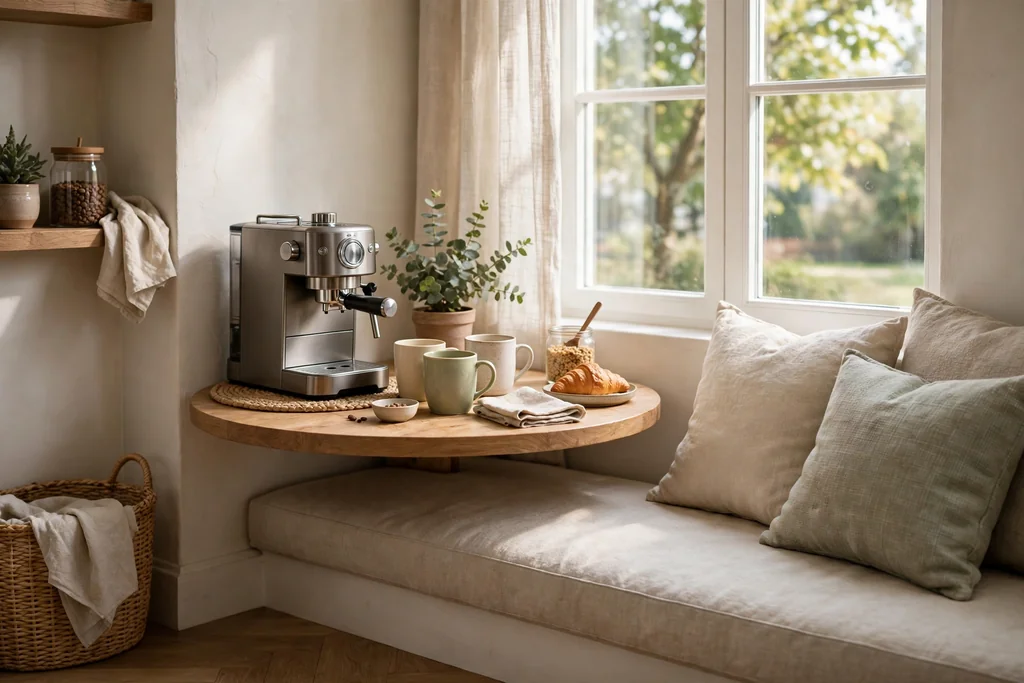
A breakfast nook by the window is a natural place for a coffee bar, since morning light and a seat make the first cup feel unhurried. Put a small table or a narrow console beside the nook, set the machine on it, and keep mugs on a shelf or a hook rail within reach of the table. Add a small tray for sugar and spoons, and keep the table itself clear for breakfast plates.
Choose a spot with a socket nearby, and keep the machine clear of curtains, since steam can dampen fabric over time. Use washable placemats or a tray under the breakfast dishes, so crumbs and drips stay easy to clean. If the nook is small, hang mugs on a short rail instead of stacking them on the table, and keep the mug count to four or fewer.
8. Turn a Sideboard Into a Dining Room Coffee Bar
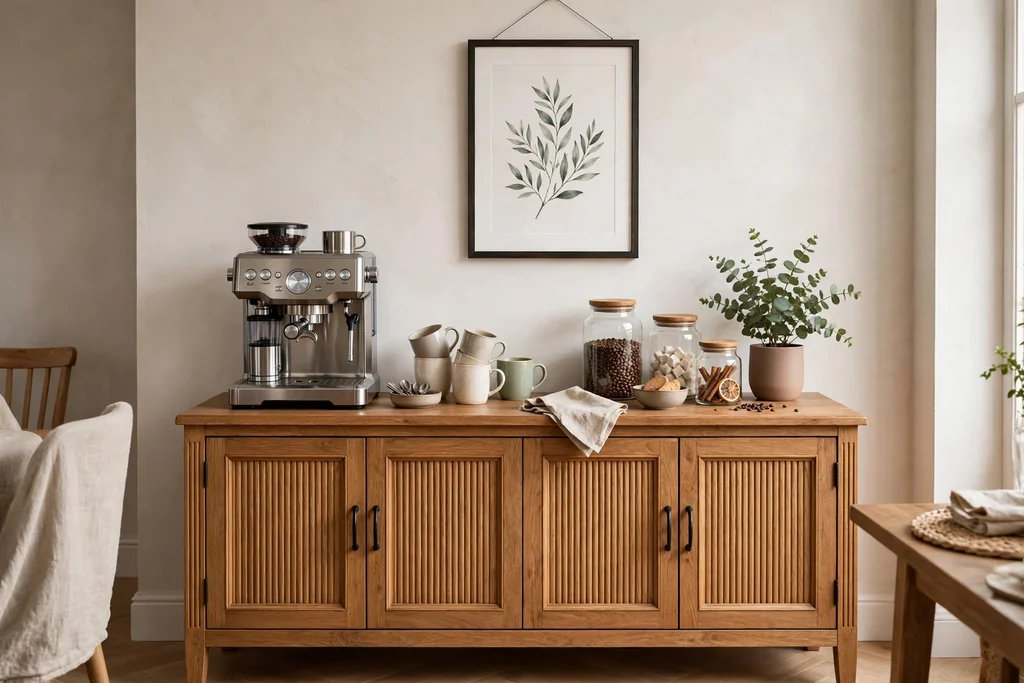
A sideboard in the dining room makes a generous coffee bar with closed storage below and display space on top. Set the machine at one end of the top, arrange mugs and jars in the middle, and leave the other end clear for serving. Use the drawers or cabinets below for spare beans, filters, extra mugs, and a tablecloth, so the top stays calm. This suits a dining room that already has a sideboard against a plain wall.
Add a small lamp or a pair of candles at one end for evening use, and keep them clear of steam from the machine. Hang a mirror or a framed print above the sideboard to mark the bar as a feature, and keep the frame simple so it does not compete with the mugs and jars. If the sideboard sits far from a socket, use a short, tidy cord cover along the wall rather than a loose cable across the floor.
9. Hang a Mug Rail and Menu Board Above the Bar
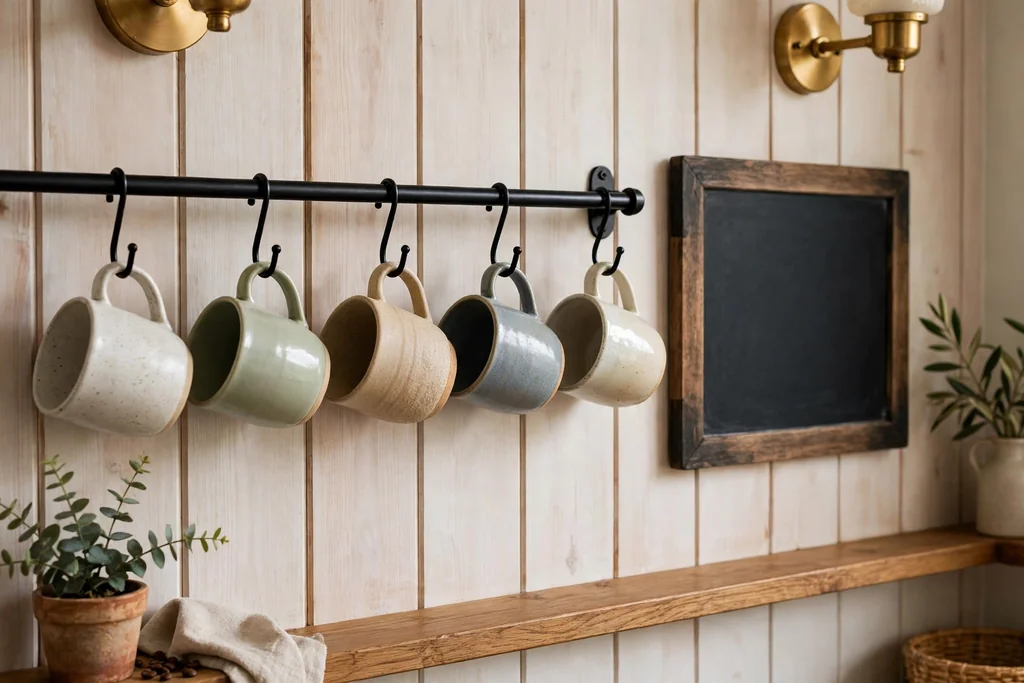
A mug rail with a small menu board turns the wall above a coffee bar into useful decor. Hang daily mugs on S hooks from a wood or metal rail, and fix a small chalkboard or framed board beside it with the household drink list, such as coffee, tea, and hot chocolate. Guests can see the choices at a glance, and daily mugs stay visible instead of stacked in a cabinet. This suits a bar with a free wall and a mug collection that deserves to be seen.
Keep the rail at a height every adult in the home can reach, and hang the heaviest mugs nearest the wall brackets, where the rail is strongest. Limit the rail to the mugs used each week, and store the rest in a cabinet, so the wall stays calm. Wipe the board and the rail during a normal clean, since kitchen air leaves a light film on both.
10. Organize Beans, Sugar, and Tea in Labeled Glass Jars
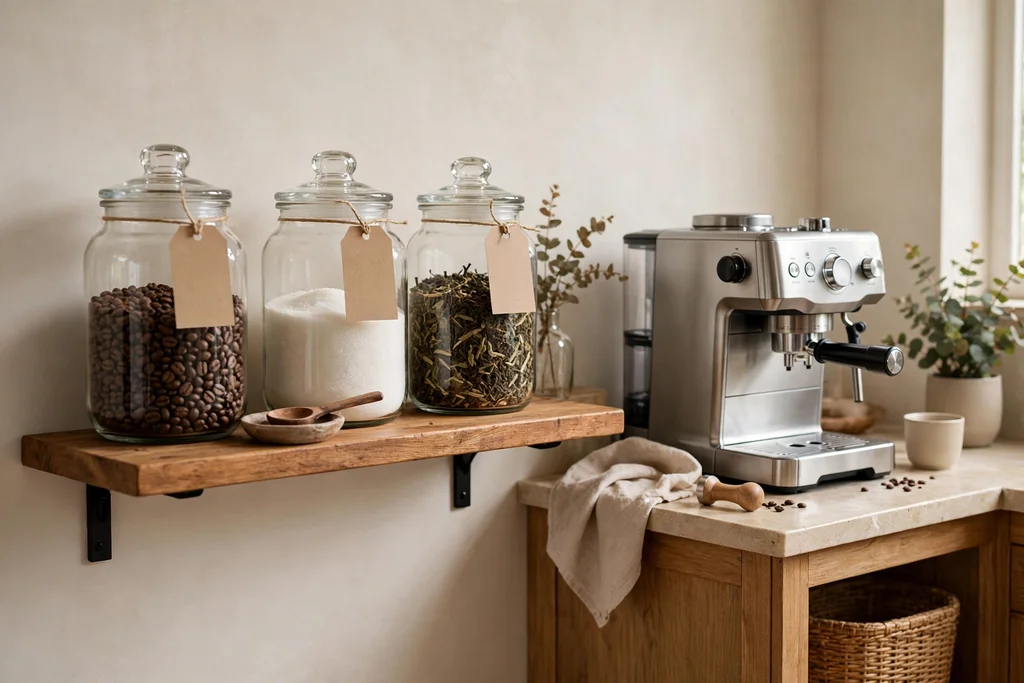
Labeled glass jars make a coffee bar look planned and make morning coffee faster, since you can see what is inside each jar. Use jars in one style with tight lids, and fill them with beans, ground coffee, sugar, and tea, with a small label on the front or the lid. Line the jars along a shelf or group three on a tray beside the machine, with daily beans at the front and less used tea at the back.
Keep jars clear of direct sun, which can warm beans and fade tea, and fill each jar only as full as the household will use within a few weeks, so contents stay fresh. Use a small scoop tied to one jar for sugar or ground coffee, so serving stays tidy. If counter space is tight, keep two or three jars out and store the rest in a cabinet.
11. Swap Bar Details by Season Without a Full Redo
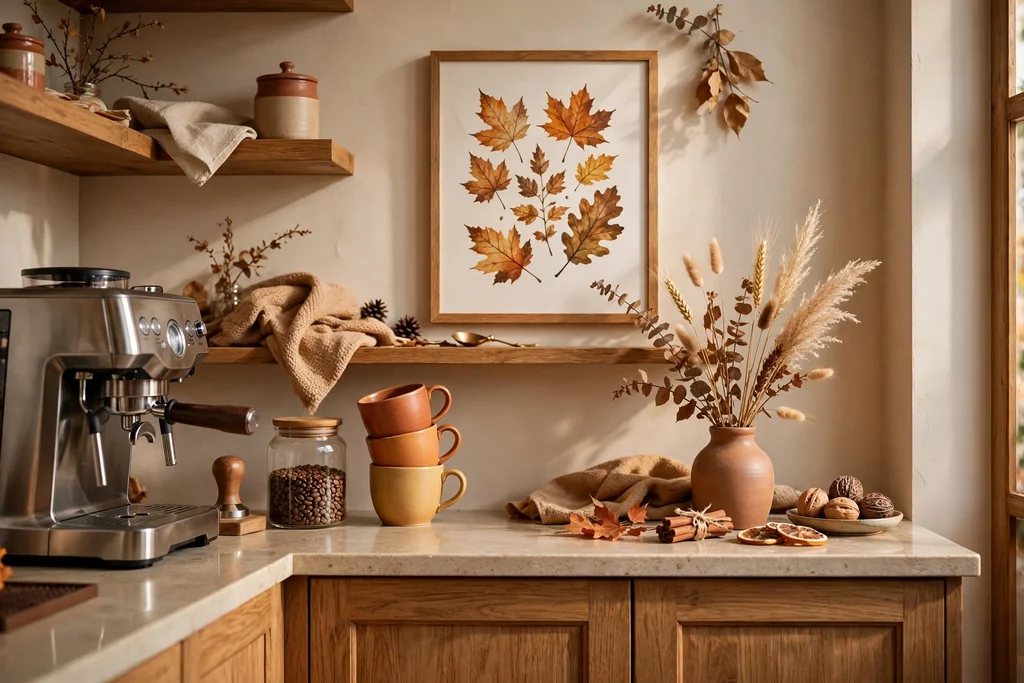
A seasonal swap keeps a coffee bar feeling fresh without rebuilding it. Change the mug set, swap a small plant for a pinecone or a small vase of stems, and change one framed print by season. Keep the machine, the tray, and the jars in the same places, so the bar still works the same way each morning, and only the small details change. This suits a bar that already works well but starts to feel stale.
Store the off-season mugs and prints in one labeled box, so the swap takes minutes rather than a full tidy. Keep the seasonal group small, with one mug set, one small plant or stem vase, and one print, so the bar does not fill up. If a seasonal item blocks the machine or the socket, move it to a shelf instead, since a bar that is hard to use will not stay tidy.
12. Fit a Narrow Coffee Ledge in a Hallway or Studio Flat
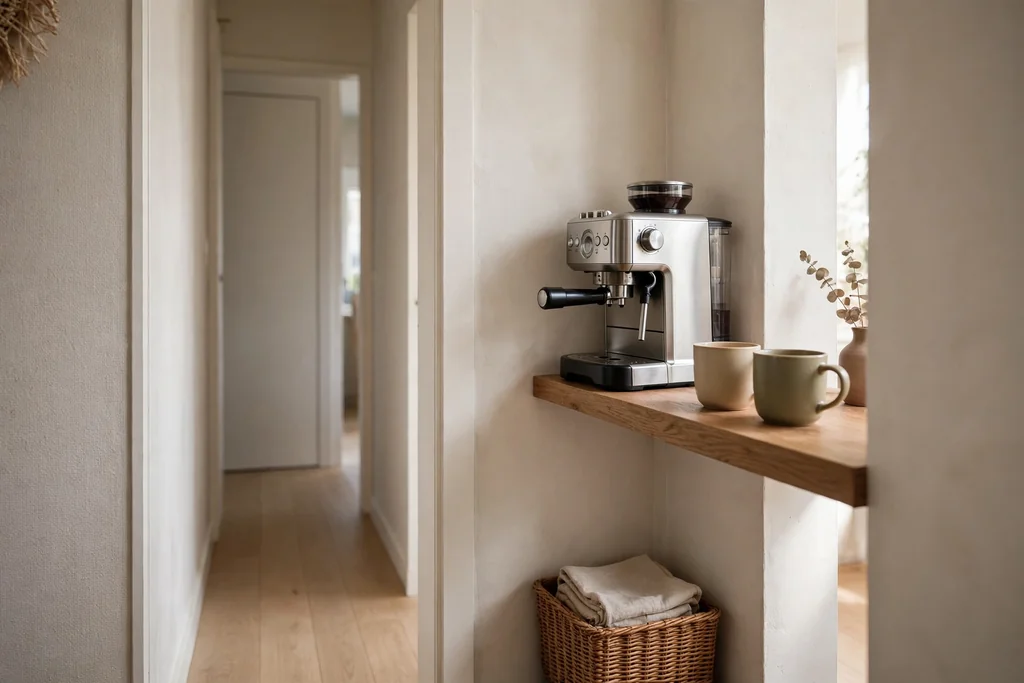
A narrow ledge or a slim console in a hallway or a studio flat can hold a compact coffee bar where a full counter is not available. Choose a ledge deep enough for a small machine, with a shelf above for two or three mugs and one jar, and a small basket below for filters and spoons. The bar takes up little floor space, and the hallway gains a useful stop on the way to the kitchen. This suits a small home where the kitchen counter is already full.
Check that the ledge is fixed to studs or with fixings suited to your wall type, and keep the machine clear of coats, bags, and paper, since steam and heat need space. Use a spill tray under the machine, and keep a cloth nearby for drips, since a hallway has no sink close at hand. If the hallway is dark, add a small battery light above the ledge, so labels and mugs stay easy to read.
13. Give a Large Kitchen an Island Coffee Zone
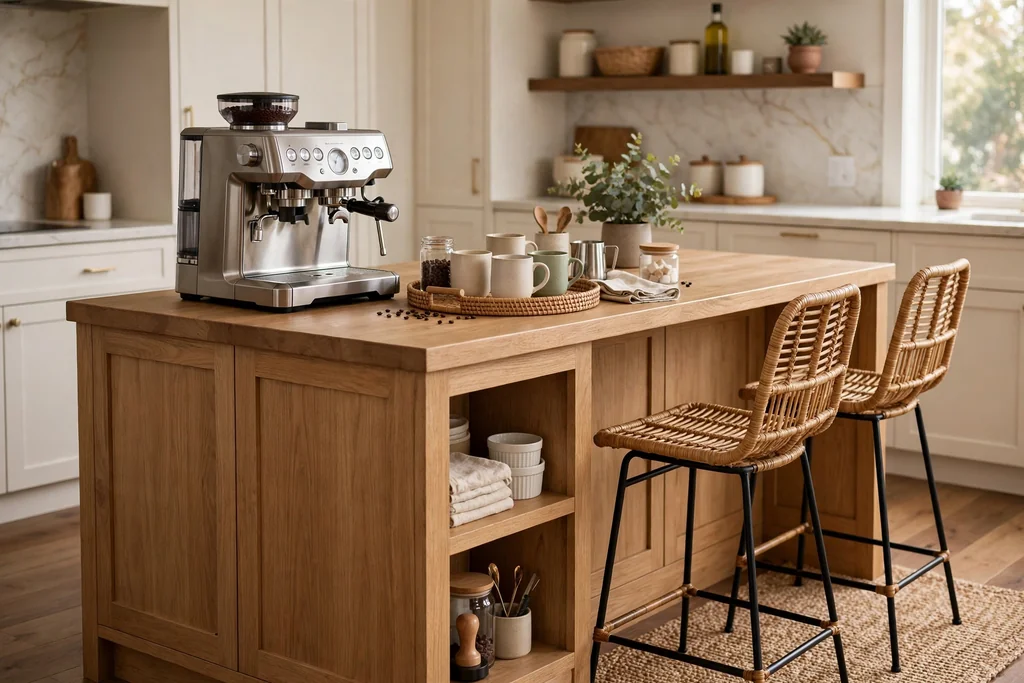
A large kitchen can give coffee its own zone at one end of the island, so morning coffee does not crowd the cooking area. Set the machine at the island end nearest a socket, add a small tray for mugs and jars, and keep two stools nearby for a short sit-down cup. The island end becomes a serving spot as well, where guests can pour their own coffee without crossing the cook. This suits a kitchen with a long island and clear walkway space around it.
Keep the coffee zone to one end of the island, and leave the rest clear for prep and serving, so the island still works for cooking. Store spare beans and extra mugs in a drawer or cabinet near the island end, rather than on the island top. Wipe the island end after each use, since coffee rings show fast on stone and wood, and keep a small bin or cloth close for used filters.
Conclusion
A good coffee bar is less about owning many pieces and more about giving a small group of daily items one clear home. Choose a layout that fits your space, whether that is a tray on a counter, a shelf run on a wall, a rolling cart, or a zone at the end of an island, and keep daily items within reach while spares stay in a cabinet. Repeat one or two materials from the room, leave space to pour, and swap only small details by season. With those choices in place, the bar stays tidy, easy to use, and pleasant to look at every morning.
If you found a coffee bar idea here that fits your home, save this post on Pinterest so you can find it again when you are ready to set up your bar. Pin the layout you like most, whether it is a countertop tray, a rolling cart, or a hidden cabinet bar, and use it as a guide for your next weekend refresh.
FAQs
How much space do I need for a coffee bar?
A tray on a short stretch of counter is enough to start, as long as the machine fits with room for steam and a cup beside it. If counter space is tight, use wall shelves for mugs and jars, or a narrow ledge in a hallway, and keep the machine on the counter or on a small cart. Measure the machine depth first, then choose a tray or shelf that leaves at least a hand width of clear space around it.
Where should a coffee bar go in a small home?
Put it where you already have a socket and a short stretch of free surface, such as a kitchen counter corner, a wall shelf run, or a slim console in a hallway. Keep it near the kitchen if you can, since water and milk are close at hand, and avoid spots where the machine blocks a walkway or a door. A rolling cart works well in a small home, since it can move to a corner when it is not in use.
How do I keep a coffee bar from looking cluttered?
Limit the visible group to the machine, the mugs used each week, and two or three jars, and store spares in a cabinet. Use one tray or one shelf run to mark the bar as a single zone, repeat one or two materials, and leave clear space beside the machine for pouring. If new mugs or gadgets arrive, remove an older item to a cabinet, so the bar count stays steady.
What is the best way to store coffee mugs?
Hang daily mugs on a rail or hooks where they are easy to reach, and stack or store the rest in a cabinet. Keep the rail count to the mugs used each week, hang heavier mugs near the brackets, and leave space between mugs so they do not chip. If wall space is tight, use a small shelf or a mug tree on the counter, and keep the total mug count low.
Can I put a coffee bar in a dining room or living room?
Yes, if the spot has a socket and a heat-safe surface for the machine. A sideboard in a dining room or a cabinet in a living room both work, as long as steam can escape while you brew and drips land on a tray. Keep a cloth and a small bin nearby for spills and used filters, since those rooms have no sink close at hand.
How do I keep coffee beans fresh at a coffee bar?
Store beans in a jar with a tight lid, away from direct sun and stove heat, and fill the jar only as full as the household will use within a few weeks. Keep the main bean supply in a cool cabinet and refill the bar jar as needed, rather than leaving a large open bag on the counter. Label the jar with the bean type and the date you opened it, so older beans get used first.