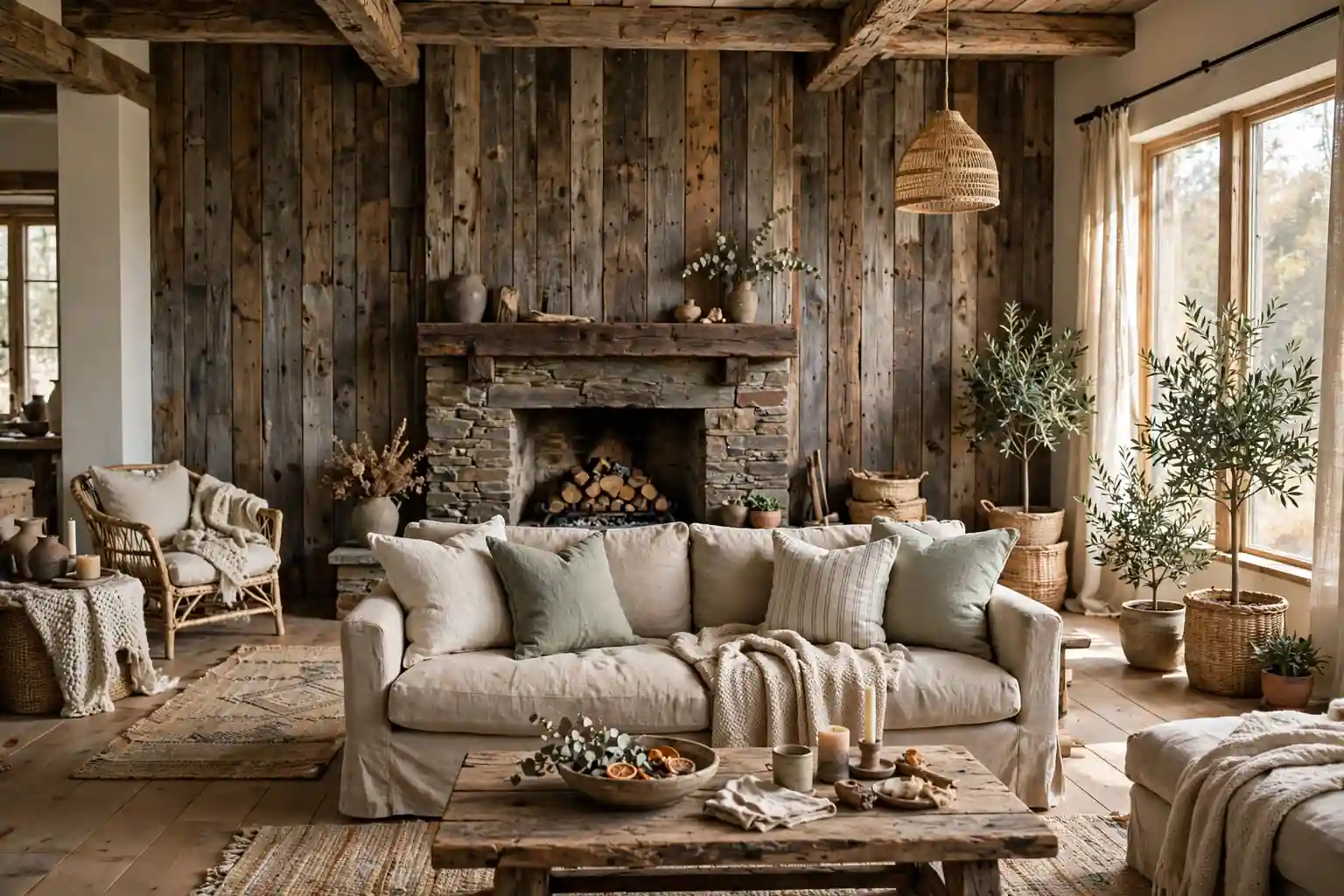
Rustic style feels warm when rough materials meet soft ones. Reclaimed wood, natural stone, and dark iron give a home weight and age, while linen, wool, and warm light keep those materials from feeling hard or cold. These 28 stylish rustic decor ideas cover living rooms, bedrooms, kitchens, dining spaces, bathrooms, entries, and small corners, so you can start with one room or carry one palette through the whole home. Choose two or three materials to repeat, keep the base calm, and add rustic detail where you see it most, rather than in every corner at once.
Key Takeaways
- Let two or three materials lead, such as warm wood, natural stone, and linen, and repeat each one at least twice so rooms look planned.
- Keep the base calm with warm white, cream, soft grey, and one muted accent, so wood grain and stone texture can carry the interest.
- Mix one rough texture with one smooth finish, such as reclaimed wood beside washed linen or leather, so rooms feel relaxed but finished.
- Put the strongest rustic detail on one feature per room, such as a wood wall, a stone fireplace, or a wood vanity, and keep nearby surfaces quiet.
- Use warm, dimmable light at seating and bedside height, since harsh overhead light can make wood and stone look cold.
- Start with bedding, curtains, baskets, and lighting for a no-paint refresh, and save plank walls, beams, and built-in woodwork for a weekend project.
1. Set a Warm Neutral Base With One Main Wood Tone
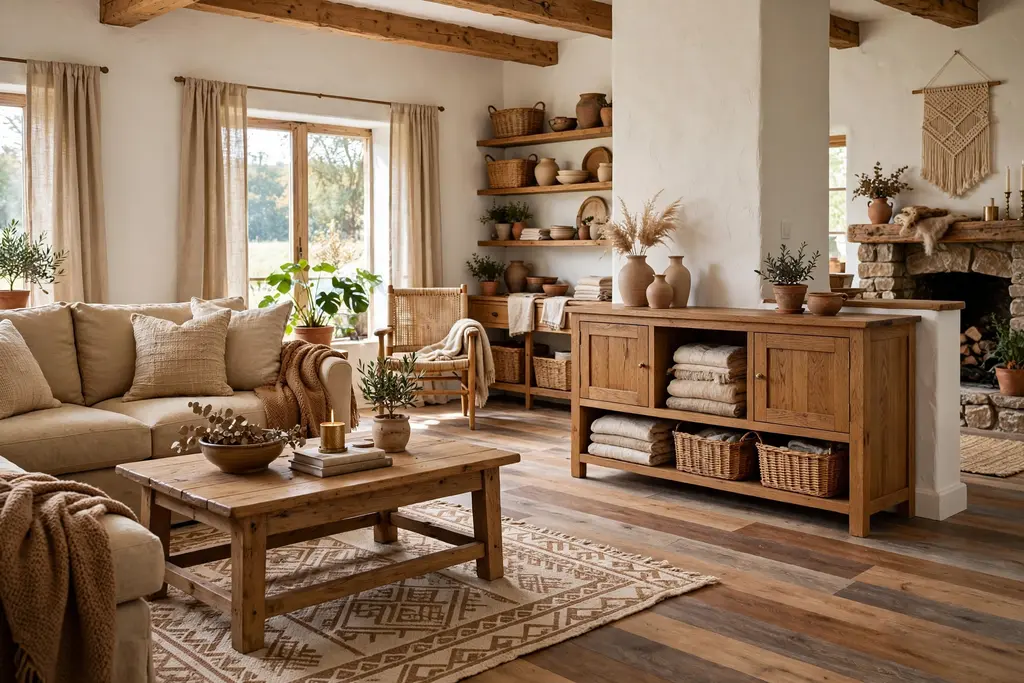
A warm neutral base lets rustic materials show without competing with each other. Warm white walls, a mid tone wood floor, and one main wood tone, such as warm oak or weathered pine, give every room the same calm starting point. This suits a home where rustic pieces already vary in age and finish, since a shared base keeps the mix from looking random.
Repeat the main wood tone in at least two places per room, for example in a floor and a coffee table, or in a bed frame and a nightstand. Keep other finishes to linen, iron, and stone, and add colour in small doses through cushions, throws, and plants. If a room starts to feel flat, add one darker accent, such as a leather chair or an iron lamp, rather than a new wood tone.
2. Add a Reclaimed Wood Wall in the Living Room
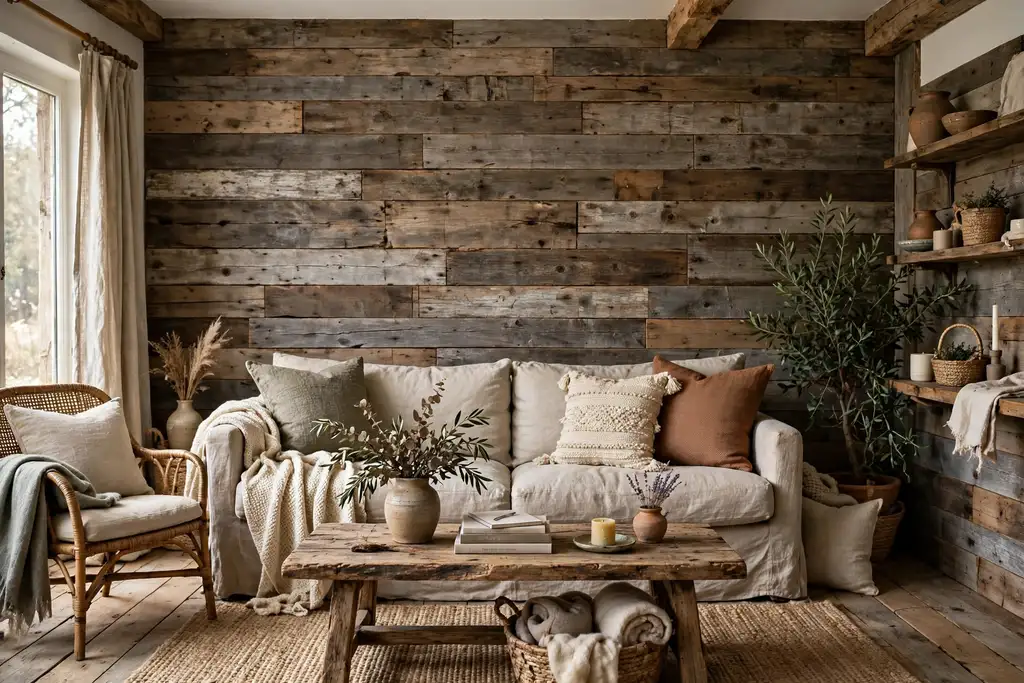
A reclaimed wood wall gives a living room instant warmth and a clear focal point, even before you change the furniture. Mixed grain and soft tone variation add texture to a plain wall, and the wood suits a linen sofa, a leather chair, and a stone fireplace alike. Use the wall behind the sofa or the fireplace wall, and keep the other walls warm white so the wood stays the feature.
Check that the boards are clean, dry, and free of old nails before fixing them, and use fixings suited to your wall type. If a full wall feels like too much, try wood panels to picture rail height behind a low sideboard instead. Pair the wall with plain cushions and a simple rug, so the texture of the wood can show. For more living room ideas in this style, see these stylish rustic living room ideas.
3. Frame the Fireplace With Stone and a Thick Wood Mantel
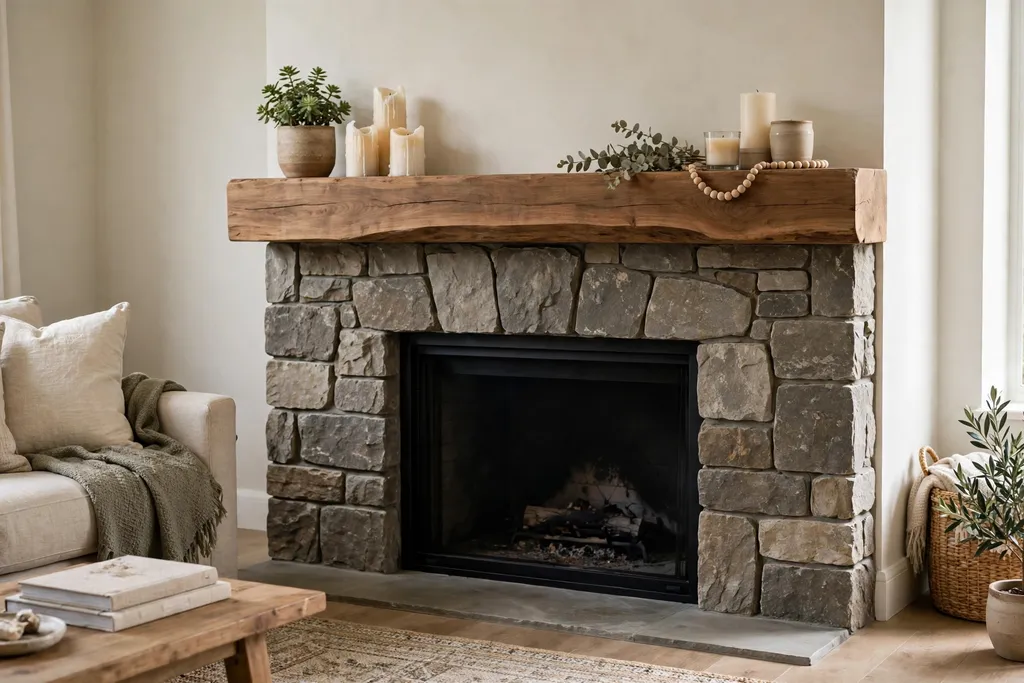
A stone fireplace with a thick wood mantel gives a living room a natural heart and a place to gather seating around. Rough stone adds texture and a sense of age, while the wood mantel softens the stone and gives you a shelf for candles, a small plant, and one framed print. This suits a living room with a plain fireplace, or a room that lacks a clear focal point.
Arrange the sofa and chairs so they face the fire at a comfortable distance, with a coffee table between them. Keep the mantel display to three or four items in different heights, and leave space between them so the wood edge stays visible. Keep the hearth clear of clutter, and store firewood nearby in a basket rather than on the hearth itself.
4. Dress a Sofa With a Natural Linen Slipcover and Wool Throws
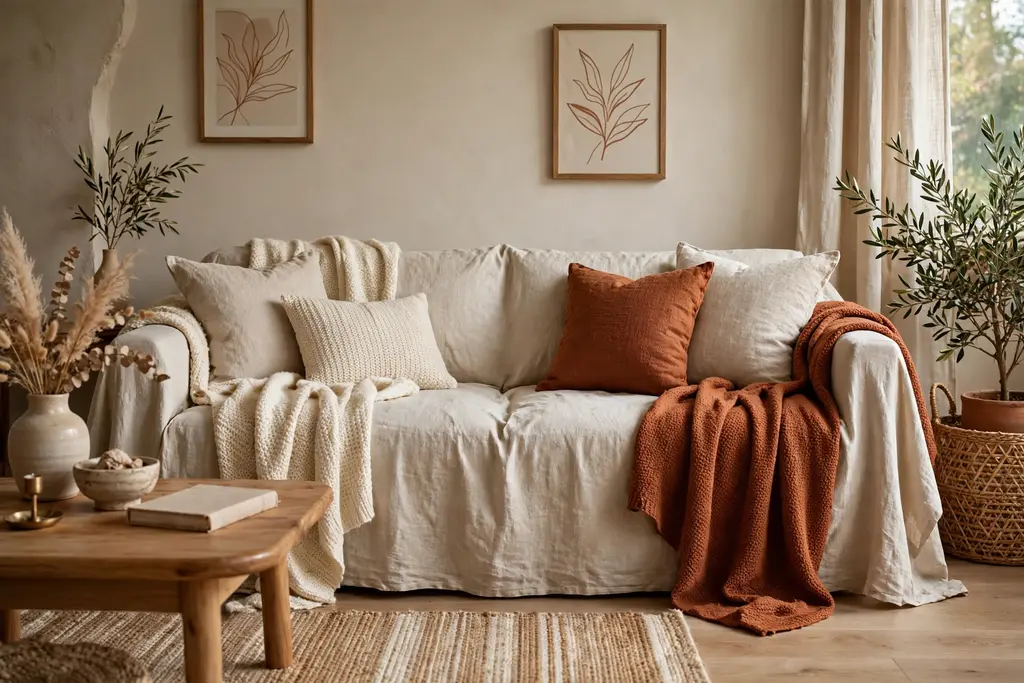
A natural linen slipcover in oatmeal or warm white gives a sofa a relaxed rustic shape, even if the frame underneath is plain. The loose fabric softens hard lines, and a washable cover suits a home with pets, children, or frequent guests. Add one wool throw over an arm and one in a basket nearby, so the seating looks ready to use rather than dressed for a photo.
Pick a slipcover made for your sofa shape, with ties or a fitted skirt, so it stays in place rather than sliding. Keep cushions plain in cream, rust, or soft grey, with one plaid or checked cushion if the rug is plain. Wash the cover as advised on the label, and shake it out before refitting, so the linen falls in soft folds rather than stiff creases.
5. Pair a Worn Leather Chair With a Wood Side Table
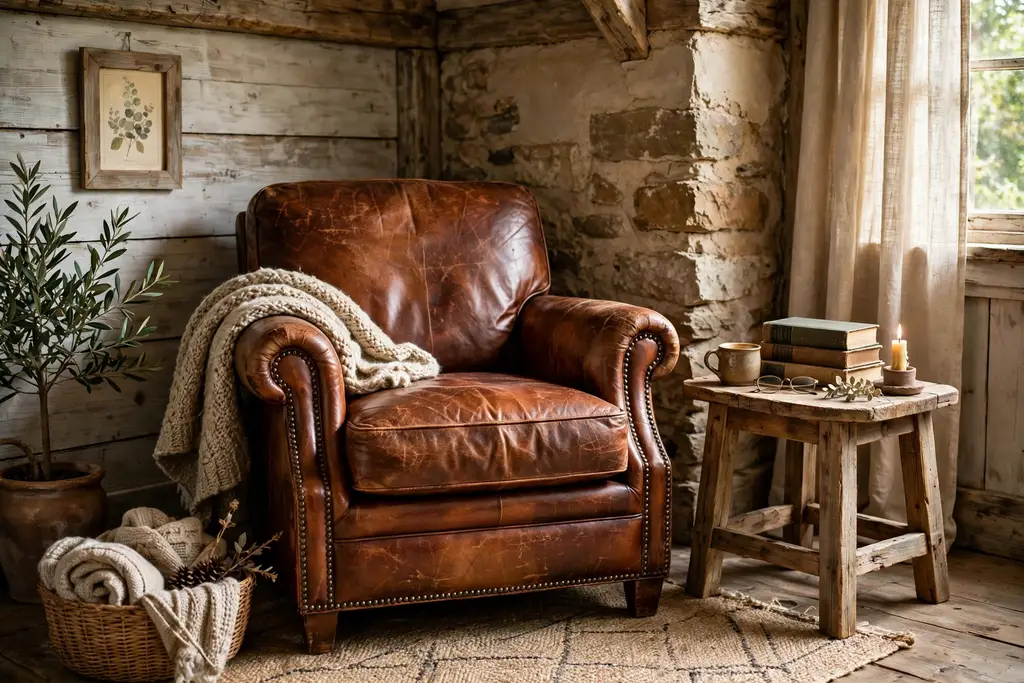
A worn leather chair in cognac or dark brown adds a smooth, polished surface beside rough wood and soft linen. The leather ages with marks that suit a rustic room, and a single chair is easier to place than a full leather sofa in a small living room. This suits a reading corner, a fireplace seating group, or a living room that needs one warm accent.
Place a small wood side table beside the chair, with room for a book, a drink, and a lamp. Keep the table top mostly clear, so the wood and leather both stay easy to see. Care for leather with a cleaner suited to its finish, and keep the chair out of strong direct sun where the colour can fade unevenly. A wool throw over one arm softens the leather and invites people to sit.
6. Use a Live Edge Coffee Table as the Living Room Anchor
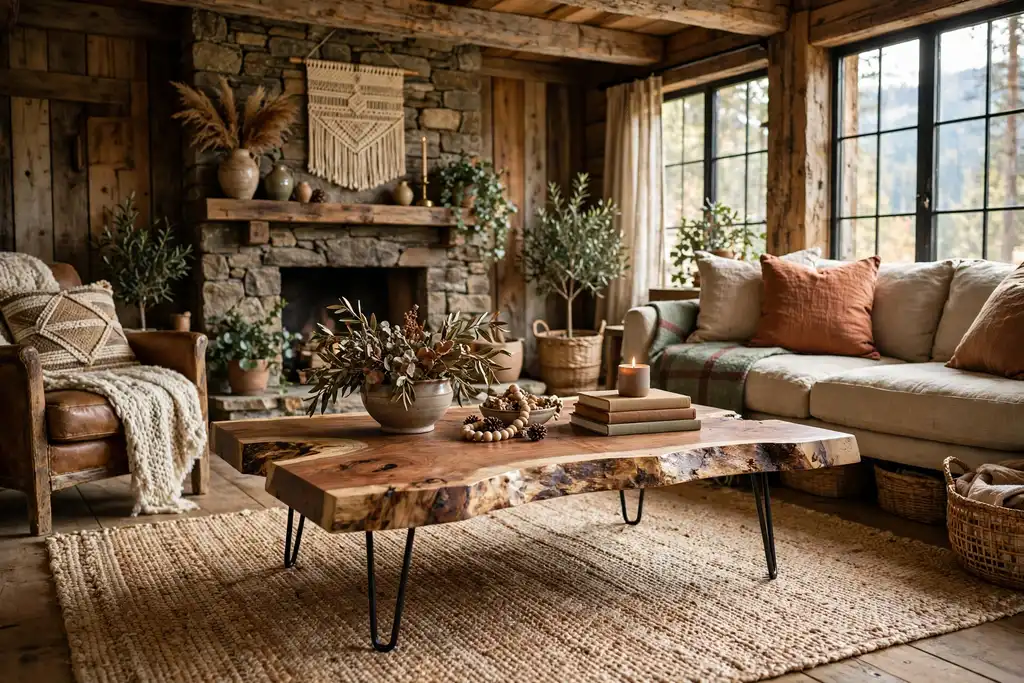
A live edge coffee table keeps one natural wood edge visible, so the table itself becomes a talking point in a rustic living room. The slab top shows grain, knots, and the shape of the tree, while the legs stay simple in black metal or plain wood. Choose a table sized to the sofa, with room to walk around it on all sides.
Seal the top as the maker advises, and use coasters under hot drinks, since a natural wood top shows rings. Keep the top mostly clear, with one tray, a book, and a small plant, so the wood edge stays visible. A live edge table pairs well with a leather chair and a linen sofa, since each material brings a different texture to the same seating group.
7. Layer Jute and Wool Rugs in the Seating Area
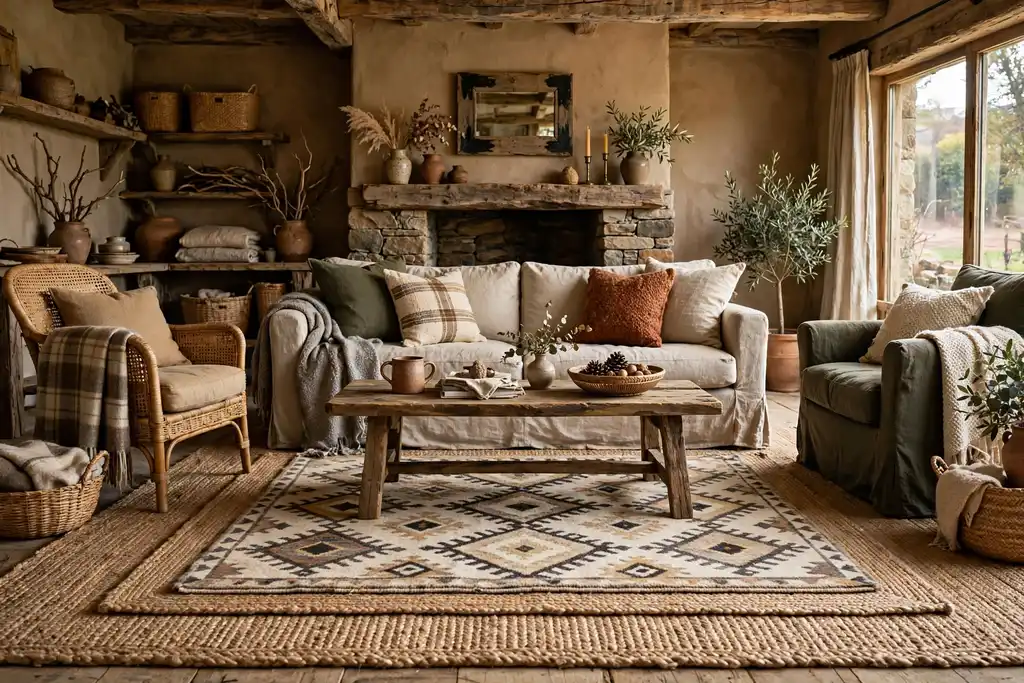
Layering a smaller wool rug over a large plain jute rug gives a rustic living room softness underfoot and a collected feel. The large base rug sets the size of the seating group, while the top rug adds colour and pattern without covering the whole floor. This also lets you use a rug you already own in a new room, by buying a plain base to fit.
Keep the top rug smaller than the base by a clear margin on all sides, and use a rug pad or gripper underneath so the top layer does not slide. Choose a flatweave jute base for easy care in a busy room, and keep the top rug pattern simple if cushions already carry pattern. Vacuum both layers often, since natural fibres show dust, and rotate the top rug now and then so it wears evenly.
8. Hang Iron and Wood Shelves for Books and Pottery
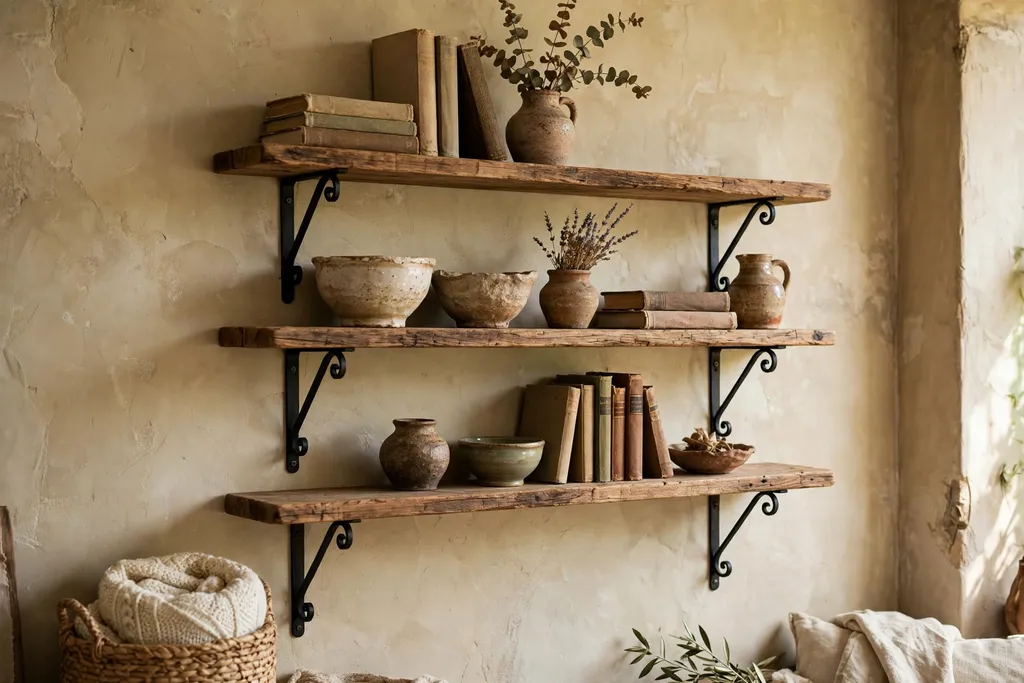
Open shelves made of wood planks on black iron brackets suit a rustic home because they mix warm wood with a sturdy, workshop feel. Use one or two runs on a single wall for books, pottery, and a few plants, and leave gaps between groups so the shelves do not look crowded. Anchor the brackets into studs or with fixings suited to your wall type.
Group books by height, put heavier items low, and keep the shelf count low in a small room, since open shelves add visual weight. A single row above a sideboard is often enough. If the room already has a wood accent wall, keep the shelves on a plain wall instead, so the wood does not compete with itself.
9. Light the Room With Lanterns and Warm Table Lamps
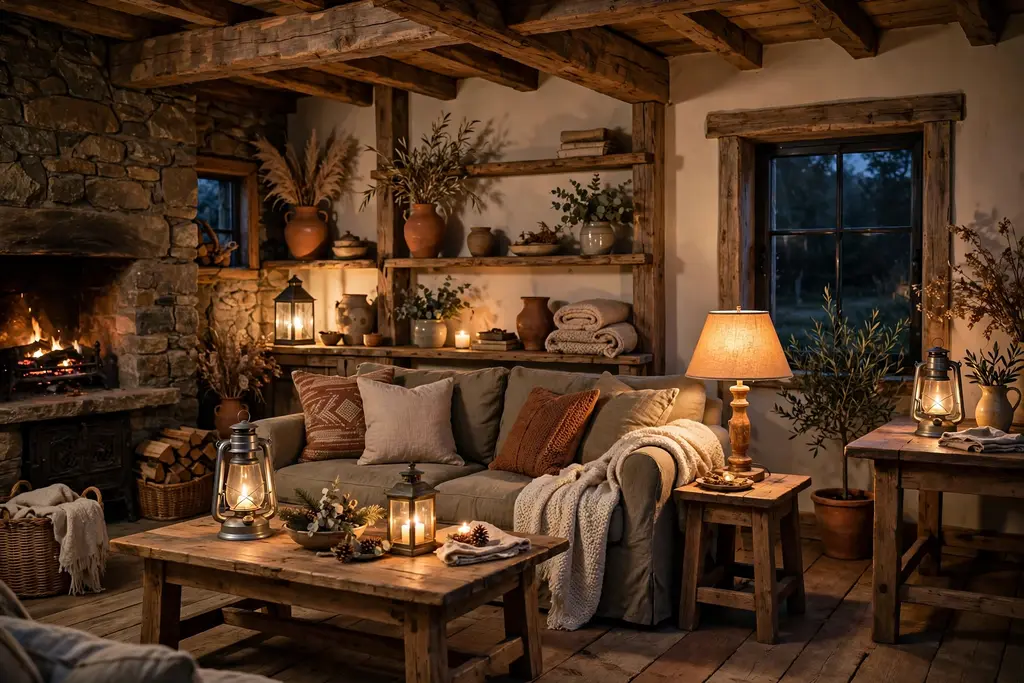
Lanterns and warm table lamps give a rustic room a low glow in the evening that ceiling lights alone cannot match. Group lanterns on the coffee table, the mantel, and a side table, and use plain white or cream candles in simple holders. A tray under a group of candles keeps wax and matches in one tidy place, and a wood or stone lamp base repeats the room materials at a smaller scale.
Use sturdy holders that cannot tip easily, keep flames clear of curtains, throws, and paper, and never leave candles burning in an empty room. Battery candles give a similar glow where real flames are not practical, such as a shelf near books. Use warm bulbs with a dimmer where you can, so wood and stone feel inviting instead of dark.
10. Build a Reading Nook With a Wood Bench and Linen Cushion
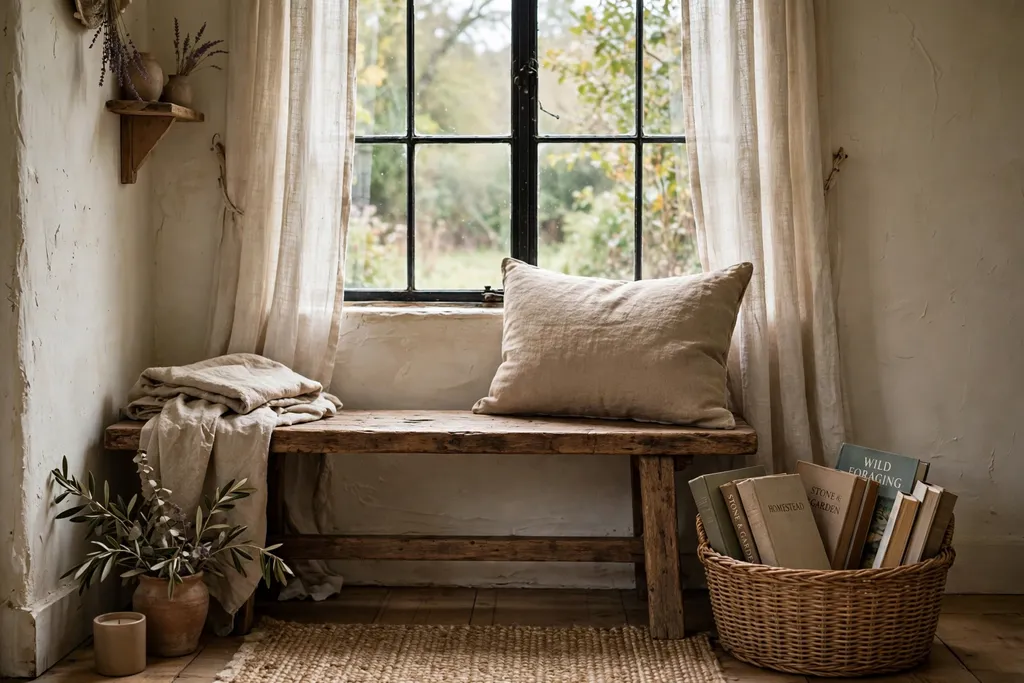
A reading nook with a wood bench, a thick linen cushion, and a few plain cushions turns an unused corner or window wall into a second use for a room. The wood base links to other rustic furniture, while the linen keeps the seat soft. This works best near a window, where daylight helps during the day, and it suits a living room, bedroom, or hallway with a wide, empty wall.
Add a small basket for books beside the bench, and a throw over one end, so the corner feels ready to use. Keep the cushions in warm white or sage, and add one darker cushion for contrast. If the seat sits under a window with strong sun, choose a washable cushion cover, since sun and dust show fast on pale linen.
11. Choose a Reclaimed Wood Bed Frame
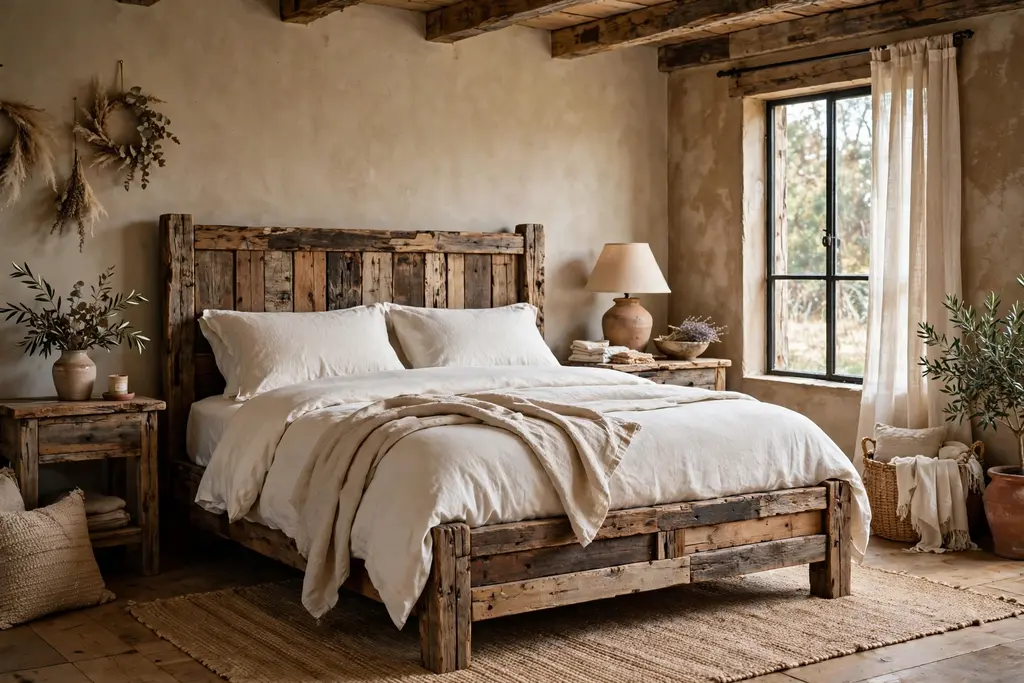
A reclaimed wood bed frame gives a bedroom a warm, grounded centre without needing a plank wall as well. The wood grain adds texture at eye level, and a simple headboard shape keeps the bed from feeling heavy. This suits a bedroom with plain walls and linen bedding, where the bed needs one strong natural feature.
Keep the bedding plain in warm white, oatmeal, or soft sage, so the wood stays the focus. Pair the frame with nightstands in a close wood tone, or with painted nightstands if the room already has a lot of wood. Seal the wood with a matte finish to reduce dust, and check the frame joints stay tight, since reclaimed boards can move with changes in room humidity. For more bedroom ideas in this style, see these stylish rustic bedroom decor ideas.
12. Layer Washed Linen Bedding With a Knit Throw
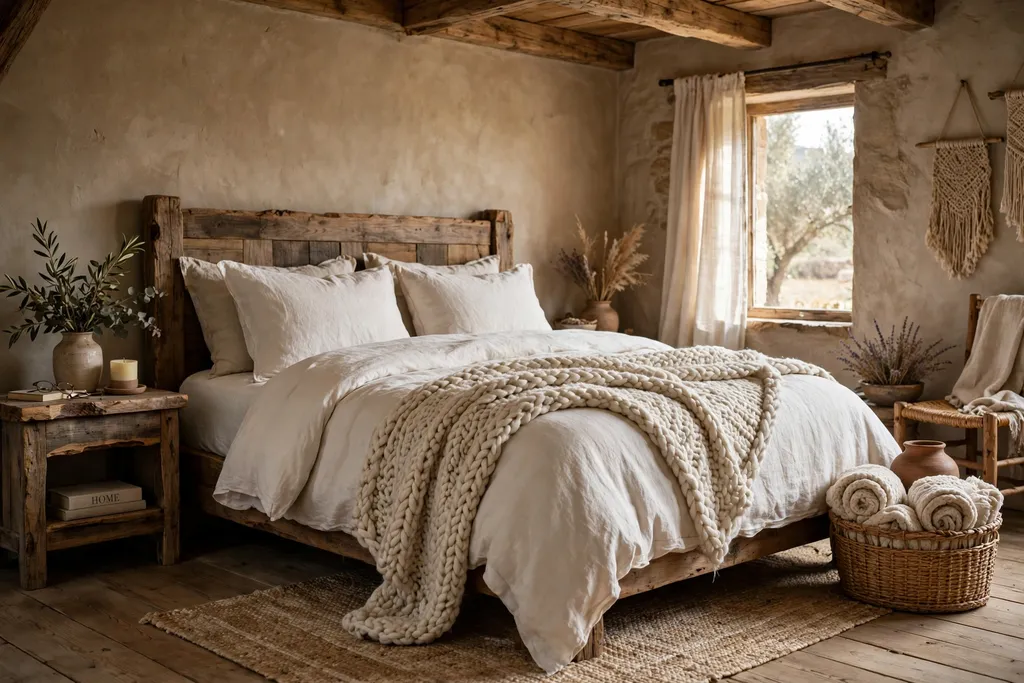
Layered washed linen bedding in warm white, oatmeal, and soft sage makes a bed look relaxed but still finished. Linen wrinkles a little by nature, so the bed reads as lived in rather than stiff, while the limited palette keeps it polished. A chunky knit throw across the foot of the bed adds warmth and texture in one easy layer.
Start with a plain fitted sheet, add a linen duvet in warm white, then fold a second linen layer or a light quilt across the lower half of the bed. Keep sleeping pillows plain and add only two or three decorative cushions, in one or two tones from the bed. Wash linen as advised on the label, and shake the duvet out each morning so the layers stay light.
13. Hang a Sliding Barn Door on a Closet or Ensuite
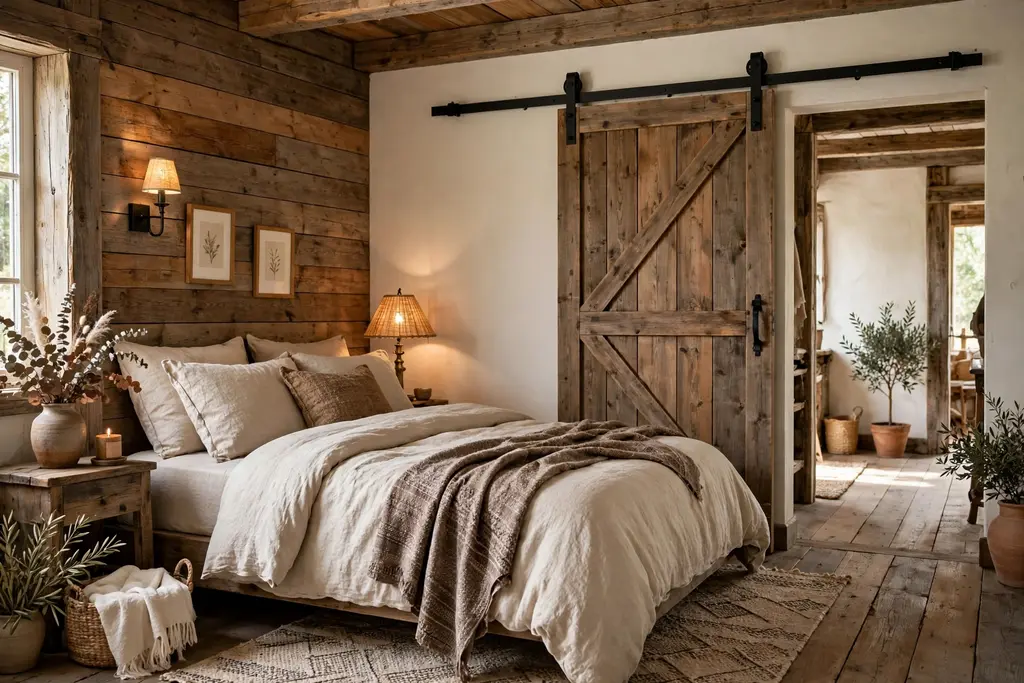
A sliding barn door in warm wood with black iron hardware gives a closet or an ensuite a rustic focal point and saves the swing space of a hinged door. This suits a bedroom where a standard door feels plain, or where floor space is tight beside the bed. The door also adds wood at a height that balances a wood bed frame or a plank wall.
Check that the wall above the opening can take the rail, and that the door can slide fully clear of the opening without hitting a light switch or a vent. Keep the door in a tone close to other wood in the room, and use soft close hardware if the door will be used at night. Leave the wall beside the door mostly plain, so the door reads as a feature.
14. Hang Wood Framed Mirrors and Iron Sconces Above Nightstands
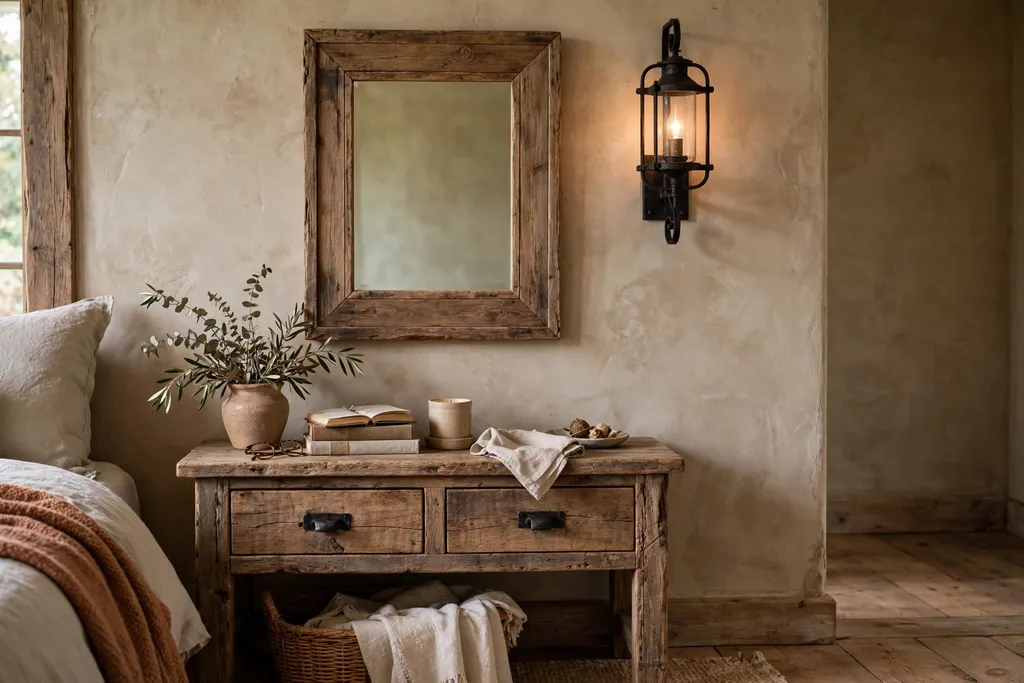
Wood framed mirrors above nightstands, paired with iron wall sconces, give a bedroom rustic detail at bedside height without crowding the bed wall. The wood frames repeat the bed frame or dresser tone, while the iron sconces free up nightstand space for books and water. This suits a bedroom where bedside lamps crowd small tables, or where you want the lighting to feel like a feature.
Hang the mirrors so the centre sits at eye level when you stand beside the bed, and keep the pair the same size and frame tone. Use warm bulbs with a dimmer for evening reading, and keep the sconce cords or rods straight and the same length on both sides. If you rent, check that the wall fixings suit the weight before you hang iron shades.
15. Use a Vintage Trunk at the Foot of the Bed

A vintage wooden trunk at the foot of the bed or beside a dresser gives closed storage for blankets, seasonal bedding, or keepsakes, while adding aged wood to the room. This suits a bedroom that needs storage but has no room for another cabinet, and it works as a bench in a larger room if the lid is flat and sturdy.
Check the trunk inside and out before you use it, and air it well if it smells musty. Line the inside with a clean cloth if you store bedding, and keep the lid hinges in good order so it stays safe to open. Style the top with one folded throw only, so the trunk stays useful and easy to open.
16. Fit Open Wood Shelves in the Kitchen for Pottery
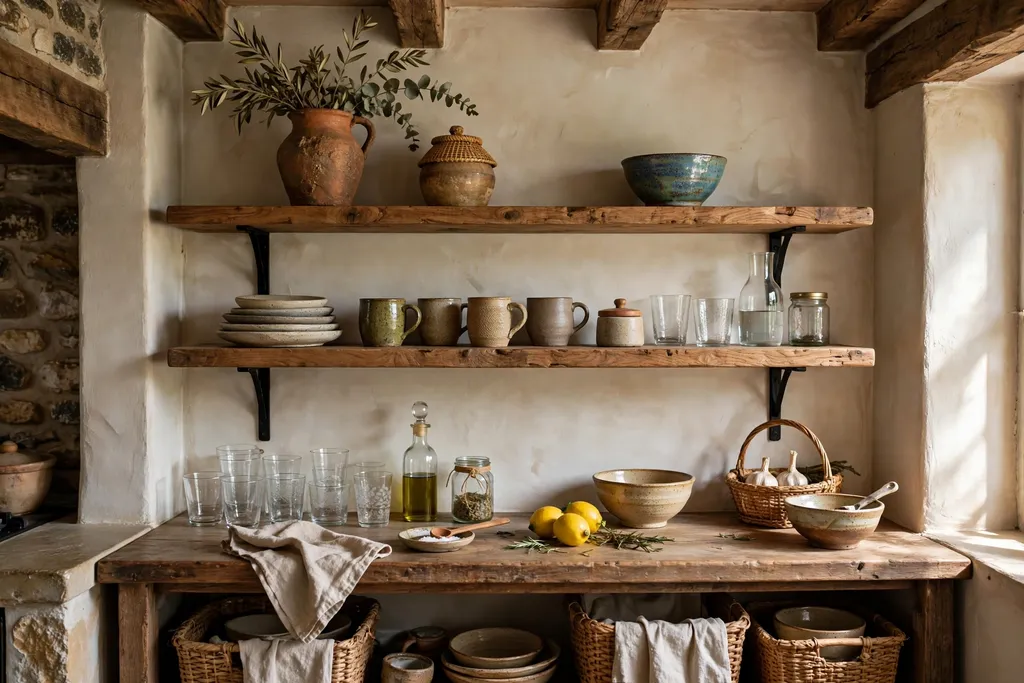
Open wood shelves in a kitchen, stocked with handmade pottery, stoneware bowls, and plain glassware, give the room a lived in, useful display. The shelves replace some upper cabinets, so the kitchen feels open, and the pale dishes repeat the cream tones used elsewhere in the home. This suits a kitchen with one clear wall, where closed cabinets make the room feel boxed in.
Keep shelves to two or three rows, and store only dishes you use often, so the display stays tidy and dust free. Group items by type, with plates upright in a rack, bowls stacked low, and glasses in a single row, and leave some empty space on each shelf. Wipe shelves often, since open storage collects cooking dust, and keep heavy items on the lowest shelf for safety. For more kitchen ideas in this style, see these chic rustic kitchen ideas.
17. Add a Butcher Block Top to the Kitchen Island
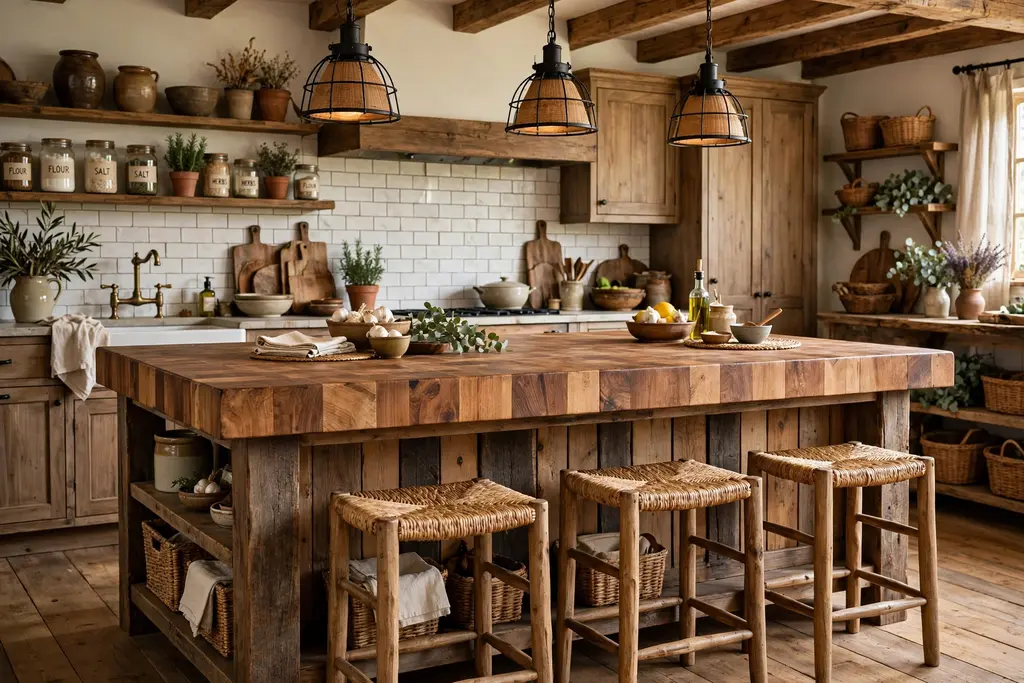
A butcher block island top adds warmth to a kitchen full of stone and tile, and it doubles as a generous prep surface. The wood grain brings a natural pattern into the room, and small knife marks over time add to the rustic character rather than spoiling it. This suits a kitchen with painted cabinets in cream or sage, where the island needs one warm, natural layer.
Oil the surface regularly with food safe oil, and wipe spills promptly so water does not sit on the wood. Pair the island top with wooden stools with woven seats, and keep one end of the island clear for serving, so the top works for both cooking and casual meals. If the island base is dark, a mid tone wood top keeps the room from feeling heavy.
18. Hang a Cast Iron Pot Rail in the Kitchen
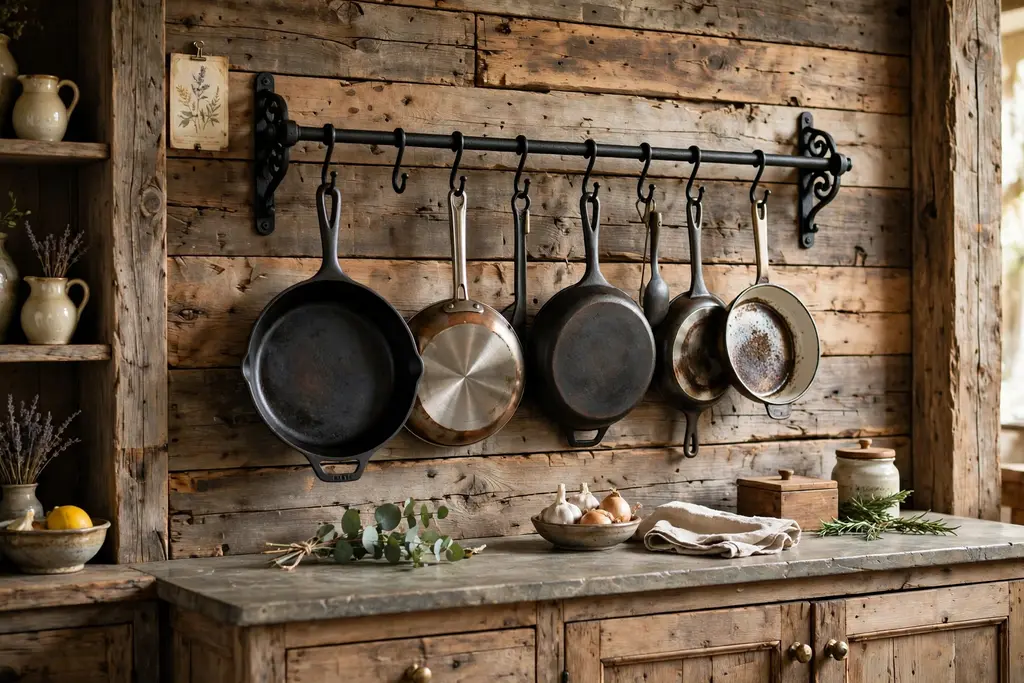
A cast iron pot rail on a kitchen wall puts your most used pans within reach and adds a workshop feel to the room. Fix a sturdy rail with S hooks above a counter or beside the range, with enough clearance below for the longest pan to hang without hitting the counter. Hang the heaviest pan nearest a wall bracket, where the rail is strongest.
Keep the rail to pans you use every week, and store rarely used pieces in a cabinet, so the wall stays calm rather than crowded. Wipe the rail during your usual clean, since steam and grease settle on metal near the stove. Keep the wall behind the rail plain, so the pan shapes read clearly.
19. Seat the Dining Table With a Wood Bench and Linen Runner
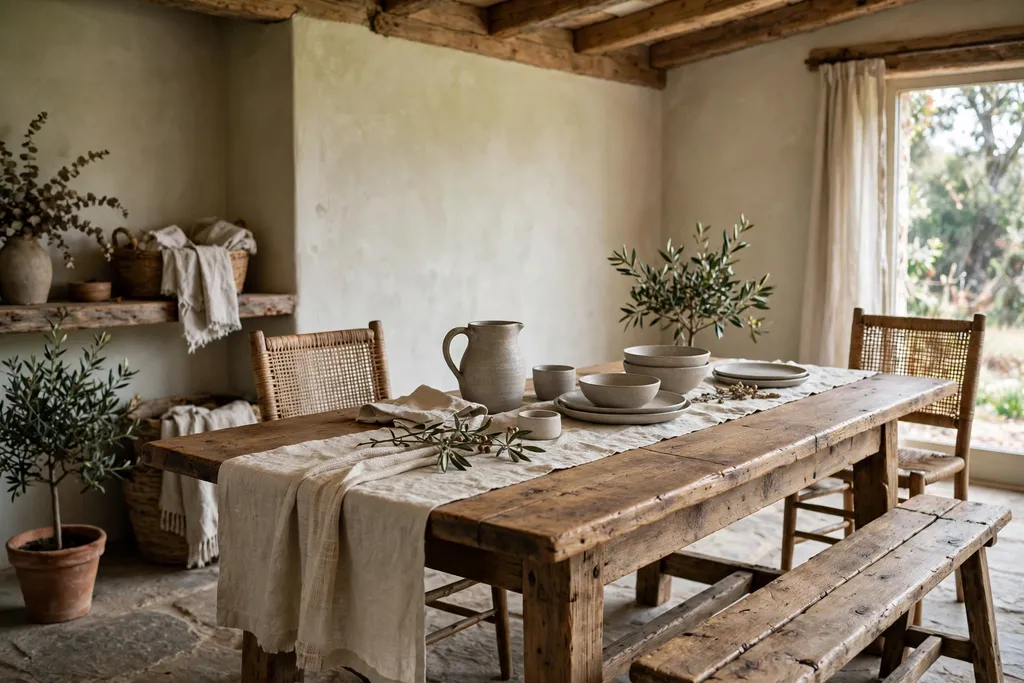
A long wood bench on one side of a dining table, paired with chairs on the other side, gives a dining room a rustic, gathered feel and seats more people than chairs alone. The bench suits family meals and guests, and it slides under the table when not in use. Pair it with a simple linen runner down the centre, so the wood top stays visible between meals.
Keep the table setting simple, with plain stoneware, simple glasses, and one low centrepiece, such as a stoneware jug with dried stems or fresh herbs, so guests can still see each other. Use placemats at meals, since pale wood marks more easily than dark wood. If the bench is long, check that it leaves a clear walkway behind it for pulling out chairs on the other side.
20. Fit a Farmhouse Sink With a Linen Skirt Below
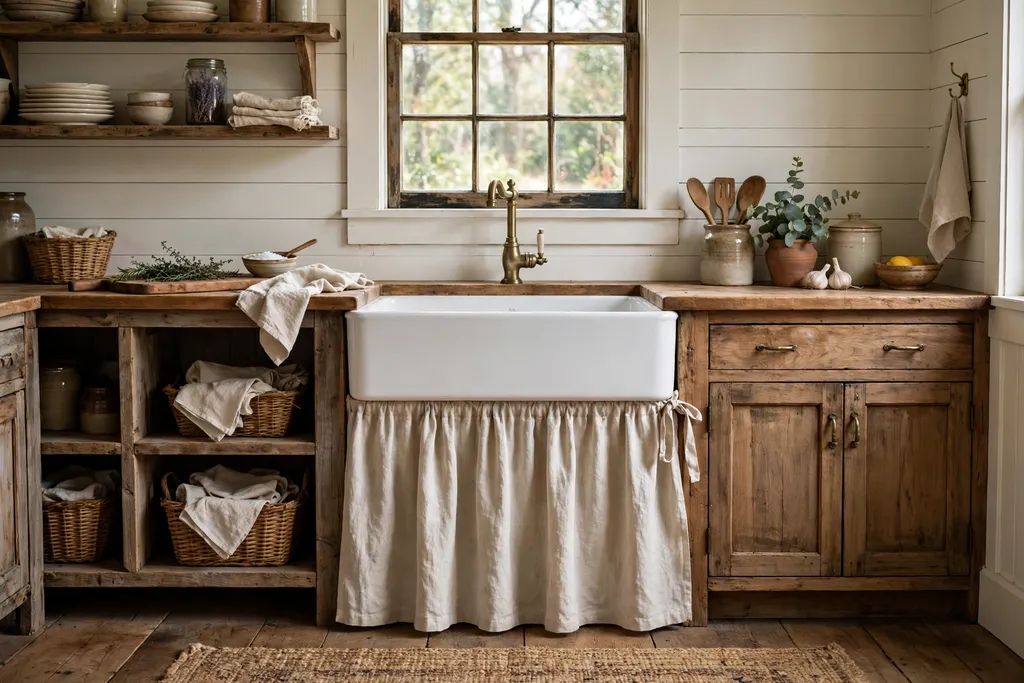
A farmhouse apron front sink is a classic rustic kitchen centre, and a linen skirt below the sink softens the cabinet run in a cottage style kitchen. The deep basin handles large pots and baking trays, and the exposed front panel adds a crafted detail to a plain cabinet run. The skirt hides cleaning items while adding fabric texture beside wood and stone.
Choose a fireclay or porcelain apron sink for a smooth, easy to clean finish, and check that your cabinet and counter support its weight. Hang the skirt on a thin rod inside the cabinet opening, in natural linen, and keep it short enough to clear the floor. Wash the skirt often, since a sink skirt sees splashes, and keep the counter beside the sink clear for drying.
21. Create a Coffee Corner With Wood Crates and Stoneware Mugs
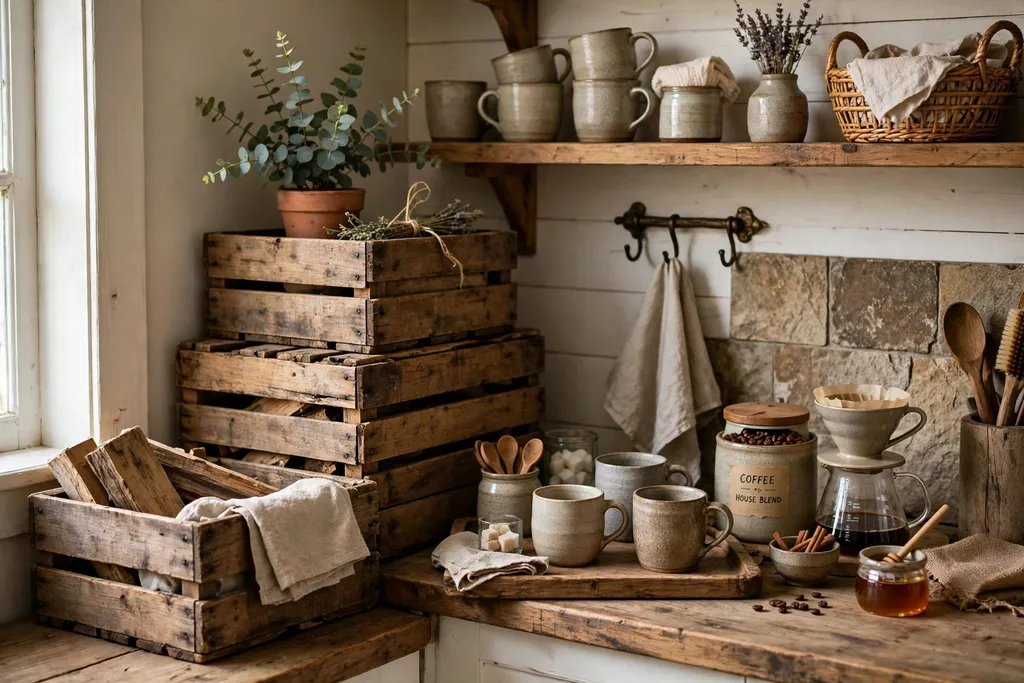
A coffee corner with stacked wood crates, stoneware mugs, and a small wood tray turns an unused kitchen corner into a useful daily station. The crates hold coffee, tea, and filters in plain jars, while the tray keeps mugs and spoons in one tidy place. This suits a kitchen with a clear counter corner, or a dining room wall with room for a small side table.
Keep the corner to what you use each day, so it stays tidy rather than becoming extra storage. Use one wood tone that matches the kitchen shelves or island top, and keep the mugs to one colour family, such as cream, stone, and soft grey. Wipe the crates often, since coffee dust settles fast, and keep the corner clear of the range steam zone.
22. Fit a Reclaimed Wood Vanity in the Bathroom
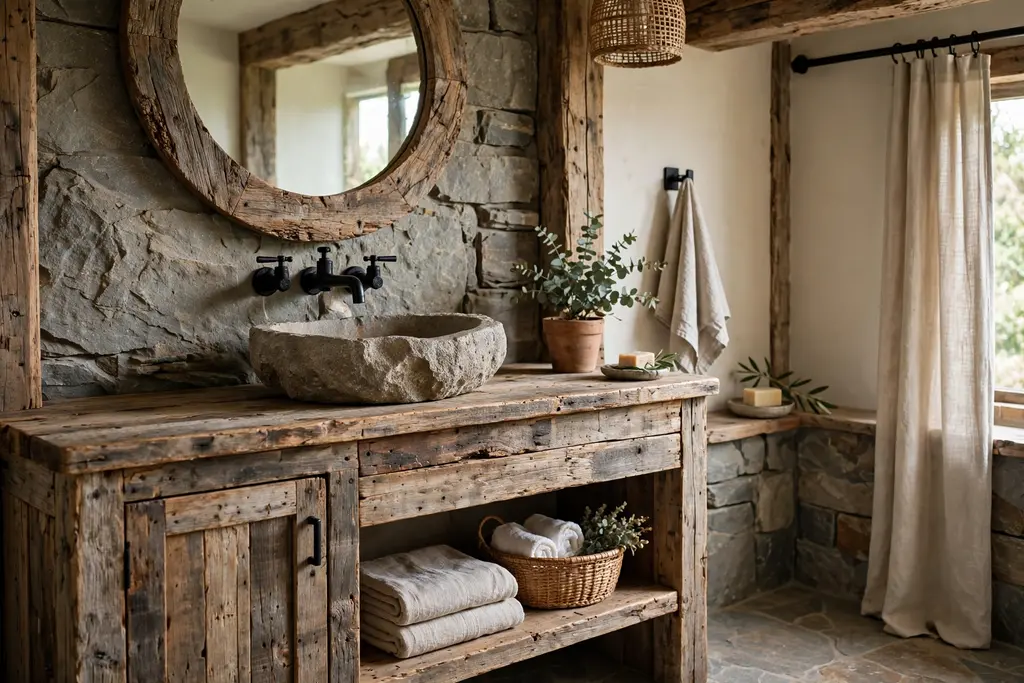
A reclaimed wood vanity gives a bathroom rustic warmth in one piece, without needing wood on every wall. The wood grain softens tile and porcelain, and a simple open shelf below the basin holds rolled towels and a basket. This suits a bathroom with plain cream or soft grey tile, where the vanity needs to be the feature.
Seal the wood well against water, and wipe splashes promptly, since constant damp can damage reclaimed boards. Pair the vanity with a stone or ceramic basin and matte black or aged brass taps, and keep the counter mostly clear with one tray for daily items. If the bathroom is small, choose a slim vanity with an open base, so the floor stays visible and the room feels open.
23. Pair a Freestanding Tub With a Wood Stool and Linen Towels
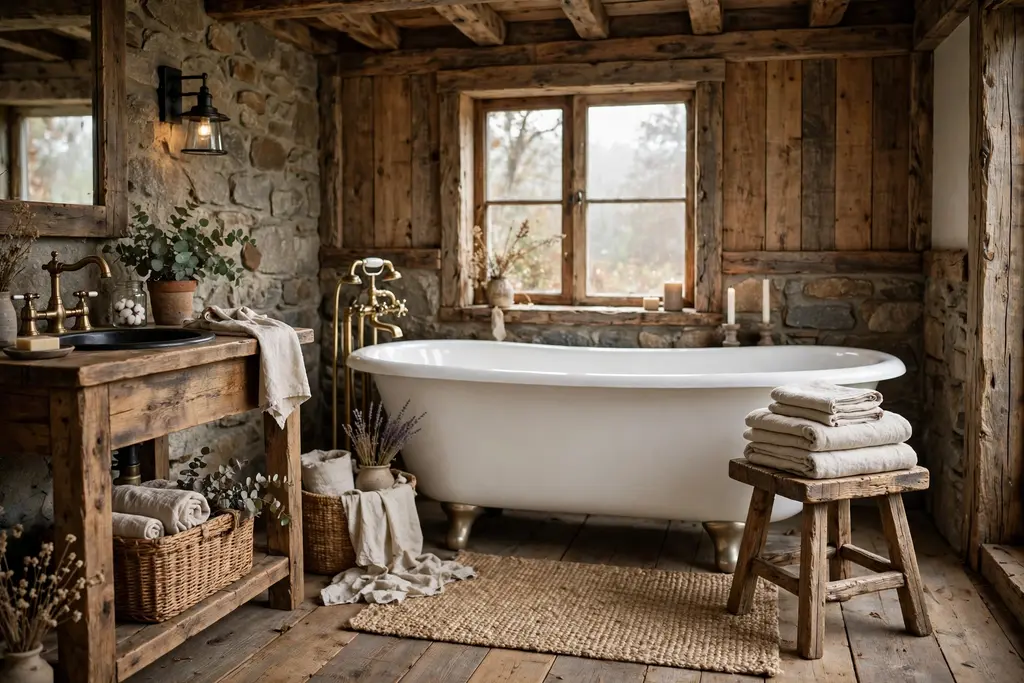
A freestanding tub with a wood stool beside it and thick linen towels gives a bathroom a calm, spa like rustic feel. The tub is the feature, the stool holds a candle, a book, or a folded towel within reach, and the linen adds soft texture beside tile and stone. This suits a bathroom with floor space beside the tub, and a plain wall that needs no extra decor.
Keep the towels in warm white or soft sage, rolled or folded on the stool and on a ladder rail nearby. Use a wood stool with a sealed finish, and keep it clear of the direct splash zone so it dries between baths. Add one plant that suits bathroom humidity, such as a potted fern on a high shelf, rather than filling every surface.
24. Use Woven Baskets for Storage in Every Room
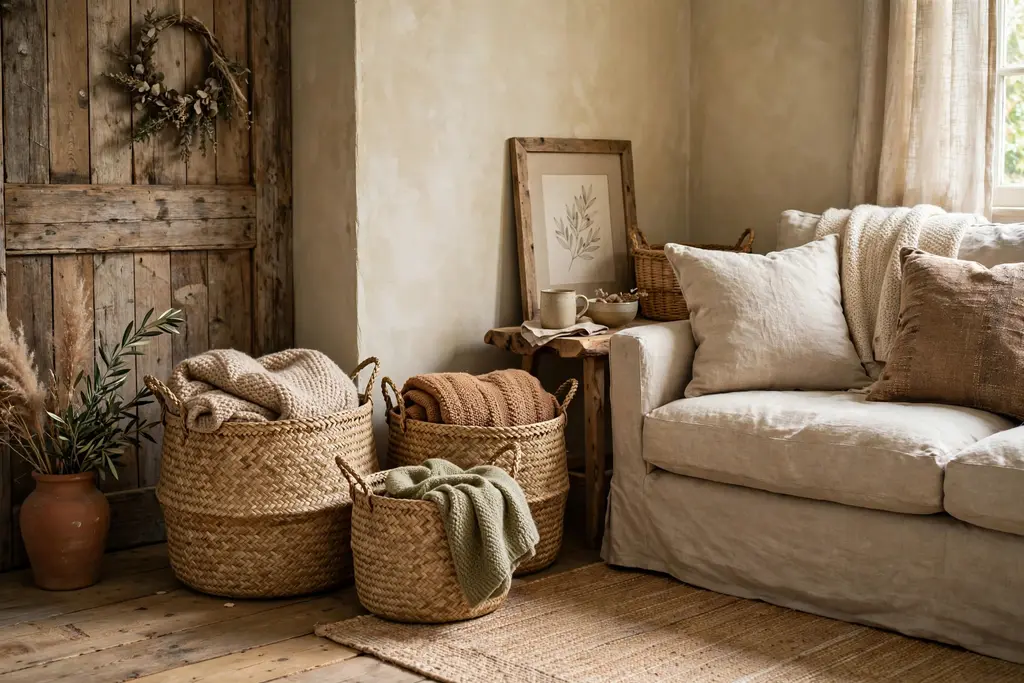
Woven baskets in seagrass, rattan, or willow hide everyday clutter while adding natural texture to a rustic home. Use one large basket for throws beside the sofa, one smaller basket for magazines under a side table, one basket for towels in the bathroom, and one basket for toys or games near the seating group. Baskets suit a rustic room because they add texture without a closed cabinet.
Choose baskets with handles so they can be carried and tidied quickly, and line a basket used for magazines with a plain cloth if the weave snags paper. Keep one basket empty on purpose, as a quick tidy basket before guests arrive. Empty baskets once a month and return only what you actually use, so storage does not become another cluttered surface.
25. Dress Windows With Floor Length Linen Curtains on Iron Rods
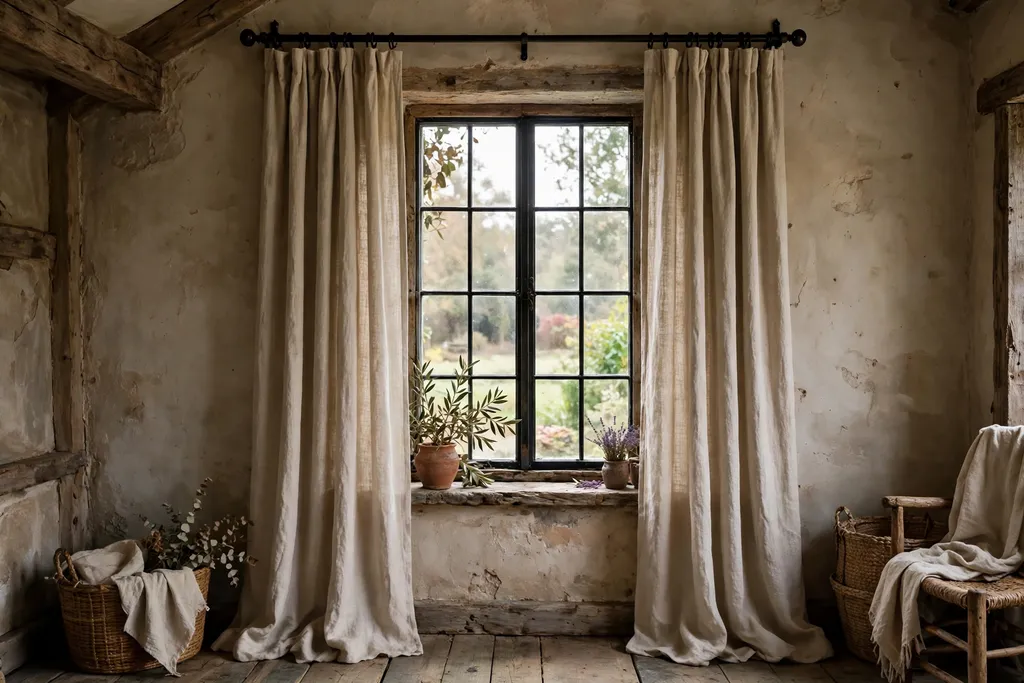
Floor length linen curtains on dark iron rods soften windows, add privacy, and repeat the rustic mix of soft fabric and dark metal through the home. The linen filters daylight into a soft wash, which suits a living room, bedroom, or dining room with plain walls and wood floors. This suits windows where bare glass feels cold at night and a heavy curtain would block light during the day.
Hang the rod close to the ceiling and wider than the frame, so the panels stack clear of the glass when open, and let the panels brush the floor rather than pool. Keep the linen plain in warm white or cream, so it suits both patterned and plain bedding and sofas. Choose a washable linen if the room gets dust, and keep the fabric clear of radiators and fire openings.
26. Bring in an Olive Tree and Dried Stems in Stoneware
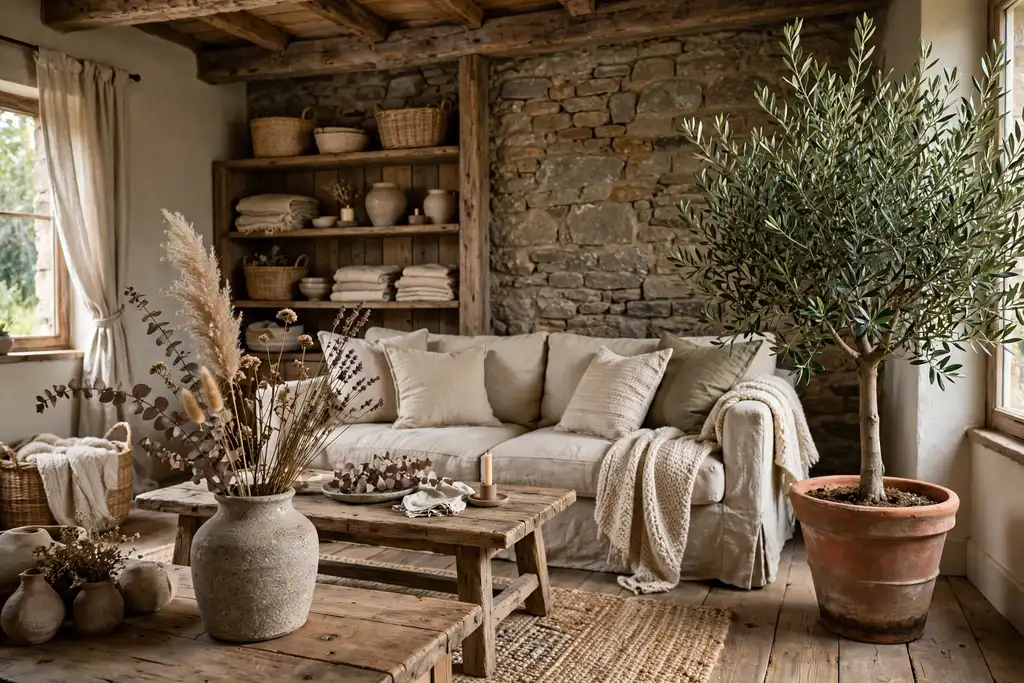
A potted olive tree in a clay or stoneware pot adds living green to a rustic room, while dried stems in a stoneware vase add height without daily care. The soft green leaves suit wood, linen, and stone, and the dried stems suit a side table, a sideboard, or the floor beside a sofa. Together they give a room a natural note in two scales, one living and one dried.
Place the olive tree near bright, indirect light, and water it only when the top soil feels dry, since olive trees dislike wet roots. Keep dried stems to one vase, and leave the rest of the table plain so the arrangement reads as a deliberate detail. Dust the stems gently, and keep them away from the fireplace and candles, since dried stems catch fire easily.
27. Style the Entry With a Wood Bench, Hooks, and a Basket
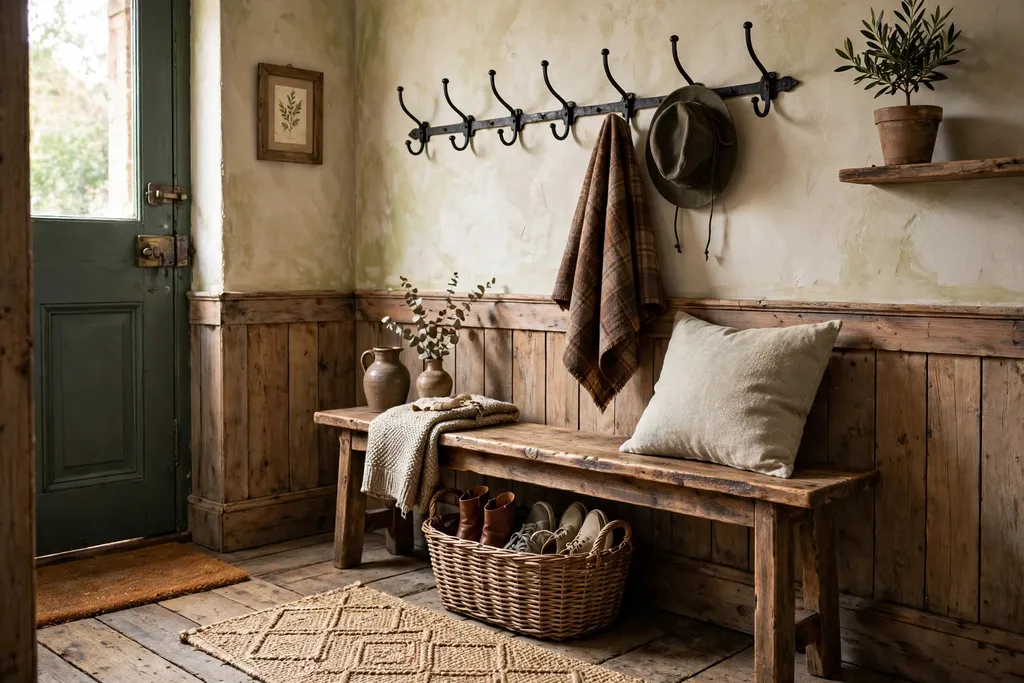
An entry with a wood bench, a row of iron hooks, and a woven basket gives a rustic home a practical first room. The bench is a place to sit and put on shoes, the hooks hold coats and bags at hand height, and the basket holds shoes or scarves out of the walkway. This suits a small entry console or a hallway wall, where a large cabinet would block the path.
Fix the hooks into studs or with fixings suited to your wall type, and keep the hook row at a height every adult in the home can reach. Keep the bench top mostly clear, with one small tray for keys, and keep the basket to one per person at most, so the entry stays tidy. Add a small mirror above the bench if the entry is dark, so the space feels open on arrival.
28. Carry One Wood, Linen, and Iron Palette Through Every Room
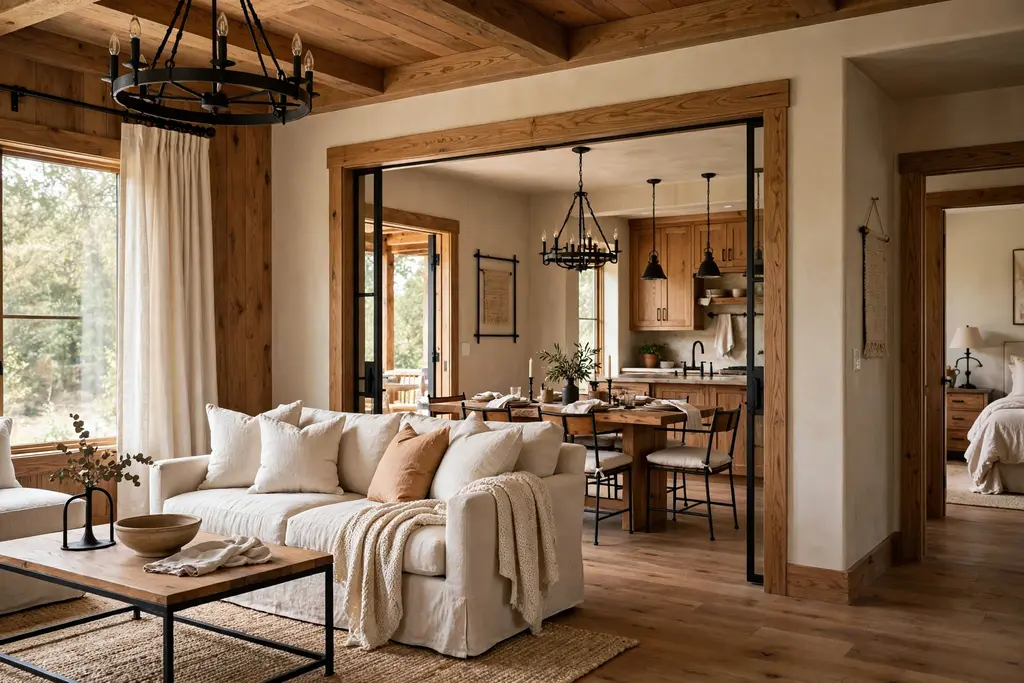
Carrying one palette through every room is what makes a rustic home feel warm and pulled together, rather than a set of separate rustic corners. Choose one main wood tone, one linen tone, and one metal finish, such as warm oak, warm white linen, and matte black iron, and repeat that trio in the living room, bedroom, kitchen, bathroom, and entry. Each room can still have its own feature, but the shared palette links them.
Start with the room you use most, and note the exact wood, linen, and metal tones you chose, so later rooms match. Repeat each material at least twice per room, for example in a bed frame and a mirror frame, or in a vanity and a stool. If a room starts to feel too matched, add one small accent, such as a plant, a clay pot, or a patterned cushion, rather than a new wood or metal tone.
Conclusion
A warm, inviting rustic home comes from restraint as much as from reclaimed wood and stone. Choose a few natural materials, keep the palette to three or four calm tones, and repeat each material once or twice so rooms look planned. Start with the room you use most, add bedding, curtains, baskets, and lighting first, then add plank walls, beams, or built-in woodwork only where the room still feels bare. With those layers in place, the home stays warm and relaxed, but still feels finished every day.
If you found an idea here that suits your home, save this post on Pinterest so you can find it again when you are ready to start. Pin the look you like most, whether it is a reclaimed wood wall, a stone fireplace mantel, or a linen dressed bed, and use it as a guide for your next weekend refresh.
FAQs
How do I keep rustic decor from looking like a cabin set?
Keep the palette calm and the shapes simple, and mix one rough texture with one smooth finish in each room. Use warm white walls, plain linen, and one or two rustic features per room, rather than wood on every wall plus stone, plaid, and antler details at once. A leather chair, a linen sofa, and a plain rug help rough wood and stone feel like part of a lived in home, not a themed set.
What colours work best with rustic decor?
Warm white, cream, soft grey, sage, clay, and charcoal suit rustic wood better than a long list of competing colours. Use warm white for walls and large linen pieces, a muted accent such as sage or rust for cushions and throws, and dark iron or wood only in small doses, such as hardware, frames, or a lamp base, so rooms stay calm.
Can rustic style work in a small home or apartment?
Yes, if the layers stay light and limited. Use one pale wood tone, linen curtains, one wood feature, such as a mirror frame or a small bench, and one woven basket, rather than a full plank wall and dark beams together. Keep floors clear and surfaces mostly tidy, and choose slim furniture with open bases, so small rooms still feel open.
What is the easiest rustic change with no painting or building?
Start with bedding, curtains, baskets, and lighting. Swap to washed linen bedding, add floor length linen curtains on an iron rod, place woven baskets for throws and towels, and add lanterns and warm table lamps in the evening. These swaps add rustic texture in an afternoon, with no paint or tools needed.
How do I mix wood tones without clashing?
Let one wood tone lead, and keep other wood pieces in a close tone family, rather than mixing pale, mid, and dark woods in equal amounts. For example, pair a warm oak bed with oak nightstands, and use a darker wood only for a small accent, such as a mirror frame. If two wood pieces clash, separate them with a plain linen or painted piece between them.
Does rustic decor suit a modern home?
Yes, when the pieces use clean lines and a calm palette. A simple reclaimed wood table, a linen slipcovered sofa, matte iron lighting, and cream curtains can sit well in a modern home, since they add warmth without heavy carving or dark, ornate detail. Keep the shapes simple, and let one or two natural materials do the work.