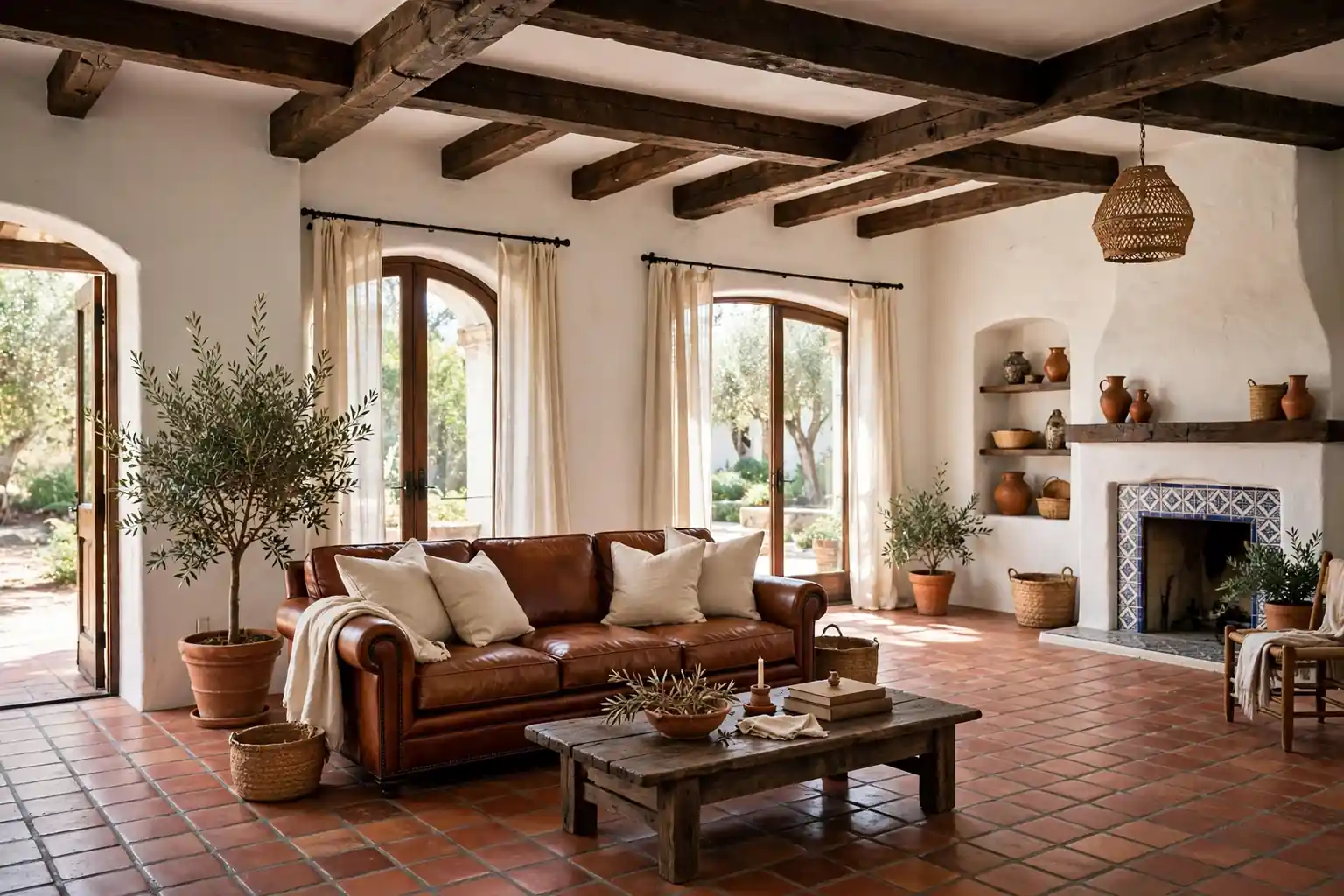
Spanish Colonial style starts with warmth: sun baked clay, dark wood, soft plaster, and iron that looks made by hand. The risk is going too far, with every surface patterned and every corner filled, until a room feels like a set rather than a home. The balance comes from pairing one or two strong Spanish Colonial features with plain linen, pale walls, and seating you actually want to sit in. These 11 Spanish Colonial home decor ideas cover walls, floors, ceilings, furniture, kitchens, bedrooms, and bathrooms, so you can borrow a single detail or build a whole room around the look.
Key Takeaways
- Start with warm, natural materials: plaster, terracotta, dark wood, leather, linen, and wrought iron set the Spanish Colonial tone before any decoration is added.
- Keep one calm palette of warm white, terracotta, olive, and walnut, and repeat it in the rug, cushions, and pottery.
- Use curves to soften the room: arches, rounded doorways, and arched niches do more for the style than a wall of small patterned objects.
- Balance heavy pieces with light ones: pair a carved wood bed or a dark beam ceiling with plain linen bedding and pale walls.
- Let pattern live in one place at a time, such as a tile backsplash or a rug, while the rest of the room stays plain.
- Choose comfort first: deep seats, washable linen, sturdy wood, and good light keep a handsome room easy to live in.
1. Warm White Plaster Walls With Terracotta Accents
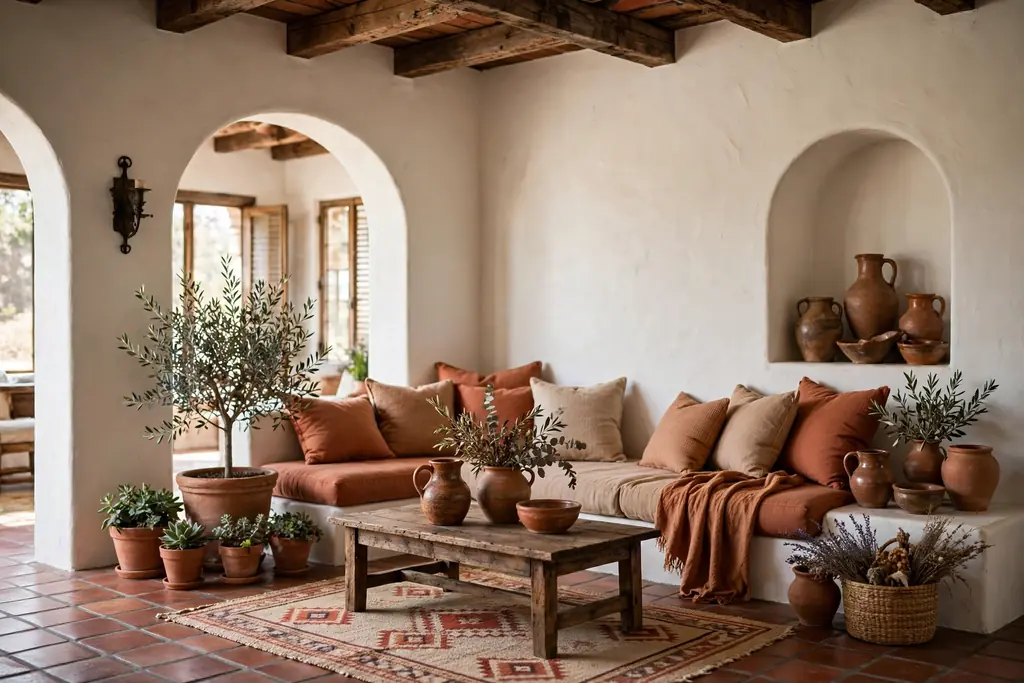
Wash the walls in warm white plaster, or a plaster look finish, and let terracotta pots, cushions, and pottery carry the color. The pale walls keep the room bright, while the clay tones give it the warmth that defines Spanish Colonial style. This suits a room that already has dark wood or tile floors, since the pale walls stop those heavier surfaces from closing the room in.
Keep the terracotta to a few clear pieces: a large pot by the door, two cushions on the sofa, and a bowl on the table. Repeat the same muted clay tone rather than mixing bright orange with deep rust, so the accents read as one palette. For a related warm plaster approach in a Mediterranean room, see these Italian living room ideas. If the walls feel too plain, add texture with a woven basket or a linen throw instead of a new color.
2. Arched Doorways and Wall Niches
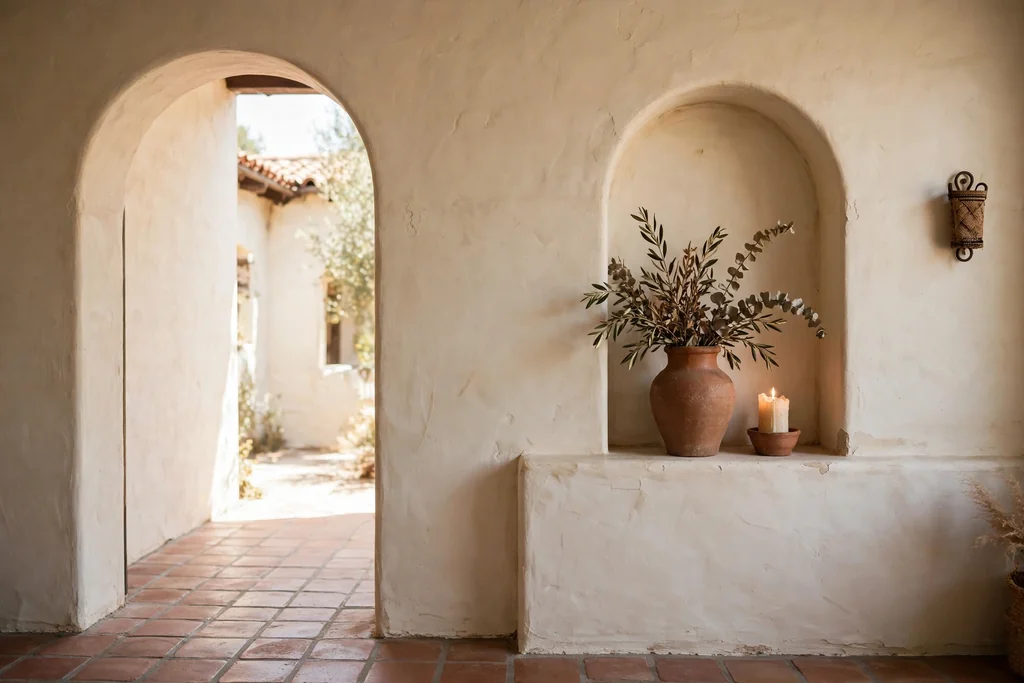
Use arches to soften a boxy room: an arched doorway, an arched niche, or an arched mirror gives Spanish Colonial character at once. Curves break up straight lines and draw the eye upward, and a niche gives a single vase or candle a place of its own. This suits a hallway, a living room wall, or the wall beside a fireplace, where one arch can change the whole feel of the space.
Keep arches to one or two in a room, so they feel special rather than repeated everywhere. Paint the inside of a niche a shade deeper than the wall, or leave it in warm white, and display one object at a time. If building a real arch is not practical, an arched mirror or an arched bookcase gives the same curved shape without building work. Avoid filling every niche, since empty space around one piece is part of the calm look.
3. Terracotta Tile Floors Softened With a Woven Rug
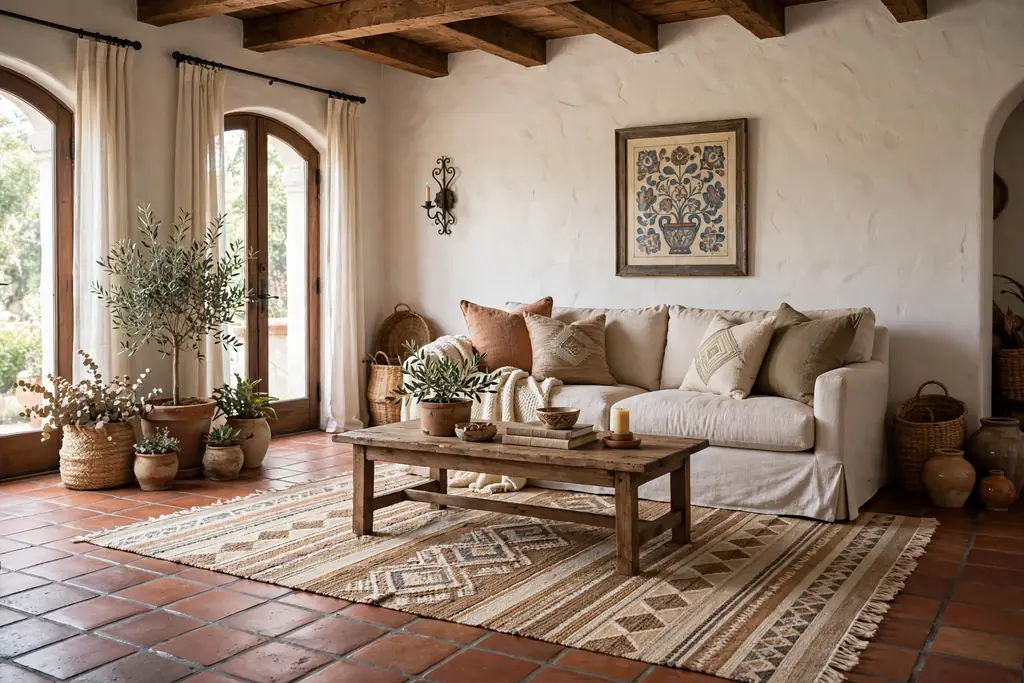
Lay terracotta tiles, or a terracotta look tile, for a floor that feels warm underfoot and ages well with use. Terracotta suits living rooms, kitchens, and entryways alike, and it pairs naturally with wood furniture and linen upholstery. A large woven rug over the tiles softens the seating area and keeps feet warm in cooler months.
Size the rug to the seating group, with the front legs of the sofa and chairs resting on it, as explained in these living room rug ideas. Choose a rug in cream, rust, or a muted pattern, and keep a border of tile showing around it so the floor still reads as terracotta. A flatweave rug is easier to clean in a busy family room, while a thicker wool rug suits a quiet reading corner. Seal tiles as the maker directs, since unsealed clay can stain.
4. Dark Wood Ceiling Beams in a Pale Room
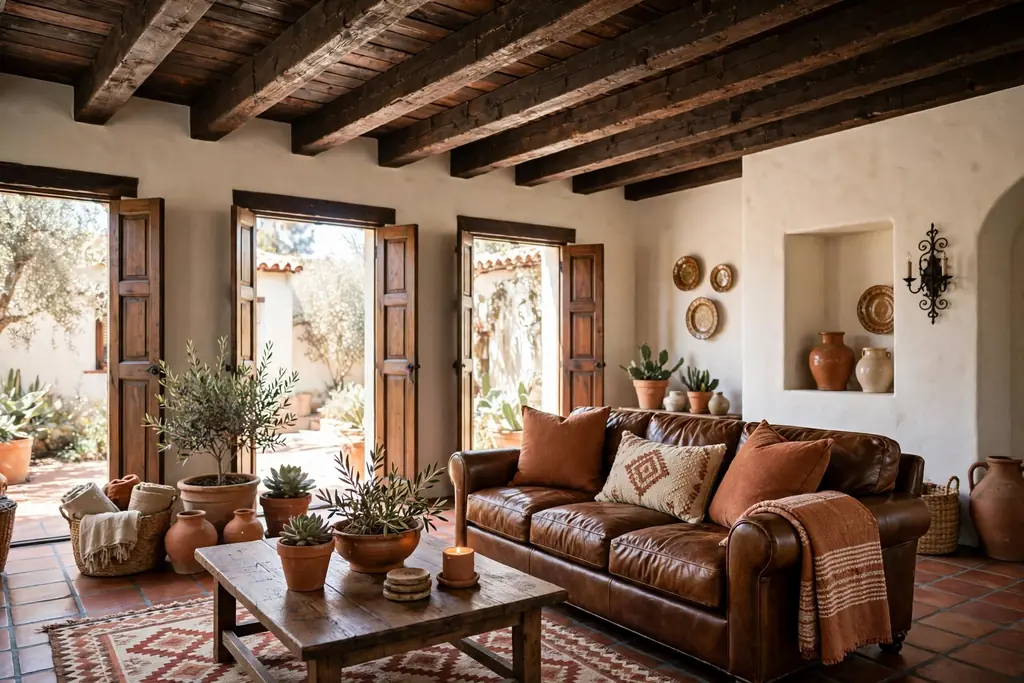
Leave ceiling beams exposed, or add slim wood beams to a plain ceiling, to bring warmth overhead without changing the furniture. Dark walnut beams suit a rustic room, while pale oak beams keep a smaller room feeling light. Beams draw the eye up and make a plain ceiling feel like part of the design, not just a surface above it.
Check the ceiling height first, since beams in a very low room can feel heavy. In a low room, use fewer, slimmer beams in a pale wood, and keep the ceiling itself in warm white. Pair beams with pale walls and plain linen curtains, so the wood stays the main dark note in the room. Dust beams with a dry cloth or a long handled duster, since dark wood shows dust in bright light.
5. Wrought Iron Lighting and Small Iron Details
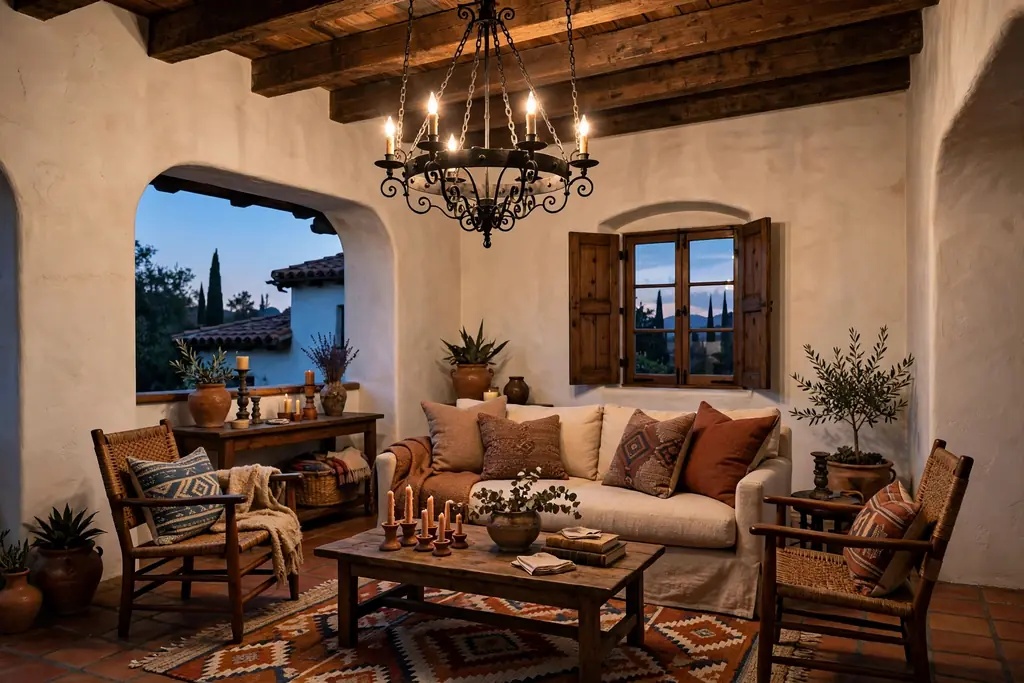
Hang a wrought iron chandelier or pendant over a table or seating area for a fixture that feels handmade and old. Iron suits a room with wood beams, plaster walls, and terracotta, and a simple ring or candle style fixture gives warm light without a fussy look. Use warm bulbs and a dimmer, where one is already fitted, so the light can shift from bright to soft in the evening.
Repeat the iron in small doses: a curtain rod, a mirror frame, or a pair of lanterns on a side table. Keep the iron dark and matte rather than shiny, so it reads as old rather than new. Hang the fixture high enough to walk under safely, and center it over the table rather than the middle of the room if the seating group sits off center. If the ceiling is low, choose a flush or semi flush iron fixture in the same style.
6. Leather and Linen Seating in Warm Tones
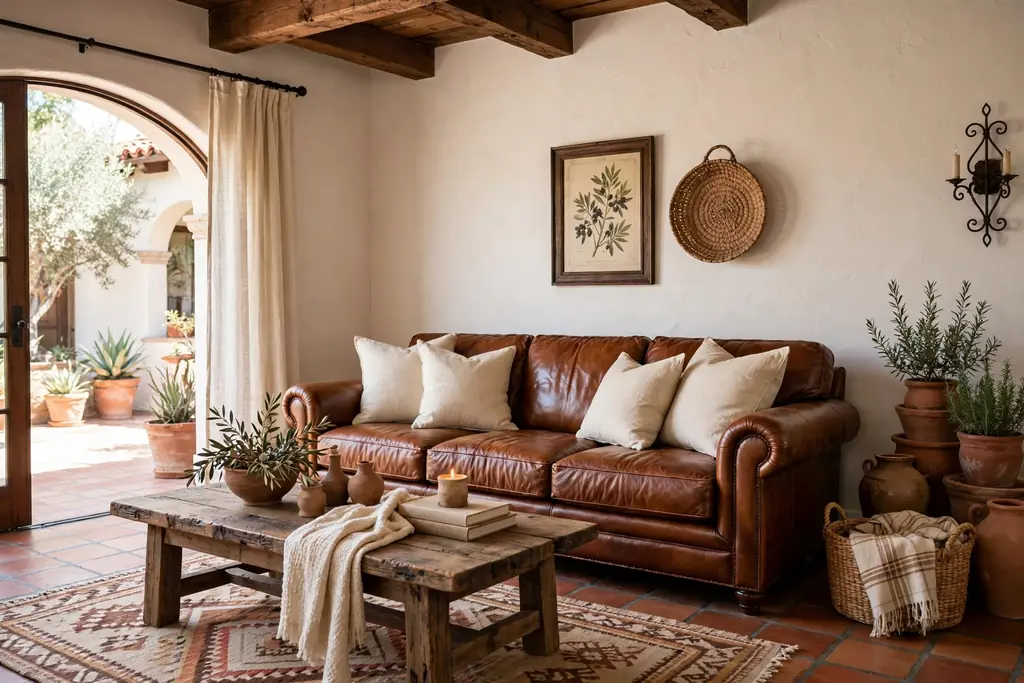
Anchor the living room with a leather sofa in cognac or saddle brown, softened by linen cushions in cream and olive. Leather suits a family room because spills wipe off, and the warm brown tone sits well with terracotta floors, wood beams, and cream plaster. Choose a simple shape with deep seats, since a fussy frame fights the relaxed Spanish Colonial feel.
Pair the sofa with a wood coffee table and a woven throw, and keep the rest of the seating simpler, such as plain wood chairs or a linen armchair, so the leather stays the main statement. Condition the leather as the maker directs, and keep it out of harsh direct sun. For table styling that suits this seating group, see these Mediterranean coffee table styling ideas. A linen slipcover on one chair adds a soft contrast to the leather and can be washed when needed.
7. Hand Painted Tile in the Kitchen
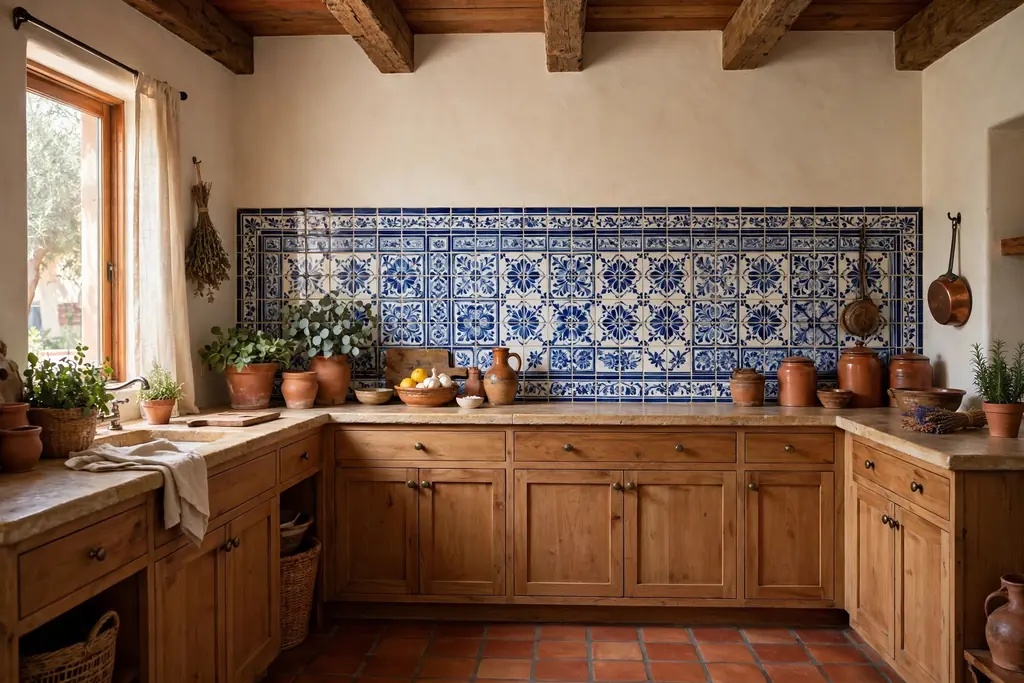
Use hand painted tile, in a Talavera style pattern of blue, white, and soft green, for a kitchen backsplash or a small accent wall. One tiled area gives the kitchen its Spanish Colonial note, while plain wood cabinets and a simple counter keep the room calm and easy to work in. This suits a kitchen where a full patterned room would feel busy, since the tile stays in one clear zone.
Keep the tile pattern to the backsplash, or to the risers of a short step, and let the rest of the kitchen stay plain. Choose a grout color close to the tile background, so the pattern reads clearly without a harsh grid. Wipe the grout lines after cooking, since kitchen splashes stain pale grout over time. If real hand painted tile is out of reach, a printed tile look panel in the same colors gives a similar effect and can be changed later.
8. A Courtyard Style Seating Nook Indoors
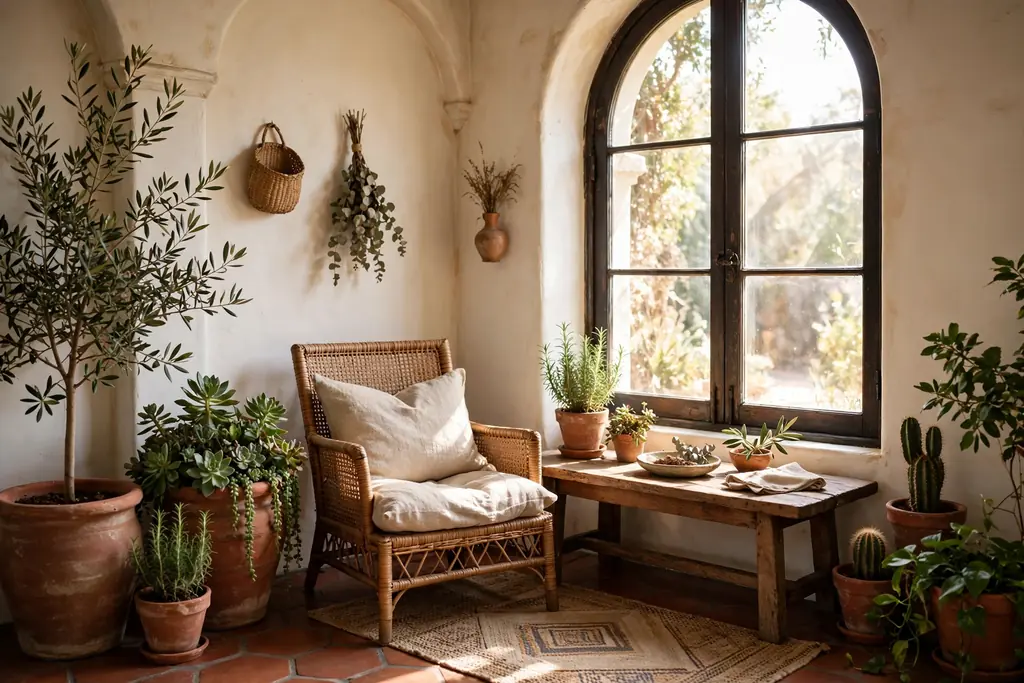
Borrow the courtyard idea for a sunny corner: a small seating group with potted plants, a terracotta pot or two, and a low wood table, arranged like an outdoor patio brought inside. Plants soften plaster and tile, and the corner gives the room a place to sit that feels separate from the main sofa group. This suits a room with a large window, a glass door, or a sunlit corner that is otherwise unused.
Use one large plant, such as an olive tree in a pot or a tall palm, plus two smaller pots, rather than a crowd of small plants that need constant care. Add a woven chair or a bench with a linen cushion, and keep the table clear except for a candle or a small bowl. Water plants over a tray so terracotta floors and rugs stay dry, and move pots a little each week if one side gets much more light than the other.
9. A Carved Wood Bed With Plain Linen Bedding
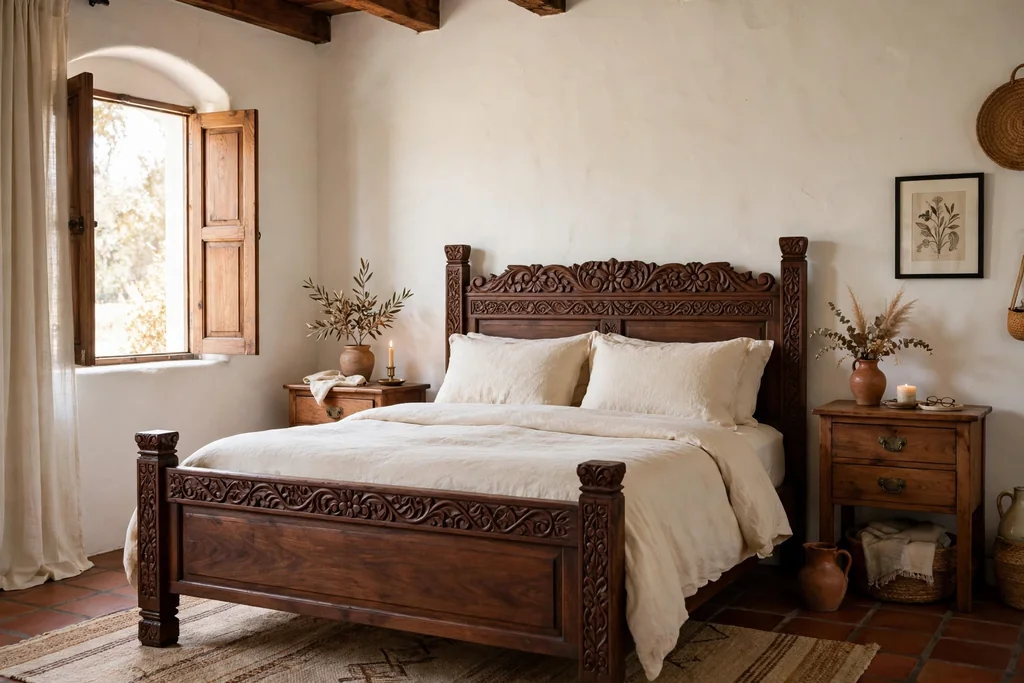
Choose a carved wood bed frame, in walnut or a warm dark wood, and dress it in plain linen bedding in cream or warm white. The carved headboard gives the bedroom its Spanish Colonial character, while plain bedding keeps the bed calm and easy to sleep in. This suits a main bedroom where the bed sits against a long blank wall and needs a focal point.
Layer cream sheets, a cream duvet, and one terracotta or olive throw at the foot, and keep cushions in cream and one accent tone only, so the bed reads as one calm block. Add wood nightstands and warm lamps, since a dark bed needs even light at night. If a full carved frame feels too heavy, a carved headboard alone, with a plain wood base, gives the same detail with less weight in the room.
10. A Plaster Fireplace With a Thick Wood Mantel
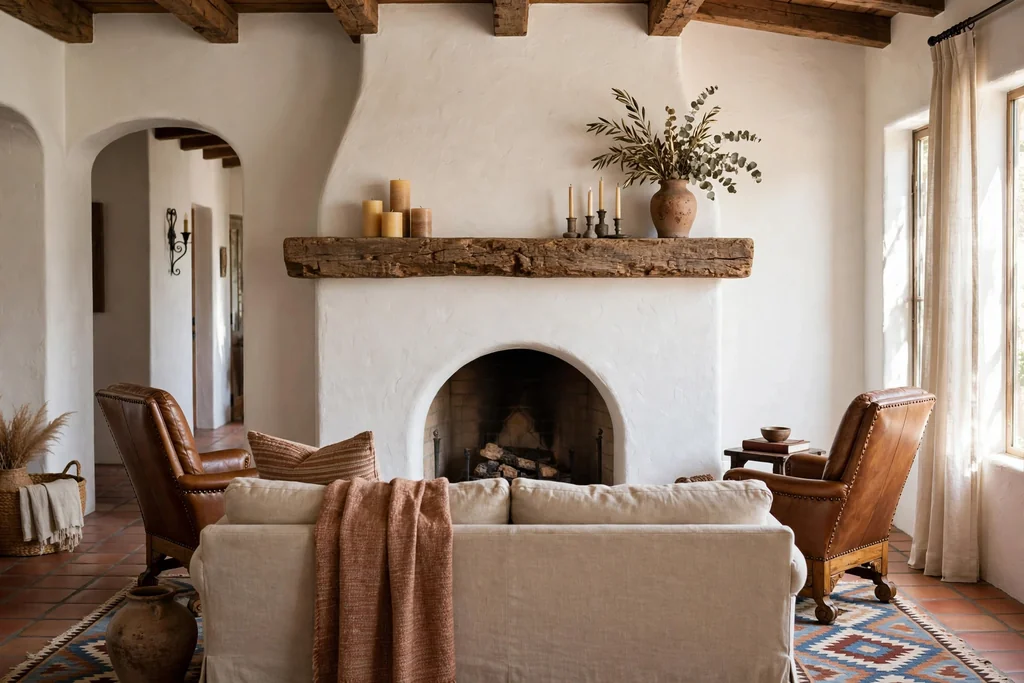
Make a plaster fireplace the center of the room, with a thick, rough wood mantel above it. Warm white plaster gives the fireplace a soft, hand finished look, while the wood mantel softens it and gives you a shelf for candles, a vase, or a framed print. This suits a room where conversation matters more than a television, since chairs naturally turn toward the fire.
Keep the hearth clear and safe, with no rug or fabric too close to the opening, and choose a low pile rug for the seating group in front of it. Style the mantel with three pieces at most: a candle group at one end, a vase in the middle, and a framed print at the other end. If your home has no working fireplace, a plaster surround around an electric insert gives a similar focal point without major building work.
11. Tile and Wood Details in the Bathroom
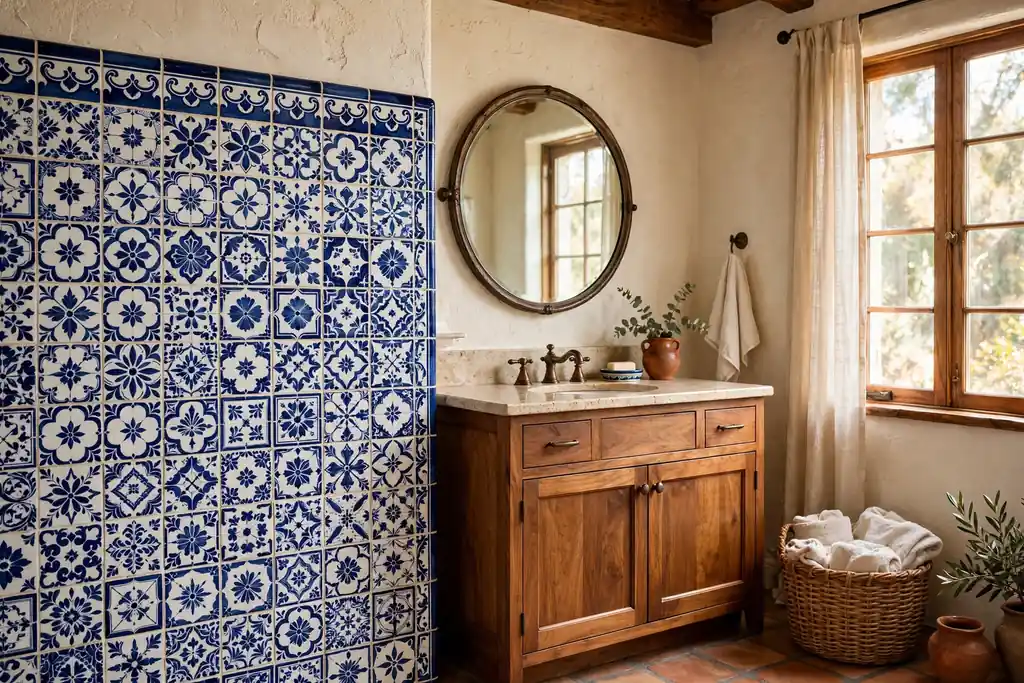
Bring Spanish Colonial warmth into the bathroom with hand painted tile on one wall, a wood vanity, and warm metal fittings in bronze or aged brass. Tile on the wall behind the basin, or around a shower niche, gives the room its pattern, while a plain plaster wall and a simple mirror keep it calm. This suits a bathroom that feels cold or plain, since tile and wood add warmth at once.
Keep the tile to one wall or one zone, and use plain tiles elsewhere, so the pattern does not crowd a small room. Choose a wood vanity with a sealed top, and wipe water from the wood after use, since bathroom damp can mark unsealed wood over time. Add a woven basket for towels and a terracotta pot with a plant that suits damp air, and keep the counter clear except for soap and one small tray.
Conclusion
Spanish Colonial style works best when warmth and restraint share the room. Start with plaster, terracotta, wood, and iron, then leave enough plain linen and pale wall space for those materials to breathe. Pick one strong feature per room, such as an arch, a tile backsplash, or a carved bed, and let comfort lead the rest: deep seats, good light, and surfaces that are easy to live with. Save the ideas that fit your home, start with the room you use most, and build the look one warm, practical detail at a time.
FAQs
What colors define Spanish Colonial home decor?
Warm white, terracotta, olive, walnut, and soft blue define the palette. Use warm white on the largest surfaces, terracotta and olive in smaller doses, and walnut or dark wood for furniture and beams. Keep the palette to four or five colors at most, and repeat each color at least twice, so the room looks planned rather than random.
How do I use Spanish Colonial style in a small home?
Use it in small doses: one arched mirror, a terracotta pot group, a tile backsplash, or a woven rug over a plain floor. Keep walls pale, choose slimmer wood beams or none at all, and let one strong detail carry the style while the rest of the room stays plain. Small rooms suit lighter wood tones and fewer patterned pieces.
Is terracotta tile practical for everyday floors?
Yes, if it is sealed as the maker directs and cleaned with a damp mop rather than harsh chemicals. Terracotta hides everyday wear well and suits kitchens, entries, and living rooms. Use a rug in seating areas for warmth, keep a mat by the door for grit, and wipe spills quickly, since unsealed clay can stain.
How can I add arches without building work?
Use an arched mirror, an arched bookcase, or an arched headboard to bring the curved shape into a room without changing the walls. Paint an arch shape on one wall, or use a freestanding arched screen, for a low cost trial before you commit. One arch in a room is often enough to set the tone.
What is the difference between Spanish Colonial and Mediterranean decor?
Spanish Colonial decor leans on darker wood, wrought iron, carved details, and terracotta, with roots in Spanish colonial homes in the Americas. Mediterranean decor covers a wider region, including Italy and Greece, and often uses lighter blues, whitewashed wood, and coastal details. The two styles share plaster, tile, and warm clay, so they mix well in one home.
How do I keep a Spanish Colonial room from feeling dark or heavy?
Balance every dark piece with a light one: pale plaster walls beside dark beams, cream linen beside a leather sofa, and plain bedding beside a carved bed. Use warm bulbs, keep windows clear of heavy curtains, and leave empty space on shelves and mantels. If a room still feels heavy, remove one patterned piece and see how the room breathes.