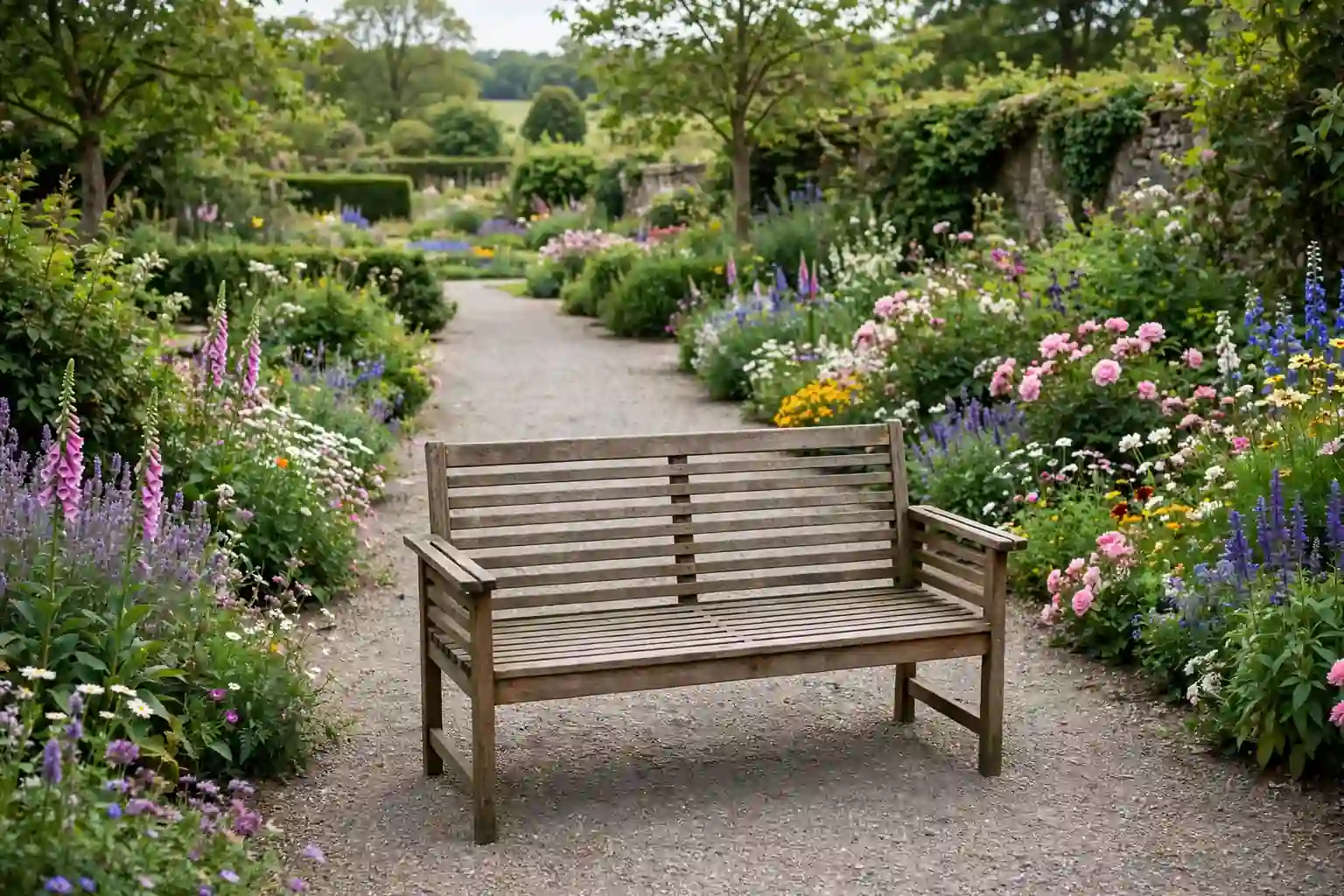
A garden bench is the simplest way to make a garden feel lived in. It gives you a place to pause with a cup of tea, watch the light move across the beds, and enjoy the planting you have worked hard to grow. The right bench also shapes how a garden looks, marking a path end, a quiet corner, or a view worth stopping for. These 14 garden bench ideas cover wood, stone, and metal seats, benches with storage and planters, and seats made for small, shady, or sloping gardens. Pick the spot first, then match the bench to it, and keep the path to it clear and dry.
Key Takeaways
- Choose the spot before the bench: light, view, shade, and a dry path matter more than the bench style alone.
- Match the material to the place: wood suits soft planting, stone suits a formal focal point, and metal suits a narrow cottage path.
- Give every bench a job: a reading seat, a potting rest, a tea spot, or storage, so it gets used rather than admired from the house.
- Leave room to sit and stand comfortably, with firm footing underfoot and plants kept clear of the seat edges.
- Add one comfort detail, such as a cushion, a side table, or scented planting nearby, and keep the rest simple.
1. Wooden Slatted Bench Under a Tree
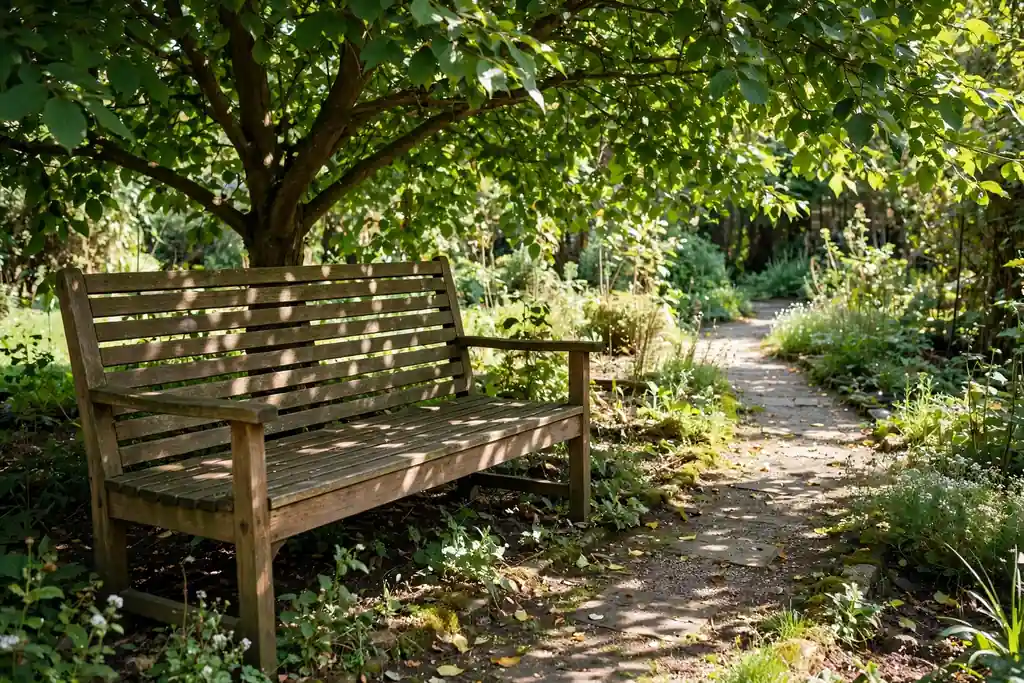
A wooden slatted bench under a tree is the classic garden seat for a reason. The slats shed rain, the wood warms in the sun, and the canopy gives dappled shade on hot days. Place the bench so it faces the best view from that spot, not just the trunk, and leave a clear step of paving or gravel at the feet so the ground stays usable after rain.
Choose a hardwood or a treated softwood suited to outdoor use, and check the seat height and depth before you buy, because a bench that is too low or too deep gets used less. Oil or seal the wood as the maker directs, and sweep leaves from the slats so damp debris does not sit on the surface through winter.
2. Stone Bench as a Lasting Focal Point
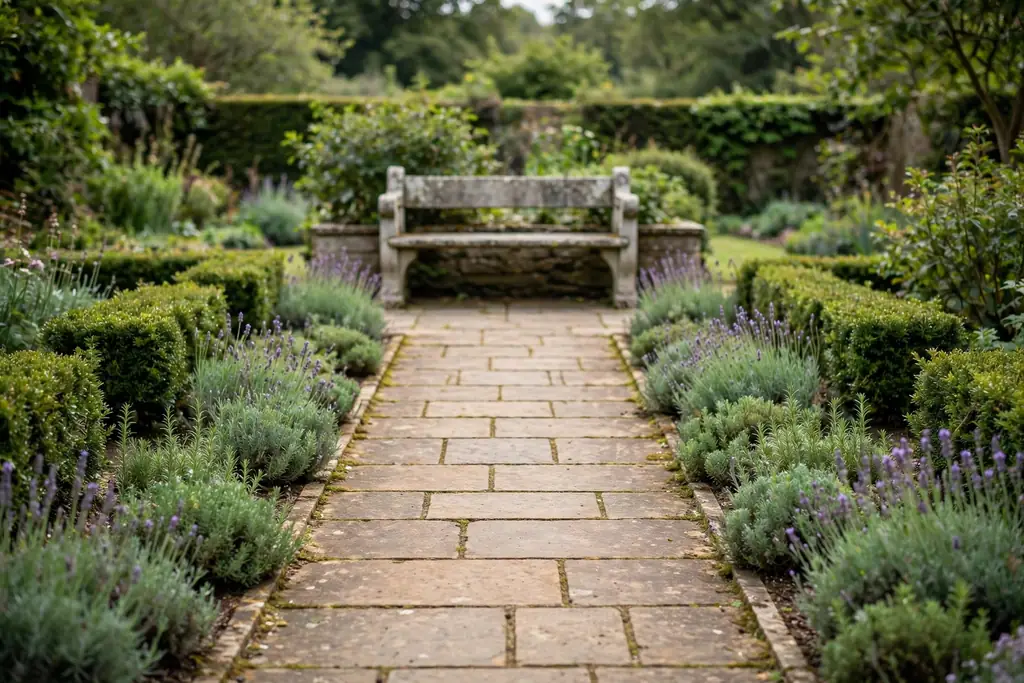
A stone bench works best as a deliberate focal point at the end of a path, across a lawn, or at the center of a formal bed. Its weight and stillness give a garden structure even in winter, when planting is bare. Because stone stays cool, it suits a sunny spot where a wooden seat would heat up, and it needs little care beyond an occasional wash.
Set a stone bench on a level, firm base so it does not rock or sink, and think about how it will be delivered and placed, since stone pieces are heavy and awkward to move later. Keep the planting around it low at the front so the seat stays easy to reach, and add a folded blanket or a thin cushion if you plan to sit there for a long stretch.
3. Bench With Planters at Each End
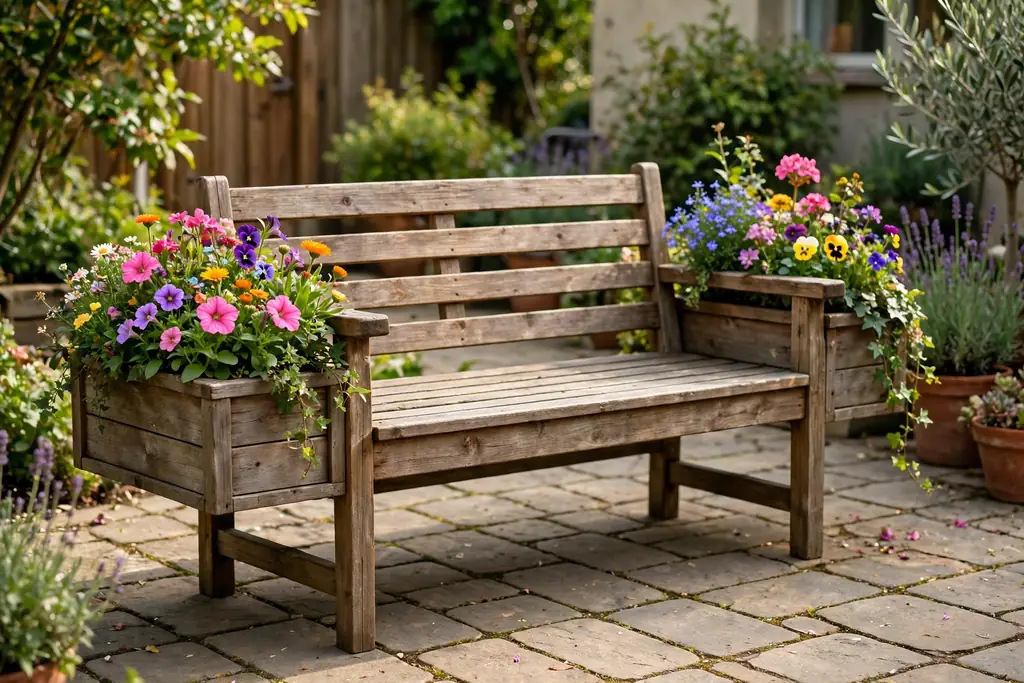
A bench with a planter at each end turns a simple seat into a framed garden feature. The planters mark the bench as a destination, soften its ends, and let you change the display with the seasons without replanting a whole bed. This design suits a patio edge, a front garden, or the end of a straight path where a plain bench might look lost.
Plant each side with the same mix so the pair reads as one design, and keep trailing plants trimmed back from the seat. For planting that pairs well with a seat, these pink flower garden ideas show how to group color in drifts rather than scattering single plants. Check drainage in the planters, and water them more often than beds, since containers dry out fast in sun and wind.
4. Storage Bench With a Lift Up Seat
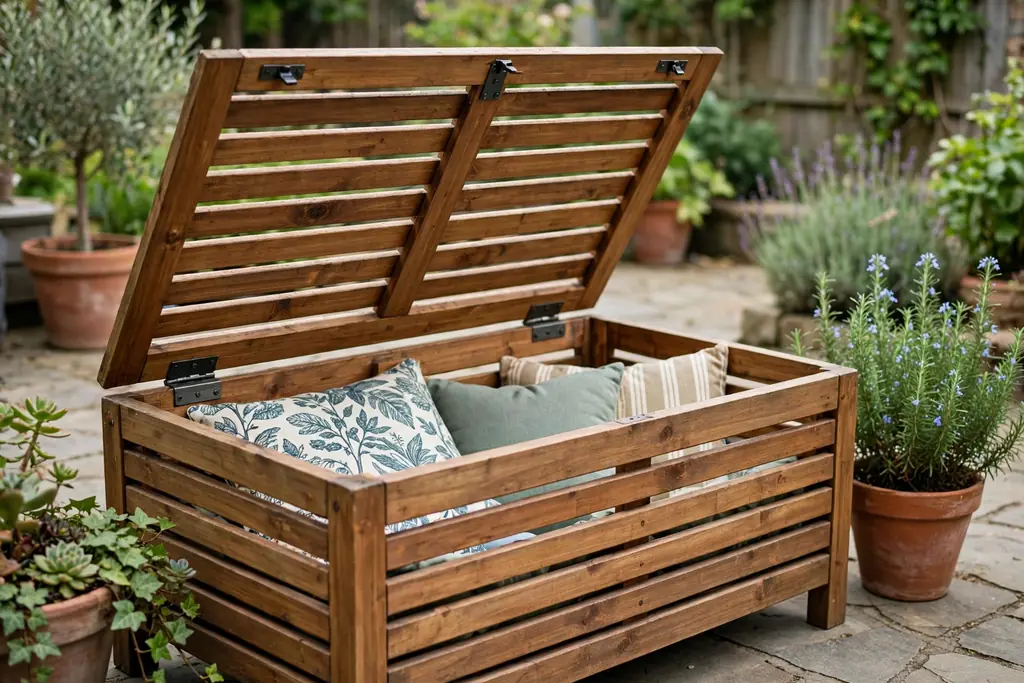
A storage bench earns its place by hiding the clutter that usually gathers near a back door: cushions, small tools, watering cans, and children’s garden toys. The lift up seat keeps those items dry and close at hand, while the bench itself still works as everyday seating for two people. This is the most practical bench for a small patio or a busy family garden.
Check the lid action before you buy, since a heavy lid with no stay can be awkward and can pinch fingers. Look for a bench made for outdoor use, with a lid that closes fully to keep rain out, and keep heavy items at the bottom so the box stays stable. Leave a little clearance behind the bench so the lid can open fully without hitting a wall or fence.
5. Circular Bench Around a Tree Trunk
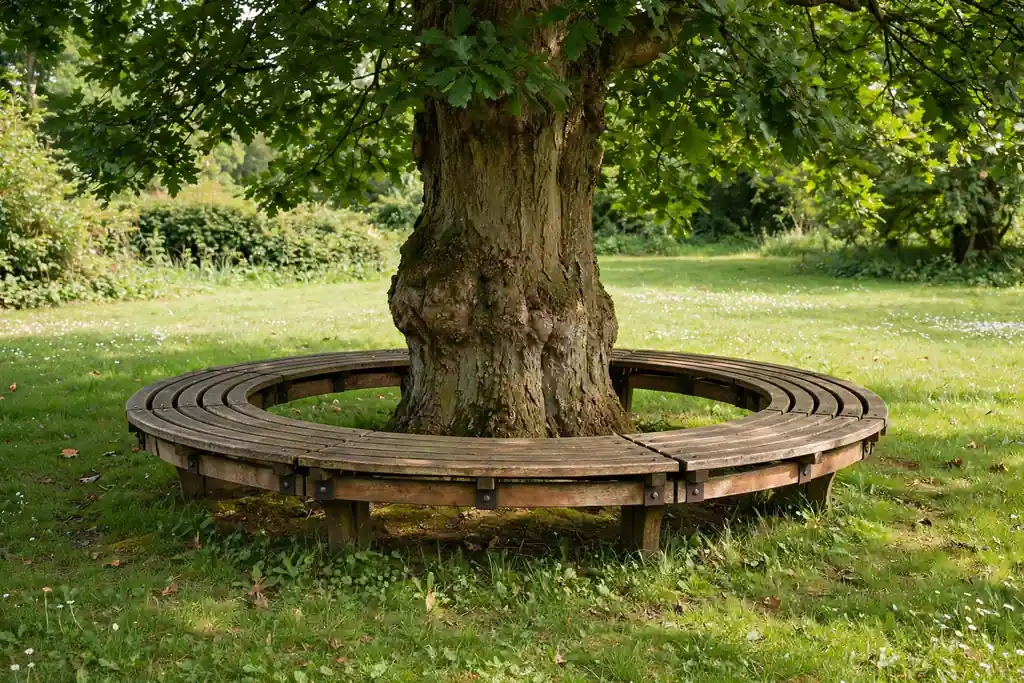
A circular bench around a tree trunk makes use of a spot that is often wasted: the shaded ring under a mature tree. It seats several people at once, faces outward in every direction, and gives children and adults a natural gathering place. Because the bench wraps the trunk, it also protects the roots from foot traffic directly at the base.
Leave a clear gap between the bench and the trunk so the tree can grow and air can move, and build or buy the bench in sections that can be adjusted or removed as the trunk thickens. Keep the seat height even all the way around, and choose a design with gaps or slats so fallen leaves do not pile up on the seat. This bench works best under a tree with a clean, straight trunk and a canopy high enough to sit under comfortably.
6. Bench and Side Table for Morning Tea
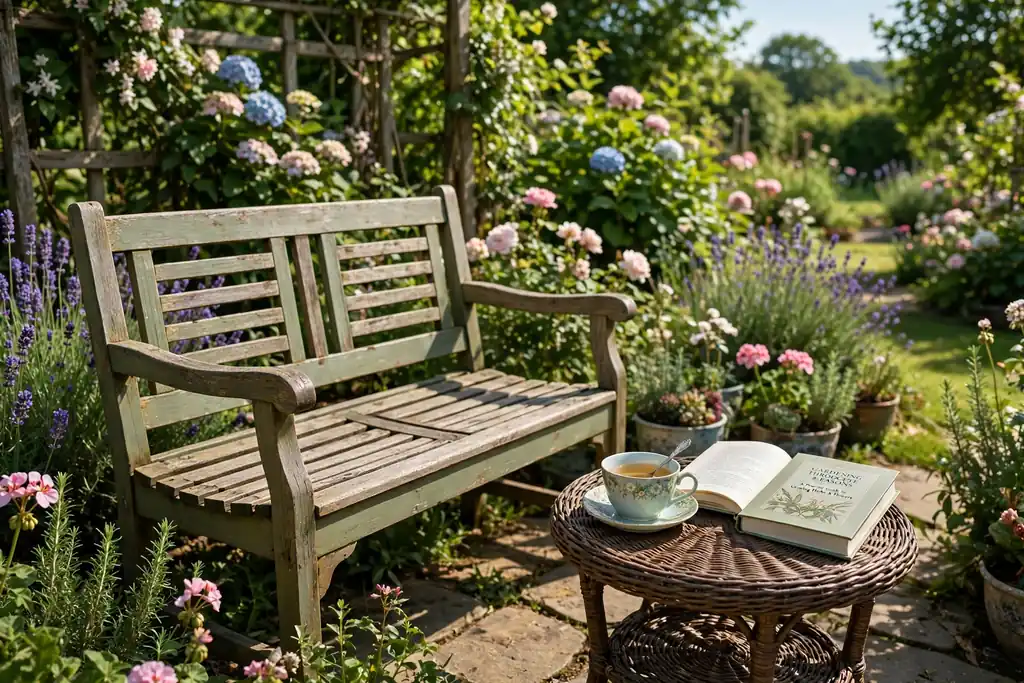
Pairing a bench with a small side table turns a seat into a morning routine. The table holds a cup, a book, and glasses, so you stay longer and use the bench more often. A low, stable table that matches the bench height matters more than a matching set, and a single table is usually enough for a two person bench.
Place the table on the side of your dominant hand if you sit there alone, or at one end if two people share the bench. The same practical thinking used in these fireplace seating ideas applies outdoors: give each seat a reachable surface, and keep the route past the bench clear. Choose a table heavy enough not to blow over, and bring cushions inside during wet spells.
7. Bench Under a Rose Arch
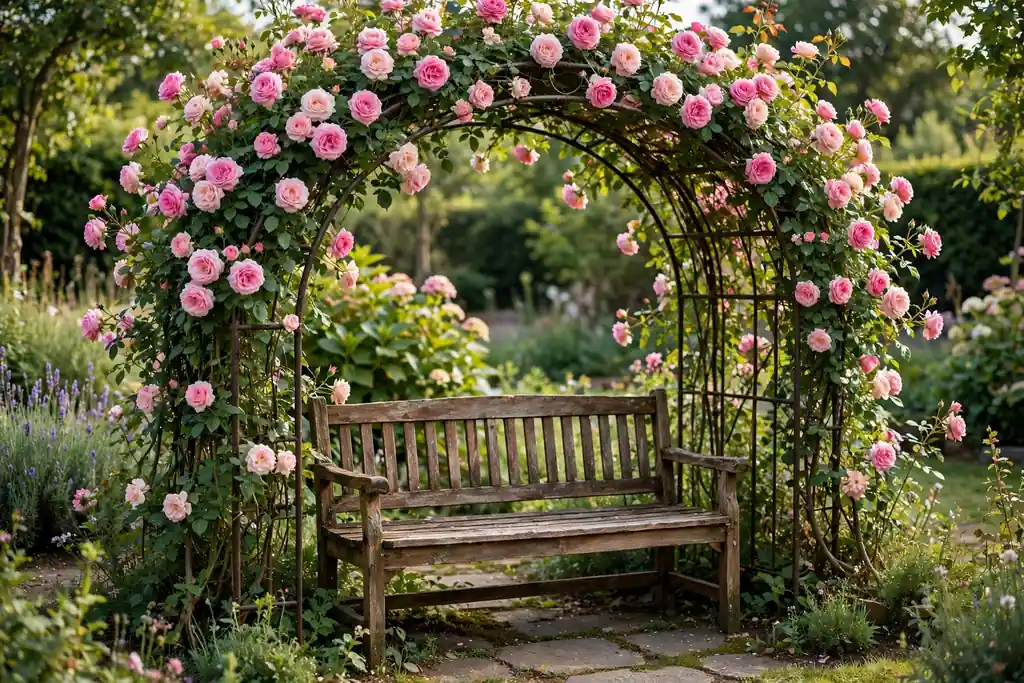
A bench under a rose arch creates a sheltered, scented pause on a garden walk. The arch frames the seat, gives climbing roses or jasmine something to grow over, and makes an ordinary stretch of path feel like a destination. This idea suits a long border, a walk between two garden rooms, or a path that needs a stopping point halfway along.
Site the arch where the bench will get morning or evening light rather than deep shade all day, and anchor the arch firmly so it does not lean as the planting grows heavier. Train climbers away from the seat itself so thorns and stems do not brush sitters, and prune after flowering as the plant type requires. A narrow bench fits this spot better than a wide one, because the arch already takes up visual space.
8. Bench Against a Wall or Fence With a Trellis
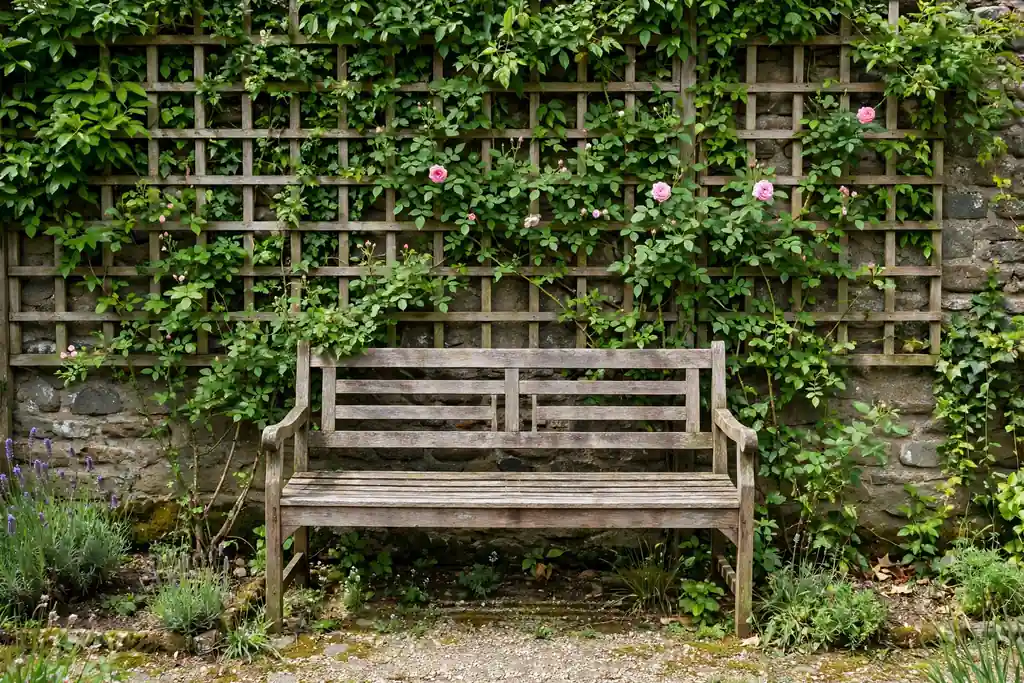
A bench against a wall or fence with a trellis behind it is a good answer for a garden with no room for a freestanding feature. The wall gives back support, the trellis adds height and greenery without taking bed space, and the whole arrangement stays tidy against one boundary. This suits narrow side gardens, courtyard gardens, and the sunny side of a house.
Fix the trellis with a gap behind it so air can move and the fence can dry, and choose climbers that suit the light on that wall. Keep the bench a hand span away from the wall so cushions do not trap damp against the surface. A light colored wall reflects light onto the seat, while a dark fence makes green foliage stand out, so pick the backdrop that suits the planting you plan to grow.
9. Rustic Log Bench for a Woodland Edge
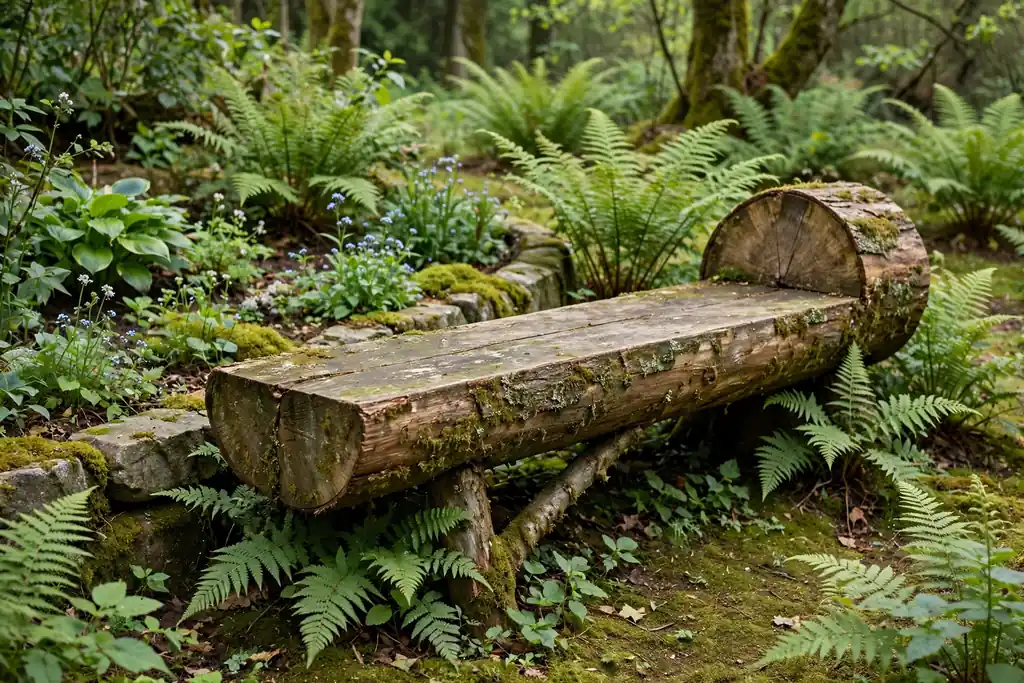
A rustic log bench suits a woodland edge, a wild corner, or a garden with a natural, informal feel. Made from a halved log on short legs or a thick slab on stump supports, it sits low and blends with bark, ferns, and leaf litter in a way a painted bench never will. It is a good choice where a formal seat would look out of place.
Check that the log is stable, dry, and free from soft rot before you use it, and set it on flat stones or gravel so the base stays out of standing water. Sand the top lightly to remove splinters, and accept that a log bench will weather and change color over time. That weathering is part of its appeal, but if the seat becomes rough or uneven, sand it again or replace the top piece.
10. Cast Iron Bench for a Cottage Path
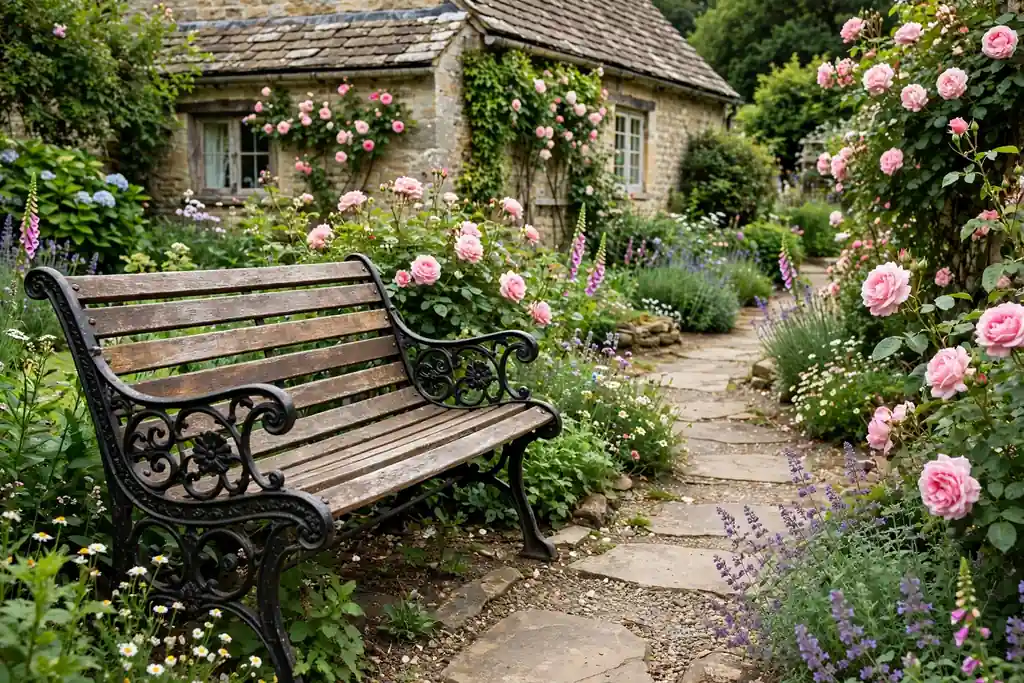
A cast iron bench with wooden slats brings a cottage garden feel to a path, a front garden, or a rose bed. The iron ends give it a decorative shape, the wooden seat keeps it comfortable, and the whole piece is heavy enough to stay put in wind. It suits a spot you pass every day, because its detail rewards a closer look.
Check the ironwork for rust each spring, and touch up paint where it has chipped so moisture does not take hold. Because the bench is heavy, decide its final position before you set it down, and place it on paving or gravel rather than soft soil where the feet can sink. If the path is narrow, measure the bench depth carefully so walkers can still pass without stepping onto the planting.
11. Bench at the Edge of a Vegetable or Cutting Garden
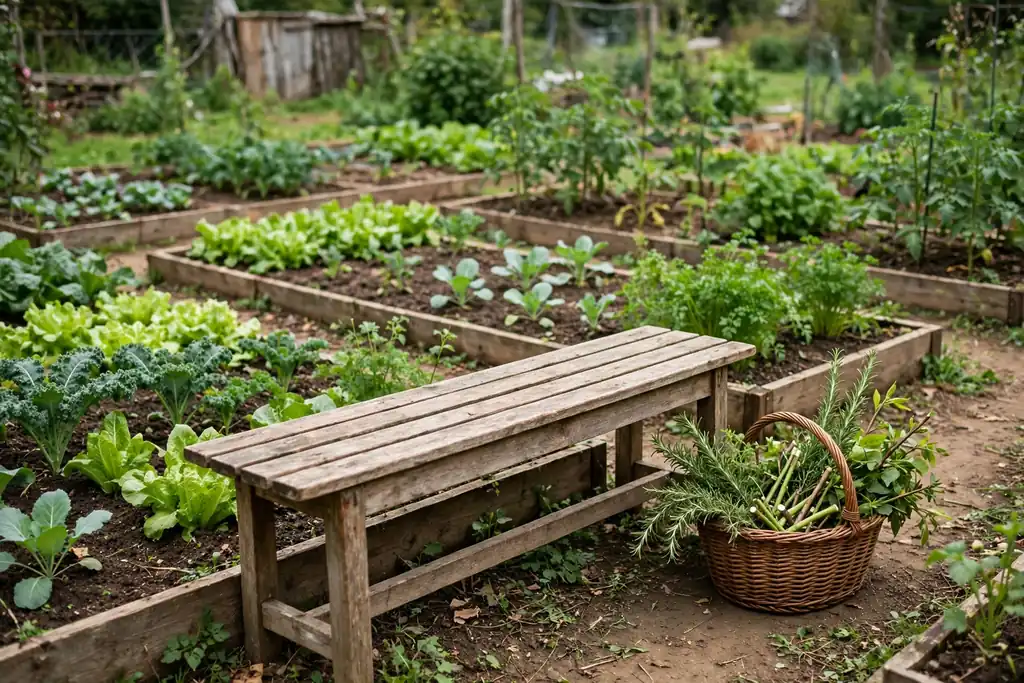
A bench at the edge of a vegetable or cutting garden is a working seat, not just a pretty one. It gives you a place to rest between tasks, sort a basket of cuttings, or plan the next row while you look at what is growing. Placing it at the edge, rather than in the middle of the beds, keeps it out of the way of wheelbarrows and watering.
Choose a bench that can handle a bit of soil and water, such as a plain wooden or metal seat that wipes clean, and keep it in a spot with some shade for midday breaks. A small hook or a crate beside it holds twine, snips, and gloves so tools do not end up on the seat. If the garden is large, one bench near the main path is more useful than two benches tucked into far corners.
12. Bench Beside a Pond or Water Feature
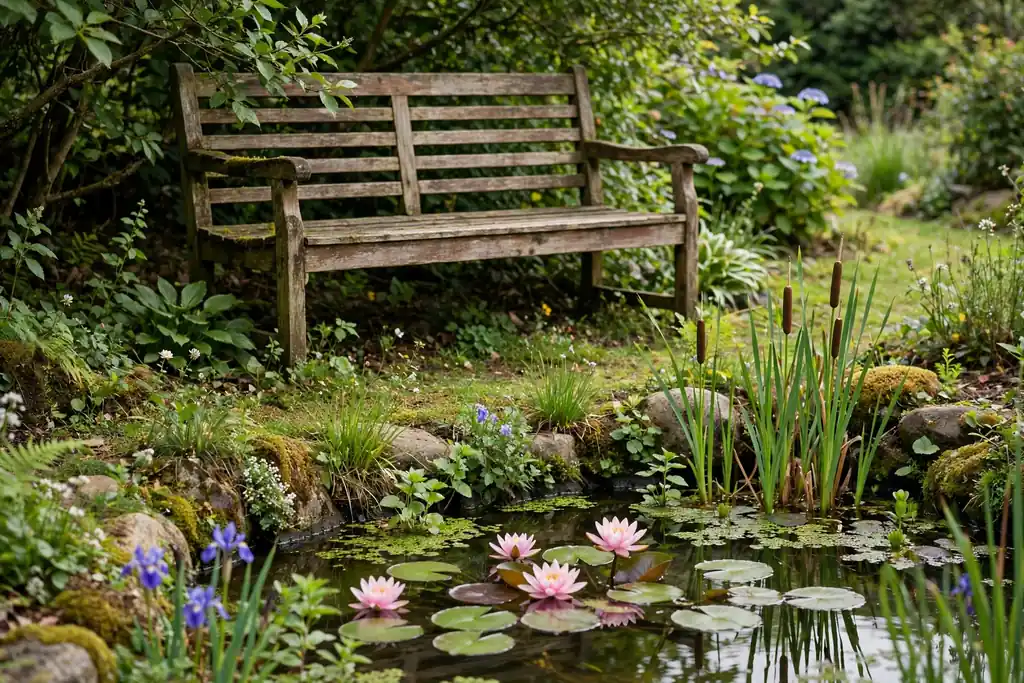
A bench beside a pond or a small water feature is made for quiet watching: birds, dragonflies, and the movement of water. The sound of water makes even a short sit feel restful, and the bench gives the feature a viewing point instead of leaving it as something you only glance at from the house. Place the bench back from the water edge, with a clear, dry footing, so the seat stays safe and comfortable.
Face the bench slightly across the water rather than straight at it, so the view includes planting on both sides. Avoid placing the bench where overhanging trees drop heavy debris into the water, and keep the seat clear of wet leaves, which can make wood slippery. In a garden used by small children, make sure the pond itself has the safety measures your household needs, since the bench will draw people toward the water.
13. Wall Mounted Fold Down Bench for a Small Garden
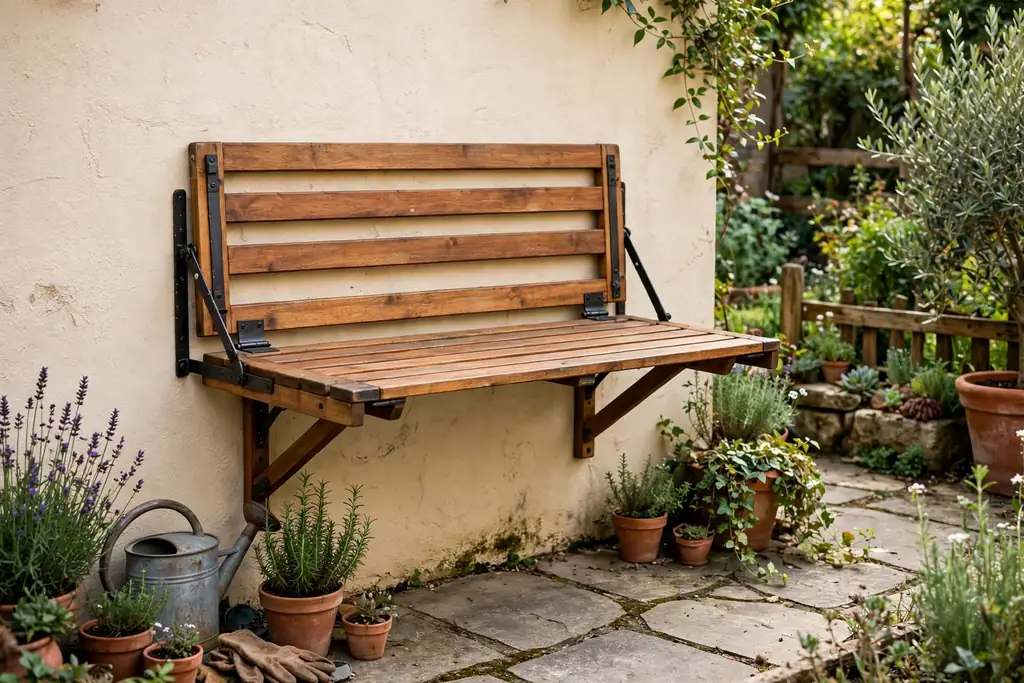
A wall mounted fold down bench is the best seat for a garden where floor space is the limiting factor. It folds flat against a wall or fence when not in use, leaving a balcony, a tiny patio, or a narrow side passage completely clear. Folded down, it gives one or two people a proper seat, which is far more useful than a chair that has to be carried out and stored each time.
Fix the bench to a solid wall or a strong fence post, following the maker’s fixings and weight limit, and test the fold mechanism before you rely on it. Keep the area below the bench clear so it can fold down fully, and choose a seat depth that still leaves room to stand in front of it. A small fold down shelf beside it, or a hook for a bag, makes the tiny seating area work harder without adding floor furniture.
14. Corner L Shaped Bench for a Patio
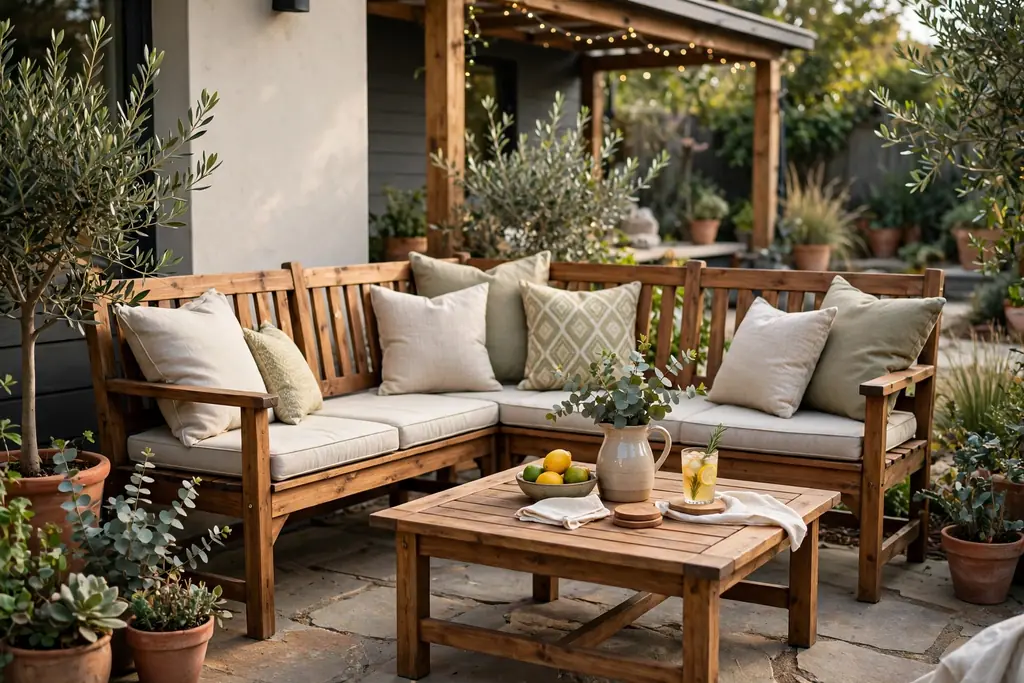
A corner L shaped bench turns a dead patio corner into the main seating area. By following two walls, it seats more people than a straight bench of the same length, leaves the center of the patio open, and pairs naturally with a table in the angle. This design suits patios used for meals, evening drinks, or family gatherings.
Measure the corner carefully, including any drain covers, steps, or door swings, before you build or order the bench. The same measured approach in these small living room layout ideas helps here: tape the footprint on the ground, walk the route past it, and check that everyone can get in and out without climbing over the table. Use outdoor cushions that can be stored quickly, and leave one end of the bench open so people do not feel trapped in the corner.
Conclusion
A good garden bench starts with the spot, not the catalogue. Walk the garden at different times of day, notice where the light falls, where you naturally pause, and where a dry path already exists, then choose the bench that fits that place. One well placed seat, used every day, will do more for a garden than several benches scattered where nobody stops. Pick one idea from this list, set it where you will actually sit, and add planting, a cushion, or a table only after the seat itself feels right.
Save this list on Pinterest before your next garden trip, and work through it one area at a time: spot first, then material, then the comfort detail that makes the bench yours.
FAQs
What is the best material for a garden bench?
There is no single best material, because the right choice depends on the spot. Wood is warm, comfortable, and suits most planting. Stone is lasting and suits a formal focal point, but it stays cool and is heavy to move. Metal with wooden slats suits a cottage path and is sturdy, but the ironwork needs rust checks. Choose the material that suits the weather, the footing, and how long you plan to sit there.
How high and deep should a garden bench seat be?
Most adults find a seat height of about 45 centimeters and a seat depth of about 40 to 45 centimeters comfortable, but bodies differ, so test a bench before you buy when you can. A seat that is too low is hard to get up from, and a seat that is too deep leaves shorter sitters without back support. If the bench has no back, a slightly shallower seat often feels better, since sitters can place their feet firmly on the ground.
Where is the best place to put a garden bench?
Put a bench where you already pause: at a path end, beside a view, under shade in summer, or near scented planting. Check the light at different times of day, keep the footing firm and dry, and leave room to sit and stand without stepping into a bed. A bench facing a fence or a blank wall gets used less than one facing planting, water, or a view, even if the view is simply a favorite border.
How do I keep a wooden garden bench in good condition?
Keep the bench clear of standing water and damp debris, and clean it with water and a stiff brush when it looks grubby. Oil or seal it as the maker directs, usually once a year, and store cushions indoors during wet spells. Check joints and fixings each spring, tighten anything loose, and sand rough patches before they become splinters. A bench under cover in winter will last longer than one left fully exposed.
Can I put a bench in a very small garden?
Yes, and a small garden often benefits most from a seat, because it gives you a reason to step outside. Use a wall mounted fold down bench, a narrow bench against a fence, or a short two person bench at a path end. Keep the rest of the area clear, choose a bench that does not block a door or a route, and add planting vertically with a trellis rather than taking up floor space with large pots.
Should a garden bench face the sun or the shade?
It depends on when you use it. A bench in morning sun suits breakfast and early reading, while a bench in afternoon shade suits hot summer days. If you only have one bench, dappled shade under a tree or an arch is often the best compromise, since it stays usable for more of the day. You can also move cushions and a small table to adjust comfort, but you cannot move a heavy fixed bench once it is set.