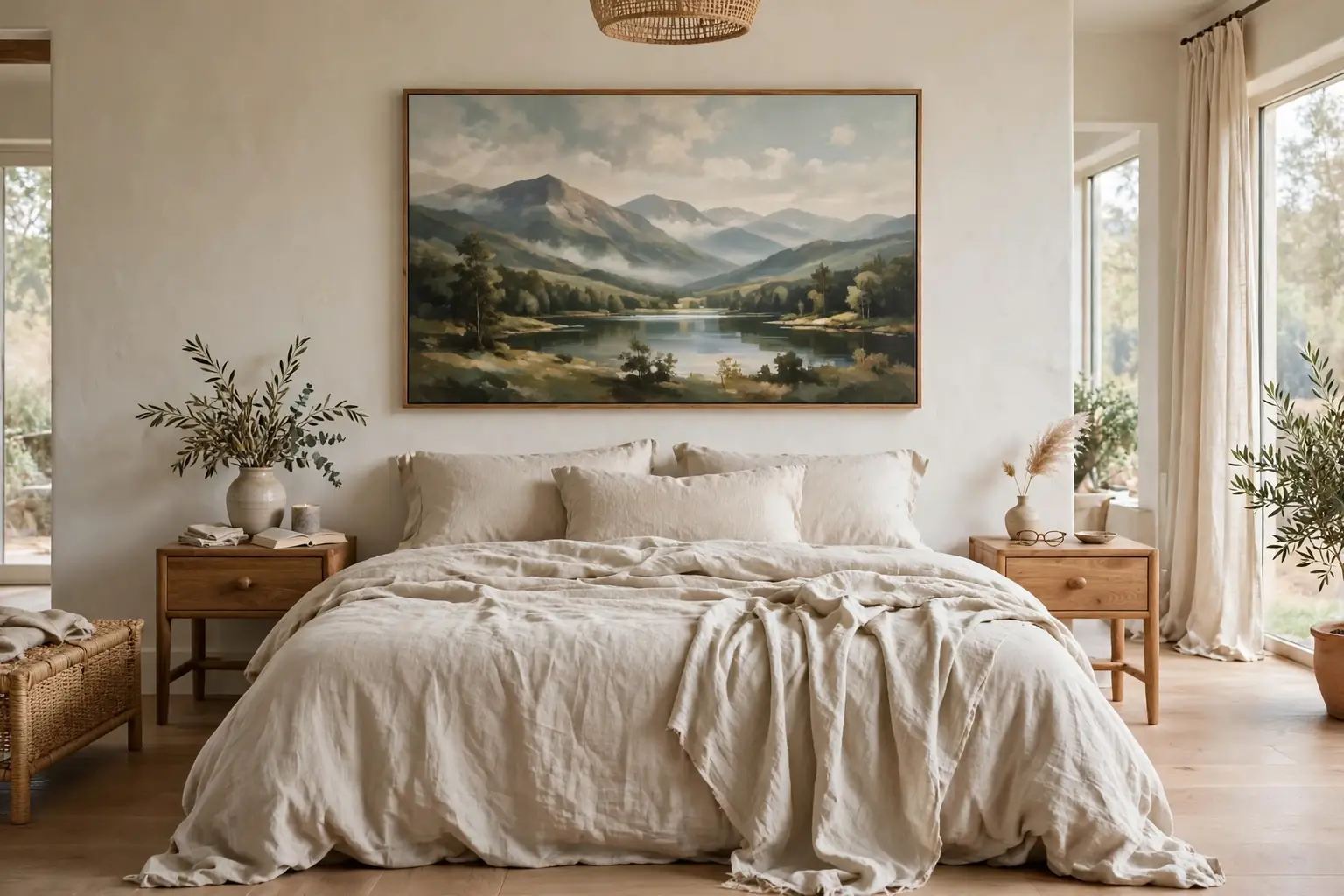
The wall above the bed is often the largest empty wall in a bedroom, and it is also the first wall you see when you walk in. A single large piece, a neat row of frames, or a soft woven hanging can give the bed a clear focal point and make the whole room feel finished. These 24 above bed decor ideas cover art, mirrors, shelves, panels, and texture, so you can pick one idea for a quick change or combine a few for a fuller refresh. Start by measuring the bed width, then choose a piece that spans about two thirds of it, and hang it low enough to connect with the headboard rather than floating near the ceiling.
Key Takeaways
- Size art to the bed: aim for a display about two thirds of the bed width, so it looks planned rather than lost or crowded.
- Hang art low: leave roughly 6 to 8 inches between the bottom of the piece and the top of the headboard, or above the pillows if there is no headboard.
- Pick one lead idea per wall: one large canvas, one mirror, or one shelf row, and keep the rest of that wall quiet.
- Repeat one color or material from the display in the bedding or a cushion, so the wall feels linked to the bed.
- Use light fixings for woven, paper, and small framed pieces, and proper wall anchors for mirrors, shelves, and heavy panels.
- Choose a swappable display, such as ledges or clip rails, if you like to change art with the seasons.
1. Hang One Oversized Canvas Landscape
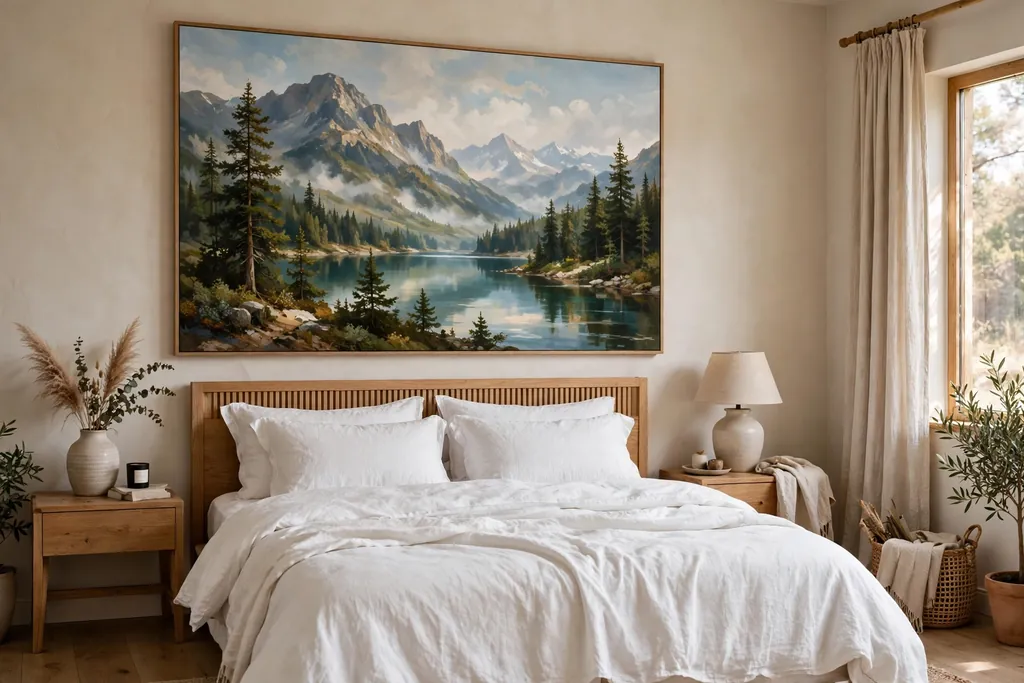
Hang one oversized canvas landscape above the bed for a calm focal point that needs no other art on that wall. A wide scene in soft greens, blues, or warm neutrals suits a bedroom because it reads as one quiet view rather than a busy pattern. Choose a canvas about two thirds of the bed width, so it anchors the bed instead of looking like a small poster on a large wall.
Hang it so the bottom edge sits 6 to 8 inches above the headboard, and keep the bedding plain so the canvas stays the focus. If the room is small, pick a canvas with plenty of light sky or pale background, which keeps the large piece from feeling heavy. Use two fixings for a wide canvas, so it stays level.
2. Span the Bed With a Triptych
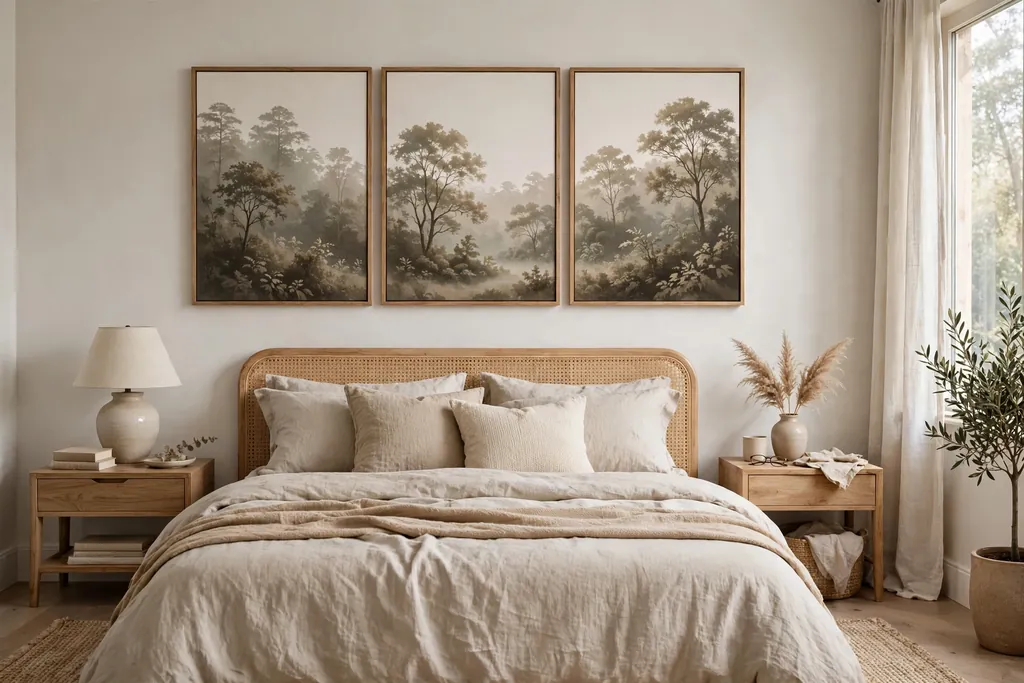
A triptych, one image split across three panels or three related prints hung as a set, spans a wide bed neatly without the weight of a single huge frame. The gaps between panels let the wall color show through, which keeps the display light even on a large wall. Landscapes, soft abstract washes, and botanical triptychs all suit a bedroom because they read as one calm scene.
Hang the panels the same size, 2 to 4 inches apart, with the center panel centered on the bed. For a single or small double bed, choose narrow panels so the set does not crowd the bedside lamps. Lay the panels on the floor first and mark the full width with painter tape before you hang anything.
3. Build a Symmetrical Grid Gallery
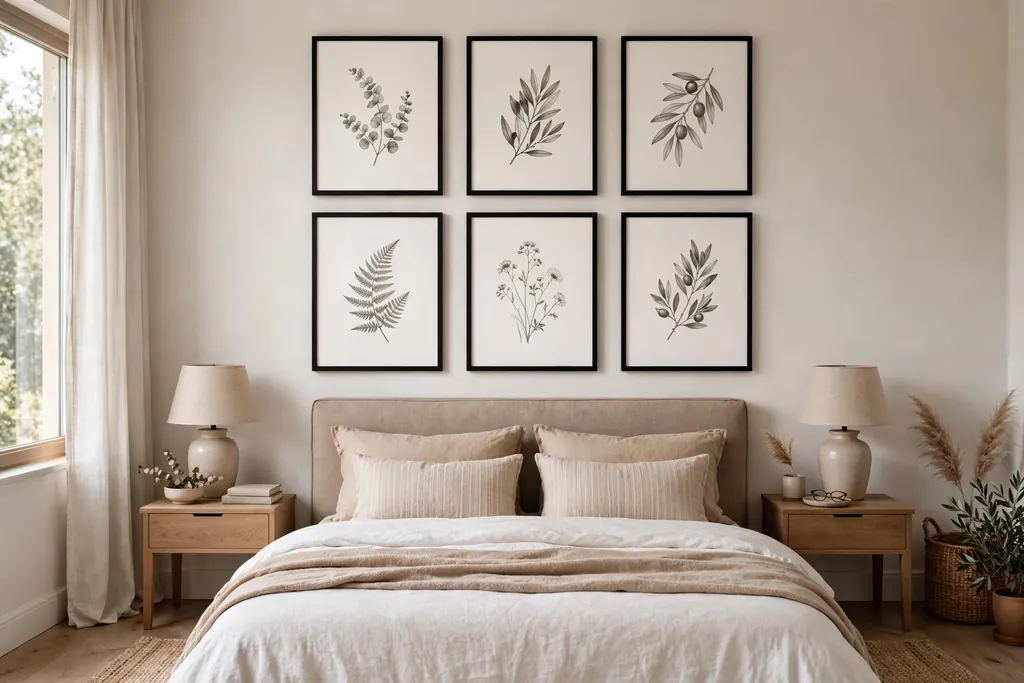
A grid of matching frames gives instant order to the wall above the bed, which helps if the rest of the room is busy. Use nine frames in three rows of three, or six frames in two rows of three, with equal gaps of 2 to 3 inches between them. Keep the frame color and mat size the same, and let the prints vary only in subject, so the grid reads as one display.
This layout suits a bed with a low headboard or no headboard, where the grid itself becomes the headboard shape. Measure the full block on the floor first, then mark its center on the wall above the bed. If you use family photos, keep them in the same tone, such as all black and white, so the grid stays calm at night.
4. Hang a Woven Tapestry
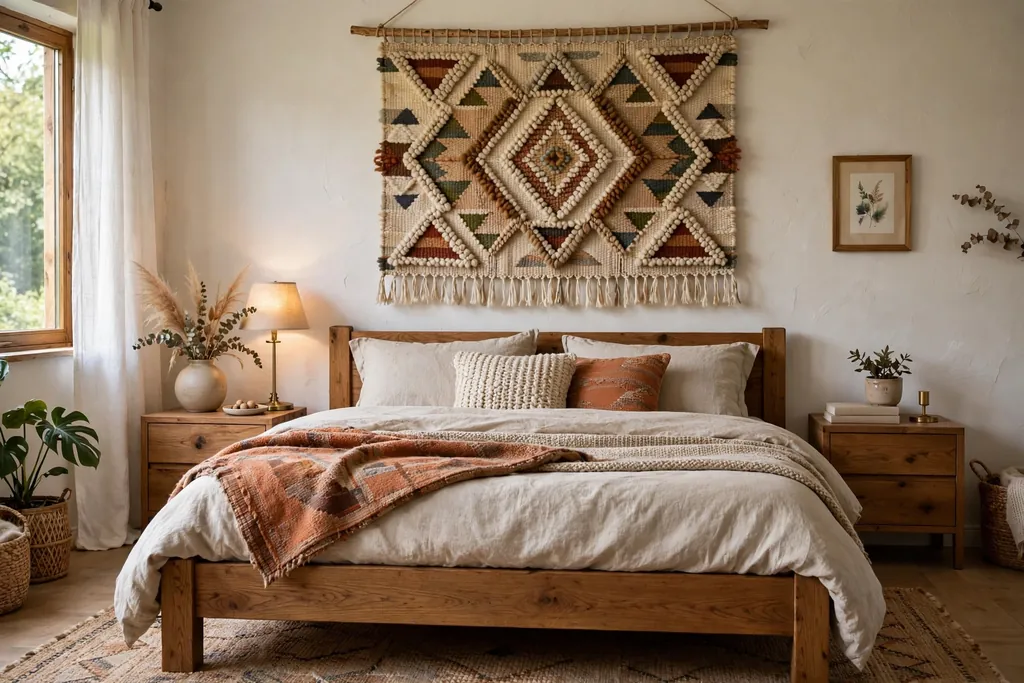
A woven tapestry adds texture and warmth, and it suits a bedroom better than a hard frame in a room where you want softness. Hang it from a wooden dowel or a slim rod, and let it fall flat against the wall so it does not billow at night. Geometric patterns suit a modern room, while landscape or floral weaves suit a more traditional one.
Tapestries are light, so they are a good choice for a wall that cannot take heavy fixings, and they suit a rented room. Keep the wall behind the tapestry plain so the weave shows clearly, and keep the bedding in a tone from the tapestry. Shake it outside now and then, and keep it out of direct sun so the colors hold.
5. Add a Macrame Wall Hanging
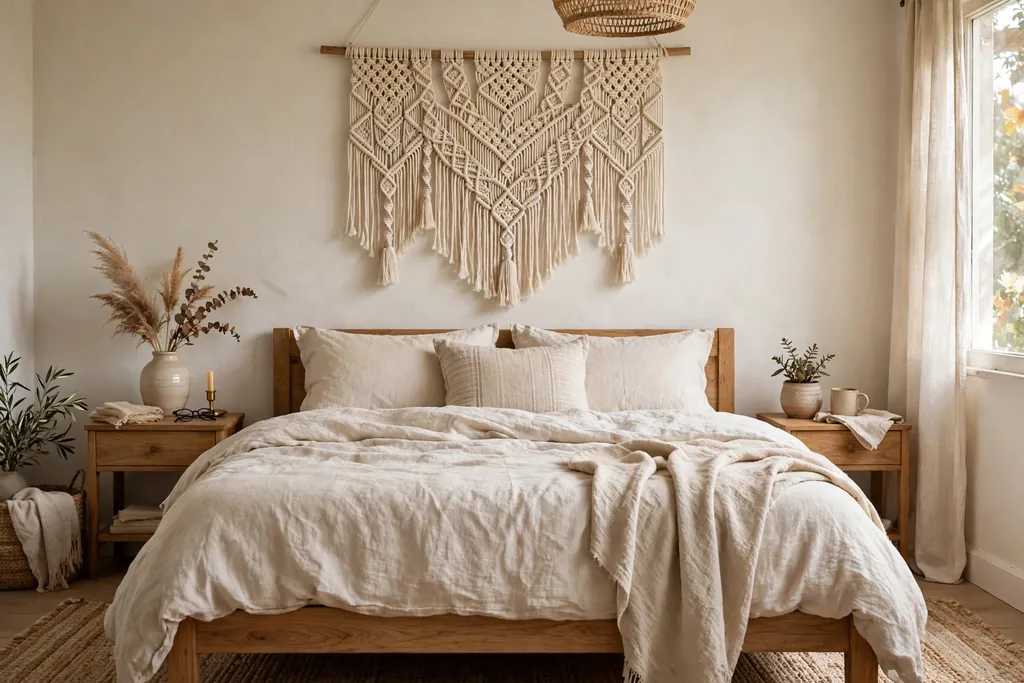
A macrame hanging adds soft texture and a handmade feel above the bed, and it suits a relaxed bedroom with linen bedding and wood furniture. Hang it from a wooden dowel centered on the bed, and let the fringe fall freely above the headboard. Cream or natural cotton suits most bedding, while a dyed piece can add a gentle accent color.
Keep the wall behind it plain so the knot work shows clearly, and keep the hanging clear of pillows so it does not get pulled at night. Macrame is light and easy to hang, so it suits a rented room, and it pairs well with plants and woven baskets nearby. Choose a width about half to two thirds of the bed width, so it does not look lost.
6. Center a Large Arched Mirror
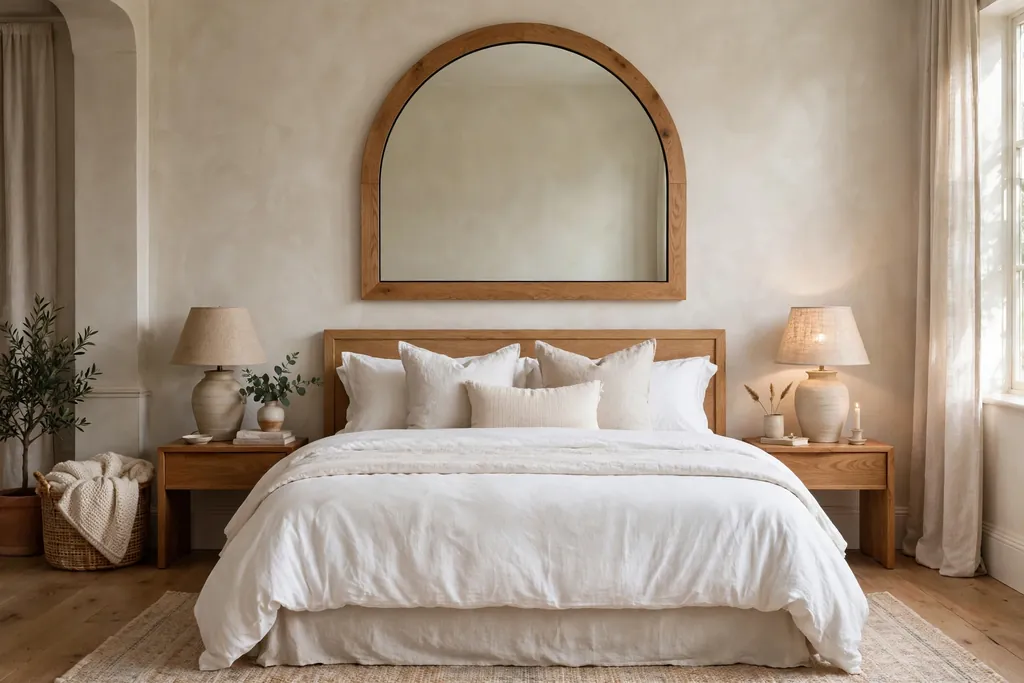
A large arched mirror above the bed bounces light around the room and makes a small or dark bedroom feel more open. The arch shape softens a plain wall, and a slim brass, black, or wood frame keeps it from feeling like a bathroom mirror. This suits a bedroom with a window opposite the bed, since the mirror can reflect daylight.
Hang the mirror centered on the bed, with its bottom edge above the headboard and clear of pillows. Check what the mirror reflects before you fix it: a view of a window or a plant looks good, while a view of clutter does not. Use fixings rated for the mirror weight and the wall type, since mirrors are heavier than they look.
7. Fit Floating Wood Shelves
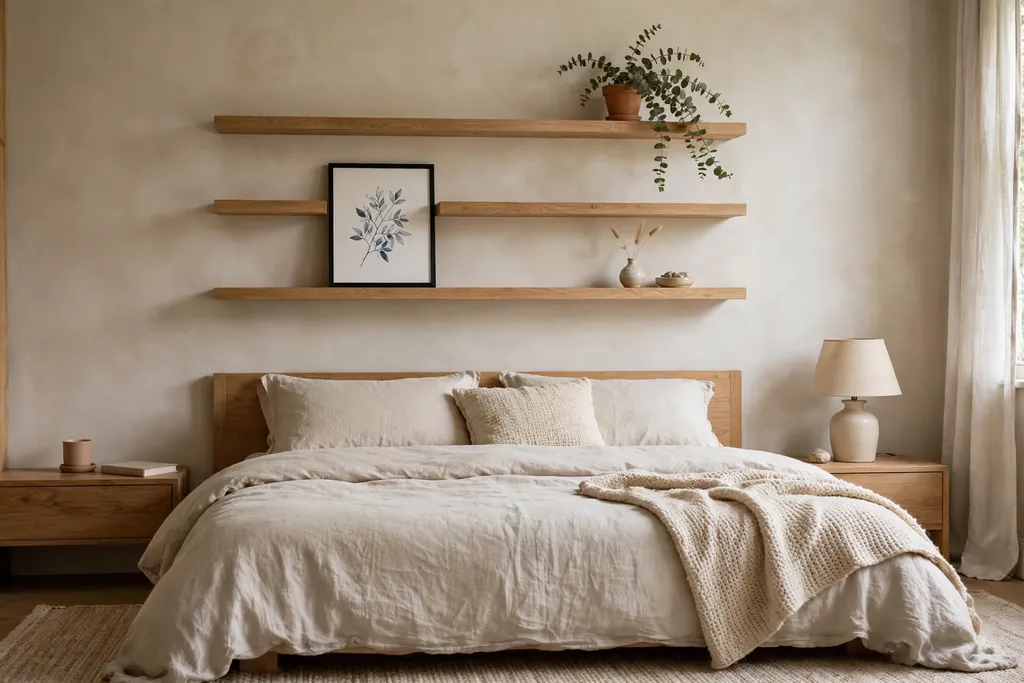
Fit two floating wood shelves above the bed for display space that adds wood warmth without a new piece of furniture. Use the lower shelf for a small framed print and a plant, and the upper shelf for books or a vase, with space left empty at each end so the row does not look packed. This suits a bedroom with limited floor space, since it uses wall space above the bed.
Keep the shelves level, the same depth, and centered on the bed, and fit them high enough that you do not bump them when you sit up. Use wall anchors suited to the shelf load, and keep heavy items near the brackets. If you rent, check that the wall can take the fixings before you drill.
8. Layer Frames on Picture Ledges
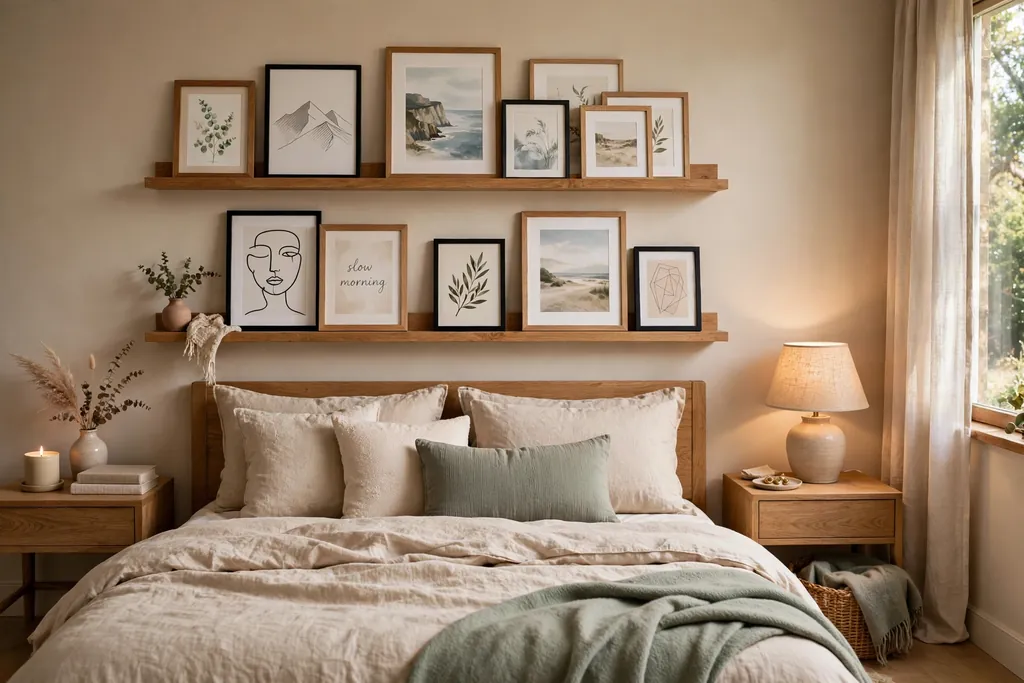
Picture ledges let you layer frames of different sizes above the bed without committing to a fixed layout. Fit one or two long ledges, then stand frames on them, with larger pieces at the back and smaller ones in front. You can swap a print in minutes, which makes ledges ideal for seasonal changes or for testing a gallery before you hang it properly.
Keep the ledge depth in mind: shallow ledges suit flat frames, while deeper ones hold small objects too. Leave one end of the ledge empty so the display does not look packed, and keep the frames clear of pillows. For more frame and gallery ideas, see these bedroom wall art ideas.
9. Paint a Soft Arch Behind the Bed
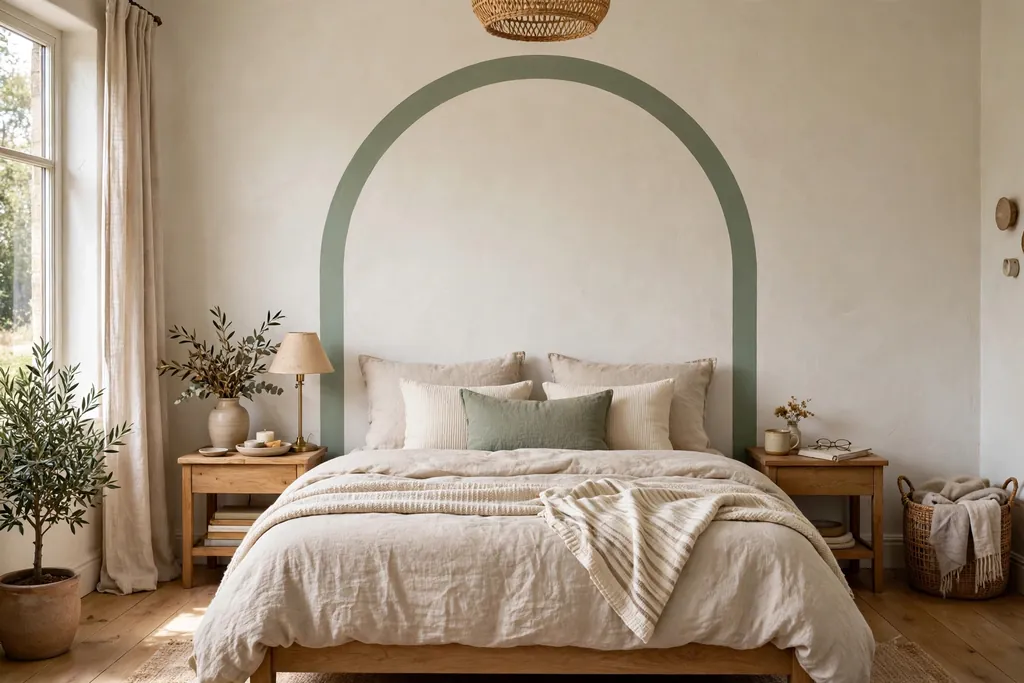
A painted arch on the wall behind the bed gives the bed a clear shape even if you have no headboard. Paint a wide arch in a soft tone, such as sage, clay, or warm grey, with its base just behind the pillows and its top well below the ceiling. The arch frames the bed like a headboard, and it costs far less than a new bed frame.
Mark the arch with painter tape and a simple template, such as a string tied to a pencil, so the curve stays even. Keep the other walls plain and the bedding mostly solid, so the arch stays the focus. If you rent, use a removable arch decal in the same shape instead of painting directly on the wall.
10. Use a Removable Wallpaper Panel
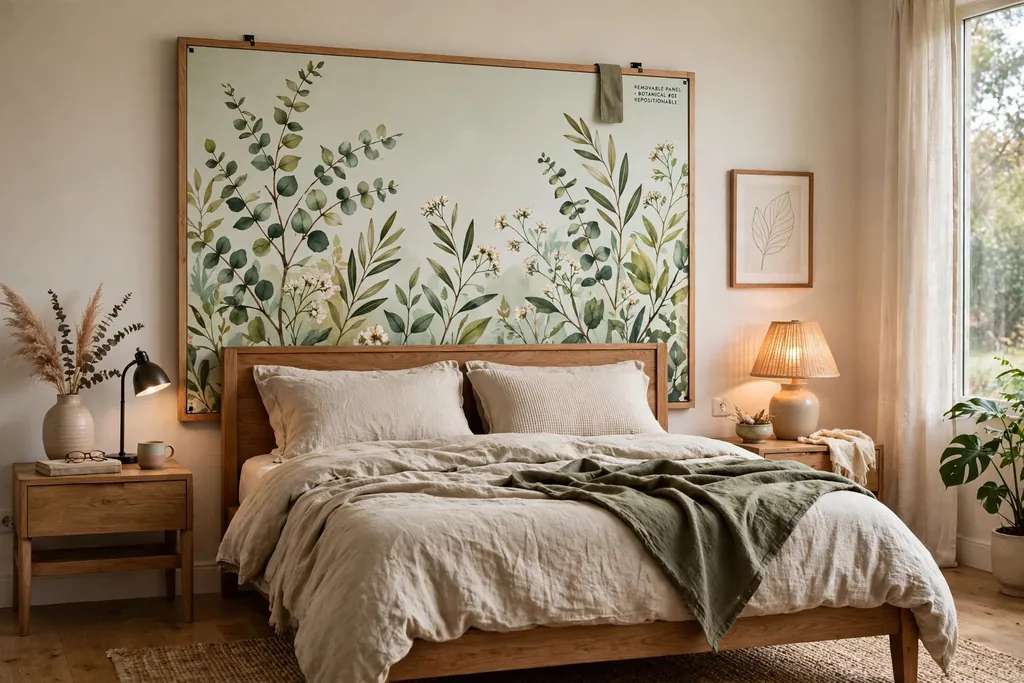
A removable wallpaper panel behind the bed adds pattern to one wall without papering the whole room. Choose a panel as wide as the bed, or slightly wider, in a pattern with plenty of background space, so it reads calmly at night. Botanical, stripe, and soft geometric patterns all work, as long as one color repeats in the bedding.
Apply the panel from the top down, smoothing out air bubbles as you go, and trim it neatly at the ceiling and the headboard line. Keep the side walls plain, and keep art on this wall to a minimum, since the pattern already carries the detail. This is a good renter friendly option, since the panel peels off without damage when you move.
11. Fit a Wood Slat Accent Wall
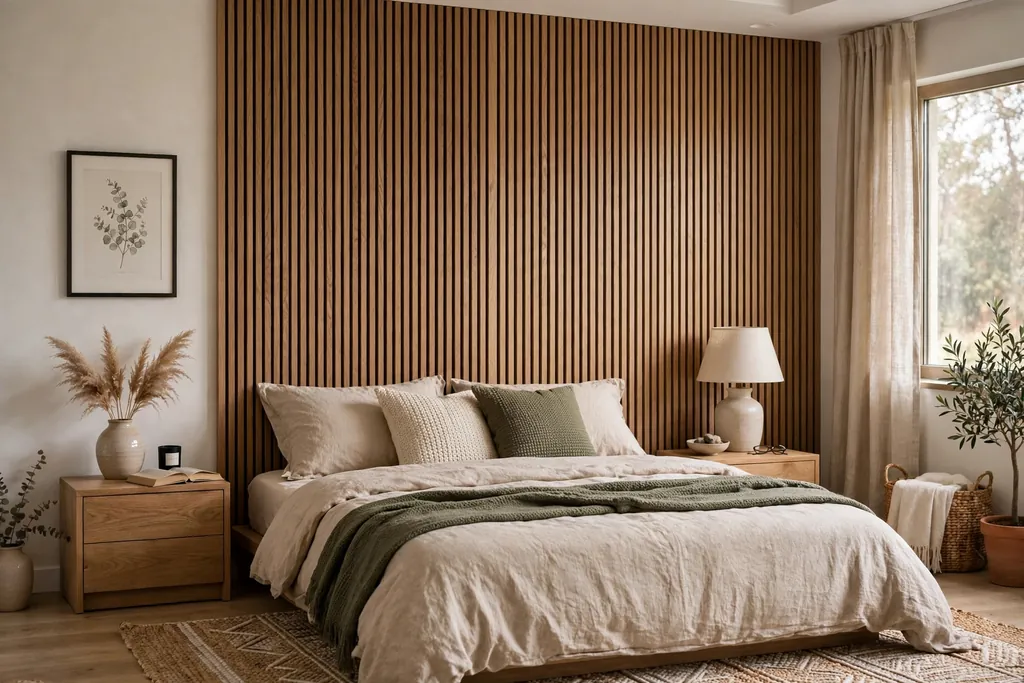
Vertical wood slats on the wall behind the bed add warmth and rhythm without the weight of a full plank wall. Use slim slats in a light oak or warm walnut tone, spaced evenly, and run them from just above the headboard to near the ceiling. The slats suit a plain bedroom where the bed wall feels empty, and they work with a simple wood or upholstered bed.
Keep the slat tone close to other wood in the room, such as nightstands or a dresser, so the wall feels linked to the furniture. Leave the side walls plain and the bedding mostly solid, so the slats stay easy to see. If the room is small, choose a light wood tone, since dark slats on a full wall can make a small room feel closed in.
12. Hang a Row of Botanical Prints
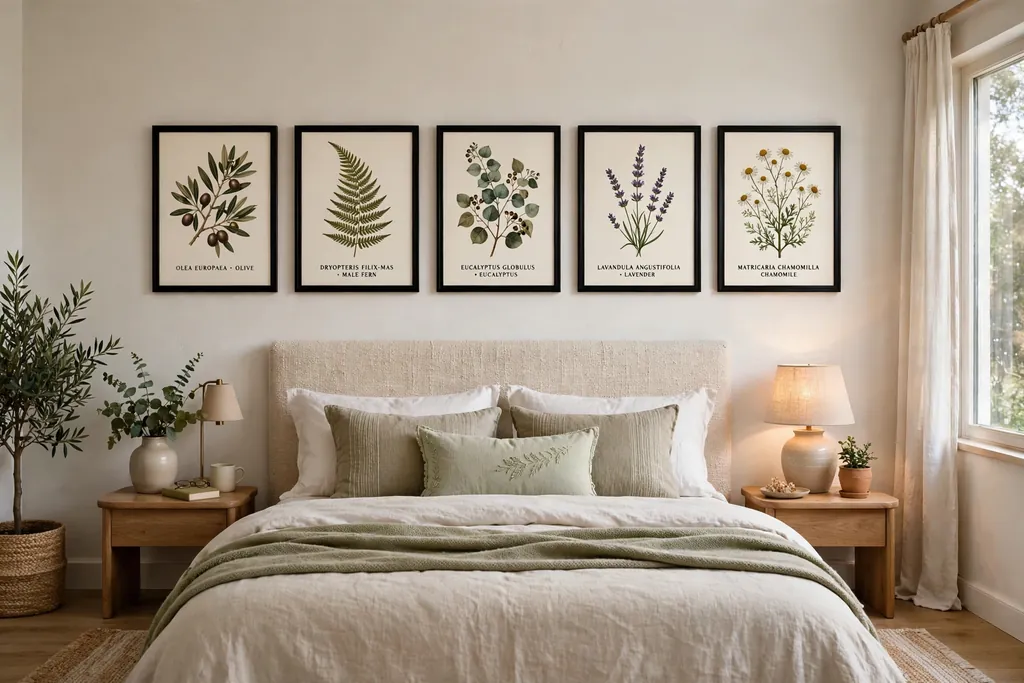
A neat row of botanical prints brings a garden feel above the bed, and it suits a bedroom that already has plants or green bedding. Use four or six prints in matching frames, hung in a single row above the headboard. Pressed flower prints, vintage plant plates, and simple leaf line drawings all work, so pick one style and stick to it.
Space the frames evenly and keep the row centered on the bed, with the full row spanning about two thirds of the bed width. If your room is small, a row of four small prints gives the same effect without crowding the wall. Keep the bedding plain, and repeat one green tone from the prints in a cushion.
13. Make a Black and White Photo Wall
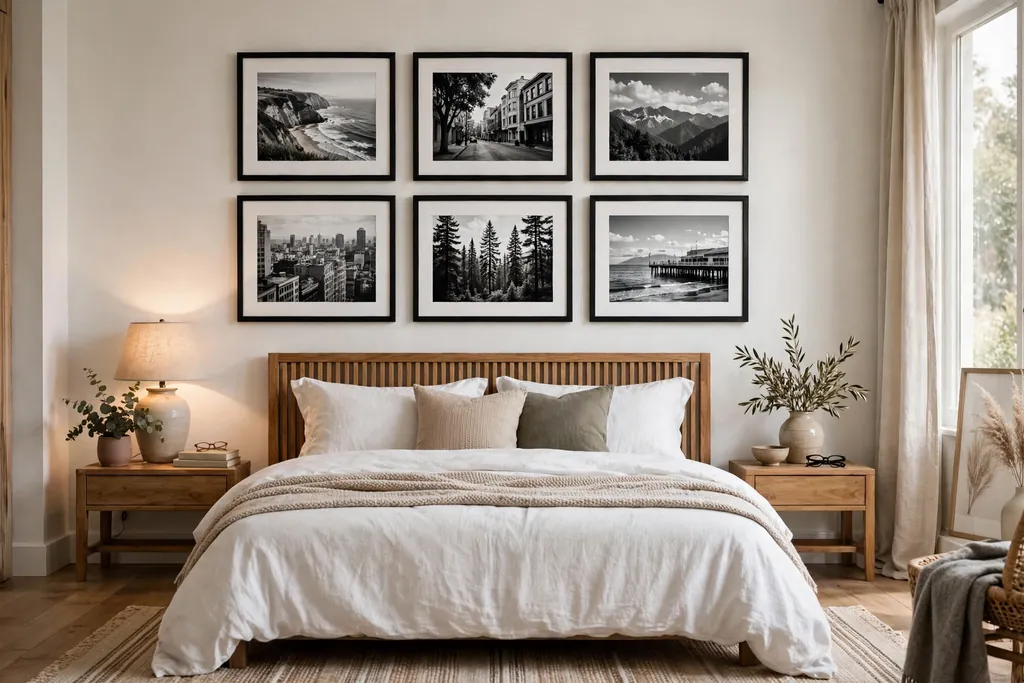
Black and white photographs give the wall above the bed a calm, personal feel, and they suit almost any bedding color. Print family photos, travel shots, or portraits in the same size, and use simple white or black frames so the images stay the focus. A loose, even arrangement above the bed feels collected rather than formal, while a strict grid feels tidier.
Print at a decent size: small phone prints can look lost above a large bed, so group small prints tightly or choose fewer, larger ones. Keep the frames in one finish, and leave even gaps between them, so the display reads as one group. Avoid hanging very personal photos where guests sleep if you would rather keep them private.
14. Hang a Metal Wall Sculpture
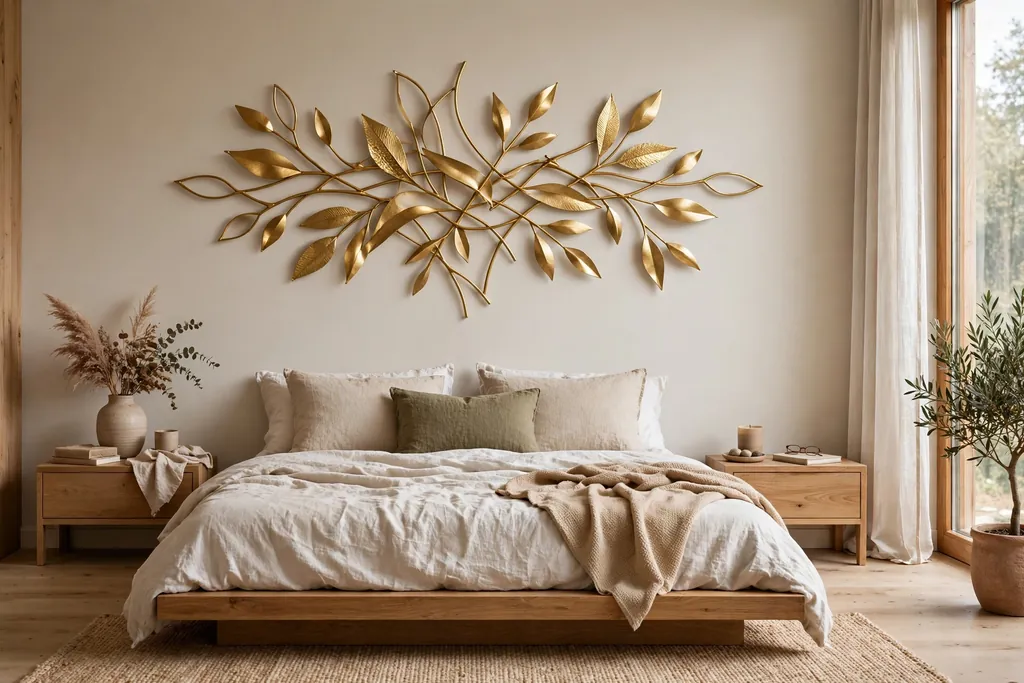
A metal wall sculpture gives the wall above the bed a modern edge without the bulk of a framed canvas. Flowing lines, leaves, or abstract shapes in gold, black, or brushed metal catch lamplight in the evening and change as the light shifts. Hang it on a plain wall where the shape can stand out, and keep nearby art to a minimum so the sculpture stays the focus.
Check the weight and use proper fixings, since metal pieces are often heavier than they look. This suits a larger bedroom or a wall that needs interest but cannot take a deep frame. Keep the bedding plain, and repeat the metal finish once more in a lamp base or a frame, so the sculpture feels linked to the room.
15. Arrange a Woven Basket Cluster
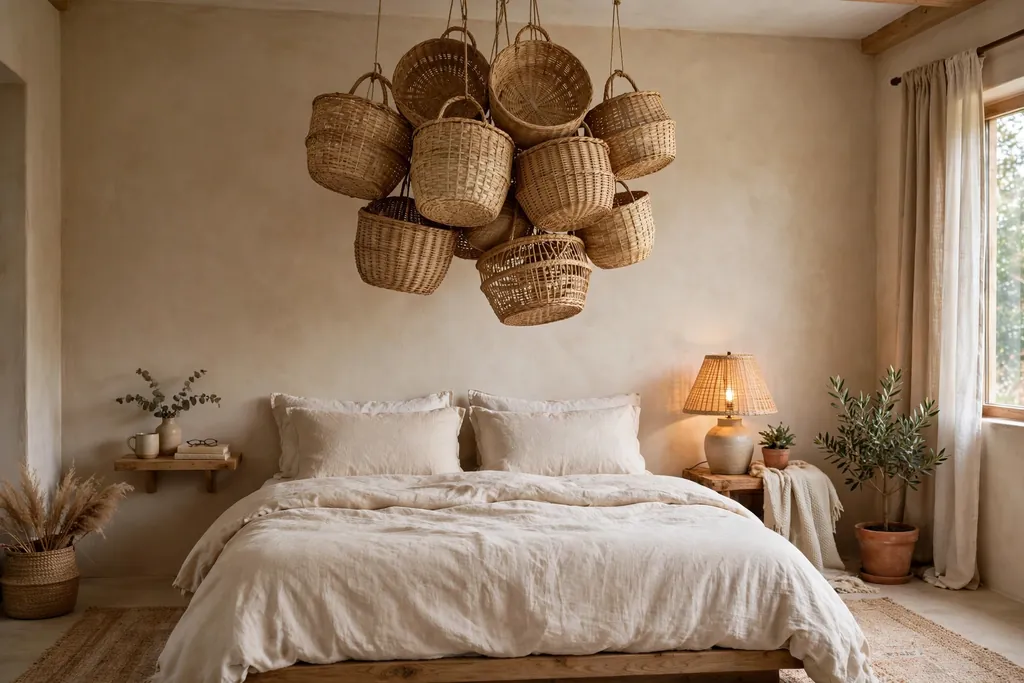
A cluster of woven baskets above the bed adds natural texture and a relaxed, collected feel. Use baskets in different sizes but similar tones, such as natural seagrass, rattan, and jute, and hang them in a loose cluster centered on the bed. Flat baskets and shallow bowls work best, since deep baskets stick out too far above pillows.
Hang the largest basket in the center or slightly off center, then build outward with smaller ones, leaving even gaps between them. Baskets are light, so they suit a wall that cannot take heavy fixings, and they suit a bedroom with wood furniture and linen bedding. Dust them with a soft brush now and then, since woven pieces collect dust in their gaps.
16. Hang a Carved Wood Panel
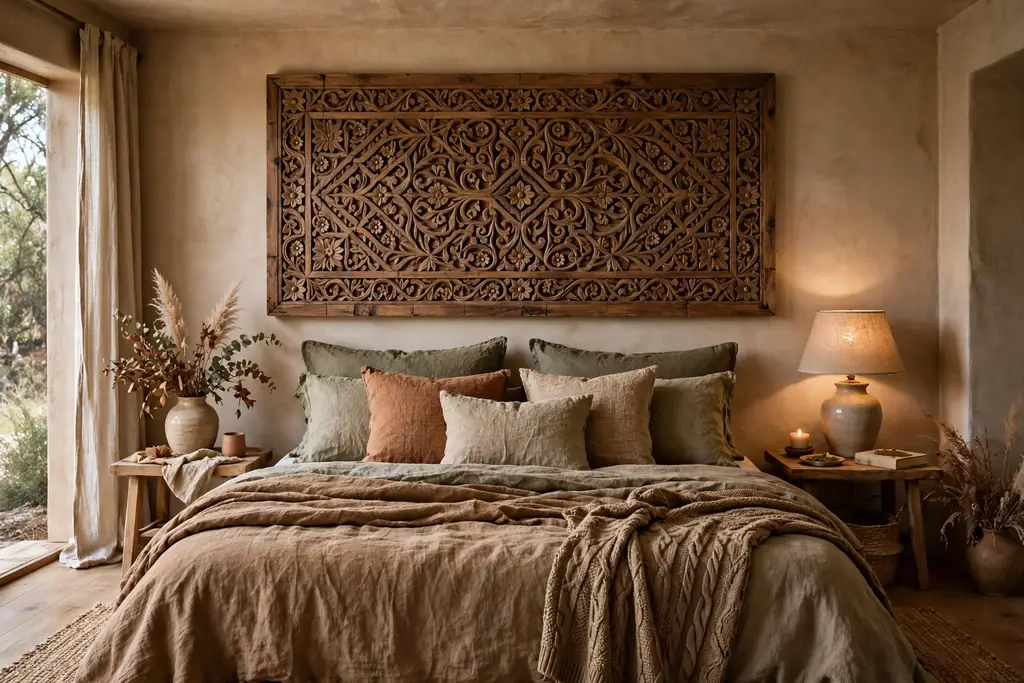
A carved wood panel adds depth and warmth above the bed, and it suits a bedroom with wooden furniture or earthy bedding. Hang one large panel centered on the bed, or a pair of narrow panels with even space between them. Geometric carving suits a modern room, while floral or nature carving suits a more traditional one.
Wood panels are heavier than prints, so use fixings rated for the weight and the wall type. Keep the bedding mostly solid, so the carving stays easy to see, and keep the wall color plain so the wood tone stands out. Dust the carving with a soft brush now and then, since grooves collect dust faster than a flat print.
17. Frame Fabric Panels as Art
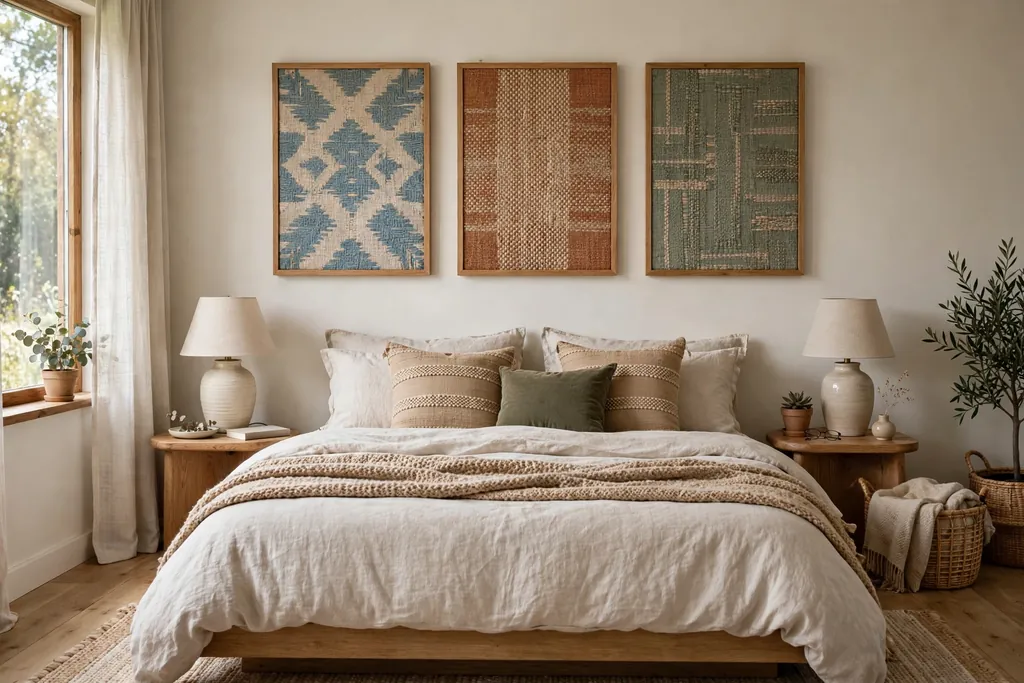
Framed fabric turns a favorite textile into wall art above the bed, and it suits a bedroom where you want pattern without papering a whole wall. Stretch a patterned fabric over a board, or frame a large wallpaper sample, and hang two or three panels as a set. This lets you repeat the bedding pattern or introduce a new one in a controlled way.
Choose fabric with a clear pattern that reads from across the room, since tiny prints can look muddy behind glass. Keep the panels the same size and hang them with even gaps, centered on the bed. If the fabric fades in sun, hang the panels on a wall that does not get direct afternoon light.
18. Add a Warm Neon Word Sign

A warm neon style sign adds a gentle glow and a personal word above the bed, and it suits a main bedroom with a relaxed style, a teen room, or a guest room. Choose a short word or a simple shape, and mount it centered above the headboard. Keep the color warm white or soft pink for a bedroom, since harsh colors can feel jarring at night.
Plug it into a switched socket so you can turn it off easily, and keep the cord tidy with clips along the wall. Pair it with plain bedding so the glow stays the main feature, and keep other art off this wall. If the glow disturbs sleep, put the sign on a timer so it switches off at bedtime.
19. Use a Clip Rail Photo Display
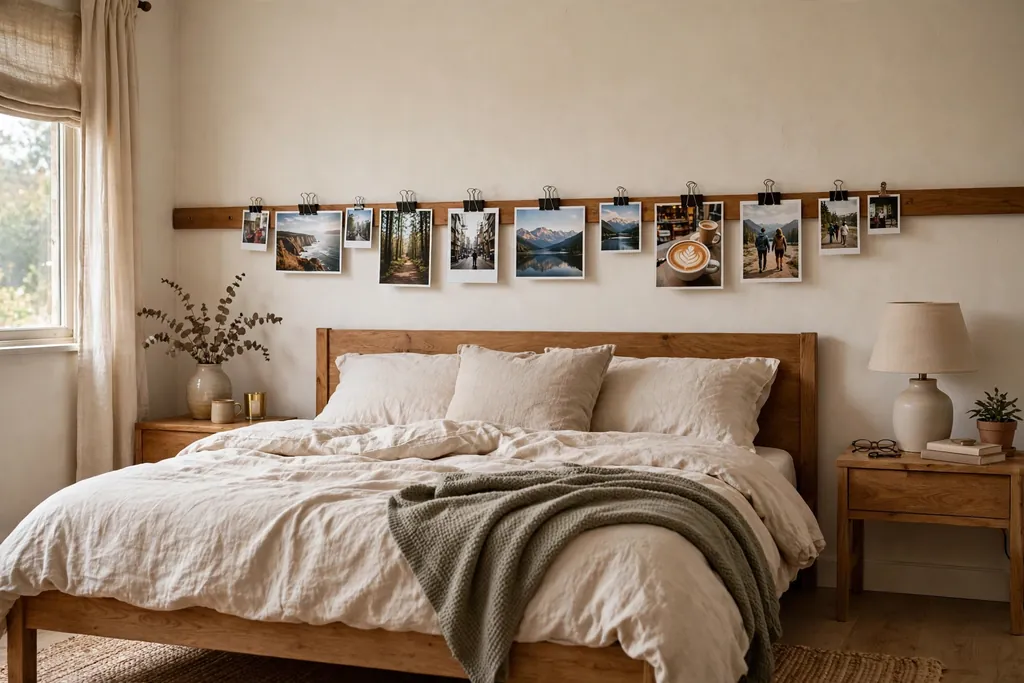
A display rail with clips lets you change the art above the bed as new photos or prints arrive. Fit a wooden rail with clips, or a wire with clips, centered above the bed at a height clear of pillows, and rotate the pictures every few weeks. Keep the rail to the width of the bed or slightly narrower, so the display does not crowd the bedside lamps.
Frame one favorite piece properly each year, and store the rest in a folder so the best work is kept. This idea suits a family bedroom or a teen room, where posters and prints can be swapped without damaging the wall. Keep the clipped pieces light, so the rail stays level and the clips hold.
20. Flank the Bed With Vintage Landscapes
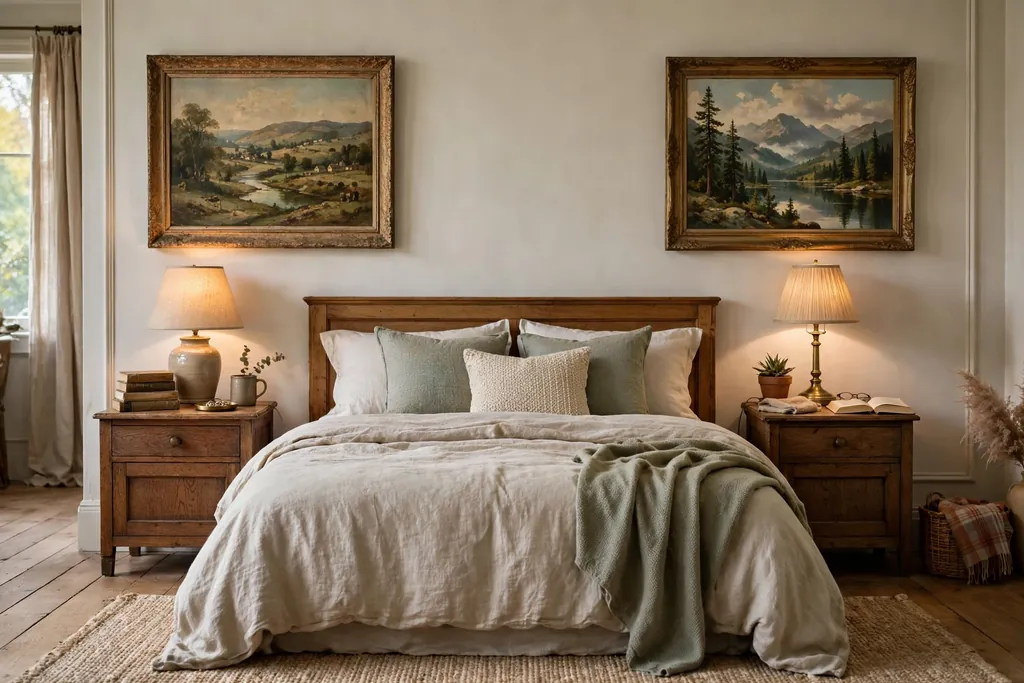
A pair of vintage landscapes, one on each side of the bed above the nightstands, gives the wall a balanced, traditional feel without one large piece in the center. Look for oil style prints or second hand paintings in gold or dark wood frames, and hang one above each nightstand at the same height. Keep the landscapes similar in tone, such as soft hills or coastal scenes, so they sit together.
This suits a bedroom with a tall headboard or a centered piece already in place, where flanking art adds balance at the sides. If the frames are heavy, use proper wall fixings and check the wall type before hanging. Keep the nightstand tops simple, with a lamp and a book, so the art stays easy to see.
21. Keep It Minimal With a Single Line Drawing
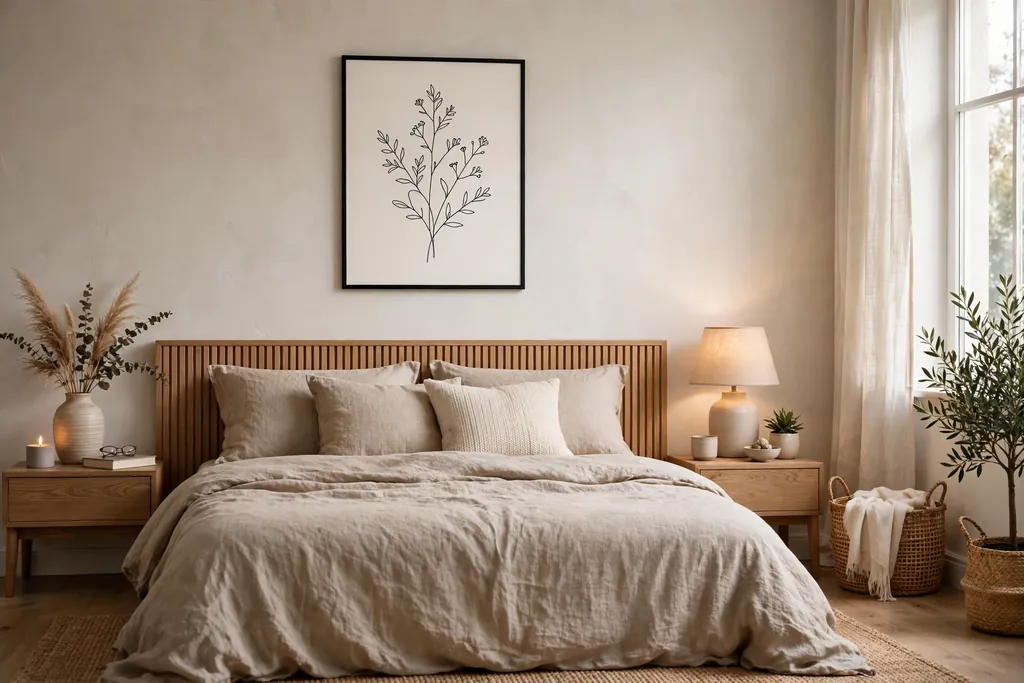
A single line drawing suits a bedroom where you want calm above all else. One thin framed line portrait, arch, or figure on a pale background reads as art without adding visual noise. Hang it above the bed centered, or above one nightstand if the bed wall already has a headboard feature, and keep the bedding and curtains plain, as in these bedroom curtain ideas.
The frame matters here: a slim black or wood frame keeps the look quiet, while a thick ornate frame fights the simplicity of the drawing. This is a good choice for a small bedroom, since it adds interest without making the wall feel crowded. Choose a drawing at least half the bed width, so it does not look lost.
22. Choose One Bold Abstract in Strong Color
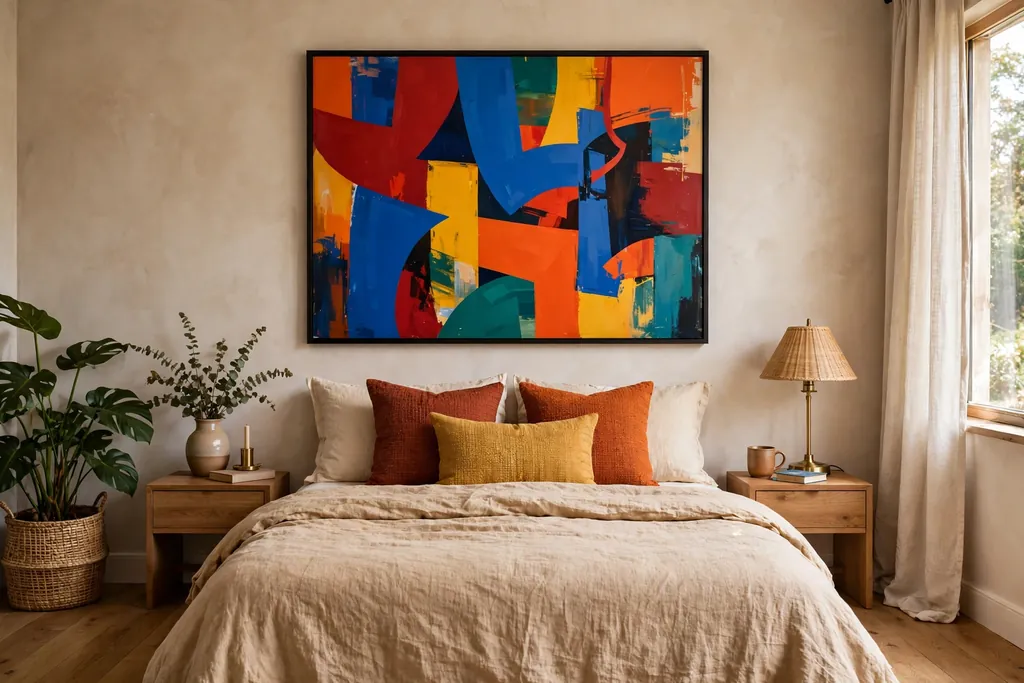
A bold abstract print can carry a plain bedroom, especially if the bedding and walls are neutral. Pick one or two colors from the print and repeat them in a cushion or a throw, so the art feels connected to the room. Keep the rest of the wall empty and the frame simple, since a strong print does not need company.
This suits a large wall that would otherwise feel bare, and it works in a small room too if the print has plenty of light background. Hang it centered on the bed, with its bottom edge 6 to 8 inches above the headboard. If you tire of strong color, move the print to another room rather than adding more art around it.
23. Fit a Changeable Memo Board
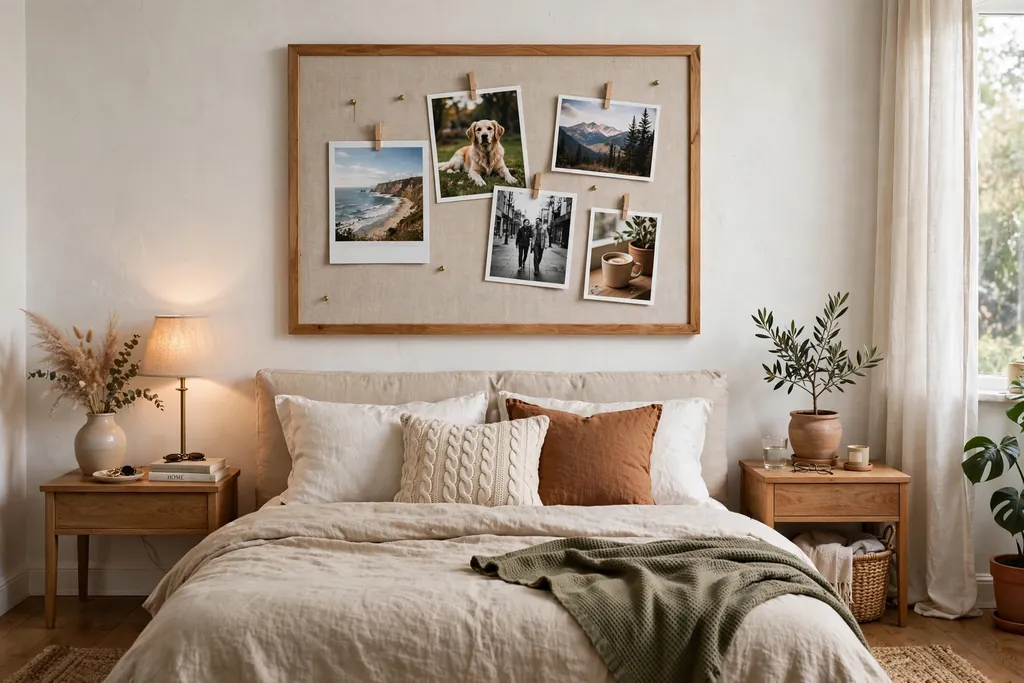
A large framed memo board above the bed gives you wall art you can change whenever you like. Pin photos, postcards, fabric swatches, and small notes to a linen or cork board, and change the display with the seasons. This suits a bedroom where you like a personal, evolving wall, rather than one fixed piece of art.
Keep the board to about two thirds of the bed width, and hang it clear of pillows so pins do not catch bedding. Edit the board often: remove pieces that no longer suit the room, so it stays a display rather than a cluttered notice board. Use a simple frame in wood or black, so the board itself stays quiet behind the pinned pieces.
24. Plan a Seasonal Rotation Set
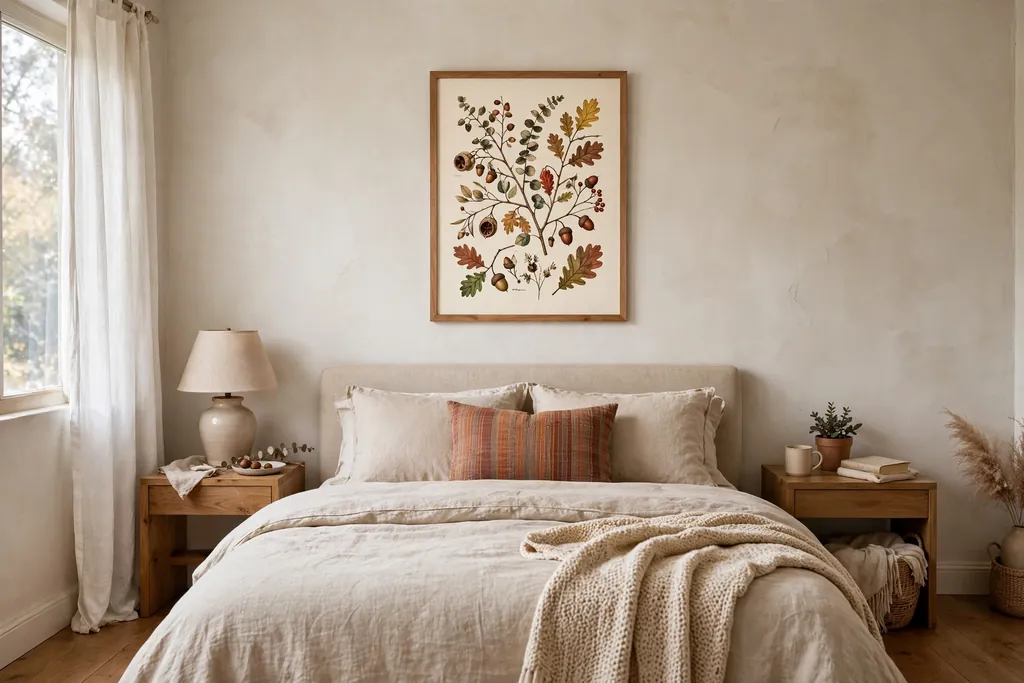
A seasonal rotation set keeps the wall above the bed fresh without buying new art each time. Choose three or four framed prints in the same frame size, one for each season, and swap them on a single hook or ledge above the bed. Spring botanicals, summer coastal prints, autumn leaves, and winter landscapes give the room a small change four times a year.
Store the prints not in use flat in a portfolio or behind the wardrobe, so they stay clean and unbent. Keep the frame the same all year, so the swap takes minutes and the wall always looks planned. This suits a bedroom where you like change but want the wall to stay calm, since only one print shows at a time.
Conclusion
Above bed decor works best when the size, height, and material suit the bed beneath it. Measure the bed, hang the display low enough to connect with the headboard, and let one idea lead on that wall. Whether you choose a large canvas, a mirror, shelves, or a woven hanging, repeat one color or material in the bedding so the wall and the bed feel like one planned arrangement. Start with the idea that fixes what bothers you most, whether that is an empty wall, a dark corner, or a plain headboard, and add a second idea only if the wall still feels bare.
If you found an idea here that suits your room, save this post on Pinterest so you can find it again when you are ready to start. Pin the look you like most, whether it is a triptych, a tapestry, or a shelf row, and use it as a guide for your next refresh.
FAQs
How big should decor above the bed be?
Aim for a display about two thirds of the bed width. A single piece, a triptych, or a grid that spans roughly that width looks sized to the furniture, while a much smaller piece can look lost and a much wider piece can crowd the bedside lamps.
How high should I hang art above the bed?
Hang art so the bottom edge sits about 6 to 8 inches above the headboard, or above the pillows if there is no headboard. This keeps the art connected to the bed instead of floating near the ceiling, and it keeps it clear of pillows when you sit up.
What is the easiest above bed decor for a rented home?
Light, removable options work best: a woven tapestry, a macrame hanging, a removable wallpaper panel, a clip rail, or picture ledges with light frames. These need few holes, and several can be removed without damage when you move.
Can I put shelves above the bed?
Yes, if you fit them securely and high enough to clear your head when you sit up. Use wall anchors suited to the load, keep heavy items near the brackets, and leave the shelves mostly clear so nothing falls onto the bed. Keep the shelf depth shallow for safety.
Should the art above the bed match the bedding?
It does not need to match exactly, but it should share one color or material with the bedding, a cushion, or a curtain. That shared tone links the wall to the bed and stops the display from looking like an unrelated piece hung on an empty wall.
What above bed decor suits a small bedroom?
Choose one light piece, such as a single line drawing, a small row of botanical prints, a macrame hanging, or an arched mirror. Mirrors and light pieces add interest without weight, while a large dark frame or a full plank wall can make a small room feel closed in.