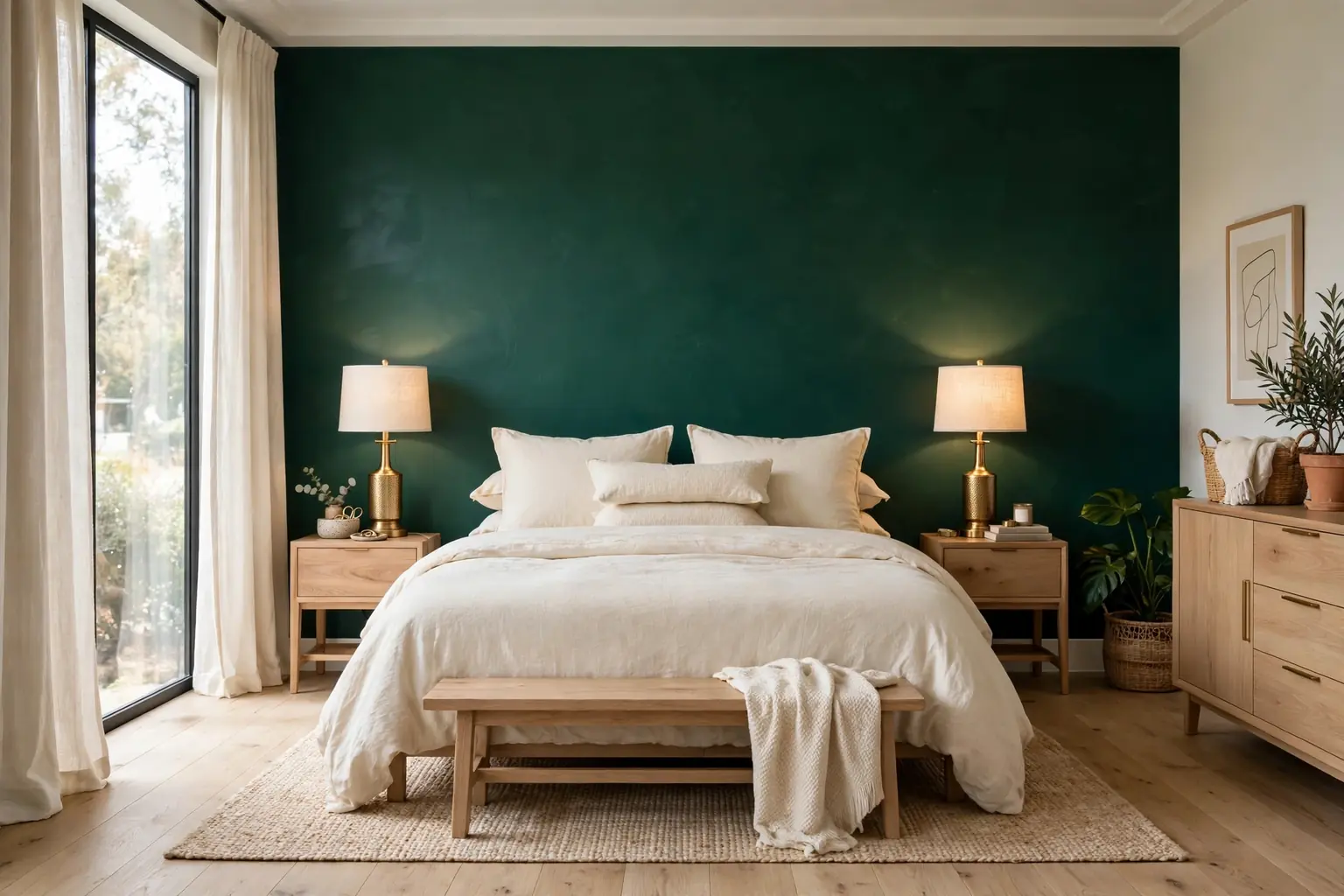
Emerald green works as a bedroom accent because it is deep enough to anchor a room and calm enough to sleep beside. Used in one or two places, it adds richness without making the room feel dark, and it pairs well with cream, warm white, light wood, and brass. These 16 emerald green accent bedroom ideas show where to put the color, from the wall behind the bed and a velvet headboard to curtains, bedding, rugs, and styling pieces. Start with the change that helps most, repeat the emerald tone once or twice in smaller items, and keep the rest of the room light so the accent stays clear.
Key Takeaways
- Give emerald one main job, such as the bed wall, the headboard, or the bedding, and repeat it once or twice in smaller items like cushions or a throw.
- Pair emerald with cream, warm white, light wood, and brass, so the deep green reads as rich rather than heavy.
- Keep the ceiling pale and at least one large surface plain, so the room still feels open and restful at night.
- Test paint and fabric in morning light and evening lamplight, since emerald looks brighter by day and much deeper at night.
- Start with bedding, cushions, curtains, and a throw for a no-paint refresh, and save walls and painted furniture for a weekend project.
- In a small room, keep emerald to one wall or one large piece, and use smaller doses elsewhere, so the color adds depth without closing the room in.
1. Paint an Emerald Accent Wall Behind the Bed
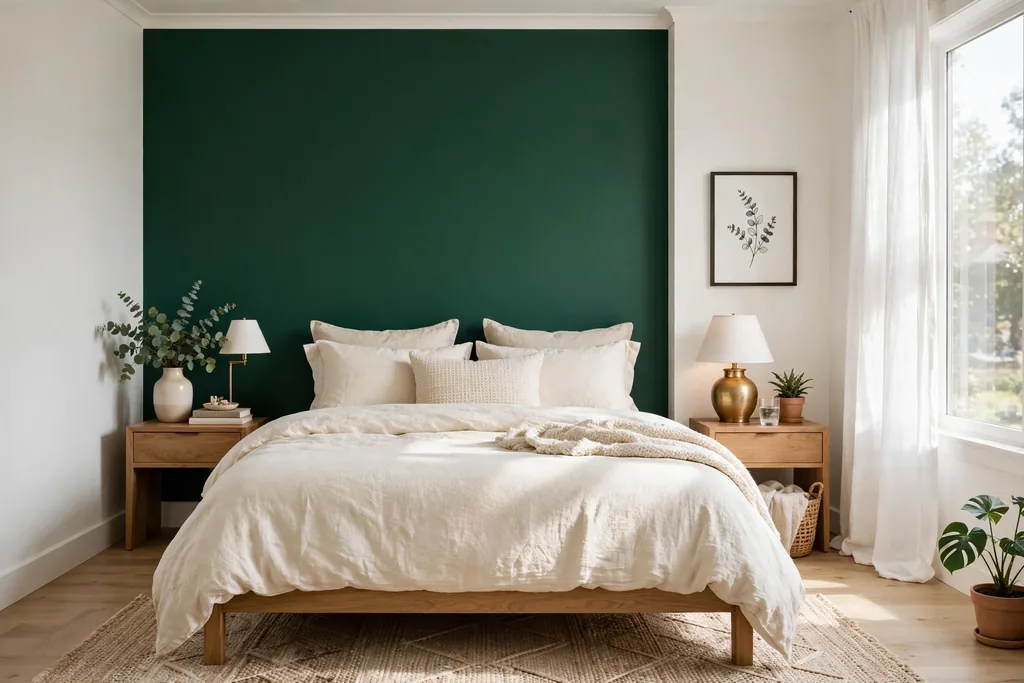
Paint the wall behind the bed in emerald green and keep the other walls warm white or cream. The bed wall becomes the clear focal point, and the pale side walls keep the room from feeling closed in. This suits a room with plain furniture, since the wall does the color work and little else needs to change. A matte or eggshell finish keeps the wall soft under lamplight, while white trim gives a clean edge where the green meets the other walls.
Test a large sample on the bed wall first, and look at it in the morning and again at night, since emerald can look fresh by day and much deeper in lamplight. Keep the bedding mostly cream or white, with one emerald cushion to link the bed to the wall. If emerald feels too strong for a full wall, a softer green room may suit you better, as shown in these sage green bedroom ideas.
2. Choose an Emerald Velvet Headboard
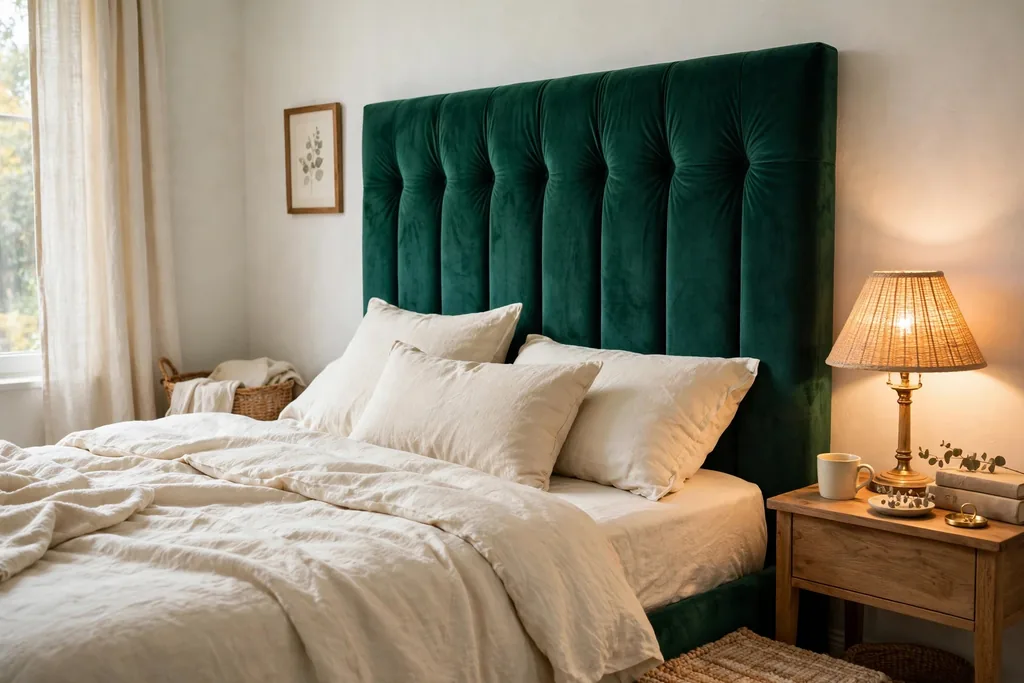
An emerald velvet headboard adds deep color and softness behind the bed without any paint. The velvet catches light in a way flat fabric does not, so the headboard adds interest even with plain bedding, and it makes sitting up to read more comfortable than a hard wall. This suits a room with pale walls and warm lamplight, where the headboard can be the one rich note in the room.
Measure the bed width and the wall space before you buy, and leave room for bedside tables on both sides. Keep the bedding in a paler tone, such as cream or soft grey, so the headboard stays the clear focal point, and add one cushion in the headboard color to link the bed to the wall. Vacuum the velvet gently now and then, since velvet holds dust, and keep the cover removable if possible.
3. Layer Emerald and Cream Bedding

Build the bed in layers of emerald and cream, starting with cream or white sheets, adding an emerald duvet or quilt, and folding a cream throw across the foot. The two tones give the bed depth without a pattern, and the layers let you adjust warmth through the night. This suits any bedroom, rented or owned, since it needs no paint or tools, and the bedding can change with the seasons.
Keep the palest shade closest to your face and the deeper emerald toward the foot, which gives the bed a natural sense of order. Add cushions in linen and cotton, not all in the same fabric, so the bed feels soft to the touch as well as to the eye. Wash the throw and cushion covers on a regular cycle, since cream shows marks sooner than darker colors.
4. Paint a Pair of Emerald Nightstands
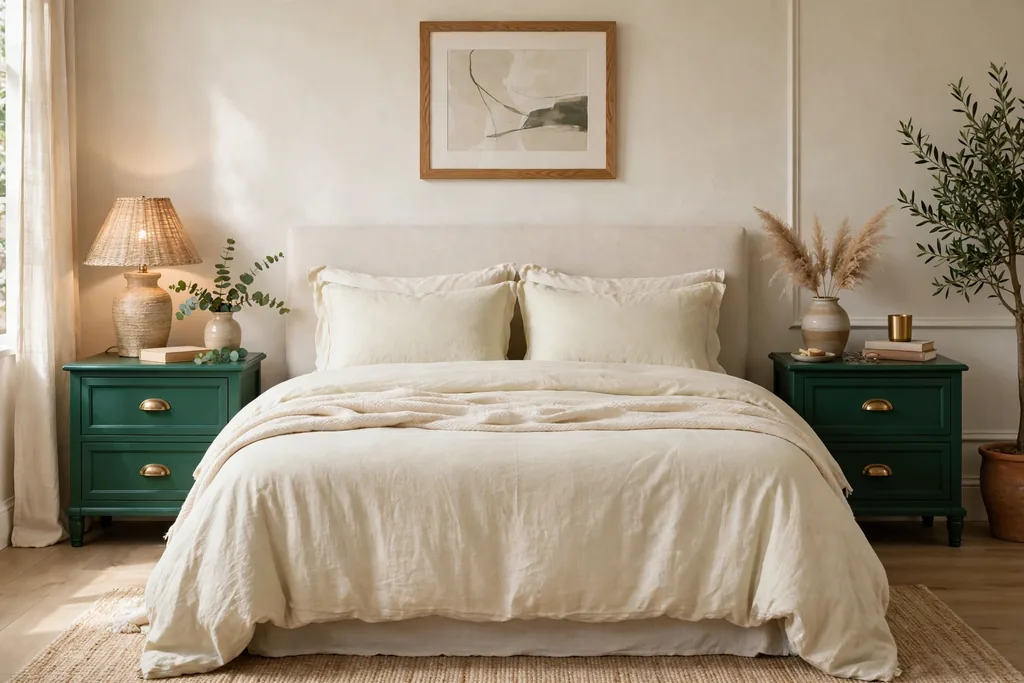
Paint two nightstands in emerald green and keep the bed and walls pale, so the color sits at bed height where you see it last at night. This is a lower risk change than painting a wall or a wardrobe, since two small pieces are easy to repaint later. The nightstands link to an emerald cushion or throw on the bed, and the pale bed keeps the room bright.
Sand and prime the pieces first, and use a paint made for furniture so the finish stands up to daily use. Repeat one handle finish across both nightstands, such as brass or matte black, to tie them together, and keep the tops mostly clear, with a lamp and a book, so the painted color stays visible. If the two nightstands do not match, painting them the same emerald will make them read as a pair.
5. Hang Floor-Length Emerald Curtains
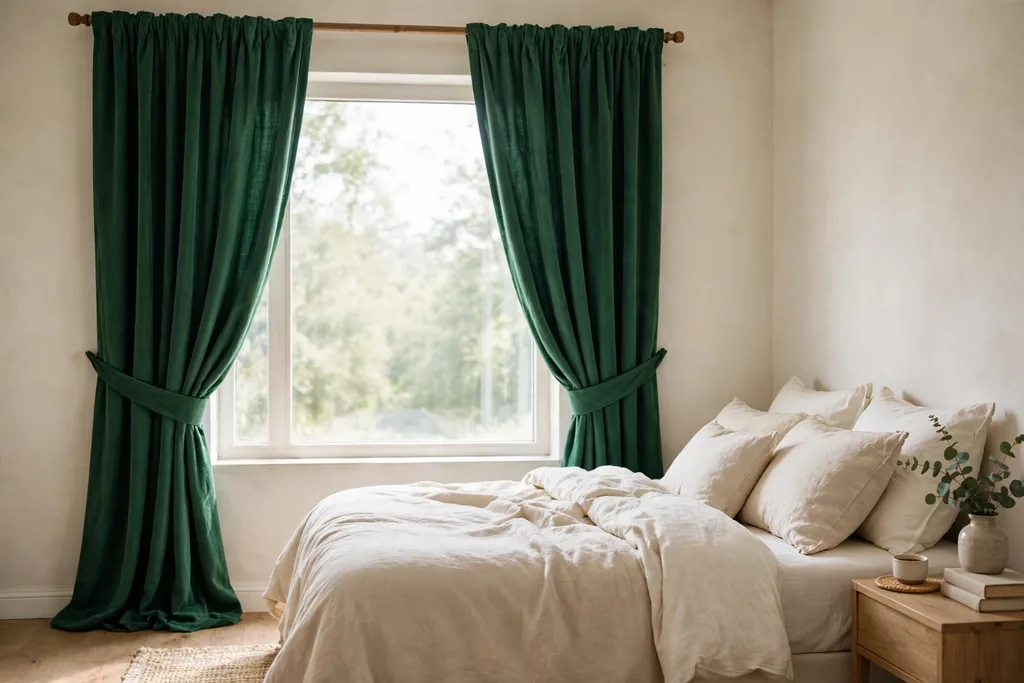
Hang floor-length emerald curtains at the bedroom window for a tall block of color that frames the view and softens the wall. The deep green reads as rich in daylight and cozy at night when the curtains are closed, and it suits a room with pale walls and plain bedding that needs one strong fabric layer. Velvet gives the fullest drape, while linen gives a lighter, more casual fall.
Hang the rod high and wide, so the panels stack clear of the glass when open and daylight still fills the room. For fabric, length, and lining choices that suit different windows, see these bedroom curtain ideas. Line the curtains if the room faces a street at night, and keep the fabric clear of radiators and heaters. Repeat the emerald once in the bedding or a cushion, so the window links to the bed.
6. Place an Emerald Reading Chair in a Corner
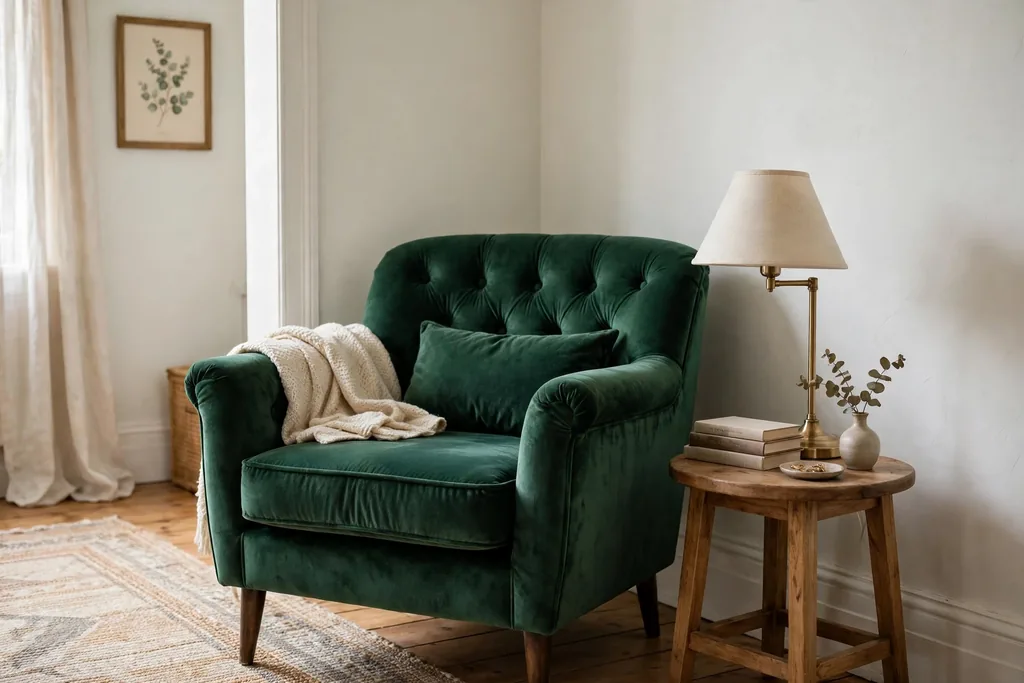
Place an emerald upholstered chair in a bedroom corner with a small side table and a reading lamp, so the room gains a second use that is still quiet. The chair gives you a place to read or dress that is not the bed, and the emerald color marks the corner as its own place. A cushion in cream and a throw over the chair arm keep it inviting.
This suits a bedroom with a window corner that currently holds nothing but a laundry basket. Choose a chair deep enough to sit in for an hour, not a stiff accent chair that looks good but stays empty. Keep a basket beside the chair for current books, so the corner stays tidy, and angle the chair slightly toward the room so it feels part of the bedroom rather than cut off from it.
7. Swap in an Emerald Throw and Cushions

Swap plain cushions and a throw for emerald versions when you want color with no paint, no tools, and no lasting commitment. A folded emerald throw across the foot of the bed and two or three cushions in emerald and cream change the bed in minutes, which suits a rental or a room where you want to test the color before you paint. This swap also lets you try emerald for a season and put it away if it feels too strong.
Keep sleeping pillows plain and change only the decorative cushions and the throw, so the bed stays easy to make. Store the off-season set in a lidded basket or a shelf box, folded and clean, so the swap takes minutes. Wash new covers before the first use, since deep dyes can mark pale sheets at first, and keep one cushion in a tone taken from the rug or the art so the swap looks planned.
8. Anchor the Room With an Emerald Rug
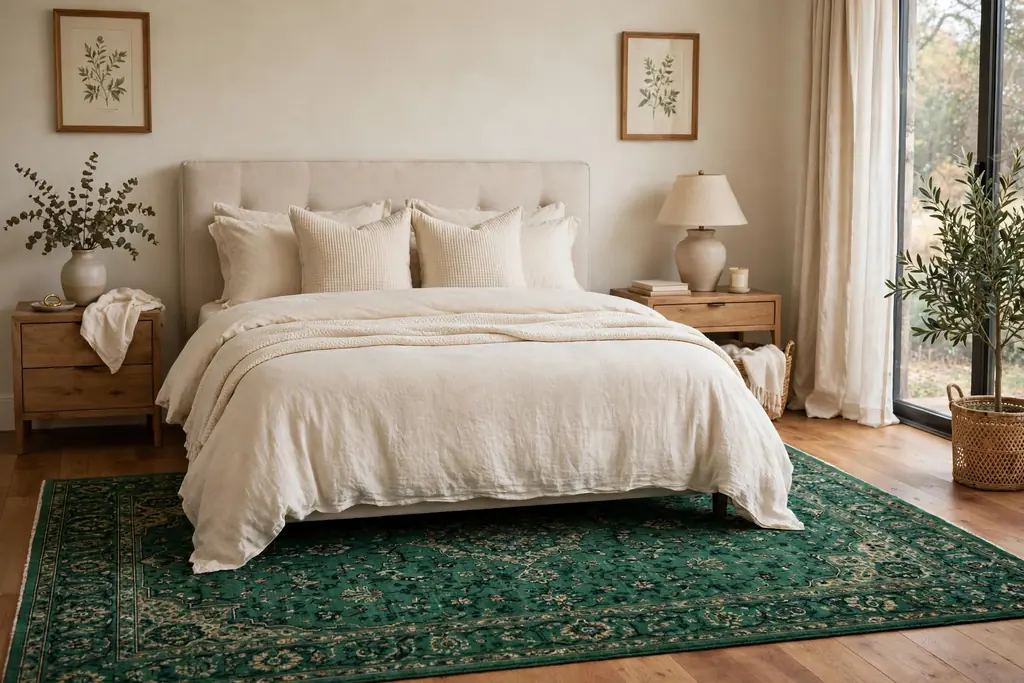
Lay a large rug with an emerald pattern or an emerald border under the lower two thirds of the bed, extending out on both sides. The rug gives the room a color base at floor level, which suits a bedroom with pale walls and plain bedding, and it balances an emerald wall or headboard above. A rug that is too small makes the bed look as if it is floating, so measure for a clear border on each side before you buy.
Choose a low pile rug that doors and drawers can clear, and use a rug pad on smooth floors to reduce slipping. Repeat one rug color in the bedding or a cushion, so the floor color connects to the bed, and keep the pattern quiet, such as a border or a simple motif, rather than a busy print that fights the bedding. Vacuum often, since a deep green rug shows dust and lint more than a mid-tone one.
9. Build a Gallery Wall With Emerald Prints

Hang a gallery of prints in emerald tones above the bed or above a dresser for wall interest that needs no paint. Choose prints in emerald, cream, and soft gold, with simple wood or black frames, and hang them in a loose grid or a single row. Botanical prints, leaf studies, and abstract washes all suit this palette, but keep to one style so the wall feels calm rather than scattered.
Lay the frames on the floor first and plan the spacing, leaving equal gaps between frames, then hang the middle frame at eye level. For more ways to size and hang art above a bed or a dresser, see these bedroom wall art ideas. Use picture hanging strips if you rent, and keep the largest frame in the center so the arrangement feels balanced. Repeat one print color in a cushion, so the wall links to the bed.
10. Paint a Dresser or Wardrobe in Emerald
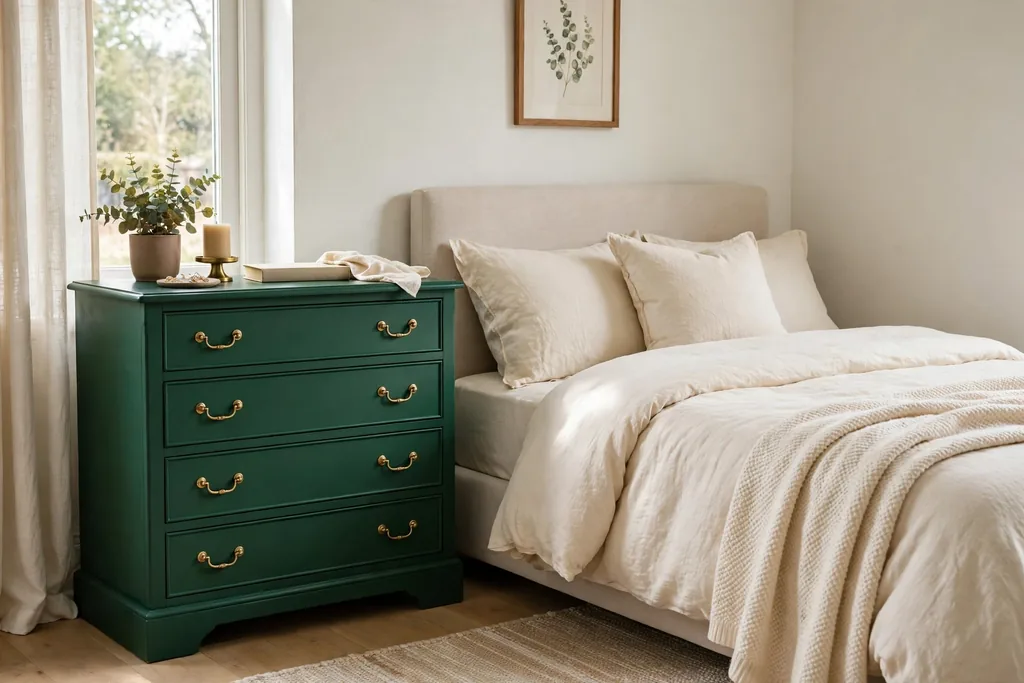
Paint one large furniture piece, such as a dresser or a wardrobe, in emerald green, and keep the walls pale. The piece anchors the room like a painted accent wall, but it can move with you, which suits a rental or a room you plan to rearrange. The deep color also hides small marks better than a pale finish, which helps a piece that gets daily use.
Remove the handles before painting, and paint the doors in the same finish for an even look. Put the handles back in a simple finish, such as brass or wood, so the color stays the focus, and keep the top of the piece mostly clear, with one tray or one vase, so the painted surface reads clearly. If the room already has an emerald wall, keep this piece in a pale tone instead, so the room does not gain two competing blocks of green.
11. Paper the Bed Wall With Emerald Botanical Wallpaper

Hang an emerald botanical wallpaper on the bed wall for pattern that paint alone cannot give. A leaf or fern print in emerald, cream, and a touch of gold adds a garden note to the room, and it suits a bedroom where the furniture is plain and the bedding is solid. Keep the other walls in a plain cream or a pale tone pulled from the paper, so the pattern has room to breathe.
Use the wallpaper on one wall only, and keep curtains and bedding mostly solid, so the room does not gain two competing patterns at once. Order an extra roll for matching and future repairs, since batches can vary. If you rent, look for a peel-and-stick paper that your lease allows, and test a sample in your light before you commit to the full wall, since emerald prints shift a lot between daylight and lamplight.
12. Pair Emerald With Brass Lamps and Sconces
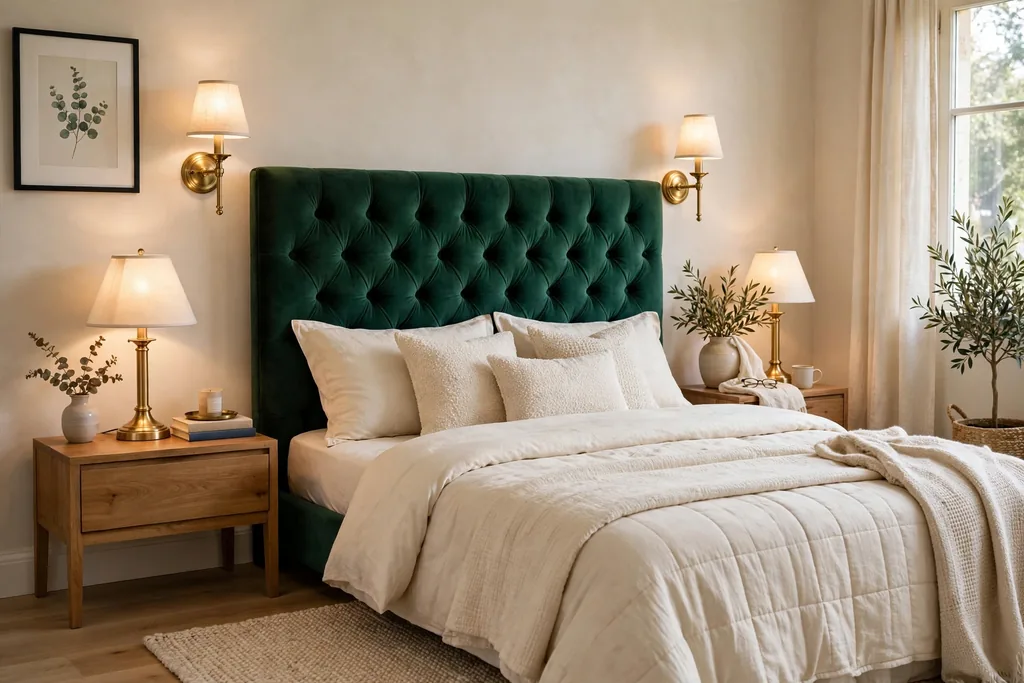
Fit brass lamps or wall sconces beside an emerald bed, headboard, or wall, so a warm metal thread runs through the room. Brass warms emerald in a way that chrome cannot, adding a soft golden note that suits traditional, farmhouse, and transitional bedrooms, and sconces free up nightstand space for a book and a glass of water. Sconces at about bed height give reading light without a lamp base taking up the nightstand top.
Match the brass to any other metal in the room, such as a mirror frame or drawer handles, so the finish reads as one thread. If brass feels too yellow beside your emerald, pick a brushed or aged brass rather than a bright polished one. For a room with no wiring in the wall, plug-in sconces give the same look without building work, and warm bulbs keep the green looking rich rather than cold at night.
13. Add an Emerald Bench at the Foot of the Bed

Place an upholstered bench in emerald at the foot of the bed, where it gives a place to sit, lay out clothes, or set a tray in the morning. The bench adds a second block of emerald at a lower height than the headboard, which suits a larger bedroom or a room where the bed wall is already plain and needs balance. A bench also stops the foot of the bed from looking bare, especially in a room with a large rug.
Choose a bench close to the bed width, so it reads as part of the bed rather than a separate piece, and keep the legs simple, in wood or matte black, so the emerald fabric stays the focus. Keep the top mostly clear, with one folded throw at most, so the bench stays usable and easy to keep tidy. If floor space is tight, a narrow bench or a pair of small stools gives the same color note without blocking the walkway.
14. Paint the Bedroom Door and Trim in Emerald
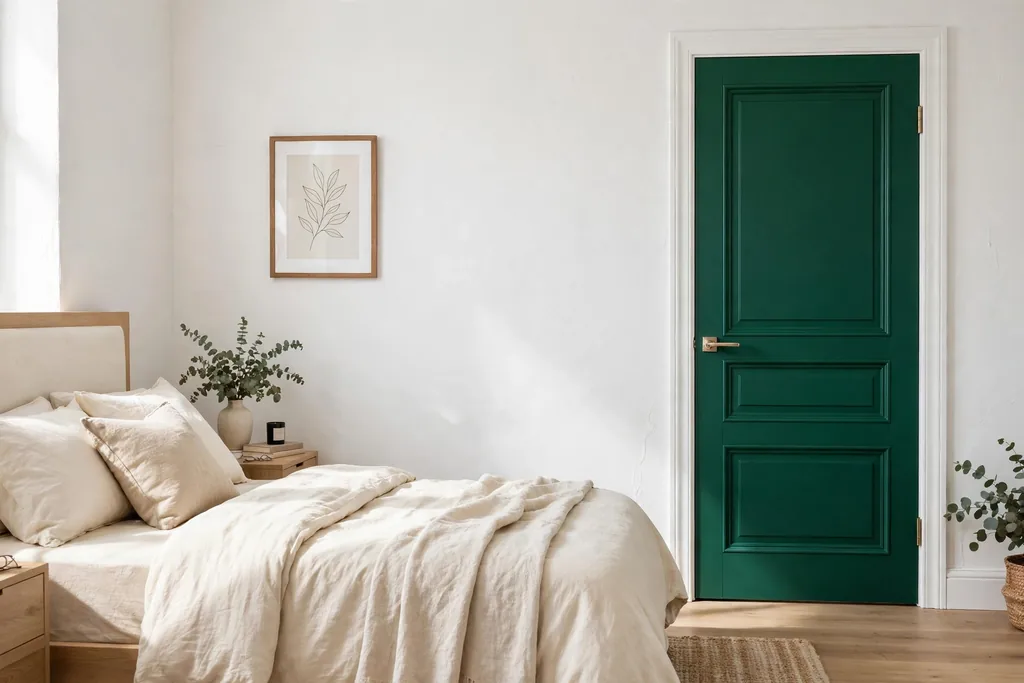
Paint the bedroom door, or just the trim around it, in emerald green, and keep the walls pale. The door becomes a framed block of color that you see every time you enter, which suits a room where the bed wall already has art or a headboard that should stay the focus. This is a small paint job, so it suits a weekend, and it is easy to repaint if you tire of it.
Paint the door in the same finish as the trim for a clean edge, and remove the handles before you start. Repeat the door color once in the room, in a cushion or a small frame, so the emerald door does not look isolated. Keep the hallway side of the door in a neutral tone if the rest of the house is pale, so the strong color stays a bedroom surprise rather than a hallway statement.
15. Drape an Emerald Canopy Over the Bed

Hang a light canopy or a draped fabric panel above the bed in emerald, so the bed gains color overhead and a soft, enclosed feel. The fabric suits a room with a plain ceiling and simple bedding, and a sheer or light emerald lets air move, so the canopy feels airy rather than heavy. A single draped panel on one side of the bed gives color without enclosure, if a full canopy feels like too much.
Fix the canopy to the ceiling with fixings suited to the ceiling type, and keep it clear of bedside lamps, since fabric near a hot bulb is a risk. Wash the fabric often, since a canopy collects dust above the bed, and keep the bedding mostly cream beneath it, so the emerald overhead stays the focus. In a low room, hang the drape from a slim frame above the headboard instead of the ceiling, so the bed still feels open.
16. Style Shelves and a Dresser Top With Emerald Objects
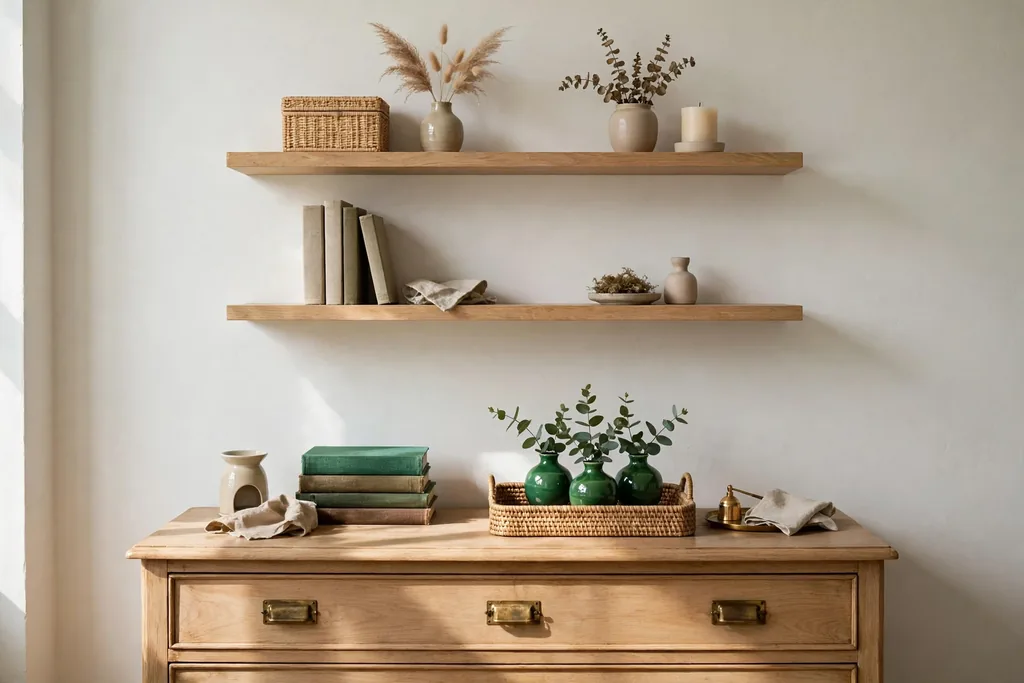
Style one or two open shelves, or a dresser top, with small emerald objects, such as a vase, a tray, a stack of books, and a small plant pot, against a pale wall. The display adds emerald in small doses that you can change without repainting, which suits a room where the walls must stay pale or where a large block of green would feel too strong. Group objects in threes, and leave one end of each shelf empty, so the display does not look packed.
Repeat the emerald in the bedding or a cushion, so the shelves link to the rest of the room, and keep daily items, such as chargers and brushes, off the display, so the color groups stay clear. Dust the shelves often, since open displays collect dust faster than closed storage, and swap one object by season, for a quick color change that needs no new furniture. This small-dose approach also suits a small bedroom, where one emerald wall might close the room in.
Conclusion
An emerald green bedroom does not need green on every surface. Pick one strong place for the color, such as the bed wall, the headboard, or the bedding, then repeat it once or twice in smaller items and keep the rest of the room pale, with cream, light wood, and a touch of brass. Test paint and fabric in daylight and lamplight, start with bedding, cushions, and curtains when you want a quick change, and save walls and furniture for a weekend project. Pin the ideas you like so you can find them again when you start, and build a bedroom that feels rich by day and restful at night.
FAQs
How much emerald green should a bedroom have?
Use emerald as one main accent, plus one or two smaller repeats, and keep the rest of the room pale. Put the strongest emerald on the bed wall, the headboard, or the bedding, keep the ceiling pale, and leave one calm surface, such as plain sheets or a plain rug, so the room still feels restful at night. If the room starts to feel dark, remove one emerald item before you add another.
What colors pair best with emerald green in a bedroom?
Cream, warm white, light oak, and brass pair best with emerald, since they soften the deep green and keep the room bright. Soft gold, pale grey, and muted blush also work as smaller notes, while black or dark wood can ground the palette in small doses, such as frames or handles. Avoid pairing emerald with too many other strong colors at once, since the room can quickly feel busy.
Does emerald green make a bedroom feel dark?
It can, if it covers too many surfaces or if the room gets little daylight, but kept to one wall or one large piece with pale walls and a pale ceiling, it adds depth without darkness. Warm bulbs, a light rug, and cream bedding all help, since they reflect light back into the room. Test paint in evening lamplight before you commit, since emerald looks much deeper at night than it does by day.
What is the easiest way to add emerald without painting?
Start with bedding, cushions, a throw, and curtains, since these swap in minutes and need no paint. An emerald rug, a velvet chair, a bench at the foot of the bed, or small objects on a shelf can also add a lot of color without touching the walls. Keep the new items in a shared emerald tone, so the room looks planned even though nothing was painted.
Can a small bedroom handle emerald green?
Yes, if the emerald stays in one place, such as one accent wall, the bedding, or a rug, while the other walls and the ceiling stay pale. A small room also suits emerald in smaller doses, such as cushions, a throw, a painted nightstand, or objects on a shelf. Keep the floor clear and the surfaces mostly tidy, since clutter makes a small dark-toned room feel crowded faster than a large one.
How do I keep an emerald bedroom restful at night?
Use warm bulbs, plain sleeping pillows, and a plain top sheet, so the bed feels calm even when the room has deep green elsewhere. Keep the strongest emerald off the wall directly opposite the bed if it catches lamplight, and use a dimmer on the bedside lamps, since lower light softens strong colors in the evening. Cream bedding and light wood also help the room feel calm once the daylight fades.