
Black can make a bedroom feel calm, grounded, and personal, but only when it has a clear job. One black wall, one black headboard, or one black dresser can anchor a plain room, while pale bedding, warm wood, and soft lamplight keep it from feeling heavy. These 32 black bedroom decor ideas cover walls, beds, furniture, lighting, storage, and small rooms, so you can add black in one place or build a fuller scheme over time. Start with the change that fixes what bothers you most, test it in daylight and lamplight, then add a second black piece only where the room still feels unfinished.
Key Takeaways
- Give black one clear job in the room, such as the bed wall, the headboard, or one large furniture piece, and keep the rest of the room lighter.
- Pair black with warm wood, cream, brass, or green plants so the room feels warm rather than cold and flat.
- Use matte or eggshell black on large surfaces, since gloss can show every bump and brush mark under lamplight.
- Add light on or near each black surface, such as a bedside lamp, a sconce, or a mirror that catches daylight.
- Repeat each black piece once more in a small detail, such as a frame or a lamp base, so the scheme looks planned.
- Test paint and fabric in morning light and evening lamplight before you commit, since black shifts a lot during the day.
- Start with bedding, cushions, and curtains for a no-paint refresh, and save walls and painted furniture for a weekend project.
1. Paint One Black Accent Wall Behind the Bed

Paint the wall behind the bed in matte black and keep the bedding in white, cream, or soft grey, so the bed stands out against the dark backdrop. Matte paint softens the wall and hides small surface flaws better than gloss, which matters on a large bedroom wall. This suits a main bedroom where you want a calm, hotel-like focal point without adding furniture.
Keep bedside lamps in warm white and add one wood or brass detail, such as a wooden tray or a brass lamp base, to stop the corner feeling cold. For more ways to plan the wall, its finish, and its trim, see these chic black accent wall ideas. If the room is small, keep the other walls pale, leave the ceiling white, and add a mirror nearby to bounce light back into the room.
2. Choose a Black Upholstered Headboard
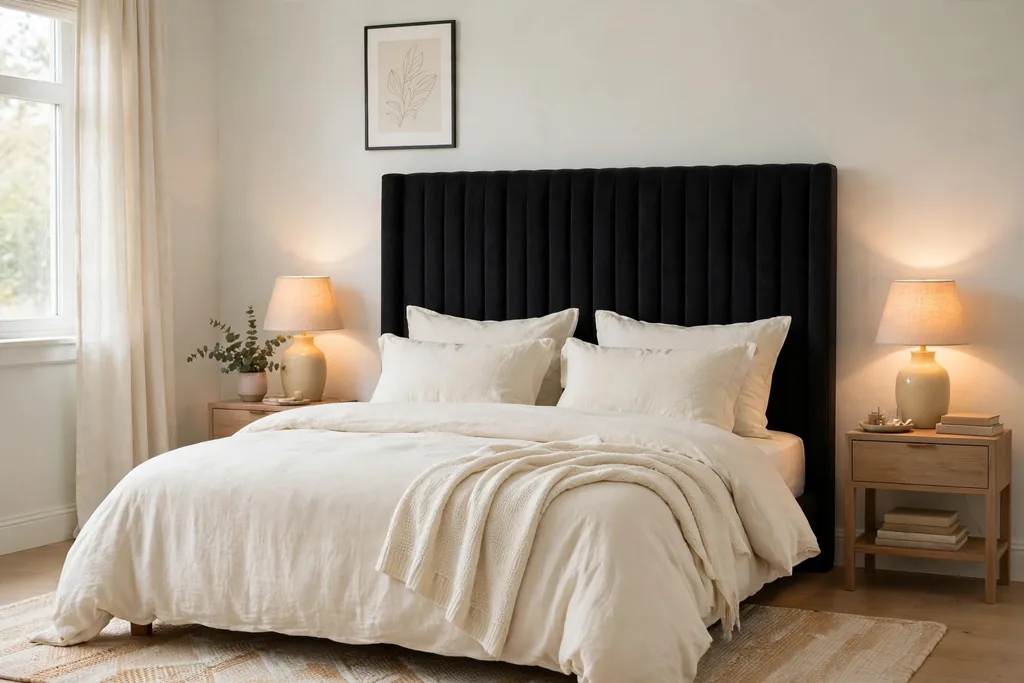
A black upholstered headboard adds depth behind the bed without any paint, and it makes sitting up to read more comfortable than a hard wall. The soft fabric suits a room with plain walls and warm lamplight, and the dark shape frames the pillows clearly. Keep the bedding in a paler tone, so the headboard stays the clear focal point of the room.
Measure the bed width and the wall space before you buy, and leave room for bedside tables on both sides. Vacuum the headboard gently now and then, since dark fabric shows dust and lint, and choose a removable cover if possible. Add one cushion in a tone taken from the room, such as cream or rust, so the bed links to the rest of the scheme.
3. Layer Black and White Bedding

Build the bed in clear black and white blocks: a white duvet, a black throw folded across the foot, and cushions split between the two tones. The contrast reads as deliberate, and you can change the balance by swapping the throw or one cushion, without buying new bedding. This suits a room where the walls must stay pale, such as a rental.
Keep sleeping pillows in white or cream, and put the strongest black block at the foot of the bed, where it is easy to fold back at night. Wash black and white pieces separately at first, since new black dye can mark pale fabric. A black and white bed also suits a guest room, since it looks finished with little else in the room.
4. Paint the Bed Frame Matte Black

Paint a wood bed frame in matte black and keep the bedding in a calmer tone, so the frame becomes a dark outline for the bed. The painted frame suits a simple room with plain walls and little furniture, where the bed needs a stronger shape. This works best on a wood frame with clean lines, where the color can show clearly.
Sand and prime the frame first, and use a paint made for furniture so the finish stands up to daily use and moving the bed for cleaning. Repeat the black once more in the room, in a frame or a lamp base, so the frame does not look like the only dark piece. Keep the floor beside the bed pale or in warm wood, so the dark frame does not blend into a dark floor.
5. Add a Black Wardrobe or Dresser

Paint one large furniture piece, such as a wardrobe or a dresser, in black, and keep the walls pale. The piece anchors the room like a painted accent wall, but it can move with you, which suits a rental or a room you plan to rearrange. Black also hides small marks better than a pale finish, which helps on a piece used every day.
Remove the handles before painting, and put them back in a simple finish, such as wood or brushed brass, so the black stays the focus. Keep the top of the piece mostly clear, with one tray or one vase, so the painted surface reads clearly. If the piece sits against a pale wall, add a lamp or a plant beside it so the dark block does not feel isolated.
6. Hang a Black Framed Gallery Grid

Hang a set of prints in black frames in a strict grid, such as nine frames in three rows of three, above a dresser or on the wall opposite the bed. The matching black frames give order to the wall, while the prints inside can vary in subject, from line drawings to photographs. This suits a bedroom with one large empty wall and plain bedding.
Use equal gaps of 2 to 3 inches between frames, and keep the mat size the same, so the grid looks tidy rather than scattered. For more help sizing and hanging art above a bed or a dresser, see these bedroom wall art ideas. Lay the frames on the floor first, measure the full block, and mark the wall with painter tape before you hang anything.
7. Dress the Window in Black Curtains
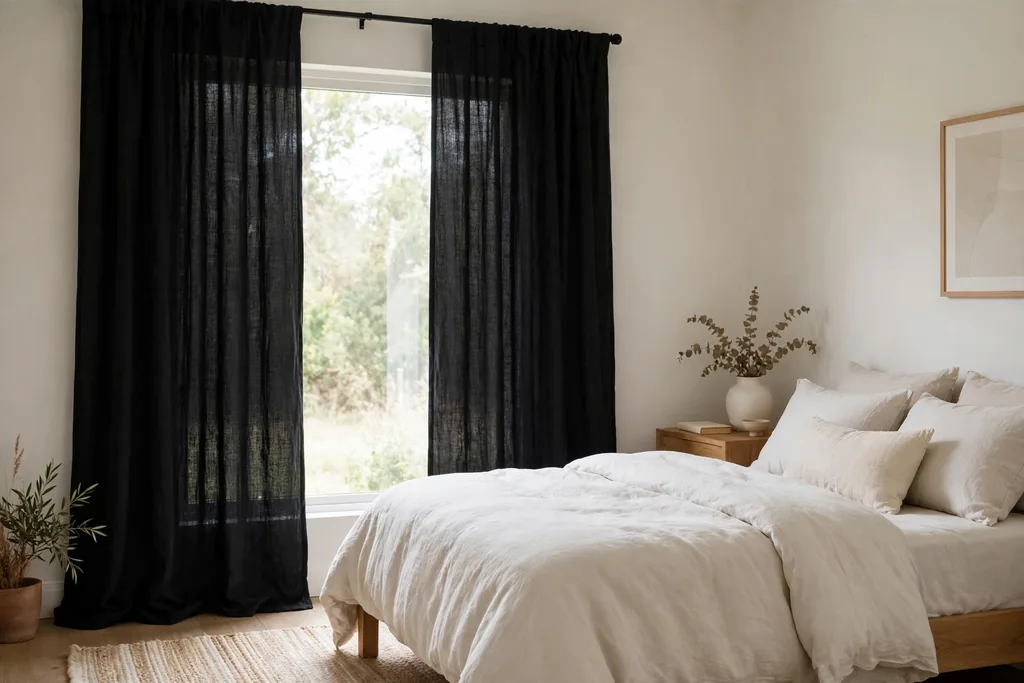
Choose black curtains in a soft fabric, such as linen or cotton, and keep the bedding mostly pale. The window becomes a tall dark panel, which suits a room with white walls and solid furniture, and the curtains also block morning light well. Pick a fabric with a little texture, so the panels do not read as flat slabs of color.
Hang the rod high and wide, so the panels stack clear of the glass when open and daylight still fills the room. For fabric, length, and lining choices that suit different windows, see these bedroom curtain ideas. Keep the curtain color tied to one other black detail in the room, such as a frame or a lamp, so the window does not feel like a lone dark block.
8. Ground the Room With a Black Textured Rug
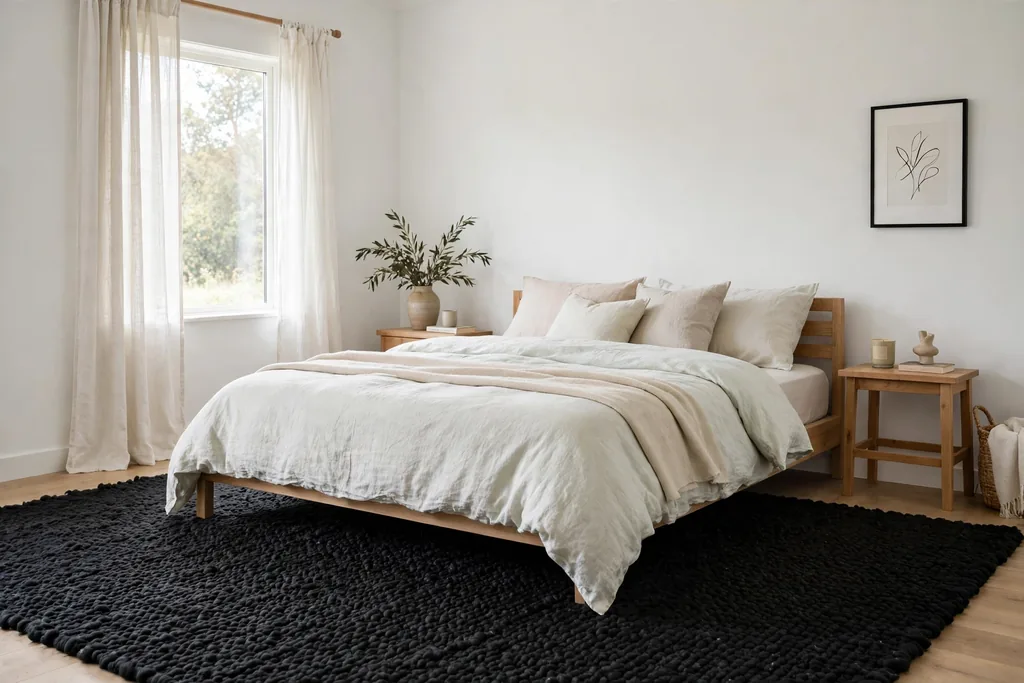
Place a large black rug with clear texture, such as a high pile, a woven flatweave, or a subtle pattern, under the lower two thirds of the bed, extending out on both sides. The rug gives the room a dark base at floor level, which suits a bedroom with pale walls and plain bedding. A rug that is too small makes the bed look as if it is floating, so measure for a clear border on each side before you buy.
Choose a texture you can see and feel, since a flat black rug can look like a shadow on the floor. Use a rug pad on smooth floors to reduce slipping, and repeat the black once in the bedding or a cushion, so the floor color connects to the bed. Vacuum often, since a black rug shows dust, lint, and pet hair more than a mid tone rug.
9. Pair Black Nightstands With Brass Lamps
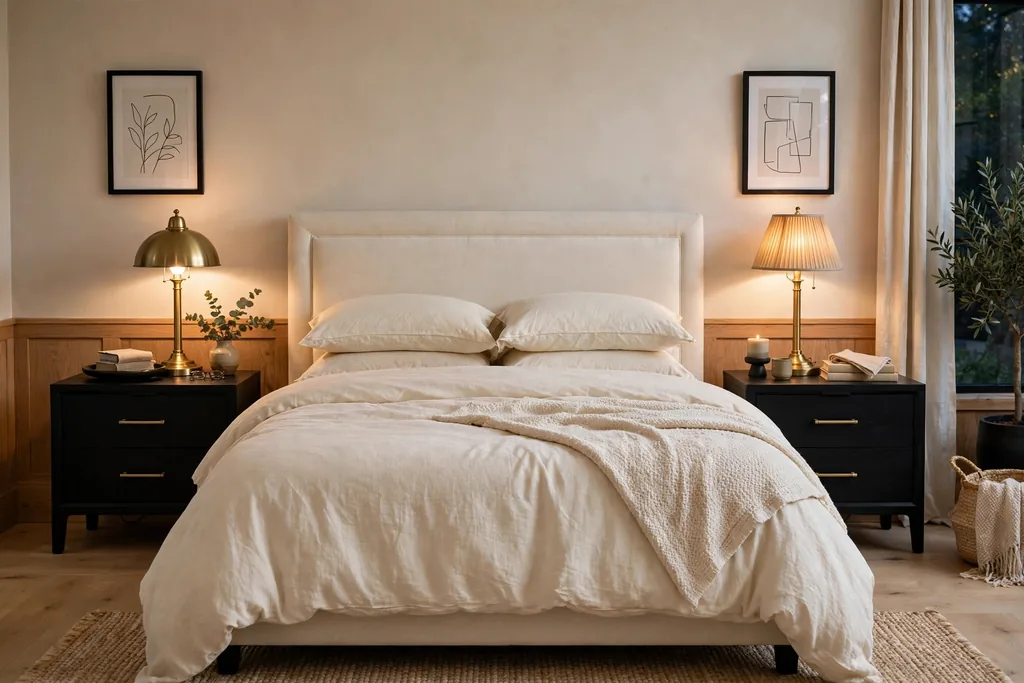
Place black nightstands on both sides of the bed and top each one with a brass lamp. The black gives the bed a grounded base at bed height, while the brass catches lamplight and warms the dark wood or paint. This suits a room where a full repaint feels like too much, since the change sits at furniture level.
Keep the lamp shades in a pale tone, such as cream or linen, so the light spreads softly rather than pooling under a dark shade. Use matching lamps for a tidy look, or two brass lamps in different shapes for a collected feel, and keep the nightstand tops mostly clear. Repeat the brass once more in the room, in a frame or a tray, so the metal looks planned.
10. Add Black Panel Moulding to One Wall

Fit simple panel moulding to the wall behind the bed and paint the panels and the wall the same black. The moulding adds shadow lines and depth that flat paint alone cannot give, which helps a plain bedroom feel finished. This suits a room with high ceilings or a wide bed wall, where the panels can run in a clear, even rhythm.
Plan the panel sizes on paper first, keeping the gaps even and the panels clear of switches and sockets. Paint the moulding and the wall in the same finish, so the joints read as shadow rather than as stripes. Keep the bedding pale and the art simple against this wall, so the panel pattern stays easy to see.
11. Mix Black With Warm Walnut Wood

Pair black pieces with warm walnut wood, such as a walnut headboard rail, walnut nightstands, or a walnut bench, so the room gains warmth beside the dark tones. The wood grain softens black paint and black fabric, and it keeps the room from feeling cold. This mix suits a bedroom with wood floors, since the walnut links the furniture to the floor.
Keep the walnut tone consistent across two or three pieces, rather than mixing many wood tones at once. Add cream bedding and one green plant to complete the palette, and keep metal details in brass or black for a quiet finish. If the room already has pale wood, a single walnut piece can still work, but keep the rest of the wood pale so the mix stays calm.
12. Try Black Patterned Wallpaper on One Wall
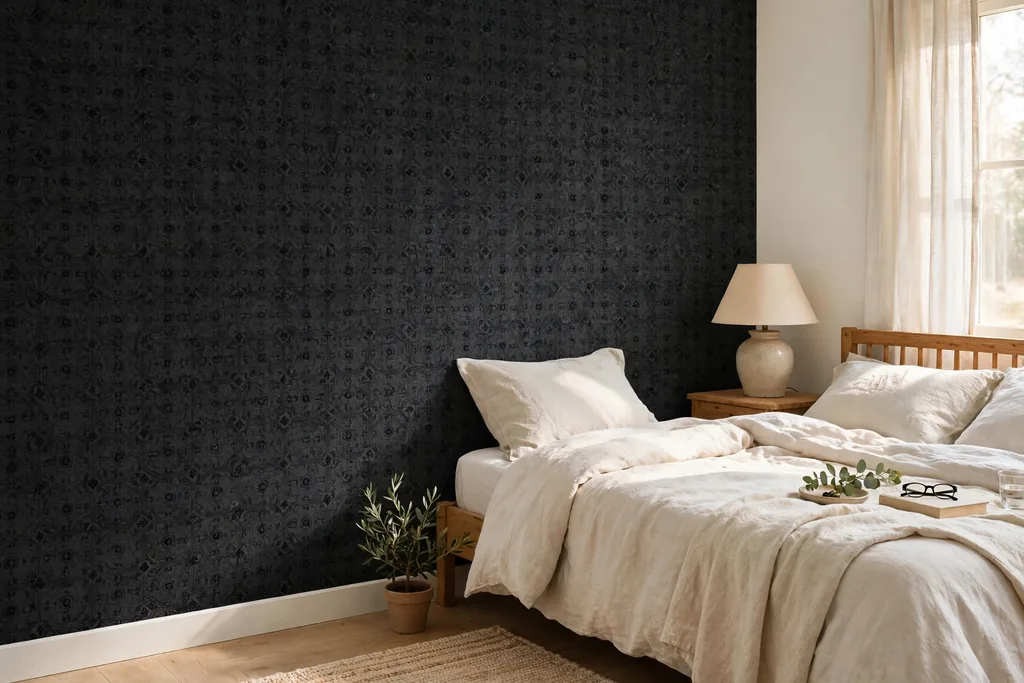
Hang black patterned wallpaper on one wall, in a subtle stripe, a small botanical print, or a faux linen texture, and keep the other walls plain. The pattern adds interest that flat paint cannot, while the black keeps the wall grounded. This suits a bedroom where you want depth without a bold color, and it works in a rental if you choose a removable paper.
Clean the wall first, measure carefully, and hang the first strip with a level, since a crooked first strip throws off the whole wall. Smooth out air bubbles with a plastic smoother as you go, and trim at the ceiling and baseboard with a sharp blade. Keep the bedding plain, so the pattern stays the main feature of that wall.
13. Make the Bed in All Black Bedding

Dress the whole bed in black, from the fitted sheet to the duvet and the pillowcases, and keep the walls pale and the lamps warm. The all black bed becomes a bold, cocoon-like center in a light room, and it suits a bedroom where you want drama without painting a wall. Texture matters here, since one flat black fabric can look dull.
Mix textures to keep the bed interesting: a matte cotton duvet, a waffle or linen throw, and velvet or corduroy cushions in the same black. Add one pale cushion or a cream throw at the foot, so the bed still has a point of contrast and is easy to make in the morning. Wash black bedding inside out and separately, so the color stays even.
14. Set Up a Black Dressing Table Corner
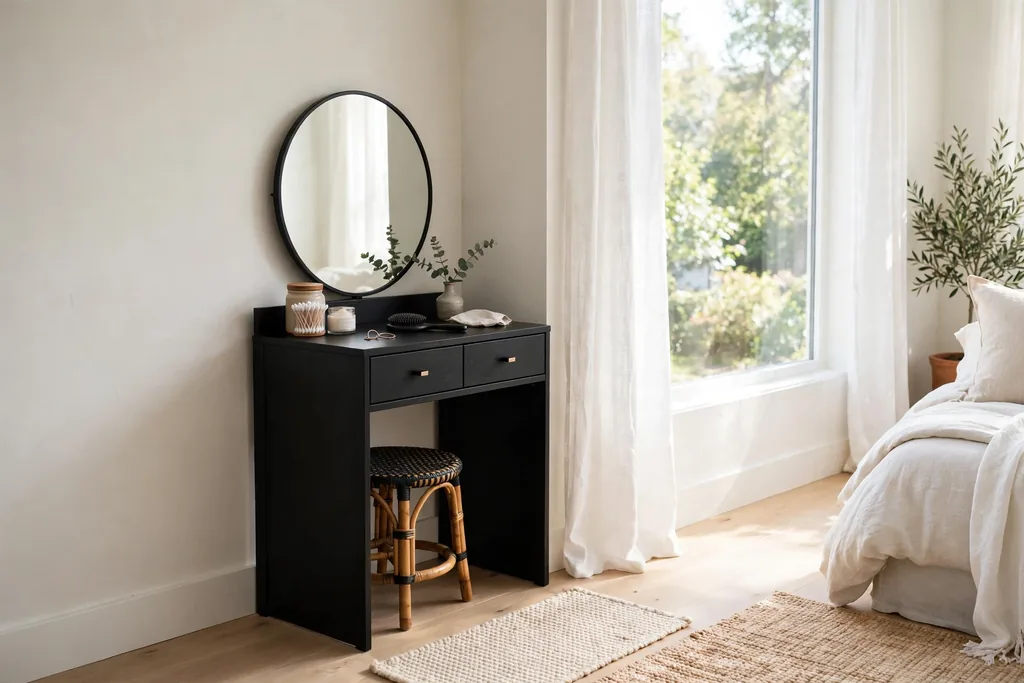
Place a small black dressing table or console in a bedroom corner, with a mirror above it and a stool tucked beneath. The corner gains a clear purpose, and the black table reads as a piece of furniture rather than a dark wall. This suits a bedroom with an unused corner near a window, where daylight helps for getting ready.
Keep the tabletop tidy with one tray for daily items, and hang the mirror so it catches window light rather than facing a cluttered wall. Add a small lamp or a candle on the tray for evening use, and keep the stool in a pale or wood tone so the corner does not feel heavy. Store less used items in the drawer, so the surface stays clear.
15. Fit Black Open Shelves Beside the Bed

Mount one or two black open shelves beside the bed, at a height you can reach from the mattress, and use them for books, a small plant, and a lamp. The shelves turn an empty side wall into useful storage, and books and objects stand out against the dark shelf backs. This suits a small bedroom where a nightstand would crowd the floor.
Fix shelves into studs or with fixings rated for the weight, and leave some shelf space empty so the display does not look packed. Keep the shelf contents to a few items each, mixing books with one vase or one framed photo, and repeat the black in the bed frame or a lamp base. A small clip light on the top shelf helps for reading without a table lamp.
16. Hang Black Pendant Lights Over the Nightstands

Hang a black pendant light over each nightstand, in place of a table lamp, so the bedside surface stays clear. The pendants draw the eye up and give the bed a framed, hotel-like look, while the black cords and shades tie in with other dark pieces. This suits a bedroom with a low ceiling only if the pendants hang clear of the bed and the pillows.
Hang the pendants so the bottom of each shade sits just above head height when you sit up in bed, and use warm white bulbs with a dimmer if possible. Keep the shades simple, such as a dome or a drum, so the light spreads evenly. If you rent, plug-in pendants with a cord cover give a similar look without new wiring.
17. Add a Black Accent Chair for Reading
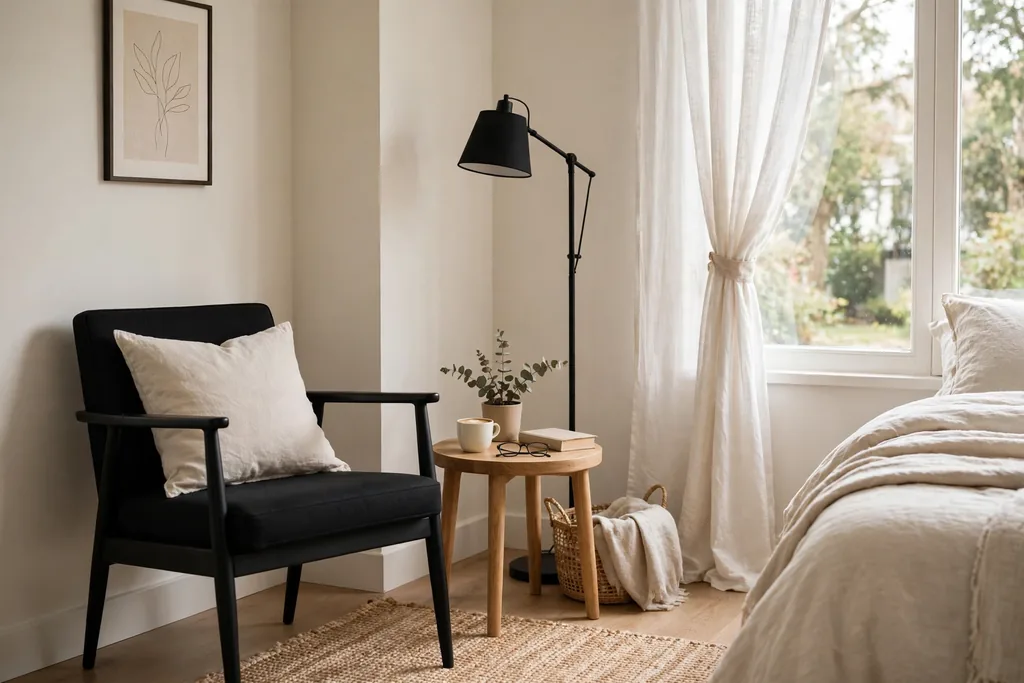
Place a black accent chair in a bedroom corner with a small side table and a floor lamp, to make a reading spot that is separate from the bed. The chair adds a dark anchor away from the bed wall, which balances a room where all the black sits on one side. This suits a larger bedroom, or a corner near a window with enough room to sit comfortably.
Choose a chair with a shape you can sit in for a while, such as a rounded armchair, and add a pale cushion so the seat does not feel dark to sit in. Keep a small basket for books beside the chair, and angle the floor lamp over the shoulder you read from. If floor space is tight, a slim slipper chair gives the same corner without crowding the room.
18. Lean a Large Black Framed Mirror
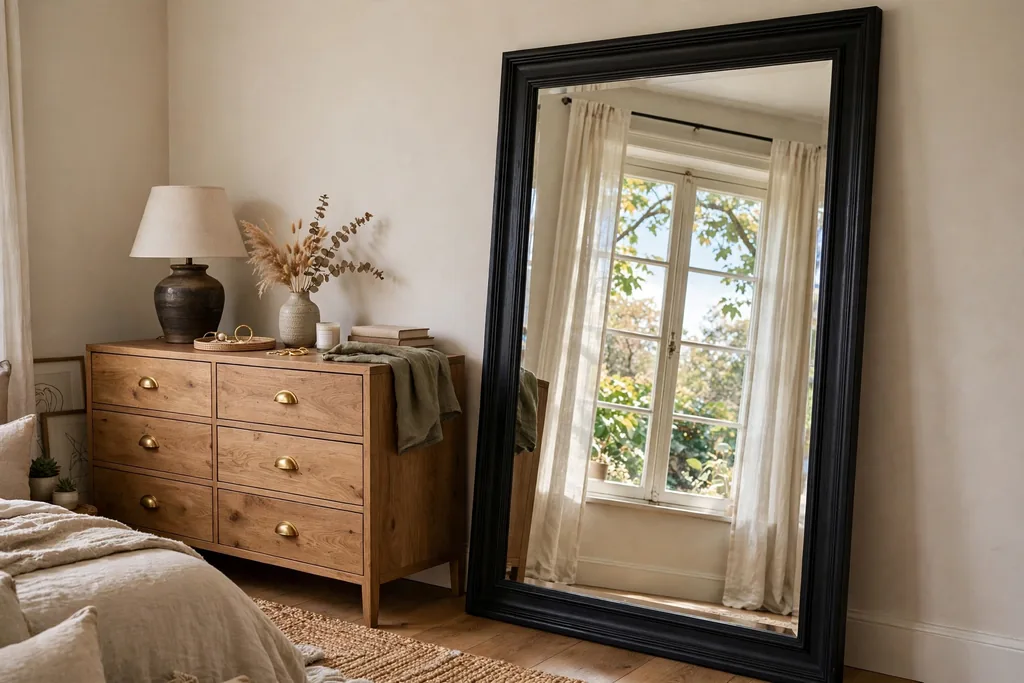
Lean a large mirror in a black frame against a bedroom wall, beside a dresser or in a corner, so the room gains light and a sense of height. The mirror bounces daylight and lamplight around the room, which helps a bedroom with black walls or black furniture feel open. This suits a room with a wide empty wall and little else on it.
Choose a mirror taller than the dresser or nightstand beside it, so it reads as a deliberate piece rather than a mirror waiting to be hung. Anchor it with a small non slip pad behind the bottom edge, and keep it out of the main walkway so nobody knocks it. Check what the mirror reflects before you settle it: a window or a plant looks good, while a view of clutter does not.
19. Add Black and Gold Details Sparingly
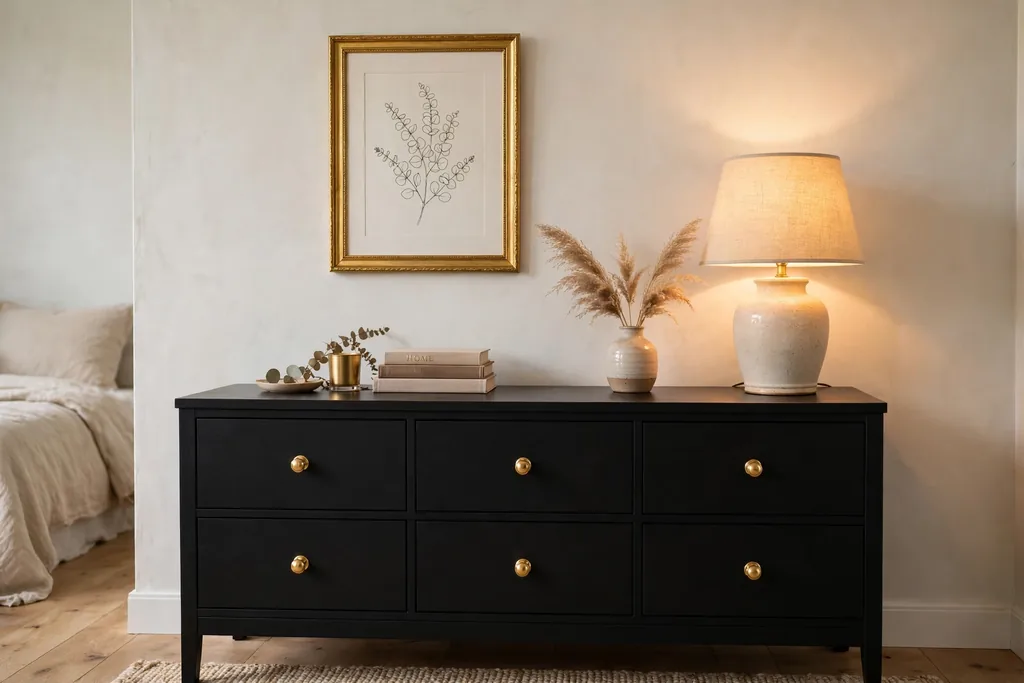
Use black and gold together in small details, such as gold drawer pulls on a black dresser, a gold framed print on a black wall, or gold lamp bases beside a black bed. The gold warms the black and catches lamplight, but it works best in small doses. This pairing suits a bedroom that leans formal, or a room where plain black feels too stark.
Pick one gold detail per area, such as the pulls on one dresser, and keep the rest of the metal in the room in black or brass tones that sit close to gold. Avoid gold on every surface, since too much shine fights the calm mood a bedroom needs. Keep bedding pale, so the black and gold details read clearly against a quiet background.
20. Paint the Interior Door Black
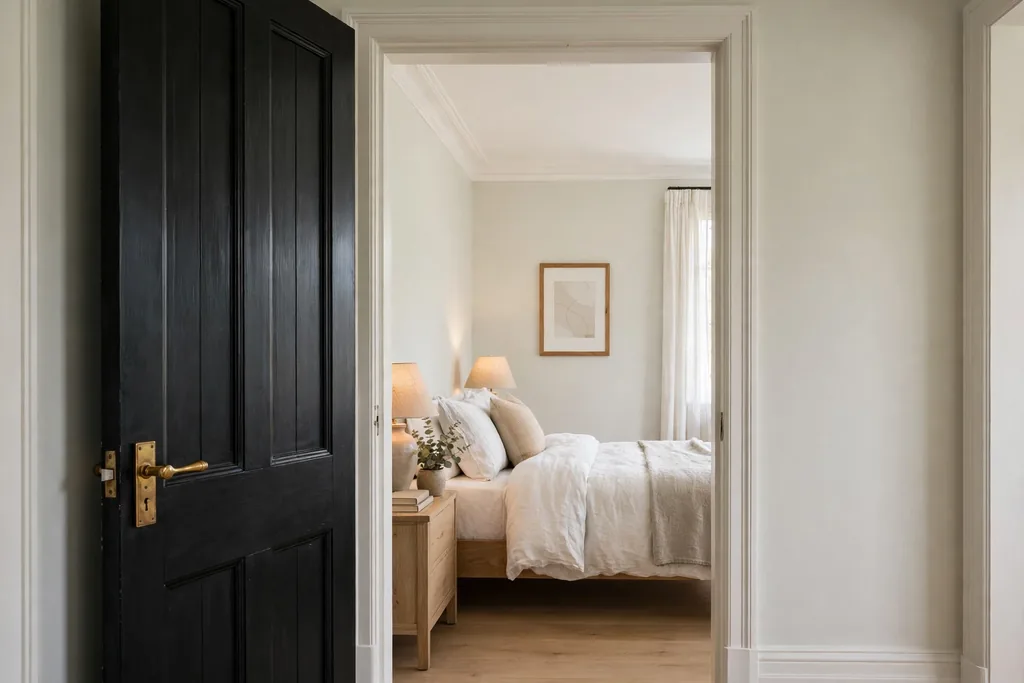
Paint the bedroom door black, including the frame if it suits the room, and keep the walls pale. The door becomes a strong vertical block that frames the entry to the room, and it costs far less than painting a wall. This suits a bedroom with white trim elsewhere, since the black door stands out as a deliberate accent.
Use a durable paint made for doors and trim, since doors get touched often, and paint both sides if the door opens into a hallway you also want to tie in. Keep the handle in brass or black, and add a black frame or a black hook on the wall nearby, so the door does not feel like the only dark piece. If the room is small, keep the door closed view in mind, since you see it from the bed.
21. Paint the Floorboards Black in a Small Room
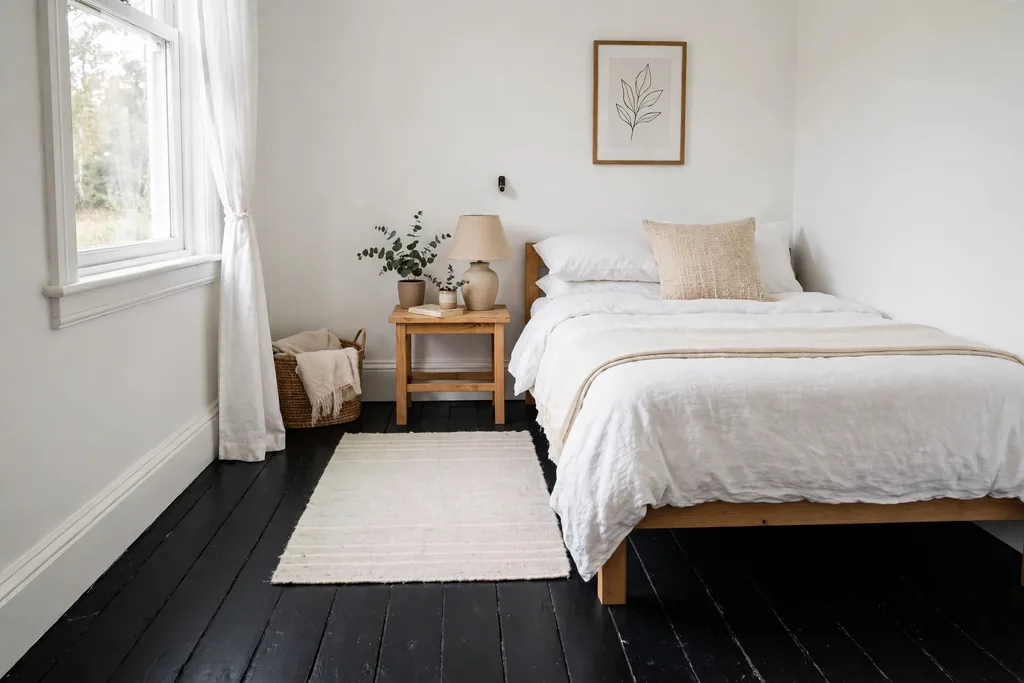
Paint the floorboards black in a small bedroom and keep the walls pale, the ceiling white, and the bedding light. The dark floor grounds the room and makes pale furniture stand out, which can make a small room feel styled rather than bare. This suits a room with plain wood floors that are worn or mismatched, since paint unifies them.
Use a floor paint made for wood floors, and seal it as the maker directs, so the finish stands up to foot traffic. Add a pale rug beside the bed, so bare feet land on a soft surface and the dark floor does not dominate the view from the door. Keep the baseboards white for a clean edge, and touch up scuffs in the main walkway now and then.
22. Choose a Black Four Poster Frame

Choose a black four poster bed frame, in slim metal or painted wood, and keep the bedding pale so the frame reads as a clear outline. The posts give the bed height and structure, and the frame turns the bed into the main feature of the room without any wall paint. This suits a bedroom with a high ceiling, where the posts have room to breathe.
Keep the top of the frame open, without a canopy fabric, if the room is small, so the posts do not close in the bed. Hang a light fabric from the top rail only if you want a softer look, and keep it sheer so daylight still reaches the bed. Add bedside lamps in warm white, since the dark posts can shadow the corners of the bed at night.
23. Soften Black With Blush Bedding Accents

Soften a black bedroom with blush accents, such as blush cushions, a blush throw, or blush curtains, while keeping the main black pieces in place. The soft pink warms the black without taking over the room, and it suits a bedroom where plain black feels too stark. Keep the blush to bedding and small textiles, so it is easy to swap later.
Use two blush pieces, such as a throw and one cushion, rather than one lone item, so the color looks planned. Keep the rest of the bedding in cream or white, and repeat the blush once more in a small detail, such as a vase or a print, if the room allows. If blush feels too sweet, a dusty rose or a muted terracotta gives a similar softening effect.
24. Let Green Plants Pop Against Black

Place green plants against black walls or beside black furniture, so the leaves stand out against the dark backdrop. The green warms the room and adds life, and it suits almost any black bedroom, from a single black wall to a fuller dark scheme. Choose plants that suit your light, such as a snake plant for low light or a monstera for a bright corner.
Use pots in cream, terracotta, or natural clay, so the plants read clearly and the pots do not blend into the black. Group plants at different heights, with one tall floor plant and one smaller plant on a nightstand or shelf, so the green feels layered. Water as each plant needs, and wipe large leaves now and then, since dust shows more on dark backgrounds.
25. Fit a Black Desk Nook in the Bedroom
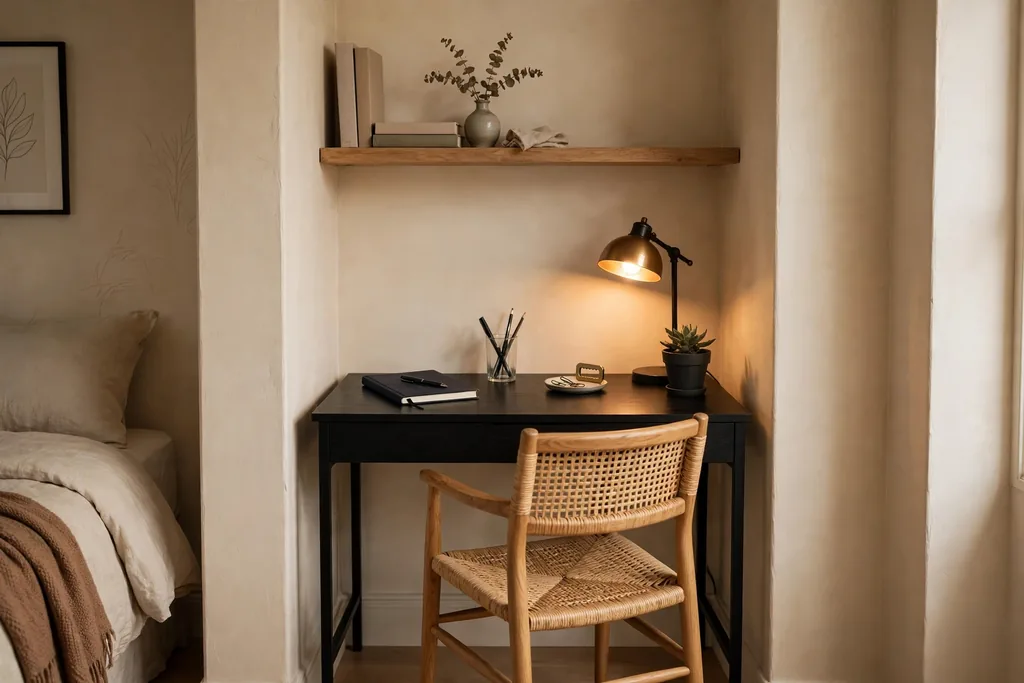
Fit a small black desk into a bedroom nook or alcove, with a chair, a lamp, and one shelf above it. The dark desk marks the work zone clearly, even in a shared room, and it gives a small corner a defined purpose. This suits a spare corner, a window alcove, or the wall beside a wardrobe, where a full desk would crowd the room.
Keep the desk surface light where you work, with a pale mat or a light wood tray, so papers and a laptop read clearly against the black. Add one warm lamp with a focused beam, and keep cables tidy with clips or a tray, since loose cables show up more against black. When the workday ends, clear the desk surface so the nook reads as part of the bedroom again.
26. Add a Black Storage Bench at the Foot of the Bed

Place a black storage bench at the foot of the bed, with lift up seating or baskets beneath, for spare bedding, shoes, or seasonal clothes. The bench finishes the bed visually and adds storage without a new wardrobe, which suits a bedroom short on closet space. Choose a bench close to the bed width, so it does not stick out past the mattress on either side.
Keep the bench top clear or topped with one folded throw, so it stays useful as a seat for getting dressed. Use the storage for items you reach for often, such as spare blankets, and label baskets inside if the bench has open cubbies. Repeat the black in the bed frame or a nightstand, so the bench links to the rest of the bed area.
27. Use a Black Geometric Throw as the Pattern
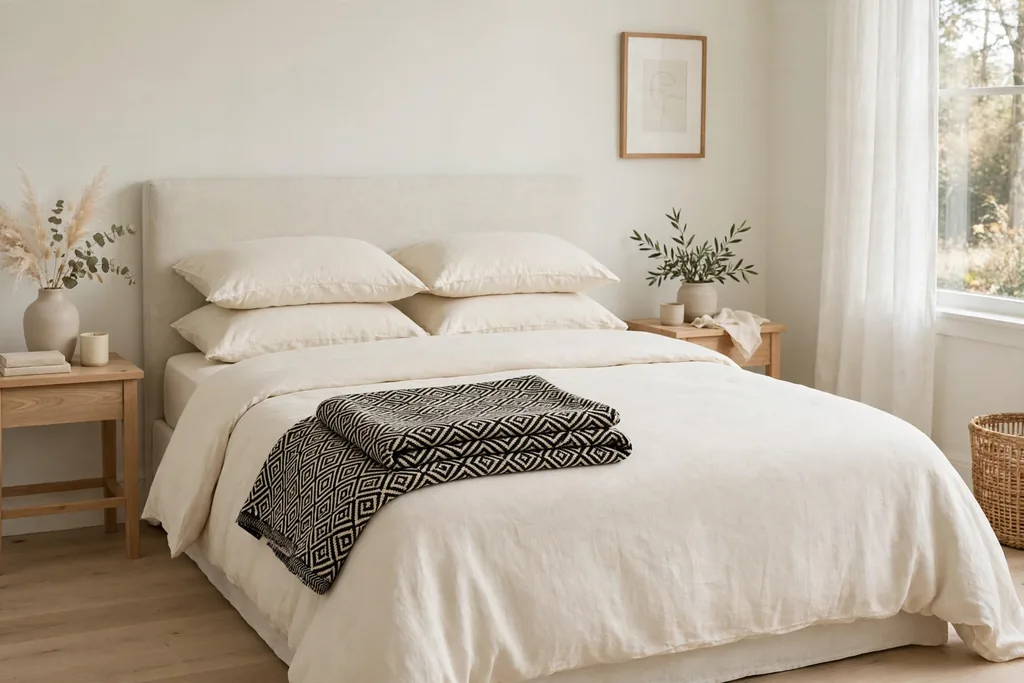
Use a black geometric throw, such as a bold stripe, a diamond pattern, or a simple block print, as the main pattern in an otherwise plain bedroom. The throw adds pattern without a new color, which suits a room where you want interest but not a busy palette. Drape it across the foot of the bed or over a chair, where the pattern is easy to see.
Keep the rest of the bedding plain, in white, cream, or grey, so the throw pattern stays the focus. Fold the throw back at night rather than removing it, so the bed still looks dressed in the morning. Wash the throw as the label directs, since black patterned fabric can fade in strong sun if it sits near a window.
28. Add a Black Picture Ledge With Sconces
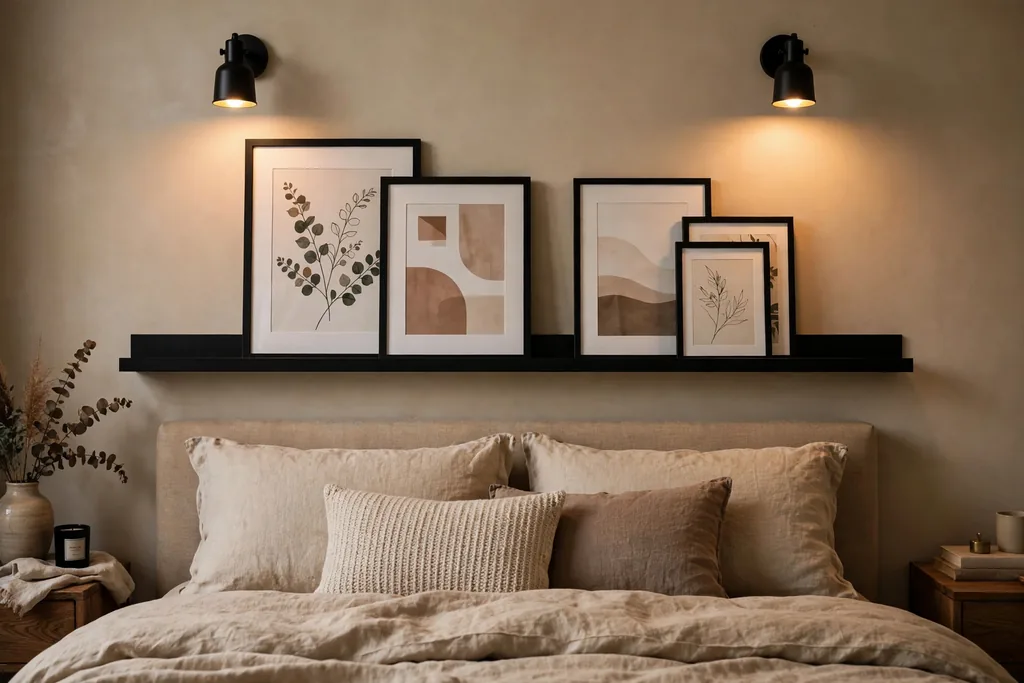
Fit a black picture ledge above the bed or above a dresser, and flank it with small black wall sconces. The ledge lets you layer frames and swap art without new holes, while the sconces give warm light on either side of the display. This suits a bedroom where you like to change art often, or a rental where fixed hanging feels limiting.
Stand larger frames at the back of the ledge and smaller ones in front, and leave one end of the ledge empty so the display does not look packed. Use warm white bulbs in the sconces, and put them on a dimmer if possible, so the light suits both reading and winding down. Keep the ledge depth in mind: shallow ledges suit flat frames, while deeper ones hold small objects too.
29. Paint Only the Lower Wall Black With White Above
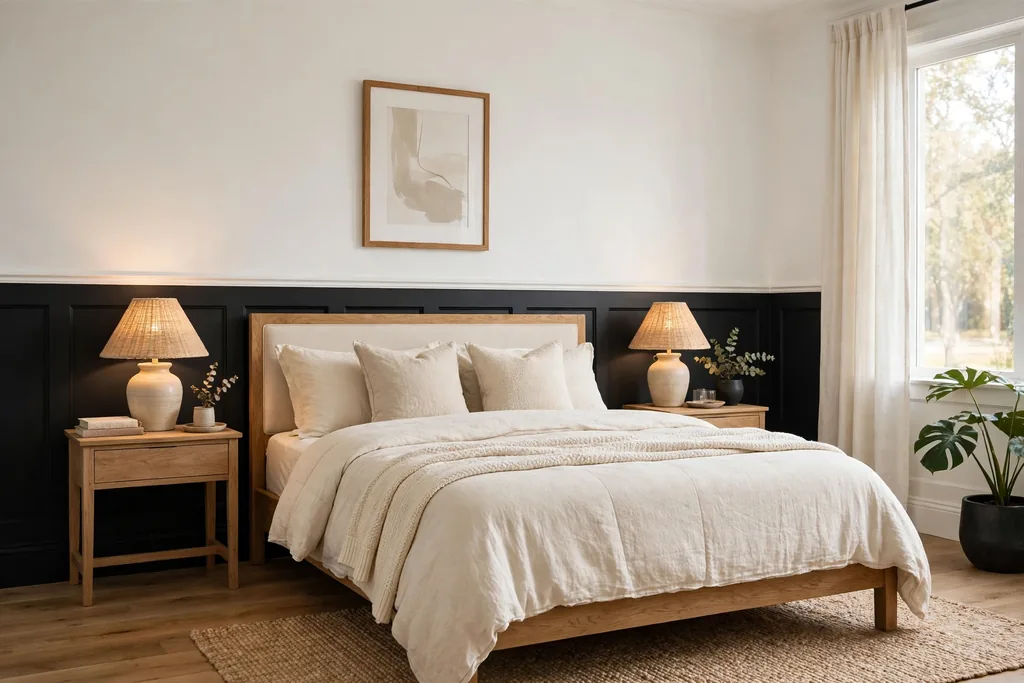
Paint the lower half of the bedroom walls black and keep the upper half white or cream, with a chair rail or trim board marking the split. This gives the room the depth of black without darkening the whole space, since the pale upper wall and white ceiling keep the room bright. It suits a bedroom where full height black paint feels too strong, or a room with low ceilings.
Fit the rail at about one third of the wall height, and paint the rail the same black or in white for a crisper edge. Use a washable paint finish on the lower section, since that part of the wall gets scuffs from the bed, bags, and hands. Keep art above the rail simple and light, so the upper wall stays calm against the dark base.
30. Mix Black With Natural Linen and Jute

Pair black furniture and black walls with natural linen bedding, a jute rug, and woven baskets, so the room gains warmth and texture beside the dark tones. The natural fibers soften black paint and black fabric, and they suit a bedroom with a relaxed or coastal feel. This mix works well in a room with plenty of daylight, where the textures show clearly.
Keep the linen in natural, cream, or oatmeal tones, and let the jute rug sit under the bed or beside it, where it adds texture underfoot. Add one or two woven baskets for storage, in a tone close to the rug, so the natural materials link together. Avoid too many woven pieces at once, since a room full of baskets can feel cluttered rather than calm.
31. Use a Black Chalkboard Wall for Notes and Art

Paint one bedroom wall with chalkboard paint, to make a black wall you can write on, draw on, and change with the week. Use it for a weekly plan, a simple drawing, or a favorite line, and wipe it clean when you want a fresh start. This suits a teen bedroom, a guest room, or a main bedroom where one wall can carry a changing display.
Use two or three thin coats for an even writing surface, and season the wall by rubbing chalk over it and wiping it clean before the first use, following the paint maker instructions. Keep chalk and an eraser in a small cup nearby, and use a damp cloth for a full clean. If chalk dust bothers you, chalk markers give a cleaner line and wipe off with water on most chalkboard paints.
32. Go All In With a Small All Black Cocoon Room
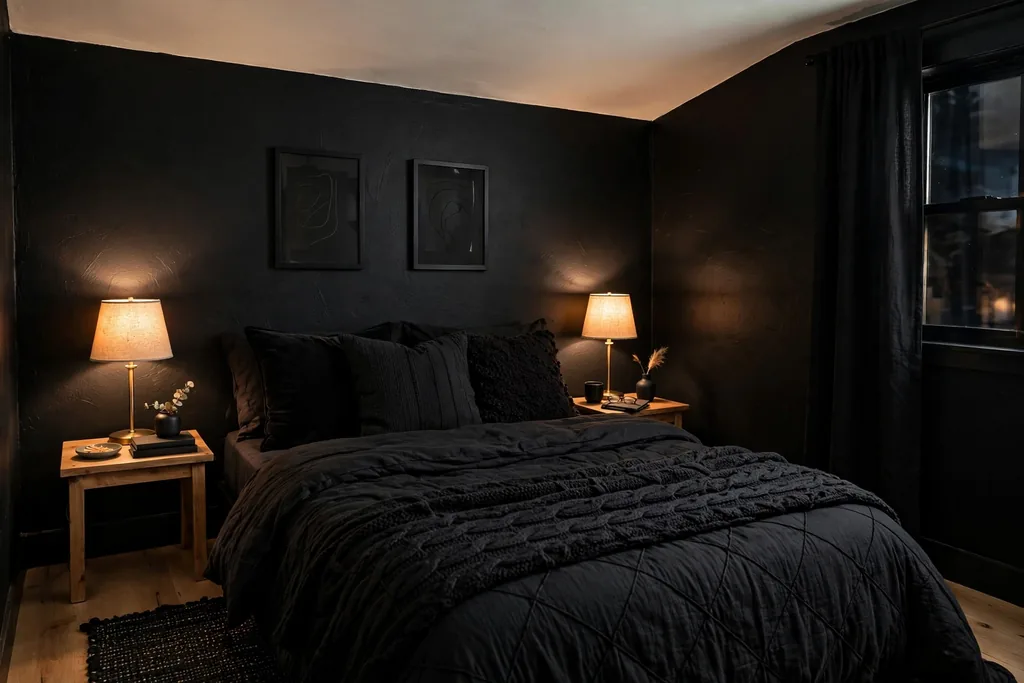
Paint all four walls black in a small bedroom, dress the bed in black bedding, and use warm dimmable lamps for light. The all black room feels like a cocoon, which suits a small bedroom used mainly for sleep, where a dark, enclosed feel helps you wind down. This works best when the room has a clear light plan, since an all black room without lamps can feel flat.
Layer the light: a warm overhead light on a dimmer, a bedside lamp on each side, and one small light near the mirror or wardrobe, so no corner falls into shadow. Mix black textures, such as matte paint, velvet cushions, and linen bedding, so the room has depth rather than one flat tone. Keep the ceiling white or very pale, so the room keeps its height even with dark walls.
Conclusion
Black works in a bedroom when it has a clear job and the rest of the room gives it light, warmth, and breathing room. Pick one idea to start, such as a black wall, a black headboard, or black bedding, test it in daylight and lamplight, and add a second black piece only where the room still feels unfinished. Pair black with warm wood, cream, brass, or plants, and keep one pale surface in the room, so the dark tones have somewhere to rest. Save this list on Pinterest before you start, so you can work through it in order and stop to adjust if the balance feels off.
FAQs
Will a black bedroom feel too dark at night?
It can, if every surface is dark and the lighting is weak, but a black bedroom with warm lamps, pale bedding, and a mirror usually feels cozy rather than gloomy. Layer the light with bedside lamps and one overhead light on a dimmer, keep the ceiling pale, and add one light surface, such as cream sheets or a pale rug, so the room has contrast.
What finish of black paint suits a bedroom wall?
Matte or eggshell suits most bedroom walls, since both hide small flaws and give a soft, even look. Use a washable eggshell in a room where the wall gets touched often, such as a kids room, and save flat matte for a main bedroom wall that sees little contact. Test a large sample board in daylight and lamplight before painting a full wall.
How much black is too much in a bedroom?
Start with one large black piece, such as a wall, a headboard, or a dresser, and add smaller black details only where the room still feels flat. If the room starts to feel heavy, add a pale rug, cream bedding, or a plant, rather than removing the black piece itself. The right amount is the point where the black reads as a feature, not as the whole room.
Can I use black decor in a small bedroom?
Yes, if you keep the black to one wall or a few furniture pieces, and keep the ceiling white, the floor light, and the bedding pale. A mirror, warm lamps, and one plant help a small black bedroom feel open, and a black accent wall behind the bed often makes the bed feel more defined rather than making the room feel smaller.
What colors go best with a black bedroom?
Cream, warm white, walnut wood, brass, blush, and green plants all sit well beside black. Cream and warm white keep the room bright, walnut and brass add warmth, blush softens the scheme, and green plants add life against a dark backdrop. Pick one or two of these partners and repeat them, rather than adding many colors at once.
Can I try black bedroom decor in a rental?
Yes, if you use bedding, curtains, furniture, removable wallpaper, or a freestanding paneled board, rather than painting the walls. Black bedding, black curtains, and a black dresser all give the look without changing the walls, and removable black wallpaper gives a black wall you can peel off when you move out. Check your lease first, and test any removable product in a hidden spot.