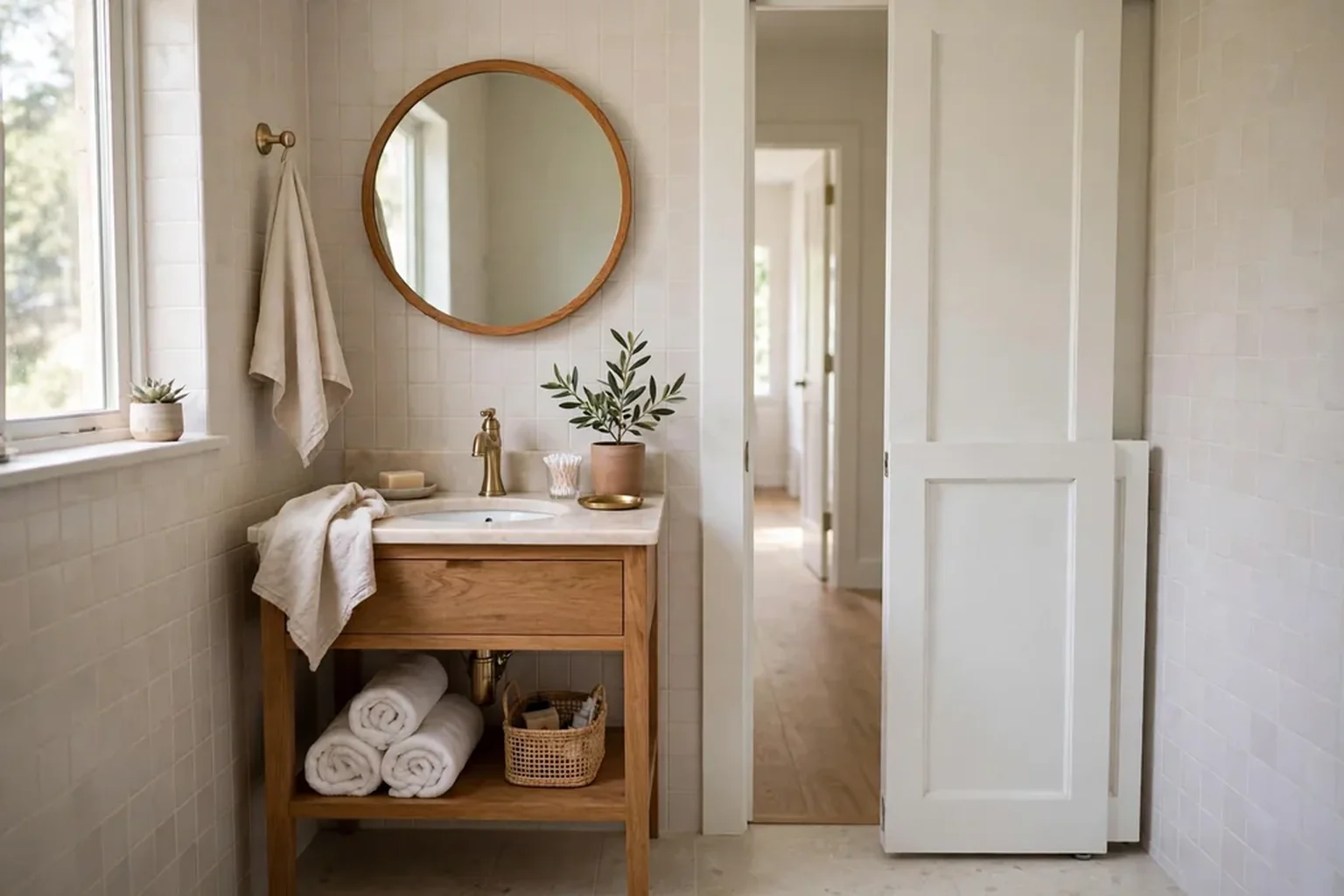
A swinging bathroom door can steal a surprising amount of room, since it needs clear floor in front of it every time it opens. A pocket door solves that problem by sliding into the wall, so the space beside the door stays free for a vanity, a towel rail, or simply a clear path. These 11 small bathroom pocket door ideas cover plain, glass, mirrored, wood, and double doors, plus hardware and layout choices that add warmth and privacy. For more small room planning, see these apartment bathroom ideas. Start by checking the wall beside the opening, then pick the door that fits how you use the room each day.
Key Takeaways
- A pocket door frees the floor space a swinging door needs, which is the main gain in a small bathroom.
- Check the pocket wall first for pipes, wires, and studs, since the wall must have room for the door to slide into.
- Frosted glass and mirrors add light to a small bathroom, while solid panels give the most privacy and sound control.
- Repeat one finish, such as matte black or brushed brass, on the handle, towel rail, and mirror frame so the door reads as part of the room.
- Soft-close hardware and a proper privacy lock make a pocket door feel solid rather than light or rattly.
- Paint, wood, and trim can warm up a plain pocket door without changing the frame or the track.
1. Choose a Flush White Panel That Blends Into the Wall
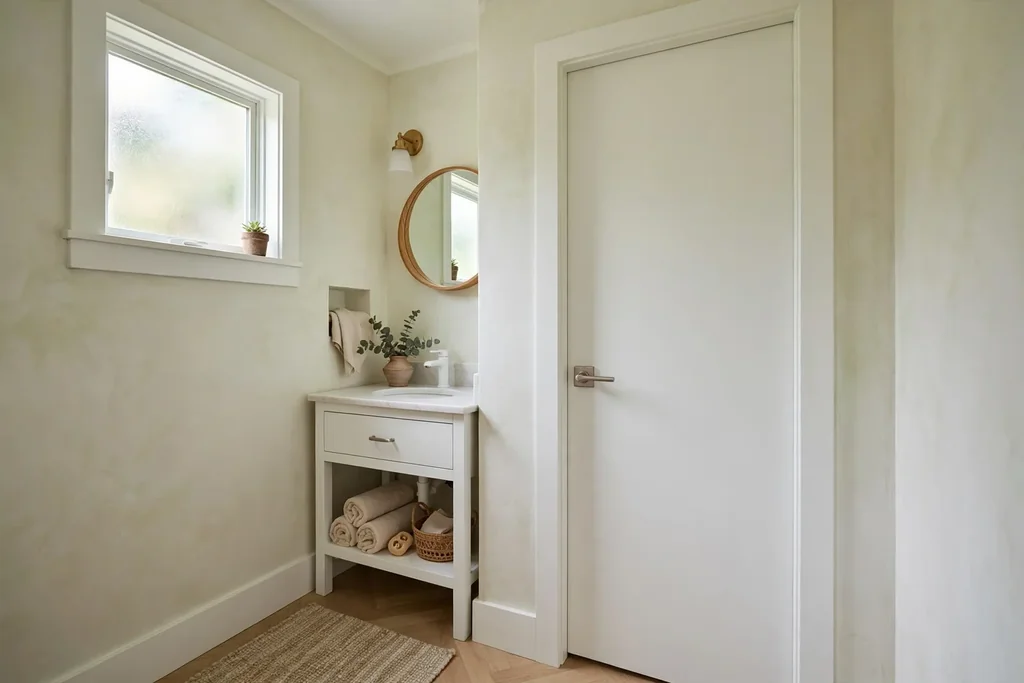
A flush white pocket door is the quietest choice for a small bathroom, because it reads as part of the wall when closed. Use a flat slab door painted the same white as the trim, with a simple recessed pull, and keep the wall beside it plain so the door does not draw attention. When the door slides open, it disappears into the wall, and the bathroom feels like an open part of the bedroom or hall.
This suits a bathroom where you want calm, not a feature door, and it pairs well with white tile and pale walls. Keep the paint in a moisture resistant finish made for bathrooms, since steam finds a door edge fast. Wipe the pull clean now and then, and check the track for dust each year, since a dirty track is the main reason a pocket door starts to stick.
2. Fit Frosted Glass to Borrow Light Without Losing Privacy
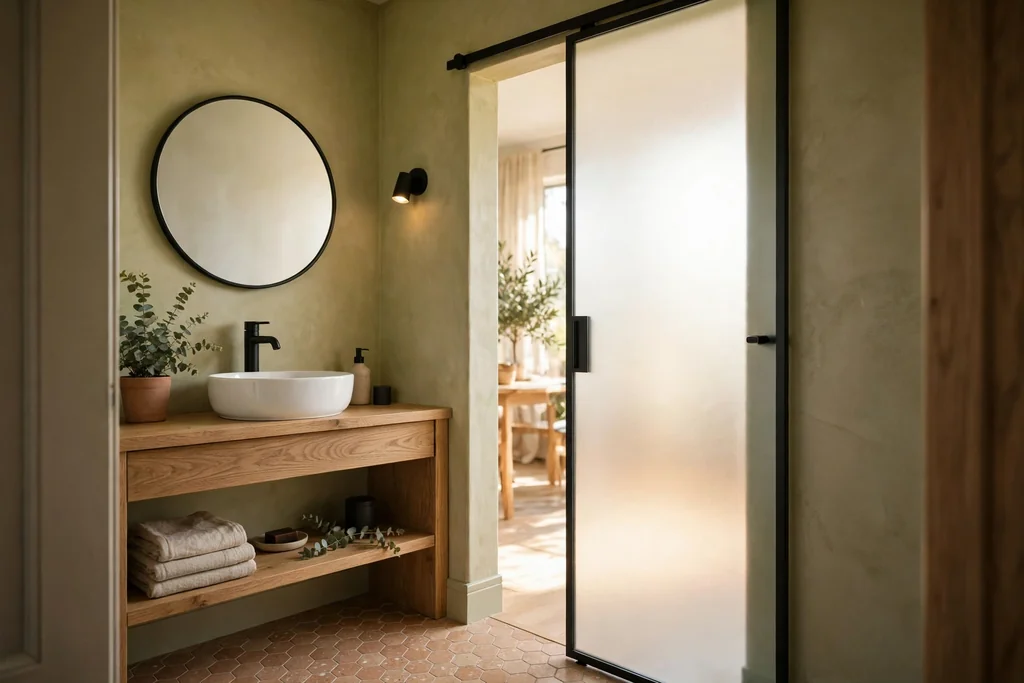
A frosted glass pocket door lets daylight from a bedroom or hall reach a windowless bathroom, while still keeping the room private. The frosted surface softens shapes behind it, so you get glow rather than a clear view, and it suits a bathroom that feels dark with a solid door closed. Choose a door with a wood or metal frame around the glass, so the panel feels sturdy and the edges stay protected.
This suits an ensuite or a hall bathroom where the room outside has a window. Wipe the glass with a soft cloth, and keep the frame finish matched to the taps or the mirror frame. Avoid clear glass for a main bathroom door, since it gives light but no privacy, and check that the glass is safety glass before fitting, since bathroom doors get daily use.
3. Add a Full Length Mirror Panel to Double the Light
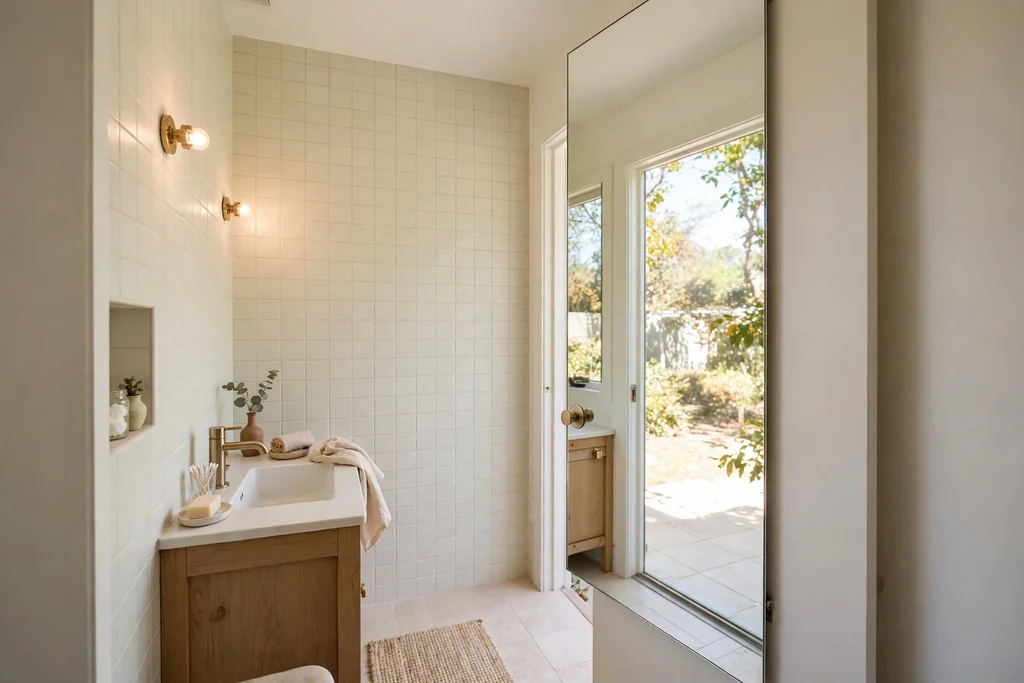
A pocket door with a full length mirror panel does two jobs at once: it closes the bathroom and it gives you a dressing mirror. The mirror reflects daylight across a small room, which helps a tight bathroom feel larger, and it saves the wall space a separate mirror would take. This suits a small ensuite where you dress each morning and want one clear check before you leave.
Keep the mirror clean with a soft cloth, and check the track for dust so the door glides smoothly. If a full wall of mirror feels too bright, use a mirror on the room side only, with a plain panel on the bathroom side. Fix the track firmly and keep it level, since a mirrored door that sticks or wobbles is hard to live with. For more door styles that save space, see these closet door ideas.
4. Warm the Room With a Wood Plank Pocket Door
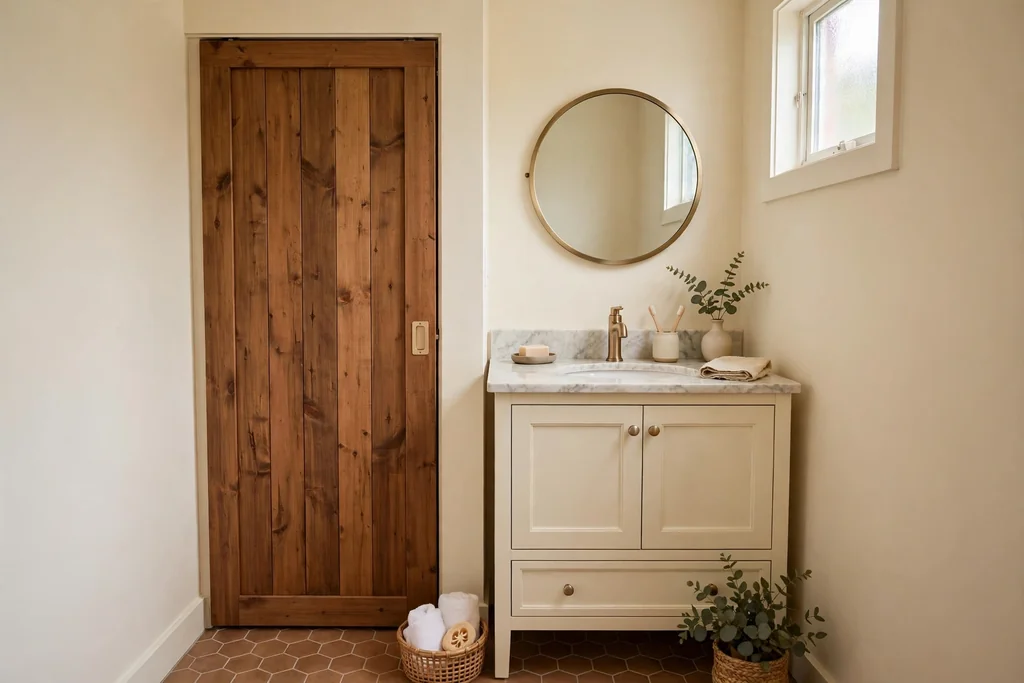
A wood plank pocket door brings warmth to a bathroom full of tile and porcelain, with each plank showing its own grain. Use planks fixed to a solid backing frame, so the door stays flat and does not warp in steam, and seal the wood to protect it from damp and marks. A warm oak or walnut face suits a bathroom with wood shelves, a wood stool, or a teak bath mat.
This suits a bathroom that feels cold or clinical, and it pairs well with cream walls and brass taps. Check that the wood is dry and sealed on all edges before fitting, and keep the door weight in mind, since solid wood is heavier than a hollow door. Pair a plank door with plain towels and simple walls, so the wood stays the main feature of that wall.
5. Fit Double Pocket Doors for a Wide Ensuite Opening
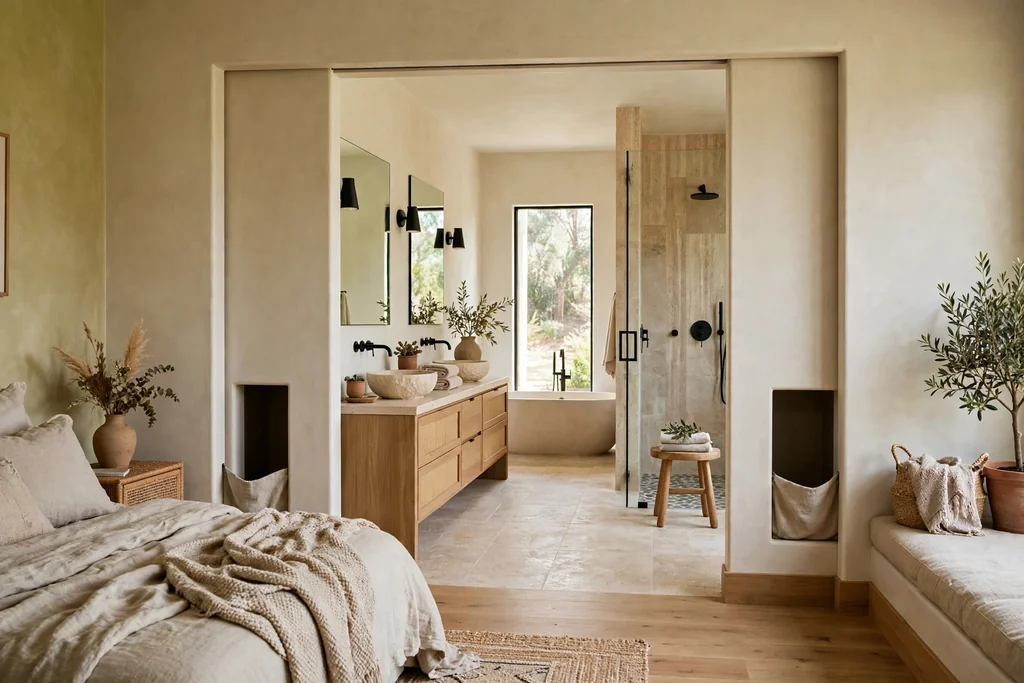
Double pocket doors suit a wide ensuite opening, where one door would be very heavy or would leave a narrow gap. Two panels slide into a pocket on each side, so the full opening clears when both doors are open, and the room feels connected to the bedroom. When closed, the pair meets in the middle with a simple lock, giving the same privacy as a single door.
This suits a main bedroom ensuite with a wide doorway, or a bathroom shared by two bedrooms. Measure the opening and both pocket walls carefully, since each side needs its own clear pocket. Use matching pulls on both doors, and add soft-close hardware to both tracks, so neither door slams into the frame. Keep the floor clear at the meeting point, so the doors close fully without catching a rug edge.
6. Paint the Pocket Door a Warm, Cozy Color
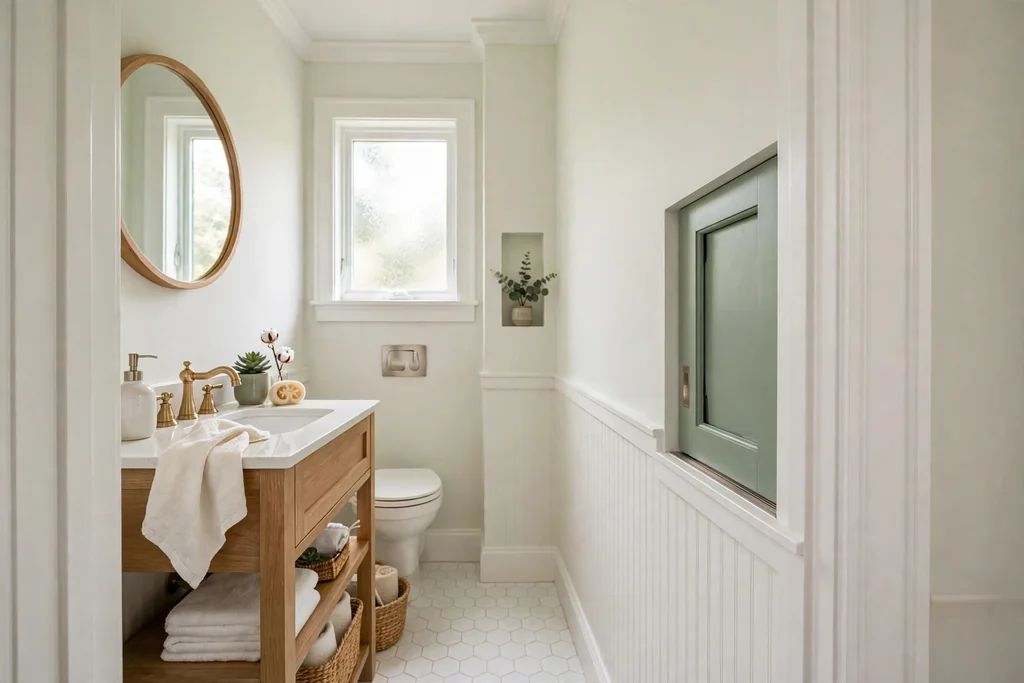
Painting a pocket door a warm color, such as sage green, dusty blue, or soft terracotta, turns a plain door into a gentle feature. Keep the walls pale and the trim white, so the color reads as one calm note rather than a loud block, and repeat the same color once in a towel, a plant pot, or a small stool. The door gives color at eye level, where you see it every time you enter the room.
This suits a small bathroom that needs warmth but not a full repaint. Test a large painted sample on the door in morning and evening light before painting the whole panel, since colors shift a lot with light. Use paint made for doors and damp rooms, and allow full drying time between coats, since a rushed coat shows marks on a flat panel.
7. Add a Towel Rail to the Room Side of the Door
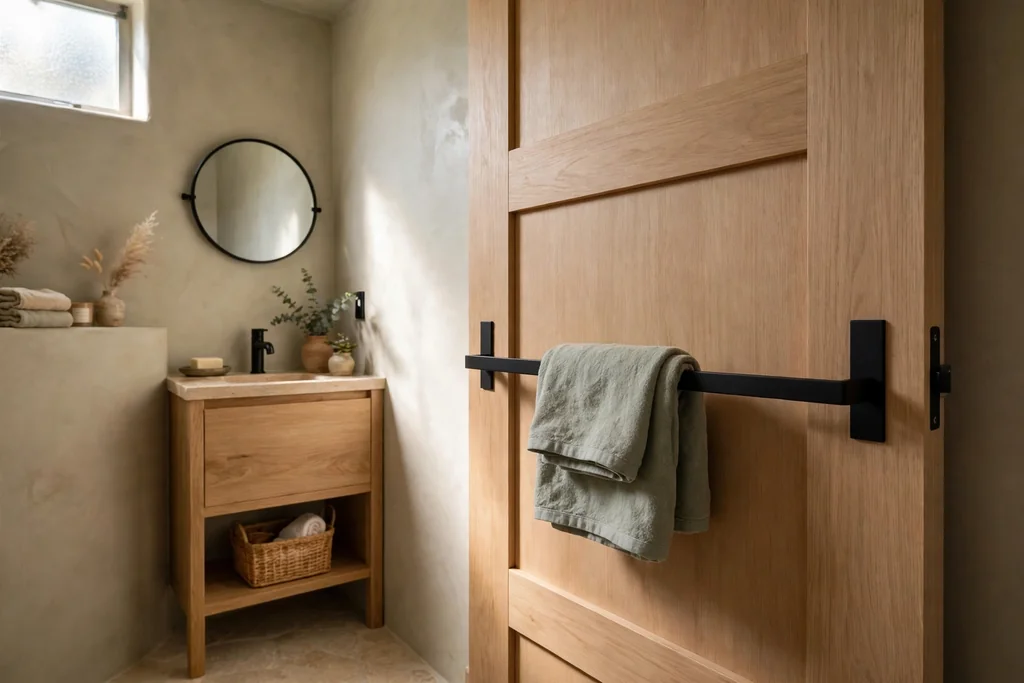
A towel rail fixed to the room side of a pocket door gives a small bathroom a towel spot that takes no extra wall space. Fit a short rail or a row of hooks to the face of the door, at a height that clears the vanity and the floor, and keep the rail for one hand towel or a robe, not a heavy stack. When the door slides open, the towel moves with it, out of the way of the sink and the shower.
This suits a bathroom with no free wall near the sink, or a guest bathroom where one towel rail is enough. Check that the rail fixings suit the door material, and keep the load light, since a heavy towel can pull a fixing loose over time. Keep the towel clear of the track and the pocket edge, so the door still slides fully into the wall.
8. Choose Soft Close Hardware and a Proper Privacy Lock
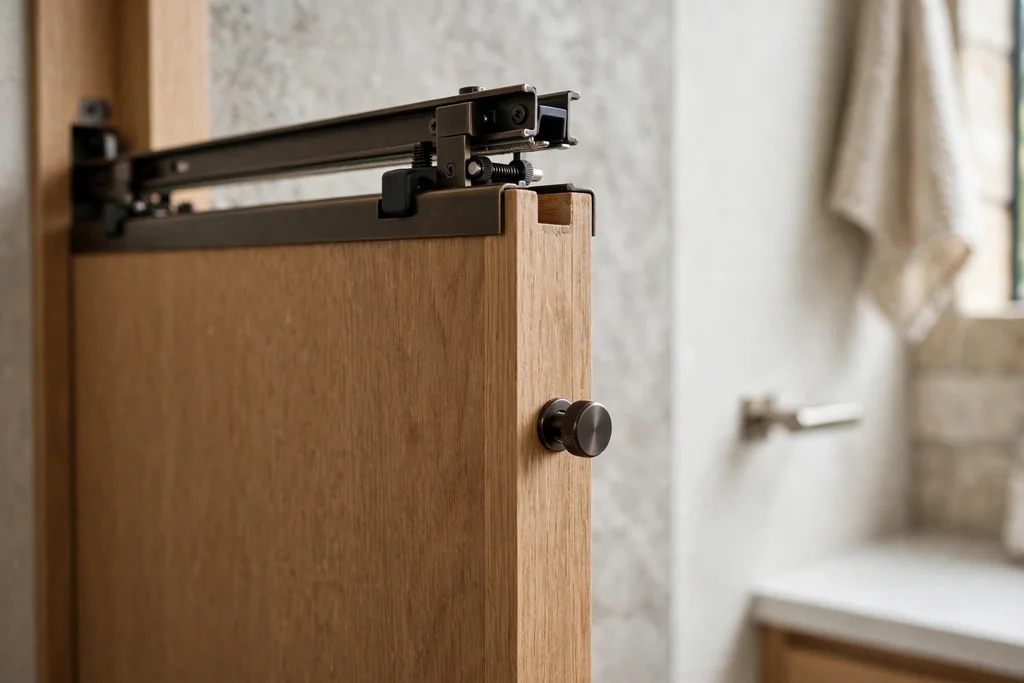
Soft close hardware and a proper privacy lock make a pocket door feel solid, which matters in a bathroom used every day. Soft close stops the door from slamming into the frame, and a privacy lock with a small turn button gives the same peace of mind as a hinged door lock. Choose a lock that can be opened from outside in an emergency, and keep the turn button at a height that is easy to reach.
This suits any small bathroom, but it matters most in a shared home or a family bathroom. Test the lock and the soft close after fitting, and check the track alignment, since a door that drags will wear the hardware faster. Wipe the pull and the lock with a soft cloth, and keep the track free of dust, so the door keeps gliding quietly.
9. Use a Pocket Door to Close Off a Toilet Nook
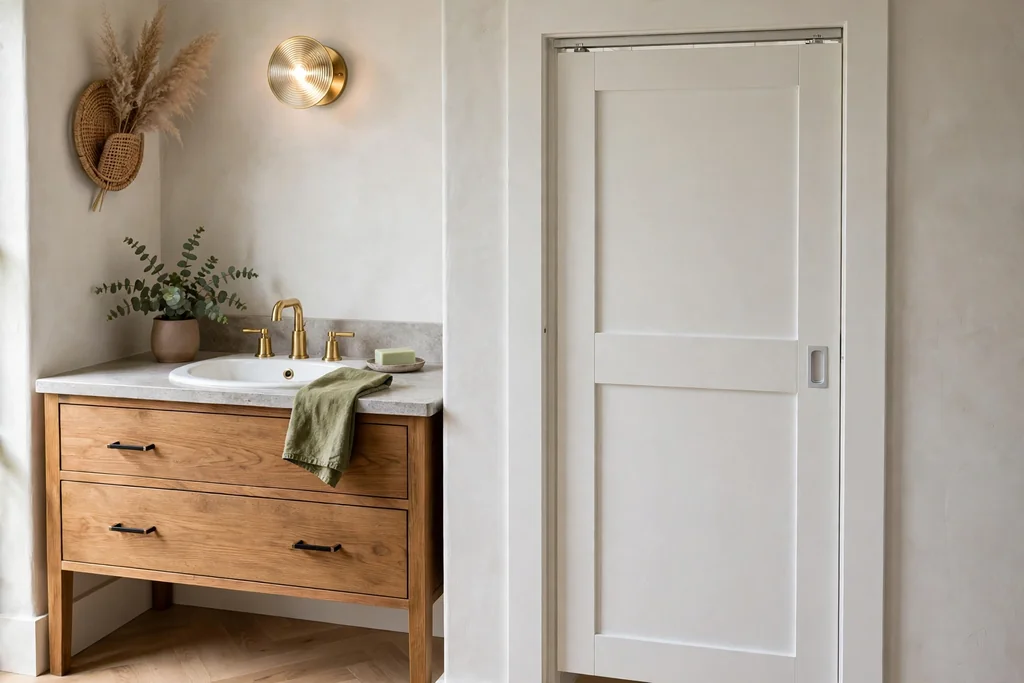
A pocket door that closes off a toilet nook inside a larger bathroom gives privacy without a swinging door eating into the main room. Fit the door to the nook opening, so one person can use the toilet while another uses the sink or the shower, and keep the nook walls in the same tile as the rest of the room, so the closed door reads as part of the bathroom. A small vent or a gap under the door keeps air moving in the nook.
This suits a family bathroom or a shared ensuite where two people use the room at once. Measure the nook opening and the pocket wall before fitting, since a nook wall may hold pipes. Keep the nook light on its own switch, and choose a solid panel for this door, since privacy matters more than borrowed light in a toilet nook.
10. Fit a Louvered Pocket Door for Airflow in a Damp Room
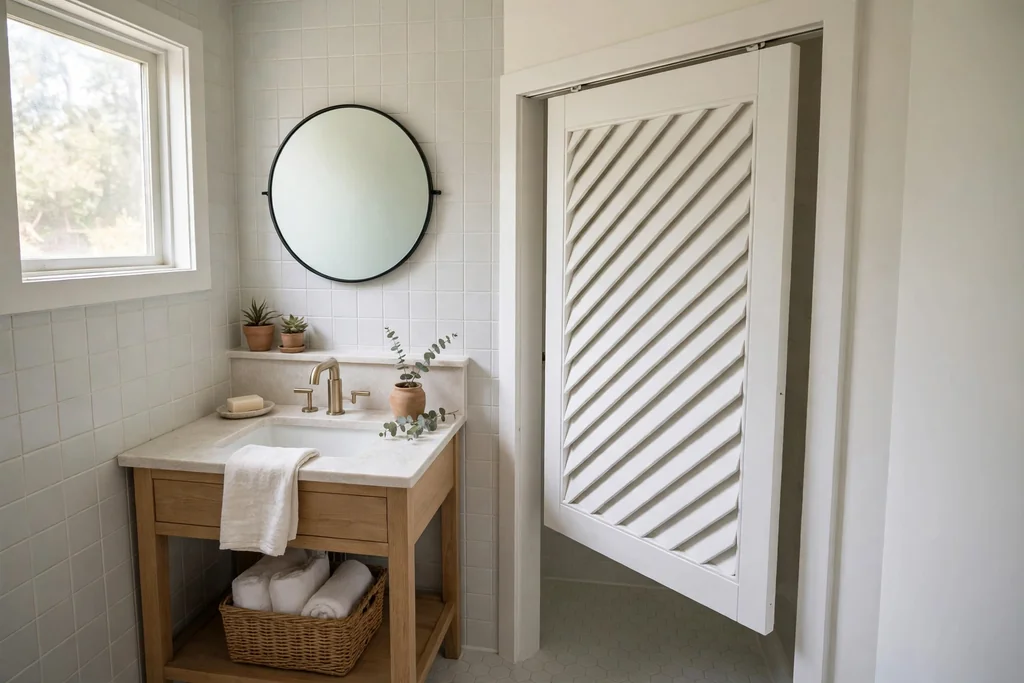
A louvered pocket door has angled slats that let air move in and out of the bathroom while still hiding the room from direct view. This helps in a warm bathroom, a room with no window, or a home where steam lingers after showers, since moving air helps the room dry faster. The slatted face also adds texture to a plain wall, and it suits coastal, cottage, and warm climate homes well.
Dust settles on slats, so wipe them with a dry cloth or a soft brush now and then. Louvered doors give less sound control than solid doors, so store the noisiest routines, such as early morning showers, with that trade-off in mind. Paint louvered doors in a pale color to keep the slat shadows light, and check that the slats are fixed firmly before you hang a hook on the door.
11. Hide a Linen Closet Behind a Matching Pocket Door
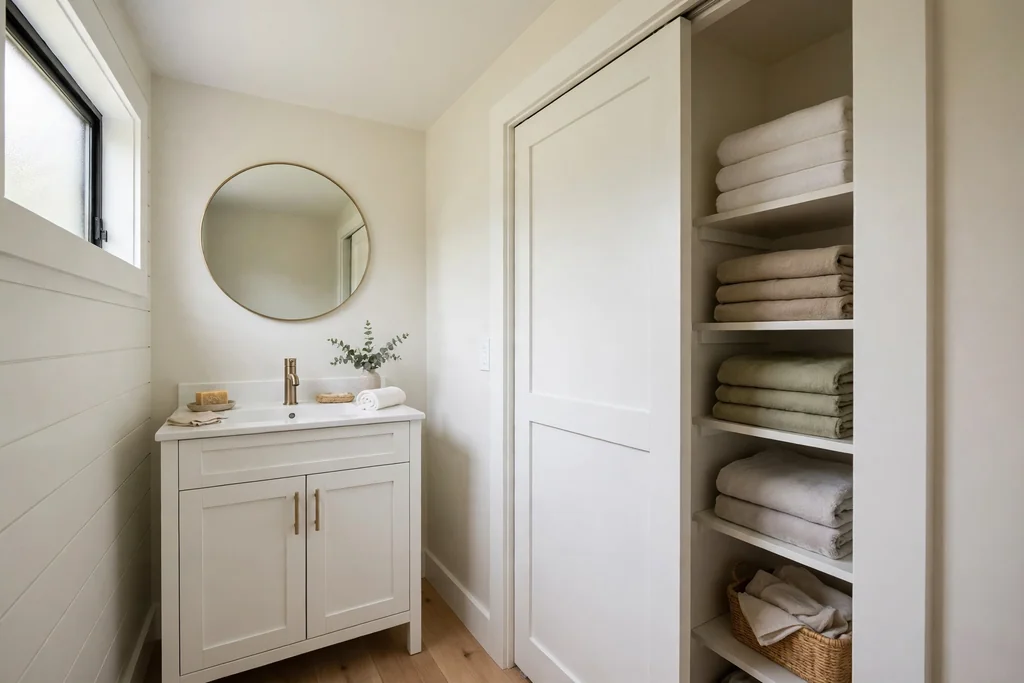
A pocket door that matches the bathroom door can hide a linen closet inside the bathroom, giving storage without a second door style. Use the same panel, paint, and pull as the main bathroom door, and fit shelves inside the closet for towels, spare toilet paper, and cleaning items. When closed, the closet reads as part of the wall, and when open, everything you need for the room is at hand.
This suits a bathroom with a shallow closet beside the door, or a remodel where a linen nook can be built into a spare wall. Plan the shelf heights before the doors: folded towels at hand height, spare stock higher up, and cleaning items low in a closed basket. For more small space storage planning, see these creative closet ideas for small spaces. Keep the closet dry, with a small gap for air, so stored towels stay fresh.
Conclusion
A small bathroom pocket door works best when the wall is checked first, the door style fits the light and privacy you need, and the hardware feels solid every day. Start with a plain flush panel or a frosted glass door for the main gain, which is free floor space, then add warmth with wood, paint, or a mirror panel. Keep one finish consistent across the handle, towel rail, and mirror frame, and leave the floor clear beside the opening, so the door can slide fully into its pocket. With those basics in place, the bathroom feels roomier and cozier, without a bigger footprint.
Save this list on Pinterest before you start, and work through it one idea at a time: check the pocket wall first, then choose the door style, then fit soft close hardware and a privacy lock as the finishing step.
FAQs
Can a pocket door fit in any small bathroom wall?
Not every wall suits a pocket door. The wall beside the opening must have room for the door to slide into, with no pipes, wires, or load bearing studs in that section. Check the wall before you plan one, and ask a builder to look at it if you are unsure. In a new build or a remodel, a pocket door is easier to plan, since the pocket frame can be built into the wall from the start.
Does a pocket door give enough privacy for a bathroom?
Yes, with the right panel and lock. A solid panel with a privacy lock gives good privacy for a bathroom, while frosted glass gives visual privacy but less sound control. Louvered doors give the least sound control, since air passes through the slats. For a main bathroom, choose a solid or frosted panel with a proper privacy lock, and seal the door edges well.
How much floor space does a pocket door save?
A pocket door saves the full swing area of a hinged door, which is the floor in front of the opening that must stay clear. In a small bathroom, that area can hold a vanity, a towel rail, a laundry basket, or simply a clear path to the sink. The gain is largest where the door would otherwise swing into the vanity, the toilet, or a narrow hall.
Is a pocket door hard to repair if the track fails?
Repairs to a pocket door track are harder to reach than repairs to a hinged door, since the track sits inside the wall. That is why track quality and fitting matter: choose a sturdy track, keep it free of dust, and check the rollers each year. A well fitted pocket door should glide for years with only light cleaning, and most small faults show up first as dragging, which is easier to fix early.
What is the best pocket door for a bathroom with no window?
A frosted glass pocket door suits a windowless bathroom best, since it borrows light from the room outside while keeping privacy. Pair it with bright mirror lighting inside the bathroom, and keep the walls pale, so the borrowed light goes further. If privacy matters more than light, a solid panel with a bright ceiling light and a lit mirror is the safer choice.
Can I keep my existing bathroom door frame with a pocket door?
Usually not. A pocket door needs a pocket frame inside the wall and a track above the opening, which is a different setup from a hinged door frame. Fitting a pocket door in an existing wall is a bigger job than swapping a hinged door, and it often means opening up the wall. For a simpler update with no wall work, a sliding barn door on an outside track gives some of the same floor saving without a pocket.