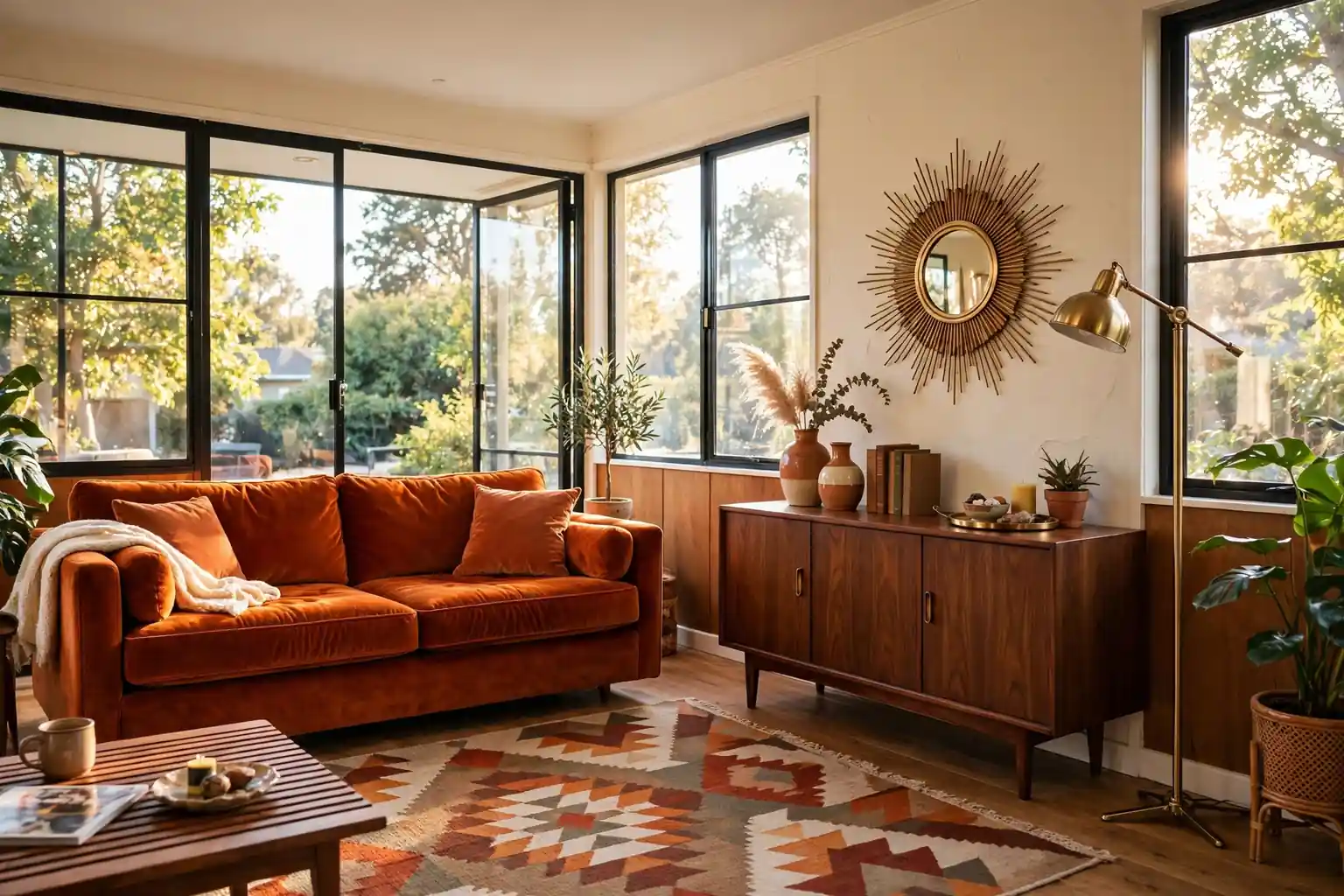
A retro living room works best when it feels collected over time, not bought in one matching set. Warm color, wood grain, bold pattern, and soft light do most of the work, while one or two strong pieces give the room its character. You do not need a full remodel to get the look. A velvet sofa, a walnut sideboard, a patterned rug, or a brass lamp can set the tone, and smaller pieces such as cushions, posters, and plants can fill in the rest. These 22 retro living room decor ideas cover seating, storage, walls, floors, lighting, and corners for music and reading, so you can pick the changes that fit your room and your budget. Start with one anchor piece, then add pattern and warmth in small steps.
Key Takeaways
- Start with one anchor, such as a velvet sofa or a walnut sideboard, and let smaller retro pieces support it rather than competing with it.
- Hold the palette to three main colors, such as burnt orange, mustard, and teal, plus wood tones and cream, so bold pattern stays calm.
- Mix one strong pattern at a time: a geometric rug, a wallpaper wall, or patterned curtains, with plainer pieces around it.
- Use warm light at more than one level, with a floor lamp, a table lamp, and a pendant or glow lamp, to keep retro color soft in the evening.
- Let wood, rattan, cork, and brass add texture, so the room feels warm even where the color is restrained.
- Keep daily life in mind: storage for records and books, clear walking routes, and washable covers where seating gets heavy use.
1. Choose a Burnt Orange Velvet Sofa
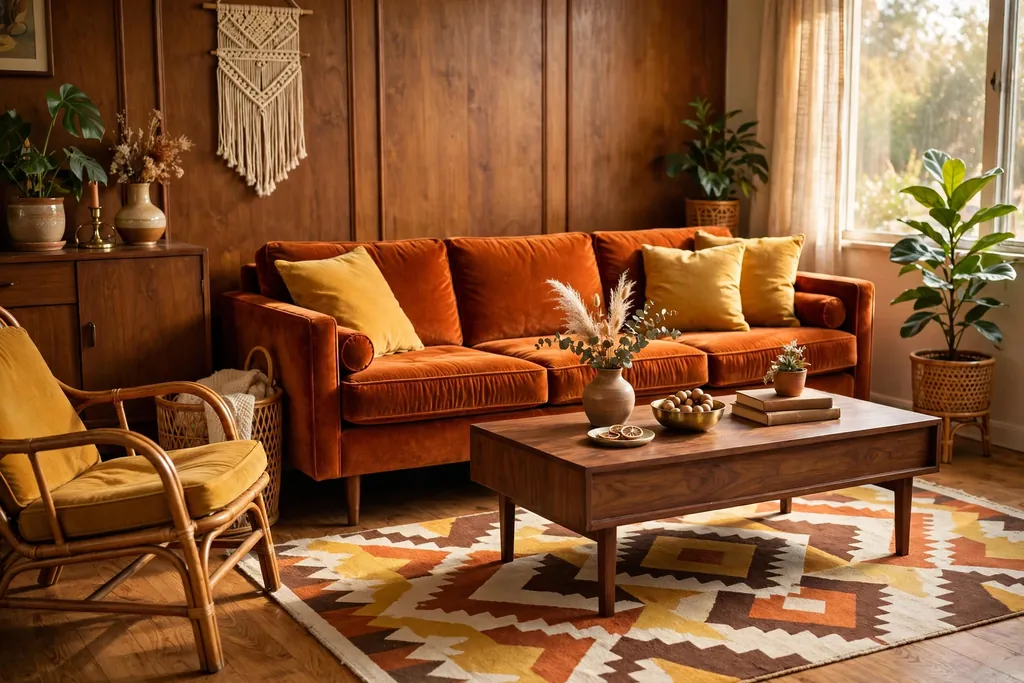
Choose a low burnt orange velvet sofa as the anchor of the room. The color is warm without being loud, and velvet catches lamplight in a way that makes the whole seating group feel inviting. A three seat sofa in a simple shape suits most rooms, and its straight lines keep the strong color from feeling heavy.
Pair it with mustard or cream cushions and a walnut coffee table, and keep the rug simpler if the sofa already carries the color. Velvet shows pressure marks where people sit, so rotate cushions often and brush the pile lightly. If a full orange sofa feels like too much, a burnt orange loveseat or armchair gives the same warmth on a smaller scale.
2. Add a Walnut Sideboard With Tapered Legs
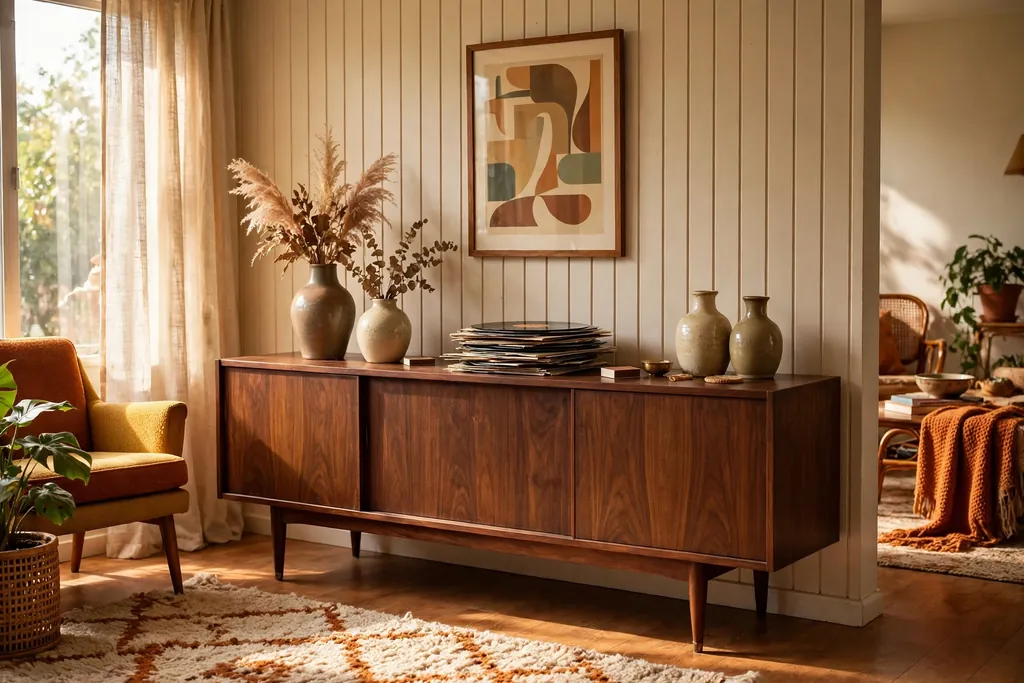
Add a long walnut sideboard with tapered legs along one wall, and use it for storage as well as display. Walnut grain is the backbone of many retro rooms, and a sideboard hides games, chargers, and spare throws while giving you a surface for a lamp, a vase, and a framed print. Sliding doors or drawers keep the front tidy.
Keep the top to three or four items, with one taller piece at one end and a lower group at the other, so the sideboard reads as planned rather than crowded. Check that doors and drawers run smoothly before buying secondhand, and use felt pads under the legs on a wood floor. A sideboard also works well under a television, where closed storage keeps cables and media items out of sight.
3. Hang a Brass Sunburst Mirror
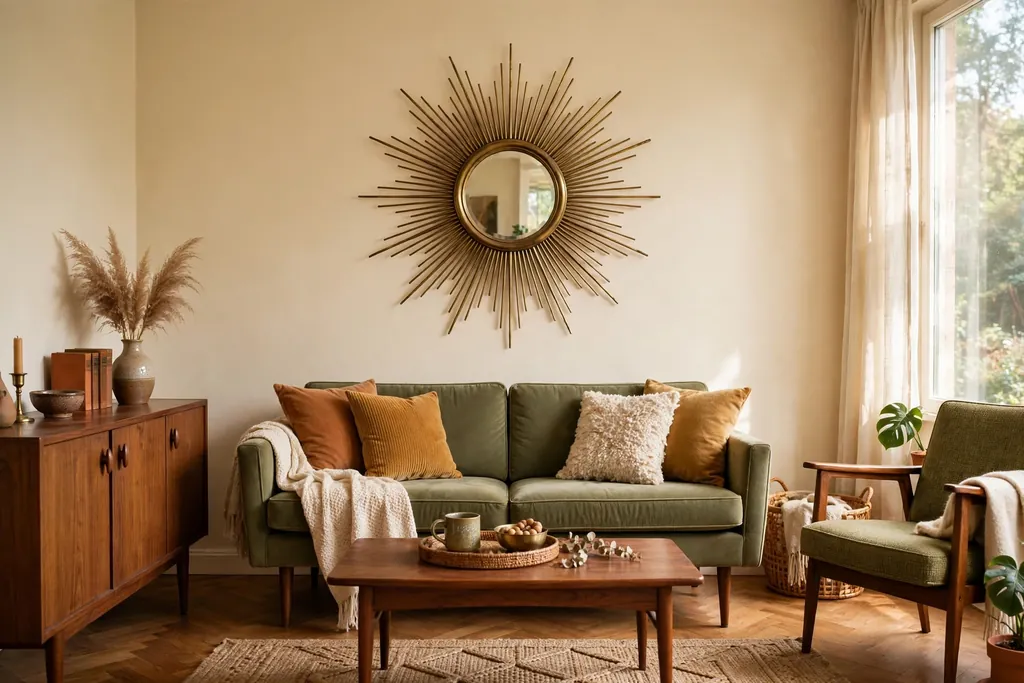
Hang a brass sunburst mirror above the sofa or fireplace, where it can catch daylight and draw the eye upward. The radiating rays give a plain wall a clear focal point without paint or wallpaper, and brass warms up cream, green, and orange walls alike. Choose a size that sits inside the width of the sofa, not wider than it.
Hang the center at eye level when standing, and keep the wall around it fairly plain so the rays stay the detail. Dust the rays now and then, since brass frames collect dust in their joints. If a full sunburst feels too bold, a smaller starburst clock in the same brass tone gives a similar retro note on a side wall.
4. Lay a Bold Geometric Rug
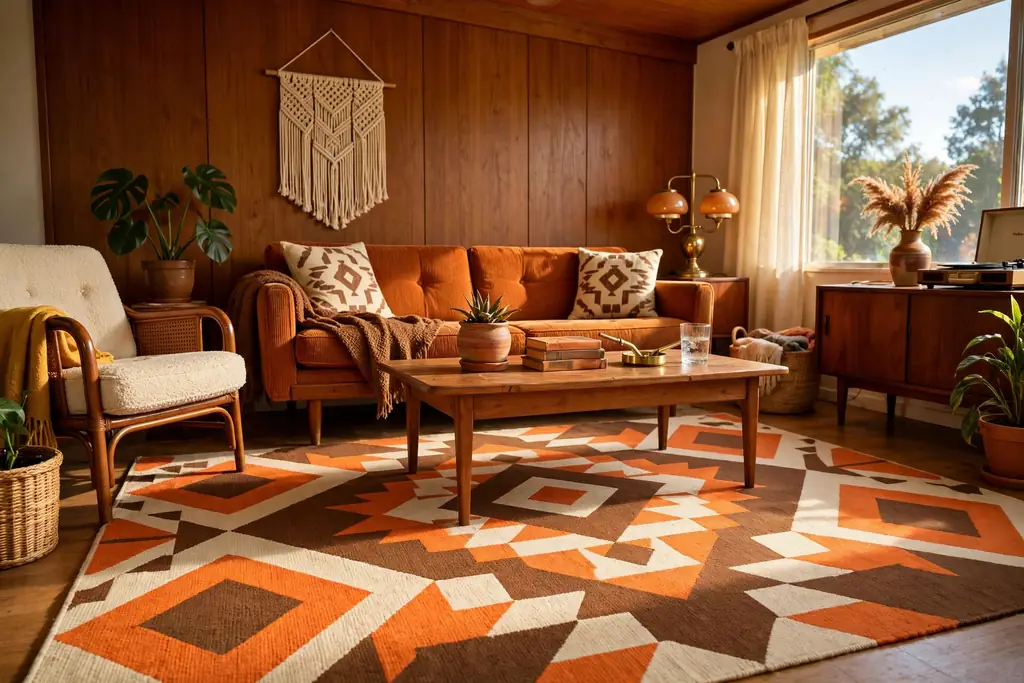
Lay a bold geometric rug under the seating group, with a pattern in orange, brown, mustard, and cream. A retro rug sets the floor plan for the room, and its pattern lets plain sofas and wood furniture sit together without looking plain. The front legs of the sofa and chairs should rest on the rug, so the group reads as one zone.
Measure the seating area and tape the outline on the floor before buying, and check door swings and walking routes around the edges. For more help with size and placement, see these living room rug ideas. Keep cushions plainer if the rug is busy, and use a rug pad underneath on a smooth floor so the rug does not slide.
5. Sit in a Rattan and Cane Armchair
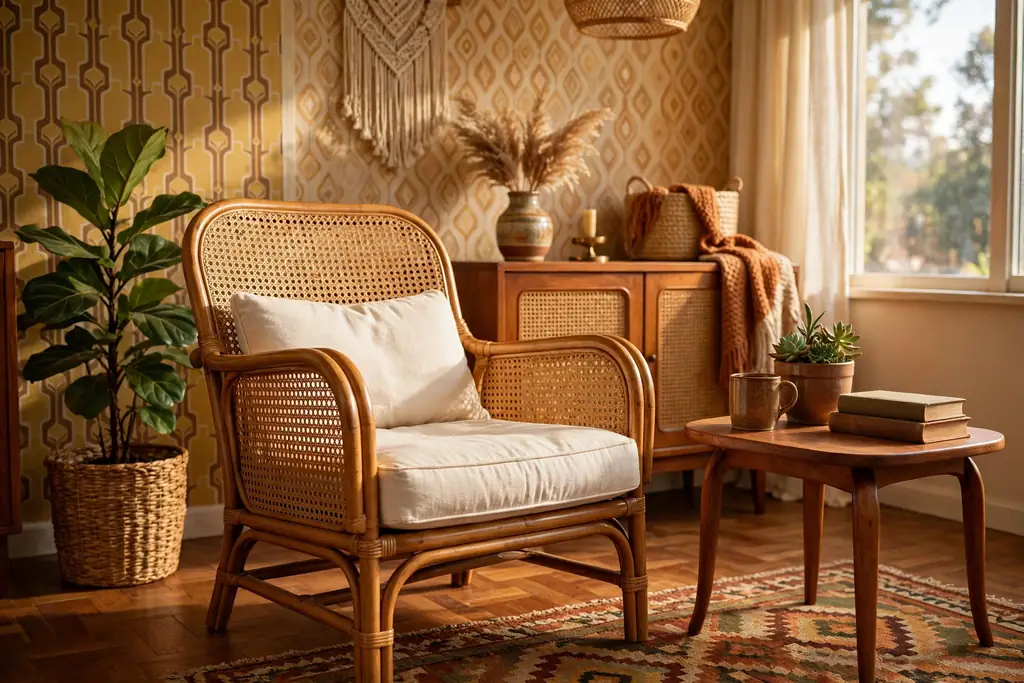
Add a rattan and cane armchair as a second seat, with a cream cushion to soften the frame. Rattan brings a light, natural texture that balances heavier velvet and walnut, and a cane back lets light through, so the chair does not block the room. It suits a reading corner, a window seat, or a seat angled toward the sofa for conversation.
Check the cane for splits and the joints for wobble before buying, especially secondhand, and keep the chair out of very damp spots. A small side table and a lamp turn it into a real reading seat, and a throw over one arm adds warmth in colder months. One rattan chair is often enough, since two large rattan pieces can make the room feel themed rather than collected.
6. Curve a Brass Arched Floor Lamp Over the Sofa
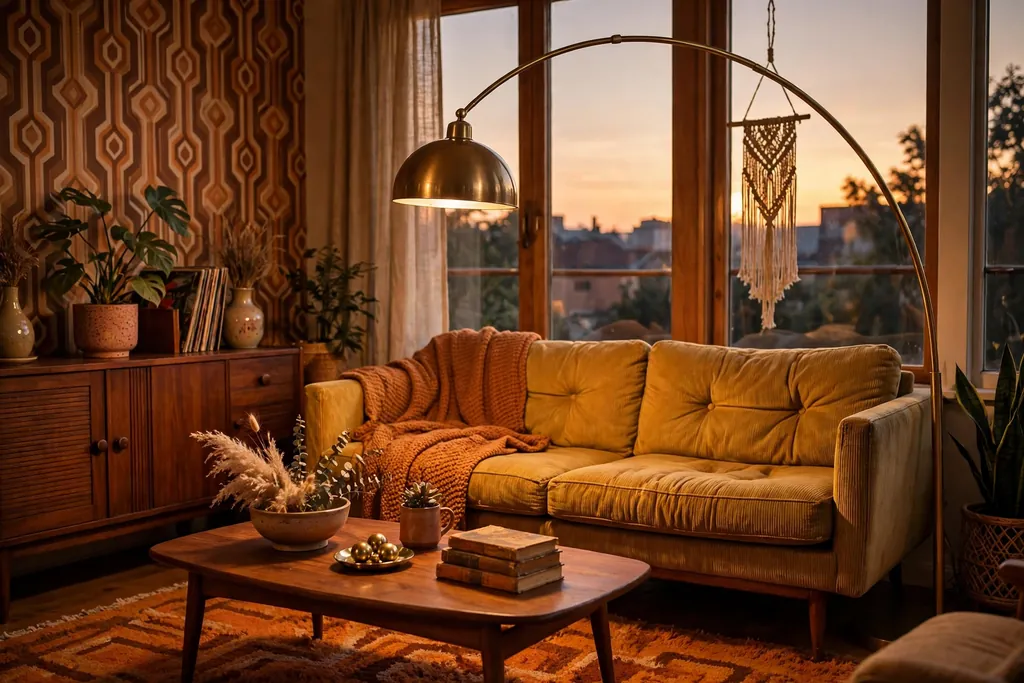
Curve a brass arched floor lamp over the sofa or a reading chair, so light falls where people actually sit. An arched lamp gives a retro room its evening glow without a ceiling fitting, and the brass stem repeats the tone of a sunburst mirror or a bar cart elsewhere in the room. A marble or heavy base keeps the arc steady.
Place the base behind the sofa or beside the chair, with the shade clear of heads in the walking route, and use a warm white bulb so the light stays soft. A dimmer, where the lamp allows it, lets you move from bright reading light to a low evening glow. Keep the cord along the wall or under the rug edge, so it does not cross a walkway.
7. Make a Vinyl Listening Corner
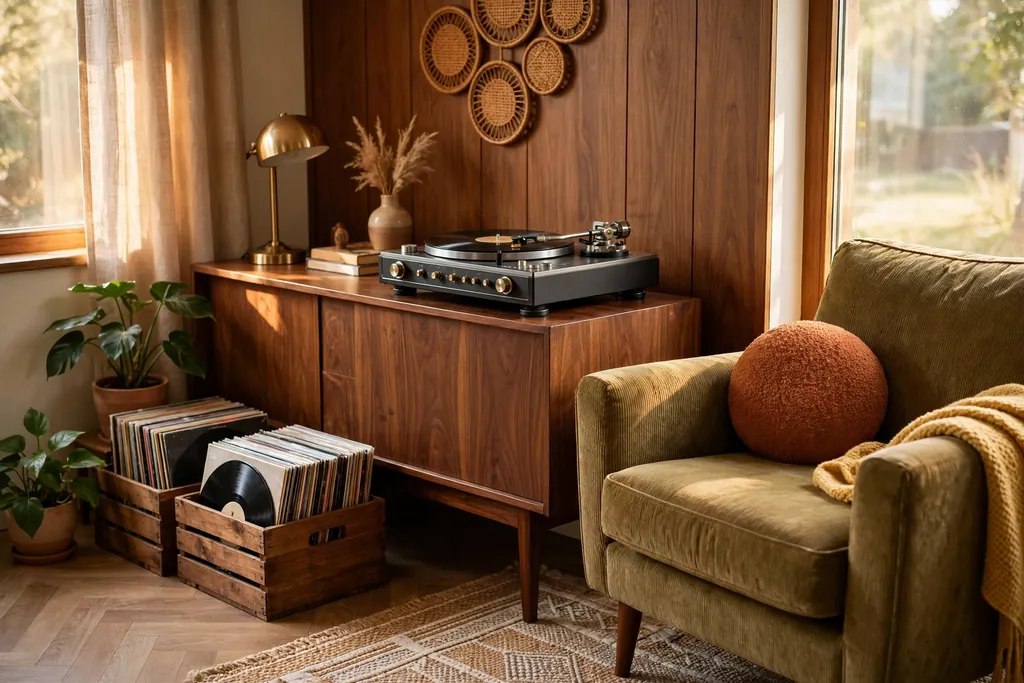
Make a vinyl listening corner with a turntable on a walnut console, records in crates nearby, and a comfortable chair close enough to enjoy the sound. A listening corner gives a retro room a clear purpose, and it turns a collection that might sit in boxes into part of daily life. Keep the console low, so the turntable is easy to reach and the speaker, if you use one, sits at ear height when seated.
Store records upright, not stacked flat, so sleeves stay in good shape, and keep the turntable level and clear of direct sun. A small basket for the records you play most often keeps the corner tidy, and a lamp beside the chair makes evening listening comfortable. If you do not collect vinyl, the same console and chair layout works for a reading corner with books in place of records.
8. Paper One Wall in Geometric Wallpaper
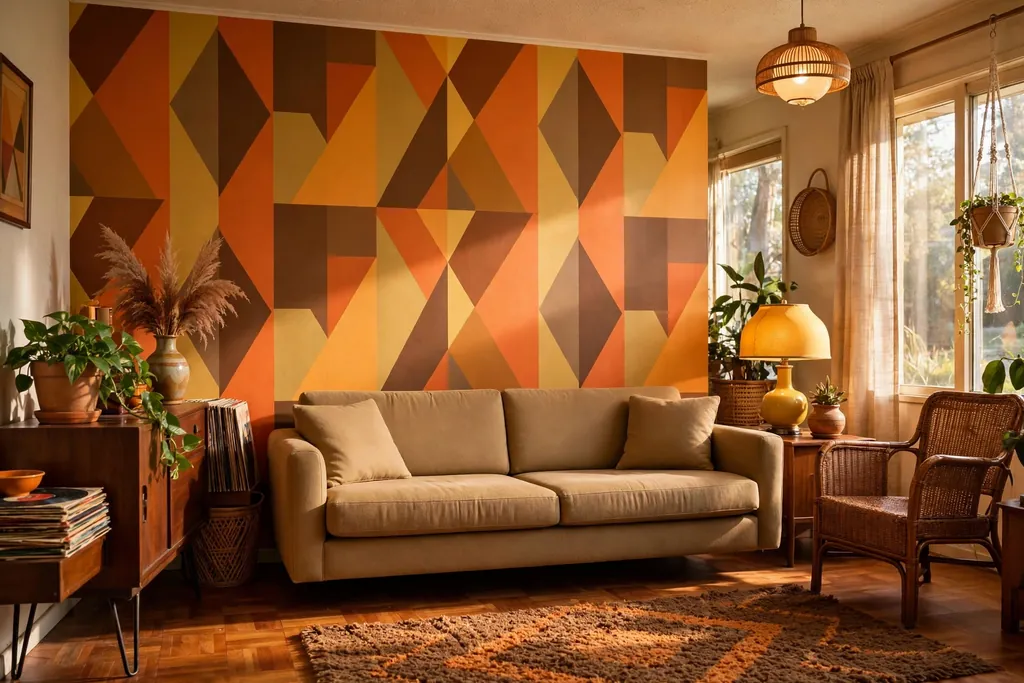
Paper one wall in a bold geometric wallpaper, in orange, mustard, and brown on a cream ground, and keep the other walls plain. One patterned wall gives a retro room instant character, and it costs far less in time and money than papering the whole room. It works best behind a sofa, where the furniture softens the lower part of the pattern.
Order a sample first and check it in daylight and lamplight, since strong patterns shift a lot between the two. Peel and stick wallpaper is a renter friendly option, and it lets you test the look before committing to paste. Keep art on the patterned wall to one or two simple pieces, so the wallpaper itself stays the main pattern.
9. Mix Mustard and Teal Cushions on a Plain Sofa
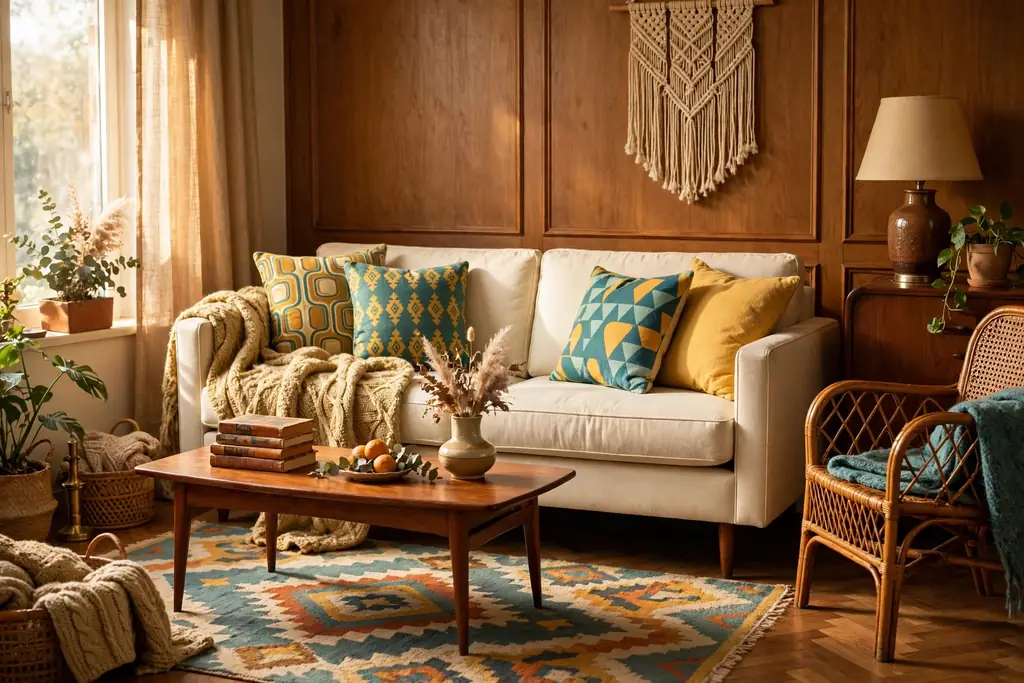
Mix mustard and teal cushions on a plain cream or grey sofa, to bring retro color in without buying new seating. Mustard adds warmth and teal adds depth, and together they echo the palette of many 1970s rooms. Use two mustard cushions, one teal patterned cushion, and one plain cushion, so the mix looks planned rather than random.
Choose removable covers you can wash, since light sofa fabric shows marks, and vary the texture as well as the color, with one velvet cushion among cotton or linen ones. If your sofa is already grey, the same pairing works well, as shown in these ideas for a grey couch living room. Keep the throw in a single plain tone, so the cushions carry the color story.
10. Pick a Teak Coffee Table With Tapered Legs
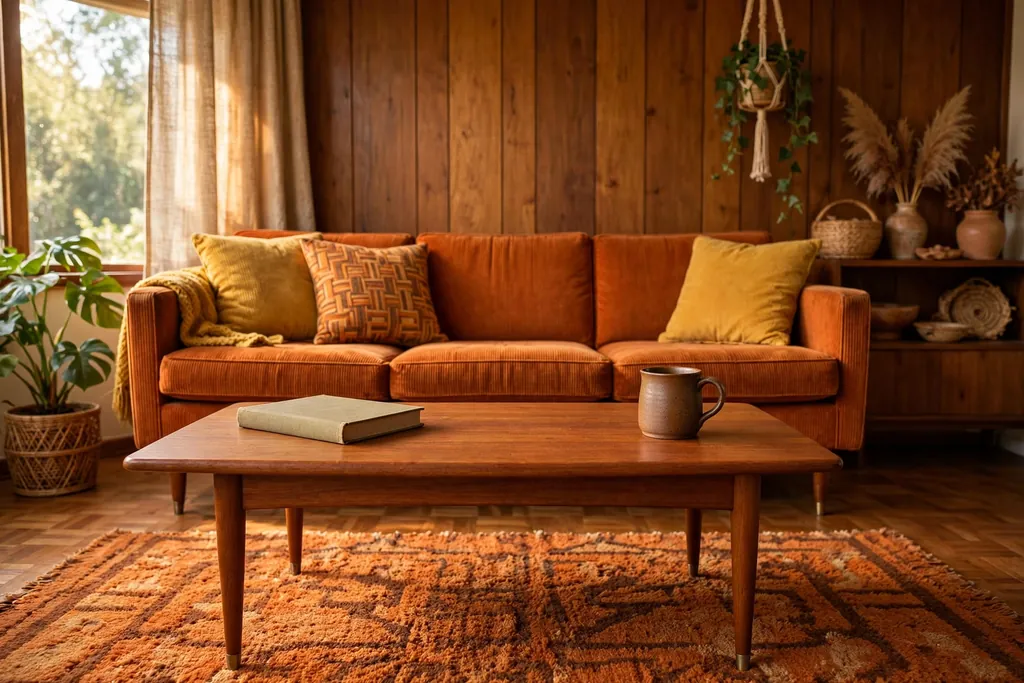
Pick a teak coffee table with tapered legs, in a simple rectangular or surfboard shape, as the center of the seating group. Teak grain warms a room in the same way walnut does, and tapered legs keep the table feeling light even when the top is solid wood. A table height close to the sofa seat height makes cups and books easy to reach.
Keep the top mostly clear, with one tray to gather a book, a candle, and a small plant, and store magazines in a basket underneath or beside the table. Wipe the top after use, since teak shows rings from hot cups, and use coasters where you can. A secondhand teak table often suits a retro room better than a new copy, so check the joints and the finish before buying.
11. Hang a Cream Macrame Wall Hanging
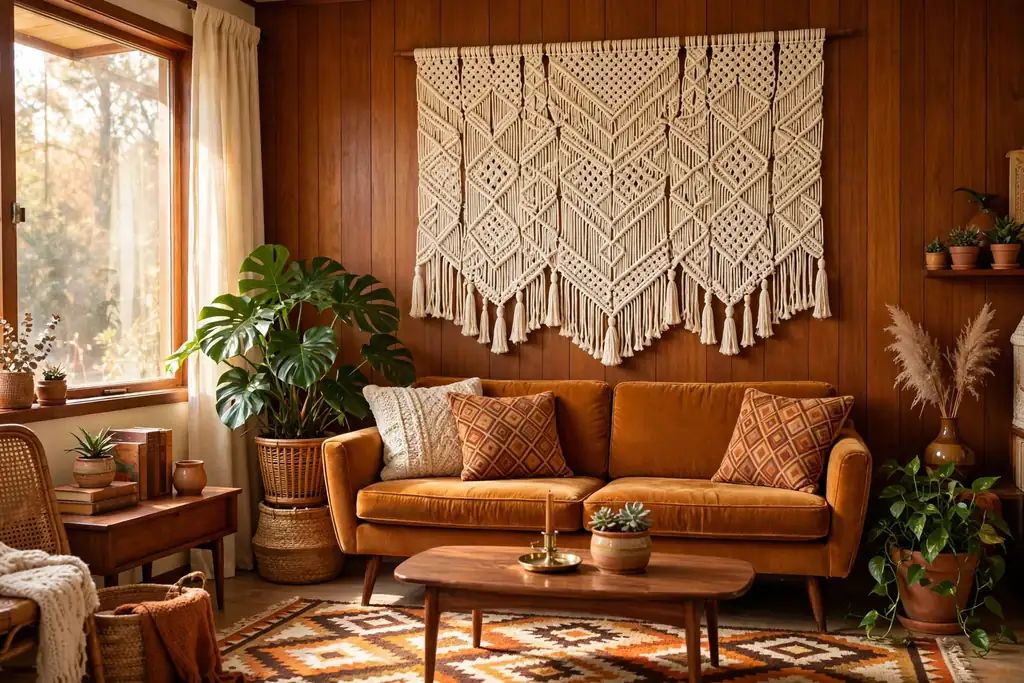
Hang a large cream macrame wall hanging above a sofa or in a hallway corner, where its knotted texture can soften a plain wall. Macrame suits a retro room because it adds handmade texture without color, and it pairs well with wood, rattan, and plants. A piece about two thirds the width of the sofa usually looks balanced above it.
Hang it from a wooden dowel or a simple hook rated for its weight, and keep it clear of a fireplace or a heater. Shake it outside now and then to remove dust, and spot clean marks rather than machine washing, unless the maker advises otherwise. If a large hanging feels too much, a smaller macrame piece beside a mirror gives the same texture on a smaller scale.
12. Hang a Brass Sputnik Pendant Light
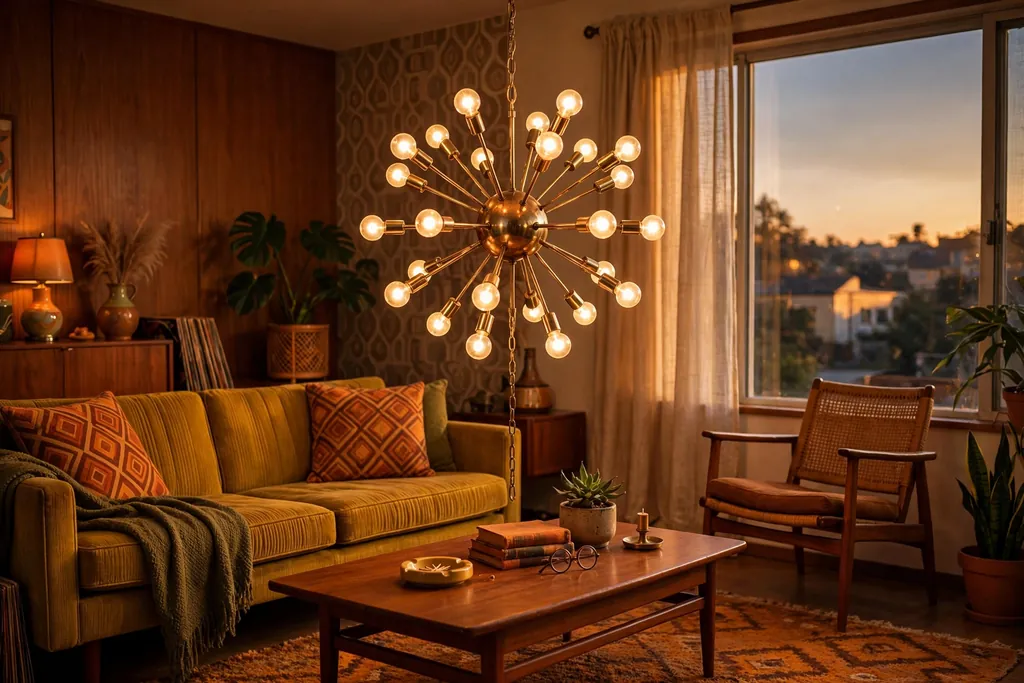
Hang a brass sputnik pendant light over the coffee table or in the center of the room, where its radiating arms can spread light in all directions. A sputnik light is a strong retro statement, and brass keeps it warm, while the open arms suit a room that already has solid furniture. Hang it high enough to see under when seated, and clear of head height in walkways.
Use warm white bulbs, and check the total wattage against the fitting rating before fitting brighter bulbs. One sputnik pendant is usually enough in a living room, with floor and table lamps for lower light. Dust the arms now and then, since brass and glass collect dust, and keep the shade or bulb style consistent across the arms so the light looks even.
13. Roll a Brass Bar Cart Into a Corner
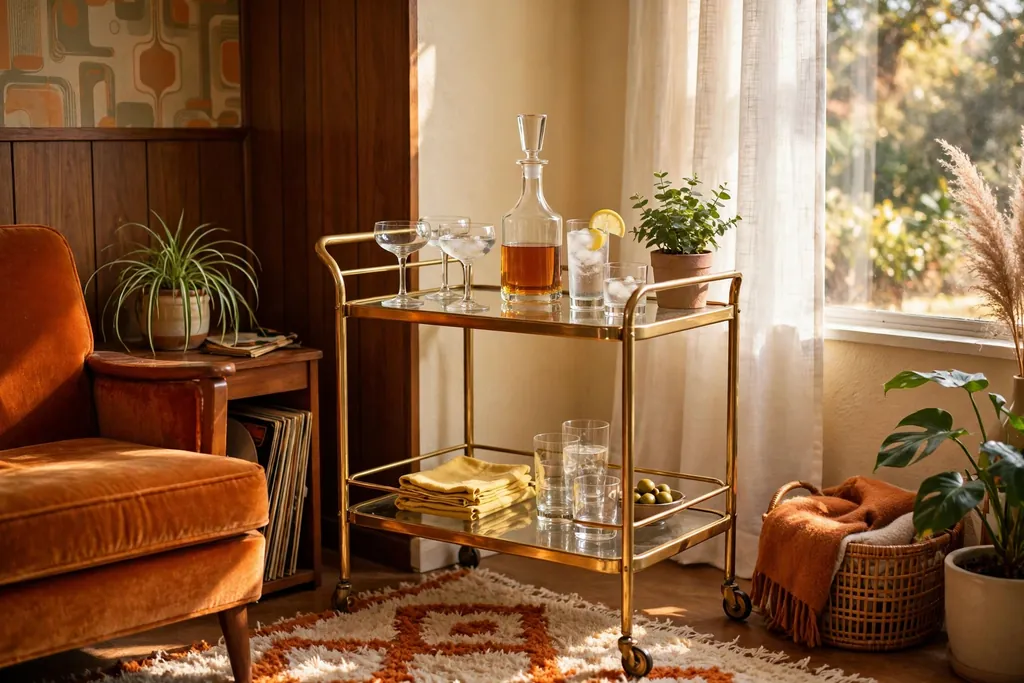
Roll a brass and glass bar cart into a corner, and stock it for guests with glasses, a decanter, and a small plant. A bar cart adds a sociable retro note, and its wheels mean it can move to the seating group when guests arrive and back to the corner after. Two tiers give room for glasses below and serving pieces above.
Keep the cart tidy, with glasses grouped by type and only the pieces you actually use, so it does not become a shelf for clutter. Wipe glass shelves after use, and keep the cart clear of a heater or a sunny window where bottles could warm. If you do not serve drinks, the same cart works as a tea station, a plant stand, or a place for books and a lamp.
14. Set a Cork Side Table Beside the Sofa
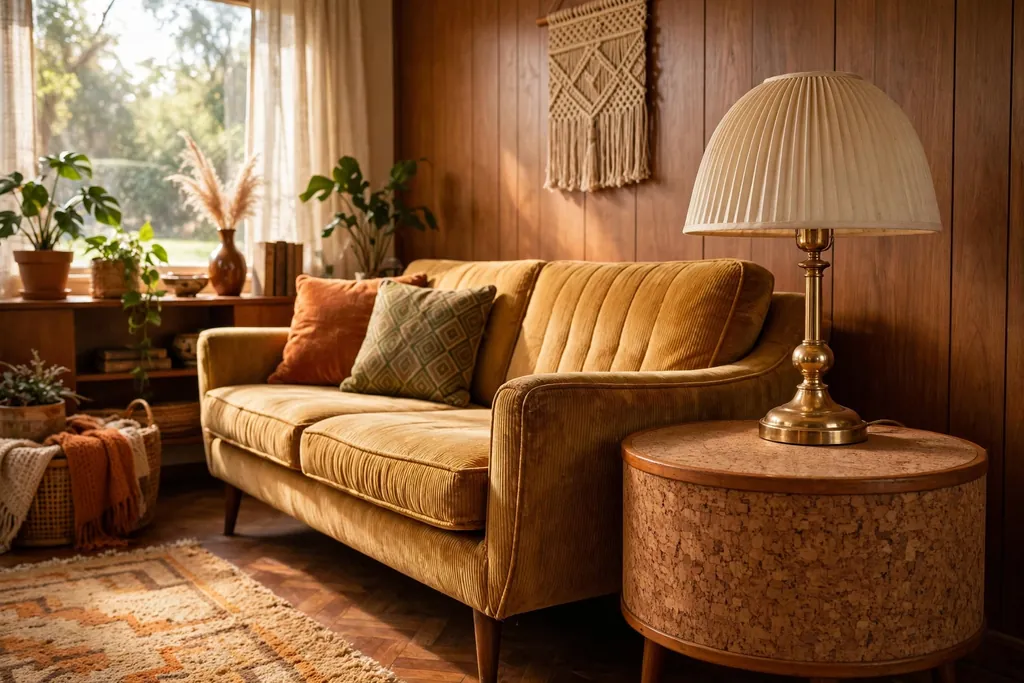
Set a round cork side table beside the sofa, with a brass lamp or a small plant on top. Cork is a warm, light retro material that sits well beside velvet and teak, and a round top leaves no sharp corners in a walking route. A table just tall enough to reach from the sofa seat keeps a cup and a book within easy reach.
Keep the top to one lamp and one small item, so the table stays useful rather than becoming another display shelf. Wipe cork with a damp cloth, and use a coaster under hot cups, since cork can mark with heat. A cork table also suits a reading chair, where its light weight makes it easy to move when you change the layout.
15. Build a Vintage Poster Gallery Wall
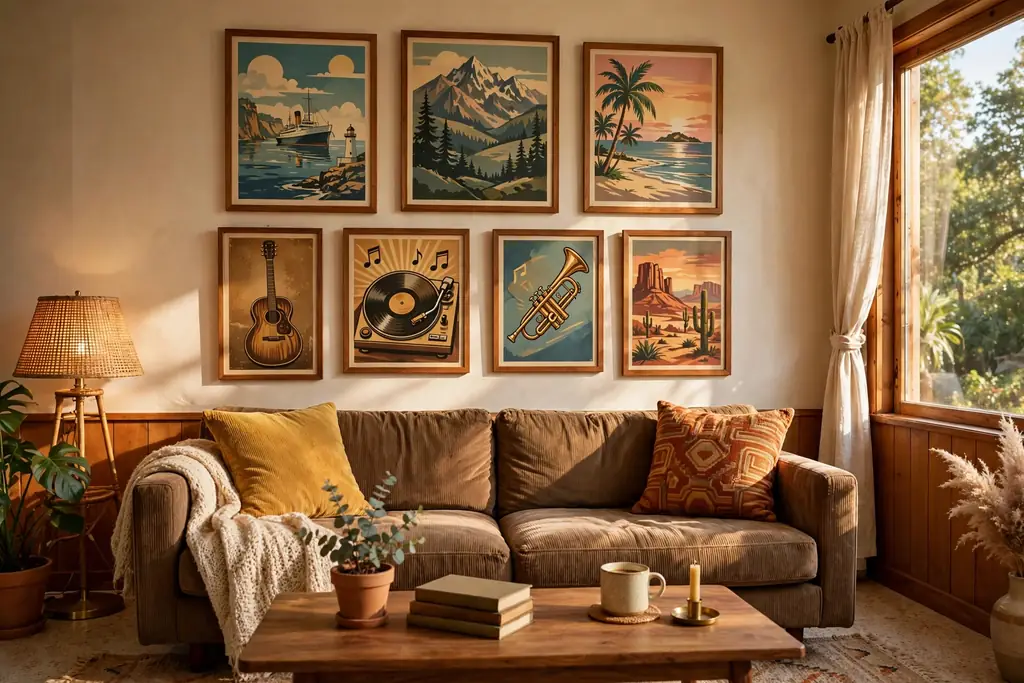
Build a gallery wall of framed vintage style travel and music posters above the sofa or along a hallway wall, using matching frames in black or walnut. Posters give a retro room color and personality without a large purchase, and a consistent frame color keeps a mixed set of images feeling calm. Hang the center of the group at eye level when seated, and keep the outer edges inside the width of the sofa.
Start with three or four posters and add over time, rather than filling the wall in one go, and mix image sizes while keeping one frame color repeated. Use prints with warm colors drawn from the room, such as orange, mustard, or teal, so the wall feels linked to the sofa and rug. Picture ledges are a renter friendly option, since they let you lean frames and swap posters without new holes each time.
16. Layer a Faux Fur Throw and Shag Cushions
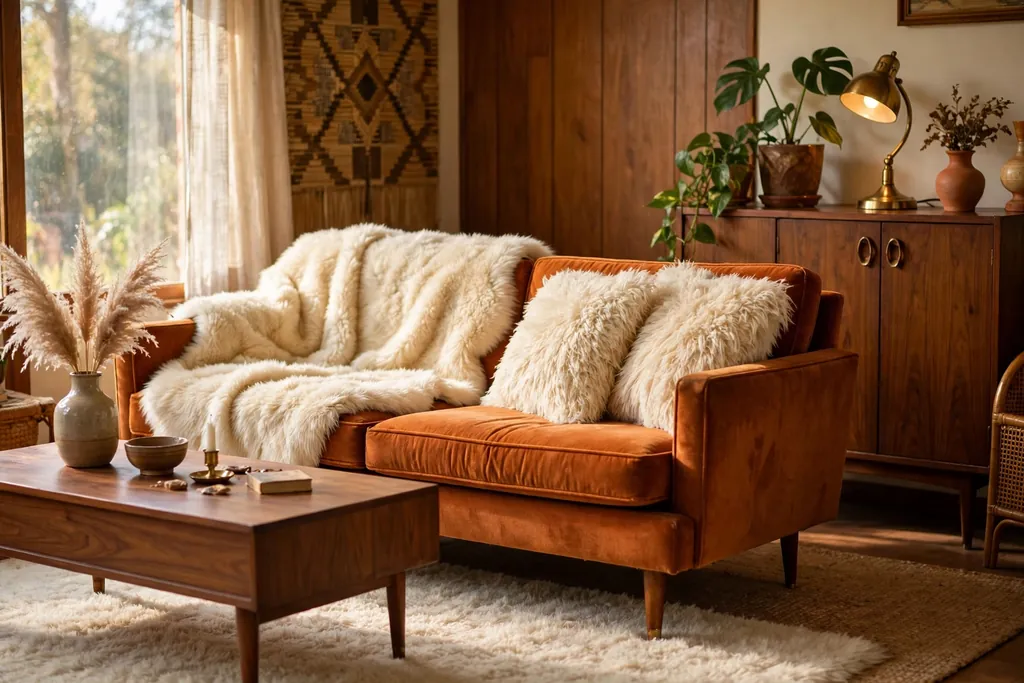
Layer a cream faux fur throw over the sofa arm, with one or two shag cushions among plainer ones, to add soft retro texture for colder months. Faux fur and shag were made for cozy seating, and they warm up a room that already has wood and leather or velvet. Keep the fur tone pale, so the sofa stays light, and use one throw rather than covering the whole sofa.
Choose throws and cushion covers you can wash or spot clean, since textured fabric traps dust and crumbs more than smooth fabric. Fold the throw rather than draping it loosely, so the sofa still looks tidy when no one is sitting there. In warm months, store the fur throw in a basket and keep one shag cushion out, so the room keeps a soft note without feeling heavy.
17. Clad One Wall in Walnut Wood Slats
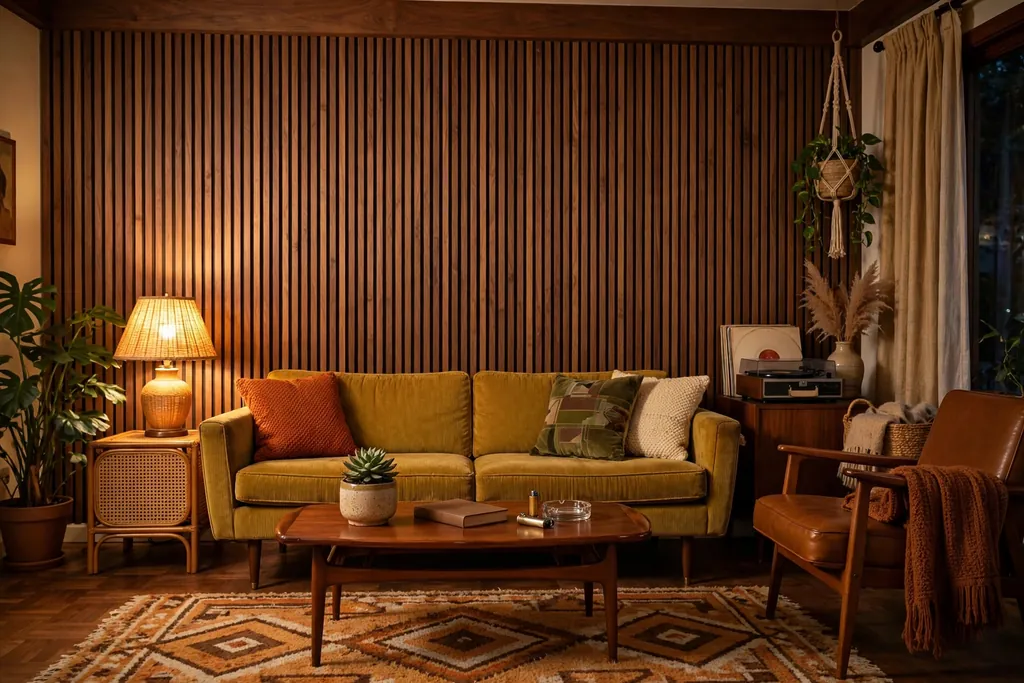
Clad one wall, or the wall behind the sofa, in warm walnut wood slats, with gaps between the slats to add shadow and rhythm. Wood slats give a retro room texture and warmth without a strong color, and they suit a fireplace wall or a television wall where a flat wall would look bare. Keep the slats to one wall, so the room stays light.
Fit the slats straight and level, and paint or stain them after fitting if needed, so joints disappear. Keep art and shelves simple on a slatted wall, since the slats already give the eye texture to follow. If full slat cladding feels like too much work, a slatted panel behind the sofa or a slatted radiator cover gives a smaller taste of the same detail.
18. Style Chrome and Smoked Glass Shelves
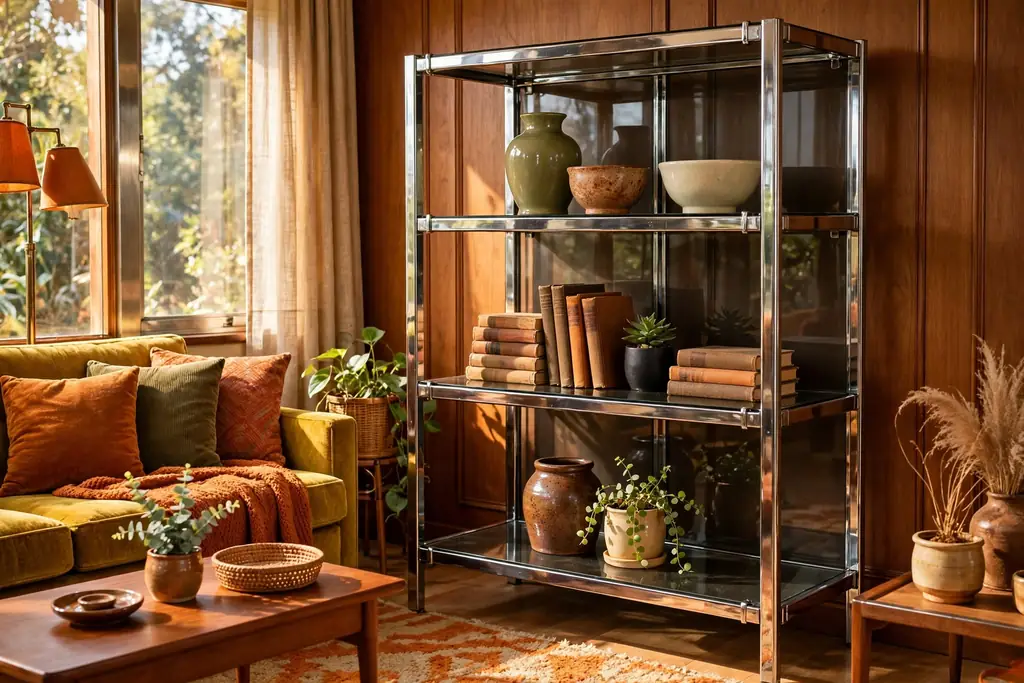
Style a set of chrome and smoked glass shelves with ceramics, books, and a small plant, on a wall where the display can catch light. Chrome and smoked glass were a common retro pairing, and they add a cooler, shinier note that balances warm wood and velvet. Keep the shelves to one wall, and group items in small sets with gaps between them.
Anchor shelves into studs or with fixings suited to your wall type, and check the weight rating before loading them with books. Put heavier items low and lighter ceramics higher, and keep one shelf mostly clear, so the group does not look crowded. Wipe glass shelves often, since smoked glass shows dust and fingerprints, and keep the plant in a pot with a saucer to protect the shelf below.
19. Store Records in a Window Bench
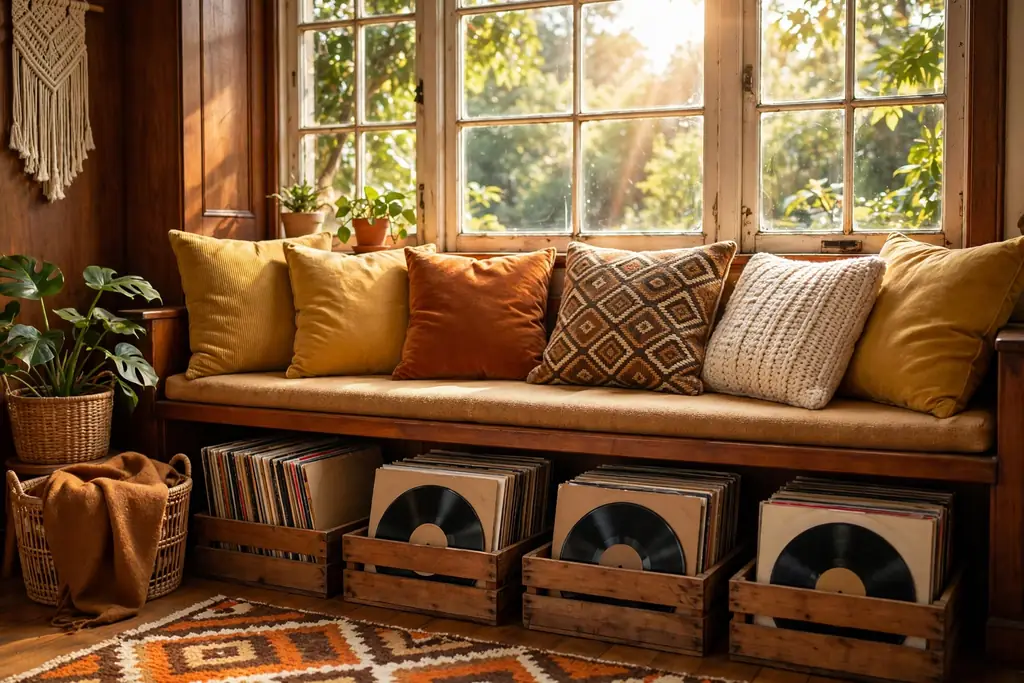
Store records in crates under a window bench, with cushions on top for extra seating. A window bench turns an often empty spot into useful storage and a sunny seat, and record crates underneath keep a collection easy to browse. Build or buy a bench deep enough for a record crate, and add a cushion in a plain retro tone, such as mustard or cream.
Keep the bench clear of direct sun on the records themselves, by storing crates on the shaded side or using a cushion that covers the top, and check that the bench can bear the weight of seated adults as well as full crates. A basket on top for the records you play most often keeps browsing quick. If you do not collect records, the same bench works for books, games, or spare throws.
20. Hang Patterned Curtains With a Retro Floral Print
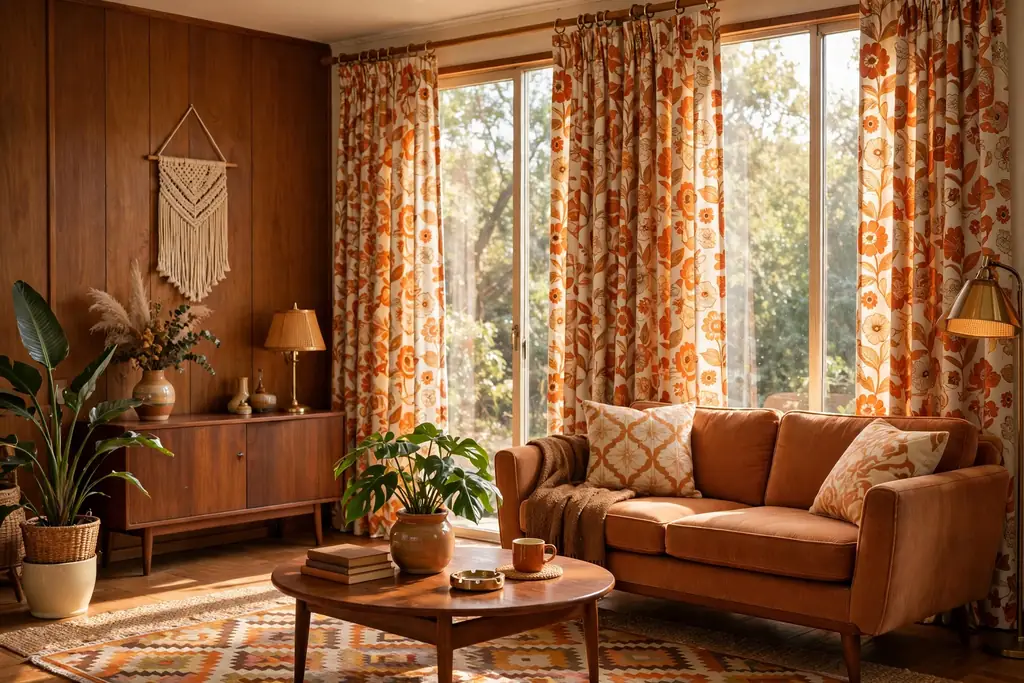
Hang patterned curtains with a retro floral print in orange and cream, from close to the ceiling to the floor, so the window feels taller and the room gains pattern at its edges. Patterned curtains suit a retro room because they frame daylight with color, and they let you add a bold print without papering a wall. Use a simple rod in wood or brass, and let the curtains fall straight.
Keep the rest of the pattern calm if the curtains are bold, with a plain rug and plainer cushions, so the room does not feel busy. Wash or dry clean the curtains as the maker advises, since pale and patterned fabric shows dust. Add a sheer pair underneath only if the room needs daytime privacy, since sheers soften the print and reduce the daylight that makes retro color glow.
21. Glow With Globe Lamps and a Lava Lamp
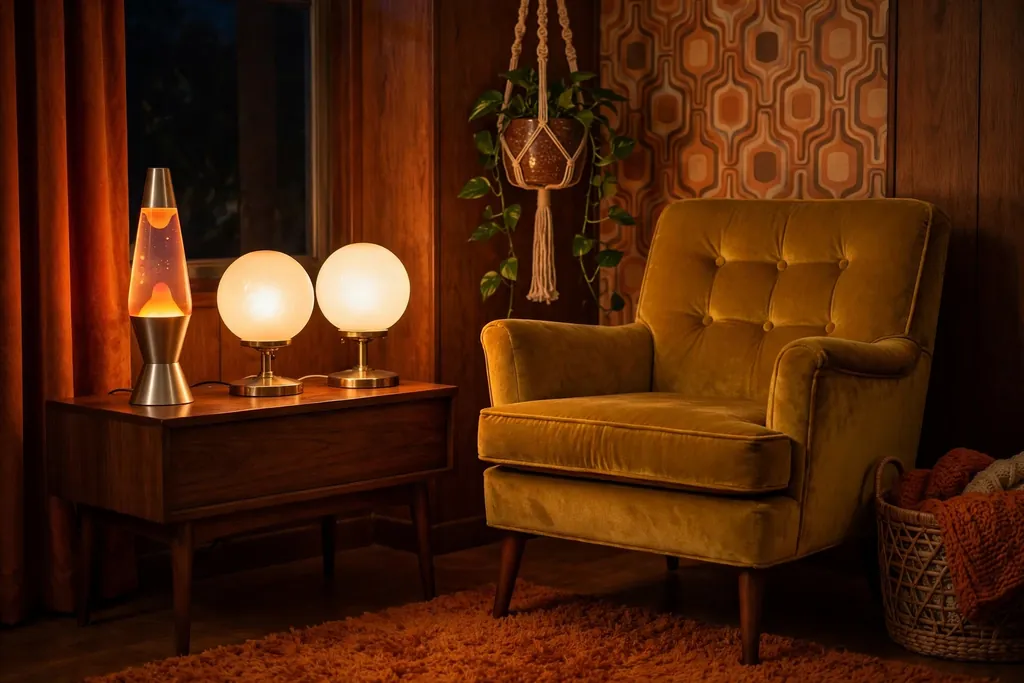
Glow with globe lamps and a lava lamp in an evening corner, beside an armchair or on a side table, for warm retro light after dark. Globe lamps give a soft, even glow, while a lava lamp adds a slow moving focal point that suits a relaxed evening room. Keep the lamps at seat height or lower, so the light feels close and warm rather than overhead and harsh.
Use warm white bulbs in the globe lamps, and follow the lava lamp maker guidance on run time and placement, keeping it clear of curtains, throws, and paper. One lava lamp is enough, since two moving lights can distract from conversation. Pair the glow corner with a floor lamp elsewhere in the room, so the whole space stays lit at more than one level.
22. Color Block Books on a Walnut Bookshelf
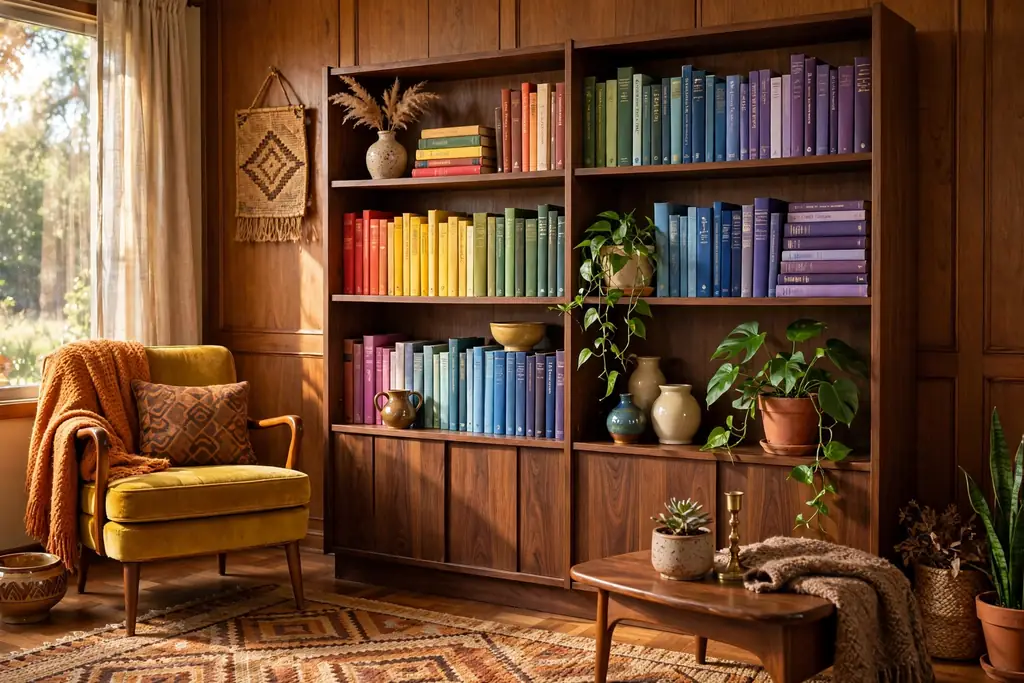
Color block books on a walnut bookshelf, grouping spines by color in blocks of orange, cream, teal, and brown, with ceramics and a plant between groups. Color blocking turns a bookshelf into a retro display, and it makes a large collection look planned rather than random. Leave gaps between groups, so the shelf does not look packed from end to end.
Start with the largest books, group by color rather than by author, and keep a small step stool nearby if the top shelf is high. Put heavier books low, where they are easier to reach and kinder to the shelf, and keep one shelf for books you read often, so daily use does not undo the display. If color blocking feels too strict, group by color within each shelf, and keep the order loose on one shelf for books in daily use.
Conclusion
A retro living room that feels both cozy and current starts with one warm anchor, a clear palette, and light at more than one level. Pick a velvet sofa or a walnut sideboard, add one strong pattern, and fill in with rattan, brass, cork, and plants that you actually use. Keep storage simple, with crates, carts, and shelves that hold records, books, and glasses within reach, and leave clear walking routes so the room stays easy to live in. Try one or two ideas this weekend, such as patterned cushions and a brass lamp, live with them for a week, and add the next layer only when the room asks for it. If an idea here helped your space, save this post to your retro decor board on Pinterest so you can find it when you are ready for the next change.
Frequently Asked Questions
What colors define a retro living room?
Burnt orange, mustard, teal, brown, and cream form the core retro palette, with walnut and brass adding warmth. Hold the scheme to three main colors plus wood tones and cream, and repeat each color in two or three places, such as a cushion, a rug, and a poster, so the room reads as planned. Keep walls mostly cream or warm white, so the stronger colors have room to show without crowding the space.
How do I add retro style without making the room look dated?
Balance retro pieces with current ones, such as a plain sofa, a simple rug, and good lighting, rather than filling every corner with vintage items. Choose one or two strong retro anchors, like a velvet sofa or a sputnik light, and keep the rest of the room calm and easy to clean. Clear surfaces, plain cushions, and plants help a retro room feel lived in today, rather than like a set from another decade.
What sofa works best in a retro living room?
A low sofa in velvet or plain fabric, in burnt orange, mustard, teal, or cream, suits most retro rooms, with slim arms and a simple shape that lets the color lead. Size it to the wall or rug zone, leaving clear walking routes on at least two sides, and keep cushions plain if the sofa color is strong. A slipcover or a new set of cushion covers is a lower cost way to test a retro color before buying a new sofa.
Can I mix retro decor with modern furniture?
Yes, and a mix often works better than a room full of vintage pieces alone. Pair a walnut sideboard or a rattan chair with a plain modern sofa, a simple coffee table, and current lighting, and let wood tone and one accent color link the pieces. Keep the palette consistent, and avoid mixing too many eras at once, such as mid century, 1970s, and Victorian pieces in the same small room, since the mix can lose its focus.
How do I keep a bold retro rug from taking over the room?
Keep the rest of the pattern calm, with plain cushions, a plain sofa, and simple curtains, so the rug is the one strong pattern in the room. Repeat one rug color in a cushion or a poster, so the rug feels linked to the scheme, and leave a border of bare floor around it where you can. A rug pad underneath keeps the rug in place, and regular vacuuming keeps a bold pattern looking fresh rather than busy.
Where should I start if I have a small retro living room?
Start with color and light, which cost less than new furniture. Add mustard and teal cushions, a patterned rug sized to the seating group, a brass lamp, and a framed poster or two, and keep floors clear with a round side table and a wall shelf instead of a large cabinet. Use a low sofa, sheer or light curtains, and one tall plant rather than several small pieces, so the room feels warm without feeling crowded. For a calm, light led approach that also suits small rooms, see these ideas for a Swedish living room.