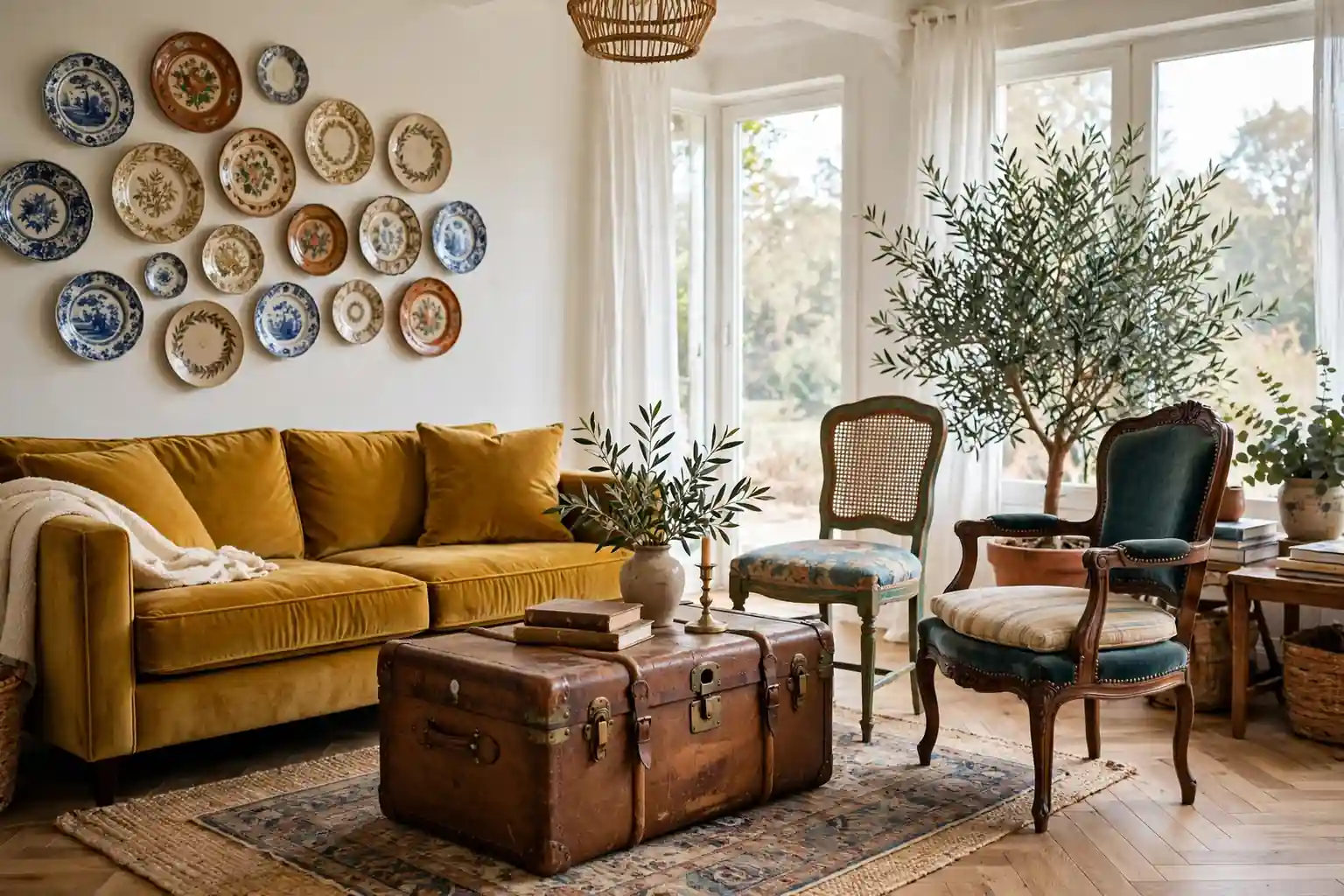
Quirky decor works best when one playful choice gets room to breathe. A room full of odd pieces can feel busy, while a single bold chair, a painted ceiling, or a wall of plates against a calm background reads as a clear, confident choice. These 23 quirky living room decor ideas cover seating, walls, floors, lighting, and small displays. Start with the piece you will enjoy every day, keep the base calm, and repeat one color or material so the playful parts look planned. A polished room is not a plain room. It is a room where the fun parts have a job and the rest stays quiet.
Key Takeaways
- Pick one or two quirky focal points per room, and keep the walls, sofa, and floor calm so the playful pieces stand out.
- Repeat one color, material, or shape from the quirky piece somewhere else in the room, so it reads as a plan rather than a random find.
- Mix old and new, but keep one thing consistent, such as frame color, wood tone, or cushion palette, to hold the mix together.
- Test a bold color or pattern beside your floor, sofa, and light at different times of day before a large change.
- Let quirky pieces earn their place: a trunk that stores blankets, a ladder shelf that holds books, or a bar cart that serves guests.
- Edit as you add. If a new quirky piece arrives, remove or move one older piece so the room stays polished.
1. Seat Guests in Mismatched Vintage Chairs
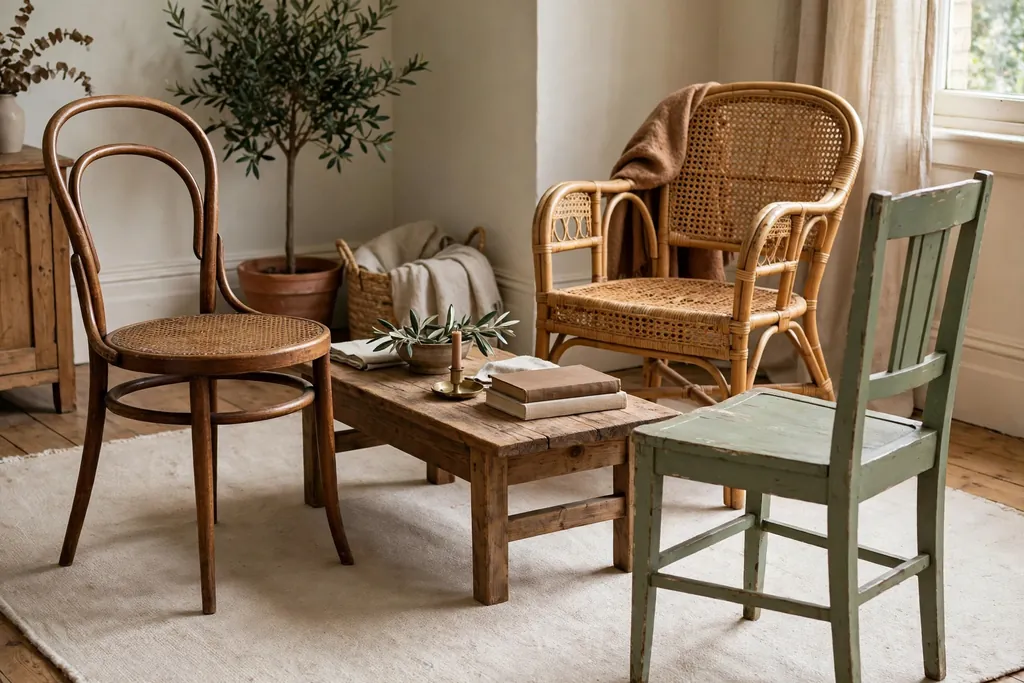
Pull together two or three vintage chairs in different shapes, such as a bentwood chair, a rattan chair, and a painted wooden chair, around one coffee table. The mix looks collected over time rather than bought as a set, and it gives guests a choice of seat. Keep the chairs in a similar seat height and a shared tone, such as warm wood or black paint, so the group still feels like a set.
Place a plain rug under the group and a simple coffee table between the chairs, so the chairs carry the interest. Check each chair for wobbly legs and loose joints before daily use, and add felt pads to protect the floor. If one chair feels too loud, a plain cushion in a room color will calm it without hiding its shape.
2. Lean One Oversized Piece of Art Against the Wall
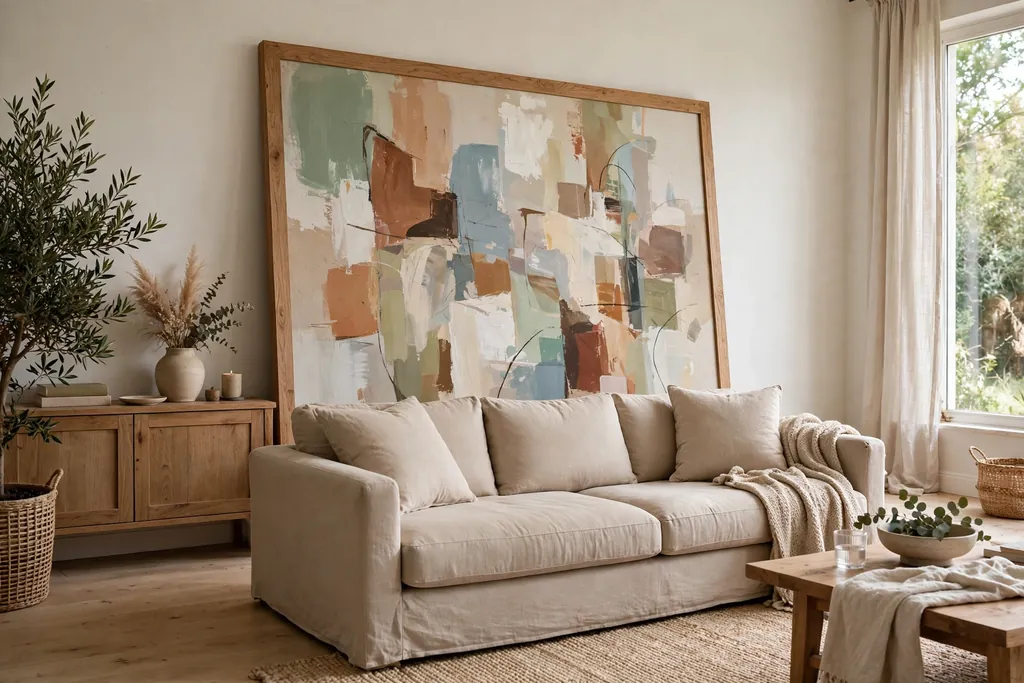
Lean a large framed print or canvas against the wall behind the sofa or beside a bookcase, instead of hanging a grid of small frames. One big piece gives the room a clear focal point, and leaning it feels relaxed and easy to change. The frame should be nearly as wide as the sofa section it sits behind, so the scale feels right.
Secure the top edge with a small wall bumper or a discreet picture rail hook if the room has children or pets, since a leaning frame can slide. Keep the wall color plain and the nearby furniture simple, so the art stays the focus. Swap the print with the seasons if you like change, since leaning makes the swap a five minute job.
3. Paint One Chalkboard Panel for Notes and Doodles
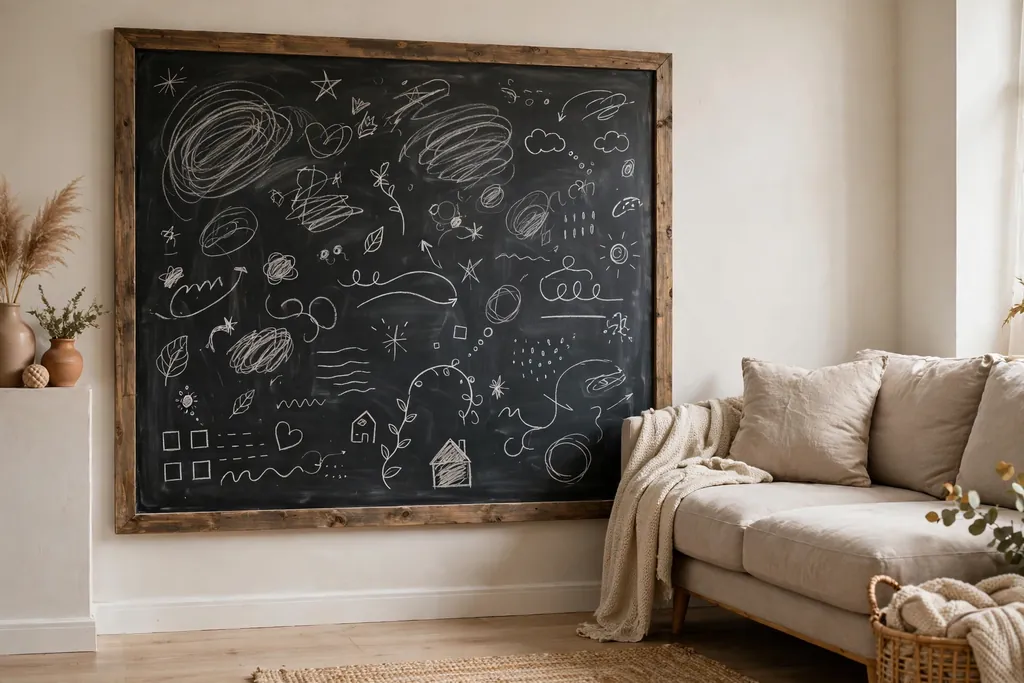
Paint a single wall panel, a door, or a framed board with chalkboard paint, and use it for notes, doodles, a weekly menu, or a rotating quote. A chalkboard panel adds a playful, hands on surface to a living room, and it suits a family room where messages change often. Keep the panel to one defined rectangle with a wood or painted frame, so it reads as a feature rather than an unfinished wall.
Use dust free chalk or chalk markers to limit dust on nearby furniture, and wipe the board with a damp cloth before a fresh design. Pair the black panel with light walls and one or two pale cushions, so the dark rectangle does not weigh the room down. If you rent, use a framed chalkboard hung on the wall instead of painting the wall itself.
4. Clash Cushion Patterns Inside One Palette
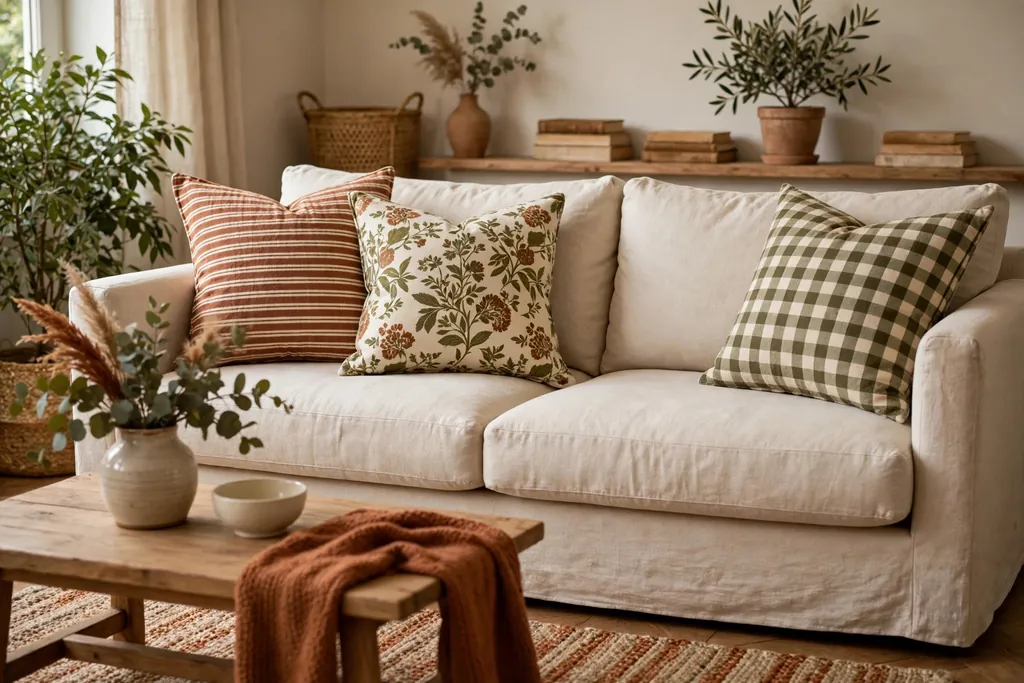
Mix stripes, florals, and checks on the sofa, but hold them inside one palette, such as rust, cream, and olive, or navy, white, and mustard. Pattern clash adds energy and a collected feel, while the shared palette keeps the sofa from looking chaotic. Use three patterns at most, in different scales: one large print, one medium stripe, and one small check or dot.
Keep the sofa and rug plain so the cushions do the pattern work, and repeat one cushion color in a throw or a piece of art. Choose removable covers so you can wash the cushions and swap one pattern out if the mix feels too busy. Start with two patterns if you are unsure, and add the third only once the first two sit well together.
5. Paint the Ceiling an Unexpected Color
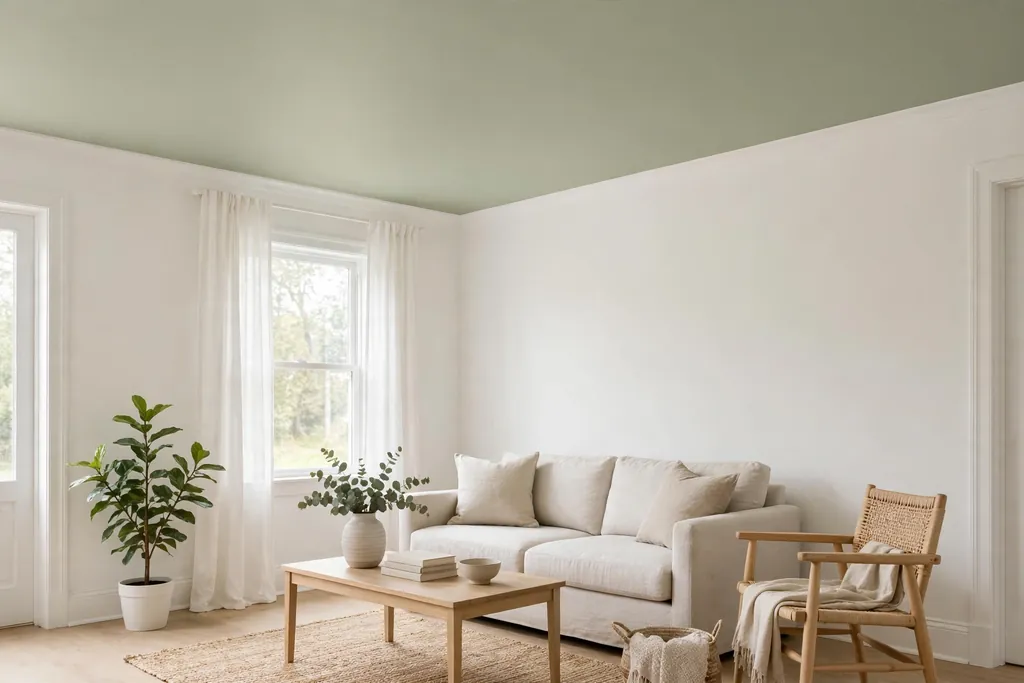
Paint the ceiling a soft but surprising color, such as pale sage, dusty pink, or warm butter yellow, while the walls stay white or cream. A colored ceiling draws the eye up and gives a plain room a quiet surprise, without the commitment of a bold wall. This suits a room with white walls and simple furniture, where the ceiling becomes the playful note.
Test the color on a large board held overhead in daylight and lamplight, since ceiling colors look darker once they are up. Keep the cornice and trim white to frame the color cleanly, and repeat the ceiling tone once at seat level, in a cushion or a vase. For a calm base to pair with a playful ceiling, these Swedish living room ideas show how pale walls and wood keep a light room feeling settled.
6. Build a Gallery Wall from Thrifted Mismatched Frames
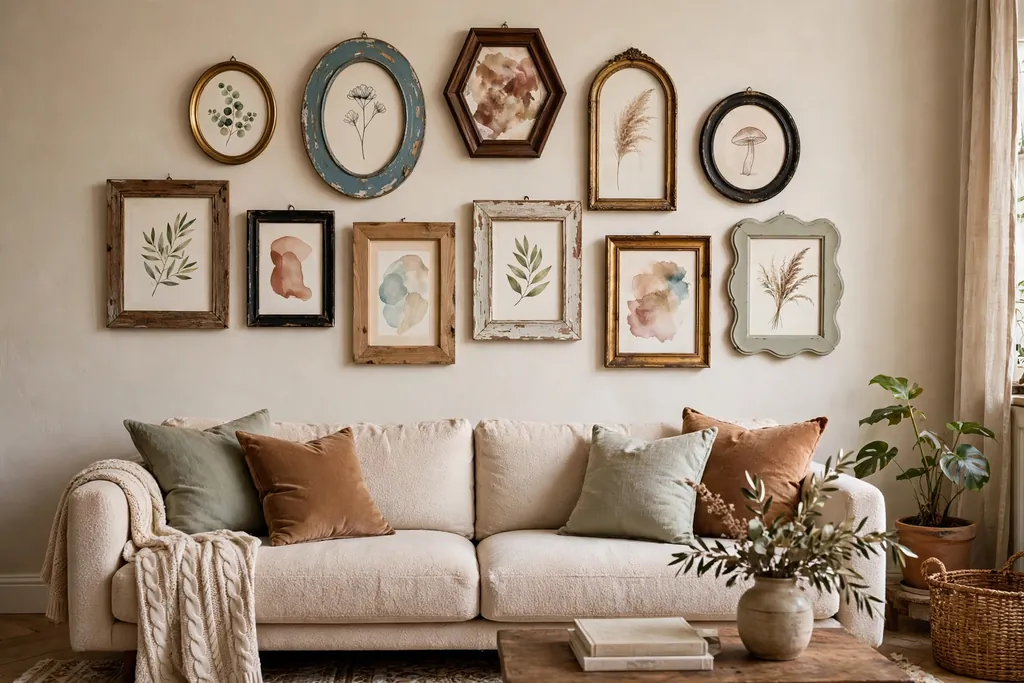
Gather frames in different shapes, sizes, and finishes from thrift shops, and hang them as one gallery wall with a shared theme, such as travel prints, botanical art, or family photos. Mismatched frames feel personal and collected, and they cost far less than a matched set. Lay the arrangement on the floor first, and keep a consistent gap of about two inches between frames.
Hang the center of the group at eye level when seated, and keep the outer edges inside the width of the sofa or console below. Use one repeated element, such as black and white prints or cream mounts, to tie the mixed frames together. Start with five or six frames and add over time, rather than filling the wall in one go.
7. Use a Vintage Trunk as a Coffee Table
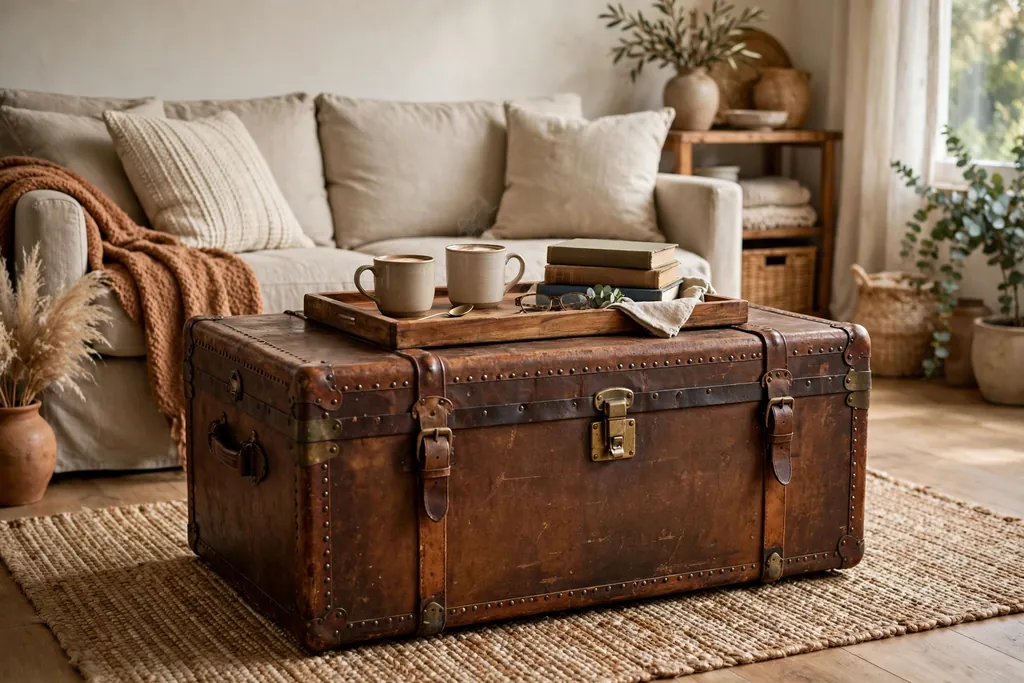
Set a vintage leather or metal trunk in front of the sofa as a coffee table, with a tray on top for cups and books. A trunk adds history and a story to the seating group, and it gives hidden storage for blankets, games, or spare throws. Choose a trunk close to sofa seat height, so cups and books are easy to reach.
Check the lid stays open safely and the latches close flat, so nothing snags clothing or scratches the tray. Line the inside with a plain cloth to protect blankets from old trunk linings, and keep a tray on top so drinks never sit directly on aged leather or metal. If the trunk is too low, set it on short bun feet or a low plinth to raise it to table height.
8. Hang One Small Quirky Word Sign
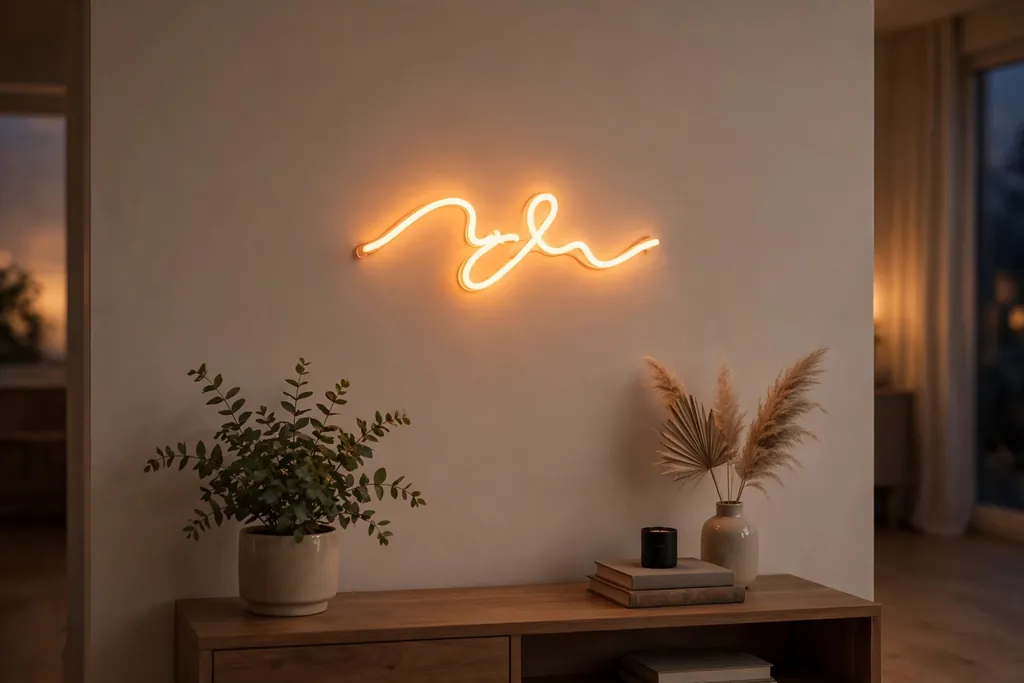
Hang a single small neon style sign or painted wooden sign with a short word or phrase, such as “gather” or “oh hello,” on one wall, and keep the rest of the wall plain. One sign reads as a wink, while several signs across the room read as clutter. A small sign suits a hallway facing wall, the wall above a console, or a reading corner.
Keep the sign modest in size, about the width of a cushion, and choose a warm light or a plain painted finish rather than a flashing or multicolor light. Pair it with one plant or a single framed print, and leave breathing room around it. If the sign uses power, hide the cord with a small cord cover painted to match the wall.
9. Add a Single Animal Print Accent Chair
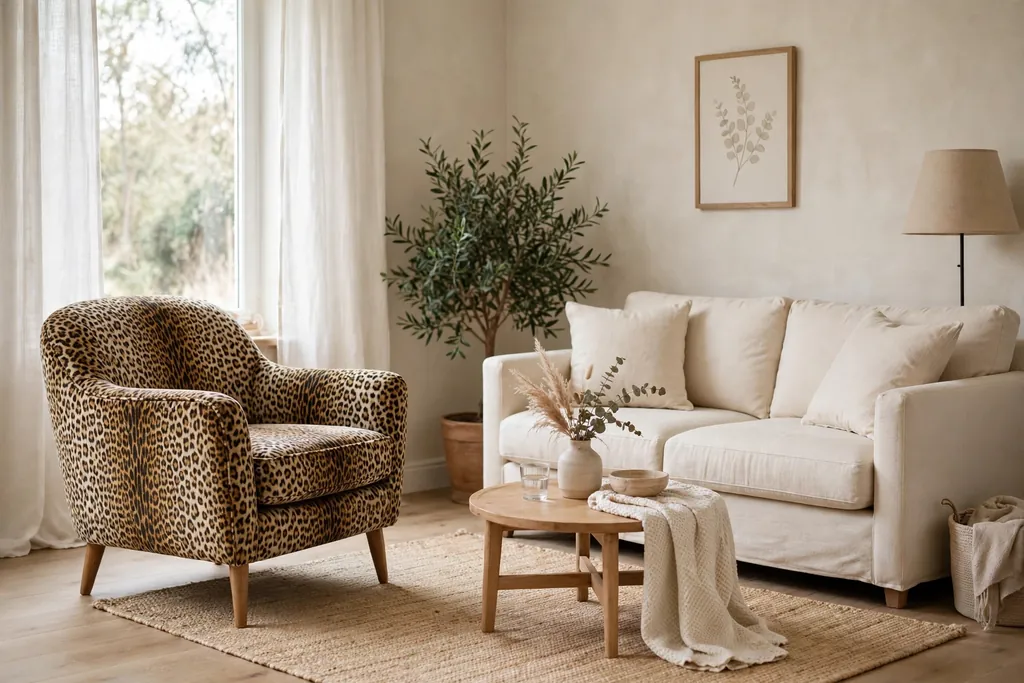
Place one animal print chair, such as leopard or zebra, at an angle to the sofa, and keep every other seat plain. One bold print chair acts as the room’s exclamation point, while two or three printed seats would fight each other. A print chair suits a neutral room with a grey, cream, or black sofa, where the print has a calm background to sit against.
Repeat one tone from the print, such as tan or black, in a cushion, a throw, or a frame, so the chair feels linked to the room. Keep the chair away from other strong patterns, and choose a print in a scale that suits the chair size: a smaller print on a small chair, a larger print on a generous armchair. A washable fabric or a removable cover helps, since an accent chair often becomes the favorite seat.
10. Style a Bookshelf by Color with Odd Objects Tucked In
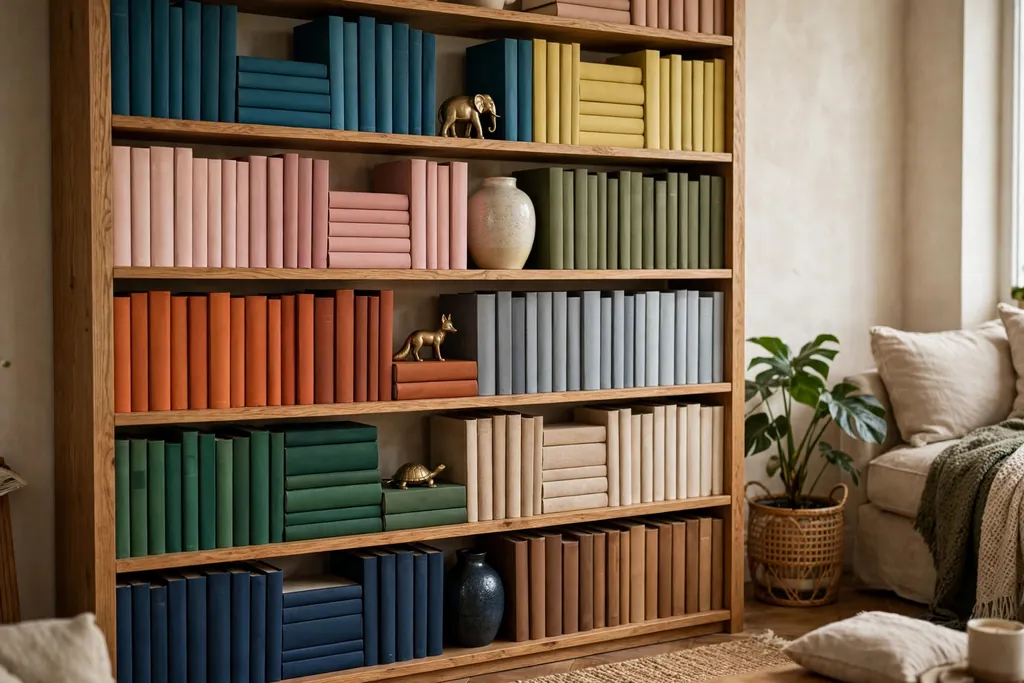
Arrange books by color on one bookshelf, and tuck in a few odd objects between the color blocks: a small brass animal, a vintage camera, a ceramic hand, or a globe. Color blocked shelves look tidy from across the room, while the odd objects reward a closer look. Group books in blocks of one color, and leave a gap at the end of each block for one object.
Keep the objects small and sturdy, and limit them to one per shelf so the shelf still reads as a bookcase, not a curio cabinet. Put heavy books low and lighter paperbacks higher, and anchor tall shelves to the wall for safety. If the color blocks feel too strict, let one shelf break the pattern with mixed spines, so the display feels human rather than staged.
11. Hang a Rattan Chair in a Corner
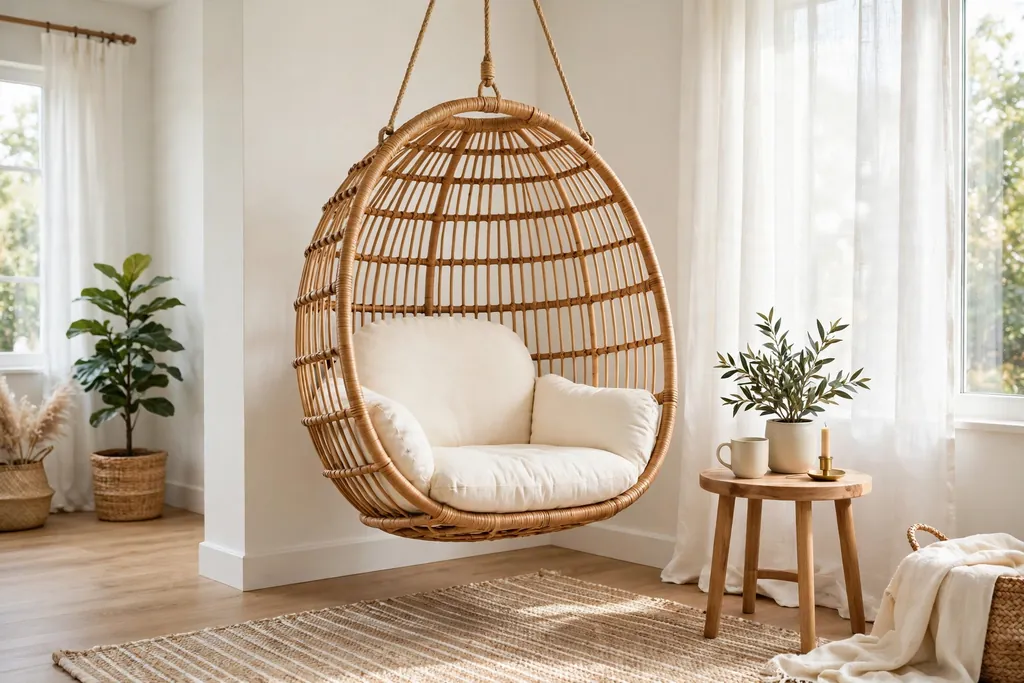
Hang a rattan egg chair or swing chair from a ceiling joist or a sturdy stand in a bright corner, with a cushion and a small side table beside it. A hanging chair adds a playful, cocoon like seat that adults and children both gravitate toward, and it turns an empty corner into a destination. Choose a corner with enough clearance to swing gently without hitting walls or lamps.
Check the ceiling fixing or stand weight rating before use, and keep the swing path clear of side tables and plants. Add a washable cushion cover, since a hanging chair gets daily use, and place a small rug under it to ground the corner. If the ceiling cannot take a fixing, a freestanding stand gives the same seat with no drilling.
12. Paint a Checkerboard Border on the Floor
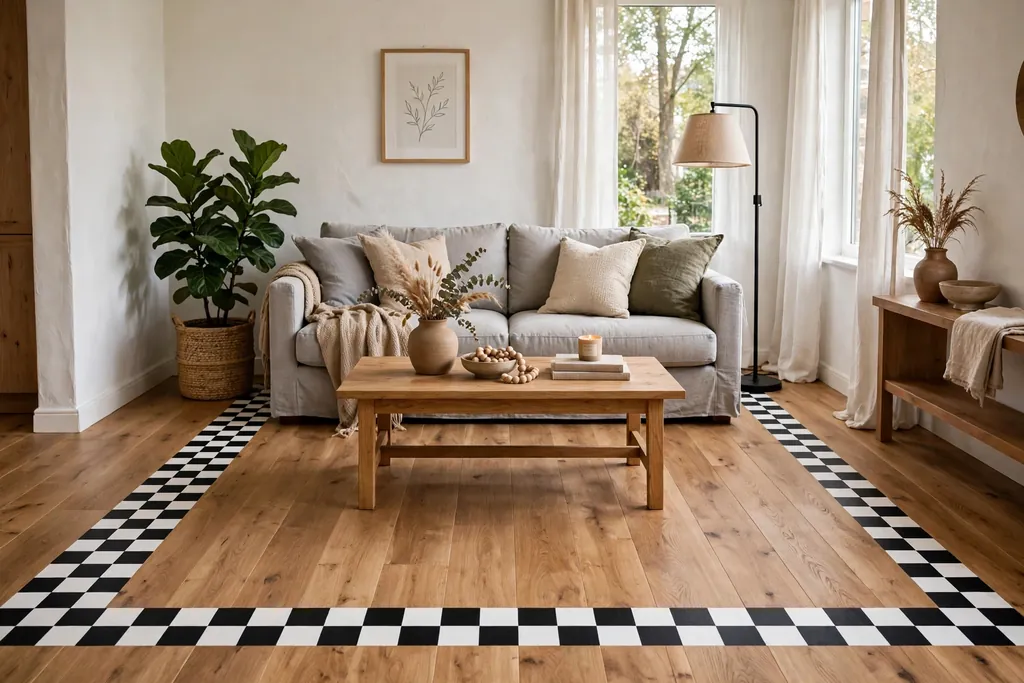
Paint a checkerboard border around the edge of a wood or concrete floor, or lay a checkerboard rug to mark the seating zone, for a playful graphic frame that costs little. A border in black and white, or in two muted tones such as cream and sage, adds structure to a plain floor and defines where the living area sits. This suits a room where the furniture layout is settled and will not move often.
Measure and tape the border before painting, and seal painted floors with a floor rated sealant so the pattern survives foot traffic. Keep the rest of the floor plain and the furniture simple, so the border stays the graphic note. A checkerboard rug gives the same effect for renters, and it can move to another room later.
13. Light the Room with a Sculptural Statement Lamp
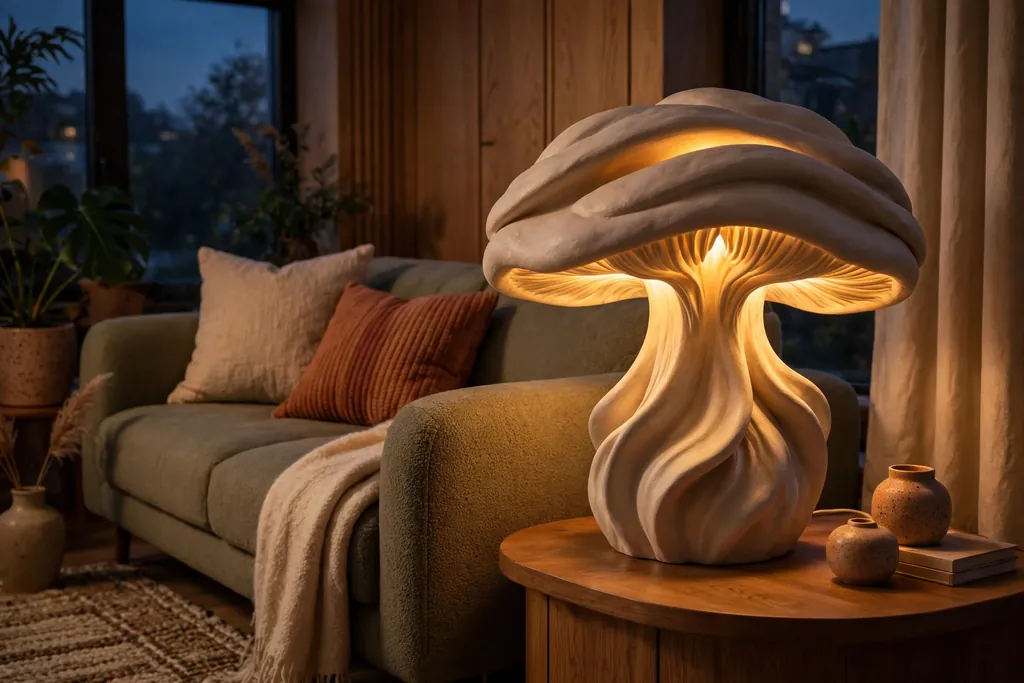
Choose one lamp with a sculptural shape, such as a mushroom lamp, a pleated shade, or a curved ceramic base, and place it where it is seen from the doorway. A statement lamp adds quirk at eye level in the evening, when lamplight shapes the room, and it works even in a room with plain furniture. Keep the shade in a warm white or cream so the light stays soft.
Use a warm white bulb, and place the lamp at a height where the light falls over a seat or a book, not straight into the eyes. Keep the other lamps in the room plain, so the sculptural lamp stays the star. If the lamp is vintage, check the wiring and plug before use, and replace any frayed cord.
14. Dress the Mantel with a Collection of Oddities
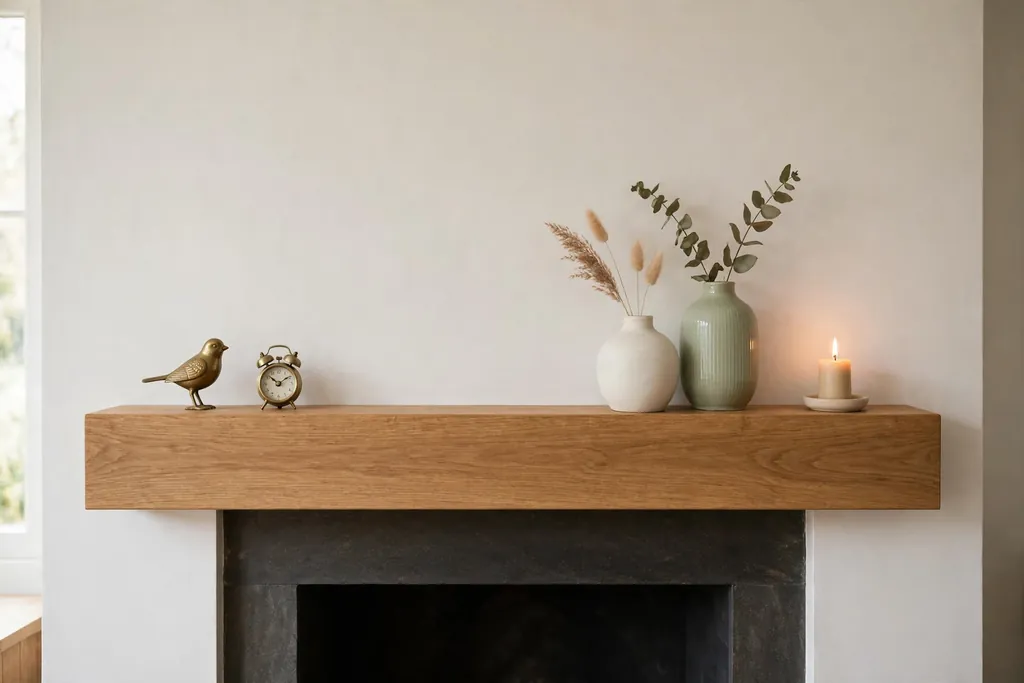
Style a mantel or a long picture ledge with a small collection of oddities: a brass bird, a tiny clock, a ceramic vase in an odd shape, a stack of old postcards, and a candle. A mantel of collected pieces feels personal and a little eccentric, and it changes easily with the seasons. Group the pieces in odd numbers, vary their heights, and leave gaps so each piece can be seen.
Keep the collection to one mantel or ledge, and keep the wall above it plain or hung with a single mirror, so the display does not compete with art. Dust the pieces weekly, since mantels collect dust, and keep candles clear of curtains and paper. Rotate one piece out each season to keep the mantel feeling fresh without growing crowded.
15. Hang Curtains in a Bold Unexpected Print
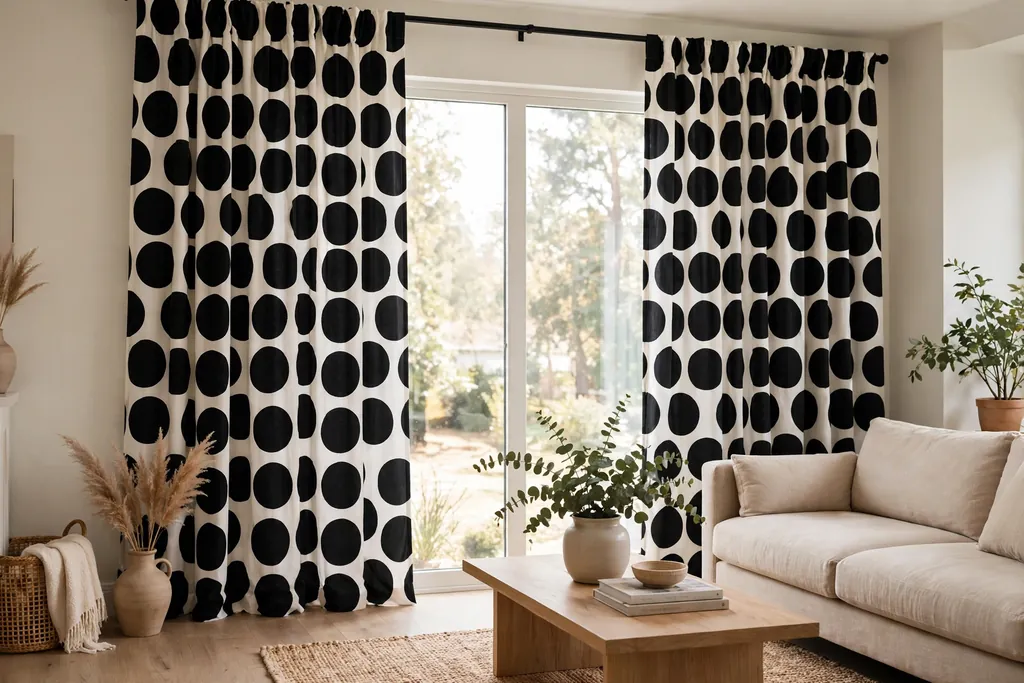
Hang curtains in a bold print, such as polka dots, bold stripes, or a large floral, on an otherwise plain window wall. Printed curtains frame the window with personality, and they are easy to swap when tastes change. Choose a print with one color already in the room, such as the sofa cushions or the rug, so the curtains feel linked to the scheme.
Hang the rod close to the ceiling and let the curtains fall to the floor, so the print reads as a tall, deliberate panel rather than a short afterthought. Keep the walls and sofa plain, since the curtains carry the pattern, and use a plain sheer behind them for daytime privacy if needed. Wash or clean the curtains as the maker advises, since window fabric collects dust and sun fading over time.
16. Choose a Velvet Sofa in One Strong Color
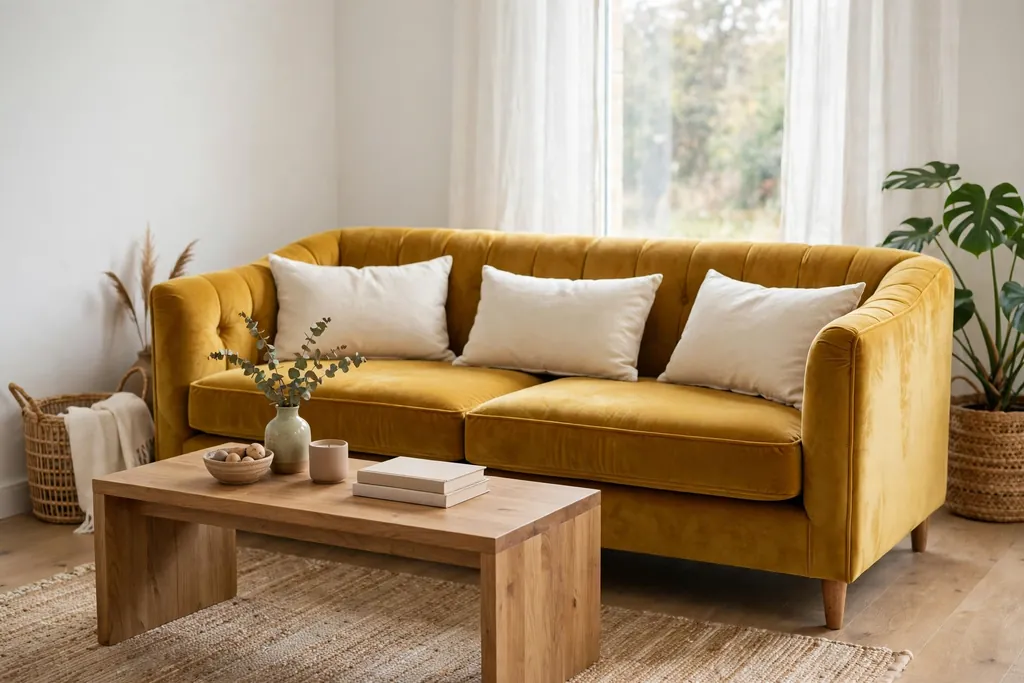
Pick a velvet sofa in one strong color, such as mustard, teal, or burnt orange, and keep the walls, rug, and curtains calm around it. A bold velvet sofa is the quickest way to make a living room feel playful and polished at once, since the rich fabric keeps the strong color feeling soft. This suits a room with good daylight, where the velvet pile catches the light.
Pair the sofa with plain cushions in cream and one tone pulled from the room, and add a wood or brass coffee table to warm the color. Brush velvet cushions lightly to keep the pile even, and rotate seat cushions so wear stays even. For more ideas on styling a sofa that carries the room, see these grey couch living room ideas for cushion, rug, and lamp pairings that work with a strong sofa color too.
17. Hang a Wall of Decorative Plates
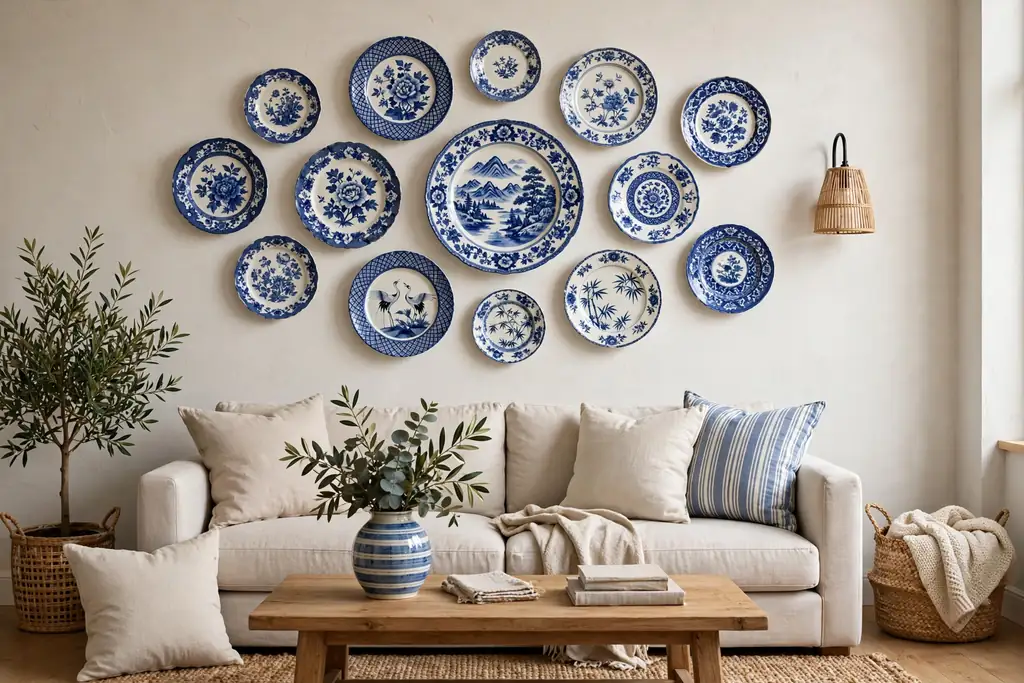
Hang decorative plates in mixed sizes and patterns on one wall, using plate hangers or adhesive discs rated for each plate’s weight. A plate wall adds color, pattern, and a handmade feel, and it suits a wall that is too small for a large painting or a dining end of a living room. Keep the plates inside one palette, such as blue and white, or warm earth tones, so the mix feels collected rather than random.
Lay the arrangement on the floor first, and start with the largest plate near the center, working outward with smaller plates. Hang the group at eye level, clear of door swings and sofa backs where plates could be knocked. Use plates you love but can replace, and keep valuable heirlooms in a cabinet rather than on a busy wall.
18. Turn a Reclaimed Door into Wall Art or a Table
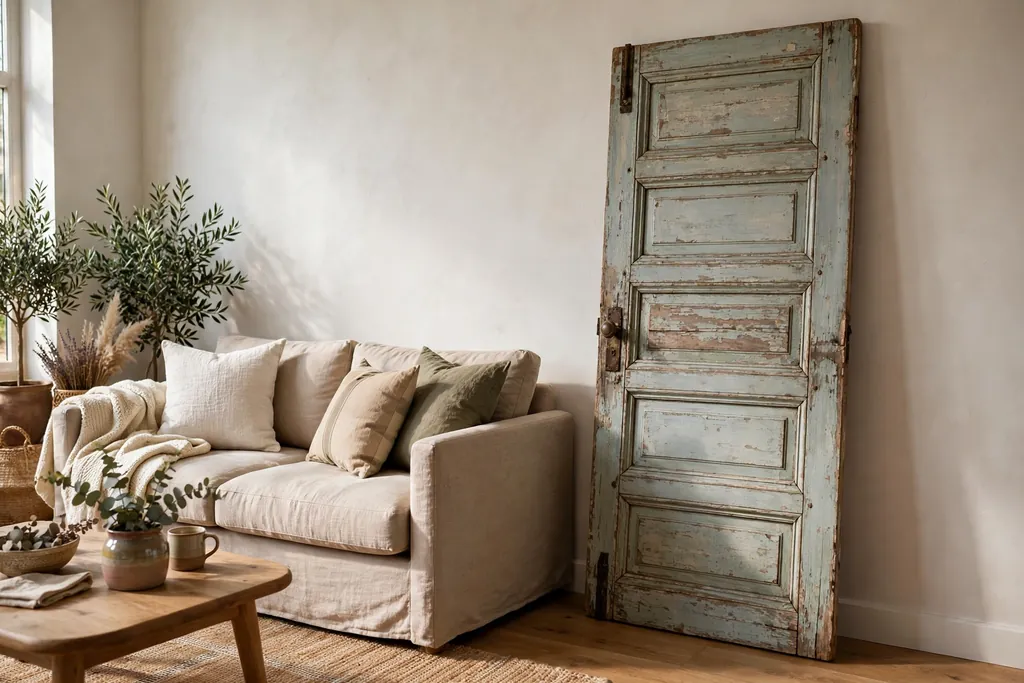
Lean a reclaimed painted door against a wall as large scale art, or lay one across trestle legs or a low frame as a coffee table top. A door brings height, texture, and a story into a room, and its panels and old paint give a plain wall instant character. Choose a door in a color that repeats a room tone, or paint it one flat color to calm a busy finish.
Sand rough edges and seal flaking paint before bringing a reclaimed door indoors, and check it for nails or splinters. If it leans as art, secure the top to the wall with a discreet bracket so it cannot tip. As a table, add a glass top to protect the surface and to give cups a level base across the door panels.
19. Style a Ladder Shelf with Quirky Finds
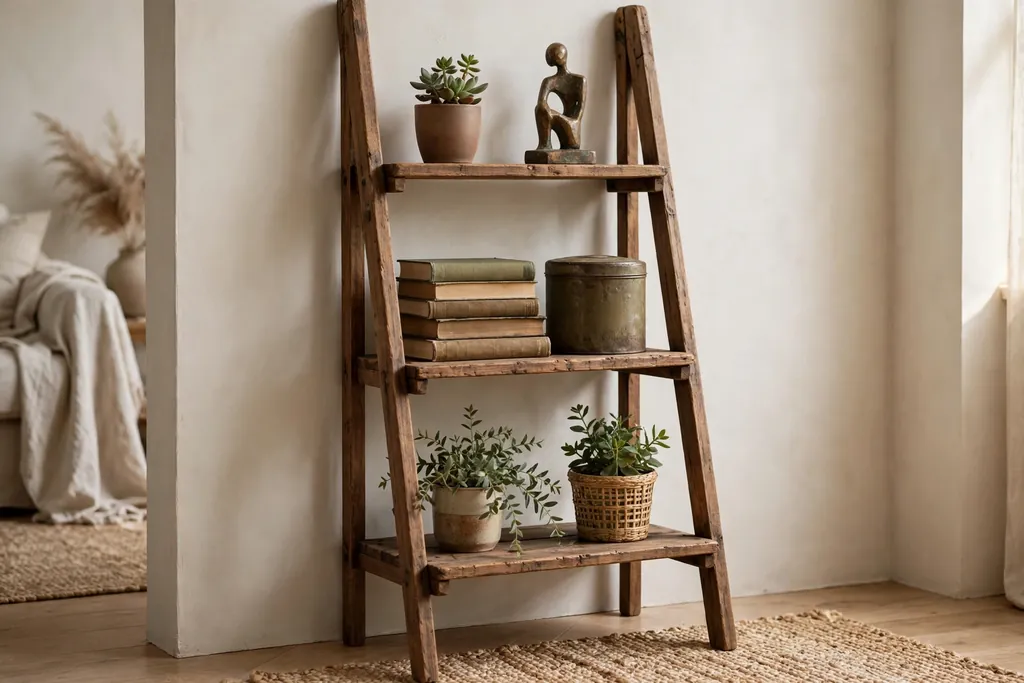
Lean a wooden ladder shelf against one wall, and style it with books, plants, a small lamp, and a few quirky finds, such as a vintage tin, a small sculpture, or a framed odd print. A ladder shelf adds vertical display without a heavy bookcase, and its open shape keeps a small room feeling light. Place heavier items on the lower rungs and lighter pieces higher, for a stable look and a safe shelf.
Anchor the top of the ladder to the wall, since leaning shelves can slip, and keep the shelf clear of door swings. Leave one rung partly empty so the display breathes, and group small items on a tray so they read as one vignette rather than scattered clutter. A ladder shelf suits a narrow wall or a corner that cannot fit a full bookcase.
20. Paper One Wall in a Bold Quirky Print
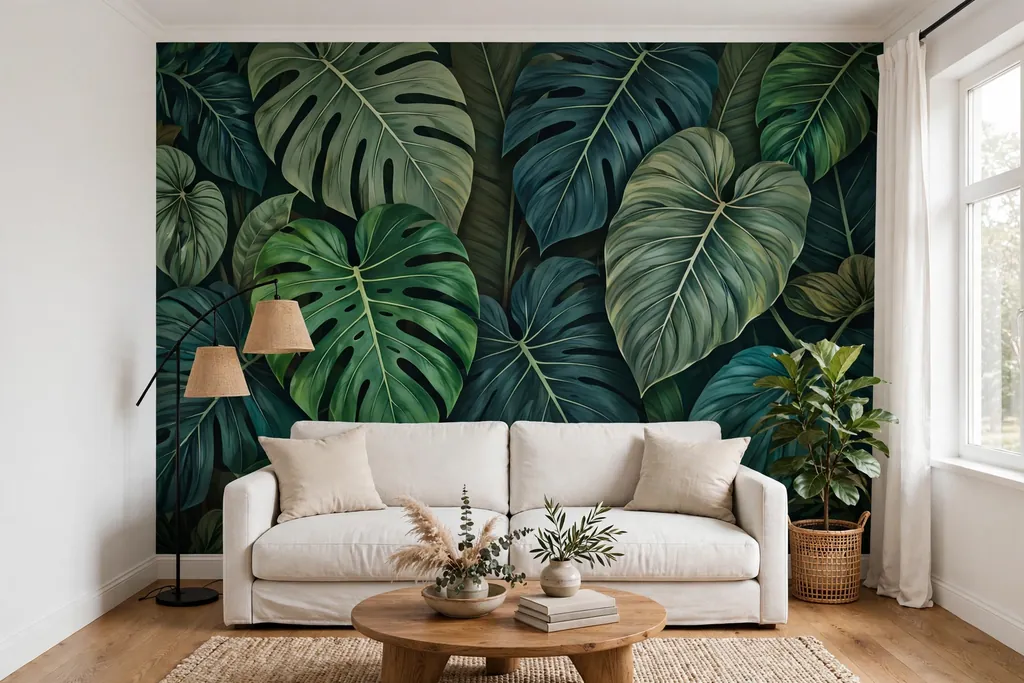
Paper one wall, usually the sofa wall or the wall behind a console, in a bold quirky print, such as oversized botanicals, playful stripes, or a graphic fruit motif. One printed wall gives the room a clear personality, while the other walls stay plain and calm. A large scale print suits a bigger wall, while a smaller repeat suits a short wall or an alcove.
Keep the furniture against that wall simple, and repeat one color from the paper in cushions or a throw, so the wall feels linked to the room. Choose a washable paper if the wall sits near a busy walkway, and keep paper clear of direct radiator heat. If you rent, a peel and stick paper gives the same effect and removes cleanly when you move.
21. Layer Two Rugs with Mixed Patterns
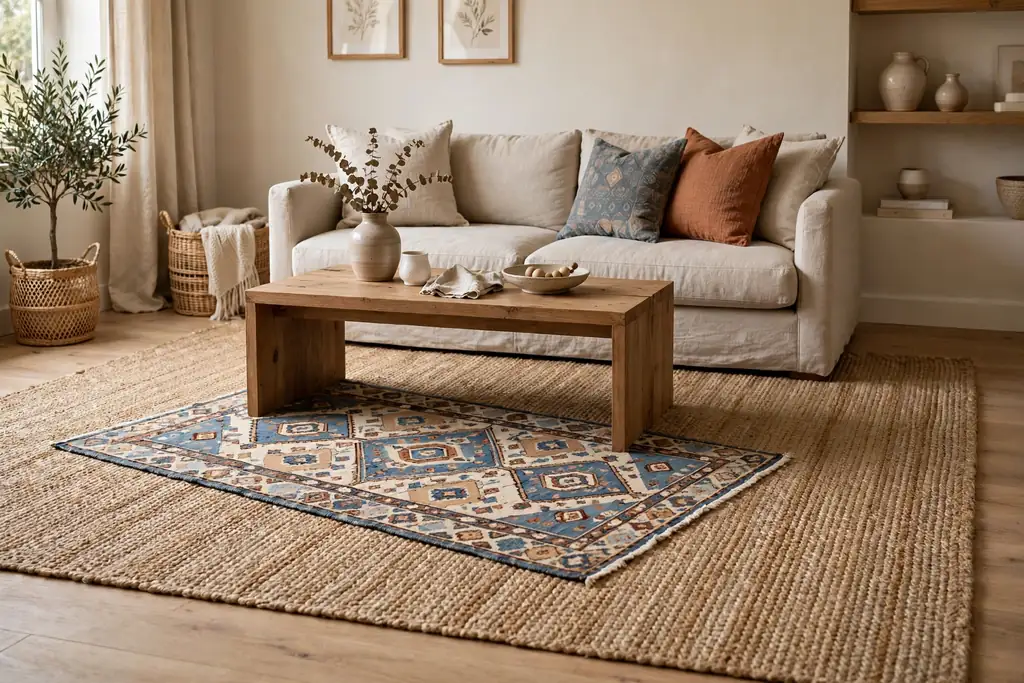
Layer a smaller patterned rug over a larger plain rug, such as a jute or flatweave base, at a slight angle under the coffee table. Layered rugs add texture and a collected feel, and they let you use a bold patterned rug that is too small to anchor the seating group on its own. Keep the top rug clearly smaller than the base on all sides, so both layers are visible.
Use a rug pad or gripper under the top rug so it does not slide, and keep the patterns in the same family: a geometric top rug over a plain base, or a vintage style top rug over a neutral base. For more help with rug size and placement, see these living room rug ideas. Vacuum the top rug often, since layered rugs trap dust between the layers.
22. Hang an Oversized Statement Clock
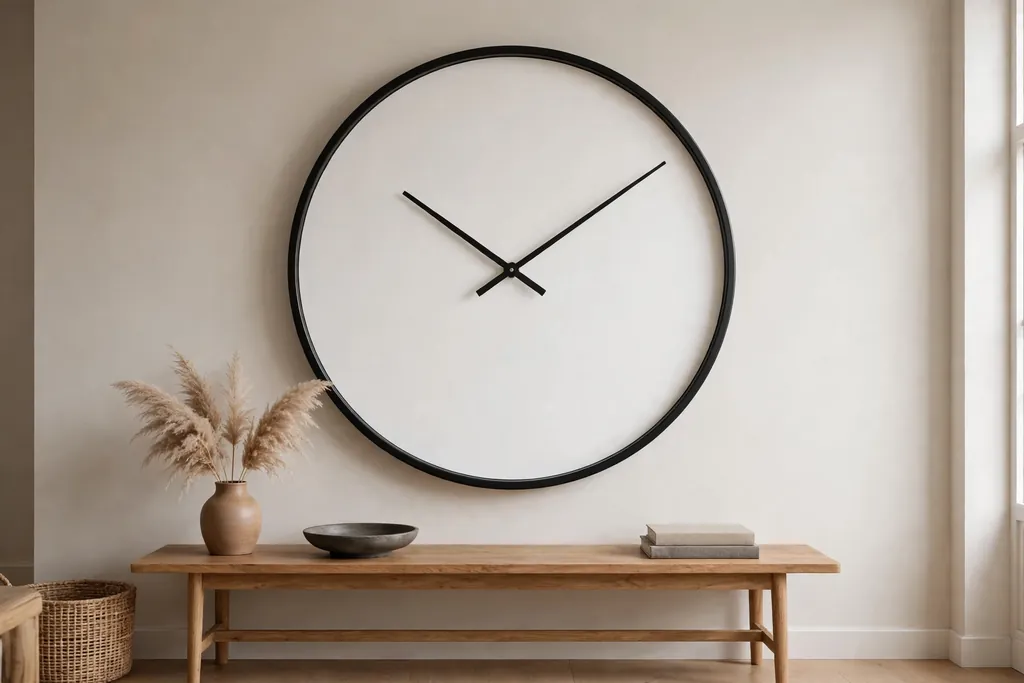
Hang an oversized clock, at least twice the size of a standard wall clock, on a plain wall above a console or beside the sofa. A large clock adds a playful, graphic note and a practical job, and it fills a wall that would otherwise need a large painting. Choose a simple face with clear numbers, so the clock stays readable from the sofa.
Hang the center at eye level when standing, and keep the wall around it plain so the clock reads as a single statement. Check the clock movement is quiet if it hangs near a reading seat, since a loud tick can annoy over an evening. A battery clock avoids a cord, and a silent sweep movement suits a bedroom facing living room.
23. Style a Bar Cart as a Mini Display
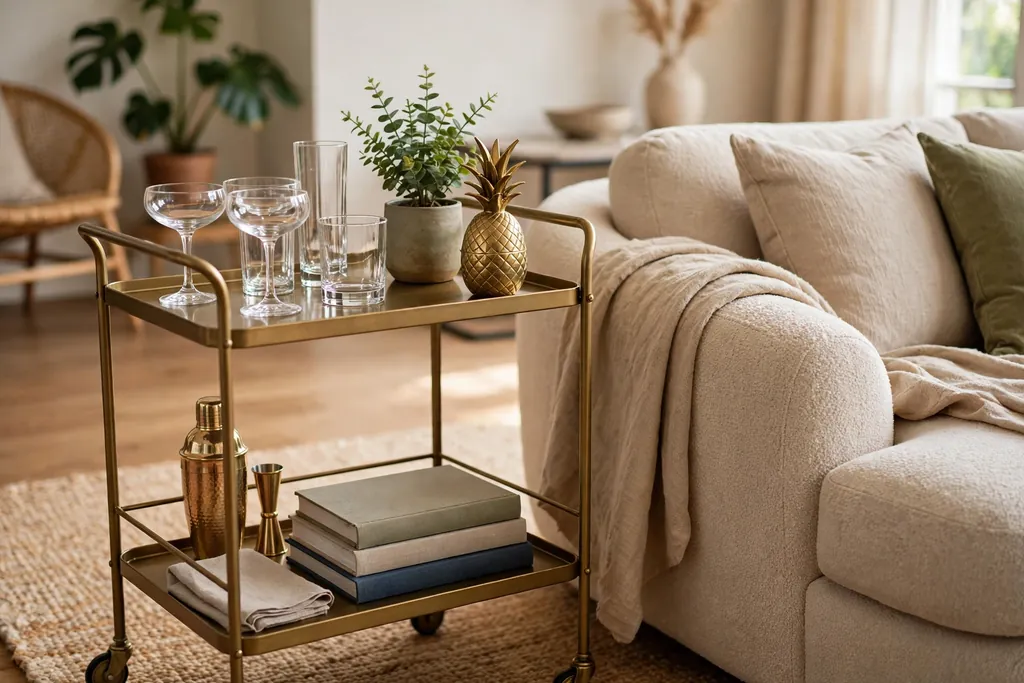
Style a bar cart with glasses, a small plant, a stack of cocktail books, and one quirky object, such as a brass pineapple or a vintage shaker, and park it beside the sofa or against a wall. A bar cart adds a playful, movable piece that doubles as a serving station for guests, and it suits a room without a built in drinks cabinet. Keep the cart tidy, with the most used pieces on top and spares below.
Use a tray on the top shelf to gather small items, so the cart looks styled rather than cluttered, and keep glassware to the pieces you actually use. Lock the wheels when the cart is parked, and keep it clear of walkways and door swings. For a non drinking household, style the same cart as a tea cart or a dessert cart, with cups, a teapot, and a small cake stand.
Conclusion
A quirky living room stays polished when the playful choices are few, clear, and useful. Start with one focal piece, whether that is a bold sofa, a trunk table, or a plate wall, and let the rest of the room stay calm enough to show it off. Repeat one color or material from the quirky piece, give every odd object a place and a job, and edit the room as new finds arrive. The result is a room with personality that still feels easy to sit in, tidy, and welcoming. Pick one idea from this list, try it for a week, and add a second only once the first feels at home.
FAQs
Can a quirky living room still look polished?
Yes, if the playful pieces are limited and deliberate. Pick one or two focal points, keep the walls, sofa, and floor calm, and repeat one color or material from the quirky piece elsewhere. A room looks polished when each bold choice has breathing room, not when every surface carries a joke.
How many quirky pieces should a small living room have?
One strong piece is often enough in a small room, such as a bold sofa, a trunk table, or a plate wall, plus one or two small accents like patterned cushions. Small rooms show clutter fast, so leave clear surfaces and open floor space, and remove one older piece when a new quirky piece arrives.
What is the easiest quirky change for renters?
Swap cushions, curtains, and lamps, style a bar cart or ladder shelf, or hang a framed chalkboard, a plate wall, or a leaning piece of art. All of these reverse without wall damage beyond small picture hooks, and peel and stick wallpaper gives a bold wall that removes cleanly. Avoid painting ceilings or floors unless your lease allows it.
How do I mix patterns without the room looking chaotic?
Hold mixed patterns inside one palette, and vary their scale: one large print, one medium stripe, and one small check or dot. Keep the sofa and rug plain, and let only one surface carry the strongest pattern at a time. If the mix still feels busy, remove the smallest pattern and live with the rest for a week before adding anything back.
Does quirky decor suit a formal living room?
Yes, with restraint. One sculptural lamp, one oversized piece of art, or one animal print chair can give a formal room personality without breaking its calm. Keep the quirky piece in a refined material, such as velvet, brass, or framed art, and keep the rest of the room orderly, so the room reads as intentional rather than casual.
How can I add quirk on a small budget?
Start with thrifted frames, a vintage trunk, a plate wall from charity shop finds, or a chalkboard panel, all of which cost far less than new furniture. Paint is another low cost route: a painted ceiling, a checkerboard floor border, or a reclaimed door in a fresh color. Shop secondhand first, and buy one piece at a time so each find earns its place.