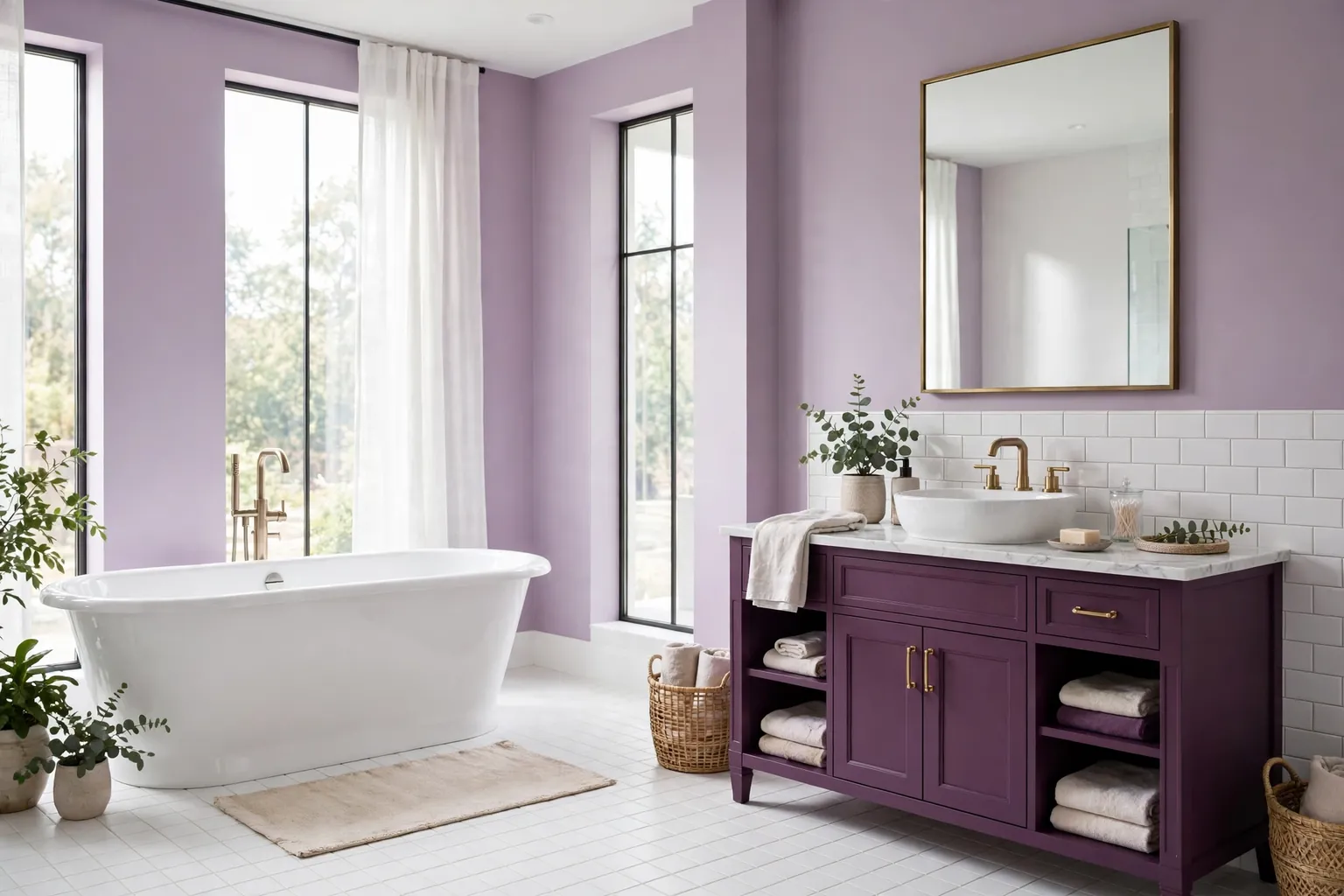
Purple can make a bathroom feel calm, soft, or rich, depending on how much of it you use and what you pair it with. A pale lilac keeps a small room light, while a deep plum adds warmth to a larger room with white tile and warm wood. These 33 stylish purple bathroom ideas cover walls, tile, vanities, towels, lighting, and small accessories, so you can start with one change or build a full scheme. Pick a purple depth first, then repeat it in two or three places and keep the rest of the room quiet. For small rooms, the renter friendly storage and surface ideas in these apartment bathroom ideas pair well with the color ideas below.
Key Takeaways
- Choose one purple depth as the lead: lilac for light rooms, violet for a clear color note, or plum for a rich, cozy feel.
- Repeat the lead purple in two or three places, such as walls and towels, and keep counters, ceilings, and trim in white or pale wood.
- Put the deepest purple on one surface, like the vanity or one wall, and keep the other surfaces lighter so the room does not feel closed in.
- Pair purple with warm wood, brass or gold, matte black, or soft grey, and avoid adding a second strong color at the same time.
- Test a large paint or tile sample in morning light and evening lamplight before committing, since purple shifts a lot between light sources.
- Start small if you are unsure: towels, a shower curtain, and a rug can set the scheme before you paint or retile anything.
1. Soft Lavender Walls With White Trim
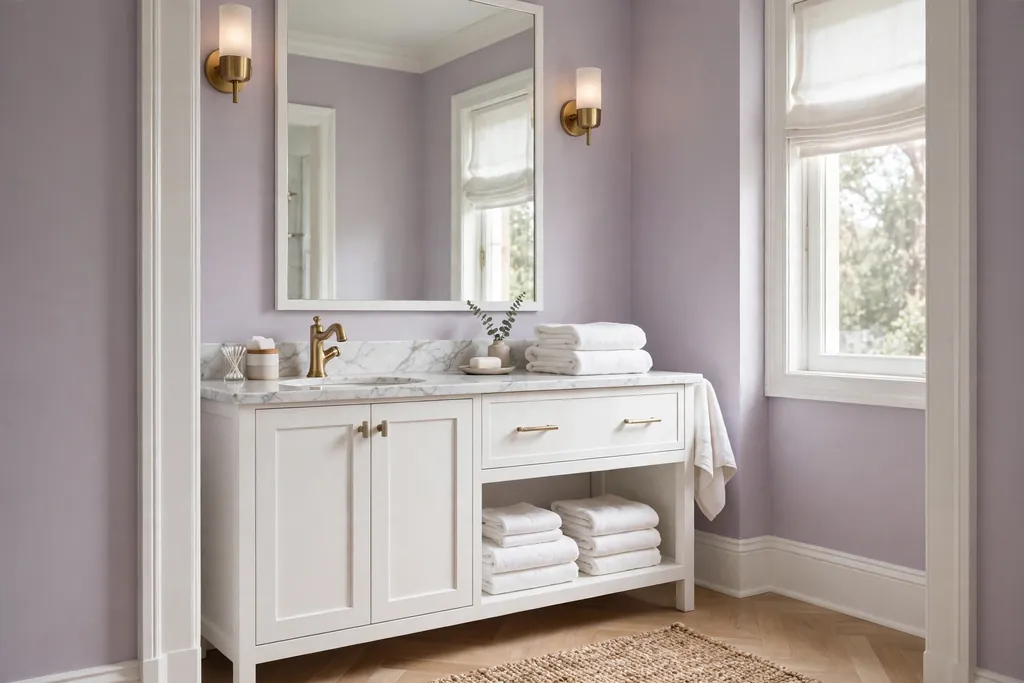
Paint the walls a soft lavender and keep the trim, ceiling, and door in clean white. Lavender reads as color in daylight and as a gentle neutral in the evening, which makes it a safe first step into purple. It suits small bathrooms well, because the pale tone does not shrink the room the way a deep plum can.
Use a washable, moisture resistant paint finish, and test a large sample beside your tile and floor before buying a full can. Keep towels in white with one lavender towel for accent, and use chrome or brushed nickel fixtures so the room stays fresh. For help pairing a strong color with a calmer one, see these wall color combinations.
2. Plum Vanity Cabinet With Brass Pulls
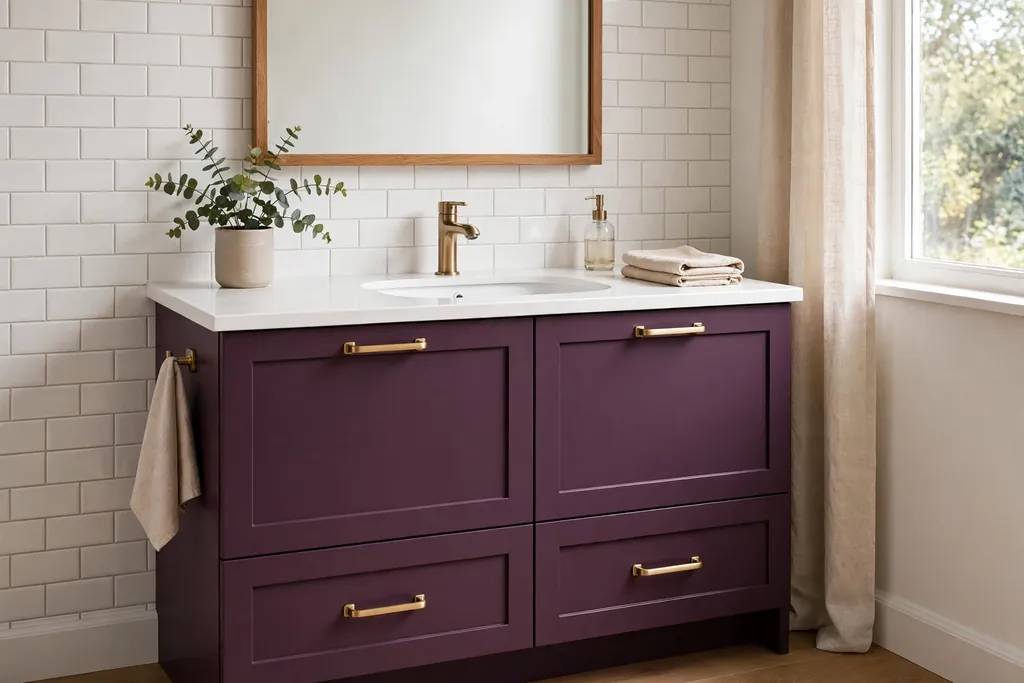
Paint or choose a vanity cabinet in deep plum and finish it with brass pulls and a brass faucet. The dark cabinet grounds the room and makes white tile and a pale countertop look deliberate. Brass warms the plum, while chrome would keep the same scheme cooler and more modern.
Remove the doors and hardware before painting, clean off soap residue, sand lightly, and use a primer made for slick cabinet surfaces. Keep the walls pale so the plum stays the focal point, and add a small brass framed mirror to repeat the metal once more. A plum vanity also hides everyday marks better than a white one.
3. Violet Subway Tile in the Shower
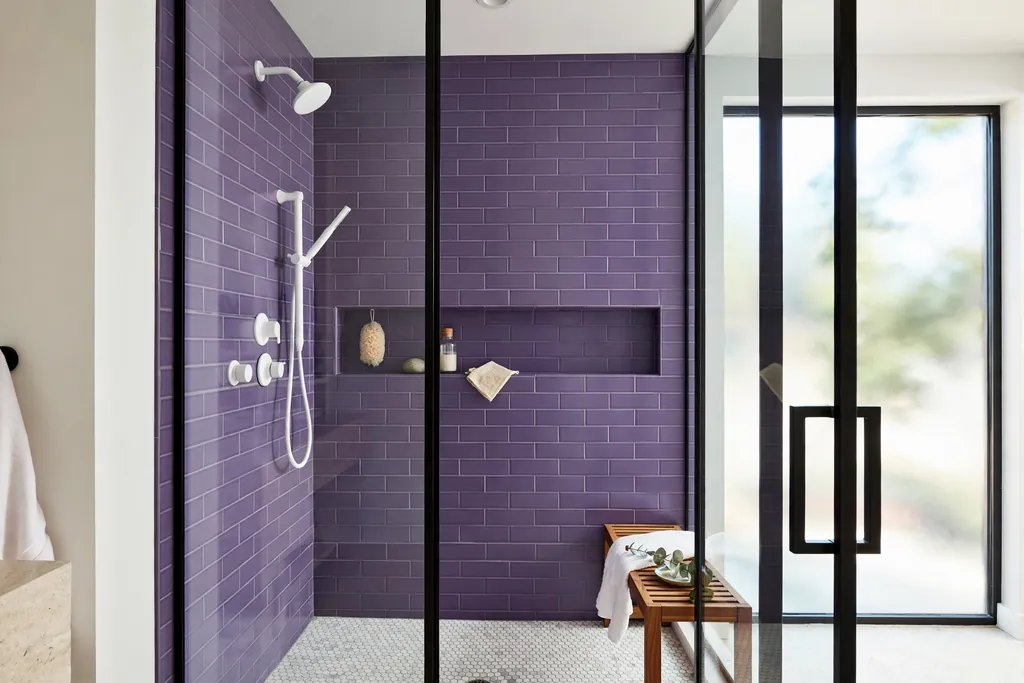
Line the shower walls with violet subway tile in a simple running bond pattern. Subway tile is easy to clean, and the violet gives a plain shower a clear color identity without a busy pattern. A pale grout keeps the tile fresh, while a mid grey grout makes each tile edge stand out more.
Run the tile to the ceiling in a small shower so the eye travels upward, and keep the rest of the bathroom walls plain white. Use a matching violet tile on the shower floor in a smaller size for grip, or keep the floor white and let the walls carry the color. Seal the grout as the tile maker advises.
4. Lilac Beadboard Wainscot
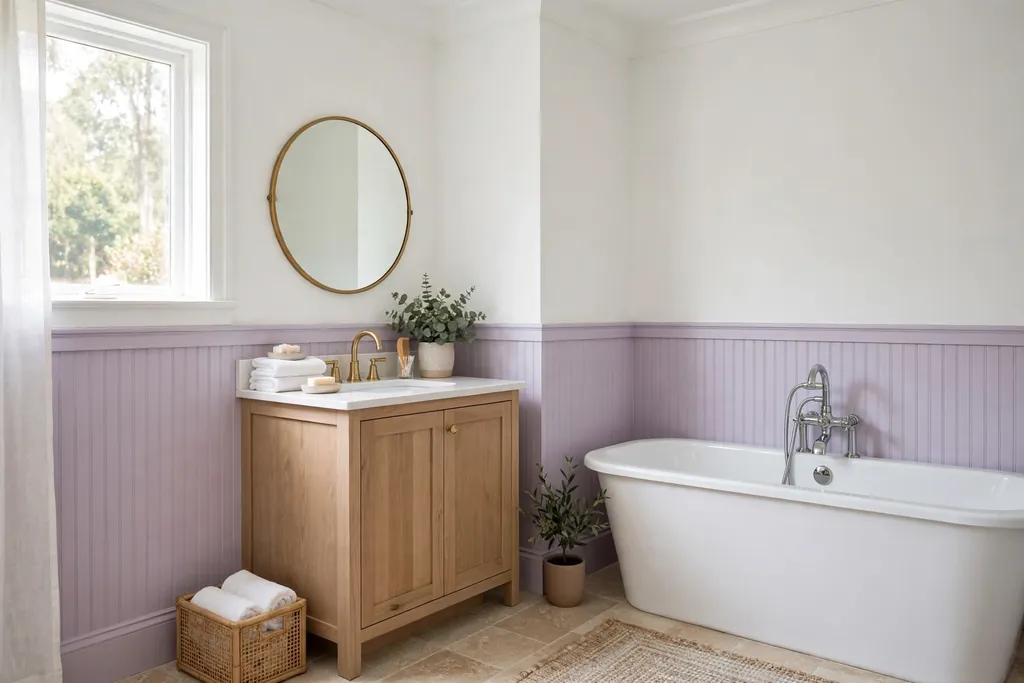
Fit lilac beadboard on the lower half of the walls and paint the upper walls white or very pale lilac. Beadboard adds texture and a cottage feel, and it protects the lower walls from splashes near the tub and sink. The horizontal rail between the two colors gives the scheme a finished edge.
Use moisture resistant beadboard boards and seal the joints well, especially near the tub. Keep the floor in pale wood or white tile, and use a white toilet and tub so the lilac stays the main color note. A small wooden stool beside the tub suits this look and adds a warm material.
5. Purple Mosaic Tile Niche
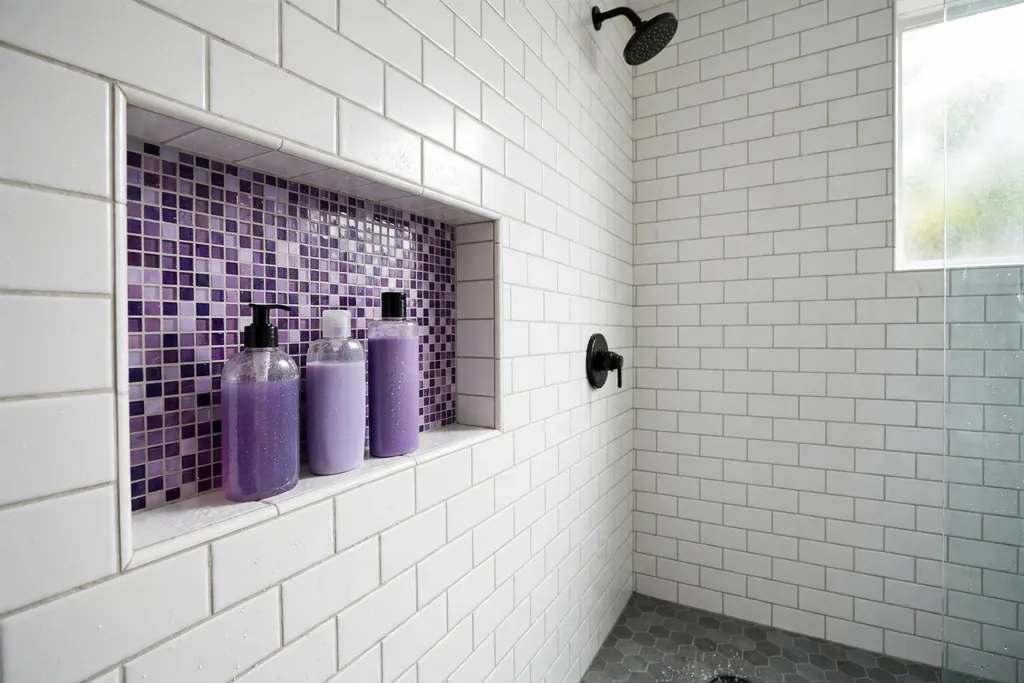
Build a shower niche lined with small purple mosaic tiles in mixed lilac, violet, and plum tones. The niche becomes a jewel like detail inside a plain white shower, and it gives shampoo bottles a tidy home. Mosaic tiles suit a small niche because their small size fits curves and corners without awkward cuts.
Keep the surrounding shower tile white so the niche stands out, and use a grout color close to the mosaic tones so the pattern reads as one panel. Put the niche at a height you can reach without stretching, and keep only daily bottles in it so it stays neat. A niche also works beside a tub for soap and a candle.
6. Aubergine Accent Wall Behind the Tub
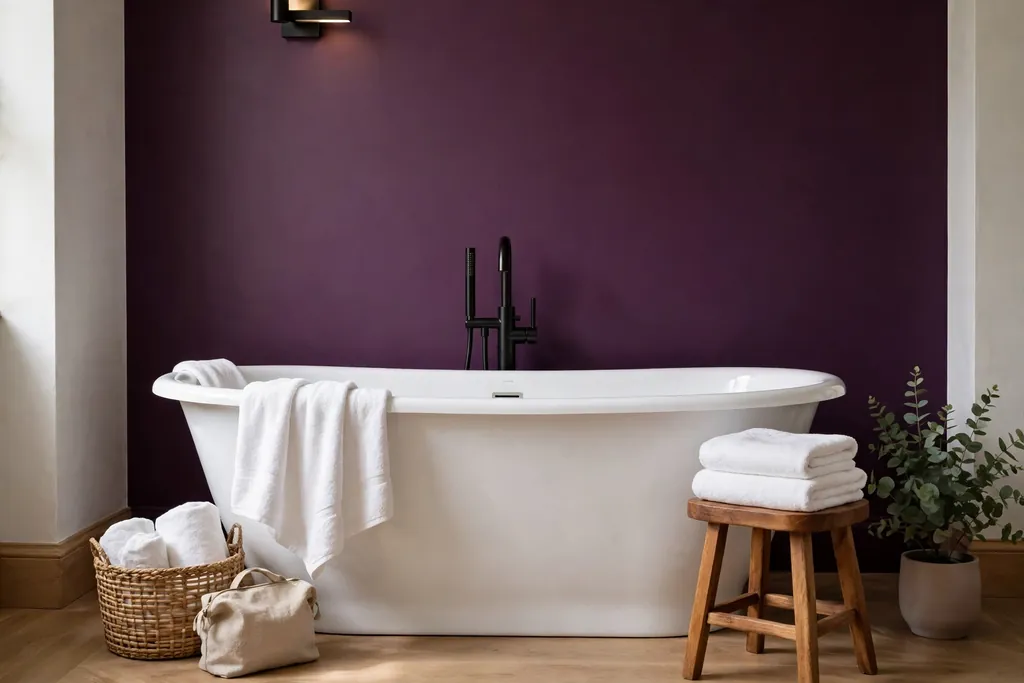
Paint the wall behind a freestanding tub a deep aubergine, a dark purple with a warm brown base, and keep the other walls white. The dark wall frames the tub like a backdrop, and the white tub stands out clearly against it. This works best in a bathroom with good light or a large mirror to bounce light back.
Add warm wood in a bath tray or stool, and use soft white towels so the dark wall does not feel heavy. Keep art on the dark wall simple and large, such as one framed botanical print, rather than a busy gallery. If the room is dim, use aubergine on one wall only and keep the ceiling white.
7. Patterned Purple Shower Curtain as the Focal Point
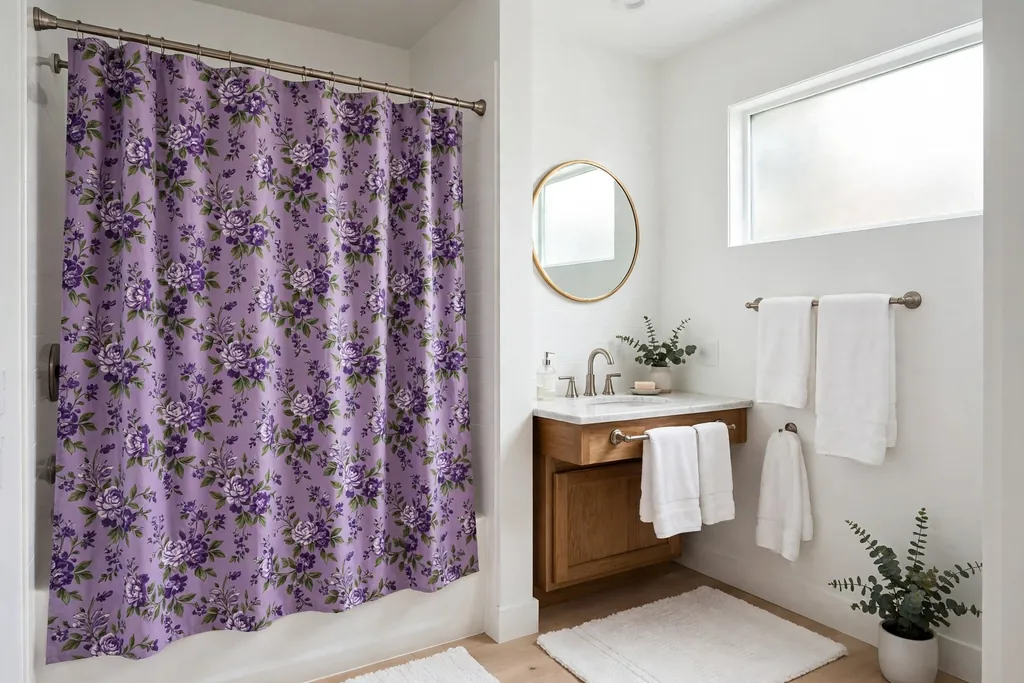
Let a patterned purple shower curtain carry the color for the whole room. In a small bathroom the curtain is the largest single surface, so a lilac floral, a violet stripe, or a plum geometric print can set the palette in one move. Keep towels, mats, and walls plain when the curtain is bold.
Use a fabric outer curtain with a separate washable liner, since it hangs better and lasts longer than a thin plastic curtain alone. Pick one color from the curtain for the bath mat and one small accessory, and leave the rest white. Change the curtain with the seasons if you like, since it is an easy swap.
8. Layered Purple and White Towels
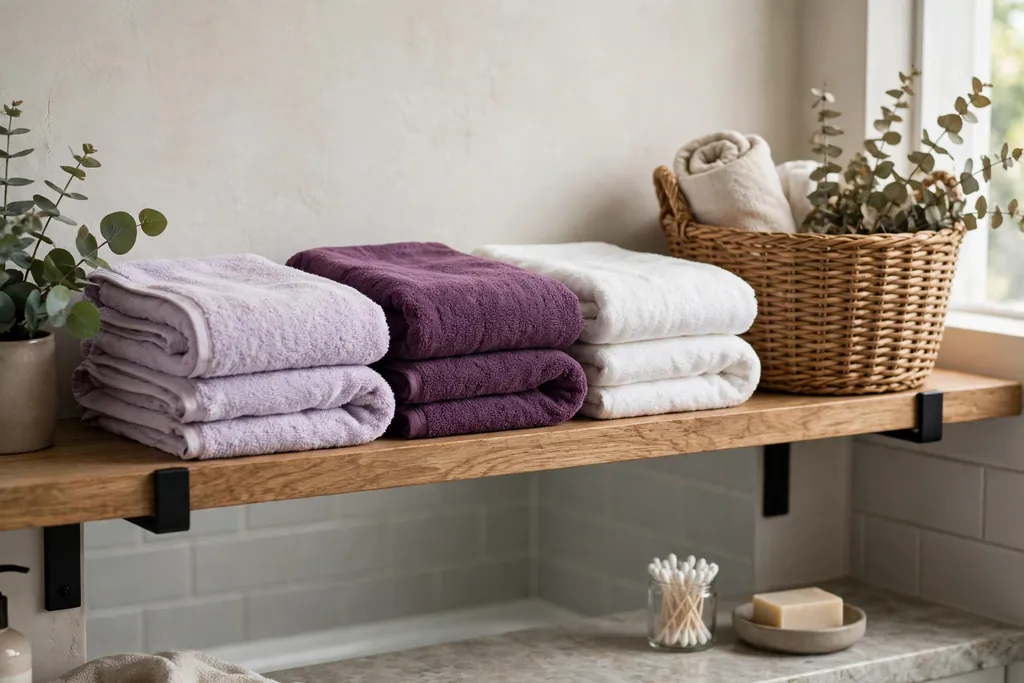
Layer towels in two purples, such as lilac and plum, over a base of white towels. Fold the white towels on the shelf, hang a lilac hand towel on the rail, and keep one plum towel rolled in a basket for a deeper note. The layering looks planned, and it lets you change the balance by swapping one towel.
Keep towel quality consistent, since mixed weights look untidy on an open shelf. Wash new purple towels separately first, so dye does not transfer to white towels. A heated towel rail, if you have one, keeps the display towels dry and ready, and it adds warmth on cold mornings.
9. Violet Glass Sconces Beside the Mirror
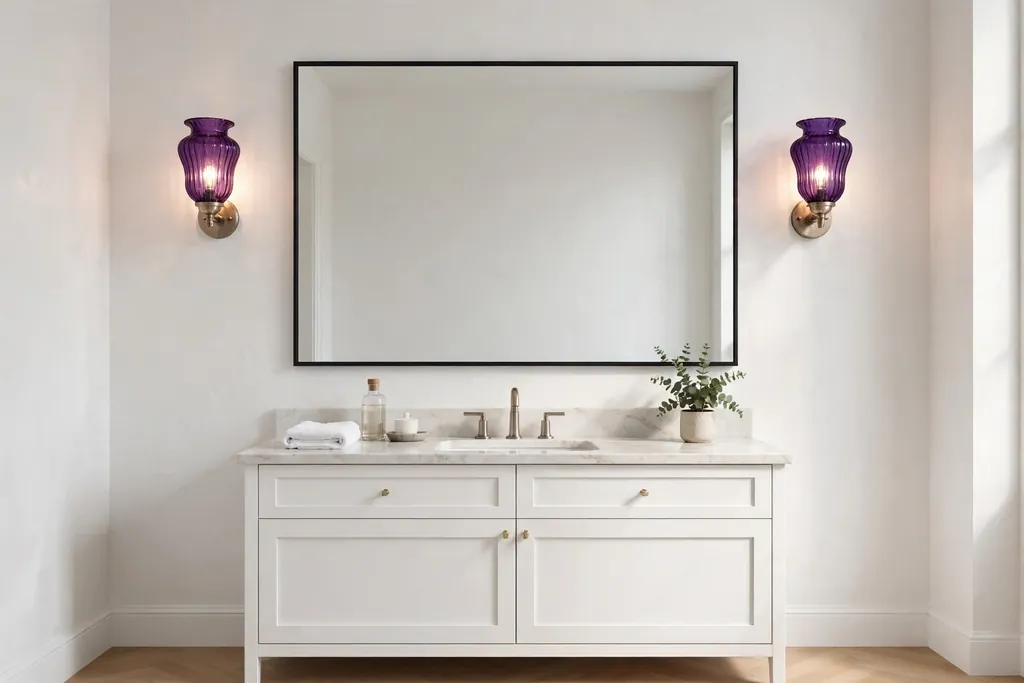
Hang violet glass sconces on either side of the mirror for softer, more even light than a single overhead fitting. The colored glass casts a gentle purple glow in the evening, while the bulbs still give clear light for morning routines. Eye level placement avoids harsh shadows on faces.
Choose sconces rated for bathroom use and keep them clear of direct shower spray. Pair them with a plain mirror and white walls so the glass color stands out, and use warm white bulbs so the violet does not turn cold. If wiring changes are not possible, a plug in wall light in a similar tone can give a related effect.
10. Lavender Bath Rug and Runner Pair
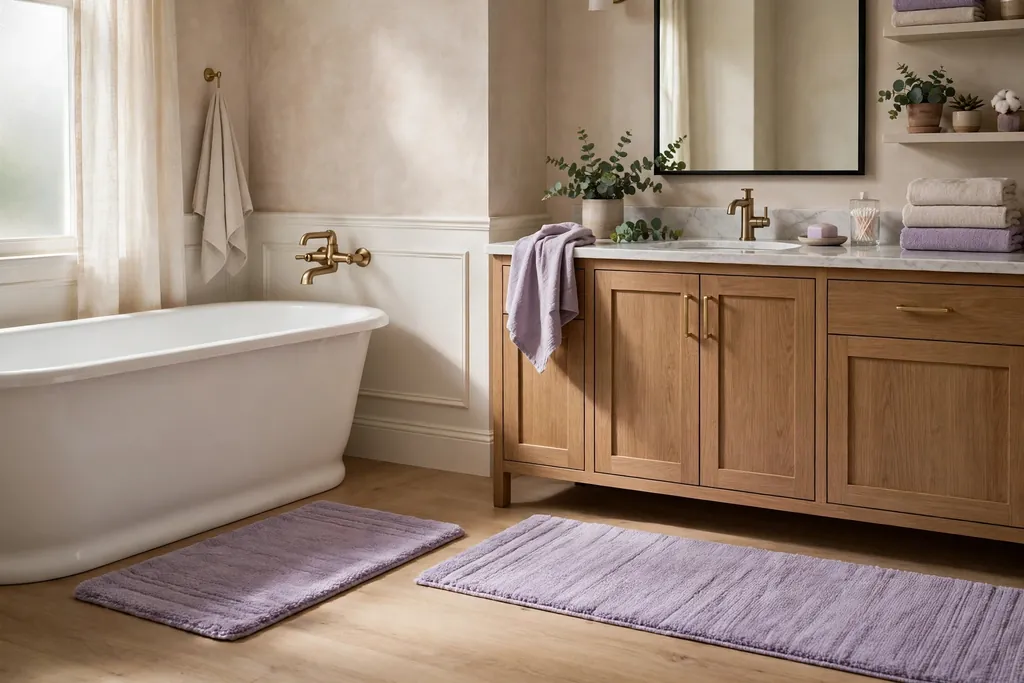
Use a lavender bath rug beside the tub and a matching runner in front of the vanity. Repeating the same rug color in two places ties the room together, and the soft pile feels warm underfoot on cold tile. A washable cotton rug dries faster than a thick pile rug and can go in the laundry with the towels.
Keep a second set in rotation so the bathroom never sits bare on wash day. Choose rugs with a non slip backing, and lift them to dry the floor after showers so damp does not sit under the rug. If the room is small, use one rug only and repeat the lavender in a towel instead.
11. Lilac Ceiling With White Walls
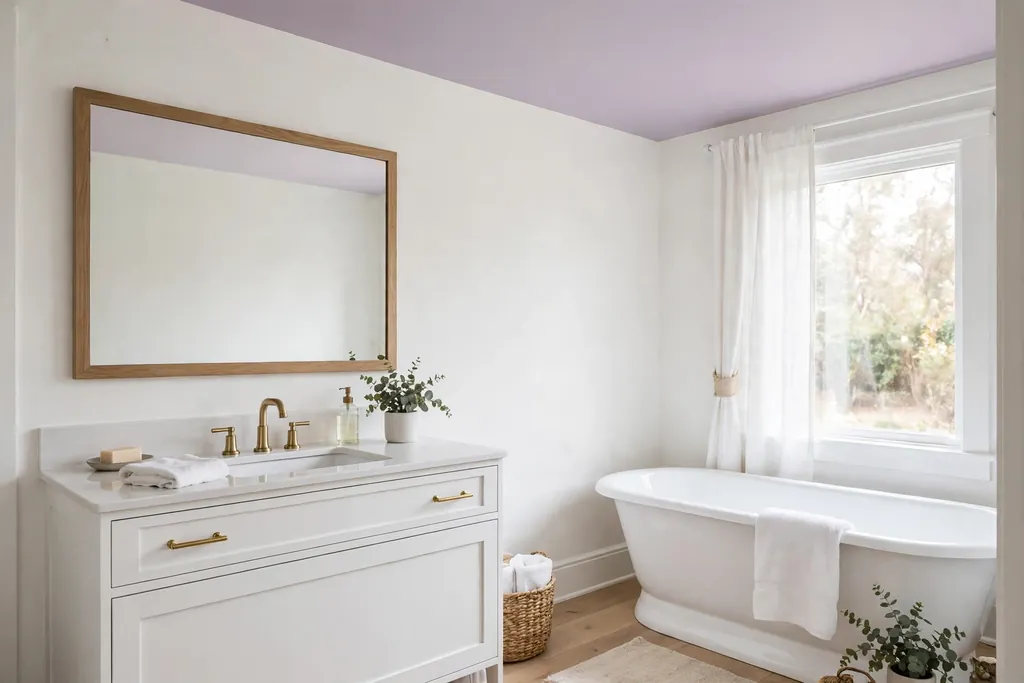
Paint the ceiling a soft lilac and keep the walls white for a gentle surprise overhead. The ceiling color is visible from the tub and the doorway, but it does not crowd the eye level surfaces where mirrors and storage sit. This suits a bathroom with a white vanity and pale floor, where a lilac ceiling adds color without a full repaint.
Use a flat ceiling paint in a moisture resistant formula, and keep the trim white so the lilac edge looks clean. Add one lilac towel or rug to echo the ceiling at eye level, so the color feels connected rather than random. In a low ceiling room, keep the lilac very pale.
12. Lilac and White Checkerboard Floor Tile
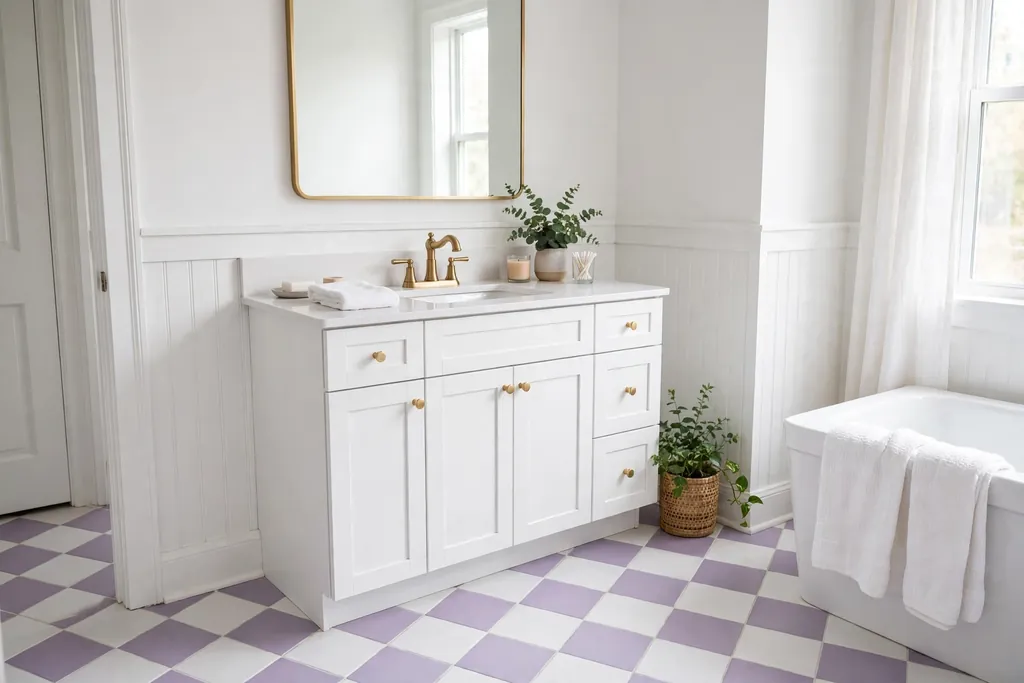
Lay lilac and white checkerboard floor tile for a classic pattern with a purple twist. The checkerboard suits a vanity area and a hallway style bathroom, and it pairs well with white walls and a simple vanity. Small squares suit a small room, while larger squares suit a larger floor.
Keep the wall tile plain white so the floor pattern leads, and use a grout that matches the white squares for a clean look. Seal the tile as advised, and use a pale rug in front of the tub to soften the hard pattern underfoot. A checkerboard floor also hides dust better than a plain pale floor.
13. Plum Arched Mirror Frame
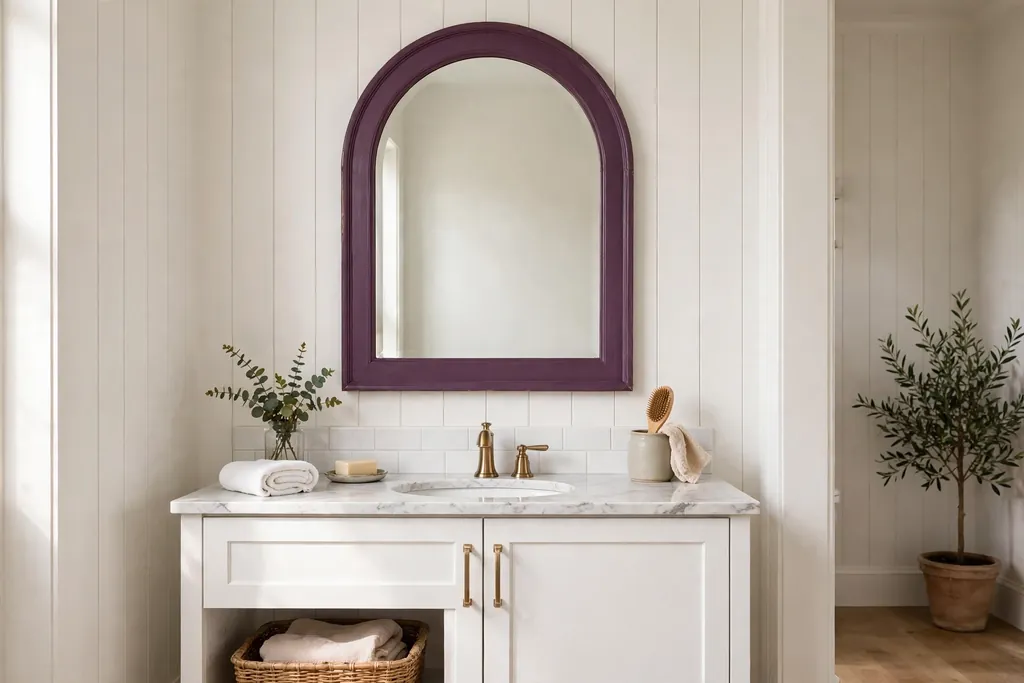
Hang an arched mirror with a plum painted frame above the vanity. The arch breaks up the rectangles of tile and cabinetry, draws the eye upward, and softens the hard lines of the room. A plum frame gives the mirror presence without needing a large size.
Center the mirror over the sink at eye level, and keep its width a little narrower than the vanity so the edges do not crowd the light fixtures. If painting a frame, use a moisture resistant paint and seal it well. Pair the plum frame with one plum towel nearby so the color repeats once more.
14. Open Shelves With Purple Jars and Baskets
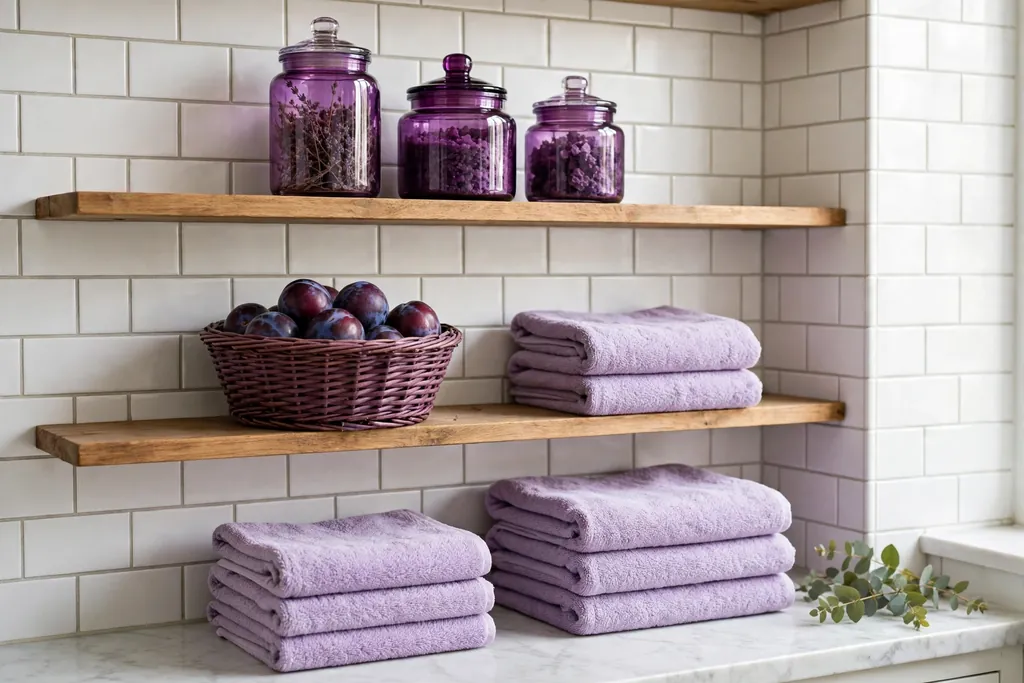
Put two open shelves above the toilet or beside the vanity, and use purple glass jars, a plum basket, and folded lilac towels on them. The shelves hold daily items in view, while the purple containers hide small clutter and set the color scheme. Open shelves suit a bathroom with limited cabinet space.
Mount the shelves high enough that no one bumps their head, and keep the lowest shelf for daily items. Use closed baskets for anything you would rather not see, such as cleaning supplies, and keep one shelf partly empty so the display looks calm. Check wall fixings for tile before drilling.
15. Floral Purple Wallpaper on One Wall
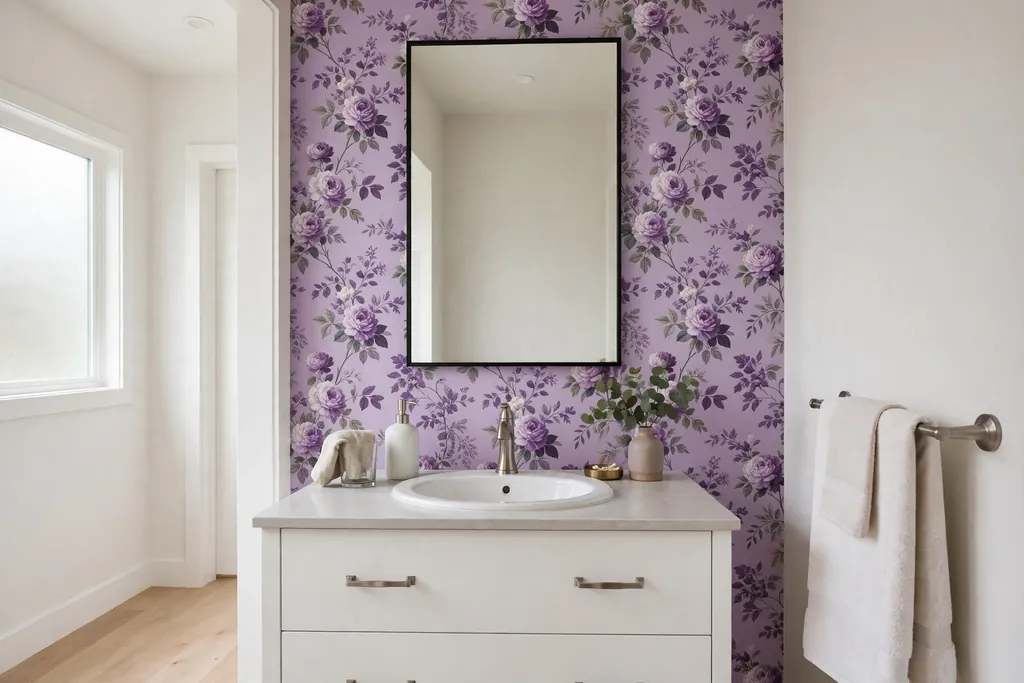
Apply floral purple wallpaper to one wall, such as the wall behind the vanity, and keep the other walls plain. A floral print in lilac and plum on a white or cream ground adds pattern and color in one step, and it suits a bathroom with plain tile and a simple vanity. One wall keeps the pattern from overwhelming a small room.
Use a moisture resistant wallpaper or a peel and stick paper, and keep it off the wall directly inside the shower, where constant steam can loosen the edges. Test a corner patch first if your walls are freshly painted. Repeat one purple from the paper in a towel or rug, and keep the rest of the room quiet.
16. Plum Roman Blind at the Window
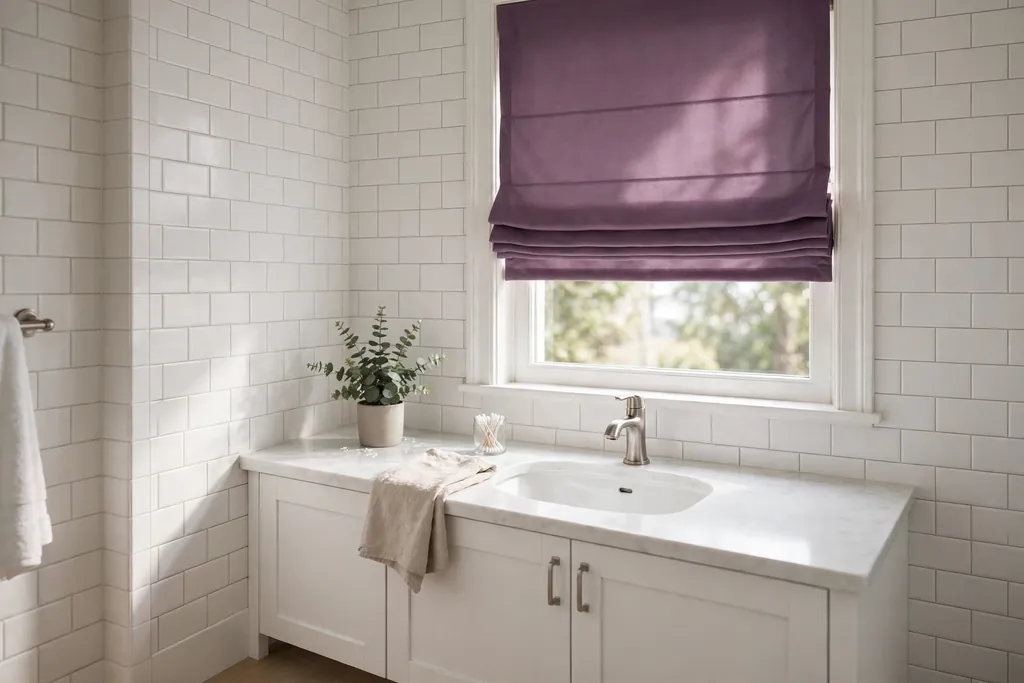
Hang a plum Roman blind at the bathroom window for color and privacy in one fitting. The blind folds neatly when raised, so it does not block light the way a long curtain can, and the plum fabric warms a room full of white tile. A blind also suits a window close to a tub or vanity.
Choose a fabric that copes with humidity, and keep the blind clear of direct shower spray. Pair it with white walls and a pale floor, and repeat the plum once in a towel or a small stool cushion. If the window is small, a blind in lilac rather than plum keeps the room lighter.
17. Lilac Upholstered Vanity Stool
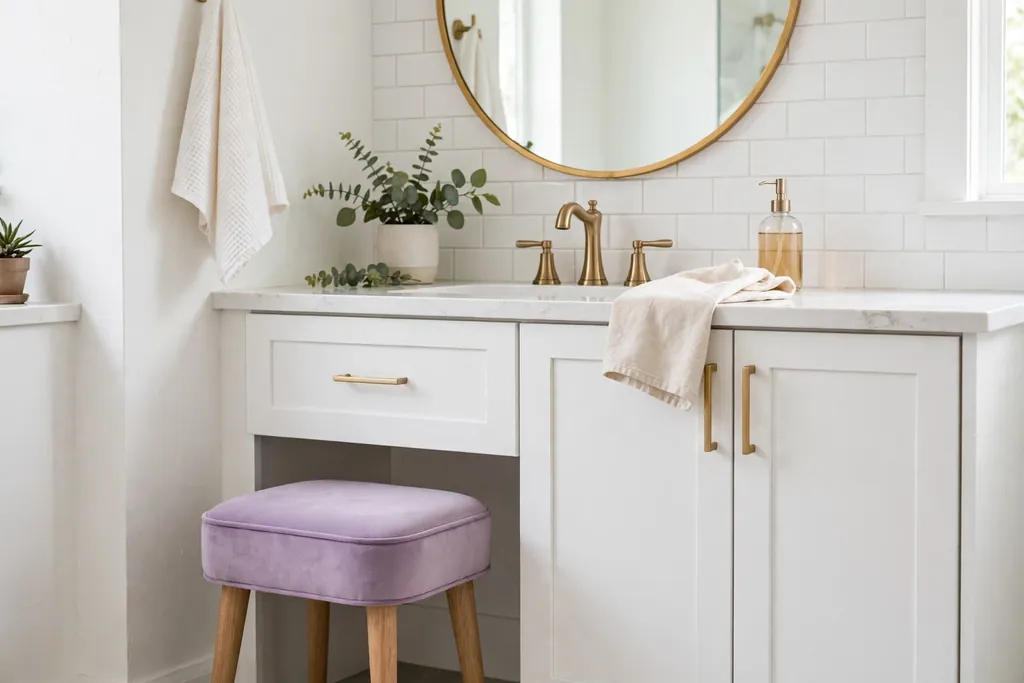
Place a small lilac upholstered stool at a vanity or dressing table in the bathroom. The stool gives a place to sit for hair and makeup routines, and the soft fabric adds a gentle color note beside hard tile and porcelain. A stool also suits a larger bathroom with a corner that otherwise stays empty.
Choose a stool with legs that cope with damp floors, and keep the fabric away from direct splashes. Use a stool with a small storage space under the seat if you need extra room for hair tools. Pair the lilac stool with white towels and a wood tray so the seating area feels like part of the room.
18. Purple Gallery Art Above the Towel Rail
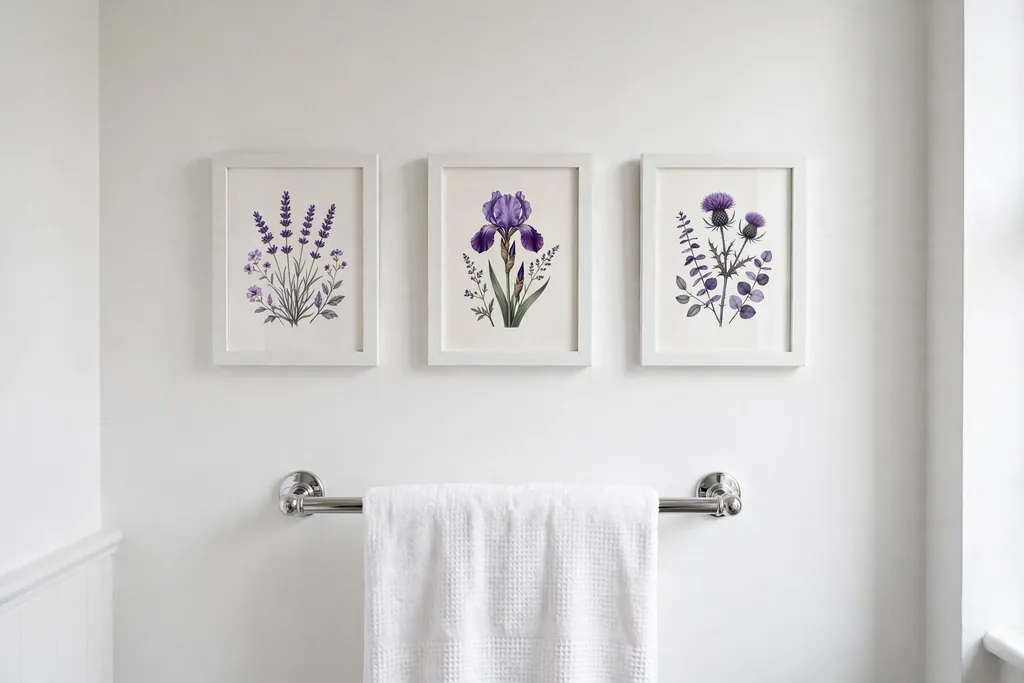
Hang a small gallery of three to five purple themed prints above the towel rail or beside the mirror. Botanical prints, abstract washes, and line drawings in lilac and plum give the bathroom personality without taking counter or floor space. A gallery suits a plain white bathroom that needs color but not a repaint.
Use frames with sealed backs or acrylic covers, and avoid hanging unprotected paper directly beside the shower, where steam can damage it over time. Keep the spacing even and the theme consistent so the group reads as one arrangement. Adhesive picture strips hold light frames well on tile and painted walls.
19. Matching Lavender Soap Tray Set
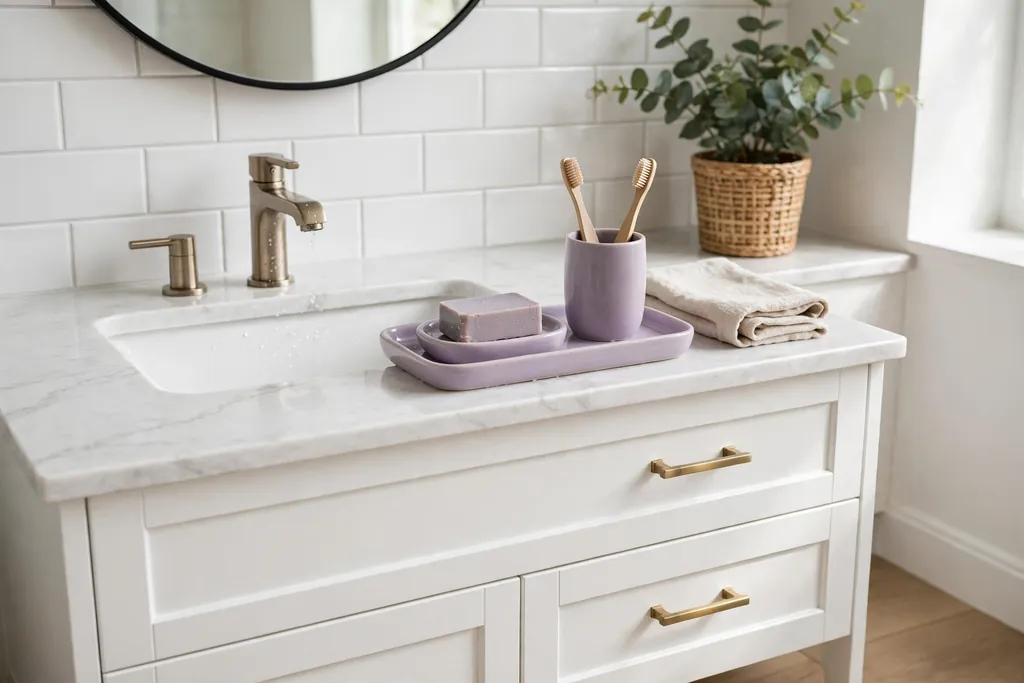
Set a matching lavender soap dish, toothbrush cup, and tray on the vanity. A small set in one color makes a plain counter look coordinated, and it keeps soap, brushes, and a small plant together in one tidy group. Ceramic or stone sets cope well with daily splashes and wipe clean easily.
Keep the set to three or four pieces so the counter does not crowd, and choose a tray that catches drips from the soap dish. Pair the lavender set with white towels and a clear glass jar for cotton pads. Replace the soap dish if it chips, since a chipped dish collects water and looks untidy fast.
20. Potted Orchid and Lavender Sprigs
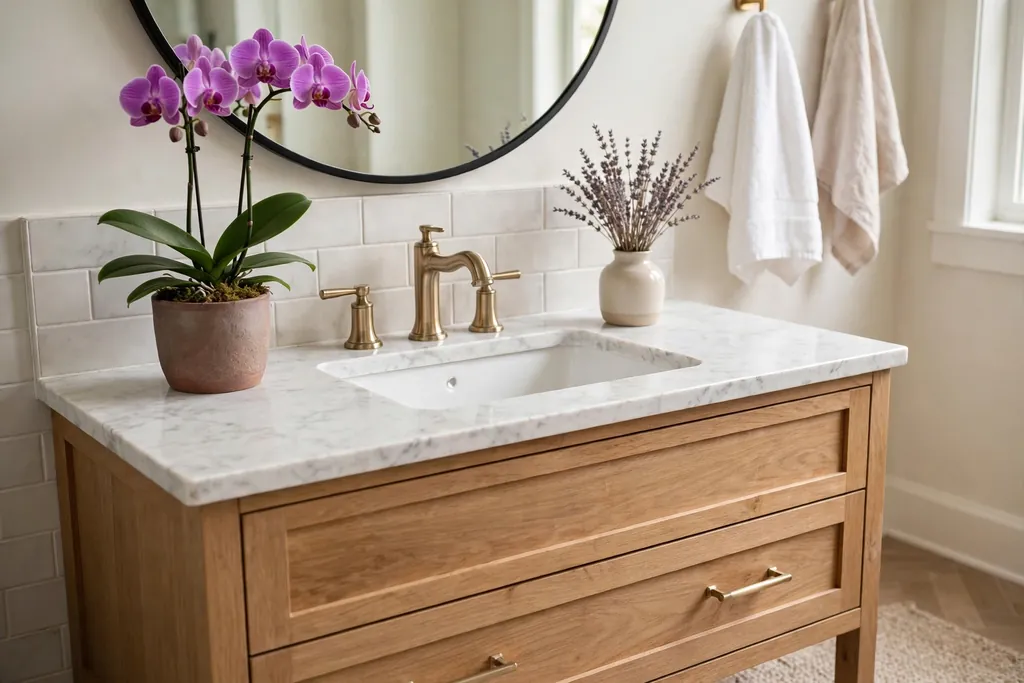
Place a potted purple orchid on the vanity and a small vase of dried lavender sprigs on a shelf. Plants add a living purple note that changes with the seasons, and they soften hard tile without paint or tile work. Orchids suit a bathroom with indirect light and humidity, while dried lavender needs no watering at all.
Use pots with drainage holes and saucers, and check the soil before watering, since bathroom air already adds moisture. If your bathroom has no window, move the orchid to a brighter room for a few days each week. One orchid and one small vase usually look better than a crowded collection in a small room.
21. Two Tone Plum and White Vanity
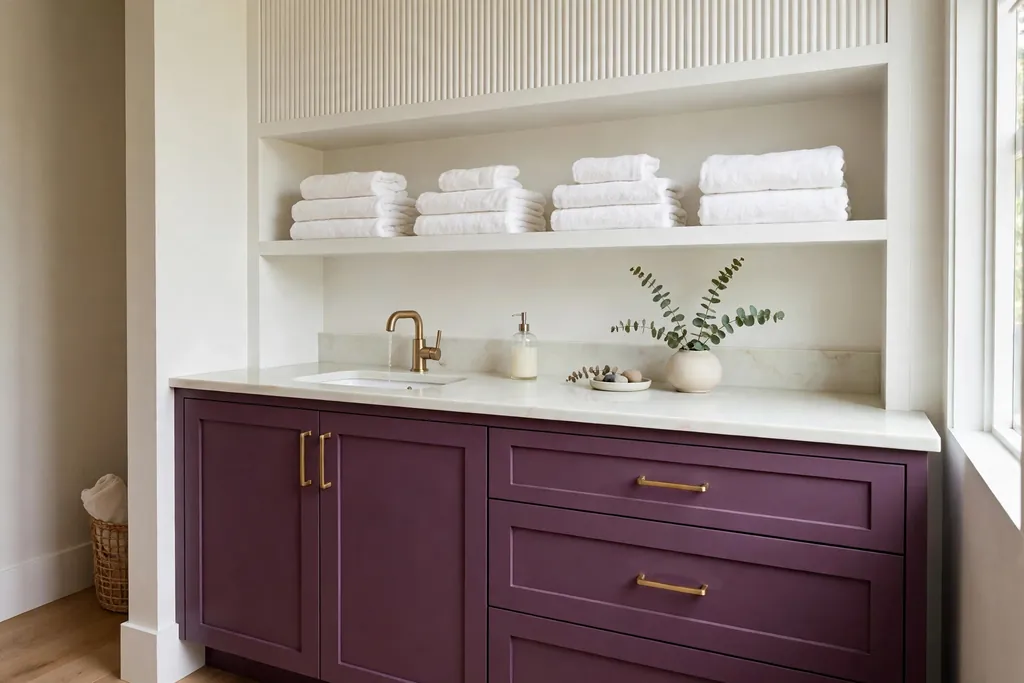
Use a two tone vanity with plum lower cabinets and a white upper cabinet or white open shelves above. The plum grounds the lower half, while the white upper half keeps the room light at eye level. This split suits a bathroom where a full plum vanity would feel too dark.
Keep the countertop pale and the faucet in brass or chrome to match the rest of the room. Use the white upper shelves for folded white towels, and keep the plum cabinets for cleaning supplies and spare toiletries. A two tone vanity also works well in a bathroom shared by two people, since each side can hold its own items.
22. Violet Tile Border Around the Mirror
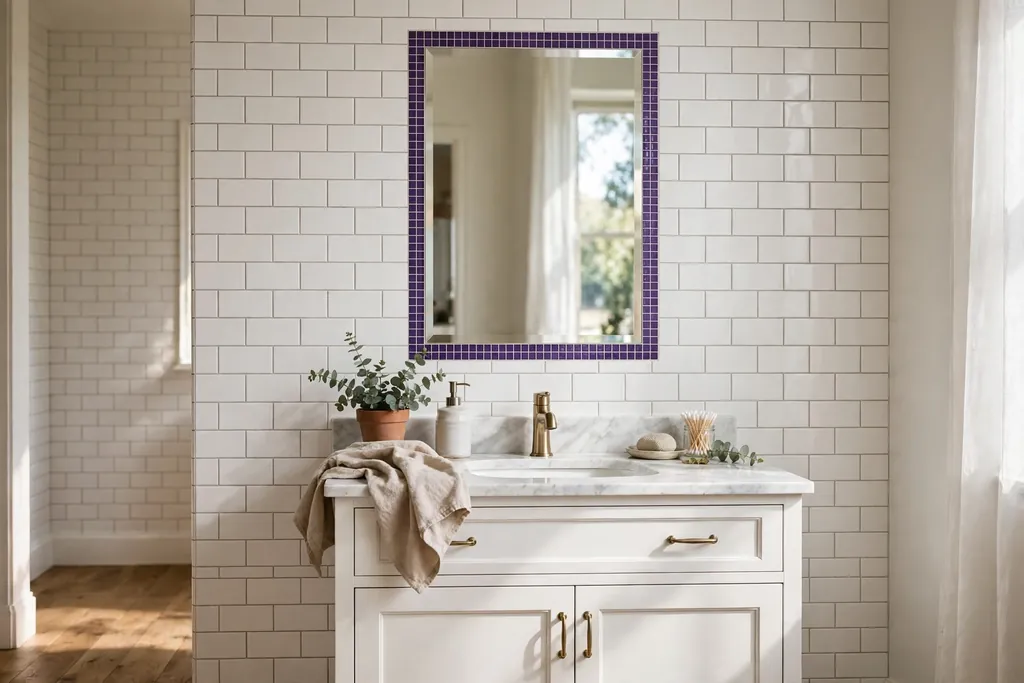
Run a border of violet tile around the mirror or along the top of the wall tile. A narrow border adds color without covering a whole wall, and it frames the mirror like a picture frame. This suits a bathroom with white wall tile that needs one clear purple note.
Use a border tile in a single violet tone for a calm look, or a mixed mosaic border for more pattern. Keep the border level and the grout lines even, since a border draws the eye and uneven lines show. Repeat the violet once in a towel or rug so the border feels part of a scheme rather than an afterthought.
23. Violet Glow LED Strip Behind the Mirror
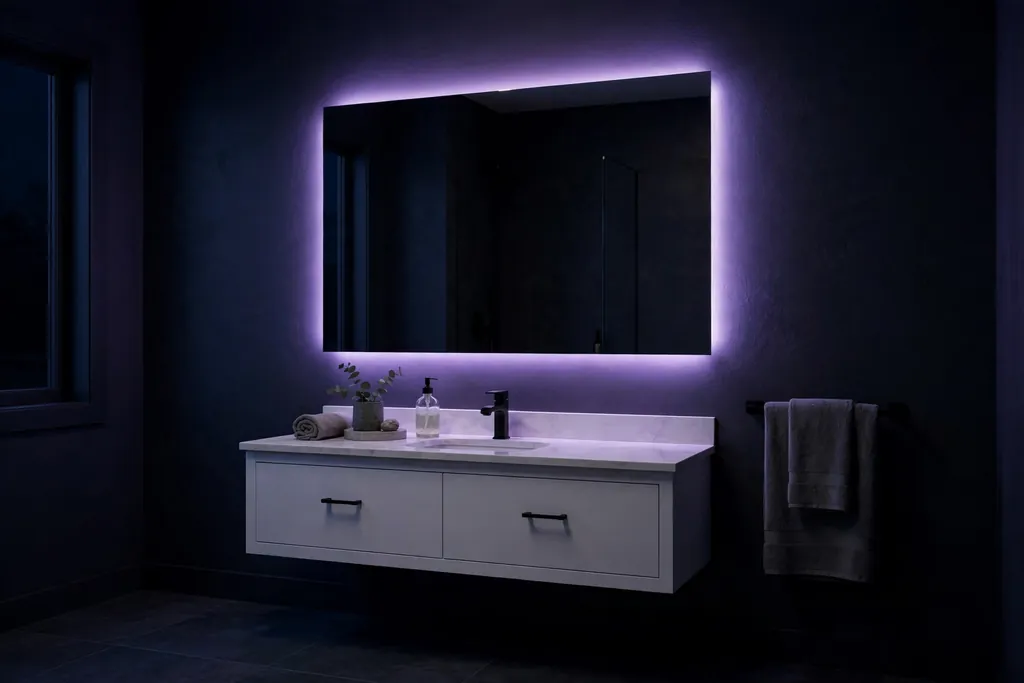
Fix a dimmable LED strip behind a wall mounted mirror for a soft violet tinted halo in the evening. The glow flatters faces, makes night trips to the bathroom easier without switching on the main light, and gives a modern feel to a plain mirror. A strip with a color setting lets you switch between violet and warm white.
Stick the strip to the back of the mirror frame, not to the wall, so you can take it with you if you move. Hide the battery pack or driver behind the frame edge, and keep all wiring clear of direct water spray. Use the violet setting only in the evening, and keep the main light white for morning routines.
24. Painted Plum Interior Door
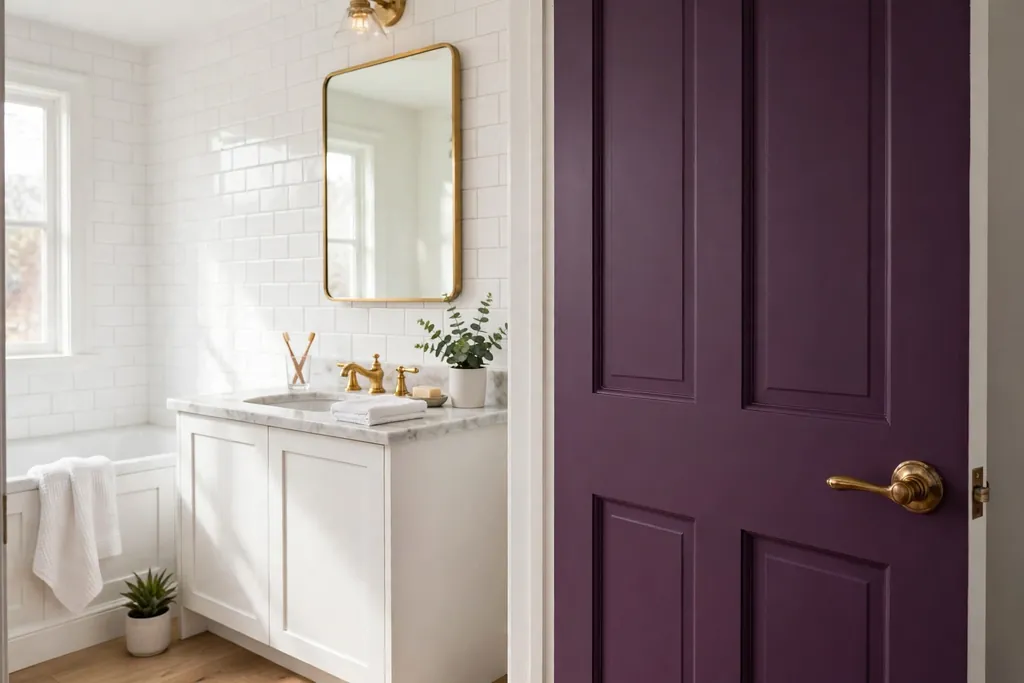
Paint the bathroom door plum on the inside face for a bold color note that costs little and changes no tile or plumbing. The door is a large surface, so a plum door reads clearly from the hallway and from inside the room. This suits a white bathroom where you want one strong purple move without painting walls.
Use a moisture resistant paint and seal the edges well, since bathroom doors face steam daily. Keep the door hardware in brass or matte black to match the scheme, and repeat the plum once inside the room in a towel or rug. If you rent, check with your landlord first and keep the original paint color noted for move out day.
25. Woven Purple Storage Baskets
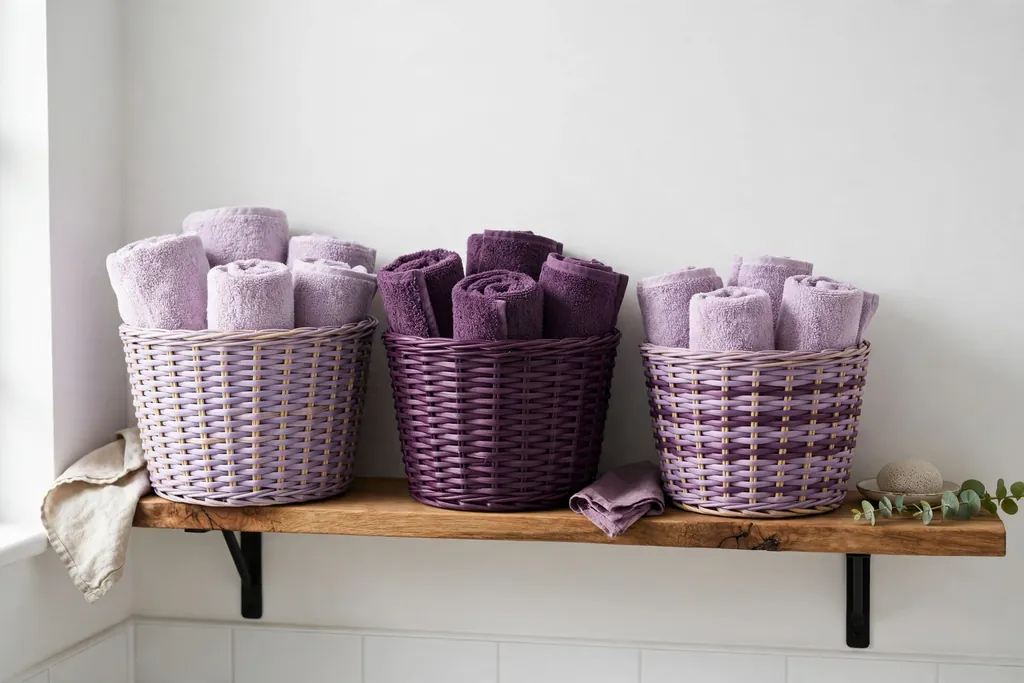
Sort toiletries and spare towels into woven baskets in lilac and plum tones. Baskets soften hard tile and porcelain while hiding the visual noise of bottles and tubes. Assign one basket per person or per job, such as hair care, skin care, and cleaning, and label the base if the baskets look alike.
Keep baskets off wet floors, setting them on a shelf or a stool rather than beside the tub, so they stay dry. Seagrass and cotton rope baskets cope well with bathroom humidity when they can dry between uses. Once a month, empty each basket and return only what you actually used, since bathroom baskets quietly collect empty bottles.
26. Purple Bath Tray for a Slow Bath
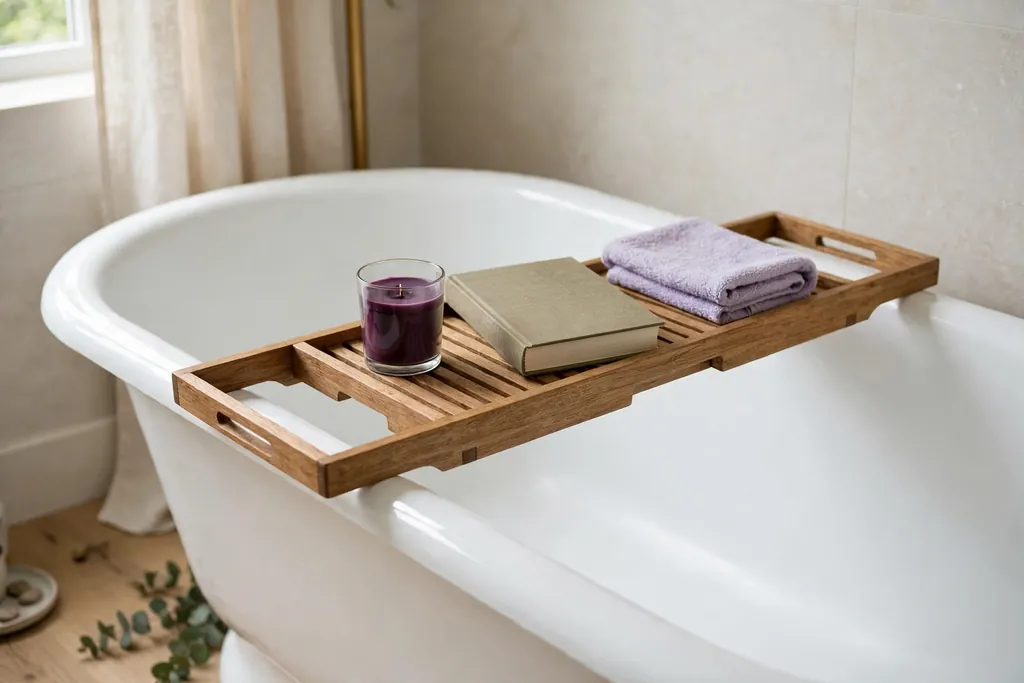
Rest a bath tray across the tub with a plum candle, a small book, and a folded lilac washcloth. A tray turns a plain tub into a place to slow down, and the purple accessories set the color scheme for the bath corner. Choose a tray that spans your tub width with extendable sides.
Keep the candle safely away from the water and never leave it burning unattended. Wood trays need drying after each use to avoid warping, while bamboo and coated metal versions cope better with steam. Store the tray upright behind the door when it is not in use so it does not become a permanent clutter spot.
27. Warm Wood Vanity With Lavender Walls
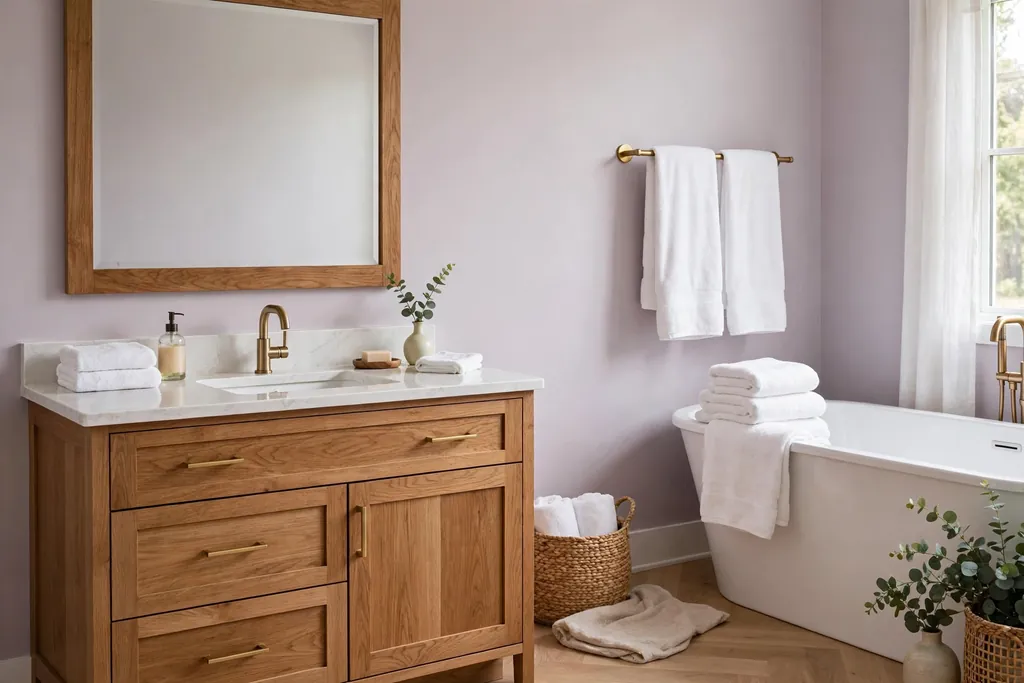
Pair a warm wood vanity with soft lavender walls for a scheme that feels natural and calm. Wood warms the cool side of lavender, while lavender keeps the wood from looking heavy. This pairing suits a bathroom with a pale floor, a white tub, and plants, where the room should feel relaxed rather than formal.
Use wood in a mid oak or walnut tone for the vanity, a stool, and a tray, and keep the other wood tones close so they read as one material. Add white towels and one plum towel for depth, and use brass or brushed nickel fixtures to match the warmth of the wood. Keep the wood sealed against splashes near the sink.
28. Gold Fixtures With Deep Plum Walls
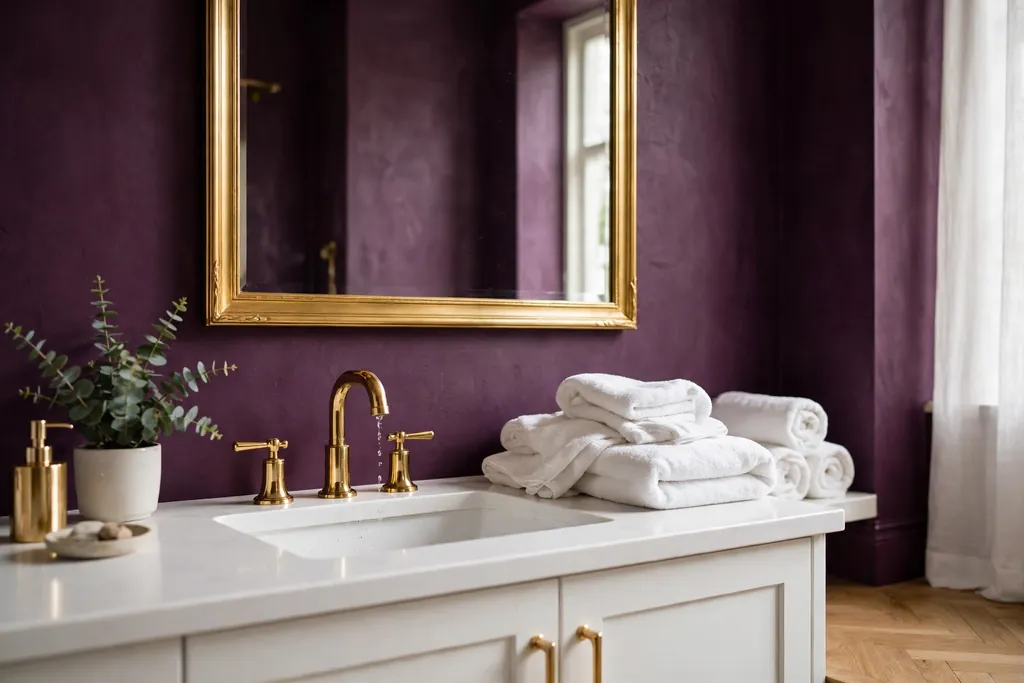
Pair gold faucets, a gold framed mirror, and gold cabinet pulls with deep plum walls for a rich, warm scheme. Gold lights up plum in a way chrome does not, and the pairing suits a larger bathroom or a guest bathroom where you want a dressed up feel. Keep the ceiling and countertop white so the dark walls stay balanced.
Repeat gold in three places, such as the faucet, mirror frame, and towel rail, and keep the rest of the metals consistent. Use warm white bulbs so the gold reads warm rather than yellow, and add soft white towels to soften the dark walls. If gold feels like a big step, start with gold pulls on a plum vanity first.
29. Matte Black Fixtures With Lilac Grey
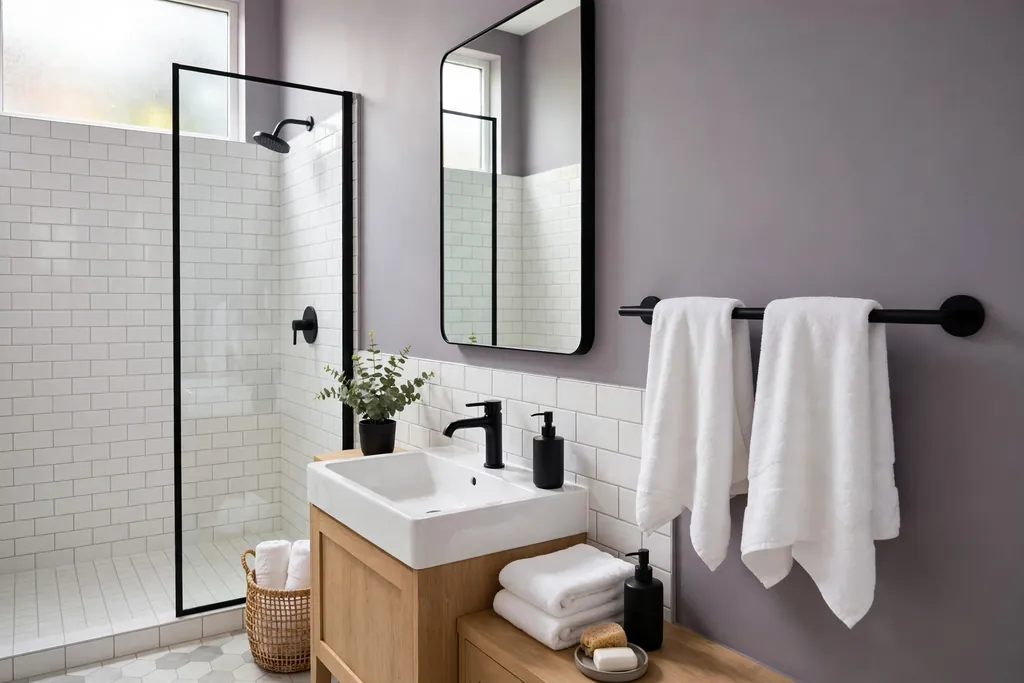
Combine matte black faucets, towel rails, and cabinet knobs with lilac grey walls for a modern, calm scheme. Lilac grey, a pale purple with a grey cast, reads as lavender in daylight and as soft grey in the evening, while black fixtures give it a crisp edge. This pairing suits a bathroom with white tile and a simple vanity.
Keep the black finish consistent across all the pieces you change, and save every original screw and fixture if you rent. Use a pale rug and white towels so the black does not darken the room, and add one deeper plum towel for a color note. Matte black also hides water marks better than polished chrome in hard water areas.
30. One Surface Rule for a Small Purple Bathroom
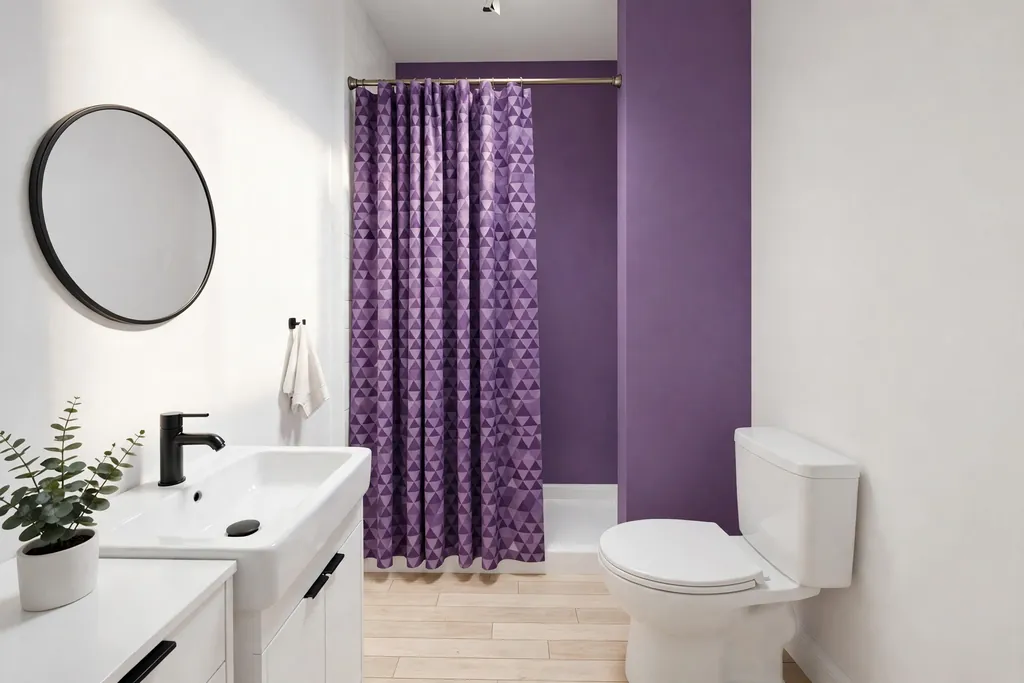
In a small bathroom, put purple on one surface only, such as the shower curtain, one wall, or the towels, and keep everything else white or pale wood. One surface gives a clear color identity without shrinking the room, and it leaves the budget for one good change rather than many small ones. This rule suits renters and first time purple users.
Choose the surface that is largest or most visible: the shower curtain in a tub bathroom, the vanity in a powder room, or the towels in a bathroom you cannot paint. Repeat the same purple once in a small accessory, then stop. If the room still feels plain, add a plant rather than a second purple surface.
31. Vintage Style Purple Rug
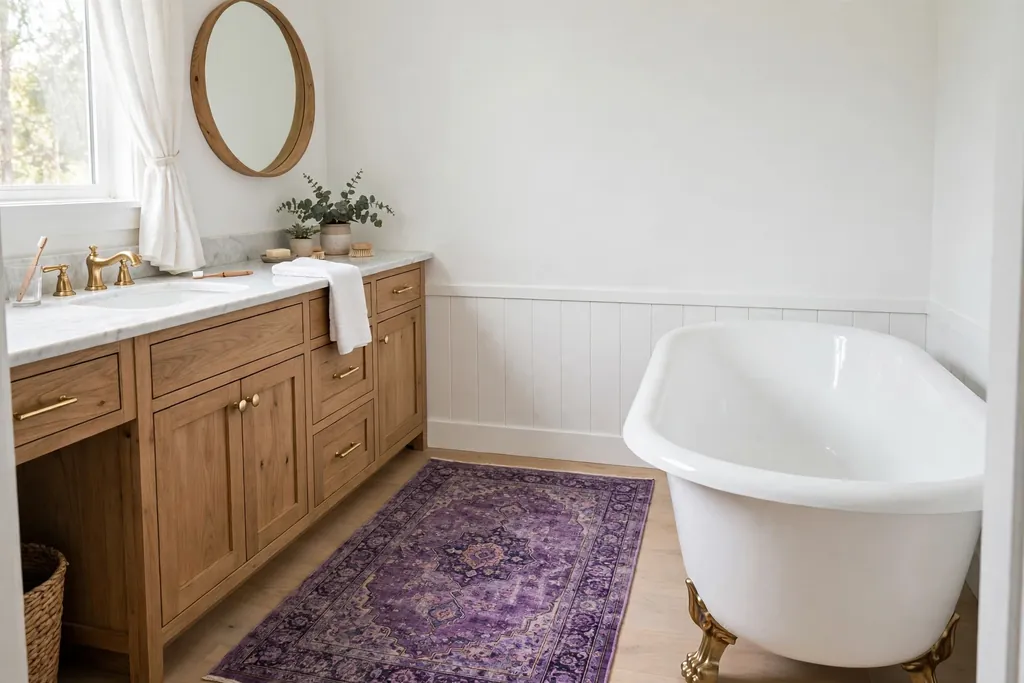
Lay a vintage style rug with a purple pattern in front of the vanity or beside the tub. A patterned rug in plum, lilac, and cream adds age and softness to a room full of new tile, and it feels warm underfoot. A low pile rug is easier to clean and safer in a bathroom than a thick pile rug.
Choose a washable rug if possible, and lift it to dry the floor after showers. Keep the walls plain when the rug is patterned, and pick one purple from the rug for a towel so the scheme connects. A vintage rug also suits a bathroom with a wood vanity and brass fixtures, where the pattern feels at home.
32. Purple Glass Bottles on a Vanity Tray
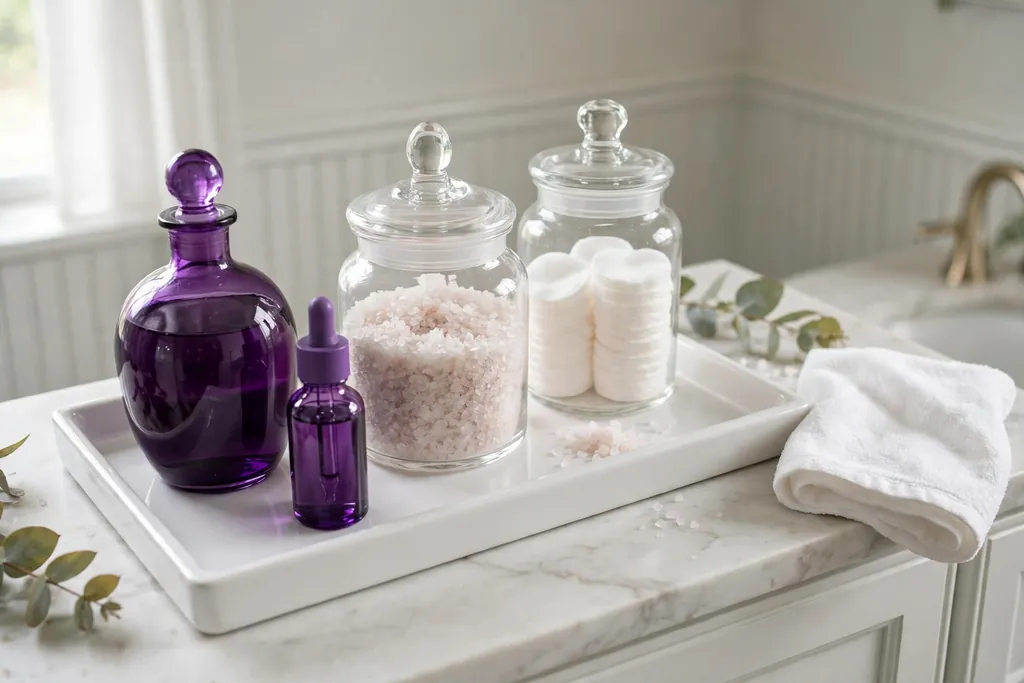
Group purple glass bottles and apothecary jars on a small tray on the vanity for a collected, old fashioned look. Tinted glass in lilac and violet holds bath salts, cotton pads, and hair ties in view while keeping them tidy. A tray keeps the group together and catches drips from wet hands.
Use bottles with lids or stoppers for anything that should stay dry, and keep the tray away from the sink edge so drips fall into the basin. Pair the purple glass with white towels and a clear soap dispenser so the tray does not crowd the counter. Refill the bottles from larger containers stored in a cabinet.
33. Freestanding Tub Styling Corner
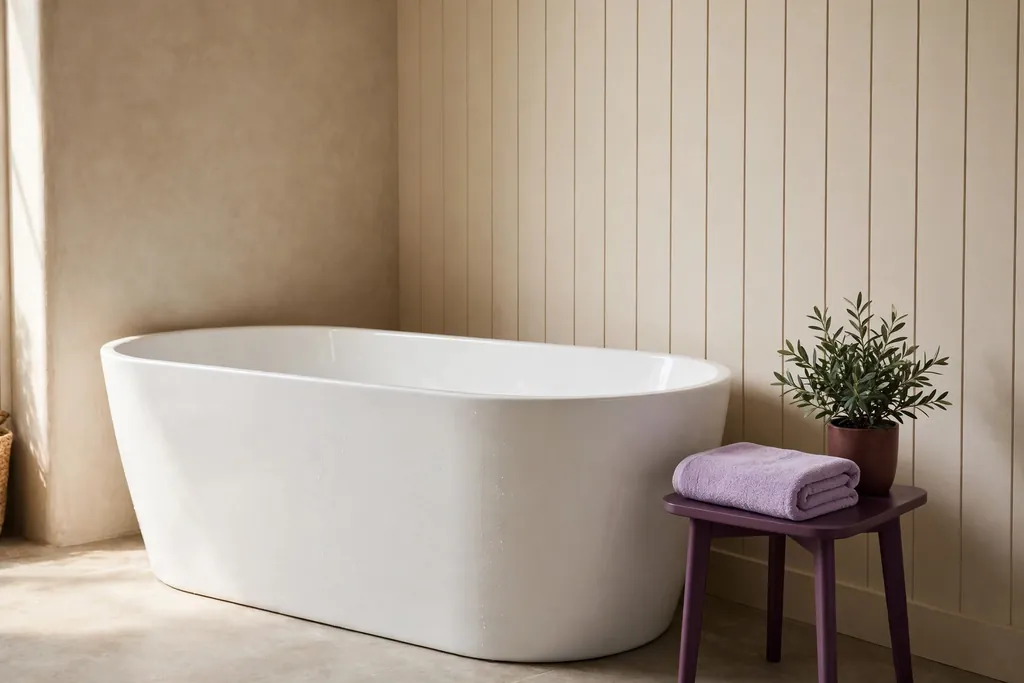
Style the corner beside a freestanding tub with a small plum side table, a folded lilac towel, and a potted plant. The side table holds a candle, a book, and a cup within reach of the tub, while the towel and plant soften the corner. This corner turns a plain tub area into a place to slow down without changing any plumbing.
Choose a side table with a sealed top that copes with splashes, and keep the plant in a pot with a saucer so water does not mark the table. Use a stool instead of a table if floor space is tight, and keep the walkway to the tub clear. A plum table with white towels repeats the scheme from the rest of the room in miniature.
Conclusion
Purple works in a bathroom when you give it a clear job and a calm supporting cast. Start with one depth you like, put the deepest tone on one surface, and repeat it in two or three places with white, wood, gold, or black beside it. Small changes such as towels, a shower curtain, and a rug can set the scheme before you paint or retile, and they are easy to change if your taste shifts. Save this list on Pinterest, pick the idea that fits your room and budget first, and add more purple only where the room still feels unfinished.
FAQs
What is the best purple shade for a small bathroom?
A soft lilac or lilac grey works best in a small bathroom, since pale purples keep the room light and do not shrink the space visually. Put the purple on one surface, such as the shower curtain or one wall, and keep the ceiling, trim, and other walls white. Add one deeper plum towel for contrast, rather than painting every wall dark.
Does purple go with white tile in a bathroom?
Yes, purple pairs well with white tile, because white gives purple a clean background and keeps the room fresh. Lilac walls with white tile feel soft, plum vanities with white tile feel rich, and violet shower tile with white wall tile feels crisp. Keep the grout pale for a fresh look, or mid grey if you want each tile edge to stand out.
What colors go with a purple bathroom?
White, pale wood, brass or gold, matte black, and soft grey all pair well with purple. Warm wood softens lavender, gold warms deep plum, matte black gives lilac grey a modern edge, and white keeps every purple depth fresh. Avoid adding a second strong color, such as bright yellow or red, at the same time, since two strong colors can fight for attention.
How can I add purple to a bathroom without painting?
Use a patterned purple shower curtain, layered purple towels, a lavender bath rug, purple jars or baskets, and a potted orchid. These swaps set the scheme without paint or tile work, and they are easy to change later. Start with the shower curtain or towels, since they are the largest soft surfaces, then add one small accessory to repeat the color.
Is a plum vanity too dark for a bathroom?
A plum vanity works well when the walls, countertop, and ceiling stay pale, since the light surfaces balance the dark cabinet. It suits a bathroom with good light or a large mirror, and brass pulls warm the plum further. If the room is small or dim, use plum on a smaller vanity only, or use lilac for the cabinet and plum for towels instead.
How do I keep a purple bathroom from looking dated?
Keep the shapes simple and the purple tones limited to one or two depths, and pair them with current finishes such as matte black, brass, or warm wood. Avoid covering every surface in the same purple, and leave plenty of white space on walls, ceilings, and countertops. Update towels and a shower curtain when they fade, since faded purple is the detail that most often makes a scheme look tired.