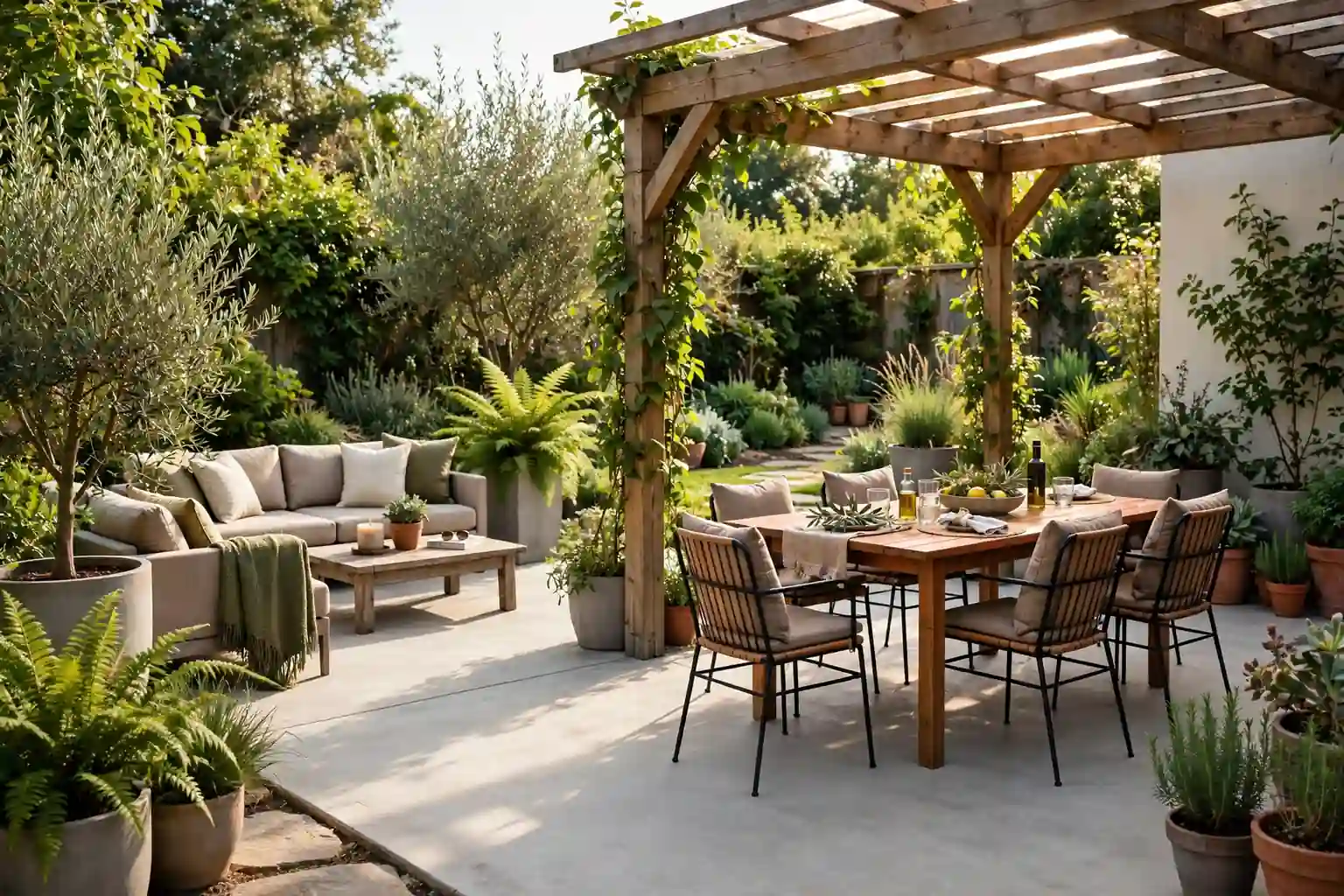
A concrete patio is easy to dismiss as plain, until you see what finish, shape, and furniture can do with it. Concrete can look like stone, wood, or tile, it can curve around a garden, step down a slope, or hold a fire pit, a kitchen, and a quiet coffee corner. These 32 concrete patio ideas cover finishes first, then layouts and uses, so you can pick a surface you like and a setup that fits how you spend time outside. Start with drainage, sun, and access from the house, then choose one finish and one main use, and let planting and light soften the rest.
Key Takeaways
- Pick the finish first: brushed, stamped, stained, polished, or exposed aggregate sets the tone for furniture and planting.
- Plan drainage and a slight fall away from the house before you pick a pattern, since standing water spoils even a good-looking slab.
- Give the patio a clear job: dining, lounging, cooking, or quiet sitting, and size furniture to that job, not to the whole slab.
- Add shade, planting, and warm light early, since bare concrete can feel hard and hot without them.
- Keep joints, edges, and steps in mind: they control cracks, grip, and how the patio meets lawn, gravel, or beds.
- Seal and clean as the finish maker directs, and recheck joints and edges each spring after frost and heavy rain.
1. Brushed Concrete with Saw-Cut Joints
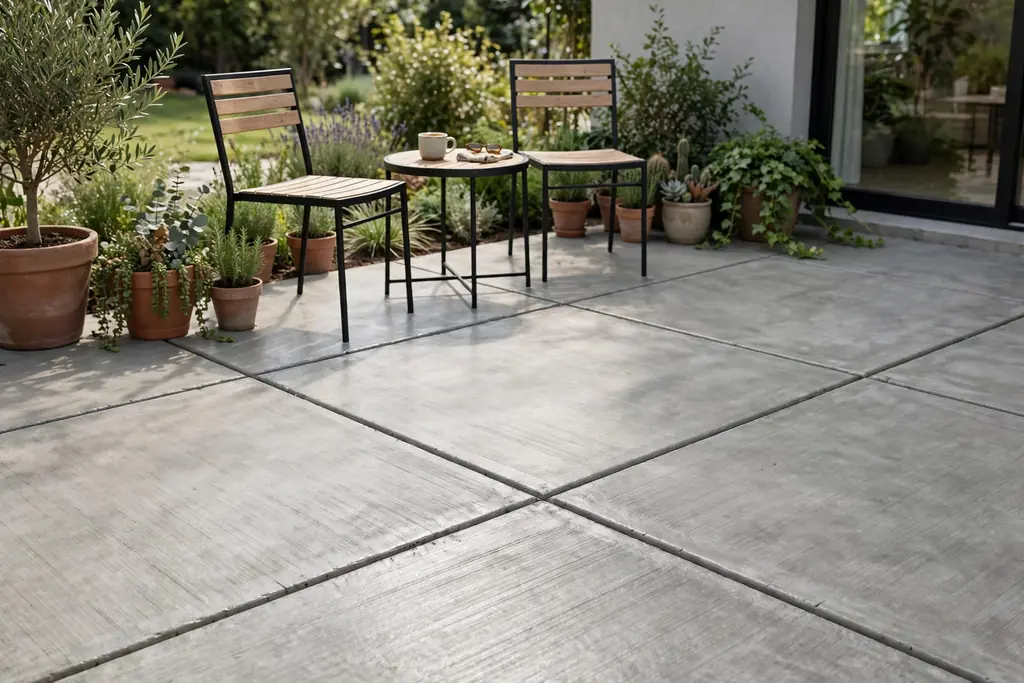
A brushed finish is the plain, honest starting point for a concrete patio, and saw-cut joints give it order. The light texture from brushing gives grip underfoot, while straight joints break a large slab into neat panels that help control cracking. Keep the panels in a size that suits the patio, and line a joint up with a door edge or a step so the pattern feels planned rather than random.
Sweep joints clear and seal the surface as the finish maker directs, since dirt and moss settle in joints first. This finish suits family patios, paths, and spots where chairs scrape daily, because marks blend in and repairs are simple. Pair it with pots and a rug to soften the grey, and it stays practical year after year.
2. Stamped Flagstone Pattern
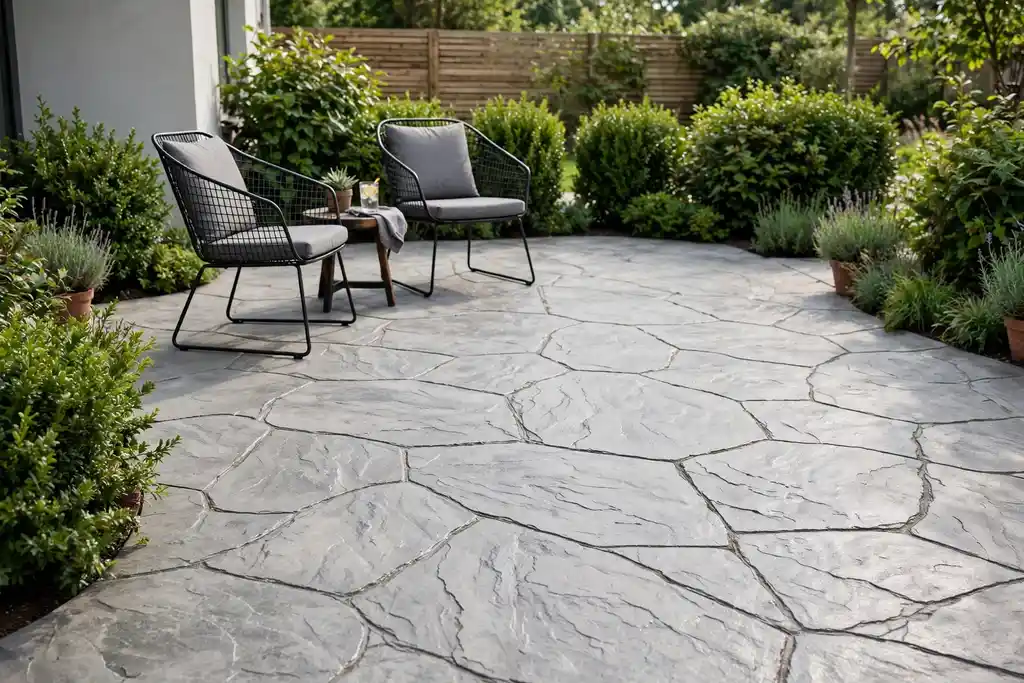
Stamped concrete pressed with a flagstone pattern gives the look of large stones without the gaps and uneven edges of real stone. The pattern works best in soft grey or sand tones, with a slightly varied color so no two stones look identical. Keep the stone size in scale with the patio: large stones suit a wide patio, smaller ones suit a path or a compact seating area.
A stamped surface needs a good sealer to protect the pattern and color, and it can be slippery when wet, so ask about a grip additive for shaded or poolside spots. Clean it with a gentle wash rather than harsh pressure washing close up, which can wear the sealer. Add simple furniture so the stone pattern stays the main feature.
3. Warm Stained Concrete in Terracotta
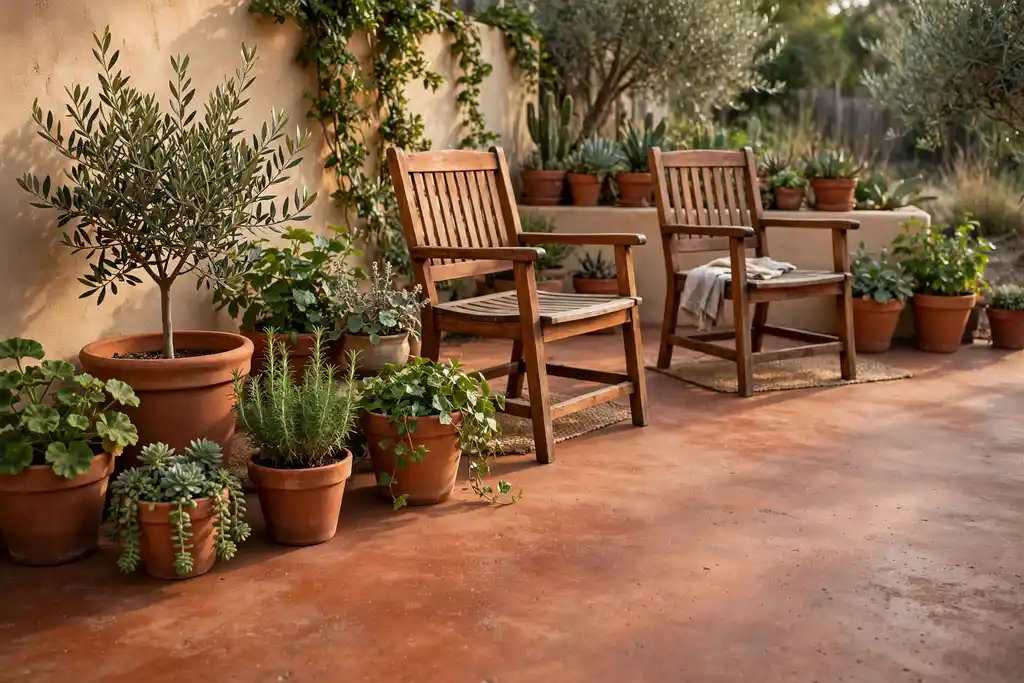
Stain gives grey concrete a warm terracotta tone that suits brick houses, clay pots, and Mediterranean planting. Acid or water based stains soak in rather than sitting on top, so the color varies gently across the slab, much like natural stone. Test the stain on a small hidden area first, since the starting concrete color changes the final shade.
Seal stained concrete to lock in color and protect it from spills, especially near dining and grill areas. Reapply sealer when water stops beading, and wipe up oil and food spills promptly. Terracotta pairs well with wooden chairs, olive trees in pots, and green shrubs that cool the warm tone.
4. Exposed Aggregate Finish
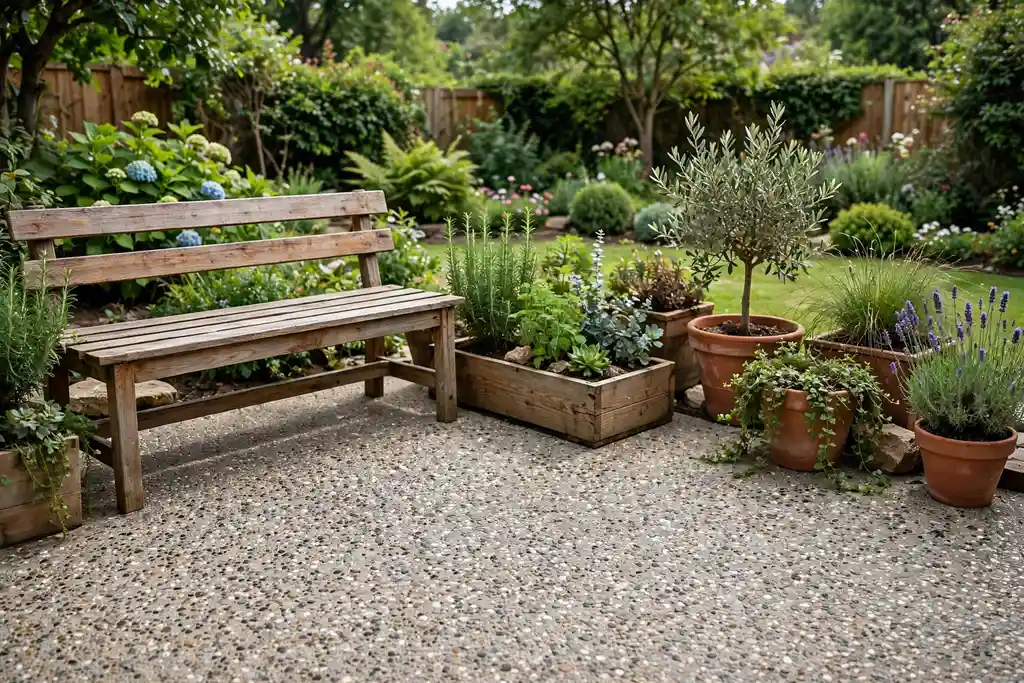
Exposed aggregate shows small stones in the concrete surface, giving texture, grip, and a speckled look that hides dirt well. It suits patios near gardens, because the stone tones echo gravel paths and rock edges. Choose a stone mix that suits your house color, and keep the surface level enough for chairs and a table to sit steady.
This finish is hard wearing and low fuss, but it can feel rough under bare feet, so keep a rug or smooth stepping area near loungers if you walk barefoot. Wash it down now and then to clear leaves from the texture, and seal it if the maker advises it for stain resistance. It is a strong choice for a patio used daily.
5. Large Slabs with Grass Joints
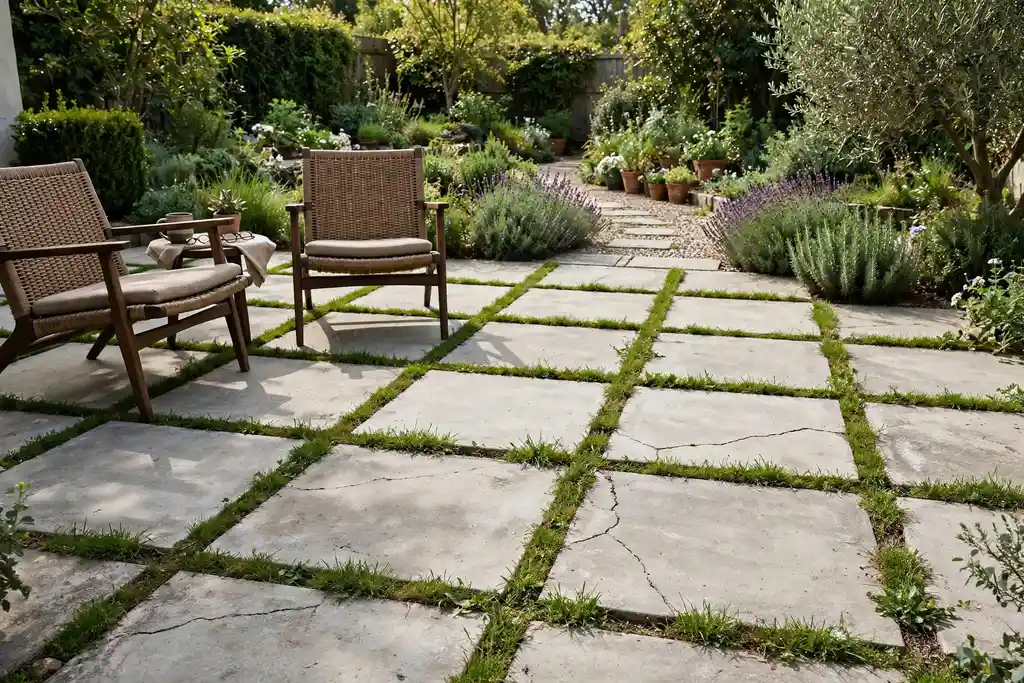
Large concrete slabs laid with grass or ground cover in the joints soften a patio and help rain soak in between slabs. The grass strips break up a big paved area, so the patio reads more like a garden room than a car park. Keep slab sizes even and joints wide enough for grass to grow, usually a few inches, and choose a tough grass or ground cover for your light and foot traffic.
Mow or trim the joints with the lawn, and edge them so grass does not creep over the slabs. This layout suits level ground and informal gardens, but it needs more upkeep than a solid slab, since joints need weeding and watering in dry spells. Place furniture on the slabs themselves, not across a joint, so chairs stay level.
6. Polished Concrete for a Smooth Look
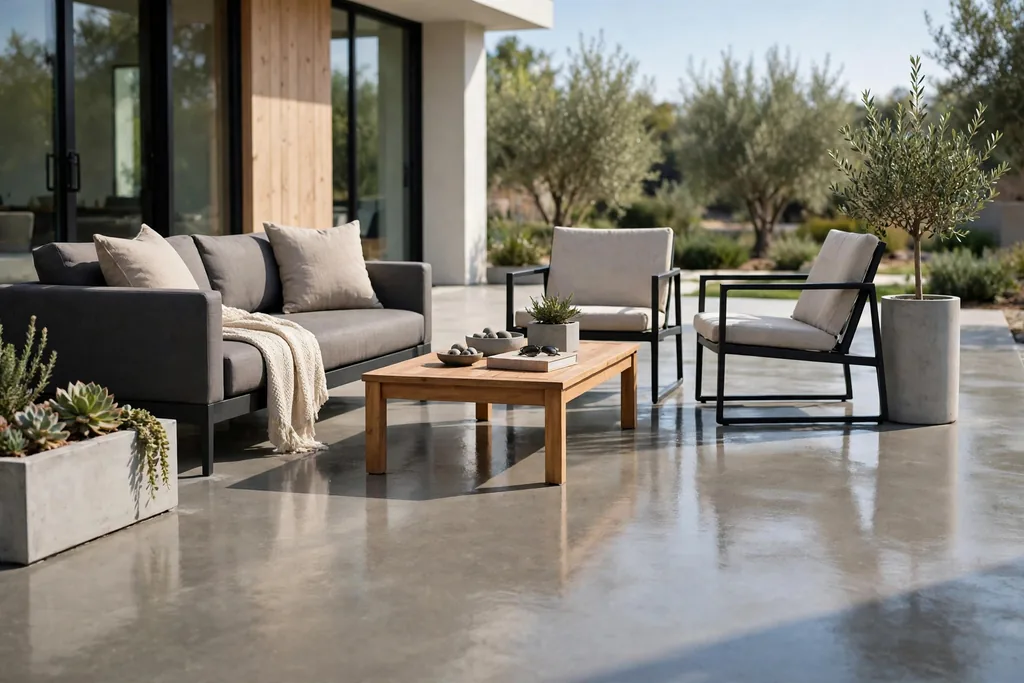
Polished concrete gives a smooth, slightly reflective surface that suits modern houses and minimal furniture. The clean look makes a small patio feel larger, because there is no pattern to break up the space. Keep the color simple, pale grey or warm grey, and let one strong piece of furniture or one large planter carry the design.
Polished concrete can be slippery when wet and shows dust and footprints more than textured finishes, so it suits covered patios or dry climates best, or spots with a grip treatment. Clean it with a soft mop and a mild cleaner, and avoid dragging heavy furniture across it. A rug under the seating area adds warmth without hiding the whole surface.
7. Charcoal Concrete with a Pale Border
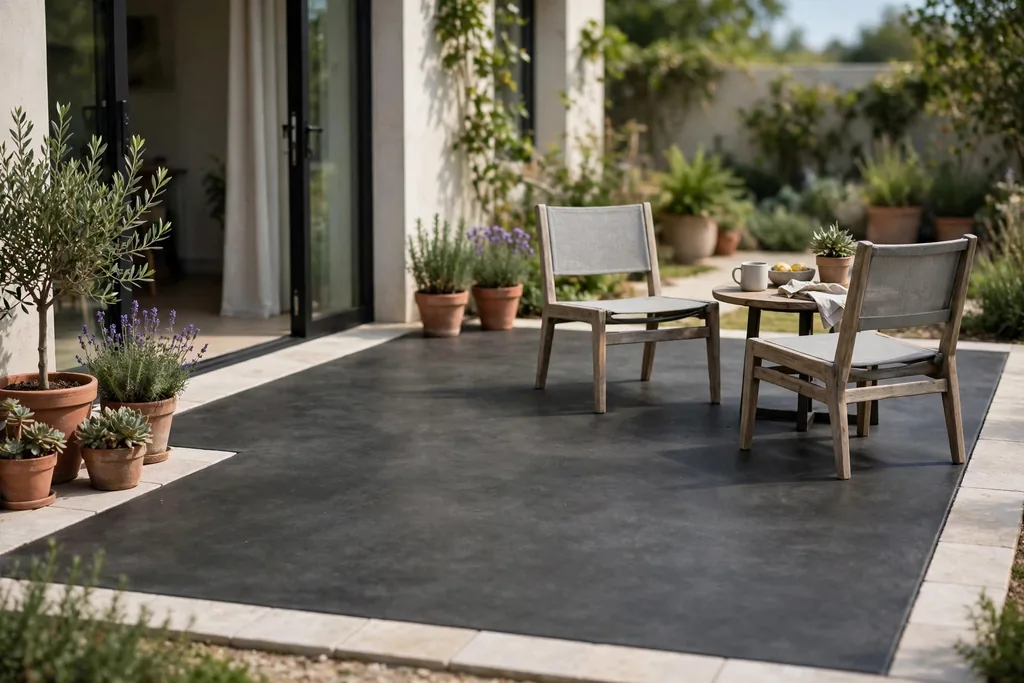
A dark charcoal slab with a pale border band gives a crisp, modern frame to a patio. The border can be a different concrete tone, pale stone, or a lighter stain, laid as a band around the edge or around the seating zone. The contrast marks the patio edge clearly, which helps at dusk and where the patio meets lawn.
Dark concrete absorbs heat in strong sun, so this idea suits shaded patios, cooler climates, or spots used mainly in the evening. Keep the border line straight and even, since any wobble shows against the dark field. Light furniture and green planting stand out well against charcoal, so keep both simple and let the frame do the work.
8. Wood-Plank Stamped Concrete
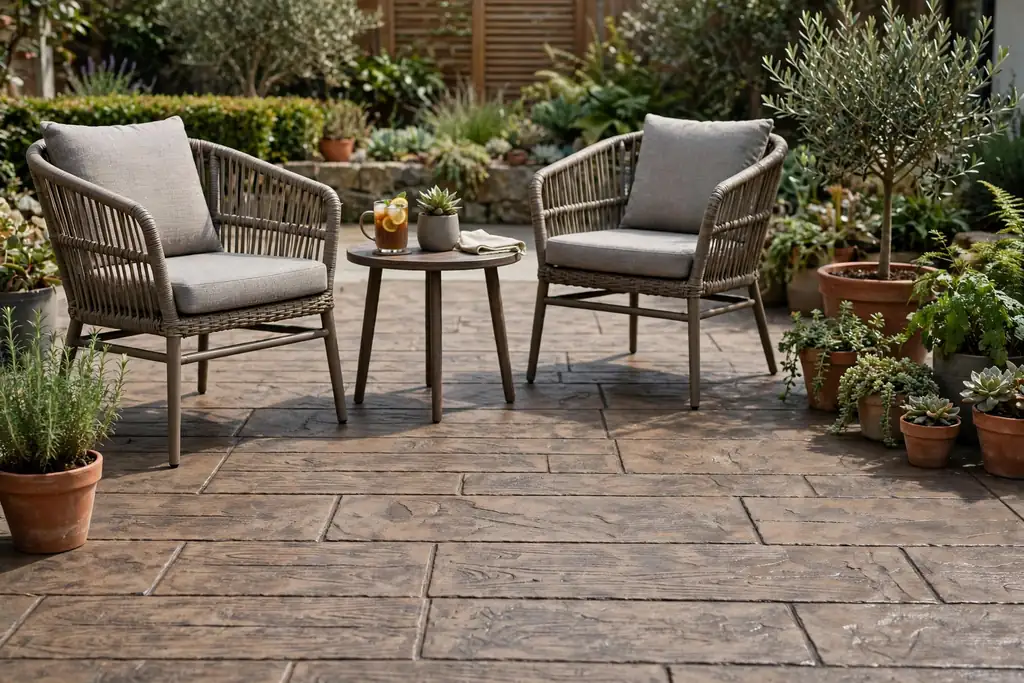
Wood-plank stamped concrete gives the warmth of a wooden deck with the solid, low maintenance base of concrete. The plank pattern runs in long lines, so lay the planks toward the view or toward the garden to draw the eye outward. A warm brown grey tone suits wooden furniture and garden planting, and the joints between planks read as shadow lines.
Seal the surface to protect the pattern, and add a grip additive if the patio stays damp under trees. Unlike real wood, this surface needs no sanding or oiling of boards, but it can fade in strong sun, so reapply sealer on the maker’s schedule. It suits patios where a deck would rot or need constant care, such as damp or shaded gardens.
9. Curved Freeform Patio Shape
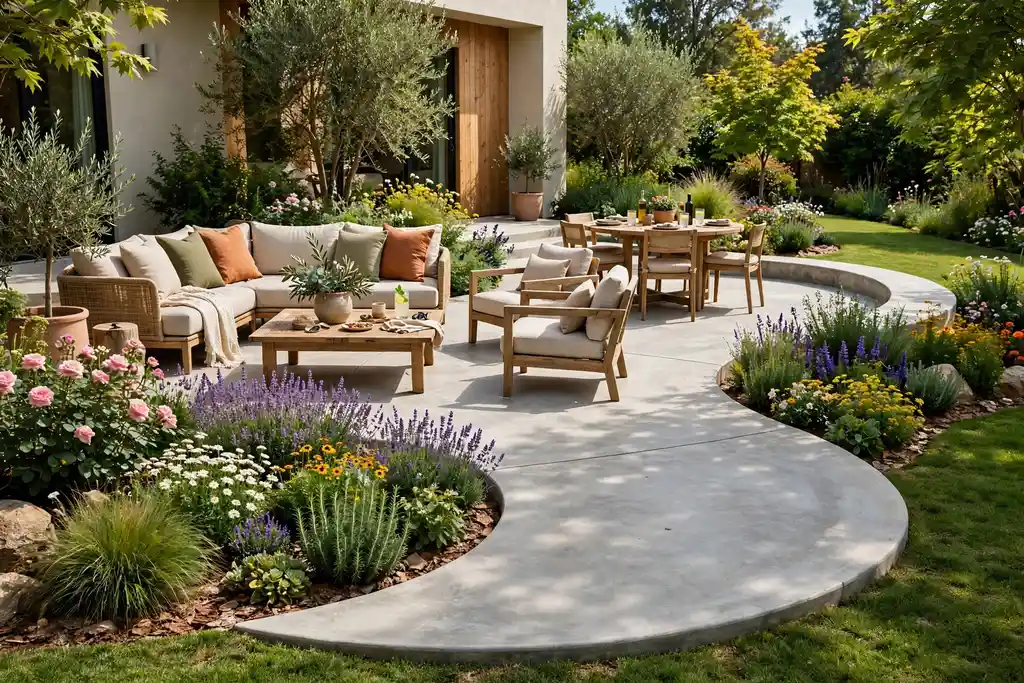
A curved patio softens a rectangular garden and flows around trees, beds, and lawn instead of cutting across them. Curves suit informal gardens, because furniture can sit in a bay while planting fills the curves at the edges. Mark the curve on the ground with a hose or rope first, walk it, and check that chairs, a table, and a path all fit before any concrete is poured.
Curved edges need careful edging to stay neat, so use a flexible edge or a stone border that follows the line. Keep the curve gentle: tight bends waste space and make mowing awkward. Plant low shrubs and grasses along the outer curve to blur the edge between patio and garden.
10. Stepped Two-Level Patio
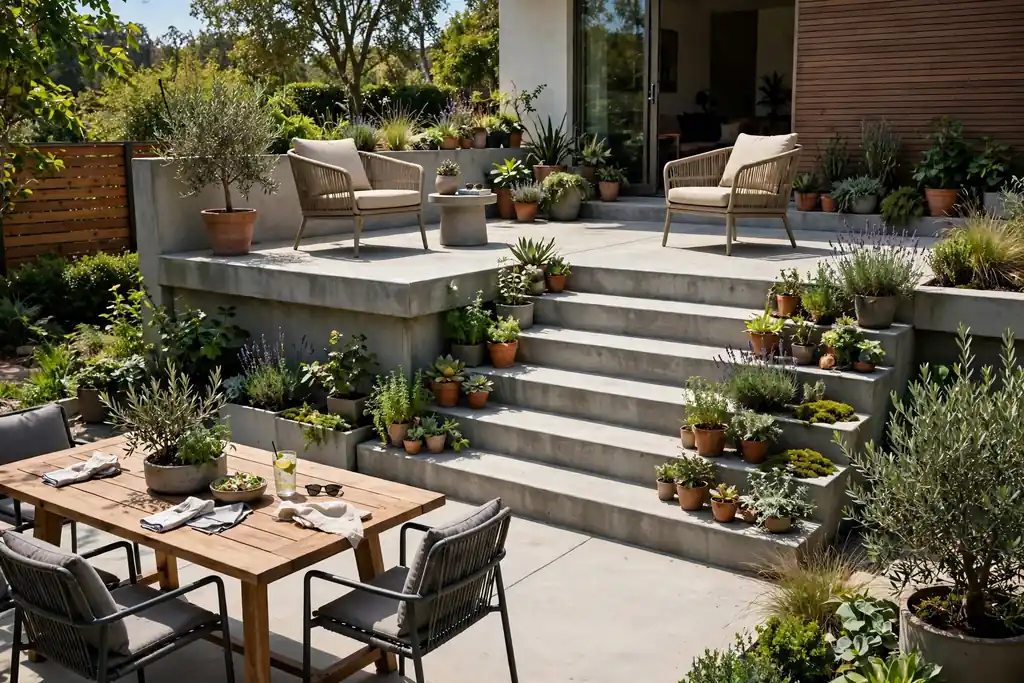
A two-level patio suits a sloping garden or a house with a raised door, giving dining on one level and lounging on another. Wide, low steps between levels are safer and easier to carry food across than narrow, steep ones, and a landing at the top and bottom of the steps gives room to pause. Put the level you use most nearest the house door, so daily trips stay short.
For layout ideas on working with levels, these tiered garden ideas show how to give each level a clear job. Keep furniture off the steps themselves, add a handhold or a low wall beside steps if the drop is high, and light the step edges for evening use. Two levels also let you use sun and shade at different times of day.
11. Round Fire Pit Patio
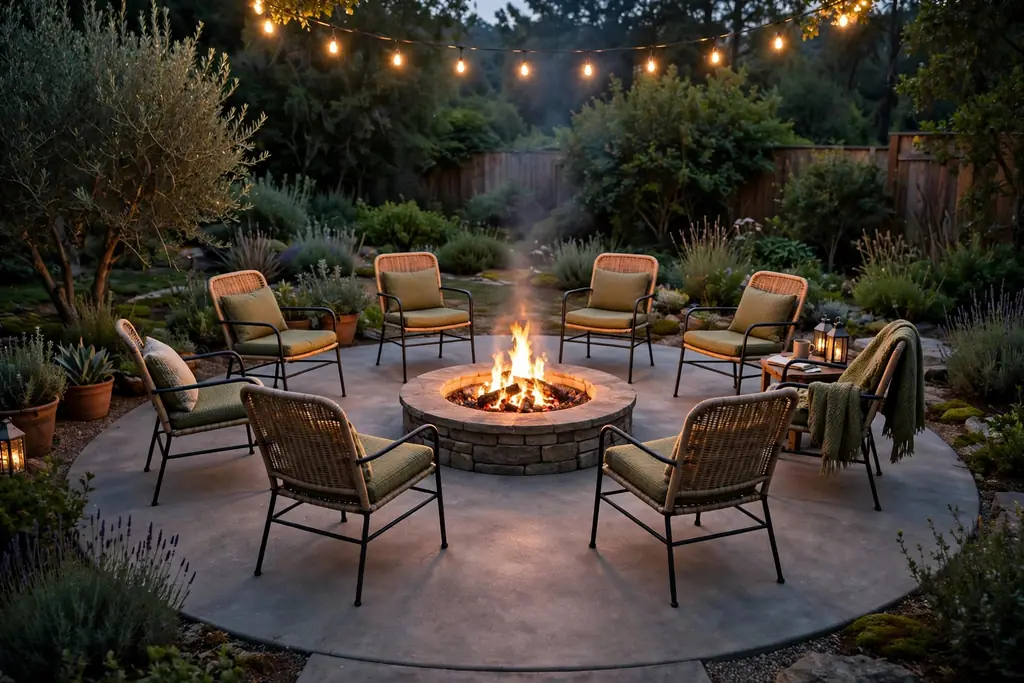
A round concrete patio built around a fire pit makes the fire the natural center of the evening. A circular slab, or a circle marked in the concrete pattern, tells you where chairs go, and it keeps the fire at a safe distance from every seat. Use a fire bowl or a built fire pit rated for outdoor use, and keep it away from overhanging trees, cushions, and low roofs.
Check local rules before you burn wood, and keep a clear, non-slip route to the house for carrying drinks and blankets. Store firewood away from the pit, and choose chairs that are easy to pull in and out of the circle. In the daytime the same circle works as a plain seating area, so the patio earns its space twice over.
12. Pergola-Covered Dining Patio
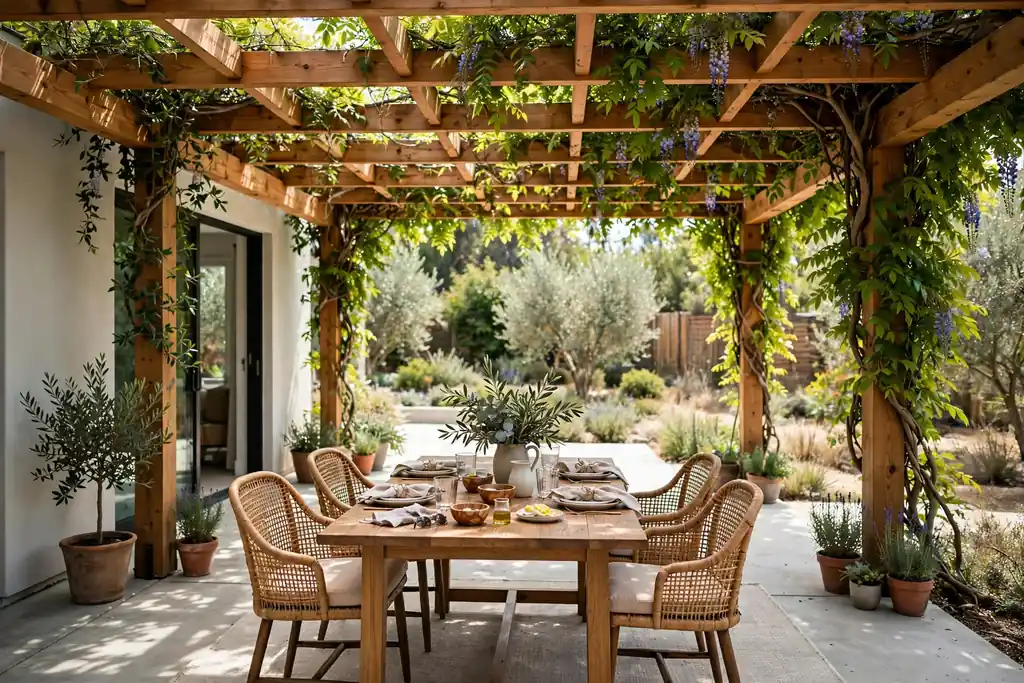
A pergola over a concrete dining patio gives dappled shade and a clear dining zone without closing the space in. Train climbers over the top for summer shade, or leave the beams open and add a shade cloth in hot months. Size the pergola to the table, not just the patio, so every chair sits in shade at mealtimes and no chair leg lands on a post base.
Fix the pergola firmly, since wind loads on a roof frame are higher than they look, and check that it does not block gutters or upstairs windows. String lights along the beams give evening dining a warm glow without new wiring. Keep the concrete under the pergola easy to sweep, since leaves and flowers from climbers will fall there.
13. Outdoor Kitchen Patio
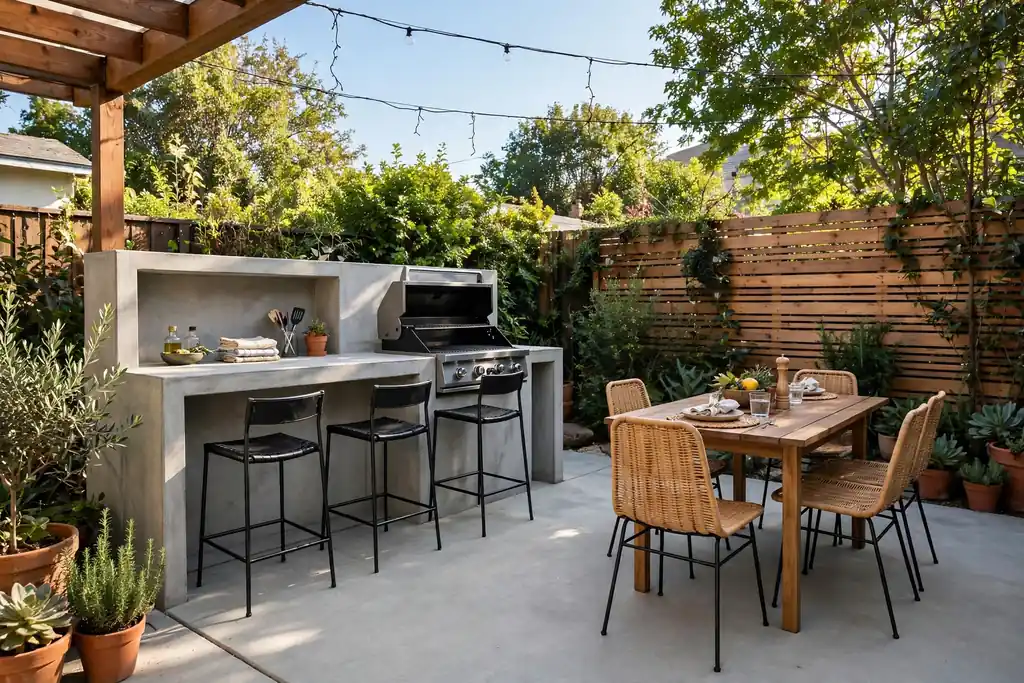
An outdoor kitchen patio puts the grill, counter, and dining table on one solid, easy to clean surface. Concrete suits this use well, because it resists heat, spills, and heavy foot traffic, and it wipes clean after cooking. Place the grill with its back to the wind where possible, keep the counter near the dining table, and leave a clear path from the house kitchen for carrying food.
Plan water, power, and gas safely with a professional, and never run a gas line or wiring as a do it yourself job. Add shade over the cooking area, since standing at a grill in full sun is tiring, and add a bin and a hose point nearby for cleanup. A simple counter and a grill beat a large kitchen that leaves no room to sit.
14. Poolside Concrete Patio

Poolside concrete needs to stay cool, grippy, and easy to drain, so choose a light color and a textured finish rather than dark, polished concrete. Light tones reflect heat, and a broom or exposed aggregate texture helps wet feet grip. Slope the slab gently away from the pool where drainage allows, and keep a clear, dry route from the pool steps to loungers and towels.
Choose loungers and umbrellas that can be moved for cleaning, and rinse the patio after heavy pool use to clear chlorine and sunscreen. Avoid loose rugs near the pool edge, where they can slip, and keep planters back from the water so soil does not wash into the pool. A poolside patio works best when it is simple, pale, and easy to hose down.
15. Built-In Concrete Bench Seating
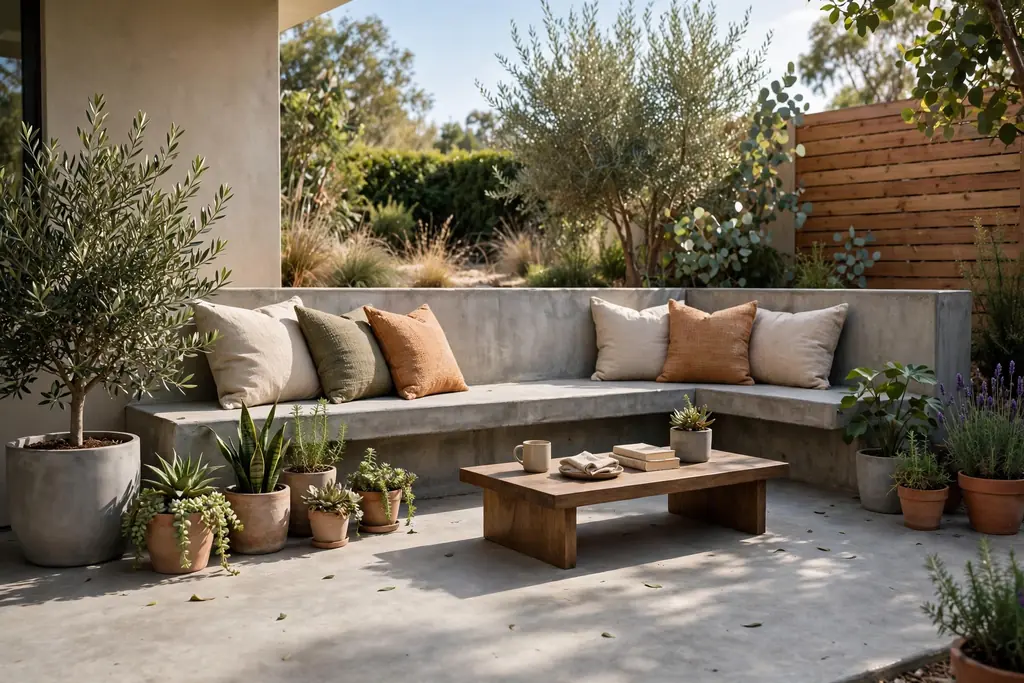
Built-in concrete bench seating along one patio edge saves space and gives a permanent seat that never needs storing. A low concrete bench wall, topped with outdoor cushions, can run along a wall, a planter, or the patio edge, leaving the center open for a table or a fire pit. Keep the seat height near chair height and the depth enough to sit back comfortably, and add cushions for warmth, since bare concrete stays cool.
For seating ideas that pair well with a patio, these garden bench ideas show how to choose a spot first and match the seat to it. Drainage matters behind a built bench, so do not trap soil or water against the house wall. A built bench suits patios used daily, where loose chairs would constantly be moved and stored.
16. Planters Built Into the Patio
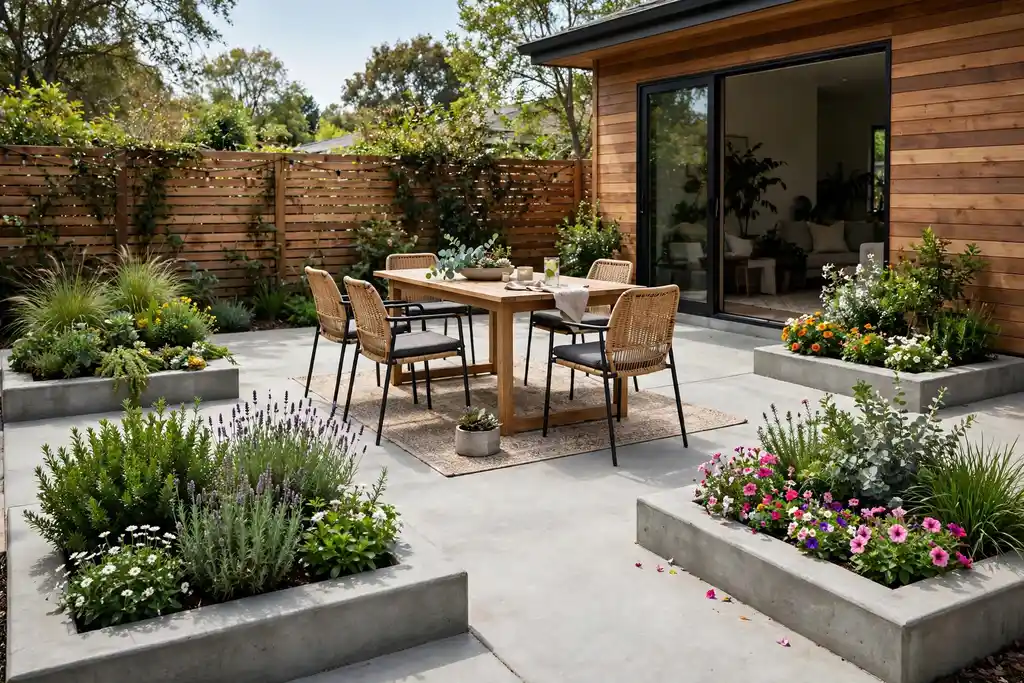
Planters built into the patio corners or edges bring planting onto the concrete without pots that blow over or clutter the walking area. Square or rectangular planters cast as part of the patio give a clean, built-in look, and they let you plant shrubs, grasses, or small trees at sitting height. Line planters for drainage, and choose plants that suit the sun and wind on that corner.
Keep planters out of the main walking route and away from door swings, and leave room to reach the soil for watering and pruning. Trees in planters need room for roots and regular watering, so pick small species or shrubs unless the planter is large. Built-in planters also mark zones: a planter between dining and lounging splits the patio without a wall.
17. Stenciled Painted Pattern
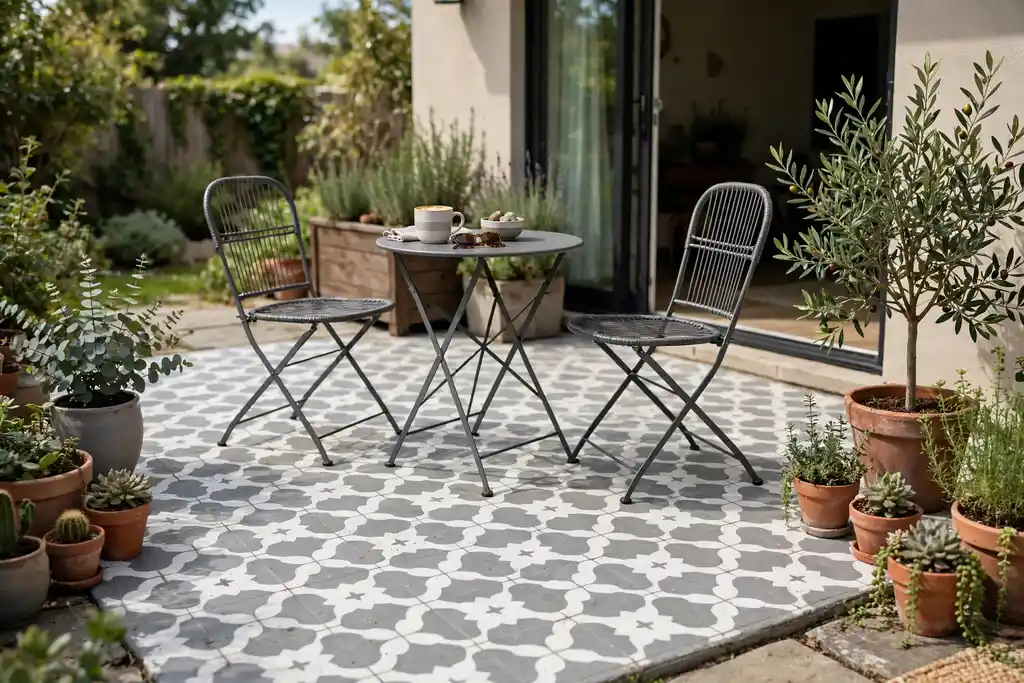
A stenciled pattern painted onto existing concrete is a low cost way to refresh a plain patio without replacing it. Tile, star, or geometric stencils in two tones can give a patio the look of patterned tiles, and the paint can be kept to a seating zone or spread across the whole slab. Clean the concrete well first, since paint sticks poorly to dirt, algae, or old sealer, and test the stencil on a corner.
Use paint made for exterior concrete and foot traffic, and seal it to protect the pattern from chairs and weather. Stenciled paint wears fastest where chairs scrape, so keep heavy furniture on pads and touch up the pattern each year if needed. This idea suits renters and small budgets, because it changes the look without building work.
18. Painted Patio Rug Design

A painted rug design marks a seating zone on a concrete patio, much like an outdoor rug, but it never blows away or needs washing. Paint a large rectangle or border in muted tones under the chairs and table, with a simple border line to frame it. Keep the design flat and simple, since a busy pattern under furniture is hard to see and harder to paint neatly.
Use exterior concrete paint and a clear sealer, and keep the painted area dry for the curing time the maker states. A painted rug suits covered patios best, where rain and sun wear it less, and it pairs well with plain cushions that pick up one color from the design. If the paint wears, a single color recoat is easier than repainting a full pattern.
19. Concrete Mixed with Gravel
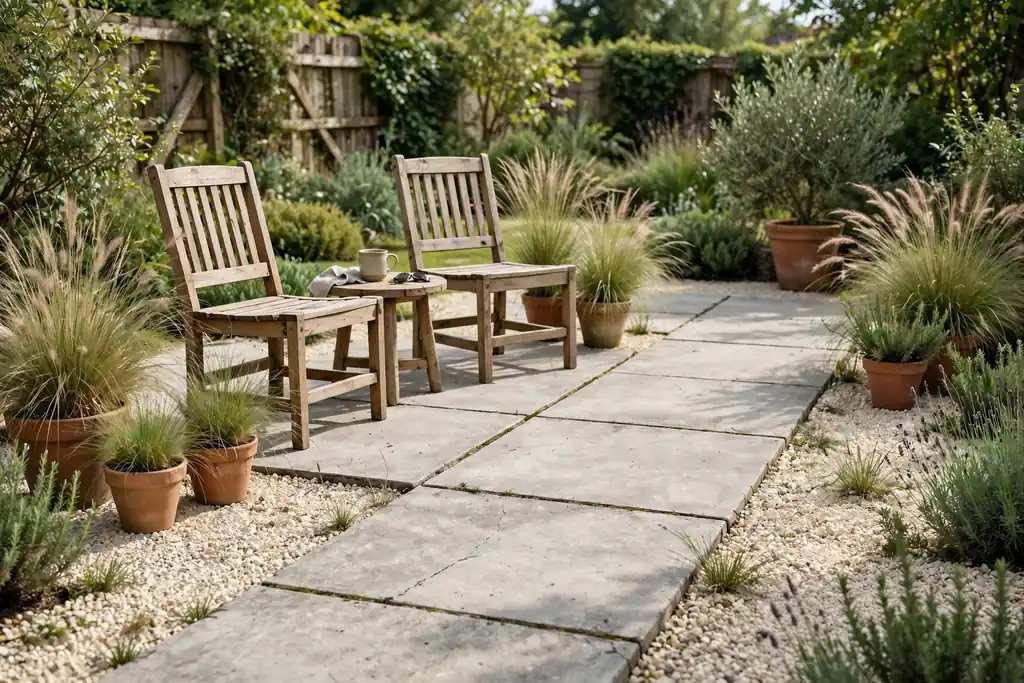
Mixing concrete slabs with gravel areas breaks up a large patio and helps rain drain between solid sections. Use concrete where furniture sits, so chairs stay level, and gravel where you walk or where planting meets the patio. Pale gravel lightens grey concrete, while darker gravel suits modern furniture and charcoal tones.
Keep gravel contained with a steel or stone edge, or it will spread onto the lawn and the concrete. Rake gravel level now and then, and top it up each year, since foot traffic moves it. This mix suits informal gardens and larger patios, where a single solid slab would look hard and flat, but it needs more upkeep than concrete alone.
20. Evening Lighting Patio
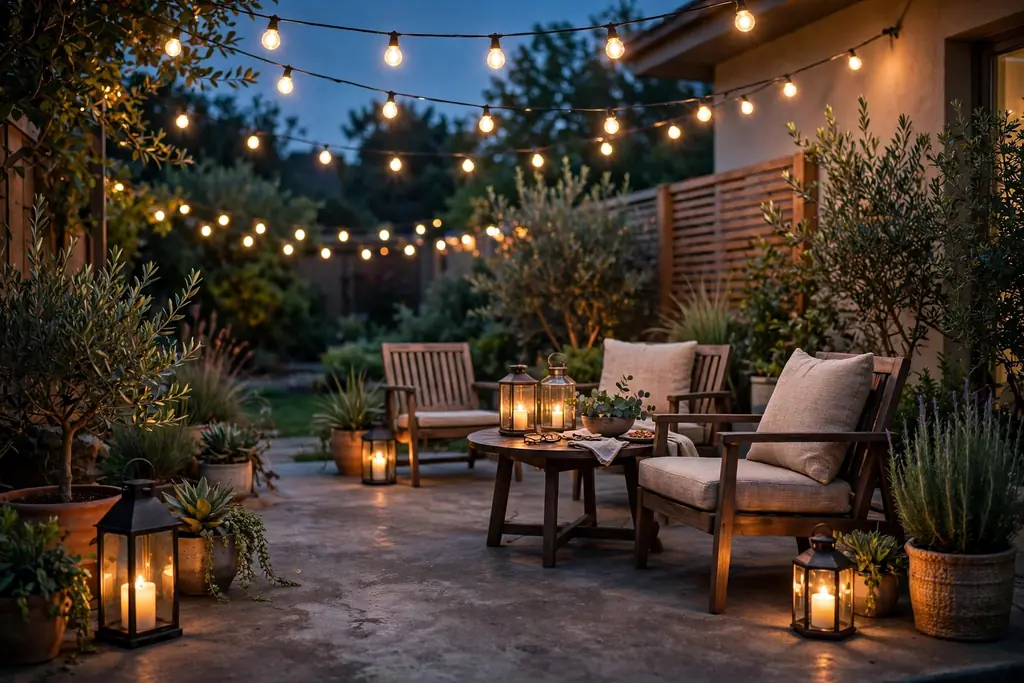
Evening lighting makes a concrete patio usable after sunset and shows off its texture in a way daylight does not. String lights overhead, lanterns on the table, and low lights along steps or edges give warm, layered light without glare. Keep lights low and warm in tone, and avoid a single bright floodlight that flattens the space and glares into the house.
Solar lights suit patios with no nearby power, but they need sun on their panels during the day to last the evening. Keep cables out of walkways, use outdoor rated fittings, and light step edges and level changes first for safety. A lit patio gets used far more than a dark one, even with the same furniture.
21. Compact Patio for a Small Space
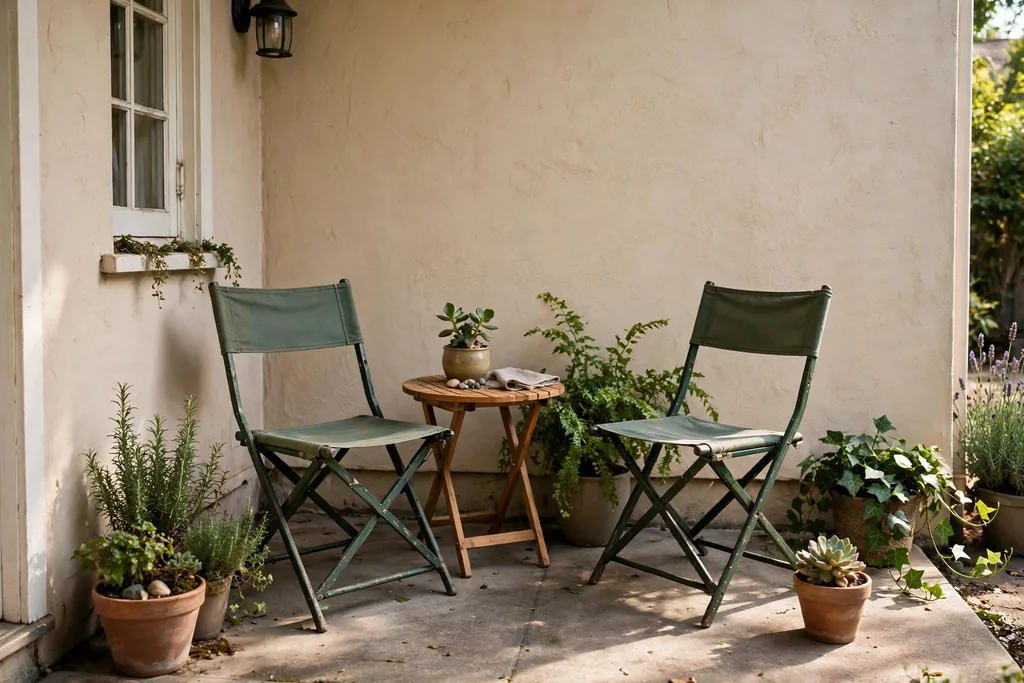
A compact concrete patio for a small garden or yard needs one seat, one table, and one plant, not a full dining set. A small slab near the door, just large enough for two chairs and a side table, gives a daily outdoor spot without paving the whole garden. Keep furniture foldable or stackable, so the patio can clear for other uses, and use the wall for a trellis or a fold-down shelf.
Choose a light concrete tone to keep the small space bright, and keep the path to the door clear. Pots at the corners soften the edges without taking floor space, and a single shade option, such as a parasol or a wall awning, makes the spot usable in sun. Measure chair pull-out space before you buy, since a small patio fails when chairs cannot move.
22. Fountain Patio
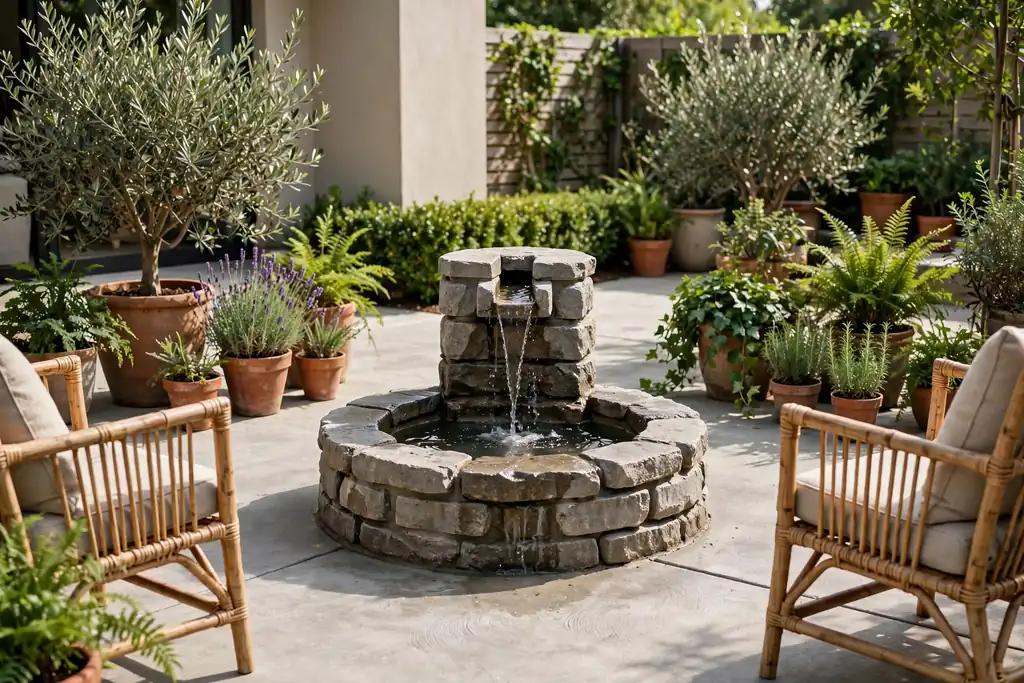
A fountain on a concrete patio adds moving water, sound, and a focal point that draws people to sit nearby. A small stone or concrete fountain in the center or against a wall suits a patio well, since the slab gives a level, splash-proof base. Keep the fountain within reach of power and water for the pump, and site it where splashes will not soak cushions or the house wall.
Choose a shallow, easy to clean basin, and clean leaves and algae regularly so the pump lasts. In winter, drain the fountain and protect the pump as the maker directs, since frozen water can crack a basin. The sound of water also masks street noise, which helps a patio near a road feel calmer.
23. Outdoor Fireplace Wall Patio
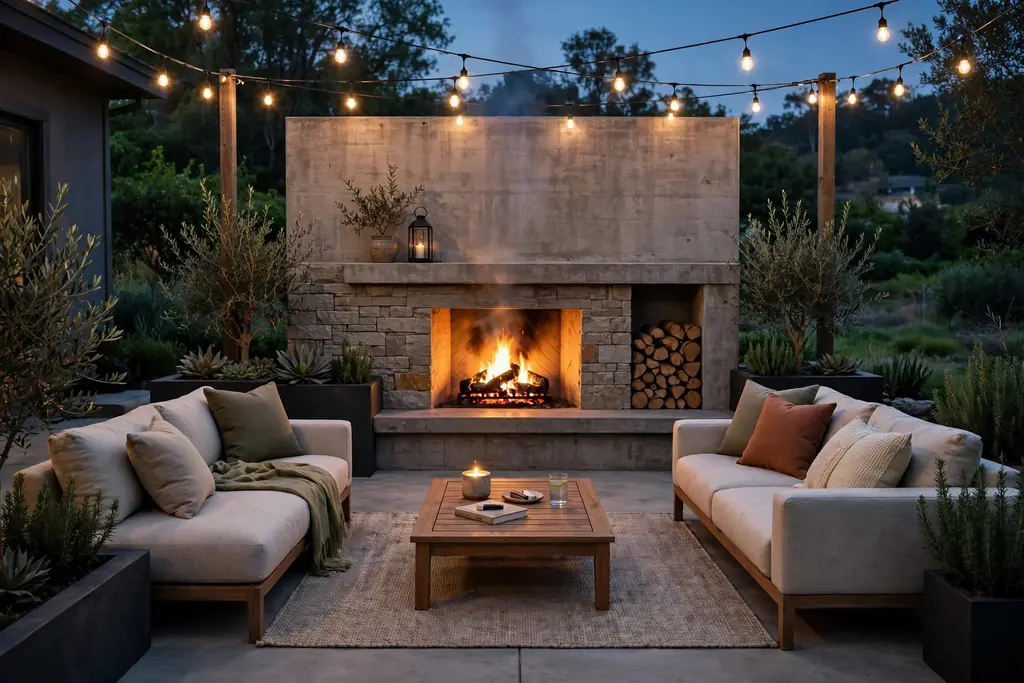
An outdoor fireplace wall at one end of a concrete patio gives a strong focal point and extends evening use into cooler months. The wall can be built from stone, brick, or rendered block to suit the house, with seating facing it in a clear arc. Keep the fireplace clear of overhanging trees, roofs, and dry planting, and follow local rules for smoke, fuel, and distance from boundaries.
Concrete suits a fireplace patio because it resists heat and sparks better than wood decking, but keep a non-slip hearth area in front of the fire clear of rugs. Store fuel away from the fire, and add side tables so drinks do not end up on the hearth. A fireplace wall also shelters the seating area from wind on one side, which helps on exposed patios.
24. Minimalist Modern Patio

A minimalist modern patio uses plain concrete, a few strong shapes, and little else. One low sofa, one large planter, and a simple table are enough, and the empty concrete around them gives the space calm. Keep colors to grey, white, black, and green, and avoid small ornaments that break the clean lines.
This style suits modern houses and small patios, where clutter would crowd the space, but it needs good detailing, since flaws show on plain surfaces. Keep joints straight, edges sharp, and the slab clean, and choose furniture with simple lines to match. Planting should be bold and simple too: grasses, a single tree in a large pot, or a clipped shrub, rather than a mixed bed.
25. Stone-Edged Rustic Patio
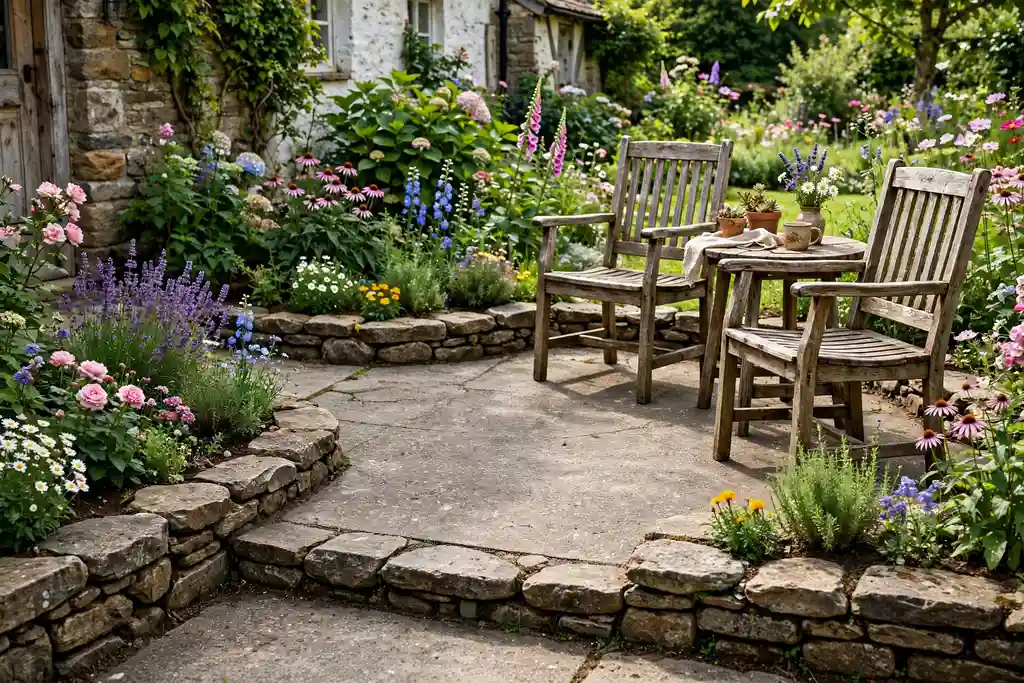
A stone edge around a concrete patio gives a rustic, cottage feel and a firm border where patio meets lawn or beds. Natural stone, laid as a border course or as a low edging, softens the straight concrete edge and ties the patio to garden walls and paths. Keep the stone level with the concrete where chairs cross it, or step the edge down clearly so nobody trips.
Plant cottage flowers and herbs just outside the stone edge so they spill slightly onto the border without blocking the seat. Stone edging also protects the concrete edge from mower damage and soil creep. This idea suits older houses, cottage gardens, and patios that sit beside flower beds rather than beside a modern extension.
26. Shade Sail Patio
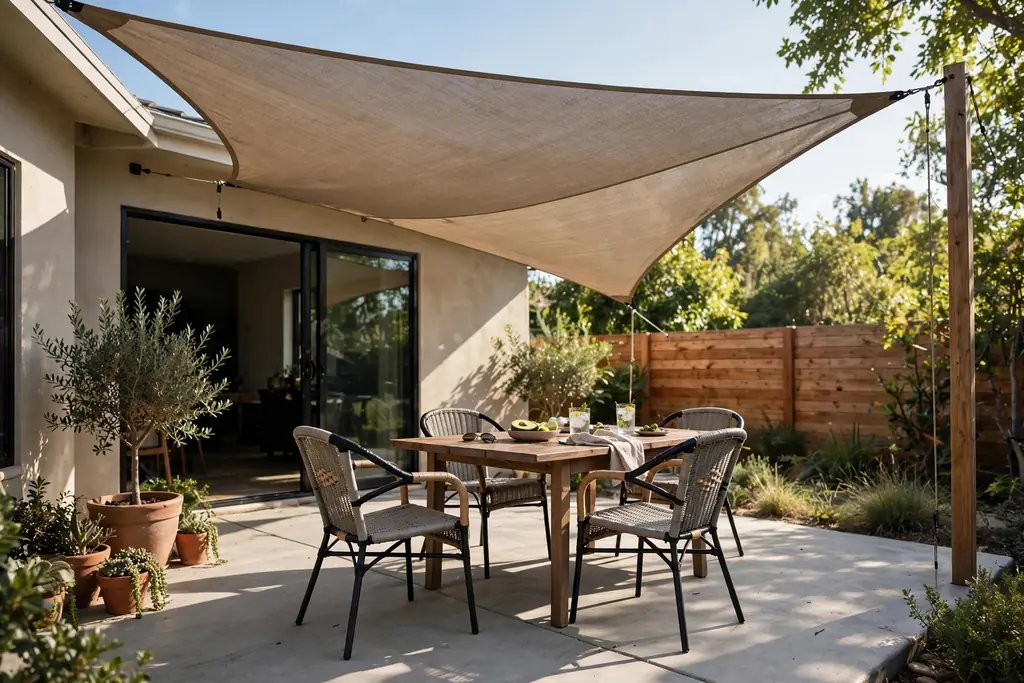
A shade sail over a concrete patio gives large, soft shade at a lower cost than a fixed roof, and it can be taken down in winter or storms. Triangular or rectangular sails in a pale, sun rated fabric cool the seating area and cut glare on light concrete. Fix the sail to house walls and sturdy posts set in concrete footings, since wind loads on a sail are strong, and angle it so rain runs off away from seats.
Keep the sail high enough to walk under comfortably and clear of trees that drop leaves onto it. A sail suits patios used mainly in summer, where a permanent roof would darken the house in winter. Take the sail down in high winds as the maker directs, and wash it each season to keep it bright.
27. Stepping-Stone Link to the Garden
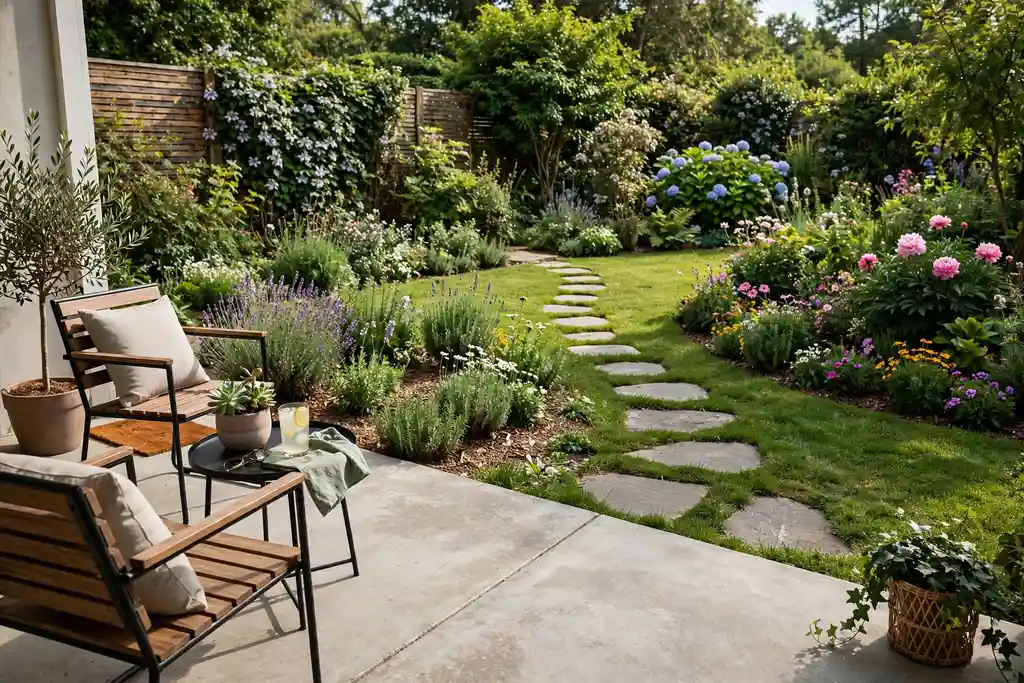
Stepping stones from a concrete patio into the garden make the patio feel like part of the garden, not a separate slab. Large, flat stones set in grass or gravel give a clear route to beds, a lawn, or a seating nook, and they let you keep most of the garden unpaved. Space the stones for a natural stride, keep them level and stable, and set them wide enough for a wheelbarrow or a pram if the route is used daily.
Plant low ground cover or grass between the stones to soften the path, and keep the first stone flush with the patio edge so there is no trip step. Light the route if it is used at night, and keep it clear of pots and hoses. A good link also helps drainage, since water can soak in along the stone route rather than pooling on the patio.
28. Saw-Cut Geometric Grid
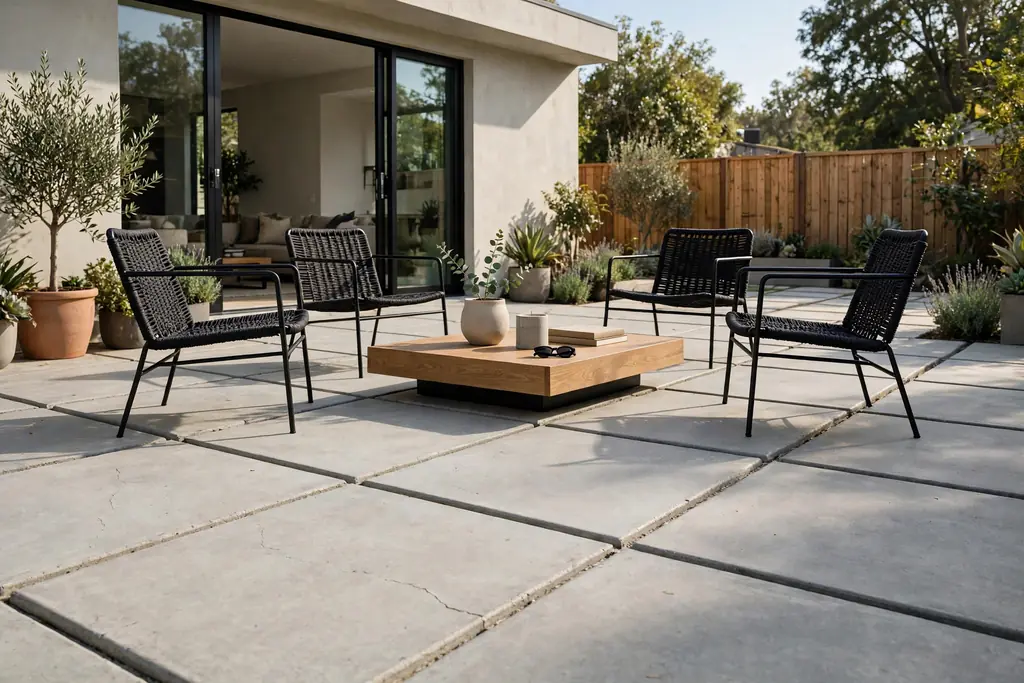
A saw-cut geometric grid turns a plain slab into a pattern of large squares or rectangles, giving a modern, tiled look without separate pavers. The grid lines are cut into the concrete after pouring, so the surface stays level and easy to sweep, and furniture sits steady across the lines. Keep the grid size in proportion to the patio: large squares suit wide patios, smaller ones suit paths and compact areas.
A grid also helps control cracking, since cuts give the slab planned lines to move along. Seal the cuts and the surface to keep dirt out, and sweep the lines clear. Pair the grid with simple furniture and one or two planters, since the pattern itself is the decoration, and a busy rug or patterned cushions can fight with it.
29. Raised Beds Framing the Patio Edge
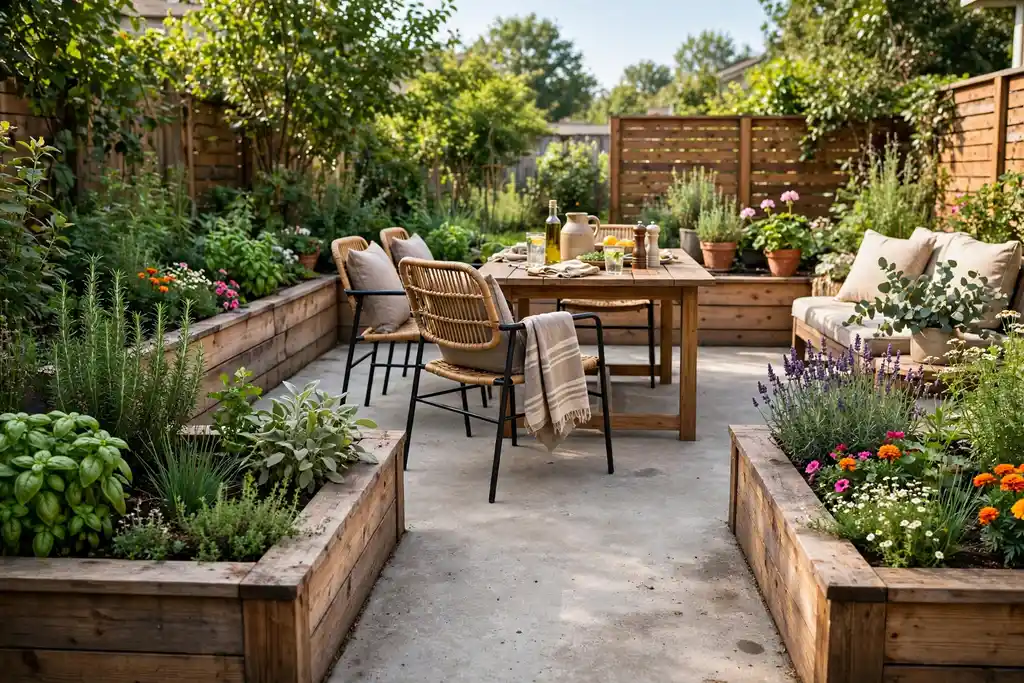
Raised beds along the outer edge of a concrete patio frame the space with planting and give a place for herbs, flowers, and vegetables close to the house. Wooden or stone beds, built to a comfortable working height, keep soil off the patio and make planting easy to reach from a chair. Put herbs and salads nearest the door for cooking, and flowers and shrubs further out for color and privacy.
Keep beds back from door swings and paths, and line them so soil and water do not stain the concrete. Water beds carefully, since overflow will run onto the patio, and mulch the surface to hold moisture. Raised beds also lift planting to eye level from a low chair, which makes a small patio feel more enclosed and garden-like.
30. Retractable Awning Patio
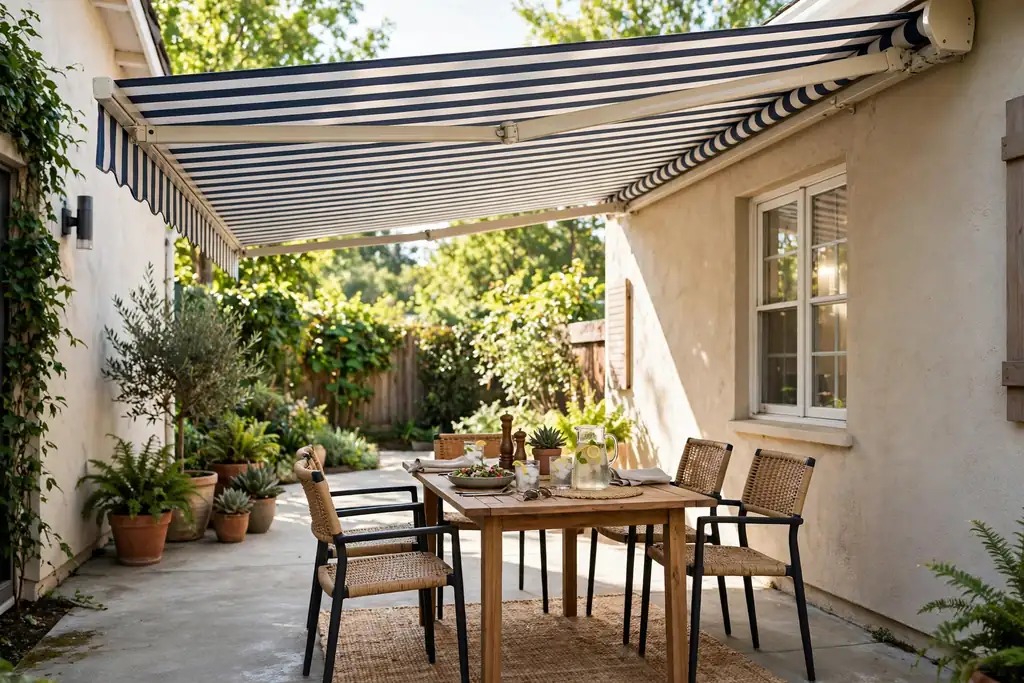
A retractable awning attached to the house wall gives a concrete patio shade on demand and sun when you want it. Extend it for lunch and hot afternoons, retract it in winter, in high wind, or when you want sun on the slab. Choose a fabric rated for outdoor use and a frame fixed to solid wall structure, following the maker weight and fixing guides.
Keep the awning clear of doors, gutters, and upstairs windows when extended, and retract it in storms as the maker directs. An awning suits patios beside a house wall where a pergola would darken rooms, and it pairs well with light concrete that would otherwise glare in sun. Wash the fabric each season, and check the mechanism yearly so it opens and closes smoothly.
31. Lounge Zone with Sofa and Rug
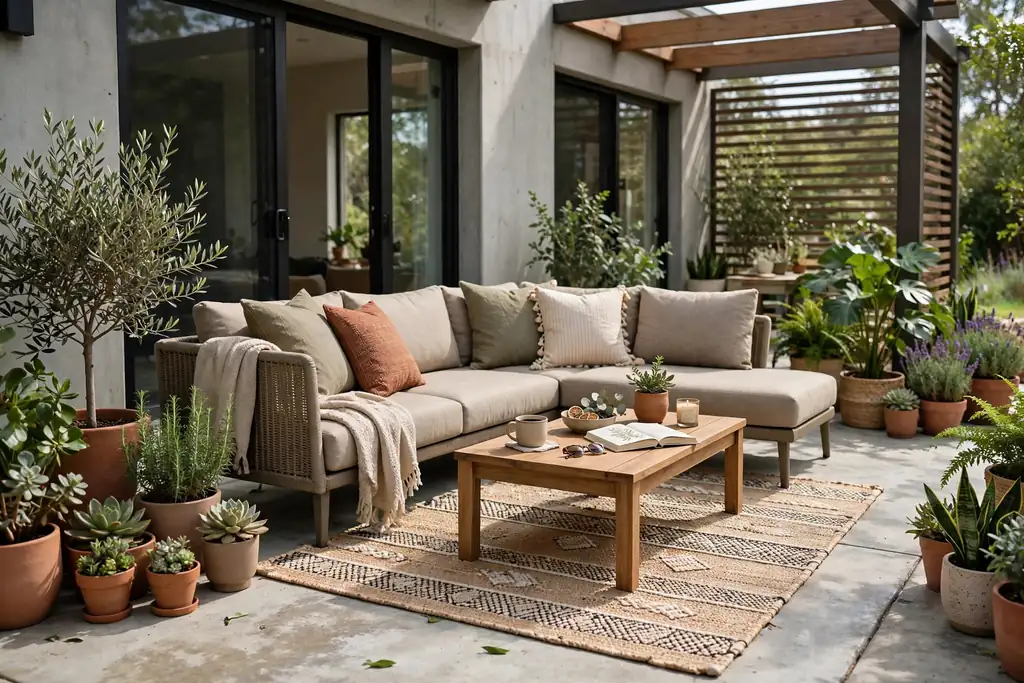
A lounge zone on a concrete patio turns part of the slab into an outdoor living room, with a sofa, a coffee table, and a rug. Keep the sofa low and deep, with weather resistant cushions and removable covers, and place the rug under the sofa front legs so it stays put. A rug softens concrete underfoot and marks the lounge zone clearly against a dining or walking area.
Store cushions in a dry box when rain is forecast, and choose a rug made for outdoor use that dries fast after rain. Keep the lounge zone near the house door for easy access, but leave a clear path past it so nobody climbs over the sofa to reach the garden. Add a side table for drinks and a lantern for evenings, and keep the rest simple.
32. Bistro Corner Patio
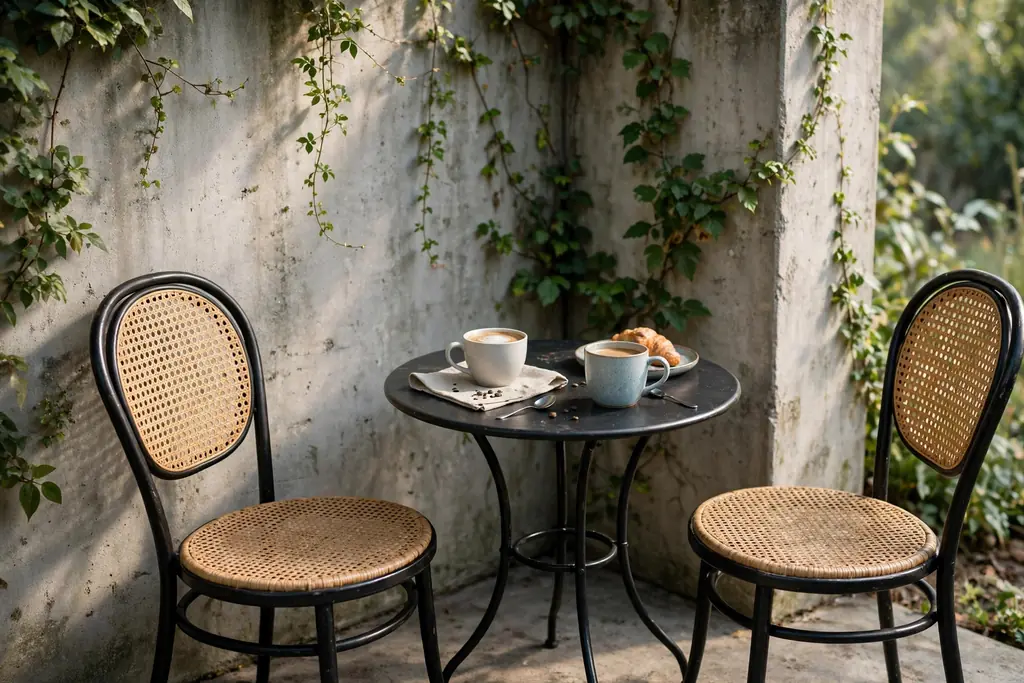
A bistro corner patio gives a small concrete area a daily purpose: morning coffee, reading, or a quiet chat for two. A round bistro table and two chairs in a sunny corner, beside a wall with climbing plants, need little space and little upkeep. Choose a stable table that does not wobble on concrete, and chairs that fold or stack for cleaning and winter storage.
Add one pot of scented plants beside the table and a cushion on each chair to make a short sit last longer. Site the corner where morning sun reaches it but wind is broken by a wall, and keep the route from the door clear so you can carry cups safely. A bistro corner suits small patios, side yards, and spots too small for a dining set, and it often gets used more than a larger patio.
Conclusion
A good concrete patio starts with use, not with a pattern book. Decide how you will sit, eat, cook, or gather outside, pick a finish that suits that use and your climate, and then add shade, planting, and light to soften the concrete. One well planned slab, used every day, will serve you better than a large patio with no clear job. Pick one finish and one layout idea from this list, test the furniture footprint on the ground, and build the rest around what you actually do outside.
Save this list on Pinterest before your next garden project, and work through it one area at a time: finish first, then layout, then the seating and shade that make the patio yours.
FAQs
What is the best concrete finish for a patio?
There is no single best finish, because the right choice depends on use, climate, and upkeep. Brushed concrete is practical and grippy, stamped concrete looks like stone or wood, stained concrete adds warm color, and exposed aggregate hides dirt and grips well when wet. Pick the finish that suits how you use the patio, then check slip, heat, and sealing needs for your spot.
How do you stop a concrete patio from looking plain?
Soften the slab with planting, shade, and furniture rather than covering it completely. Built-in planters, pots at the corners, a pergola or shade sail, a rug under the seating area, and warm evening light all break up grey concrete. A border band, a saw-cut grid, or a stained tone also gives the surface itself more interest without extra furniture.
Is a concrete patio slippery when wet?
Some finishes are slippery when wet, especially polished and sealed smooth concrete, while brushed and exposed aggregate finishes grip better. Ask about a grip additive in the sealer for shaded, poolside, or north facing patios, keep algae and moss off the surface, and light step edges for evening use. Footwear matters too: smooth soles slip more on wet sealed concrete than textured soles.
How do you maintain a concrete patio?
Sweep it regularly, wash it with water and a mild cleaner, and clear leaves and soil from joints and edges so moss does not settle. Seal the surface as the finish maker directs, and reapply when water stops beading or color starts to fade. Check joints, edges, and drainage each spring, and repair small cracks early so water and frost do not widen them.
Can you paint an existing concrete patio?
Yes, if the concrete is clean, sound, and dry, and you use paint made for exterior concrete and foot traffic. Clean off dirt, algae, and loose sealer first, test the paint and any stencil on a hidden corner, and seal the finished paint to protect it from chairs and weather. Painted patios wear fastest where chairs scrape, so use furniture pads and expect touch-ups.
How much space does a concrete patio need for dining?
Allow room for the table plus chair pull-out space on every side, not just the table footprint. As a guide, a table for four needs a clear area larger than the table itself so chairs can move and people can walk past, and a table for six needs more again. Tape the footprint on the ground, place the chairs, and walk the route past them before you pour or buy furniture, since a cramped patio gets used less.