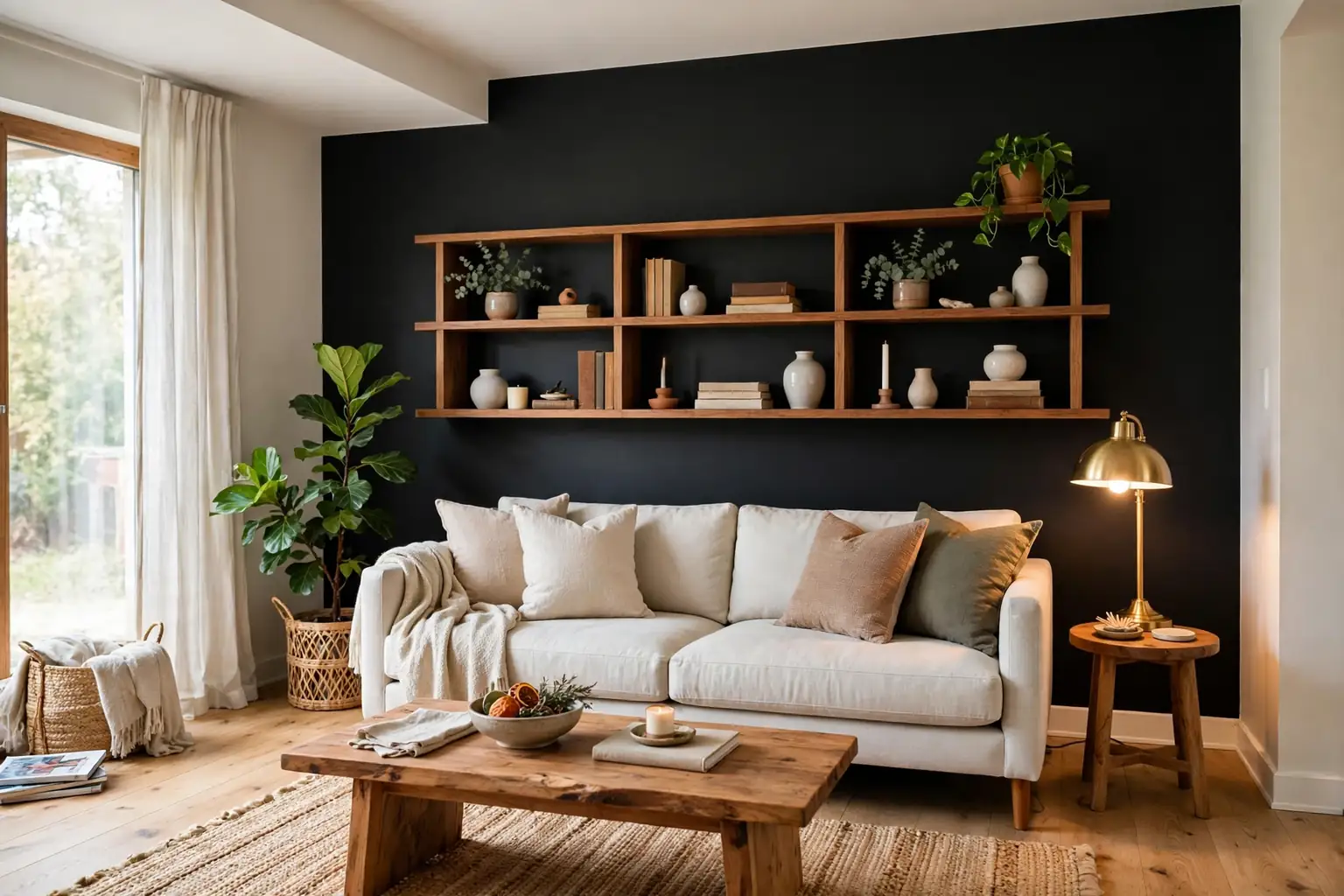
A black accent wall can give a room a clear focal point, but only when the rest of the room stays calm enough to let it lead. These chic black accent wall ideas cover paint, paneling, wallpaper, shelving, and fireplace walls, so you can pick a version that suits your room, your budget, and your lease. The key is balance: one dark wall, pale or warm surfaces beside it, and enough light to keep the room welcoming. Start by choosing the wall you see first when you enter the room, then test a large sample in morning light and evening lamplight before you commit.
Key Takeaways
- Paint only one wall black in most rooms, and keep the ceiling white or pale so the room keeps its height.
- Matte or eggshell black reads softer than gloss, which can show every bump and brush mark.
- Pair black with warm wood, cream, brass, or green plants so the wall feels warm rather than cold.
- Add light on or near the black wall, such as a lamp, picture lights, or a mirror that catches daylight.
- Test a large sample board in daylight and lamplight before painting a full wall.
- In a rental, use removable wallpaper, leaning panels, or a painted board you can take with you.
1. Matte Black Wall Behind the Bed
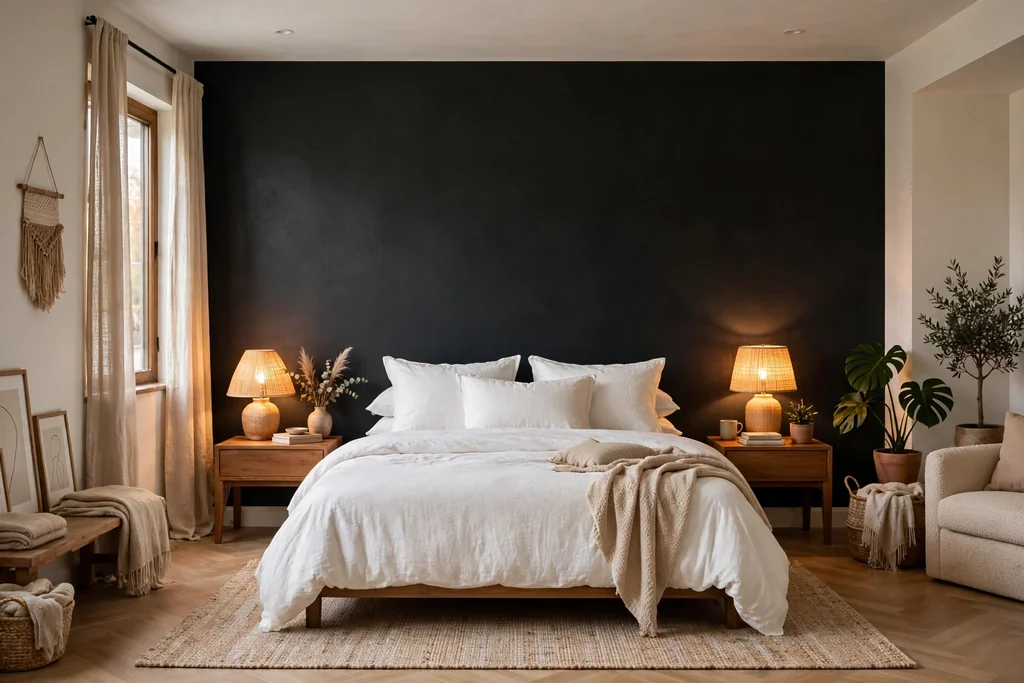
Paint the wall behind the bed in matte black and keep the bedding in white, cream, or soft grey, so the bed stands out against the dark backdrop. Matte paint softens the wall and hides small surface flaws better than gloss, which matters on a large bedroom wall. This suits a main bedroom where you want a calm, hotel-like focal point without adding furniture.
Keep bedside lamps in warm white and add one wood or brass detail, such as a wooden tray or a brass lamp base, to stop the corner feeling cold. If the room is small, keep the other walls pale and the floor light, and leave the ceiling white. A black headboard in the same tone can blend in, while a wood or upholstered headboard in a pale fabric gives a clearer shape against the wall.
2. Black Vertical Wood Paneling in a Living Room
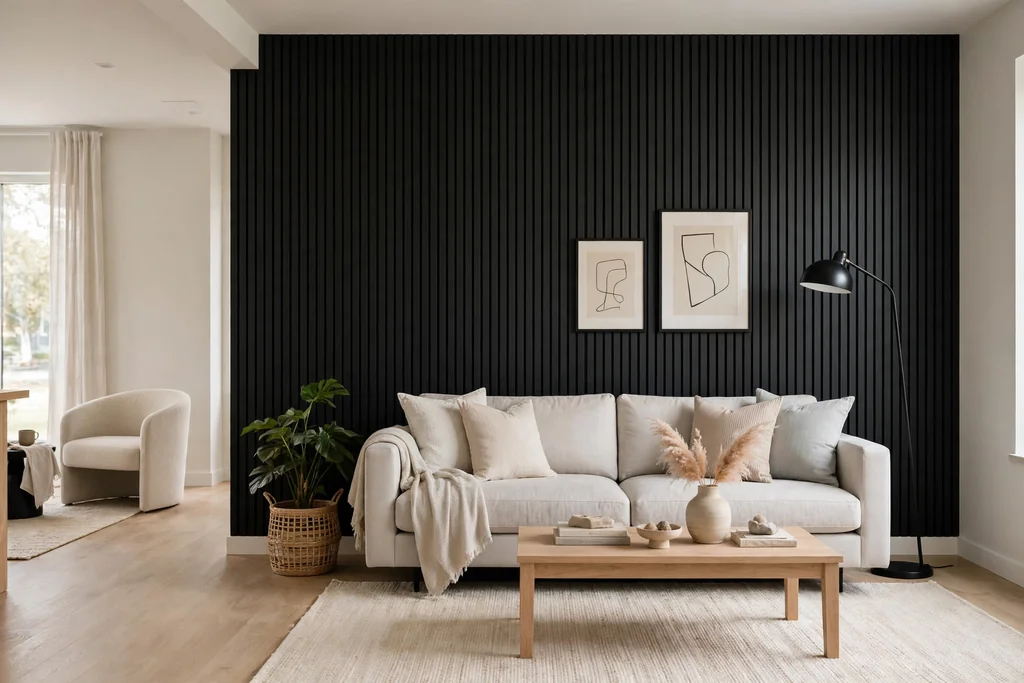
Fit vertical wood boards or slats on one living room wall and paint them black for a paneled wall with shadow and depth. The vertical lines draw the eye up and give the wall texture that flat paint alone cannot, which helps a plain living room feel finished. This works well behind a sofa or a television, where the paneling frames the main seating area.
Use narrow boards for a neat, tailored look, or wider slats for a bolder, modern feel. Keep the gaps even and paint the boards and the wall behind them the same black, so the joints read as shadow lines rather than stripes. Pair the wall with a pale sofa, a light rug, and warm wood floors, and add a floor lamp nearby so the paneling shows its texture in the evening.
3. Black Gallery Wall with Light Frames and Art
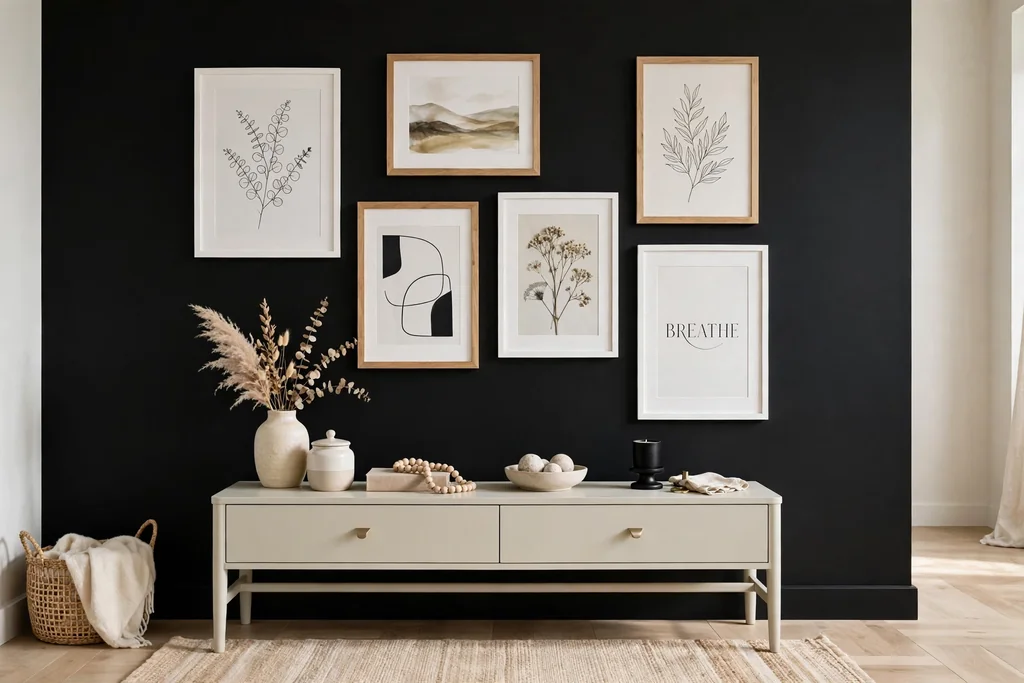
Use a black wall as the backdrop for a gallery of art in white, wood, or brass frames, so the pictures read clearly against the dark surface. Light frames give contrast that black frames would lose, and a mix of print sizes keeps the display from looking like a single block. This idea suits a hallway, a stair wall, or the wall beside a bed, where you can enjoy the art up close.
Plan the layout on the floor first, with the largest piece in the center or slightly off center, and keep gaps of 2 to 3 inches between frames. Hang the center of the group at eye level from where you see it most. For more help choosing and hanging the pieces, see these bedroom wall art ideas. Leave one part of the wall empty so the gallery has room to breathe.
4. Black Chalkboard Wall in a Kitchen or Study
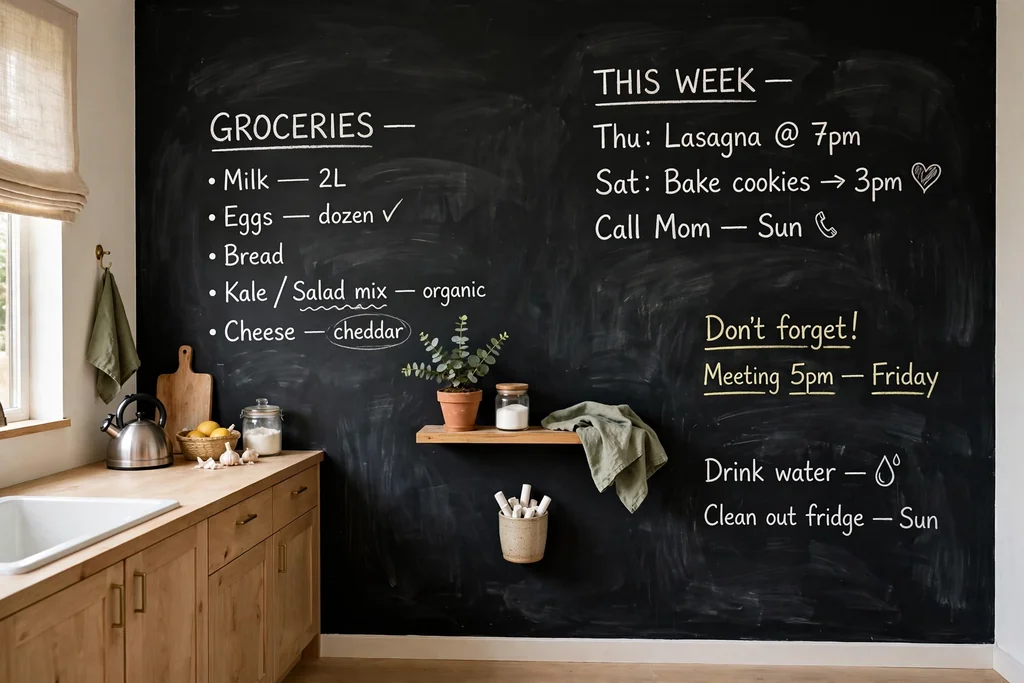
Paint one wall with chalkboard paint to make a black accent wall you can write on, draw on, and change with the week. In a kitchen it can hold a shopping list, a menu, or a note for the family, while in a study it can hold a schedule, a quote, or a brainstorming sketch. The wall stays useful even when you do not redecorate around it.
Use two or three thin coats for an even writing surface, and season the wall by rubbing chalk over it and wiping it clean before the first use, following the paint maker instructions. Keep chalk and an eraser in a small cup or tray nearby, and use a damp cloth for a full clean. If chalk dust bothers you, chalk markers give a cleaner line and wipe off with water on most chalkboard paints.
5. Black Wainscoting with White Walls Above
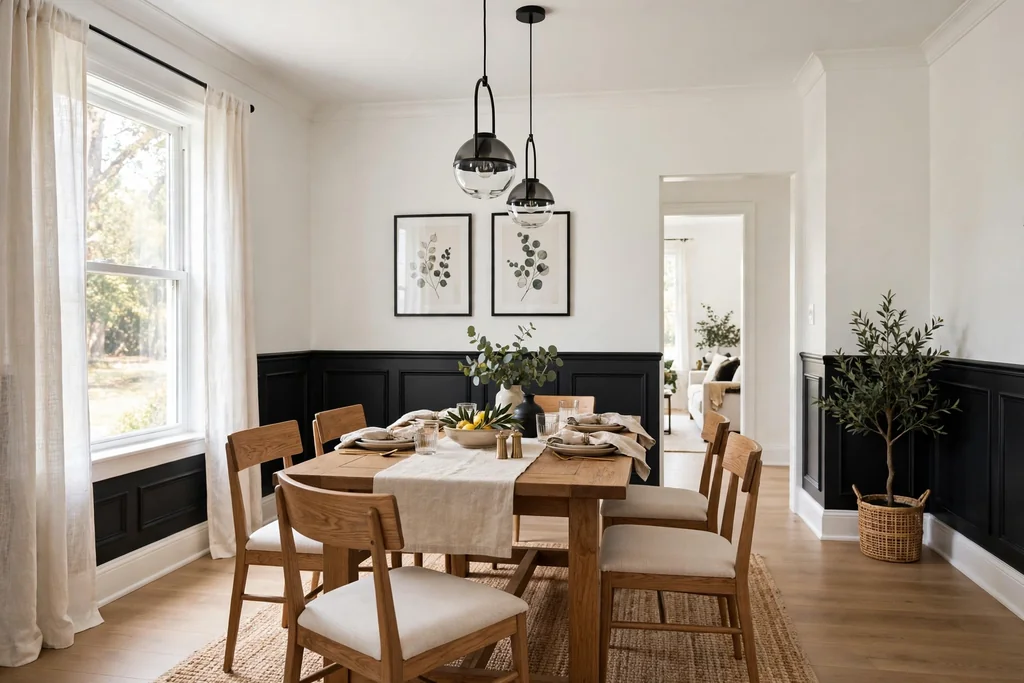
Paint the lower half of the wall black and keep the upper half white or cream, with a chair rail or trim board marking the split. This gives a room the depth of a black wall without darkening the whole space, since the pale upper wall and white ceiling keep the room bright. It suits a dining room, a hallway, or a bedroom where full height black paint would feel too strong.
Fit the rail at about one third of the wall height, or at chair height in a dining room, and paint the rail the same black or in white for a crisper edge. Use a washable paint finish on the lower section, since that part of the wall gets scuffs from chairs, bags, and hands. Keep art above the rail simple and light, so the upper wall stays calm against the dark base.
6. Black Fireplace Wall as the Room Focus
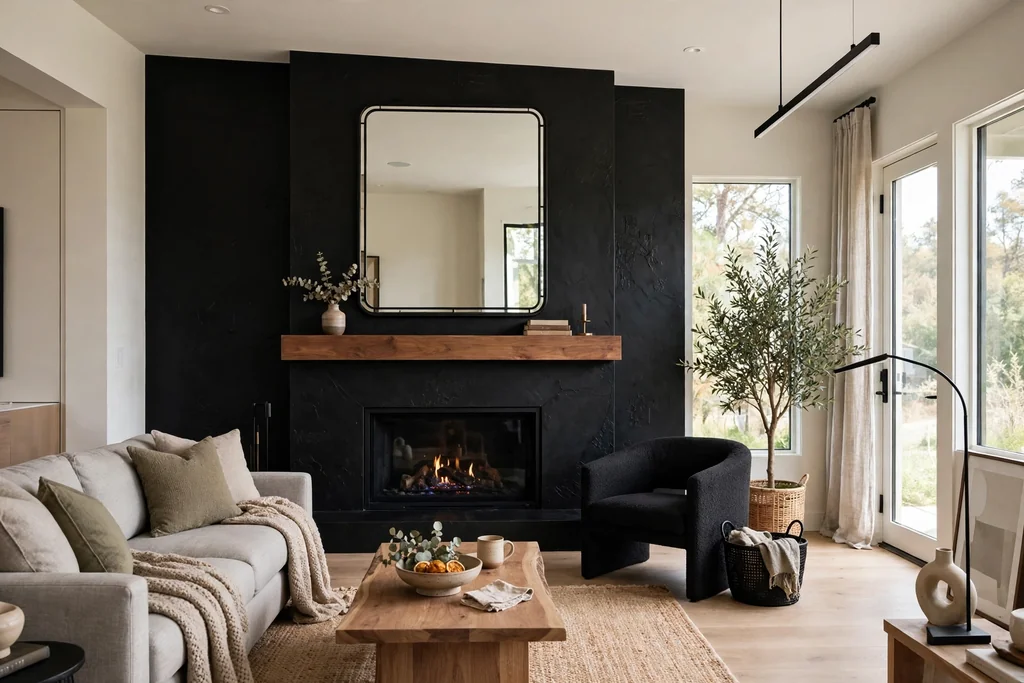
Paint the fireplace wall black from floor to ceiling, including the chimney breast if you have one, so the fireplace becomes the clear center of the room. Black behind a fire surround makes the mantel, the fire, and any objects on the mantel stand out, and it suits both a working fireplace and a decorative one. Keep the other walls pale and the mantel in wood, stone, or white for contrast.
Style the mantel with restraint: one mirror or one large print, plus a pair of candles or vases, rather than a crowded row. If the fireplace is not in use, a stack of logs, a large candle group, or a simple grate keeps the opening looking finished. Check that the paint you use near a working fire is rated for heat, and keep soft furnishings at a safe distance from the opening.
7. Black Wall Behind a Sofa with Warm Wood Shelves
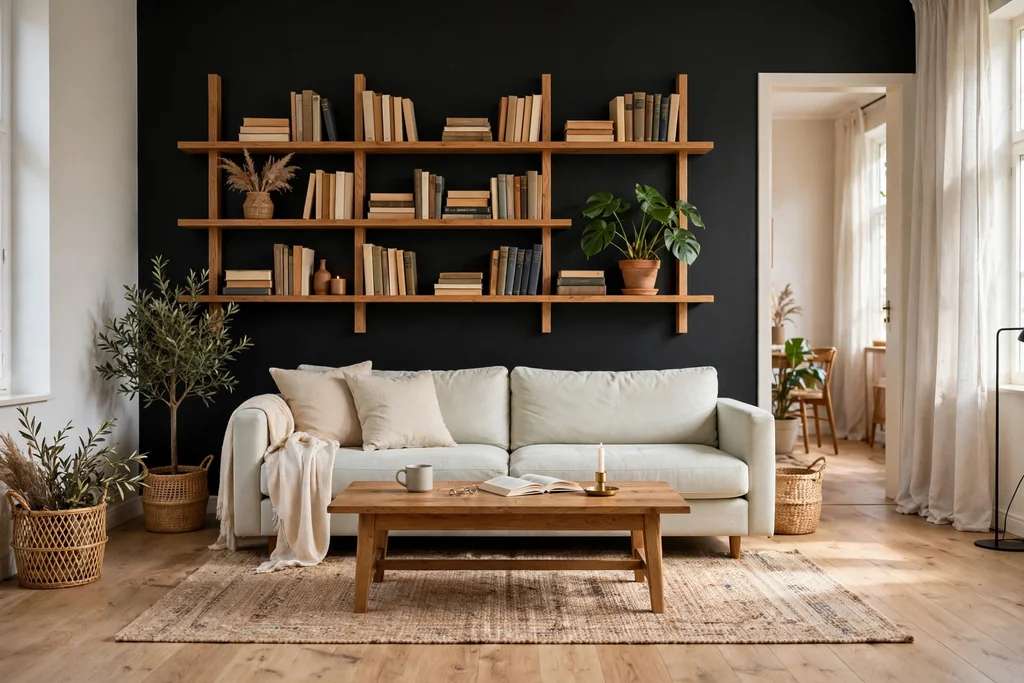
Mount warm wood shelves on a black living room wall behind or beside the sofa, so books, plants, and simple objects stand out against the dark backdrop. The wood warms the black, and the shelves turn the wall into storage as well as a focal point. This suits a living room that needs both display space and a stronger anchor for the seating area.
Fix shelves into studs or with fixings rated for the weight, and leave some shelf space empty so the display does not look packed. Mix books with one plant, one vase, and one framed photo per shelf, and repeat the wood tone in a coffee table or floor lamp. Keep the sofa in a pale or mid tone fabric, since a black sofa against a black wall can lose its shape in low light.
8. Black Desk Wall for a Home Office
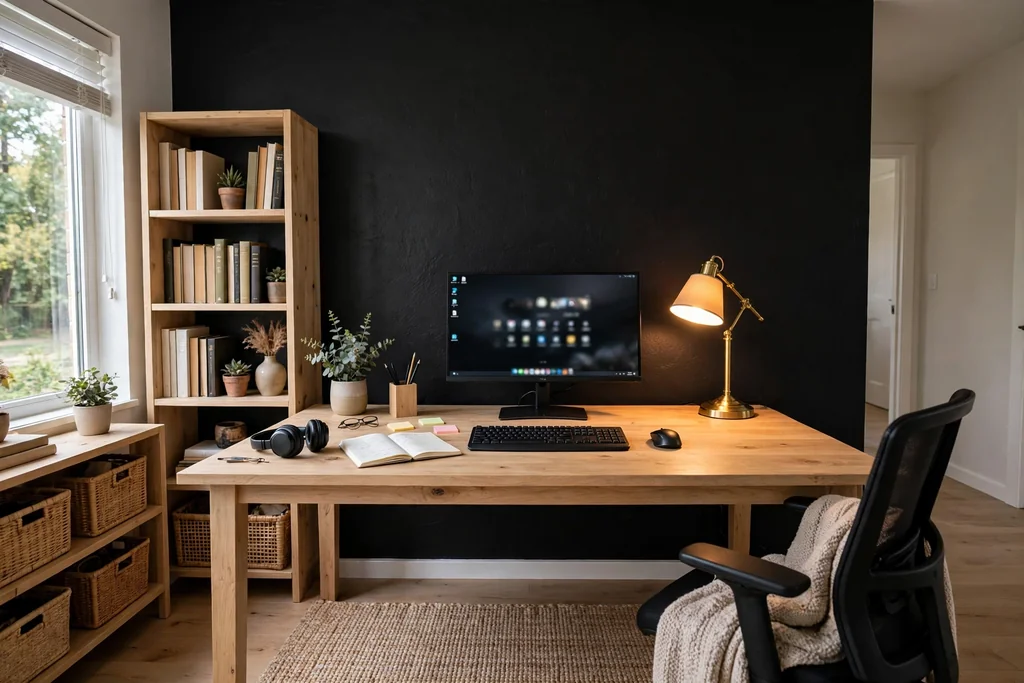
Paint the wall behind your desk black to frame your workspace and cut visual clutter during video calls and focused work. A dark backdrop makes a pale desk, a monitor, and a desk lamp read clearly, and it gives a small office corner a defined zone even in a shared room. This works well in a spare room corner, a bedroom nook, or a living room alcove.
Keep the desk surface light and add one warm lamp with a focused beam, so your work area stays bright against the dark wall. Add a pinboard or a single shelf in wood or brass, and keep cables tidy with clips or a tray, since loose cables show up more against black. If the office shares a bedroom, a black desk wall can also mark the end of the work zone when the day is done.
9. Black Dining Wall with Brass and Warm Light
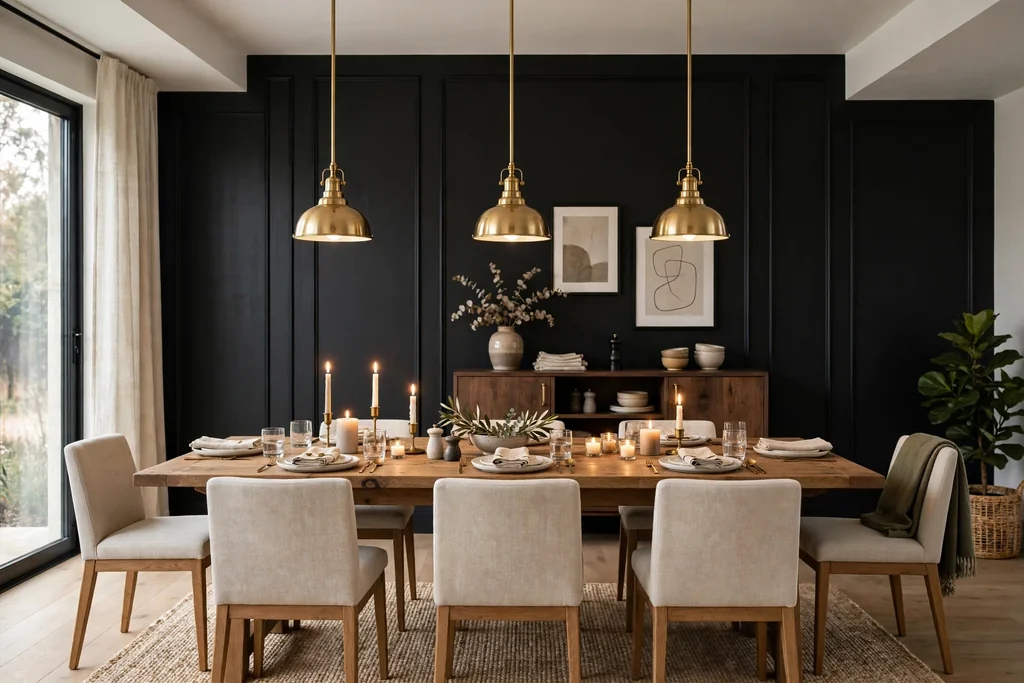
Pair a black dining room wall with brass details and warm light for a dining space that feels calm and a little formal in the evening. Brass candlesticks, a brass framed mirror, or brass pendant lights catch lamplight against the black, while a wood table keeps the room grounded. This suits a dining room used mainly in the evening, when warm light does most of the work.
Hang one pendant or a pair of pendants low over the table, with warm white bulbs, and add candles for a second layer of light. Keep chairs in wood or a pale upholstery so the table setting reads clearly, and use a light tablecloth or pale placemats for contrast. If the dining room is also used in daylight, add a mirror on the black wall to bounce light back into the room.
10. Black Limewash Wall with Soft Texture
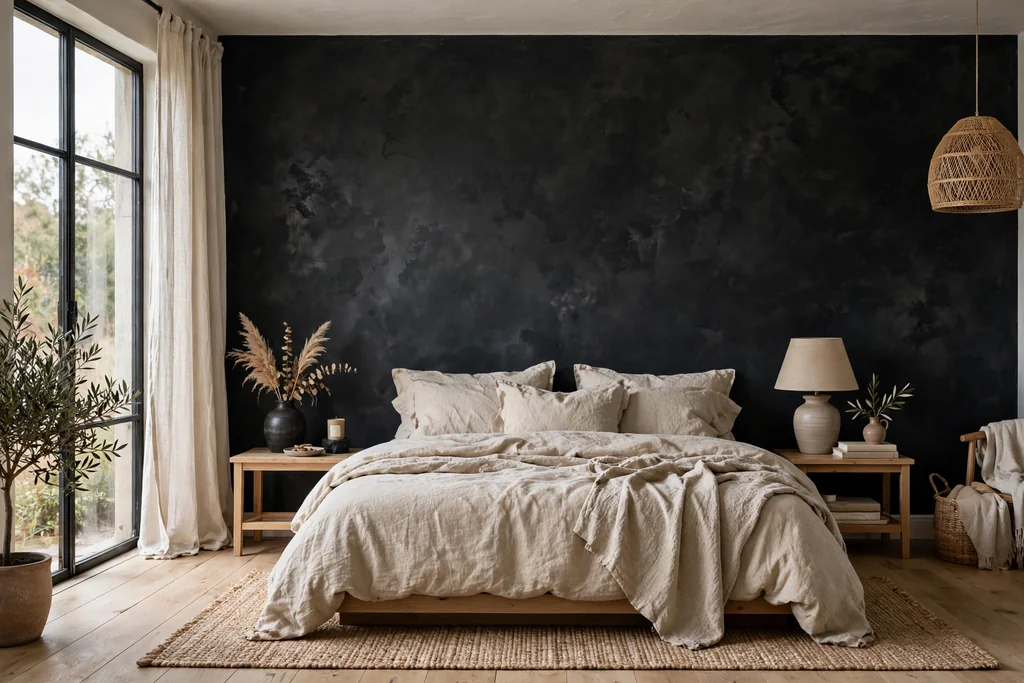
Use black limewash or a textured mineral paint for a black wall with soft, cloudy movement instead of a flat, even color. The texture catches light across the surface, so the wall changes through the day and feels less stark than a standard matte paint. This suits a bedroom or living room where you want depth without pattern, and it pairs well with linen, wool, and raw wood.
Apply limewash with a block brush in loose, overlapping strokes, following the maker instructions, and expect variation from patch to patch, since that variation is the point of the finish. Test it on a board first, since limewash can dry lighter or darker than it looks when wet. Keep furniture and art simple against a limewash wall, so the texture itself stays the main feature.
11. Removable Black Wallpaper for a Rental
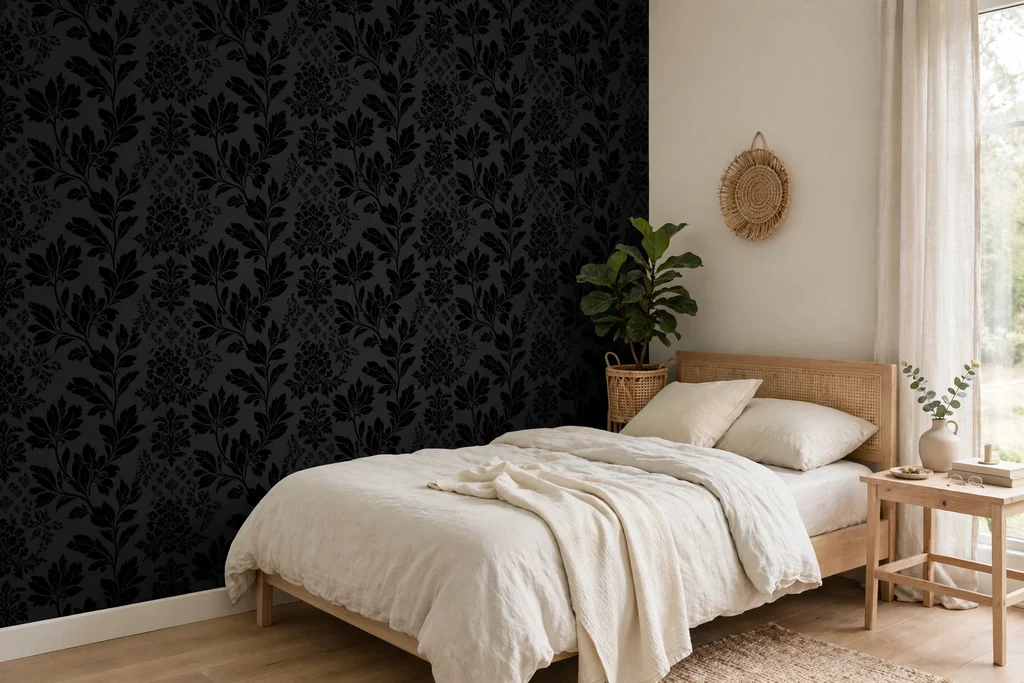
Hang removable black wallpaper on one wall for a black accent wall you can peel off when you move out. Patterned options, such as a subtle stripe, a small botanical print, or a faux linen texture, add interest that flat paint cannot, while a plain black removable paper gives the cleanest backdrop. This suits renters and anyone who wants to test a black wall before painting.
Clean the wall first, measure carefully, and hang the first strip with a level, since a crooked first strip throws off the whole wall. Smooth out air bubbles with a plastic smoother as you go, and trim at the ceiling and baseboard with a sharp blade. Check the paper maker guidance for your wall type, and test a small piece in a hidden spot first if your walls are freshly painted or textured.
12. Black Built-In Shelving Wall
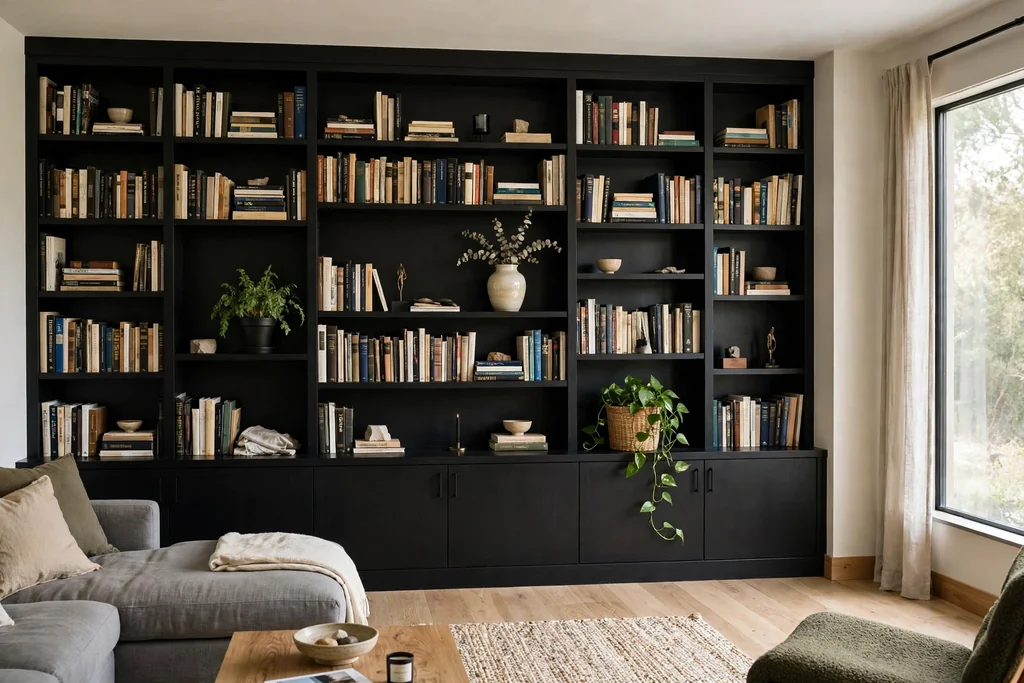
Paint a full wall of built-in shelves black, including the backs of the shelves, so books and objects sit against a dark, even backdrop. The black unifies shelves of different contents and makes the wall read as one piece of furniture rather than a set of separate bookcases. This suits a living room, a study, or a hallway wall with enough depth for shelves.
Group books by size or color in loose blocks, and leave some shelves partly empty or styled with a vase or a plant, so the wall does not look like storage alone. Paint the shelf backs the same black as the frames, and add a picture light or a small lamp on the top shelf if the wall is in a dim corner. Keep the floor in front of the shelves clear, since a full shelving wall already gives the room plenty to look at.
13. Black Entryway Wall with a Mirror and Hooks
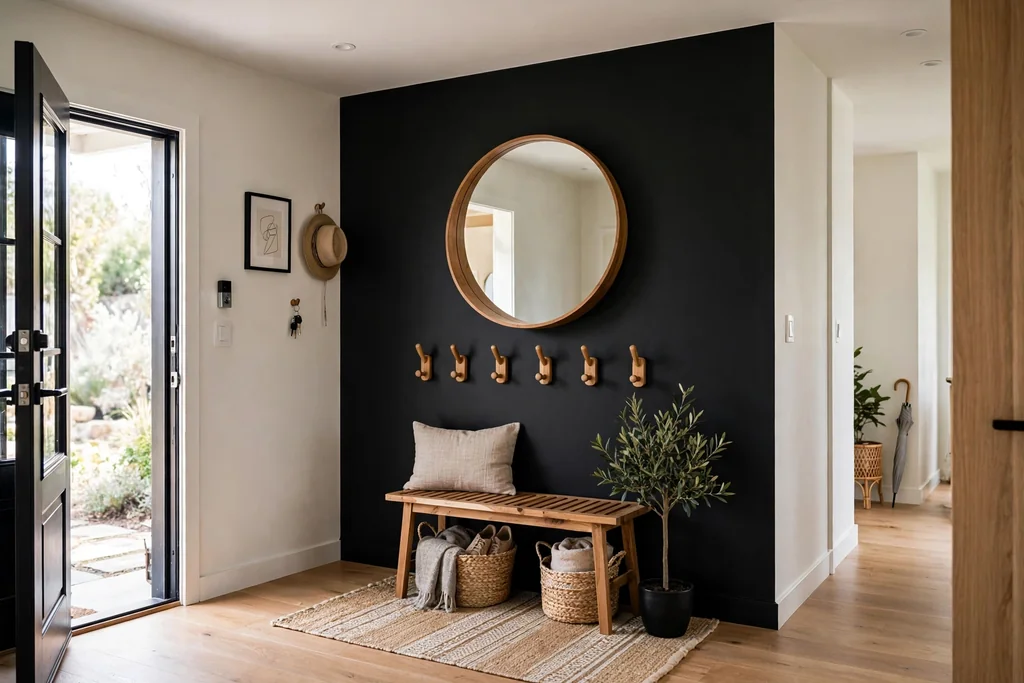
Paint the entryway wall black and add a large mirror, a row of hooks, and a small bench or console, so a narrow hall gains a clear purpose and a focal point. The mirror bounces light and gives a last check before you leave, while hooks keep coats and bags off the floor. This suits a small entry, a mudroom wall, or the wall beside a front door.
Hang the mirror at a height that suits the tallest person in the household, and keep hooks at two heights if children use the space too. Use a washable black paint, since entry walls get scuffed by bags and shoes, and add a pale rug or a wood bench to keep the floor light. Keep the opposite wall pale and the ceiling white, so the narrow space still feels open.
Conclusion
A black accent wall works best when it has a clear job: framing a bed, a sofa, a fireplace, or a desk, and when the rest of the room gives it light, warmth, and breathing room. Pick one wall, test your finish in daylight and lamplight, and pair the black with wood, cream, brass, or plants rather than more dark surfaces. For help pairing black with the rest of your palette, see these wall color combinations. Save this list on Pinterest before you start, and work through it in order: choose the wall first, test the sample second, then paint or paper only that wall, so you can stop and adjust if the balance feels off.
FAQs
Will a black accent wall make a small room feel smaller?
It can, if every surface is dark, but one black wall with pale side walls, a white ceiling, and a mirror usually keeps a small room feeling open. Choose the wall with the main furniture on it, keep the floor light, and add a lamp near the black wall so it does not fall into shadow.
What finish should I use for a black accent wall?
Matte or eggshell suits most walls, since both hide small flaws and give a soft, even look. Use a washable eggshell or satin in a hallway, kitchen, or entryway, where the wall gets touched often, and save flat matte for a bedroom or a low traffic wall.
What trim color works best with a black accent wall?
Bright white or warm white trim gives the cleanest edge and keeps the room bright, while natural wood trim warms the black and suits a rustic or mid century room. Pick warm white trim if your other walls are cream, and bright white if they are a cool white or pale grey.
Can I do a black accent wall in a rental?
Yes, if you use removable wallpaper, a freestanding paneled board leaned against the wall, or large painted boards hung like art. Check your lease first, test the removable paper in a hidden spot, and keep the original wall color underneath untouched so you can return the room to its starting state.
Which wall should I paint black?
Paint the wall you see first when you enter the room, or the wall behind the main piece of furniture, such as a bed, sofa, fireplace, or desk. Avoid a wall broken up by many doors or windows, since the black will read as patches rather than one clear focal point.
What colors go well with a black accent wall?
Cream, warm white, warm wood, brass, sage green, dusty blue, and soft blush all sit well beside black, since each one adds warmth or lightness without competing for attention. Repeat your chosen accent once more in cushions, art, or a rug, so the black wall looks planned rather than isolated.