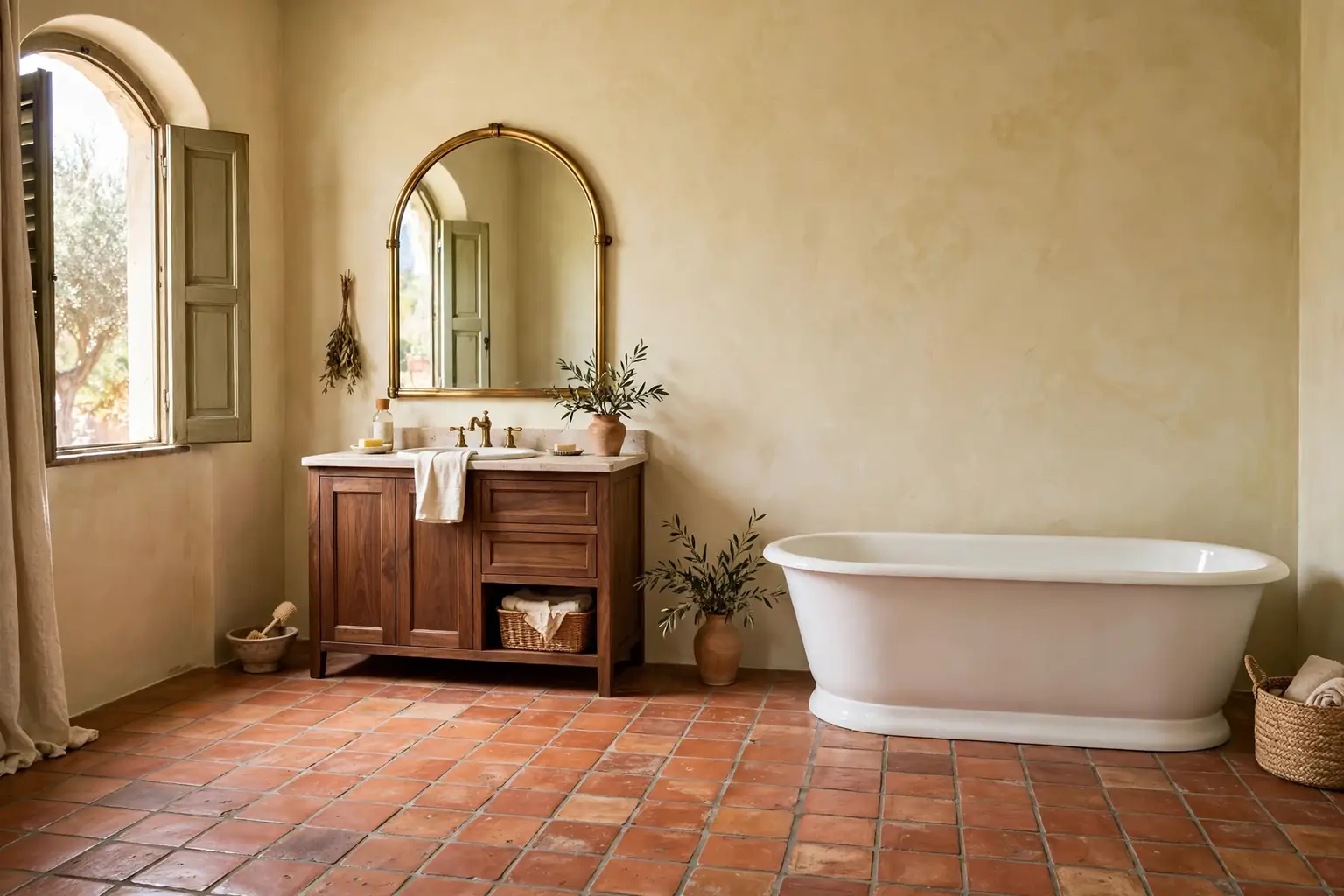
An Italian bathroom feels warm before it feels decorated. Sun warmed terracotta, pale stone, dark wood, and soft linen do most of the work, while brass and a sprig of olive or rosemary add the finishing note. These 30 Italian bathroom ideas cover floors, walls, showers, tubs, vanities, storage, light, and scent, so you can start with one towel swap or plan a larger change around a tub or shower. The seasonal thread is simple: keep the hard finishes calm and warm, then change towels, scent, and small decor as autumn arrives. Pick the idea that fixes your biggest daily annoyance first, whether that is cold floors, poor light, or nowhere to put spare towels.
Key Takeaways
- Start with warmth underfoot and at eye level: terracotta or stone floors, a warm wall tone, and soft light change the room more than small accessories.
- Repeat three materials only, such as terracotta, warm wood, and aged brass, so the room reads as settled rather than busy.
- Keep hard finishes neutral and calm, then make seasonal changes with towels, scent, plants, and art that are easy to swap.
- Use wall space for storage: niches, shelves, hooks, and a ladder free up floor space in a small bathroom.
- Layer light with sconces and a dimmer where wiring allows, and keep bright overhead light for morning tasks only.
- Choose bathroom safe materials: sealed stone, moisture tolerant wood, washable linen, and closed storage for items that must stay dry.
1. Warm Terracotta Floor Tiles
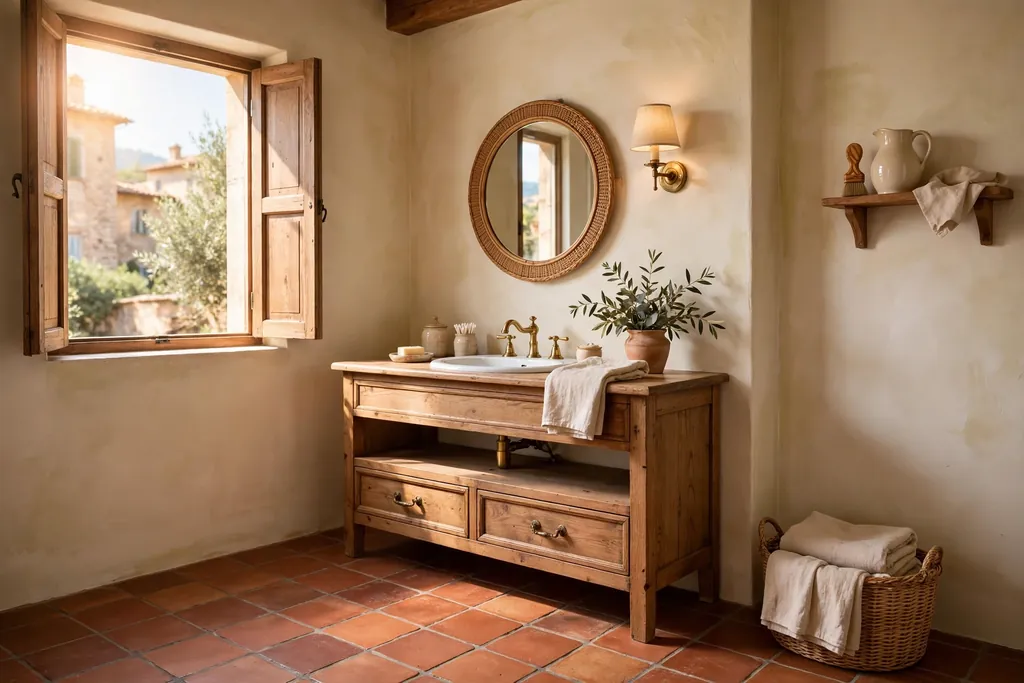
Lay warm terracotta floor tiles to give the whole bathroom a sun baked base. Terracotta suits cream walls, wood vanities, and brass fittings, and it feels warmer under bare feet than pale porcelain. A plain square tile laid straight reads calm, while a checkerboard of terracotta and cream adds pattern without a busy print.
Seal the tiles and grout as the maker advises, since unsealed terracotta can stain from soap and hard water. Use a rug runner in the main walking line for extra warmth in autumn, and mop with a gentle cleaner rather than a harsh bleach product that can dull the finish. In a small room, keep the tile size moderate so cuts around the toilet and vanity stay tidy.
2. Cream Limewash Walls
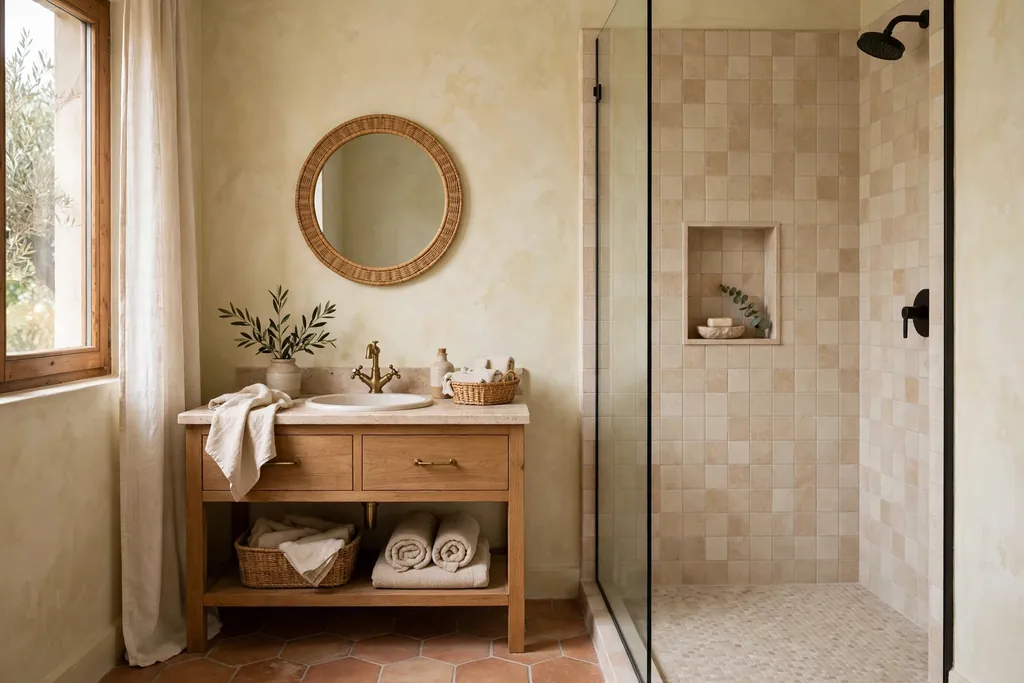
Paint or finish the walls in a warm cream limewash look to soften hard tile and bright white porcelain. The soft, uneven tone catches daylight and makes a small bathroom feel calm rather than clinical. This suits a room with flat white walls that need warmth but cannot take a full tile change.
Keep the limewash on dry walls only, away from direct shower spray, and pair it with tile in the wet zone. Test a sample in daylight and evening light, since warm bulbs can deepen a pale tone. If you rent, a textured removable wallpaper in a warm plaster look gives a similar effect with less change. For renter friendly wall and storage swaps, these apartment bathroom ideas cover removable options that leave the original finish intact.
3. Freestanding Oval Tub
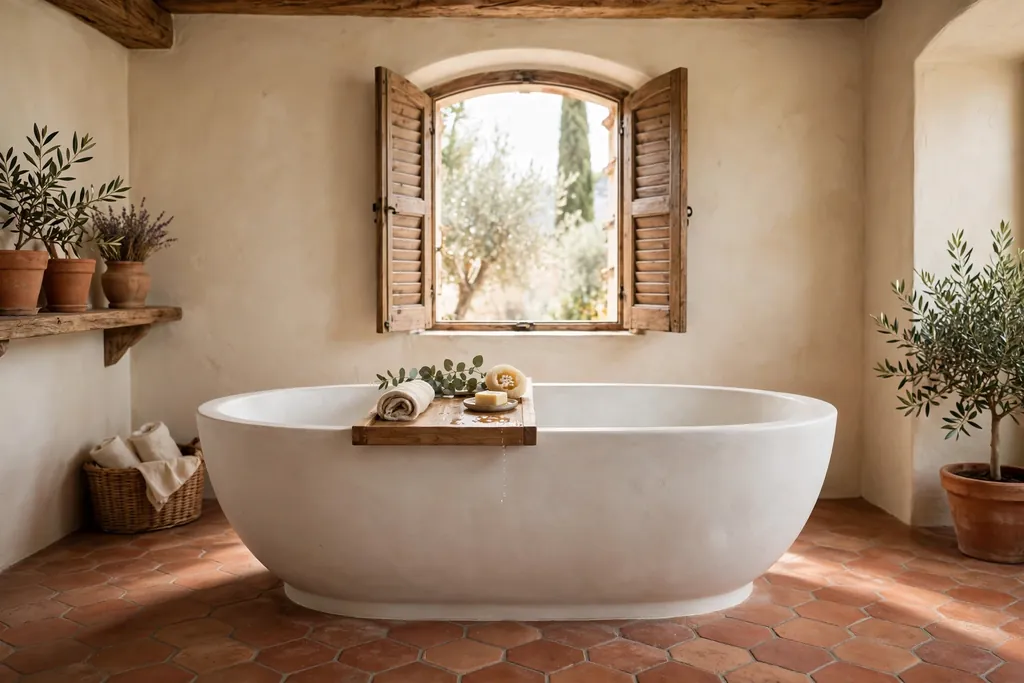
Set a freestanding oval tub as the calm center of the room, with clear floor around it so the shape can be seen from the door. An oval tub suits a larger bathroom and a slow soak routine, and it pairs well with a wooden tray, a stool, and one warm light source nearby. Keep the tub in cream or white so terracotta and wood stay the warm accents.
Check floor strength, drain position, and door clearances before choosing a freestanding model, since moving a drain is a larger job than swapping a tub. Keep a folded towel and a small stool within reach, and leave the wall behind the tub mostly plain so the tub stays the focus. A floor mounted filler in aged brass links the tub to the rest of the room.
4. Travertine Walk-In Shower
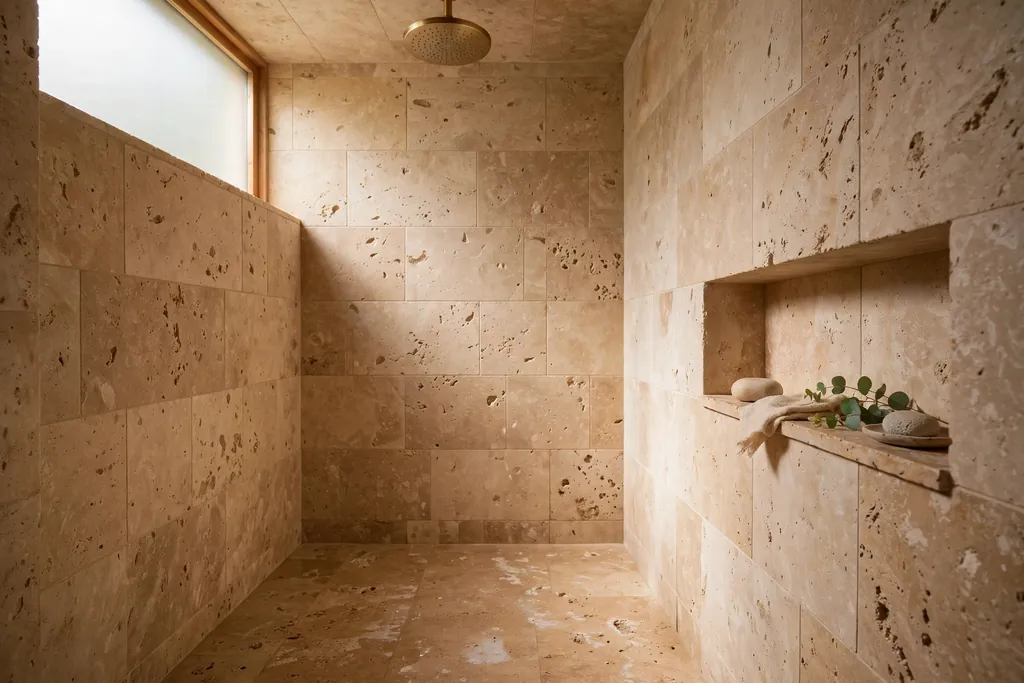
Build a walk-in shower lined in travertine for a warm stone look that suits both rustic and calm modern Italian rooms. Travertine has natural pits and tone changes, so each wall reads as stone rather than a printed tile. A walk-in entry with no door to swing open also helps a small bathroom feel more open.
Seal the stone and re-seal on the schedule the supplier gives, since travertine can stain in a wet zone. Use a large format tile on the walls to cut down on grout lines, and add a small stone shelf or niche for shampoo bottles. A rainfall head suits the calm look, but check water pressure first, since a very wide head can feel weak on a low pressure line.
5. Arched Brass Mirror
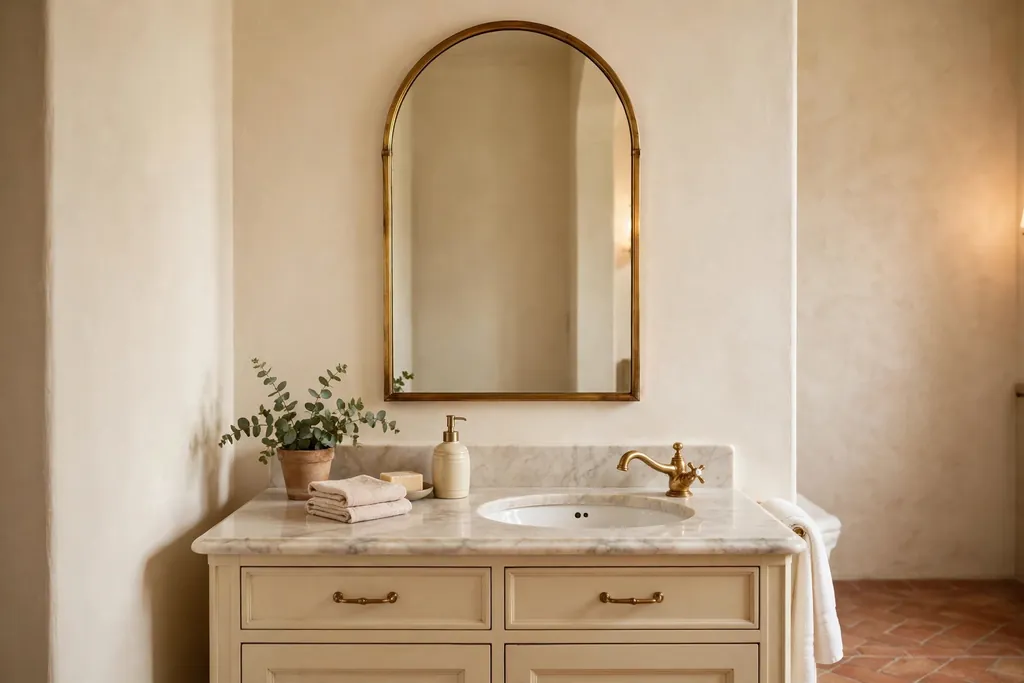
Hang an arched mirror with a slim brass frame above the vanity to break up the rectangles of tile, cabinets, and doors. The arch echoes Italian doorways and windows, draws the eye upward, and softens a boxy room. This suits a plain vanity wall where a flat rectangular mirror would blend in and add little interest.
Center the mirror over the sink at eye level, and keep the width a little narrower than the vanity so the edges do not crowd the light fixtures. Wipe brass with a soft dry cloth, and avoid harsh cleaners that can strip the finish. If drilling is not allowed, a leaning arched floor mirror beside the vanity gives a similar shape with no holes.
6. Aged Brass Faucets and Hardware
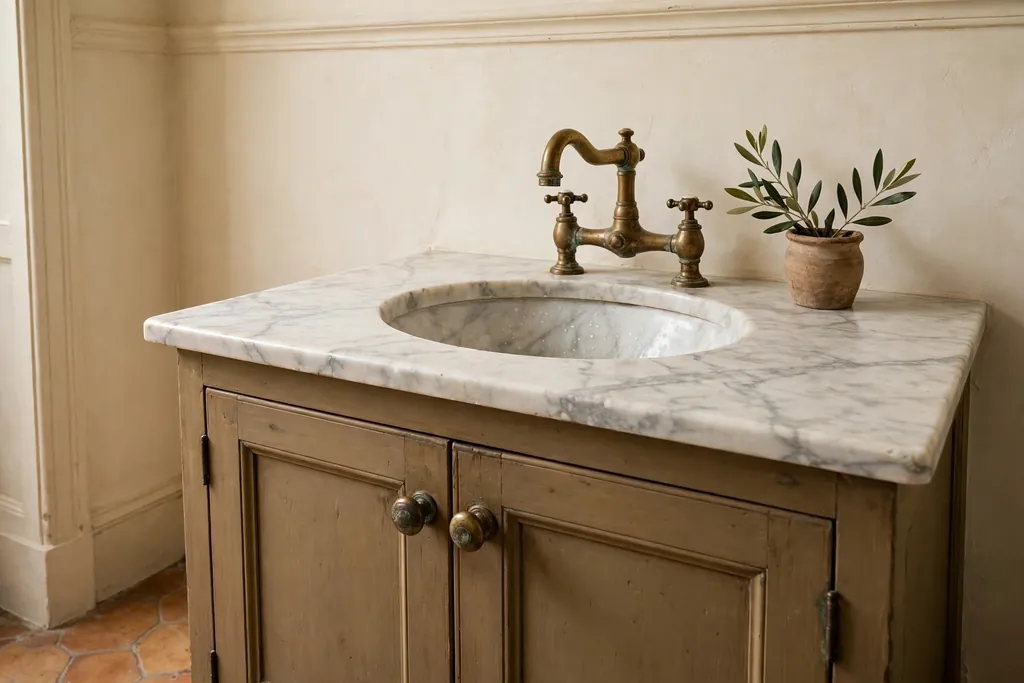
Swap chrome faucets, towel bars, and cabinet knobs for aged brass to warm the whole room in one coordinated move. Brass suits terracotta, cream, marble, and walnut, and it reads as old Italian hardware rather than a bright new fitting. Keep the finish consistent across the pieces you change, so the room looks planned.
Save every original screw and fixture in a bag inside the vanity if you rent, so you can restore the room later. Check that new faucets fit your existing sink holes and water connections before buying, since hole spacing varies. Clean brass gently and let it age naturally if you like a softer patina, or polish it on a schedule if you prefer a brighter shine.
7. Walnut Vanity with an Open Lower Shelf
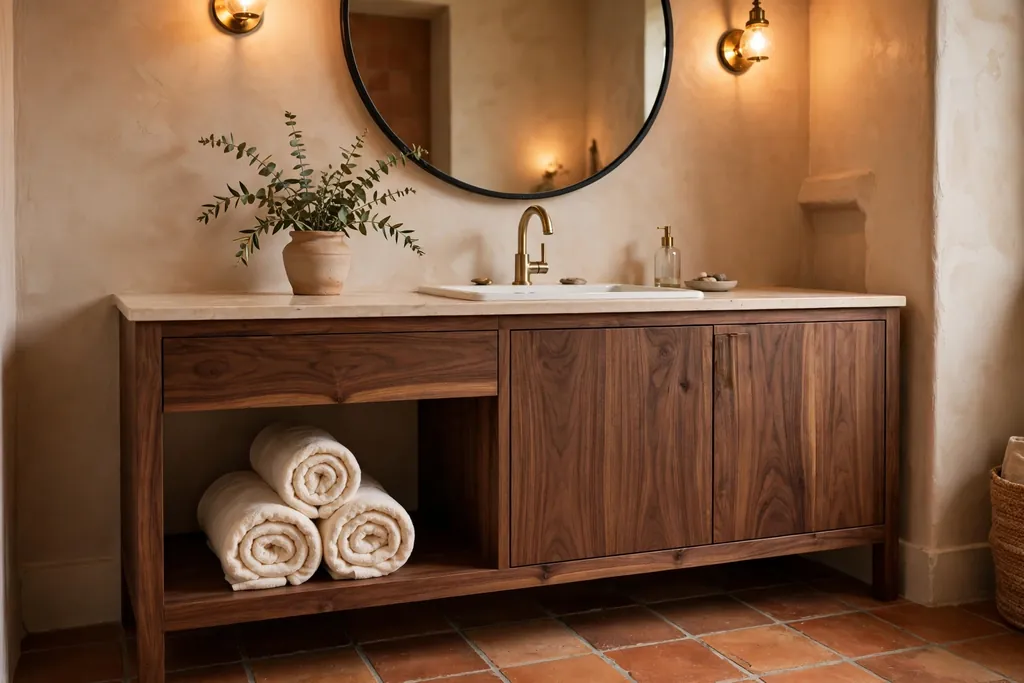
Choose a walnut vanity with an open lower shelf to bring dark wood warmth into a room full of tile and porcelain. The wood grounds the sink wall, while the open shelf holds rolled towels or a basket where closed cabinets would hide them. This suits a main bathroom where the vanity is the largest piece and needs to look planned rather than bulky.
Keep the shelf to one group of items, such as rolled towels in one basket, so it reads as display rather than storage overflow. Seal wood near the sink as the maker advises, and wipe splashes promptly, since standing water can mark wood over time. Pair the vanity with brass knobs and a cream countertop so the dark wood stays the clear accent.
8. Recessed Shower Niches with Stone Shelves
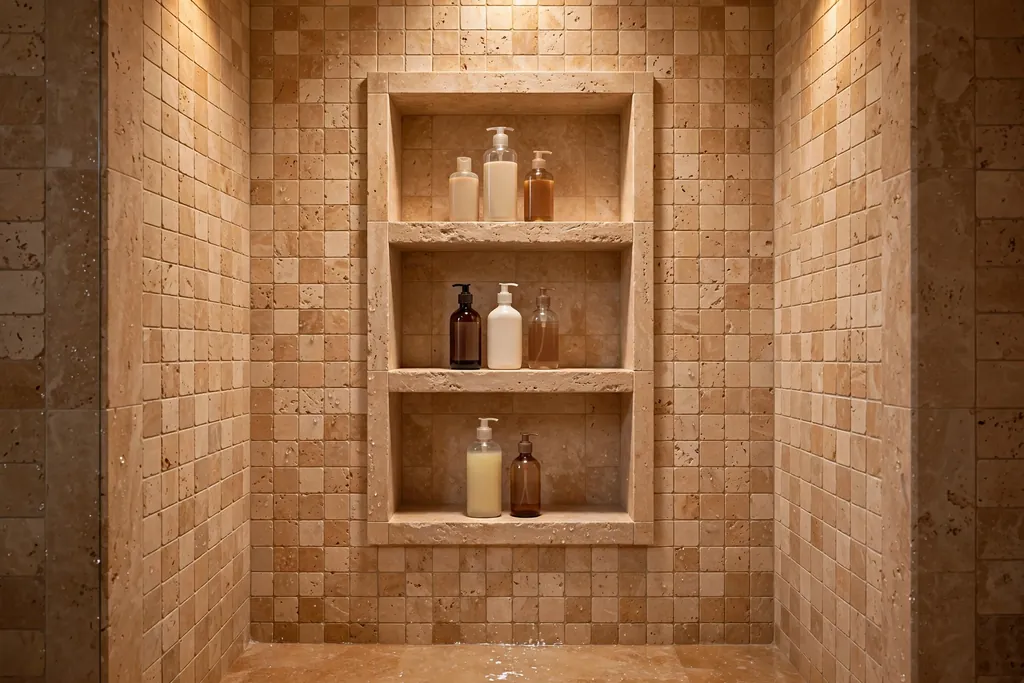
Set recessed niches into the shower wall with stone shelves to hold shampoo, soap, and a razor without a hanging caddy. Niches echo the alcoves found in old Italian homes, keep bottles off the floor, and keep the shower wall tidy. This suits a tiled shower where a corner shelf would crowd the elbow room.
Plan niche height for the tallest bottle you use, and slope each shelf slightly toward the shower so water drains rather than pools. Keep one niche for daily items and a second, higher niche for spares, so the shower still looks calm. If a recessed niche is not possible, a shallow stone shelf at the same spot gives most of the same benefit.
9. Marble Vessel Sink on a Stone Top
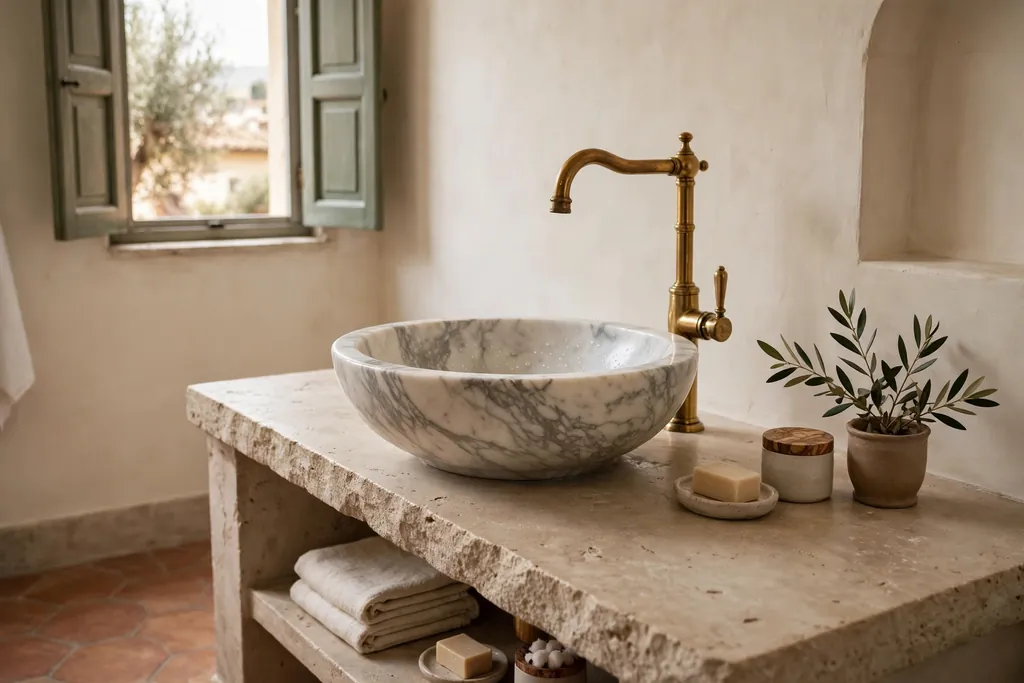
Set a marble vessel sink on a stone or wood countertop to make the sink wall feel like a small Italian washstand. A vessel sink sits above the counter, so its shape and veining stay visible, and it pairs well with a wall mounted or tall brass faucet. This suits a vanity that needs a focal point without a full countertop change.
Check the counter height with the vessel added, since the bowl raises the rim well above a standard sink. Use a tall faucet that clears the bowl, and seal the marble as the supplier advises, since marble can stain from toothpaste, soap dyes, and hard water. Keep the counter mostly clear, with only a soap dish and one small tray, so the sink stays the focus.
10. Majolica Tile Backsplash Behind the Sink
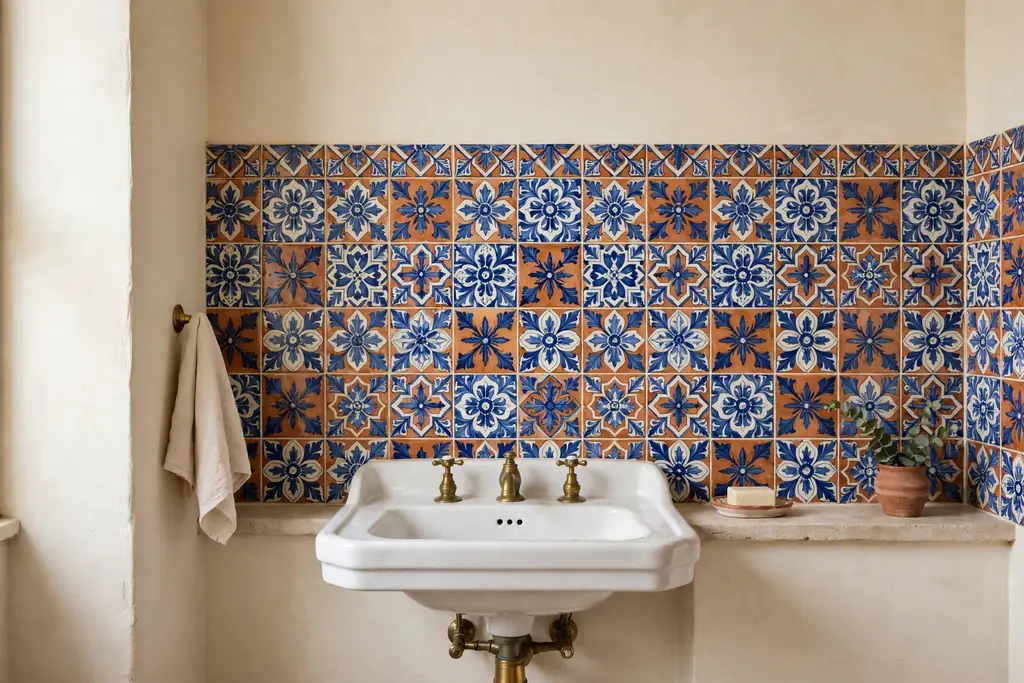
Lay a majolica style tile backsplash behind the sink in blue, green, or terracotta patterns to give a plain vanity wall a clear Italian accent. Patterned tile works best as one band or one framed panel, with plain tile or plaster on the rest of the wall, so the pattern reads as a feature rather than clutter. This suits a white or cream bathroom that needs color in one controlled place.
Keep the pattern in the room palette, with one strong color and cream grout, and seal the grout in the splash zone. Measure the mirror and faucet positions first, so the tile panel centers on the sink rather than on the wall. If full tile feels like too much, a single row of patterned border tiles above plain tiles gives the same note at a smaller scale.
11. Natural Linen Shower Curtain
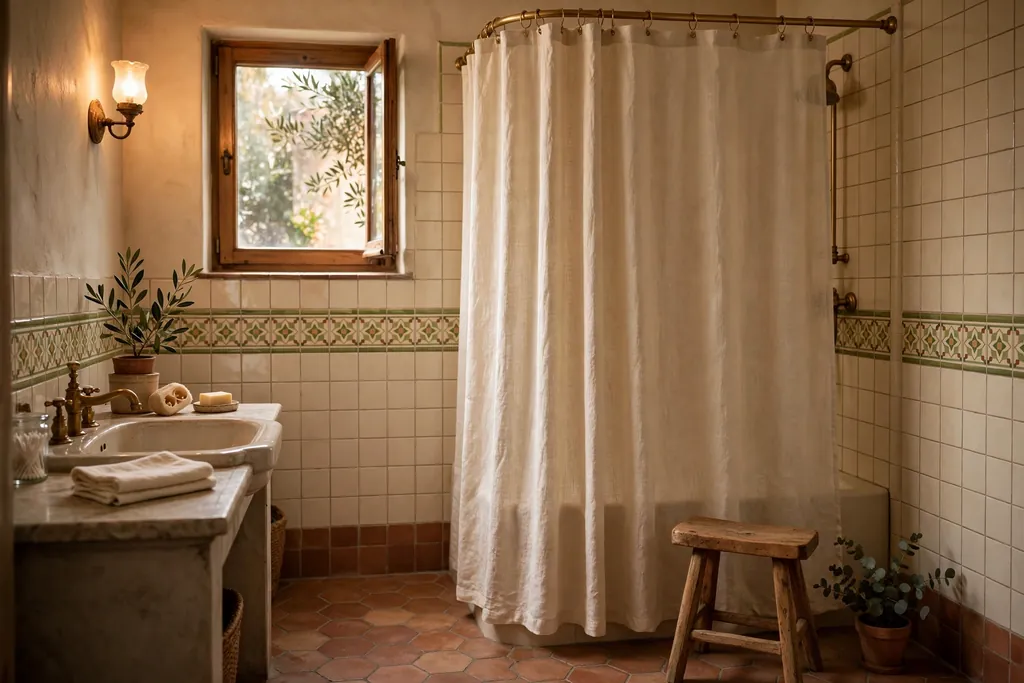
Hang a natural linen look shower curtain in cream or oat to soften a tiled shower and add the relaxed texture of Italian country homes. A fabric outer curtain hangs better than a thin plastic curtain on its own, and a separate washable liner keeps water where it belongs. This suits a bathroom where the shower curtain is the largest single surface.
Keep the rest of the room quiet when the curtain has texture: plain towels, a simple mat, and one matching accessory are enough. Wash the liner on the schedule the maker gives, and let the outer curtain dry fully between showers to avoid mildew. Hang the curtain a little higher than usual with a longer liner, so water still falls inside the tub or tray.
12. Layered Terracotta and Cream Towels
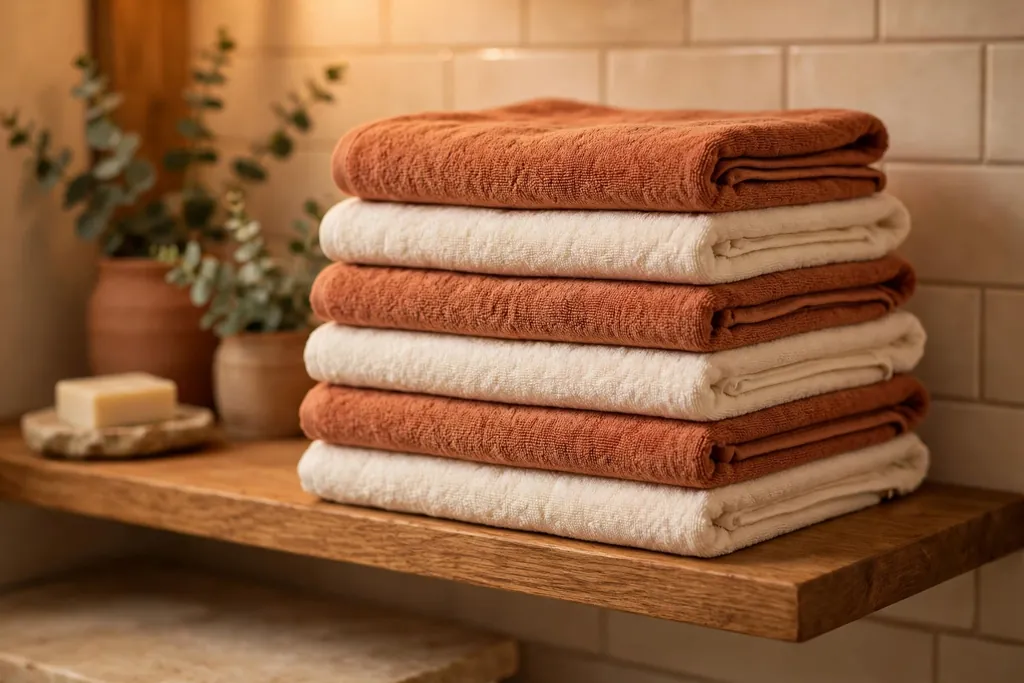
Layer towels in terracotta and cream to give a plain bathroom an Italian palette in one laundry friendly swap. Build the stack in thin layers: cream bath towels for daily use, with one terracotta hand towel folded on top for color. The warm accent reads as Mediterranean without needing patterned towels, and layers let you change the look for autumn by swapping one color only.
Fold towels the same way each time, and keep the stack to one shelf or one basket so the bathroom stays tidy. Wash towels in matching sets and keep a spare set folded nearby, so a fresh stack is a quick swap rather than a chore. For the same limited palette approach in a bedroom, these Italian bedroom ideas show how cream, terracotta, olive, and walnut repeat across bedding and walls.
13. Wrought Iron Towel Ladder
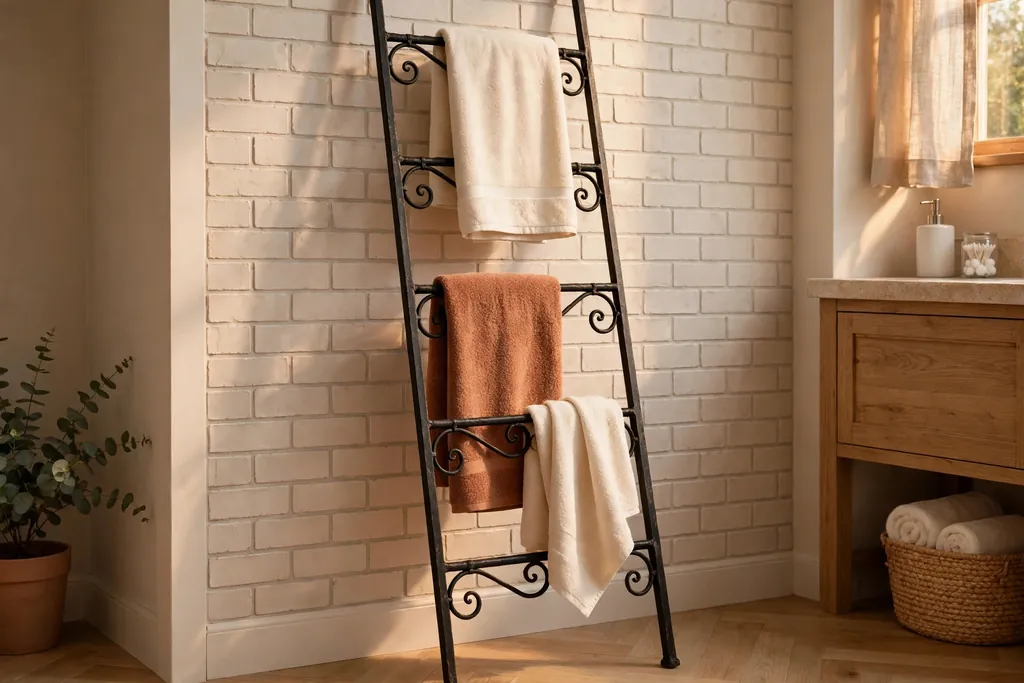
Lean a wrought iron towel ladder against a spare wall to hold towels, a robe, and a small hanging basket without drilling. The dark iron suits Italian villa style, takes up little visual space, and gives a narrow wall beside the door or at the end of the tub a clear job. This suits a bathroom with no free wall for a cabinet.
Put heavier items, such as folded towels, on the lower rungs and lighter items higher up, and add small adhesive pads under the feet so it does not slide on tile. Check that the top cannot tip forward if a child pulls on it, and anchor it if your household needs that extra safety. Keep the ladder to towels and one robe, so it stays a towel station rather than a dumping ground.
14. Olive Branch in a Terracotta Vase
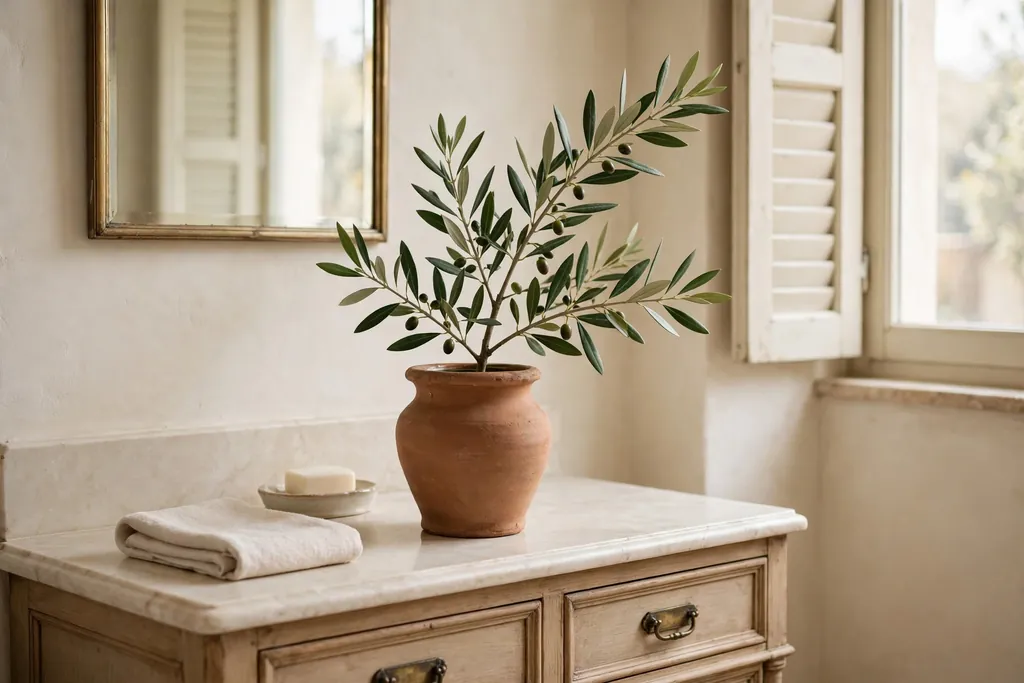
Place an olive branch in a terracotta vase on the vanity or a shelf for the simplest Italian detail in this list. One vase with a few olive stems needs almost no space, adds silvery green to a warm room, and needs no pattern to make its point. One vase reads as calm, while small items spread across every surface can make a small room feel cluttered.
Choose a vase tall and narrow for a vanity, or short and wide for a shelf, and trim stems to a height that clears any mirror or shelf above. Change the water every few days if the stems are fresh, and keep the vase away from the sink edge, where it could be knocked during handwashing. If fresh stems are hard to keep, a good quality faux stem you can wipe clean gives the same shape with less care.
15. Lemon and Rosemary Scent Station
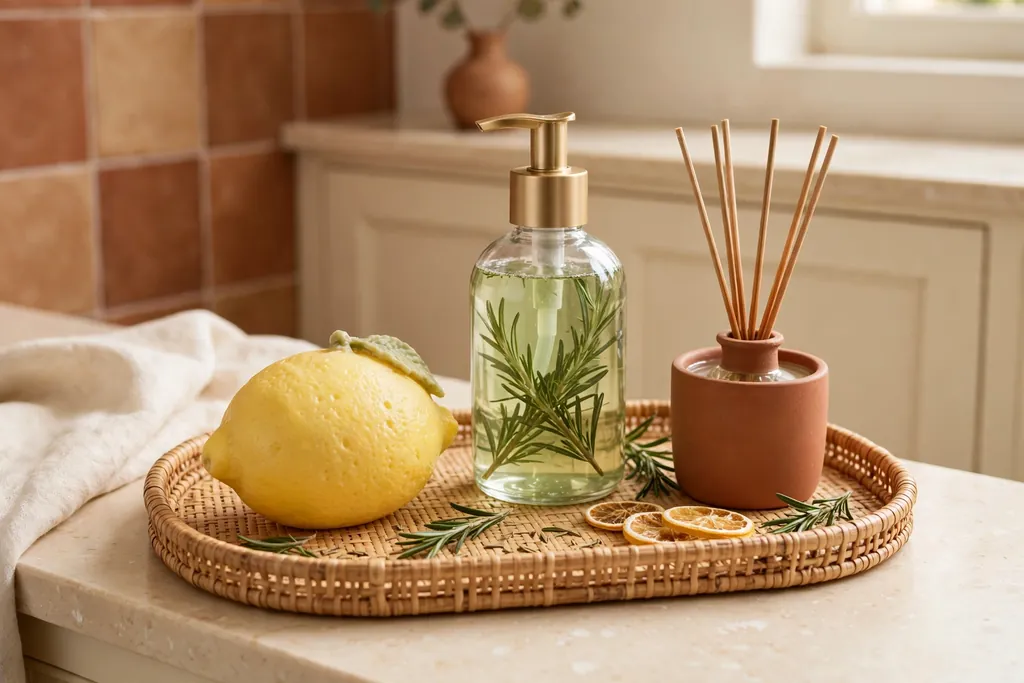
Set a small scent station on the vanity with a lemon soap, a rosemary hand wash, and one room diffuser in a plain glass bottle. Citrus and herb scents suit an Italian bathroom better than heavy floral scents, and a small station keeps bottles grouped rather than scattered across the counter. This suits a bathroom that smells flat despite looking tidy.
Keep the station to three items at most: soap, hand wash, and diffuser, on one small tray. Refill from larger bottles stored elsewhere, so the tray never fills with half empty containers. Change the scent for autumn by swapping lemon for a warmer herb or wood note, while keeping the same tray and bottles so the change costs little.
16. Warm Wall Sconces Beside the Mirror
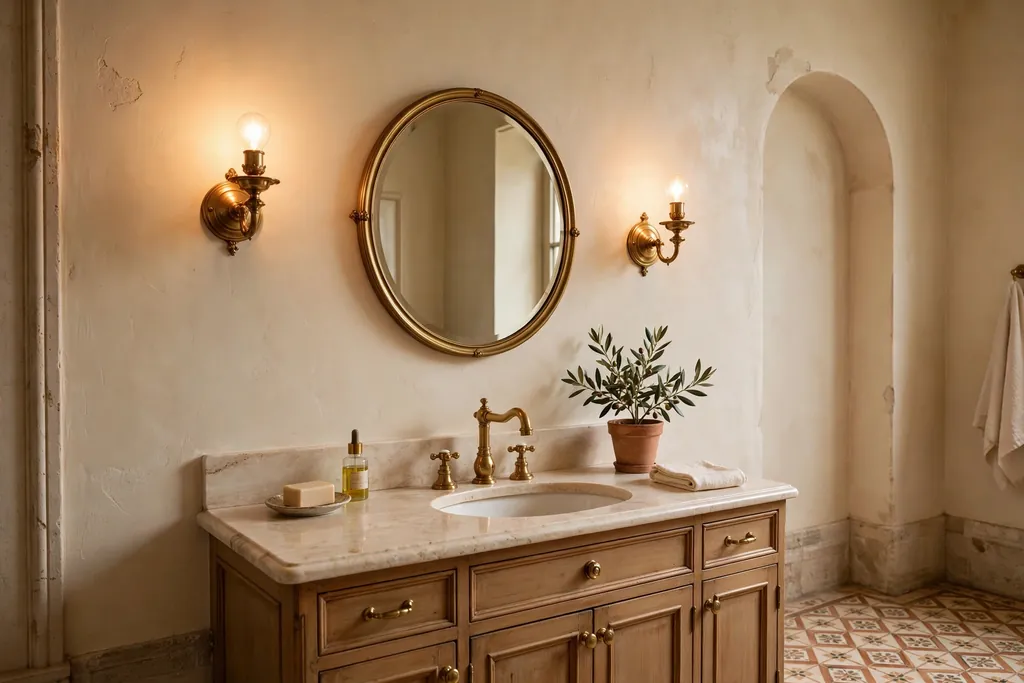
Mount warm wall sconces on either side of the mirror for softer, more even light than a single overhead fitting. Sconces at eye level reduce shadows on faces, make morning routines easier, and give evening baths a calm glow. This suits a vanity where overhead light alone casts harsh shadows.
Choose a warm bulb color and keep it consistent across the room, so sconces and ceiling light do not clash. If wiring a new sconce is not practical, a plug-in wall light or a battery operated picture light above the mirror gives a similar layered effect with less work. Keep all plug-in lights away from direct water spray, and put the main light on a dimmer where wiring allows.
17. Handmade Ceramic Soap and Storage Set
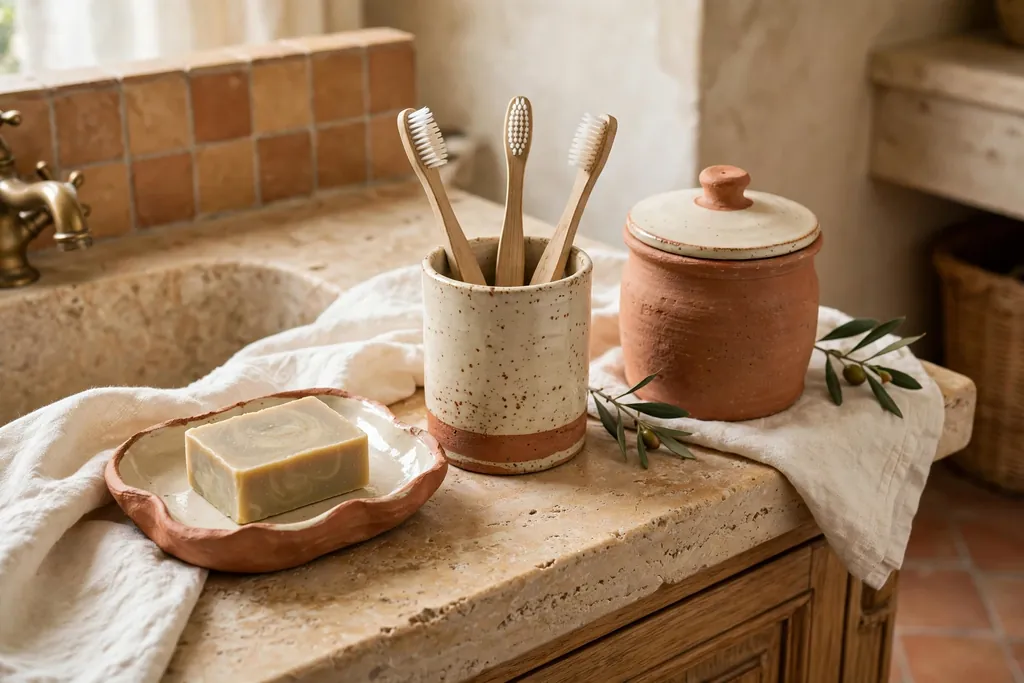
Group daily items in a handmade ceramic set: a soap dish, a toothbrush cup, and one small lidded jar for cotton pads or hair ties. Ceramics in cream, terracotta, or sage bring the feel of Italian pottery to the sink without a remodel, and a matching set stops the counter from looking like a collection of unrelated bottles. This suits a small vanity where every item stays in view.
Keep the set to items you use daily, and store spares in a closed cabinet or basket elsewhere. Rinse the soap dish weekly so soap does not build up, and choose a cup wide enough that toothbrushes do not tip. If you prefer a quieter counter, choose plain cream ceramics and let one terracotta piece carry the color.
18. Woven Seagrass Baskets for Laundry and Spares
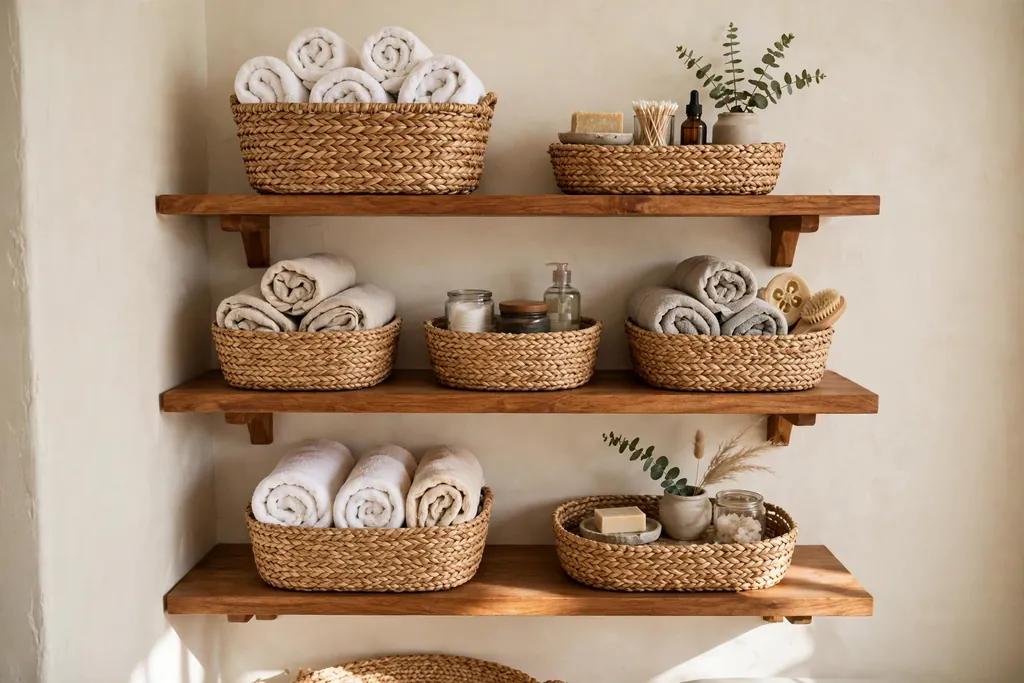
Sort laundry and spare toiletries into woven seagrass baskets, one per job, such as towels, cleaning, and spare toilet paper. Baskets soften hard tile and porcelain while hiding the visual noise of bottles and tubes. This suits a bathroom with open shelves or a vanity shelf where closed cabinets are not an option.
Label the base if the baskets look alike, and set them on a shelf or a stool rather than on a wet floor, since seagrass copes with humidity better when it can dry. Once a month, empty each basket and return only what you actually used, since bathroom baskets quietly collect empty bottles. Keep one basket partly empty for items you add later, so the system stays usable.
19. Linen Cafe Curtain at the Window
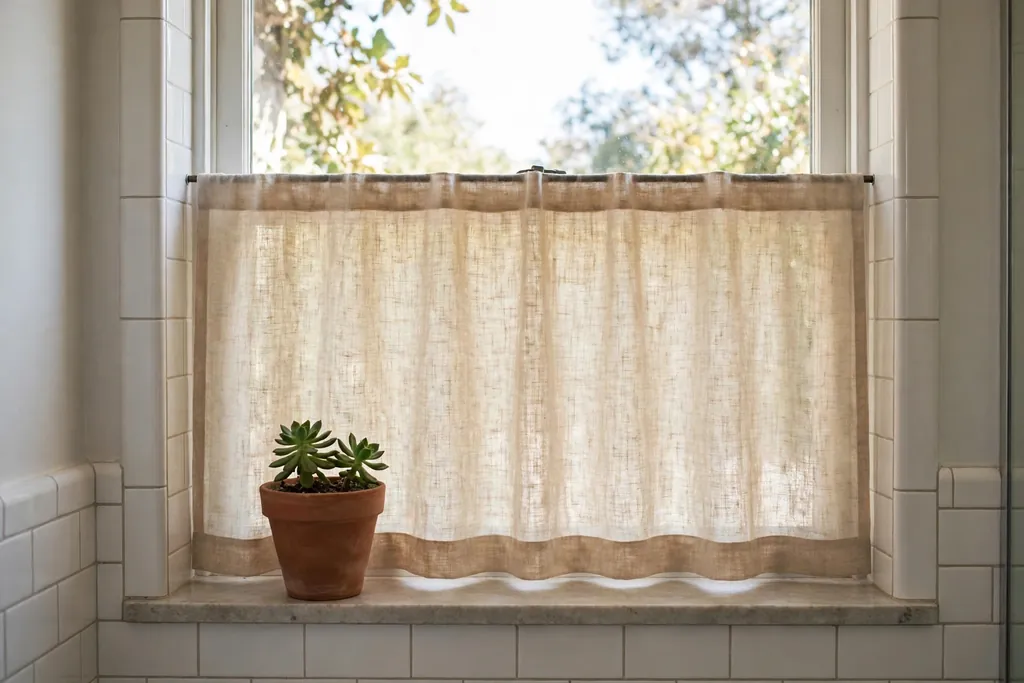
Hang a linen cafe curtain on the lower half of the bathroom window for privacy with daylight still coming in above it. A cafe curtain suits a street facing bathroom, a small window, and a room where a full curtain would block too much light. Choose a plain linen look in cream or oat, close to the wall color, so the window treatment links to the room rather than competing with it.
Use a tension rod if drilling is not allowed, and keep the curtain short enough to clear the sink or tub below. Wash the curtain on a regular schedule, since bathroom humidity can dull fabric over time. Pair the curtain with a small terracotta pot on the sill to link the window to the rest of the room.
20. Heated Brass Towel Warmer
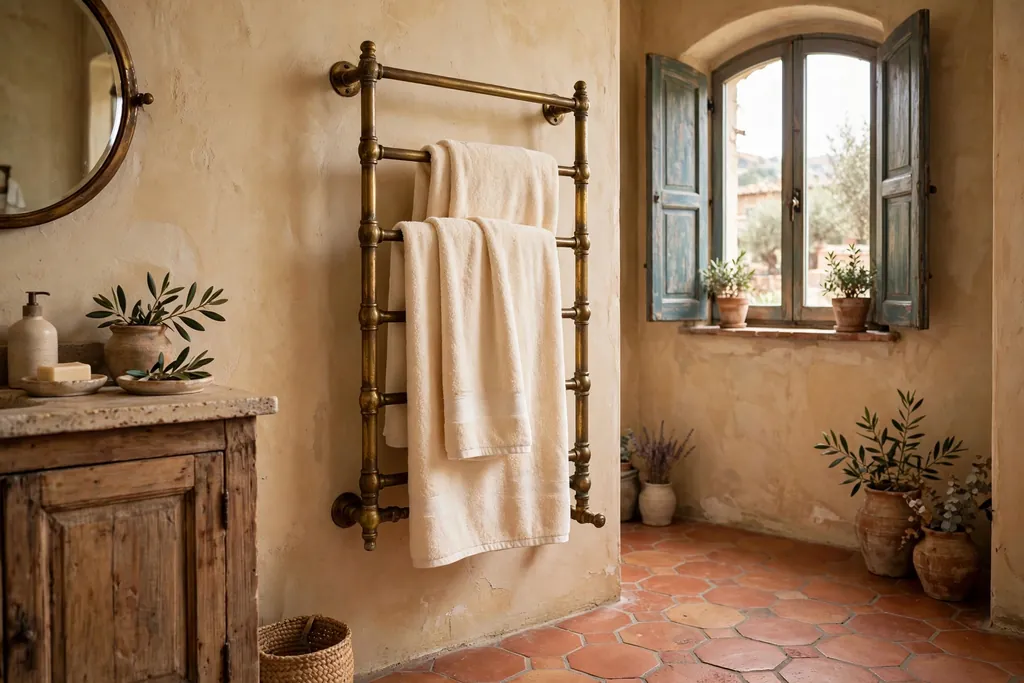
Fit a heated towel warmer in aged brass to give autumn mornings a warm towel and a gentle heat source in one piece. A towel warmer suits a bathroom that feels cold in the morning, a household that uses towels daily, and a wall where a radiator would look out of place. Keep the finish in aged brass so it links to faucets and hardware.
Check whether the model is electric, plumbed, or dual fuel, and use a qualified installer for any wired or plumbed work. Hang towels loosely over the bars so air can move and they dry fully, and keep the warmer clear of shower spray. If a fixed warmer is not practical, a freestanding heated rail gives a similar result with less installation work.
21. Teak Bath Mat and Wooden Stool
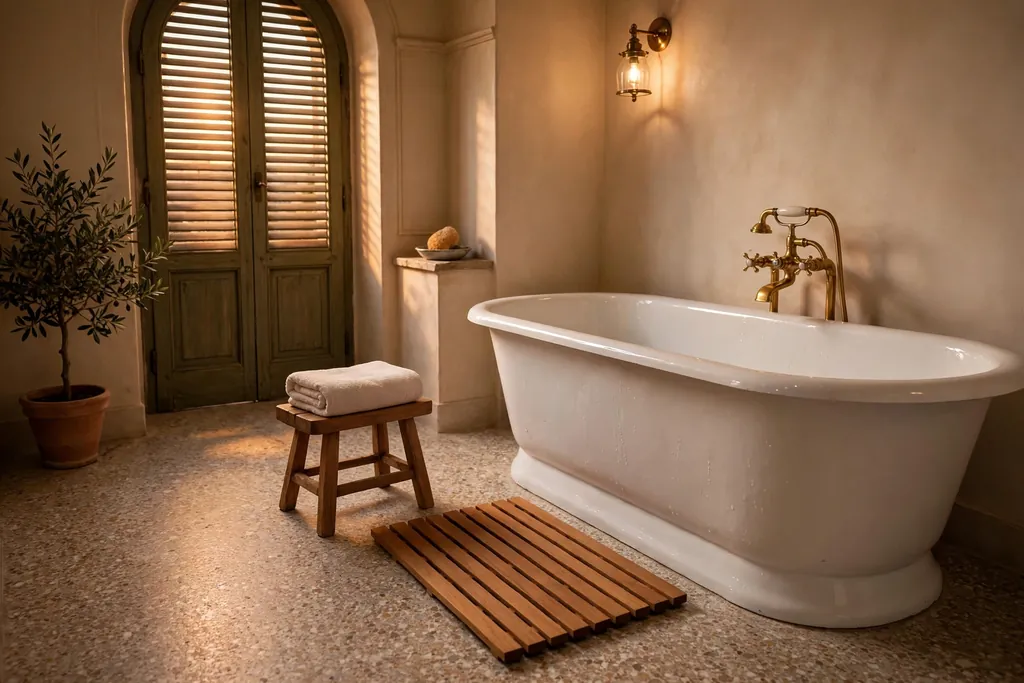
Set a teak bath mat beside the tub or shower and a small wooden stool nearby for a towel, a book, or a candle kept safely away from water. Teak copes with wet conditions better than most woods, and warm wood underfoot makes cold tile far more pleasant on autumn mornings. This suits a bathroom where a fabric mat stays damp too long.
Let the mat drain and dry between showers, and wipe the stool dry after use to avoid warping. If a full teak mat is more than you want to spend, start with one wooden accessory, such as a soap dish or stool, and see whether the warmth suits the room. Keep wood away from constant standing water, since even teak lasts longer when it can dry.
22. Patterned Terracotta and Cream Rug Runner
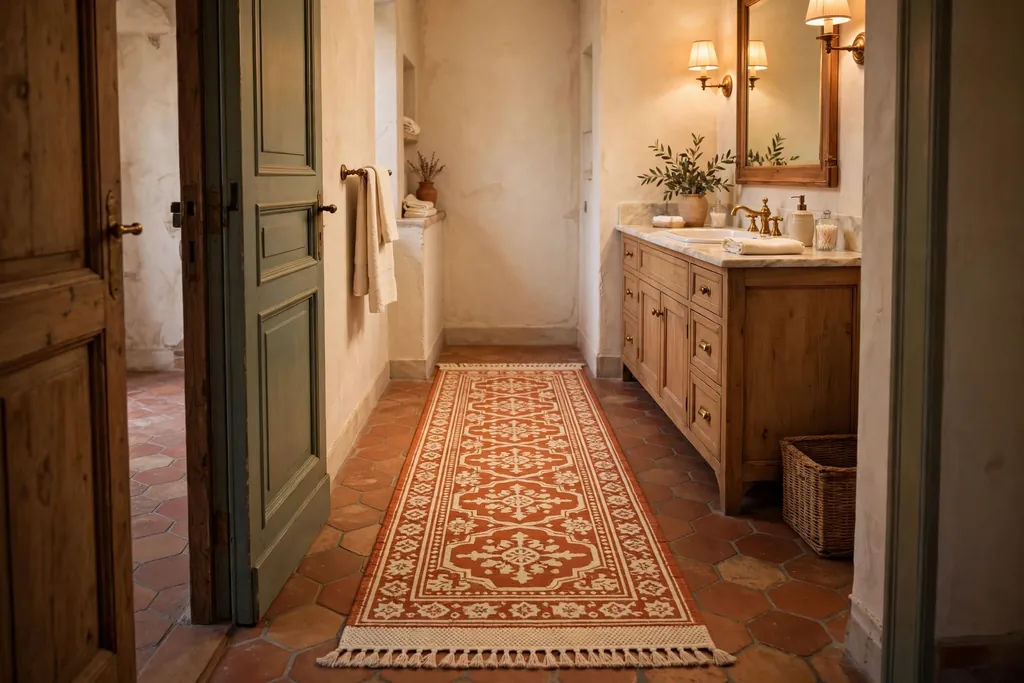
Lay a patterned rug runner in terracotta and cream along the main walking line, from the door to the vanity or tub. A runner anchors the floor, warms the first step out of the shower, and links the door, vanity, and tub into one route. This suits a long narrow bathroom where one large rug would block doors or drawers.
Choose a low pile rug that doors and drawers can clear, and use a rug pad on smooth floors to reduce slipping. Keep the pattern in the room palette, with terracotta, cream, and one quiet accent, so it grounds the room without competing with tile. Wash the runner on a regular schedule, and keep a second runner in rotation so the bathroom never sits bare on wash day.
23. Wooden Bath Tray for Soaks
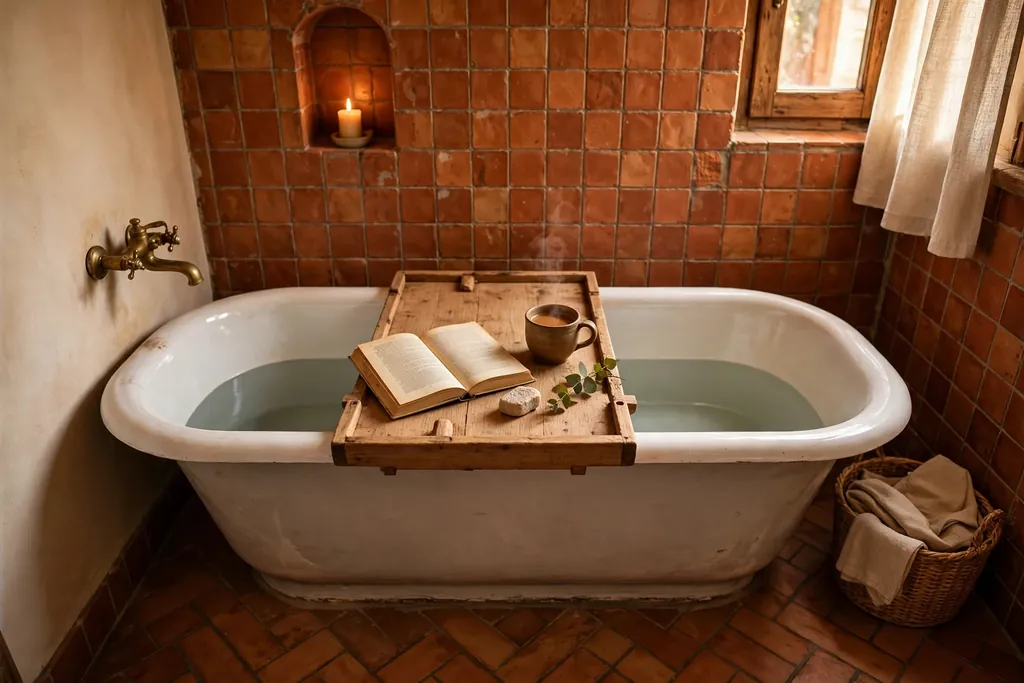
Rest a wooden bath tray across the tub to hold a book, a cup, and a candle kept safely away from the water. A tray turns a plain tub into a place to slow down, and it suits a freestanding or built-in tub where the rim is wide enough to support it. Choose a tray that spans your tub width with extendable sides, and look for a slot that keeps a book upright.
Dry wood trays after each use to avoid warping, while bamboo and coated metal versions cope better with steam. Store the tray upright behind the door when it is not in use so it does not become a permanent clutter spot. Keep candles in safe holders, away from towels and curtains, and never leave a lit candle unattended.
24. Arched Shower Screen in Clear Glass
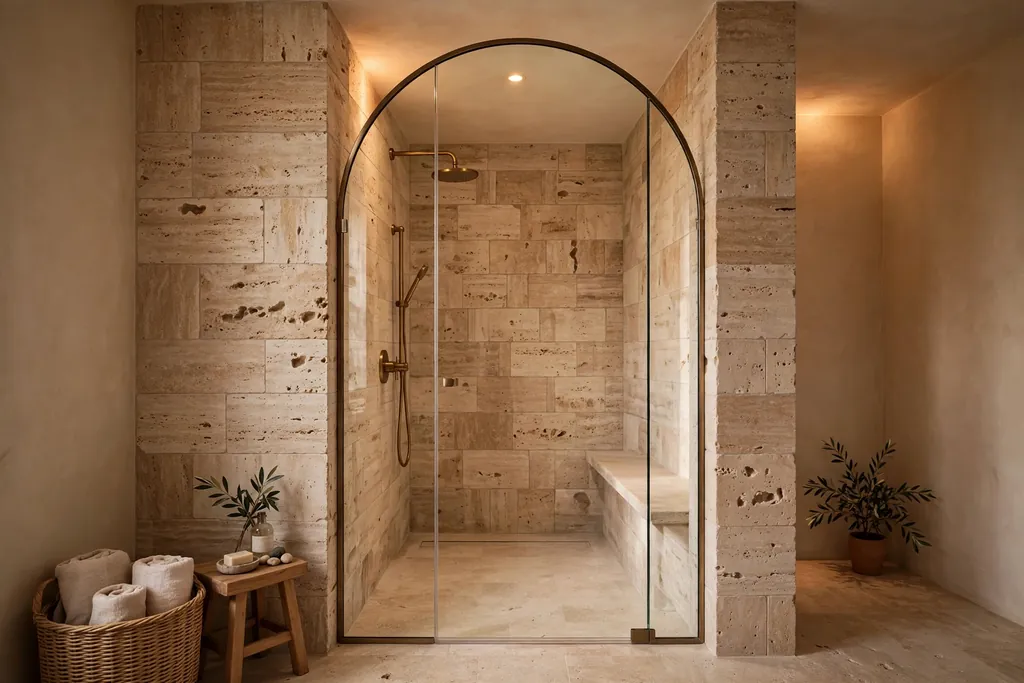
Fit an arched shower screen in clear glass to bring the Italian arch shape into the shower without blocking light. A clear screen keeps the shower wall visible, makes a small bathroom feel larger, and suits a walk-in shower where a curtain would cling or block the stone or tile. The arch at the top softens the rectangle of the screen.
Measure the shower opening and the door swing carefully, since an arched top changes the usable height at the edges. Seal the glass edges as the maker advises, and squeegee the screen after showers to reduce water spots on clear glass. Keep the shower wall behind the screen simple, with one niche and plain stone or tile, so the arch stays the feature.
25. Dried Lavender Bundle and Seasonal Wall Hook
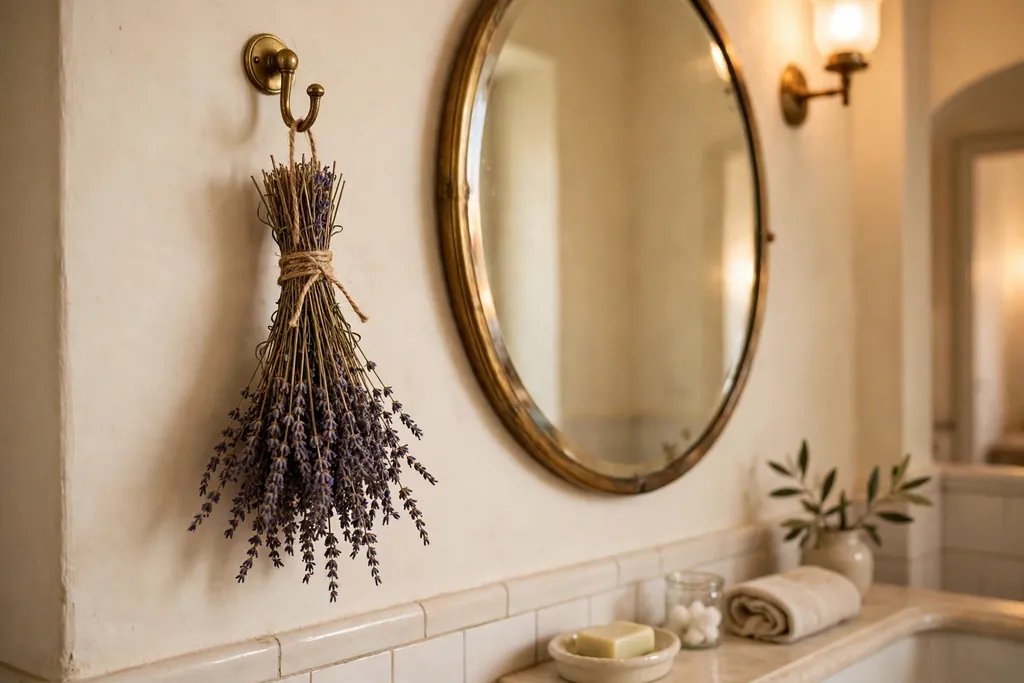
Hang a dried lavender bundle from a brass wall hook beside the mirror or door for gentle scent and a clear seasonal note. Dried lavender suits autumn, needs no watering, and can be swapped for fresh herbs or a small dried citrus slice garland later in the year. This suits a bathroom that needs a seasonal change without new towels or decor.
Keep the bundle away from direct shower spray and the sink splash zone, so it stays dry and lasts longer. Tie the bundle with plain twine, and replace it when the scent fades or the stems shed. One bundle reads as intentional, while several bunches on every hook can make a small room feel cluttered, so keep the other hooks free for towels.
26. Terracotta Pot with Rosemary by the Window
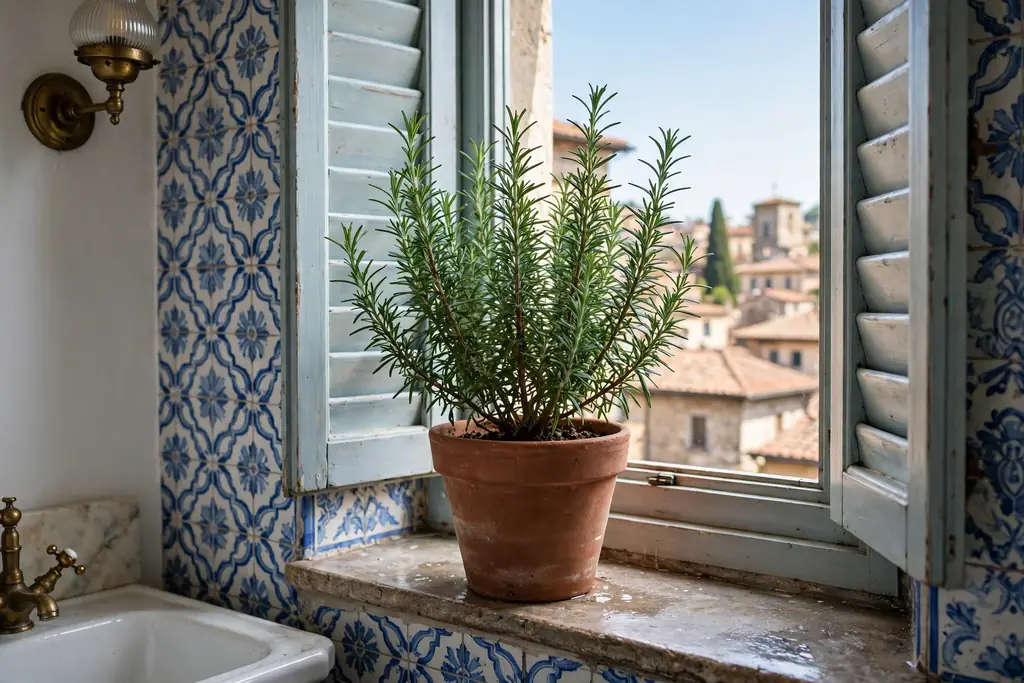
Grow rosemary in a terracotta pot on the bathroom windowsill or a shelf near the window, where it gets light and enjoys the humidity after showers. A live herb adds green, scent when brushed, and a useful sprig for cooking, and a terracotta pot links the plant to the floor tiles and vase. This suits a bathroom with a window and a sill wide enough for one pot.
Use a pot with drainage holes and a saucer, and check the soil before watering, since bathroom air already adds moisture. If your bathroom has no window, rotate the plant to a brighter room for a few days each week, or choose a low light tolerant variety such as pothos instead. One healthy plant usually looks better than a crowded collection in a small room.
27. Candlelit Soak Corner on a Small Stool
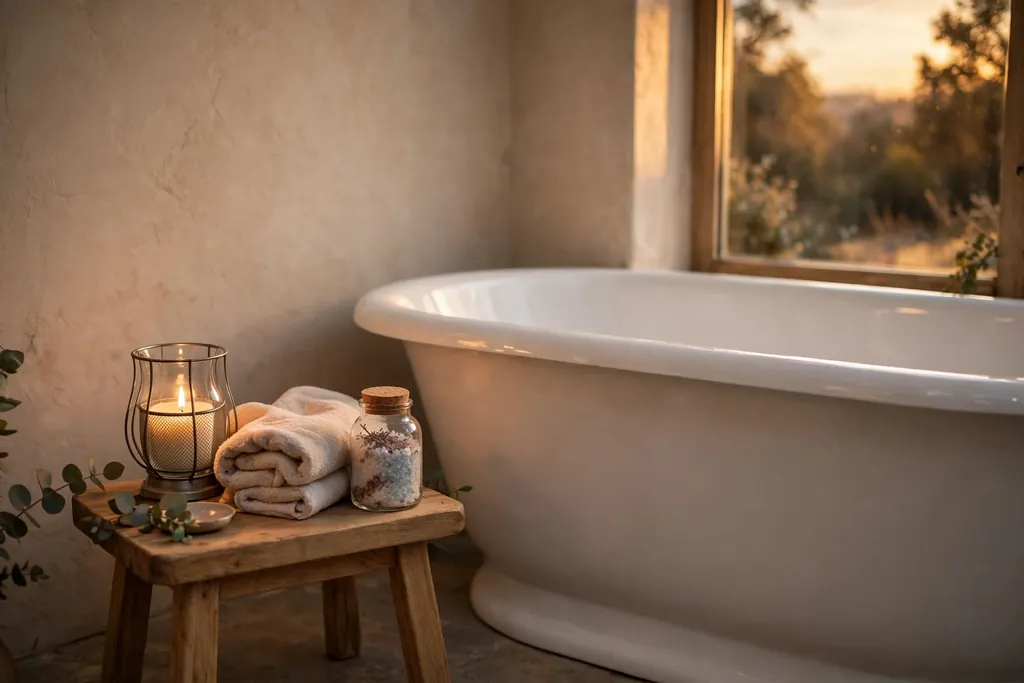
Set a small stool beside the tub as a candlelit soak corner, with one candle in a safe holder, a folded towel, and a small dish for a bath soak or salts. A dedicated stool keeps soak items together, stops bottles from lining the tub rim, and makes an evening bath feel planned rather than improvised. This suits a bathroom where the tub is used for slow soaks rather than quick showers only.
Keep the stool clear of splash range, use a stable holder that cannot tip, and never leave a lit candle unattended. Store matches or a lighter in the small dish or a lidded jar on the stool, so the corner is ready without searching a cabinet. For autumn, swap a light citrus candle for a warmer herb or wood scent, while keeping the same stool and holder.
28. Framed Italian Coast Prints in Wood Frames
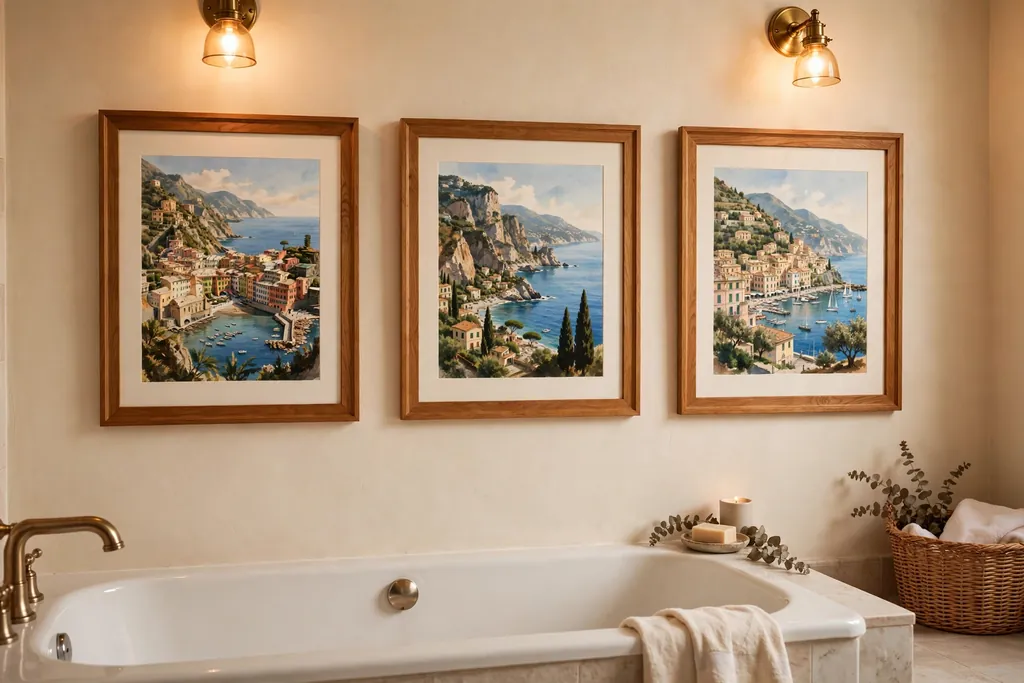
Hang two or three framed Italian coast prints in warm wood frames on one wall, centered on the tub or vanity. Coast, hill, and village scenes give a plain bathroom wall a clear focus without a full wall treatment, and matching wood frames make different images look like a set. This suits a bathroom with one free wall and no room for a cabinet.
Use frames with sealed backs or acrylic covers, and avoid hanging unprotected paper directly beside the shower, where steam will cockle it over time. Leave breathing room between frames, and use secure fixings suited to the wall and the weight. If you prefer a quieter wall, use one large print and leave the other walls plain, so the art stays the focus.
29. Stone and Wood Vanity Tray for Daily Items
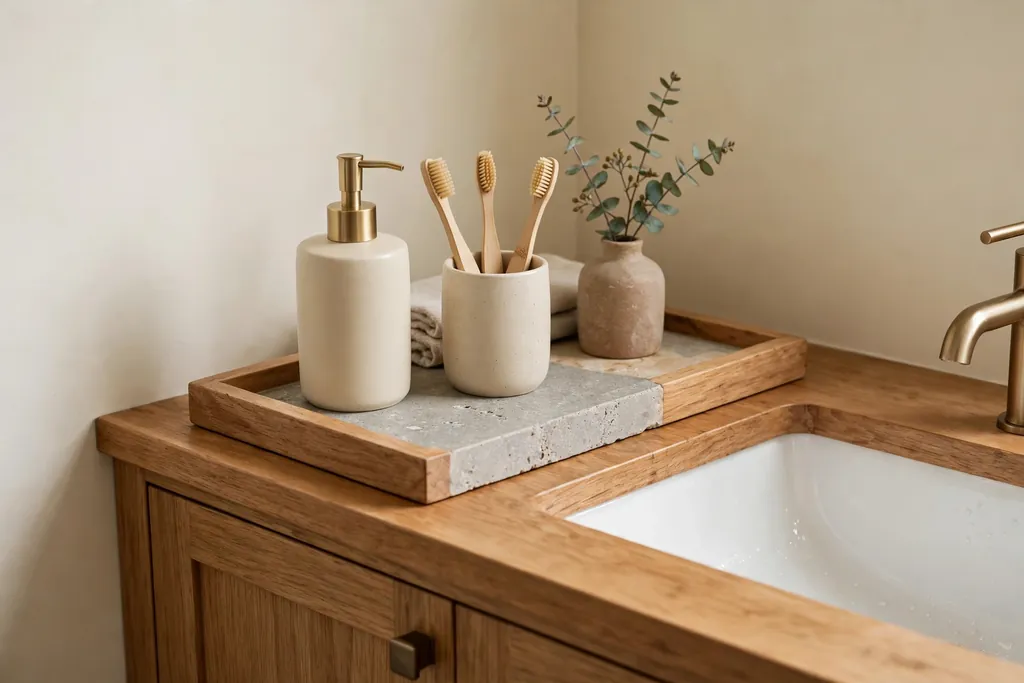
Group daily items on a stone and wood tray on the vanity: a soap dispenser, a toothbrush cup, and one small plant or vase. A tray corrals small items into one zone, protects the countertop from soap drips, and makes cleaning the counter a one lift job. This suits a small vanity where bottles otherwise spread across the whole surface.
Keep the tray shorter than the sink edge so drips fall into the basin, not onto the floor, and wipe the tray weekly to stop soap buildup. Choose a tray in stone or sealed wood that copes with splashes, and keep only daily items on it, with spares stored elsewhere. A tray also makes a seasonal swap easy: change the plant or vase, and the vanity feels new without new bottles.
30. Seasonal Swap Box for Autumn Towels, Scent, and Art

Keep a seasonal swap box in a closet or on a high shelf with autumn towels, a warmer scent refill, and one small framed print, ready to rotate into the bathroom in a single session. A swap box suits a household that likes a seasonal change but does not want to shop or redecorate each time. The box keeps the autumn set together, so the swap takes minutes rather than a weekend.
Pack the box by zone: towels in one section, scent in a sealed bag, and art wrapped flat on top, with a short note of what goes where. When autumn ends, wash the towels, return the summer set to the box, and store the box out of the bathroom so humidity does not dull the spare towels. One box per season is enough; a second box usually becomes storage overflow.
Conclusion
A cozy Italian bathroom does not need a full remodel or a long shopping list. Warm floors, a calm wall tone, brass that repeats in small places, and wood that can dry between uses give the room its base, while towels, scent, plants, and art carry the seasonal change. Start with the idea that fixes your biggest daily frustration, live with it for a week, then add the next swap only where the room still feels unfinished. Save the ideas that suit your space, light, and budget, and let the room grow warmer one small, practical change at a time.
FAQs
What colors suit an Italian bathroom best?
Cream, warm white, terracotta, olive, and walnut form the core palette, with aged brass as the metal accent. Keep the palette to three main colors plus brass, and repeat them in floors, towels, and wood, so the room reads as calm rather than busy. Blue or green patterned tile can add one accent, but keep it to a backsplash or a border rather than every wall.
Can I get an Italian bathroom look in a small bathroom?
Yes, if you choose one strong detail and keep the rest calm. A terracotta rug runner, an arched mirror, brass hardware, and linen towels give the look without new tile or a new vanity. Use wall storage, such as niches, shelves, and a ladder, to free floor space, and keep the palette limited so a small room does not feel crowded.
Is terracotta tile practical in a bathroom?
Yes, when it is sealed and maintained as the maker advises. Sealed terracotta copes with bathroom use, feels warm underfoot, and suits cream and wood. Keep it out of constant standing water, mop with a gentle cleaner, and re-seal on the supplier schedule. In a very wet shower floor, use stone or porcelain in the shower and terracotta on the dry floor instead.
How do I make an Italian bathroom feel cozy for autumn?
Swap towels to terracotta and cream, change scent to a warmer herb or wood note, add a dried lavender bundle, and use warm sconce light in the evening. Keep hard finishes the same, so the seasonal change is a short swap rather than a remodel. A rug runner and a wooden stool also add warmth that suits colder mornings.
What is the easiest Italian bathroom update for renters?
Towels, a linen shower curtain, a leaning towel ladder, a vase with olive stems, and ceramic soap dishes give the look with no drilling or plumbing changes. Peel-and-stick tile and removable wallpaper can also help, but check your lease first and keep original fixtures to reinstall later. Swap hardware only if your lease allows it, and save all original parts.
Do brass fixtures need a lot of care in a bathroom?
Aged brass needs only gentle care: wipe with a soft dry cloth, avoid harsh cleaners that can strip the finish, and dry splashes from hard water when you notice them. Letting brass age naturally gives a softer patina that suits Italian style, while polishing on a schedule keeps a brighter shine. Choose the finish you are willing to maintain, and keep it consistent across faucets and hardware.