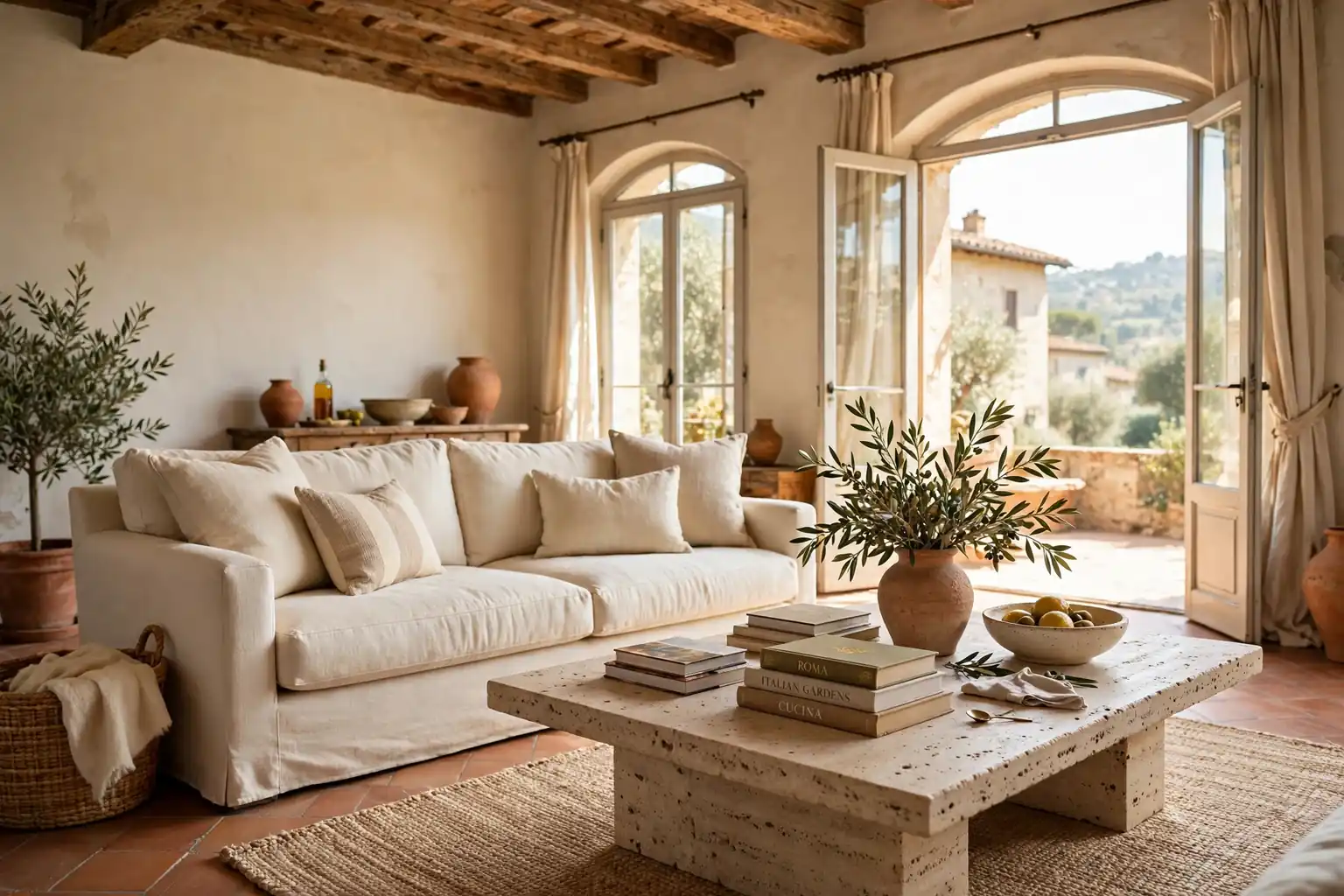
Italian styling is less about buying a whole new room and more about choosing a few warm, well made pieces and giving them room to breathe. A travertine top, a glass vase, a stack of art books, or a bowl of lemons can set the tone, while the rest of the table stays calm and useful. These 13 Italian coffee table styling ideas cover stone, glass, wood, books, candles, and serving pieces, for a small apartment, a family room, or a formal living room. Start with the piece you already love, group items in odd numbers, and leave clear space for a cup or a book. For the floor under the table, see these living room rug ideas.
Key Takeaways
- Group items in threes or fives, and vary the heights, so the table looks collected rather than lined up in a row.
- Pick one hero piece, such as a Murano vase or a travertine bowl, and keep the rest smaller and quieter.
- Use a tray to hold small items together, which keeps the table tidy and leaves room for daily use.
- Repeat one material from the room, such as walnut, brass, or terracotta, so the table belongs with the sofa and the floor.
- Leave at least one third of the table clear, so it stays useful for drinks, books, and conversation.
- Change one small layer by season, such as olive branches in spring or candles in winter, instead of restyling the whole table.
1. Start With a Travertine Table and a Low Stone Bowl
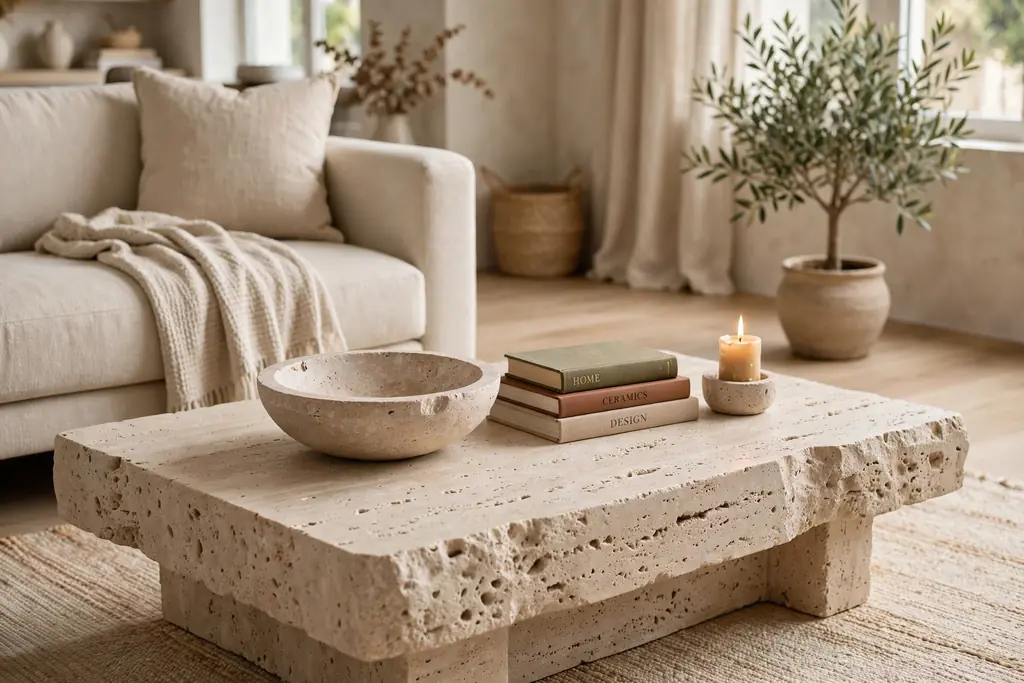
A travertine coffee table brings Italian warmth at once, with its soft cream tones and natural pitting. Keep the styling low and simple, so the stone stays the focus: a shallow stone bowl, one small stack of books, and a single candle. The low profile suits a room with a low sofa, since nothing blocks the view across the table to the person opposite.
Place the bowl slightly off center and the books beside it, not in a straight line down the middle. A bowl in a matching stone, or in a darker marble, adds contrast without a new color. Wipe the stone with a soft cloth and use coasters under glasses, since travertine can mark if drinks sit on it for a long time.
2. Let One Murano Glass Vase Carry the Table
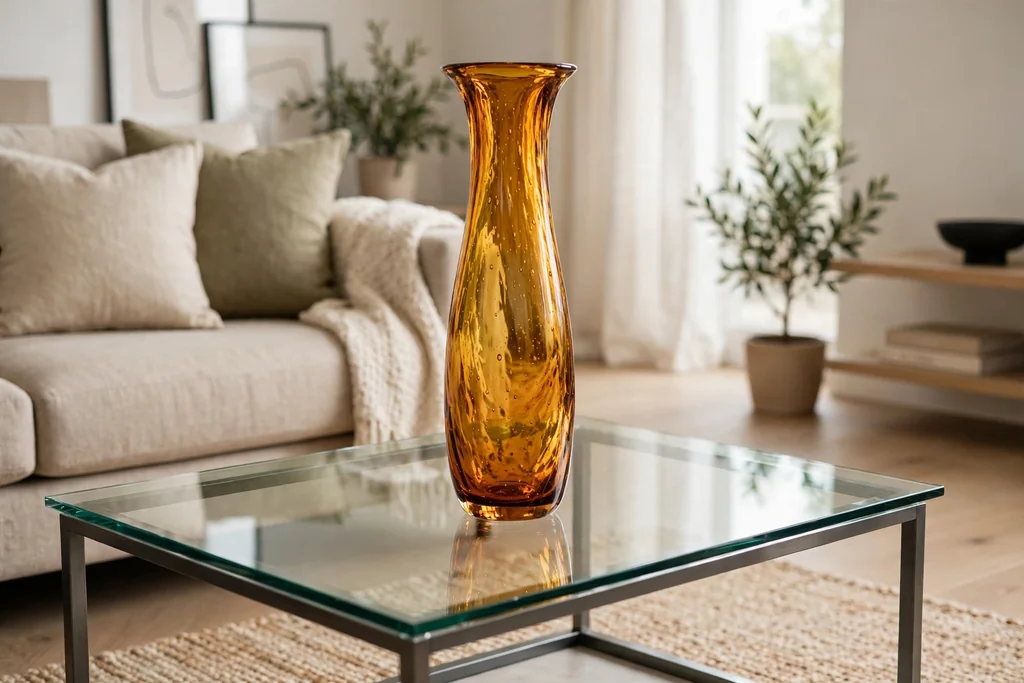
One Murano glass vase, in amber, cobalt, or soft green, can carry a whole coffee table. The hand blown glass catches light through the day, and its curves soften a rectangular table. This suits a room that already has pattern elsewhere, since the vase adds color and shape without needing more pieces around it.
Choose a vase tall enough to read from the sofa, but not so tall that it blocks conversation. Leave it empty for a sculptural look, or add two or three simple stems, such as eucalyptus or dried grasses. Keep the rest of the table clear, apart from a single book or a small dish, so the vase keeps its place as the clear focal point.
3. Stack Italian Art Books With a Small Sculpture on Top
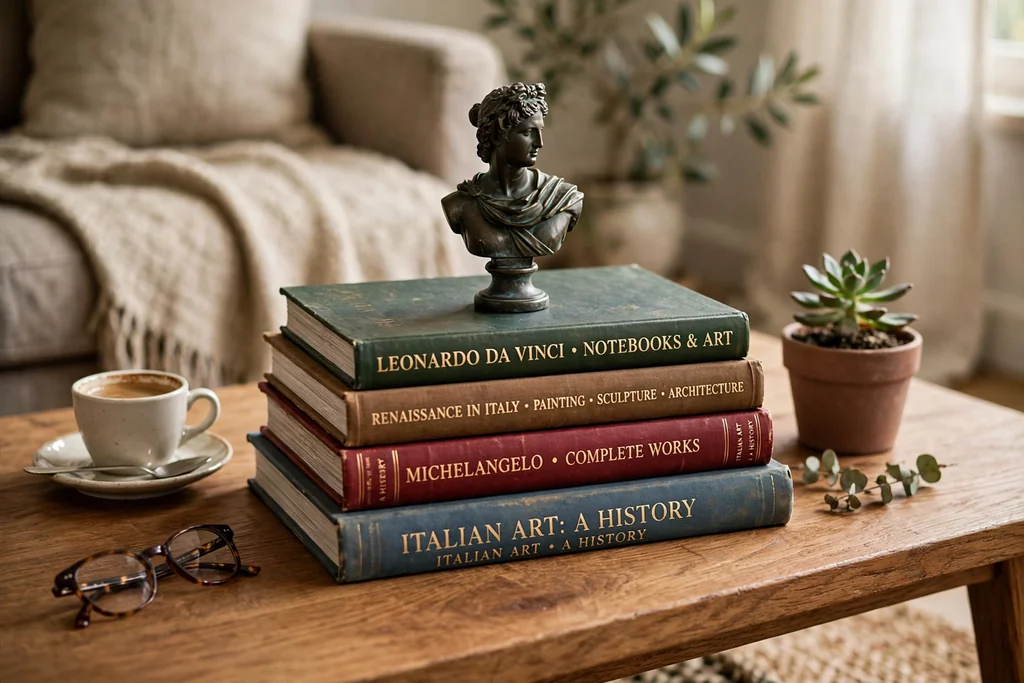
A stack of two or three large art books, on Italian painting, architecture, or design, gives a coffee table instant character and a place to rest a cup. Choose books with covers you like looking at, since the top cover becomes part of the display. This suits readers and hosts, since guests can pick a book up and browse it.
Set a small sculpture, a paperweight, or a tiny ceramic figure on top of the stack to finish it. Keep the stack to one side of the table, so the other side stays free for drinks. Turn the books so their spines face the sofa, and swap the top book when you finish reading it, which keeps the table feeling current.
4. Add Olive Branches in a Terracotta Pot
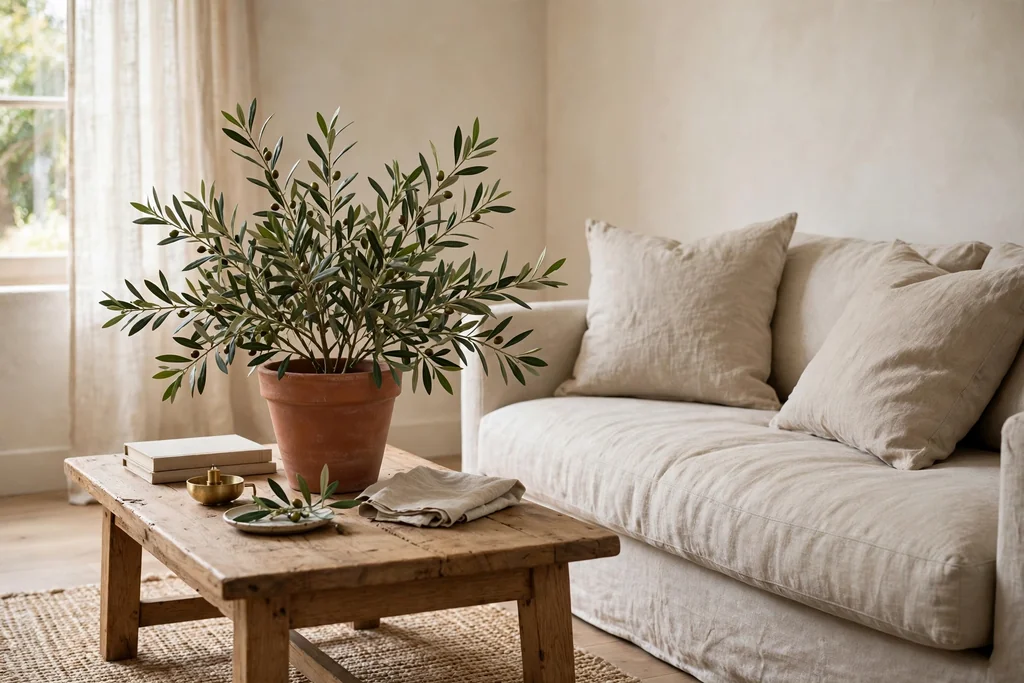
Olive branches in a simple terracotta pot bring a calm, Mediterranean note to a coffee table, without flowers that need frequent changing. The silvery green leaves suit warm wood, cream walls, and stone tops, and the pot adds an earthy tone that pairs well with linen sofas. This is a good choice for a room that needs life but not bright color.
Use a pot that is wider than it is tall, so it sits steady on the table and does not block the view. Trim the branches so they rise just above seated eye level, and change the water or replace the stems when they dry out. If you prefer a lasting version, use good quality faux olive branches and dust them often, so they keep a soft, matte look.
5. Set an Espresso Tray for Guests
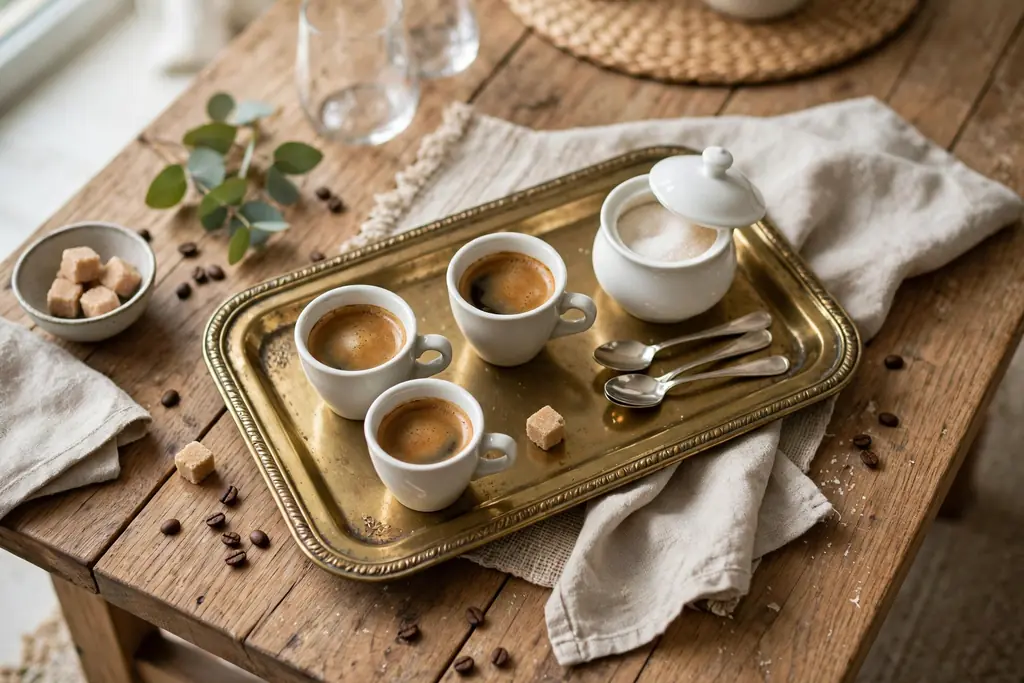
An espresso tray turns a coffee table into a welcoming serving station, in the Italian habit of offering a small coffee to a guest. Use a round brass or wood tray, with two or three small cups, a sugar bowl, and a tiny spoon holder. The tray keeps cups together, protects the table top, and makes clearing up quick after a visit.
Place the tray near the end of the table closest to the main seat, so it is easy to reach. Keep it small enough that it leaves room for a book or a vase beside it. When guests are not expected, keep one cup and a small jar on the tray, so it still looks dressed without looking set for a party that is not happening.
6. Group Brass Candlesticks for Evening Light
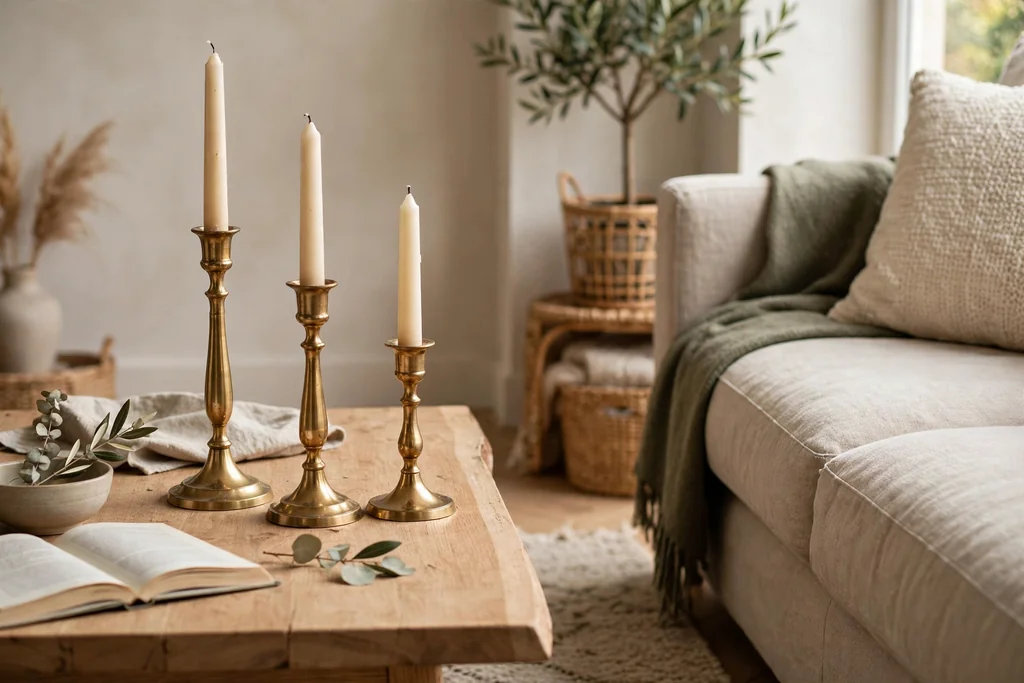
Three brass candlesticks in different heights give a coffee table a warm evening glow and a clear Italian note. Brass suits travertine, walnut, and dark marble, and it pairs well with cream sofas and wood floors. This grouping works best as a corner arrangement, leaving the center of the table free for daytime use.
Place the tallest candlestick at the back and the shorter ones in front, so each flame is visible from the sofa. Use unscented candles if you serve food nearby, and keep the candlesticks clear of books, throws, and curtains. A small brass tray under the group catches wax and ties the three pieces together as one display.
7. Place a Bowl of Lemons on a Marble Top
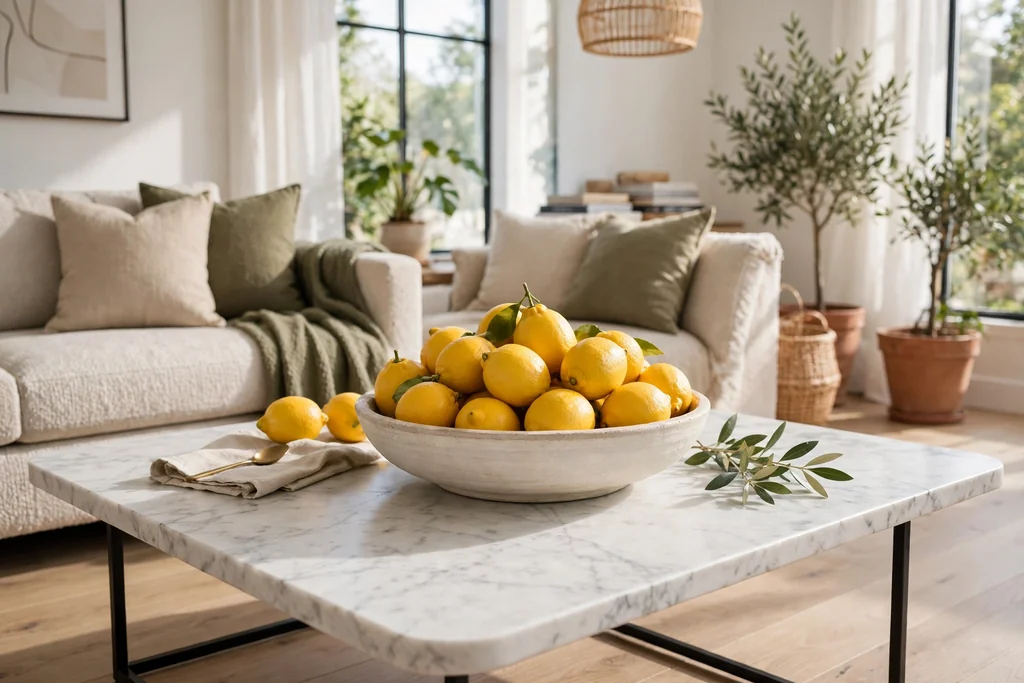
A bowl of fresh lemons on a white or grey marble coffee table is a simple Amalfi note that adds color, scent, and shape in one move. The yellow lifts a neutral room, and the round fruit softens the hard lines of a stone top. This suits a bright room with white walls, where the lemons become the main accent.
Choose a wide, shallow bowl in ceramic, glass, or wood, and fill it with lemons that are similar in size, so the group looks neat. Replace the fruit as it ages, and keep the bowl to one side of the table, so it does not crowd a vase or a book stack. In winter, when fresh lemons are less common at home, use good faux lemons and wash them often.
8. Corral Everyday Items in a Leather Tray
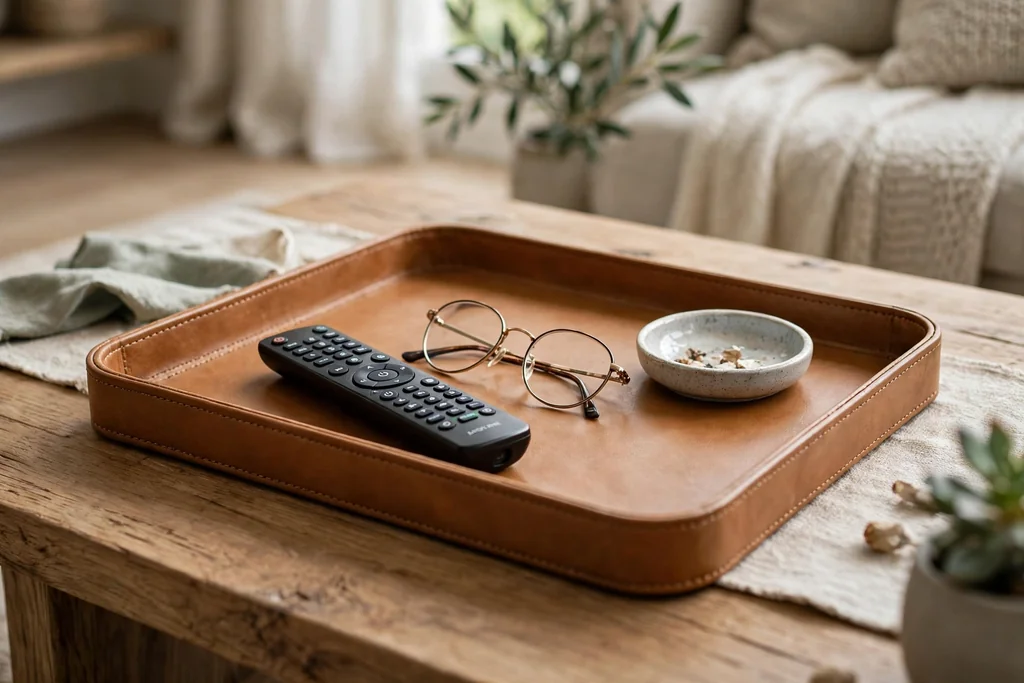
A leather tray is the practical answer to a coffee table that must hold remotes, reading glasses, and a phone charger. The tray draws a clear boundary, so small items look grouped rather than scattered, and it adds a warm, Italian leather note to a modern room. Tan leather suits wood and cream, while dark brown suits charcoal sofas and black metal frames.
Choose a tray with low sides, so items are easy to lift out, and a size that covers about a third of the table. Inside, add a small dish for keys or coins, and keep the count low, since a tray that is full to the brim stops looking tidy. Move the whole tray to one side when you need the table for a board game or a meal.
9. Use the Shelf Below for Baskets and Throws
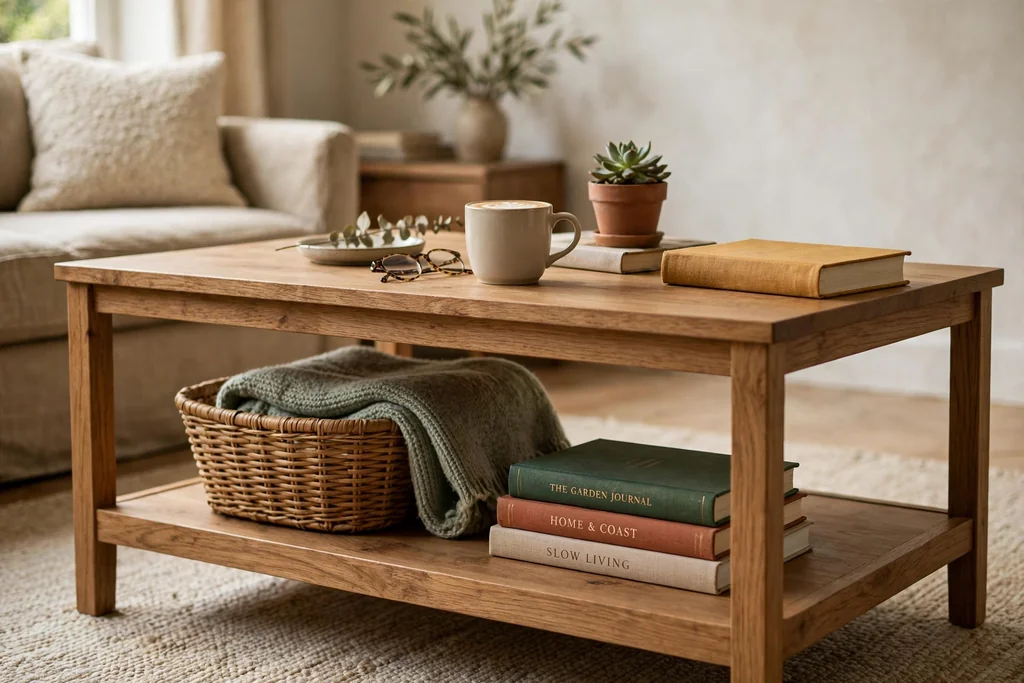
If your coffee table has a lower shelf, use it as a second styling layer, not as a dumping ground. A woven basket for magazines, a folded throw, and one or two books keep the lower shelf useful and calm. This frees the table top for a vase or a tray, and it suits family rooms, where blankets and magazines need a home close to the sofa.
Keep the lower shelf to three items at most, and match the basket to the room, such as seagrass for a light room or dark rattan for a warmer one. Fold the throw neatly, with its edge showing, and place books flat, not upright, so they do not slide. For help sizing the rug under a table with a lower shelf, see these living room rug ideas.
10. Keep a Small Table Clear With One Statement Piece
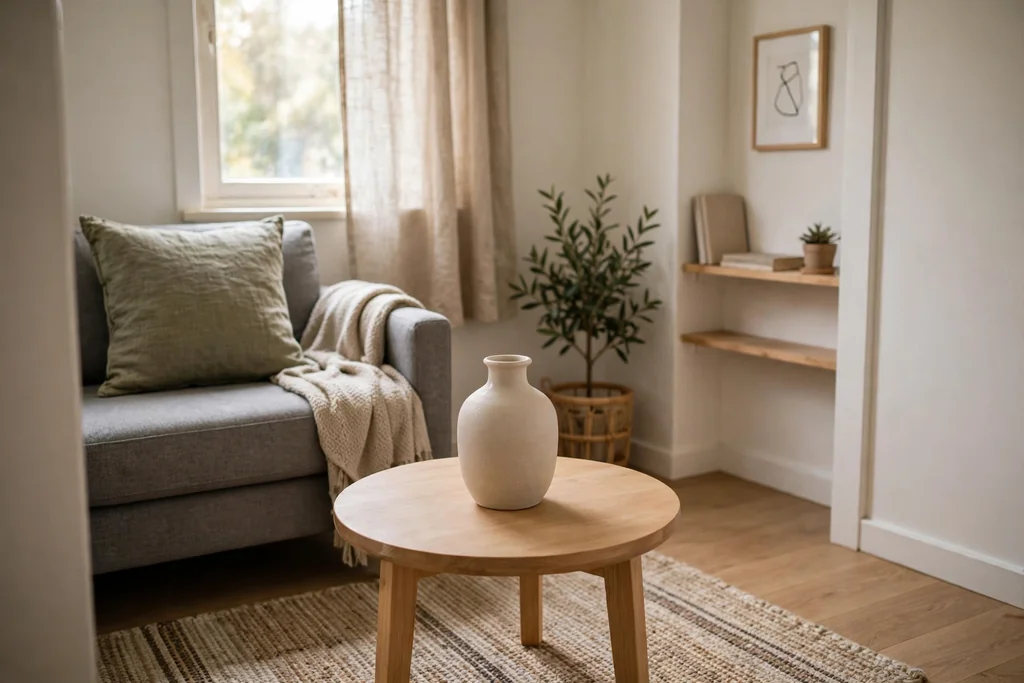
A small coffee table needs a different rule: one statement piece and clear space, not a full grouping. A single ceramic vase, a carved wood bowl, or a small marble sculpture gives a tiny table character, while the rest of the surface stays free for a cup and a phone. This suits apartments and small living rooms, where a crowded table makes the whole room feel tight.
Pick a piece that is in proportion to the table, so it does not look oversized or lost. A piece about one third of the table width is a useful guide. If the table is round, place the piece slightly off center, and keep the floor around it clear, so the room keeps an open walking route past the sofa.
11. Bring Amalfi Light With White, Blue, and Driftwood Tones
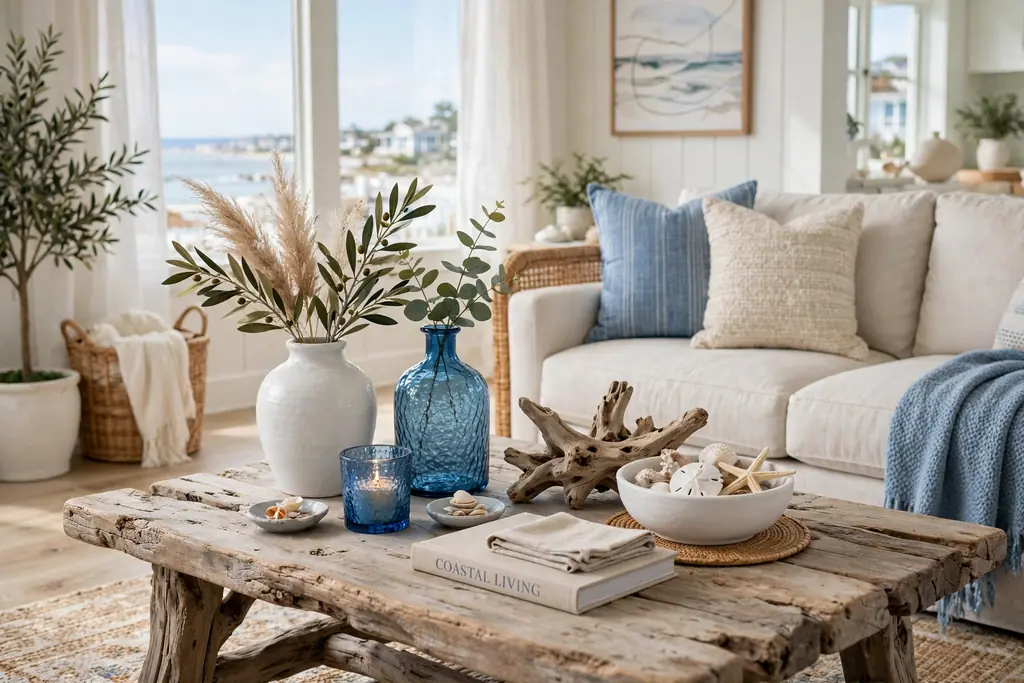
An Amalfi style table uses a light palette: white ceramic, soft blue glass, and pale driftwood tones, with plenty of clear space. A white bowl, a blue glass bottle, and a small wood tray give a coastal Italian feel without a themed collection of shells. This suits bright rooms, white sofas, and homes near the coast, or rooms that want a holiday feeling at home.
Keep the palette to three tones, and let the blue appear only in one or two pieces, so it stays fresh rather than busy. A linen runner under the display can soften a glass top, but keep it short, so it does not cover the whole table. Change the blue glass for a clear vase in winter, if you want the same table to feel calmer in colder months.
12. Go Tuscan With Wood, Terracotta, and Dried Herbs
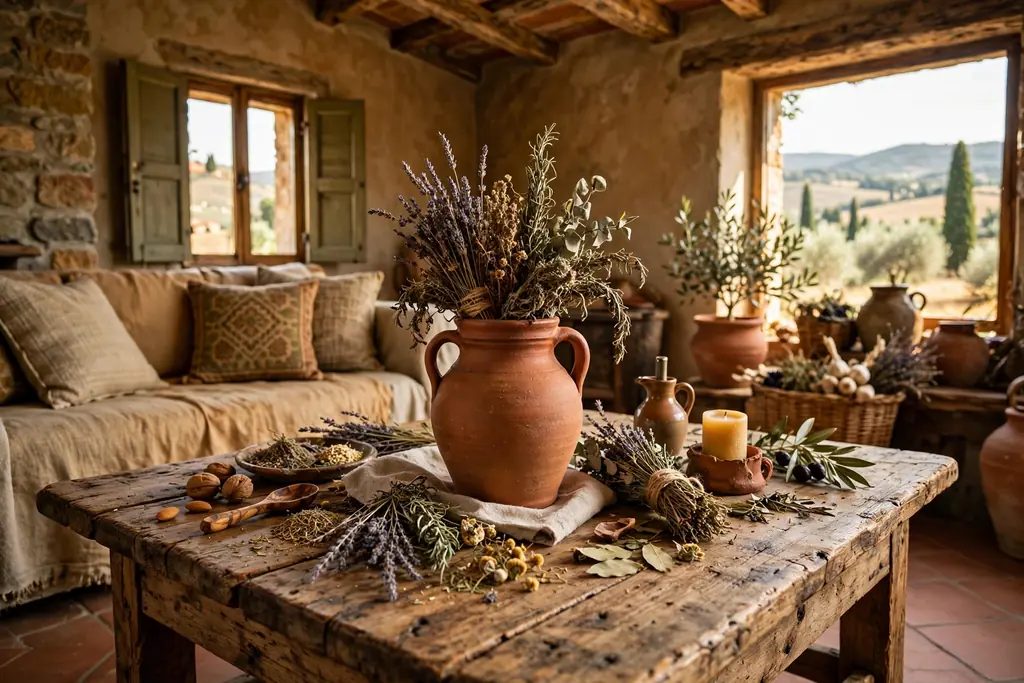
A Tuscan style table leans on warm, rustic materials: a thick wood top, a terracotta jug, dried herbs, and a linen cloth. The mix feels handmade and lived in, and it suits rooms with wood beams, warm walls, and leather sofas. Unlike the light Amalfi look, this table welcomes texture, such as rough wood grain, unglazed clay, and dried stems.
Place a terracotta jug with dried lavender or wheat at one end, a wood board with a small cheese knife or a candle at the other, and a folded linen cloth under one piece. Keep the herbs away from open flames, and dust dried stems often, since they gather dust in a busy room. This is a good choice for a room used for long, relaxed evenings.
13. Style a Formal Room With a Symmetrical Pair of Vases
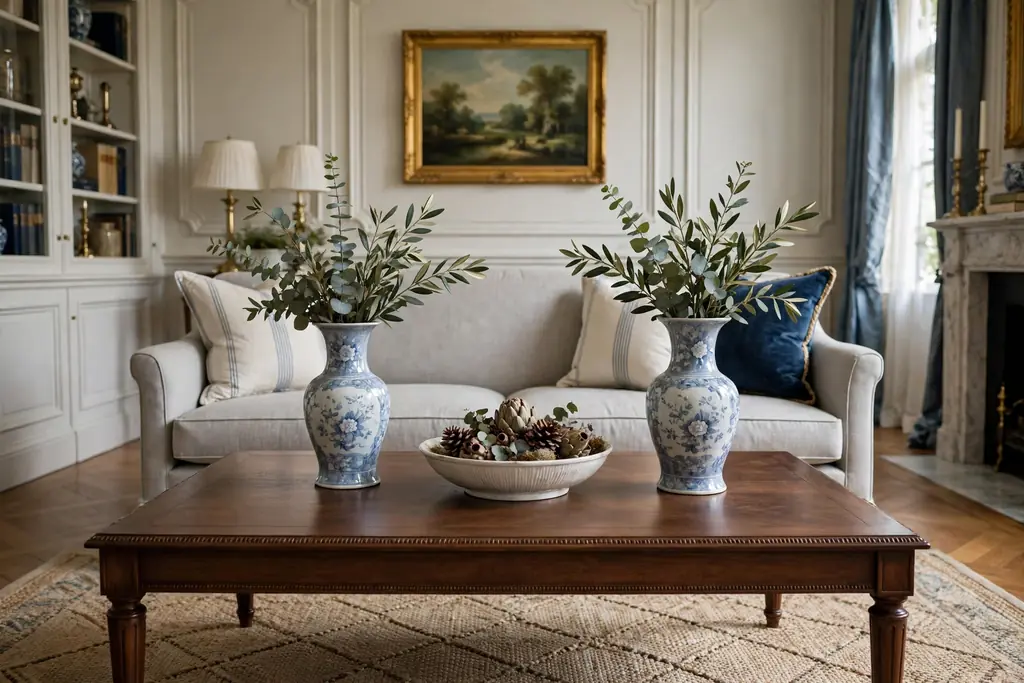
A formal living room suits symmetry: a pair of matching vases, one at each end of the table, with a low central bowl between them. The repeated shape gives the table order, and the central bowl keeps it from looking like two separate displays. This suits a long rectangular table, a pair of matching sofas, and a room with a fireplace or a large piece of art as its focus.
Choose vases in porcelain, glass, or glazed ceramic, in a tone that repeats elsewhere in the room, such as cream, sage, or navy. Keep the vases the same height, and the central bowl lower, so the eye moves across the table without a tall block in the middle. For sofa colors that pair well with a formal table, see these grey couch living room ideas.
Conclusion
Italian coffee table styling works best when one strong piece leads and the rest of the table stays calm and useful. Start with the table top itself, then add a tray, a vase, or a book stack that repeats a material already in the room. Leave clear space for daily life, change one small layer by season, and let the table look collected over time, not dressed in a single shopping trip.
Save this list on Pinterest before you start, and work through it one idea at a time: a tray and a vase first for a quick refresh, then books and candles, then a stone bowl or a pair of vases when you find pieces you truly like. A table styled this way will suit a small apartment, a family room, and a formal living room alike, since the same rules of height, grouping, and clear space apply at every size.
FAQs
How many items should I put on a coffee table?
Three to five items usually look best, grouped as one hero piece plus two or three smaller pieces. More than that can make the table hard to use, while one item alone can look bare on a large table. Use a tray to group small items, and leave at least one third of the surface clear for cups and books.
What is the best coffee table top for Italian styling?
Travertine, marble, and warm walnut are the most useful Italian choices. Travertine adds soft, natural texture, marble adds a cool, formal surface, and walnut adds warmth for a Tuscan or rustic room. Pick the top that matches your sofa and floor, then keep the styling simple, so the material itself stays visible.
How do I style a coffee table in a small living room?
Use one statement piece and clear space, rather than a full grouping. A single vase, bowl, or sculpture, plus a small tray for daily items, keeps a small table useful. Choose a piece about one third of the table width, keep the floor around the table clear, and use the lower shelf, if there is one, for a basket and a throw.
Can I mix Italian styling with a modern sofa?
Yes, and the mix often works well, since Italian pieces such as travertine, brass, and Murano glass suit clean modern lines. Keep the palette tight, repeat one material from the sofa or the floor, and avoid too many themed pieces at once. One Italian hero piece plus a simple tray usually links a modern sofa to the Italian look without a clash.
How do I keep a styled coffee table practical for daily use?
Use a tray for small items, so you can lift the whole group in one move when you need the table. Keep one third of the surface clear, place drinks on coasters, and avoid tall pieces in the middle of the table. A lower shelf for baskets and throws also helps, since it stores everyday items close at hand without crowding the top.
What colors work best for an Italian coffee table display?
Warm neutrals work best: cream, terracotta, olive green, brass, and walnut, with one accent such as cobalt blue, lemon yellow, or sage. Keep the accent to one or two pieces, and let the rest stay neutral, so the table feels warm rather than busy. In a bright coastal room, white and soft blue can replace the warmer tones.