
Shabby chic bedrooms mix soft color, worn wood, and vintage details in a way that feels relaxed rather than formal. Think whitewashed furniture, floral bedding, lace at the windows, and pieces that show a little age and history. This style suits a bedroom that needs warmth without a full renovation, since many ideas use paint, fabric, and secondhand finds. These 29 ideas cover beds, storage, walls, lighting, and small finishing touches, so you can pick one change or build a whole room slowly. Start with the piece you use most, then add layers until the room feels calm and lived in.
Key Takeaways
- Start with a pale base of white, cream, or soft grey, then add floral fabric and worn wood so the room stays light while the vintage details stand out.
- Choose one or two worn or distressed pieces as the focus, and keep the rest of the furniture simple, so the room looks collected rather than cluttered.
- Mix textures, such as washed linen, crochet, lace, and faded cotton, to get the soft shabby chic feel without needing matching sets.
- Use secondhand and vintage pieces where you can, and check drawers, joints, and fixings before you buy, so old furniture stays useful as well as pretty.
- Repeat a small floral or soft color in bedding, a cushion, and one wall detail to link the room together, and leave some plain space so it can breathe.
1. Choose a Distressed White Wooden Bed Frame
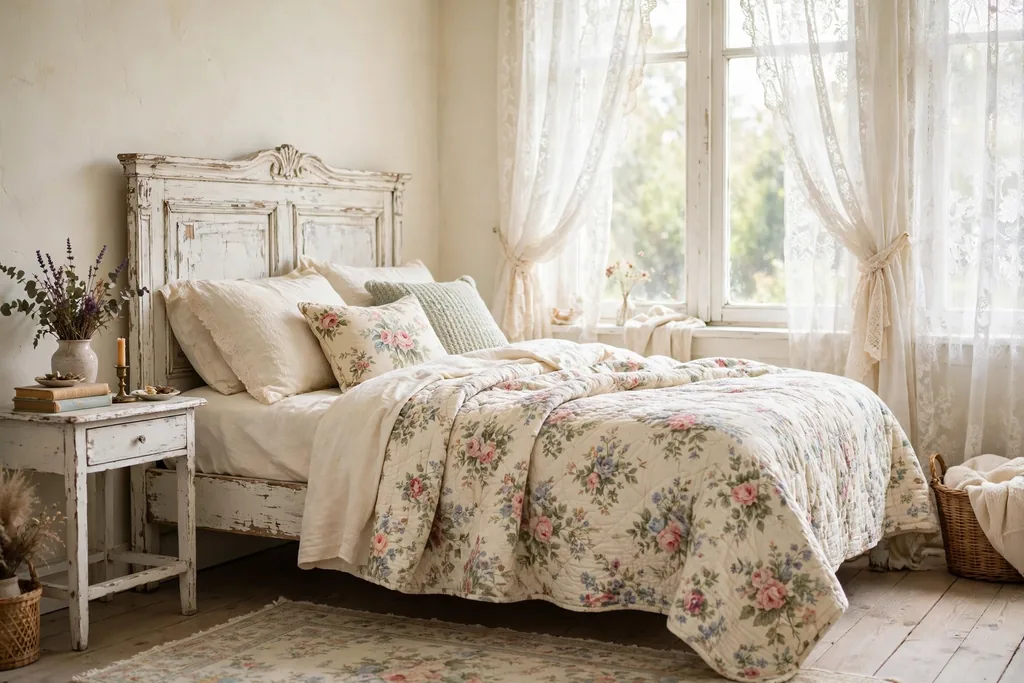
A distressed white wooden bed frame sets the tone for a shabby chic bedroom at once, because the worn paint and softened edges give the room its relaxed character. Look for a frame with turned posts or a simple slatted headboard, and a white finish that lets a little wood show through at the edges. Pair it with plain white sheets so the frame, not the bedding, carries the vintage look.
If you paint a frame yourself, use two thin coats of white paint over a darker base, then sand the edges lightly where natural wear would occur, such as corners and raised details. Seal it with clear wax or a matte topcoat so the finish does not chip further with daily use. Keep the rest of the bed simple, with a light quilt and one or two cushions, so the distressed frame stays the clear focus.
2. Slipcover the Headboard in Washed Linen
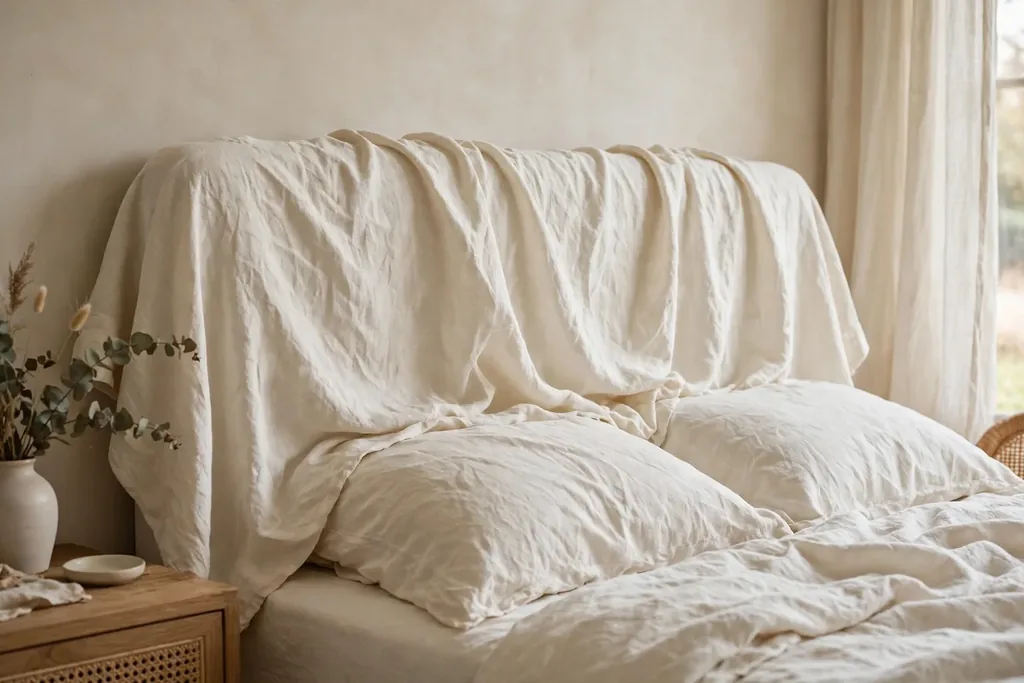
A washed linen slipcover softens a plain or dated headboard and gives it the relaxed drape that shabby chic rooms are known for. Choose natural linen in white, cream, or pale grey, and let the fabric fall loosely rather than pulling it tight, so the headboard looks comfortable and unfussy. This works well over a wooden, metal, or padded headboard that is sound but no longer suits the room.
Measure the headboard and add extra fabric for a loose fit, then sew or tie a simple cover that can be removed for washing. Tuck the sides in loosely and leave a soft fold at the top edge. Wash the linen before you make the cover, since washed linen shrinks and softens, and the cover will then keep its size after later washes.
3. Layer a Vintage Floral Quilt Over White Bedding
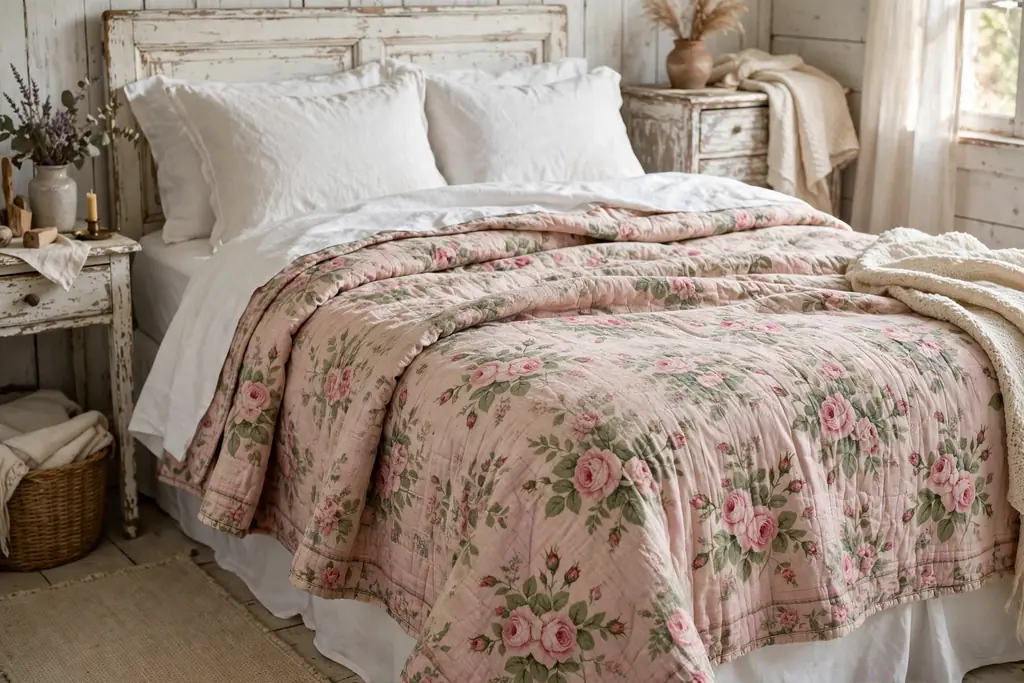
A vintage floral quilt layered over plain white bedding is the quickest way to bring shabby chic pattern into a bedroom. The white sheets keep the bed feeling fresh, while the quilt adds roses or small sprig prints in faded pink, blue, or sage. Fold the quilt back to show a band of white sheet at the top, so the pattern reads as a layer rather than a full cover.
Choose a quilt in a size that drapes over the sides of the bed, and check older quilts for thin spots or loose stitching before daily use. If a true vintage quilt is fragile, use it as the top layer only and keep a plain washable cover underneath for warmth. Pair the quilt with plain pillowcases and one floral cushion, so the pattern has room to breathe. For more seasonal bedding layers, see these fall bedroom decor ideas.
4. Bring In a Chipped Paint Antique Dresser
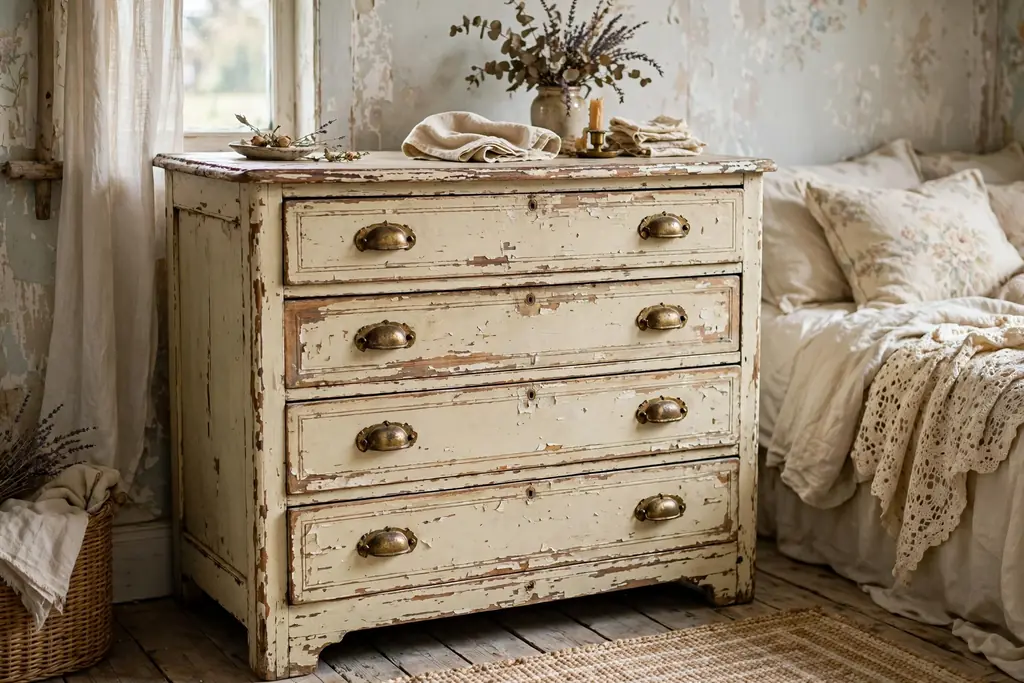
A chipped paint antique dresser adds history to a bedroom in a way new furniture rarely does, with worn edges, old handles, and drawers that have clearly served a home for years. Use it for clothes, bedding, or as a place for a mirror and a vase, and let the chipped paint stay as part of its character rather than repainting it fully. A dresser in cream, pale blue, or soft grey fits the shabby chic palette best.
Before you buy, open every drawer, check that the runners work, and look for woodworm or damp damage, especially at the back and base. Clean it gently with a damp cloth and a mild cleaner, and tighten or replace only the handles that are broken, keeping the rest original. If the top is stained, a lace runner or a tray will protect it while keeping the vintage look.
5. Hang Sheer Lace Curtains at the Windows
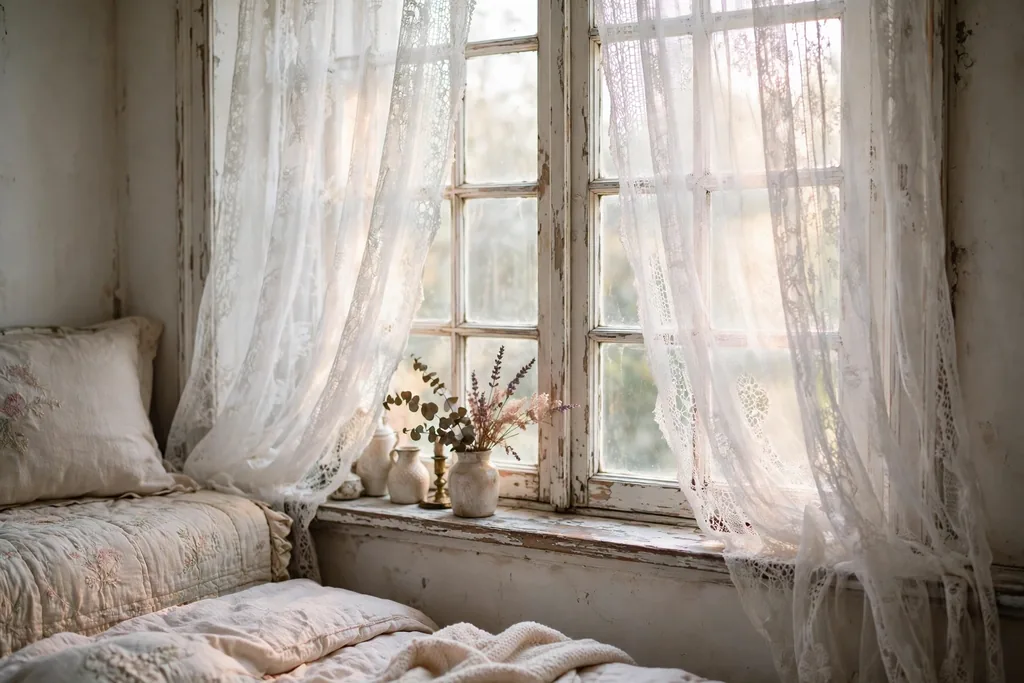
Sheer lace curtains soften daylight and give a bedroom a gentle, romantic glow without blocking light. Hang them on a simple rod inside the window frame or just above it, and let them fall to the sill or the floor, depending on the room. Lace works well alone in a private room, or layered over a plain blind where you need more privacy at night.
Choose a lace pattern that you can still see through, such as a small floral or dot design, rather than a heavy net that darkens the room. Wash lace curtains gently and hang them slightly damp so they dry straight. If the windows are large, use two panels per window so the lace gathers softly instead of stretching flat across the glass.
6. Hang a Beaded Chandelier Over the Bed
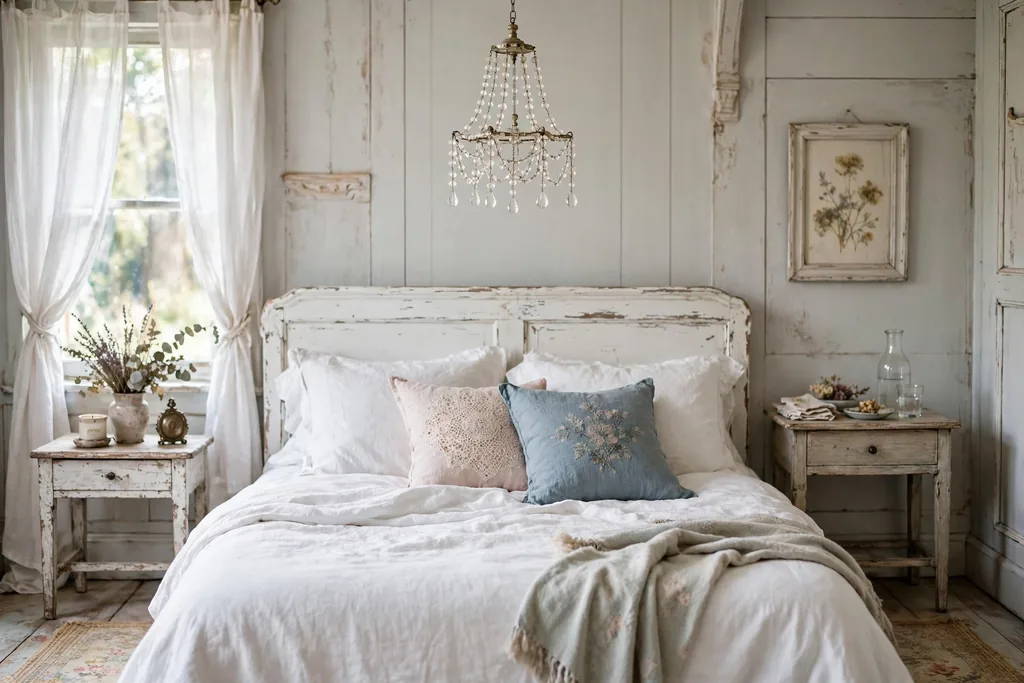
A beaded chandelier brings a touch of old glamour to a shabby chic bedroom, with glass drops that catch daylight and lamplight. Hang a small or medium chandelier over the center of the room, or above the foot of the bed where it will not hang over pillows. A secondhand crystal or glass bead fitting often costs less than a new one and already has the aged look the style favors.
Check the wiring and ceiling fixing before you hang any older fitting, and have an electrician look at it if the wiring looks worn or the fitting is heavy. Use warm white bulbs so the beads glow softly in the evening rather than glaring. Keep the rest of the ceiling plain, so the chandelier reads as one pretty detail rather than competing with other overhead features.
7. Fit a Reclaimed Wood Plank Accent Wall

A reclaimed wood plank accent wall behind the bed adds warmth and texture while keeping the rest of the room pale. Use planks in mixed pale tones, such as whitewashed, grey washed, and natural wood, and fit them horizontally behind the headboard. The mix of tones keeps the wall from looking like new paneling and suits the collected feel of shabby chic rooms.
Measure the wall and plan the plank layout before fixing, so joints are staggered and no plank needs a very narrow cut at the edge. Fix the planks to battens on the wall rather than gluing them direct, so they can be removed later without heavy damage. Keep bedding plain when the wall is busy, and use a simple headboard so the wood remains the feature.
8. Set Up a Vintage Vanity With an Oval Mirror
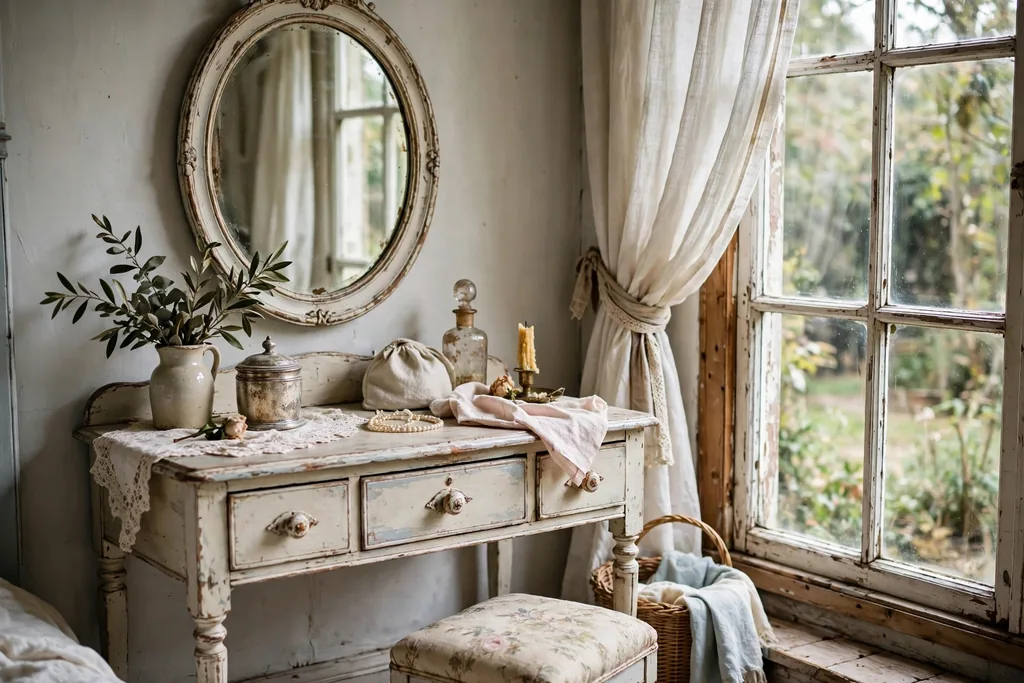
A vintage vanity table with an oval mirror creates a dressing corner that feels made for slow mornings. Look for a small table with drawers, curved legs, and a matching mirror, or pair a plain vintage table with a separate oval mirror hung above it. Keep the top clear except for a brush, a small vase, and a tray for daily items, so the corner stays useful.
Sit the vanity near a window for natural light, and add a small padded stool that tucks under the table when not in use. Check that drawers open fully and that the mirror glass has no loose backing. If the finish is worn, a coat of clear wax will protect it without hiding the age that makes the piece appealing.
9. Add Whitewashed Open Shelves for Collections
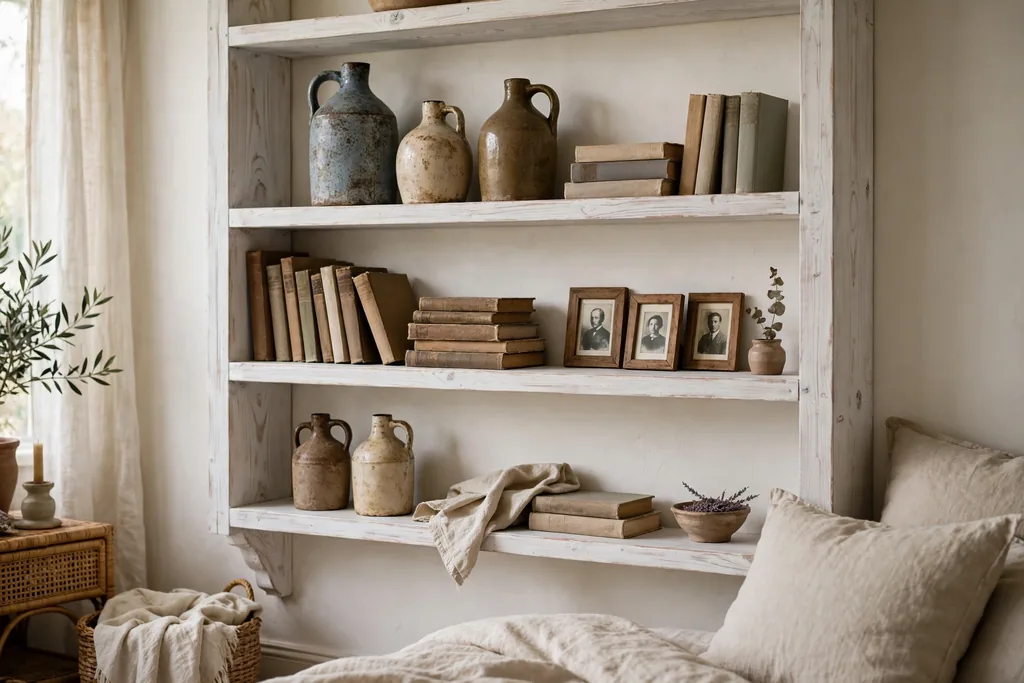
Whitewashed open shelves let you display a small collection of vintage pieces, such as jugs, books, and framed photos, without the weight of closed cabinets. Fit two or three shelves on one wall, using simple brackets painted white, and leave space between shelves so each item can be seen. This suits a bedroom where closed storage already handles clothes and bedding.
Group items in odd numbers and vary their heights, with a tall jug beside a stack of books and a small frame in front. Leave at least one empty stretch on each shelf so the display looks curated rather than crowded. Dust the shelves weekly, since open displays gather dust faster than closed cupboards, and rotate items seasonally to keep the display fresh.
10. Paper One Wall in a Faded Rose Print
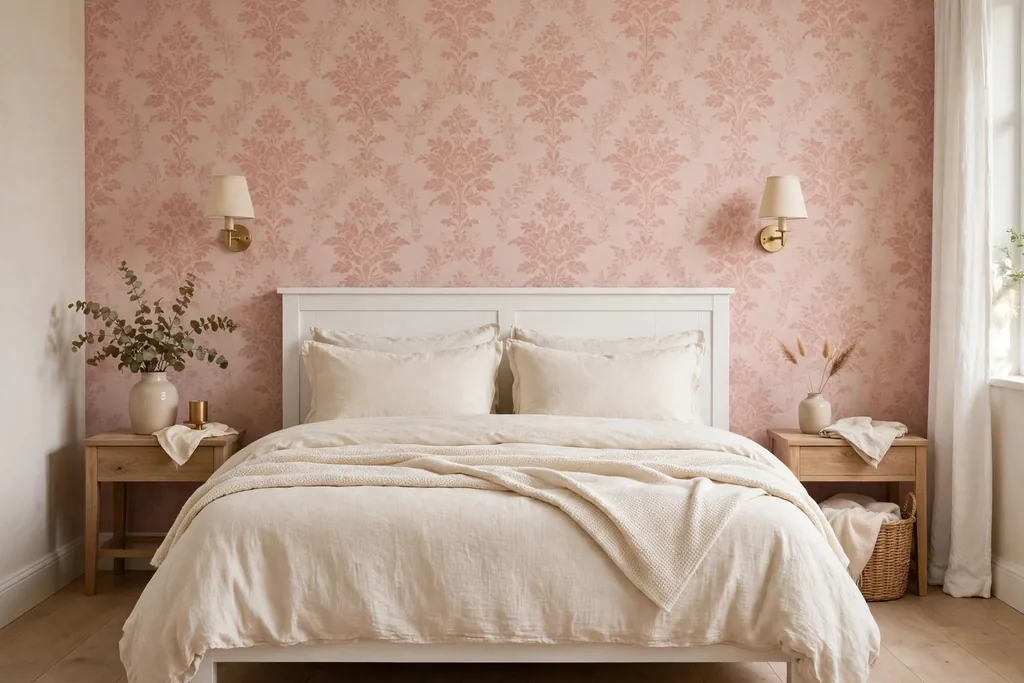
A faded rose wallpaper on one wall gives a shabby chic bedroom its floral anchor, especially behind the bed where the pattern frames the pillows. Choose a print with small or medium roses in soft pink, cream, and sage on a pale ground, rather than a large bold print that can dominate a small room. Paper only the feature wall and paint the other walls in a tone pulled from the paper.
Order a sample first and pin it to the wall for a few days, checking it in daylight and lamplight, since rose prints shift a lot between light types. If you rent or want a reversible change, use paste the wall paper or a peel and stick version made for smooth walls. Keep bedding mostly plain, with one floral cushion that echoes the paper, so the room does not feel over patterned.
11. Finish the Bed With a Ruffled Linen Bed Skirt
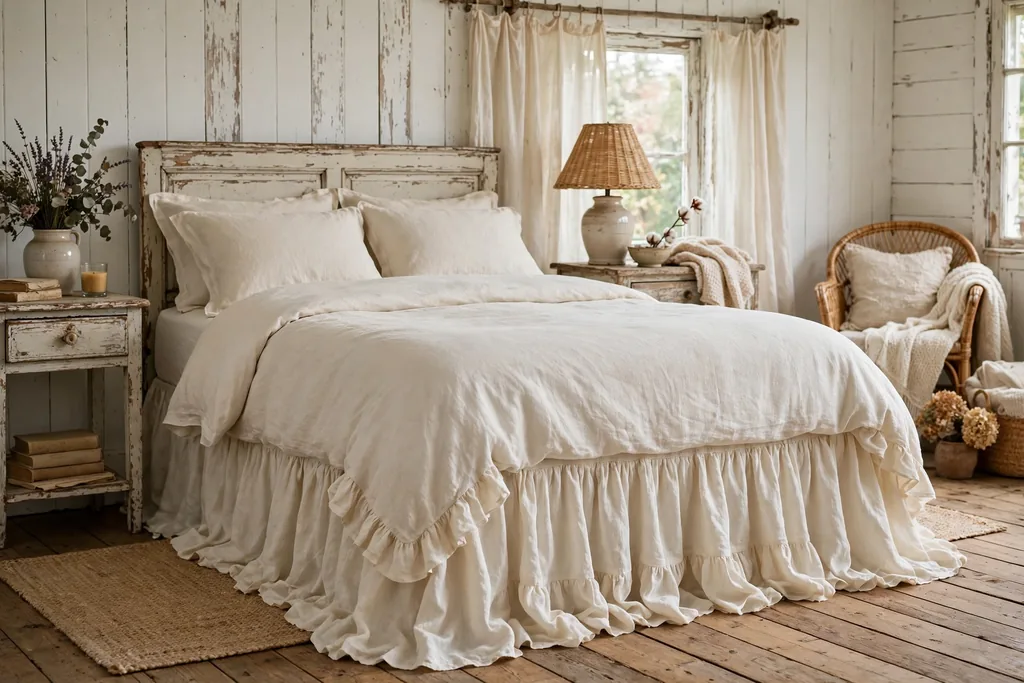
A ruffled linen bed skirt hides the base of the bed and underbed storage while adding a soft, old fashioned finish. Choose washed linen or cotton in white or cream, with a gentle ruffle rather than a stiff pleat, so the skirt moves slightly and looks relaxed. The skirt should just brush the floor, so measure from the top of the base to the floor before you buy or sew one.
Fit the skirt over the base before the mattress goes on, and smooth it so the ruffle falls evenly on all sides. If you store boxes under the bed, the skirt keeps them out of sight and makes the room look tidier at once. Wash the skirt with the bedding, and press only the top edge if needed, leaving the ruffle itself soft.
12. Paint an Armoire in Soft Milk Paint
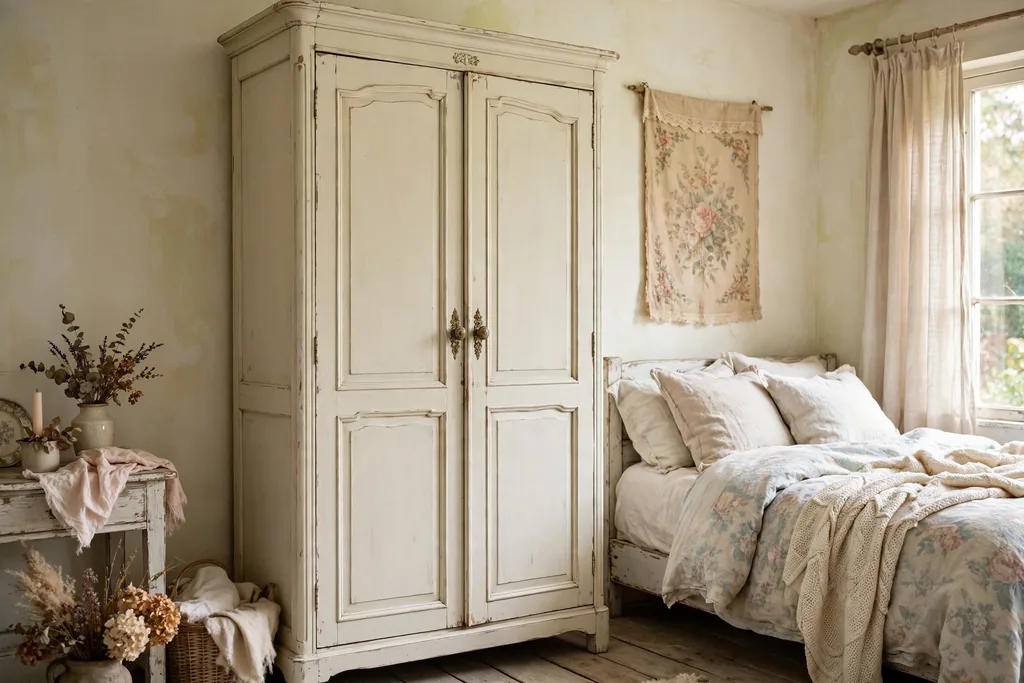
A tall armoire painted in soft milk paint gives a bedroom generous storage with a chalky, vintage finish. Milk paint suits older wooden pieces, since it settles into grain and gives a slightly uneven, hand painted look. Choose a pale tone, such as cream, pale grey, or faded blue, and leave the inside in a lighter wash so clothes are easy to see.
Clean and lightly sand the armoire first, and remove the doors and handles before painting so you can paint edges cleanly. Apply two thin coats, letting each dry fully, and seal with wax for a soft sheen that protects against marks. Keep the original handles if they work, since old brass or porcelain handles add to the vintage character.
13. Hang a Gallery of Botanical Prints in Gilt Frames
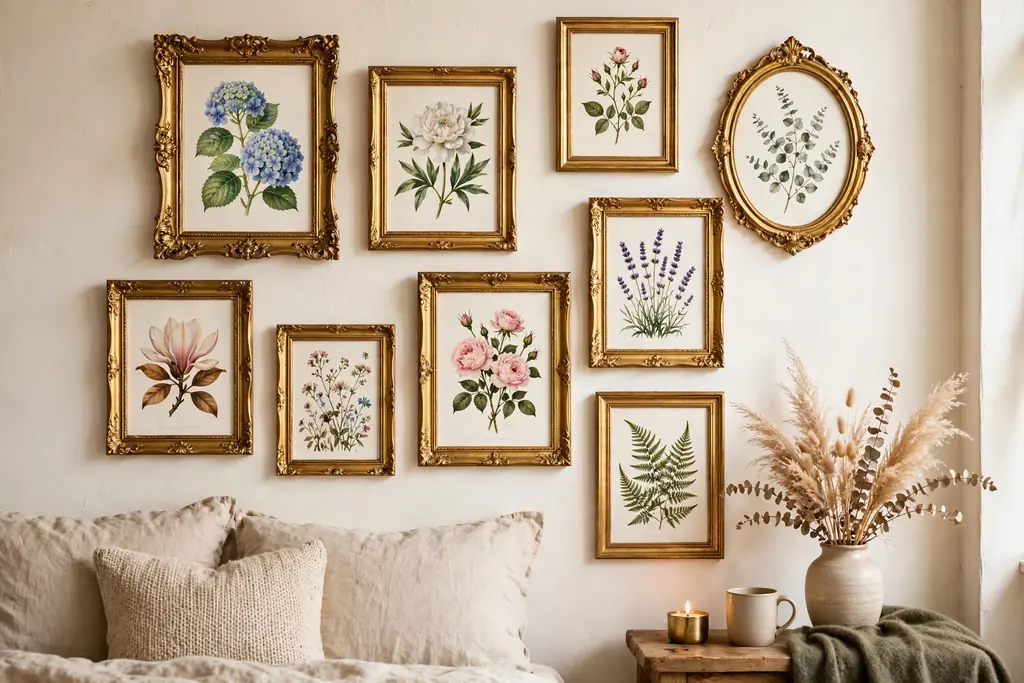
A gallery of botanical prints in mismatched gilt frames brings a collected, vintage feel to a bedroom wall. Choose prints of roses, herbs, or garden flowers in soft colors, and frame each one differently, with some frames ornate and some plain, all in gold or brass tones. Hang them in a loose grid above a dresser or beside the bed, with even gaps between frames.
Start by laying the frames on the floor to plan the arrangement, then hang the largest print first and build around it. Use picture hooks rated for each frame weight, and keep the center of the group at eye level from the bed. If original vintage prints are costly, use good quality reproductions in old frames, since the frames carry much of the vintage look.
14. Drape a Hand Crochet Throw Across the Foot of the Bed
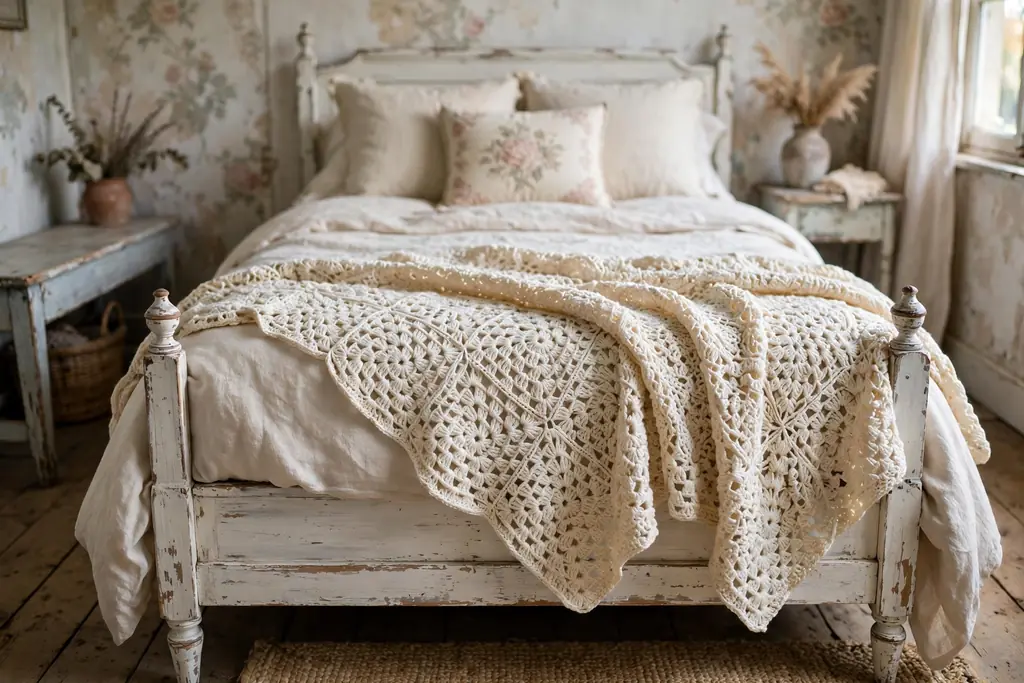
A hand crochet throw across the foot of the bed adds texture and a handmade note that fits shabby chic rooms well. Choose cotton or a cotton blend in cream, soft pink, or sage, with an open stitch that drapes easily over the quilt. Fold the throw in thirds and lay it across the lower third of the bed, so it looks placed rather than spread flat.
Look for throws at vintage shops or markets, and check for loose threads or thin spots before buying. Wash a crochet throw gently in cool water and dry it flat so it keeps its shape. For more cozy textile layers, see these hygge bedroom ideas. If the throw is fragile, use it for display during the day and fold it onto a chair at night, so it lasts longer.
15. Pair Mismatched Vintage Nightstands
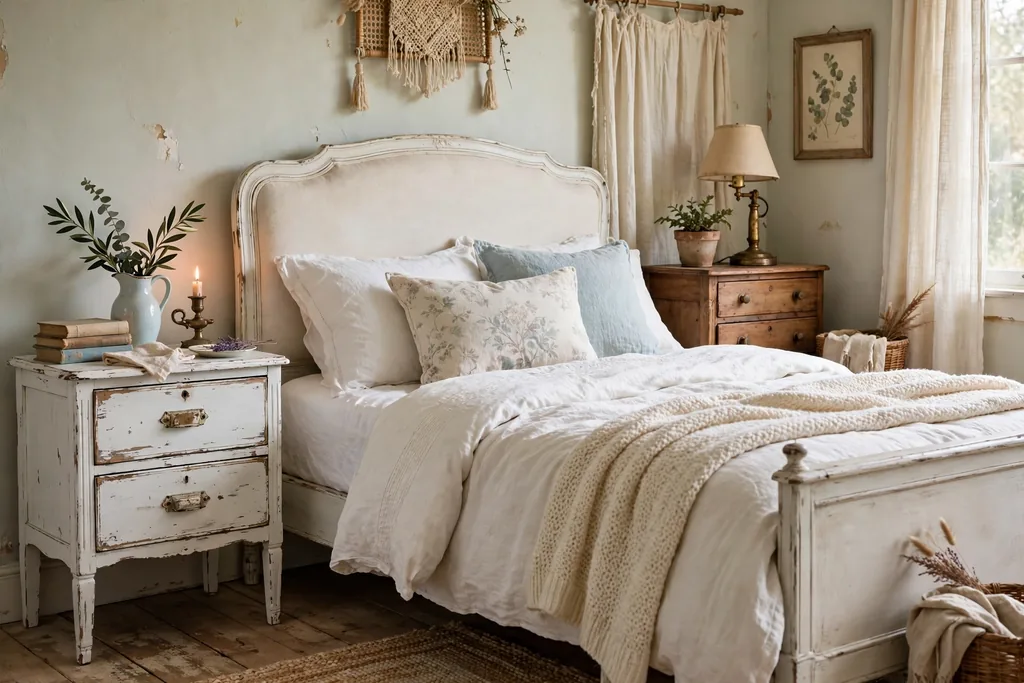
Mismatched vintage nightstands, one on each side of the bed, give a bedroom a collected look that matching sets cannot match. Choose two small tables or cabinets of similar height but different styles, such as a painted bedside cabinet on one side and a small wooden table on the other. Paint both in tones from the same pale palette, or leave one in natural wood and paint the other white.
Keep the heights within a few centimeters of each other, so lamps and books sit at a comfortable level from the bed. Match the lamps or the bedding, rather than the tables, so the two sides still feel linked. Check that drawers or shelves on each piece work well, since nightstands get daily use for books, glasses, and chargers.
16. Lean a Wooden Ladder Against the Wall for Blankets
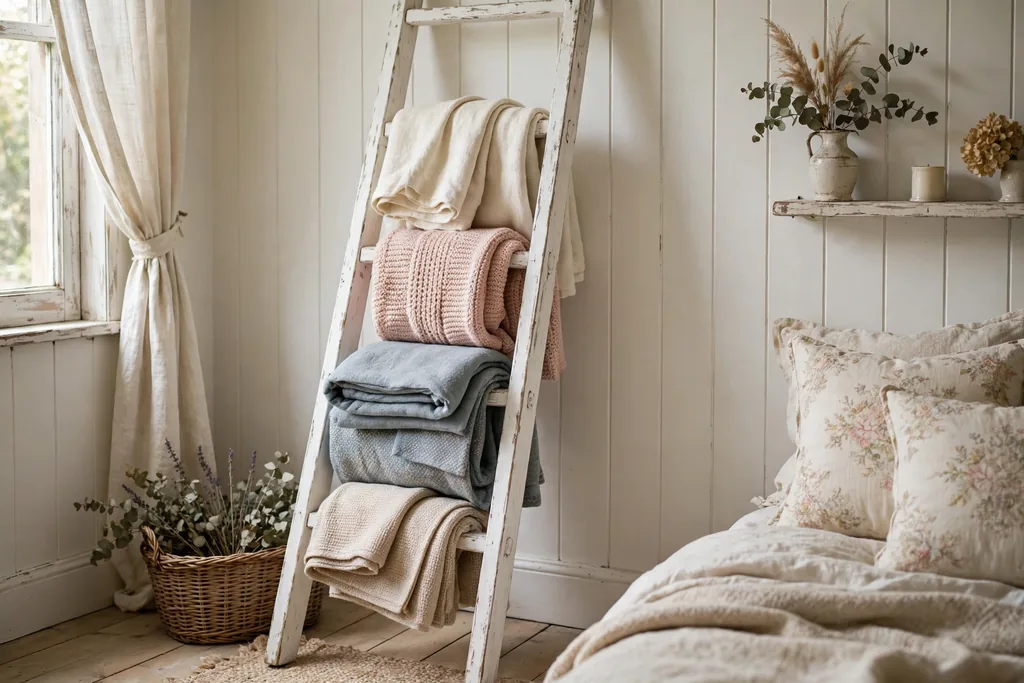
A leaning wooden ladder gives blankets and throws a place to live that is both storage and display. Choose an old wooden ladder, or a new one painted white and lightly sanded at the edges, and lean it against a free stretch of wall near the bed. Drape one throw over each rung, with the heaviest at the bottom, so the ladder stays stable and the blankets are easy to reach.
Check that the ladder feet sit flat on the floor and that the top rests firmly against the wall, and keep it away from doors that swing open. Use it for light throws and quilts only, not for heavy bedding or for climbing. If the ladder has rough wood, sand it smooth first so it does not snag delicate fabric.
17. Place a Vintage Trunk at the Foot of the Bed
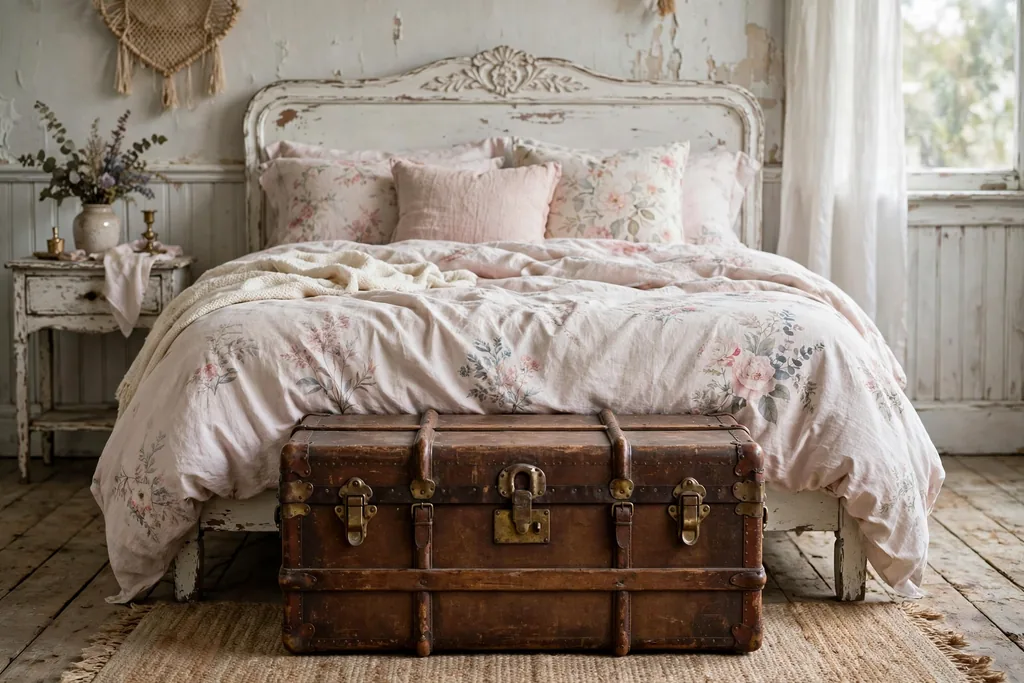
A vintage trunk at the foot of the bed gives a bedroom extra storage and a seat for putting on shoes, while adding an old travel look. Choose a trunk in a size that fits the width of the bed, with a flat or slightly domed lid that can hold a folded throw. Use it for spare bedding, out of season clothes, or keepsakes that do not need daily access.
Check the hinges, clasps, and base before you buy, and air the trunk out well, since old trunks can hold a musty smell. Line the inside with clean paper or fabric if you plan to store bedding in it. Keep the top mostly clear, with just a small tray or a folded blanket, so the trunk stays easy to open and use.
18. Lay Down a Faded Vintage Style Rug
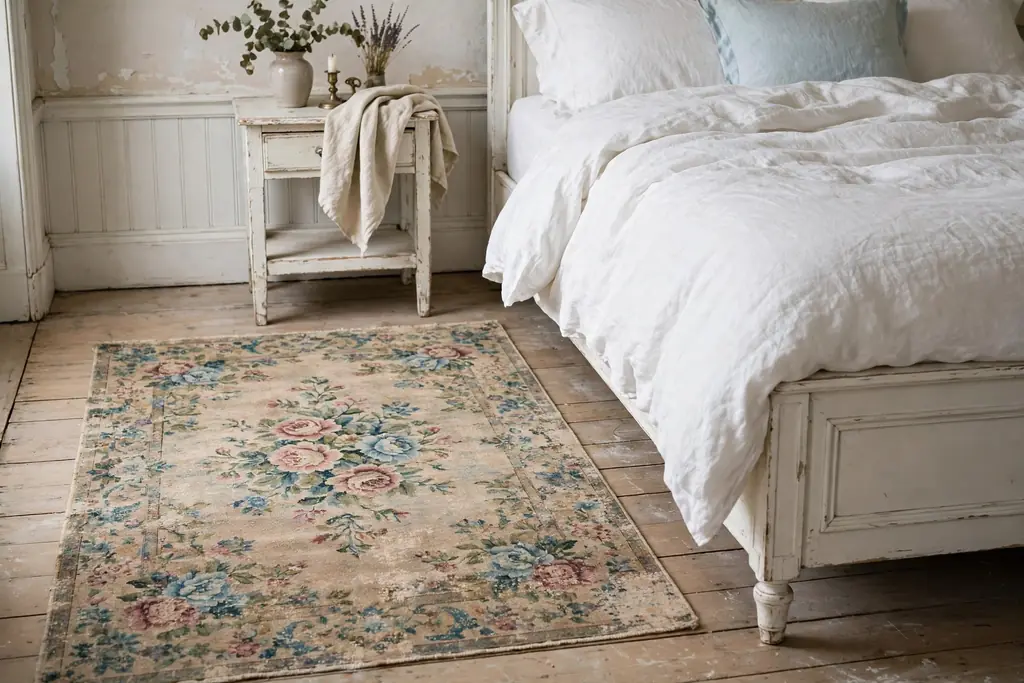
A faded vintage style rug softens a bedroom floor and ties the bed, dresser, and chair together. Choose a rug with a worn floral or medallion pattern in soft pink, cream, blue, or sage, and a size that extends beyond the sides of the bed so your feet land on fabric in the morning. The faded look suits shabby chic rooms, since it echoes the worn paint and washed linen elsewhere.
Place a non slip pad under the rug, especially on a wooden floor, and keep the rug flat at the edges so it does not curl up. Vacuum it gently on a low setting, and blot spills at once rather than scrubbing, which can wear the pattern further. If a true vintage rug is beyond budget, a good quality faded style rug gives a similar look with easier care. For another pattern led bedroom look, see these plaid bedroom ideas.
19. Lean an Ornate Full Length Mirror Against the Wall
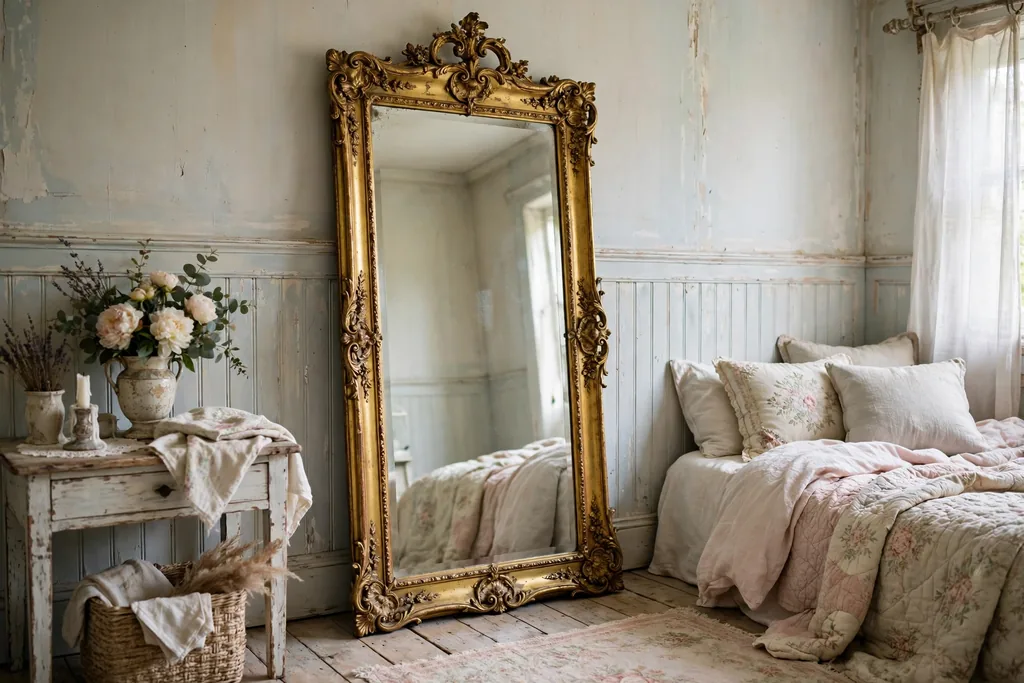
An ornate full length mirror leaning against the wall adds light and a sense of old elegance to a bedroom. Choose a mirror with a carved or gilt frame, in a size tall enough to show your full reflection, and lean it in a corner or beside the dresser where it catches window light. The frame becomes wall decor in itself, even before you use the mirror.
Secure the top of the mirror to the wall with a discreet fixing so it cannot slip forward, especially in a home with children or pets. Keep the wall behind it plain, so the frame stands out, and place a small plant or a chair nearby rather than crowding the mirror. Clean the glass with a soft cloth and a gentle cleaner, and avoid spraying cleaner direct onto an old gilt frame.
20. Display Porcelain and Teacups on the Dresser
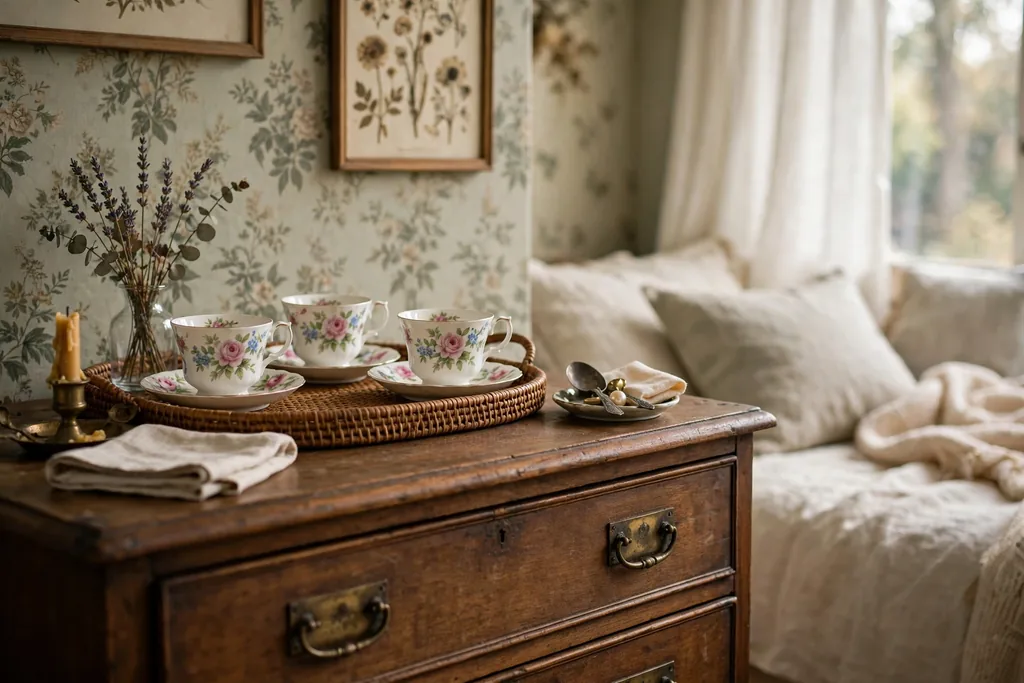
A small display of porcelain and teacups on a dresser top adds a delicate, personal touch to a shabby chic bedroom. Gather a few cups, saucers, and a small jug in floral patterns, and group them on a tray or a lace covered section of the dresser. Mix patterns that share a color, such as soft pink or pale blue, rather than trying to match a full set.
Keep the display to a handful of pieces, so it looks collected rather than crowded, and keep it away from the edge of the dresser where pieces could be knocked off. Dust the pieces gently and wash them by hand if you use them for tea. If the cups are valuable or fragile, place them at the back of the dresser and keep daily items in front.
21. Lay a Lace Runner Across the Dresser
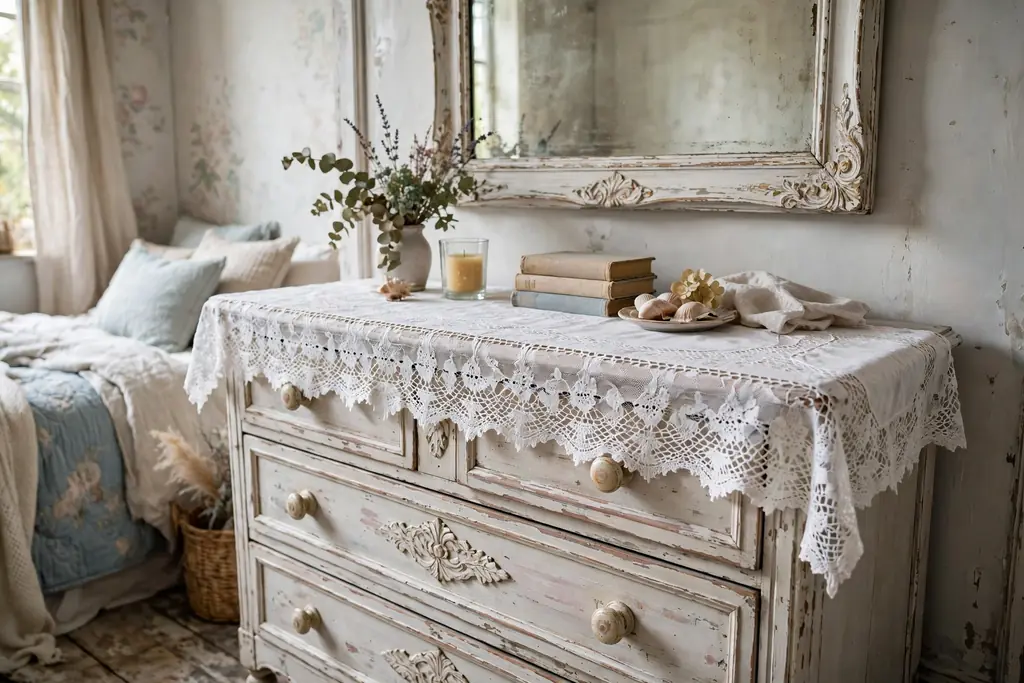
A lace runner across a dresser or chest of drawers protects the top while adding a soft, vintage layer. Choose a runner long enough to drape slightly over each end, in white or cream lace with a floral or scalloped edge. Place it under a mirror, a vase, or a small lamp, so it frames the items on the dresser rather than sitting empty.
Wash the runner gently and press it while slightly damp to keep the lace pattern clear. If the dresser top is stained or scratched, the runner hides the marks while keeping the vintage piece in use. Rotate the runner with the seasons, using a heavier cotton runner in winter and a finer lace one in summer, for a small change that costs little.
22. Create a Wicker Reading Chair Corner
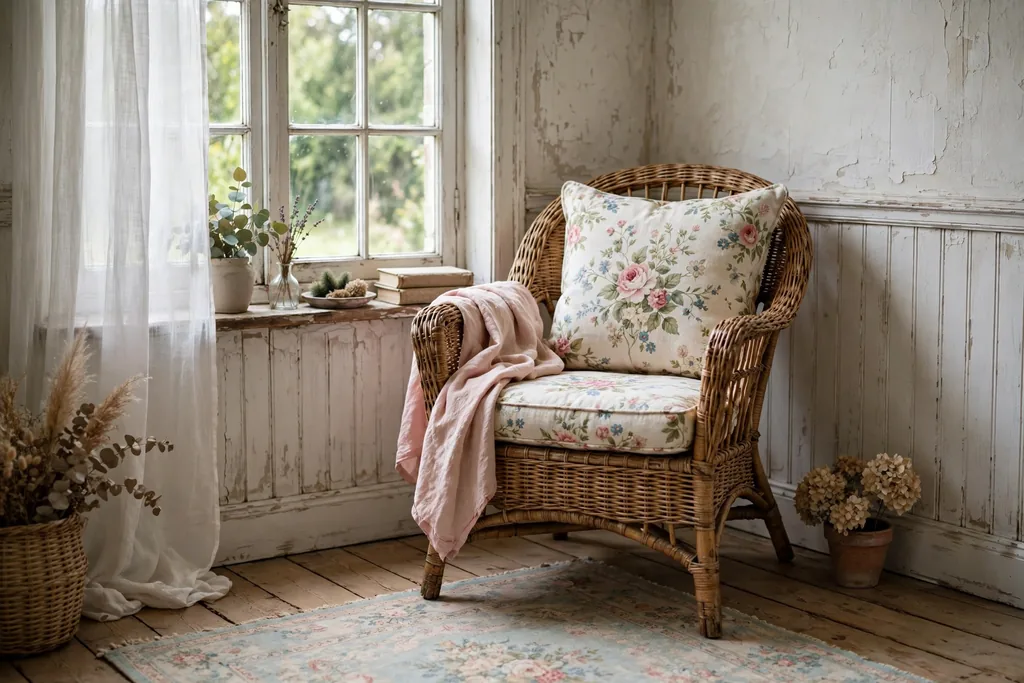
A wicker reading chair corner gives a shabby chic bedroom a place to sit that is not the bed. Choose a wicker or rattan chair with a curved back, add a seat cushion in floral or ticking stripe fabric, and place a small side table and a lamp beside it. A basket for books or knitting beside the chair keeps the corner tidy and useful.
Place the chair near a window for daylight, and add a light throw over the arm for cooler evenings. Check wicker chairs for broken strands or loose joints before buying secondhand, and tighten any loose weave with a gentle hand. Keep the corner simple, with just the chair, table, and lamp, so it stays inviting rather than becoming another storage spot.
23. Drape a Sheer Canopy Over the Bed
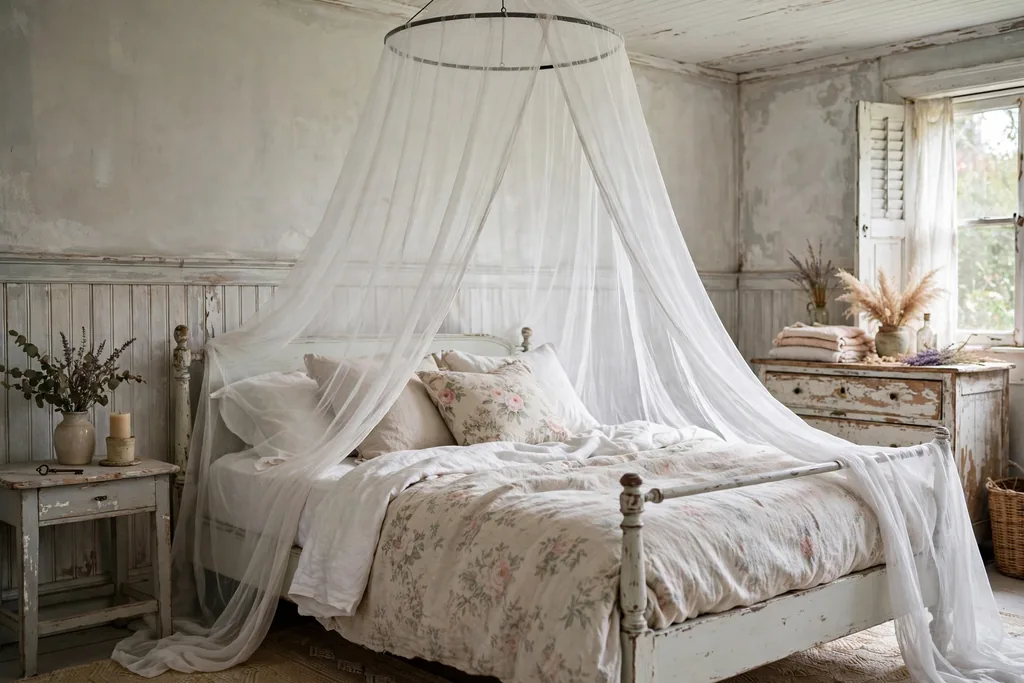
A sheer canopy draped over the bed gives a bedroom a soft, romantic enclosure without heavy curtains. Hang a ceiling hoop or a simple frame above the bed, then drape sheer white or cream fabric from it so it falls loosely around the head of the bed. The fabric softens the room and makes the bed feel like a separate, cozy space.
Use lightweight fabric that lets air and light through, and fix the hoop firmly to a ceiling joist so it cannot pull loose. Keep the fabric away from lamps and heaters, and wash it regularly, since sheer fabric near a bed gathers dust. If a full canopy feels like too much, drape fabric over the headboard end only, leaving the foot of the bed open.
24. Hang an Old Window Frame as Wall Decor
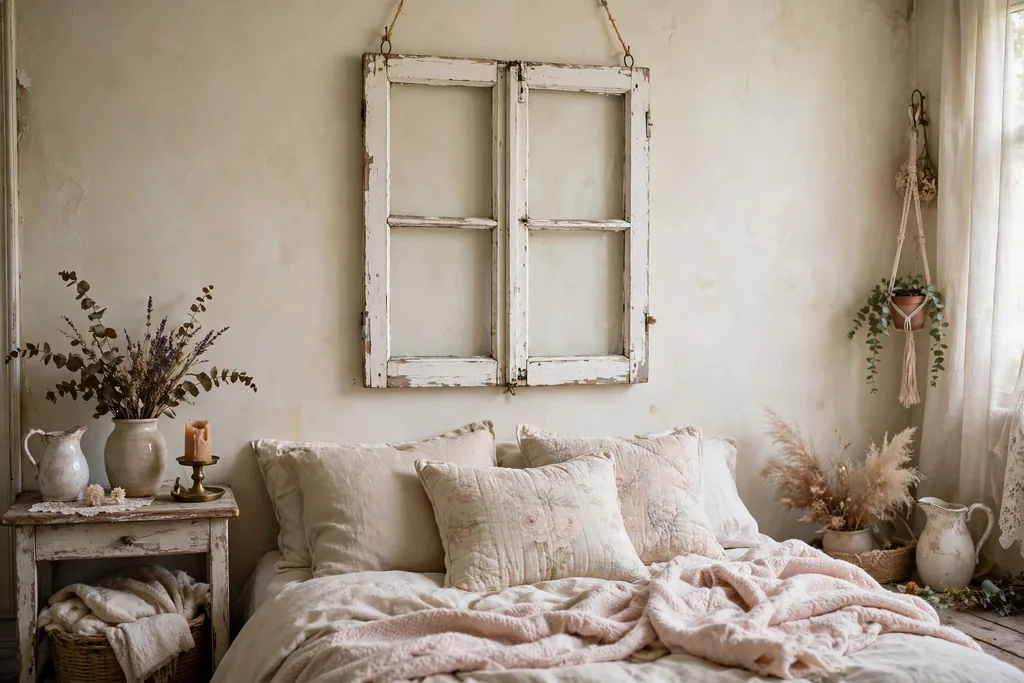
An old window frame hung as wall decor turns a salvaged piece into art, with its panes framing photos, pressed flowers, or small prints. Choose a frame with several panes, paint it white or cream if the old paint is flaking badly, and hang it above a dresser or beside the bed. Place a small print or photo behind one or two panes, and leave the rest open to the wall color.
Fix the frame to the wall with hooks rated for its weight, and check for loose glass before hanging, removing any cracked panes for safety. If you prefer a simpler look, hang the frame empty, so the wall color shows through the panes and the frame itself is the feature. This idea suits a bedroom with plain walls, where the frame adds structure without a large picture.
25. Stack Vintage Suitcases as a Bedside Table
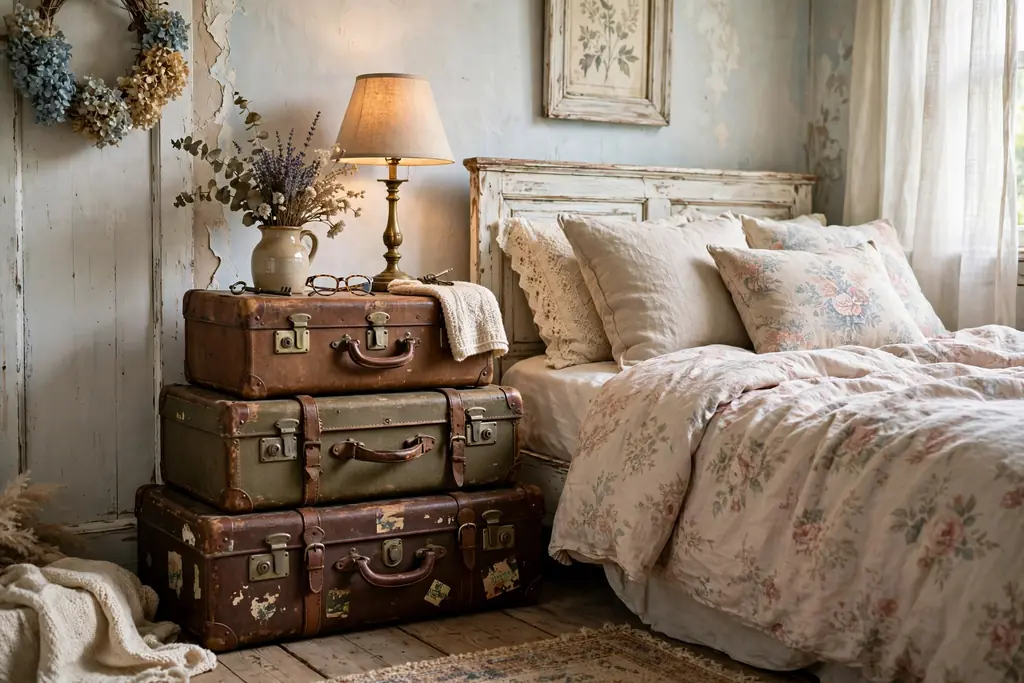
A stack of vintage suitcases makes a bedside table with storage inside and a travel worn look outside. Choose two or three suitcases in graduated sizes, in faded leather, canvas, or painted hardboard, and stack them beside the bed with the largest at the bottom. The top case holds a lamp or a book, while the cases below store letters, photos, or spare chargers.
Check that the stack is stable and at a height close to the mattress top, so a lamp and a glass of water sit within easy reach. Clean the cases inside and out, and air them well before use. Keep the stack to three cases at most, so it does not tower over the bed or become unsteady when a drawer or lid is opened.
26. Display a Vintage Birdcage With a Trailing Plant
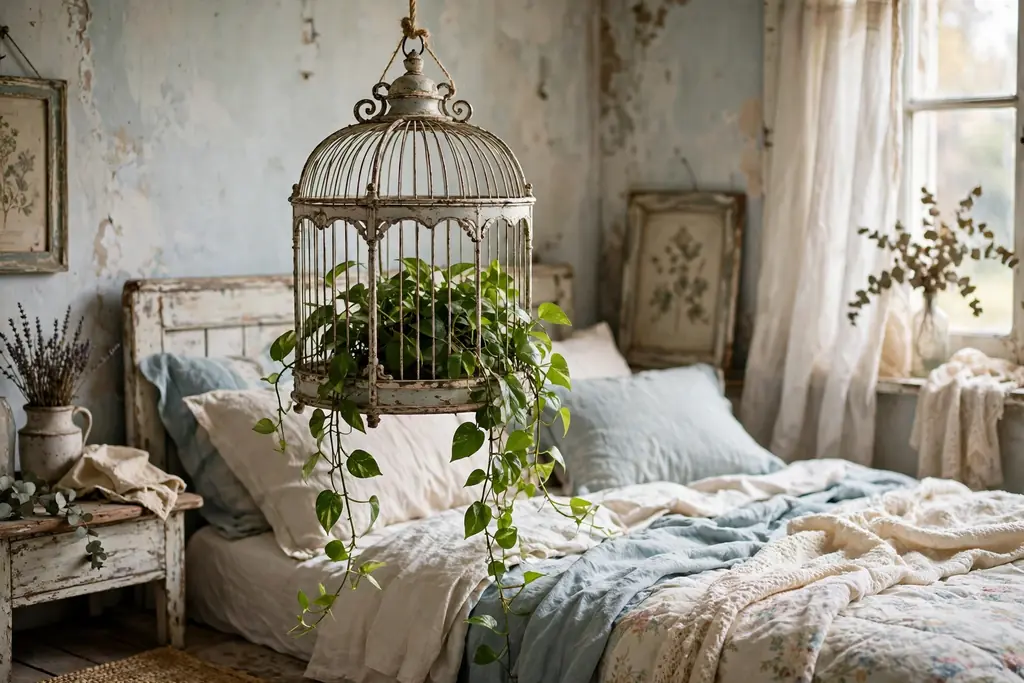
A vintage birdcage holding a trailing plant brings a garden note into a shabby chic bedroom without needing floor space. Choose a wire or wood birdcage with a domed top, place a small potted trailing plant inside, and hang it from a ceiling hook or set it on a dresser. The plant trails through the bars as it grows, softening the metal or wood frame.
Use a plant that suits indoor light, such as a pothos or a trailing ivy, and water it over a sink so the cage and the surface below stay dry. Keep the cage out of direct sun if the plant prefers shade, and trim the trails when they reach the floor or nearby bedding. If live plants are not practical, a good quality faux trailing plant gives a similar look with no watering.
27. Tie Dried Lavender to the Bedposts
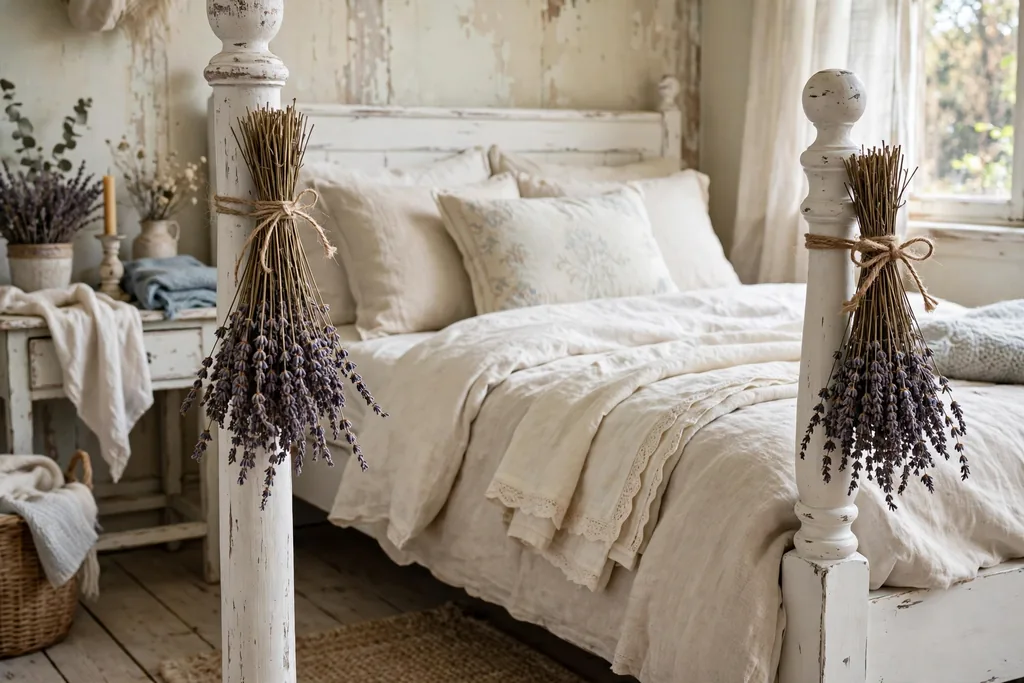
Dried lavender tied to the bedposts adds scent and a simple country detail that costs very little. Gather small bundles of dried lavender, tie each one with twine or a thin ribbon, and fasten one bundle to each bedpost or to the headboard corners. The pale purple buds and grey green stems suit the soft shabby chic palette, and the scent is gentle rather than strong.
Replace the bundles when the scent fades or the buds start to drop, usually after a few months. Keep the lavender away from open flames and heaters, since dried flowers catch fire easily. If anyone in the room is sensitive to scent, use one small bundle only, or place the lavender on a dresser instead of on the bed itself.
28. Paint a Ceiling Rose in Soft White
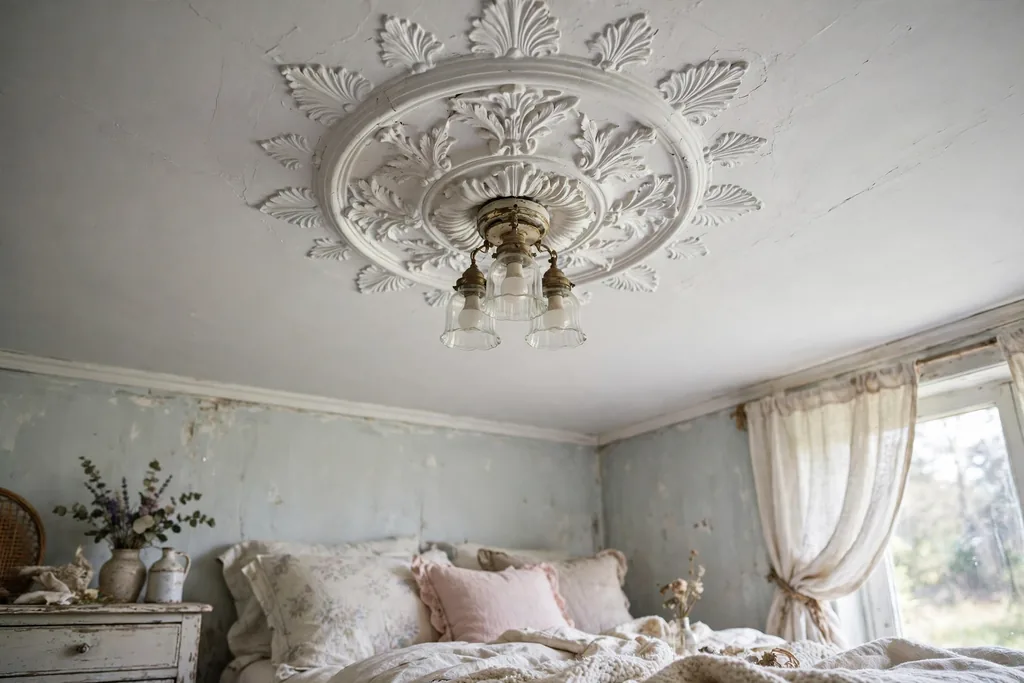
A painted ceiling rose gives a shabby chic bedroom a quiet overhead detail that pairs well with a beaded light or a simple pendant. Choose a plaster or lightweight ceiling rose with a floral or scroll pattern, paint it in soft white or cream, and fit it around the central light fitting. The rose frames the light and adds a vintage touch without painting the whole ceiling.
Fit the rose with adhesive or fixings made for its weight, and paint it before fitting so you can reach all the details. Keep the ceiling itself plain, so the rose stands out as a single feature. If the room already has a beaded chandelier, a simple rose pattern works best, since an ornate rose plus an ornate light can look busy together.
29. Screen Off a Corner With a Floral Folding Screen
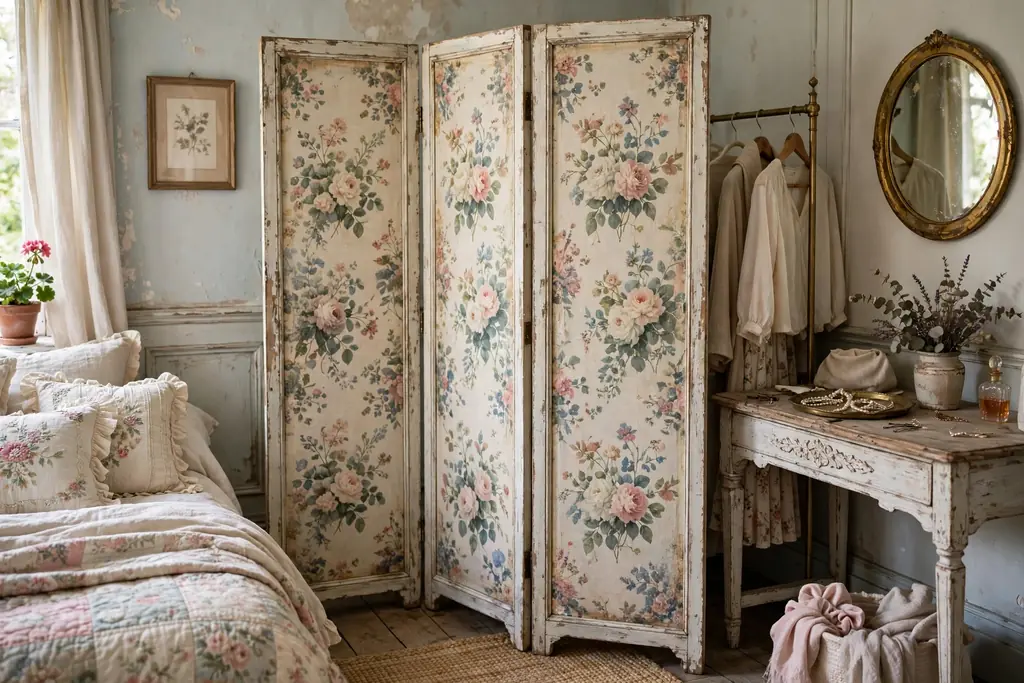
A floral folding screen screens off a corner of a bedroom, hiding a laundry basket, a desk area, or a dressing spot, while adding pattern to the room. Choose a three panel screen covered in faded floral fabric or paper, in tones that match the bedding, and unfold it in a gentle zigzag so it stands on its own. The screen can be moved or folded away when you need the space back.
Place the screen where it does not block a door or a heater, and keep the floor beneath it clear so the feet sit flat. Check hinges on a secondhand screen, and tighten any loose screws before daily use. If the fabric is stained, a new floral fabric cover over the panels gives an old screen a fresh life without buying a new one.
Conclusion
A shabby chic bedroom comes together slowly, one soft layer at a time, rather than from a single large change. Start with the bed, since it fills the most space, then add one worn furniture piece, one floral layer, and one small vintage detail. Keep the base pale, let textures do much of the work, and leave some plain space so the room feels calm rather than crowded. If a piece does not suit the room, move it, repaint it, or pass it on, since shabby chic rooms are meant to change as you find new pieces. Save this list on Pinterest before your next refresh, and work through it at your own pace, one idea at a time.
FAQs
What colors work best in a shabby chic bedroom?
White, cream, and soft grey make the best base, with faded pink, pale blue, sage, and lavender as accent colors. Keep the base pale so the room stays light, and use the accent colors in bedding, cushions, and one wall detail. Avoid strong or very dark colors on large surfaces, since they can overpower the soft, worn look that defines the style.
How do I get the shabby chic look without buying all new furniture?
Start with paint and fabric, which change a room for little cost. Paint a wooden piece white and sand the edges lightly, add a floral quilt and lace curtains, and look for one or two secondhand pieces at markets or charity shops. Check each vintage piece for sound joints and working drawers, and keep the rest of the room simple so the old pieces stand out.
Is shabby chic the same as farmhouse style?
The two styles share worn wood and pale colors, but shabby chic is softer and more romantic, with floral prints, lace, gilt frames, and delicate vintage pieces. Farmhouse style tends to use stronger wood tones, plainer fabrics, and more rustic, practical details. A bedroom can borrow from both, but shabby chic leans toward floral and feminine details, while farmhouse leans toward plain and sturdy ones.
How do I keep a shabby chic bedroom from looking cluttered?
Limit open displays to a few pieces per shelf or surface, and give each vintage item some empty space around it. Use closed storage, such as a trunk, an armoire, or drawers, for items you do not need to see, and keep bedding mostly plain with one floral layer. If a surface starts to fill up, remove one item before adding another, so the room stays curated.
Can shabby chic work in a small bedroom?
Yes, shabby chic suits small bedrooms well, since pale colors and sheer fabrics keep the room feeling light. Choose smaller scale furniture, such as a slim dresser or a single nightstand, use a light quilt rather than heavy layers, and keep wall decor to one gallery or one feature wall. A mirror and a sheer canopy can also help a small room feel larger, as long as they are kept simple.
How do I care for vintage furniture and fabric in a shabby chic bedroom?
Dust wooden pieces with a soft cloth, clean them gently with a mild cleaner, and wax painted pieces to protect the finish. Wash linen, lace, and crochet items gently in cool water and dry them flat or on a line, so they keep their soft texture. Check older pieces regularly for loose joints, worn fabric, or pest damage, and repair small problems early before they become larger ones.