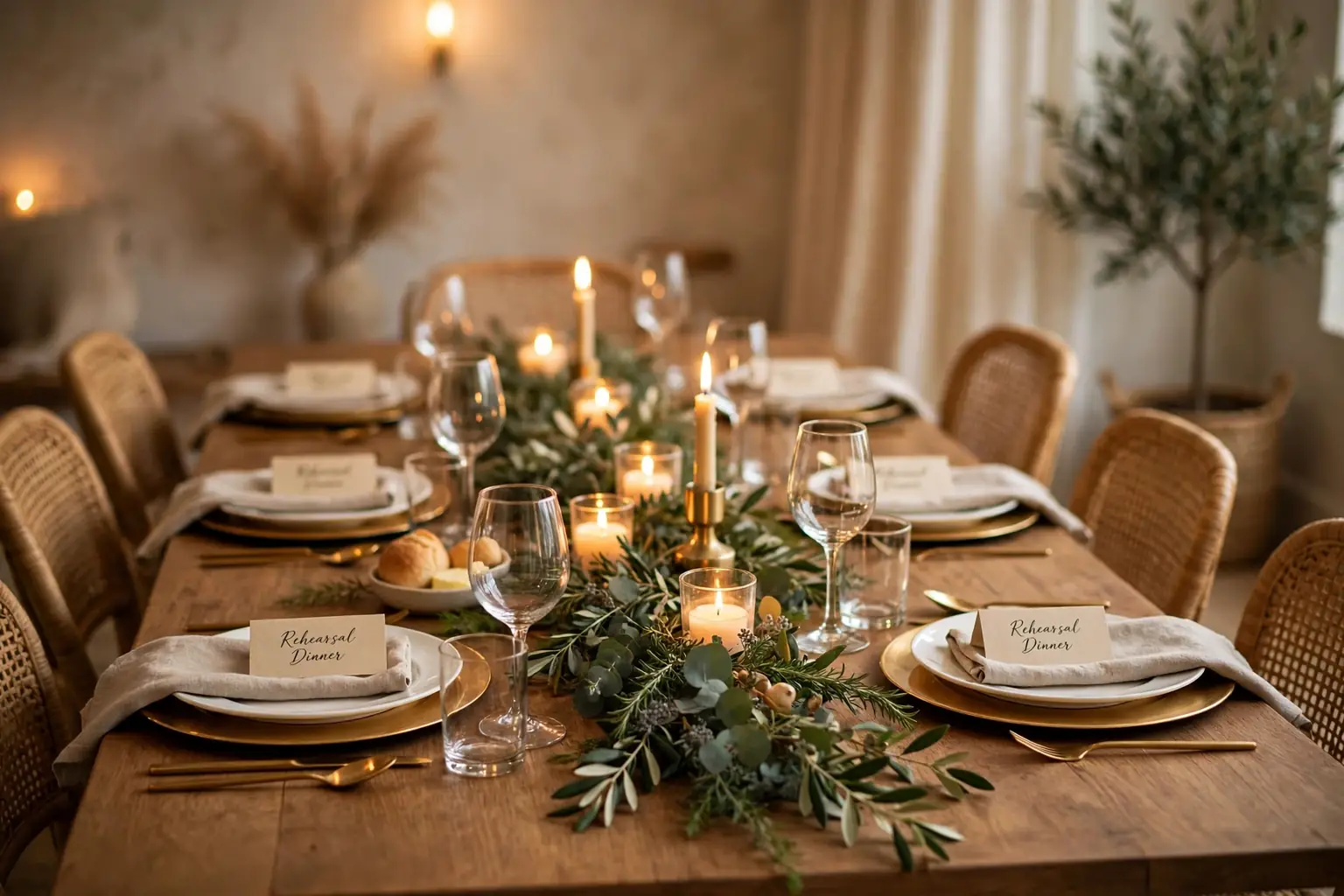
Rehearsal dinner table decorations work best with one low centerpiece, a simple palette, and one personal detail at each place, so guests can talk across the table and the evening feels close rather than formal. Keep flowers low, use candlelight, repeat one color in napkins and cards, and leave room for plates and serving dishes.
Start with the base you already own, such as a plain tablecloth or runner, everyday plates, and cloth napkins in a soft neutral. Then add one layer at a time: a low centerpiece, candles in safe holders, and a personal detail such as a place card or a menu card. For more low centerpiece ideas in a warm seasonal palette, see the fall table decor guide, and for a candlelit table in a different palette, browse the Valentine table decorations. Keep the centerpiece low enough to see across, leave room for serving dishes, and choose pieces you can lift off in one move when the table needs to clear.
Key Takeaways
- Keep the centerpiece low and narrow, so guests can see each other and serving dishes still fit.
- Pick one palette and repeat it in the runner, napkins, candles, and cards, so the table looks planned.
- Start with plates, glasses, and napkins you already own, then add one or two personal layers.
- Set one clear personal detail at each place, such as a place card, a menu card, a photo, or a small favor, and keep the rest simple.
- Use candlelight with care: keep flames clear of greenery, fabric, and paper, and use flameless candles near children or dried material.
- Leave empty space at each place for elbows, glasses, and serving dishes, and test the full setting before guests arrive.
1. Low Greenery Runner Down the Center
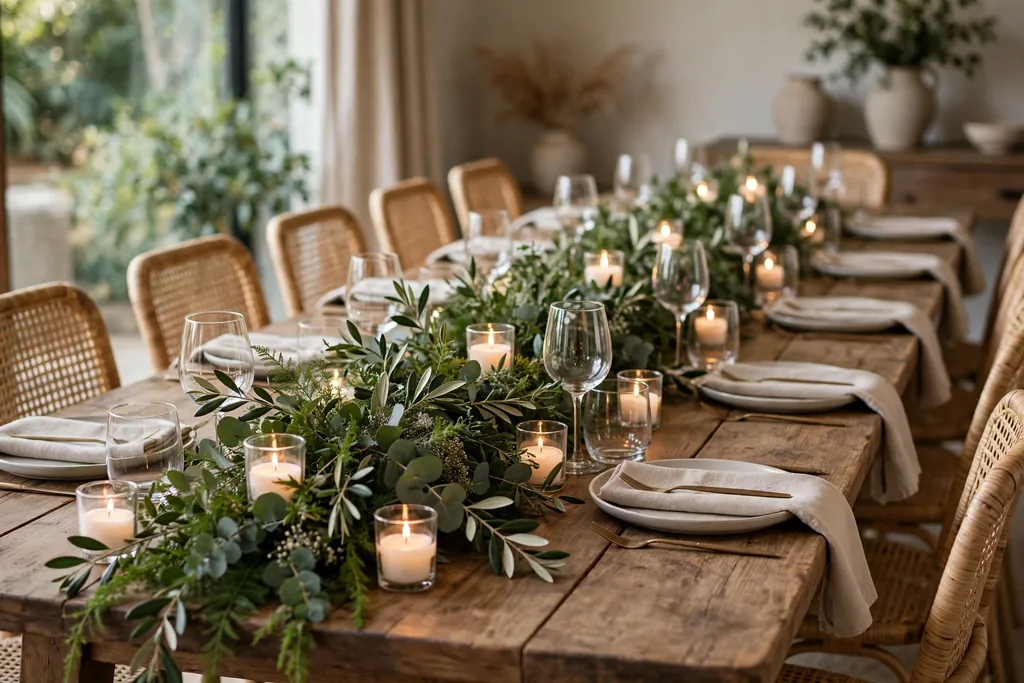
Lay a loose greenery runner down the center of the table, using eucalyptus, olive branches, or soft fern stems, and trim it so it stays inside the table edges and does not brush plates or glasses. The green line carries color along the whole table without adding height, which suits a rehearsal dinner where conversation matters more than a tall arrangement. Add two or three small votive candles in glass holders along the runner for evening light.
Secure the runner so it does not slide when plates are set down, and keep any real flame clear of dry leaves. If fresh stems shed, switch to faux greenery you can wipe clean, or use short sprigs tucked into napkin ties instead of a full runner. For a table with a light cloth, set the runner on a narrow mat first, so stems and water marks do not reach the fabric.
2. Bud Vase Trio with Single Stems
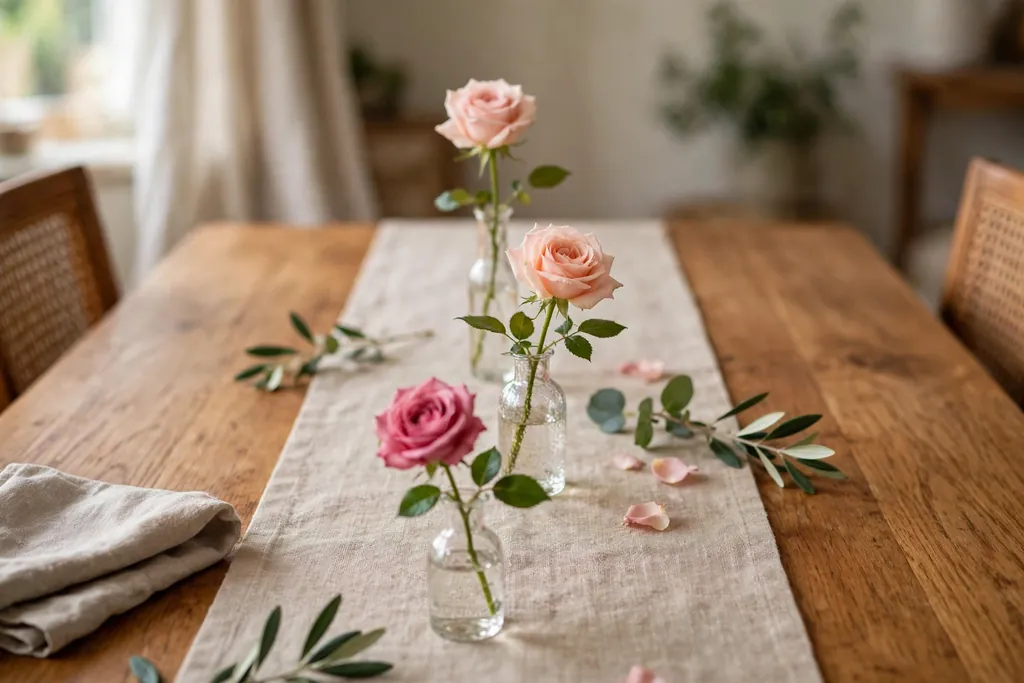
Set three small bud vases down the center of the table, each holding one stem, such as a rose, a ranunculus, or a spray of greenery, with the vases spaced so each place still has room. The trio reads as one loose centerpiece, costs little, and works well on a small table where a large arrangement would crowd the plates. Use the same flower in each vase, or one color in three vase shapes, so the group looks matched.
Choose vases with a heavy base, so they cannot tip when plates are set down nearby. Change the water the day of the dinner if the vases will sit out for hours, and keep loose petals off the table with a small tray under the group. For a longer lasting version, use one high quality faux stem in each vase and keep fresh blooms for the couple’s places only.
3. Lantern Centerpiece with Battery Candles
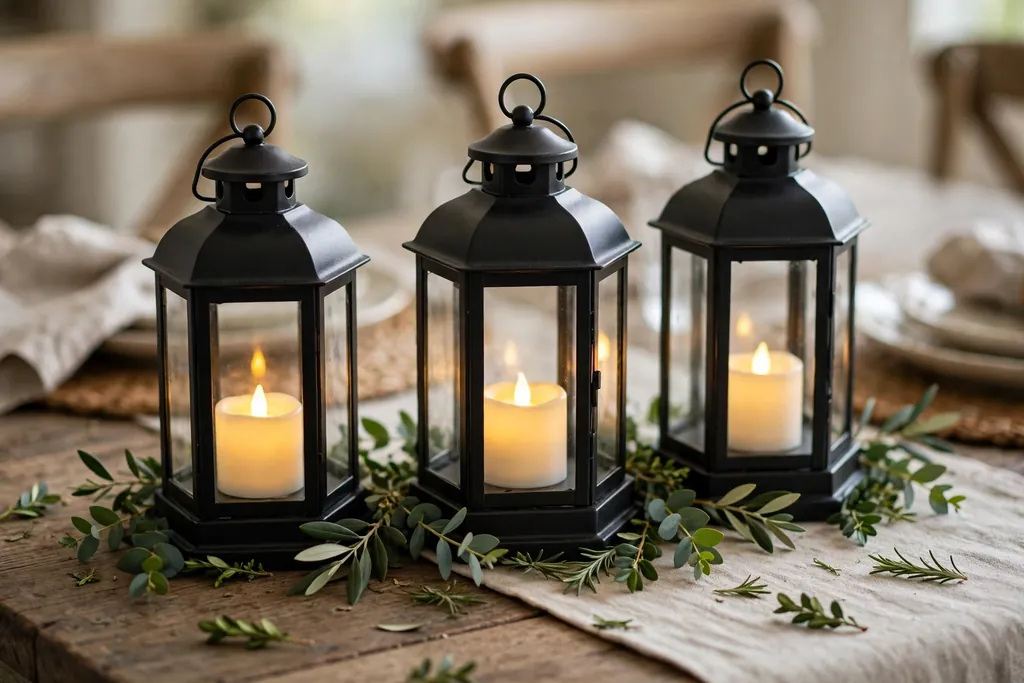
Set one or two lanterns with battery candles in the center of the table, then group a few short sprigs or small blooms around the bases. Lanterns give a steady, sheltered glow and a clear focal point, and they lift off the table in one move when serving needs the full surface. Choose lanterns short enough to see over when guests are seated.
Place a small tray or runner under the lantern group to protect the table and to keep sprigs contained. Use battery candles inside closed or narrow lanterns, since a real flame needs air and a safe holder. If the table is small, use one lantern only, and add a second lantern to a sideboard for the same glow without crowding the plates.
4. Handwritten Place Cards with a Sprig
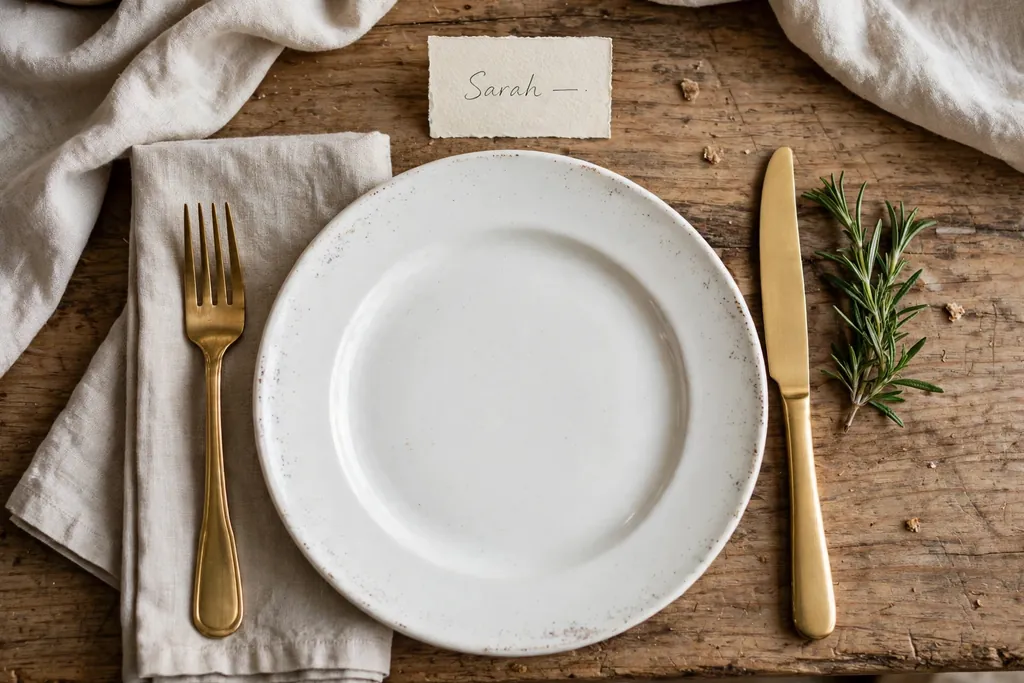
Set one small place card at each place, with the guest name written in clear, large lettering, and lay a short sprig of greenery, rosemary, or lavender beside the card or tucked under a napkin fold. Place cards mark each seat, help guests settle in, and double as a small keepsake, and they work for a family dinner as well as a larger rehearsal gathering. Keep the card small enough to sit beside a plate without crowding the glass.
Write names before setting the table, so cards are ready when plates go down, and keep the note short, since a long note will be read once and then set aside. For a close gathering, add a first name only, which feels warm and informal. Use the same sprig at every place, so the table looks matched from across the room.
5. White Plates on Gold Chargers
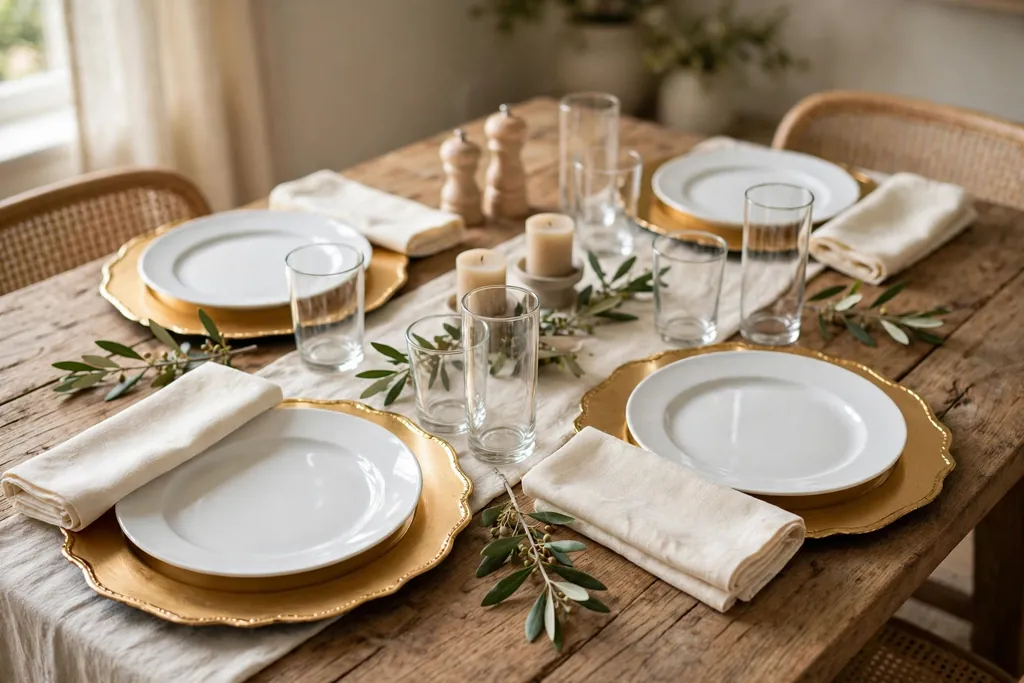
Set white or cream plates on gold chargers, add cream or blush napkins folded in a simple rectangle, and finish each place with clear glasses and simple cutlery. The gold chargers give a plain table a dressy note at once, and they work with a plain tablecloth as well as a soft linen runner. Keep the gold to chargers and one candle holder, so the table stays warm rather than busy.
Lay the cloth flat first, then center one charger at each place, with the plate on top and the napkin to the left or on the plate. Polish gold chargers before the meal, since fingerprints show more on metal than on wood. If gold chargers feel too formal for a casual rehearsal dinner, use them only for the couple’s places and keep the other places plain.
6. Blush Linen Runner with Rose Petals
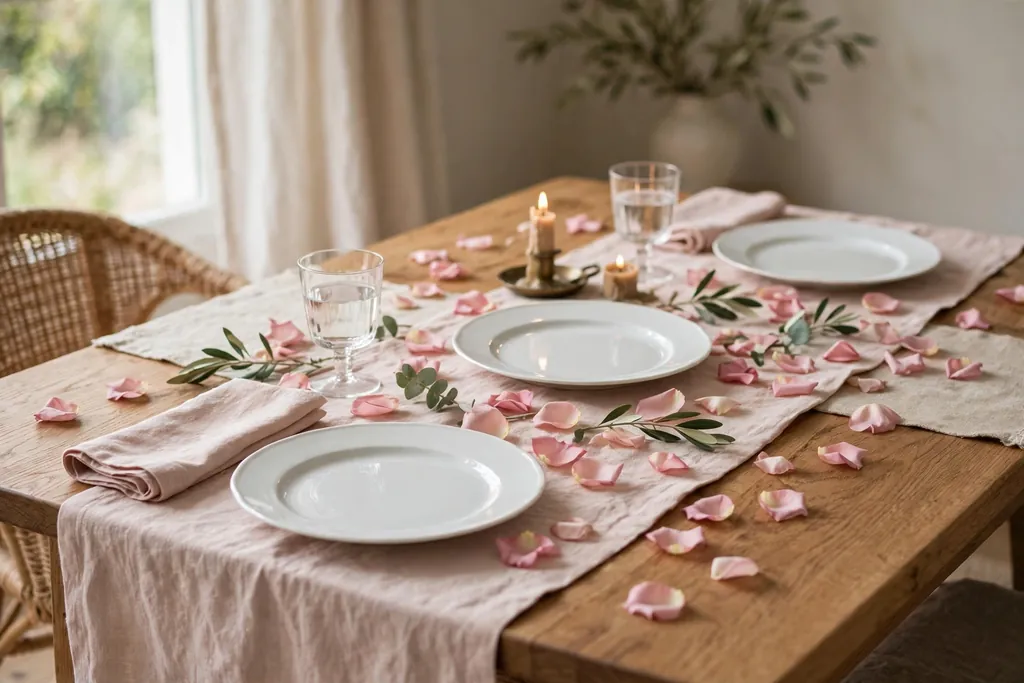
Lay a blush pink linen runner down the center of the table, then scatter fresh or faux rose petals lightly along it, leaving the ends clear for serving dishes. The soft pink base carries a gentle wedding color, while the petals add shape without height, so the table stays easy to talk across. Pair the runner with white plates and cream napkins, so the blush stays the single color note.
Scatter petals sparingly, about a small handful per place setting length, so they do not end up in food or glasses. Use faux petals if the table will be set hours ahead, since fresh petals can wilt and mark light linen. After the meal, gather the runner and shake it outside to collect the petals in one move.
7. Photo Place Markers for Each Guest
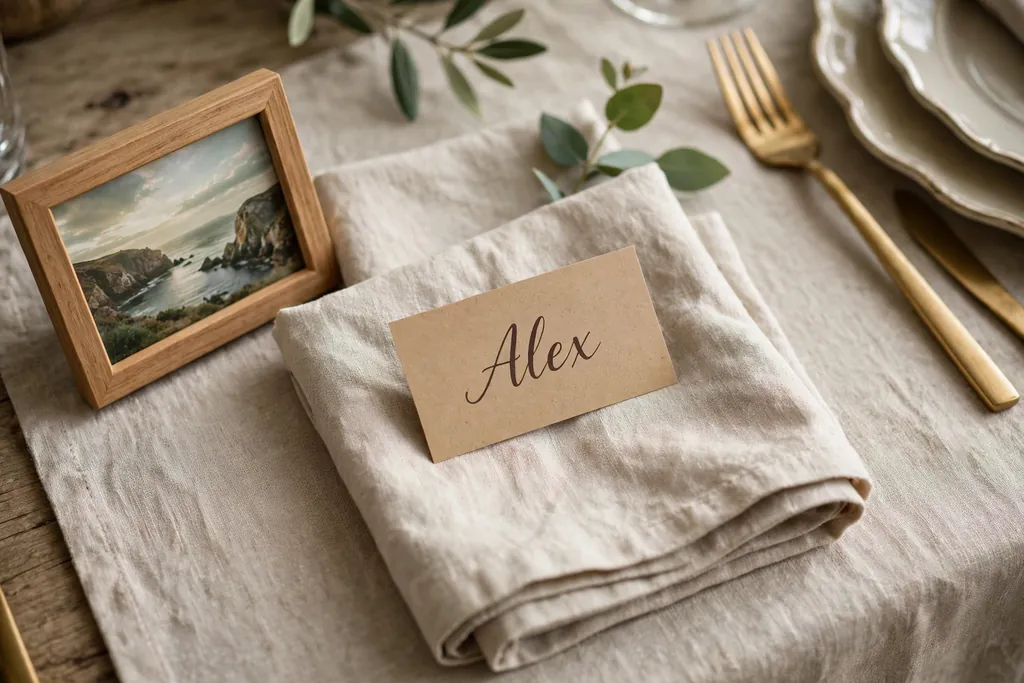
Set one small photo at each place, such as a print of the guest with the couple, propped against the glass or laid flat on the napkin, with the guest name written on a small card below it. The photo works as a place marker and a personal touch, gives guests something to look at while they settle in, and guests can take it home after the meal. Keep the print small enough to sit beside a plate without crowding the glass.
Use plain white, kraft, or blush card mounts to match the table palette, and print photos in the same size, so the table looks matched. Write names clearly on the front of each card. For guests who do not have a photo with the couple, use a photo of the couple alone with a short welcome line, so no place looks different from the rest.
8. Fairy Lights in Glass Bottles
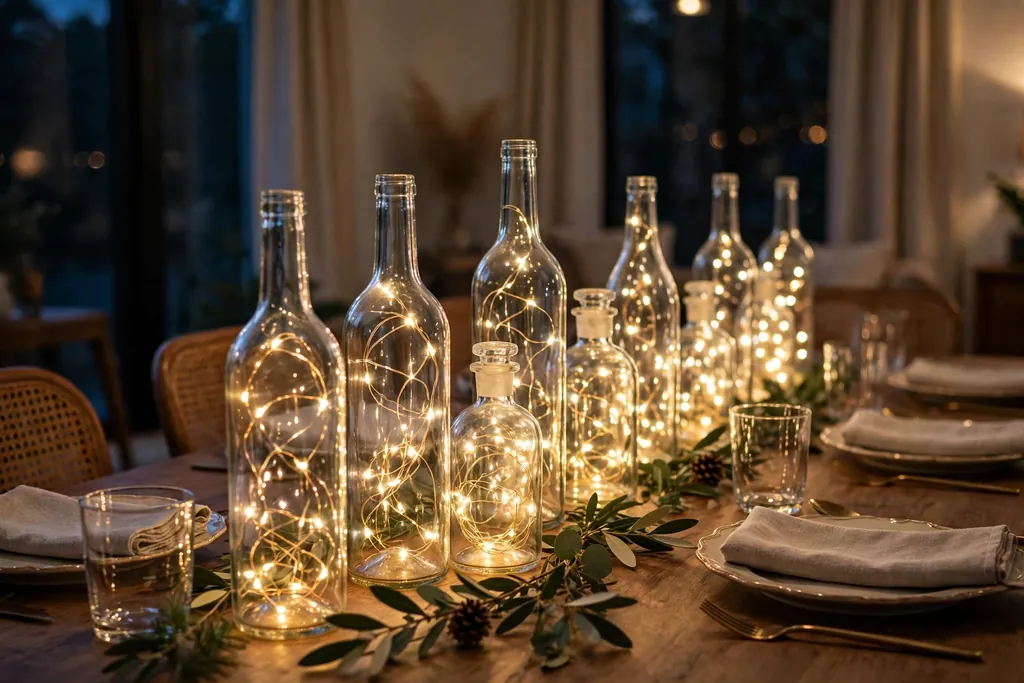
Set two or three clear glass bottles down the center of the table, each holding a short strand of battery fairy lights, with the bottles spaced so the light spreads along the table without blocking sightlines. The bottles catch the light softly in the evening, and they suit a small room where overhead light feels harsh. Use bottles of different heights, with one taller bottle and two shorter ones, but keep the total group low.
Use battery lights only inside narrow bottles, and keep the battery packs tucked behind the bottles or under the runner, so cords do not cross the table. Wash the bottles before the meal, since fingerprints show more on clear glass than on colored glass. If the table will hold hot dishes, set the bottles on a tray, so they can move in one step when serving starts.
9. Low Floral Compote Bowl
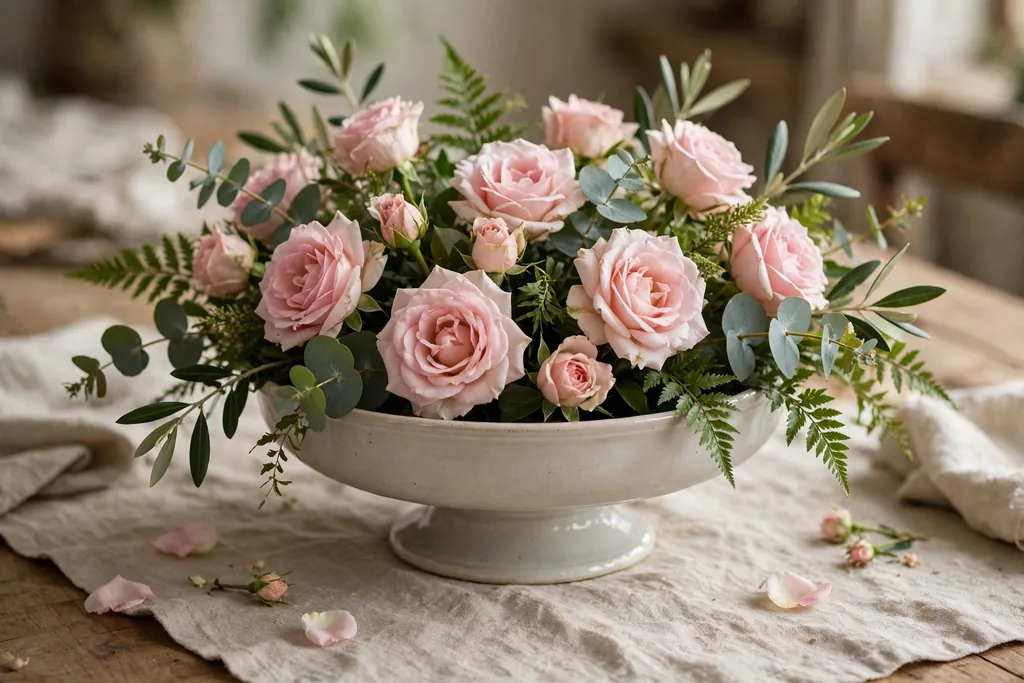
Trim garden roses, ranunculus, or mixed soft blooms short and set them in a low, wide compote bowl or footed dish, so the blooms sit just above the rim and the whole group stays below eye level. The low bowl gives a full flower look without a tall arrangement, and it suits a round table as well as a long table for a close gathering. Add a few short green leaves between the blooms, and place the bowl in the center with room for serving dishes at each end.
Use a bowl with a heavy base, so it cannot tip when plates are set down nearby. Change the water the day of the dinner if the bowl will sit out before the meal, and keep loose petals off the table by placing a small tray or mat under the bowl. If fresh blooms are out of budget, use high quality faux blooms in the same low bowl for the same shape.
10. Wood Board with Candles and Blooms
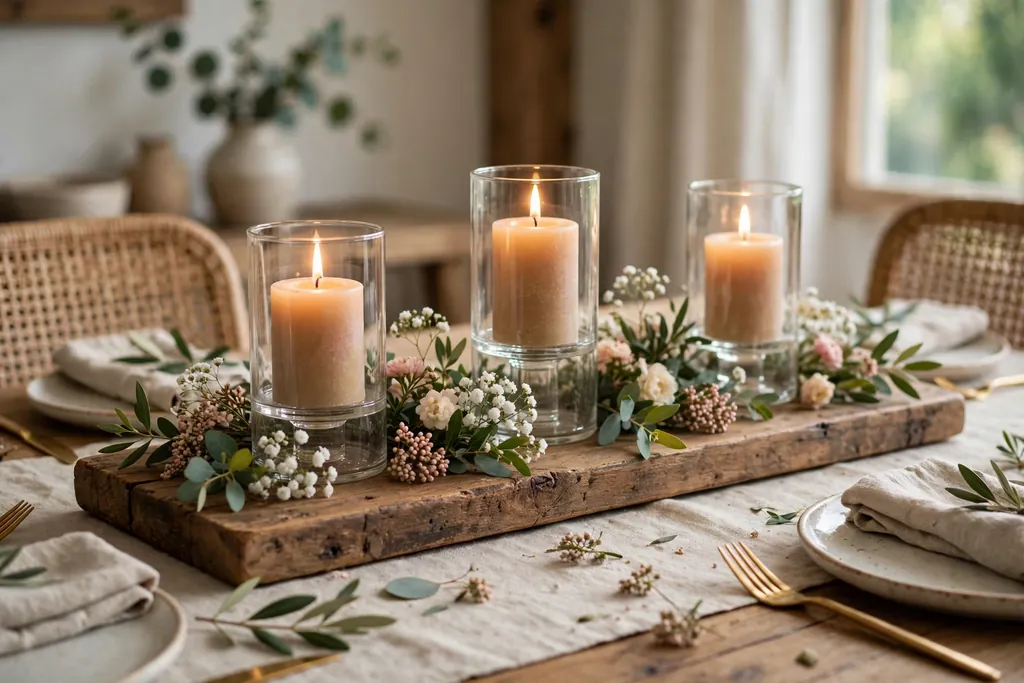
Set a long wood board down the middle of the table, then group short pillar candles in glass holders and a few small blooms or sprigs along it. The board keeps the group contained, so it reads as one centerpiece, and it lifts off in one move when you need the full table for serving. Use battery candles if the board will sit near dried stems or if children will be at the table.
Choose a board with a flat, sanded top, so candle holders sit level and do not wobble. Wipe the board clean after the meal and do not soak it, since wood can warp when left damp. Swap one candle for a small vase of blooms if the group looks too plain, and keep the total group low enough to see across.
11. Printed Menu Cards at Each Place
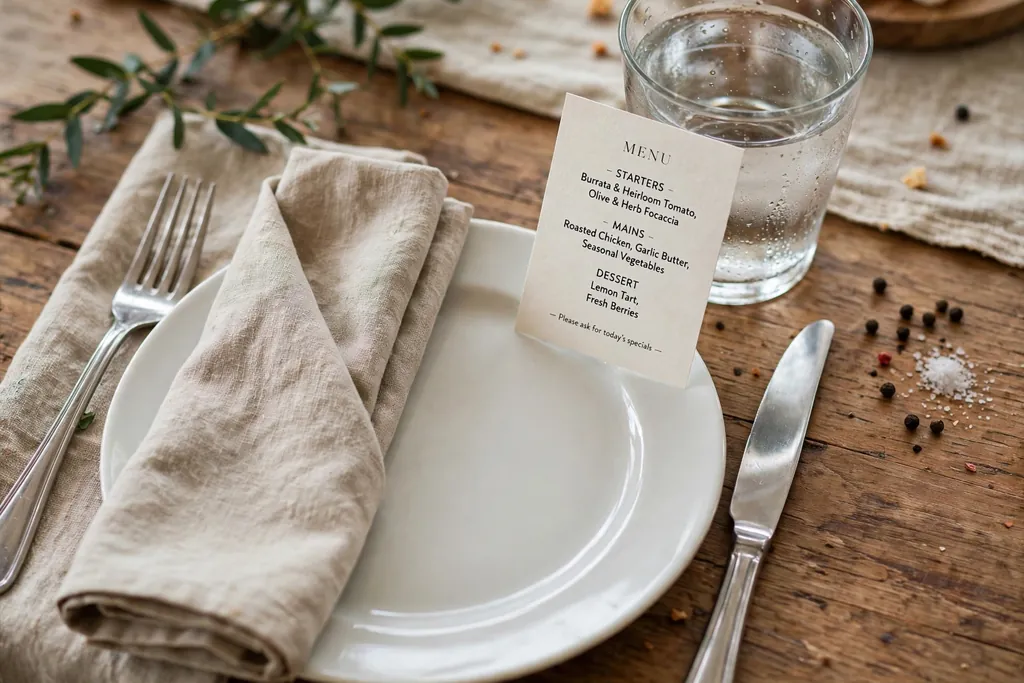
Set one small printed or handwritten menu card at each place, listing the courses for the evening, with the couple’s names and the date at the top in simple lettering. The card marks each seat, gives guests something to read while they settle in, and doubles as a keepsake after the meal. Prop the card against the glass or lay it flat on the napkin, and keep it clear of plates and food.
Keep the menu short, with course names only, since a long card will be read once and then set aside. Use the same card stock and lettering at every place, so the table looks matched. For a casual rehearsal dinner, use one shared menu card in the center with the courses written on it, and set a simple place card at each place instead.
12. Herb Sprig Napkin Ties
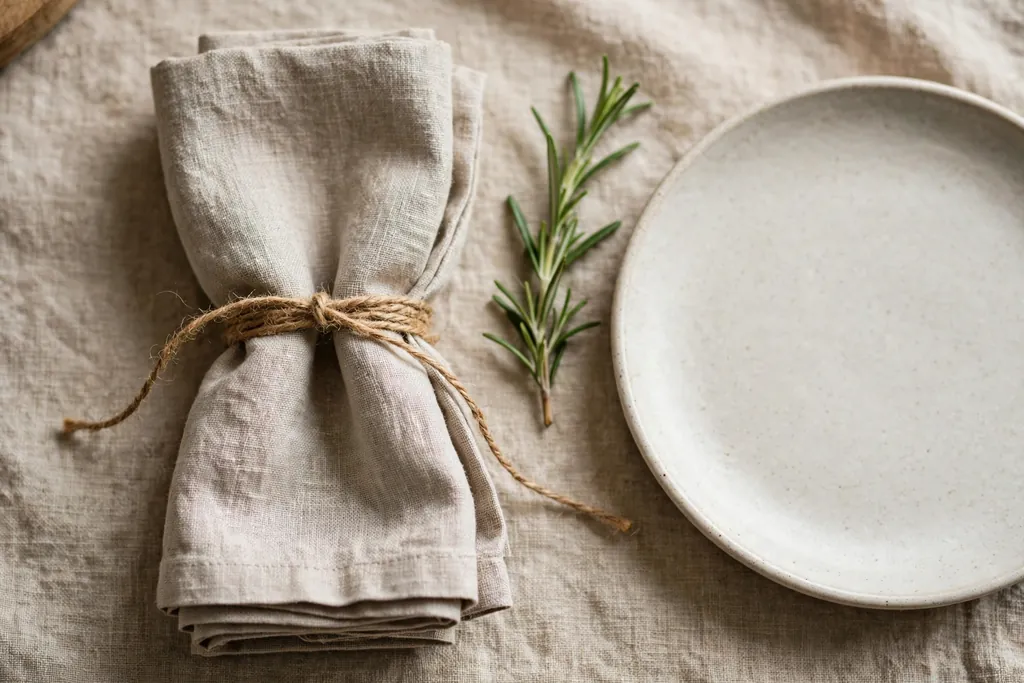
Wrap a length of twine or narrow ribbon around each folded napkin two or three times, tie it in a simple knot, and tuck a small herb sprig, such as rosemary, thyme, or lavender, under the tie. This small detail dresses an everyday place setting in minutes and costs little, since twine and fresh herbs store well and suit a dinner table. Fold napkins in a simple rectangle or roll so the tie sits flat, and keep the sprig short so it does not brush the plate.
Use the same herb at every place, so the table looks matched, and remove the sprig before washing napkins. For a gathering, write a guest name on a small card and tuck it under the same tie, so the napkin tie doubles as a place card. If fresh herbs wilt in a warm room, use dried lavender sprigs in the same tie for a longer lasting version.
13. Mismatched Vintage China Places
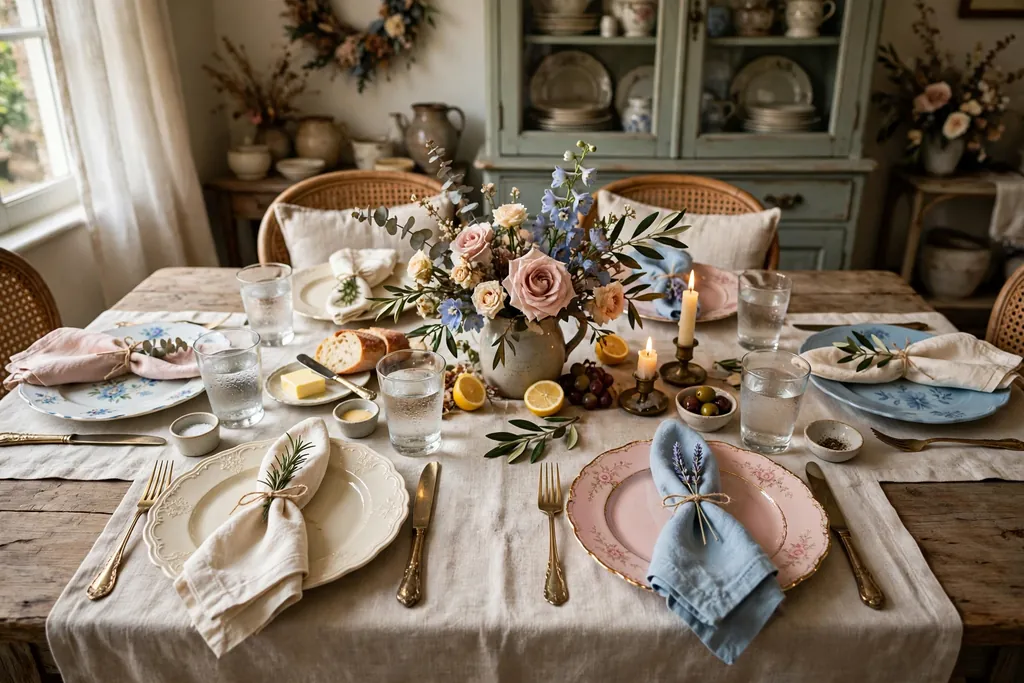
Use mismatched vintage style plates at each place, in one shared palette such as cream, blush, and soft blue, with plain glasses and simple cutlery, so each place feels collected rather than copied. The mix suits a home rehearsal dinner and a relaxed room, and it lets hosts use plates they already own or have gathered over time. Keep the palette tight, with one main color and one accent, so the mix looks planned rather than random.
Center one plate at each place, and keep napkins and the centerpiece simple, so the plates stay the main detail. Wash vintage plates by hand if they have a delicate edge, and check each plate for chips before setting the table. If one plate stands out too much, move it to the couple’s place, where a distinct plate looks planned.
14. Brass Holders with Cream Taper Candles
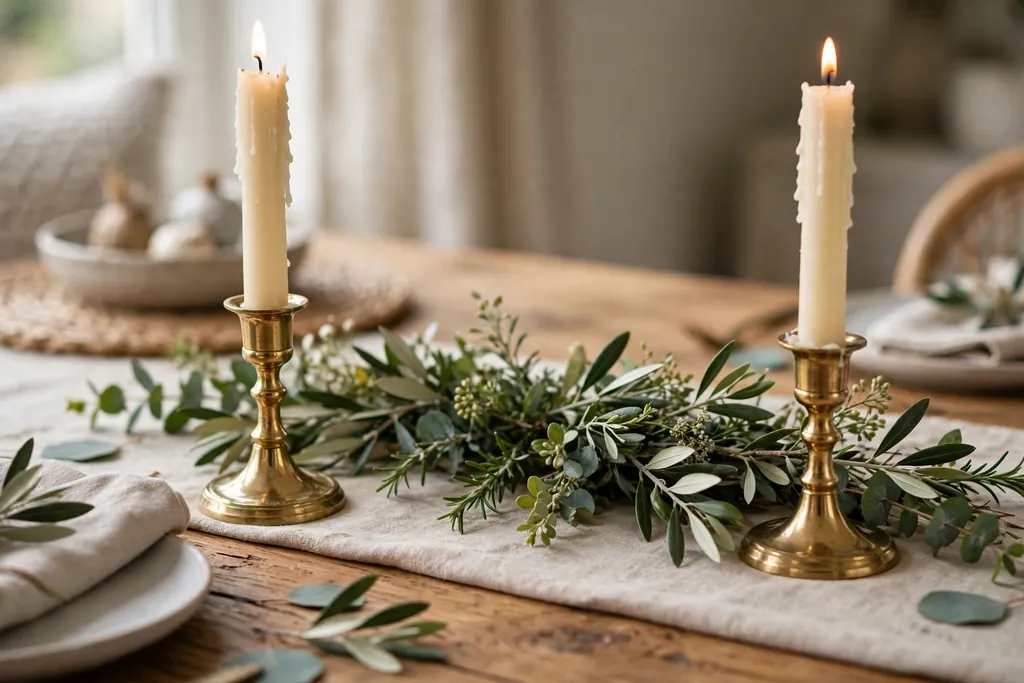
Set brass candlesticks of two heights down the center of the table, with cream taper candles in each, and keep the rest of the centerpiece simple, such as a short greenery runner or a few small blooms at the base. Brass adds a warm metal note that suits both a home dinner and a small venue gathering, and it works with cream, blush, and soft green palettes. Keep the candle group low enough to see across when guests are seated.
Check that candlesticks sit level and that tapers fit snugly, so candles do not lean or drip onto the table. Use a tray or small plates under the candlesticks if wax drips are a concern, and trim wicks before lighting. For a table with children, use flameless tapers in the same brass holders for the same look without a flame.
15. One Centerpiece for a Small Round Table
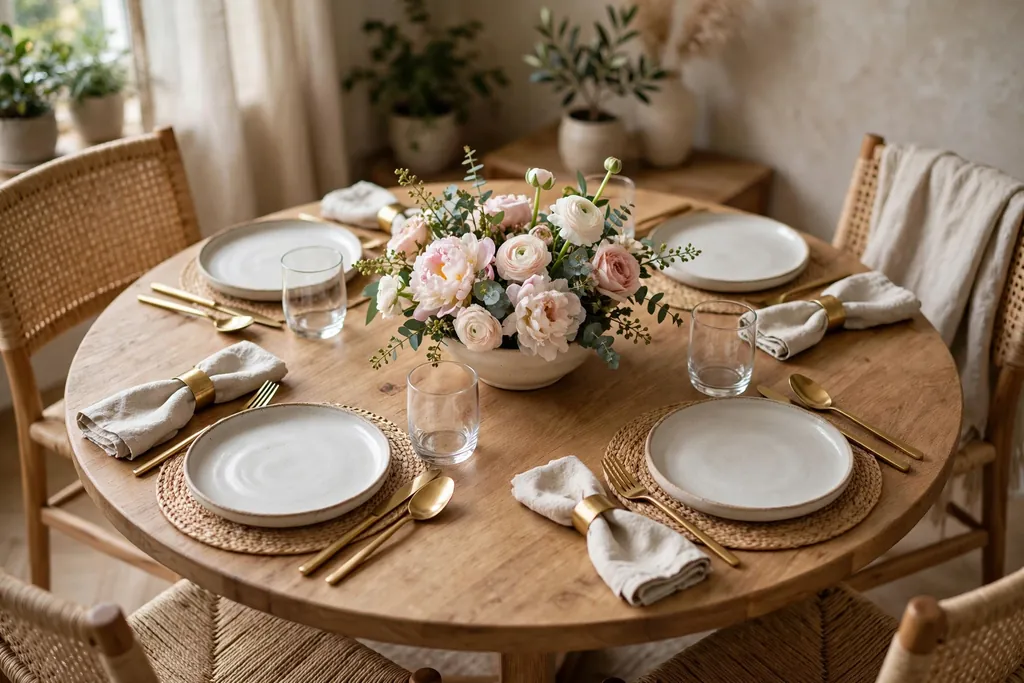
For a small round table, use one centerpiece only, such as a low bowl of blooms, one lantern, or a small candle group on a tray, set in the exact center with equal space around it for every place. One group keeps a round table easy to talk across, since every guest faces the same center, and it leaves the rest of the table free for plates and serving dishes. Pair the centerpiece with matching place settings all the way around, so no seat feels like an afterthought.
Keep the centerpiece below eye level when guests are seated, and choose a tray base if the group holds candles, so the whole centerpiece lifts off in one move. Skip a runner on a round table, since a runner rarely sits well on a round top, and use placemats or a round cloth instead. For a larger group at several round tables, repeat the same centerpiece at each table, so the room looks matched.
16. Table Number Cards with a Short Note
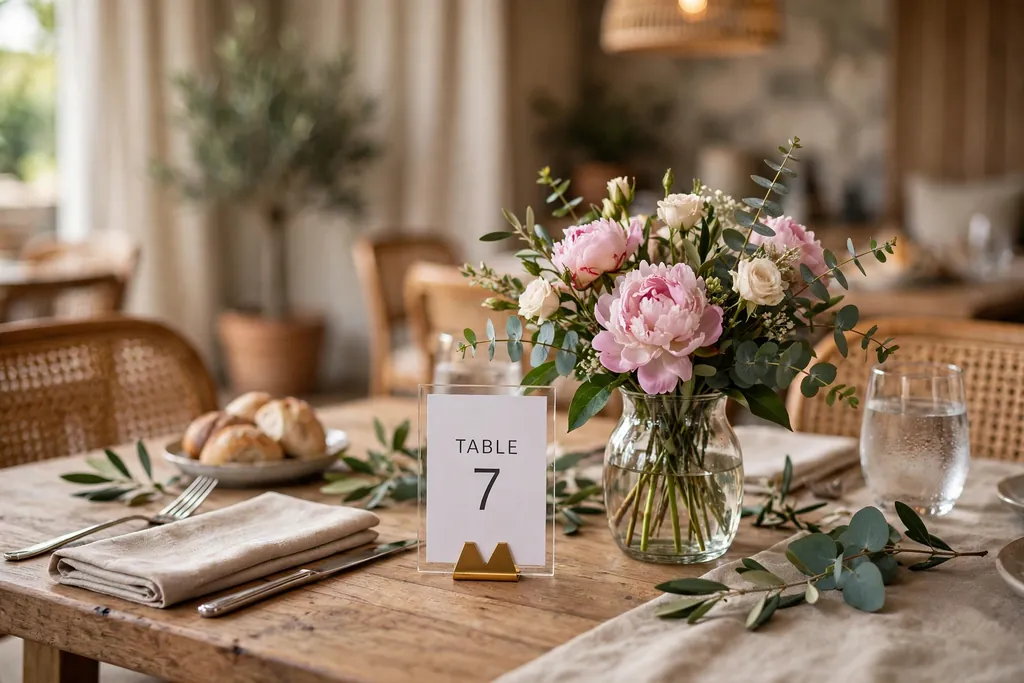
Set one small table number card at each table, with the number in large, clear lettering and a short note below it, such as a welcome line or one sentence about the couple. The card helps guests find their table, gives each table a finished look, and doubles as a small keepsake for the couple. Prop the card in a small holder or lean it against a vase, so it stands above the centerpiece without blocking sightlines.
Keep the note short, since a long note will be read once and then set aside, and use the same card stock and lettering at every table. For a single table rehearsal dinner, use one welcome card in the center with the couple’s names and a short note, so the table still gains a personal detail. For more holiday table ideas with place cards and menu cards, browse the Christmas table setting ideas.
17. Tiered Stand of Small Desserts
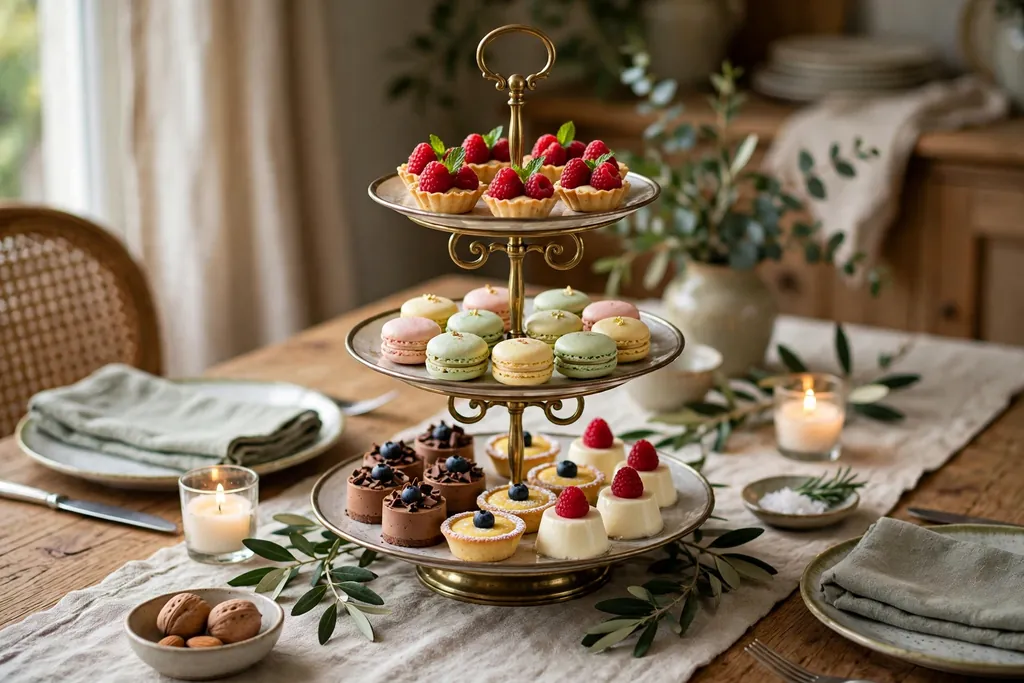
Set a two or three tier stand at one end of the table or in the center of a round table, and fill it with small desserts, such as mini cupcakes, chocolate dipped strawberries, or small cookies, so the centerpiece also serves dessert. A tiered stand gives height without blocking the center, since it sits in one spot rather than along the whole table, and it suits a close gathering where dessert can stay in view during the meal.
Keep the stand stable and clear of the main serving path, and put heavier items on the bottom tier. If the stand will hold food, use it for food only, and set a separate small vase of blooms beside it rather than mixing decor into the food tiers. Cover desserts until serving time, and wipe the tiers after use.
18. Small Favor Boxes at Each Place
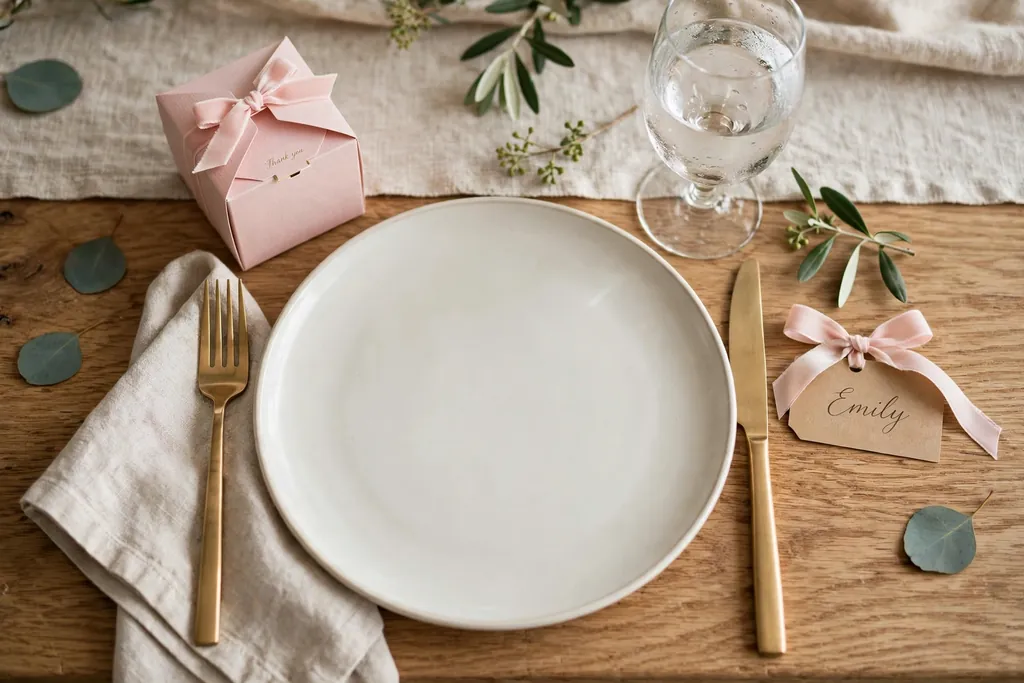
Set one small favor box at each place, in a color that matches the table palette, holding a small treat or a short note, with the guest name written on a small tag tied to the box. The favor marks each seat, gives guests something to take home, and adds a finished detail to a plain place setting without taking up much room. Keep the box small enough to sit beside a plate without crowding the glass.
Use the same box and tag at every place, so the table looks matched, and tie each tag the same way. Choose favors that travel well, such as wrapped sweets or a small candle, rather than items that melt or crush in a bag. For a close gathering, write a first name only on each tag, which feels warm and informal.
19. Candle Cluster on a Mirrored Tray
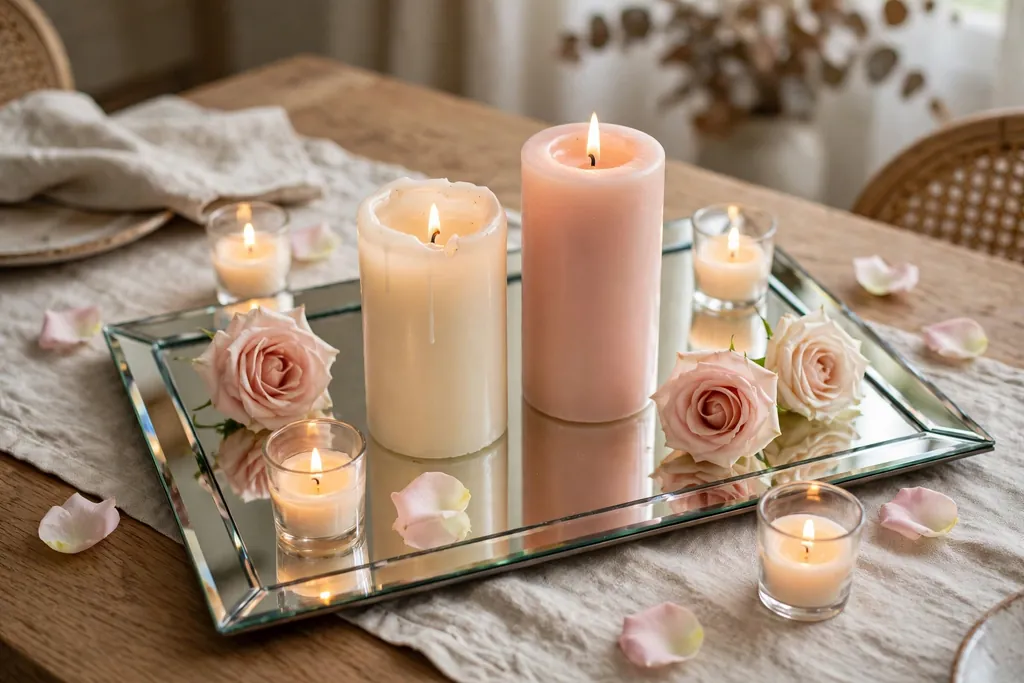
Group pillar and votive candles in shades of cream and blush on a mirrored tray, with a few rose heads or short green leaves tucked between the holders. The tray keeps the group contained, so it reads as one centerpiece, and it lifts off in one move when you need the full table for serving. The mirrored base reflects candlelight softly, which suits an evening rehearsal dinner in a small room.
Use a tray with a raised edge to contain wax, and keep candles in holders on a heat safe surface. Mix heights, with one taller pillar at the back and shorter votives at the front, but keep the total group low enough to see across. Use battery candles if the tray will sit near petals or paper cards, and wipe the mirrored base before the meal, since fingerprints show on a mirror finish.
Conclusion
A rehearsal dinner table does not need a new dinner set or a large budget. Start with the plates, glasses, and napkins you already own, pick one palette, keep the centerpiece low, and set one clear personal detail at each place. A greenery runner, a lantern, or a candle group gives the table its glow, while place cards, menu cards, photos, and small favors make the evening feel close and personal. Try one idea from this list for your rehearsal dinner, keep what works for your table, and change only one layer at a time until the setting feels like yours.
Frequently Asked Questions
What are rehearsal dinner table decorations?
Rehearsal dinner table decorations are the centerpiece, linens, place settings, and personal details used on the tables at a rehearsal dinner, the meal held the night before a wedding for the couple, their families, and the wedding party. They usually stay simpler and more personal than wedding reception decor, with one low centerpiece, a simple palette, and one personal detail at each place.
How do I decorate a rehearsal dinner table on a small budget?
Decorate a rehearsal dinner table on a small budget by starting with plates, glasses, and napkins you already own, then adding one low centerpiece, such as a greenery runner, bud vases, or candles in holders you already have. Add one personal detail at each place, such as a handwritten place card or a herb sprig napkin tie, and keep the palette to one or two colors, so the table looks planned without new dishes.
What centerpiece works best for an intimate rehearsal dinner?
A low centerpiece works best for an intimate rehearsal dinner, such as a greenery runner, a low floral bowl, a lantern with a battery candle, or a small candle group on a tray. Keep the centerpiece below eye level when guests are seated, leave room for serving dishes, and use one main group per table rather than several competing clusters, so guests can talk across the table.
Should rehearsal dinner tables match the wedding theme?
Rehearsal dinner tables do not need to match the wedding theme exactly, but they look best when they share one color or one detail with the wedding, such as the same flower, the same metal, or the same palette in a softer form. A rehearsal dinner can stay more casual and personal than the wedding, with handwritten cards, photos, and home details that would not suit a large reception.
How many places can I set on a small rehearsal dinner table?
The number of places on a small rehearsal dinner table depends on the table size, but a good guide is to leave about 60 centimeters, or about two feet, of width per place, with room for a plate, a glass, and cutlery, plus space for elbows. For a very small table, use one centerpiece only, fold napkins flat, skip chargers and a runner, and set extra dishes on a sideboard, so the table stays free for eating.
What should I put at each place for a rehearsal dinner?
Put one clear personal detail at each place for a rehearsal dinner, such as a handwritten place card, a printed menu card, a small photo, a herb sprig napkin tie, or a small favor box, plus the usual plate, cutlery, glass, and napkin. Keep the rest of the place simple, so the personal detail stands out, and repeat the same detail at every place, so the table looks matched.