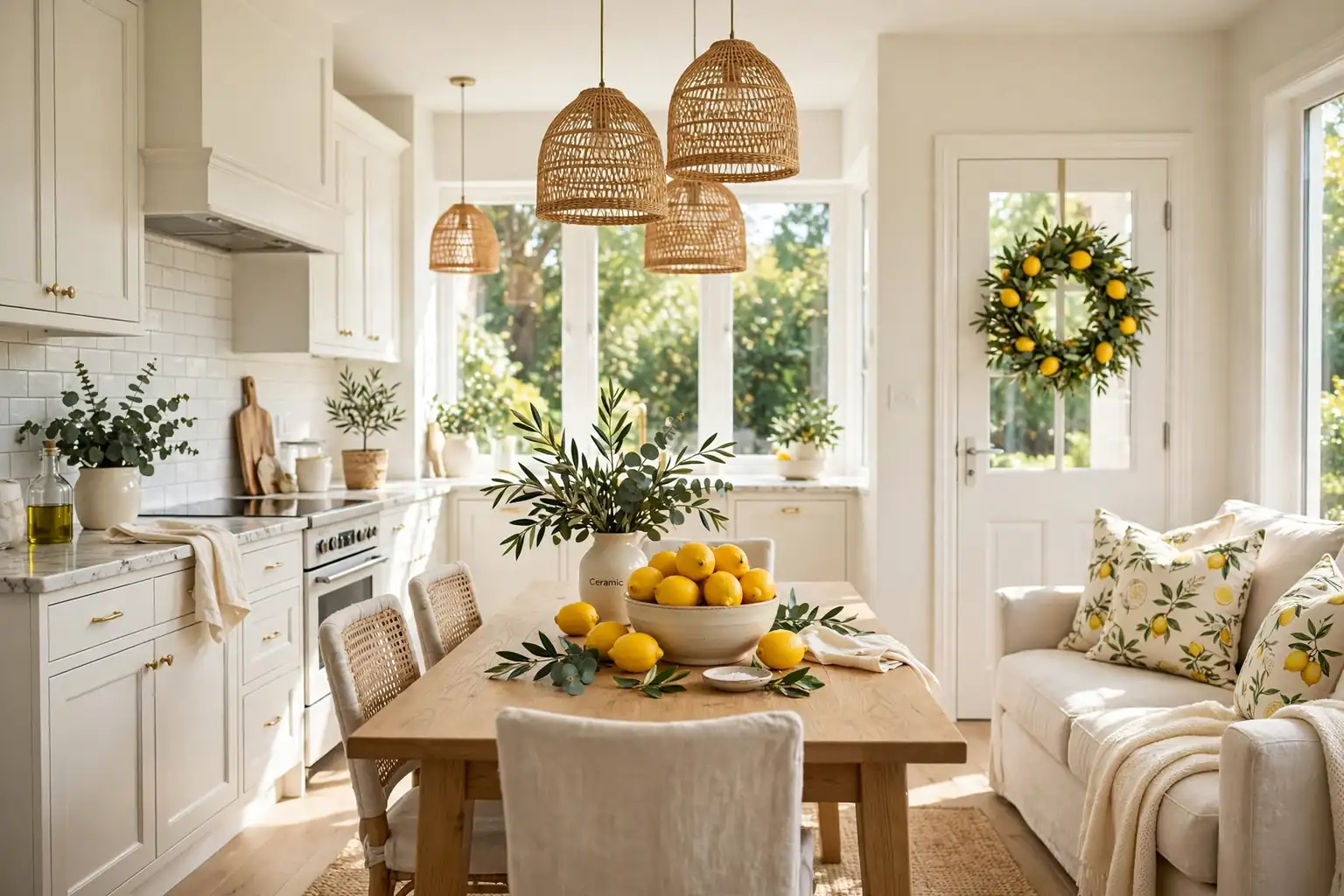
Lemon decor works best when you keep yellow as one clear accent against white, cream, wood, or green, and repeat it in two or three spots per room. Use whole lemons, lemon prints, or lemon yellow textiles on tables, doors, shelves, and beds, and keep the rest of the room calm so the citrus color stays fresh rather than loud.
Start with one easy piece, such as a bowl of lemons on the dining table or lemon pillows on the sofa, then add a second lemon note nearby, such as a print on the wall or a yellow towel in the kitchen. Keep most of the room in white, cream, or pale green, so the yellow reads as a bright accent and not a full color scheme. For a light summer base that pairs well with lemon yellow, see the summer decor ideas guide, and for a low table centerpiece style that also suits a lemon bowl, browse the fall table decor guide.
Key Takeaways
- Use yellow as one clear accent per room, repeated in two or three spots, against a calm base of white, cream, wood, or green.
- Start with one easy piece, such as a lemon bowl or lemon pillows, then add a second lemon note nearby.
- Keep centerpieces low and narrow, so guests can see across the table and serving dishes still fit.
- Use whole lemons for display, and replace any piece that softens or marks the surface under it.
- Keep real flames clear of dried lemon slices, fabric, and paper, and use flameless candles near dried material or children.
- Store seasonal lemon pieces together, so the look is easy to set out again and easy to swap for another season.
1. Lemon Bowl Centerpiece on the Dining Table
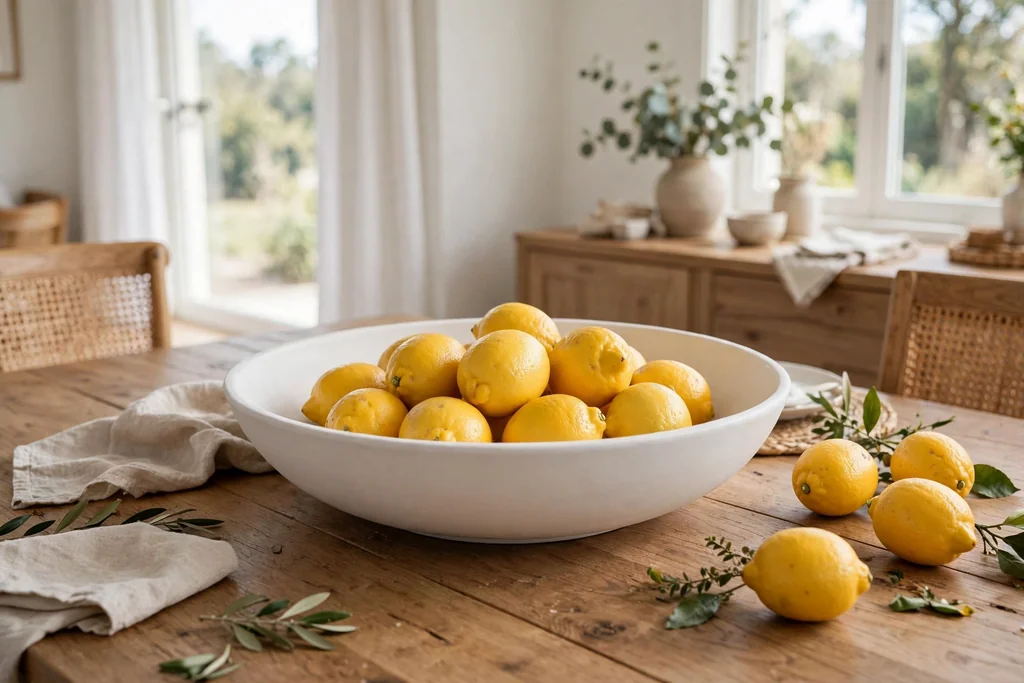
Fill a wide, shallow white or glass bowl with whole lemons, and set it in the center of the dining table. The yellow fruit gives instant color, smells clean, and can be used in cooking, so the display is practical as well as decorative. A low, wide bowl suits a dining table better than a tall arrangement, since guests can still talk across it and pass serving dishes easily.
Use whole fruit, not cut fruit, and check the bowl every few days, moving any soft piece to the kitchen. Set the bowl on a small mat if the table marks easily, and keep it away from the table edge. For a larger table, use one big bowl rather than several small ones, so the centerpiece reads as one clear group.
2. Lemon Wreath on the Front Door

Hang a wreath made with faux lemons, green leaves, and a simple twine or ribbon loop on the front door. The wreath gives a clear welcome note at the entry, and the yellow fruit stands out against most door colors, from white and navy to natural wood. Faux lemons suit a front door best, since they hold up in sun, wind, and rain with no care.
Hang the wreath at eye level, centered on the door, using a hook over the door or a nail rated for the wreath weight. Check that the door still opens and closes fully with the wreath in place. At the end of the season, store the wreath in a bag or box, so the leaves do not crush and the lemons stay clean for next year.
3. Lemon Print Pillows on the Sofa
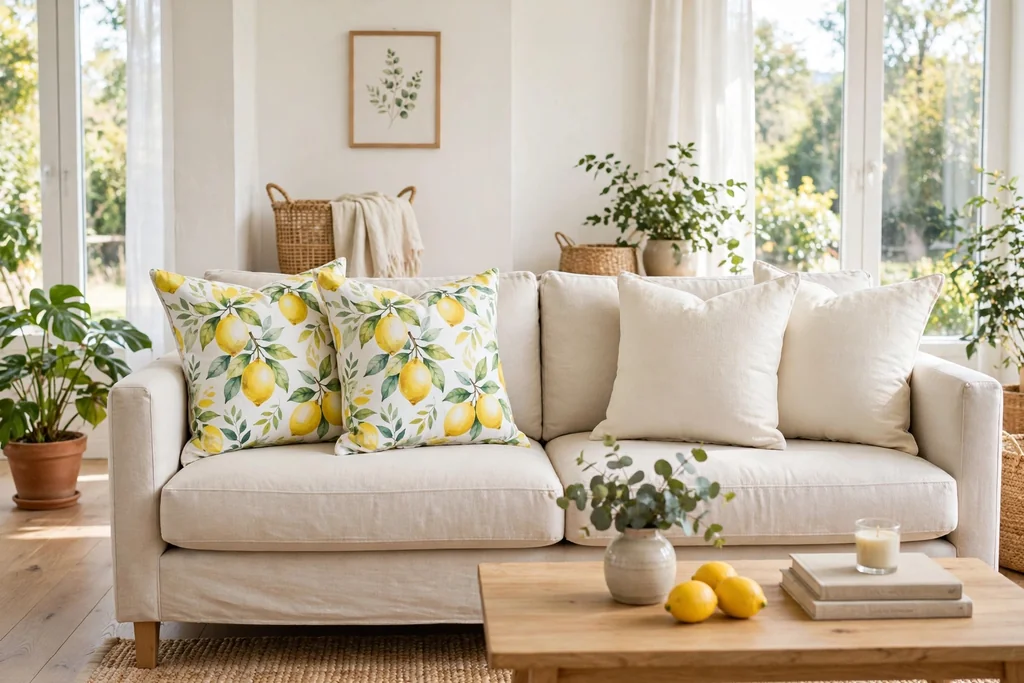
Swap two sofa pillow covers for lemon print covers in yellow, white, and green, and keep the rest of the pillows plain. The print carries the lemon theme clearly, while plain pillows in cream or pale green keep the sofa calm. Two printed pillows are enough on a standard sofa, with one at each end or grouped at one corner.
Choose covers with a zipper, so they wash easily and swap fast when the season changes. Mix one small lemon print with one larger lemon print, rather than two identical prints, so the pair looks collected rather than matched. If the sofa is already patterned, use solid lemon yellow covers instead of a print, so the two patterns do not fight.
4. Lemon Branches in a Clear Glass Vase
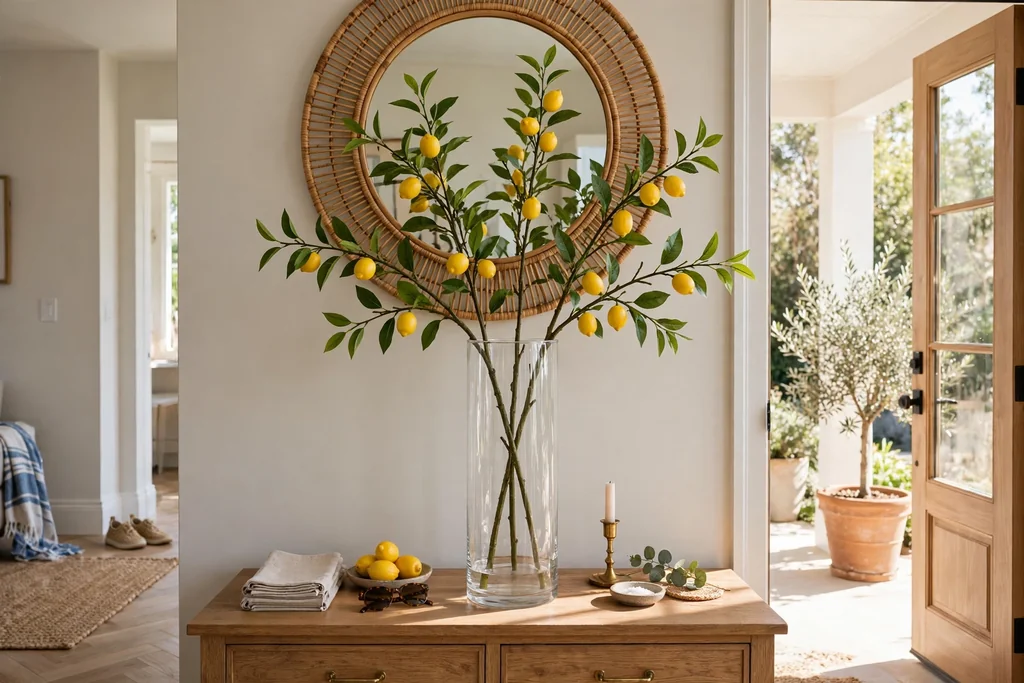
Set lemon branches with leaves and small whole lemons in a tall, clear glass vase on a console, side table, or dining sideboard. The branches give height and a natural shape, while the clear glass keeps the focus on the fruit and leaves. This idea suits an entry, a living room corner, or a sideboard where a full arrangement would crowd the surface.
Trim the stems so the arrangement sits about one and a half times the height of the vase, and keep the vase clear of table edges and walkways. Use faux branches for a display that stays put for weeks, or fresh branches for a short gathering, changing the water every few days. Wipe the glass before guests arrive, since fingerprints show more on clear glass than on colored vases.
5. Dried Lemon Slice Garland on the Mantel
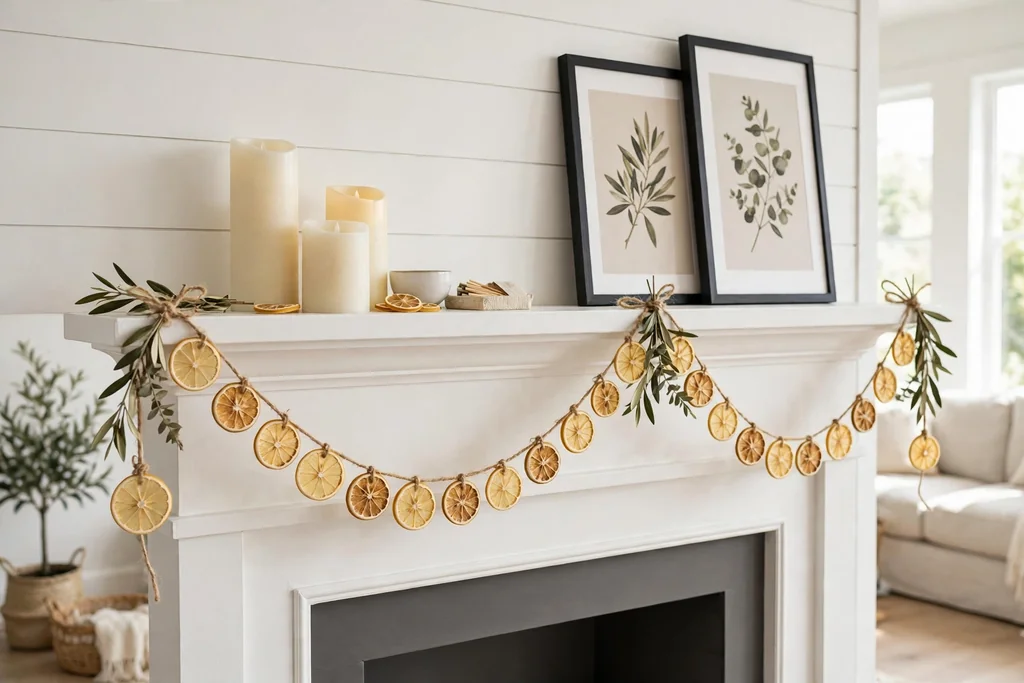
String dried lemon slices with twine, leaving a small gap between each slice, and drape the garland along a mantel, a shelf, or a window frame. The thin, pale slices catch light and add a citrus note without the bulk of whole fruit, and the garland suits a mantel that already holds candles or framed prints. Dried slices also store well flat, so the garland can be reused.
Thread the twine through two small holes near the edge of each slice, and keep the garland clear of any real flame, since dried fruit can catch fire. Use flameless candles on the mantel while the garland is up, and keep the garland away from the stove or a hot lamp. If a slice breaks, replace it with a spare slice rather than restringing the whole garland.
6. Lemon Tea Towels in the Kitchen
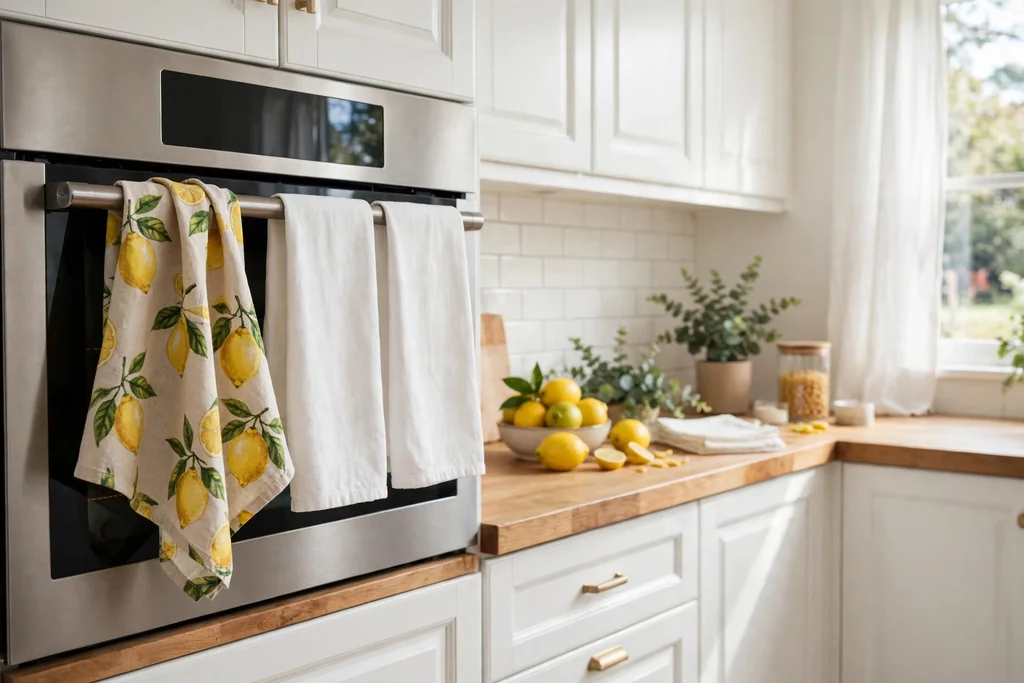
Hang lemon print tea towels on the oven handle or fold them over a kitchen rail, and keep the rest of the kitchen towels plain white or cream. The towels add a small, useful lemon note where cooking happens, and they cost little to change when the season ends. A lemon print towel also pairs well with white dishes and wood boards already in most kitchens.
Choose cotton towels that wash well, and rotate them often, so no single towel stays damp for days. Keep printed towels for display and hand drying, and use plain towels for heavy jobs, so the print stays bright longer. For a matched look, use the same print on a pot holder or an apron, but keep the print to one or two pieces, not the whole kitchen.
7. Lemon Tiered Tray on the Kitchen Counter
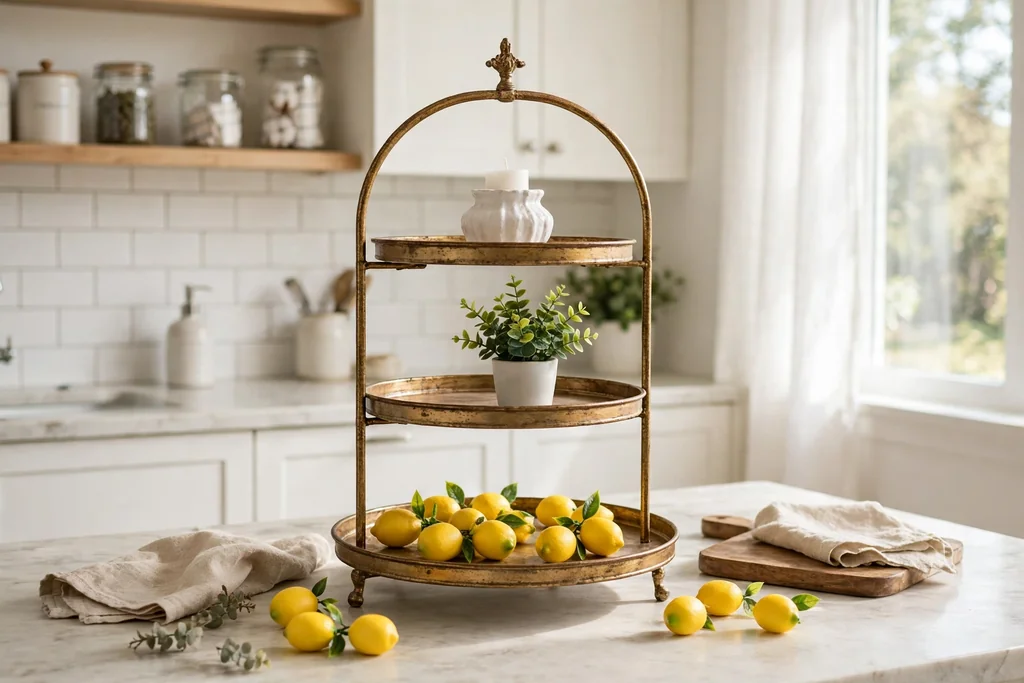
Style a two or three tier tray on the kitchen counter with small lemon pieces: faux lemons on one tier, a tiny plant or a small candle holder on another, and a folded lemon towel or a small sign on the third. The tray groups the pieces into one display, so the counter stays tidy, and it lifts off in one move when the counter needs clearing for cooking.
Put heavier items on the bottom tier, so the tray stays steady, and keep the total group low enough to see over from the next room. Wipe the tiers after use, since kitchen grease and dust collect in the rims. If the tray will sit near the sink, use faux lemons and wipeable pieces only, so splashes do not mark paper or fabric items.
8. Lemon Slices in Glass Candle Holders
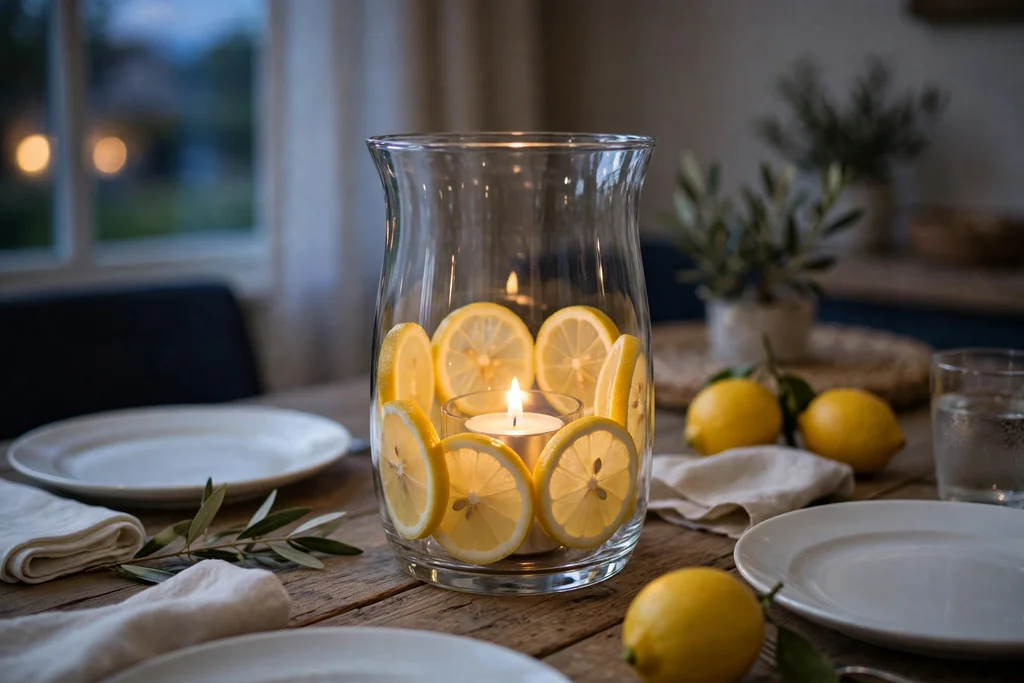
Set lemon slices upright inside a wide glass hurricane or a tall glass cylinder, then place a battery candle in the center, so the slices glow softly around the light. The glass keeps the slices in place, the yellow color shows through clearly, and the holder works on a dining table, a mantel, or a bathroom shelf. Battery candles suit this idea best, since a real flame inside a closed glass holder needs air and a safe setup.
Use slices cut thick enough to stand on their own, or use dried slices pressed against the glass, which hold their shape longer. Keep the holder on a stable surface, clear of curtains and table edges, and wipe the glass before the meal or gathering. For a table, use one holder as the centerpiece rather than a row of them, so guests still have room for plates and glasses.
9. Framed Lemon Prints on the Wall
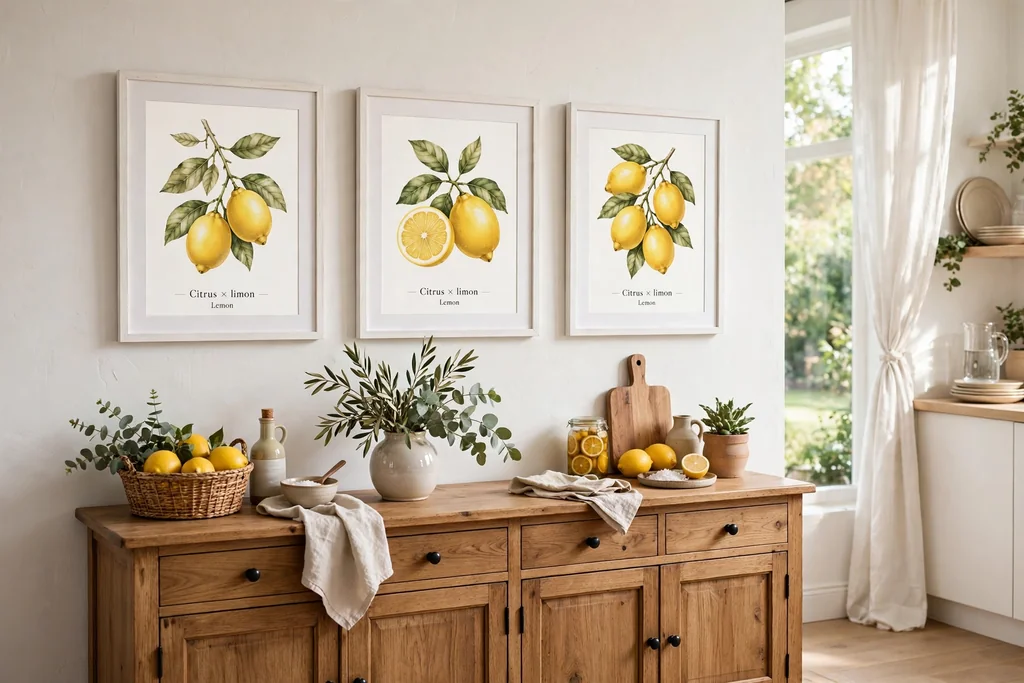
Hang two or three framed lemon prints, such as a lemon branch, a sliced lemon, or a bowl of lemons, in white or light wood frames on a kitchen or dining wall. Framed prints give a lasting lemon note that needs no care, and the pale frames keep the wall bright. A small group of prints works better than one large print, since the group can fit a narrow wall or a space above a sideboard.
Lay the frames on the floor first to plan spacing, then hang the largest print slightly off center to anchor the group. Keep the frames at eye level, with even gaps between them, so the group reads as one display. If the wall already holds art, swap one or two prints for the lemon season, rather than adding a whole new wall of frames.
10. Lemon Print Table Runner
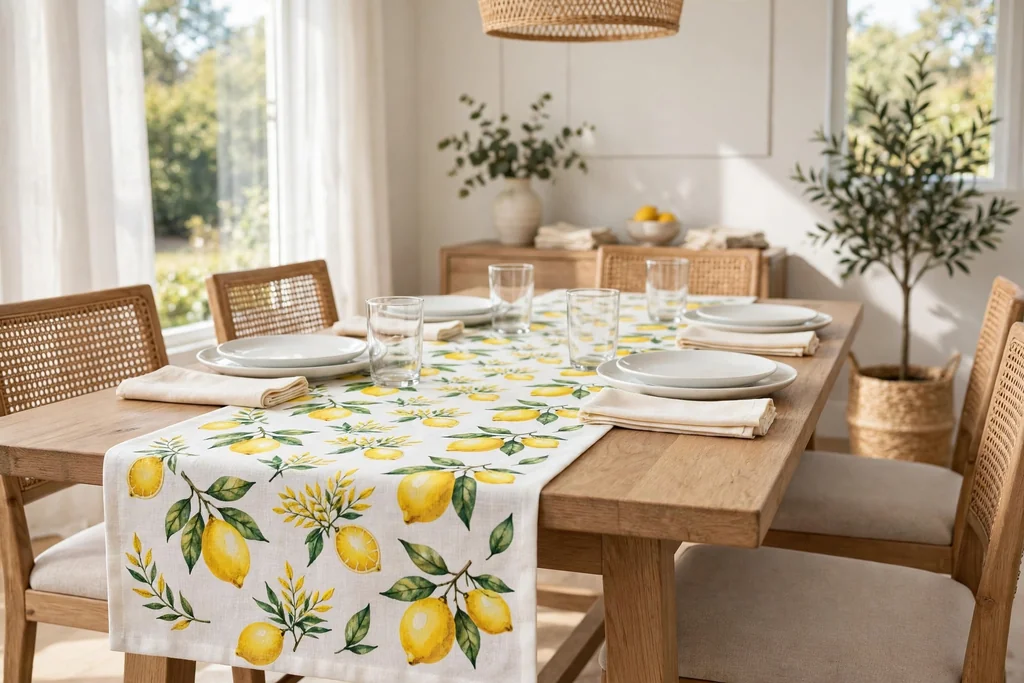
Lay a lemon print runner down the center of the dining table, then set plain white or cream plates, simple glasses, and folded napkins at each place on either side of it. The runner adds lemon color along the whole table without covering it, and it suits both everyday meals and larger gatherings. A runner also protects the middle of the table and frames a lemon bowl centerpiece well.
Smooth the runner flat and center it, so it does not slide when plates are set down, and let it hang evenly at both ends. If the runner is thick, use it alone and skip a tablecloth, so plates sit level. Wash and iron the runner before a gathering, since creases show more on a bare table than under a patterned cloth.
11. Lemon Topiary on the Console
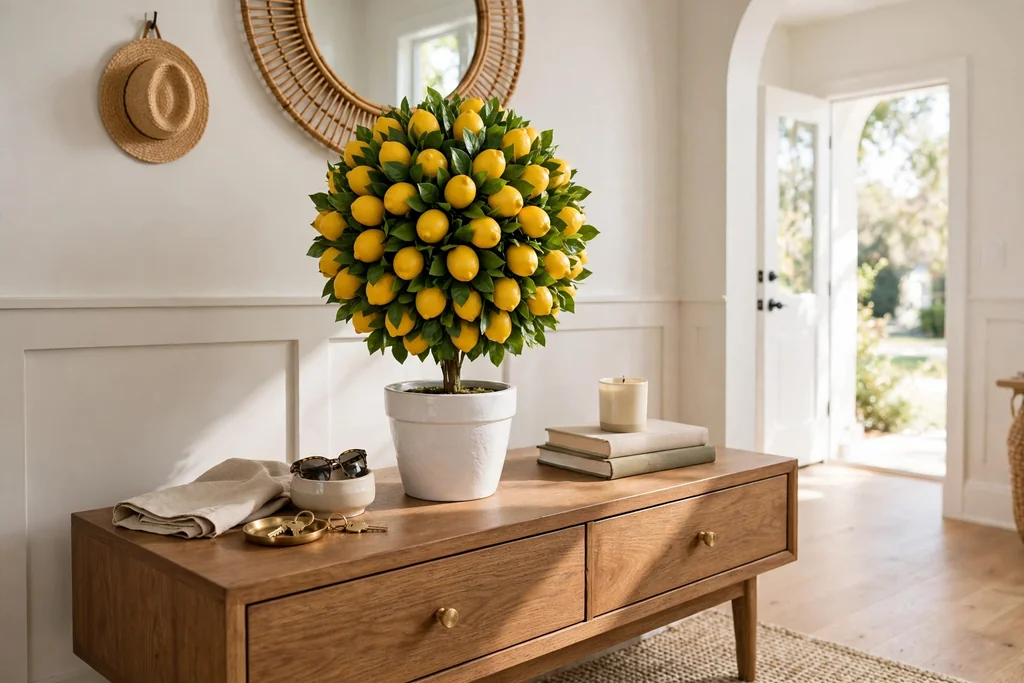
Place a lemon topiary, a round ball of faux lemons and green leaves on a short stem in a white or terracotta pot, on a console, an entry table, or a sideboard. The topiary gives a neat, rounded shape that suits a small surface, and it needs no water or care. One topiary is enough on a narrow console, while a pair suits a wide sideboard with space between them.
Center the pot on the surface, and keep the topiary clear of door swings and walkways, so it does not get knocked. Dust the leaves and lemons with a dry cloth now and then, since dust shows more on faux greenery than on real plants. If the pot is light, add a small stone inside the base, so the topiary stays steady.
12. Lemon Napkin Rings at Each Place
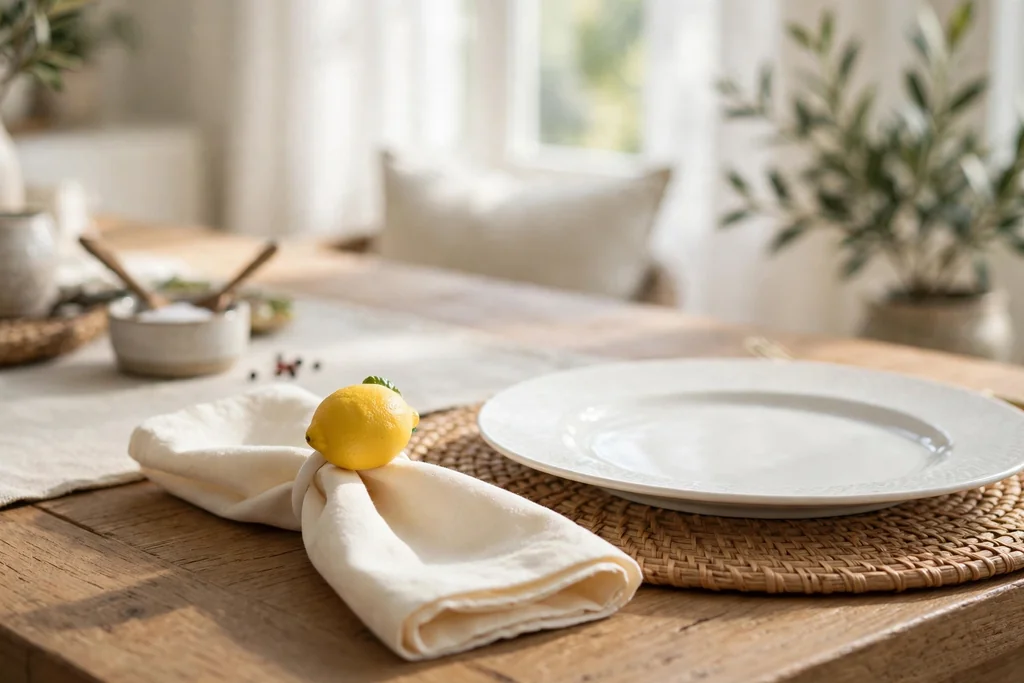
Wrap a small faux lemon, a lemon slice, or a lemon yellow bead ring around each folded napkin, and set one napkin at each place. The napkin ring marks each seat with a small citrus detail, and it works for everyday meals as well as gatherings, since it takes only a minute per place. Use the same ring at every place, so the table looks matched.
Fold napkins in a simple rectangle or roll, so the ring sits flat and does not slip. Keep the lemon piece small, so it does not crowd the plate or the glass, and remove it before washing napkins. For a gathering, add a short green sprig tucked under the ring, but keep the ring itself the same at every place.
13. Lemon Accents in the Bathroom
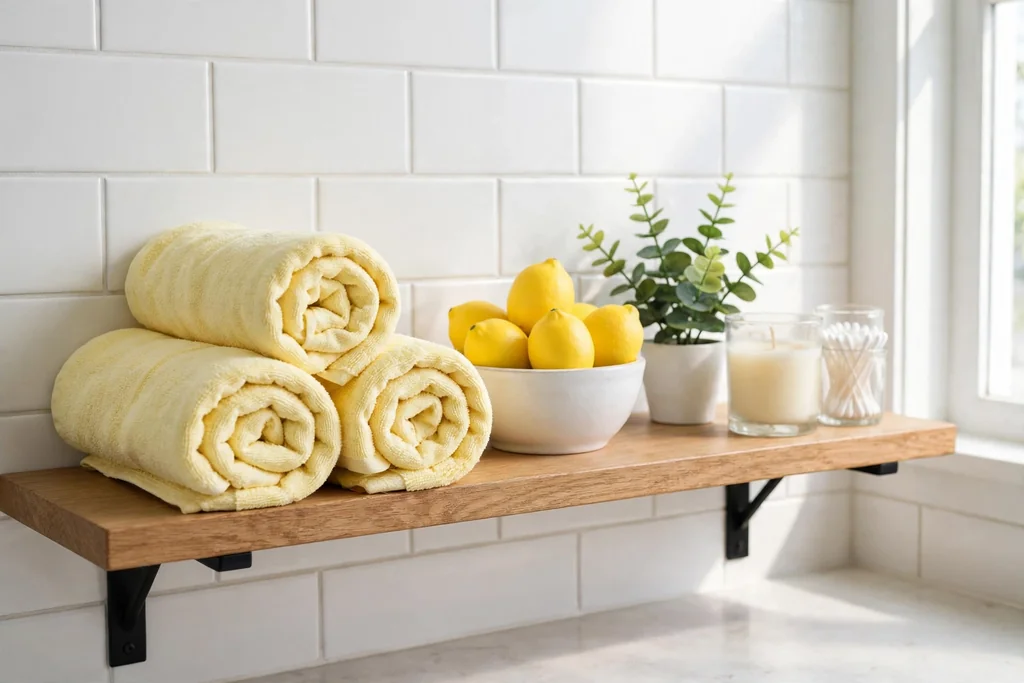
Add lemon yellow hand towels, a lemon print soap dish, or a small bowl of faux lemons on a bathroom shelf, and keep the rest of the bathroom in white or pale green. The yellow towels give a bright note in a small room, and they wash easily, so the look stays fresh. One or two lemon pieces are enough in a bathroom, since the room is small and extra pieces crowd the sink and shelves.
Roll towels rather than folding them into thick stacks, so they take less shelf space and are easy to grab. Keep faux lemons away from the shower spray and the sink splash zone, so they do not spot or stain. Swap the yellow towels for plain ones when the lemon season ends, and store them with the other seasonal towels.
14. Potted Lemon Tree by a Sunny Window
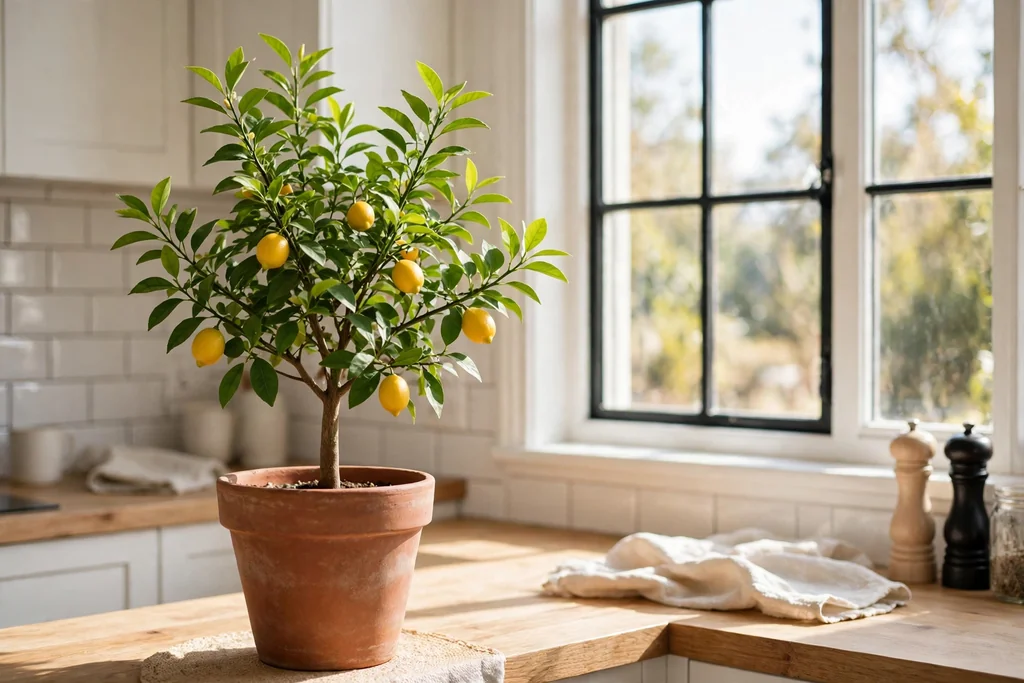
Place a small potted lemon tree, real or faux, beside a sunny window in the kitchen, living room, or sunroom. A real tree adds green leaves, white blossoms in season, and small fruit, while a faux tree gives the same shape with no care. The pot suits a floor spot near the window or a sturdy plant stand, where the tree gets light without blocking the walkway.
Water a real tree based on the plant label and the season, and check drainage, so the pot does not sit in standing water. Turn the pot a quarter turn every week or two, so the tree grows evenly toward the light. For a faux tree, dust the leaves now and then, and keep it away from a hot radiator, so the leaves do not warp.
15. Lemon and Greenery Shelf Vignette
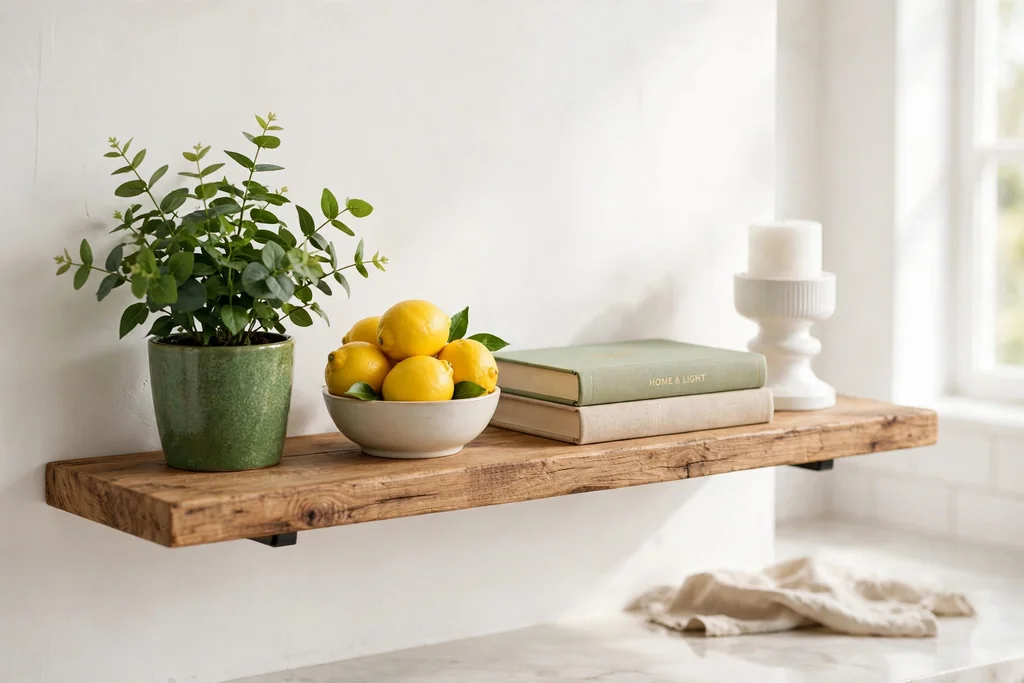
Style one open shelf with a small bowl of lemons, a green plant, a stack of two books, and a plain white candle holder, leaving clear space around the group. The shelf vignette gives a lemon note at eye level, and the green plant and white pieces keep the yellow from standing alone. One vignette per shelf is enough, since a crowded shelf hides each piece.
Group the pieces in odd numbers, with the tallest piece at the back, and leave empty space at each end of the shelf, so the group reads as one display. Dust the shelf before styling, and step back to check the group from across the room, since a shelf vignette is seen from a distance. If the shelf already holds many items, swap one or two pieces for lemon items, rather than adding a whole new group.
16. Lemon Yellow Throw in the Bedroom

Drape a lemon yellow throw across the foot of the bed or fold it over an armchair, and pair it with white or cream bedding and one pale green pillow. The throw adds a warm, sunny note to the bedroom without repainting or changing the bedding, and it works as a practical layer for cool evenings. A throw is easy to swap, so the bedroom can change with the season in minutes.
Fold the throw neatly during the day, rather than bunching it, so the bed looks tidy, and wash it on a regular cycle, since yellow fabric shows marks more than darker colors. Keep the rest of the bedding plain, so the throw stays the one yellow note in the room. If the bedroom is small, use a throw on the chair only, and keep the bed in white.
17. Lemon Planters on the Porch or Patio

Set two planters by the front door or on the patio, each holding green plants with a few faux lemons tucked among the leaves, or a small lemon tree in a large pot. The planters give a bright welcome at the entry, and the yellow fruit stands out against green leaves and a wood or stone floor. A pair of planters suits a wide entry, while one planter suits a narrow porch.
Choose pots heavy enough to stay steady in wind, and use a weighted base or a stone inside a light pot. Keep the planters clear of the door swing and the walkway, so guests can pass easily. At the end of the season, bring faux lemons inside and store them dry, and move a real potted tree indoors before cold nights if the plant label advises it.
Conclusion
Lemon decor does not need a full room makeover or a large budget. Start with one easy piece, such as a lemon bowl or lemon pillows, keep the rest of the room in white, cream, wood, or green, and repeat the yellow in two or three spots. Whole lemons, lemon prints, and lemon yellow textiles each suit a different room, from the kitchen counter to the bedroom and the porch. Try one idea from this list first, keep what works for your home, and add a second lemon note only where the room still feels calm.
Frequently Asked Questions
Does lemon decor work all year round?
Yes, lemon decor works all year, since yellow reads as fresh in spring and summer and as a bright accent in fall and winter. Keep the lemon pieces small in colder months, such as a bowl on the table or a print on the wall, and pair them with warm wood and cream, so the look stays calm rather than summery.
What colors go well with lemon decor?
White, cream, pale green, natural wood, and soft blue go well with lemon yellow, since they keep the room calm and let the yellow stand out. Avoid pairing lemon yellow with many other bright colors at once, since the room can look busy. Repeat each color at least twice in the room, so the palette feels planned.
Are real or faux lemons better for decor?
Faux lemons are better for long displays, wreaths, garlands, and outdoor spots, since they hold their shape and color with no care. Real lemons suit a short display, such as a table centerpiece for a gathering, since they smell fresh and can be used in cooking after. Replace any real lemon that softens or marks the surface under it.
How do I keep lemon decor from looking too themed?
Use lemon as one accent per room, repeated in two or three spots, and keep the rest of the room plain. Mix lemon pieces with plain white, wood, and green items, rather than filling every surface with lemon prints. One lemon bowl, one print, or one set of pillows is enough to carry the theme in most rooms.
Where is the best place to start with lemon decor?
Start with the dining table or the kitchen counter, since a lemon bowl or a tiered tray gives a clear result in minutes and uses pieces you already own. Once that spot feels right, add a second lemon note nearby, such as a print on the wall or a towel on the oven handle, and stop before the room feels crowded.
How do I care for real lemons used as decor?
Keep real lemons whole, check them every few days, and move any soft piece to the kitchen before it marks the bowl or table. Set the bowl on a mat if the surface marks easily, and keep lemons out of direct sun, since heat softens them faster. For displays longer than a week, use faux lemons instead.